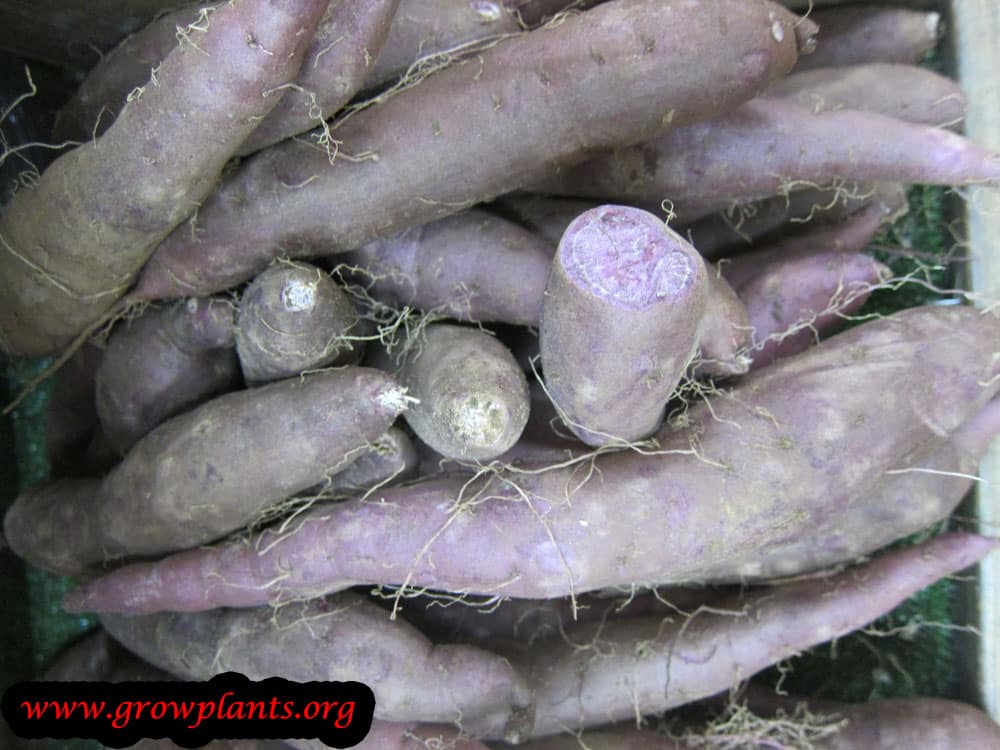

Plant Profile & Key Characteristics
Overview: The sweet potato, a fast-growing trailing vine of 1-5 m (3-15 ft) grown for its edible tubers and leaves, and as an ornamental for its colourful foliage. A tender perennial usually grown as an annual.
Quick Specifications
| Specification | Attribute |
|---|---|
| Plant Type / Life Cycle | Perennial (evergreen) grown as an annual in cold climates |
| Foliage Type | Evergreen where frost-free; herbaceous annual elsewhere |
| Mature Size | 1-5 m (3-15 ft) trailing; ~10 cm high as groundcover |
| Growth Rate | Fast |
| Root System | Tuberous roots |
| Toxicity | Non-toxic / edible leaves and tubers |
| Hardiness | USDA zone 10+ as perennial; zone 6+ grown as an annual |
Growth Form & Structure
- Height & Spread: Trails or climbs 1-5 m (3-15 ft), or spreads low (~10 cm) as groundcover; grows in containers (25 L / 5+ gal) for tubers.
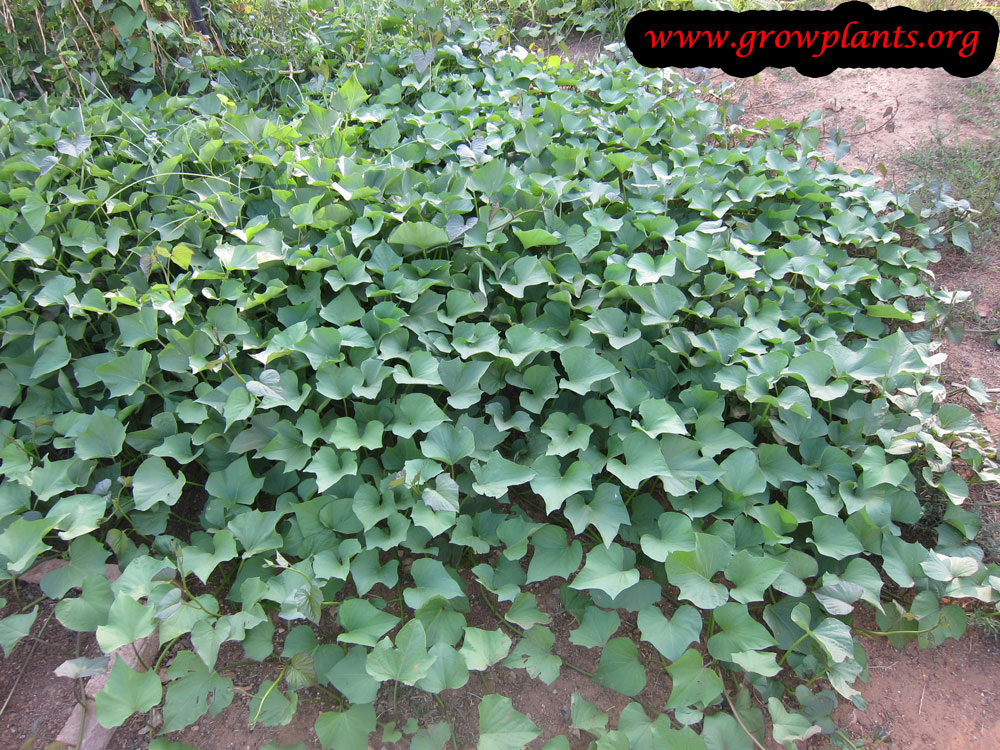
- Growth Habit & Form: Fast, trailing/scrambling vine grown for tubers or as ornamental groundcover; needs room for the tubers.
- Lifespan & Maturity: Tubers can be harvested from about 5-7 months after planting; best started from tubers or cuttings.
Anatomy & Physical Features
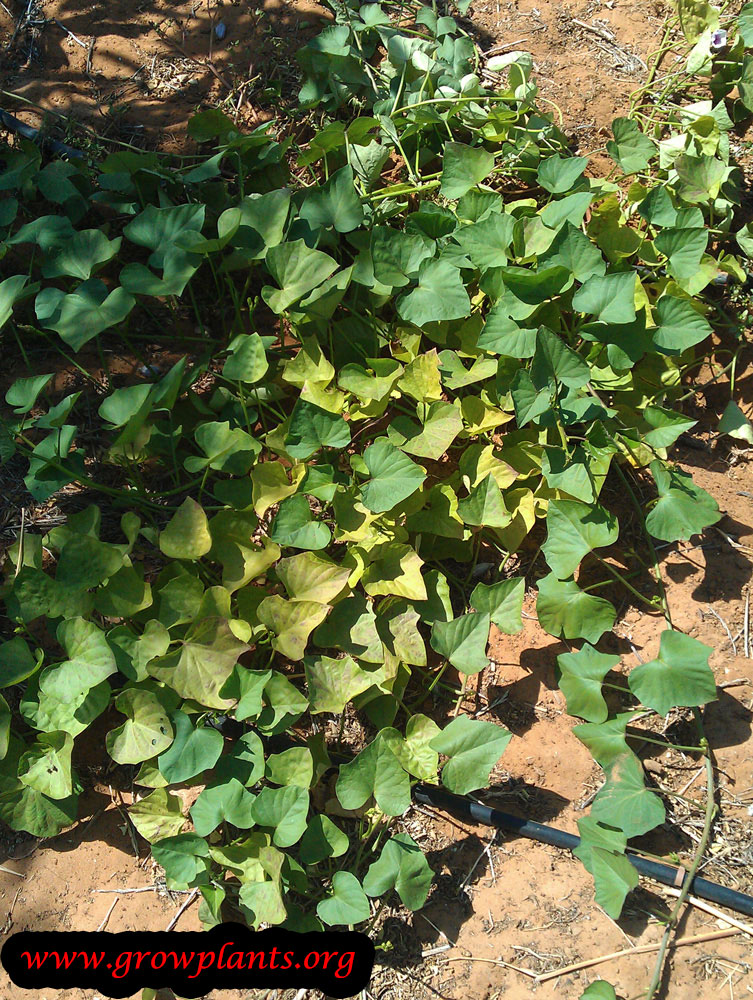
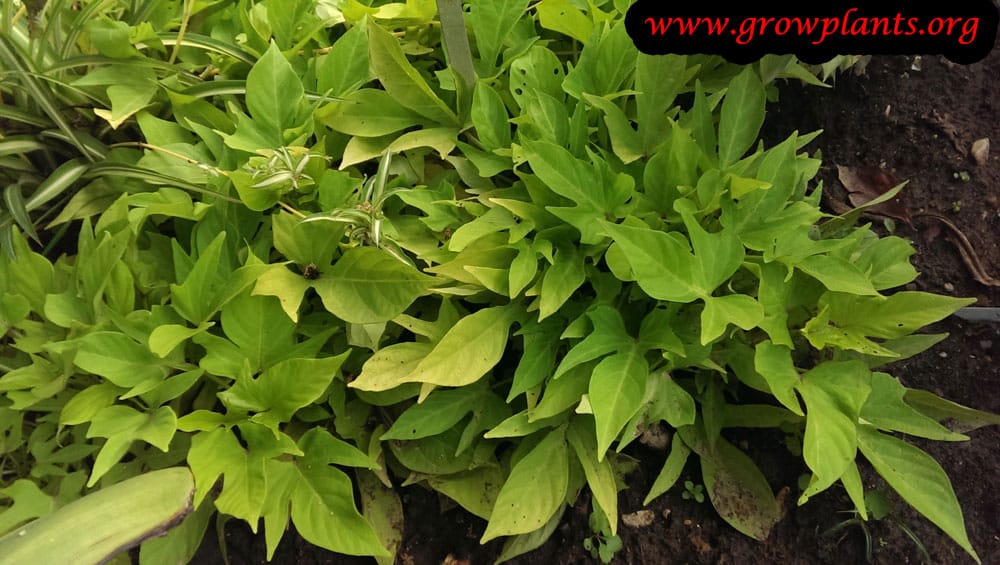
- Leaves & Foliage: Edible lobed, hand-shaped leaves in green, purple, yellow or white – colourful in ornamental selections.
- Flower Characteristics: Purple trumpet-shaped flowers, mostly in short days and not in cold conditions (see the Bloom guide).
Primary Uses & Landscape Value
- Edible Uses: Tubers eaten cooked; young leaves used in salads, stir-fries and cooked dishes.
- Functional & Ornamental Roles: Food crop; also an ornamental foliage plant for groundcover, containers and baskets.
Note: Botanical name: Ipomoea batatas.
Care Guide: Planting, Soil & Watering
Overview: Sweet potato is a fast-growing tender vine grown for edible leaves and tubers, for full sun to half shade in warm, frost-free climates. It grows best in loose, slightly acidic, well-draining soil kept evenly moist.
Quick Care Requirements
| Requirement | Ideal Condition |
|---|---|
| Planting Season | Spring after last frost (as annual); year-round in zone 12+ |
| Growth Rate | Fast |
| Soil Type | Loose, stone-free, slightly acidic, well-draining rich soil |
| Soil pH | Slightly acidic (about 5.5–6.5) |
| Water Need | Moderate – keep the soil evenly moist |
Planting & Establishment
- Best Planting Season: Plant in spring after the last frost as an annual; where hardy, spring in zone 10a, spring to summer in 10b, spring to autumn in 11, and year-round in zone 12+.
- How to Plant:
- Hole Preparation: Loosen the soil deeply and clear it of stones so the tubers can swell; dig planting holes about 50% wider than the root ball.
- Soil Amendments: Mix in organic matter, humus and dead leaves to enrich and lighten the soil.
- Planting Depth: Set the plant so the root collar sits level with the surrounding soil; firm gently but firmly so it will not topple, and install a trellis or support at planting time.
- Growth Speed & Expectations: A fast grower that quickly spreads as a trailing or climbing groundcover.
Soil, Watering & Drainage Care
- Soil Mix & Drainage Needs: Loose, stone-free, slightly acidic soil that drains well lets tubers develop; in containers start from cuttings in rich, well-ventilated, well-draining mix.
- Watering Schedule & Technique:
- Young / Newly Planted: Water twice on the first day of planting, then daily for the first two weeks while the roots establish.
- Established: Once established, water regularly to keep the soil evenly moist during active growth.
- Seasonal Adjustments: Give more water in summer heat and taper off in cooler weather or winter dormancy.
Climate, Light & Hardiness
Sweet potato is a warm-season, frost-tender tuber crop grown in full sun to half shade across tropical, Mediterranean, subtropical and temperate summers. It thrives in heat and needs a long, warm, frost-free season for the tubers to size up, with cold the factor that forces annual treatment outside roughly USDA zone 10.
Quick Climate Specifications
| Climate Zones | Tropical, Mediterranean, desert, subtropical, temperate |
|---|---|
| USDA Hardiness Zones | About 10+ as a perennial; about 6+ grown as a warm-season annual |
| Optimal Temp Range | Approximately 22–30 °C (72–86 °F) |
| Cold Damage Begins | Growth slows in cool weather; foliage damaged near freezing |
| Approx. Survival Minimum | Vine killed by frost; tubers are chill-sensitive but can be lifted and stored frost-free |
| Frost Tolerance | None to Very Low |
| Light Conditions | Full sun to half shade |
| Wind Tolerance | Moderate |
Sunlight & Light Exposure
Optimal Light Setup
Full sun drives the vigorous vine growth that feeds tuber development; half shade slows it.
Direct Sun Requirement
Full sun and warmth are key to a good tuber crop.
Shade & Heat Management
It welcomes heat; only in extreme, bright heat might container plants benefit from a little afternoon relief.
Temperature Extremes & Hardiness
USDA Hardiness & Regional Limits
Perennial in frost-free zones (about 10+), where leaves and tubers can be harvested over a long season; in zones 6–9 it is grown as a warm-season annual killed each winter, so cold limits year-round outdoor culture rather than the plant being merely an annual.
Cold Damage & Winter Protection
Frost kills the vine; in warmer zones the crop is best harvested as the plant enters dormancy, and cuttings or tubers can be overwintered under cover. Flowering is short-day and largely suppressed by cold, so cool-climate plants may not bloom.
Frost Sensitivity
High.
Extreme Heat Tolerance
Excellent; sustained heat suits it, provided moisture is adequate.
Frost-Free Growing Season
Tubers need a long, warm, frost-free season - commonly on the order of four to six months - to develop; cool weather slows tuberisation and frost ends the season, so in short-summer regions it is timed carefully and often started early.
Wind, Humidity & Microclimate
Humidity Preferences
Enjoys warm, humid conditions.
Wind Tolerance
Moderate; the ground-hugging vines are fairly wind-tolerant once established.
Microclimate Recommendations
A warm, sunny, frost-free site with a long season gives the best yields; warm soil in particular speeds early growth.
Growing in Pots, Balconies & Indoors
Sweet potato is a sprawling, sun-loving crop rather than a houseplant – the grower does not grow it indoors, but it produces well in a large tub on a sunny patio or balcony, either trailing over the edge or climbing a support. Give it full sun and room; it needs plenty of space for its tubers.
Quick Details
- Container Size: 10-30 L (2.5-8 gal), and bigger is better; the grower uses a 25 L (5 gal) tub for 2-4 cuttings
- Indoor Suitability: Not a houseplant; grow it outdoors in full sun for a real tuber crop
- Best Spot: Full sun to half shade, warm and sheltered
- Soil & Drainage: Well-ventilated, free-draining mix rich in organic matter – potting mix or peat with perlite or vermiculite
- Watering in Pots: Keep the soil moist and let surplus drain away; pots dry fast in sun
Indoors & On the Windowsill
- Not an indoor plant: The grower marks it as unsuitable to grow indoors – it needs strong sun and a large volume of soil to form tubers.
- Brightest window only: The trailing foliage can be kept on a very sunny sill as a short-term ornamental, but you will not get a tuber crop indoors.
- Overwintering: Grown as an annual in cold climates; as a tender perennial it can be carried over frost-free, and cuttings root very easily to start the next season.
On a Balcony or Patio
- Light & heat: It thrives in the sunniest, warmest spot – walls and paving reflect heat and speed growth, but they also dry the pot fast, so check moisture daily in summer. A drip irrigation kit with a timer can take over that watering check automatically.
- Room to spread: Give it a big tub and let the stems trail over the sides or climb; the more foliage it makes, the better the tubers below.
Choosing the Pot, Soil & Long-Term Care
- Pot & drainage: A deep 10-30 L tub with strong drainage holes; the grower advises against a standing water saucer, so let it drain freely to avoid rot. Terracotta breathes and dries faster, while glazed or plastic pots hold moisture longer.
- Potting mix: Well-ventilated and organic-rich – potting mix or peat with perlite or vermiculite, with added organic matter and fertilizer.
- Feeding: Potted plants need feeding more often than those in the ground, as nutrients leach with watering; the grower adds organic matter and fertilizer to the mix.
- As a perennial: where it lives on, refresh the mix every couple of years and prune part of the roots and top growth when re-potting.
Grower’s Container Tip
- Cuttings and gradual fill for big tubers: Start from cuttings rather than seed. Fill the container with only about 10% soil to begin; in a 25 L (5 gal) pot set 2-4 cuttings. Once each cutting takes, lay the stems on the soil and cover them, keeping the soil moist; as new roots form, add a little more soil, topping up until the pot is full. Grown as an annual, fill the pot over about five months; grown as a perennial you can take your time, building more tubers in the same pot.
Fertilizing & Feeding
Sweet potato is a moderate feeder grown for its tubers: feed balanced early, lean on nitrogen while vines build, shift to potassium as tubers bulk, and stop as the crop matures; too much nitrogen grows vines instead of tubers. A fertilizer formulated for tomatoes and vegetables supports that feeding pattern through harvest.
Quick Fertilizing Specs
| Feeding Level | Moderate |
|---|---|
| young_feeding | A balanced starter feeding with plenty of organic matter. |
| mature_feeding | Shift toward potassium as tubers bulk, then stop before harvest. |
| Best Feeding Period | From establishment through tuber bulking. |
| Main Nutrient Priority | Balanced early, nitrogen for vines, then potassium for bulking. |
| Soil pH | Slightly acidic. |
| Organic Options | Compost and aged organic matter worked into the bed. |
| Reduce/Stop Feeding | Stop feeding as the crop matures toward harvest. |
Feeding by Growth Stage
Establishment
Help transplants or cuttings root in and start growing.
| Nutrient direction | A balanced complete fertilizer plus organic matter worked into the bed. |
|---|---|
| Timing | At planting and as the young plants establish. |
| Frequency | A modest starter feeding as plants establish. |
| Fertilizer types | Balanced complete fertilizer, Compost or aged organic matter worked into the soil |
| Precautions | Rich, loose soil suits tuber crops; avoid fresh manure that can encourage rough tubers. |
Vine and canopy growth
Build enough leaf and vine to power tuber formation later.
| Nutrient direction | A nitrogen-forward complete fertilizer to drive leafy vine growth. |
|---|---|
| Timing | During early vine and canopy growth. |
| Frequency | Feed moderately while vines are expanding. |
| Fertilizer types | Complete fertilizer with a nitrogen emphasis |
| Precautions | Do not overdo nitrogen, which grows lush vines at the expense of tubers. |
Tuber bulking
Support sizing-up of the developing tubers.
| Nutrient direction | Shift toward potassium with a complete fertilizer as tubers bulk. |
|---|---|
| Timing | As tubers begin to form and enlarge. |
| Frequency | Feed moderately through the bulking period. |
| Fertilizer types | Complete fertilizer with a potassium emphasis |
| Precautions | Excess late nitrogen delays and reduces tuber development. |
Maturation before harvest
Let tubers mature and skins firm up before lifting.
| Nutrient direction | None – withhold fertilizer while the plant is resting. |
|---|---|
| Timing | As foliage yellows and the crop approaches harvest. |
| Frequency | No feeding at this stage. |
| Fertilizer types | No feeding at this stage – a resting plant is not taking up nutrients. |
| Precautions | Do not fertilize until active growth resumes. |
Nutrient Deficiency Signs & Corrections
Older, lower leaves turn uniformly pale green to yellow and overall growth slows.
| Possible causes | Low available nitrogen in the soil, Cold or waterlogged soil limiting root uptake, Nitrogen leached away after heavy watering or rain |
|---|---|
| Appears first on | Older, lower leaves. |
| What to check | Whether paling starts on old lower leaves, Recent feeding history, Soil moisture and drainage |
| Possible correction | Apply a balanced complete fertilizer at a light rate and improve drainage; nitrogen-hungry plants green up as growth resumes. |
Older leaves show yellowing and browning (scorch) along their margins.
| Possible causes | Low available potassium in the soil, Sandy soils that hold few nutrients, Drought stress limiting uptake |
|---|---|
| Appears first on | Older, lower leaves, starting at the margins. |
| What to check | Leaf margins on older leaves, Soil type and organic matter, Watering consistency |
| Possible correction | Apply a complete fertilizer that also supplies potassium and keep the soil evenly moist; avoid relying on nitrogen-only products. |
Interveinal yellowing on older leaves while the veins stay green.
| Possible causes | Low soil magnesium, common in sandy or acidic soils, Heavy potassium feeding competing with magnesium uptake, Leaching from frequent heavy watering |
|---|---|
| Appears first on | Older, lower leaves. |
| What to check | Pattern of yellowing on old versus new leaves, Soil type, Recent heavy potassium feeding |
| Possible correction | Correct soil pH if needed and apply a magnesium source such as a magnesium-containing fertilizer following its label. |
Pruning, Training & Seasonal Maintenance
Sweet potato is grown for its tuber, so pruning here is a production decision, not a design one. This plant’s own growing notes make a useful distinction: trimming just the leaves (without cutting the stems) lets the plant keep forming tubers at nodes that touch the soil, while removing whole stems takes that option away. Little to no structural pruning is needed – the real judgment call is how much vine growth to leave in place versus how much to redirect or remove to favour a concentrated harvest at the main crown.
Quick Pruning & Maintenance Specs
| Pruning Tolerance | High (herbaceous) |
| Primary Pruning Window | As needed during the growing season, for vine management |
| Secondary Maintenance Window | Ahead of tuber harvest (roughly 7 months after planting, or when dormant in cooler zones) |
| Typical Frequency | Occasional vine trimming; one main cutback at harvest |
| Main Objective | Balance vine growth against tuber bulking; manage where new tubers form |
| Young Plant Priority | Let the vine establish; no cutting needed |
| Mature Plant Priority | Decide whether to let trailing stems root down (more, smaller tubers spread out) or lift/redirect them (fewer, larger tubers concentrated at the crown) |
| Best Tool Type | Precision snips for leaf/vine trimming; bypass secateurs for thicker basal growth at harvest |
| Avoid Heavy Pruning During | The tuber-bulking window before harvest |
Pruning by Plant Age & Size
Newly Established
No pruning; let the vine establish and put on leaf growth, which is what feeds early tuber formation.
Young / Formative
No structural training system applies – this is a sprawling/trailing crop, not a trained climber in typical field or bed culture.
Mature / Established
Manage vine spread: leave nodes rooting into soil if a larger total yield of scattered tubers is wanted, or lift trailing stems off the soil if a concentrated harvest at the main crown is preferred.
Seasonal Pruning Schedule
Post-Harvest
Objective: clear the vine once tubers are pulled. Remove: the spent top growth. Expected response: none needed if the crop is being lifted entirely; for perennial-grown plants in warm climates, fresh growth resumes from the crown.
Ongoing Sanitary
Trim damaged leaves as needed through the season; this doesn’t reduce tuber-forming potential the way removing whole stems does.
Special Growth to Remove
- Damaged or pest-affected leaves – trim the leaf only, leaving the stem, so the node can still root and form a tuber if that’s desired
- Whole stems, only where a grower deliberately wants to stop a section from rooting down and forming additional tubers
Container & Small-Space Pruning
In containers, growth is naturally more contained since trailing stems can’t root down into open ground; the plant’s own notes describe starting from cuttings in a large pot (around 25L/5 gallons) with 2–4 cuttings, pressing the stems into the soil surface to establish more rooting points within the pot.
Tools
- Precision snips – trimming individual leaves or thin vine sections without disturbing rooted nodes
- Bypass secateurs – cutting through the thicker basal growth when clearing the vine at harvest
Tool Hygiene & Disease Risk
Routine: clean, sharp tools suffice. Recorded pests (weevil, moth, whitefly, aphids) aren’t typically spread by pruning cuts.
Cut Placement & Technique
To trim without stopping a node from rooting, cut the leaf blade or petiole only, not the stem itself. To remove a section entirely, cut the stem cleanly at a node.
Heavy Pruning & Rejuvenation
The main heavy cut is clearing the vine at harvest time, timed to when the tubers are ready (around 7 months after planting, or earlier if the tubers are wanted less fibrous) rather than a stress-recovery measure.
Post-Pruning Care
After clearing the vine for harvest, lift the tubers promptly; don’t fertilize afterward if the crop is being harvested.
Common Pruning Mistakes
- Cutting whole stems for tidiness during the season without realising this removes the plant’s ability to form additional tubers at those points
- Harvesting tubers too late, letting them become more fibrous instead of pulling them once they’re ready
When NOT to Prune
Avoid trimming vine growth heavily during the tuber-bulking window before harvest – the foliage is actively feeding tuber development, the same principle that applies to other tuber crops.
Recommended Tools (by task)
- Leaf/vine trimming during the season – precision_snips: lets you remove foliage without cutting through rooting nodes
- Clearing the vine at harvest – bypass_secateurs: for the thicker basal stems
Pruning Troubleshooting
| Problem | Possible Cause | What to Check | Corrective Action |
| Lush vine growth but few or small tubers | Too much leafy top growth relative to root investment (often from excess nitrogen, not from pruning itself) | Fertilizer history; how dense/tall the vine canopy has grown | Avoid heavy nitrogen feeding; trim excess vine mass away from the crown late in the season rather than letting it all keep rooting down |
| Many small, scattered tubers instead of a few larger ones | Trailing stems rooting at multiple nodes along the ground | Whether stems are in direct soil contact away from the main crown | Lift and keep trailing stems off the soil if a concentrated harvest at the crown is preferred |
Propagation Guide
Sweet potato is propagated vegetatively — from tuber-grown shoots (slips) or from vine cuttings — which the site stresses is the way to keep a chosen variety’s tuber colour, taste, texture, size and vigour, and its leaf colour; seed would not come true. Both slips and cuttings root very easily, so it is an Easy plant to increase. Space slips about 30-45cm (12-18in) apart when planting out.
Quick Propagation Specs
| Best Propagation Method | Tuber-grown shoots (slips) and stem (vine) cuttings |
| Alternative Methods | Layering the stems; each of slips / cuttings interchangeably |
| Propagation Difficulty | Easy |
| Seed True-to-Type | No — cultivar-dependent; seedlings do not reproduce the variety. Propagate vegetatively (required) |
| Vegetative True-to-Type | Yes — slips and cuttings reproduce the parent variety exactly |
| Best Propagation Season | Spring to summer |
| Cutting Rooting Time | A few weeks under warm, humid conditions |
Stem Cuttings
Best Timing & Rooting
Take vine cuttings in spring or summer and root them in water, changing it every few days, or in moist soil kept constantly damp, keeping them warm at about 25–30°C (77–86°F) with high humidity. Rooting hormone is optional. For a container crop, start from cuttings: put a shallow layer of soil in the pot, set 2–4 cuttings in a 25 L (5 gal) container, and as they establish lay the stems down and cover them with moist soil to build a larger root system.
Rhizomes, Tubers, Bulbs & Corms
Tuber Slips
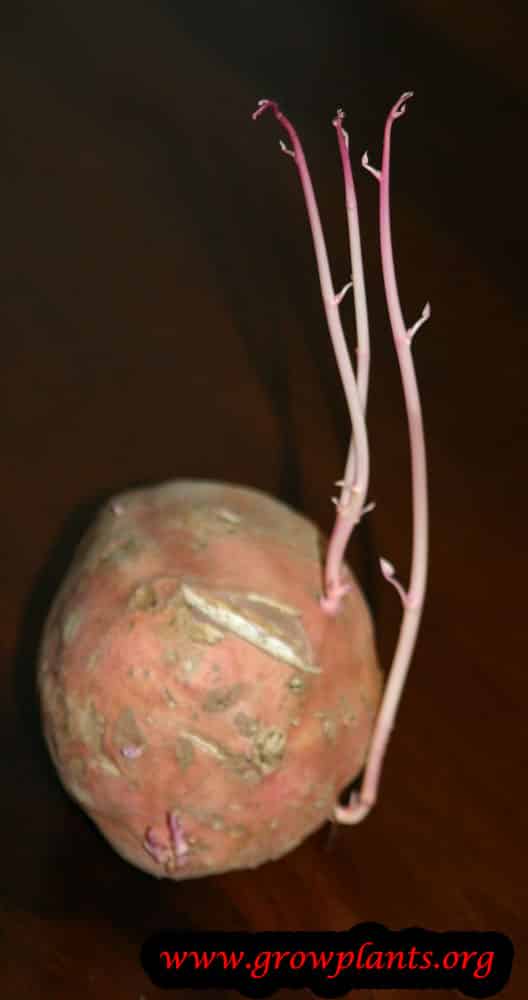
A tuber is the classic starting point: kept warm and moist it sprouts leafy shoots (slips), which are detached — ideally with a few roots — and planted out, each growing into a plant identical to the variety it came from. Overwinter a tuber or rooted cutting indoors in cold climates and start slips again in spring.
Bloom & Flower Guide
Quick Details
- Bloom Season: Mostly autumn (and winter to early spring in warm areas), when days are short
- Flower Appearance: Purple trumpet-shaped flowers, like a small morning glory
- Edibility: The flower is not the eaten part – sweet potato is grown for its leaves and tuber
Detailed Blooming Overview
Sweet potato is a relative of the morning glory and flowers in the same trumpet form. It is a short-day bloomer, so flowers appear mainly when day length shortens and the weather stays mild; in cool climates the plant may grow all season without ever blooming.
Flower Characteristics
- Purple, trumpet-shaped flowers opening in the morning.
- Produced sparingly, triggered by short days rather than by feeding.
Bloom Care & Thinning
- Managing the bloom: Grow the plant well and let bloom come with the shortening days; there is no need to force it.
- Pollination: Carried out by bees.
Fruit & Uses
Sweet potato is grown for both its edible leaves and its starchy tuber. The leaves can be eaten raw or cooked, while the tuber is always cooked before eating.
Quick Edible Specs
| Edible Parts | Leaves; Tuber (storage root) |
|---|---|
| Main Use(s) | Culinary – staple leafy green and starchy root vegetable |
| Eaten Raw or Cooked | Leaves: raw or cooked; Tuber: cooked |
| Preparation Required | Leaves: none (wash); Tuber: cook |
| Harvest Season | Leaves: all year (mainly autumn to spring in hardiness zones 6-10); Tuber: mainly autumn in zones 6-10a, autumn to winter in zone 10b, close to year-round in hot climates timed to the plant’s dormant period |
| Time to First Harvest | Tubers can be lifted from roughly half a year to about seven months after planting, once sized up (see Propagation for growth timing) |
| Storage | Tubers keep best when cured and stored cool, dry and out of direct light |
| Safety/Toxicity Caveat | Tuber must be cooked; discard any tuber that is green-tinged, sprouted, or damaged; heavy, repeated leaf harvest reduces the size of the tuber crop |
Leaves & Greens
The lobed, hand-shaped leaves — green, purple, yellow, white or multi-coloured depending on variety — are edible and can be picked all year, mainly from autumn to spring in cooler hardiness zones (6-10). They are eaten raw in salads or cooked, for example stir-fried. Trimming can be done when the tuber is pulled up, or lightly through the season without removing all the stems, which still allows the tuber to keep developing underground.
Roots & Tubers
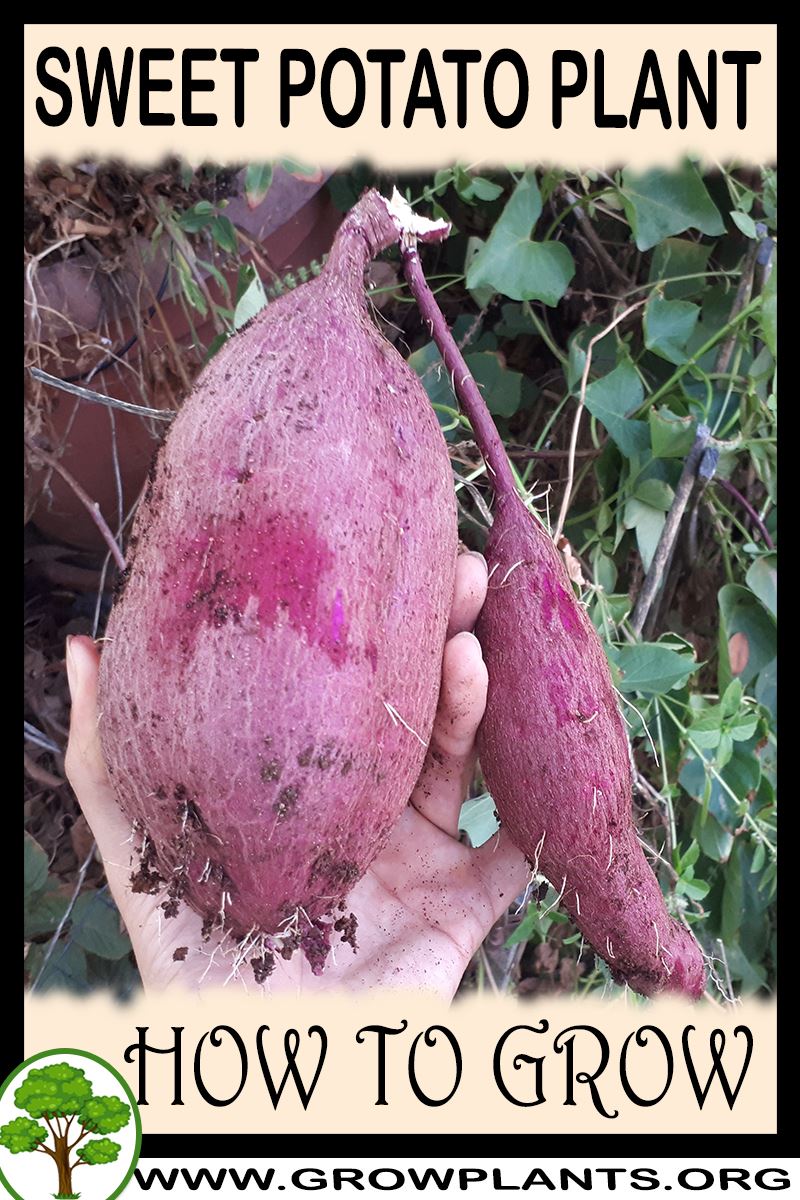
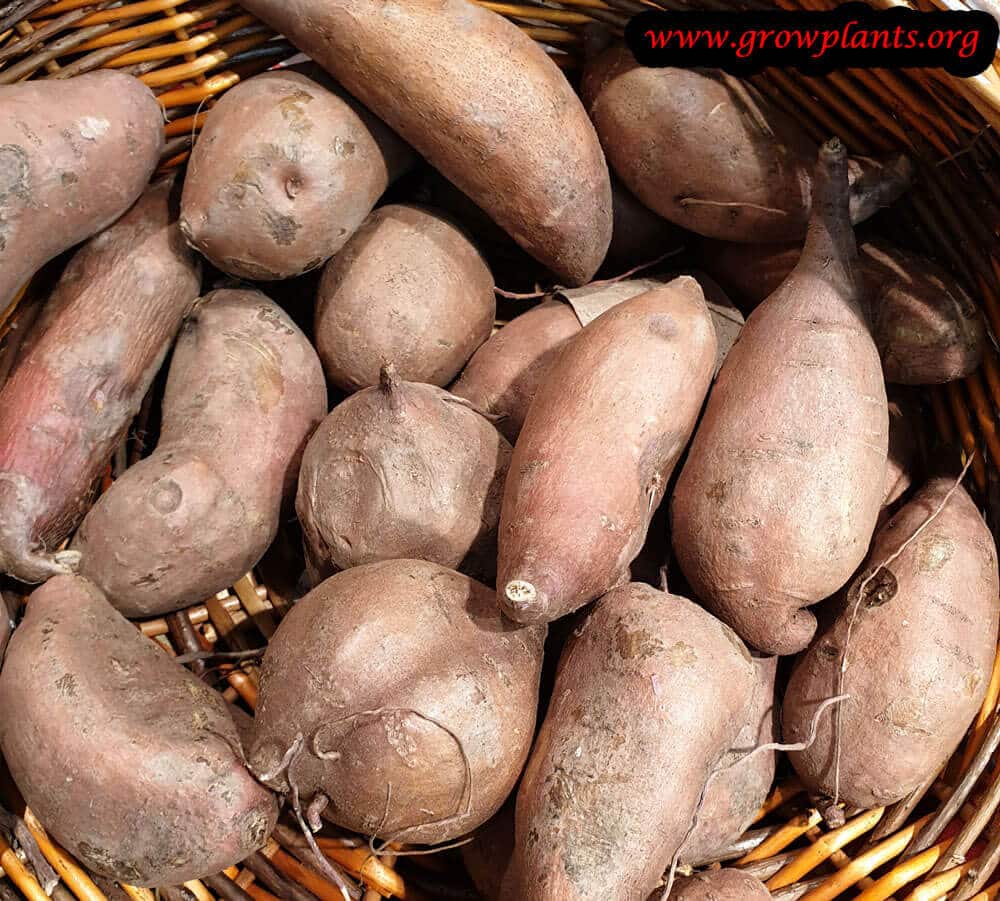
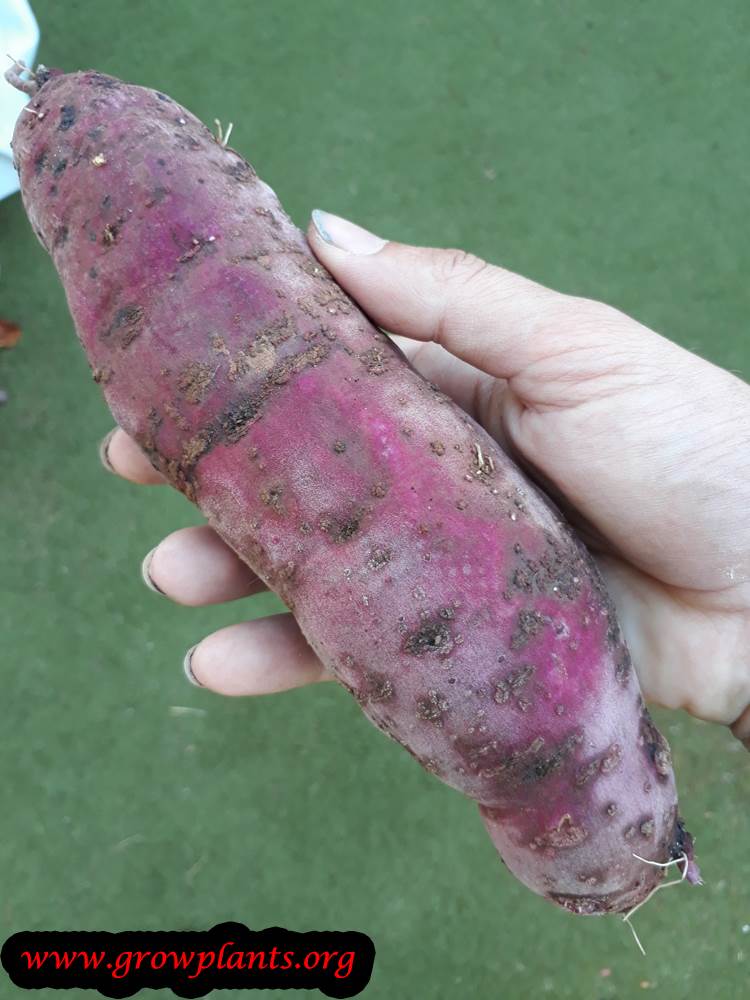
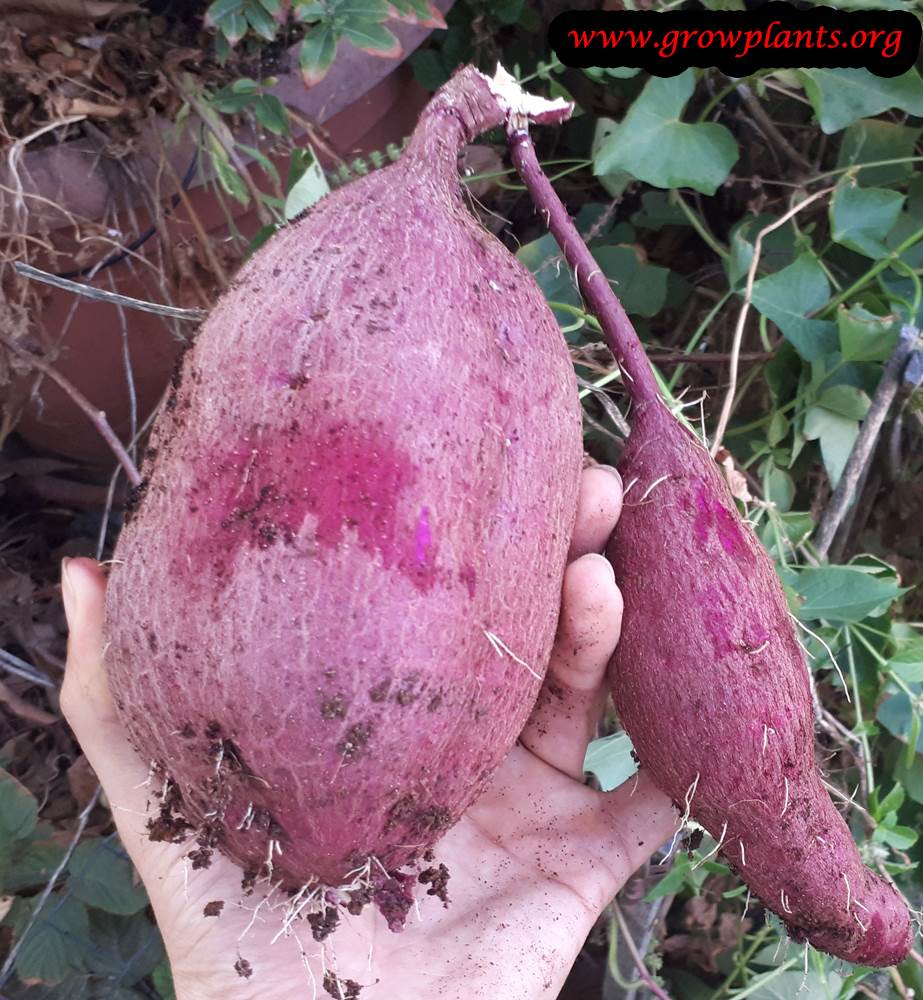
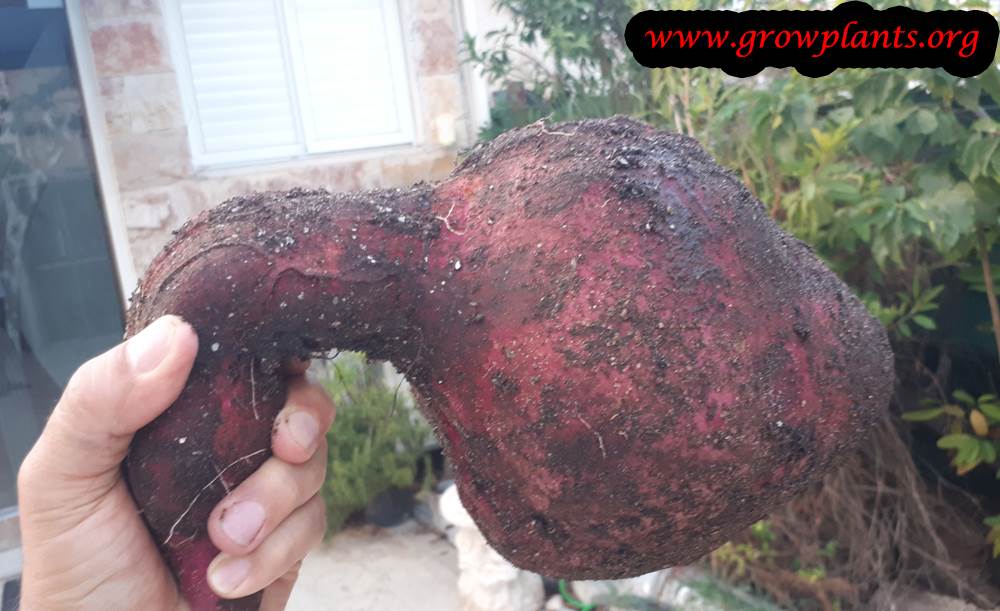
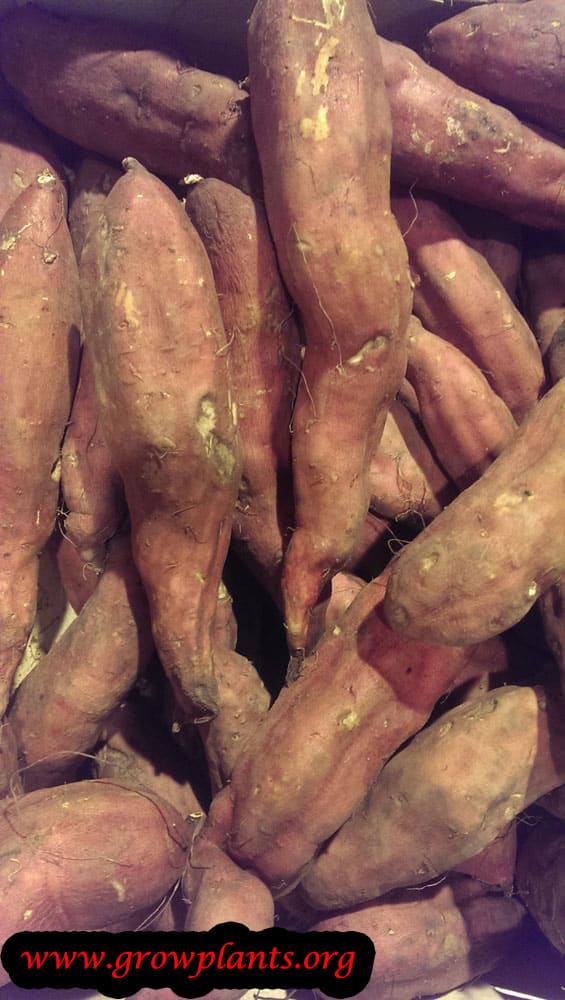
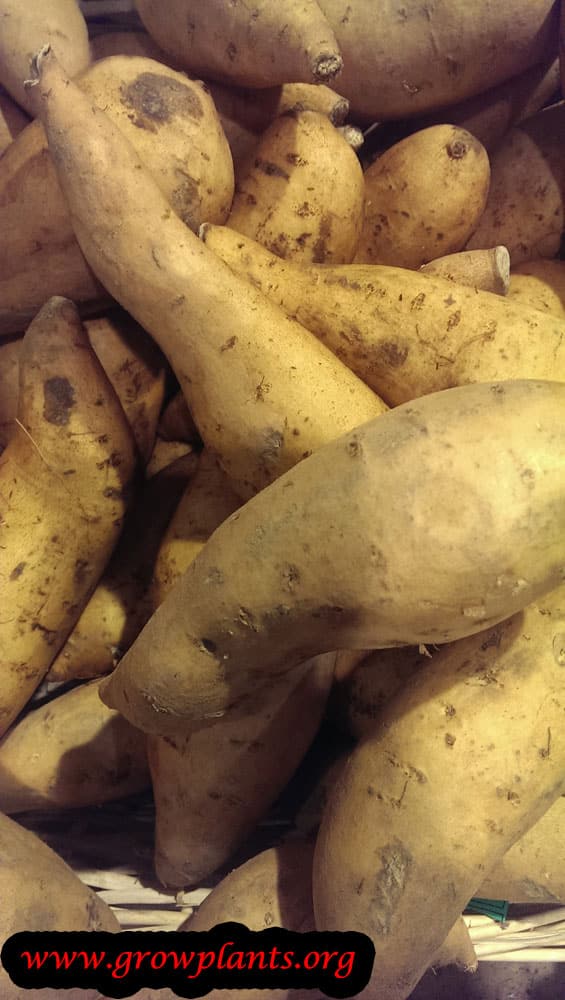
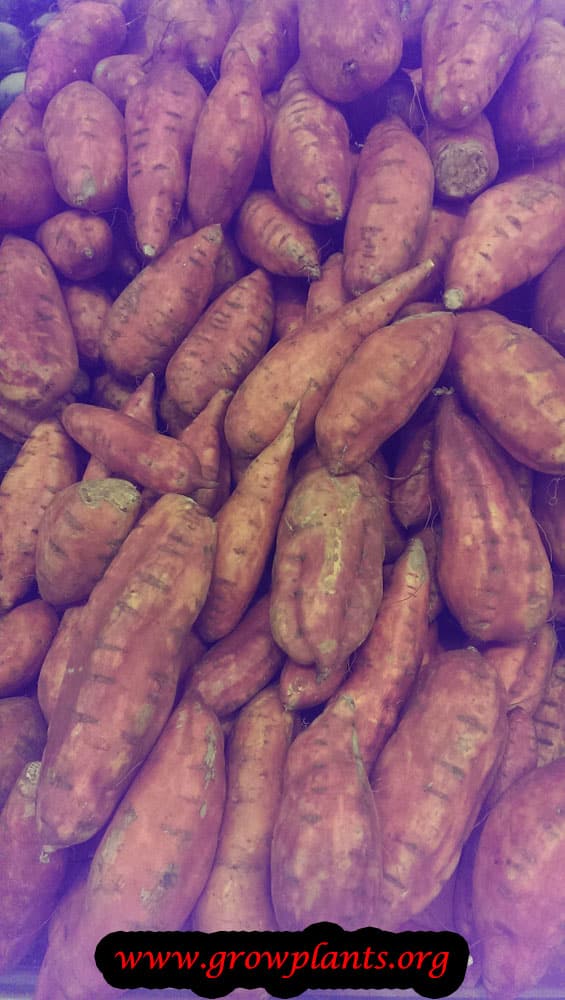
The tuber has brown skin and flesh that can be orange, purple, yellow or white depending on the variety. It is lifted mainly in autumn in cooler hardiness zones (6-10a), autumn into winter in zone 10b, and can be dug nearly year-round in hot climates by timing the harvest to the plant’s dormant period or taking a reduced amount continuously. Tubers are ready roughly half a year to about seven months after planting — wait until they are properly sized, since harvesting too early gives small roots and waiting too long makes them more fibrous. The tuber is always cooked, never eaten raw.
Preparation, Uses & Safety
Leaves need no special preparation beyond washing and can be used raw in salads or cooked, such as stir-fried. Tubers are cooked before eating; avoid any that are green-tinged, sprouted, or show rot or damage. Because heavy, repeated leaf harvest reduces the size of the tuber crop, moderate leaf picking through the season if a good tuber yield is also wanted.
Pests, Diseases & Troubleshooting
Overview: This sweet potato (grown for edible tubers) is the same species as edible sweet potato and shares its pest set, dominated by the sweet potato weevil — the single most damaging pest of the crop — along with hornworms, flea beetles, and whitefly, plus soilborne rots and nematodes below ground. Clean planting stock, crop rotation, and hilling are the core defenses.
Quick Troubleshooting Overview
| Issue / Pest | Main Symptom | Primary Solution |
|---|---|---|
| Sweet potato weevil | Tunneled, bitter tubers; darkened stems; the #1 pest | Clean slips, rotation, remove crop debris, hilling |
| Sweet potato hornworm | Large caterpillars stripping foliage | Hand-pick, Bacillus thuringiensis |
| Flea beetles / tortoise beetles | Shot-hole pits and small holes in leaves | Tolerate light damage, neem/spinosad if heavy |
| Whitefly & aphids | Honeydew, sooty mold, virus spread | Sticky traps, soap/oil, control weeds |
| Root-knot nematodes | Galled roots, knobbly cracked tubers, stunting | Rotation, resistant types, soil health |
| Scurf / rots | Dark blotches or soft rot on tubers | Clean stock, cure & store dry, rotation |
Common Pests & Management
- Sweet potato weevil (Cylas formicarius):
- Symptoms: THE key pest: adults are slender ant-like weevils with a reddish body; larvae tunnel through stems and, above all, the tubers, leaving winding galleries, and their feeding triggers bitter, foul-tasting terpenes that ruin the crop even at low levels.
- Prevention & Control: Plant certified weevil-free slips, rotate away from where sweet potatoes (or morning glories) grew, keep tubers covered by hilling soil over cracks, remove and destroy crop debris and volunteer plants that harbor it, use pheromone traps to monitor, and harvest promptly rather than leaving tubers in the ground.
- Sweet potato hornworm & armyworms (Agrius cingulata / Spodoptera spp.):
- Symptoms: Large green or dark caterpillars that rapidly strip and skeletonize foliage, sometimes defoliating shoots.
- Prevention & Control: Hand-pick the large larvae, encourage parasitic wasps and birds, and spray Bacillus thuringiensis (Bt) while caterpillars are small.
- Flea beetles & tortoise beetles (Chaetocnema / Cassidinae spp.):
- Symptoms: Tiny beetles chewing small round ‘shot-holes’ and pits in leaves; the larvae of some flea beetles also scar tuber surfaces.
- Prevention & Control: Keep plants vigorous, tolerate light foliar damage, use row cover on young plants, and treat heavy pressure with neem or spinosad.
- Whitefly & aphids (Bemisia tabaci / Aphis gossypii):
- Symptoms: Clouds of white flies or clustered aphids on leaf undersides with honeydew and sooty mold; both are important vectors of sweet potato viruses.
- Prevention & Control: Use yellow sticky traps, control nearby weed hosts, encourage natural enemies, and spray insecticidal soap or horticultural oil on undersides to limit virus spread.
- Wireworms & white grubs (Elateridae / Scarabaeidae larvae):
- Symptoms: Soil-dwelling larvae bore small round holes and shallow tunnels into developing tubers, downgrading quality.
- Prevention & Control: Rotate crops, avoid planting after grass/sod, improve soil health, and time planting and harvest to reduce exposure; beneficial nematodes help in problem soils.
Diseases & Fungal Issues
- Fusarium wilt & surface/stem rot (Fusarium spp.):
- Symptoms: Yellowing and wilting of vines, brown discoloration inside stems, and dry rot lesions on tubers.
- Treatment & Management: Plant resistant varieties and clean slips, rotate crops, avoid wounding tubers, and cure and store the harvest dry and well-ventilated.
- Black rot (Ceratocystis fimbriata):
- Symptoms: Round, dark, sunken, greenish-black spots on tubers and blackened, girdled stem bases on slips, with a bitter taste.
- Treatment & Management: Use certified disease-free slips, rotate for several years, discard infected roots, and cure/store properly; do not save seed roots from infected fields.
- Scurf (Monilochaetes infuscans):
- Symptoms: Dark grey-brown blotches on the tuber skin that are cosmetic but reduce storage life and marketability.
- Treatment & Management: Plant clean slips grown from disease-free roots, rotate, and avoid infested soil; the skin blemish does not enter the flesh but weakens storage.
- Sweet potato viruses (SPFMV, SPVD complex):
- Symptoms: Mottling, feathery leaf patterns, purple ring spots, leaf distortion, stunting, and sharply reduced yield, spread by aphids and whitefly.
- Treatment & Management: Use virus-tested planting material, control aphid and whitefly vectors, rogue out symptomatic plants, and renew stock from clean sources periodically.
Growing Difficulties & Abiotic Problems
- Poor tuber formation from excess nitrogen:
- Cause & Symptoms: Lush leafy vines but few or small tubers when soil is too rich or over-fed with nitrogen (for edible types); ornamental types are grown for exactly this leafiness.
- Correction Strategy: For a tuber crop, grow in loose, moderately fertile soil with balanced feeding (avoid high nitrogen), and give full sun and warmth; ornamental ‘Blackie’ and similar are simply enjoyed for foliage.
- Tuber cracking & growth defects:
- Cause & Symptoms: Split, knobbly, or misshapen tubers from uneven watering, heavy or compacted soil, or a wet spell after drought.
- Correction Strategy: Grow in loose, well-drained soil, water evenly and consistently, and avoid big swings between dry and wet during tuber growth.
- Cold & chilling injury:
- Cause & Symptoms: Blackened frost-killed vines and, in tubers, internal breakdown and off-flavors from chilling below about 10°C in storage.
- Correction Strategy: Grow only in warm, frost-free conditions, harvest before cold, cure the tubers warm and humid, then store cool but above chilling temperature (not in a refrigerator).
- Sunscald on exposed tubers:
- Cause & Symptoms: Greened or scalded shoulders where tubers push above the soil into sun and heat.
- Correction Strategy: Hill soil over exposed tubers during growth and shade at harvest; this hilling also helps keep the sweet potato weevil out.
What Helps — Products & Tools
The backbone of control here is cultural, not chemical: certified clean slips, crop rotation, hilling, prompt harvest, and proper curing/storage against the weevil, rots, and viruses. Supplement with pheromone traps and beneficial nematodes for weevils and soil grubs, Bacillus thuringiensis for hornworms, and insecticidal soap or oil plus yellow sticky traps for whitefly and aphids.
Varieties & Cultivars
- Blackie — Learn more about Blackie · Shop Blackie on Amazon
- Marguerite — Learn more about Marguerite