

Plant Profile & Key Characteristics
Overview: A herbaceous perennial geophyte grown as an annual, reaching 40–60 cm (16–24 in), grown for its edible underground tubers.
Quick Specifications
| Specification | Attribute |
|---|---|
| Plant Type / Life Cycle | Herbaceous perennial (tuberous geophyte) grown as an annual |
| Foliage Type | Herbaceous, evergreen while growing, then dying back (deciduous) |
| Mature Size | 40–60 cm (16–24 in) |
| Growth Rate | Fast to moderate |
| Root System | Fibrous roots plus underground stolons that swell into edible tubers |
| Toxicity | Tubers edible when cooked; green (light-exposed) tubers, sprouts and foliage contain solanine and are toxic |
| Hardiness | USDA zones 2+ (grown as a warm-season annual) |
Growth Form & Structure
- Height & Spread: The leafy top reaches 40–60 cm (16–24 in) in the ground; grows well in containers, grow-bags and tubs.
- Growth Habit & Form: Bushy, branching herb that dies back as the tubers mature underground.
- Lifespan & Maturity: Grown for a single season; tubers are lifted in autumn or winter once the tops die down.
Anatomy & Physical Features
- Leaves & Foliage: Green, pinnately divided leaves on soft stems.
Primary Uses & Landscape Value
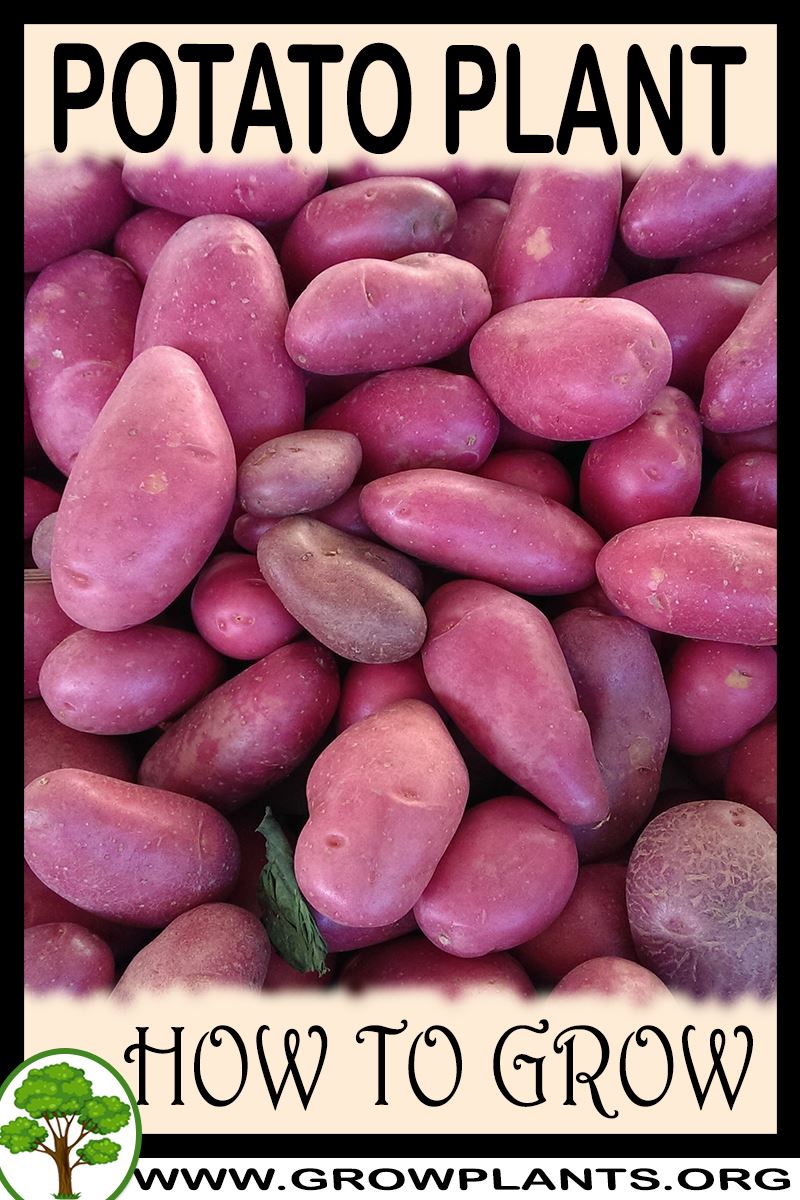
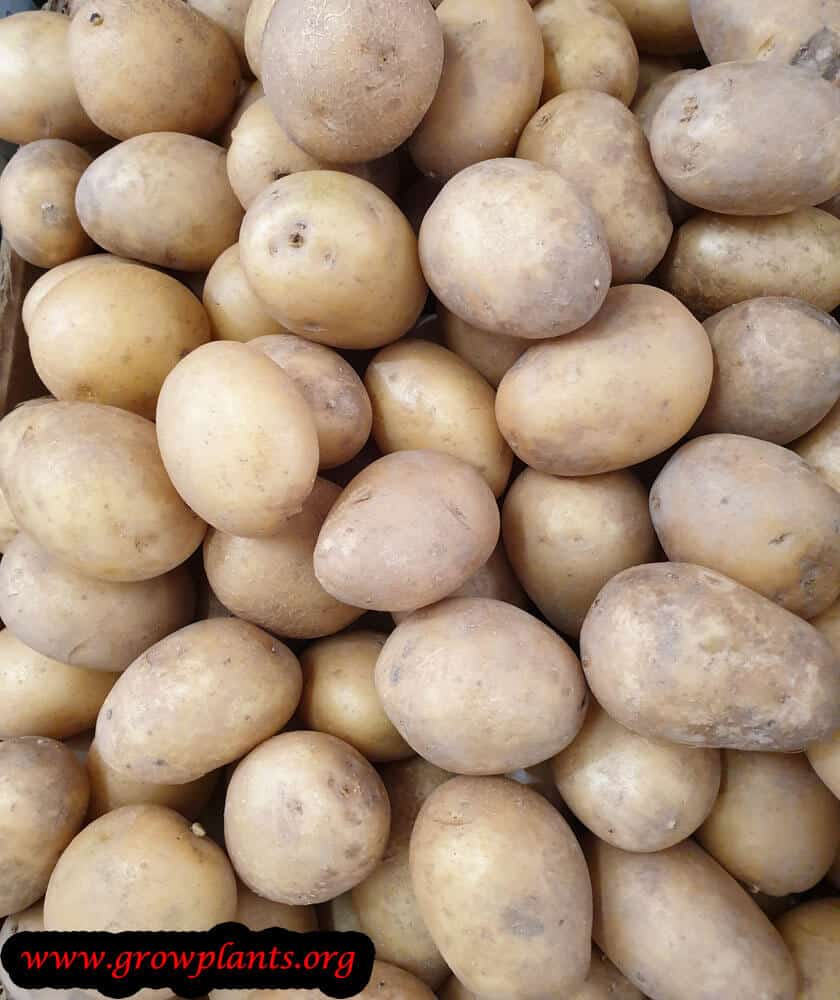
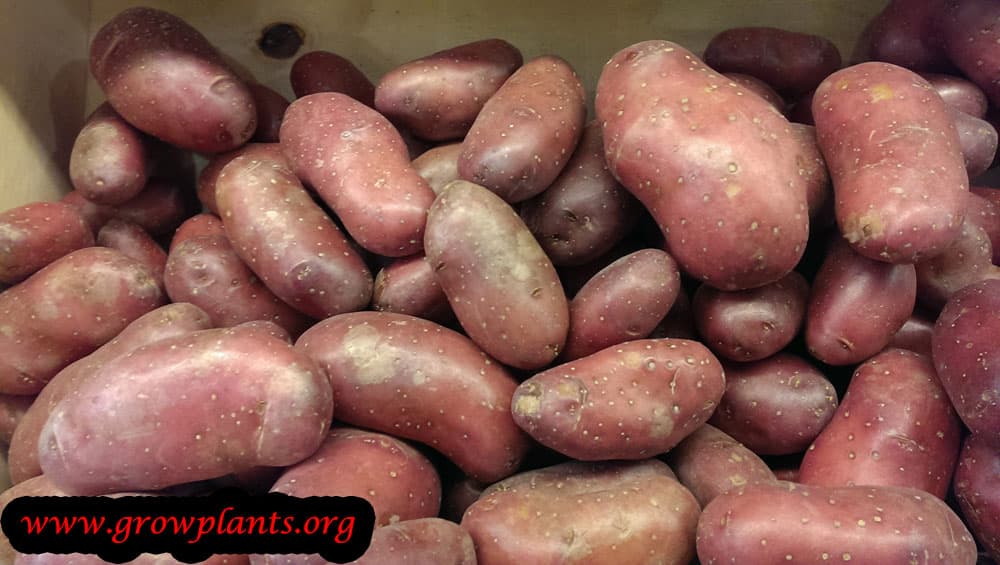
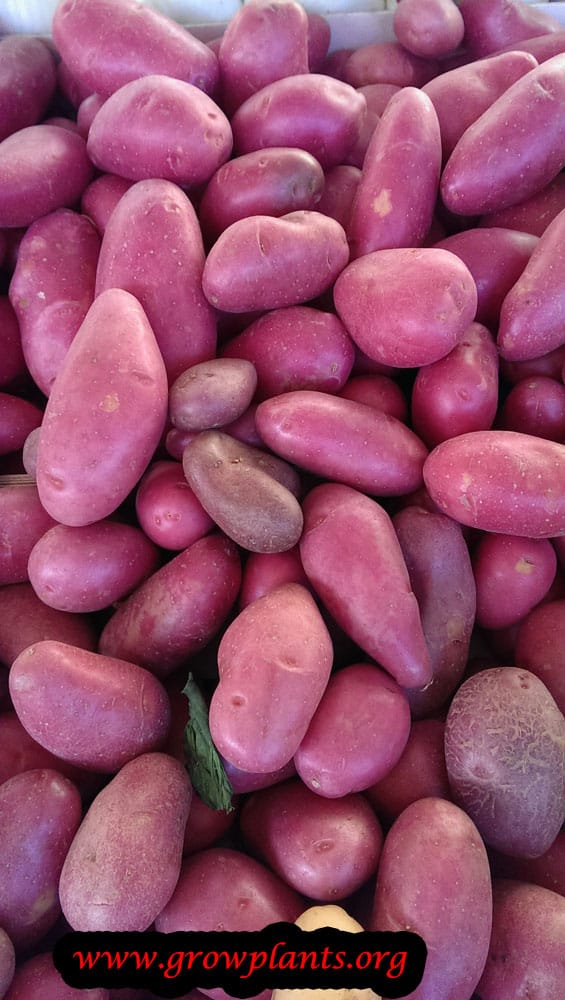
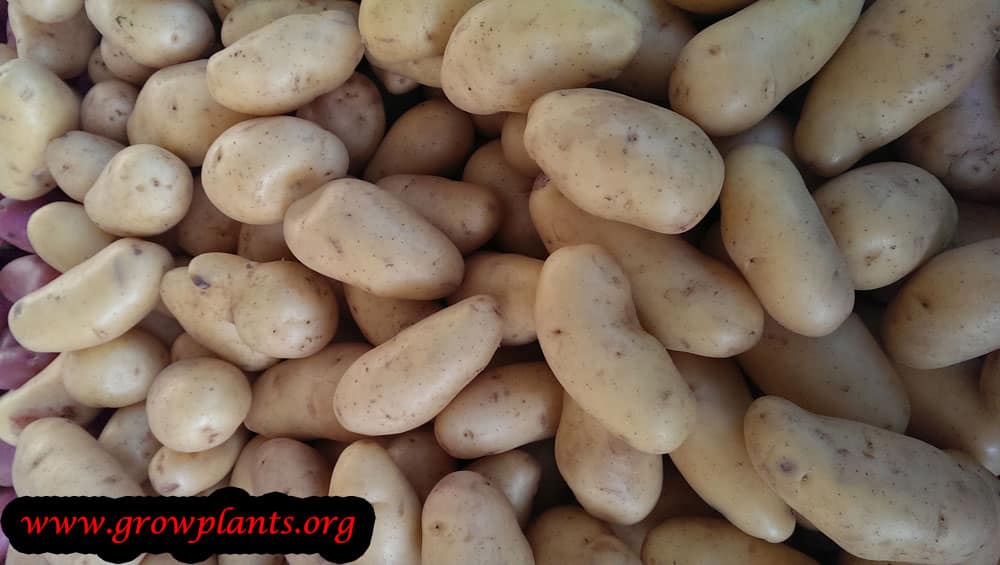
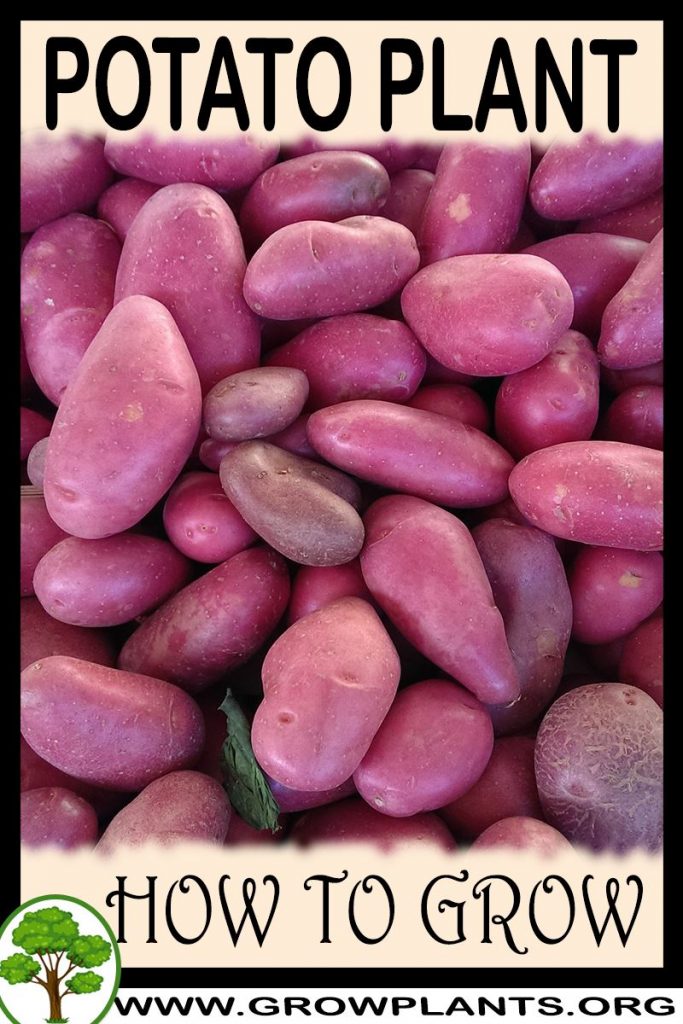
- Edible Uses: The tubers — in yellow, white, blue or purple flesh, 1–20 cm in size — are boiled, baked, fried and cooked in countless ways.
- Functional & Ornamental Roles: A staple food crop for the vegetable garden, raised beds and large containers.
Care Guide: Planting, Soil & Watering
Overview: Potatoes grow best in full sun in loose, rich, well-draining soil that is slightly acidic. They need steady moisture as the tubers form, so keep the soil evenly moist but never waterlogged.
Quick Care Requirements
| Requirement | Ideal Condition |
|---|---|
| Planting Season | In frost-free regions plant in autumn to winter; in cold climates plant in spring after frost |
| Growth Rate | Moderate to fast |
| Soil Type | Rich, loose, airy and well-draining |
| Soil pH | 5.0–6.5 (slightly acidic; helps limit scab) |
| Water Need | Moderate to high; keep the soil evenly moist |
Planting & Establishment
- Best Planting Season: In frost-free regions plant seed potatoes in autumn or winter; in cold climates plant in spring after the frost.
- How to Plant:
- Hole Preparation: Plant into loose, well-worked soil and hill up soil over the developing tubers as the plant grows.
- Soil Amendments: Enrich with organic matter and mulch; keep the soil light and airy.
- Planting Depth: Set seed potatoes several centimetres deep and mound soil over the stems to keep the tubers covered and out of the light.
- Growth Speed & Expectations: A moderate-to-fast grower reaching about 40–60 cm; earth up regularly so tubers stay covered.
Soil, Watering & Drainage Care
- Soil Mix & Drainage Needs: Loose, airy, well-draining soil is key so the tubers do not rot; slightly acidic ground helps limit scab.
- Watering Schedule & Technique:
- Young / Newly Planted: Keep the soil evenly moist as the plants establish and begin to tuberise.
- Established: Water regularly and deeply while tubers bulk up, easing off as the foliage dies back before harvest.
- Seasonal Adjustments: More in warm, dry spells, less as the plant matures toward harvest.
Climate, Light & Hardiness
Potato is a cool-season, full-sun crop grown for its tubers across Mediterranean, desert, subtropical, temperate and tropical climates, with the growing season timed to avoid both frost and extreme heat. The leafy top is frost-tender, but because it is grown from cold-stored tubers each cycle the site data lists it as growable from about USDA zone 2 upward - planted in the cool of autumn/winter in mild areas and in spring in cold climates.
Quick Climate Specifications
| Climate Zones | Mediterranean, desert, subtropical, temperate and tropical (cool-season timing) |
|---|---|
| USDA Hardiness Zones | Grown from about zone 2 upward (as a seasonal crop from tubers) |
| Optimal Temp Range | Cool to mild; tuber formation is best in moderate temperatures, roughly 15–20 °C (59–68 °F) |
| Cold Damage Begins | Foliage is damaged by light frost near 0 °C (32 °F) |
| Approx. Survival Minimum | Tops killed by frost; tubers must not freeze in the ground or in storage |
| Frost Tolerance | Low (foliage frost-tender) |
| Light Conditions | Full sun |
| Wind Tolerance | Moderate (soft top growth) |
Sunlight & Light Exposure
Optimal Light Setup
Grow in full sun for vigorous top growth, which drives tuber yield. Keep developing tubers covered with soil or mulch, as light turns exposed tubers green and bitter.
Direct Sun Requirement
A full-sun crop - open, unshaded exposure builds the foliage that feeds the tubers.
Best Exposure / Orientation
An open, sunny aspect suits the crop; in hot regions time the crop so bulking happens in the cooler part of the season rather than at peak heat.
Temperature Extremes & Hardiness
USDA Hardiness & Regional Limits
The site data lists potato as growable from about zone 2 upward. This reflects its use as a seasonal crop grown from tubers rather than a plant that overwinters in the ground - in mild-winter areas it is planted for a frost-free autumn/winter crop, and in cold climates in spring for a summer crop. Its real limit is timing the crop between frost and heat.
Cold Damage & Winter Protection
The leafy top is frost-tender and is blackened by light frost near 0 °C (32 °F); tubers left in the ground must not freeze. In mild climates plant to avoid frost on the emerging haulm; in storage keep tubers cool but above freezing.
Frost Sensitivity
Foliage is frost-sensitive - an early or late frost sets the crop back or kills the top, so planting is timed around the frost-free window even though the crop itself prefers cool conditions.
Extreme Heat Tolerance
Heat, not cold, is the main quality limit: tuber formation slows and can stall when soil and air are persistently hot (roughly above the high 20s °C / low 80s °F). In warm regions grow potatoes in the cool season and mulch to keep the soil cool.
Wind, Humidity & Microclimate
Humidity Preferences
Grows well across a range of humidity; cool, moderately moist conditions suit it, but persistently damp, humid weather favours blight.
Dry-Air Tolerance
Tolerates dry air when soil moisture is steady; hot, dry winds add heat stress during bulking.
Wind Tolerance
Moderate; the soft haulm can be battered by strong wind, though the crop is below ground and recovers.
Rainfall & Seasonal Moisture
A cool season with steady moisture suits bulking, while prolonged warm, wet, humid spells strongly favour late blight - the crop's key climatic disease risk.
Microclimate Recommendations
In hot regions choose a cool-season slot and mulch to keep soil temperatures down; in cold regions time planting to dodge late frost on the emerging tops.
Growing in Pots, Balconies & Indoors
Potatoes are a classic container crop rather than a houseplant – they need full sun to build good tubers, so indoors they only make sense on the brightest, sunniest windowsill, and even then a balcony, patio or deep grow-bag is far better. In a tall, roomy container they crop surprisingly well and are easy to harvest by tipping the pot out. Foliage reaches about 40-60 cm (16-24 in).
Quick Details
- Container Size: A deep 20-40 L (5-10 gal) pot, tub or grow-bag – depth matters for tuber formation (general guidance; the grower confirms container growing works)
- Indoor Suitability: Not a houseplant; needs strong sun, so a sunny windowsill at best and an outdoor spot for real yields
- Best Spot: Full sun
- Soil & Drainage: Loose, well-aerated, organic-rich mix that drains freely
- Watering in Pots: Keep evenly moist while growing – pots dry fast; ease off as the tops die down before harvest
Indoors & On the Windowsill
- Houseplant limits: Not an indoor plant – without strong sun the plants grow leggy and set few tubers.
- Windowsill / container growing: If space is tight, a deep tub on the sunniest balcony or by a bright window works; “earth up” by adding mix as the stems grow to encourage more tubers along the buried stem.
- Overwintering: Grown as a warm-season annual – lift the tubers when the tops die back in autumn or winter and store them cool and dark.
- Safety: The tubers are eaten cooked, but the leaves, stems, green (sun-exposed) tubers and any berries contain solanine and are poisonous – keep them away from children and pets, and never eat green potato.
On a Balcony or Patio
- Light & wind: Give it the sunniest spot. Reflected heat from walls and paving dries pots fast, so check moisture daily in warm weather and mulch the surface. A drip irrigation kit with a timer can take over that watering check automatically.
- Practicalities: A filled deep tub is heavy – position it before filling, and keep drainage runoff off the balcony floor.
Choosing the Pot, Soil & Long-Term Care
- Pot & drainage: A deep 20-40 L pot, tub or grow-bag with strong drainage holes. Skip a standing-water saucer, which keeps the roots wet and invites rot. Terracotta breathes and dries faster; glazed or plastic pots hold moisture longer.
- Potting mix: Well-aerated and organic-rich – a quality potting mix, or peat/coir with perlite or vermiculite for drainage.
- Feeding: Potted plants need feeding more often than those in the ground, since frequent watering leaches nutrients away – feed through the growing season with a balanced, organic-rich fertilizer.
- Repotting: Every couple of years refresh the mix and pot on a size; for perennials, lightly prune the root ball and top growth at the same time to keep them vigorous.
Growing this plant in a greenhouse
A greenhouse can give potato plant frost protection, cold protection, a longer growing season and winter growing.
Greenhouse at a glance
| Greenhouse suitability | Good - clearly useful |
|---|---|
| Main benefits | frost protection, cold protection, a longer growing season, winter growing |
| Season extension | can grow through winter |
| Outdoor protection advisable below | about 0°C |
| Suitable types | unheated greenhouse, polycarbonate greenhouse |
| Heating | No added heat is normally needed. |
Related greenhouse guides
- Greenhouses: How to Choose the Right Greenhouse
- Polycarbonate Greenhouses: What to Look for Before Buying
- Greenhouse Propagation Equipment
Fertilizing & Feeding
A moderate feeder: potatoes respond to steady feeding through canopy and tuber growth, then feeding stops as the crop matures. A fertilizer formulated for tomatoes and vegetables supports that feeding pattern through harvest.
Quick Fertilizing Specs
| Feeding Level | moderate |
|---|---|
| Main Nutrient Priority | Nitrogen early for canopy, then potassium as tubers bulk |
| Best Feeding Period | During active canopy and tuber growth |
| Reduce/Stop Feeding | Stop feeding as the vines yellow and die back near harvest |
| Soil pH | Prefers slightly acidic soil |
| Organic Options | Compost and well-rotted manure worked into the bed |
Feeding by Growth Stage
Establishment after planting
Help newly sprouted plants build roots and an early leaf canopy.
| Nutrient direction | A complete, balanced fertilizer to support early root and shoot growth. |
|---|---|
| Timing | From sprouting through early canopy growth. |
| Frequency | A light feeding as growth begins, worked into prepared soil. |
| Fertilizer types | Balanced complete garden fertilizer, Compost or other organic matter worked into the bed |
| Precautions | Avoid heavy nitrogen this early, which can delay tuber formation. |
Vegetative canopy growth
Drive the leafy canopy that will power tuber formation.
| Nutrient direction | Lean toward nitrogen to build vigorous foliage. |
|---|---|
| Timing | During rapid leaf and stem growth before tubers bulk. |
| Frequency | Feed through the active growing season, easing off as tubers begin to size. |
| Fertilizer types | Nitrogen-forward complete fertilizer |
| Precautions | Do not overdo nitrogen once tubers start forming, or bulking is delayed. |
Tuber bulking
Support tuber bulking and quality.
| Nutrient direction | Shift toward potassium to support tuber development, with moderate nitrogen. |
|---|---|
| Timing | As tubers enlarge underground. |
| Frequency | Continue feeding while tubers bulk, then taper as the crop matures. |
| Fertilizer types | Balanced fertilizer with added potassium |
| Precautions | Keep soil evenly moist to move potassium to the roots and reduce cracking. |
Maturation and harvest
Let vines die back and skins set before harvest; nutrients are no longer needed.
| Nutrient direction | None – withhold fertilizer while the plant is not in active growth. |
|---|---|
| Timing | Late in the season as foliage yellows and dies back. |
| Frequency | No feeding at this stage. |
| Fertilizer types | No feeding at this stage – hold off on fertilizer as the crop matures |
| Precautions | Do not fertilize during maturation; late feeding delays skin set and storage quality. |
Nutrient Deficiency Signs & Corrections
Older, lower leaves fade to pale green or yellow and overall growth is slow and weak.
| Possible causes | Low or leached soil nitrogen, Cold or waterlogged soil limiting root uptake |
|---|---|
| Appears first on | Older, lower leaves |
| What to check | Recent feeding history and soil organic matter, Soil drainage and root health |
| Possible correction | Apply a complete nitrogen-bearing fertilizer during active growth and build soil with compost. |
Margins of older leaves yellow then scorch brown, with weak fruiting or bulking.
| Possible causes | Low soil potassium, Sandy or heavily leached soil, Drought stress worsening the symptom |
|---|---|
| Appears first on | Margins of older leaves |
| What to check | Soil test for potassium, Consistency of watering |
| Possible correction | Use a balanced fertilizer supplying adequate potassium as fruits or tubers develop. |
Interveinal yellowing on older leaves while the veins stay green.
| Possible causes | Low soil magnesium, High potassium competing with magnesium uptake, Sandy, leached soils |
|---|---|
| Appears first on | Older leaves |
| What to check | Soil test for magnesium, Balance of recent fertilizer use |
| Possible correction | Apply a magnesium source such as a labeled Epsom-salt drench if a soil test confirms the need. |
Pruning, Training & Seasonal Maintenance
The potato (Solanum tuberosum) is a herbaceous tuber crop, and it is not pruned in any structural sense—you never head, thin or train the top for shape. What foliage (haulm) management there is serves the tubers below ground: keeping the crop healthy, occasionally cutting the haulm down before lifting to firm the skins, and removing diseased or exposed growth. All green parts (leaves, stems, flowers and any green on the tuber) are toxic, so handle and dispose of prunings accordingly.
Quick Pruning & Maintenance Specs
| Pruning Tolerance | Not applicable — no structural pruning; do not defoliate a growing crop |
| Primary Intervention Window | Late season – cut the haulm 2–3 weeks before lifting to set skins |
| Typical Frequency | Sanitary only, plus one haulm-cut at the end |
| Main Objective | Healthy foliage to feed the tubers, then skin-set before harvest |
| Young Plant Priority | Earthing-up (hilling) – not pruning – to cover developing tubers |
| Mature Plant Priority | Remove blight-struck foliage; cut haulm before lifting |
| Best Tool Type | Bypass secateurs or shears for haulm; a fork for lifting |
| Avoid Cutting Foliage During | Active bulking — green leaves are still feeding the tubers |
By Plant Age & Size (not structural pruning)
Establishment & Bulking
Do not cut healthy top growth—the leaves are the tubers’ food factory. Instead, earth up (draw soil over the base of the stems) as the haulm grows, which is a soil operation, not a prune, and keeps tubers covered and out of the light so they do not green.
Flowering
Potatoes flower and may set small green berries; removing the flowers is sometimes suggested to divert energy to tubers, but the effect is minor and it is optional. If you remove them it is for tidiness rather than a real yield gain—and the berries, like all green parts, are toxic and are best cleared where children or pets are about.
Pre-Harvest
Two to three weeks before lifting maincrop potatoes, cut the haulm down to near ground level. This is the one deliberate “cut” the crop wants: it stops further growth, firms and thickens the skins for storage, and—importantly—removing and destroying blight-infected haulm keeps the disease from washing down onto the tubers.
Seasonal Schedule
Ongoing Sanitary
Objective: keep late blight (Phytophthora infestans), leafroll virus and beetle damage in check. Remove and destroy badly blighted foliage promptly; do not compost it. Pull out any volunteer (self-sown) potato plants, which harbour disease.
Skin-Set / Haulm Removal
Objective: prepare tubers for lifting and storage. Cut the haulm, leave the tubers in the ground a fortnight or so to cure their skins, then lift.
Flowering & Fruiting Wood
Not applicable—the potato is grown for underground tubers, not for fruit on persistent wood, so there is no flowering wood to manage. The reproductive point that matters for the grower is simply that removing flowers has little real effect on yield, and that the green berries are toxic and non-edible.
Special Growth to Remove
Remove and destroy blight-infected haulm, cut the haulm before lifting, pull volunteer plants, and discard any tuber that has greened in the light (the green indicates toxic solanine). There is no woody structure, no suckers and no rootstock growth to manage.
Container & Small-Space Growing
In bags or pots the top is still never pruned—you top up compost around the stems (the container equivalent of earthing-up) to cover tubers and keep them out of the light, then cut the haulm before tipping the container out to harvest.
Tools
Bypass secateurs or shears for cutting the haulm; a garden fork for lifting. No selective pruning tools apply, since there is no framework to cut.
Tool Hygiene & Disease Risk
Classification: Increased. Late blight and leafroll virus are the real risks: clean tools after cutting blighted haulm, do not compost diseased material, and keep tools and hands clean when working among plants showing virus symptoms so you do not spread it. Wash hands after handling foliage and any green tubers.
Heavy Pruning & Rejuvenation
Not applicable. There is no rejuvenation of a potato plant—it is an annual-growth crop lifted at the end of the season and regrown from seed tubers. Defoliating a healthy growing plant only reduces the tuber yield.
Post-Cut Care
After cutting the haulm, leave the tubers to cure in the ground before lifting on a dry day; store only sound, un-greened tubers in the dark. No feeding follows haulm removal—the crop’s growth is deliberately being ended.
Common Mistakes
- Cutting or thinning healthy green haulm mid-season and starving the tubers.
- Failing to earth up, so tubers surface, green and turn toxic.
- Composting blighted haulm and carrying disease to next year’s crop.
- Leaving volunteer plants that harbour blight and virus.
When NOT to Cut the Foliage
Do not cut the top while the crop is still actively bulking—wait until the plant is naturally dying back, or until the deliberate pre-harvest haulm-cut. Early defoliation directly reduces the harvest.
Recommended Tools (by task)
- bypass_secateurs — remove blight-struck foliage cleanly during the season.
- hedge_shears — cut the whole haulm down quickly before lifting.
Propagation Guide
Potatoes are grown clonally from seed tubers – the practical, true-to-type method – each tuber being a piece of underground stem studded with buds (‘eyes’). True seed from the berries is possible but produces highly variable plants and is used mainly for breeding new varieties. Propagation is easy.
Quick Propagation Specs
| Best Propagation Method | Seed tubers (tuber division) |
| Alternative Methods | True potato seed (TPS), for breeding new varieties |
| Propagation Difficulty | Easy |
| Vegetative True-to-Type | Yes – seed tubers are clones, identical to the parent variety |
| Seed True-to-Type | No – true potato seed is highly variable |
| Best Propagation Season | Plant tubers in frost-free autumn or winter in mild areas, spring in cold climates |
Rhizomes, Tubers, Bulbs & Corms
Tuber Division (Seed Tubers)
Use healthy, disease-free seed tubers. Small tubers can be planted whole; larger ones can be cut into pieces, each carrying at least one or two eyes. Let the cut surfaces dry and heal (callus) for a day or two before planting so they resist rotting.
Sprouting (Chitting) & Planting
Tubers can be pre-sprouted in a cool, bright place until the eyes push short green shoots, which gives a quicker, more even start. Plant with the eyes/shoots facing up, several centimetres deep, and earth up (hill) the stems as they grow so new tubers form along the buried stem rather than greening at the surface.
Growing from Seed (True Potato Seed)
Seed Handling & What to Expect
Seed extracted from the small green berries can be sown to raise seedlings, but the offspring will differ from the parent and from each other. This route is chosen only for developing new varieties, not for reproducing a known potato.
Bloom & Flower Guide
Quick Details
- Bloom Season: Summer
- Flower Appearance: Purple (also white) star-shaped flowers with a yellow central cone, borne in clusters
- Edibility: Not edible – the flowers and the small green berries that follow are toxic. Only the tuber is eaten
Detailed Blooming Overview
Potato plants send up clusters of pretty star-shaped flowers in summer, usually purple with a bright yellow center. Flowering is a sign the plant is mature and busy forming tubers below ground. Not every variety blooms heavily, and the flowers – though attractive – are poisonous, as are the tiny green tomato-like berries that can follow.
Flower Characteristics
- Five fused petals forming a purple or white star, with a yellow central cone of stamens.
- Held in loose clusters above the foliage.
Bloom Care & Thinning
- Managing the bloom: Flowering does not need any intervention; it coincides with tuber formation, when even watering matters most.
- Pollination: Bees visit and buzz-pollinate the flowers, though most cultivated potatoes set little or no true seed.
- Safety: Keep the flowers and any green berries away from children and pets – they contain solanine and are toxic.
Fruit & Uses
The Potato is grown for its edible underground tubers, which are always eaten cooked — boiled, baked, roasted, fried and more. Only the tuber is eaten; the green parts of the plant, and any green or sprouted tubers, are toxic.
Quick Edible Specs
| Edible Parts | Tuber |
|---|---|
| Main Use(s) | Culinary staple – cooked, baked and many other dishes |
| Eaten Raw or Cooked | Cooked (never eaten green or raw as a staple) |
| Preparation Required | Cook; discard green or sprouted tubers; store in the dark |
| Harvest Season | Autumn and winter (lifting time) |
| Time to First Harvest | Within a single season from planting (see growing notes) |
| Storage | Cure briefly, then store cool, dark and dry to prevent greening and sprouting |
| Safety/Toxicity Caveat | Green, light-exposed or sprouting tubers, sprouts, foliage and berries contain solanine and are toxic — do not eat them |
Roots & Tubers
The edible tubers can be yellow, white, blue, purple and other colours, with a skin usually of the same colour in a darker, brownish tone, and range in size from about 1 to 20 cm. Tubers are lifted in autumn or winter, once the foliage has begun to die back, which signals they have matured. Handle them gently to avoid bruising and skinning.
Harvesting
Lift the tubers by carefully digging around and under the plant. Let them dry (cure) briefly, then brush off soil — do not wash tubers meant for storage. Keep them out of the light both during and after harvest, because light turns tubers green and increases their toxic solanine content.
Preparation, Uses & Safety
Potatoes are a cooked staple — boiled, mashed, baked, roasted, fried and used in countless dishes. They must be cooked and are not eaten raw as food. Never eat tubers that have turned green or sprouted, and never eat the sprouts (eyes), leaves, stems or berries: these contain solanine and related glycoalkaloids and are toxic. Store tubers cool, dark and dry, and cut away any green patches and sprouts before cooking.
Pests, Diseases & Troubleshooting
Overview: The potato (Solanum tuberosum) is a heavy-feeding tuber crop notorious for the Colorado potato beetle and for late blight – the disease behind historic famines. Its defence is overwhelmingly cultural: certified disease-free seed potatoes, crop rotation, resistant varieties, hilling, and good airflow, with organic sprays used only when monitoring demands. Guard tubers from light to avoid toxic greening.
Quick Troubleshooting Overview
| Issue / Pest | Main Symptom | Primary Solution |
|---|---|---|
| Colorado potato beetle | Striped beetles and red grubs stripping foliage | Hand-pick, rotate, Bt/spinosad |
| Aphids | Honeydew, curl; spread leafroll & virus Y | Reflective mulch, soap/neem, beneficials |
| Potato tuber moth & wireworms | Tunnels in tubers and stems | Deep hilling, rotation, prompt harvest |
| Late blight | Greasy grey-brown leaf/tuber rot; fast | Resistant varieties, airflow, copper |
| Early blight & scab | Target-ring leaf spots; scabby tuber skin | Rotate, even moisture, resistant seed |
| Tuber greening | Green, bitter, toxic tuber skin | Hill soil over tubers, store in the dark |
Common Pests & Management
- Colorado potato beetle (Leptinotarsa decemlineata):
- Symptoms: Yellow-and-black striped adults and humped red grubs that can strip foliage completely; orange egg clusters on leaf undersides.
- Prevention & Control: Hand-pick beetles, grubs and eggs, use straw mulch and rotation to disrupt them, encourage predators, and apply Bt (tenebrionis strain) or spinosad to young larvae.
- Aphids (Myzus persicae, Macrosiphum euphorbiae):
- Symptoms: Green/pink clusters on shoots with honeydew and curl; critically, they transmit potato leafroll virus and potato virus Y.
- Prevention & Control: Use reflective mulch, encourage ladybirds and lacewings, plant certified virus-free seed, and spot-treat with insecticidal soap or neem.
- Potato tuber moth (Phthorimaea operculella):
- Symptoms: Larvae mine leaves and, importantly, tunnel into tubers in the field and store, causing rot.
- Prevention & Control: Hill soil deeply to cover tubers, avoid cracked soil, harvest promptly, and store cool; use pheromone traps to monitor.
- Wireworms (Agriotes / Limonius spp.):
- Symptoms: Thin brown click-beetle larvae that bore narrow holes through tubers, worst after grassy ground.
- Prevention & Control: Rotate away from grassland, avoid planting into recently turned sod, harvest promptly, and cultivate to expose larvae.
- Flea beetles & leafhoppers (Epitrix spp., Empoasca fabae):
- Symptoms: Flea beetles pepper leaves with shot-holes; leafhoppers cause marginal yellowing and ‘hopperburn’.
- Prevention & Control: Row cover on young plants, keep plants vigorous, and use kaolin clay or spinosad under high pressure.
Diseases & Fungal Issues
- Late blight (Phytophthora infestans):
- Symptoms: Greasy grey-green blotches with white mould underneath on leaves in cool wet weather, plus firm brown-red rot in tubers; spreads and kills crops very fast.
- Treatment & Management: Grow resistant varieties, space and hill for airflow, avoid overhead watering, remove volunteers and cull piles, destroy infected haulm, and apply copper preventively when blight weather threatens.
- Early blight (Alternaria solani):
- Symptoms: Dark concentric target-ring spots on older leaves, spreading upward, with shallow dark tuber lesions.
- Treatment & Management: Rotate, keep plants well fed and mulched, remove affected foliage, and use copper or a biofungicide preventively.
- Common scab (Streptomyces scabies):
- Symptoms: Rough, corky, raised or pitted scabs on the tuber skin (cosmetic but unsightly), worst in dry, alkaline soil.
- Treatment & Management: Use resistant varieties and certified seed, keep soil evenly moist during tuber set, avoid liming, and rotate.
- Blackleg & soft rot (Pectobacterium / Dickeya spp.):
- Symptoms: Black, slimy rot at the stem base and mushy, foul-smelling tuber rot, worst in wet soil.
- Treatment & Management: Plant certified seed, avoid wet heavy soil, do not cut seed in disease-prone conditions, and remove affected plants.
- Viruses (leafroll & potato virus Y) (PLRV, PVY):
- Symptoms: Rolled, stiff or mottled leaves, stunting and reduced yield, carried in seed and spread by aphids.
- Treatment & Management: Always plant certified virus-free seed, control aphids, and rogue out symptomatic plants.
Growing Difficulties & Abiotic Problems
- Tuber greening (toxic):
- Cause & Symptoms: Tubers exposed to light near the soil surface or in storage turn green and accumulate toxic solanine, becoming bitter and unsafe.
- Correction Strategy: Hill soil over developing tubers, harvest fully, and store in complete darkness; discard green portions.
- Hollow heart & growth cracks:
- Cause & Symptoms: Uneven growth surges after drought-then-wet cause internal cavities and split tubers.
- Correction Strategy: Water evenly and mulch to steady soil moisture, and avoid erratic feeding.
- Frost & heat stress:
- Cause & Symptoms: Frost blackens foliage; excessive heat halts tuber formation.
- Correction Strategy: Plant after frost risk, hill to protect, and grow the bulking phase in cooler conditions with steady moisture.
What Helps – Products & Tools
For the potato the useful kit is Bt (tenebrionis) and spinosad plus straw mulch for Colorado potato beetle, insecticidal soap or neem and reflective mulch for aphids, and – above all – certified disease-free seed potatoes, resistant varieties, crop rotation and copper fungicide for the blight, scab and rot complex. Hilling and dark storage prevent toxic greening.