
Plant Profile & Key Characteristics
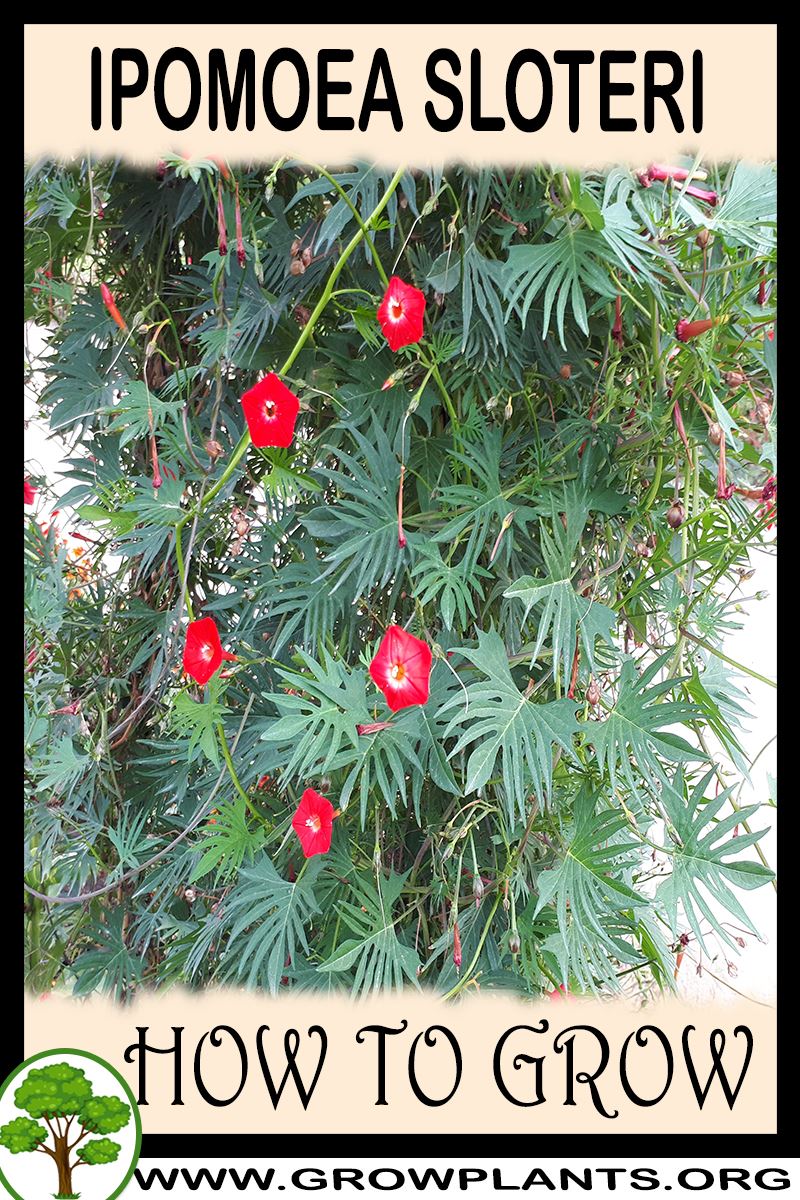
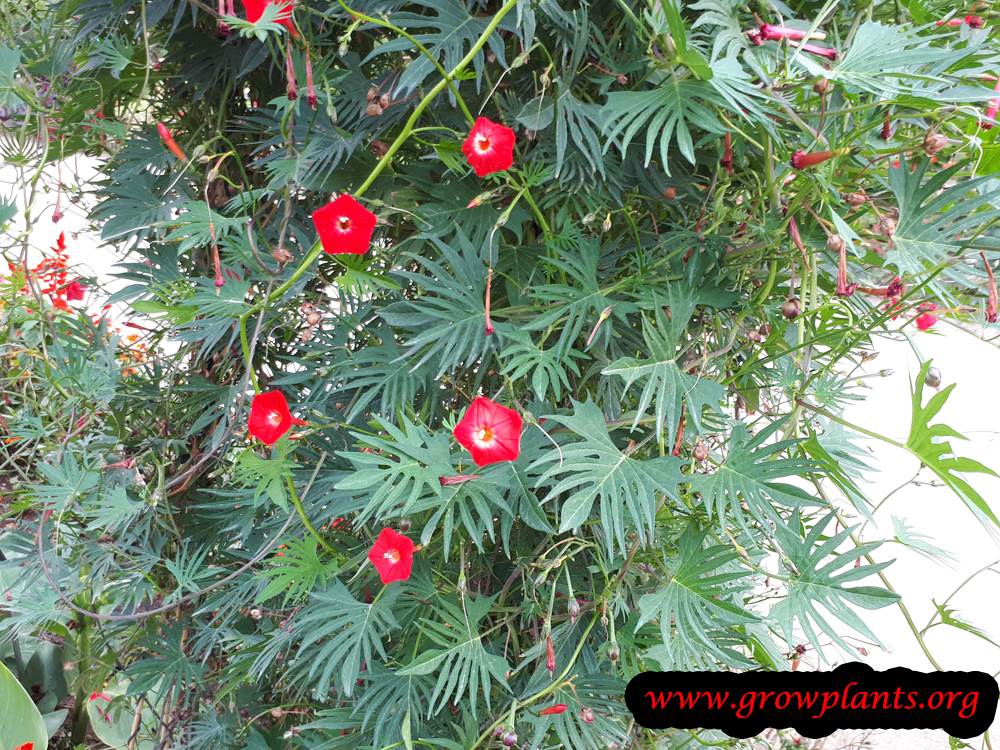
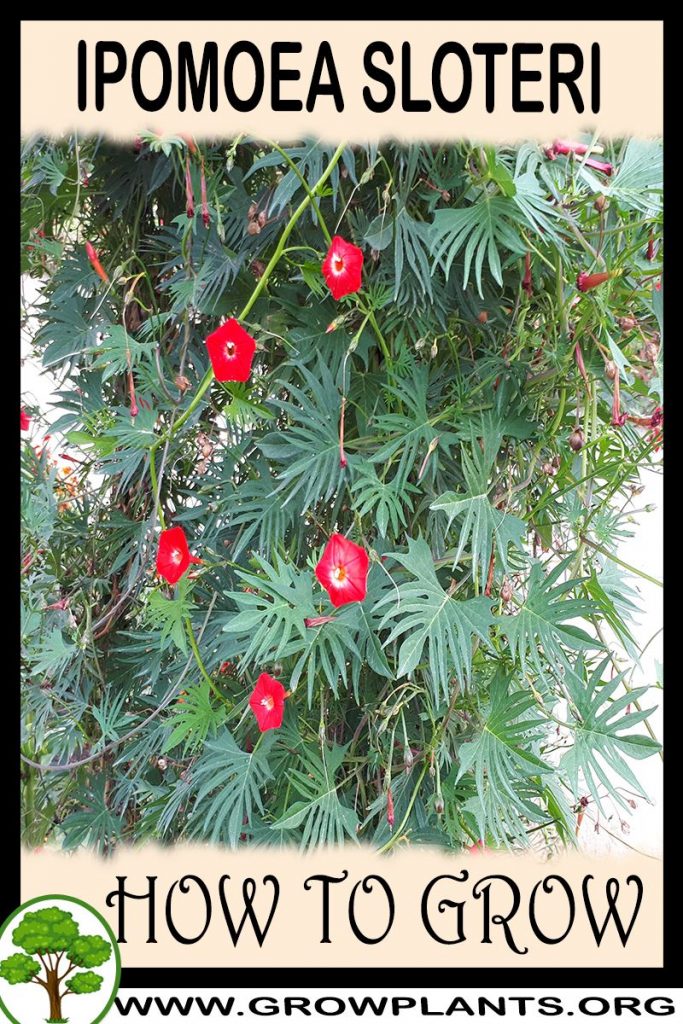
Overview: Ipomoea sloteri (cardinal climber) is a fast-growing herbaceous twining vine reaching 3-7 m, grown as an ornamental climber for its bright red flowers and deeply divided foliage. It is perennial in frost-free zones and grown as an annual in colder climates.
Quick Specifications
| Specification | Attribute |
|---|---|
| Plant Type / Life Cycle | Perennial (evergreen); usually grown as annual |
| Foliage Type | Evergreen in frost-free zones; dies back with frost |
| Mature Size | 3-7 m (10-21 ft) long; can also sprawl as groundcover |
| Growth Rate | Fast |
| Root System | Fibrous |
| Toxicity | Ornamental only; morning-glory seeds contain toxic alkaloids and are not for consumption |
| Hardiness | USDA zone 10+ as perennial, 6+ as annual |
Growth Form & Structure
- Height & Spread: 3-7 m (10-21 ft) of climbing growth in ground; in a container use 10-30 L (2.5-8 gal), larger is better.
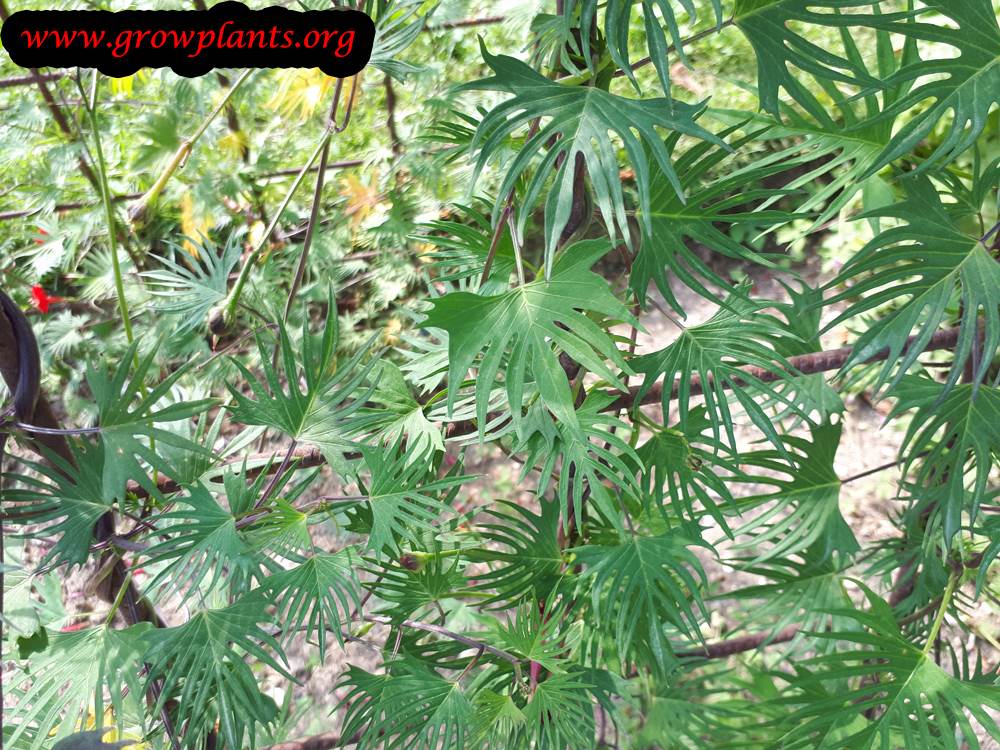
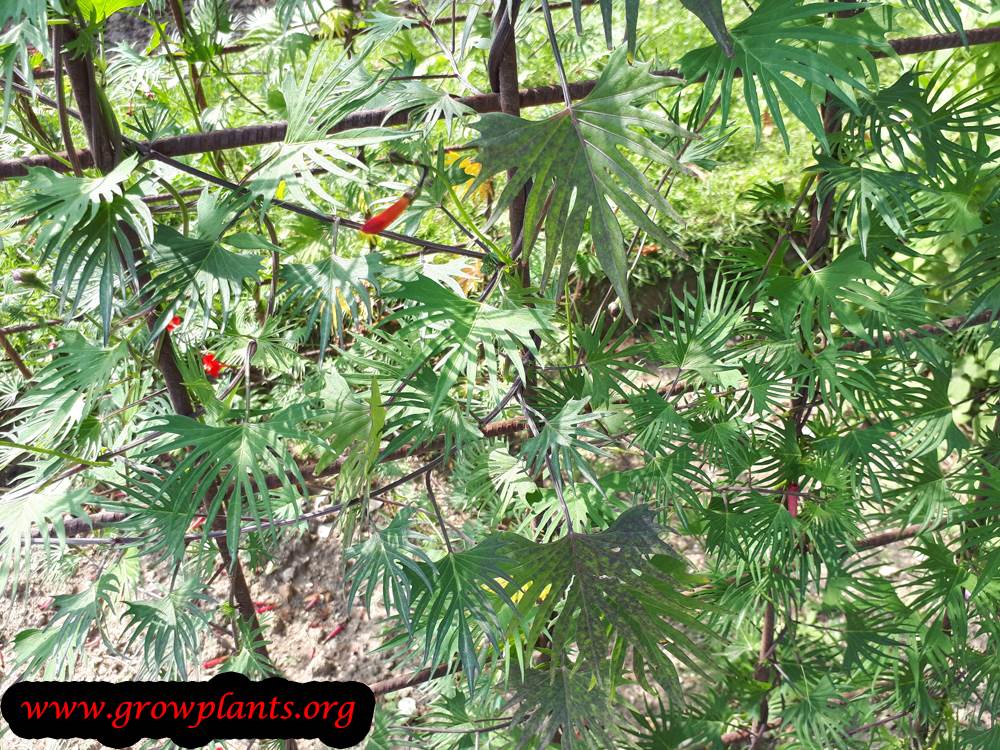
- Growth Habit & Form: Herbaceous twining climber with finely cut, hand-shaped leaves; trained up a trellis or allowed to trail.
- Lifespan & Maturity: Fast to cover a support in one season.
Anatomy & Physical Features
- Leaves & Foliage: Green, heart-shaped and deeply lobed into a delicate hand-like form.
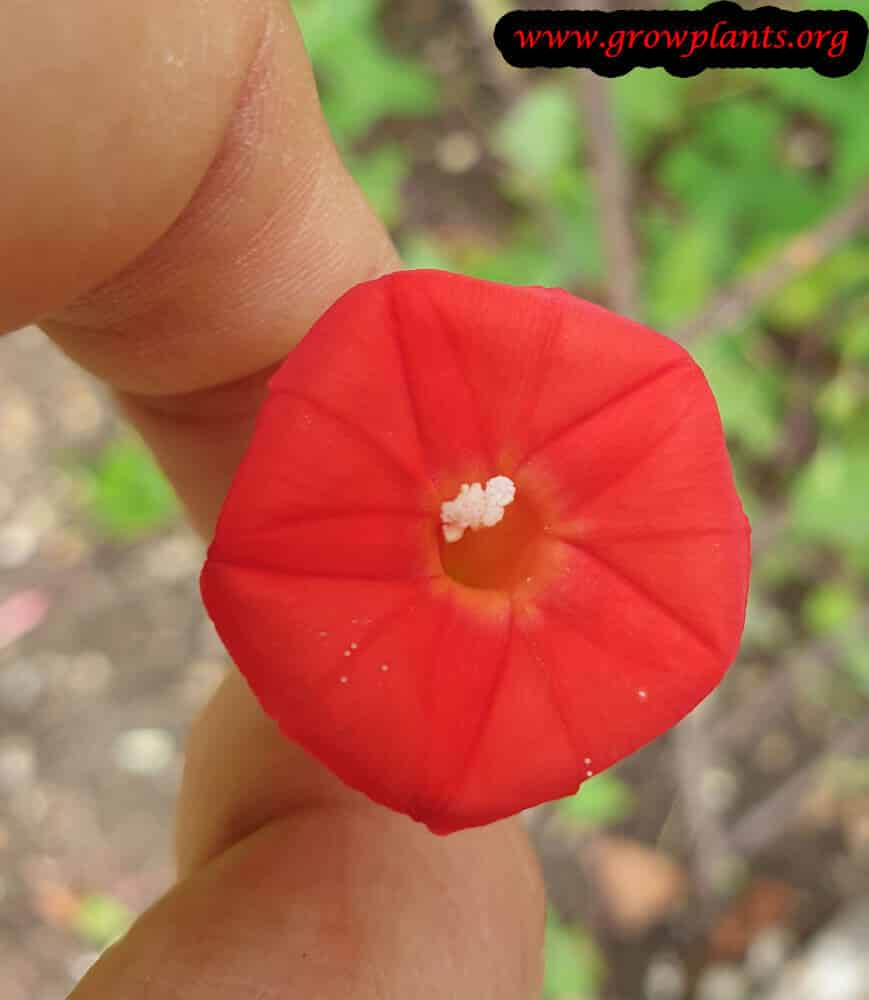
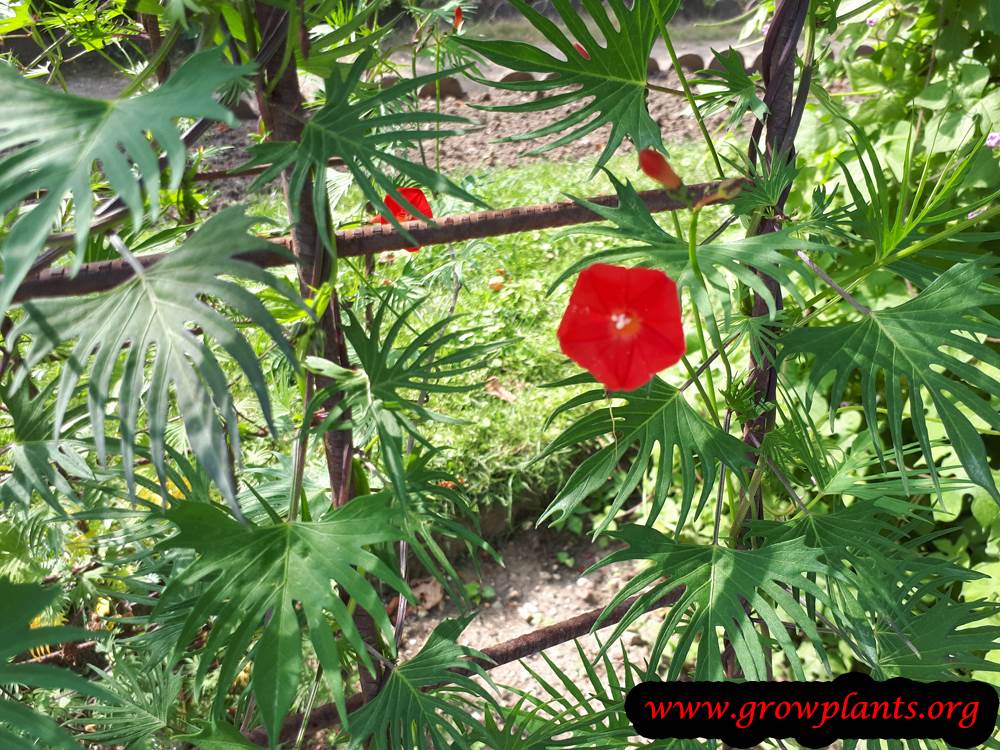
- Flower Characteristics: Red, round flat-faced flowers borne spring to autumn (full detail in the Bloom guide).
Primary Uses & Landscape Value
- Functional & Ornamental Roles: Ornamental climber, fast screen or hedge and groundcover; attracts pollinators; vigorous and can be invasive.
Care Guide: Planting, Soil & Watering
Overview: A vigorous herbaceous vine that thrives in full sun to part shade in warm, frost-free conditions. It grows best in rich, moist, well-ventilated soil with good drainage and appreciates steady moisture through the growing season.
Quick Care Requirements
| Requirement | Ideal Condition |
|---|---|
| Planting Season | Spring after last frost (as annual); year-round in zone 12+ |
| Growth Rate | Fast |
| Soil Type | Rich, moist, well-ventilated soil with good drainage |
| Water Need | Moderate to High – keep the soil evenly moist |
Planting & Establishment
- Best Planting Season: Plant in spring after the last frost as an annual; where hardy, spring in zone 10a, spring to summer in 10b, spring to autumn in 11, and year-round in zone 12+.
- How to Plant:
- Hole Preparation: Dig the hole about 50% wider than the root ball so the roots can spread into loosened soil.
- Soil Amendments: Mix the excavated soil with organic matter, humus and dead leaves before backfilling to enrich and lighten it.
- Planting Depth: Set the plant so the root collar sits level with the surrounding soil; firm gently but firmly so it will not topple, and install a trellis or support at planting time.
- Growth Speed & Expectations: In optimal conditions this is a fast grower that can cover a support in a single warm season.
Soil, Watering & Drainage Care
- Soil Mix & Drainage Needs: Rich, moist but well-ventilated soil with good drainage; in containers (10–30 L) use free-draining mix with ample holes and avoid a permanently full saucer.
- Watering Schedule & Technique:
- Young / Newly Planted: Water twice on the first day of planting, then daily for the first two weeks while the roots establish.
- Established: Once established, water regularly to keep the soil evenly moist; morning glories dislike drying out completely. It appreciates steady moisture but dislikes waterlogging.
- Seasonal Adjustments: Give more water in summer heat and taper off in cooler weather or winter dormancy.
Climate, Light & Hardiness
Ipomoea sloteri (cardinal climber) is a fast-growing, sun-loving flowering vine for tropical, mediterranean, desert, subtropical, and temperate climates, grown as a perennial where winters stay frost-free and as a fresh annual elsewhere. It wants full sun to half shade and is reliably perennial from USDA zone 10 upward.
Quick Climate Specifications
| Climate Zones | Tropical, mediterranean, desert, subtropical, temperate |
|---|---|
| USDA Hardiness Zones | 10+ as a perennial; 6+ as an annual |
| Frost Tolerance | Very Low |
| Light Conditions | Full Sun / Half Shade |
Sunlight & Light Exposure
Optimal Light Setup
Full sun to half shade both work; full sun supports the strongest flowering along its climbing or groundcover growth.
Direct Sun Requirement
Several hours of direct sun daily supports vigorous growth.
Best Exposure / Orientation
An open, sunny spot with a trellis or support suits it as a climber; it can alternatively be grown as a groundcover.
Temperature Extremes & Hardiness
USDA Hardiness & Regional Limits
Reliably perennial from USDA zone 10 and warmer; in USDA zone 6 and warmer it is instead grown as a fast, colorful annual planted after the last frost, since freezing winters prevent it from surviving as a perennial outside its warm-zone range.
Cold Damage & Winter Protection
The source notes it is possible to bring the plant indoors to overwinter, setting it back outdoors in spring after the last frost, when grown near the cold edge of its range.
Frost Sensitivity
Highly frost-sensitive; a light frost damages or kills top growth.
Extreme Heat Tolerance
Good, with average water; grows well through tropical-to-desert heat.
Wind, Humidity & Microclimate
Wind Tolerance
Best with the support of a trellis or structure given its vigorous, climbing habit (3–7 m).
Rainfall & Seasonal Moisture
Prefers consistently moist, well-drained soil, with average water needs through the growing season.
Microclimate Recommendations
A warm, sunny, sheltered spot with a support structure suits it well, both as a climber and, in cooler parts of its range, for the extra warmth it provides.
Growing in Pots, Balconies & Indoors
The cardinal climber (Ipomoea sloteri) is a fast climbing vine of 3-7 m (10-21 ft), which can also be used as a groundcover. The grower notes it is not an indoor houseplant, but it grows well in a large container with a trellis on a sunny balcony or patio.
Quick Details
- Container Size: 10-30 L (2.5-8 gal), bigger is better; give it a trellis or support
- Indoor Suitability: Not a houseplant – it is a sun-loving climber
- Best Spot: Full sun to half shade
- Soil & Drainage: Well-aerated, well-drained mix rich in organic matter – potting mix or peat with perlite or vermiculite
- Watering in Pots: Average water; keep moist but let it drain freely – better not to use a saucer
Indoors & On the Windowsill
- Houseplant limits: The grower marks it as not for indoors – it is a vigorous climber needing full sun and room to scramble.
- Safety: Like other morning glories, the seeds are toxic if eaten – keep them away from children and pets.
On a Balcony or Patio
- Light & wind: Give it the sunniest spot and something to climb. Pots dry fast against warm walls – check moisture regularly and shelter it from strong wind.
Choosing the Pot, Soil & Long-Term Care
- Pot & drainage: A 10-30 L pot with strong drainage; the grower prefers no saucer so water drains right through.
- Potting mix: Well-aerated and organic-rich – potting mix or peat with perlite or vermiculite.
- Feeding: Potted plants need feeding more often than those in the ground, since watering steadily leaches nutrients out of the container.
- If grown on as a perennial: every two years swap the soil and prune part of the roots and top growth.
Fertilizing & Feeding
A moderate feeder while it fills in, whether trained up a trellis or left to sprawl as a groundcover: nitrogen-forward feeding drives early coverage, then a lighter, balanced program carries it through its red-flowered bloom season.
Quick Fertilizing Specs
| Feeding Level | Moderate feeder while establishing, lighter once mature |
|---|---|
| Main Nutrient Priority | Nitrogen to build coverage early, balanced feeding through bloom |
| Best Feeding Period | Spring through the summer-into-autumn bloom season |
| Organic Options | Rich soil, organic matter, and mulch worked in, especially while the plant is young |
| Reduce/Stop Feeding | Ease off, or withhold entirely, if the plant is brought indoors to overwinter |
| Micronutrients | Rarely an issue in rich, well-fed soil; correct only a diagnosed deficiency |
| Soil pH | Tolerates a wide range provided the soil stays rich and moist |
Feeding by Growth Stage
Establishment after planting
Help the young plant root into rich, moist soil, whether it will be trained onto a trellis or left to spread as groundcover.
| Nutrient direction | A balanced fertilizer worked in with organic matter supports steady early rooting and the first flush of growth. |
|---|---|
| Timing | At planting and through the first weeks of establishment. |
| Frequency | A feeding at planting, renewed as the plant puts on its first significant growth. |
| Fertilizer types | A balanced complete fertilizer worked into rich soil, Organic matter, dead leaves, and humus mixed into the planting hole, Mulch around young plants to conserve moisture |
| Precautions | Keep young plants consistently moist alongside feeding; this plant does not tolerate the soil drying out while it establishes. |
Vigorous climbing or groundcover growth
Support the fast growth needed to cover a trellis or fill in as a groundcover, depending on how the plant is trained.
| Nutrient direction | A nitrogen-forward fertilizer fuels the leafy, fast-spreading growth this plant is known for in either growth form. |
|---|---|
| Timing | Through the height of the growing season as the plant climbs or spreads. |
| Frequency | Regular light feedings through the peak growing period. |
| Fertilizer types | A nitrogen-forward, balanced fertilizer, Compost or organic matter renewed around the root zone |
| Precautions | This plant is naturally aggressive and can become invasive if left unchecked; avoid excess nitrogen beyond what is needed to fill its intended space. |
Red flower bloom period
Support the round, flat red flowers that open through summer and into autumn and attract bees.
| Nutrient direction | Shift toward a lighter, balanced fertilizer once coverage is established, favoring bloom over yet more leafy growth. |
|---|---|
| Timing | Through the summer-into-autumn bloom window. |
| Frequency | An occasional light feeding is usually enough to sustain bloom on an already established planting. |
| Fertilizer types | A balanced fertilizer used lightly, Container-grown plants may follow a container-specific feeding routine |
| Precautions | Heavy nitrogen at this stage favors foliage over flowers; ease back once the plant has filled its space. |
Perennial container maintenance
Keep a long-term container-grown plant productive as it is periodically root-pruned and given fresh soil.
| Nutrient direction | Resume light, balanced feeding once the plant regrows after root pruning and a soil refresh in its container. |
|---|---|
| Timing | After root pruning and repotting into fresh container soil, as regrowth begins. |
| Frequency | A light feeding as new growth resumes after each root-pruning and soil refresh cycle. |
| Fertilizer types | A balanced, container-formulated fertilizer, Fresh potting mix or peat soil with perlite or vermiculite worked in at repotting |
| Precautions | A container that is too small for too long will limit both blooming and growth regardless of feeding; match feeding to the plant’s actual root volume. |
Indoor overwintering rest
Let a plant brought indoors for winter protection rest until it can go back outside after the last frost.
| Nutrient direction | None – no supplemental feeding is needed while the plant rests indoors over winter. |
|---|---|
| Timing | Through the indoor winter period until the plant is moved back outside in spring. |
| Frequency | No feeding during this indoor rest period. |
| Fertilizer types | No feeding at this stage; do not fertilize until the plant is back outside and active growth resumes. |
| Precautions | Low indoor light already limits growth; feeding now only risks weak, leggy stems and salt buildup in the container. |
Nutrient Deficiency Signs & Corrections
Overall pale green to yellow foliage and noticeably slower coverage of its support or groundcover area.
| Possible causes | low soil nitrogen or thin, low-organic-matter soil, nitrogen leaching from heavy watering or rain, an extended period without any feeding |
|---|---|
| Appears first on | older, lower leaves |
| What to check | recent feeding history, soil organic matter, how quickly the plant is filling in compared to expectations |
| Possible correction | Apply a nitrogen-containing balanced fertilizer and refresh organic matter around the root zone. |
New leaves turn yellow while the veins stay green.
| Possible causes | high soil pH tying up available iron, poorly drained or waterlogged soil, root stress limiting nutrient uptake |
|---|---|
| Appears first on | newest growth at the shoot tips |
| What to check | soil pH and drainage, recent watering pattern, root health |
| Possible correction | Improve drainage where possible and apply a chelated iron product per its label. |
Leaf margins scorch or brown and flowering becomes sparse despite good foliage coverage.
| Possible causes | low soil potassium, heavy nitrogen feeding without balance, drought stress limiting nutrient uptake |
|---|---|
| Appears first on | older leaf margins |
| What to check | recent fertilizer balance, watering consistency, flower production compared to foliage coverage |
| Possible correction | Switch to a balanced, potassium-inclusive fertilizer and maintain even watering. |
A long-term container plant stops blooming and growth stalls despite regular feeding.
| Possible causes | roots that have overgrown the container and become root-bound, old, exhausted potting soil that no longer holds nutrients well, fertilizer salt buildup in soil that has not been refreshed |
|---|---|
| Appears first on | overall vigor, bloom count, and new growth rate |
| What to check | how long since the roots were last pruned and the soil refreshed, root density when the plant is lifted from its container, signs of salt buildup on the soil surface |
| Possible correction | Root-prune and repot into fresh soil, then resume light feeding as new growth appears. |
Pruning, Training & Seasonal Maintenance
Cardinal climber is a fast, vigorous twining vine, closely related to firecracker vine, that can be grown as a climbing specimen or allowed to spread as a groundcover given its 3–7 m reach. Grown as a true annual it needs no maintenance pruning at all; grown as a tender perennial in warm zones, its noted aggressive/invasive habit makes routine cutting back and trellis training genuinely useful. Its star-shaped red flowers form continuously on new growth from spring through autumn, so pruning has little effect on bloom timing, and the best cutback window is after a flush finishes or in early winter.
Quick Pruning & Maintenance Specs
| Pruning Tolerance | Moderate–High (perennial-grown specimens only) |
| Primary Pruning Window | After a bloom flush, or early winter |
| Typical Frequency | One seasonal cutback for perennial plants; none for annual-grown plants |
| Main Objective | Trellis training or groundcover spread control, tidiness |
| Young Plant Priority | Remove weak, spindly seedling-stage stems to focus vigour into strong leaders |
| Mature Plant Priority | Perennial specimens: seasonal cutback; container specimens: biennial root-and-top pruning |
| Best Tool Type | Precision snips / bypass secateurs, plus ties for climbing training |
Pruning by Plant Age & Size
Newly Established
Prune out weak or spindly seedling-stage stems at planting so vigour goes into a few strong leaders, whether trained upward or allowed to spread as groundcover.
Young / Formative
Climbing form: no formal training system is needed – the twining stems self-attach to a trellis or support, simply tie and guide them. Groundcover form: let trailing stems spread, pinching only to encourage denser branching.
Mature / Established
Annual-grown plants: no pruning needed for the rest of the season. Perennial-grown plants: cut back after the bloom flush or in early winter to control size and curb its aggressive spread; groundcover plantings benefit from an occasional edge trim to keep spread within the intended area.
Seasonal Pruning Schedule
Post-Flowering
- Objective: tidy the vine or groundcover mat and control spread once the main bloom flush finishes (perennial specimens only)
- Remove: spent growth, dead stems, trailing stems that have rooted beyond the intended area
- Do not remove: all top growth on annual-grown plants, which need no pruning at all
- Expected response: fresh, more contained growth the following season
- Flowering impact: minimal, since blooms form continuously on new growth
Flowering & Fruiting Wood
Flowers form continuously on current-season growth through spring, summer and autumn, so cutting back a perennial specimen does not sacrifice next season’s bloom – this fast grower quickly regrows and reflowers from fresh twining or trailing stems.
Structural Pruning & Training
For climbing use, tie and direct the twining stems onto a trellis or support, per this species’ documented trellising requirement. For groundcover use, control spread by trimming back trailing stems that root as they travel – a genuine need given the noted aggressive/invasive habit. No branch-collar-type framework applies to this soft, herbaceous-based vine.
Special Growth to Remove
- Dead or spent growth, as this species’ own pruning guidance notes
- Spent flower clusters, for tidiness
- Trailing stems that have rooted into the soil beyond the intended growing area
Container & Small-Space Pruning
When grown as a long-term perennial container specimen, the source specifically calls for repotting roughly every two years, at which point a portion of both the root mass and the top growth should be trimmed back together – skipping this pairing lets the plant become rootbound and stop blooming and growing well. Container specimens generally need harder, more frequent trims than in-ground plants to stay within their support.
Tools
- Precision snips for soft vine tips and deadheading
- Bypass secateurs for thicker growth at the base of established perennial specimens, and for the biennial root-pruning session
- Soft ties or stakes for training climbing specimens onto their support
Tool Hygiene & Disease Risk
Routine – no transmissible disease is flagged (pests noted are insects: weevil, moth, whitefly and aphids); clean, sharp tools are sufficient.
Cut Placement & Technique
Cut spent or dead growth back to a healthy node, or to the ground for a full winter cutback on perennial specimens. Guide climbing growth onto its support by tying rather than cutting, since this vine directs itself as it climbs. At biennial repotting, trim roots and top growth together in roughly matching proportion.
Heavy Pruning & Rejuvenation
Tolerated well on perennial-grown specimens – cutting back hard, close to the base, in early winter or after the main bloom flush controls its aggressive size and rejuvenates it for the next season; regrowth is fast given this species’ rapid growth rate. Not applicable to annual-grown plants, which are simply replaced each year.
Post-Pruning Care
Water normally and watch for whitefly or aphids on the tender regrowth flush. If cutting back before overwintering indoors, keep the plant in a bright spot with reduced water until spring.
Common Pruning Mistakes
- Letting a perennial or groundcover specimen go untrimmed until it overwhelms its support or spreads well beyond the intended bed
- Hard-pruning a plant that is actually being grown as a true annual, which needs no pruning at all
- Repotting a long-term container specimen without also trimming the roots, leading to a rootbound plant that stops blooming and growing, as specifically noted for this species
When NOT to Prune
There is little point pruning structurally right before the first fall frost kills back annual-grown or tender top growth anyway. Avoid cutting during the main bloom flush if the flower display is the priority.
Recommended Tools (by task)
- precision_snips – deadheading and light trimming of soft vine or groundcover growth
- bypass_secateurs – thicker base growth and the biennial root-and-top pruning of container specimens
- soft_ties_stakes – training climbing specimens onto their required support
Propagation Guide
Ipomoea sloteri starts easily from either seed or cuttings, though cuttings are the somewhat easier and faster route to a new plant; the vine can also be propagated by bending a low branch down and covering part of it with soil until it roots. Propagation is easy overall, with seed germinating within a few weeks and cuttings rooting readily under warm, humid conditions.
Quick Propagation Specs
| Best Propagation Method | Stem cuttings |
| Alternative Methods | Seed; ground layering (bending a branch into the soil) |
| Propagation Difficulty | Easy |
| Seed True-to-Type | Yes (species, not a hybrid) |
| Vegetative True-to-Type | Yes |
| Best Propagation Season | Spring through summer (exact sowing/planting window varies by hardiness zone) |
| Seed Germination Time | 2–7 weeks |
| Cutting Rooting Time | Typically a few weeks under warm, humid conditions |
| Germination Temperature | 22–30°C (72–86°F) |
| Seed Sowing Depth | 1cm (0.5 inch) |
Growing from Seed
Seed Handling & Viability
Store saved seed in a dark, dry place until sowing.
Sowing Season
Spring, as an annual or perennial in hardiness zone 10a; spring to summer in zone 10b; spring to autumn in zones 11b–12a; year-round in zone 12b+. Planting in summer is possible but best avoided on the hottest days.
Sowing Depth & Orientation
Sow about 1cm (0.5 inch) deep. A peat-and-vermiculite mix is preferred; even when sowing directly in the ground, working some vermiculite around the seed helps.
Germination Conditions
High humidity and consistently moist soil in a sunny location, with temperatures around 22–30°C (72–86°F); water an average to generous amount and don’t let the seedbed dry out.
Germination Time
2–7 weeks.
Seedling Care
Water regularly and don’t let seedlings dry out. Where sown in trays, seedlings are typically spaced around 4x4cm (about 1.8×1.8 inches) before being transplanted out to a final spacing of roughly 30x40cm (12×16 inches).
Stem Cuttings
Cutting Type
Stem cuttings.
Best Timing
Spring to summer.
Rooting Setup
Warm conditions of 25–30°C (77–86°F) with high humidity. Cuttings can be rooted in water, changing the water every few days, or inserted into moist soil.
Rooting Hormone
Optional — a root growth hormone can be used to help the cutting along, though it isn’t required.
Rooting Time
Not given an exact duration in site data; typically a few weeks under these warm, humid conditions.
Air & Ground Layering
A low, flexible stem can be bent down and covered with soil while still attached to the parent vine; once the buried section has rooted, it can be severed and transplanted as a new, independently rooted plant. Best done during the warm growing season alongside the vine’s active growth.
Bloom & Flower Guide
Quick Details
- Bloom Season: Spring through autumn
- Time to First Bloom: In its first summer, from a spring sowing (grown as an annual)
- Flower Appearance: Small, flat-faced round flowers in bright red
- Edibility: Ornamental — not for eating
Detailed Blooming Overview
Ipomoea sloteri, the cardinal climber, threads deeply cut, ferny foliage with small, flat, round scarlet flowers over a long season from spring into autumn. The vivid red tubes are a favorite of both bees and hummingbirds, making it a lively addition to a sunny trellis or fence.
Flower Characteristics
- Small round, flat-faced flowers in bright red.
- Set off by finely divided, hand-shaped leaves.
- Attracts bees and hummingbirds.
Bloom Care & Thinning
- Managing the bloom: Give full sun and a support to climb; deadheading prolongs the display.
- Pollination: Carried out by bees (and visiting hummingbirds).
- Note: Grown as an ornamental only — like other morning glories the seeds are toxic; keep away from children and pets.
Pests, Diseases & Troubleshooting
Overview: Morning glories and their sweet-potato relatives are fast, lush growers whose soft leaves and vines attract sap-feeders and leaf-chewers; most trouble is cosmetic and best handled culturally with airflow, hand-removal of caterpillars and beetles, and support for natural predators before any spray is considered.
Quick Troubleshooting Overview
| Issue / Pest | Main Symptom | Primary Solution |
|---|---|---|
| Whitefly / aphids | Sticky honeydew, sooty mold, curled shoot tips | Blast with water, insecticidal soap, encourage lacewings/ladybirds |
| Tortoise beetles / caterpillars | Round or ragged holes chewed in leaves | Hand-pick, row cover on young plants, Bt for caterpillars |
| Spider mites | Fine stippling and webbing in hot, dry spells | Raise humidity, hose foliage, horticultural oil |
| White rust / leaf spot | White pustules or brown spots on foliage | Improve airflow, remove infected leaves, avoid wet foliage |
| All leaves, few flowers | Rampant growth but little bloom | Cut back nitrogen, give full sun, ease off water |
Common Pests & Management
- Whiteflies (Bemisia tabaci):
- Symptoms: Tiny white moth-like insects that lift in a cloud when foliage is disturbed; nymphs on leaf undersides suck sap, leaving sticky honeydew, sooty mold and weak, yellowing growth.
- Prevention & Control: Inspect leaf undersides regularly, hang yellow sticky traps, and rinse foliage. Support parasitic wasps and ladybirds; if needed spray insecticidal soap or a light horticultural oil in the evening, covering undersides.
- Aphids (Aphis / Myzus persicae):
- Symptoms: Clusters of soft green, black or peach insects on shoot tips and buds; distorted new growth, honeydew and sooty mold, and possible virus transmission.
- Prevention & Control: Knock them off with a firm water jet, pinch badly infested tips, and encourage ladybirds and hoverflies. Use insecticidal soap or neem for stubborn colonies; avoid excess nitrogen that fuels soft, aphid-prone growth.
- Golden tortoise beetle (Charidotella sexpunctata):
- Symptoms: Small metallic gold or orange ‘ladybird-like’ beetles and their spiny larvae chew neat round holes through the leaves; a classic morning-glory feeder.
- Prevention & Control: Hand-pick adults and larvae into soapy water and clear nearby wild morning glory that harbors them. Row cover protects young plants; neem deters light infestations. Established vines usually outgrow the damage.
- Morning-glory / sweetpotato hornworm (Agrius cingulata):
- Symptoms: Large green or brown caterpillars with a tail ‘horn’ strip foliage quickly and leave dark droppings below; heavy feeding can defoliate shoots overnight.
- Prevention & Control: Scout at dawn and dusk and hand-pick; the size makes removal easy. Bacillus thuringiensis (Bt) targets young larvae; leave any bearing white parasitic-wasp cocoons in place as they are already controlled.
- Two-spotted spider mite (Tetranychus urticae):
- Symptoms: Fine pale stippling on upper leaf surfaces and delicate webbing beneath in hot, dry, dusty conditions; leaves bronze and dry out.
- Prevention & Control: Raise humidity and hose down foliage regularly to break the cycle. Predatory mites give strong control; horticultural oil or insecticidal soap knock back heavy populations – miticides are rarely warranted.
Diseases & Fungal Issues
- White rust (Albugo ipomoeae-panduratae):
- Symptoms: Chalky-white, blister-like pustules on leaf undersides with yellow blotches above; common in warm, humid, wet weather and a frequent problem on morning glory and water spinach.
- Treatment & Management: Space plants and trellis for airflow, water at the base to keep foliage dry, and remove infected leaves promptly. Copper-based fungicide protects new growth in persistent wet spells.
- Rust (Coleosporium ipomoeae):
- Symptoms: Yellow-orange powdery pustules scattered on leaf undersides; heavy infection yellows and drops leaves.
- Treatment & Management: Remove and bin affected foliage, avoid overhead watering, and improve spacing. A sulfur or copper fungicide checks spread when pressure is high.
- Fusarium wilt & stem rot (Fusarium spp.):
- Symptoms: Yellowing, wilting and one-sided vine collapse; cut stems show brown internal streaking, and stem bases may rot at the soil line.
- Treatment & Management: There is no cure once a plant is infected – remove it. Rotate crops, plant in well-drained soil, use clean stock, and avoid wounding stems at the base.
- Leaf spots (Cercospora / Alternaria spp.):
- Symptoms: Brown to tan spots, sometimes with yellow halos, that merge and cause premature leaf drop in wet weather.
- Treatment & Management: Remove fallen and infected leaves, water at the base, and improve airflow. Copper fungicide protects healthy foliage when spotting is spreading.
Growing Difficulties & Abiotic Problems
- All leaves, few flowers:
- Cause & Symptoms: Excess nitrogen, too much shade or over-rich soil drive lush vine growth at the expense of bloom; a very common morning-glory complaint.
- Correction Strategy: Grow in full sun, stop feeding nitrogen, and let the plant experience slightly lean, drier conditions to trigger flowering. Ornamental foliage types (e.g. sweet-potato vine) are grown for leaves and need not flower.
- Root / tuber rot from waterlogging:
- Cause & Symptoms: Heavy, poorly drained or constantly soggy soil suffocates roots and rots tubers, causing sudden wilting and collapse.
- Correction Strategy: Plant in free-draining soil or raised beds, water deeply but let the surface dry between waterings, and avoid low spots that pool.
- Cold and frost damage:
- Cause & Symptoms: These are frost-tender warm-season plants; even a light frost blackens foliage and kills annual types, and perennial roots suffer in cold, wet ground.
- Correction Strategy: Plant only after frost risk passes and soil is warm. In marginal climates lift and store tubers, or grow as an annual and resow each season.
What Helps – Products & Tools
The workhorses here are insecticidal soap and neem or light horticultural oil for aphids, whitefly and mites; yellow sticky traps for monitoring; Bacillus thuringiensis (Bt) for hornworms and caterpillars; diatomaceous earth or spinosad for beetles; and copper or sulfur fungicide for rust and white rust. Always follow the label, spray oils in the evening to protect pollinators, and lean on cultural fixes first.