


Plant Profile & Key Characteristics
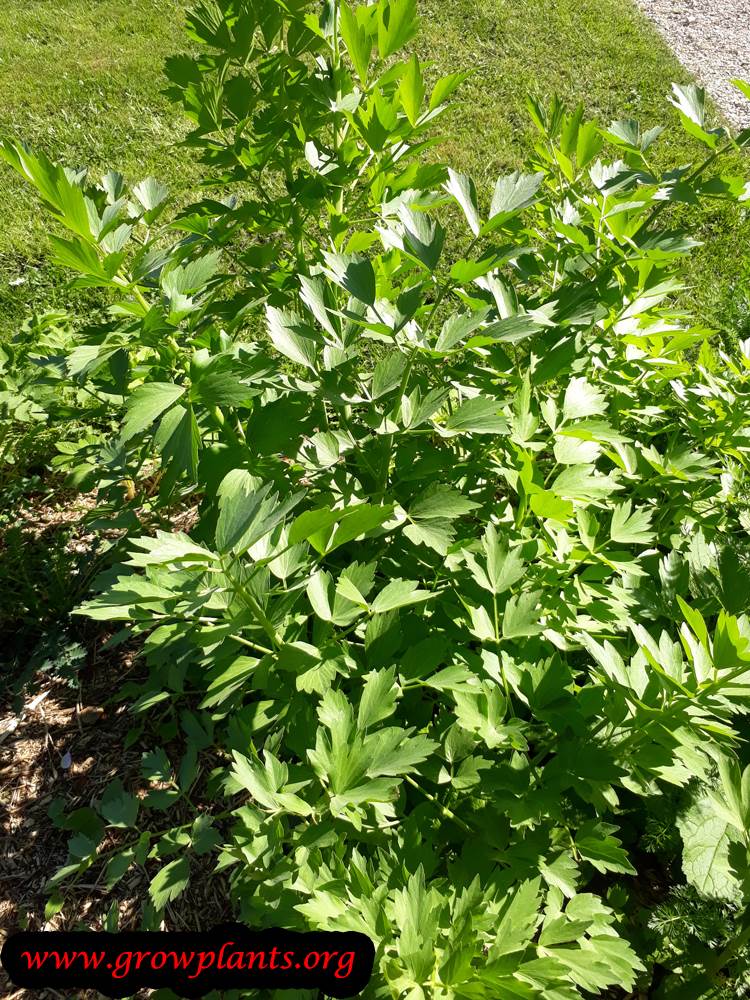
Overview: Lovage (Levisticum officinale) is a tall herbaceous perennial culinary herb 1-2 m grown for its celery-flavoured edible leaves, seeds and taproot. It forms a robust upright clump.
Quick Specifications
| Specification | Attribute |
|---|---|
| Plant Type / Life Cycle | Perennial |
| Foliage Type | Semi-evergreen (herbaceous) |
| Mature Size | 1-2 m (40-80 in) |
| Growth Rate | Fast to moderate |
| Root System | Taproot (edible) |
| Toxicity | Edible culinary herb; sap may cause skin photosensitivity in sunlight |
| Hardiness | USDA zones 4-10 |
Growth Form & Structure
- Height & Spread: 1-2 m; suits large containers.
- Growth Habit & Form: Upright, clumping herb on hollow stems.
- Lifespan & Maturity: Long-lived perennial.
Anatomy & Physical Features
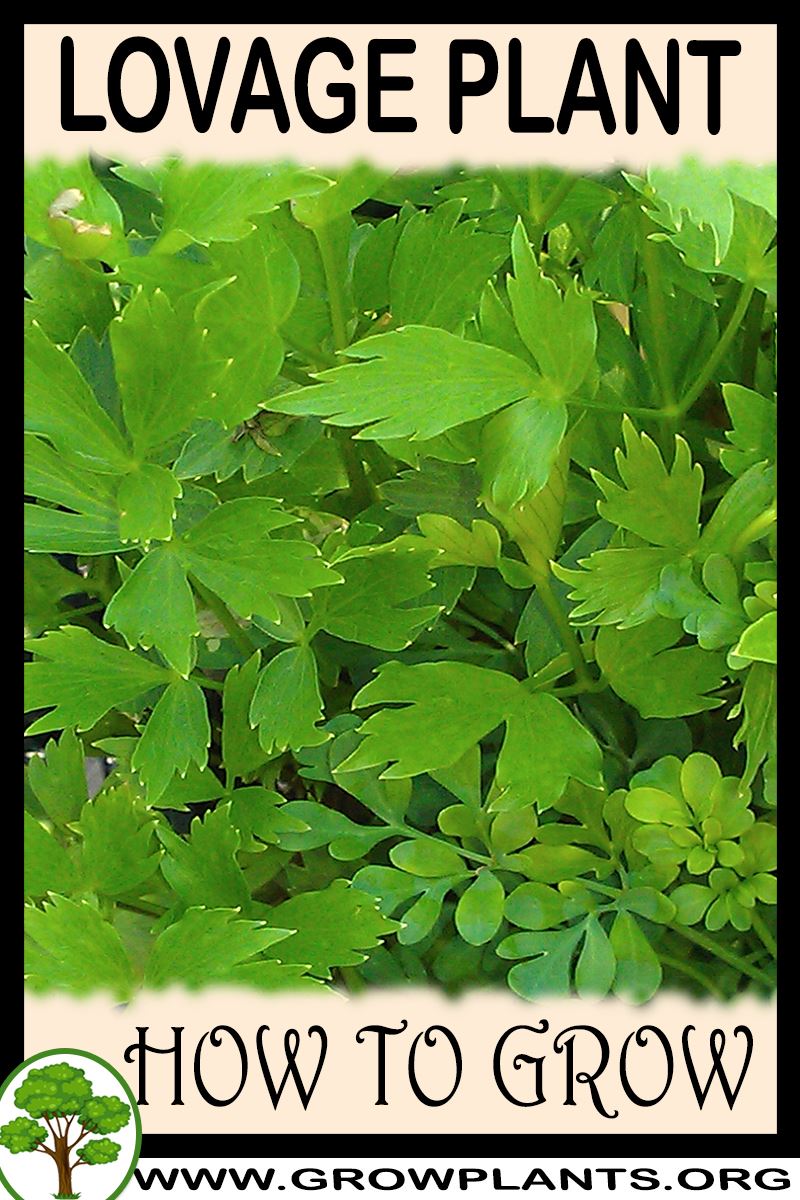
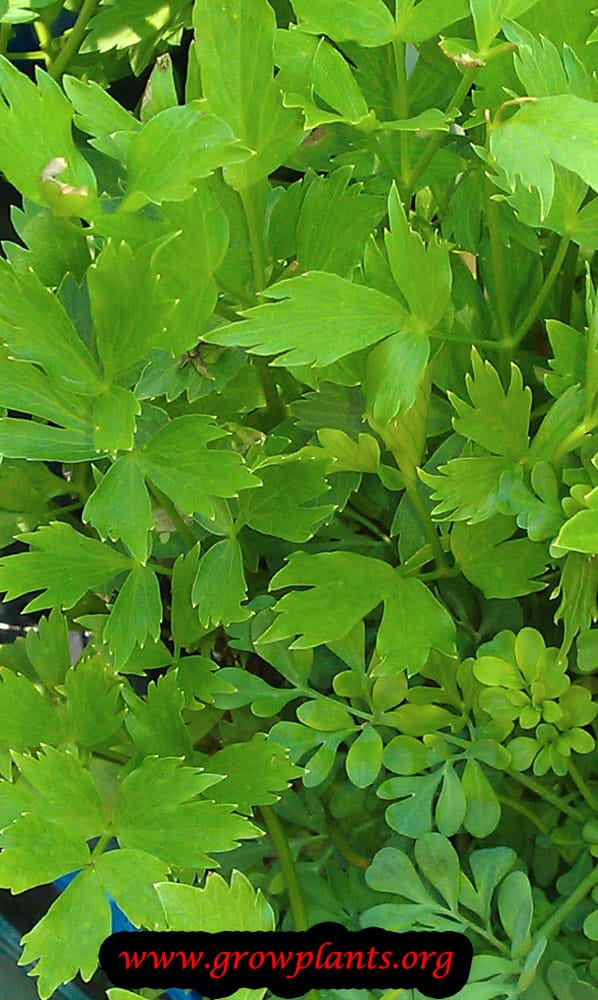
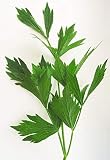
- Leaves & Foliage: Glossy, lobed leaves with rounded edges, flat and borne on hollow stems; strongly aromatic (celery-like).
- Flower Characteristics: Yellow flowers in umbels; the seeds are also edible as a spice; bee-pollinated.
- Fruit Profile: The edible white taproot (with yellowish peel) is a further harvested part, cooked as a vegetable.
Primary Uses & Landscape Value
- Edible Uses: Leaves raw, in salad, cooked or as a herb; seeds used as a spice; taproot cooked.
- Functional & Ornamental Roles: Culinary and medicinal herb; suited to containers.
Care Guide: Planting, Soil & Watering
Overview: Lovage is a big, fast, hardy perennial herb for cool-temperate zones (4-10) that grows in full sun to half shade and needs at least a cool winter. It likes rich, moist, mulched soil and returns bigger each year.
Quick Care Requirements
| Requirement | Ideal Condition |
|---|---|
| Planting Season | Spring |
| Growth Rate | Moderate to fast |
| Soil Type | Rich, moist and mulched |
| Soil pH | Neutral (about 6.0-7.0) |
| Water Need | Moderate; keep the soil evenly moist |
Planting & Establishment
- Best Planting Season: Plant in spring; it is fully hardy and needs at least a cool winter to thrive as a perennial.
- How to Plant:
- Hole Preparation: Dig a generous hole wider than the root ball – it grows large – in rich, moisture-retentive soil.
- Soil Amendments: Work in plenty of compost and mulch the surface to feed strong growth and hold moisture.
- Planting Depth: Set the crown at soil level and firm gently.
- Growth Speed & Expectations: A vigorous grower reaching 1-2 m; it dies back in winter and re-emerges larger each spring, so give it room.
Soil, Watering & Drainage Care
- Soil Mix & Drainage Needs: Wants rich, moisture-retentive but well-drained soil; possible in a large, deep container kept well watered.
- Watering Schedule & Technique:
- Young / Newly Planted: Keep young plants consistently moist while they establish.
- Established: Water regularly to keep the soil moist through the growing season.
- Seasonal Adjustments: More water in summer; little needed once it dies back for winter.
Climate, Light & Hardiness
Lovage (Levisticum officinale) is a hardy herbaceous perennial for cool-temperate to mild climates that dies back and rests over winter, and it grows in full sun to half shade. It is very cold-tolerant but needs at least a cool winter to thrive, and its upper limit is set by heat and humidity rather than cold.
Quick Climate Specifications
| Climate Zones | Temperate, Mediterranean and subtropical |
| USDA Hardiness Zones | About zones 4–10 |
| Optimal Temp Range | Cool to mild, roughly 15–24°C (59–75°F) |
| Frost Tolerance | High (established crowns are cold-hardy and die back in winter) |
| Light Conditions | Full sun to half shade |
| Wind Tolerance | Low to Moderate (tall stems, to about 2 m in flower) |
Sunlight & Light Exposure
Optimal Light Setup
Full sun suits it in cool climates; where summers are hot, some afternoon shade keeps the large leaves fresh.
Temperature Extremes & Hardiness
USDA Hardiness & Regional Limits
A genuinely cold-hardy perennial (about zone 4 and up): the crown dies back in winter and reshoots in spring. Its upper limit (about zone 10) is set by heat, not cold - it dislikes long, hot, humid summers.
Cold Damage & Winter Protection
The dormant crown withstands hard winters, and in the coldest zones a mulch protects it. Cold is rarely the problem for established plants.
Frost Sensitivity
Frost tolerance is high; the top dies down naturally in autumn and the crown overwinters underground.
Extreme Heat Tolerance
Prolonged heat and humidity stress the plant and can cause early die-back; cool, moist conditions give the best growth.
Chilling Requirement
Lovage needs at least a cool winter dormancy to perform well and return vigorously each year; in very mild, warm-winter climates it tends to be short-lived.
Wind, Humidity & Microclimate
Humidity Preferences
It prefers moderate, cooler air; hot, humid weather encourages leaf disease.
Wind Tolerance
The tall summer flower stems (to about 2 m) can need shelter or support in exposed gardens.
Microclimate Recommendations
A cool, moist, rich spot suits it; mulch keeps the roots cool in summer and protects the crown through hard winters.
Growing in Pots, Balconies & Indoors
Lovage is a big, hardy perennial herb that can reach 1-2 m, so give it a large, deep tub and think of it mainly as a balcony or patio container plant. It is not a houseplant, though young plants can give a few pickings on a bright sill before they need more room.
Quick Details
- Container Size: Large, deep tub, 20-30 L or more, for a long-lived perennial
- Indoor Suitability: Not a true houseplant; only young plants suit a bright sill
- Best Spot: Full sun to part shade
- Soil & Drainage: Deep, rich, moisture-retentive but free-draining mix
- Watering in Pots: Keep evenly moist – it is a lush, leafy plant and dislikes drying out
Indoors & On the Windowsill
- Houseplant limits: The grower does not rate it as an indoor plant – it simply grows too large and needs full outdoor light.
- Windowsill growing: A young plant gives a few early leaves on a bright sill, but it soon wants a big tub outdoors; harvest young leaves, as older ones grow strong-flavoured.
On a Balcony or Patio
- Light & wind: Give it the sunniest spot you have. Walls, railings and paving reflect heat and dry pots quickly, so check moisture daily in warm weather and shelter or stake exposed plants against wind. A drip irrigation kit with a timer can take over that watering check automatically.
- Practicalities: Check that the filled pot’s weight is safe for the balcony and that drainage runoff can escape freely without pooling on the floor below.
Choosing the Pot, Soil & Long-Term Care
- Pot & drainage: A large, deep 20-30 L tub with strong drainage holes; skip a standing water saucer so the roots never sit wet. Terracotta breathes and dries faster, while glazed or plastic holds moisture longer.
- Potting mix: Well-aerated and organic-rich – a general potting mix, or peat/coir with perlite or vermiculite.
- Feeding: Potted plants need feeding more often than those in the ground because nutrients leach out with each watering – feed lightly through the growing season.
- Repotting: Refresh the mix or pot up about every couple of years; for perennials, lightly prune the root ball and top growth at the same time.
Fertilizing & Feeding
Lovage is a vigorous leafy perennial herb that responds to rich, organic soil and steady nitrogen; feed lightly through the growing season and let it rest over winter.
Quick Fertilizing Specs
| Feeding Level | Moderate |
|---|---|
| Main Nutrient Priority | Nitrogen for abundant leaf and stem growth. |
| Best Feeding Period | During active spring-to-autumn growth. |
| Organic Options | Compost and well-rotted manure keep this hungry-ish herb productive. |
| Micronutrients | Usually covered by a complete fertilizer and rich soil; correct iron only if new leaves yellow. |
| Soil pH | Tolerates a wide range; near neutral, moisture-retentive soil is ideal. |
| Reduce/Stop Feeding | Ease off feeding as the plant dies back for winter. |
Feeding by Growth Stage
Establishment after planting
Help young plants root in and begin steady leafy growth.
| Nutrient direction | Gentle, nitrogen-leaning feeding to support early leaf and root development. |
|---|---|
| Timing | At planting and as seedlings settle in during spring. |
| Frequency | A light feed as growth begins, repeated lightly through early growth. |
| Fertilizer types | A balanced complete fertilizer, Compost or well-rotted organic matter worked into the bed |
| Precautions | Keep early feeding light so tender seedlings are not scorched. |
Active leafy growth
Sustain tender, flavourful foliage for repeated harvest.
| Nutrient direction | A nitrogen-forward complete feed keeps leaves lush and green. |
|---|---|
| Timing | Through the active growing season while leaves are being harvested. |
| Frequency | Light, regular feedings through the active growing season. |
| Fertilizer types | A nitrogen-forward complete fertilizer, Compost topdressing or organic matter |
| Precautions | Avoid heavy nitrogen late in the season, which can dilute aroma and soften growth. |
Cool-season rest
Let the plant slow or die back through cold weather without pushing new growth.
| Nutrient direction | None – withhold fertilizer while the plant is not actively growing |
|---|---|
| Timing | During dormancy or cool-season rest when growth has stopped |
| Frequency | No feeding at this stage |
| Fertilizer types | No feeding at this stage – resume only when active growth returns |
| Precautions | Do not fertilize until active growth resumes; feeding a resting plant risks salt buildup and root injury |
Nutrient Deficiency Signs & Corrections
Older, lower leaves fade to pale green or yellow overall and growth slows.
| Possible causes | Low soil nitrogen or thin organic matter, Nitrogen leached out by heavy watering or rain on light soils, Cold, waterlogged roots limiting uptake |
|---|---|
| Appears first on | older, lower leaves |
| What to check | soil organic matter and recent feeding, whether heavy rain or irrigation may have leached nutrients, overall plant vigor and colour |
| Possible correction | Topdress with compost or apply a balanced complete fertilizer at label strength; keep watering steady but not excessive so nutrients are not washed away. |
Youngest leaves yellow between the veins while the veins stay green.
| Possible causes | High or alkaline soil pH locking up iron, Cold or waterlogged soil slowing root uptake, Genuinely low available iron |
|---|---|
| Appears first on | newest leaves at the shoot tips |
| What to check | soil pH and drainage, whether the soil is cold or saturated, overall root health |
| Possible correction | Correct soil pH and improve drainage first; if the youngest growth stays chlorotic, apply a chelated iron product following its label. |
Pruning, Training & Seasonal Maintenance
Lovage is a large (1–2 m), clump-forming perennial herb with a persistent taproot; it needs at least a cool winter, which points to it dying back or slowing hard in cold months rather than staying in active leafy growth year-round. Cutting is soft-tissue work with no woody framework: leaves are harvested at their base next to the root all year where climate allows, and the whole clump benefits from being cut back close to the crown once old stems turn tough, to keep pushing tender new leaf growth.
Quick Pruning & Maintenance Specs
| Pruning Tolerance | High – a herbaceous clump, not a woody structure |
| Primary Pruning Window | All year for leaf harvest; hardest cut-back after winter dieback / after flowering |
| Main Objective | Harvest leaves at the base; remove dead top-growth; cut the clump back once stems toughen |
| Best Tool Type | Precision snips / bypass secateurs for thicker old stems |
Pruning by Plant Age & Size
Newly Established
Let the plant build its taproot and crown before harvesting; only remove clearly dead material in the first season.
Mature / Established
Established clumps tolerate having all top-growth cut back close to the crown once old stems become fibrous or after the plant has flowered – this forces a flush of tender new leaves rather than leaving the plant to coast on tough, hollow-stemmed old growth.
Special Growth to Remove
- Dead or dieback foliage after the cool-winter rest period.
- Old, toughened stems once leaf quality declines – cut low, at the base next to the root, the same way leaves are harvested.
- Flower stalks, if seed is not wanted, to keep the plant’s energy in leaf production.
Container & Small-Space Pruning
Given its 1–2 m mature size, a containerized lovage needs regular cutting-back to stay manageable; harvesting leaves frequently and cutting the whole clump down after flowering both help keep it in scale for a pot.
Tools
- Precision snips – for routine leaf harvest.
- Bypass secateurs – for cutting back the tougher old stems at the base once they’ve hardened.
Tool Hygiene & Disease Risk
Routine hygiene is sufficient; no elevated disease-transmission risk noted for this species.
Cut Placement & Technique
Cut stems low, at their base near the crown/root, rather than partway up, matching how the leaves themselves are harvested.
Heavy Pruning & Rejuvenation
Tolerated well: cutting the whole clump back hard once old growth toughens (typically after flowering, or coming out of winter dieback) is a normal renewal practice for this species and produces a fresh flush of tender leaves rather than harming the plant.
Post-Pruning Care
Normal watering; no feeding is needed to force the regrowth, since the cut-back itself does that.
Common Pruning Mistakes
- Continuing to harvest only the outer leaves indefinitely instead of periodically cutting the whole clump back, leading to a woody-stemmed, less productive plant over time.
When NOT to Prune
- Avoid a hard cut-back on a young, not-yet-established plant – let the taproot and crown develop first.
Recommended Tools (by task)
- precision_snips – day-to-day leaf harvest.
- bypass_secateurs – the periodic whole-clump cut-back once stems toughen.
Propagation Guide
Lovage is grown from seed — best sown fresh, as the seed is short-lived — or, more quickly, by dividing the crown of an established plant in spring. Division reproduces the parent exactly and gives a usable plant faster than seed; overall an Easy perennial to propagate.
Quick Propagation Specs
| Best Propagation Method | Crown division (fastest) or fresh seed |
| Alternative Methods | Seed |
| Propagation Difficulty | Easy |
| Seed True-to-Type | Mostly uniform |
| Vegetative True-to-Type | Yes — a division reproduces the parent |
| Best Propagation Season | Spring (division); late summer to autumn (fresh seed) |
Growing from Seed
Seed Handling & Viability
Lovage seed is short-lived and germinates best when fresh, so sow soon after ripening rather than storing it long. Where seed must be held, keep it cool, dry and dark.
Sowing Season
Sow fresh seed in late summer to autumn, or in spring. Sow in situ or into deep cells, as the taproot resents disturbance once it develops.
Germination Conditions
Keep the surface moist; germination can be uneven, so do not let the seedbed dry out while you wait.
Division, Offsets, Pups & Suckers
Crown Division
In spring, lift an established clump and cut the crown into pieces, making sure each piece carries roots and at least one growth bud (eye). Replant at the same depth and keep watered until re-established. Division is the quickest way to get a strong new plant identical to the parent.
Bloom & Flower Guide
Quick Details
- Bloom Season: Summer
- Time to First Bloom: Usually from the second year, once the perennial clump is established
- Flower Appearance: Greenish-yellow flowers in domed umbels on tall stalks
- Edibility: The flower is not the eaten part – lovage is grown for its leaves, stems and seed
Detailed Blooming Overview
Lovage is a tall, celery-scented perennial that throws up branching flower stalks in summer, often well above head height. The soft yellow umbels are a favourite of hoverflies and bees, so many gardeners leave a few to flower for the pollinators even though the leaves are the main harvest.
Flower Characteristics
- Small greenish-yellow flowers in rounded umbels.
- Followed by aromatic seeds that can be used like celery seed.
Bloom Care & Thinning
- Managing the bloom: Removing flower stalks early keeps the plant producing tender leaves; let some flower if you want seed or to feed pollinators.
- Pollination: Carried out by bees and other small insects.
Fruit & Uses
Lovage is a multi-part edible herb with a strong, celery-like flavour throughout the plant: its leaves, seeds and taproot are all used in the kitchen. Leaves are eaten fresh or cooked, the seeds are used as a dried spice, and the root is cooked as a vegetable.
Quick Edible Specs
| Edible Parts | Leaves; seeds; taproot |
|---|---|
| Main Use(s) | Culinary herb (leaves); spice (seeds); cooked root vegetable (root) |
| Eaten Raw or Cooked | Leaves raw or cooked; seeds used dried as spice; root cooked |
| Preparation Required | None for leaves; root should be cooked |
| Harvest Season | Leaves: all year; Root: autumn |
| Time to First Harvest | Leaves once the plant is established; the root is lifted later in the season, after top growth has matured |
| Storage | Dried seeds store well; the root is best used soon after lifting |
| Safety/Toxicity Caveat | None known when used as a culinary herb/vegetable |
Leaves & Greens
The flat, lobed leaves grow on stems and are cut near the base of the leaf, close to the root; they can be harvested year-round. Used raw in salads or cooked, and also used as a dried herb/spice.
Seeds, Pods & Nuts
The seeds that follow the yellow umbel flowers are edible and used as a spice. The site records this use but gives no further detail on their harvest or preparation beyond the general flowering of the plant.
Roots & Tubers
The taproot is white-fleshed under a yellowish peel. It is pulled up in autumn and used cooked, like other root vegetables. Because lifting the root ends that plant’s growth, choosing to harvest the root competes with continuing to cut leaves from the same plant.
Preparation, Uses & Safety
Leaves need no preparation and can be used straight from the plant; the root should be cooked before eating. No specific toxicity is noted for lovage’s edible parts when used in normal culinary amounts.
Pests, Diseases & Troubleshooting
Lovage is a big, vigorous Apiaceae herb that is mostly trouble-free, sharing the pests of its family: aphids on the hollow stems and umbels (noted in the source), celery/carrot leaf miners tunnelling the leaves, carrot fly at the roots, and the handsome swallowtail caterpillars that graze the foliage. Diseases are minor – leaf spot and mildew in damp, crowded stands. As a culinary herb, lean on cultural control and avoid sprays near harvest.
Quick Troubleshooting Overview
| Issue / Pest | Main Symptom | Primary Solution |
|---|---|---|
| Aphids | Colonies and honeydew on stems and umbels | Water-jet, beneficials, insecticidal soap |
| Leaf miners | Pale winding or blotchy tunnels in leaves | Pick off mined leaves, row cover |
| Carrot fly | Rusty tunnels and grubs in the roots | Mesh barrier, rotate |
| Swallowtail caterpillars | Green-and-black caterpillars grazing leaves | Hand-pick / relocate; often tolerated |
| Leaf spot / mildew | Spots or white coating in damp crowding | Space, divide, airflow, remove leaves |
Common Pests & Management
- Aphids (Aphis / Myzus / Macrosiphum spp.):
- Symptoms: Small soft-bodied insects (green, black or grey) clustering on the hollow stems, leaf stalks and flower umbels; they suck sap, causing curled, distorted and yellowing growth plus a sticky honeydew that blackens with sooty mould and draws ants. Winged forms spread them plant to plant and can carry viruses.
- Prevention & Control: Blast colonies off with a firm jet of water and pinch out badly infested tips; encourage and protect ladybirds, lacewings and hoverflies, and grow flowering companions to feed them. For persistent outbreaks use insecticidal soap or a light horticultural/neem oil, wetting leaf undersides in the cool of the evening to spare pollinators.
- Celery / carrot leaf miner (Euleia heraclei):
- Symptoms: Pale brown blistery blotches and winding tunnels mined between the leaf surfaces, browning and shrivelling affected leaves.
- Prevention & Control: Pick off and destroy mined leaves as they appear, cover with fine mesh to exclude the flies, and clear debris; the vigorous plant readily outgrows light damage.
- Carrot fly (Chamaepsila rosae):
- Symptoms: Rusty-brown tunnels and creamy grubs in the fleshy roots and crown of this Apiaceae herb, with foliage sometimes reddening.
- Prevention & Control: Surround plants with a fine mesh barrier or fleece to exclude the low-flying females, rotate away from other umbellifers, and avoid bruising the aromatic foliage that attracts them.
- Swallowtail caterpillars (Papilio machaon):
- Symptoms: Striking green caterpillars banded black and orange grazing the leaves; a foliage feeder that rarely causes serious harm to so large a plant.
- Prevention & Control: Usually best tolerated or relocated, since they become beautiful butterflies and the robust plant shrugs off the grazing; hand-pick only if numbers are high.
Diseases & Fungal Issues
- Leaf spot (Septoria / Cercospora spp.):
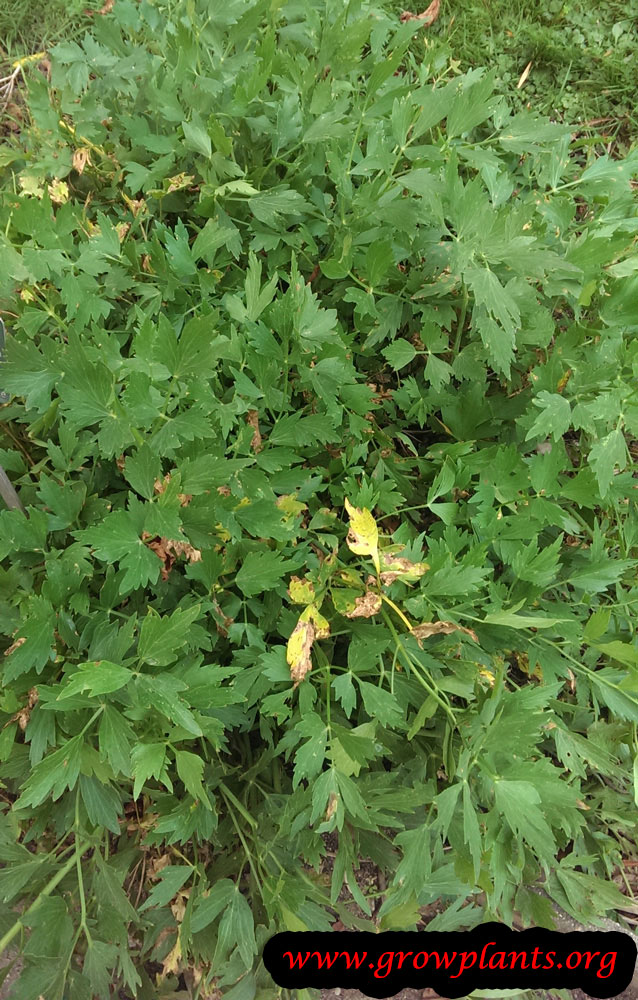
- Symptoms: Brown or grey spots, sometimes with dark specks, on the leaves in damp, crowded stands, causing yellowing and dieback of foliage.
- Treatment & Management: Space and divide congested clumps for airflow, water at the base, and remove affected leaves and debris; the herb regrows freely from the crown.
- Powdery mildew (Erysiphe heraclei):
- Symptoms: White powdery coating on leaves and stems late in the season, particularly on dry-rooted plants.
- Treatment & Management: Keep roots evenly moist, improve airflow, and cut back affected growth; the plant reshoots cleanly.
- Crown / root rot (Phytophthora / Sclerotinia spp.):
- Symptoms: Softening, rotting and collapse of the crown in wet, poorly drained soil.
- Treatment & Management: Grow in fertile but free-draining soil, avoid waterlogging, and remove affected crowns.
Growing Difficulties & Abiotic Problems
- Bolting / dieback in heat:
- Cause & Symptoms: In hot, dry weather lovage runs quickly to flower and the lower leaves brown and die back, reducing the supply of tender leaves.
- Correction Strategy: Keep the soil moist and mulched, give light shade in the hottest spells, and cut back flowering stems to encourage fresh basal leaf growth.
- Floppiness / size:
- Cause & Symptoms: It grows very tall and can flop or shade neighbours, and hungry plants yellow on poor soil.
- Correction Strategy: Site at the back of a bed with room, feed and mulch with compost, and cut back after flowering to keep it manageable.
What Helps – Products & Tools
As a culinary herb, cultural control comes first: mesh barriers against leaf miner and carrot fly, hand-picking, and dividing for airflow. Reserve insecticidal soap or neem for heavy aphid outbreaks, always observing harvest intervals, and manage leaf spot and mildew by spacing and cutting back rather than spraying.