



Plant Profile & Key Characteristics
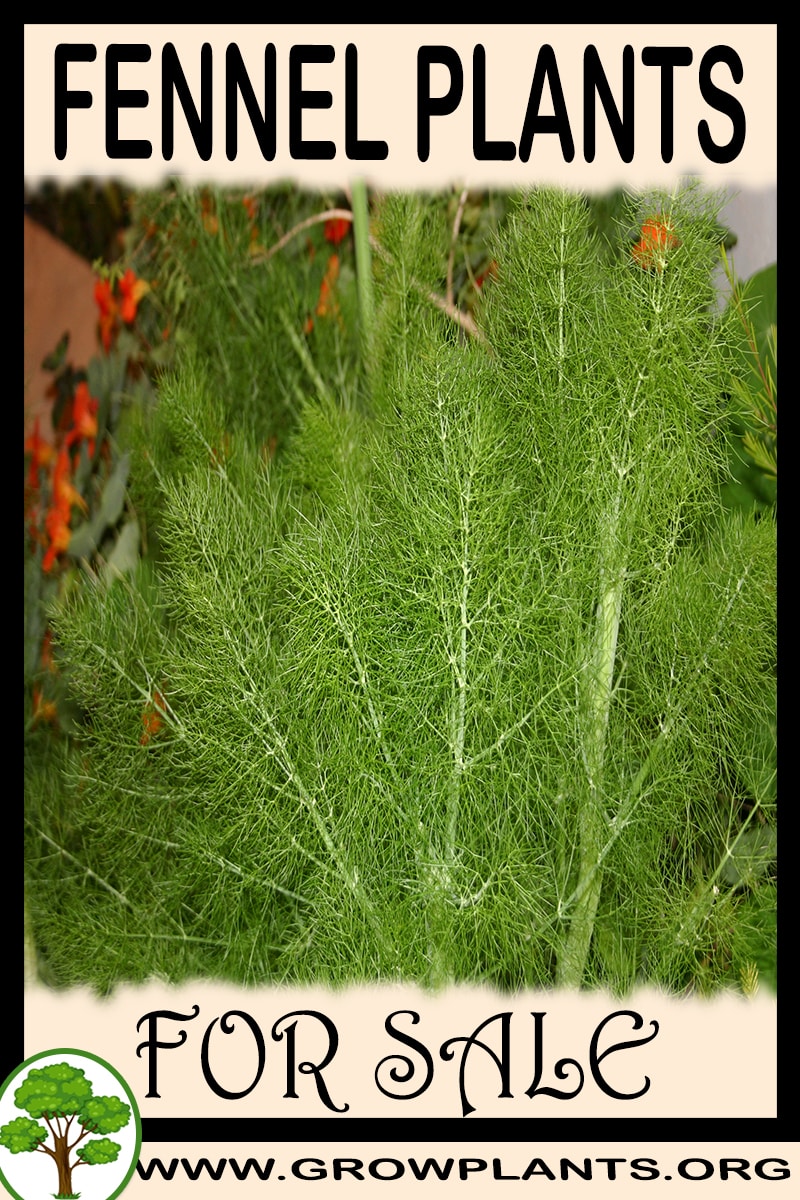
Overview: Fennel is a fast-growing aromatic herb reaching 0.8–1.6 m (32–64 in) tall, with finely divided feathery foliage and swollen white leaf-bases. Usually grown as an annual (perennial in mild zones), it is valued as a culinary and medicinal herb whose leaves, stalks and seeds are all edible.
Quick Specifications
| Specification | Attribute |
|---|---|
| Plant Type / Life Cycle | Perennial, commonly grown as an annual |
| Foliage Type | Herbaceous, aromatic (feathery) |
| Mature Size | 0.8–1.6 m (32–64 in) tall |
| Growth Rate | Fast |
| Root System | Taproot |
| Toxicity | Non-toxic / edible |
| Hardiness | USDA 9–11 (perennial); 3–9 (annual) |
Growth Form & Structure
- Height & Spread: Upright to 0.8–1.6 m (32–64 in) tall; can also be grown in deep containers.
- Growth Habit & Form: Erect, clump-forming herb with hollow ribbed stems rising from a white, bulb-like base of swollen leaf sheaths.
- Lifespan & Maturity: Fast from seed, flowering and setting seed within its first season; seed ready to harvest roughly half a year after sowing.
Anatomy & Physical Features
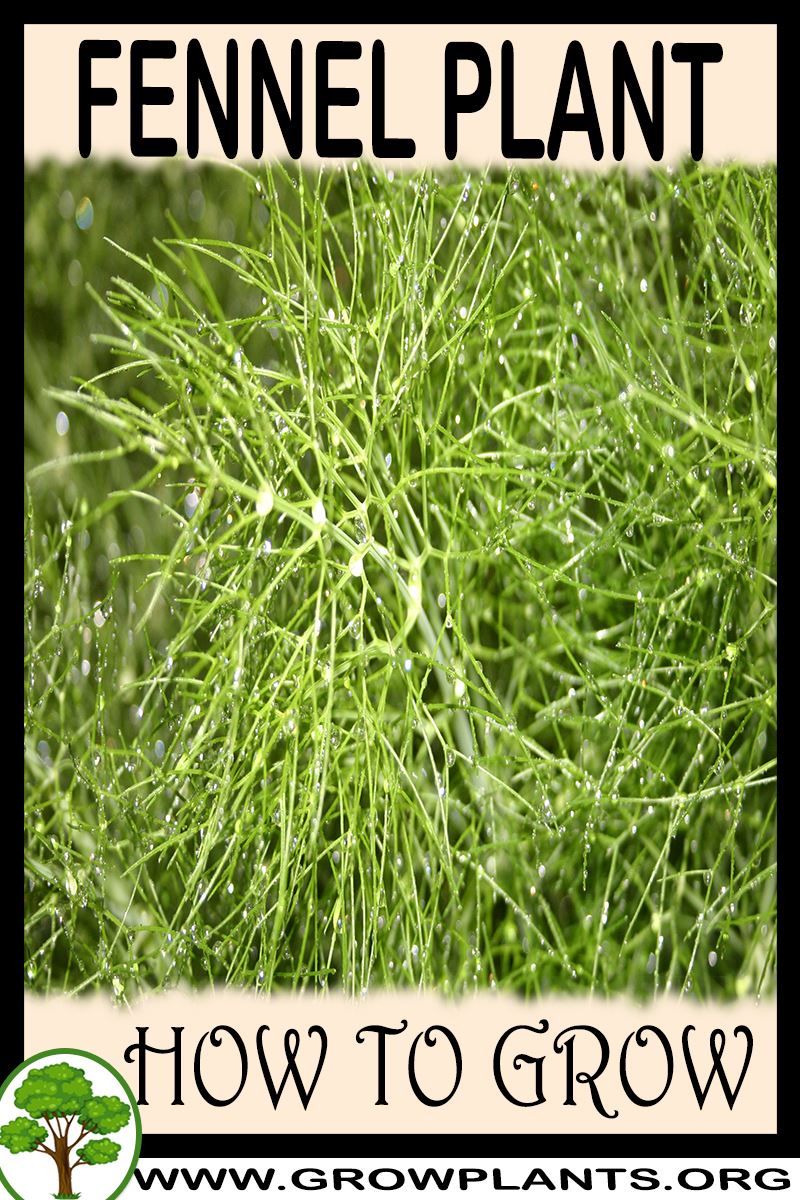
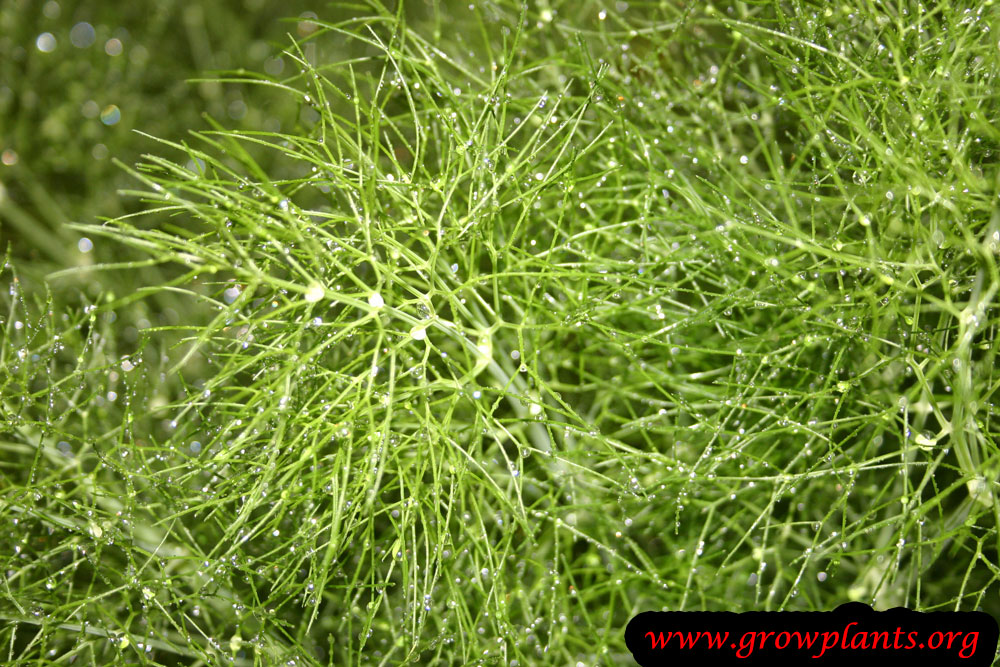
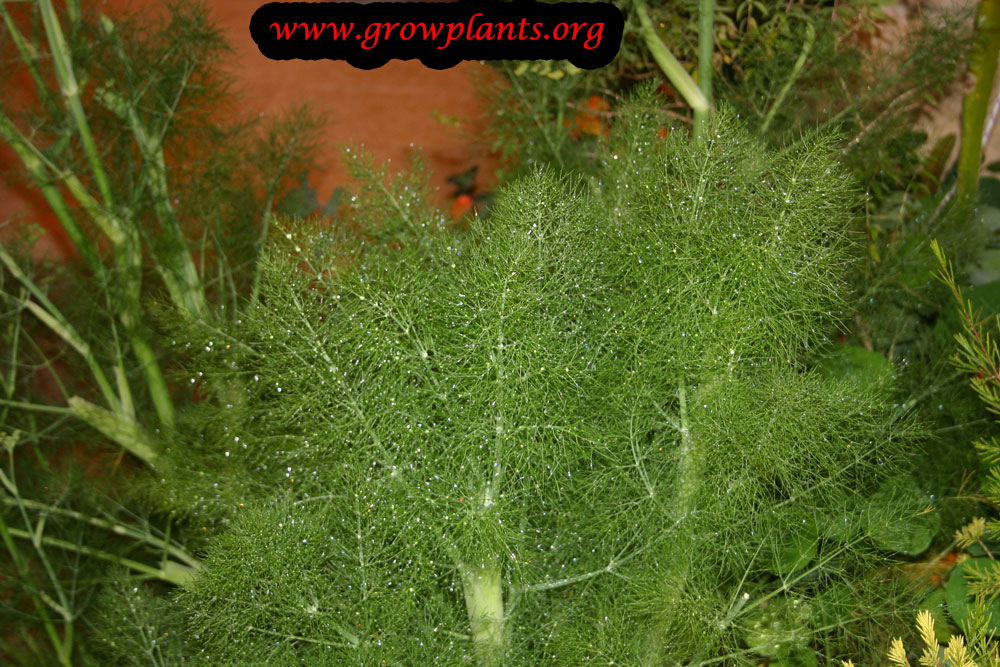
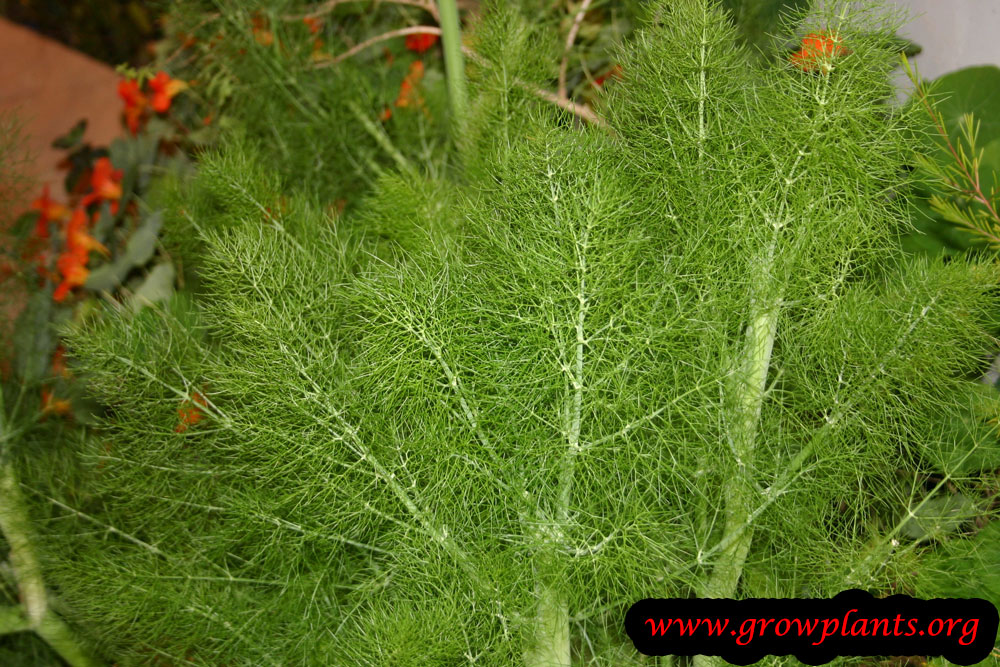
- Leaves & Foliage: Green, finely divided pinnate leaves 1–6 cm long, thread-like and feathery and aniseed-scented, whitening toward the base.
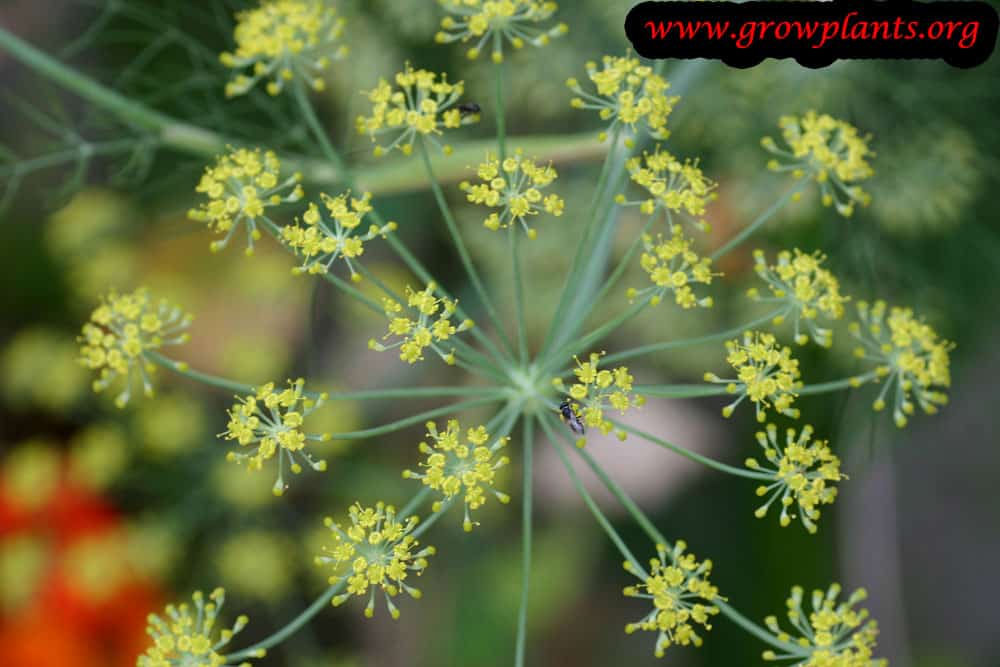
- Flower Characteristics: Small yellow flowers in flat umbels that attract bees and other pollinators.
- Fruit Profile: Oval 5–10 mm seeds (dry fruit) harvested as an aromatic spice.
Primary Uses & Landscape Value
- Edible Uses: Leaves eaten raw or in salads as a herb; seeds used as a spice and for herbal beverages; also used medicinally.
- Functional & Ornamental Roles: Herb-garden and pollinator plant; can also be grown ornamentally for its airy foliage.
Care Guide: Planting, Soil & Watering
Overview: Fennel is a fast-growing, sun-loving herb that thrives in well-drained soil and tolerates poor ground and drought once established. It needs only low to moderate watering and grows in most soils as long as they are not waterlogged, withstanding light frost down to about -2C (28F).
Quick Care Requirements
| Requirement | Ideal Condition |
|---|---|
| Planting Season | Spring, summer or autumn |
| Growth Rate | Fast |
| Soil Type | Well-draining; tolerates poor soil |
| Water Need | Low to moderate – let the soil dry somewhat between waterings |
Planting & Establishment
- Best Planting Season: Plant in spring, summer or autumn in mild weather; it tolerates light frost (to about -2C) but establishes best in warmth.
- How to Plant:
- Hole Preparation: Fennel forms a deep taproot, so loosen the soil deeply and plant into an open, free-draining spot; it resents root disturbance, so transplant young or sow where it is to grow.
- Soil Amendments: Fennel is not demanding – a little compost is plenty, and overly rich soil is unnecessary.
- Planting Depth: Set the crown at soil level with the swollen white base sitting at the surface; do not bury it deeply.
- Growth Speed & Expectations: Fast growth to 0.8-1.6 m (32-64 in) in a single season.
Soil, Watering & Drainage Care
- Soil Mix & Drainage Needs: Any open, well-drained soil suits fennel; sharp drainage prevents rot, and heavy wet ground should be lightened. In containers use a free-draining mix.
- Watering Schedule & Technique:
- Young / Newly Planted: Keep the soil lightly moist while seedlings and young plants establish.
- Established: Water sparingly once established – fennel is fairly drought-tolerant and prefers to dry between waterings.
- Seasonal Adjustments: Water a little more in prolonged summer heat; reduce in cool, damp weather.
Climate, Light & Hardiness
Fennel (Foeniculum vulgare) is a Mediterranean perennial herb, grown as an annual in cold-winter climates, that likes full sun to half shade and a mild, warm-temperate setting. It is only moderately cold-hardy: site data puts its lower limit at about −2°C, below which the top growth is damaged, though an established crown often resprouts in mild-winter areas.
Quick Climate Specifications
| Climate Zones | Mediterranean, desert, subtropical and temperate |
| USDA Hardiness Zones | About zones 3–9 grown as an annual; 9–11 as a perennial |
| Optimal Temp Range | Mild to warm, roughly 15–25°C (59–77°F) |
| Cold Damage Begins | Around −2°C (28°F) the top growth is damaged |
| Approx. Survival Minimum | An established crown may survive short frosts in mild-winter zones and resprout |
| Frost Tolerance | Low to Moderate |
| Light Conditions | Full sun to half shade |
| Wind Tolerance | Low to Moderate (tall stems to about 1.6 m) |
Sunlight & Light Exposure
Optimal Light Setup
Full sun gives the best flavour, colour and sturdiest stems; it accepts half shade but grows softer there.
Temperature Extremes & Hardiness
USDA Hardiness & Regional Limits
Fennel is perennial in mild-winter zones (about 9–11), where the crown persists year to year, and is grown as an annual in colder zones (about 3–9) where winter kills it.
Cold Damage & Winter Protection
The site's data gives a lower limit of about −2°C (28°F); below this the foliage is damaged, although an established crown in a mild-winter area often resprouts from the base in spring. A winter mulch helps at the cold edge of its range.
Frost Sensitivity
Frost tolerance is low to moderate; hard frost cuts down the top growth even where the root survives.
Extreme Heat Tolerance
It handles warm Mediterranean summers well; however, heat or cold stress can prompt bulb-type fennel to bolt prematurely.
Wind, Humidity & Microclimate
Humidity Preferences
Moderate humidity with good airflow suits it and reduces foliar disease.
Wind Tolerance
The tall flowering stems (to about 1.6 m) can be blown over in exposed sites, so give it shelter or space to stand.
Microclimate Recommendations
A warm, sunny, well-drained position - mulched over winter in marginal zones - keeps the crown alive and the growth sturdy.
Growing in Pots, Balconies & Indoors
Fennel (Foeniculum vulgare) grows well in a large, deep pot, though at 0.8-1.6 m it is tall for a container and best in a heavy, stable tub. It is not a houseplant – it needs full sun – but a young plant will grow on a very bright sill, and it makes a fine feathery specimen on a sunny balcony or patio.
Quick Details
- Container Size: Large, deep, stable pot, 15-30 L, for the long taproot
- Indoor Suitability: Not a true houseplant; only a very sunny sill, and only while young
- Best Spot: Full sun to light shade
- Soil & Drainage: Deep, free-draining, organic-rich mix
- Watering in Pots: Keep evenly moist; a deep pot keeps the taproot happy
Indoors & On the Windowsill
- Houseplant limits: The grower marks it as not an indoor plant – it grows too tall and needs more sun than a room gives.
- Windowsill growing: Only young plants suit a bright sill, grown for a few leafy pickings; for bulbs or a full plant it needs a big pot outdoors in full sun.
On a Balcony or Patio
- Light & wind: Give it the sunniest spot you have. Walls, railings and paving reflect heat and dry pots quickly, so check moisture daily in warm weather and shelter or stake exposed plants against wind. A drip irrigation kit with a timer can take over that watering check automatically.
- Practicalities: Check that the filled pot’s weight is safe for the balcony and that drainage runoff can escape freely without pooling on the floor below.
Choosing the Pot, Soil & Long-Term Care
- Pot & drainage: A large, deep 15-30 L tub with strong drainage holes; skip a standing water saucer so the roots never sit wet. Terracotta breathes and dries faster, while glazed or plastic holds moisture longer.
- Potting mix: Well-aerated and organic-rich – a general potting mix, or peat/coir with perlite or vermiculite.
- Feeding: Potted plants need feeding more often than those in the ground because nutrients leach out with each watering – feed lightly through the growing season.
- Repotting: Refresh the mix or pot up about every couple of years; for perennials, lightly prune the root ball and top growth at the same time.
Growing this plant in a greenhouse
A greenhouse can give fennel plant frost protection, cold protection, a longer growing season and controlled production. Under warm enough conditions it can keep growing well beyond the normal outdoor season and potentially be maintained year-round - though continuous cropping is not guaranteed and depends on temperature and light.
Greenhouse at a glance
| Greenhouse suitability | Excellent - a major practical advantage |
|---|---|
| Main benefits | frost protection, cold protection, a longer growing season, controlled production |
| Season extension | potentially year-round |
| Outdoor protection advisable below | about 5°C |
| Maintain greenhouse minimum | around 5°C for active growth |
| Suitable types | unheated greenhouse, polycarbonate greenhouse |
| Heating | Heating is optional - useful mainly for winter growing in cold areas. |
Related greenhouse guides
- Greenhouses: How to Choose the Right Greenhouse
- Polycarbonate Greenhouses: What to Look for Before Buying
Fertilizing & Feeding
Fennel is a modest feeder that mainly wants steady nitrogen and rich, organic soil for lush feathery foliage; feed lightly during the active growing season rather than in one heavy dose. A fertilizer formulated for tomatoes and vegetables supports that feeding pattern through harvest.
Quick Fertilizing Specs
| Feeding Level | Moderate |
|---|---|
| Main Nutrient Priority | Nitrogen for leafy growth, backed by rich organic matter. |
| Best Feeding Period | During active spring-to-autumn growth. |
| Organic Options | Compost, well-rotted manure and humus suit it well. |
| Micronutrients | Usually covered by a complete fertilizer and healthy soil; correct iron only if new growth yellows. |
| Soil pH | Tolerates a fairly wide range; slightly acidic to neutral, well-drained soil is ideal. |
| Reduce/Stop Feeding | Ease off feeding as growth slows in cold weather. |
Feeding by Growth Stage
Establishment after planting
Help young plants root in and begin steady leafy growth.
| Nutrient direction | Gentle, nitrogen-leaning feeding to support early leaf and root development. |
|---|---|
| Timing | At planting and as seedlings settle in during spring. |
| Frequency | A light feed as growth begins, repeated lightly through early growth. |
| Fertilizer types | A balanced complete fertilizer, Compost or well-rotted organic matter worked into the bed |
| Precautions | Keep early feeding light so tender seedlings are not scorched. |
Active leafy growth
Sustain tender, flavourful foliage for repeated harvest.
| Nutrient direction | A nitrogen-forward complete feed keeps leaves lush and green. |
|---|---|
| Timing | Through the active growing season while leaves are being harvested. |
| Frequency | Light, regular feedings through the active growing season. |
| Fertilizer types | A nitrogen-forward complete fertilizer, Compost topdressing or organic matter |
| Precautions | Avoid heavy nitrogen late in the season, which can dilute aroma and soften growth. |
Cool-season rest
Let the plant slow or die back through cold weather without pushing new growth.
| Nutrient direction | None – withhold fertilizer while the plant is not actively growing |
|---|---|
| Timing | During dormancy or cool-season rest when growth has stopped |
| Frequency | No feeding at this stage |
| Fertilizer types | No feeding at this stage – resume only when active growth returns |
| Precautions | Do not fertilize until active growth resumes; feeding a resting plant risks salt buildup and root injury |
Nutrient Deficiency Signs & Corrections
Older, lower leaves fade to pale green or yellow overall and growth slows.
| Possible causes | Low soil nitrogen or thin organic matter, Nitrogen leached out by heavy watering or rain on light soils, Cold, waterlogged roots limiting uptake |
|---|---|
| Appears first on | older, lower leaves |
| What to check | soil organic matter and recent feeding, whether heavy rain or irrigation may have leached nutrients, overall plant vigor and colour |
| Possible correction | Topdress with compost or apply a balanced complete fertilizer at label strength; keep watering steady but not excessive so nutrients are not washed away. |
Youngest leaves yellow between the veins while the veins stay green.
| Possible causes | High or alkaline soil pH locking up iron, Cold or waterlogged soil slowing root uptake, Genuinely low available iron |
|---|---|
| Appears first on | newest leaves at the shoot tips |
| What to check | soil pH and drainage, whether the soil is cold or saturated, overall root health |
| Possible correction | Correct soil pH and improve drainage first; if the youngest growth stays chlorotic, apply a chelated iron product following its label. |
Pruning, Training & Seasonal Maintenance
Fennel is a tall (0.8–1.6 m), perennial-but-often-annual herb whose pruning is really a choice between two outcomes: leave the yellow umbel flower heads to mature into the aromatic seed for harvest, or cut the developing inflorescence off to keep the plant’s energy in its feathery, edible foliage. Cutting is light work with no woody framework involved, done in spring or autumn, and mainly consists of removing dead leaves and, deliberately, the flower stalk when seed is not the goal.
Quick Pruning & Maintenance Specs
| Pruning Tolerance | High for foliage/flower-stalk removal; no woody structure to protect |
| Primary Pruning Window | Spring or autumn |
| Main Objective | Remove dead leaves; remove the inflorescence if seed is not wanted, to redirect growth into leaves |
| Best Tool Type | Precision snips / bypass secateurs for the thicker flower stalk |
Pruning by Plant Age & Size
Newly Established
Remove only dead or damaged leaves while the plant builds its root system; no cutting of healthy growth.
Mature / Established
Each season, decide whether this plant is being grown for leaf/spring greens or for seed: if seed is not planned, cut out the developing flower stalk before it fully matures so the plant keeps producing leafy growth instead of finishing its cycle. Fennel self-seeds readily and is noted as invasive, so left-over flower heads that are not harvested should not simply be allowed to drop.
Special Growth to Remove
- Dead leaves, removed as they yellow.
- The flower stalk (inflorescence), specifically when the seed is not going to be used – this is the one deliberate, species-specific cut this plant calls for.
- Spent flower/seed heads after harvest, both to collect the crop and to prevent unwanted self-seeding given the plant’s invasive tendency.
Container & Small-Space Pruning
In a container, keeping the flower stalk pinched out is doubly useful – it keeps the 0.8–1.6 m plant from towering over a pot and reduces the risk of it seeding itself into surrounding beds.
Tools
- Precision snips – for routine dead-leaf removal and light foliage harvest.
- Bypass secateurs – for cutting the thicker, fibrous flower stalk cleanly at its base.
Tool Hygiene & Disease Risk
Routine hygiene; fennel is not linked to a transmissible disease risk that requires disinfecting between cuts.
Cut Placement & Technique
Cut the flower stalk low, near where it emerges from the foliage clump, rather than leaving a tall bare stub.
Common Pruning Mistakes
- Leaving spent flower heads in place “to look tidy later” and letting them drop seed, feeding the plant’s already-noted invasive spread.
- Removing the flower stalk after it has already set seed, which achieves neither a leaf harvest nor a seed harvest.
When NOT to Prune
- Do not cut the inflorescence away if a seed harvest is actually wanted – let it mature fully first.
Recommended Tools (by task)
- precision_snips – dead-leaf removal and light foliage tidying.
- bypass_secateurs – cutting out the flower stalk when seed is not wanted, or harvesting mature seed heads.
Propagation Guide
Fennel is easiest from seed, sown directly because its deep taproot dislikes being moved, and it self-sows so freely that it can become invasive. Established crowns can also be divided, which the site notes as an option; seed of the species comes mostly true, so propagation is Easy.
Quick Propagation Specs
| Best Propagation Method | Seed (direct-sown) |
| Alternative Methods | Crown division |
| Propagation Difficulty | Easy |
| Seed True-to-Type | Mostly uniform for the species; named selections (e.g. bronze forms) can vary |
| Vegetative True-to-Type | Yes — a division reproduces the parent |
| Best Propagation Season | Spring to autumn (sowing); spring or autumn (division) |
| Seed Sowing Depth | Shallow — about 1 cm (0.4 in) |
Growing from Seed
Seed Handling & Viability
Store seed cool, dry and dark and use reasonably fresh seed, as umbellifer seed loses viability with age.
Sowing Season
Sow from spring through autumn. Sow in situ — the taproot resents transplanting — and be aware that self-sown seedlings can spread widely.
Sowing Depth & Germination
Sow shallowly, about 1 cm (0.4 in) deep, and keep evenly moist; seed generally germinates within a couple of weeks, varying with soil temperature.
Division, Offsets, Pups & Suckers
Crown Division
Lift an established clump in spring or autumn and separate offsets from the crown, each with its own roots and a growth point. Because of the strong taproot, division is less reliable than seed — take pieces from the outer crown and replant promptly, keeping them watered until they re-establish.
Bloom & Edible Flower Guide
Quick Details
- Bloom Season: Summer
- Time to First Bloom: Grown as an annual it bolts and flowers in its first season; as a perennial it settles into flowering from its second year
- Flower Appearance: Tiny yellow flowers held in flat umbel-shaped heads that draw in pollinators
- Edibility: Flower is edible – the golden flowers, and the pollen shaken from them, are a prized aromatic seasoning
Detailed Blooming Overview
When fennel throws up its airy yellow umbels in summer, it is both a kitchen and a garden event. The flat flower heads are alive with bees and hoverflies, and the fragrant pollen they carry is one of the plant’s most valued products. Bear in mind that flowering (bolting) also signals that the tender leaf and bulb season is winding down, so time it to your goal.
Flower Characteristics
- Small yellow flowers arranged in umbrella-like umbels.
- Strongly attractive to bees and other beneficial insects.
Bloom Care & Thinning
- Pollination: Done by bees and other visiting insects.
- Managing the bloom: If you want to keep leaves and bulb at their best, remove the flowering stalks early; leave some to flower if you want pollen or to feed beneficial insects.
Bloom Health & Protection
- Aphids on the umbels: Aphids sometimes cluster on flower stalks – a firm jet of water or an insecticidal soap keeps them in check, and the flowers themselves attract the predators that do the same job.
Fruit & Uses
Fennel is grown for its aromatic, feathery leaves and its seed-like fruits, both used as a culinary herb and spice. The leaves are eaten fresh, while the ripe seeds are dried and used whole or ground as a spice and for herbal tea.
Quick Edible Specs
| Edible Parts | Leaves (fronds); seeds (the dried “fruit”) |
|---|---|
| Main Use(s) | Culinary herb (leaves); spice and beverage/tea (seeds); traditionally used medicinally |
| Eaten Raw or Cooked | Leaves eaten raw or cooked; seeds used dried, whole or ground |
| Preparation Required | None for leaves – rinse and use fresh; seeds are dried before use |
| Harvest Season | Leaves: all year; Seeds: summer |
| Time to First Harvest | Leaves can be cut once the plant is established; the seed harvest follows flowering, later in the season |
| Storage | Dried seeds store well; leaves are best used fresh |
| Safety/Toxicity Caveat | None known when used as a culinary herb/spice in normal food amounts |
Leaves & Greens
The narrow, feathery, pinnate leaves are green (whitish toward the base) and grow in clusters 1–6 cm long. They can be cut a few at a time, or trimmed from the base of the plant, and are harvestable all year. Used raw as a fresh herb in salads or as a garnish; also has a traditional medicinal use.
Seeds, Pods & Nuts
What is loosely called the plant’s “fruit” is actually its small, oval seed (5–10 mm), produced after the yellow umbel flowers finish blooming in summer. To harvest, pick the seed heads once they have dried and separate the seeds from the surrounding chaff; watch for birds and aphids on the ripening heads. The dried seeds are used whole or ground as a spice (aniseed-like flavour) and steeped for a fennel-seed beverage/tea.
Preparation, Uses & Safety
Leaves need no preparation beyond rinsing and are used fresh as a herb. Seeds should be fully dried before storing; they are used as a spice in cooking and baking, or infused as a tea, and have a long history of traditional medicinal use. No toxicity concerns are noted for normal culinary use of either part.
Pests, Diseases & Troubleshooting
Overview: Fennel is an aromatic Mediterranean umbellifer that is fairly robust; its aromatic oils deter many pests, but it is a well-known host for swallowtail caterpillars and a magnet for aphids, and it suffers foliar mildews and seedling damping-off in damp conditions. Florence (bulbing) fennel is prone to bolting and poor bulbing under stress. Grow it in full sun with good drainage and airflow, and most issues stay minor.
Quick Troubleshooting Overview
| Issue / Pest | Main Symptom | Primary Solution |
|---|---|---|
| Swallowtail caterpillars | Striking green/black-banded caterpillars stripping feathery foliage | Handpick or relocate; tolerate on a big plant |
| Aphids | Dense colonies on shoots and umbels, honeydew, curling | Blast off, encourage predators, insecticidal soap |
| Leaf miners | Pale wandering tunnels or blotches in foliage | Remove mined leaves, floating row cover |
| Powdery/downy mildew | White powder or greyish patches on foliage | Airflow, avoid wet leaves, sulphur if needed |
| Damping-off | Seedlings collapse at the soil line | Sow thinly, clean mix, avoid overwatering |
| Bolting | Premature flowering, no bulb (Florence fennel) | Steady moisture, cool timing, bolt-resistant types |
Common Pests & Management
- Swallowtail / parsleyworm caterpillars (Papilio polyxenes, Papilio machaon):
- Symptoms: Large, smooth caterpillars boldly banded green, black and yellow-orange that chew the feathery foliage, sometimes stripping whole stems; when threatened they evert a bright orange forked gland (osmeterium).
- Prevention & Control: These become swallowtail butterflies, so on an established plant simply tolerate the damage or relocate the caterpillars to a sacrificial plant. Handpick if numbers threaten a young plant; avoid sprays so you keep the pollinators. Bt (Bacillus thuringiensis) is a last resort only if you must protect a crop.
- Aphids (Cavariella aegopodii, Aphis fabae, Myzus persicae):
- Symptoms: Dense colonies of green or black soft-bodied insects on shoot tips, leaf axils and developing umbels, with sticky honeydew, sooty mould and curled, distorted growth; the willow-carrot aphid also spreads viruses within the carrot family.
- Prevention & Control: Blast colonies off with water, squash small outbreaks, and encourage the ladybirds, lacewings and hoverflies that fennel’s flowers attract. Insecticidal soap or a light oil clears heavy infestations; spray in the evening to protect the many beneficials fennel draws in.
- Leaf miners (Agromyzidae):
- Symptoms: Pale winding tunnels or blotchy mines within the leaves where larvae feed between the surfaces; heavy mining browns and weakens foliage.
- Prevention & Control: Pick off and destroy mined leaves, use floating row cover to exclude egg-laying flies, and remove nearby weed umbellifers that harbour them. Chemicals are rarely justified on a herb you will eat.
- Armyworms / cutworms (Spodoptera / Agrotis spp.):
- Symptoms: Night-feeding caterpillars that chew foliage or sever young seedlings at the base, hiding in the soil by day.
- Prevention & Control: Search the soil at dusk and handpick, use cardboard collars around transplants against cutworms, and keep the bed weed-free. Bt or spinosad only if an outbreak threatens the crop.
Diseases & Fungal Issues
- Powdery mildew (Erysiphe heraclei):
- Symptoms: A white powdery coating on leaves and stems, worst in crowded plantings with warm days and humid nights; foliage yellows and dries.
- Treatment & Management: Space plants for airflow, grow in full sun, avoid overhead watering, and remove badly affected growth. Sulphur or a potassium-bicarbonate spray helps if it spreads, observing harvest intervals on edible plants.
- Downy mildew / Cercospora blight (Plasmopara / Cercospora spp.):
- Symptoms: Greyish or purplish patches and yellowing on leaves in cool, wet, humid weather, with angular spotting and dieback of the fine foliage.
- Treatment & Management: Improve drainage and air movement, water at the base early in the day, rotate crops, and clear infected debris. Copper fungicide can protect in persistently wet seasons.
- Damping-off (Pythium / Rhizoctonia spp.):
- Symptoms: Seedlings rot and topple at the soil line, or fail to emerge, in cold, wet, overcrowded seedbeds.
- Treatment & Management: Sow thinly in clean, free-draining mix, avoid overwatering, provide warmth and airflow, and do not sow into cold wet soil. There is no cure once a seedling collapses – prevention is everything.
- Sclerotinia / crown and root rot (Sclerotinia sclerotiorum):
- Symptoms: Water-soaked soft rot at the crown and stem base with white cottony mould and hard black resting bodies, especially on Florence fennel bulbs in wet soil.
- Treatment & Management: Improve drainage, avoid overcrowding and over-rich wet ground, rotate away from other susceptible crops, and remove and destroy infected plants along with the surrounding soil.
Growing Difficulties & Abiotic Problems
- Bolting and poor bulbing (Florence fennel):
- Cause & Symptoms: Heat, drought, cold snaps, transplant shock or long days push bulbing fennel to flower prematurely instead of forming a fat bulb, leaving a thin, tough, splitting base.
- Correction Strategy: Keep moisture and growth steady, sow at the right time for your climate to avoid stress and unfavourable daylength, choose bolt-resistant cultivars, and earth up developing bulbs. Herb (leaf/seed) fennel is grown for flowering, so bolting there is desirable.
- Splitting / cracked bulbs:
- Cause & Symptoms: Irregular watering – drought followed by heavy watering or rain – causes bulbs to split as growth surges.
- Correction Strategy: Water evenly and mulch to buffer soil moisture, and harvest bulbs promptly once sized rather than leaving them to over-mature.
- Allelopathy / poor companions:
- Cause & Symptoms: Fennel exudes compounds that inhibit the growth of many neighbouring vegetables (beans, tomatoes and others), and it cross-pollinates with dill.
- Correction Strategy: Grow fennel in its own spot away from sensitive crops, and keep it apart from dill if you want true seed.
- Leggy, floppy growth:
- Cause & Symptoms: Too little light or over-rich soil produces weak, tall, sprawling stems that lodge.
- Correction Strategy: Grow in full sun in moderately fertile, free-draining soil; support tall herb fennel or cut back to keep it bushy.
What Helps – Products & Tools
Fennel is largely self-reliant and even acts as an insectary that draws in beneficial predators and pollinators. Cultural care – full sun, spacing, even moisture, clean seedbeds and crop rotation – prevents most trouble. Where needed, use insecticidal soap or light horticultural oil for aphids, Bt/spinosad only as a last resort for caterpillars on crops, and sulphur, potassium-bicarbonate or copper fungicide for the mildews, always respecting harvest intervals on this edible plant.