

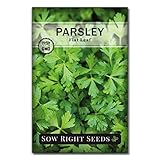


Plant Profile & Key Characteristics
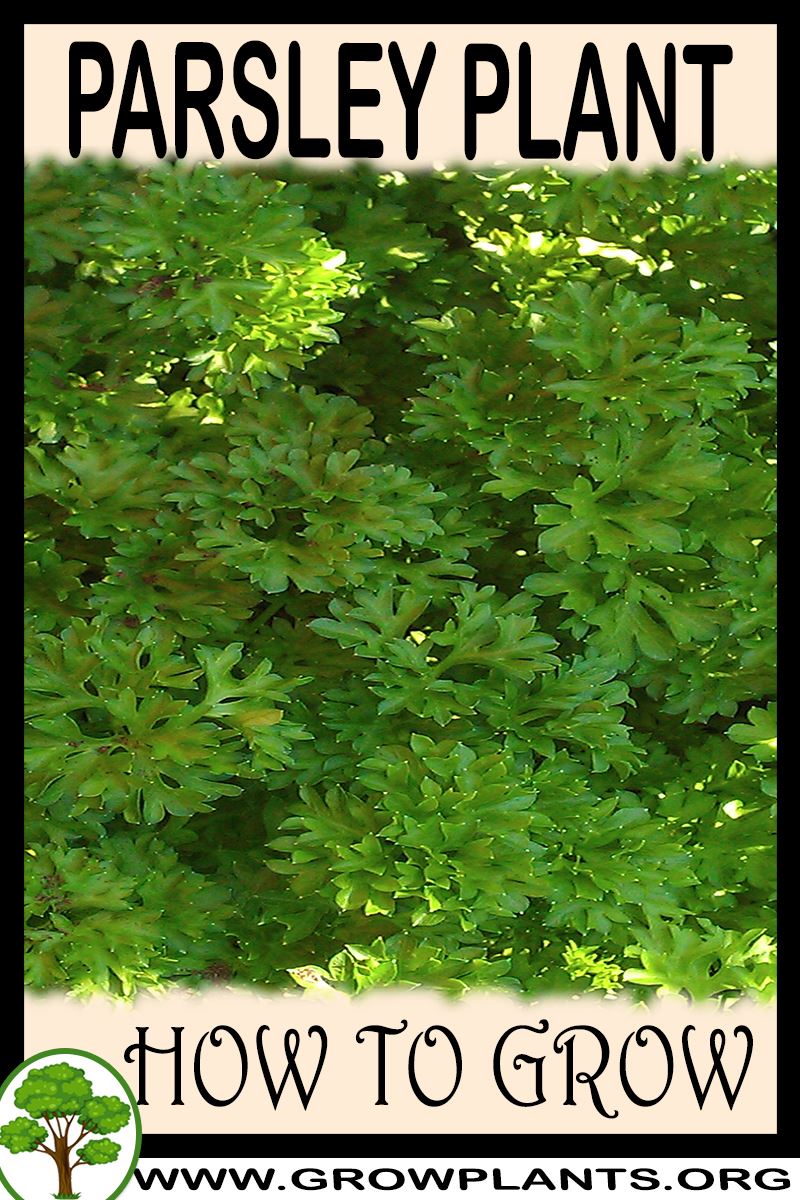
Overview: A low herbaceous herb reaching only 10-30 cm (4-12 in), grown in a leafy rosette above a fleshy taproot. It is a culinary plant — biennial in cool climates and treated as an annual in warm ones — raised for its aromatic edible leaves and, in some strains, its edible root.
Quick Specifications
| Specification | Attribute |
|---|---|
| Plant Type / Life Cycle | Biennial (grown as an annual in warm climates) |
| Mature Size | 10-30 cm (4-12 in) tall in leaf |
| Growth Rate | Fast to moderate |
| Root System | Edible white taproot |
| Toxicity | Non-toxic / culinary herb (leaves and root are eaten) |
| Hardiness | USDA zones 3-9 as a biennial; 9-11 grown as an annual |
Growth Form & Structure
- Height & Spread: A compact leafy clump 10-30 cm (4-12 in) tall; well suited to pots and window boxes, where its small size makes it an easy container and kitchen-garden herb.
- Growth Habit & Form: Rosette-forming herbaceous herb; slender leaf stalks rise from the crown in the first season, and a flowering stem bolts in the second year before the plant sets seed and dies.
- Lifespan & Maturity: Naturally biennial — leaf in year one, flower and seed in year two — but usually harvested and replaced within a single season for the freshest foliage.
Anatomy & Physical Features
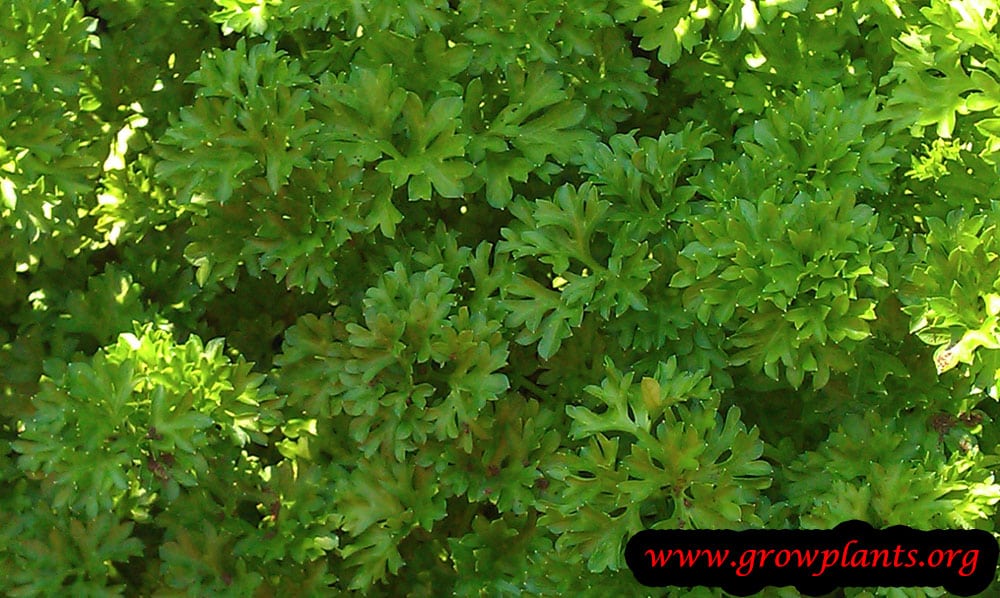
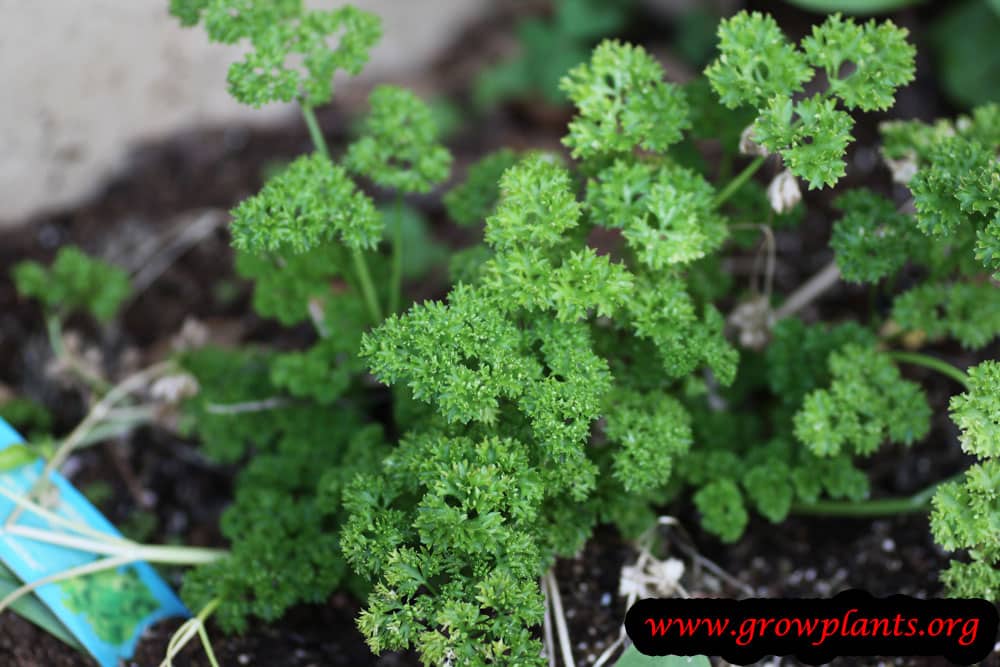
- Leaves & Foliage: Aromatic mid-green leaves, deeply lobed with pointed edges, in flat-leaf or tightly curled forms, carried on upright stems.
- Flower Characteristics: Small yellow flowers borne in flat umbels in the second year.
- Root Profile: A white, yellowish-skinned edible taproot in root-type strains, lifted in autumn.
Primary Uses & Landscape Value
- Edible Uses: Leaves eaten raw in salads, cooked, and used fresh or dried as a herb and spice; the taproot of Hamburg-type parsley is cooked as a root vegetable.
- Functional & Ornamental Roles: A staple culinary herb for beds, borders and containers; the summer umbels also draw bees and beneficial insects.
Care Guide: Planting, Soil & Watering
Overview: Petroselinum crispum (parsley) is a cool-season biennial herb usually grown as an annual across hardiness zones 3–11. It grows best in full sun in fertile, moist but well-drained soil kept evenly watered.
Quick Care Requirements
| Requirement | Ideal Condition |
|---|---|
| Planting Season | Cool seasons – spring or autumn |
| Growth Rate | Moderate to Fast |
| Soil Type | Fertile, moist, well-draining |
| Water Need | Moderate – keep evenly moist |
Planting & Establishment
- Best Planting Season: Plant in the cool seasons – spring or autumn – for the best leafy growth.
- How to Plant:
- Hole Preparation: Dig a hole about twice the width of the root ball and no deeper than its height, loosening the sides so young roots can spread easily.
- Soil Amendments: Work compost or well-rotted organic matter into the backfill; on heavy ground add grit or coarse material to sharpen drainage.
- Planting Depth: Set the plant so the root collar sits level with the surrounding soil – never bury the stem – then firm gently and water in.
- Growth Speed & Expectations: A quick grower once established, though seed can be slow and erratic to germinate.
Soil, Watering & Drainage Care
- Soil Mix & Drainage Needs: Grow in fertile, moist but well-drained soil rich in organic matter; good drainage combined with steady moisture gives the best leafy growth. It also does well in containers.
- Watering Schedule & Technique:
- Young / Newly Planted: Keep the soil evenly moist while young plants settle in; do not let it dry out.
- Established: Water regularly so the soil stays consistently moist, which keeps the leaves tender and plentiful.
- Seasonal Adjustments: Water more in warm, dry weather and less in cool, damp spells.
Climate, Light & Hardiness
Parsley is a cool-season biennial herb suited to temperate, Mediterranean, subtropical and even desert climates during their milder seasons, and it grows best in full sun to light afternoon shade. It is notably cold-hardy for a leafy herb - established plants shrug off light frost - while summer heat and long days are the main triggers for bolting and decline.
Quick Climate Specifications
| Climate Zones | Temperate, Mediterranean, subtropical, desert (grown in the cool season) |
|---|---|
| USDA Hardiness Zones | 3–9 as a biennial; often grown as an annual in zones 9–11 |
| Optimal Temp Range | Approximately 10–21 °C (50–70 °F) |
| Cold Damage Begins | Hard freezes scorch exposed foliage; light frost is generally tolerated |
| Frost Tolerance | Moderate to High (foliage of established plants) |
| Light Conditions | Full sun; light shade in hot climates |
| Wind Tolerance | Moderate |
Sunlight & Light Exposure
Optimal Light Setup
Full sun (about six hours or more) produces the fullest, most flavourful leaf. In hot regions, light afternoon shade eases heat stress and slows bolting.
Shade & Heat Management
Through Mediterranean and desert summers, an afternoon-shaded or cooler aspect prolongs the harvest before the plant runs to seed.
Best Exposure / Orientation
An open, sunny position suits the cool seasons; shift to a cooler, part-shaded aspect for summer growing.
Temperature Extremes & Hardiness
USDA Hardiness & Regional Limits
As a biennial it overwinters outdoors to about zone 3, the crown surviving cold winters even as top growth dies back. In mild zones 9–11 it behaves as a short-lived annual that bolts as heat arrives.
Cold Damage & Winter Protection
Light frosts are tolerated and can even sweeten the leaf; hard freezes scorch exposed foliage, but a mulched crown usually regrows.
Frost Sensitivity
Low - parsley is among the more frost-resilient culinary herbs.
Extreme Heat Tolerance
Heat and lengthening days push the plant to bolt, and leaf quality falls in prolonged hot weather, so in hot climates parsley is best timed for the cooler parts of the year.
Wind, Humidity & Microclimate
Humidity Preferences
Adaptable, growing across both humid and dry climates.
Wind Tolerance
The low, clumping habit stands moderate wind well.
Microclimate Recommendations
A bright, cool spot with some afternoon shelter extends the season in hot regions.
Growing in Pots, Balconies & Indoors
Parsley (Petroselinum crispum) is one of the best herbs for a pot and a kitchen sill, staying neat and giving pickings for many weeks. The grower does not list it as a true houseplant, but on a bright, sunny windowsill it does very well, and it is happy in full sun on any balcony or patio.
Quick Details
- Container Size: Pot, 3-10 L; a deeper pot suits the taproot
- Indoor Suitability: Not a true houseplant, but excellent on a bright, sunny kitchen sill
- Best Spot: Full sun; tolerates a little shade
- Soil & Drainage: Free-draining, organic-rich mix
- Watering in Pots: Keep evenly moist – steady water keeps the leaves tender
Indoors & On the Windowsill
- Houseplant limits: The grower does not class it as an indoor plant, but of the kitchen herbs it takes to a bright sill about the best – just give it real light, not a dim corner.
- Windowsill growing: On a bright, sunny sill it gives weeks of pickings from one pot; harvest outer stalks first and turn the pot for even growth.
On a Balcony or Patio
- Light & wind: Give it the sunniest spot you have. Walls, railings and paving reflect heat and dry pots quickly, so check moisture daily in warm weather and shelter or stake exposed plants against wind. A drip irrigation kit with a timer can take over that watering check automatically.
- Practicalities: Check that the filled pot’s weight is safe for the balcony and that drainage runoff can escape freely without pooling on the floor below.
Choosing the Pot, Soil & Long-Term Care
- Pot & drainage: A 3-10 L pot with strong drainage holes; skip a standing water saucer so the roots never sit wet. Terracotta breathes and dries faster, while glazed or plastic holds moisture longer.
- Potting mix: Well-aerated and organic-rich – a general potting mix, or peat/coir with perlite or vermiculite.
- Feeding: Potted plants need feeding more often than those in the ground because nutrients leach out with each watering – feed lightly through the growing season.
- Repotting: Refresh the mix or pot up about every couple of years; for perennials, lightly prune the root ball and top growth at the same time.
Fertilizing & Feeding
Parsley is a leafy herb grown for tender foliage; it appreciates steady nitrogen and moist, well-drained soil, fed lightly and regularly through active growth.
Quick Fertilizing Specs
| Feeding Level | Moderate |
|---|---|
| Main Nutrient Priority | Nitrogen to keep new leaves coming. |
| Best Feeding Period | During active growth from establishment through the harvest season. |
| Organic Options | Compost and well-rotted organic matter improve leaf quality. |
| Micronutrients | Usually covered by a complete fertilizer and good soil; correct iron only if new growth yellows. |
| Soil pH | Prefers near neutral, moist, well-drained soil; tolerates a moderate range. |
| Reduce/Stop Feeding | Ease off feeding as growth slows in cold weather. |
Feeding by Growth Stage
Establishment after planting
Help young plants root in and begin steady leafy growth.
| Nutrient direction | Gentle, nitrogen-leaning feeding to support early leaf and root development. |
|---|---|
| Timing | At planting and as seedlings settle in during spring. |
| Frequency | A light feed as growth begins, repeated lightly through early growth. |
| Fertilizer types | A balanced complete fertilizer, Compost or well-rotted organic matter worked into the bed |
| Precautions | Keep early feeding light so tender seedlings are not scorched. |
Active leafy growth
Sustain tender, flavourful foliage for repeated harvest.
| Nutrient direction | A nitrogen-forward complete feed keeps leaves lush and green. |
|---|---|
| Timing | Through the active growing season while leaves are being harvested. |
| Frequency | Light, regular feedings through the active growing season. |
| Fertilizer types | A nitrogen-forward complete fertilizer, Compost topdressing or organic matter |
| Precautions | Avoid heavy nitrogen late in the season, which can dilute aroma and soften growth. |
Nutrient Deficiency Signs & Corrections
Older, lower leaves fade to pale green or yellow overall and growth slows.
| Possible causes | Low soil nitrogen or thin organic matter, Nitrogen leached out by heavy watering or rain on light soils, Cold, waterlogged roots limiting uptake |
|---|---|
| Appears first on | older, lower leaves |
| What to check | soil organic matter and recent feeding, whether heavy rain or irrigation may have leached nutrients, overall plant vigor and colour |
| Possible correction | Topdress with compost or apply a balanced complete fertilizer at label strength; keep watering steady but not excessive so nutrients are not washed away. |
Youngest leaves yellow between the veins while the veins stay green.
| Possible causes | High or alkaline soil pH locking up iron, Cold or waterlogged soil slowing root uptake, Genuinely low available iron |
|---|---|
| Appears first on | newest leaves at the shoot tips |
| What to check | soil pH and drainage, whether the soil is cold or saturated, overall root health |
| Possible correction | Correct soil pH and improve drainage first; if the youngest growth stays chlorotic, apply a chelated iron product following its label. |
Pruning, Training & Seasonal Maintenance
Parsley is a small (10–30 cm), rosette-forming herb with no woody framework, so its “pruning” is simply how leaves are harvested, done year-round where climate allows. In cool climates parsley is biennial: it stays a tight leaf rosette in year one, then sends up a flower stem and declines in year two, so the cutting strategy shifts from ongoing leaf harvest toward either removing that flower stem to buy a little more leaf time, or letting it go to seed.
Quick Pruning & Maintenance Specs
| Pruning Tolerance | High for leaf harvest – no structure to protect |
| Primary Pruning Window | All year, harvested as leaves mature |
| Main Objective | Harvest outer leaves; remove dead leaves; manage the year-two flower stem |
| Best Tool Type | Precision snips (or hand-picking) |
Pruning by Plant Age & Size
Newly Established
Let the rosette fill in before the first harvest; parsley is noted to have germination problems, so young seedlings are worth protecting rather than cutting into early.
Mature / Established
Harvest outer, older leaves first, cutting at the base of the stem and leaving the central, newer growth to keep producing; taking all the leaves at once stalls the plant. In a plant’s second year (cool climates), a flower stalk emerges – removing it early can prolong usable leaf growth a little longer, though the plant will decline regardless as it is naturally biennial.
Special Growth to Remove
- Dead or yellowing outer leaves, removed as part of routine harvest.
- The flower stem in a second-year plant, if a bit more leaf harvest is wanted before the plant finishes its natural cycle.
Container & Small-Space Pruning
Parsley’s small size (10–30 cm) makes it naturally well suited to pots; frequent light harvesting of outer leaves is enough to keep a container plant productive and compact, with no pinching or height control needed beyond that.
Tools
- Precision snips – the only tool needed, for cutting individual leaf stems at their base.
Tool Hygiene & Disease Risk
Routine hygiene; no elevated disease-transmission risk noted for this species.
Cut Placement & Technique
Cut outer leaf stems at their base rather than snipping only leaf tips, which encourages continued production from the crown.
Common Pruning Mistakes
- Stripping the whole rosette at once instead of harvesting outer leaves progressively.
- Expecting a second-year plant to keep producing good leaf quality indefinitely once it has bolted to flower – that decline is the plant’s natural biennial cycle, not a pruning failure.
When NOT to Prune
- Avoid heavy harvesting from a young seedling still establishing, given parsley’s known germination difficulties – let it build a full rosette first.
Recommended Tools (by task)
- precision_snips – harvesting individual leaf stems and removing the year-two flower stalk.
Propagation Guide
Parsley is grown only from seed and is best sown where it is to grow, as its taproot dislikes transplanting. The one real challenge is its notoriously slow, erratic germination, so patience — and soaking the seed first — makes propagation Moderate rather than difficult.
Quick Propagation Specs
| Best Propagation Method | Seed (direct-sown) |
| Alternative Methods | None — no vegetative propagation |
| Propagation Difficulty | Moderate (slow, uneven germination) |
| Seed True-to-Type | Mostly uniform; flat-leaf and curled types are distinct cultivars that come mostly true |
| Best Propagation Season | Spring or autumn |
| Seed Sowing Depth | Shallow — about 1 cm (0.4 in) |
Growing from Seed
Seed Handling & Viability
Store seed cool, dry and dark and use fresh seed, as parsley (an umbellifer) loses viability quickly with age.
Dormancy & Pre-Sowing Treatment
Germination is slow and uneven — a common difficulty with parsley. Soaking the seed in water overnight before sowing helps leach the natural germination inhibitors in the seed and can even out emergence.
Sowing Season & Depth
Sow in spring or autumn into moist, well-drained soil, about 1 cm (0.4 in) deep, in situ or into deep cells to avoid disturbing the taproot.
Germination Conditions & Time
Keep the seedbed constantly moist and warm; do not let it dry out during the long wait. Emergence is typically slow and staggered over several weeks, so do not assume failure early.
Seedling Care
Grow seedlings on in full sun. As a biennial in cooler areas, plants run to flower in their second year, when seed can be collected.
Bloom & Flower Guide
Quick Details
- Bloom Season: Summer, in the plant”s second year
- Time to First Bloom: The second season – parsley is biennial and bolts to flower after its first winter
- Flower Appearance: Small greenish-yellow flowers in flat umbels
- Edibility: The flower is not the eaten part – parsley is grown for its leaves
Detailed Blooming Overview
Parsley makes leaves in its first year and flowers in its second, sending up branched stalks topped with yellow-green umbels. Once it bolts the leaves turn bitter, so flowering usually signals the end of the leaf harvest – though the blooms are excellent for hoverflies and other beneficial insects.
Flower Characteristics
- Small yellow-green flowers in flat-topped umbels.
- Followed by small ridged seeds if left to ripen.
Bloom Care & Thinning
- Managing the bloom: For leaves, pull or replace plants as they bolt; leave one to flower if you want seed or to support pollinators.
- Pollination: Carried out by bees and other small insects.
Fruit & Uses
Parsley is grown for its lobed leaves and, in root-type cultivars, for its edible taproot. The leaves are used fresh or cooked as a herb, while the root is lifted and cooked as a vegetable.
Quick Edible Specs
| Edible Parts | Leaves (flat or curly types); taproot (in root-parsley types) |
|---|---|
| Main Use(s) | Culinary herb (leaves); cooked root vegetable (root) |
| Eaten Raw or Cooked | Leaves raw or cooked; root cooked |
| Preparation Required | None for leaves; root should be cooked |
| Harvest Season | Leaves: once established, most of the year; Root: autumn |
| Time to First Harvest | Leaves once the plant is established; the root is lifted later, after leaf growth has matured |
| Storage | Root is best used soon after lifting; leaves are best used fresh |
| Safety/Toxicity Caveat | None known in normal culinary amounts |
Leaves & Greens
The lobed, pointed-edge leaves (flat or curly depending on type) grow on stems; once the plant is established, all or just some of the leaves can be cut. Used raw in salads or cooked, and also used as a dried herb/spice.
Roots & Tubers
Root-parsley types produce a white taproot under a yellowish peel, pulled up in autumn and used cooked as a root vegetable. Letting the plant put its energy into a large root competes with continuously cutting leaves from the same plant.
Preparation, Uses & Safety
Leaves need no preparation and are used fresh; the root should be cooked before eating. No specific toxicity is noted for parsley’s edible parts in normal culinary use.
Pests, Diseases & Troubleshooting
Overview: Parsley is a fairly robust biennial herb but, as an umbellifer, it attracts aphids and the carrot fly, and its foliage is the classic food plant of swallowtail (parsley worm) caterpillars. Good airflow, crop rotation and encouraging beneficial insects keep problems minor and largely remove any need for sprays on a leaf crop you will eat.
Quick Troubleshooting Overview
| Issue / Pest | Main Symptom | Primary Solution |
|---|---|---|
| Aphids | Curled tips, sticky honeydew | Water jet, insecticidal soap, encourage ladybirds |
| Carrot fly | Rusty tunnels in roots, stunted plants | Fine insect-mesh barrier, rotate crops |
| Parsley worm | Green/black striped caterpillars eating leaves | Hand-pick; tolerate for swallowtail butterflies |
| Powdery mildew | White dusty coating on leaves | Improve airflow, avoid overhead watering |
| Damping off | Seedlings collapse at soil line | Sow thinly, use clean sterile mix, avoid overwatering |
Common Pests & Management
- Aphids (Aphidoidea spp.):
- Symptoms: Small soft-bodied green, black or grey insects clustered on young leaves and stems; causes curled, distorted foliage, sticky honeydew and sooty mould. Look-alikes: whitefly (which flies up when disturbed).
- Prevention & Control: Encourage ladybirds, lacewings and parasitic wasps; blast colonies off with a firm jet of water; remove badly infested tips. Persistent outbreaks respond to insecticidal soap or a light horticultural oil applied to leaf undersides in the cool of the evening to protect pollinators.
- Carrot / root fly (Psila rosae):
- Symptoms: Larvae tunnel rusty-brown channels through the fleshy roots; plants are stunted and outer leaves redden. An umbellifer pest shared with carrots and celery.
- Prevention & Control: Rotate away from other umbellifers; grow under fine insect mesh or a 60 cm barrier fence, as the low-flying females struggle to reach plants; avoid thinning in still evening air when the scent attracts them.
- Parsley worm (swallowtail caterpillar) (Papilio spp.):
- Symptoms: Plump green caterpillars boldly ringed with black and yellow-orange spots, chewing leaves and stems, often stripping whole stalks.
- Prevention & Control: Simply hand-pick on a small crop, or relocate them – these become swallowtail butterflies, so many gardeners tolerate a little feeding. Bacillus thuringiensis (Bt) is an option only for heavy infestations.
- Whitefly (Trialeurodes vaporariorum):
- Symptoms: Clouds of tiny white moth-like insects rise when foliage is disturbed; leaf undersides carry scale-like nymphs, and honeydew fuels sooty mould.
- Prevention & Control: Hang yellow sticky traps to monitor and reduce adults; introduce the parasitic wasp Encarsia formosa under cover; keep plants unstressed. Treat with insecticidal soap or horticultural oil to leaf undersides, repeating regularly.
- Two-spotted spider mite (Tetranychus urticae):
- Symptoms: Fine pale stippling on leaves, faint webbing on undersides and leaf axils, and a dusty bronzed look in warm dry conditions. Tiny moving specks visible with a hand lens.
- Prevention & Control: Raise humidity and hose foliage regularly, as mites thrive in hot dry air; introduce predatory mites (Phytoseiulus persimilis) under cover. Treat hotspots with insecticidal soap or horticultural oil, ensuring thorough coverage of leaf undersides.
Diseases & Fungal Issues
- Powdery mildew (Erysiphe heraclei):
- Symptoms: White powdery patches on upper leaf surfaces, spreading in crowded, humid but dry-leaved conditions; foliage yellows and flavour declines.
- Treatment & Management: Space and thin plants for airflow; water at the base in the morning; remove affected leaves. A potassium-bicarbonate or sulfur spray can check bad outbreaks on a leaf crop.
- Septoria / leaf blight (Septoria petroselini):
- Symptoms: Small tan spots with dark margins spreading across leaves; seed-borne and splashed by rain.
- Treatment & Management: Use clean seed, rotate crops, remove infected foliage and avoid overhead watering; copper fungicide only if severe on a food crop.
- Damping off (Pythium / Rhizoctonia spp.):
- Symptoms: Seedlings topple and rot at the soil line soon after emerging.
- Treatment & Management: Sow thinly in fresh sterile mix, avoid overwatering and give good ventilation; do not sow into cold wet compost.
Growing Difficulties & Abiotic Problems
- Bolting:
- Cause & Symptoms: As a biennial, parsley runs to flower in its second year or after cold/heat stress, turning leaves bitter and sparse.
- Correction Strategy: Sow fresh plants each season, keep evenly watered, and harvest regularly; leave one plant to flower for beneficial insects and self-seeding.
- Yellowing / poor growth:
- Cause & Symptoms: Waterlogged or exhausted soil and nitrogen shortage yellow lower leaves and stall growth.
- Correction Strategy: Grow in fertile, free-draining soil, feed lightly with a balanced or leafy feed, and keep moisture even.
- Leaf-tip and margin browning (salts / dryness):
- Cause & Symptoms: Fertiliser salt build-up, hard water, low humidity or erratic watering scorches leaf tips and margins brown and crisp.
- Correction Strategy: Flush pots periodically with plenty of clean water to leach salts; ease off feeding; keep watering even and raise humidity where the plant prefers it.
What Helps – Products & Tools
A leaf herb needs the gentlest tools: insecticidal soap or a light horticultural oil for aphids, whitefly and mites; fine insect-mesh or a barrier fence against carrot fly; Bacillus thuringiensis (Bt) only for heavy caterpillar attacks; and potassium bicarbonate or sulfur for mildew. Always observe the harvest interval on the label for anything you will eat.