Plant Profile & Key Characteristics
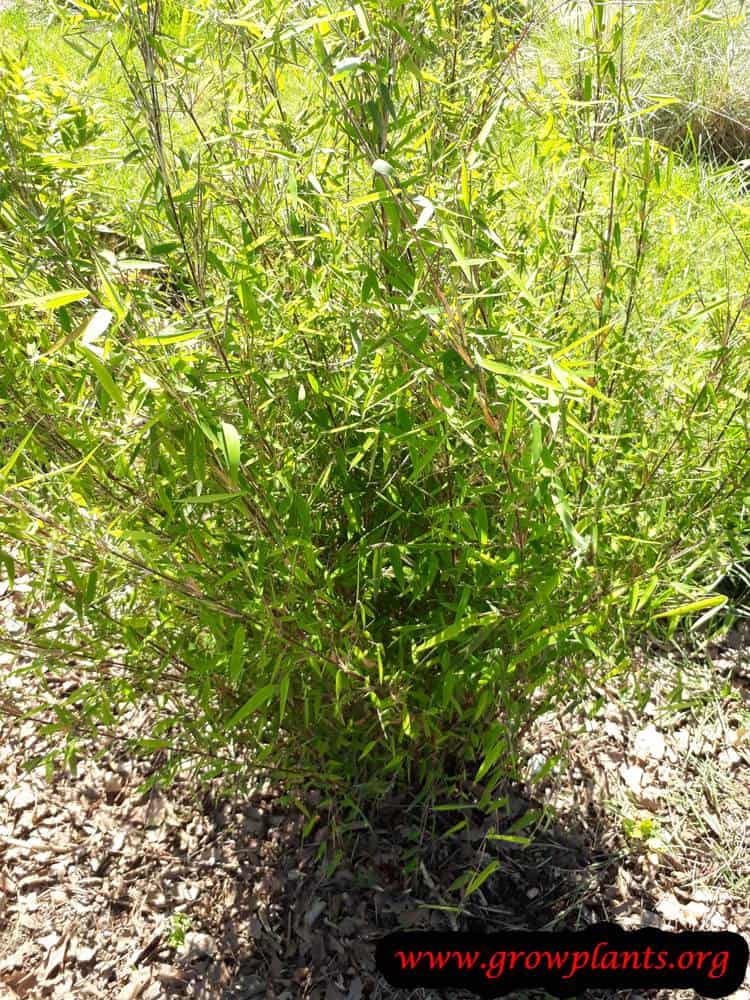
Overview: A dwarf, evergreen bamboo 60-120 cm (2-4 ft) tall with short, zig-zag canes and broad, ruscus-like leaves. Grown as an ornamental low hedge, screen and groundcover; it runs by rhizomes and can be aggressive.
Quick Specifications
| Specification | Attribute |
|---|---|
| Plant Type / Life Cycle | Evergreen perennial bamboo (running, Poaceae) |
| Foliage Type | Evergreen |
| Mature Size | 60-120 cm (2-4 ft) tall |
| Growth Rate | Moderate to fast |
| Root System | Rhizomatous – spreads by running underground rhizomes |
| Toxicity | Non-toxic foliage |
| Hardiness | USDA zones 6-11 |
Growth Form & Structure
- Height & Spread: 60-120 cm (2-4 ft) tall, spreading steadily by rhizomes into a dense thicket; best grown with a root barrier or in a container to limit its run.
- Growth Habit & Form: Compact, running dwarf bamboo with short branches carrying unusually broad leaves; makes a neat leafy screen.
- Lifespan & Maturity: Long-lived and colony-forming, thickening and spreading each year.
Anatomy & Physical Features
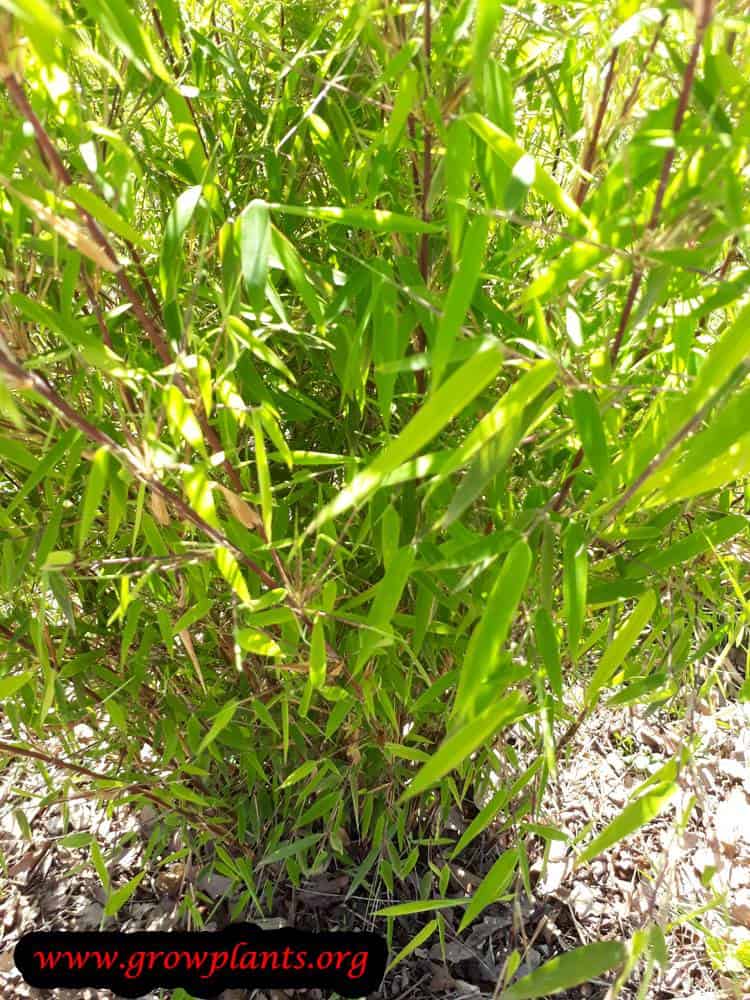
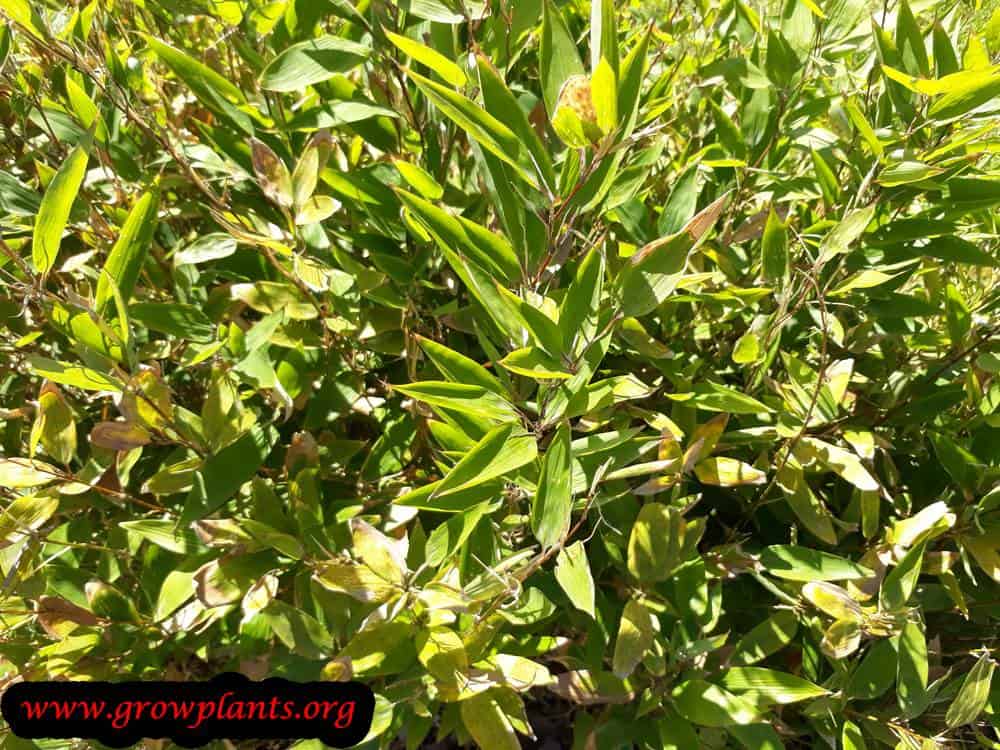
- Leaves & Foliage: Broad, short, pointed (ruscus-like) green leaves on slender, zig-zag canes.
Primary Uses & Landscape Value
- Functional & Ornamental Roles: Low ornamental hedge, screen, edging and groundcover; a container specimen where its spread must be checked.
Care Guide: Planting, Soil & Watering
Overview: Shibataea kumasaca (Ruscus-leaf bamboo) is a compact, spreading bamboo that grows best in full sun to part shade with rich, consistently moist soil. It likes steady moisture, so keep the soil evenly damp while still allowing good drainage.
Quick Care Requirements
| Requirement | Ideal Condition |
|---|---|
| Planting Season | In spring, summer or autumn during the growing season |
| Growth Rate | Moderate to fast |
| Soil Type | Rich, moisture-retentive but well-drained soil |
| Water Need | Moderate to high — keep the soil evenly moist |
Planting & Establishment
- Best Planting Season: Plant during the growing season (spring through autumn); it is hardy across zones 6–11, so plant once the soil has warmed for the strongest establishment.
- How to Plant:
- Hole Preparation: Dig a hole a little wider than the root mass and, if spread is a concern, install a root barrier around the planting area.
- Soil Amendments: Work in plenty of compost or organic matter to enrich the soil and help it hold moisture.
- Planting Depth: Set the rhizome mass at the same depth it grew before, with the crown just at the soil surface — do not bury it deeply.
- Growth Speed & Expectations: Moderate to fast growth into a dense, low bamboo screen; it runs and spreads aggressively, so contain the rhizomes with a barrier or grow it in pots.
Soil, Watering & Drainage Care
- Soil Mix & Drainage Needs: Provide rich, moisture-retentive yet well-drained soil; in containers use a quality mix that stays damp but lets excess water escape.
- Watering Schedule & Technique:
- Young / Newly Planted: Water regularly and keep the soil consistently moist while the bamboo establishes its rhizome system.
- Established: Water to keep the soil evenly moist; bamboo dislikes drying out, but avoid waterlogging the roots.
- Seasonal Adjustments: Water more in summer heat and dry spells; ease back in cool weather while keeping the soil from drying completely.
Climate, Light & Hardiness
Ruscus-leaf bamboo is a compact, sun-tolerant bamboo suited to temperate, subtropical, and Mediterranean climates. Unlike shadier bamboos, it grows well in full sun to half shade and has solid cold hardiness across a broad zone range.
Quick Climate Specifications
| Climate Zones | Temperate, subtropical, Mediterranean |
|---|---|
| USDA Hardiness Zones | 6–11 |
| Optimal Temp Range | Approximately 15–27°C (59–80°F) |
| Approx. Survival Minimum | Established plants in zone 6 typically endure winter minimums around −18°C to −23°C (0°F to −10°F) |
| Frost Tolerance | Moderate–High |
| Light Conditions | Full Sun / Half Shade |
| Wind Tolerance | Moderate |
Sunlight & Light Exposure
Optimal Light Setup
Tolerates more direct sun than many bamboos, doing well anywhere from full sun to half shade.
Direct Sun Requirement
Handles a full-sun position well provided soil moisture is kept consistent, unlike shade-obligate bamboos.
Shade & Heat Management
In the hottest climates within its range, some afternoon shade helps prevent leaf stress during peak summer heat.
Best Exposure / Orientation
Open borders, low hedging, or foundation plantings in full sun to part shade suit its compact, dense habit.
Temperature Extremes & Hardiness
USDA Hardiness & Regional Limits
Hardy across zones 6–11, a broader and somewhat hardier range than many ornamental bamboos, spanning cool temperate winters through subtropical warmth.
Cold Damage & Winter Protection
Foliage may brown at the coldest part of its range; established rhizomes typically resprout even after a hard winter.
Frost Sensitivity
Moderately frost tolerant; a sheltered site reduces winter leaf damage at the cooler edge of its range.
Extreme Heat Tolerance
Tolerates subtropical summer heat well, particularly with consistent soil moisture.
Wind, Humidity & Microclimate
Humidity Preferences
Appreciates humid, consistently moist conditions, reflecting the site's description of it wanting moist soil.
Dry-Air Tolerance
Moderate at best; prolonged dry air, especially combined with heat, can stress the foliage.
Wind Tolerance
Its dense, compact habit gives moderate resilience to wind, though very exposed sites can still cause leaf desiccation.
Microclimate Recommendations
A site with reliable soil moisture and some shelter from drying wind suits it best, especially at the warmer, sunnier end of its light range.
Growing in Pots, Balconies & Indoors
Shibataea kumasaca (ruscus-leaf bamboo) is a compact dwarf bamboo, 60-120 cm. The grower marks it as not a houseplant, but a container is an ideal way to grow it outdoors – a pot both suits it and keeps its spreading roots in bounds on a patio or balcony.
Quick Details
- Container Size: A large, sturdy pot (25-40 L or more) for the vigorous roots
- Indoor Suitability: Not an indoor plant – grow it in outdoor containers
- Best Spot: Full sun to part shade, outdoors
- Soil & Drainage: Rich, moisture-retentive but free-draining mix
- Watering in Pots: Average to generous – bamboo is thirsty and pots dry fast
Indoors & On the Windowsill
- Not a houseplant: The grower marks it ‘No’ – it is an outdoor bamboo that wants real light and air.
- Windowsill: Not a windowsill plant; enjoy it outdoors in a large pot instead.
- Containment: As a spreading bamboo, a pot is the tidy way to grow it without it running through the garden.
On a Balcony or Patio
- Light & shelter: Sun or part shade in a spot sheltered from cold, drying wind, which scorches the leaf tips.
- Watering & weight: The full pot is heavy and thirsty – place it where you can water often.
Choosing the Pot, Soil & Long-Term Care
- Pot & drainage: A large, strong pot with good holes; skip a standing water saucer to avoid root rot. Glazed or plastic holds moisture better than terracotta.
- Potting mix: A rich, organic mix that stays moist yet drains – loam-based mix with added compost.
- Feeding: Bamboo is hungry; Potted plants exhaust their food faster because watering leaches nutrients, so feed lightly through the growing season – more often than plants in open ground.
- Repotting: Divide and refresh the mix every couple of years as roots fill the pot.
Fertilizing & Feeding
A moderate feeder: this evergreen bamboo responds well to regular feeding for good leaf color and new shoot growth, tempered by its own already-aggressive spreading habit.
Quick Fertilizing Specs
| Feeding Level | Moderate feeder |
|---|---|
| Main Nutrient Priority | Balanced feeding with adequate nitrogen for good leaf color and shoot vigor |
| Best Feeding Period | Spring through the main growing season as new shoots and foliage develop |
| Organic Options | Compost or aged organic mulch worked into consistently moist soil |
| Reduce/Stop Feeding | Taper off feeding as growth slows into winter |
| Micronutrients | Usually met by organic matter in consistently moist, fertile soil |
| Soil pH | Prefers consistently moist soil; adapts to a range of garden pH |
Feeding by Growth Stage
Spring shoot emergence
Support strong new shoot and cane development as growth resumes.
| Nutrient direction | A balanced, nitrogen-forward fertilizer helps push vigorous new shoots and good leaf color. |
|---|---|
| Timing | As new shoots emerge in spring. |
| Frequency | A light feeding as new growth begins supports this flush. |
| Fertilizer types | A balanced complete fertilizer with adequate nitrogen, Compost or aged organic mulch worked into moist soil |
| Precautions | This bamboo already spreads aggressively – feed only the intended planting area, since rich feeding can encourage even more vigorous running. |
Summer foliage maintenance
Maintain dense, well-colored foliage through the main growing season.
| Nutrient direction | Continued light, balanced feeding keeps leaf color strong without overdriving growth. |
|---|---|
| Timing | Through summer while the plant is actively growing. |
| Frequency | An occasional light feeding is usually enough to maintain color and density. |
| Fertilizer types | A balanced complete fertilizer, A light organic mulch topdressing to hold soil moisture |
| Precautions | Keep the soil consistently moist when feeding; feeding a dry root zone can stress the plant rather than help it. |
Winter rest
Let the plant hold steady through its slow winter period without pushing tender new growth.
| Nutrient direction | None – withhold fertilizer while growth has slowed for winter. |
|---|---|
| Timing | During winter, when shoot and foliage growth has clearly slowed. |
| Frequency | No feeding at this stage. |
| Fertilizer types | No feeding at this stage; do not fertilize until spring shoot growth resumes. |
| Precautions | Do not fertilize during winter rest; resume only once active spring growth is underway. |
Nutrient Deficiency Signs & Corrections
Leaves turn pale yellow-green and new shoots are thin or sparse.
| Possible causes | low available soil nitrogen, the plant’s own dense, aggressive root mass depleting nearby nutrients, soil that has dried out and limited nutrient uptake |
|---|---|
| Appears first on | older leaves and thinner new shoots |
| What to check | recent feeding history, soil moisture consistency, root crowding within the planting area |
| Possible correction | Apply a balanced, nitrogen-forward fertilizer during the growing season and keep soil consistently moist. |
New leaves emerge pale yellow while veins remain green.
| Possible causes | soil drying out and limiting micronutrient uptake, alkaline soil tying up iron, compacted soil restricting root function |
|---|---|
| Appears first on | newest leaves |
| What to check | soil moisture consistency, soil pH, soil compaction |
| Possible correction | Restore consistent moisture and correct pH before considering a chelated iron product per its label. |
Leaf tips or margins brown despite the plant’s preference for moist soil.
| Possible causes | fertilizer salt buildup from overfeeding, soil allowed to dry out between waterings, poor drainage trapping salts near the roots |
|---|---|
| Appears first on | leaf tips and margins |
| What to check | recent fertilizer strength and frequency, soil moisture consistency, drainage |
| Possible correction | Ease off feeding, water thoroughly and consistently to flush salts and keep soil evenly moist. |
Pruning, Training & Seasonal Maintenance
Shibataea kumasaca is a dwarf clumping bamboo, so its maintenance is culm management rather than branch pruning: removing dead or discolored culms at ground level, thinning overcrowded clumps, and controlling the rhizome spread implied by its noted aggressive habit, especially in the moist soil it prefers. Tolerance for cutting is moderate to high since it regrows readily from below-ground rhizomes; the safest window for major thinning is late winter, before the spring flush of new shoots (culms), while light tidying of dead material can be done any time.
Quick Pruning & Maintenance Specs
| Pruning Tolerance | Moderate–High (at the culm level) |
| Primary Pruning Window | Late winter, before new shoots emerge |
| Secondary Maintenance Window | Ongoing removal of dead culms/leaves through the year |
| Typical Frequency | Annual thinning, plus year-round sanitary removal |
| Main Objective | Remove dead/old culms; thin crowding; control rhizome spread |
| Young Plant Priority | Leave new culms undisturbed to build clump density |
| Mature Plant Priority | Thin oldest culms at the base; manage rhizome spread |
| Best Tool Type | Pruning saw or loppers for culms; spade for rhizome control |
| Avoid Heavy Pruning During | The spring shooting period, when new culms are emerging and vulnerable |
Pruning by Plant Age & Size
Newly Established
Do not thin a newly planted clump; every new culm helps it establish density and vigor in the first seasons.
Young / Formative
No structural training applies to a clumping bamboo; culms grow to their natural height each season. The only task is removing any culm that emerges damaged or fails to leaf out.
Mature / Established
On an established clump, prioritize removing the oldest, weakest, or dead culms at the base each year to keep the stand vigorous, and control rhizome spread at the clump’s edge before it moves beyond the intended area.
Seasonal Pruning Schedule
| Stage | Objective | Remove | Do Not Remove | Response / Impact |
| Dormant / Late Winter | Thin the clump before the new shooting season | Old, dead, or weak culms at ground level | Healthy current-season culms | Opens space and light for the coming season’s new shoots; does not affect flowering, which this species does erratically and rarely |
| Ongoing Sanitary | General tidying | Dead leaves and any culm that dies mid-season | Live foliage | Keeps the clump healthy-looking year-round |
Special Growth to Remove
- Dead, broken, or discolored culms, cut out at ground level
- Rhizome growth (root suckers) emerging beyond the intended planting area, given the species’ noted aggressive spread, particularly in the moist soil it favors
- Dead leaves accumulated within the clump
Container & Small-Space Pruning
In containers, root/rhizome control is the dominant task rather than culm thinning — this bamboo will fill a pot with rhizomes faster than in open ground, so plan on regular root-pruning or division at repotting to prevent the clump from girdling itself.
Tools
- Pruning saw or loppers — for cutting culms at the base; culms are woody enough that hand snips are usually insufficient once established
- Garden spade — for cutting through and controlling spreading rhizomes at the clump edge
Tool Hygiene & Disease Risk
Routine care is sufficient for this species; clean tools between cuts as general practice, since no specific transmissible disease is noted in its facts.
Cut Placement & Technique
Cut unwanted culms flush at ground level rather than partway up the stem — a mid-culm heading cut stops that culm’s height without producing the kind of leafy regrowth a shrub branch would, so it mainly leaves an unsightly bare stub.
Heavy Pruning & Rejuvenation
A congested or declining clump can be rejuvenated by cutting out a large share of the oldest culms at the base over one or two dormant seasons, which encourages a fresh flush of vigorous new shoots from the rhizome system; avoid removing more than roughly a third of culms in a single season so the clump keeps enough live growth to photosynthesize.
Post-Pruning Care
Keep soil consistently moist after thinning, matching this species’ preference for moist soil, and watch for the following spring’s new shoots emerging cleanly from the thinned clump.
Common Pruning Mistakes
- Heading a culm partway up instead of cutting it out at ground level, leaving a bare, non-regrowing stub
- Ignoring rhizome spread until it has moved well beyond the bed, rather than checking and controlling it each dormant season
- Removing too many culms in one season, weakening the clump’s overall vigor
When NOT to Prune
- During the spring shooting period, when new culms are emerging and easily damaged
- Immediately after transplanting or dividing, until the clump re-establishes
Recommended Tools (by task)
- pruning_saw — for cutting mature culms cleanly at ground level
- loppers — for younger or thinner culms and rhizome sections
- garden_spade — for cutting through and controlling spreading rhizomes at the clump’s edge
Propagation Guide
Shibataea kumasaca (Ruscus-leaf bamboo) is best propagated by dividing an established clump into rooted rhizome-and-culm sections; the site notes this vegetative route is not strictly necessary but is easier than growing from seed. Seed is listed as an option too, but like most bamboos this species flowers unpredictably at long intervals, so viable seed is rarely available in practice, making division the practical default and the method needed to guarantee an identical, true-to-type plant.
Quick Propagation Specs
| Best Propagation Method | Rhizome division (separating rooted culms with an attached rhizome section) |
| Alternative Methods | Seed, when available |
| Propagation Difficulty | Moderate (dividing an established woody rhizome mat takes some effort) |
| Seed True-to-Type | Usually true-to-type when available |
| Vegetative True-to-Type | Yes |
| Best Propagation Season | Spring, as new shoots begin to emerge |
Growing from Seed
Seed is only occasionally available, since bamboos including this species tend to flower infrequently and unpredictably; when seed can be sourced it is generally true to the species, but the site gives no specific sowing depth or germination timing, so treat any seed-raised attempt as experimental rather than the reliable route.
Rhizomes, Tubers, Bulbs & Corms
Rhizome Division: In spring, just as new growth is starting, lift or cut out a section of the clump that includes several healthy culms with an intact length of rhizome and its roots attached. Each division needs at least one or more viable buds/growth points on the rhizome to produce new shoots. Unlike some geophytes, bamboo rhizomes should not be dried or cured before replanting — keep them moist and get them back into the ground or a pot promptly. Replant at the same depth and orientation the rhizome was growing at, and keep new divisions well watered and shaded until they re-establish, since this species prefers consistently moist soil and divisions are prone to transplant stress.
Bloom & Flower Guide
Quick Details
- Bloom Season: Summer, in the rare years it flowers at all
- Flower Appearance: Small and inconspicuous
- Edibility: Ornamental – grown for its foliage, not its flowers
Detailed Blooming Overview
Ruscus-leaf bamboo is grown for its broad, glossy leaves rather than its bloom. Like most bamboos it flowers only very rarely – often many years apart – and when it does the flowers are small and easy to overlook. In everyday cultivation you can expect to enjoy the foliage and rarely, if ever, see it in flower.
Flower Characteristics
- Small, insignificant flowers typical of the grass family.
- Appear only very occasionally, not every year.
Bloom Care & Thinning
- Pollination: As a member of the grass family, its flowers are wind-pollinated.
- Managing the bloom: Flowering is uncommon and needs no routine attention; simply keep the plant well fed and watered.
Pests, Diseases & Troubleshooting
Overview: This compact, running-but-restrained dwarf bamboo is generally healthy; its problems are the typical bamboo ones — bamboo mites and aphids on the foliage, honeydew-driven sooty mould, and leaf-tip scorch from dry or salty conditions. Good moisture, feeding and airflow keep it looking its best.
Quick Troubleshooting Overview
| Issue / Pest | Main Symptom | Primary Solution |
|---|---|---|
| Bamboo mites | Fine rectangular yellow stippling under leaves; webbing | Rinse; horticultural oil; predatory mites |
| Bamboo aphids | Colonies under leaves; honeydew, sooty mould, ants | Hose off; insecticidal soap or oil |
| Scale & mealybugs | Bumps / cottony tufts on culms; sooty mould | Scrape/swab; horticultural oil |
| Sooty mould | Black film on leaves over honeydew | Control the sap-sucker beneath; rinse off |
| Rust | Orange-brown pustules on leaves | Airflow; remove affected foliage |
| Leaf-tip scorch / chlorosis | Brown tips or yellowing between veins | Water/mulch; feed; iron for chlorosis |
Common Pests & Management
- Bamboo spider mites (Schizotetranychus / Stigmaeopsis spp.):
- Symptoms: Characteristic fine yellow stippling in rectangular patches on the leaf undersides, often under small mats of webbing; heavy infestation bronzes and dries the foliage. Worst in hot, dry, sheltered positions.
- Prevention & Control: Raise humidity and rinse foliage to dislodge mites, then treat undersides with horticultural oil or insecticidal soap, repeating at weekly intervals. Predatory mites give good biological control, and keeping the plant well watered and unstressed reduces attacks.
- Bamboo aphids (Takecallis / Melanaphis spp.):
- Symptoms: Colonies of pale or dark aphids on the leaf undersides, producing copious honeydew that drips onto lower foliage and turns black with sooty mould, drawing ants.
- Prevention & Control: Hose off colonies with a strong jet and use insecticidal soap or a light oil for heavier infestations, spraying the undersides in the evening. Control ants that farm the aphids, and let ladybirds and lacewings assist outdoors.
- Scale & mealybugs (Coccus / Pseudococcus spp.):
- Symptoms: Brown limpet-like scales or white cottony mealybug tufts on the culms, sheaths and leaf undersides, sucking sap and adding to the honeydew and sooty mould, with weakened, yellowing growth.
- Prevention & Control: Scrape or swab off small colonies and treat with horticultural oil to smother crawlers, repeating for successive generations. Thin congested culms to improve airflow and remove badly infested canes.
Diseases & Fungal Issues
- Sooty mould (Capnodium spp.):
- Symptoms: A superficial black, soot-like film coating leaves and culms, growing on the honeydew excreted by aphids, scale and mealybugs; it blocks light and disfigures the plant but does not itself infect tissue.
- Treatment & Management: Treat the underlying sap-sucking pest and the mould loses its food source; wipe or rinse off the blackening once the insects are controlled. Improving airflow and reducing pest pressure prevents recurrence.
- Bamboo rust (Puccinia / Kweilingia spp.):
- Symptoms: Orange to brown powdery pustules on the leaf undersides with yellow flecking above, in humid, crowded or shaded conditions; heavy infection causes early leaf drop.
- Treatment & Management: Improve airflow by thinning canes, avoid overhead watering, and remove and destroy badly affected leaves. Rust is seldom serious on a vigorous clump; a copper or sulphur fungicide can be used on valued specimens.
Growing Difficulties & Abiotic Problems
- Leaf-tip scorch:
- Cause & Symptoms: Brown, dry leaf tips and margins from drought, cold drying winds, salty air, or a build-up of fertiliser salts; bamboos are thirsty and dislike exposure.
- Correction Strategy: Keep the soil consistently moist and mulched, shelter from harsh drying winds, flush the soil if salts have built up, and feed with a balanced fertiliser rather than heavy doses. Trim scorched tips for appearance.
- Chlorosis (iron/nutrient shortage):
- Cause & Symptoms: Yellowing between green veins on the newest leaves, often in alkaline soil or where feeding is poor; bamboos are hungry and prefer slightly acid, fertile ground.
- Correction Strategy: Feed with a nitrogen-rich or balanced fertiliser in the growing season, mulch with organic matter, and apply an iron/manganese chelate for lime-induced chlorosis. Correcting soil fertility restores the deep green colour.
- Winter bronzing / cold burn:
- Cause & Symptoms: Foliage bronzes, browns or partially defoliates in hard winters or cold winds, though the plant is hardy and normally reshoots.
- Correction Strategy: Site out of the coldest wind, mulch the roots, and simply cut out badly burnt canes or leaves in spring, when fresh growth quickly renews the clump.
What Helps – Products & Tools
For bamboo, horticultural oil and insecticidal soap are the mainstays against mites, aphids, scale and mealybugs, with predatory mites as a biological option and ant control to stop aphid-farming. Sooty mould clears once the sap-sucker beneath it is dealt with. A balanced or nitrogen-rich fertiliser, organic mulch and an iron chelate address the common tip-scorch and chlorosis, and a copper or sulphur fungicide is available for rust on prized clumps. Steady moisture and shelter matter most.