Plant Profile & Key Characteristics
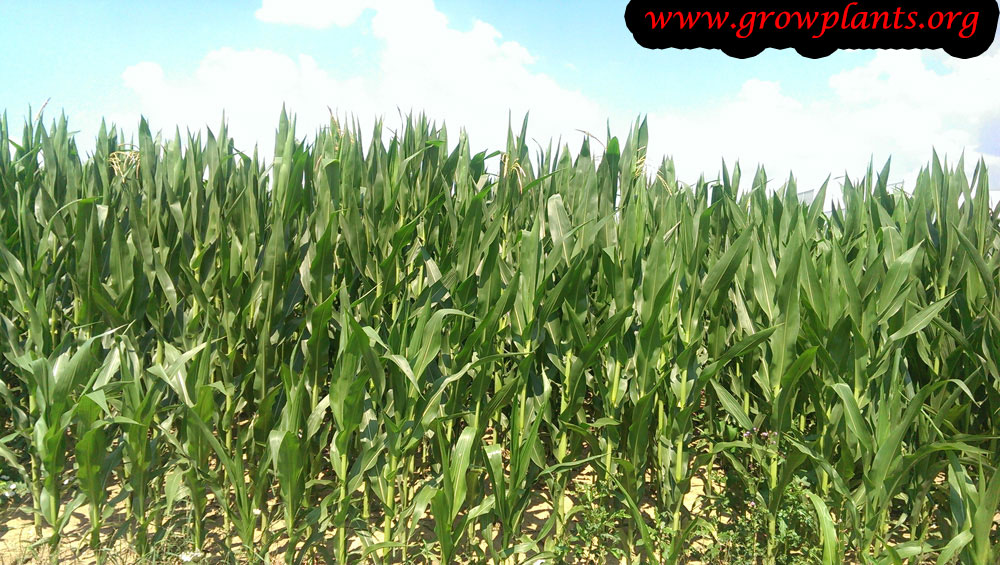
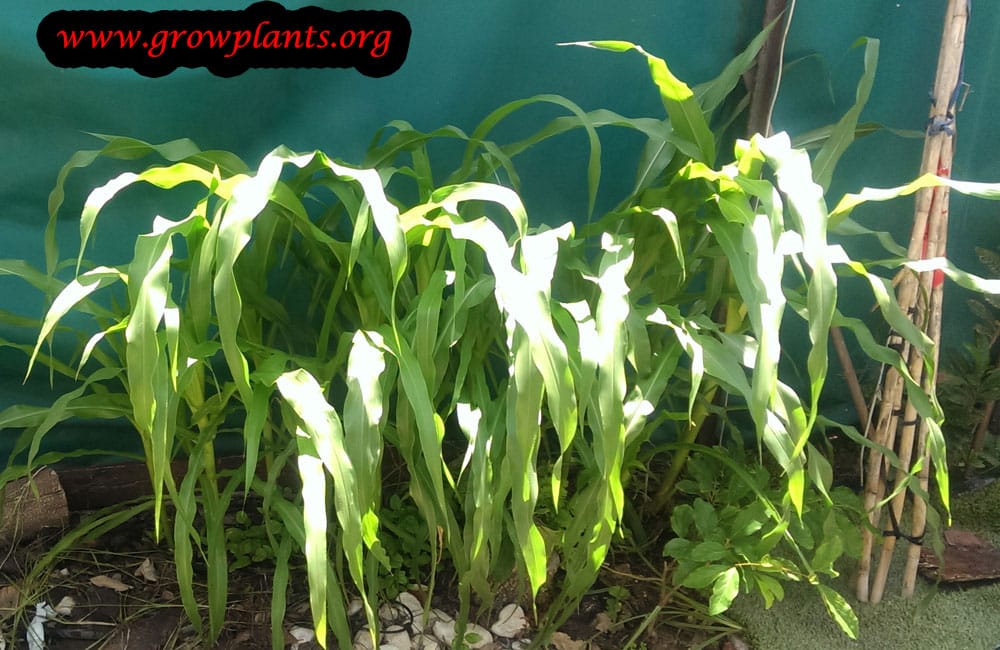
Overview: Zea mays (maize / corn) is a fast-growing annual grass reaching 1–3 m tall, grown chiefly for its edible cobs. Some forms are also grown ornamentally for their multicoloured cobs.
Quick Specifications
| Specification | Attribute |
|---|---|
| Plant Type / Life Cycle | Annual |
| Foliage Type | Herbaceous (dies back at season’s end) |
| Mature Size | 1–3 m (3–9 ft) tall |
| Growth Rate | Fast |
| Root System | Fibrous, with brace/prop roots at the base |
| Toxicity | Non-toxic / edible |
| Hardiness | USDA zone 4+ (warm-season crop) |
Growth Form & Structure
- Height & Spread: Upright single-stemmed grass 1–3 m tall; container growing is possible but not recommended.
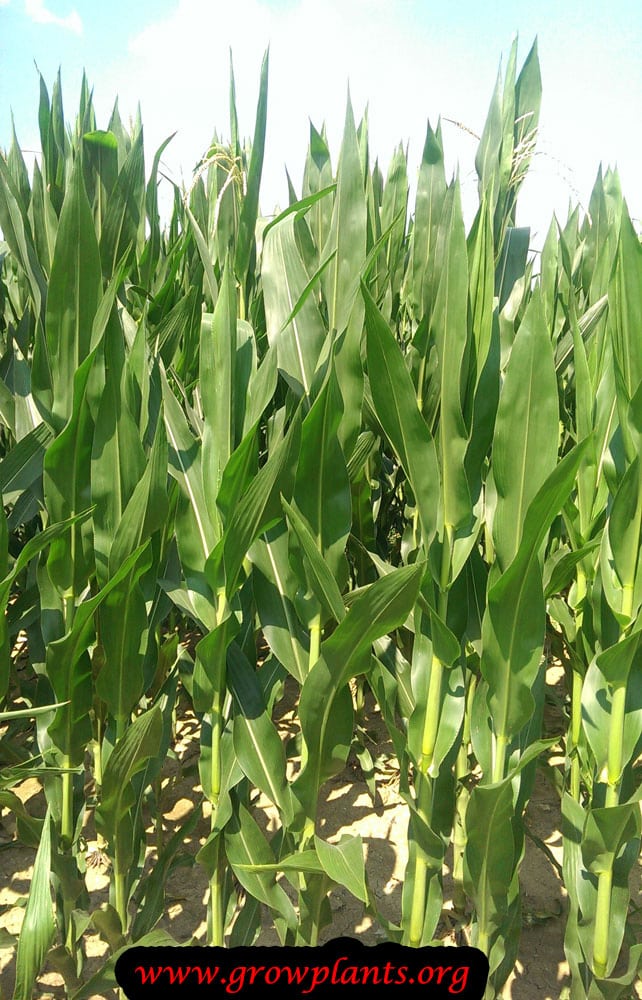
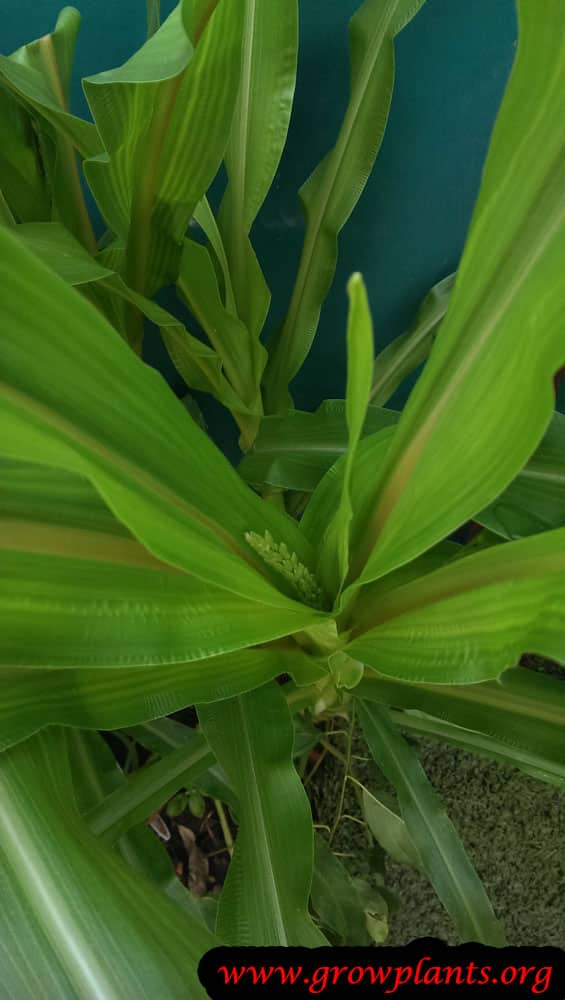
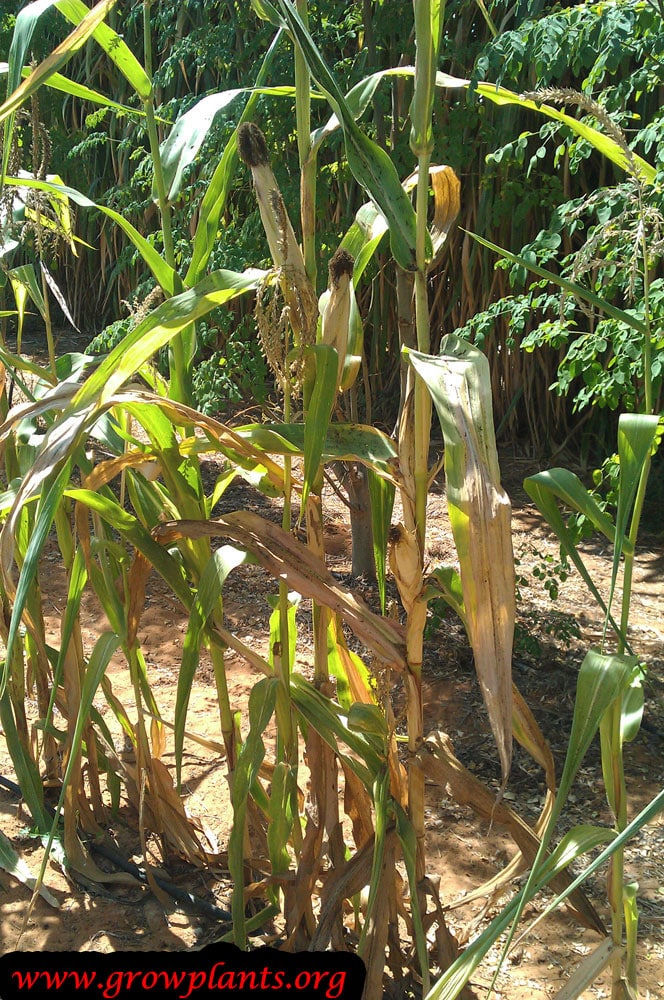
- Growth Habit & Form: Tall erect grass with a single cane-like stalk; the male tassel tops the plant and the female cobs form lower on the stem.
- Lifespan & Maturity: Annual; bears cobs about 4–8 months from sowing (harvestable earlier as baby corn).
Anatomy & Physical Features
- Leaves & Foliage: Long green strap-like leaves; the silky stigmas (corn silk) of the female flowers are used medicinally.
- Flower Characteristics: Monoecious and wind-pollinated – a male tassel at the top and female flowers (the developing cob) lower down.
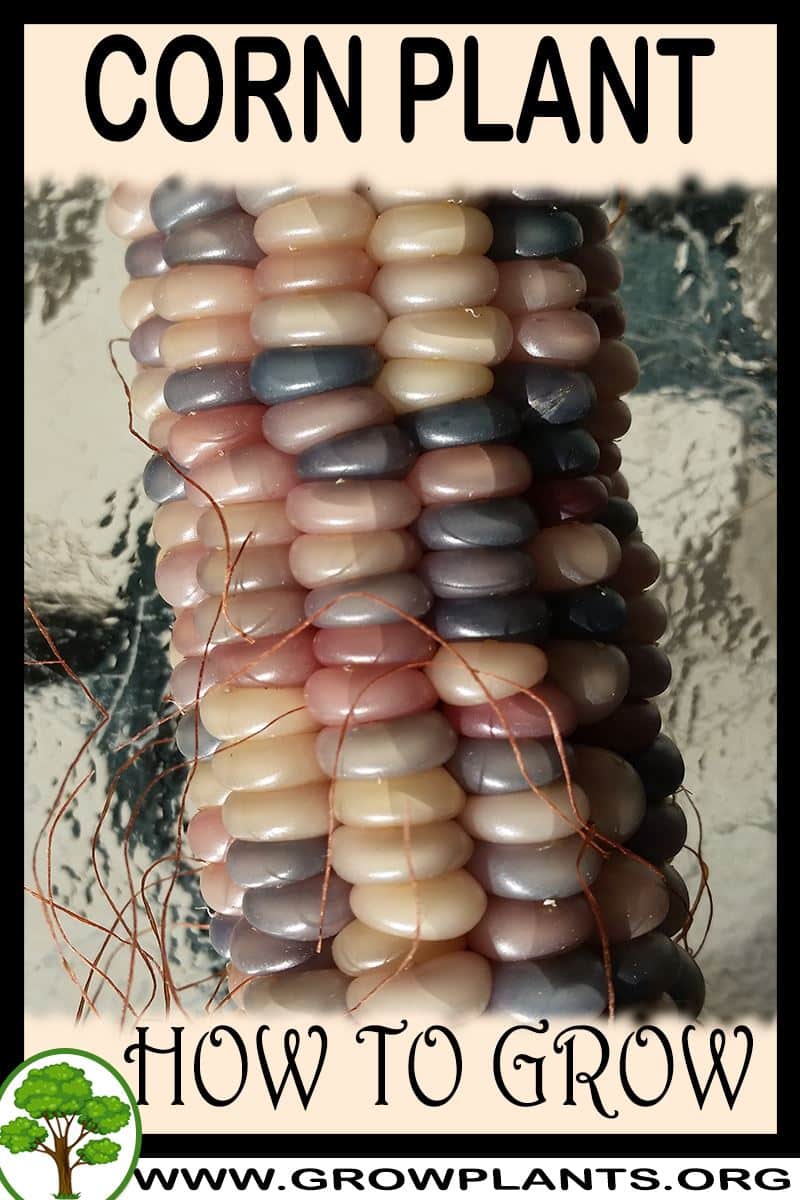
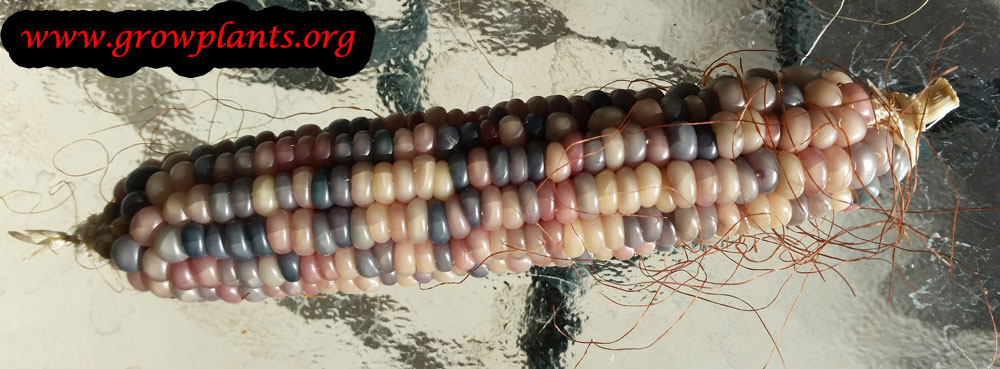
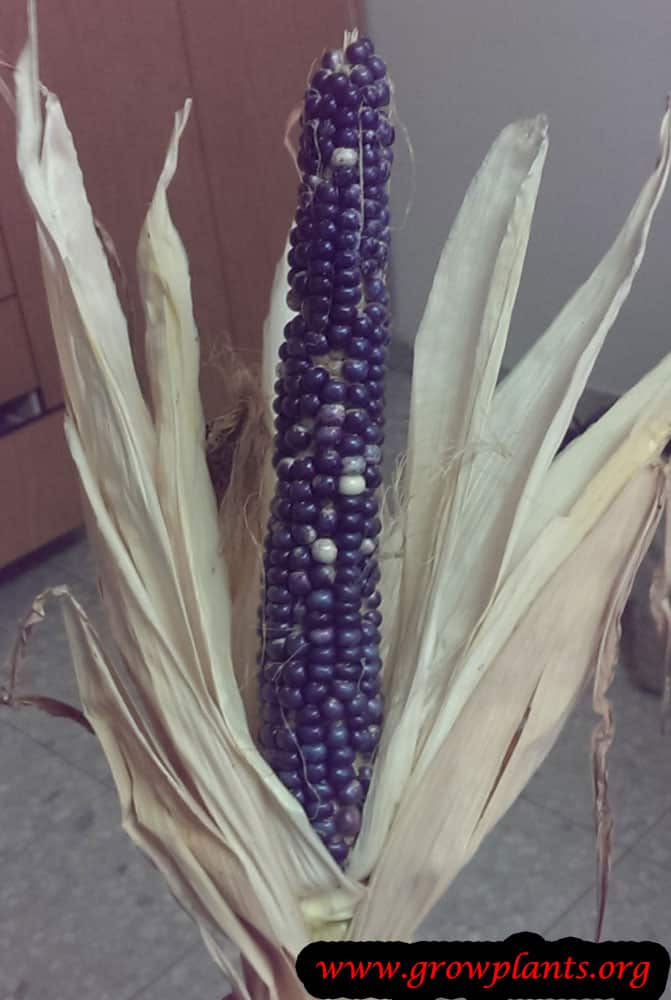
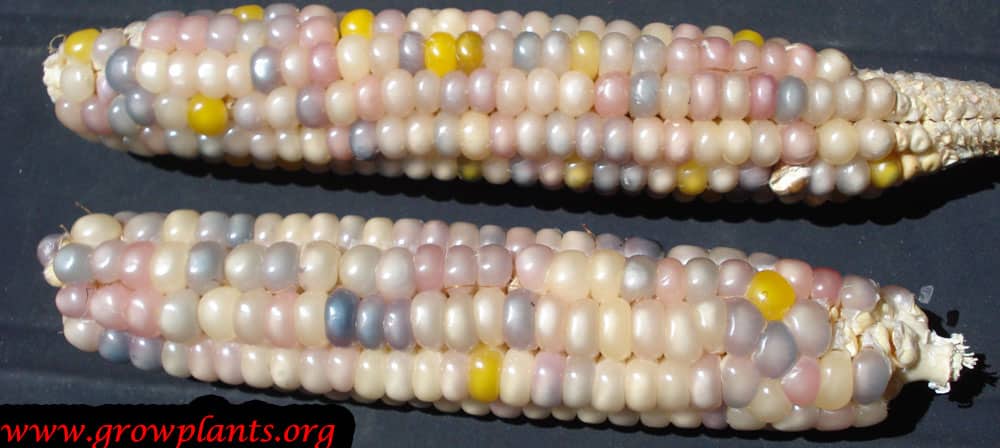
- Fruit Profile: Cob 5–25 cm packed with kernels in yellow, white, red, blue, purple, black or mixed rainbow colours.
Primary Uses & Landscape Value
- Edible Uses: Kernels eaten raw or cooked, popped, or processed into juice, oil and alcohol; corn silk used as a medicinal beverage.
- Functional & Ornamental Roles: Warm-season food crop; colourful-cob types are grown ornamentally.
Care Guide: Planting, Soil & Watering
Overview: Corn is a fast-growing, warm-season annual that needs full sun, rich fertile soil and plenty of water to crop well. It is a hungry, thirsty plant that should be sown only once the soil has warmed after the last frost.
Quick Care Requirements
| Requirement | Ideal Condition |
|---|---|
| Planting Season | Spring, after the last frost, once the soil has warmed (from late winter in warm climates) |
| Growth Rate | Fast |
| Soil Type | Rich, fertile, well-worked soil high in organic matter |
| Soil pH | Around 6.0–7.0 (slightly acidic to neutral) |
| Water Need | High — keep consistently moist, especially at flowering and cob fill |
Planting & Establishment
- Best Planting Season: Sow or plant out in spring after all danger of frost has passed and the soil is above about 15°C; in warm climates sow from late winter.
- How to Plant:
- Hole Preparation: Sow seed directly into warm, fertile ground about 2–4 cm deep, spacing plants around 10 cm apart, and grow corn in blocks rather than single rows for good wind pollination.
- Soil Amendments: Enrich the bed generously with compost and well-rotted manure before planting — corn is a heavy feeder that needs fertile soil to fill its cobs.
- Planting Depth: Sow seed 2–4 cm deep; when transplanting seedlings, set them at the same depth they grew in their pots.
- Growth Speed & Expectations: Growth is fast in warm weather; plants reach 1–3 m and produce cobs in roughly 4–8 months from sowing.
Soil, Watering & Drainage Care
- Soil Mix & Drainage Needs: Grow in deep, fertile, moisture-retentive soil that still drains freely; corn’s tall growth and heavy cropping demand both food and steady water.
- Watering Schedule & Technique:
- Young / Newly Planted: Keep seedlings consistently moist as they establish and put on rapid early growth.
- Established: Water deeply and regularly, never letting plants dry out — moisture stress at tasseling and cob fill sharply reduces the harvest.
- Seasonal Adjustments: Water most heavily through the warm main growing and cob-filling period, and little once the cobs mature and the plant dries down.
Climate, Light & Hardiness
Corn is a warm-season annual that needs full sun and a genuinely warm growing season to mature, grown across Mediterranean, desert, subtropical, temperate, and tropical climates. Frost kills the plant, so it is always sown after the last frost date once the soil has warmed.
Quick Climate Specifications
| Climate Zones | Mediterranean, desert, subtropical, temperate, tropical |
|---|---|
| USDA Hardiness Zones | 4 and warmer (as a warm-season annual) |
| Light Conditions | Full sun |
| Frost Tolerance | None |
Sunlight & Light Exposure
Direct Sun Requirement
Needs full sun throughout the growing season; shaded plants produce poorly.
Temperature Extremes & Hardiness
USDA Hardiness & Regional Limits
The zone 4-and-warmer range describes where a long enough frost-free summer exists to grow corn as a warm-season annual, not winter survival – the plant itself has no frost tolerance and is killed by cold.
Frost Sensitivity
Frost-tender at every stage; seeds should not be sown until the soil has warmed to above about 15°C (59°F) and the last frost has passed, and a late-season frost will end the crop.
Frost-Free Growing Season
Requires a warm, frost-free stretch from spring sowing through summer harvest; in cooler climates, starting seedlings under cover can help extend the effective growing window.
Growing in Pots, Balconies & Indoors
This is true corn/maize (Zea mays) – a tall, sun-hungry annual crop, not the Dracaena sold as a ‘corn plant’. It is not a houseplant, and the grower rates containers as possible but not ideal: it grows fast to 1-3 m and needs full sun and steady moisture, so it really belongs in an open, sunny balcony or patio bed rather than indoors.
Quick Details
- Container Size: Large and deep – a wide tub of at least 20-40 L per few plants; corn is wind-pollinated, so grow a block, not a single stalk
- Indoor Suitability: Not a houseplant and not suited to a windowsill – too tall and too light-hungry
- Best Spot: Full sun on an open balcony or patio
- Soil & Drainage: Rich, moisture-retentive but free-draining mix
- Watering in Pots: Generous and regular – a heavy drinker that must not dry out while cobs form
Indoors & On the Windowsill
- Not a houseplant: The grower marks it ‘no’ for indoor growing, and rightly so – it grows too large and needs far more direct sun than any windowsill provides. A drip irrigation kit with a timer can take over that watering check automatically.
- Windowsill: Not practical; even a bright sill cannot support a plant this tall or this sun-demanding.
On a Balcony or Patio
- Light & pollination: Give the sunniest, most open spot; because corn is wind-pollinated, plant several together in a block or tub so the cobs fill out.
- Watering & wind: Pots dry fast in sun and wind – water generously; tall stalks catch the wind, so use a heavy tub and shelter or tie them in exposed spots.
Choosing the Pot, Soil & Long-Term Care
- Pot & drainage: A large, deep, heavy tub with strong drainage holes. Use a pot with strong drainage holes and skip a standing water saucer – constantly wet feet are the quickest route to root rot.
- Potting mix: Rich and moisture-retentive with plenty of organic matter, but still free-draining – corn is a hungry, thirsty crop.
- Feeding: Potted plants exhaust their food faster than those in the ground, as watering leaches nutrients out; feed lightly but more regularly through the growing season. Corn especially appreciates a nitrogen-rich feed while growing.
Fertilizing & Feeding
Corn is a fast-growing, nitrogen-hungry crop that benefits from steady feeding through its vegetative growth, tapering off as the ears mature. A fertilizer formulated for tomatoes and vegetables supports that feeding pattern through harvest.
Quick Fertilizing Specs
| Feeding Level | Heavy – a vigorous, nitrogen-hungry annual crop |
|---|---|
| young_feeding | Light, balanced feeding to support root and early shoot establishment |
| mature_feeding | Nitrogen-forward through vegetative growth, shifting to a balanced or potassium-leaning feed as ears fill |
| Main Nutrient Priority | Nitrogen, with adequate potassium supporting ear fill |
| Best Feeding Period | From vegetative growth through early ear fill |
| Organic Options | Compost or well-rotted manure worked in ahead of planting, supplemented with an additional nitrogen source through the season |
| Micronutrients | Zinc availability is worth watching in alkaline or cool, wet soils |
| Soil pH | Prefers soil on the slightly acidic to near-neutral side |
| Reduce/Stop Feeding | Taper feeding off as ears mature and husks begin to dry |
Feeding by Growth Stage
Establishment After Planting
Support root and early shoot development while the young corn plant gets established.
| Nutrient direction | A balanced, complete fertilizer worked into the soil at planting supports steady early growth. |
|---|---|
| Timing | At planting and through early seedling growth. |
| Frequency | Light feeding is usually enough while the plant is still small. |
| Fertilizer types | A balanced granular or starter fertilizer blended into the soil at planting, Compost or well-rotted manure worked in ahead of planting |
| Precautions | Keep fertilizer from concentrating directly against seed or young roots, which can cause burn. |
Vegetative Growth
Fuel the rapid leaf and stalk growth that builds the framework needed for ear production.
| Nutrient direction | Nitrogen-forward feeding drives the vigorous leaf and stalk growth typical of corn at this stage. |
|---|---|
| Timing | Through the main leafy growth period, before tasseling. |
| Frequency | Regular feeding through this stage matches the plant’s fast growth rate. |
| Fertilizer types | A nitrogen-forward complete fertilizer, or a side-dressed nitrogen source, Composted manure as a supplemental nitrogen source |
| Routine trace nutrients | zinc, iron |
| Precautions | Excess nitrogen late in this stage can favor soft, lodging-prone growth and delay the shift into ear development. |
Tasseling Through Ear Fill
Support pollination, kernel set, and ear fill as the plant shifts from vegetative growth into reproduction.
| Nutrient direction | Shift toward a balanced or potassium-leaning feed to support ear fill and overall plant vigor through harvest. |
|---|---|
| Timing | From tasseling and silking through ear development. |
| Frequency | Feeding needs decline as the crop approaches harvest. |
| Fertilizer types | A balanced or potassium-leaning fertilizer to support ear fill, Side-dress feeding is common in early ear development, then tapering |
| Precautions | Reduce feeding as ears mature and husks begin to dry – a finishing crop has little use for additional fertilizer. |
Nutrient Deficiency Signs & Corrections
Older, lower leaves turn pale yellow starting at the tip and moving down the midrib in a V-shaped pattern.
| Possible causes | Nitrogen deficiency, Waterlogged or poorly drained soil limiting root uptake, Root damage or compaction restricting nutrient uptake |
|---|---|
| Appears first on | Older, lower leaves first. |
| What to check | Overall plant color and growth rate compared to nearby healthy plants, Soil drainage and compaction around the root zone, Recent feeding history |
| Possible correction | Apply a nitrogen-forward complete fertilizer and correct any drainage or compaction issue that is limiting root uptake. |
Young plants show stunted growth with a dull, purplish or reddish tinge on leaves and stems.
| Possible causes | Phosphorus deficiency, Cold soil temperatures limiting phosphorus uptake, A compacted or poorly developed root system |
|---|---|
| Appears first on | Young seedlings and lower leaves. |
| What to check | Soil temperature early in the season, Root development and any compaction, Overall seedling vigor compared with neighboring plants |
| Possible correction | Warm, well-prepared soil and a balanced starter fertilizer applied at planting help correct phosphorus availability. |
Broad pale or whitish bands develop along the midrib of new leaves while the leaf margins stay green.
| Possible causes | Zinc deficiency, High soil pH limiting zinc availability, Cool, wet soil early in the season slowing zinc uptake |
|---|---|
| Appears first on | New upper leaves. |
| What to check | Soil pH and any history of zinc-limiting conditions, Weather and soil temperature at emergence, Whether the pattern is specific to new growth |
| Possible correction | Correct soil pH toward a more favorable range and apply a chelated zinc product per its label if a deficiency is confirmed. |
Pruning, Training & Seasonal Maintenance
Corn plant does not really get "pruned" – it’s a fast-growing annual grass that goes from seed to harvest in a single season, with no woody structure, no branching framework, and no benefit from routine cutting back. The only real end-of-life task, once the ears are harvested and the leaves have dried, is removing the whole spent stalk from the ground; there is no ongoing seasonal maintenance cycle before that.
Quick Pruning & Maintenance Specs
| Pruning Tolerance | Not applicable – no routine pruning; only whole-plant removal at season’s end |
| Primary Pruning Window | End of the growing season, once ears are harvested and leaves have dried |
| Typical Frequency | Once, at season end |
| Main Objective | Clear the spent stalk after harvest |
| Best Tool Type | Loppers or a pruning saw for the fibrous base of a mature dried stalk |
| Avoid Heavy Pruning During | Silking through ear fill – don’t remove leaf area while the ear is developing, since the leaves directly feed grain fill |
Special Growth to Remove
- Basal tillers ("suckers"): some gardeners remove the extra side-shoots that emerge from the base, believing it boosts ear size, but university corn research has found no yield benefit from removing them – leaving them in place doesn’t harm the plant either, so this is optional and cosmetic at most.
- Spent stalk at season end: remove and dispose of (or compost) once leaves have fully dried and ears are harvested.
Tools
A mature, dried corn stalk base is fibrous and tough by season’s end – loppers or a small pruning saw make season-end stalk removal easier than trying to cut it with light snips.
Tool Hygiene & Disease Risk
Routine – corn’s main pest pressures (worms, aphids) aren’t spread by cutting tools; clean tools are sufficient.
Heavy Pruning & Rejuvenation
Not applicable. Corn plant is a monocarpic annual – it does not regrow or rejuvenate after harvest; the plant is removed and a new crop is sown the following season.
Common Pruning Mistakes
- Removing basal tillers expecting a yield boost – research shows this doesn’t help (and doesn’t hurt).
- Stripping lower leaves early to "tidy up" the plant, which reduces the leaf area feeding the developing ear.
- Leaving the old stalk in the ground over winter, which can harbour pests and disease into the next season.
When NOT to Prune
Never remove leaves while the plant is silking or filling its ears – that leaf area is directly powering grain development.
Recommended Tools (by task)
- loppers – for cutting through the tough, fibrous base of a mature dried stalk at season end.
Propagation Guide
Corn plant is propagated by direct-sowing seed into the ground, the simple method the site itself recommends; vegetative propagation is not used for this annual grass. Seed trueness depends on the type grown – hybrid corn will not reproduce identically from saved seed, while open-pollinated varieties stay true if isolated from other corn during pollination – and overall propagation is Easy.
Quick Propagation Specs
| Best Propagation Method | Direct seed sowing |
| Alternative Methods | Seedling transplant (start under cover where spring soil is still too cold, then move out) |
| Propagation Difficulty | Easy |
| Seed True-to-Type | Cultivar-dependent – hybrid offspring vary, open-pollinated/heirloom seed is usually true-to-type if isolated from other corn |
| Best Propagation Season | Spring, once soil has warmed past frost risk |
| Seed Germination Time | 7-14 days |
| Germination Temperature | Site notes soil below about 15°C (59°F) is too cold for reliable germination; warmer soil germinates faster |
| Seed Sowing Depth | 2-4 cm (0.8-1.6 in) |
Growing from Seed
Seed Handling & Viability
Store seed in a cool, dry place until sowing time.
Sowing Season
Sow in spring; if soil temperature is still below about 15°C (59°F) it is too cold for reliable germination, so start seed under cover (greenhouse) and transplant once conditions warm.
Sowing Depth & Orientation
Sow 2-4 cm (0.8-1.6 in) deep, direct into the ground, spacing plants roughly 10 cm (4 in) apart.
Germination Conditions
Needs fertilized soil and full sun (half sun is tolerated), kept consistently well watered with a big amount of water.
Germination Time
Typically 7-14 days.
Seedling Care
Keep seedlings in full sun and consistently moist as they establish.
Bloom & Flower Guide
Quick Details
- Bloom Season: Flowers 2 to 5 months after sowing, depending on the variety
- Time to First Bloom: 2 to 5 months from sowing, depending on the variety
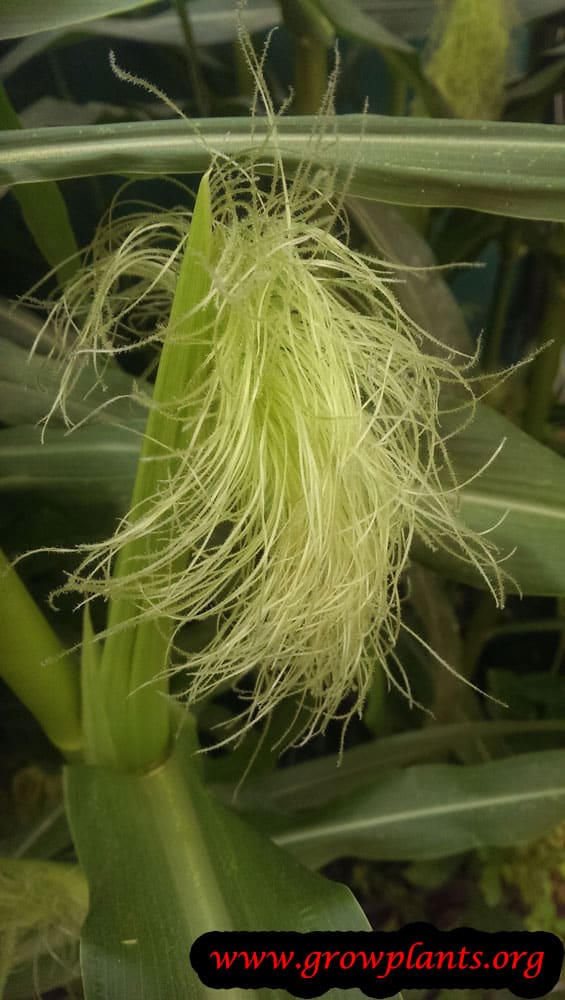
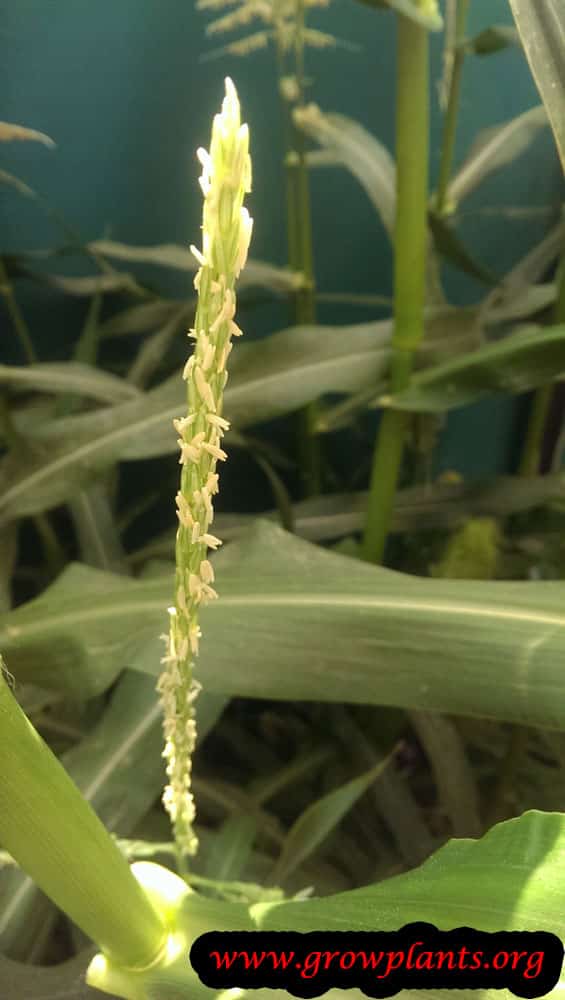
- Flower Appearance: Feathery tassels of male flowers at the top of the plant; female flowers lower down as long silks (threads)
- Edibility: Grown for its grain – the flowers themselves are not eaten, though corn silk (the female flower’s threads) is sometimes dried for herbal tea
Detailed Blooming Overview
Corn carries its male and female flowers separately on the same plant (it is monoecious). The tassel at the top releases pollen, which drifts down on the wind and gravity onto the silks emerging lower on the stem – and each silk that catches pollen leads to one kernel. Good, even pollination is the key to full ears, which is why corn is best planted in a block of short rows rather than a single long one.
Flower Characteristics
- Male flowers form the branched tassel at the top of the plant and shed the pollen.
- Female flowers sit lower down; each has a long silk (its style) that catches pollen.
- Wind-pollinated – the flowers have no scent or nectar and do not rely on insects.
Bloom Care & Thinning
- Managing the bloom: Plant in a block of several short rows rather than one long row so wind-blown pollen reaches the silks and the ears fill evenly.
- Pollination: By wind (and gravity), moving pollen from the tassels to the silks.
Fruit & Uses
Corn plant is grown for its kernels, which form on a cob and are eaten fresh, cooked, or processed; the dried silk (the female flower’s stigmas) is also collected and steeped as an herbal beverage. Kernels can be eaten raw when young (baby corn) but are more often cooked, popped, or processed into juice, oil, or alcohol.
Quick Edible Specs
| Edible Parts | Kernels / cob (fruit); dried silk (flower stigmas) |
|---|---|
| Main Use(s) | Culinary (fresh corn, popcorn, juice, oil, fermentation); corn silk as a traditional herbal beverage |
| Eaten Raw or Cooked | Kernels: raw when young (baby corn) or cooked/popped when mature; silk: not eaten, brewed as an infusion |
| Preparation Required | None for baby corn; Cook for mature kernels and popcorn; silk is dried before brewing |
| Harvest Season | Summer, sometimes into the start of autumn |
| Time to First Harvest | Several months after sowing; baby corn can be picked earlier, before the cob fully matures (see Propagation for exact sowing-to-bearing timing) |
| Safety/Toxicity Caveat | None significant; corn silk is traditionally used medicinally as a beverage — no medical claims implied |
Fruit
Each plant produces one or more cobs, 5-25 cm long, built from a large number of individual kernels. Kernel color varies widely by variety — yellow, white, red, blue, purple, black, and sometimes several colors on a single ‘rainbow’ cob. Cobs ripen through summer and sometimes into early autumn. Immature ears can be picked early and eaten whole as baby corn; fully mature kernels are eaten fresh, cooked (boiled, grilled), dried and popped as popcorn, or processed into juice, oil, or fermented into alcohol.
Flowers & Flower Buds — Corn Silk
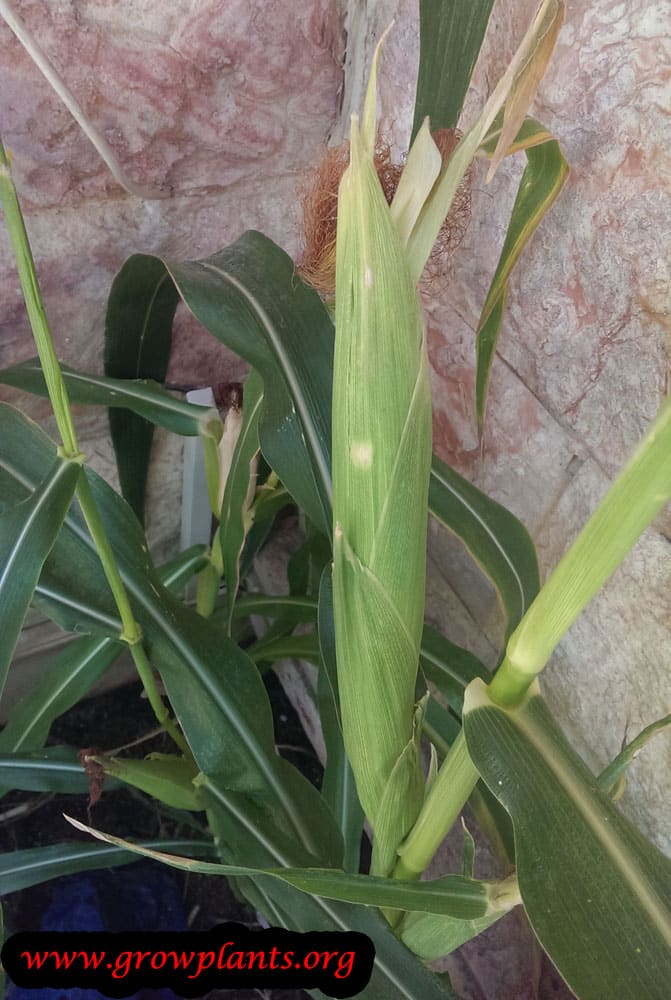
What growers call corn silk is the hair-like stigma of the female flower, growing from the side of the plant below the developing cob (the male flower sits at the top of the plant). Once the silk has dried and turned pale/yellow, it can be gathered freely and used to make an herbal beverage; it has a long traditional use as a medicinal infusion (no specific health claims implied).
Harvesting
Kernels are picked through summer into early autumn once the cob has reached the desired size and color; baby corn is taken earlier, before the ear fills out. Corn silk is collected once it has dried on the plant.
Preparation, Uses & Safety
Kernels are eaten raw as baby corn or cooked — boiled, grilled, popped as popcorn — and can be processed into juice, oil, or alcohol. Dried corn silk is steeped as a beverage and has a long history of traditional medicinal use (no dosing or health claims here). No significant safety or toxicity concerns are associated with either part.
Pests, Diseases & Troubleshooting
Overview: Corn is a fast, hungry grass crop attacked by a well-known set of caterpillars that bore into ears and stalks, plus beetles, aphids, and a range of leaf and stalk diseases. The best defenses are cultural – resistant varieties, good spacing and vigor, crop rotation, and clean-up of stubble – with targeted controls for the ear-boring caterpillars that most directly spoil the harvest.
Quick Troubleshooting Overview
| Issue / Pest | Main Symptom | Primary Solution |
|---|---|---|
| Corn earworm | Caterpillar and frass in the ear tip | Resistant varieties; oil/Bt in silks; timing |
| European corn borer | Broken tassels, holes and sawdust in stalks | Bt varieties; shred stubble; Bt sprays |
| Fall armyworm | Ragged, chewed whorl leaves; frass | Scout early; Bt or spinosad into the whorl |
| Corn rootworm | Lodging, chewed roots; silk-clipping beetles | Rotate crops; support vigor |
| Common rust / leaf blight | Rusty pustules or long grey lesions | Resistant hybrids; airflow; rotation |
| Poor pollination | Gappy ears with missing kernels | Block planting; steady water at silking |
Common Pests & Management
- Corn earworm (Helicoverpa zea):
- Symptoms: Caterpillars feed down the silks into the ear tip, chewing kernels and leaving moist frass and entry damage; the tip of the cob is fouled and spoiled.
- Prevention & Control: Grow varieties with tight husk cover and some resistance, and time planting to avoid peak flights. A few drops of horticultural or vegetable oil (sometimes with Bt) applied to the silk channel after pollination smothers young larvae; Bt or spinosad sprays target them as silks emerge.
- European corn borer (Ostrinia nubilalis):
- Symptoms: Caterpillars tunnel into stalks, tassels, and ears, leaving small holes with sawdust-like frass (borings); stalks weaken and break and tassels snap.
- Prevention & Control: Grow Bt (borer-resistant) varieties where available, shred and bury corn stubble after harvest to destroy overwintering larvae, and rotate. Bt or spinosad sprays target young larvae before they bore in; scout leaf whorls for early feeding.
- Fall armyworm (Spodoptera frugiperda):
- Symptoms: Larvae feed in the leaf whorl, leaving ragged, chewed holes and heavy moist frass, and can move into ears; damage is fast and can be severe in warm regions.
- Prevention & Control: Scout the whorls early and often, encourage natural enemies, and treat young larvae with Bt or spinosad directed into the whorl before they grow large and hard to reach. Clean up crop residue and rotate.
- Corn rootworm (Diabrotica spp.):
- Symptoms: Larvae chew the roots, causing plants to lodge (fall over) and ‘goosenecked’ bases; adult beetles clip silks and can interfere with pollination.
- Prevention & Control: Rotate corn with a non-host crop to break the larval cycle – the single most effective control – and keep plants vigorous. Manage adult beetles if they are clipping silks heavily during pollination.
- Corn leaf aphid (Rhopalosiphum maidis):
- Symptoms: Colonies of grey-green aphids on the tassel and upper leaves, with sticky honeydew and sooty mold; heavy infestations at tasseling can hinder pollination.
- Prevention & Control: Tolerate light populations, which natural enemies usually control, and encourage ladybirds and lacewings. Insecticidal soap or a strong water spray handles damaging build-ups around tasseling.
Diseases & Fungal Issues
- Common rust (Puccinia sorghi):
- Symptoms: Small, powdery, cinnamon-brown pustules scattered on both leaf surfaces, later turning dark; heavy rust yellows and kills leaf tissue and saps yield.
- Treatment & Management: Grow resistant hybrids, space for airflow, and avoid overcrowding. Rotation and residue clean-up reduce carry-over; fungicide is warranted only in severe cases on susceptible corn.
- Northern & southern corn leaf blight (Exserohilum turcicum / Bipolaris maydis):
- Symptoms: Long, grey-green to tan, cigar-shaped lesions running along the leaves (northern) or smaller tan lesions (southern); severe blight browns the canopy prematurely.
- Treatment & Management: Plant resistant hybrids, rotate away from corn, and shred and bury residue that harbors the fungus. Improve airflow; a fungicide protects high-value plantings under heavy pressure.
- Corn smut (Ustilago maydis):
- Symptoms: Silvery-grey, swollen galls on ears, tassels, or stalks that rupture into masses of black spores; individual ears and shoots are deformed.
- Treatment & Management: Remove and destroy galls before they burst and release spores, avoid mechanical wounding, and rotate. Choose less susceptible varieties; balanced fertility and even watering reduce incidence.
- Stalk & ear rots (Fusarium / Gibberella / Diplodia spp.):
- Symptoms: Rotting, discolored, weakened stalks that lodge, and moldy pink, white, or grey ears; favored by stress, insect damage, and wet weather.
- Treatment & Management: Grow adapted, resistant hybrids, manage the borers that open entry wounds, balance fertility, and harvest promptly. Rotate and manage residue; avoid stress that predisposes plants to rot.
- Seedling damping-off (Pythium / Fusarium spp.):
- Symptoms: Poor emergence, rotted seed, and toppling seedlings with pinched, dark stem bases in cold, wet soil.
- Treatment & Management: Sow into warm, well-drained soil once it has warmed, avoid overwatering, and use treated or vigorous seed. Do not plant too early into cold, saturated ground.
Growing Difficulties & Abiotic Problems
- Poor pollination (gappy ears):
- Cause & Symptoms: Ears with scattered missing kernels or bare tips because pollen did not reach every silk, from planting in a single long row, heat and drought at silking, or poor timing.
- Correction Strategy: Plant in blocks of several short rows rather than one long row so wind carries pollen to the silks, keep water steady through tasseling and silking, and avoid heat stress at pollination; hand-pollinate small plantings if needed.
- Nitrogen & nutrient deficiency:
- Cause & Symptoms: Yellowing that starts at the tip and runs up the midrib of lower leaves (nitrogen), or purpling (phosphorus) on this heavy-feeding crop.
- Correction Strategy: Feed generously with nitrogen and a balanced fertilizer through rapid growth, and maintain fertile, organic-rich soil. Side-dress as plants reach knee height for strong ear fill.
- Lodging & drought / heat stress:
- Cause & Symptoms: Plants blown or fallen over (lodging) from weak roots or borer damage, and rolled, greyish, wilting leaves during drought and heat that shrink the harvest.
- Correction Strategy: Hill soil around stem bases for support, manage rootworm and borers, and water deeply and consistently – especially from tasseling through kernel fill, the most drought-sensitive stage. Shelter from strong wind where possible.
What Helps – Products & Tools
For corn the practical toolkit is resistant and Bt varieties plus rotation and stubble clean-up as the foundation, then Bacillus thuringiensis or spinosad for earworm, corn borer, and armyworm, a few drops of horticultural or vegetable oil in the silks against earworm, insecticidal soap for aphids, and – only under heavy pressure – a fungicide for rust and blight on susceptible plantings. Feed nitrogen well and water steadily at silking. Apply sprays in the evening to spare pollinators and follow the label.