


Plant Profile & Key Characteristics
Overview: A bold aromatic sage growing 0.3-1.8 m (12-72 in) tall, valued both as an ornamental and as a medicinal/aromatic herb. It is usually grown as a biennial or short-lived perennial.
Quick Specifications
| Specification | Attribute |
|---|---|
| Plant Type / Life Cycle | Short-lived perennial or biennial (sometimes grown as an annual) |
| Foliage Type | Semi-evergreen (aromatic) |
| Mature Size | 0.3-1.8 m (12-72 in) tall |
| Growth Rate | Moderate |
| Toxicity | Non-toxic – a long-established culinary and medicinal herb, the source of clary sage essential oil |
| Hardiness | USDA zones 5-11 as a perennial or biennial; can be grown as an annual in zones 3-5 with care |
Growth Form & Structure
- Height & Spread: In the ground a substantial plant 0.3-1.8 m (12-72 in) tall in flower; container-grown in 5 L as an annual or 10-20 L (2.6-5.2 gallons) as a perennial.
- Growth Habit & Form: Forms a large ground-level rosette of big leaves the first year, then throws up tall branched flowering stems.
- Lifespan & Maturity: Typically flowers in its second year (biennial) or over a few years as a short-lived perennial before declining, often self-seeding.
Anatomy & Physical Features
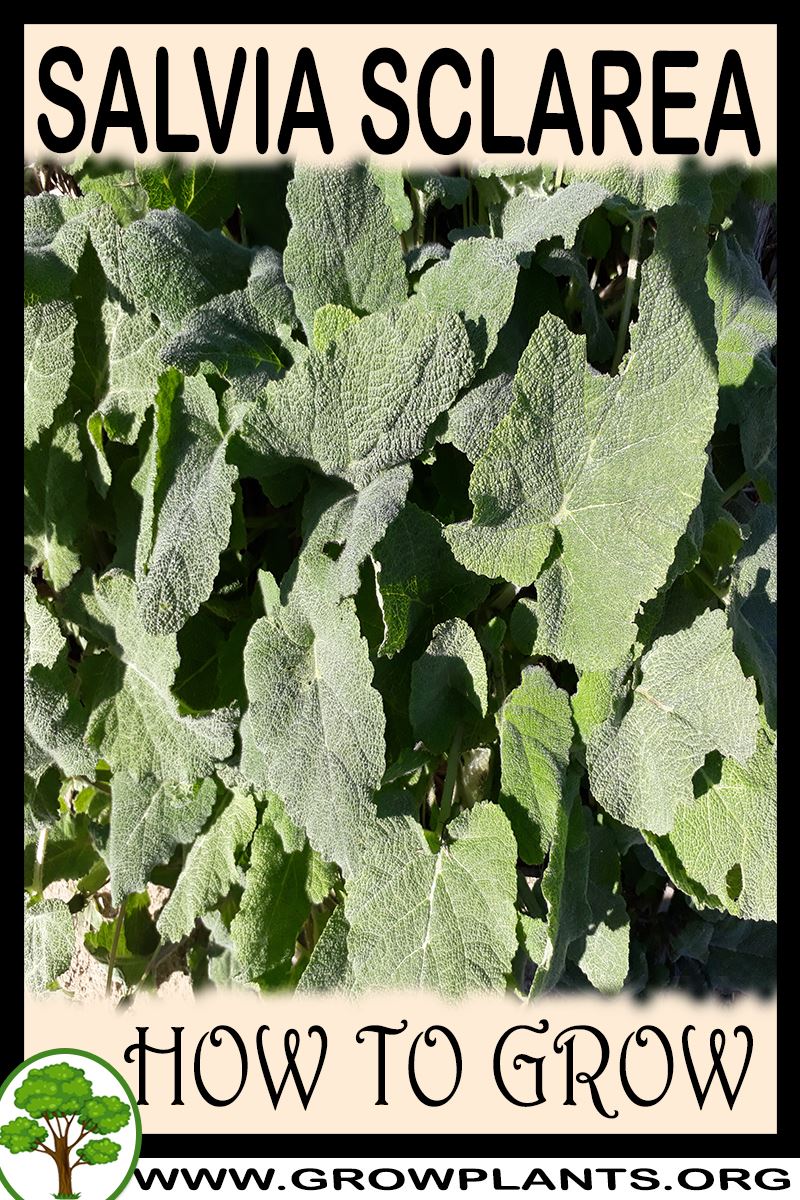
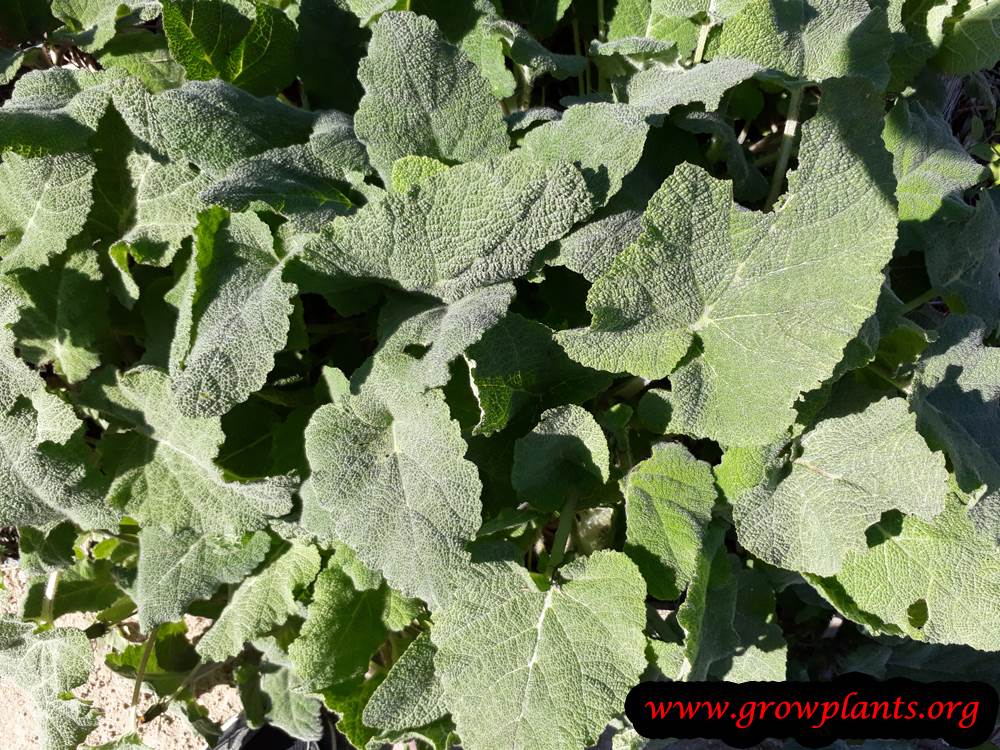
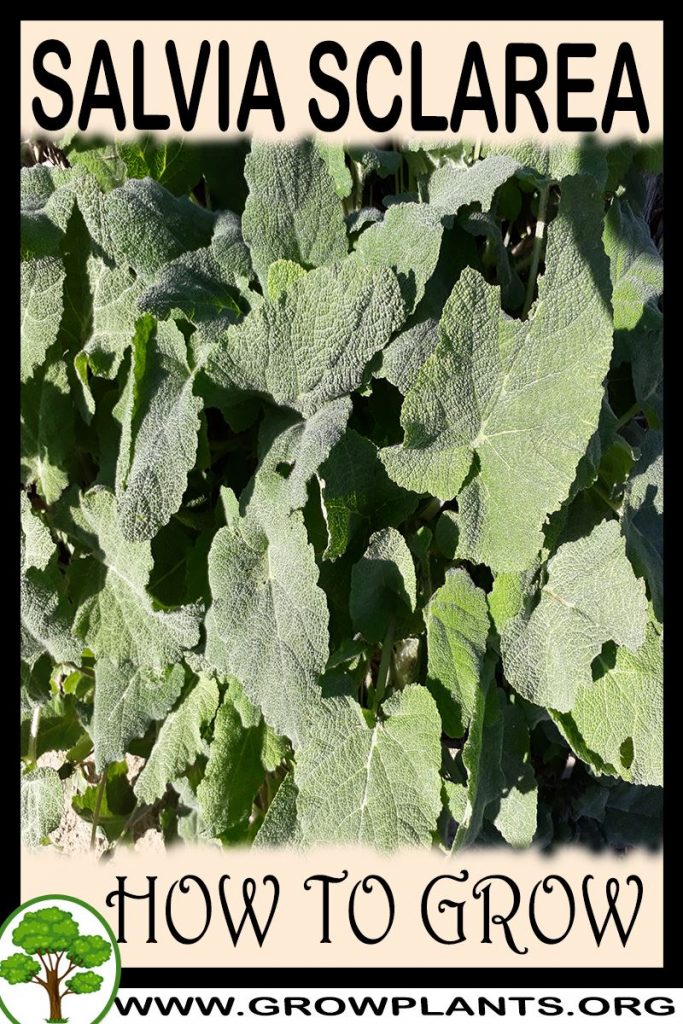
- Leaves & Foliage: Large, fragrant, hairy green leaves, ovate and somewhat wrinkled, forming a bold basal rosette.
- Flower Characteristics: White, pink or purple two-lipped flowers set among showy papery bracts on tall branched spikes.
Primary Uses & Landscape Value
- Edible Uses: Long used as an aromatic herb and flavouring; the plant is the source of clary sage essential oil.
- Functional & Ornamental Roles: Border and cottage-garden ornamental, herb-garden and pollinator plant, and grown commercially for its essential oil.
Care Guide: Planting, Soil & Watering
Overview: Clary sage (Salvia sclarea) is a biennial or short-lived perennial for full sun to light shade in light, well-draining soil. It is drought-tolerant once established and easy from seed, disliking only wet, heavy ground.
Quick Care Requirements
| Requirement | Ideal Condition |
|---|---|
| Planting Season | Spring, summer or autumn |
| Growth Rate | Moderate |
| Soil Type | Light, well-draining soil |
| Water Need | Low to moderate — drought-tolerant once established; let the top few cm dry out between waterings |
Planting & Establishment
- Best Planting Season: Plant in spring, summer or autumn in mild zones; where grown as an annual or biennial, plant in spring after the last frost.
- How to Plant:
- Hole Preparation: Dig a planting hole roughly twice as wide as the root ball but no deeper, so the roots can spread into loosened soil.
- Soil Amendments: Work in a little compost to improve structure, and add grit or coarse sand to sharpen drainage on heavier soils — these sages dislike rich, soggy ground.
- Planting Depth: Set the plant at the same depth it grew in its pot, with the root collar level with the surface — never bury the stem, which invites rot.
- Growth Speed & Expectations: Expect a moderate, steady pace of growth, reaching a good size over a season or two.
Soil, Watering & Drainage Care
- Soil Mix & Drainage Needs: Provide light, aerated, sharply drained soil; in containers use a free-draining potting mix with added perlite or vermiculite rather than heavy garden soil, and make sure excess water escapes freely, since waterlogged roots quickly rot.
- Watering Schedule & Technique:
- Young / Newly Planted: Water regularly right after planting to settle the roots, keeping the soil lightly moist while the plant establishes.
- Established: Once established it is drought-tolerant — water deeply but infrequently, letting the top few centimetres dry out before watering again.
- Seasonal Adjustments: Increase watering during prolonged heat and cut right back over the cool, wet season, since soggy soil is the main cause of rot.
Climate, Light & Hardiness
Clary sage flourishes in Mediterranean, subtropical, and temperate climates, wanting full sun with a little relief from shade in the hottest weather. It is winter-hardy as a true perennial across USDA zones 5–11, while gardeners in colder zones 3–5 can still grow it successfully as a hardy annual or biennial.
Quick Climate Specifications
| Climate Zones | Mediterranean, subtropical, temperate |
|---|---|
| USDA Hardiness Zones | 5–11 as perennial/biennial; 3–5 as annual with good care |
| Optimal Temp Range | Approximately 15–29°C (59–84°F), with best germination around 20–25°C (68–77°F) |
| Cold Damage Begins | Top growth is damaged by hard frost; unprotected crowns are at risk in freezing winters |
| Approx. Survival Minimum | Established, mulched plants in zone 5 typically endure winter minimums around −23°C to −29°C (−10°F to −20°F) |
| Frost Tolerance | Moderate (root/crown hardy with winter mulch; top growth frost-tender) |
| Light Conditions | Full Sun / Half Shade |
Sunlight & Light Exposure
Optimal Light Setup
Full sun gives the strongest flower spikes and most fragrant foliage.
Direct Sun Requirement
Site data recommends full sun up to about 25°C (77°F); above that, filtered light or half shade helps avoid heat stress.
Shade & Heat Management
In hot-summer climates, afternoon shade prevents scorching and keeps the hairy, fragrant leaves from wilting during peak heat.
Best Exposure / Orientation
An open, sunny bed with some wind protection for the tall flower stems suits it well.
Temperature Extremes & Hardiness
USDA Hardiness & Regional Limits
Grown as a genuine perennial or biennial in zones 5–11; in zones 3–5 it is typically treated as a hardy annual, germinating and flowering within a season rather than reliably overwintering. Cold tolerance can vary with plant age, exposure, and individual growing conditions.
Cold Damage & Winter Protection
A mulch of wood chips or dead leaves over the base going into winter helps protect the crown where frost is expected.
Frost Sensitivity
Young seedlings and unestablished plants are more frost-sensitive than mature, mulched crowns.
Extreme Heat Tolerance
Handles Mediterranean summer heat well; growth and flowering are best kept in full sun only while temperatures stay below roughly 25°C (77°F), with part shade preferred above that.
Wind, Humidity & Microclimate
Humidity Preferences
Prefers a well-ventilated site; propagation cuttings need consistent humidity to root, but established plants favor drier air typical of Mediterranean climates.
Rainfall & Seasonal Moisture
Adapted to climates with a pronounced dry season, consistent with its Mediterranean and subtropical range.
Microclimate Recommendations
A warm, sheltered, sunny spot with winter mulch extends its perennial range into cooler gardens.
Growing in Pots, Balconies & Indoors
Clary sage (Salvia sclarea) is a tall, aromatic biennial reaching up to 1.8 m, so it is not a houseplant – it needs full outdoor sun. The grower confirms it grows well in containers, making a handsome, fragrant patio or balcony plant.
Quick Details
- Container Size: About 5 L grown as an annual, 10-20 L as a perennial (the grower’s guidance)
- Indoor Suitability: Not an indoor plant – it grows too tall and needs full sun
- Best Spot: Full sun to part shade, outdoors
- Soil & Drainage: Well-drained, well-ventilated mix so water runs freely out of the pot
- Watering in Pots: Small to average – let it approach dryness; it dislikes wet feet
Indoors & On the Windowsill
- Not a houseplant: The grower marks it ‘No’ – at up to 1.8 m and needing strong sun, it is unsuited to indoor life.
- Windowsill: A young plant may sit briefly on a very sunny sill, but it soon grows too large; treat it as an outdoor container plant.
- Overwintering: As a biennial/short-lived perennial it is best left outdoors; in a hard winter the pot can be sheltered against a wall.
On a Balcony or Patio
- Light & wind: Give it the sunniest spot; its tall flower spikes catch the wind on an exposed balcony, so shelter or lightly stake them.
- Heat & drainage: Walls and paving reflect heat and dry pots quickly – check moisture in warm spells, and make sure run-off drains away.
Choosing the Pot, Soil & Long-Term Care
- Pot & drainage: Use the grower’s sizing – about 5 L as an annual, 10-20 L as a perennial – with plenty of holes so water flows straight out; skip a standing water saucer to avoid root rot. Terracotta breathes and dries fast (good for succulents), while glazed or plastic holds moisture longer.
- Potting mix: A well-aerated, free-draining blend – potting mix or peat with perlite or vermiculite, enriched with organic matter (the grower’s recipe).
- Feeding: Potted plants exhaust their food faster because watering leaches nutrients, so feed lightly through the growing season – more often than plants in open ground.
- Repotting: Refresh the mix and pot up about every two years; for perennials, lightly prune the root ball and top growth to keep them vigorous.
Grower’s Container Tip
- The grower’s sizing & soil: Pot at about 5 L for a single-season plant, or 10-20 L to carry it as a perennial. Keep the mix well ventilated with generous drainage holes so water passes right through, and blend potting mix or peat with perlite or vermiculite plus rich organic matter.
Fertilizing & Feeding
A light feeder: this aromatic herb needs only a light hand at planting and through the growing season, since rich feeding tends to produce soft, floppy growth and can dull its fragrance.
Quick Fertilizing Specs
| Feeding Level | Light feeder |
|---|---|
| Main Nutrient Priority | Modest, balanced-to-low-nitrogen feeding rather than a rich, high-nitrogen program |
| Best Feeding Period | At planting and lightly through the active growing season into bloom |
| Organic Options | Compost or well-rotted organic matter worked into well-drained soil |
| Micronutrients | Rarely an issue in well-drained soil; correct iron or other deficiencies only when actually diagnosed |
| Soil pH | Tolerates a range of soil conditions but favors a lean, well-drained, near-neutral site |
| Reduce/Stop Feeding | Ease off as the plant matures and established growth becomes self-sustaining; overfeeding is more of a risk than underfeeding for this herb |
Feeding by Growth Stage
Establishment after planting
Help a newly planted or seed-grown clary sage settle in and build an initial root system and rosette of fragrant, hairy leaves.
| Nutrient direction | A light, balanced feed to support root establishment without forcing soft, lush growth. |
|---|---|
| Timing | From planting or transplanting through the first weeks of new root and leaf growth. |
| Frequency | A single light feeding at planting is usually enough to get the plant going. |
| Fertilizer types | A balanced complete fertilizer used lightly, Compost worked into the well-drained soil at planting |
| Precautions | Keep feeding light and soil well drained; overly rich or wet conditions favor rot and rank, floppy growth over strong fragrance. |
Active growth into the dancer-shaped bloom spikes
Maintain steady growth and support flowering while keeping the foliage’s characteristic fragrance and upright habit from turning soft and rank.
| Nutrient direction | Keep nitrogen modest; aromatic herbs like this one tend to lose fragrance and flop over when pushed with heavy nitrogen feeding. |
|---|---|
| Timing | Through the main growing season into flowering. |
| Frequency | Feeding needs stay minimal once the plant is established; light feeding is usually enough. |
| Fertilizer types | A low-nitrogen or balanced complete fertilizer used sparingly, Compost or well-rotted organic matter as a light seasonal top-dressing |
| Precautions | Avoid rich, high-nitrogen feeding, which tends to produce lush but weak growth at the expense of flowering and fragrance, and can worsen this plant’s tendency to self-seed aggressively. |
Nutrient Deficiency Signs & Corrections
Lower leaves pale and overall growth stays sparse and slow.
| Possible causes | low soil nitrogen, poor, depleted soil, competition from surrounding plants |
|---|---|
| Appears first on | older, lower leaves |
| What to check | overall vigor and leaf color, soil fertility history, competition from nearby plants |
| Possible correction | Work in a modest amount of balanced fertilizer or compost and reassess growth. |
New leaves emerge yellow between the veins while veins remain green, especially in heavier or poorly drained soil.
| Possible causes | high soil pH limiting iron uptake, waterlogged or compacted soil, naturally low soil iron |
|---|---|
| Appears first on | newest leaves |
| What to check | soil drainage and pH, whether only new growth is affected, recent watering pattern |
| Possible correction | Improve drainage, correct pH toward neutral where practical, and apply a chelated iron product per its label. |
The base of the plant softens and darkens, with wilting despite moist soil.
| Possible causes | waterlogged or heavy soil, overwatering, excess rich feeding held against the crown |
|---|---|
| Appears first on | the stem base and crown |
| What to check | soil drainage, recent watering and feeding habits, firmness of the crown |
| Possible correction | Improve drainage, let the soil dry between watering, and ease off feeding near the crown. |
Pruning, Training & Seasonal Maintenance
Clary sage is a soft, aromatic herbaceous plant grown as an annual, biennial, or short-lived perennial depending on climate and zone. It tolerates moderate, ongoing light pruning – mainly deadheading and tidying – rather than any structural framework-building, since flowering stems arise from a basal rosette rather than persistent wood. Because many plants are biennial or short-lived, pruning cannot rejuvenate a declining crown the way it does on a true shrub; the safest, most effective work is spread through the growing season (deadheading) with one tidying cutback in autumn or winter.
Quick Pruning & Maintenance Specs
| Pruning Tolerance | Moderate |
| Primary Pruning Window | Spring–Summer, ongoing deadheading during bloom |
| Secondary Maintenance Window | Autumn/Winter tidy of spent flower stems |
| Typical Frequency | Deadhead every 1–2 weeks in bloom, plus one seasonal tidy |
| Main Objective | Prolong bloom, prevent legginess, tidy dieback |
| Young Plant Priority | Pinch seedling tips once several leaf pairs form, to build a bushier base |
| Mature Plant Priority | Deadhead spent flower spikes at the base |
| Best Tool Type | Precision snips / bypass secateurs |
| Avoid Heavy Pruning During | Peak summer heat stress or just before first frost |
Pruning by Plant Age & Size
Newly Established
No pruning beyond removing damaged or diseased growth; let the basal rosette establish fully first.
Young / Formative
No formal training system applies (it is a rosette-forming herb, not a branching shrub). Pinching the growing tips of vigorous seedlings once they carry several leaf pairs encourages a bushier base before the flowering stalk rises.
Mature / Established
Regular deadheading of spent flower spikes is the main ongoing task; in true perennial forms this can encourage side branching and a longer bloom period.
Seasonal Pruning Schedule
Ongoing Sanitary
Objective: keep the plant healthy through the season. Remove: damaged, diseased, or spent flower stems as they appear. Do not remove: the basal foliage rosette. Response: tidier plant, possible extended bloom. Flowering impact: deadheading redirects energy from seed-set back into further flowering in perennial forms.
Dormant/Winter
Objective: end-of-season tidy. Remove: flowered stalks once seed has matured or before hard winter sets in. Do not remove: the living basal rosette, which carries the plant through to next season. Response: cleaner overwintering crown; reduces rot risk from collapsing dead stalks. Flowering impact: none – that stalk has already finished flowering for the year.
Structural Pruning & Training
Minimal: this is not a plant that develops a branch framework needing thinning or shaping. The only structural-type decision is whether to pinch young growth for bushiness.
Special Growth to Remove
- Spent flower spikes/stems – the main recurring task.
- Damaged or diseased leaves, removed as seen.
- In biennial/short-lived forms, the entire flowering rosette naturally declines after seed set; remove the spent crown rather than attempting to prune it back into renewed growth.
Container & Small-Space Pruning
Grows well in containers; deadhead promptly to keep the plant compact and to avoid a leggy, top-heavy stalk in a pot. Avoid overwatering right after a cutback.
Tools
- Precision snips – deadheading soft flower stems.
- Bypass secateurs – thicker basal stems late in the season.
Tool Hygiene & Disease Risk
Routine: clean, sharp tools are sufficient. No specific transmissible disease risk is noted for this species.
Cut Placement & Technique
Cut spent flower stems just above a leaf node or down to the basal rosette; avoid cutting into old, bare basal growth, which is slow to resprout on this species.
Heavy Pruning & Rejuvenation
Not tolerated or useful in the way it is on a woody shrub. Clary sage does not reliably resprout strong new growth from a hard cutback of an old or declining crown. Where a plant has finished its biennial/short lifecycle, the better approach is to let it self-seed or replace it with a young plant rather than hard-pruning the old crown expecting rejuvenation.
Post-Pruning Care
Water lightly after cutback; do not add extra fertilizer beyond the plant’s usual once-a-year feeding, since cutback alone is enough stimulus. Watch for rot at the cut base in wet winter conditions.
Common Pruning Mistakes
- Cutting the whole plant to the ground expecting shrub-like resprouting from old wood.
- Deadheading so thoroughly that no seed is left where reseeding/naturalizing is wanted.
- Pruning during peak summer heat, adding stress to an already-taxed plant.
When NOT to Prune
- During active flowering, if seed set for self-sowing is desired.
- Just before first frost in marginal zones (lower end of hardiness zone 3–5 when grown as an annual).
- During periods of heat or drought stress in summer.
Recommended Tools (by task)
- precision_snips – deadheading soft, thin flower stems throughout bloom.
- bypass_secateurs – thicker basal stems at the end-of-season tidy.
Propagation Guide
Salvia sclarea is easy and most commonly grown from seed, which needs no special treatment and doesn’t require much fuss; however, because plants are often grown as biennials/annuals, seed-started plants may not flower in their first season, so cuttings or layering are useful when a bloom is wanted sooner. Seed is generally true to the species, and propagation overall is Easy.
Quick Propagation Specs
| Best Propagation Method | Seed |
| Alternative Methods | Stem cuttings (rooted in water or in peat soil with rooting hormone); ground/simple layering (bending a branch over and covering it with soil) |
| Propagation Difficulty | Easy |
| Seed True-to-Type | Usually true-to-type (species) |
| Vegetative True-to-Type | Yes |
| Best Propagation Season | Spring to summer for sowing (hardiness zone below 10a, better in spring); autumn to winter for sowing in zone 10b+; for cuttings/layering, warm spring or autumn is best, done in half shade in zone 10b-11 |
| Seed Germination Time | 2-3 weeks in optimal conditions, can take up to 5 weeks |
| Germination Temperature | Best 20-25°C (68-77°F); possible at 15-29°C (59-84°F) but germination is slower and fewer seeds germinate |
| Seed Sowing Depth | 3-6mm (0.2-0.4 inch) |
Growing from Seed
Seed Handling & Viability
Store seed in a dry, dark location, ideally at room temperature or in a refrigerator, until sowing.
Sowing Season
In hardiness zones lower than 10a, sow spring to summer, with spring preferred; in zone 10b and above, sow in autumn, winter, or spring, but avoid sowing in hot summer days.
Sowing Depth & Orientation
Sow at 3-6mm (0.2-0.4 inch) depth. When direct-sowing or spacing plants out, allow about 30 x 40cm (12 x 16 inches) per plant.
Germination Conditions
Best at 20-25°C (68-77°F) in moist, humid soil in a sunny location; it will still germinate at 15-29°C (59-84°F) but more slowly and with a lower germination rate. Keep soil consistently moist, watering an average amount and never letting it dry out.
Germination Time
Typically 2-3 weeks under optimal conditions, though it can take up to 5 weeks.
Seedling Care
Keep seedlings in moist soil in a sunny location, increasing watering if seedlings are growing through summer heat.
Stem Cuttings
Cutting Type
Stem cuttings.
Best Timing
Warm spring or autumn; in hardiness zone 10b-11, take and root cuttings in half shade.
Rooting Setup
Two methods work: place the cut stem in water, changing the water every few days, or insert it into soil (peat-based soil is better). Either way, maintain enough humidity around the cutting throughout rooting.
Rooting Hormone
Beneficial when rooting in soil – using a root growth hormone is recommended for the soil method.
Air & Ground Layering
A branch can be bent over and covered with soil (simple/ground layering) as an easier alternative to cuttings; keep the covered section consistently moist and humid until it roots, then sever and transplant once well rooted.
Bloom & Edible Flower Guide
Quick Details
- Bloom Season: Summer (spring to autumn depending on climate)
- Flower Appearance: Tall branched spikes of hooded lilac-white flowers held in showy pink-purple bracts
- Edibility: Flowers and young leaves are edible in modest culinary amounts (strongly aromatic)
Detailed Blooming Overview
Clary sage throws up dramatic branched spikes in its flowering year. The true flowers are small and hooded, but the large, papery bracts around them give the long-lasting colour that makes it such a striking herb.
Flower Characteristics
- Hooded, two-lipped flowers in white, pink or purple, cupped by conspicuous bracts.
- Very attractive to bees.
Bloom Care & Thinning
- Conditions: full sun and free drainage; being biennial or short-lived, let some spikes set seed to keep a supply of plants.
- Edible use: use young leaves and flowers sparingly as a flavouring — the plant is potently aromatic.
Fruit & Uses
Clary sage is grown mainly as an ornamental and aromatic herb, but its young leaves and flowering tops have a long minor culinary tradition: leaves are typically cooked (dipped in batter and fried as a fritter) rather than eaten raw, while the fresh leaves and flowers are used to flavour wine, vermouth and other drinks. It is a flavouring/occasional-use herb, not a staple food crop.
Quick Edible Specs
| Aspect | Details |
|---|---|
| Edible Parts | Young leaves; flowering tops and flowers |
| Main Use(s) | Culinary (leaf fritters, flavouring wine/spirits/tea); traditionally also aromatic/medicinal, no health claims implied |
| Eaten Raw or Cooked | Leaves usually cooked (batter-fried); flowers and leaves also used fresh or dried to flavour drinks/tea |
| Preparation Required | Cook (for fritters) or none beyond washing/steeping (for flavouring) |
| Harvest Season | Spring through autumn, matching the plant’s bloom season – pick young, tender leaves and freshly open flowers |
| Time to First Harvest | Leaves can be picked lightly once the plant is established; flowers only once it comes into bloom |
| Storage | Best used fresh; leaves and flowers can be air-dried for later use in tea |
| Safety/Toxicity Caveat | Use in culinary (flavouring) quantities only – Clary sage essential oil is for aromatic/topical use, not for drinking or eating directly; concentrated oil should be avoided during pregnancy |
Leaves & Greens
Young, fragrant, hairy ovate leaves are the main edible part. They are most often prepared cooked – traditionally coated in a light batter and fried into a fritter – rather than eaten raw, since raw leaves are strongly aromatic and slightly bitter. Pick young, unblemished leaves; older leaves toughen and become more pungent.
Flowers & Flower Buds
The white, pink or purple flowers are used fresh (or dried) to add a muscatel-like aroma to wine, vermouth, other infused drinks, and herbal tea. Pick freshly opened flowers and use them promptly, or dry them for later steeping.
Harvesting
Harvest leaves and flowers through the growing season as needed rather than as a single crop – take a few leaves or flowering sprigs at a time so the plant keeps growing. See Pruning for how cutting back affects the plant’s overall growth; that is separate from this light, ongoing culinary picking.
Preparation, Uses & Safety
Culinary use is limited to flavouring: fried leaf fritters, and leaves or flowers steeped to flavour wine, spirits or tea. Clary sage is more widely known and used as an aromatic/essential-oil plant than as a food; the essential oil is concentrated and intended for aromatic use, not for drinking or eating – do not ingest the essential oil directly, and use concentrated preparations cautiously, avoiding them during pregnancy. As a culinary herb used in normal small quantities (fresh leaf or flower), it is traditionally considered safe, but treat it as a minor flavouring herb rather than a food source.
Pests, Diseases & Troubleshooting
Overview: Clary sage is a robust, strongly aromatic biennial whose resinous foliage deters most pests, so it is one of the cleaner salvias. Its chief problems are powdery mildew in crowded, humid stands, crown rot in wet winter soil (which can end a rosette before it flowers), and slug damage to the large first-year leaves.
Quick Troubleshooting Overview
| Issue / Pest | Main Symptom | Primary Solution |
|---|---|---|
| Powdery mildew | White powder on large basal leaves | Spacing, airflow, sulphur/bicarb spray |
| Crown / root rot | Rosette collapses in wet soil | Sharp drainage, avoid winter wet |
| Slugs & snails | Holed young rosette leaves | Traps, barriers, evening patrols |
| Aphids | Sticky, distorted flower spikes | Water jet, insecticidal soap |
| Whitefly | White flies & sooty mould | Airflow, sticky traps, horticultural oil |
Common Pests & Management
- Aphids (Aphis spp. / Myzus persicae):
- Symptoms: Clusters of soft green, grey or black insects on soft new shoots, flower stalks and leaf undersides; sticky honeydew, sooty mould and distorted tips; ants farming them.
- Prevention & Control: Blast off with a strong jet of water; encourage ladybirds, lacewings and hoverflies; pinch out badly infested tips. For persistent colonies use insecticidal soap or a light horticultural/neem oil, spraying undersides in the evening to spare pollinators.
- Whitefly (Trialeurodes vaporariorum):
- Symptoms: Tiny white moth-like insects that fly up in clouds when disturbed; sticky honeydew and sooty mould; worst on tender salvias under glass or in still, warm air.
- Prevention & Control: Improve airflow and avoid over-feeding with nitrogen; hang yellow sticky traps; introduce Encarsia parasitic wasps under cover. Spray insecticidal soap or horticultural oil on leaf undersides, repeating every few days to catch new hatches.
- Two-spotted spider mite (Tetranychus urticae):
- Symptoms: Fine pale stippling and bronzing of leaves in hot, dry conditions; delicate webbing on undersides and shoot tips; leaves dry and drop.
- Prevention & Control: Raise humidity and hose foliage in hot spells; remove badly affected growth. Release predatory mites (Phytoseiulus) under cover, or treat with horticultural oil / insecticidal soap, ensuring undersides are covered.
- Mealybugs (Pseudococcus / Planococcus spp.):
- Symptoms: White cottony tufts in leaf axils, stem joints and the crown; honeydew and sooty mould; slow, stunted growth. Common on salvias overwintered indoors.
- Prevention & Control: Dab colonies with a cotton bud dipped in dilute alcohol; wash plants and isolate new stock. For heavier infestations use horticultural oil or insecticidal soap, repeating to reach protected crevices.
- Spittlebugs (froghoppers) (Philaenus spumarius):
- Symptoms: Frothy white ‘cuckoo spit’ on stems and leaf joints in spring, hiding a soft green nymph; minor cosmetic distortion of shoots.
- Prevention & Control: Largely harmless – simply wash the froth off with a hose. No chemical control is needed on established plants.
- Slugs and snails (Various spp.):
- Symptoms: Ragged holes in the large basal rosette leaves and young seedlings, with slime trails in damp weather.
- Prevention & Control: Keep the crown clear of debris, water in the morning, and use grit/copper barriers, traps or iron-phosphate pellets; hand-pick after dark.
Diseases & Fungal Issues
- Powdery mildew (Golovinomyces / Erysiphe spp.):
- Symptoms: White powdery patches on upper leaf surfaces and stems, spreading to coat foliage; worst in crowded plantings, shade, and humid nights with dry days.
- Treatment & Management: Space and thin plants for airflow, avoid overhead watering late in the day, and cut out affected growth. Grow in good light; if needed apply a sulphur or potassium-bicarbonate fungicide, or a milk/bicarb spray at first signs.
- Botrytis / grey mould (Botrytis cinerea):
- Symptoms: Fuzzy grey-brown mould on damaged shoots, dying flowers and crowded stems in cool, damp, still conditions; soft rotting patches.
- Treatment & Management: Remove faded flowers and dead material promptly, improve ventilation, and avoid wetting foliage. Water at the base and thin congested growth; fungicide is rarely needed if hygiene and airflow are good.
- Root and crown rot (Phytophthora / Rhizoctonia / Pythium spp.):
- Symptoms: Wilting despite moist soil, blackened stem bases, and roots that are brown and mushy rather than white; the classic killer of salvias in wet, heavy ground. First-year rosettes are especially vulnerable in wet winters.
- Treatment & Management: Prevention is everything: plant in free-draining soil, never let salvias sit in waterlogged winter ground, and avoid overwatering. Raise beds or add grit; remove and destroy collapsed plants and do not replant salvias in the same spot.
Growing Difficulties & Abiotic Problems
- Winter root rot / waterlogging:
- Cause & Symptoms: Most salvias die not from cold alone but from cold, wet, poorly drained soil that suffocates and rots the roots over winter.
- Correction Strategy: Plant on free-draining ground or a raised bed with added grit; go easy on watering in cool weather. In heavy clay, grow in pots of gritty mix that can be sheltered.
- Legginess and flopping:
- Cause & Symptoms: Soft, sprawling stems and sparse flowering caused by too much shade, rich soil, or excess nitrogen.
- Correction Strategy: Grow in full sun on lean soil; pinch young plants to bush out, and trim after the first flush to encourage compact regrowth and repeat bloom.
- Biennial die-back after flowering:
- Cause & Symptoms: Being biennial or short-lived, plants naturally decline and die after setting seed in their second year.
- Correction Strategy: This is normal – allow some self-seeding, or sow fresh each year for a continuous supply; it is not a disease.
What Helps – Products & Tools
Salvias respond well to a light touch: insecticidal soap or horticultural/neem oil handles aphids, whitefly, mites and mealybugs; yellow sticky traps monitor and reduce whitefly; and a sulphur or potassium-bicarbonate fungicide manages powdery mildew. The best ‘product’, though, is sharp drainage and good airflow – most salvia losses are wet-soil root rot, not insects.