

Plant Profile & Key Characteristics
Also known as: candleberry, Indian walnut, Kemiri, Varnish tree, Nuez de la India, Kukui nut tree, and Kekuna tree, Candle nut
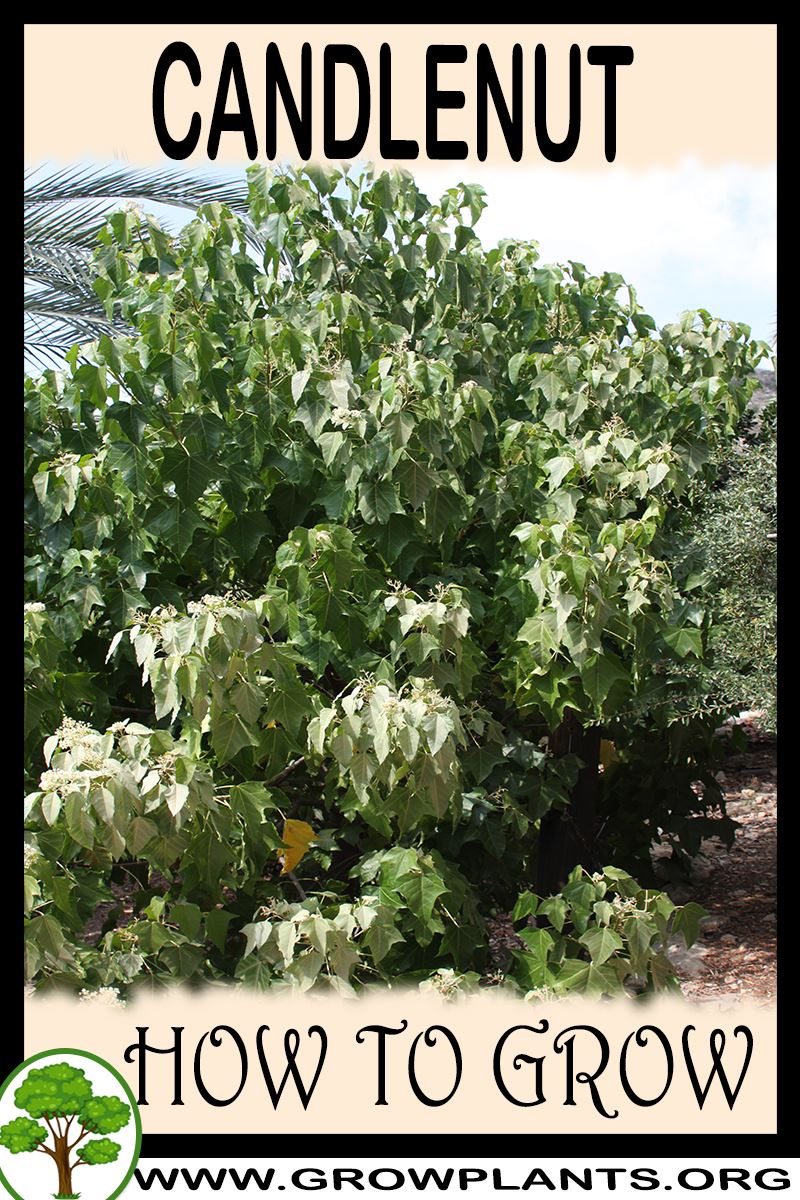
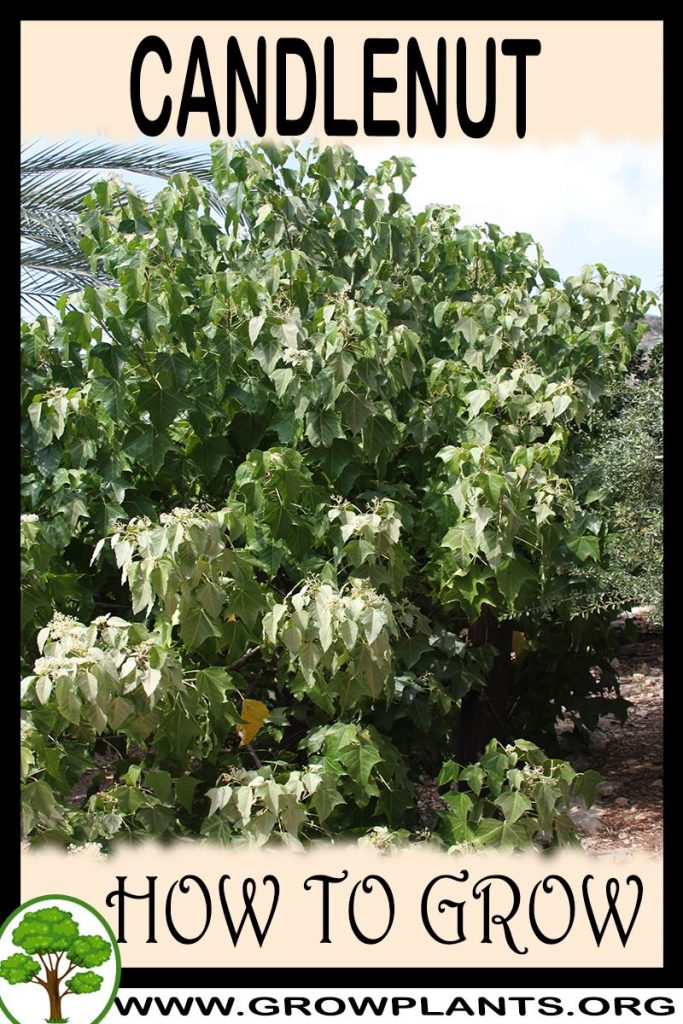
Overview: Candlenut tree (Aleurites moluccanus) is a large evergreen tree reaching 7-20 m (21-60 ft) tall, grown for its edible roasted nuts and as an ornamental or bonsai. It has distinctive silvery-green foliage and white-cream flower clusters, and thrives in tropical to subtropical climates.
Quick Specifications
| Specification | Attribute |
|---|---|
| Plant Type / Life Cycle | Perennial (evergreen tree) |
| Foliage Type | Evergreen |
| Mature Size | 7-20 m (21-60 ft) tall |
| Growth Rate | Moderate to fast |
| Toxicity | Raw nuts are toxic and purgative; edible only after roasting |
| Hardiness | USDA zone 10+ |
Growth Form & Structure
- Height & Spread: Large tree 7-20 m (21-60 ft) tall with a broad canopy; not suited to containers except when trained as bonsai.
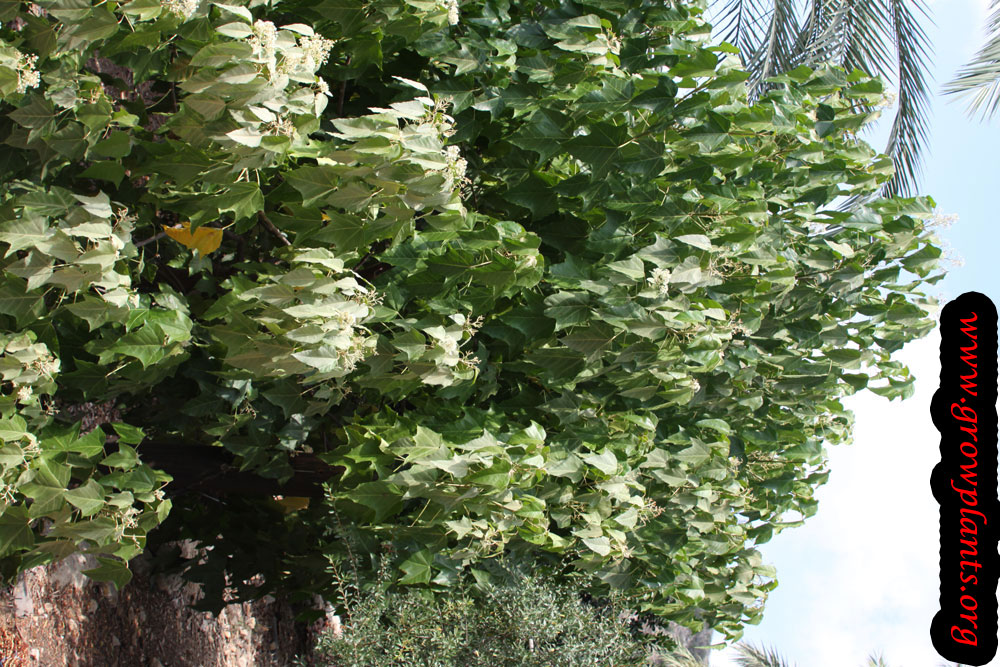
- Growth Habit & Form: Large evergreen tree with a wide, spreading canopy.
- Lifespan & Maturity: Long-lived tree; begins bearing nuts in about 5-8 years.
Anatomy & Physical Features
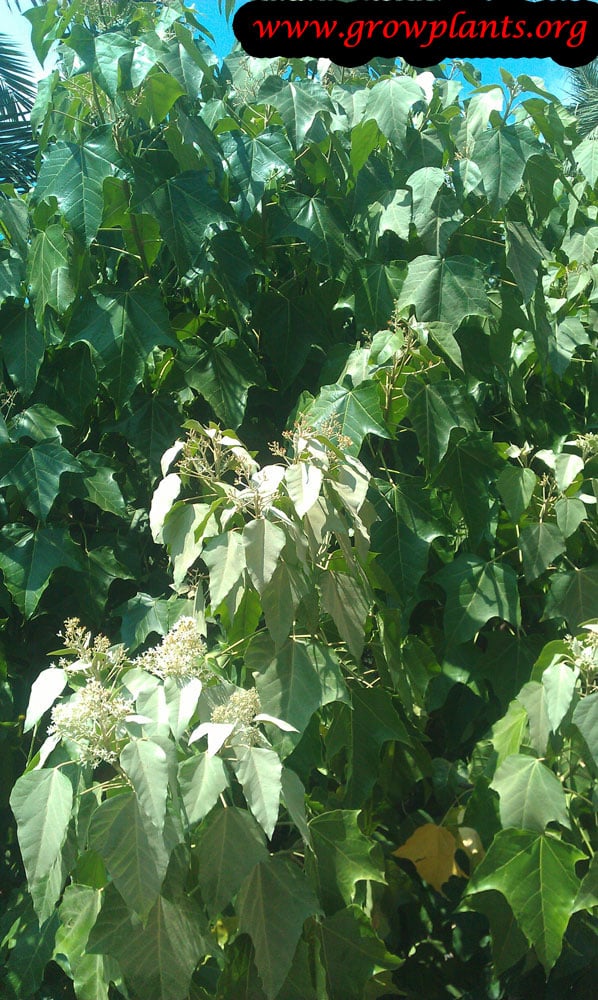
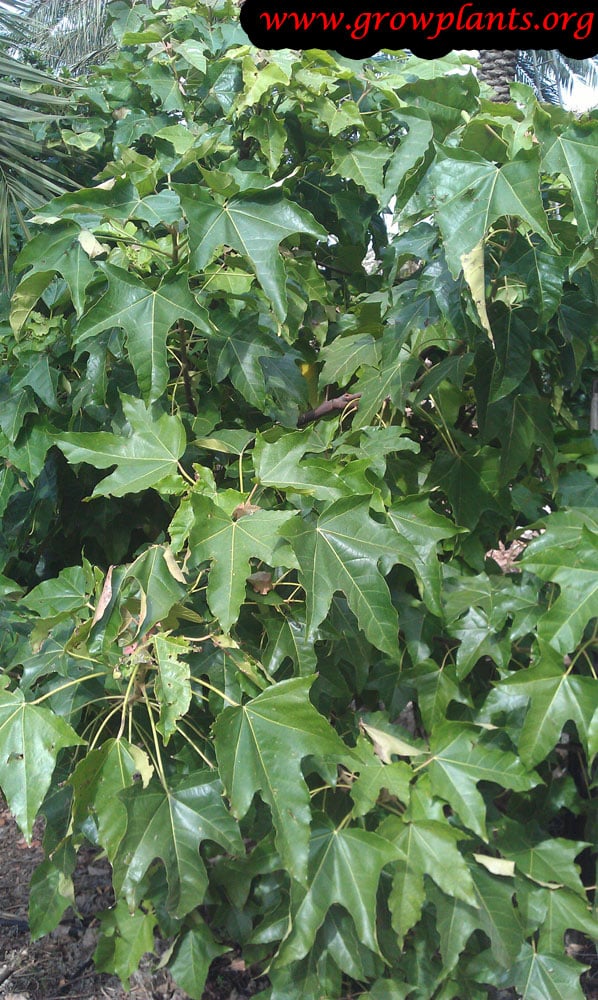
- Leaves & Foliage: Silvery-green leaves, green on top and gray-silvery underneath.
- Flower Characteristics: Small white-cream flowers borne in inflorescences (full detail in the Bloom accordion).
- Fruit Profile: Round fruit ripening green to brown, with a hard brown nutshell holding an edible white-cream nut (full detail in the Fruit accordion).
Primary Uses & Landscape Value
- Edible Uses: Roasted nuts, nut oil and spread – nuts must be roasted, as raw nuts are toxic.
- Functional & Ornamental Roles: Ornamental and shade tree, bonsai subject, and nut and oil crop.
Care Guide: Planting, Soil & Watering
Overview: This large tropical to subtropical nut tree needs a frost-free, sunny site with rich, moist, well-drained soil and steady watering. It grows fast in true tropical warmth and more slowly toward its cold limit.
Quick Care Requirements
| Requirement | Ideal Condition |
|---|---|
| Planting Season | Spring–summer (10a) to spring–autumn (10b); year-round in zone 11+ |
| Growth Rate | Moderate to Fast (fast in zone 11b+) |
| Soil Type | Rich, moist and well-draining |
| Water Need | Moderate to High — keep the soil moist |
Planting & Establishment
- Best Planting Season: Plant in the warm season — spring to summer in zone 10a, spring to autumn in zone 10b, and year-round in zone 11 and warmer.
- How to Plant:
- Hole Preparation: Dig a generous hole in a sunny, frost-free spot; allow roughly 4×3 m spacing for a full-grown tree.
- Soil Amendments: Work in plenty of organic matter, which the young seedlings especially appreciate.
- Planting Depth: Set the root collar at soil level and mulch around the base to keep the roots moist.
- Growth Speed & Expectations: Fast in ideal warmth (zone 11b and warmer) and moderate in the cooler zones 10–11a.
Soil, Watering & Drainage Care
- Soil Mix & Drainage Needs: Rich, moisture-retentive but well-drained soil; it likes ample water but not stagnant waterlogging.
- Watering Schedule & Technique:
- Young / Newly Planted: Keep the soil consistently moist, giving generous water as seedlings and young trees establish.
- Established: Water regularly — an average to large amount — to keep the root zone moist.
- Seasonal Adjustments: More water in hot, dry spells; ease back in cooler weather while never letting the soil dry out fully.
Climate, Light & Hardiness
The candlenut (Aleurites moluccanus) is a fast-growing tropical evergreen tree for tropical, subtropical and Mediterranean climates, needing full sun and warmth. The site rates it for hardiness zone 10 and above and describes it as frost-free, though established trees may briefly survive light frost.
Quick Climate Specifications
| Climate Zones | Tropical, subtropical, Mediterranean |
|---|---|
| USDA Hardiness Zones | 10+ |
| Cold Damage Begins | At light frost near 0°C (32°F) |
| Approx. Survival Minimum | Brief light frost only, per the site (“can survive light frost, few days”) |
| Frost Tolerance | Very Low |
| Light Conditions | Full sun |
| Wind Tolerance | Moderate |
Sunlight & Light Exposure
Optimal Light Setup
Full sun supports its rapid growth and nut production.
Direct Sun Requirement
Direct sun is needed; the tree grows fastest in warm, bright, zone-11 conditions and more slowly in cooler zone-10 areas.
Best Exposure / Orientation
A hot, open, sunny position is ideal.
Temperature Extremes & Hardiness
USDA Hardiness & Regional Limits
Rated by the site for zone 10 and warmer - a frost-free tropical/subtropical requirement. Growth pace itself tracks warmth, being fast in zone 11b and up and slower in zones 10–11a.
Cold Damage & Winter Protection
The site describes it as frost-free but able to survive light frost for a few days. Read this carefully: light frost near freezing begins to damage foliage, yet an established tree may briefly tolerate short, mild frost episodes. Prolonged or hard frost is not tolerated, and young trees are far more cold-sensitive.
Frost Sensitivity
Frost-sensitive; only brief, light frost is survivable, and even that stresses the tree.
Extreme Heat Tolerance
Excellent - a genuinely tropical tree that thrives in heat.
Frost-Free Growing Season
A long, warm, frost-free season is important; the fuller and warmer the season, the faster the growth and the more reliable the cropping.
Wind, Humidity & Microclimate
Humidity Preferences
Prefers humid tropical air but adapts to subtropical and Mediterranean climates.
Dry-Air Tolerance
Moderate, provided soil moisture is maintained.
Wind Tolerance
Moderate; shelter from strong wind protects its fast, somewhat soft growth.
Microclimate Recommendations
A hot, frost-free, sheltered, sunny site gives the best growth; in marginal zone-10 areas choose the warmest possible spot.
Growing in Pots, Balconies & Indoors
The grower is clear that the candlenut is neither a houseplant nor a normal container plant – it is a large tropical tree (7-20 m). His one exception is that grown as a bonsai it takes to a pot without trouble. Otherwise, grow it in open ground.
Quick Details
- Container Size: Not for ordinary pots; only a deep nursery pot for a seedling, or a bonsai pot if trained as bonsai
- Indoor Suitability: Not a houseplant – a large tropical tree
- Best Spot: Full sun, in the open ground
- Soil & Drainage: Deep, free-draining soil
- Watering: Average to plenty of water while establishing
Indoors & On the Windowsill
- Not for indoors: A big, fast-growing tree that needs full sun – not a room plant.
- Young or bonsai only in a pot: A seedling can start in a deep pot, and a bonsai specimen lives in a pot by design; a full tree cannot.
On a Balcony or Patio
- Ground, not balcony: As a full tree it isn’t a balcony or patio container plant; grow it in the garden where the climate allows.
- As bonsai: A trained bonsai can of course live on a bright, sheltered patio in its shallow pot.
Choosing the Pot, Soil & Long-Term Care
- Not a long-term pot plant (as a tree): The grower marks containers as No for the ordinary tree – it grows too large. Use a deep pot only to raise a young seedling, then plant it out.
- If starting a seedling in a pot: deep container, free-draining mix, strong drainage holes; skip a standing water saucer to avoid root rot; terracotta breathes and dries faster, while glazed or plastic holds moisture longer.
- Safety: The raw fruit/nut contains toxins and must be roasted before eating – keep raw nuts away from children and pets.
Grower’s Container Tip
- Bonsai exception (grower): While the candlenut is not suited to normal pots, the grower notes there is no problem keeping it in a container when it is grown and trained as a bonsai.
Growing this plant in a greenhouse
A greenhouse can give candlenut tree frost protection, cold protection, humidity control and extra warmth. In the right climate it may also be kept growing through winter, depending on how much warmth and light are provided.
Greenhouse at a glance
| Greenhouse suitability | Conditional - depends on your climate |
|---|---|
| Main benefits | frost protection, cold protection, humidity control, extra warmth |
| Season extension | earlier spring & later autumn |
| Outdoor protection advisable below | about 10°C |
| Maintain greenhouse minimum | around 15°C for active growth |
| Suitable types | heated greenhouse, glass greenhouse, polycarbonate greenhouse |
| Heating | Heating is recommended in cold climates for continuous growth. |
Related greenhouse guides
- Greenhouses: How to Choose the Right Greenhouse
- Best Greenhouse Heaters
- Greenhouse Climate Control: Temperature, Ventilation and Humidity
- Polycarbonate Greenhouses: What to Look for Before Buying
Fertilizing & Feeding
A moderate feeder: young trees appreciate nitrogen-forward feeding to build structure, while bearing trees do best with balanced nutrition and steady potassium through the growing season.
Quick Fertilizing Specs
| Feeding Level | moderate |
|---|---|
| young_feeding | Nitrogen-forward feeding through the growing season to build the tree. |
| mature_feeding | Balanced feeding with steady potassium to support cropping. |
| Main Nutrient Priority | Nitrogen while young; balanced nutrition with potassium once bearing. |
| Best Feeding Period | From when growth resumes through active growth and crop development. |
| Organic Options | Compost, well-rotted manure, and organic mulch over the root zone. |
| Micronutrients | A complete tree fertilizer usually supplies iron, manganese, and zinc; watch for chlorosis on alkaline soils. |
| Soil pH | Best in well-drained soil that is slightly acidic to near-neutral. |
| Reduce/Stop Feeding | Ease off feeding after harvest and through the cool, dormant season. |
Feeding by Growth Stage
Newly planted tree
Help the young tree establish roots after planting.
| Nutrient direction | Go light on fertilizer at first; let roots settle, then begin light balanced feeding once new growth appears. |
|---|---|
| Timing | The first season after planting. |
| Frequency | Feed sparingly until the tree is established and actively growing. |
| Fertilizer types | Light application of a balanced complete fertilizer, Compost or well-rotted organic matter worked into the planting area |
| Precautions | Keep fertilizer off the trunk and avoid heavy feeding, which can burn tender new roots. |
Young, non-bearing tree
Build a strong framework of branches and roots during the years before bearing.
| Nutrient direction | A nitrogen-forward complete fertilizer to drive steady vegetative growth and canopy development. |
|---|---|
| Timing | Through the growing seasons before the tree begins to bear. |
| Frequency | Feed through the active growing season, tapering as growth slows toward the cool season. |
| Fertilizer types | Nitrogen-forward complete tree fertilizer, Slow-release granular tree fertilizer, Compost or organic matter |
| Routine trace nutrients | iron, manganese, zinc |
| Precautions | Avoid late-season nitrogen that pushes tender growth vulnerable to cold. |
Established tree approaching bearing
Maintain healthy growth and prepare the tree to carry a crop.
| Nutrient direction | Shift toward a balanced complete fertilizer as the tree matures and prepares to fruit. |
|---|---|
| Timing | As the tree fills out and nears bearing age. |
| Frequency | Feed through the active growing season with balanced nutrition. |
| Fertilizer types | Balanced complete tree fertilizer, Slow-release granular feed, Compost or organic matter |
| Routine trace nutrients | iron, manganese, zinc |
| Precautions | Keep nutrition balanced; excess nitrogen can delay or reduce fruiting. |
Mature, bearing tree
Support a healthy canopy and a good crop year after year.
| Nutrient direction | A balanced complete fertilizer with steady potassium to support nut development. |
|---|---|
| Timing | Each growing season, with feeding concentrated as growth resumes and through crop development. |
| Frequency | Feed through the active growing season; ease off after harvest as the tree slows. |
| Fertilizer types | Balanced complete fertilizer with potassium, Slow-release granular tree fertilizer, Compost or organic matter |
| Routine trace nutrients | iron, manganese, zinc |
| Precautions | Watch for micronutrient chlorosis on alkaline soils and correct the cause rather than overfeeding. |
Nutrient Deficiency Signs & Corrections
Overall pale, yellow-green foliage with weak, slow growth.
| Possible causes | Low soil nitrogen, Heavy leaching in sandy or frequently watered soils, Cold or waterlogged soil limiting uptake |
|---|---|
| Appears first on | Older, lower leaves |
| What to check | Feeding history, Whether the oldest leaves yellow first, Soil drainage and temperature |
| Possible correction | Apply a nitrogen-forward complete fertilizer during the growing season and build soil organic matter. |
New leaves yellow between green veins, most on the youngest growth.
| Possible causes | High or alkaline soil pH making iron unavailable, Waterlogged, poorly aerated roots, Cold soil slowing uptake |
|---|---|
| Appears first on | Youngest leaves |
| What to check | Soil pH, Drainage and root health, Whether yellowing is interveinal on new leaves |
| Possible correction | Correct soil pH and drainage; apply a chelated iron product per its label if needed. |
Small, narrow leaves clustered in rosettes at shoot tips with shortened internodes.
| Possible causes | Low available zinc, High soil pH reducing zinc uptake, Sandy, low-organic soils |
|---|---|
| Appears first on | New shoot tips |
| What to check | Leaf and internode size on new growth, Soil pH, History of micronutrient issues |
| Possible correction | Correct high pH and apply a zinc product per its label if a deficiency is confirmed. |
Poor nut set, misshapen or aborted kernels, and dieback of shoot tips.
| Possible causes | Low soil boron, Sandy soils and heavy leaching, Dry conditions limiting boron movement to developing nuts |
|---|---|
| Appears first on | Developing nuts and shoot tips |
| What to check | Nut set and kernel fill, Soil boron history, Whether shoot tips die back |
| Possible correction | Correct only a confirmed shortage; apply boron carefully to a soil test and label, as the safe margin is narrow. |
Pruning, Training & Seasonal Maintenance
Candlenut (Aleurites moluccanus) is a large, fast-growing tropical tree (Euphorbiaceae) that can also be trained as a bonsai. Because it grows quickly and can build brittle, over-extended limbs, the main pruning job is formative — establishing a strong, balanced framework early so a big tree does not become top-heavy and wind-thrown. It tolerates fairly firm cutting, and is pruned mainly for shape and structure after the nuts have fallen in autumn–winter.
Quick Pruning & Maintenance Specs
| Pruning Tolerance | Moderate–High – vigorous, resprouts freely |
| Primary Pruning Window | After nut fall, autumn–winter |
| Secondary Maintenance Window | Light shaping through the growing season |
| Typical Frequency | Formative early on; then light annual shaping |
| Main Objective | Strong, wind-firm framework and controlled size |
| Young Plant Priority | Set a leader; build well-spaced scaffolds; prevent weak forks |
| Mature Plant Priority | Deadwood, crossing, height and spread control |
| Best Tool Type | Secateurs/loppers, saw for limbs, pole pruner for height |
| Avoid Heavy Pruning During | Active heavy flushing and the wettest weather |
Pruning by Plant Age & Size
Newly Established
Remove damaged growth and select a strong central leader. On such a fast grower a light early heading helps generate lower scaffolds so the tree does not run up as a single tall, top-heavy stem.
Young / Formative
Build the framework now: a dominant leader with well-spaced, wide-angled scaffolds. Vigorous, fast-extending wood can be brittle, so remove tight forks and over-long unbranched limbs while they are small and easy to correct.
Mature / Established
Keep it to deadwood removal, crossing and rubbing limbs, and modest height and spread reduction for safety and light — a large candlenut casts heavy shade and its limbs are worth keeping sound.
Seasonal Pruning Schedule
After Nut Fall / Autumn–Winter
Objective: the main structural pass, done once the crop has dropped. Remove deadwood, weak forks and crossing limbs, and reduce over-extended growth. Expected response: strong new extension in the next warm flush.
Summer / Ongoing
Light shaping and removal of broken or storm-damaged wood only; avoid large cuts that bleed heavily in the wettest, most disease-prone weather.
Structural Pruning & Training
Leader and scaffold selection to resist wind-throw is the priority, along with removing crossing, inward and over-long limbs. Thinning helps light and air through a dense, fast-built canopy and reduces the sail area that makes a tall candlenut vulnerable in storms.
Special Growth to Remove
Thin out the clusters of watersprouts that a fast, hard-pruned tree throws, keeping only those useful for rebuilding structure. There is no graft union or root-sucker issue on seedling or cutting-grown trees.
Container & Small-Space Pruning
Candlenut is genuinely grown as a bonsai, and here pruning is completely different from the landscape tree: pinch and cut the growing tips repeatedly to force fine ramification, shorten internodes, shape a compact silhouette, and root-prune at repotting to balance the canopy. The milky sap is a particular nuisance in close bonsai work — protect skin and eyes.
Tools
Use secateurs for shoots, loppers for medium limbs, a pruning saw for scaffold wood, and a pole pruner to reach height on a large tree. For bonsai work, precision snips. Always wear gloves and eye protection.
Tool Hygiene & Disease Risk
Increased — not because of a specific transmissible disease, but because the tree bleeds a copious milky latex that is a skin, eye and mucous-membrane irritant and is toxic if ingested. Wear gloves and eye protection, keep the sap off your skin, and clean tools and hands afterwards; disinfect blades if cutting out any diseased or rotten wood.
Cut Placement & Technique
Thin back to a lateral or the branch collar rather than leaving stubs; stage-remove large or brittle limbs in sections to avoid tearing bark; be ready for heavy latex bleed at fresh cuts.
Heavy Pruning & Rejuvenation
The tree tolerates fairly hard reduction and resprouts strongly, so an over-large or storm-damaged specimen can be reduced — ideally staged over a couple of cool seasons — and it will rebuild. Expect vigorous watersprout regrowth to thin the following year.
Post-Pruning Care
After opening a big canopy, protect newly exposed limbs from sunburn and water through the following flush. Thin the watersprout regrowth so the rebuilt structure stays sound rather than congested.
Common Pruning Mistakes
- Letting a fast young tree run up as a single top-heavy stem with weak forks, inviting wind-throw.
- Making big cuts in the wettest weather, when heavy sap bleed and disease risk are highest.
- Working the sappy wood with bare hands and no eye protection.
When NOT to Prune
Avoid large cuts during heavy active flushing and in prolonged wet weather; on exposed sites, do not remove so much canopy at once that the remaining structure is left unbalanced going into storm season.
Recommended Tools (by task)
- bypass_secateurs — formative cuts and shaping of young wood.
- loppers — for medium limbs and weak forks.
- pruning_saw — to stage-remove scaffold limbs on a large tree.
- pole_pruner — to reach height and deadwood from the ground.
Pruning Troubleshooting
| Problem | Possible Cause | What to Check | Corrective Action |
| Top-heavy tree leaning or wind-thrown | Weak leader/forks; over-tall thin structure | Framework and branch angles set when young | Formatively train a leader and wide scaffolds; reduce sail area |
| Heavy sap bleed and slow-healing cuts | Cutting in wet weather / very large wounds | Timing and size of cuts | Cut in drier weather; stage big limbs; keep cuts smaller |
| Congested watersprout regrowth after hard cuts | Strong resprouting from a vigorous tree | Number of new shoots at cut points | Thin sprouts to a few useful shoots the next year |
Propagation Guide
Candlenut is traditionally grown from its large seed after the very hard nutshell is cracked or scratched and the seed soaked; it can also be struck from cuttings or air-layered, and a tree started by air layering comes into production faster than one grown from seed. Moderate, because germination is slow and very uneven owing to the tough shell.
Quick Propagation Specs
| Best Propagation Method | Seed (scarified & soaked) |
| Alternative Methods | Air layering (faster to bear); stem cuttings |
| Propagation Difficulty | Moderate |
| Seed True-to-Type | Fairly true-to-type (species) |
| Vegetative True-to-Type | Yes |
| Best Propagation Season | Warm season — all year in zone 11+, spring to autumn in 10b, spring to summer in 10a |
| Seed Germination Time | Highly variable — about 1 to 12 months depending on how far the shell is opened |
| Germination Temperature | Warm, roughly 24–29°C (75–84°F) |
| Seed Sowing Depth | About 2–3 cm (~1 inch) below the top of the nutshell |
Growing from Seed
Seed Handling & Viability
Store seed in a dark, dry place until sowing.
Dormancy & Pre-Sowing Treatment
The hard nutshell is the main barrier. Scratch or abrade it, or better, make a small crack in the shell, then soak the seed for at least 24 hours, changing the water every few hours.
Sowing Season
Sow in the warm season, timed to the hardiness zone: all year in zone 11+, spring to autumn in 10b, and spring to summer in 10a.
Sowing Depth & Spacing
Set the nut about 2–3 cm (~1 inch) below the top of the shell. Sowing is easiest in separate pots; if sowing or transplanting in the ground at the nursery stage, allow roughly 50×40 cm (20×16 in).
Germination Conditions
Use moist soil rich in organic matter, which helps break down and thin the tough shell, and keep the medium moist with average to generous watering.
Germination Time
Very variable — roughly 1 to 12 months, depending on how open the shell is.
Seedling Care
Grow in a sunny, warm spot in moist, mulched soil.
Stem Cuttings
Candlenut can also be propagated from cuttings; use firm stem cuttings in a warm, humid, free-draining setting.
Air & Ground Layering
Air layering is a good option and, as the site notes, a tree started this way comes into production faster than a seedling. Ring or wound a semi-mature branch, wrap it with a moist medium, keep it humid until roots form, then sever below the roots.
Bloom & Flower Guide
Quick Details
- Bloom Season: Spring into summer
- Time to First Bloom: Several years from a young tree, once well established
- Flower Appearance: Small white-cream flowers borne in loose branching clusters (inflorescences) at the branch tips
- Edibility: The flower is not eaten; treat the bloom as ornamental. (Note the raw nut is toxic and is only edible after roasting.)
Detailed Blooming Overview
The candlenut tree carries airy clusters of small white-cream flowers at its branch tips in spring and summer, showing prettily against the pale, silver-backed foliage. The clusters hold both male and female flowers, and after pollination the female flowers develop into the hard-shelled nuts. The flowers are visited mainly by bees and flies.
Flower Characteristics
- Small white-cream flowers in loose, branching terminal clusters.
- Male and female flowers borne together in the same cluster.
- Modest but nectar-bearing, drawing bees and flies.
Bloom Care & Thinning
- Managing the bloom: No thinning is needed; the tree naturally holds only a portion of its flowers as developing nuts.
- Pollination: Pollinated by bees and flies, so avoid spraying open flowers to protect the visiting insects.
Fruit & Uses
Safety first: raw candlenuts are toxic (the site notes the fruit “contains some toxic”) and must never be eaten raw — the kernel is edible only after thorough roasting or cooking. Once properly roasted it is used as a rich seasoning and thickener, pressed for oil, or made into spreads.
Quick Edible Specs
| Edible Parts | Nut (kernel) — only after cooking |
|---|---|
| Main Use(s) | Culinary: roasted kernel as seasoning/thickener, oil, spreads |
| Eaten Raw or Cooked | Cooked only — never raw |
| Preparation Required | Crack the very hard shell, then roast/cook thoroughly to make it safe |
| Harvest Season | Summer to autumn (nuts collected after they fall) |
| Time to First Harvest | Several years from planting (see growing notes) |
| Safety/Toxicity Caveat | Raw kernels are toxic and purgative — must be roasted/cooked before eating |
Seeds, Pods & Nuts
The white-cream kernel sits inside a hard brown shell within a green outer covering that browns and cracks as the nut ripens. Nuts are gathered after they fall from the tree in autumn to winter. The shell is very hard to break.
Preparation, Uses & Safety
Hazard: the raw nut contains toxic, strongly purgative compounds and must not be eaten raw. Only the thoroughly roasted or cooked kernel is used in cooking — traditionally as a ground seasoning and thickener (for example in Southeast-Asian cooking), pressed for oil, or as a spread. Crack the shell, then roast/cook before any culinary use.
Pests, Diseases & Troubleshooting
Overview: Candlenut is a large, vigorous, fast-growing tropical tree that is generally robust and not seriously troubled by pests in cultivation. Its issues are the broad tropical-tree set: sap-sucking scale, mealybug and mite; sporadic leaf-chewing caterpillars and borers; fungal leaf spots and anthracnose in wet, humid conditions; and root rot where drainage is poor. Culture — good drainage, space, and airflow — prevents most trouble. Note that all parts, especially the raw seeds, are toxic if eaten.
Quick Troubleshooting Overview
| Issue / Pest | Main Symptom | Primary Solution |
|---|---|---|
| Scale & mealybugs | Bumps or white cottony masses on twigs/leaves; honeydew, sooty mould | Horticultural oil/soap; prune infested wood; beneficials |
| Spider mites | Stippled, bronzed leaves in hot, dry, dusty conditions | Rinse foliage; insecticidal soap/miticide |
| Leaf-chewing caterpillars | Ragged holes and skeletonised leaves | Hand-pick; Bt on young larvae |
| Borers | Wilting/dieback of branches; frass and holes in wood | Keep tree vigorous; prune out and destroy infested wood |
| Anthracnose / leaf spot | Brown spots and blotches in humid, wet weather | Airflow, remove affected leaves, copper if severe |
| Root rot | Decline and dieback in waterlogged soil | Improve drainage; avoid waterlogging |
Common Pests & Management
- Scale insects (Coccidae / Diaspididae):
- Symptoms: Brown, waxy or armored bumps on twigs, branches and leaf undersides; soft scales exude honeydew that blackens with sooty mould, and heavy feeding weakens twigs and dulls the foliage.
- Prevention & Control: Prune out heavily encrusted wood and treat with horticultural oil, coating stems and undersides; repeat as needed. Conserve the lady beetles and parasitic wasps that keep scale in check on established trees.
- Mealybugs (Pseudococcus / Planococcus spp.):
- Symptoms: White cottony masses on shoots, leaf axils and undersides, with sticky honeydew and sooty mould; feeding stunts new growth.
- Prevention & Control: Hose off colonies and treat with horticultural oil or insecticidal soap. Encourage natural enemies; avoid broad-spectrum sprays.
- Spider mites (Tetranychus / Oligonychus spp.):
- Symptoms: In hot, dry, dusty conditions the leaves stipple, dull and bronze, with fine webbing on the undersides when severe.
- Prevention & Control: Rinse the foliage, keep the tree watered in drought, and reduce dust. Insecticidal soap or horticultural oil where accessible; predatory mites help.
- Leaf-chewing caterpillars (Lepidoptera larvae):
- Symptoms: Assorted caterpillars chew holes and skeletonise leaves; usually cosmetic on a large tree.
- Prevention & Control: Tolerate light damage on a big tree; hand-pick where reachable and use Bacillus thuringiensis (Bt) on young larvae if defoliation is heavy.
- Wood-boring beetles (Cerambycidae / Scolytinae):
- Symptoms: Branch wilting and dieback with small holes and frass in the wood; borers typically attack stressed, injured or declining trees.
- Prevention & Control: Keep the tree vigorous and unstressed — the best defence. Prune out and destroy infested branches, and avoid wounding the trunk.
Diseases & Fungal Issues
- Anthracnose & fungal leaf spot (Colletotrichum / Cercospora spp.):
- Symptoms: Brown to dark leaf spots and blotches, sometimes with sunken lesions and leaf drop, in prolonged warm, wet, humid weather.
- Treatment & Management: Improve airflow, avoid overhead watering, and rake up and remove fallen infected leaves. A copper fungicide protects new flushes during extended wet spells; rarely needed on a healthy tree.
- Root & collar rot (Phytophthora / Pythium spp.):
- Symptoms: General decline, thin yellowing canopy and dieback where the tree stands in waterlogged or poorly drained soil, with rotted roots.
- Treatment & Management: A drainage problem: plant in well-drained soil, avoid waterlogging and trunk wounds, and remove trees killed at the root. No effective chemical cure.
- Sooty mould (Capnodium spp.):
- Symptoms: Black, soot-like film coating leaves and twigs, growing on the honeydew from scale and mealybug rather than attacking the tree directly.
- Treatment & Management: Control the underlying sap-suckers; the mould then weathers away. Wash off small trees if desired.
Growing Difficulties & Abiotic Problems
- Root rot from poor drainage:
- Cause & Symptoms: Waterlogged or heavy soil suffocates the roots, causing decline and dieback.
- Correction Strategy: Plant in deep, well-drained soil, avoid low wet spots, and do not overwater established trees.
- Brittle limbs & storm breakage:
- Cause & Symptoms: Fast, soft growth makes branches prone to breaking in strong wind and storms.
- Correction Strategy: Prune young trees for good structure, remove weak crotches, and site out of the most exposed positions.
- Chlorosis & nutrient issues:
- Cause & Symptoms: Interveinal yellowing on alkaline or poor soils; the tree grows best in fertile, humus-rich ground.
- Correction Strategy: Mulch with organic matter, feed lightly, and apply chelated iron/micronutrients where chlorosis appears.
- Seedling toxicity & messy drop:
- Cause & Symptoms: Not a plant disease but a management note: the raw seeds and sap are toxic/purgative, and the tree drops abundant hard nuts and leaves.
- Correction Strategy: Site away from paths and play areas, clear fallen nuts, and keep the toxic seeds away from children and pets.
What Helps — Products & Tools
For this robust tree the main tools are cultural: good drainage and vigor to fend off borers and root rot. For pests, horticultural oil and insecticidal soap handle scale, mealybug and mite; Bacillus thuringiensis (Bt) covers caterpillars; and pruning removes borer-infested wood. A copper fungicide is the fallback for anthracnose in wet spells, while controlling sap-suckers clears the sooty mould they cause. Follow the label and protect pollinators.