Plant Profile & Key Characteristics
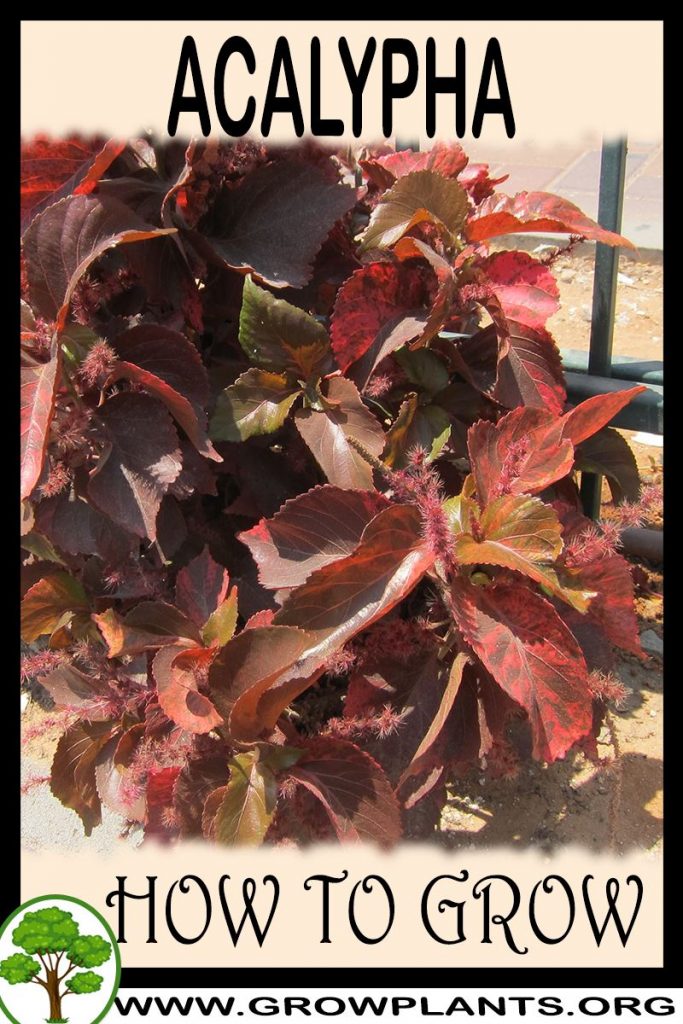
Overview: Acalypha (copperleaf) is a genus of evergreen shrubs and small trees, typically 1–3 m, grown for colourful foliage or, in some species, showy catkin flowers. Most are evergreen perennials in warm climates, used as ornamental and hedge plants.
Quick Specifications
| Specification | Attribute |
|---|---|
| Plant Type / Life Cycle | Perennial shrub / small tree (grown as an annual in cold zones) |
| Foliage Type | Evergreen |
| Mature Size | H: 1–3 m (3–10 ft) |
| Growth Rate | Moderate |
| Toxicity | Sap can irritate pets (varies by species/cultivar) |
| Hardiness | USDA zone 10+ as perennial; 5–9 as annual |
Growth Form & Structure
- Height & Spread: 1–3 m in the ground; kept compact in pots (dwarf forms ~15 L, larger forms 25 L+).
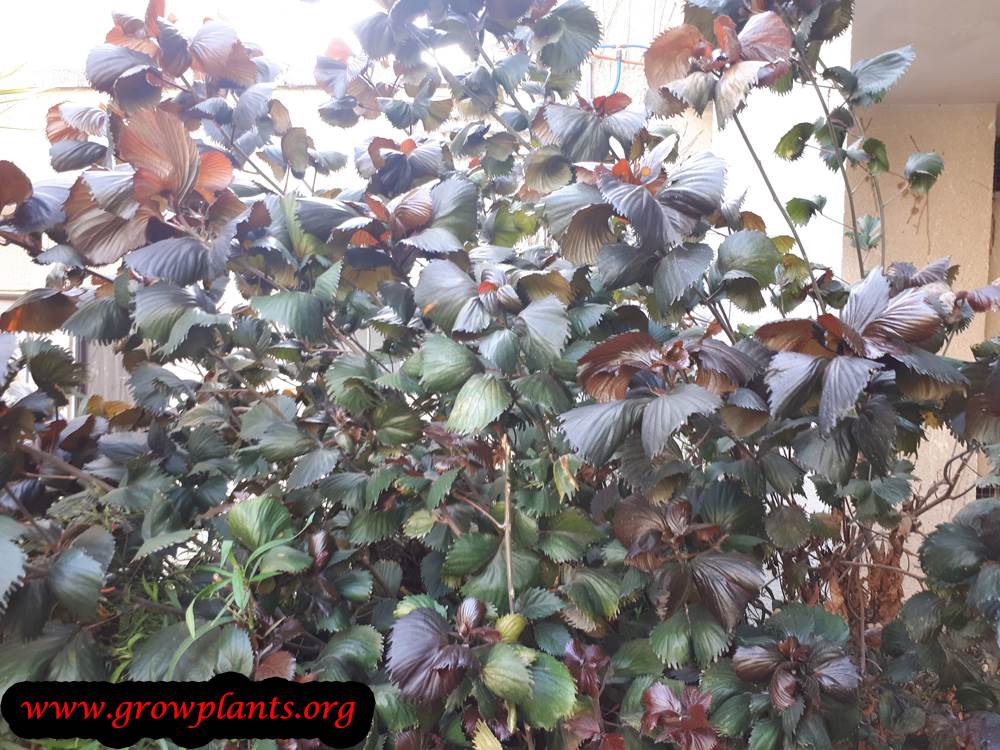
- Growth Habit & Form: Bushy, upright evergreen shrub or small tree; tolerates hard pruning for hedging.
- Lifespan & Maturity: Long-lived in frost-free climates; young plants sensitive to water stress and cold.
Anatomy & Physical Features
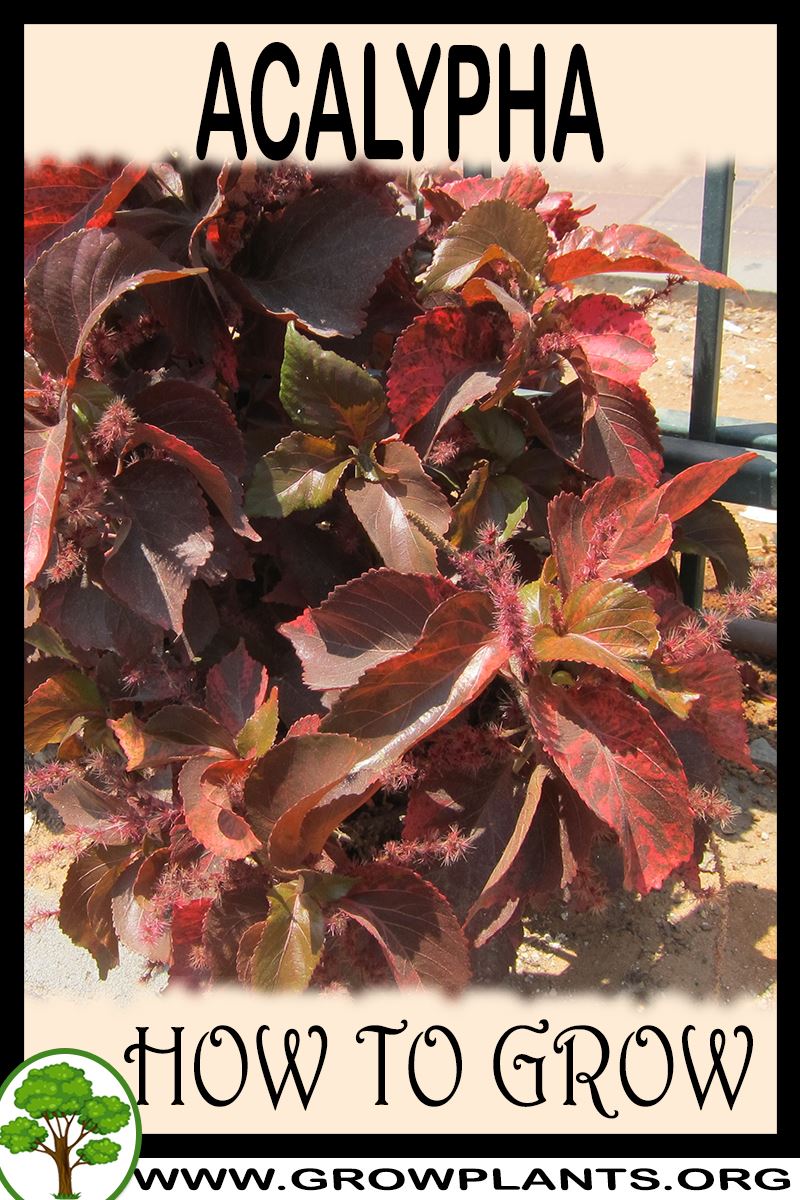
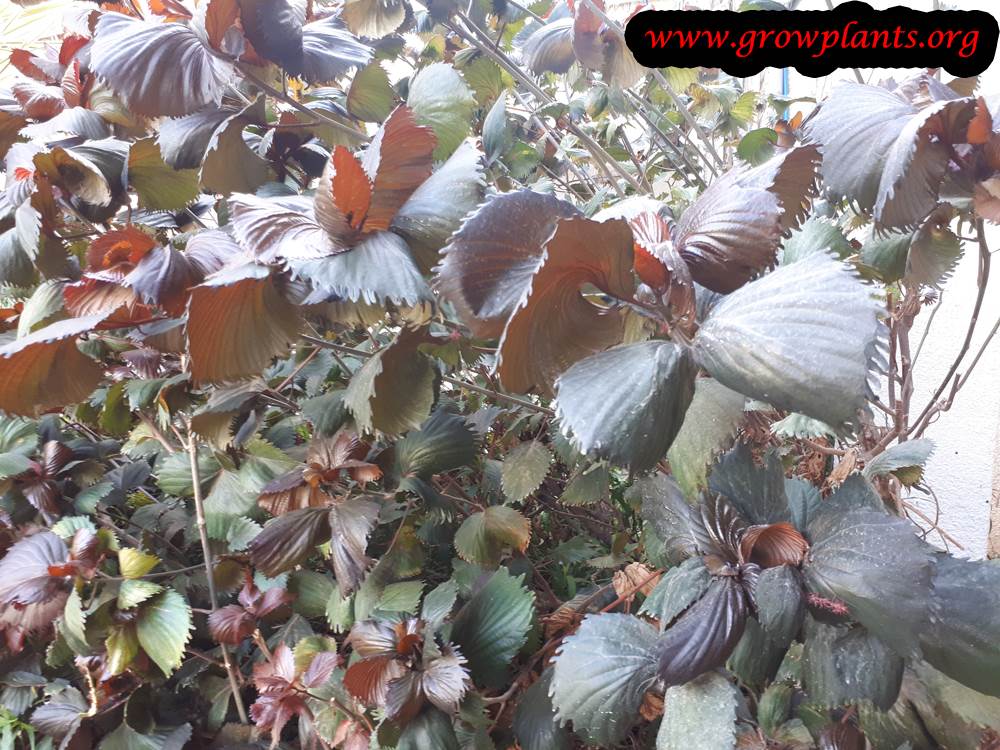
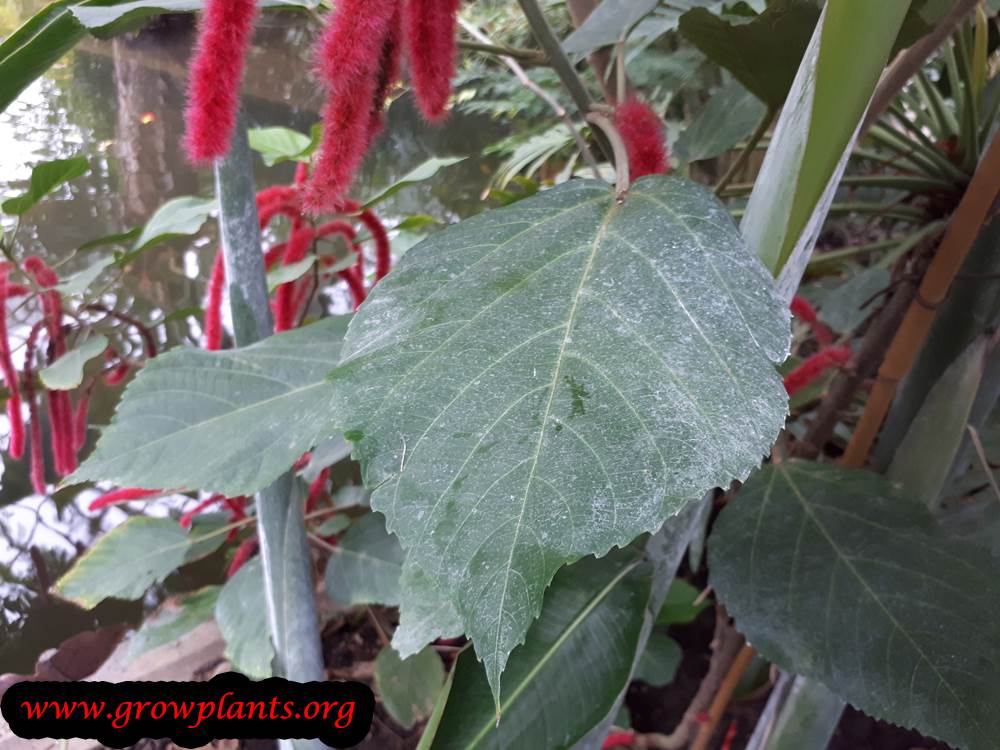
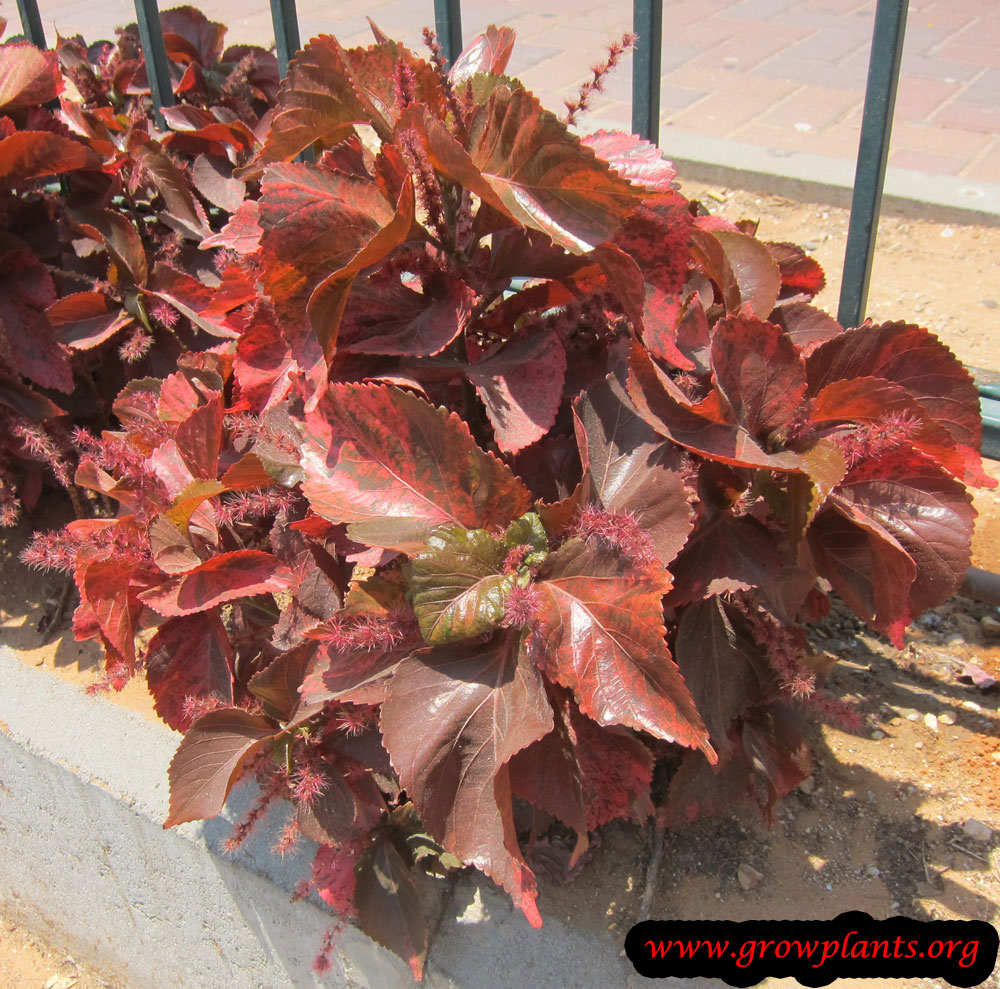
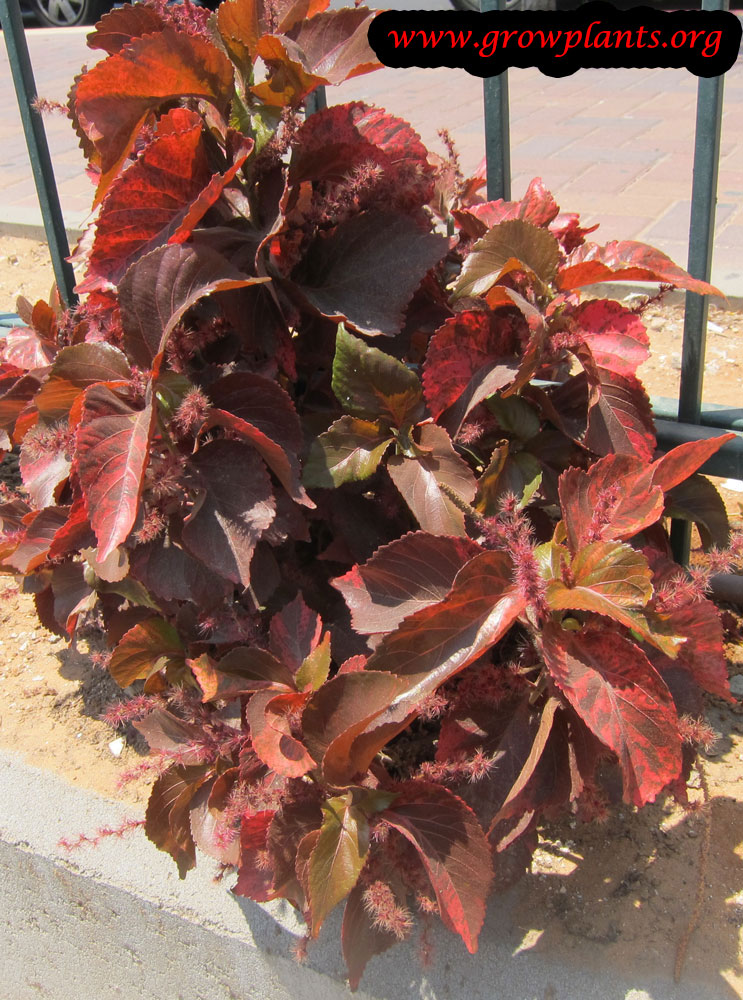
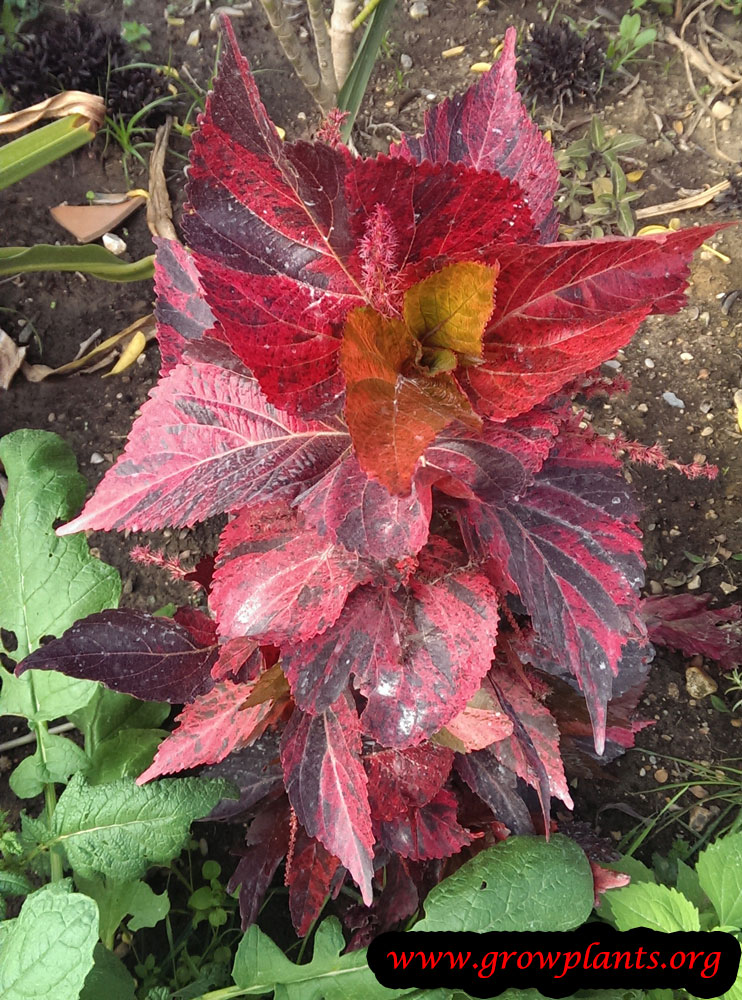
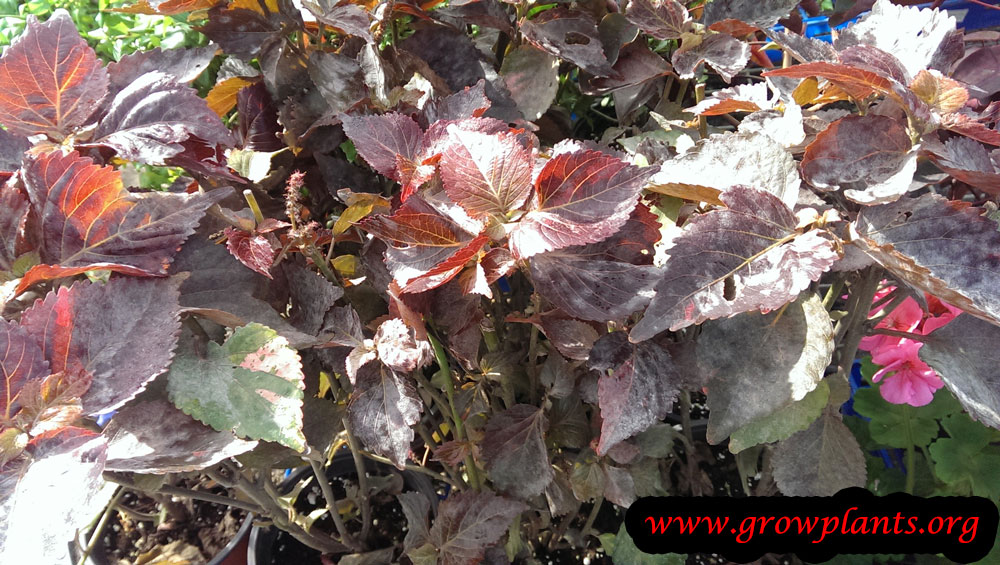
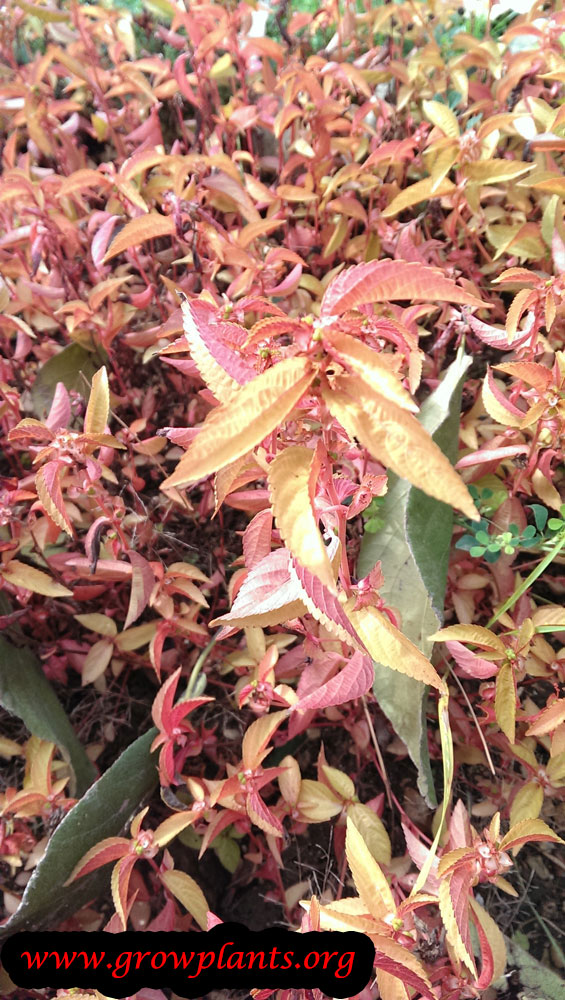
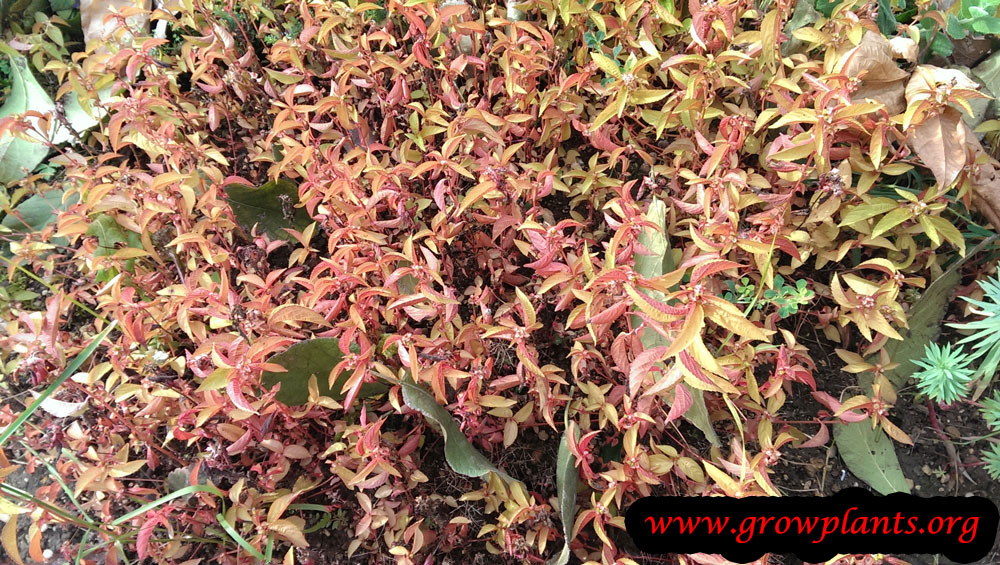
- Leaves & Foliage: Highly variable – green, red, white, yellow, pink or purple, often spotted or edged in a contrasting colour; leaf shape rhomboid, elliptic or heart-shaped with a serrated margin.
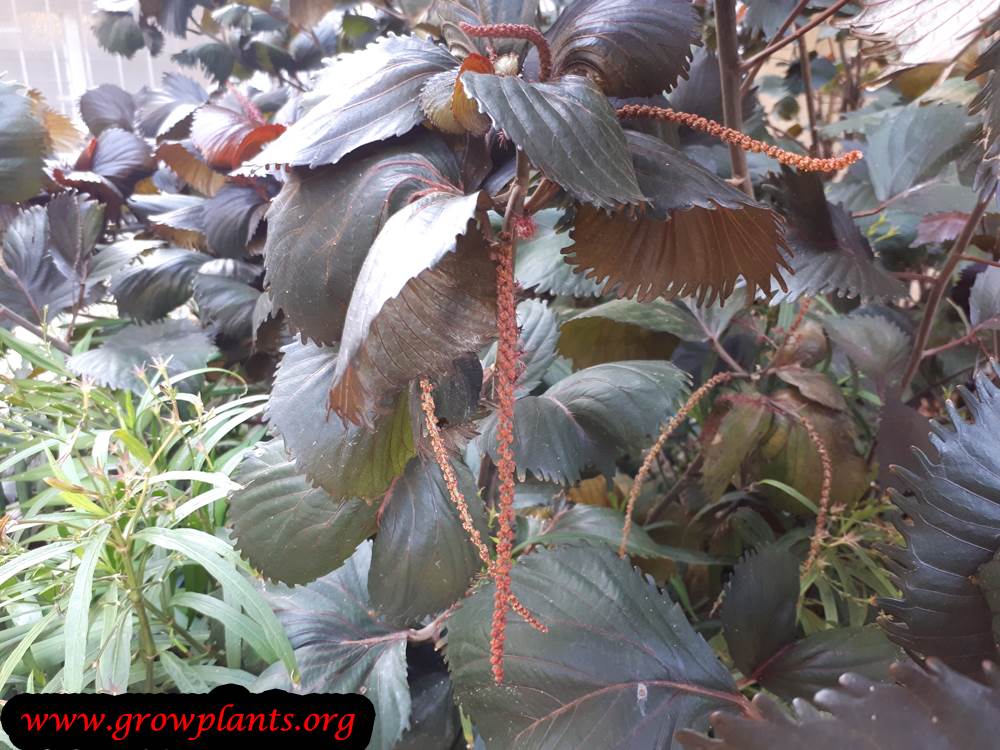
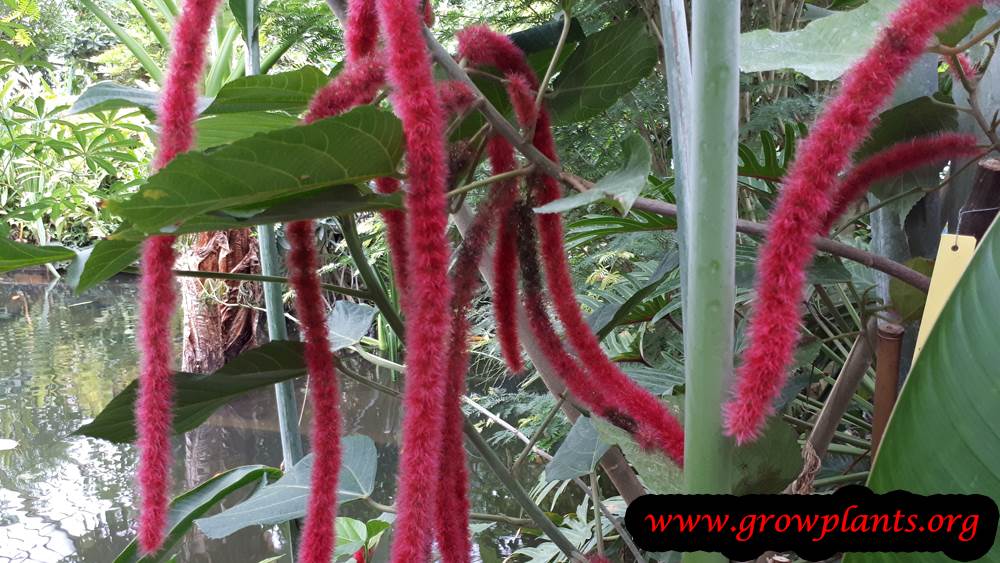
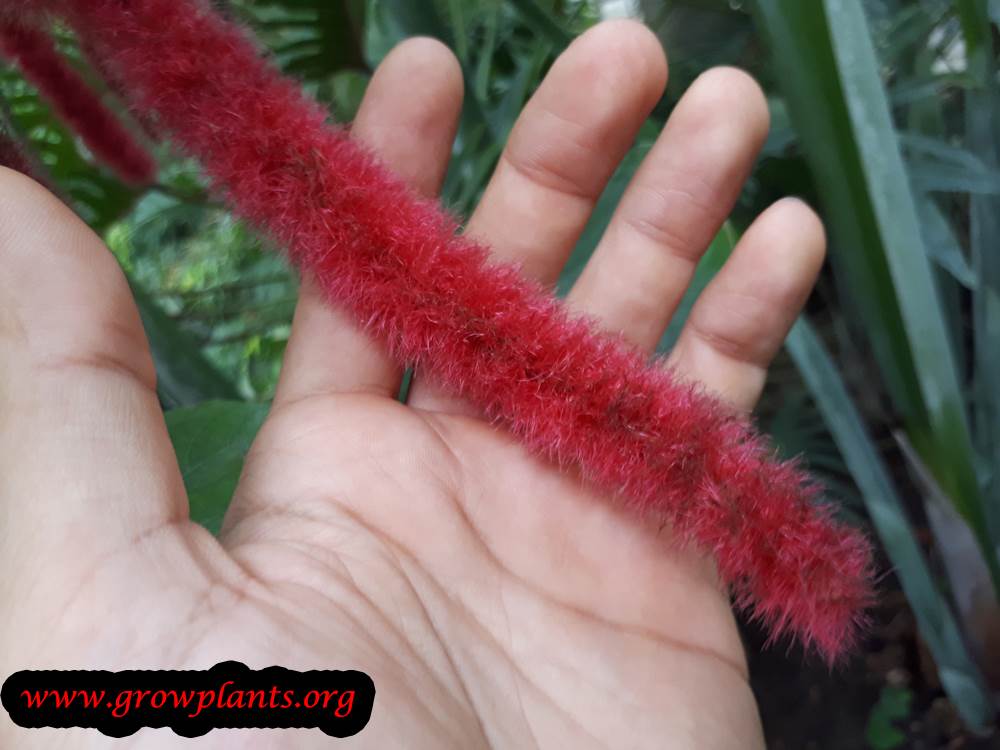
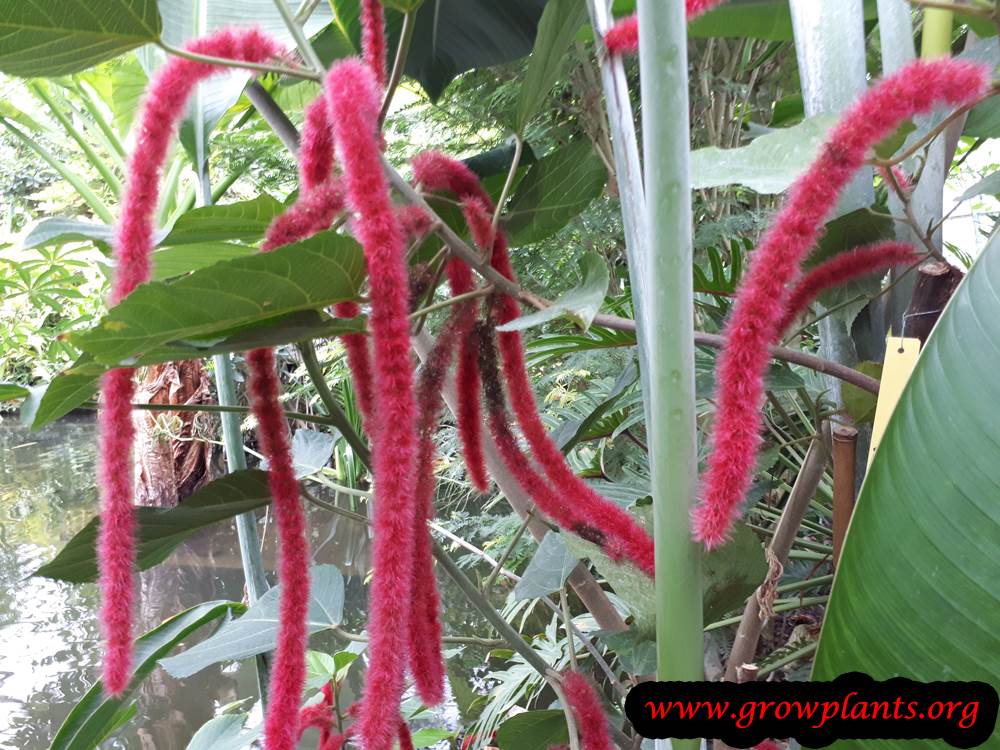
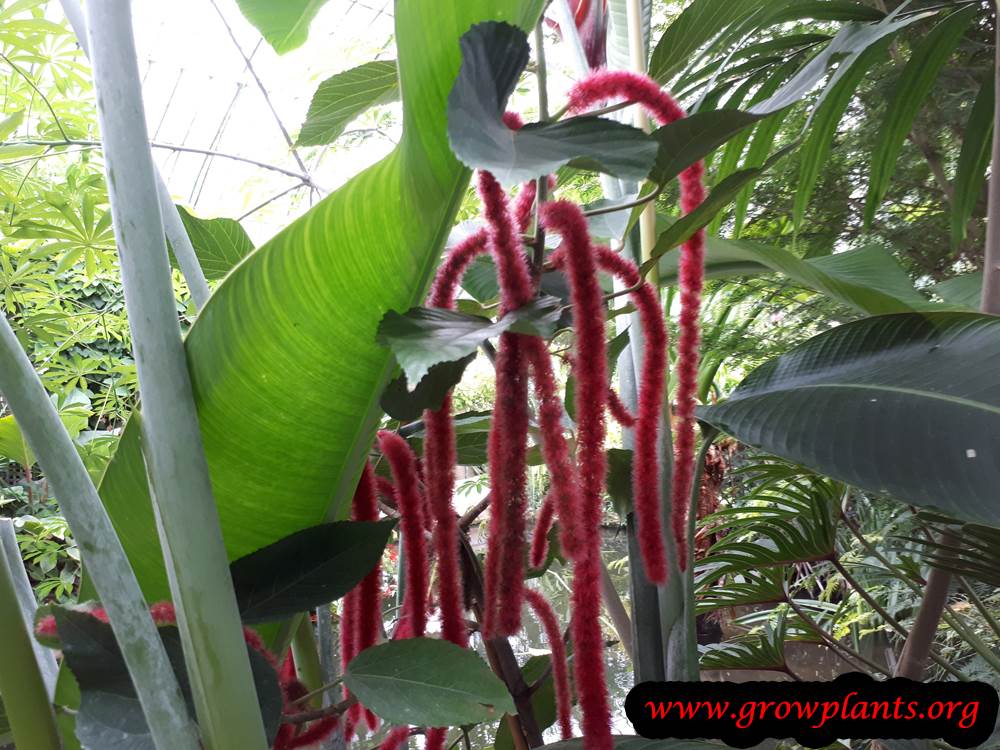
- Flower Characteristics: White, pink or red needle-like catkins on stalks; male and female flowers borne separately on the same plant.
Primary Uses & Landscape Value
- Functional & Ornamental Roles: Ornamental foliage and flowering shrubs, hedging and screening, and container culture; some species can be grown indoors with strong light.
Care Guide: Planting, Soil & Watering
Overview: Acalypha (Copperleaf) is a fast-growing tropical to subtropical foliage shrub or small tree for full sun to light shade that does best in rich, moisture-retentive but free-draining soil. It appreciates steady moisture — young plants are especially sensitive to drying out — so keep the soil evenly moist without waterlogging it.
Quick Care Requirements
| Requirement | Ideal Condition |
|---|---|
| Planting Season | Warm season — spring after frost in mild zones (10+); grown as an annual in cooler zones (5–9) |
| Growth Rate | Fast |
| Soil Type | Rich, moisture-retentive yet well-draining soil (peat or a moisture-holding mix) |
| Water Need | Moderate — keep evenly moist, especially while young |
Planting & Establishment
- Best Planting Season: Plant in the warm season, in spring after the last frost once the soil has warmed; in frost-free zones (10+) it can be planted through the warm months, and in cooler regions it is grown as a summer annual.
- How to Plant:
- Soil Amendments: Plant into rich, moisture-retentive soil — vermiculite, peat-based soil or another mix that holds and slowly releases moisture is ideal; blend in organic matter and humus.
- Planting Depth: Set the root ball level with the surrounding soil, keeping the stem base at the surface.
- Growth Speed & Expectations: Fast-growing and bushy in warm, humid conditions, quickly developing into a colourful foliage shrub or hedge.
Soil, Watering & Drainage Care
- Soil Mix & Drainage Needs: Wants moisture-retentive but well-aerated soil; in containers use a peat-based or potting mix with perlite and humus, mulch to conserve moisture, and make sure the pot drains freely.
- Watering Schedule & Technique:
- Young / Newly Planted: Keep the soil consistently moist while young — new plants suffer quickly if they dry out.
- Established: Water regularly to keep the soil evenly moist, letting only the surface dry between waterings.
- Seasonal Adjustments: More in summer heat and dry spells; reduce in cool weather to prevent soggy roots.
Climate, Light & Hardiness
Copperleaf (Acalypha) is a tropical to subtropical foliage shrub grown for its vivid, patterned leaves and thriving in warm, frost-free conditions in full sun to part shade. It is frost-tender - hardy as a perennial in roughly USDA zones 10 and warmer and commonly grown as a warm-season annual in colder zones 5–9, where freezing winters prevent year-round outdoor culture.
Quick Climate Specifications
| Climate Zones | Tropical, subtropical and warm Mediterranean; grown as an annual in cooler temperate regions |
|---|---|
| USDA Hardiness Zones | Approximately 10 and warmer as a perennial; grown as an annual in 5–9 |
| Optimal Temp Range | Approximately 20–30 °C (68–86 °F) |
| Cold Damage Begins | Foliage suffers below about 5 °C (41 °F) |
| Approx. Survival Minimum | Near 0 °C (32 °F) for a brief chill; killed by frost |
| Frost Tolerance | None to Very Low |
| Light Conditions | Full sun to part shade (some species full shade) |
| Wind Tolerance | Low to Moderate (protect from strong wind) |
| Salt / Coastal Tolerance | Low to Moderate |
Sunlight & Light Exposure
Optimal Light Setup
Bright light brings out the strongest leaf colour and pattern. Full sun suits it in all but the hottest climates, though some species take part to full shade, while too much shade dulls the variegation and stretches the growth.
Direct Sun Requirement
Several hours of direct sun intensify the reds, bronzes and pinks of the foliage; in strong tropical sun, light afternoon shade prevents scorch on the newest leaves.
Best Exposure / Orientation
A warm, sheltered, sunny aspect gives the best colour; indoors, the brightest available window keeps the markings vivid.
Temperature Extremes & Hardiness
USDA Hardiness & Regional Limits
It grows as an evergreen perennial only in frost-free zones 10 and warmer. In colder regions it is treated as a warm-season annual (zones 5–9) - commonly grown as an annual where winters freeze, but capable of longer-term growth wherever conditions stay frost-free. Cold, not heat, sets its outdoor limit.
Cold Damage & Winter Protection
Growth slows and leaves are marked once temperatures fall below about 5 °C (41 °F), and frost kills exposed top growth. Young plants are markedly more cold-sensitive than established ones, so in marginal zones they need overwinter protection or a frost-free spot; container plants chill fastest at the roots.
Frost Sensitivity
Frost tolerance is essentially nil: even a light freeze damages or destroys the foliage, which is why the plant is lifted, brought indoors, or simply replaced each year in cold-winter climates.
Extreme Heat Tolerance
Heat is welcomed - the plant colours and grows best in warm to hot weather - provided the roots stay evenly moist; only fierce, reflected sun on very hot days risks leaf scorch.
Wind, Humidity & Microclimate
Humidity Preferences
Coming from humid tropics, it enjoys moderate to high humidity, which keeps the large leaves turgid and unblemished; dry indoor air can crisp the margins.
Dry-Air Tolerance
Tolerance of dry air is limited; in arid or heated-indoor conditions the leaf edges brown, so it favours a more humid pocket than an exposed, dry position.
Wind Tolerance
Strong wind tears and desiccates the broad foliage, so a sheltered site is important; the plant's own facts stress protecting young plants from wind.
Coastal / Salt Tolerance
It has only low to moderate salt tolerance and is best kept back from direct coastal spray, though it can succeed in sheltered, warm seaside gardens.
Rainfall & Seasonal Moisture
Adapted to warm climates with a moist growing season, it dislikes cold, wet winters, which combine the two conditions - chill and waterlogging - it tolerates least.
Microclimate Recommendations
Site it in a warm, sheltered, sunny pocket protected from wind and frost - against a heat-holding wall or in a movable container that can follow the seasons in cooler regions.
Growing in Pots, Balconies & Indoors
Acalypha covers bold, colourful foliage shrubs such as copperleaf and the chenille plant. The grower notes most are not houseplants, though some species manage indoors with plenty of light; all make excellent large container and patio plants in warm climates.
Quick Details
- Container Size: Small cultivars about 15 L (4 gal); larger ones at least 25 L (6.5 gal) – start small and pot up with the plant
- Indoor Suitability: Not a deep-room houseplant; some species manage on a very bright window
- Best Spot: Full sun to half shade; warm
- Soil & Drainage: Potting mix or peat with perlite, humus and organic matter; free-draining
- Watering in Pots: Keep evenly moist, especially when young; let it drain fully
Indoors & On the Windowsill
- Mostly not a houseplant – with exceptions: The grower notes most Acalypha are not houseplants, but some species can be grown indoors given plenty of light. Chenille and copperleaf kinds need a very bright spot to hold their colour and form.
- Windowsill growing: Choose the brightest, warmest window – the more direct light, the better it holds up. It is frost-tender, so potting it and bringing it in to overwinter also makes sense in cold climates.
- Skin note: The sap can irritate skin – wash your hands after handling or pruning.
On a Balcony or Patio
- Light & wind: Give it the sunniest spot. Walls, railings and paving reflect heat, so pots dry fast – check moisture daily in warm weather, and shelter or stake tall growth from wind.
- Weight & runoff: A full pot of moist soil is heavy – check the balcony can take it, and stand pots so drainage water runs off cleanly without staining or flooding a neighbour below.
Choosing the Pot, Soil & Long-Term Care
- Pot & drainage: A pot with strong drainage holes and no standing-water saucer, so the roots never sit wet and rot. Terracotta breathes and dries faster (good against overwatering), while glazed or plastic holds moisture longer – match it to how often you water.
- Potting mix: A light, aerated, organic-rich mix – potting soil or peat/coir with perlite or vermiculite, blended with compost or well-rotted organic matter.
- Feeding: Nutrients leach out of pots with every watering, so potted plants need feeding more often than those in the ground – a balanced liquid feed through the growing season keeps them going.
- Repotting: Refresh the mix and pot up about every two years; for perennials, lightly trim the root ball and top growth at the same time to keep them vigorous.
Grower’s Container Tip
- Sizing & renewal: Start in a pot 30-50% larger than the plant and pot up as it grows – small cultivars finish around 15 L (4 gal), larger ones need at least 25 L (6.5 gal). Every few years, in winter, wash the old soil off the roots, cut them back, prune the top and replant in fresh mix.
- Watering rule: Mulch to hold moisture and let the base of the pot take up water but dry out the same day – avoid leaving it standing in water.
Growing this plant in a greenhouse
A greenhouse can give acalypha frost protection, cold protection, humidity control and extra warmth. In the right climate it may also be kept growing through winter, depending on how much warmth and light are provided.
Greenhouse at a glance
| Greenhouse suitability | Good - clearly useful |
|---|---|
| Main benefits | frost protection, cold protection, humidity control, extra warmth |
| Season extension | earlier spring & later autumn |
| Outdoor protection advisable below | about 10°C |
| Maintain greenhouse minimum | around 15°C for active growth |
| Suitable types | heated greenhouse, polycarbonate greenhouse, lean-to |
| Heating | Heating is recommended in cold climates for continuous growth. |
Related greenhouse guides
- Greenhouses: How to Choose the Right Greenhouse
- Best Greenhouse Heaters
- Greenhouse Climate Control: Temperature, Ventilation and Humidity
- Best Lean-To Greenhouses
Fertilizing & Feeding
A moderate feeder: steady, light feeding through the growing season supports both foliage and flowers, with no feeding needed during dormancy.
Quick Fertilizing Specs
| Feeding Level | Moderate feeder |
|---|---|
| Main Nutrient Priority | Balanced nutrition with adequate nitrogen |
| Best Feeding Period | Through the active growing and blooming season |
| Organic Options | Compost and well-rotted organic matter |
| Soil pH | Adapts to a range; slightly acidic to near neutral is ideal |
| Reduce/Stop Feeding | Ease off as growth slows toward dormancy |
Feeding by Growth Stage
Spring growth flush
Support healthy leaf and stem growth as the plant resumes active growth.
| Nutrient direction | A complete fertilizer with adequate nitrogen fuels dense, well-coloured foliage as growth resumes. |
|---|---|
| Timing | As new growth emerges in spring. |
| Frequency | Begin light, regular feeding through the active growing season. |
| Fertilizer types | Balanced all-purpose granular or liquid fertilizer, Compost or well-rotted organic matter worked into the soil |
| Precautions | Feed steadily but modestly; excess nitrogen gives soft, weak growth rather than better colour. |
Blooming period
Sustain flowering with steady, balanced nutrition.
| Nutrient direction | A balanced fertilizer; adequate nitrogen and potassium support continued bloom. High-phosphorus ‘bloom boosters’ are not needed. |
|---|---|
| Timing | As flower buds form and through the bloom. |
| Frequency | Continue light, steady feeding while the plant is flowering. |
| Fertilizer types | Balanced all-purpose fertilizer |
| Precautions | Keep feeding moderate; excess nitrogen favours leaves over flowers. |
Dormancy / rest
Let the plant rest; there is little active growth to support.
| Nutrient direction | None – withhold fertilizer while the plant is dormant or resting. |
|---|---|
| Timing | After bloom, as the plant dies back or slows for winter. |
| Frequency | No feeding at this stage. |
| Fertilizer types | No feeding at this stage while the plant is dormant or resting. |
| Precautions | Do not fertilize until active growth resumes. |
Nutrient Deficiency Signs & Corrections
Older, lower leaves turn pale green to yellow and growth is weak.
| Possible causes | Low soil nitrogen, Leaching from frequent watering in containers, Cold or waterlogged soil limiting uptake |
|---|---|
| Appears first on | Older, lower leaves |
| What to check | Recent feeding history, Soil drainage and moisture, Container leaching |
| Possible correction | Apply a balanced complete fertilizer and add organic matter; recheck watering. |
New leaves yellow between green veins while the veins stay green.
| Possible causes | High soil pH reducing iron and manganese availability, Cold, wet or poorly drained soil, Genuinely low micronutrient supply |
|---|---|
| Appears first on | Youngest leaves |
| What to check | Soil pH, Drainage, Root health |
| Possible correction | Correct pH and drainage; if it persists apply a chelated iron or manganese product following its label. |
Leaf colour turns dull or reverts toward plain green.
| Possible causes | Insufficient nitrogen, Too little light for full colour development, Overly rich, unbalanced feeding |
|---|---|
| Appears first on | New foliage |
| What to check | Feeding history and nitrogen supply, Light exposure, Overall soil fertility |
| Possible correction | Provide steady balanced feeding with adequate nitrogen and give ample light. |
Pruning, Training & Seasonal Maintenance
Acalypha (copperleaf and chenille plant) is a genus of tender, mostly evergreen shrubs and small trees, 1–3 m, and how you prune depends on which kind you grow. The foliage copperleafs (such as A. wilkesiana) are grown for boldly coloured leaves, and are pinched and cut back to keep a dense supply of the vivid young growth that carries the best colour. The chenille plant (A. hispida) is grown for its long, drooping red catkin ‘tails’, which form on new growth — so it is cut back in late winter or early spring to force the fresh shoots that bear the flowers, and spent tail-shoots are shortened through the season. Both are frost-tender (best kept above about 5°C), so hard pruning is timed for the warm season, not autumn or winter, and both tolerate hard cutting-back, reshooting from old wood.
Quick Pruning & Maintenance Specs
| Pruning Tolerance | High — pinches and hard-cuts well, regrows from old wood |
| Primary Pruning Window | Late winter to early spring (frost-free), before the growth flush |
| Secondary Maintenance Window | Warm growing season — pinching (foliage types) and deadheading spent tails (chenille) |
| Typical Frequency | Regular pinching or deadheading; one harder cut-back a year |
| Main Objective | Foliage types: dense colourful growth. Chenille: fresh shoots to carry the tail-flowers |
| Young Plant Priority | Pinch to build a bushy, well-branched framework |
| Mature Plant Priority | Control size, renew leggy stems, drive new growth for colour or bloom |
| Best Tool Type | Bypass secateurs for stems; precision snips for pinching and deadheading |
| Avoid Heavy Pruning During | Autumn/winter and cold spells — wounds and regrowth are frost-tender |
Pruning by Plant Age & Size
Newly Established
Young plants of any Acalypha are sensitive and dislike checks, so keep early work to light tip-pinching to encourage branching, removing only damaged growth. Establish them in warmth with mulch and steady moisture before harder cuts.
Young / Formative
Pinch the tips repeatedly through the first warm season to build a dense, bushy, well-branched plant clothed to the base. This suits both goals: a full leafy framework on the foliage types, and plenty of shoot ends on chenille to carry more of the pendent flower tails.
Mature / Established
On foliage copperleafs, keep pinching for colour and cut back once a year to control size and renew leggy stems. On the chenille plant, cut back in late winter or early spring to stimulate the new shoots that bear the tails, and shorten spent flower shoots during the season to prompt more. Both reshoot from older wood when cut into good stems.
Seasonal Pruning Schedule
Late Winter to Early Spring (main cut-back)
Objective: reset size and drive the season’s growth. Remove: leggy, weak, frost-tatty or overlong stems, cutting into healthy wood. Do NOT: cut while frost is still likely. Impact: a strong flush — vivid new leaves on foliage types, and fresh flowering shoots on chenille.
Warm Growing Season
Objective: maintain colour or bloom. Remove: soft tips by pinching (foliage types) and spent flower tails (chenille); take out reverted plain shoots on variegated kinds. Impact: denser, more colourful foliage, or a longer succession of tails.
Ongoing Sanitary
Objective: health on a group prone to fungal spots and aphids. Remove: diseased or infested shoots and dead leaves. Impact: cleaner growth and less carry-over.
Structural Pruning & Training
Build a framework of well-spaced main stems and keep the plant clothed low by encouraging branching; remove weak, crossing or inward growth. Control height and spread by cutting stems back to a lower outward-facing shoot. Foliage types can be grown as informal shrubs or clipped hedges; chenille is best as an informal, arching shrub or basket plant so its tails hang freely, and hard shearing there simply removes the very shoots that would flower.
Special Growth to Remove
Remove reverted plain-green or coarse shoots on variegated foliage cultivars before they dominate. On chenille, spent flower tails are shortened to tidy the plant and encourage more. The minor catkins of foliage types can be trimmed off if an all-leaf look is wanted. There are no suckers or grafts to manage.
Container & Small-Space Pruning
Both are common container and basket plants where size control matters: pinch foliage types hard and often to stay compact, and cut chenille back in spring to keep basket plants full and free-flowering. When repotting in the warm season every couple of years, trim the roots and prune the top to match so the plant stays balanced. Indoors and on patios the same rule holds — regular pinching or deadheading keeps growth fresh and stops legginess toward the light.
Tools
Bypass secateurs handle the soft-to-woody stems for shaping and renewal, and precision snips suit the frequent pinching, deadheading of tails and removal of reverted shoots. Hedge shears apply only to foliage types grown as a formal hedge, not to chenille. A saw is not needed; loppers only for an old, thick, neglected specimen.
Tool Hygiene & Disease Risk
Hygiene is increased rather than routine, because this genus is prone to fungal leaf disease and to aphids. Use clean, sharp blades for ordinary work and wipe them after cutting fungus-marked or infested growth — and before moving to another plant — so fresh cuts do not spread disease or pests.
Cut Placement & Technique
Cut back to just above an outward-facing bud or side shoot so regrowth opens the plant. Pinch tips just above a node to force branching. When renewing leggy stems, cut into healthy wood where buds will break rather than leaving long dying stubs. On chenille, shorten a spent tail-shoot to a strong bud to prompt a replacement flowering shoot.
Heavy Pruning & Rejuvenation
Acalypha tolerates hard rejuvenation: a leggy, bare or frost-damaged plant can be cut back hard into old wood in the warm season and it reshoots freely. Do it only once frost is past, keep the plant fed and watered as it re-flushes, and spread very hard cuts over a season or two on a large old plant so it is never left entirely bare.
Post-Pruning Care
After a hard cut-back, keep the plant warm, evenly moist and mulched, and feed lightly once or twice as growth resumes — this genus genuinely benefits from feeding to fuel the leafy or flowering regrowth it is grown for. Watch tender new shoots for aphids, and shade a hard-cut plant from fierce sun until it re-clothes.
Common Pruning Mistakes
- Pruning in autumn or before the last frost, so cuts and soft regrowth are cold-damaged on these tender plants.
- Hard-shearing a chenille plant, which cuts off the very new shoots that would carry its flower tails.
- Never pinching foliage types, leaving them leggy and short of the bright young leaves they are grown for.
- Leaving reverted plain shoots on variegated cultivars until they take over.
When NOT to Prune
Do not prune in autumn, winter or during cold spells — wait for settled warmth, because wounds and new growth are frost-tender. Avoid hard cutting on young, newly planted or drought-stressed plants, and hold off in the hottest, driest part of summer if the plant is stressed. On chenille, avoid heavy cutting mid-flush unless you want to trade the current tails for a later flush.
Recommended Tools (by task)
- precision_snips — for tip-pinching foliage types and deadheading spent chenille tails, and for removing reverted shoots.
- bypass_secateurs — for shaping cuts and the annual spring cut-back into woody stems.
- hedge_shears — only for foliage copperleafs grown as a clipped hedge, not for the free-flowering chenille type.
Pruning Troubleshooting
| Problem | Possible Cause | What to Check | Corrective Action |
| Few flower tails on a chenille plant | Old growth not renewed, or shoots sheared off | Whether it was cut back in late winter/early spring and how it was trimmed | Cut back in early spring to force fresh flowering shoots; deadhead spent tails, avoid shearing |
| Foliage type leggy with dull colour | No pinching and no spring renewal; low light | Whether tips are pinched and light is adequate | Pinch regularly, cut back hard in spring, move to brighter light |
| Blackened cuts and dieback after pruning | Pruned in cold weather or before frost passed | Season and temperatures when cut | Prune only after frost danger; cut damaged stems back to live wood in warmth |
| New growth curling, sticky or spotted | Aphids or fungal leaf disease on fresh shoots | Shoot tips and leaf undersides after pruning | Remove affected growth, clean blades, treat the pest or disease as it re-flushes |
Propagation Guide
Across the genus, copperleaves are grown mainly from stem cuttings, which root easily in warmth and preserve the leaf colour of coloured-leaf species and cultivars. Seed is used for the plain forms, but some kinds – notably the chenille plant, Acalypha hispida – rarely set findable seed and are propagated only vegetatively.
Quick Propagation Specs
| Best Propagation Method | Stem cuttings |
| Alternative Methods | Seed (plain-leaved kinds) |
| Propagation Difficulty | Easy (cuttings) |
| Seed True-to-Type | Cultivar-dependent – coloured selections do not come true from seed |
| Vegetative True-to-Type | Yes |
| Best Propagation Season | Spring; sow indoors from mid-winter |
| Seed Germination Time | 2–5 weeks |
| Germination Temperature | At least 25°C (77°F) |
| Seed Sowing Depth | 1 cm (0.5 in) |
In hardiness zone 10, sow spring to summer; zone 11, spring to autumn; zone 12+, year-round.
Growing from Seed
Seed Handling & Viability
Store seed dry and dark until sowing. Use seed for plain-leaved species; coloured-leaf kinds and chenille-flowered A. hispida are better (or only) grown from cuttings.
Sowing Season
Sow in spring, or indoors in mid-winter in cooler zones, moving plants out after the last frost; avoid sowing into peak summer heat.
Sowing Depth & Orientation
Cover seed about 1 cm (0.5 in) deep in vermiculite or peat-based, moisture-holding mix. Space transplants around 20 × 30 cm; allow more for direct-sown plants by size – about 50 × 50 cm (20 × 20 in) for small kinds, up to 1 × 1 m (40 × 40 in) for large ones.
Germination Conditions
Warm (at least 25°C / 77°F), bright, and evenly moist.
Germination Time
About 2–5 weeks.
Seedling Care
Mulch seedlings and protect them from wind while young.
Stem Cuttings
Best Timing
Spring, in warmth around 25°C (77°F).
Rooting Setup
Root in moist mix in half shade under high humidity, never allowing it to dry; a greenhouse or covered plastic box supplies the fog-like humidity. Cuttings can also be rooted in water changed every few days, kept humid.
Rooting Hormone
Beneficial; improves and speeds rooting but is not essential for soft growth in warm, humid conditions.
Bloom & Flower Guide
Quick Details
- Bloom Season: Summer
- Time to First Bloom: On established plants grown in warm conditions
- Flower Appearance: Slender, needle- to hair-like catkins in white, pink or red, borne on stalks
- Edibility: Not edible – grown as an ornamental; the sap is a skin and stomach irritant
Detailed Blooming Overview
Acalypha (copperleaf) is grown for its richly coloured leaves in greens, reds, whites, yellows, pinks and purples, often patterned and serrated. Through summer it produces slim, tail-like flower catkins; in some kinds these are long and showy, while the male and female flowers are borne separately on the same plant.
Flower Characteristics
- Fine, needle- to hair-like catkins in white, pink or red.
- Carried on stalks among the coloured foliage.
- Male and female flowers are borne separately on the same plant.
Bloom Care & Thinning
- Managing the bloom: On foliage types the catkins are secondary – pinch and prune to keep plants bushy; on kinds grown for their long tassels, leave the flowering stems to develop.
- Safety: This is a spurge-family plant – the milky sap can irritate skin and eyes and is harmful if eaten, so wear gloves when pruning and keep it away from children and pets.
Pests, Diseases & Troubleshooting
Overview: The Acalypha genus (copperleaf and chenille plants, family Euphorbiaceae) comprises tender tropical shrubs whose main problems are sap-sucking pests on soft growth (mealybugs, spider mites, whitefly, aphids and scale) and root or stem rot in cold, wet conditions. Manage them culturally first with warmth, bright light and airflow, catching pests early with soaps and horticultural oils.
Quick Troubleshooting Overview
| Issue / Pest | Main Symptom | Primary Solution |
|---|---|---|
| Mealybugs | White cottony tufts in leaf axils and on undersides; sticky honeydew and sooty mould | Wipe/spot-treat with alcohol; insecticidal soap or horticultural oil; encourage predators |
| Spider mites | Fine stippling, bronzing and webbing on leaves in warm, dry, dusty conditions | Raise humidity, hose foliage, insecticidal soap or miticidal oil |
| Whiteflies | Clouds of tiny white flies rise when disturbed; yellowing, sticky leaves | Yellow sticky traps, insecticidal soap, Encarsia parasitoids under cover |
| Aphids | Curled, sticky new growth; colonies on soft shoot tips | Blast off with water, insecticidal soap, protect ladybirds and lacewings |
| Leaf/root rot | Wilting, blackened stems or mushy roots in cold, wet soil | Improve drainage, water less, keep warm and well-lit |
Common Pests & Management
- Mealybugs (Planococcus citri):
- Symptoms: White, waxy, cottony masses cluster in leaf axils, on stems and along the midrib; heavy infestations coat the plant in sticky honeydew that turns black with sooty mould and stunts new growth.
- Prevention & Control: Remove light infestations with a cotton bud dipped in rubbing alcohol; rinse the plant and treat with insecticidal soap or horticultural oil at 7-10 day intervals. Isolate new plants, avoid over-feeding with soft nitrogen growth, and release/protect natural predators such as ladybirds and lacewings.
- Spider mites (Tetranychus urticae):
- Symptoms: Leaves lose colour to a fine sand-like stippling, then bronze and dry; look for very fine silk webbing on undersides and tips, worst in hot, dry, dusty air (especially indoors).
- Prevention & Control: Raise humidity and hose the foliage regularly to break the cycle; treat undersides thoroughly with insecticidal soap or a light horticultural/neem oil, repeating every 5-7 days. Keep the plant well-watered and dust-free, as stressed plants are hit hardest.
- Whiteflies (Bemisia tabaci / Trialeurodes vaporariorum):
- Symptoms: Tiny white moth-like insects fly up in a cloud when the plant is shaken; nymphs on leaf undersides suck sap, causing yellowing, weak growth and honeydew.
- Prevention & Control: Hang yellow sticky traps to monitor and reduce adults; spray insecticidal soap or horticultural oil on undersides, and under glass introduce the parasitoid wasp Encarsia formosa. Remove badly infested lower leaves.
- Aphids (Aphis gossypii):
- Symptoms: Soft green, yellow or dark aphids cluster on tender shoot tips and new leaves, distorting and curling growth and leaving sticky honeydew.
- Prevention & Control: Dislodge colonies with a firm jet of water; use insecticidal soap or neem on persistent groups. Encourage ladybirds, lacewings and hoverflies, and avoid excess nitrogen that fuels soft, aphid-prone growth.
- Soft scale (Coccus hesperidum):
- Symptoms: Flat brown or tan bumps along stems and leaf veins that do not brush off easily; associated honeydew and sooty mould.
- Prevention & Control: Scrape off small numbers by hand; treat with horticultural oil to smother crawlers, repeating to catch successive generations. Prune out heavily encrusted twigs.
Diseases & Fungal Issues
- Fungal leaf spot (Cercospora / Corynespora spp.):
- Symptoms: Brown to purplish spots or blotches on the foliage, sometimes with yellow halos, that may merge and cause leaf drop in humid conditions.
- Treatment & Management: Remove and destroy affected leaves, avoid overhead watering and wetting the foliage late in the day, and improve air movement. A copper-based fungicide can be used if spotting is severe and spreading.
- Root and stem rot (Pythium / Phytophthora / Rhizoctonia):
- Symptoms: Wilting despite moist soil, blackened stem bases and soft, brown roots; plants collapse in cold, waterlogged media.
- Treatment & Management: Use free-draining media, water only when the top layer dries, and never leave pots standing in water. Discard severely rotted plants; keep the plant warm, as chilling predisposes it to rot.
- Botrytis (grey mould) (Botrytis cinerea):
- Symptoms: Fuzzy grey-brown mould on damaged or crowded foliage in cool, damp, stagnant air.
- Treatment & Management: Increase airflow, lower humidity, and remove dead or damaged tissue promptly. Space plants and avoid overhead watering.
Growing Difficulties & Abiotic Problems
- Loss of leaf colour:
- Cause & Symptoms: Copperleaf types develop their best red, bronze and variegated tones only in bright light; in low light the foliage reverts toward plain green and growth becomes leggy.
- Correction Strategy: Give bright light (some direct sun outdoors, a bright window or supplemental light indoors) and pinch back to keep growth compact and well-coloured.
- Leaf drop from cold or drafts:
- Cause & Symptoms: A tropical plant that sheds leaves suddenly when exposed to cold drafts, chilling below about 10-13C, or sharp temperature swings.
- Correction Strategy: Keep it warm and away from cold windows, doors and air-conditioning drafts; move it indoors before nights turn cold.
- Leaf scorch / sunburn:
- Cause & Symptoms: Bleached or brown, crisp patches on leaves moved abruptly into intense direct sun or exposed to hot, dry wind.
- Correction Strategy: Acclimatise gradually to stronger light and keep well-watered; provide light afternoon shade in the hottest climates.
- Nutrient deficiency (chlorosis):
- Cause & Symptoms: Pale or yellowing leaves with green veins on hungry or pot-bound plants, or in poor soil.
- Correction Strategy: Feed regularly through the growing season with a balanced fertiliser; repot or top-dress pot-bound specimens and correct soil pH if needed.
What Helps – Products & Tools
For this tender foliage plant, reach first for cultural fixes (bright warm position, good airflow, steady watering) and gentle products: insecticidal soap and horticultural or neem oil for mealybugs, mites, whitefly, aphids and scale; rubbing alcohol on a cotton bud for spot mealybug control; yellow sticky traps to monitor whitefly and aphids; and a copper-based fungicide only if leaf spot becomes severe. Apply oils in the cool of the evening and follow the label to protect beneficial insects.
Frequently Asked Questions
What is Acalypha (copperleaf)?
Acalypha, commonly called copperleaf, is a group of tender evergreen shrubs grown mainly for their brightly coloured, patterned foliage and used as ornamental plants or hedges in warm climates. It is a genus of evergreen shrubs and small trees, typically 1–3 m, grown for colourful foliage or, in some species, showy catkin flowers.
How do you care for a copperleaf (Acalypha) plant?
Grow copperleaf in full sun to light shade in rich, moisture-retentive but free-draining soil, and keep the soil evenly moist without waterlogging it, since young plants are especially sensitive to drying out. It is frost-tender: growth slows and leaves are marked once temperatures fall below about 5 °C (41 °F), and frost kills exposed top growth, so keep it warm and sheltered. It is also a moderate feeder: steady, light feeding through the growing season supports both foliage and flowers.
How often should you water Acalypha (copperleaf)?
Water needs are moderate but steady. Keep the soil consistently moist while young — new plants suffer quickly if they dry out. Once established, water regularly to keep the soil evenly moist, letting only the surface dry between waterings, giving more in summer heat and dry spells and less in cool weather to prevent soggy roots.
Can Acalypha (copperleaf) be grown indoors or in containers?
Most Acalypha are not houseplants, but some species can be grown indoors given plenty of light. They do make excellent container and patio plants in warm climates: small cultivars about 15 L (4 gal); larger ones at least 25 L (6.5 gal) – start small and pot up with the plant.
Why is my copperleaf losing its bright colour and turning green?
Copperleaf types develop their best red, bronze and variegated tones only in bright light; in low light the foliage reverts toward plain green and growth becomes leggy. Give bright light (some direct sun outdoors, a bright window or supplemental light indoors) and pinch back to keep growth compact and well-coloured.
Is Acalypha (copperleaf) toxic or safe to handle?
This is a spurge-family plant – the milky sap can irritate skin and eyes and is harmful if eaten, so wear gloves when pruning and keep it away from children and pets.