

Plant Profile & Key Characteristics
Also known as: Argon tree
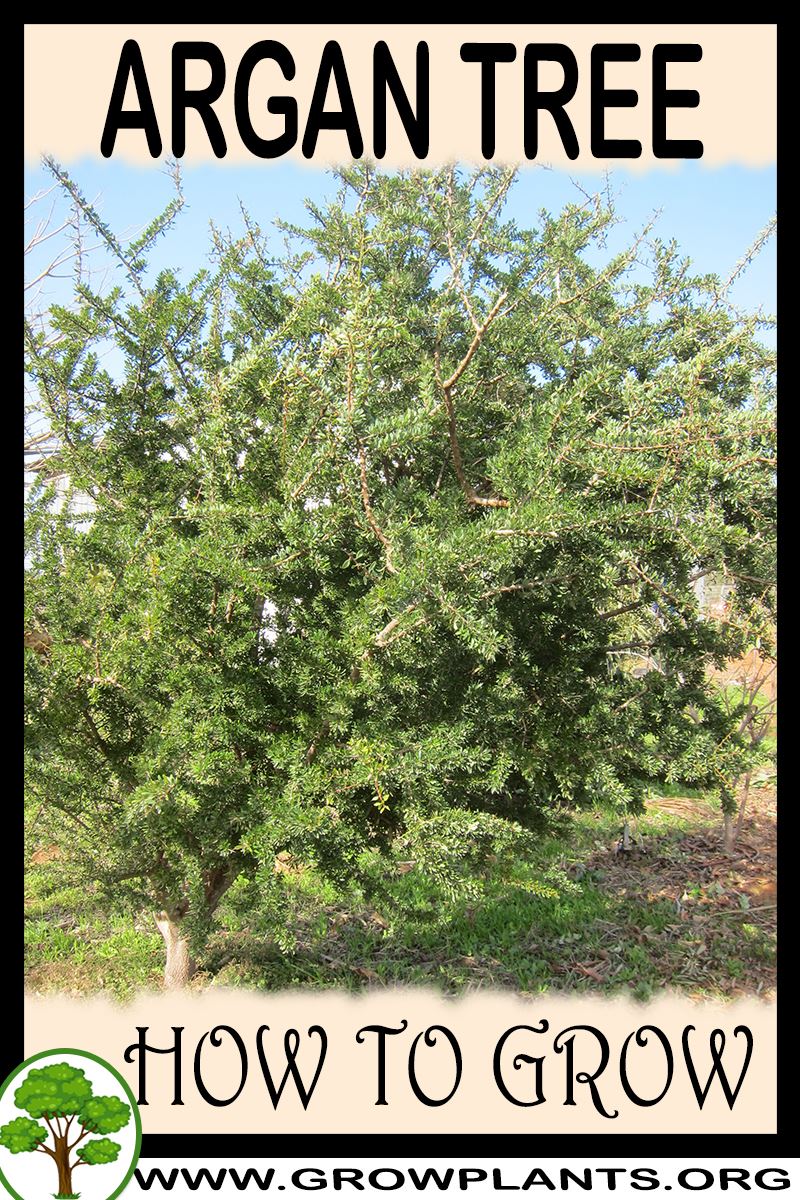
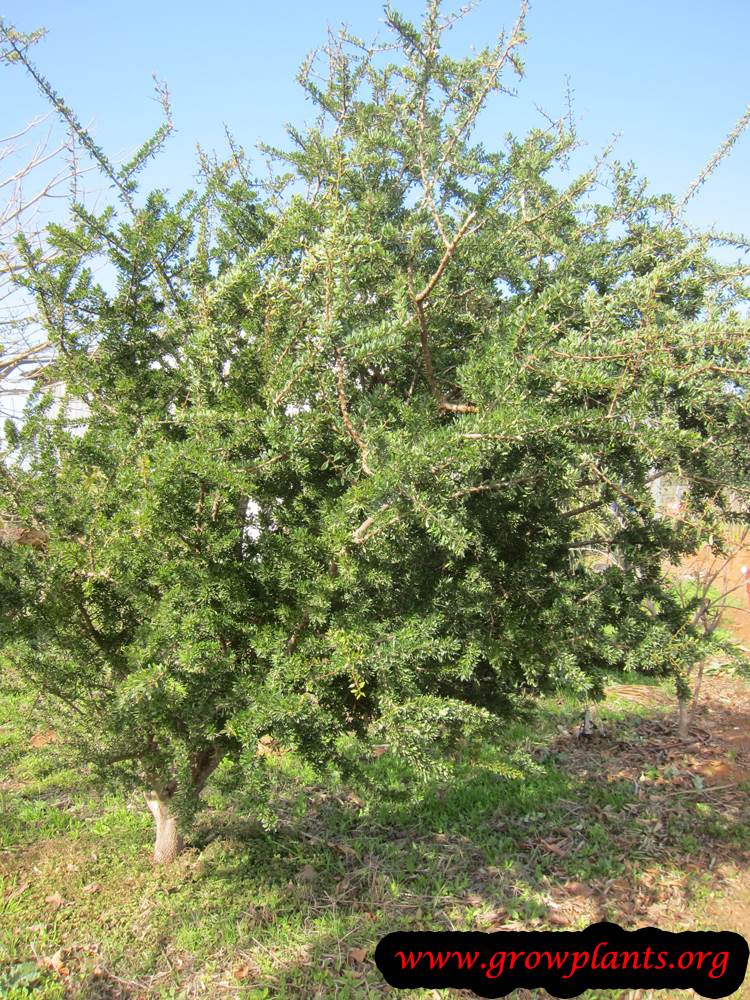
Overview: The argan tree (Argania spinosa) is a thorny evergreen tree reaching 3-8 m, famous for the oil pressed from its edible nuts and prized as a drought-tolerant desert and Mediterranean specimen. It is slow to mature but extremely long-lived and tolerant of heat and drought.
Quick Specifications
| Specification | Attribute |
|---|---|
| Plant Type / Life Cycle | Perennial |
| Foliage Type | Evergreen |
| Mature Size | 3-8 m tall (10-24 ft) |
| Growth Rate | Moderate to slow |
| Root System | Deep taproot – a key adaptation to drought |
| Toxicity | Non-toxic – nuts are edible and pressed for oil |
| Hardiness | USDA zones 10-12a (zone 9 with care) |
Growth Form & Structure
- Height & Spread: 3-8 m (10-24 ft) in the ground; can be container-grown in a large pot (~100 L) and kept small as a shrub or bonsai.
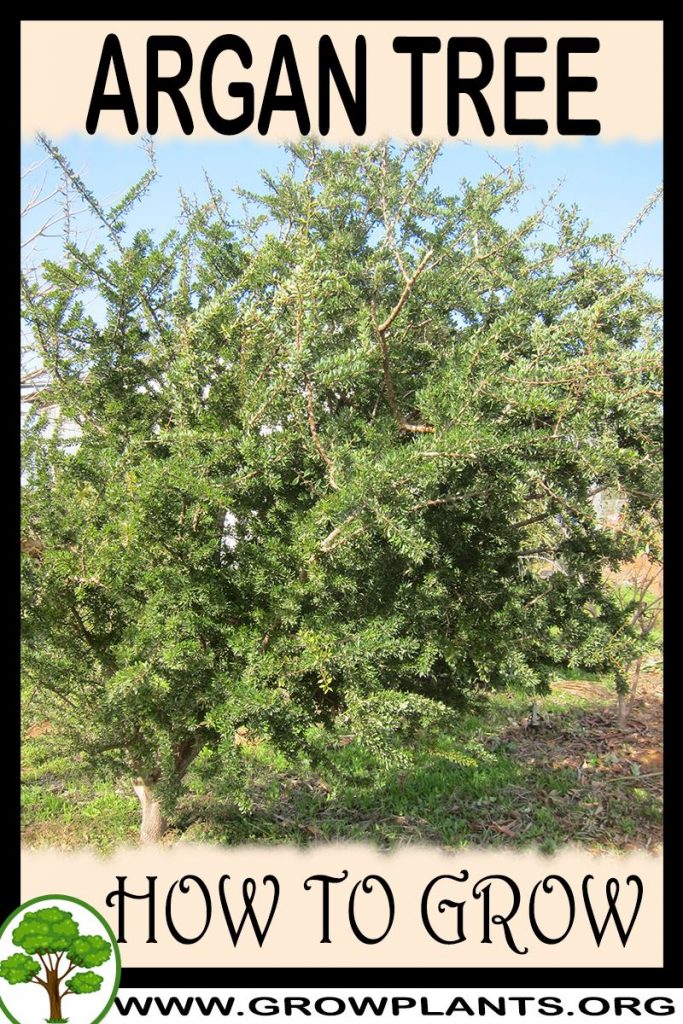
- Growth Habit & Form: Spreading thorny evergreen tree, often trained with the canopy kept low to ease nut harvesting.
- Lifespan & Maturity: Very long-lived; slow to bear – it takes roughly 10-15 years to produce nuts.
Anatomy & Physical Features
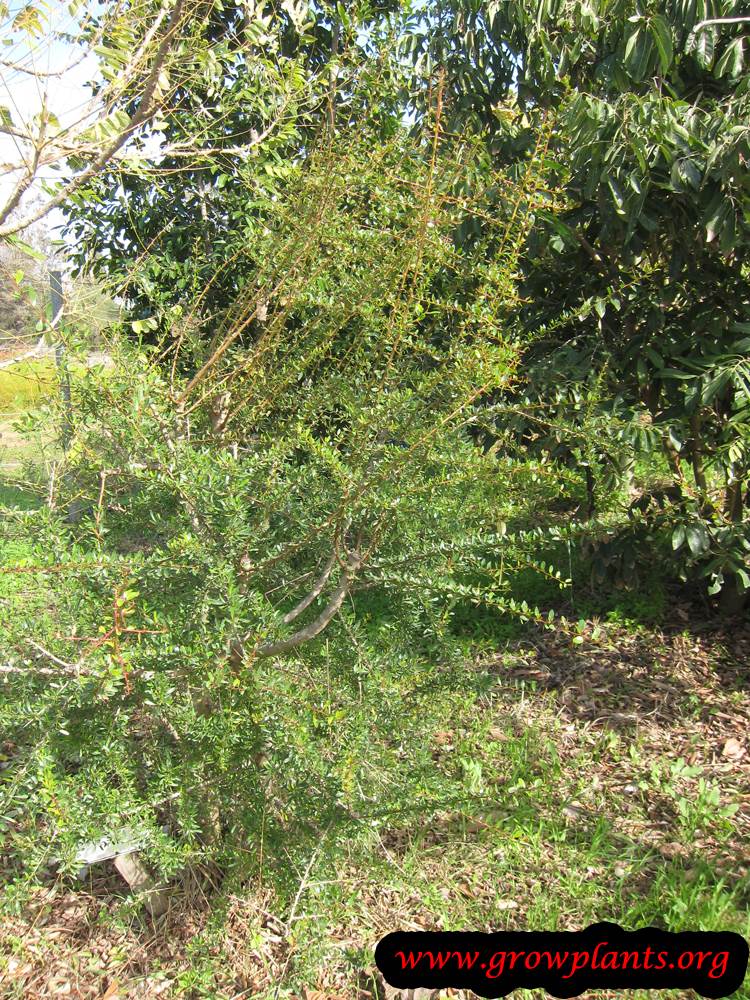
- Trunk & Bark: Gnarled, often multi-stemmed trunk with thorny branches.
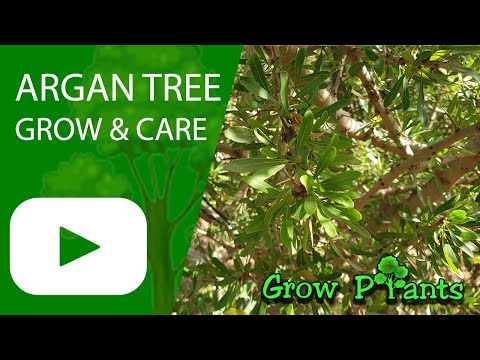
- Leaves & Foliage: Small green leaves in a spoon to elliptic shape.
- Flower Characteristics: Small yellow bowl-shaped flowers borne on the main stems.
- Fruit Profile: Green oval fruit enclosing a hard nutshell that holds 2-3 almond-shaped seeds; the dried nuts are cracked for their oil.
Primary Uses & Landscape Value
- Edible Uses: Nuts pressed for argan oil, used in cooking, cosmetics and traditional medicine, or added to sweet nut pastes.
- Functional & Ornamental Roles: Drought-tolerant ornamental and productive oil tree for desert and Mediterranean climates; branches are thorny.
Care Guide: Planting, Soil & Watering
Overview: The argan tree is a rugged, drought-tolerant desert tree that thrives in full sun and sharply drained soil. It needs little water once established and above all demands excellent drainage.
Quick Care Requirements
| Requirement | Ideal Condition |
|---|---|
| Planting Season | In spring in zone 9; spring to summer in 10a; spring to autumn in 10b; year-round in zones 11-12 |
| Growth Rate | Slow to Moderate |
| Soil Type | Well-draining; tolerant of poor, dry ground |
| Water Need | Low; drought tolerant, let the soil dry between waterings |
Planting & Establishment
- Best Planting Season: Plant in spring in zone 9; from spring into summer in 10a; spring through autumn in 10b; and at any time of year in zones 11-12.
- How to Plant:
- Hole Preparation: Dig a hole larger than the root ball and check that the soil drains freely before planting.
- Soil Amendments: Mix some organic matter into the backfill, and add grit to heavy soil to guarantee the sharp drainage this tree needs.
- Planting Depth: Set the top of the root ball level with the surrounding soil and keep the root collar at grade.
- Growth Speed & Expectations: A slow-to-moderate grower reaching 3-8 m (10-24 ft); note that the branches carry sharp thorns.
Soil, Watering & Drainage Care
- Soil Mix & Drainage Needs: Plant in well-drained soil, as good drainage is critical and the tree resents overwatering. In containers use a ventilated, sandy, free-draining mix with ample drainage holes and no saucer.
- Watering Schedule & Technique:
- Young / Newly Planted: Water occasionally through the first season to help the roots establish, always letting the soil dry between waterings.
- Established: Once established it is highly drought tolerant; water deeply but rarely.
- Seasonal Adjustments: Give a little more water in extreme summer heat and virtually none in cool or wet periods.
Climate, Light & Hardiness
The argan tree (Argania spinosa) is a drought-tolerant evergreen tree for desert, Mediterranean, and subtropical climates, needing full sun. It is reliably hardy in USDA zones 10–12a, and with attentive care can also succeed in zone 9.
Quick Climate Specifications
| Climate Zones | Desert, Mediterranean, Subtropical |
|---|---|
| USDA Hardiness Zones | 10–12a (zone 9 possible with extra care) |
| Frost Tolerance | Low |
| Light Conditions | Full Sun |
Sunlight & Light Exposure
Optimal Light Setup
Needs full sun both for mature growth and for seed germination.
Temperature Extremes & Hardiness
USDA Hardiness & Regional Limits
Reliably hardy in USDA zones 10–12a. Gardeners in zone 9 can succeed with the right care, such as siting in a warm, sheltered microclimate to buffer against occasional frost.
Frost Sensitivity
Frost-sensitive; treat zone 9 as a marginal edge requiring extra winter protection rather than a reliable growing zone.
Wind, Humidity & Microclimate
Dry-Air Tolerance
Well adapted to dry desert and Mediterranean air, consistent with its strong drought tolerance and native semi-arid habitat.
Growing in Pots, Balconies & Indoors
Argan (Argania spinosa) is a drought-tolerant tree of 3-8 m (10-24 ft) that the grower grows in containers but not as a houseplant. It can be kept in a very large tub, grown as a shrub, or trained as bonsai, but it is an outdoor sun-tree at heart.
Quick Details
- Container Size: A very large pot (at least ~100 L / 16-25 gal), or keep it small as a shrub or bonsai (the grower’s guide)
- Indoor Suitability: Not a houseplant; it is a sun-loving tree for a large outdoor container
- Best Spot: Full sun
- Soil & Drainage: Very free-draining, ventilated mix – a sandy mix suits it; it will not tolerate overwatering
- Watering in Pots: Modest – it is drought tolerant and dislikes wet feet; let the mix dry between waterings
Indoors & On the Windowsill
- Houseplant limits: Not a houseplant – it needs full sun and grows into a tree; indoors it will not thrive.
- In a container: Keep it small as a shrub or bonsai in a large tub outdoors; even a big pot will eventually feel small to it.
On a Balcony or Patio
- Light & wind: Give it the sunniest spot; walls, railings and paving throw back heat so pots dry quickly – check moisture often and shelter or stake it on an exposed, windy balcony.
- Practicalities: Account for the weight of a full pot and make sure drainage water can run away freely without staining the balcony.
Choosing the Pot, Soil & Long-Term Care
- Pot & drainage: Use a very large pot with plenty of holes for sharp drainage and no saucer; a sandy, well-ventilated mix is essential as it hates overwatering.
- Potting mix: Well-aerated and organic-rich – a quality potting mix, or peat/coir with perlite or vermiculite.
- Feeding: Potted plants use up their soil faster as nutrients leach out with each watering – feed lightly through the growing season.
- Repotting: Every few years, refresh part of the soil in a big pot and cut back part of the root ball (from the side or top) to keep it in bounds.
Grower’s Container Tip
- Grower’s container/bonsai method: Plant it in a pot of at least ~100 L (16-25 gal) and keep the tree small – as a shrub or bonsai. Start with a pot only about 20% bigger than the root ball and move up gradually as it grows; don’t start a small tree in a huge container. It reacts badly to overwatering. Every few years switch part of the soil in a large pot and cut back some of the root ball (from the side or top). Make plenty of drainage holes, use a ventilated, sandy mix, and don’t use a saucer – and be aware that in time it will want an even bigger container.
Fertilizing & Feeding
A light feeder – this drought-tolerant, slow-growing tree is naturally adapted to lean soils and performs best with restrained, not generous, fertility at every stage
Quick Fertilizing Specs
| Feeding Level | light |
|---|---|
| young_feeding | A modest nitrogen-forward feeding to support steady canopy development during the juvenile years |
| mature_feeding | A balanced fertilizer with adequate potassium once the tree is bearing, applied sparingly |
| Main Nutrient Priority | Restrained, balanced feeding throughout – this tree does not respond well to heavy fertility |
| Best Feeding Period | During the active growing season, scaled back compared with most fruiting trees |
| Soil pH | Tolerates a wide range of soil as long as drainage is good |
| Micronutrients | Iron, manganese, and zinc support healthy canopy color as routine trace elements in a complete fertilizer |
| Reduce/Stop Feeding | Reduce feeding further, or skip it, during any dry dormant period or drought stress |
| Organic Options | Organic matter worked into the planting hole and lightly maintained afterward |
Feeding by Growth Stage
Newly Planted
Support root establishment for a newly planted argan tree
| Nutrient direction | Balanced feeding kept light to support root establishment without pushing excess top growth |
|---|---|
| Timing | The first growing season after planting |
| Frequency | A light feeding once the tree shows active new growth |
| Fertilizer types | A balanced, complete fertilizer for young fruit and nut trees, applied sparingly, Organic matter worked into the planting hole at planting time |
| Precautions | Keep feeding minimal – this drought-tolerant tree establishes best without excess fertility pushing soft, water-hungry growth |
Young Tree
Build a healthy canopy and root system through the juvenile years before the tree bears
| Nutrient direction | A modest nitrogen-forward feeding to support steady canopy development |
|---|---|
| Timing | Through the juvenile years while the canopy is developing |
| Frequency | A light feeding each growing season, adjusted to the tree’s growth |
| Fertilizer types | A nitrogen-forward complete fertilizer for young trees, applied sparingly |
| Routine trace nutrients | iron, manganese |
| Precautions | Avoid overfeeding – this species is naturally slow-growing and adapted to lean, dry soils, and excess fertility can do more harm than good |
Established, Pre-Bearing
Maintain a healthy, well-structured tree as it approaches its first nut production
| Nutrient direction | Shift to a balanced, complete feeding to support the tree as it matures toward bearing |
|---|---|
| Timing | As the tree matures and approaches its first nut set, well beyond the juvenile years |
| Frequency | An occasional light feeding, scaled back from the young-tree stage |
| Fertilizer types | A balanced, complete fertilizer for maturing fruit and nut trees, applied sparingly |
| Routine trace nutrients | iron, manganese, zinc |
| Precautions | Keep inputs light; overfeeding a naturally slow, drought-adapted tree can reduce its resilience |
Mature Bearing
Support nut and oil production once the tree is reliably bearing
| Nutrient direction | A balanced fertilizer with adequate potassium to support nut development, without overfeeding this naturally low-input tree |
|---|---|
| Timing | Once the tree is established and bearing nuts, timed to the growing season ahead of nut development |
| Frequency | Light, infrequent feedings – this tree bears well on modest fertility |
| Fertilizer types | A balanced, complete fertilizer with adequate potassium for bearing nut trees, applied sparingly |
| Routine trace nutrients | iron, manganese, zinc |
| Precautions | Resist the urge to feed heavily; this drought-tolerant tree performs best with restrained, not generous, fertility |
Nutrient Deficiency Signs & Corrections
Pale, sparse canopy foliage and slowed growth
| Possible causes | Insufficient nitrogen availability, Poor drainage or compacted soil, Drought stress limiting root uptake |
|---|---|
| Appears first on | Older leaves first, then across the canopy |
| What to check | Overall canopy color and density, Soil drainage and compaction, Recent drought stress |
| Possible correction | Apply a balanced fertilizer with adequate nitrogen, applied sparingly given this tree’s lean-soil habit |
Interveinal yellowing on new leaves while the veins stay green
| Possible causes | High soil pH limiting iron availability, Waterlogged or poorly drained soil restricting root function, Root stress from disturbance or compaction |
|---|---|
| Appears first on | Newest leaves at the branch tips |
| What to check | Soil pH and drainage, Whether yellowing is interveinal and limited to new growth, Recent waterlogging or root disturbance |
| Possible correction | Correct soil pH toward neutral where practical and apply a chelated iron product according to its label |
Small, narrow leaves and shortened shoot growth
| Possible causes | Zinc deficiency common in alkaline or sandy soils, Poor root function from compaction or drought, Imbalanced heavy feeding tying up micronutrients |
|---|---|
| Appears first on | Newest shoot growth |
| What to check | Soil pH and texture, Shoot growth pattern and leaf size, Recent heavy fertilizing |
| Possible correction | Apply a chelated zinc product according to its label and moderate overall feeding |
Pruning, Training & Seasonal Maintenance
Argania spinosa (argan tree) is a slow-to-medium-growing, thorny evergreen valued for its oil-bearing nuts as well as as a drought-tolerant ornamental; in its native range it is well known for resprouting vigorously after heavy cutting or livestock browsing, so it tolerates more aggressive structural work than most fruit and nut trees. The practical driver of pruning here is harvest access: since the nuts are traditionally gathered from the ground rather than picked off the tree, growers keep the lower canopy raised to about human height so fallen nuts are easy to collect underneath. The safest structural window is autumn–winter, though light cuts are tolerated through the year.
Quick Pruning & Maintenance Specs
| Pruning Tolerance | Moderate–High – resprouts readily from cut wood, notably where it is regularly browsed or cut hard by livestock in its native range and still recovers |
| Primary Pruning Window | Autumn–Winter (light pruning is tolerated year-round) |
| Main Objective | Raise/clear the lower canopy to about human height for ground nut collection, and remove low thorny growth from paths |
| Young Plant Priority | Select and establish a framework of well-spaced main stems; begin raising the canopy as the tree gains height |
| Mature Plant Priority | Maintain clearance under the canopy for harvest access; remove crossing, damaged or overly low thorny branches |
| Best Tool Type | Loppers or a pruning saw for the thorny woody stems; heavy gloves for handling cut material |
| Avoid Heavy Pruning During | Spring bloom, since flowers lead to the once-a-year nut crop harvested the following summer |
Pruning by Plant Age & Size
Newly Established
Minimal pruning – remove only damaged growth while the young tree builds root and canopy mass; this slow starter shouldn’t be cut back hard while establishing.
Young / Formative
An open, multi-stemmed framework is typical for this species. As stems lengthen, begin removing the lowest branches in stages to work toward human-height clearance for future harvest, rather than doing it all at once.
Mature / Established
Maintain the raised, walkable clearance under the canopy; thin crossing or storm-damaged limbs. Because the species is thorny, prioritize removing low branches that intrude on paths or the ground harvest area.
Seasonal Pruning Schedule
| Stage | Objective | Remove | Do Not Remove | Response / Impact |
| Dormant/Winter (Autumn–Winter) | Structural work and canopy raising | Crossing/damaged wood; lower thorny branches, to raise clearance | Healthy upper canopy that will carry the spring bloom | Clean regrowth from a resilient, resprouting species; done ahead of spring bloom so it doesn’t cost the coming nut crop |
| Post-Harvest (Summer) | Light corrective pruning if needed | Any wood damaged during nut harvest | Major structural cuts – save those for autumn–winter | Minimal; no effect on the following year’s crop |
Flowering & Fruiting Wood
Flowers appear in spring on the existing canopy, and it takes about a year from flower to ripe fruit, with individual trees not bearing at all until roughly 10–15 years of age. Because the crop cycle spans a full year and nuts are collected from the ground rather than hand-picked, routine structural pruning for access (raising the lower canopy) does not conflict with the fruiting cycle the way it would on a hand-harvested tree. Cutting the whole canopy back hard in one go, however, would remove a season’s flowering wood and should be avoided right before or during spring bloom.
Structural Pruning & Training
- Canopy raising: progressively remove lower branches over several seasons to reach walkable, human-height clearance for ground harvest
- Crossing/rubbing branches: remove – on a thorny species, damaged rubbing wood is more of a hazard than on a thornless tree
- Height & spread: the tree reaches 3–8 m; height is generally not restricted beyond what harvest access requires
Special Growth to Remove
- Low, thorny branches within or overhanging paths and the ground area used for nut collection
- Dead or storm-damaged wood
This species is not typically described as grafted in the available data, so no rootstock-sucker guidance is given; propagation is by seed, cutting or air layering.
Container & Small-Space Pruning
Argan tree can be container-grown and kept small – even trained as a shrub or bonsai – in a pot of roughly 100 L (16–25 gallons) or more. In a container, pruning shifts from harvest-access clearance to active size control: keep the canopy compact through regular trimming, and expect to root-prune lightly every few years when only part of the soil and root mass is refreshed at repotting, as recommended for this species. Avoid overwatering, since the plant does not react well to it.
Tools
- Loppers, for small-to-medium thorny branches during canopy raising
- Pruning saw, for larger structural limbs on mature trees
- Heavy gloves, given the thorns noted for this species
Tool Hygiene & Disease Risk
Routine – no specific transmissible disease is flagged for this species in the available data; clean, sharp tools are sufficient. Take normal care with the thorns when handling cut material.
Cut Placement & Technique
Make thinning and canopy-raising cuts just outside the branch collar rather than flush to the trunk; when removing larger lower limbs to raise clearance, stage the cut (undercut first) to avoid tearing bark.
Heavy Pruning & Rejuvenation
Argan tree is notably tolerant of hard cutting – in its native range it is regularly pollarded or heavily browsed by goats and resprouts vigorously from older wood. Rejuvenation-style hard pruning is generally tolerated if an overgrown or storm-damaged tree needs renewal, though it will cost flowering and nut production for at least the following season and is best done in the autumn–winter window, ideally staged over more than one season on a large tree rather than removing the whole canopy at once.
Post-Pruning Care
After any significant cut, especially canopy-raising work that opens up the lower trunk, watch for sunscald on newly exposed bark in this full-sun, drought-tolerant species. Water as normal for establishment but avoid overwatering, since the species is noted to respond poorly to it, and don’t fertilize simply because the tree was pruned.
Common Pruning Mistakes
- Raising the canopy all at once on a young tree instead of staging it as the tree gains height
- Hard structural pruning right before or during spring bloom, sacrificing that year’s nut crop
- Handling thorny cut material without gloves
When NOT to Prune
- Avoid major structural cuts during spring bloom, since this is a once-a-year flower-to-nut cycle
- Avoid hard pruning on a very young, still-establishing tree
Recommended Tools (by task)
- loppers – for the thorny young-to-medium branches removed while raising the canopy for harvest access
- pruning_saw – for larger structural limbs on a mature tree
Pruning Troubleshooting
| Problem | Possible Cause | What to Check | Corrective Action |
| Little or no nut set on an otherwise healthy tree | Tree is still within its normal 10–15-year juvenile period before first bearing, or was hard-pruned the previous dormant season | Tree age; whether major structural cuts were made the prior autumn/winter | Be patient with young trees; avoid heavy structural pruning in consecutive years |
| Difficult, hazardous harvest under the canopy | Lower branches were never raised, or thorny growth was left low | Clearance height under the canopy | Progressively raise the canopy over a few seasons rather than all at once |
Propagation Guide
Argan tree (Argania spinosa) can be propagated from seed or vegetatively from stem cuttings. Seed is suitable for raising new trees, while cuttings are used when a genetically identical plant is required. Rooting cuttings can be difficult and varies strongly between individual trees and propagation conditions.
Quick Propagation Specs
| Best General Method | Seed |
| Clonal Method | Stem cuttings |
| Propagation Difficulty | Moderate from seed; difficult to variable from mature cuttings |
| Seedling Uniformity | Variable |
| Vegetative True-to-Type | Yes |
| Grafting Required | No |
Growing from Seed
Use mature, healthy seed from fully ripened fruit. Remove the fruit material and clean the seed before sowing. Fresh, well-developed seed is preferable because germination performance can vary with seed age, size and genotype.
Sowing
Sow in a well-drained propagation medium and keep it warm and lightly moist while germination takes place. Avoid waterlogging.
Stem Cuttings
Argan can be propagated clonally from stem cuttings, but rooting success is highly variable. Healthy cutting material from vigorous plants should be used, and professional propagation often relies on controlled rooting conditions and auxin treatment.
Choosing a Method
Use seed when genetic variation is acceptable and the goal is to raise new argan trees. Use vegetative propagation when preserving the exact characteristics of a selected parent tree is important.
Bloom & Flower Guide
Quick Details
- Bloom Season: Spring.
- Time to First Bloom: As a slow tree, it generally begins flowering only after several years.
- Flower Appearance: Small, greenish-yellow, cup-shaped flowers clustered along the branches.
- Edibility: Ornamental only – the flowers are not eaten.
Detailed Blooming Overview
The argan tree flowers modestly in spring, scattering small yellow, bowl-shaped blooms along its thorny branches. They are easy to overlook, but they are the start of the tree’s famous nut crop.
Flower Characteristics
- Small, greenish-yellow, cup- or bowl-shaped flowers.
- Carried on the main stems rather than in showy sprays.
Bloom Care & Thinning
- Encouraging bloom: Full sun and a warm, dry climate suit this drought-tolerant tree and support reliable spring flowering.
Fruit & Uses
The Argan tree is grown for its nuts, whose kernels are pressed into argan oil for both culinary and cosmetic use; it is not really eaten as a fresh fruit. The oval fruit is dried, the hard nutshell is cracked open, and the almond-shaped kernels inside are what is actually used.
Quick Edible Specs
| Edible Parts | Nuts / seed kernels (inside the fruit’s nutshell) |
| Main Use(s) | Culinary oil (cooking, dips such as amlou); cosmetic oil; traditional folk-medicine note |
| Eaten Raw or Cooked | Kernels are pressed into oil rather than eaten whole; culinary oil is typically pressed from lightly roasted kernels, cosmetic oil from unroasted kernels |
| Preparation Required | Dry the fruit, crack the nutshell to extract the kernels, then press/grind for oil |
| Harvest Season | Summer, about a year after spring flowering |
| Time to First Harvest | A slow-maturing tree that takes many years to begin bearing (see general growing info) |
| Storage | Fruit is left to dry before cracking; store dried, cracked kernels in a dry place |
| Safety/Toxicity Caveat | No specific toxicity noted for the kernels; the fleshy fruit pulp itself is not a food humans eat – it is traditionally removed by grazing goats or, in modern production, mechanically |
Seeds, Pods & Nuts
Inside each oval, green-skinned fruit is a hard nutshell containing two to three almond-shaped kernels. Once the fruit has dried, the nutshell is cracked open (traditionally by hand between stones) to remove the kernels. These kernels are what is pressed for argan oil: lightly roasted kernels give the deeper-flavored culinary oil used in cooking and dips like amlou, while unroasted, cold-pressed kernels give the lighter oil used cosmetically for skin and hair. The oil also has a traditional folk-medicine use, though no specific health claims are made here.
Harvesting
Fruit ripens and is harvested in summer, roughly a year after the spring bloom. It is left to dry – historically the pulp was removed by goats browsing the branches and the nuts collected afterward, though modern harvesting more commonly depulps the fruit mechanically. The tree is slow to begin bearing and takes many years to reach productive size.
Preparation, Uses & Safety
The real work is in the nut, not the fruit flesh: dry the fruit, crack the tough nutshell, and press or grind the kernels for oil. Culinary-grade oil generally comes from roasted kernels, cosmetic-grade from unroasted ones. Beyond the labor of cracking the shells, there are no notable safety concerns with the kernels or the oil; any traditional medicinal use is a folk note only, not a health claim.
Pests, Diseases & Troubleshooting
Overview: The argan is an exceptionally tough, drought- and heat-adapted desert tree with a deep root system and few serious pests; its natural defences (spiny branches, leathery leaves) mean it is largely trouble-free in dry, sunny, sharply drained conditions. Its real vulnerabilities are man-made — root rot from overwatering or heavy wet soil, and frost damage when young. Manage it by respecting its aridity: lean soil, sparse water, full sun.
Quick Troubleshooting Overview
| Issue / Pest | Main Symptom | Primary Solution |
|---|---|---|
| Scale insects | Bumps on twigs/leaves, honeydew, sooty mould | Prune out, horticultural oil |
| Spider mites | Fine speckling, webbing in hot dry spells | Hose foliage, horticultural oil |
| Wood / bark borers | Holes, frass, dieback of branches | Prune out, keep tree unstressed |
| Aphids & mealybugs | Sticky new growth, cottony tufts | Water jet, insecticidal soap, oil |
| Root rot | Wilting, dieback in wet/heavy soil | Sharp drainage, water sparingly |
| Frost damage (young trees) | Blackened, wilted young shoots | Shelter and protect until established |
Common Pests & Management
- Scale insects (Coccidae / Diaspididae):
- Symptoms: Small brown, grey or white waxy bumps on twigs, branches and leaf undersides, with honeydew and sooty mould from soft scale. Usually a minor, localised problem on this hardy tree.
- Prevention & Control: Prune out badly encrusted twigs and scrub light scale off. Conserve the parasitic wasps and predatory beetles that keep scale in check in dry climates. For persistent infestations, apply horticultural or neem oil in the cool of the evening.
- Spider mites (Tetranychus / Oligonychus spp.):
- Symptoms: Fine pale stippling and a dull, dusty look to the small leaves, with faint webbing during prolonged hot, dry, dusty weather — the most likely pest in an arid setting.
- Prevention & Control: Hose the foliage to dislodge mites and dust and to raise humidity briefly, avoid unnecessary drought stress on young trees, and protect predatory mites. Horticultural oil controls heavy infestations.
- Wood & bark boring insects (Cerambycidae / Buprestidae / Scolytinae):
- Symptoms: Small round or oval holes in bark and branches, sawdust-like frass, and dieback or wilting of individual limbs as larvae tunnel the wood — borers target stressed or wounded trees.
- Prevention & Control: Keep the tree healthy and unstressed, since vigour is the best defence against borers. Prune out and burn infested wood, avoid bark injuries, and remove dead or dying limbs promptly to deny borers a foothold.
- Aphids & mealybugs (Aphididae / Pseudococcidae):
- Symptoms: Soft green or black aphids on tender new shoots, or white cottony mealybug tufts in leaf axils, both producing honeydew and sooty mould, mainly on young flush growth.
- Prevention & Control: Rinse aphids off with water, dab mealybugs with alcohol, and encourage natural predators. Insecticidal soap or horticultural oil clears persistent colonies on the new growth.
Diseases & Fungal Issues
- Root & collar rot (Phytophthora / Pythium spp.):
- Symptoms: Wilting, sparse yellowing foliage, branch dieback and poor vigour despite watering, with dark, decayed roots and collar — almost always the result of overwatering or heavy, poorly drained soil, which this desert tree cannot tolerate.
- Treatment & Management: Prevention is the cure: plant in gritty, sharply drained soil, water deeply but very infrequently, and never let the tree sit in wet ground. Improve drainage, cut back irrigation, and remove severely affected trees; no fungicide overcomes waterlogging.
- Sooty mould (Capnodium spp.):
- Symptoms: A black, soot-like film coating leaves and twigs, growing on the honeydew excreted by scale, aphids or mealybugs. It blocks light but does not infect the plant directly.
- Treatment & Management: Control the sap-sucking insects producing the honeydew and the sooty mould fades on its own. Rinse or wipe heavily coated foliage; horticultural oil both cleans the film and controls the underlying pests.
- Leaf spot (various fungi):
- Symptoms: Occasional brown or grey spots on the leaves in unusually humid or wet conditions — uncommon on a tree adapted to arid climates.
- Treatment & Management: Improve airflow and keep foliage dry; simply rake up fallen leaves. Fungicide is rarely if ever warranted; correcting excess moisture resolves it.
Growing Difficulties & Abiotic Problems
- Overwatering & poor drainage:
- Cause & Symptoms: Argan is adapted to arid conditions and cannot tolerate wet feet; frequent watering or heavy, waterlogged soil suffocates and rots the roots, causing dieback — the number-one way to kill an argan.
- Correction Strategy: Grow in very free-draining, gritty or sandy soil, water deeply but rarely once established, and let the soil dry thoroughly between waterings. Never plant in a boggy spot or overwater in the name of care.
- Frost damage on young trees:
- Cause & Symptoms: While established argans take heat and some cold, young trees suffer blackened, wilted shoots and dieback from frost and hard cold.
- Correction Strategy: Site in a warm, sheltered position, protect young trees during cold snaps with fleece or a temporary cover, and delay any pruning of frost-damaged wood until growth resumes so you cut only truly dead tissue.
- Chlorosis in waterlogged / alkaline soil:
- Cause & Symptoms: Waterlogging or very alkaline conditions can yellow the foliage between the veins by impairing root function and locking up iron.
- Correction Strategy: Correct drainage first, ease off watering, and if needed apply chelated iron; the tree is otherwise undemanding on lean soils.
- Slow establishment:
- Cause & Symptoms: Argan is naturally slow-growing, particularly early on and under stress, which can look like a health problem when it is simply the tree’s habit.
- Correction Strategy: Be patient: give it sun, sharp drainage and minimal but deep watering, avoid overfeeding, and let it establish its deep root system. Vigour and toughness come with time.
What Helps — Products & Tools
The argan needs very little intervention: horticultural / neem oil handles the occasional scale, mite or mealybug (and cleans off sooty mould), a water jet and insecticidal soap deal with aphids, and clean pruning of stressed wood is the main answer to borers. There is no product for root rot — the tools that matter are cultural: sharp drainage and sparing water. Chelated iron corrects chlorosis on alkaline, wet soils.