Plant Profile & Key Characteristics
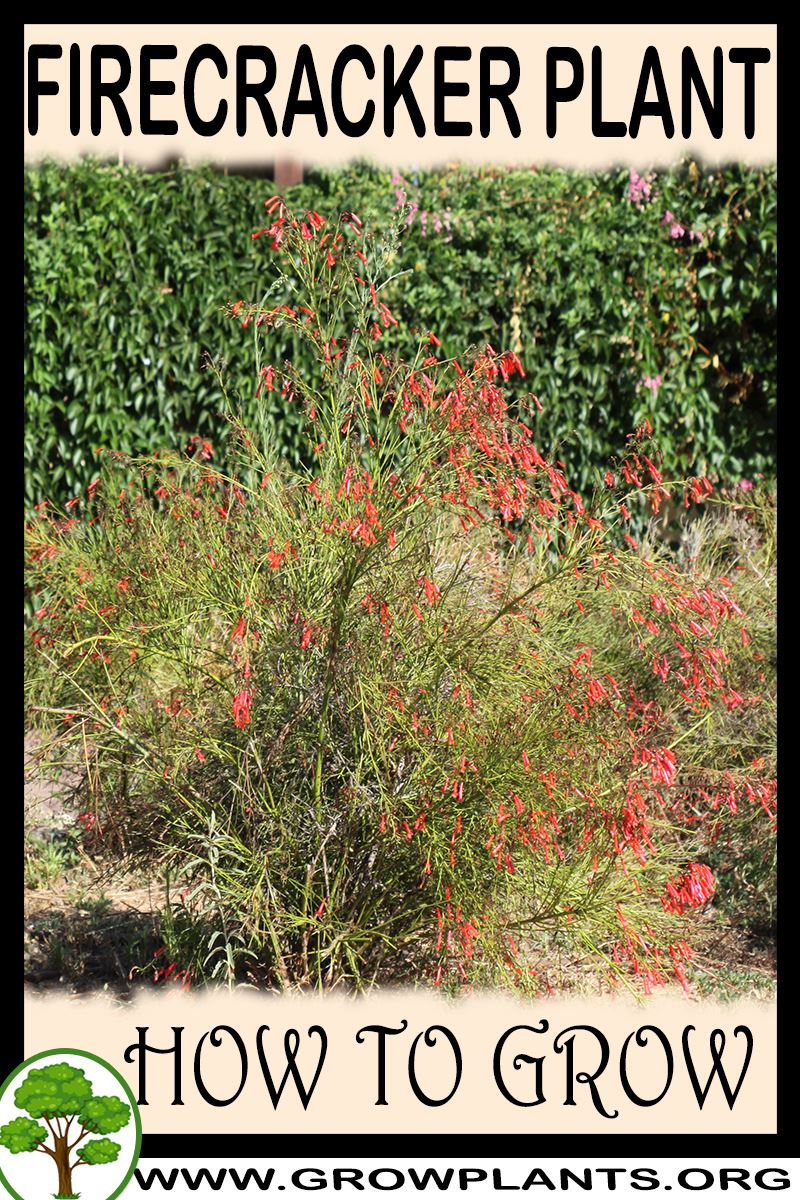
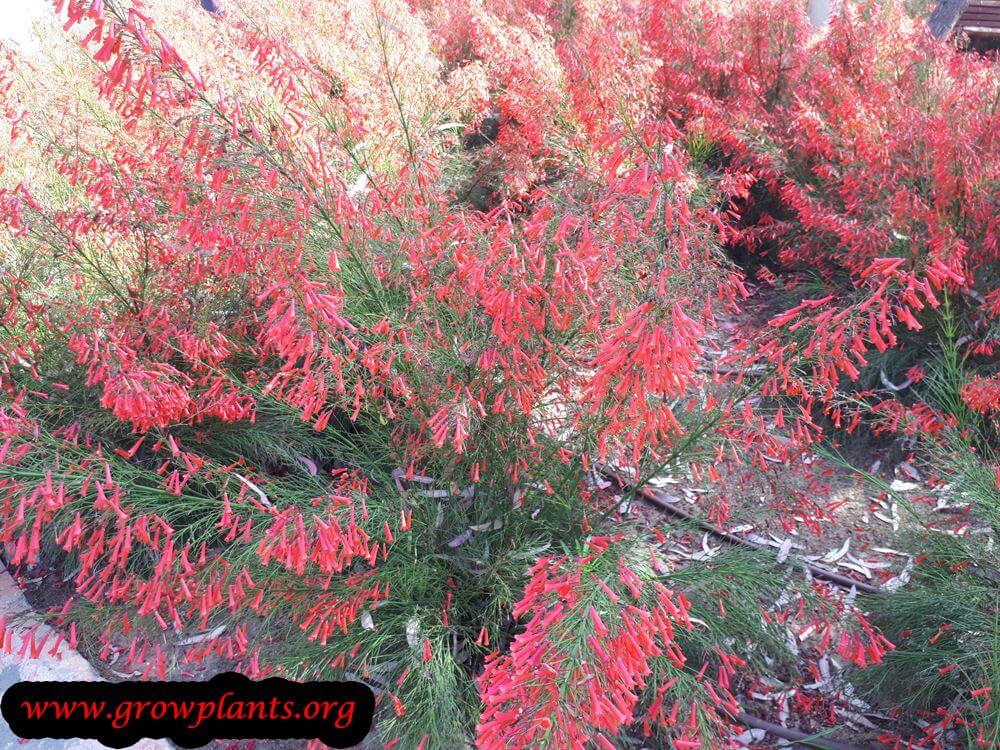
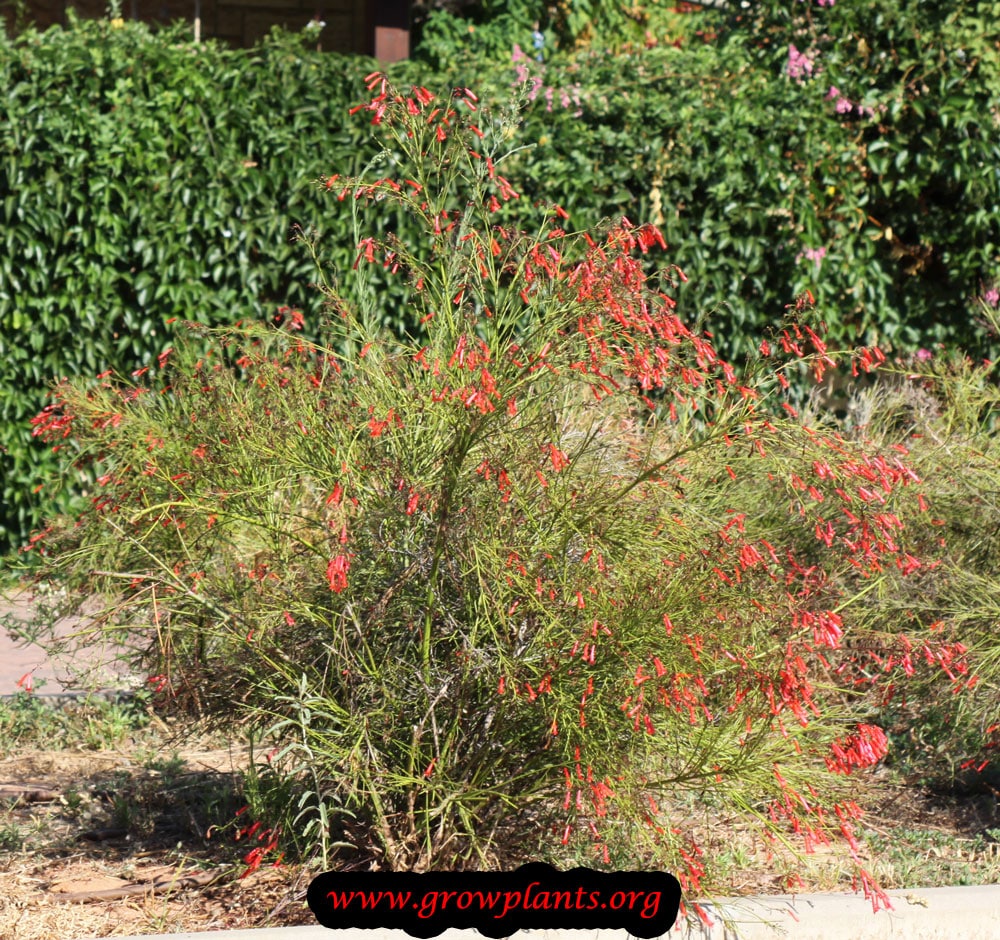
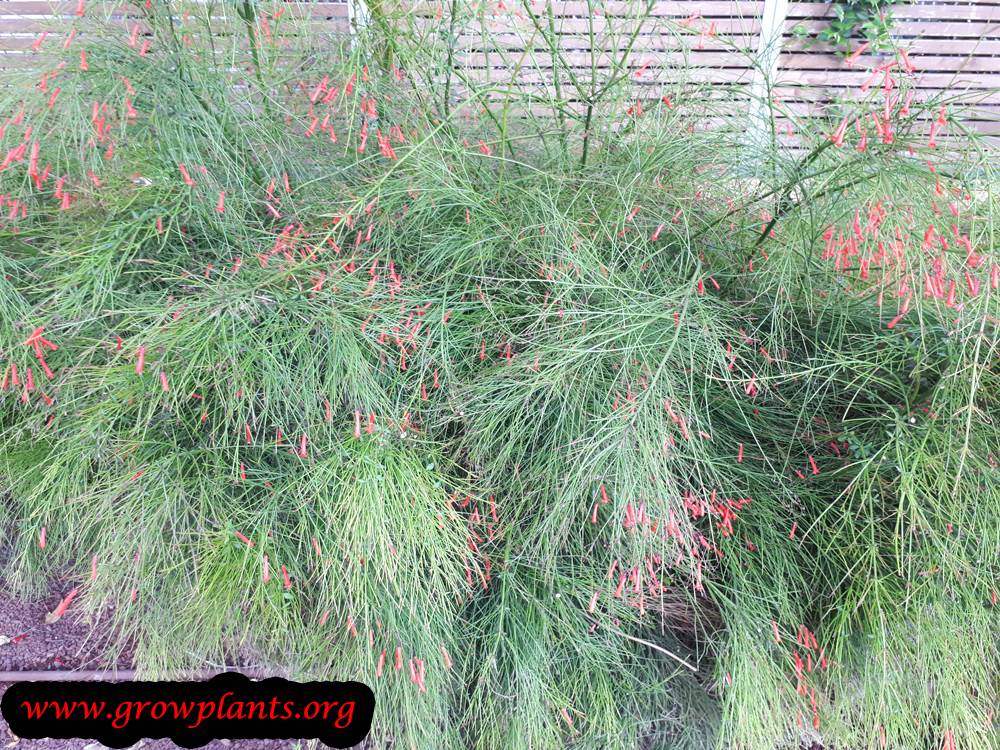
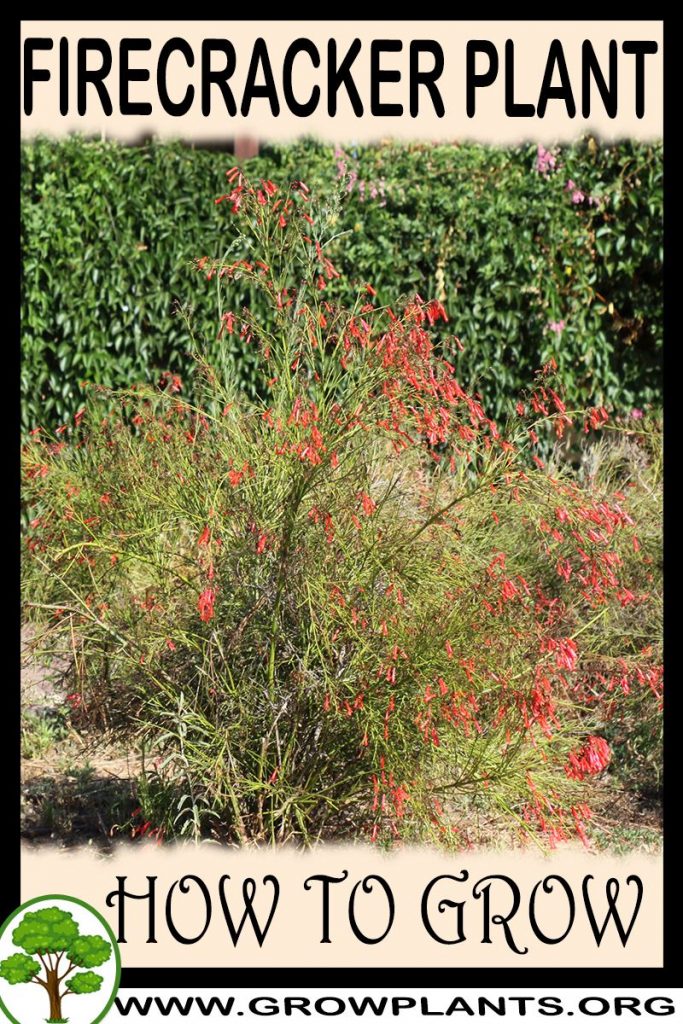
Overview: The firecracker plant, an evergreen shrub 0.5-1.5 m (20-60 in) with cascading, rush-like green stems studded with red tubular flowers. It is a drought-tolerant, pollinator-friendly ornamental ideal for walls, banks and hanging baskets.
Quick Specifications
| Specification | Attribute |
|---|---|
| Plant Type / Life Cycle | Evergreen perennial shrub |
| Foliage Type | Evergreen |
| Mature Size | 0.5-1.5 m (20-60 in) tall, arching as wide |
| Growth Rate | Moderate to fast |
| Toxicity | Non-toxic; flower nectar is edible |
| Hardiness | USDA zones 9+ |
Growth Form & Structure
- Height & Spread: Fountains of arching stems 0.5-1.5 m (20-60 in) long that cascade over edges; excellent in raised beds, on walls and in hanging containers.
- Growth Habit & Form: Mounding, weeping evergreen shrub whose slender green stems do most of the photosynthesis; can spread and naturalise.
- Lifespan & Maturity: Long-lived evergreen perennial, quick to reach flowering size in warmth.
Anatomy & Physical Features
- Leaves & Foliage: Reduced, needle-like green leaves giving the arching stems a fine, rush- or brush-like look.
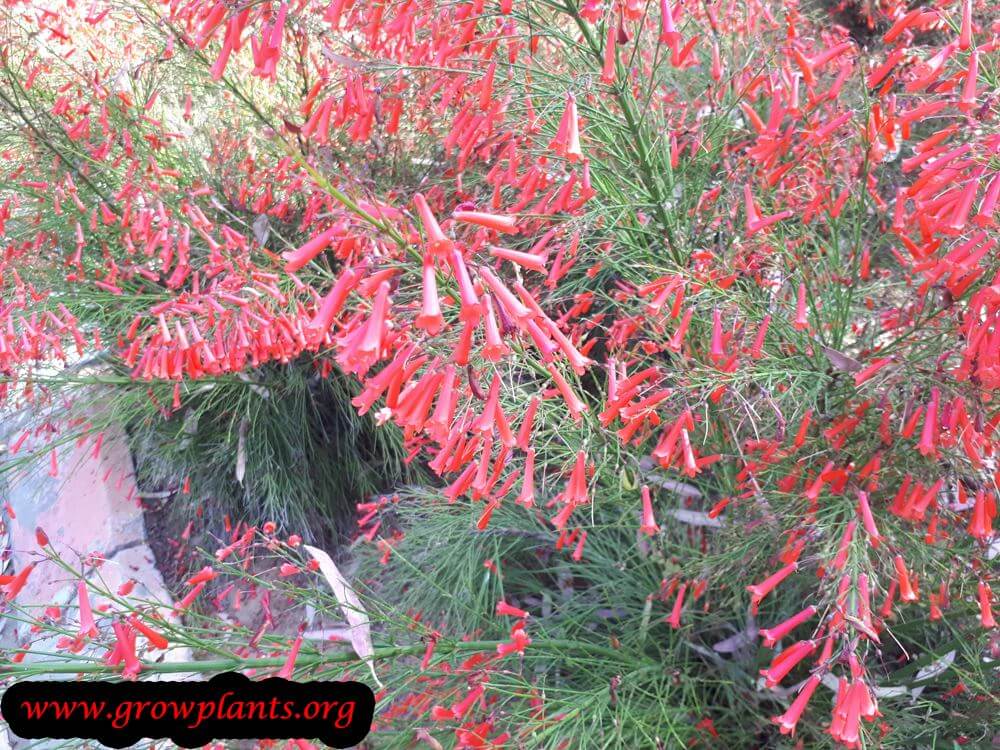
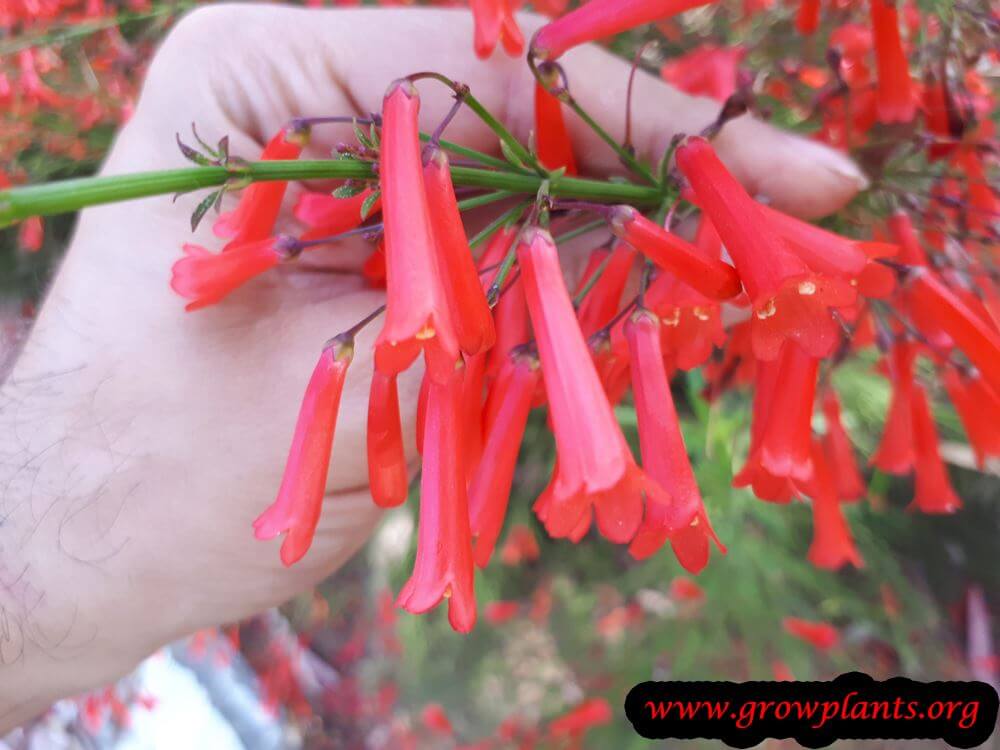
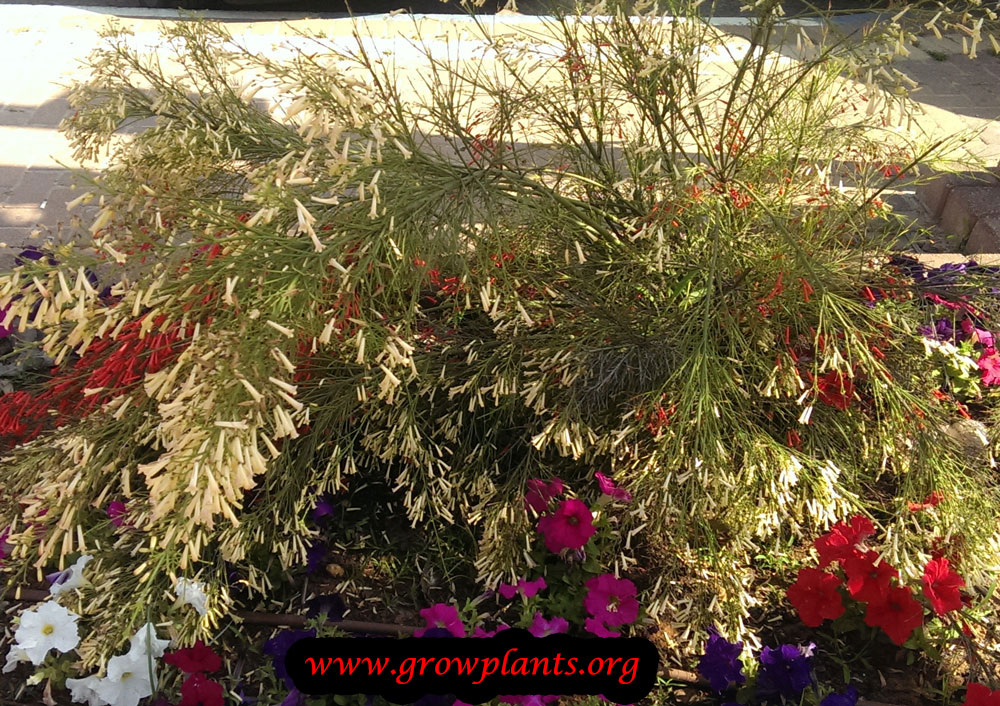
- Flower Characteristics: Mostly red (sometimes white or yellow) hollow tubular flowers in clusters, fragrant with edible nectar.
Primary Uses & Landscape Value
- Functional & Ornamental Roles: Ornamental and informal hedge or bank cover that attracts hummingbirds and other pollinators; a favourite for walls and hanging baskets. Note it can spread invasively.
Care Guide: Planting, Soil & Watering
Overview: Firecracker plant (Russelia equisetiformis) is a graceful, arching evergreen shrub grown for its tubular red flowers and fine, rush-like stems, suited to warm, frost-free climates (hardiness zone 9 and above). It grows in full sun to part shade in well-draining soil and is notably drought-tolerant once established.
Quick Care Requirements
| Requirement | Ideal Condition |
|---|---|
| Planting Season | Warm season – spring and summer (autumn in hot climates) |
| Growth Rate | Moderate to Fast |
| Soil Type | Well-draining |
| Water Need | Low to moderate; let the soil dry between waterings |
Planting & Establishment
- Best Planting Season: Plant in the warm season – spring and summer, and into autumn in hot climates – keeping it frost-free.
- How to Plant:
- Hole Preparation: Dig a hole a little wider than the root ball and loosen the soil so the roots settle in easily.
- Soil Amendments: Work some organic matter into the backfill on poor soils; the plant is not fussy but needs sharp drainage.
- Planting Depth: Set the plant at the depth it grew in its pot, keeping the crown level with the soil surface.
- Growth Speed & Expectations: A moderate to fast grower reaching about 0.5-1.5 m with a cascading habit; it can be invasive, so give it a spot where its spread is welcome or manageable.
Soil, Watering & Drainage Care
- Soil Mix & Drainage Needs: Give it free-draining soil so the roots never stand wet; it thrives in containers and hanging baskets where its arching stems can trail.
- Watering Schedule & Technique:
- Young / Newly Planted: Water regularly after planting to establish the roots, keeping the soil lightly moist at first.
- Established: Once established it is drought-tolerant and needs only modest water; let the soil dry between waterings.
- Seasonal Adjustments: Water a little more in prolonged heat and cut right back in cool weather; protect from frost.
Climate, Light & Hardiness
Firecracker plant is a warm-climate evergreen sub-shrub with arching, rush-like stems that flower for much of the year across Mediterranean, desert, subtropical, temperate and tropical gardens. It grows best in full sun to half shade and needs an essentially frost-free position, being hardy only to about zone 9.
Quick Climate Specifications
| Climate Zones | Mediterranean, desert, subtropical, temperate and tropical |
| USDA Hardiness Zones | Site lists zone 9+, with a 'frost-free' growing note |
| Optimal Temp Range | Warm conditions of roughly 18–30 °C (64–86 °F) |
| Cold Damage Begins | Foliage is damaged by frost, around 0 to −2 °C (32–28 °F) |
| Approx. Survival Minimum | Established plants may resprout after brief dips to roughly −4 °C (25 °F), consistent with a zone 9 limit; varies with age and conditions |
| Frost Tolerance | Low |
| Light Conditions | Full sun to half shade |
| Wind Tolerance | Moderate to high – flexible, wiry stems |
Sunlight & Light Exposure
Optimal Light Setup
Full sun produces the densest fountain of stems and the heaviest bloom; half shade is tolerated with somewhat looser growth.
Best Exposure / Orientation
A warm, sunny bank, wall-top or raised bed shows off the cascading habit and stores winter warmth in marginal areas.
Temperature Extremes & Hardiness
USDA Hardiness & Regional Limits
The site pairs zone 9+ with a 'frost-free' care note: it is a permanent plant where hard frost is rare, and needs shelter or replacement where winters are colder.
Cold Damage & Winter Protection
Light frost burns the top growth; a well-established plant often resprouts from the base, and a hard winter cut-back is a normal way to renew it. Cold tolerance varies with plant age, exposure duration and conditions.
Frost Sensitivity
Treat it as frost-tender; a sheltered, sun-facing spot markedly improves winter survival at its cold margin.
Extreme Heat Tolerance
Excellent heat tolerance - it blooms through hot, bright summers, including desert conditions.
Wind, Humidity & Microclimate
Wind Tolerance
The thin, flexible, leafless-looking stems bend rather than break, so it copes well with wind.
Microclimate Recommendations
In cool-winter gardens site it against a warm, sun-facing wall or in a container that can be sheltered; the stored heat helps it hold through occasional light frost.
Growing in Pots, Balconies & Indoors
The firecracker plant is a fountain-like, trailing shrub that spills beautifully from raised balcony pots, hanging baskets and wall containers, hung with tubular red flowers. It needs full sun and is not a houseplant, though its tenderness makes container growing worthwhile so you can shelter it over cold winters.
Quick Details
- Container Size: Medium – about 10-25 L (3-6 gal), or a large hanging basket
- Indoor Suitability: Not a houseplant – too light-hungry and trailing for a room
- Best Spot: Full sun; superb spilling from a raised pot or basket
- Soil & Drainage: Free-draining, organic-rich mix
- Watering in Pots: Water often – baskets and pots dry very fast in sun and wind
Indoors & On the Windowsill
- Not a houseplant: The grower marks it ‘no,’ and rightly – it wants full sun and room to trail, which a room cannot give. A very bright, sunny window is the most it will tolerate.
- Overwintering indoors: Where winters are cold, its tenderness is the reason to pot it – bring the container under cover before frost, keep it cool and on the dry side, and cut it back in spring.
On a Balcony or Patio
- Light & wind: Give it full sun; it is at its best in raised pots and hanging baskets where the stems cascade. Those dry out fast in sun and wind, so water often and shelter from harsh gusts.
- Practicalities: A full basket is heavy and drips when watered – make sure the bracket and railing can take the weight and the runoff.
Choosing the Pot, Soil & Long-Term Care
- Pot & drainage: A 10-25 L pot or large basket with strong drainage holes; skip a standing-water saucer to avoid root rot. Terracotta breathes and dries fast, while glazed or plastic pots hold moisture longer.
- Potting mix: A well-aerated, organic-rich mix – peat or coir with perlite or vermiculite – suits container growing.
- Feeding: Potted plants need feeding more often than those in open ground, since each watering leaches nutrients away – a balanced liquid feed through the growing season keeps growth strong.
- Repotting: Refresh the mix or pot up about every couple of years; for perennials, lightly prune the root ball and top growth at the same time.
Growing this plant in a greenhouse
A greenhouse can give firecracker plant frost protection, cold protection, humidity control and extra warmth. In the right climate it may also be kept growing through winter, depending on how much warmth and light are provided.
Greenhouse at a glance
| Greenhouse suitability | Conditional - depends on your climate |
|---|---|
| Main benefits | frost protection, cold protection, humidity control, extra warmth |
| Season extension | earlier spring & later autumn |
| Outdoor protection advisable below | about -2°C |
| Suitable types | unheated greenhouse, polycarbonate greenhouse, lean-to |
| Heating | Heating is optional - useful mainly for winter growing in cold areas. |
Related greenhouse guides
- Greenhouses: How to Choose the Right Greenhouse
- Best Lean-To Greenhouses
- Polycarbonate Greenhouses: What to Look for Before Buying
Fertilizing & Feeding
A moderate feeder: light, steady, balanced feeding through the growing season supports both foliage and repeated bloom, tapering off as the plant rests.
Quick Fertilizing Specs
| Feeding Level | moderate |
|---|---|
| Main Nutrient Priority | Balanced nutrition with adequate nitrogen; no phosphorus spike needed for bloom |
| Best Feeding Period | Spring through the flowering season |
| Reduce/Stop Feeding | Taper and stop as the plant enters winter rest |
| Soil pH | Adaptable; most prefer near-neutral, well-drained soil |
| Organic Options | Compost or aged manure improves fertility and structure |
| Micronutrients | Usually supplied by a complete fertilizer; correct only if a deficiency appears |
Feeding by Growth Stage
Spring growth flush
Support new stems and leafy growth as the plant breaks into active growth.
| Nutrient direction | A balanced complete fertilizer with adequate nitrogen to fuel fresh shoots and foliage. |
|---|---|
| Timing | As growth resumes in spring. |
| Frequency | Light, regular feeding through the early growing season. |
| Fertilizer types | Balanced granular or liquid complete fertilizer, Compost or other organic matter worked into the soil |
| Precautions | Avoid heavy nitrogen, which pushes soft foliage at the expense of flowers. |
Bloom period
Sustain flowering without forcing excess leafy growth.
| Nutrient direction | A balanced complete fertilizer; steady nitrogen supports continued flowering rather than a phosphorus spike. |
|---|---|
| Timing | Through the flowering season. |
| Frequency | Light, steady feeding while the plant is in bloom. |
| Fertilizer types | Balanced liquid or granular complete fertilizer |
| Precautions | High-phosphorus bloom-booster products are unneeded; balanced feeding drives bloom. |
Repeat bloom cycles
Keep energy available for successive flushes of flowers.
| Nutrient direction | Continue balanced feeding to replace nutrients used by each flush. |
|---|---|
| Timing | Between and during successive bloom flushes in the warm months. |
| Frequency | Light feeding maintained across the extended bloom period. |
| Fertilizer types | Balanced complete fertilizer |
| Precautions | Keep feeding light and even; avoid heavy doses that favor foliage over flowers. |
Dormancy or winter rest
Let the plant rest; growth and nutrient demand fall away.
| Nutrient direction | None – withhold fertilizer while the plant is resting. |
|---|---|
| Timing | During cold-season dormancy or the rest period after flowering. |
| Frequency | No feeding at this stage. |
| Fertilizer types | No feeding at this stage while the plant is dormant. |
| Precautions | Do not fertilize until active growth resumes in spring. |
Nutrient Deficiency Signs & Corrections
Older, lower leaves turn pale or yellow and growth slows.
| Possible causes | Low soil nitrogen, Nitrogen leached by frequent watering, especially in containers, Cold or waterlogged soil limiting root uptake |
|---|---|
| Appears first on | Older, lower leaves |
| What to check | Recent feeding history, Soil drainage and moisture, Whether overall growth has stalled |
| Possible correction | Apply a balanced complete fertilizer and correct any drainage problem, then resume light regular feeding. |
New leaves yellow between green veins.
| Possible causes | High soil pH reducing iron availability, Waterlogged or cold roots, A genuine iron shortage |
|---|---|
| Appears first on | New, young leaves |
| What to check | Soil pH, Drainage, Whether only new growth is affected |
| Possible correction | Correct soil pH and drainage; if it persists, apply a chelated iron product per its label. |
Leaf margins brown and scorch, often on container plants.
| Possible causes | Fertilizer salt buildup in the pot, Drought stress between waterings, Overfeeding |
|---|---|
| Appears first on | Leaf tips and margins |
| What to check | Feeding rate, Salt crust on soil or pot, Watering consistency |
| Possible correction | Flush the container thoroughly with clean water and reduce the feeding rate. |
Pruning, Training & Seasonal Maintenance
The firecracker plant (Russelia equisetiformis) is a tender evergreen subshrub of 0.5–1.5 m that grows as a cascading fountain of slender, rush-like green stems tipped almost year-round with red tubular flowers. Because it flowers on new growth and grows fast, pruning aims at renewing the arching stems, keeping the mound dense, and controlling a habit that can spread and become invasive.
It has no branch framework to shape — it is a mass of wiry stems — so it is managed by cutting the whole clump back hard for renewal and by pinching or shearing the fine outer growth. As a frost-tender plant, the hard cut is best made as growth resumes rather than going into cold.
Quick Pruning & Maintenance Specs
| Pruning Tolerance | High (regrows strongly from hard cuts; blooms on new growth) |
| Primary Pruning Window | Late winter / early spring — hard renewal before the main flush |
| Secondary Maintenance Window | Light shaping and tidying of straggly cascades through the season |
| Typical Frequency | One renewal cut a year plus ongoing tidy |
| Main Objective | Renew the flowering stems and control size and spread |
| Young Plant Priority | Pinch tips to build a full cascading mound |
| Mature Plant Priority | Hard cut-back to refresh a woody crown and drive new flowering wood |
| Best Tool Type | Bypass secateurs; hedge shears acceptable on the fine stem mat |
| Avoid Heavy Pruning During | Cold / before frost (tender regrowth) |
Pruning by Plant Age & Size
Newly Established
Remove only damaged stems as the plant settles and pinch the tips to start a well-branched, cascading mound.
Young / Formative
There is no structural training — build a dense fountain by tip-pinching the wiry stems. Let it develop its natural weeping form rather than trying to impose a framework.
Mature / Established
Cut the clump back hard in late winter or early spring to clear tired, woody stems and force a fresh flush; because bloom is carried on new growth, this renewal is what keeps it flowering freely.
Seasonal Pruning Schedule
Late winter / early spring (primary): objective is renewal — cut the clump back by up to half or more, removing exhausted and dead stems, and expect vigorous new flowering shoots; do not leave a bare woody stump only. Growing season (ongoing): shorten overlong or straggly cascades and tidy the mat lightly; since it blooms nearly continuously on new growth, avoid removing all growth at once mid-season. Do not cut back going into frost.
Flowering & Fruiting Wood
Flowers are borne on current-season growth, so it blooms on new wood almost year-round. Hard renewal removes flowers only briefly and quickly regenerates fresh flowering stems; timing the cut for spring gives the fastest return to bloom, while cutting into cold delays it.
Structural Pruning & Training
There is no scaffold to select. Manage height and spread instead: thin dead and tangled stems out of the interior, and cut back growth that is overrunning neighbours, as the plant can be invasive and self-layer where stems touch soil. Renew the whole clump rather than individual limbs.
Special Growth to Remove
Clear dead wiry stems from inside the crown so it does not become woody and bare. Where stems arch down and root into the soil, cut them back and remove the rooted pieces to keep the plant from spreading beyond its space.
Container & Small-Space Pruning
It is excellent in pots and hanging baskets for the cascade. Keep a container plant full by pinching through the season and cutting it back hard in spring; confined in a pot it stays more manageable and is very forgiving of the renewal cut.
Tools
The stems are fine and twiggy, so bypass secateurs handle selective and renewal cuts, and hedge shears are acceptable here because the mass of thin rush-like stems responds to shearing like a mat. No loppers or saw are needed on such slender growth.
Tool Hygiene & Disease Risk
Routine. No significant tool-borne disease is recorded for this plant; clean, sharp blades are sufficient, and disinfection is only needed if cutting out material you suspect is diseased.
Cut Placement & Technique
For renewal, remove tired stems low at the base as thinning cuts rather than leaving stubs; shear the outer mat evenly to shape it; where you shorten individual stems, cut just above a growth point so they break cleanly.
Heavy Pruning & Rejuvenation
Well tolerated. An overgrown, woody, sparse clump can be cut back close to the base in spring and will regrow into a fresh fountain within weeks in warmth, with only a temporary loss of bloom. Reserve this for the start of the growing season, not the approach of frost.
Post-Pruning Care
Water to support the new flush and keep the plant in warm, well-drained conditions; no feeding is needed simply because it was cut. The main caution is not to make the hard cut before frost.
Common Pruning Mistakes
- Never renewing the clump, so the crown becomes woody and bare and bloom thins.
- Cutting back hard before frost on this tender plant.
- Letting it spread and self-layer unchecked instead of confining it.
When NOT to Prune
Do not hard-prune before frost or in cold weather, and avoid heavy cutting on a newly planted specimen in its first season. Keep the renewal cut for spring as growth resumes.
Recommended Tools (by task)
- bypass_secateurs — for the spring renewal cut and selective removal of tired wiry stems.
- hedge_shears — for shearing the fine cascading stem mat to shape and refresh it.
Pruning Troubleshooting
| Problem | Possible Cause | What to Check | Corrective Action |
| Sparse bloom, woody bare crown | Clump never renewed; stems too old | Age and density of the crown | Cut back hard in spring to force fresh flowering stems |
| Spreading into neighbouring plants | Stems rooting where they touch soil; vigorous growth | Stems arching to the ground | Cut back and dig out rooted runners to confine it |
| New growth frost-damaged | Hard cut made too late into cold | Timing of the cut relative to frost | Move renewal to spring; leave top growth over winter as protection |
Propagation Guide
The firecracker plant is most easily increased vegetatively: its long, arching stems root where they touch the soil, so division of the rooted clump and simple ground layering are the quickest methods, and softwood cuttings root readily too. Seed is possible but rarely needed; vegetative pieces reproduce the parent exactly and grafting is not used. Easy overall.
Quick Propagation Specs
| Best Propagation Method | Division / ground layering of the rooting stems |
| Alternative Methods | Softwood stem cuttings; seed (minor) |
| Propagation Difficulty | Easy |
| Vegetative True-to-Type | Yes — divisions, layers and cuttings reproduce the parent |
| Best Propagation Season | Spring to summer (warm season) |
| Cutting Rooting Time | Usually a few weeks under warm, humid conditions |
Stem Cuttings
Cutting Type & Timing
Take softwood or semi-ripe stem cuttings in the warm season.
Rooting Setup & Hormone
Insert into a moist, well-drained mix under humidity; rooting hormone is optional, as the stems root easily. Roots usually form within a few weeks.
Division & Ground Layering
The arching stems naturally take root where they rest on moist soil. Peg a stem down to encourage rooting (ground layering), then once it has its own roots sever it from the parent and lift it. Established clumps can also simply be dug and divided into rooted sections, each replanted straight away — this is the fastest way to get sizeable new plants.
Bloom & Flower Guide
Quick Details
- Bloom Season: Most of the year, peaking in summer
- Time to First Bloom: Establishes and flowers within its first year in warm climates
- Flower Appearance: Dangling clusters of tubular, hollow flowers, mostly bright red (occasionally white or yellow)
- Edibility: Grown ornamentally; the flowers hold a sweet, edible nectar, but the plant is not a culinary crop
Detailed Blooming Overview
Firecracker plant (Russelia equisetiformis) is a weeping evergreen with fine, rush-like stems and showers of tubular red flowers over most of the year. It is a superb hummingbird plant and flowers freely in the heat.
Flower Characteristics
- Tubular, hollow flowers in dangling clusters, mostly bright red (sometimes white or yellow).
- Lightly fragrant, with sweet edible nectar that draws hummingbirds and bees.
Bloom Care & Thinning
- Encouraging bloom: Full sun and warmth bring the heaviest flowering; a periodic light trim of old stems renews the display.
- Pollination: The nectar-rich tubes are pollinated mainly by hummingbirds and bees.
Pests, Diseases & Troubleshooting
Overview: Firecracker plant (Russelia equisetiformis) is a tough, sun-loving, drought-tolerant trailing shrub that is largely pest-free; its handful of problems are sap-feeding insects – mainly mealybugs, aphids, spider mites, scale and whiteflies – on stressed or sheltered plants, plus root rot in soggy soil and cold damage. Grow it in full sun with sharp drainage, water moderately, and manage the rare pest outbreak with hosing and gentle organic sprays; it seldom needs more.
Quick Troubleshooting Overview
| Issue / Pest | Main Symptom | Primary Solution |
|---|---|---|
| Mealybugs | White cottony tufts in stem joints | Alcohol swab, insecticidal soap/oil |
| Aphids | Curled tips, honeydew on soft growth | Water jet, beneficials, insecticidal soap |
| Spider mites | Stippling, webbing in hot dry conditions | Rinse foliage, raise humidity, horticultural oil |
| Scale insects | Brown bumps on stems; honeydew | Prune/wipe off, horticultural oil |
| Whiteflies | Tiny white flies, sticky leaves | Yellow sticky traps, insecticidal soap |
| Root rot | Yellowing, wilting in wet soil | Improve drainage, ease watering |
Common Pests & Management
- Mealybugs (Planococcus / Pseudococcus spp.):
- Symptoms: White, cottony waxy masses tuck into the wiry stem joints and branch bases, sucking sap and leaving honeydew and sooty mould; growth weakens and the plant looks sticky and dull, especially when sheltered or over-fed.
- Prevention & Control: Dab colonies with a rubbing-alcohol swab, hose the plant, and isolate new arrivals; encourage lady beetles and lacewings. Insecticidal soap or light horticultural oil, applied thoroughly into the stem crevices and repeated, controls them.
- Aphids (Aphis / Myzus spp.):
- Symptoms: Small soft insects cluster on the softest new shoot tips, distorting growth and coating stems in honeydew and sooty mould; usually a minor, seasonal nuisance.
- Prevention & Control: Blast them off with water, support beneficial insects, and pinch out badly infested tips; insecticidal soap clears stubborn colonies. Avoid excess nitrogen that produces soft, aphid-prone growth.
- Two-spotted spider mite (Tetranychus urticae):
- Symptoms: Fine pale stippling and delicate webbing on the fine foliage in hot, dry, dusty conditions; stressed plants can look bronzed and thin.
- Prevention & Control: Rinse foliage, keep the plant unstressed and adequately watered in heat, and conserve predatory mites by avoiding harsh insecticides. Treat hot-spots with insecticidal soap or horticultural oil.
- Scale insects (Coccus / Saissetia spp.):
- Symptoms: Small brown or tan limpet-like bumps along stems suck sap and produce honeydew and sooty mould, slowly weakening heavily infested plants.
- Prevention & Control: Scrape or prune off light infestations and encourage parasitic wasps and lady beetles; treat crawlers with horticultural oil, repeating to smother successive generations.
- Whiteflies (Bemisia / Trialeurodes spp.):
- Symptoms: Tiny white flies rise from disturbed foliage; nymphs on leaf undersides suck sap, yellowing growth and leaving honeydew, mainly on sheltered or greenhouse plants.
- Prevention & Control: Hang yellow sticky traps, hose foliage, and support whitefly parasitoids; insecticidal soap or oil on the undersides, repeated, brings them down.
Diseases & Fungal Issues
- Root and stem rot (Phytophthora / Pythium / Rhizoctonia spp.):
- Symptoms: Yellowing, wilting and a soft, blackened base develop in waterlogged or overwatered soil despite the plant looking moist; a drought-tolerant plant, it resents wet feet.
- Treatment & Management: Plant in free-draining soil or a gritty mix, water moderately and let the surface dry between waterings, and never leave pots in standing water. Remove and destroy rotted plants; prevention through drainage is the only reliable control.
- Leaf / stem spot (minor) (Cercospora / Colletotrichum spp.):
- Symptoms: Occasional small brown spots on the fine stems in humid, crowded or overhead-watered conditions; cosmetic and uncommon on this airy plant.
- Treatment & Management: Improve airflow, water at the base, and remove affected growth; sanitation is enough and fungicides are rarely needed.
Growing Difficulties & Abiotic Problems
- Root rot from overwatering:
- Cause & Symptoms: Yellowing, wilting and base decay in heavy, poorly drained or over-watered soil.
- Correction Strategy: Grow in sharp-draining soil, water only when the surface dries, and site above standing water; ease off watering in cool or wet spells.
- Cold / frost damage:
- Cause & Symptoms: Stems blacken and die back after frost or hard cold, as this is a warm-climate, frost-tender plant.
- Correction Strategy: Protect from frost, mulch the base where marginally hardy, or grow in containers to move under cover; plants often resprout from the crown after mild cold.
- Sparse flowering in shade:
- Cause & Symptoms: Growth becomes lax and the signature red tubular flowers are few when the plant is grown in too much shade.
- Correction Strategy: Site in full sun for the best flowering and habit, and trim leggy trailing stems to encourage dense, well-flowered regrowth.
What Helps – Products & Tools
For firecracker plant keep to insecticidal soap and light horticultural or neem oil for mealybugs, aphids, mites, scale and whiteflies; rubbing alcohol on a swab for spot-treating mealybugs and scale; yellow sticky traps for whitefly; and, above all, sharp drainage to prevent root rot. It seldom needs fungicides. Apply oils in the evening to protect pollinators, which love its flowers.