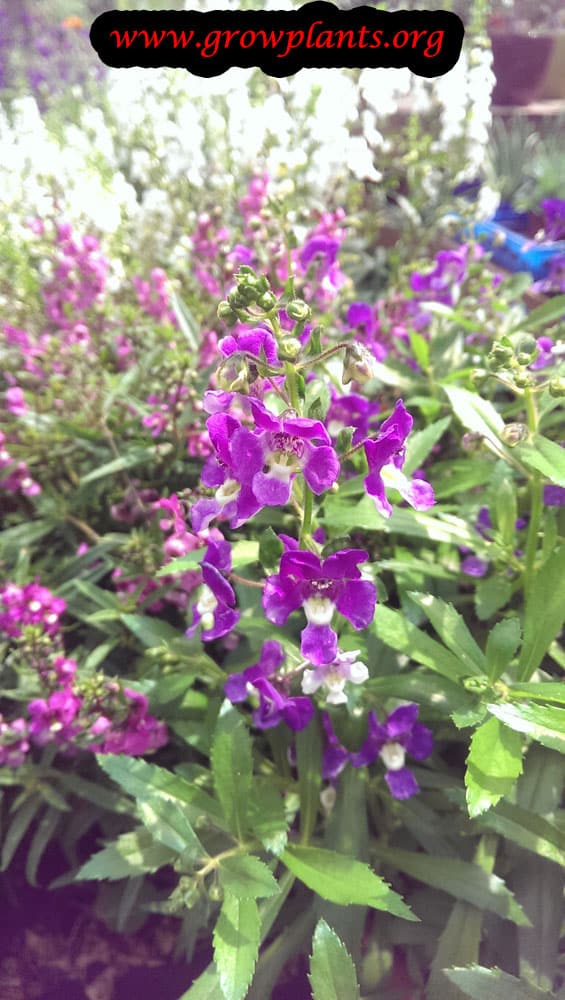
Plant Profile & Key Characteristics
Overview: Angelonia (summer snapdragon) is a compact herbaceous subshrub 10-70 cm tall, evergreen in mild climates but often grown as an annual. It is a fragrant, drought-tolerant ornamental valued for long summer flowering.
Quick Specifications
| Specification | Attribute |
|---|---|
| Plant Type / Life Cycle | Perennial (often grown as an annual) |
| Foliage Type | Evergreen in frost-free areas |
| Mature Size | 10-70 cm (4-28 in) |
| Growth Rate | Moderate to Slow |
| Hardiness | USDA zone 10b+ as perennial; 4-10a as annual |
Growth Form & Structure
- Height & Spread: 10-70 cm (4-28 in); well suited to containers and window boxes.
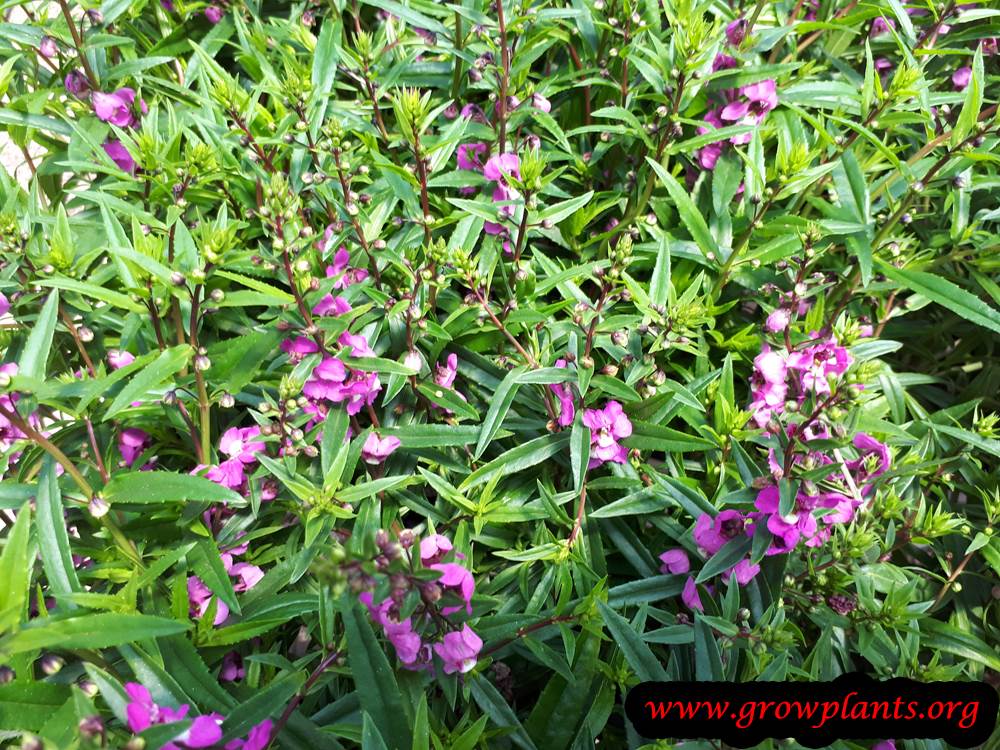
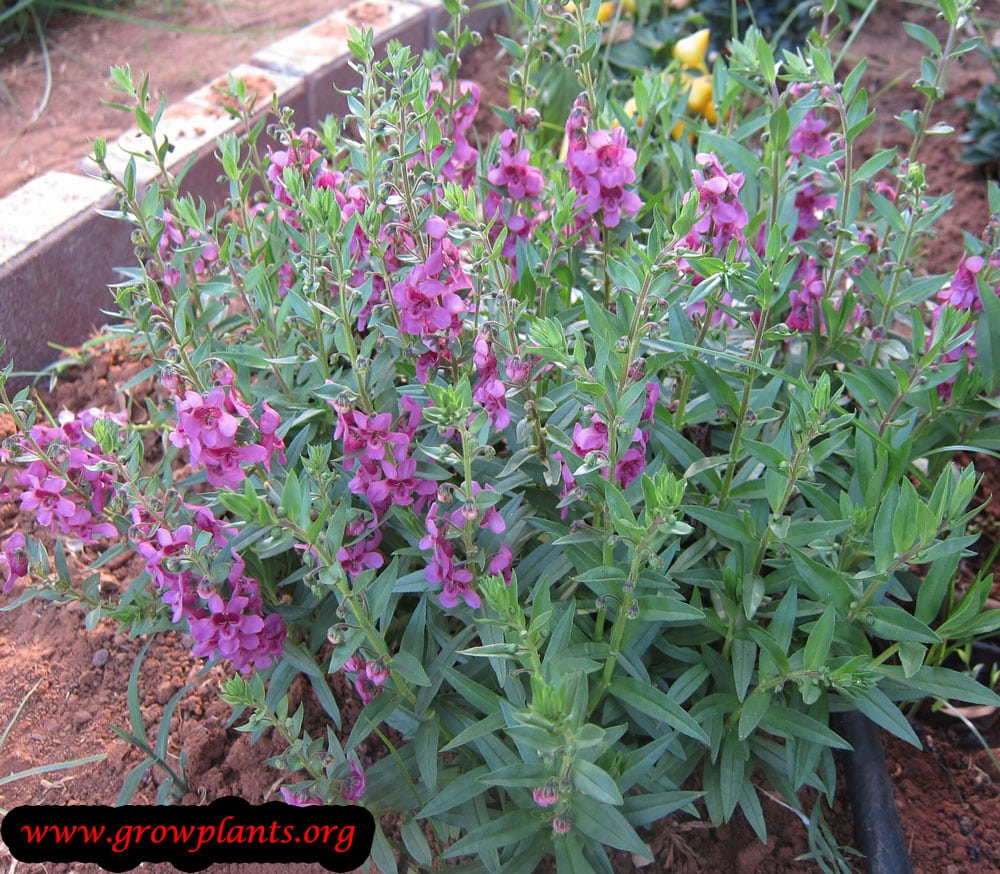
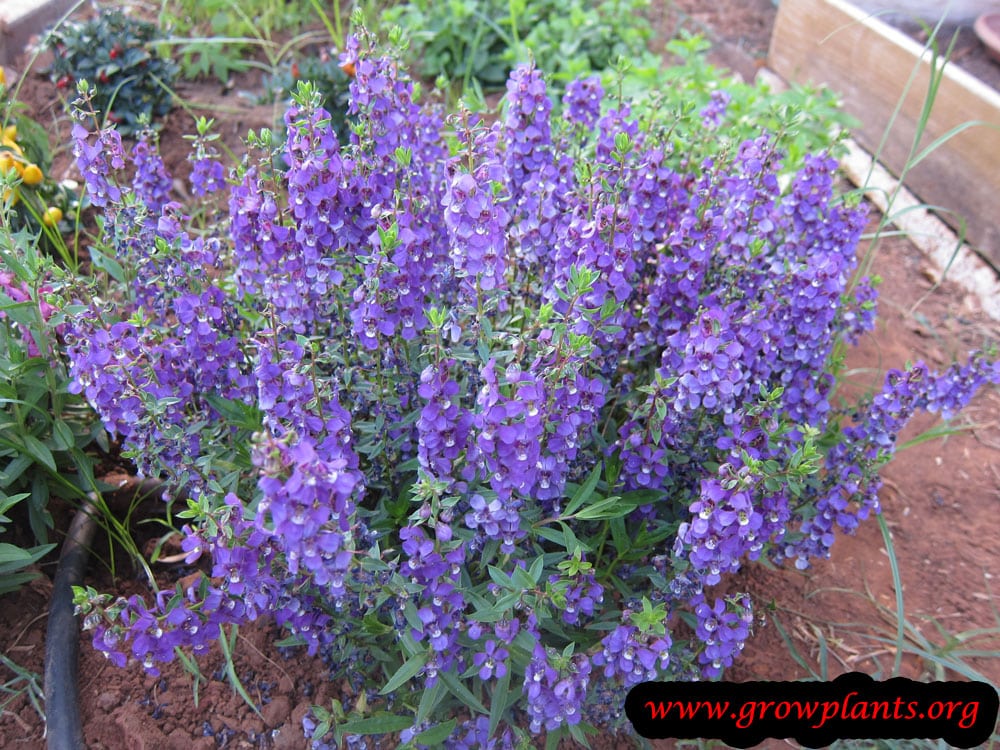
- Growth Habit & Form: Bushy, upright herbaceous subshrub with slender flowering spikes.
- Lifespan & Maturity: Perennial in frost-free zones; fast to reach flowering size, treated as a single-season annual where winters are cold.
Anatomy & Physical Features
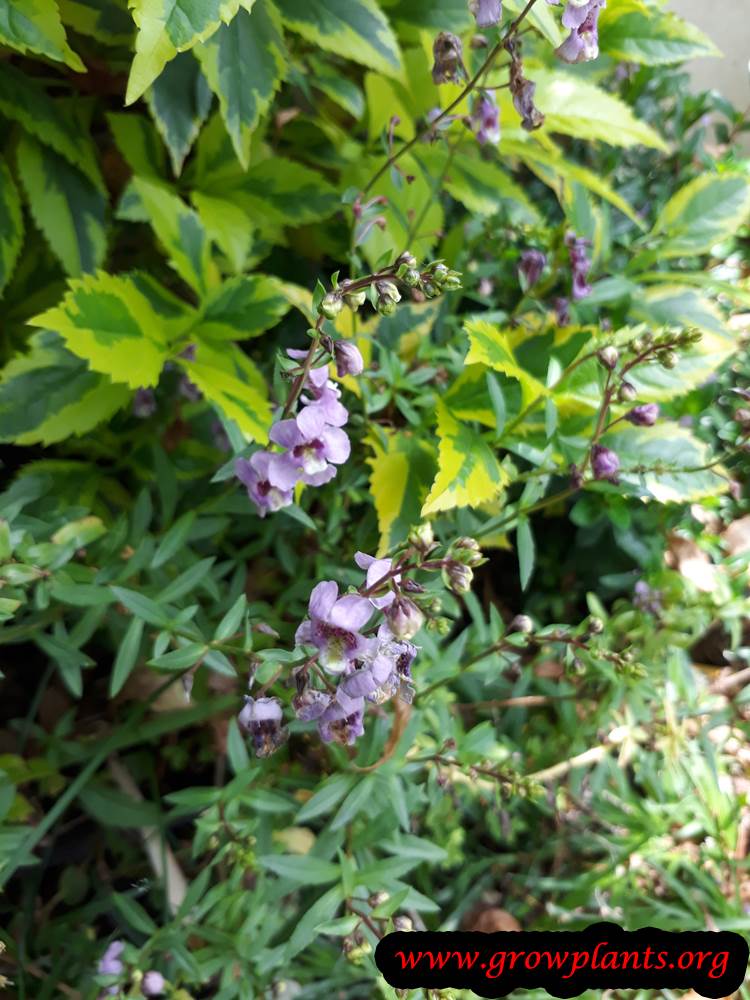
- Leaves & Foliage: Green leaves in spear to elliptic shape.
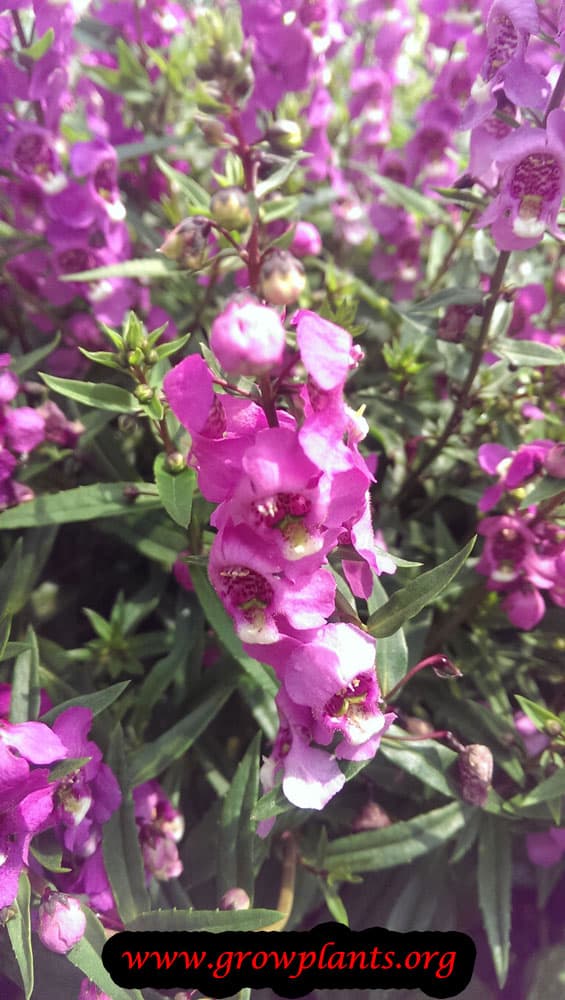
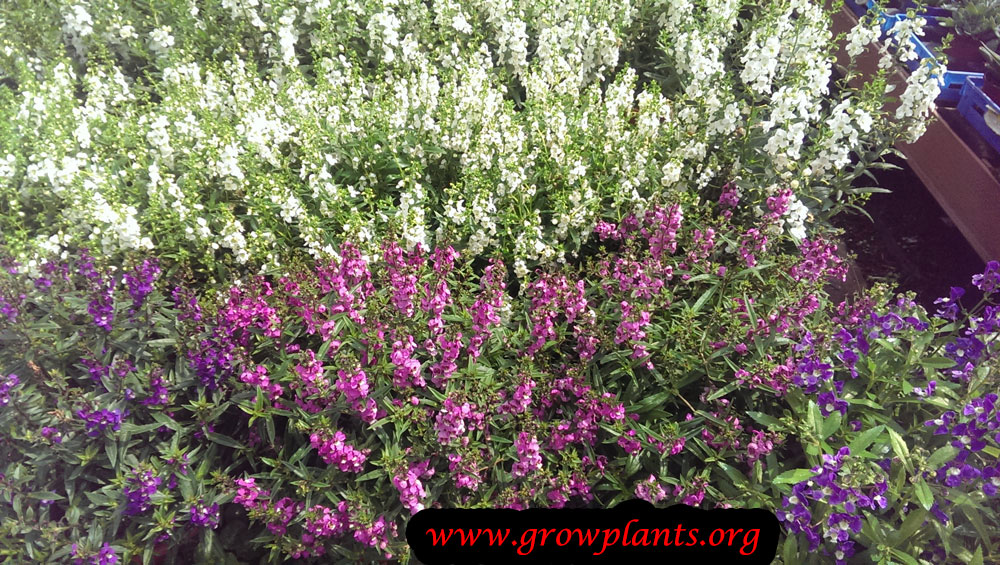
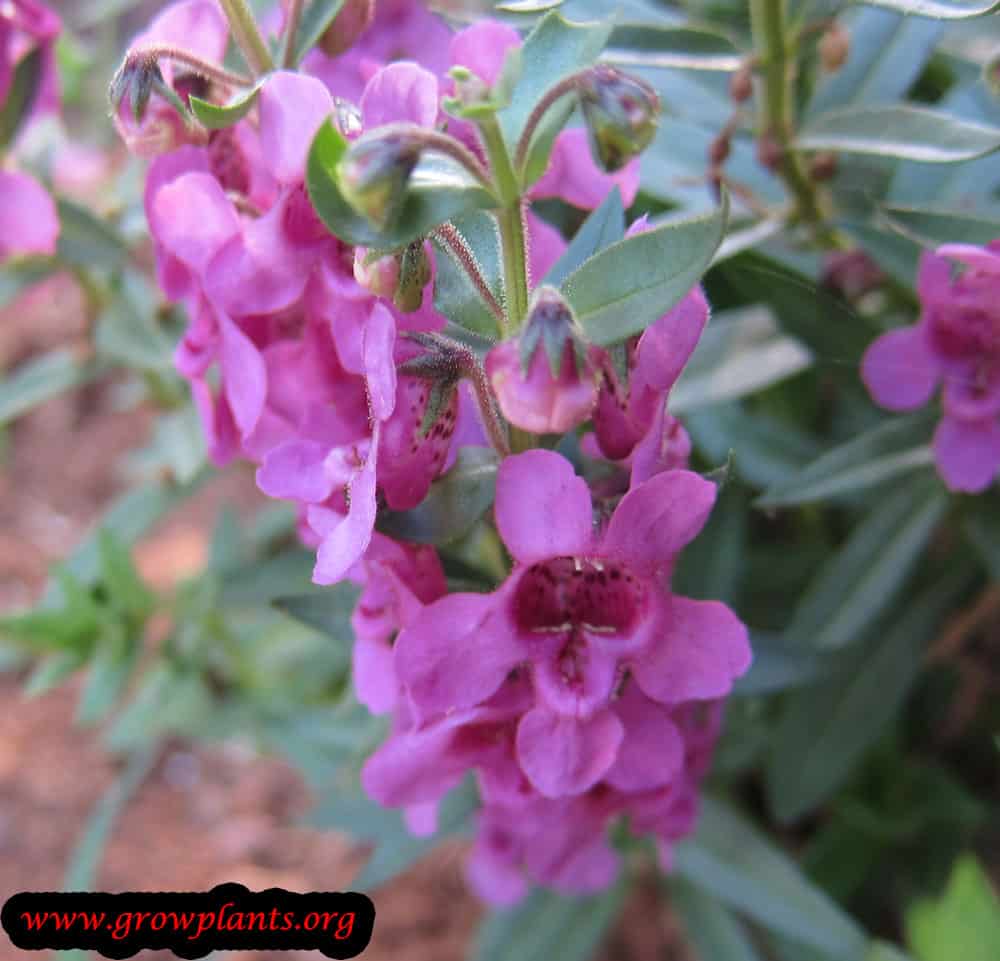
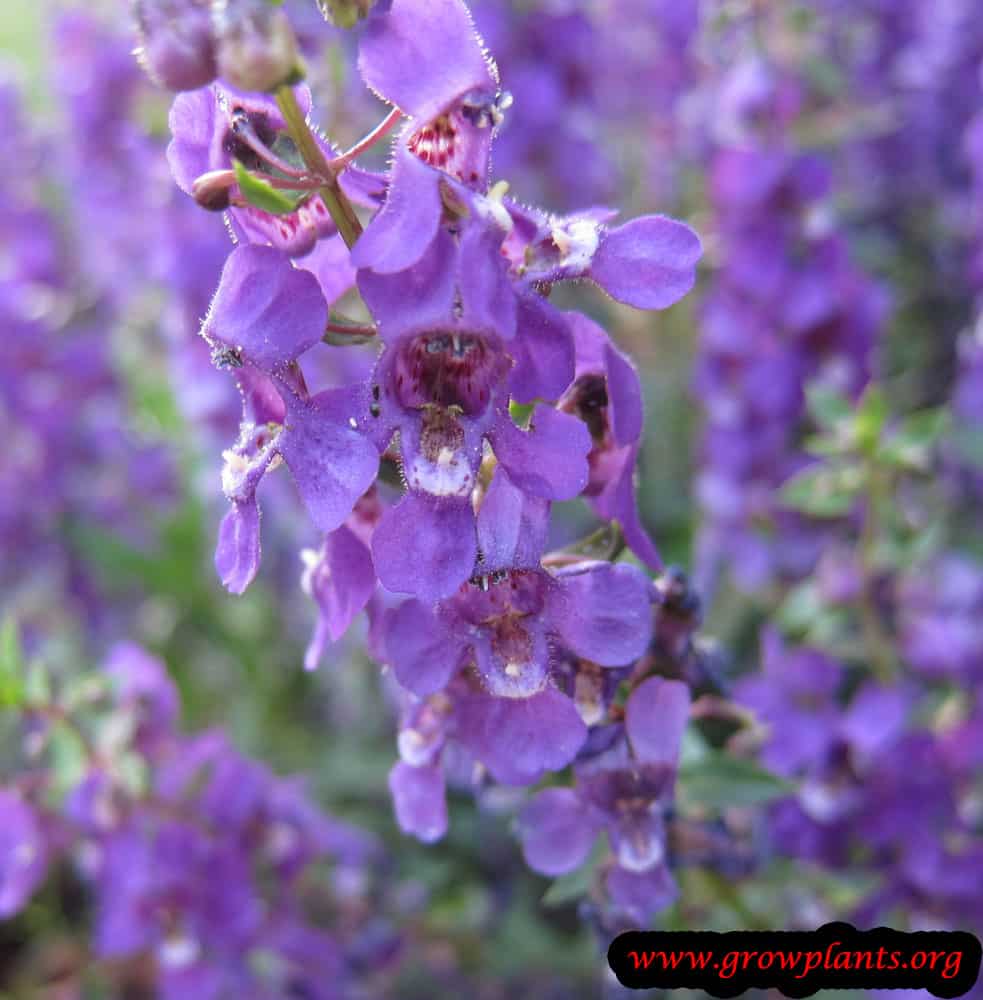
- Flower Characteristics: Fragrant snapdragon-like flowers with a throat, in purple, pink, white or blue (see the Bloom accordion).
Primary Uses & Landscape Value
- Functional & Ornamental Roles: Drought-tolerant ornamental for sunny beds, borders and containers; valued as a fragrant summer bedding plant.
Care Guide: Planting, Soil & Watering
Overview: Angelonia is a heat-loving, sun-loving subshrub that grows in well-drained soil and shrugs off dry spells. Once established it needs only light watering and dislikes soggy soil.
Quick Care Requirements
| Requirement | Ideal Condition |
|---|---|
| Planting Season | In spring and summer once the weather is warm |
| Growth Rate | Slow to Moderate |
| Soil Type | Well-draining |
| Water Need | Low (let the soil dry between waterings) |
Planting & Establishment
- Best Planting Season: In spring and summer once the weather is warm
- How to Plant:
- Hole Preparation: Dig a hole slightly wider than the root ball.
- Soil Amendments: Mix in a little compost plus coarse grit or sand to keep drainage sharp.
- Planting Depth: Set the root collar level with the soil surface.
- Growth Speed & Expectations: Steady, moderate growth into a bushy, free-flowering mound.
Soil, Watering & Drainage Care
- Soil Mix & Drainage Needs: Any well-drained soil suits it; sharp drainage is the key to avoiding root rot.
- Watering Schedule & Technique:
- Young / Newly Planted: Water regularly for the first few weeks to settle the roots in.
- Established: Low water once established – this is a drought-tolerant plant, so let the soil dry between waterings.
- Seasonal Adjustments: Minimal water in cool or wet weather; a little more during prolonged summer heat.
Climate, Light & Hardiness
Angelonia ("summer snapdragon") is a heat-loving, sun-loving subshrub for Mediterranean, subtropical, desert and warm temperate climates, prized for blooming through hot weather. It is frost-tender: the site rates it as a perennial only in zone 10b and warmer, and grown as an annual in zones 4–10a where winters freeze.
Quick Climate Specifications
| Climate Zones | Mediterranean, subtropical, desert, warm temperate |
|---|---|
| USDA Hardiness Zones | 10b+ as a perennial; 4–10a grown as an annual (per site data) |
| Optimal Temp Range | Warm, roughly 20–30 °C (68–86 °F) |
| Cold Damage Begins | Approximately below 5 °C (41 °F) |
| Approx. Survival Minimum | Around 0 °C (32 °F); frost kills top growth |
| Frost Tolerance | None to Very Low |
| Light Conditions | Full sun |
| Wind Tolerance | Moderate |
Sunlight & Light Exposure
Optimal Light Setup
A full-sun plant; abundant direct light gives the most compact growth and heaviest flowering.
Direct Sun Requirement
Direct sun is needed - the site notes it does not tolerate even a little shade, which causes weak, sparse bloom.
Best Exposure / Orientation
A hot, bright, open position is ideal; it revels in the heat that makes other bedding plants falter.
Temperature Extremes & Hardiness
USDA Hardiness & Regional Limits
The site's zone data is twofold: a tender perennial in frost-free zone 10b and warmer, but commonly grown as an annual in zones 4–10a, where freezing winters end its season. Hardiness and growth habit are separate: it is perfectly capable of persisting for years in frost-free climates, while frost is what forces annual treatment elsewhere.
Cold Damage & Winter Protection
Growth slows and foliage suffers as temperatures drop toward roughly 5 °C (41 °F), before any frost. In containers the root zone chills faster, so move pots to shelter as nights cool.
Frost Sensitivity
High: frost near 0 °C (32 °F) kills the top growth, which is why it is treated as an annual in cold-winter regions.
Extreme Heat Tolerance
Excellent - this is a signature warm-season plant that keeps flowering through summer heat, and the site lists it as drought-tolerant.
Frost-Free Growing Season
As a warm-season plant it is set out only after the last spring frost and performs through the frost-free months; in frost-free climates it simply continues as a perennial.
Wind, Humidity & Microclimate
Humidity Preferences
Tolerates warm, humid conditions well and keeps blooming where many annuals decline.
Dry-Air Tolerance
Good; its drought tolerance means it also copes with dry heat.
Wind Tolerance
Moderate; the upright flower spikes are reasonably sturdy but very exposed, windy sites can batter them.
Microclimate Recommendations
A warm, sunny, sheltered-from-hard-frost spot lets it flower for the longest possible season.
Growing in Pots, Balconies & Indoors
Angelonia, the summer snapdragon (10-70 cm / 4-28 in), is a heat-loving container and balcony plant rather than a houseplant – it flowers all summer in full sun but needs far more light than a room can give. It is compact, tidy, and excellent in pots, window boxes, and baskets.
Quick Details
- Container Size: A small pot, window box, or basket with good drainage
- Indoor Suitability: Not a houseplant; at best it flowers on a very sunny windowsill
- Best Spot: Full sun – it thrives in heat
- Soil & Drainage: Free-draining, aerated mix
- Watering in Pots: Water when the top dries – it is drought tolerant once established, but pots dry fast in sun
Indoors & On the Windowsill
- Houseplant limits: It needs full sun to bloom, so it will not thrive deep in a room. A bright, sunny sill is the most it will accept indoors.
- Overwintering: Usually grown as an annual, so overwintering is rarely needed; as a tender perennial it can be sheltered in a bright, frost-free spot in cold climates.
On a Balcony or Patio
- Sun & heat: Give it the sunniest, warmest spot – it shrugs off heat and short dry spells and flowers non-stop. Walls and railings reflect heat, so check pot moisture in high summer.
Choosing the Pot, Soil & Long-Term Care
- Pot & drainage: Any pot or box with strong drainage holes; skip a standing saucer to avoid root rot.
- Potting mix: A light, aerated, organic mix – potting mix or peat/coir with perlite or vermiculite.
- Feeding: For continuous flowering in a pot, feed regularly through summer as nutrients leach with watering.
- Refreshing: As a short-lived plant it is easily replaced each season; if kept on, refresh the mix each year.
Growing this plant in a greenhouse
A greenhouse can give angelonia frost protection and cold protection. In the right climate it may also be kept growing through winter, depending on how much warmth and light are provided.
Greenhouse at a glance
| Greenhouse suitability | Conditional - depends on your climate |
|---|---|
| Main benefits | frost protection, cold protection |
| Season extension | earlier spring & later autumn |
| Outdoor protection advisable below | about 5°C |
| Maintain greenhouse minimum | around 5°C for active growth |
| Suitable types | unheated greenhouse, polycarbonate greenhouse, lean-to |
| Heating | Heating is optional - useful mainly for winter growing in cold areas. |
Related greenhouse guides
- Greenhouses: How to Choose the Right Greenhouse
- Best Lean-To Greenhouses
- Polycarbonate Greenhouses: What to Look for Before Buying
Fertilizing & Feeding
Angelonia is a moderate feeder that blooms best on balanced feeding and good light; skip high-phosphorus ‘bloom boosters’ and rest it over dormancy.
Quick Fertilizing Specs
| Feeding Level | Moderate |
|---|---|
| young_feeding | Balanced complete fertilizer as growth starts in spring. |
| mature_feeding | Light, steady balanced feeding through the flowering season. |
| Main Nutrient Priority | Balanced nutrition with adequate nitrogen; no need for extra phosphorus. |
| Best Feeding Period | Through active growth and the flowering season. |
| Organic Options | Compost and organic matter worked into bed or container. |
| Micronutrients | Watch for iron and magnesium, especially in containers or alkaline soil. |
| Soil pH | Tolerates a wide range; slightly acidic to near neutral is ideal. |
| Reduce/Stop Feeding | Stop feeding through winter dormancy or the cool-season rest. |
Feeding by Growth Stage
Spring growth (leaf and stem)
Push fresh healthy foliage and stems on Angelonia as growth resumes.
| Nutrient direction | A balanced complete fertilizer with adequate nitrogen to fuel new growth. |
|---|---|
| Timing | As new growth starts in spring. |
| Frequency | Light, regular feedings as active growth gets going. |
| Fertilizer types | A balanced complete fertilizer, Compost or organic matter in the bed or container |
| Routine trace nutrients | iron |
| Precautions | Avoid pushing lush growth with excess nitrogen, which can come at the expense of flowers. |
Blooming
Support a strong flush of fragrant summer-snapdragon flowers without forcing soft growth.
| Nutrient direction | A balanced complete fertilizer with adequate nitrogen carries bloom; high-phosphorus ‘bloom boosters’ are not needed. |
|---|---|
| Timing | Through the flowering period. |
| Frequency | Steady light feedings as flowering continues. |
| Fertilizer types | A balanced complete fertilizer |
| Routine trace nutrients | iron |
| Precautions | Do not rely on high-phosphorus products to drive bloom; balanced feeding and good light matter more. |
Repeat bloom / deadheading
Keep Angelonia flowering in successive flushes over a long season.
| Nutrient direction | Maintain gentle balanced feeding to sustain repeat flushes after deadheading. |
|---|---|
| Timing | Between and during successive flushes over the flowering season. |
| Frequency | Keep feeding light and regular to sustain repeat bloom. |
| Fertilizer types | A balanced complete fertilizer, Light liquid feed for container plants |
| Routine trace nutrients | iron |
| Precautions | Container plants lose nutrients with watering, so keep feeding light and steady. This heat-loving plant flowers over a long warm season. |
Dormancy / seasonal rest
Let Angelonia rest through its cool or off-season slowdown.
| Nutrient direction | None – withhold fertilizer while the plant is resting. |
|---|---|
| Timing | During winter dormancy or the cool-season slowdown when growth stops. |
| Frequency | No feeding at this stage. |
| Fertilizer types | No feeding at this stage – withhold fertilizer while the plant is resting. |
| Precautions | Do not fertilize until active growth resumes. |
Nutrient Deficiency Signs & Corrections
Uniform pale-green to yellow older leaves with weak, leggy growth and few flowers.
| Possible causes | Low soil or media nitrogen, Leaching from frequent watering in containers, Cold, wet soil slowing uptake |
|---|---|
| Appears first on | Older, lower leaves first. |
| What to check | Overall colour and vigor, Watering and leaching pattern, Recent feeding history |
| Possible correction | Resume a balanced complete fertilizer during active growth. |
Interveinal yellowing on the newest leaves while the veins stay green.
| Possible causes | High or alkaline soil pH locking up iron, Overwatering or poor drainage stressing roots, Low available iron |
|---|---|
| Appears first on | Newest leaves at the growing tips. |
| What to check | Soil or media pH, Drainage and watering, Whether new growth is worst affected |
| Possible correction | Correct pH and drainage; where needed apply a chelated iron product per its label. Tolerates a wide range; slightly acidic to near neutral is ideal. |
Scorching and browning along the margins of older leaves, with weak stems.
| Possible causes | Low soil or media potassium, Leaching from frequent container watering, Imbalanced feeding |
|---|---|
| Appears first on | Margins of older, lower leaves. |
| What to check | Leaf margins versus centres, Watering and leaching, Feeding balance |
| Possible correction | Use a balanced complete fertilizer that supplies potassium through the season. |
Interveinal yellowing on older leaves, sometimes with a reddish or bronzed cast.
| Possible causes | Low soil or media magnesium, Heavy potassium feeding competing with magnesium, Leaching in containers |
|---|---|
| Appears first on | Older, lower leaves first. |
| What to check | Pattern on old versus new leaves, Feeding balance, Media age and leaching |
| Possible correction | Where confirmed, apply a magnesium product per its label and rebalance feeding. |
Pruning, Training & Seasonal Maintenance
Angelonia (summer snapdragon) is a tender, heat-loving herbaceous subshrub grown mostly as a warm-season annual, and it has no woody framework to build — “pruning” here means pinching young plants for bushiness and shearing leggy ones to renew flowering. It blooms continuously on new growth through the heat of summer and is largely self-cleaning, so deadheading is optional; the main lever is a mid-season shear that pushes a tired, stretched plant back into fresh, floriferous growth. In frost-free zones (10b+) it can persist and be cut back harder before or after winter.
Quick Pruning & Maintenance Specs
| Pruning Tolerance | High – responds well to pinching & shearing |
| Primary Pruning Window | Through the warm growing season (pinch early, shear mid-season) |
| Typical Frequency | Pinch once or twice when young; shear if it stretches |
| Main Objective | Compact, well-branched, continuously flowering plant |
| Young Plant Priority | Pinch tips to force branching |
| Mature Plant Priority | Shear back leggy or spent growth to rejuvenate bloom |
| Best Tool Type | Fingertips or precision snips (soft stems) |
| Avoid Heavy Pruning During | Cool spells and peak transplant stress |
Pruning by Plant Age & Size
Newly Established
Once a young plant is growing away in warm soil, pinch out the tips to trigger side branching — this single early step turns a sparse plug into a full, many-stemmed plant. Otherwise remove only damaged growth.
Young / Formative
There is no structural training — just soft pinching. A second pinch a few weeks later builds density. Aim for a bushy, self-supporting mound; tall types may lean and can be lightly sheared to stay compact.
Mature / Established
If a plant stretches or blooming slows in midsummer, shear it back by about a third to renew a flush of flowering shoots. In a frost-free garden where it overwinters, cut it back harder at the season’s turn to keep it tidy.
Seasonal Pruning Schedule
Warm season (ongoing): pinch for density early, then shear lightly whenever growth gets leggy or bloom thins — the plant re-flowers quickly on the new shoots that result.
Autumn/winter (frost-free zones only): a harder cutback tidies an overwintering plant; in cold zones it is simply removed as a spent annual or replaced from cuttings.
Structural Pruning & Training
Training is purely by pinching for a compact, branching habit — there are no scaffolds, canes or woody stems to select. Removing weak, stretched shoots that form in shade helps, since Angelonia demands full sun and gets floppy and sparse in even light shade.
Special Growth to Remove
Remove spent flower spikes if you want a tidier look or more branching, though modern types shed old flowers on their own. Strip any faded lower leaves. There are no suckers, runners or watersprouts to manage.
Container & Small-Space Pruning
Angelonia is excellent in pots and needs the most attentive pinching there, because container plants are the ones most likely to stretch. Pinch early and shear mid-season to keep a mounded, floriferous shape; there is no root-pruning routine — as a warm-season annual it is simply replaced, or refreshed from cuttings, rather than kept for years.
Tools
Fingertips are ideal for pinching soft tips; precision snips handle shearing back leggy stems and taking cuttings. Nothing heavier is ever needed on these soft stems — no secateurs, loppers or shears.
Tool Hygiene & Disease Risk
Routine. Angelonia has no notable tool-borne pruning disease; keep snips clean and sharp. Aphids (listed in its facts) are a pest to wash or treat, not a pruning-hygiene issue. Use a clean blade when taking cuttings for propagation.
Cut Placement & Technique
Pinch or cut just above a leaf pair/node — new shoots break from that point, so pinching directly multiplies the flowering stems. When shearing a leggy plant, cut back to a zone of healthy lower foliage so it rebreaks quickly.
Heavy Pruning & Rejuvenation
Tolerated well: a stretched, mid-season plant can be sheared back by up to a third to half and will re-flush and re-bloom within a couple of weeks in warm weather. Time hard cutbacks to warm conditions so regrowth is fast.
Post-Pruning Care
Keep it watered and in full sun after shearing so regrowth is compact and floriferous rather than weak. It is drought-tolerant once established, so do not overwater; feeding is optional and not a required response to pruning.
Common Pruning Mistakes
- Never pinching, so the plant grows tall, sparse and flops.
- Shearing hard in a cool spell, when regrowth is slow and weak.
- Growing it in shade and blaming legginess on pruning — it needs full sun.
When NOT to Prune
Avoid hard shearing during cool weather or right after transplanting, and don’t cut back a plant that is struggling in too little light — fix the light first.
Recommended Tools (by task)
- precision_snips – tip pinching, shearing leggy stems and taking soft cuttings on thin stems.
Propagation Guide
Summer snapdragon is grown both from seed (for the seed-raised strains) and from soft stem cuttings, which are how most named vegetative cultivars are kept true. Both are straightforward given warmth; grafting is not used.
Quick Propagation Specs
| Best Propagation Method | Soft stem cuttings (for cultivars); seed for seed-raised strains |
| Alternative Methods | Seed |
| Propagation Difficulty | Easy to Moderate |
| Seed True-to-Type | Cultivar-dependent – seed strains come reasonably true; named vegetative selections do not |
| Vegetative True-to-Type | Yes |
| Best Propagation Season | Warm season (spring to summer) |
| Germination Temperature | Warm, roughly 21–24°C (70–75°F) |
Growing from Seed
Handling & Sowing
The seed is fine; surface-sow or barely cover and keep warm and moist, as this is a heat-loving plant. Start under warmth in spring for planting out once frost has passed.
Stem Cuttings
Cutting Type & Timing
Take soft tip cuttings from non-flowering shoots during active warm-season growth — the standard way to reproduce a named cultivar exactly.
Rooting Setup & Hormone
Root in a light, moist medium under warm, humid conditions with bright indirect light. Rooting hormone is optional; cuttings root quickly in warmth.
Bloom & Flower Guide
Quick Details
- Bloom Season: Spring through autumn (summer where it is grown as a warm-season annual)
- Time to First Bloom: Blooms quickly, flowering in its first season
- Flower Appearance: Small, lightly fragrant snapdragon-like flowers with a throat, in purple, pink, white or blue
- Edibility: Ornamental – the flowers are not eaten (the plant is regarded as non-toxic)
Detailed Blooming Overview
Angelonia, aptly nicknamed summer snapdragon, blooms in long, upright spikes of small throated flowers that keep coming right through the heat of summer. The flowers are lightly fragrant and appear in purple, pink, white or blue. It is one of the most reliable warm-season bloomers, shrugging off heat and short dry spells that stall many other bedding plants.
Flower Characteristics
- Small, two-lipped, throated flowers reminiscent of a snapdragon.
- Lightly fragrant; colours include purple, pink, white and blue.
- Carried in loose upright spikes over a long season.
Bloom Care & Thinning
- Keeping it blooming: Heat- and drought-tolerant; it is largely self-cleaning, and an occasional trim keeps fresh spikes coming.
- Pollinators: Visited by bees working the small flowers.
Pests, Diseases & Troubleshooting
Overview: Angelonia (summer snapdragon) is a tough, heat- and humidity-tolerant bedding plant that is largely pest-free; its main threats are soft-bodied sap-suckers — aphids, whiteflies and thrips — plus spider mites in hot dry spells. Disease pressure is low and centres on Botrytis on fading blooms and root rot in wet, poorly drained soil. Good drainage, full sun and airflow keep it almost trouble-free, so management is overwhelmingly cultural.
Quick Troubleshooting Overview
| Issue / Pest | Main Symptom | Primary Solution |
|---|---|---|
| Aphids | Sticky, distorted new shoots and spikes | Water jet, beneficials, soap if needed |
| Whiteflies | White clouds on disturbance, sooty mould | Yellow sticky traps, oil on undersides |
| Thrips | Silver streaks, flecked flowers | Blue traps, spinosad if flowers spoiled |
| Botrytis | Grey mould on fading blooms | Airflow, base watering, remove spent flowers |
| Root rot | Wilting in wet soil, black stems | Improve drainage, water less |
Common Pests & Management
- Aphids (Aphidoidea):
- Symptoms: Small green or black soft insects clustered on tender new shoots and flower spikes, causing sticky honeydew, sooty mould and distorted young growth.
- Prevention & Control: Rinse off with water, encourage ladybirds and lacewings, and avoid over-feeding with nitrogen; insecticidal soap or light horticultural oil clears stubborn colonies.
- Whiteflies (Bemisia / Trialeurodes spp.):
- Symptoms: Tiny white moth-like insects that flutter up in clouds when the plant is disturbed; nymphs on leaf undersides excrete honeydew and cause yellow stippling and sooty mould.
- Prevention & Control: Hang yellow sticky traps to monitor and reduce adults, encourage Encarsia parasitoids, and hose down undersides; insecticidal soap or oil applied to leaf undersides controls heavy outbreaks.
- Thrips (Frankliniella spp.):
- Symptoms: Silvery streaking and tiny black frass specks on leaves and petals, distorted buds and flecked blooms; slender insects dart when a flower is shaken over white paper.
- Prevention & Control: Remove spent blooms, use blue sticky traps, and foster predatory mites and minute pirate bugs; spinosad or insecticidal soap helps if flowering is being spoiled.
- Spider mites (Tetranychus urticae):
- Symptoms: Fine pale stippling on leaves, bronzing, and delicate webbing on undersides in hot, dry conditions; foliage looks dull and dusty.
- Prevention & Control: Raise humidity and hose down foliage, since mites thrive in hot dry air; introduce predatory mites and use horticultural oil or insecticidal soap, treating undersides well.
Diseases & Fungal Issues
- Botrytis / grey mould (Botrytis cinerea):
- Symptoms: Fuzzy grey-brown mould on fading flowers and soft leaves in cool, damp, crowded conditions; blossoms rot and stick together.
- Treatment & Management: Improve airflow and spacing, water at the base early in the day, and promptly remove spent flowers and dead tissue; a fungicide is rarely needed if sanitation and airflow are good.
- Root & stem rot (Pythium / Rhizoctonia / Phytophthora spp.):
- Symptoms: Wilting despite moist soil, blackened lower stems and browned, mushy roots, especially in heavy or overwatered soil and poorly drained containers.
- Treatment & Management: Plant in free-draining soil or a well-aerated mix, let the surface dry between waterings, and avoid waterlogging; discard badly affected plants and improve drainage before replanting.
- Powdery mildew (Erysiphe / Golovinomyces spp.):
- Symptoms: White powdery patches on leaves in crowded, shaded plantings with stagnant air; usually minor on this sun-lover.
- Treatment & Management: Give full sun and free airflow, avoid crowding, and remove affected leaves; potassium-bicarbonate spray checks it if it appears.
Growing Difficulties & Abiotic Problems
- Root rot from overwatering:
- Cause & Symptoms: Angelonia dislikes wet feet; soggy soil suffocates roots and invites rot fungi, causing wilting and lower-leaf yellowing.
- Correction Strategy: Plant in well-drained soil, water only when the top few centimetres dry, and ensure containers drain freely.
- Sparse flowering / legginess:
- Cause & Symptoms: Too little light, or lack of deadheading, gives weak stems and few blooms.
- Correction Strategy: Grow in full sun; this plant is largely self-cleaning, but a light shear mid-season rejuvenates flowering and shape.
- Cold damage:
- Cause & Symptoms: As a tender, heat-loving perennial usually grown as an annual, it stalls and blackens in cold, wet conditions.
- Correction Strategy: Plant only once weather is reliably warm, and protect or bring containers in if a cold snap threatens.
What Helps — Products & Tools
Cultural care does most of the work: full sun, free-draining soil and good spacing. Where pests appear, useful types are insecticidal soap or light horticultural oil for aphids, whitefly and mites, yellow and blue sticky traps for monitoring, and spinosad for thrips; potassium-bicarbonate fungicide handles the rare powdery mildew, and improved drainage — not a spray — is the real cure for root rot.