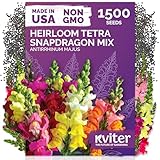


Plant Profile & Key Characteristics
Also known as: Common snapdragon
Overview: Snapdragon is a herbaceous perennial 0.4-1 m tall, evergreen in mild areas but most often grown as an annual, with spikes of two-lipped ‘dragon’ flowers in many colours. It is a popular ornamental and cut flower.
Quick Specifications
| Specification | Attribute |
|---|---|
| Plant Type / Life Cycle | Perennial, usually grown as an annual |
| Foliage Type | Evergreen in mild climates |
| Mature Size | 0.4-1 m (16-40 in) |
| Growth Rate | Fast |
| Root System | Fibrous |
| Toxicity | Non-toxic / edible flowers |
| Hardiness | USDA zones 8-11 as perennial; 3-8 as annual |
Growth Form & Structure
- Height & Spread: 0.4-1 m (16-40 in); grows well in containers of 5-12 L (1.5-3 gal).
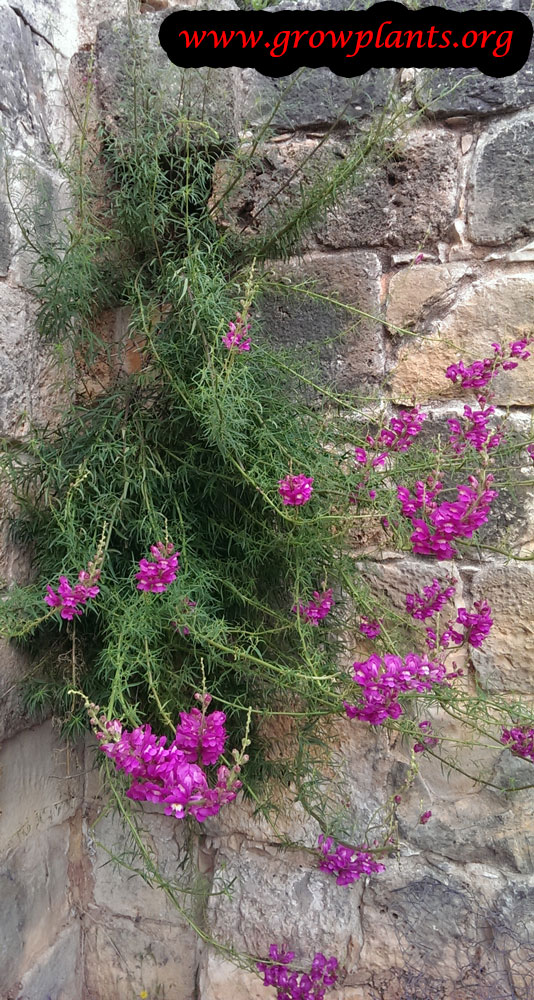
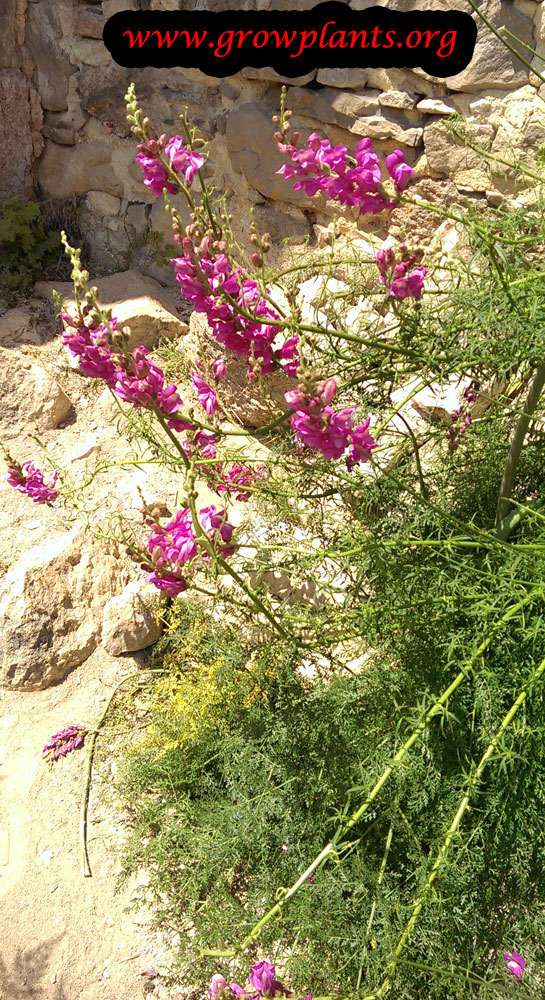
- Growth Habit & Form: Upright herbaceous plant with flower spikes rising above the foliage.
- Lifespan & Maturity: Fast-growing; perennial in mild climates but usually replaced each year.
Anatomy & Physical Features
- Leaves & Foliage: Green, hairy, elliptic leaves arranged around the stem.
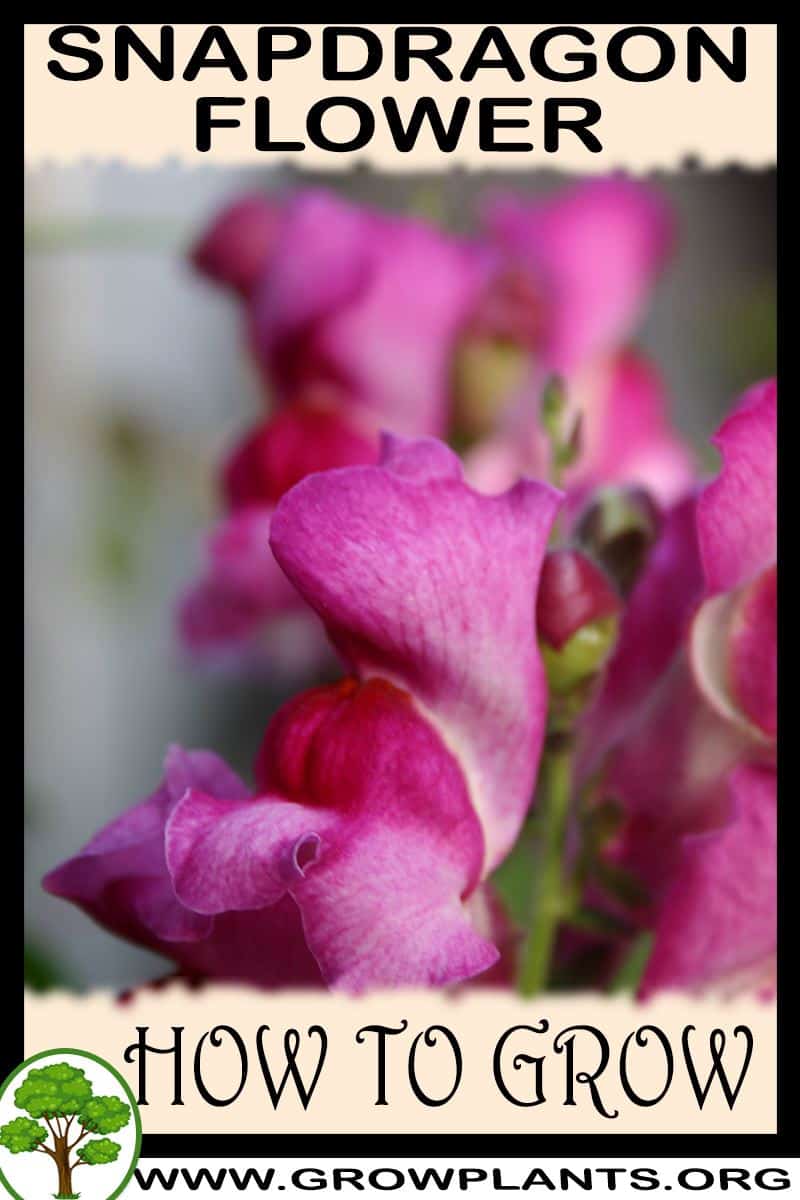
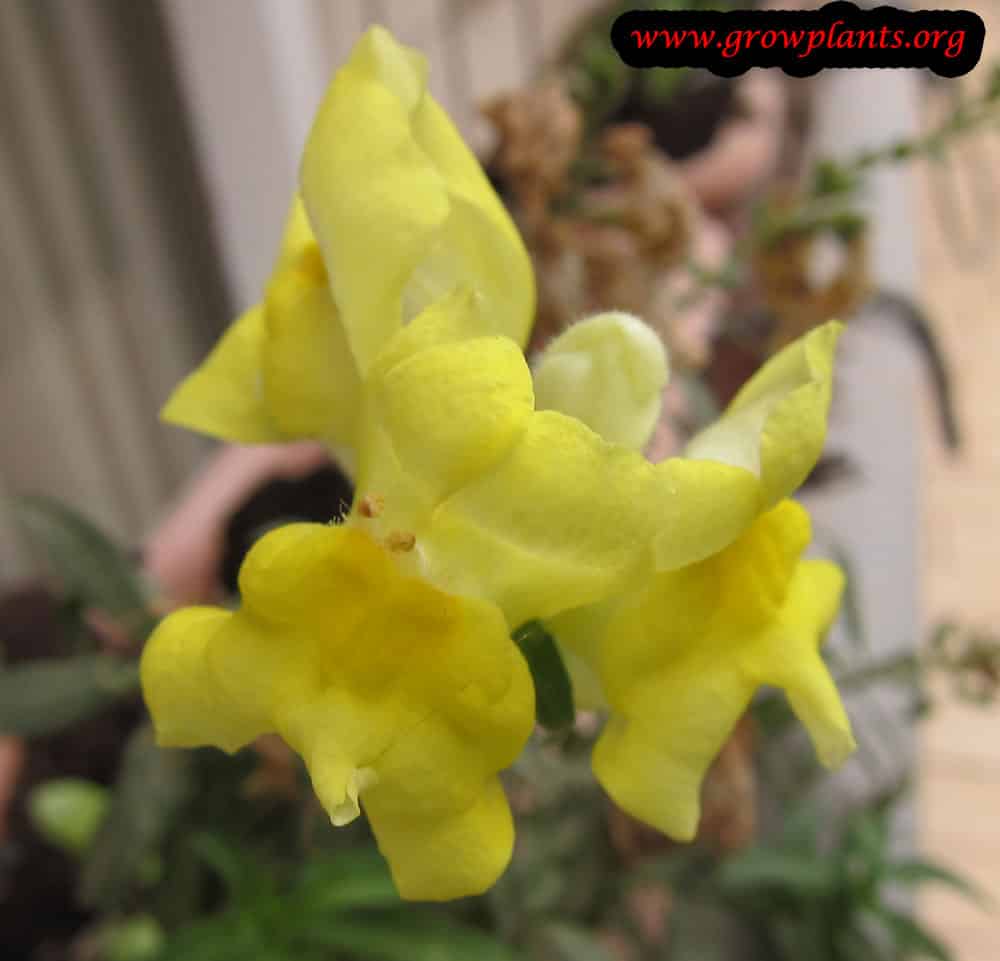
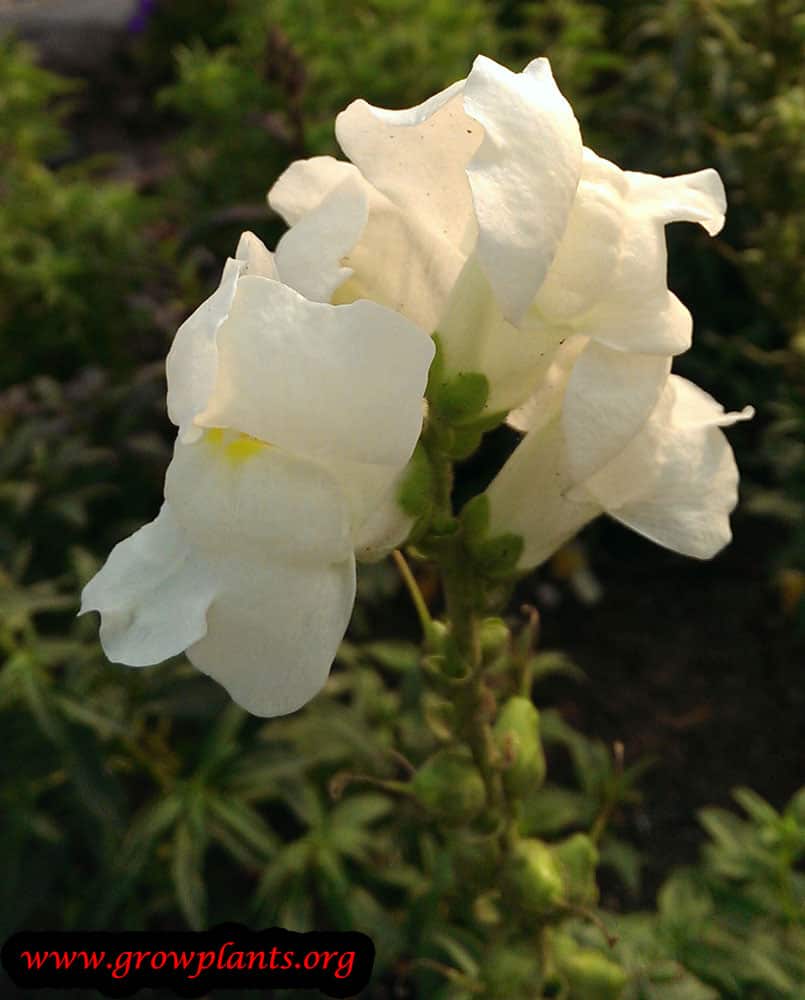
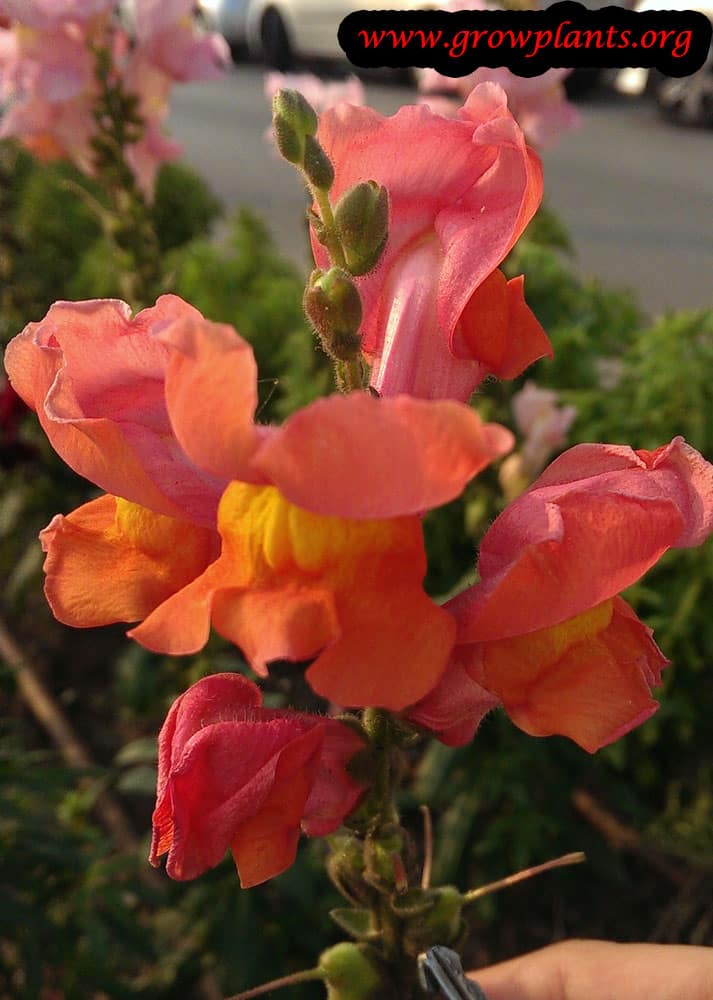
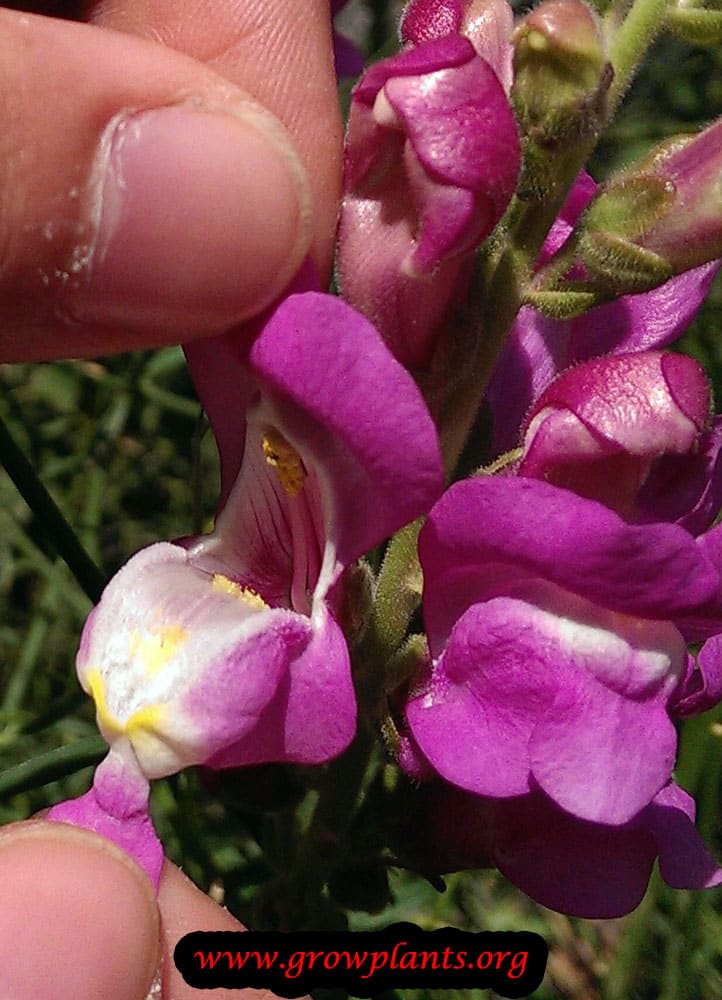
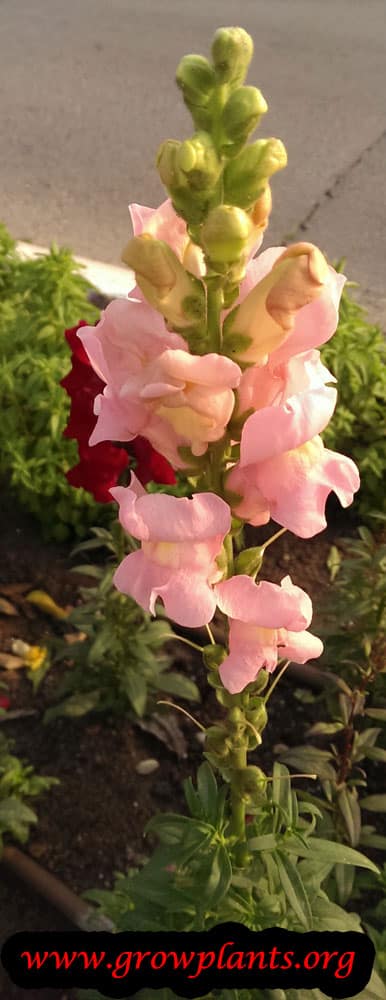
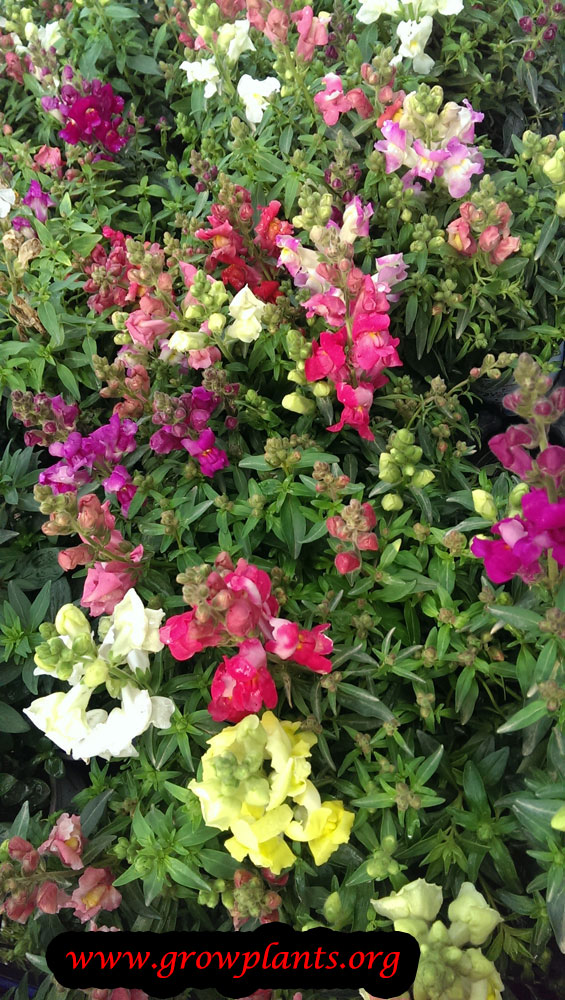
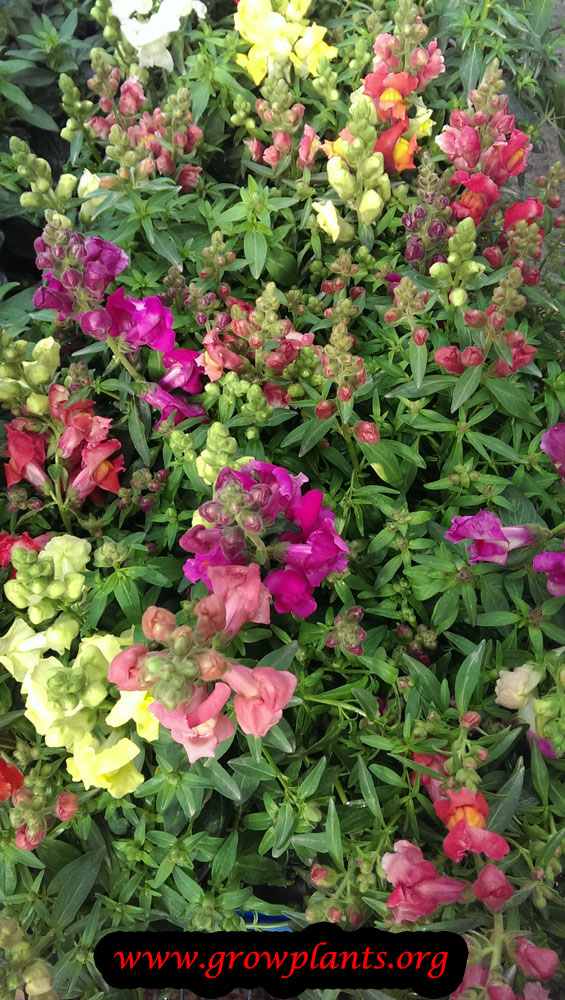
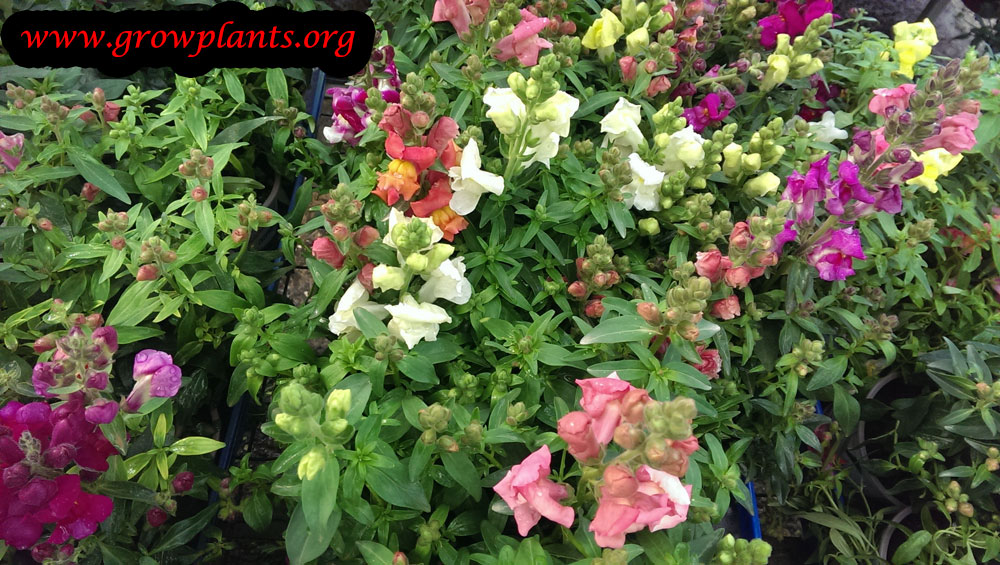
- Flower Characteristics: Two-lipped ‘dragon-mouth’ flowers in red, yellow, white, orange or pink, often multicoloured (see the Bloom accordion).
Primary Uses & Landscape Value
- Functional & Ornamental Roles: Ornamental for beds, borders and containers, and a classic cut flower.
Care Guide: Planting, Soil & Watering
Overview: Snapdragon is a fast-growing, sun-loving cool-season plant that prefers well-drained, organic-rich, well-aerated soil. It likes even moisture but tolerates some drought, needing only low to moderate water.
Quick Care Requirements
| Requirement | Ideal Condition |
|---|---|
| Planting Season | In cool climates plant in spring (and summer); in hot or mild-winter areas plant autumn to winter |
| Growth Rate | Fast |
| Soil Type | Well-draining, organic-rich, well-aerated |
| Water Need | Low to Moderate (prefers even moisture) |
Planting & Establishment
- Best Planting Season: In cooler climates plant in spring and on into summer; in hot or mild-winter areas plant from autumn into winter.
- How to Plant:
- Hole Preparation: Dig a hole as deep as the root ball plus 100–200% extra, then reduce it back to root-ball size after amending.
- Soil Amendments: Blend organic matter, humus and dried leaves into the backfill and mulch the surface to hold moisture.
- Planting Depth: Loosen the root ball slightly, set the collar at soil level, cover without hard compacting, and mulch.
- Growth Speed & Expectations: Fast, sending up its dragon-lipped flower spikes quickly in cool conditions.
Soil, Watering & Drainage Care
- Soil Mix & Drainage Needs: Well-aerated, organic-rich soil with good drainage keeps the roots healthy and flowering strong.
- Watering Schedule & Technique:
- Young / Newly Planted: Water every day for about the first two weeks after planting.
- Established: Water when the top of the soil dries; it prefers even moisture but can take short dry spells.
- Seasonal Adjustments: Steady moisture in its cool growing season; it slows and may decline in the heat of summer.
Climate, Light & Hardiness
The snapdragon (Antirrhinum majus) is a cool-season plant for Mediterranean, subtropical, desert and temperate climates, flowering best in the mild temperatures of spring, autumn and, in warm regions, winter. It grows in full sun to light shade; the site rates it as a short-lived perennial in zones 8–11 and grown as an annual in zones 3–8.
Quick Climate Specifications
| Climate Zones | Mediterranean, subtropical, desert, temperate |
|---|---|
| USDA Hardiness Zones | 8–11 as a perennial; 3–8 grown as an annual (per site data) |
| Optimal Temp Range | Cool, roughly 10–20 °C (50–68 °F) |
| Frost Tolerance | Low to Moderate (half-hardy; withstands light frost, not hard freezes) |
| Light Conditions | Full sun to partial shade |
| Wind Tolerance | Moderate |
Sunlight & Light Exposure
Optimal Light Setup
Grows best in full sun, which gives sturdy stems and the fullest flowering.
Direct Sun Requirement
Full sun is preferred, but it accepts partial shade, which can actually help prolong bloom as weather warms.
Shade & Heat Management
In hot climates a little afternoon shade helps the plant hold up as temperatures climb toward its summer limit.
Best Exposure / Orientation
A sunny, well-ventilated spot with good air movement suits it and helps limit the rust the site flags as a problem.
Temperature Extremes & Hardiness
USDA Hardiness & Regional Limits
The site's zone data is twofold: a short-lived perennial in mild zones 8–11 and grown as an annual in colder zones 3–8. Timing follows climate - a spring (and summer) planting in cold-winter zones, and an autumn-to-winter planting in warm zones 10b–11 - because heat, not cold, ends its season in mild regions.
Cold Damage & Frost
Half-hardy: established plants shrug off light frost and cool nights, which is why they can flower through winter in mild-winter zones, but hard freezes damage them. Cool weather is an asset, not a threat, within reason.
Extreme Heat Tolerance
Low - heat is the limiting factor. As summer temperatures rise, flowering slows and the plants decline, which is why in hot climates snapdragons are grown as a cool-season crop for autumn, winter and spring colour rather than through the heat of summer.
Wind, Humidity & Microclimate
Humidity Preferences
Prefers cool, well-ventilated conditions; damp, still, humid air encourages rust disease.
Wind Tolerance
Moderate; the taller cultivars carry heavy flower spikes that can lean or snap in strong wind, so shelter or support tall types.
Microclimate Recommendations
A sunny, airy site and cool-season timing give the longest display; think of it as a spring-and-autumn (or mild-winter) plant rather than a mid-summer one.
Growing in Pots, Balconies & Indoors
The snapdragon (Antirrhinum majus, 0.4-1 m / 16-40 in) is a cool-season favourite that grows beautifully in pots and window boxes but is not a houseplant – indoors it lacks light, and it dislikes heat. On a bright, sunny sill a compact cultivar can still flower.
Quick Details
- Container Size: 5-12 L (1.5-3 gal), the grower’s recommended pot size
- Indoor Suitability: Not a houseplant; a compact cultivar can flower on a bright, sunny windowsill
- Best Spot: Full sun to light shade, in cool conditions
- Soil & Drainage: Well-ventilated, free-draining, organic-rich mix – potting mix or peat with perlite or vermiculite (the grower’s mix)
- Watering in Pots: Keep the mix moist and let the excess drain right out; do not stand the pot in a saucer of water
Indoors & On the Windowsill
- Houseplant limits: It will not thrive as a room plant – too little light, and it resents warm, stuffy air.
- Windowsill growing: Choose a compact or dwarf cultivar and a bright, sunny sill with direct light, and keep it cool.
On a Balcony or Patio
- Sun & support: Give it full sun to light shade and cool air; it is ideal for pots and window boxes. Taller types may need light staking, and pots dry quickly in sun.
Choosing the Pot, Soil & Long-Term Care
- Pot & drainage: A 5-12 L (1.5-3 gal) pot with strong drainage holes; skip a standing saucer to avoid root rot. Terracotta dries faster, glazed or plastic holds moisture longer.
- Potting mix: Well-ventilated and free-draining, rich in organic matter – potting mix or peat with perlite or vermiculite.
- Feeding: Feed through the flowering season, as potted plants leach nutrients faster than those in the ground.
- If kept as a short-lived perennial: replace the potting soil about every two years (the grower’s guidance).
Grower’s Container Tip
- Pot, water, and drainage: Use a 5-12 L (1.5-3 gal) pot; keep the mix moist and let the water run right out of the pot rather than standing in a saucer; and if you keep it on as a perennial, swap the potting soil every couple of years.
Fertilizing & Feeding
Snapdragon flower is a moderate feeder that blooms best on balanced feeding and good light; skip high-phosphorus ‘bloom boosters’ and rest it over dormancy.
Quick Fertilizing Specs
| Feeding Level | Moderate |
|---|---|
| young_feeding | Balanced complete fertilizer as growth starts in spring. |
| mature_feeding | Light, steady balanced feeding through the flowering season. |
| Main Nutrient Priority | Balanced nutrition with adequate nitrogen; no need for extra phosphorus. |
| Best Feeding Period | Through active growth and the flowering season. |
| Organic Options | Compost and organic matter worked into bed or container. |
| Micronutrients | Watch for iron and magnesium, especially in containers or alkaline soil. |
| Soil pH | Prefers well-drained soil; slightly acidic to near neutral is ideal. |
| Reduce/Stop Feeding | Stop feeding through winter dormancy or the cool-season rest. |
Feeding by Growth Stage
Spring growth (leaf and stem)
Push fresh healthy foliage and stems on Snapdragon flower as growth resumes.
| Nutrient direction | A balanced complete fertilizer with adequate nitrogen to fuel new growth. |
|---|---|
| Timing | As new growth starts in spring. |
| Frequency | Light, regular feedings as active growth gets going. |
| Fertilizer types | A balanced complete fertilizer, Compost or organic matter in the bed or container |
| Routine trace nutrients | iron |
| Precautions | Avoid pushing lush growth with excess nitrogen, which can come at the expense of flowers. |
Blooming
Support a strong flush of dragon-lipped flowers without forcing soft growth.
| Nutrient direction | A balanced complete fertilizer with adequate nitrogen carries bloom; high-phosphorus ‘bloom boosters’ are not needed. |
|---|---|
| Timing | Through the flowering period. |
| Frequency | Steady light feedings as flowering continues. |
| Fertilizer types | A balanced complete fertilizer |
| Routine trace nutrients | iron |
| Precautions | Do not rely on high-phosphorus products to drive bloom; balanced feeding and good light matter more. |
Repeat bloom / deadheading
Keep Snapdragon flower flowering in successive flushes over a long season.
| Nutrient direction | Maintain gentle balanced feeding to sustain repeat flushes after deadheading. |
|---|---|
| Timing | Between and during successive flushes over the flowering season. |
| Frequency | Keep feeding light and regular to sustain repeat bloom. |
| Fertilizer types | A balanced complete fertilizer, Light liquid feed for container plants |
| Routine trace nutrients | iron |
| Precautions | Container plants lose nutrients with watering, so keep feeding light and steady. Snapdragon is a cool-season bloomer, often grown as an annual. |
Dormancy / seasonal rest
Let Snapdragon flower rest through its cool or off-season slowdown.
| Nutrient direction | None – withhold fertilizer while the plant is resting. |
|---|---|
| Timing | During winter dormancy or the cool-season slowdown when growth stops. |
| Frequency | No feeding at this stage. |
| Fertilizer types | No feeding at this stage – withhold fertilizer while the plant is resting. |
| Precautions | Do not fertilize until active growth resumes. |
Nutrient Deficiency Signs & Corrections
Uniform pale-green to yellow older leaves with weak, leggy growth and few flowers.
| Possible causes | Low soil or media nitrogen, Leaching from frequent watering in containers, Cold, wet soil slowing uptake |
|---|---|
| Appears first on | Older, lower leaves first. |
| What to check | Overall colour and vigor, Watering and leaching pattern, Recent feeding history |
| Possible correction | Resume a balanced complete fertilizer during active growth. |
Interveinal yellowing on the newest leaves while the veins stay green.
| Possible causes | High or alkaline soil pH locking up iron, Overwatering or poor drainage stressing roots, Low available iron |
|---|---|
| Appears first on | Newest leaves at the growing tips. |
| What to check | Soil or media pH, Drainage and watering, Whether new growth is worst affected |
| Possible correction | Correct pH and drainage; where needed apply a chelated iron product per its label. Prefers well-drained soil; slightly acidic to near neutral is ideal. |
Scorching and browning along the margins of older leaves, with weak stems.
| Possible causes | Low soil or media potassium, Leaching from frequent container watering, Imbalanced feeding |
|---|---|
| Appears first on | Margins of older, lower leaves. |
| What to check | Leaf margins versus centres, Watering and leaching, Feeding balance |
| Possible correction | Use a balanced complete fertilizer that supplies potassium through the season. |
Interveinal yellowing on older leaves, sometimes with a reddish or bronzed cast.
| Possible causes | Low soil or media magnesium, Heavy potassium feeding competing with magnesium, Leaching in containers |
|---|---|
| Appears first on | Older, lower leaves first. |
| What to check | Pattern on old versus new leaves, Feeding balance, Media age and leaching |
| Possible correction | Where confirmed, apply a magnesium product per its label and rebalance feeding. |
Pruning, Training & Seasonal Maintenance
Snapdragon is a cool-season herbaceous plant grown mostly as an annual (a short-lived perennial only in mild zones), and its “pruning” is really three simple flower-management jobs: pinch young plants to multiply the flowering spikes, deadhead or cut spent spikes to keep it blooming, and shear the whole plant back after the main flush to coax a fresh round of flowers when temperatures are again cool. It flowers on terminal spikes of the current growth, so cutting stems — whether for the vase or to deadhead — is itself the act that drives more bloom. It has no woody structure, so there is no framework to build.
Quick Pruning & Maintenance Specs
| Pruning Tolerance | High – thrives on pinching, cutting & deadheading |
| Primary Pruning Window | Through bloom in cool weather (pinch young, deadhead, cut back) |
| Typical Frequency | Pinch once when young; deadhead ongoing; cut back after each flush |
| Main Objective | More flowering spikes and a longer, repeated bloom |
| Young Plant Priority | Pinch the growing tip to force multiple spikes |
| Mature Plant Priority | Deadhead / cut spent spikes; shear back to rebloom |
| Best Tool Type | Fingertips or precision snips (soft stems) |
| Avoid Heavy Pruning During | Peak summer heat (it stalls) and transplant stress |
Pruning by Plant Age & Size
Newly Established
When a young plant reaches a few pairs of leaves, pinch out the single growing tip. This is the key early step: it converts one central spike into several branching stems and roughly multiplies the flower count — especially useful for cut-flower rows. Remove only damaged growth otherwise.
Young / Formative
No structural training — the plant self-branches after pinching. Tall cut-flower cultivars may need netting or staking (they can flop), but that is support, not pruning.
Mature / Established
Keep deadheading or cutting spikes as they fade; each cut back to a leafy node prompts side shoots to throw new spikes. After the main flush, shear the plant back by about a third to renew it for a later cool-season bloom.
Seasonal Pruning Schedule
Cool growing season (ongoing): pinch early, then deadhead/cut spikes continuously — removing faded spikes before they set seed keeps the plant flowering rather than shutting down. Cutting for the vase does the same job.
After the main flush: shear the whole plant back by roughly a third to force fresh basal shoots; in mild climates this brings a strong autumn or second cool-season display. In hot climates the plant stalls in summer heat — cut back and wait for cooler weather rather than expecting bloom through the heat.
Structural Pruning & Training
There is no woody structure to shape. “Structure” here is simply the branching you create by pinching, plus support (netting/staking) for tall types so spikes stay straight. Remove weak, crowded stems at the base to improve airflow — useful given its rust susceptibility.
Special Growth to Remove
Remove spent flower spikes (deadhead) to prevent seed set and prolong bloom, and cut out any rust-spotted or mildewed foliage promptly. There are no suckers, runners or woody growth to manage; self-sown seedlings can appear (it is noted as self-seeding/“invasive” in its facts) and are pulled, not pruned.
Container & Small-Space Pruning
Snapdragon is a fine pot and windowbox plant; the same routine applies — pinch young for a bushy, multi-spike plant, deadhead often, and shear back after the flush. Because container plants are usually shorter-lived, the focus is on maximising bloom over one cool season rather than any long-term or root-pruning regime.
Tools
Fingertips pinch the soft tip; precision snips handle deadheading, cutting spikes for the vase and the after-flush shear. No heavier tool is needed on these soft stems.
Tool Hygiene & Disease Risk
Increased when rust or mildew is present. Snapdragon rust (and powdery mildew) is a real and listed problem; when cutting out infected leaves or stems, use clean snips and avoid dragging spores through healthy foliage, and remove — do not compost near the plants — the infected material. For ordinary deadheading on healthy plants, routine clean tools are enough.
Cut Placement & Technique
Pinch or cut just above a leaf pair/node so branching shoots break from that point — this is what multiplies the spikes. Deadhead a finished spike back to the first strong side shoot or leafy node below it. When shearing to rebloom, cut back into healthy lower foliage.
Heavy Pruning & Rejuvenation
A tired, post-flush plant tolerates a hard shear (down by a third to a half into leafy growth) and, in cool weather, rebounds with fresh basal shoots and a new round of spikes. Time this cutback to cool conditions — it will not regrow well in summer heat.
Post-Pruning Care
Water and keep it in full sun to half shade after cutting back so regrowth and rebloom are strong; good spacing and airflow after any shear help fend off rust. Light feeding supports the rebloom flush but is not obligatory simply because you cut it.
Common Pruning Mistakes
- Not pinching young plants, so each gives one spike instead of many.
- Letting spent spikes set seed, which stops further flowering.
- Expecting bloom (or shearing to rebloom) through peak summer heat, when the plant naturally stalls.
- Cutting through rust-infected foliage and spreading spores instead of removing and discarding it.
When NOT to Prune
Avoid a hard cutback during peak summer heat (little regrowth until it cools) and right after transplanting. Don’t shear a plant already weakened by heavy rust — remove the worst foliage and improve airflow first.
Recommended Tools (by task)
- precision_snips – pinching, deadheading, cutting spikes for the vase and the after-flush shear on soft stems.
- soft_ties_stakes – support or netting for tall cut-flower cultivars so spikes stay upright (support, not cutting).
Propagation Guide
Snapdragons are easy and best grown from seed, which is surface-sown because it needs light to germinate; cuttings are a useful extra mainly for keeping perennial cultivars going. Grafting is not used.
Quick Propagation Specs
| Best Propagation Method | Seed |
| Alternative Methods | Softwood cuttings (chiefly for perennial cultivars) |
| Propagation Difficulty | Easy |
| Seed True-to-Type | Cultivar-dependent – open-pollinated strains fairly uniform; F1 hybrid offspring vary |
| Vegetative True-to-Type | Yes |
| Best Propagation Season | Sow in the cool season for the zone (see below); this plant prefers cool weather |
| Seed Germination Time | 1–3 weeks |
| Germination Temperature | 10–20°C (50–68°F) |
| Seed Sowing Depth | Surface — press onto the soil and do not cover (needs light) |
Growing from Seed
Seed Handling & Viability
Store seed in a dry, dark place, ideally refrigerated, until sowing. The dry brown seed pods are collected once ripe.
Sowing Season
As annuals: sow in spring in hardiness zones 2–10a, and in autumn in zones 10b–11. As perennials: spring in zones 8–9, spring to summer in zone 10a, and autumn to winter in zones 10b–11.
Sowing Depth & Spacing
Surface-sow — set the seed on the moist soil and do not cover it, since light aids germination. Space plants about 15 × 20 cm (6 × 8 inches).
Germination Conditions & Time
Keep the soil moist with an average amount of water in a bright, sunny position at 10–20°C (50–68°F); germination takes 1–3 weeks.
Seedling Care
Grow seedlings on in a sunny location; pinching young plants encourages branching.
Stem Cuttings
Cutting Type & Timing
Softwood tip cuttings from non-flowering shoots root readily and are the practical way to keep a perennial cultivar or a favourite colour.
Rooting Setup & Hormone
Root in a moist, free-draining medium in bright, cool conditions. Rooting hormone is optional.
Bloom & Edible Flower Guide
Quick Details
- Bloom Season: A cool-season bloomer – mainly autumn, winter and spring in hot climates, and spring through autumn where summers are mild
- Time to First Bloom: Flowers in its first season from seed
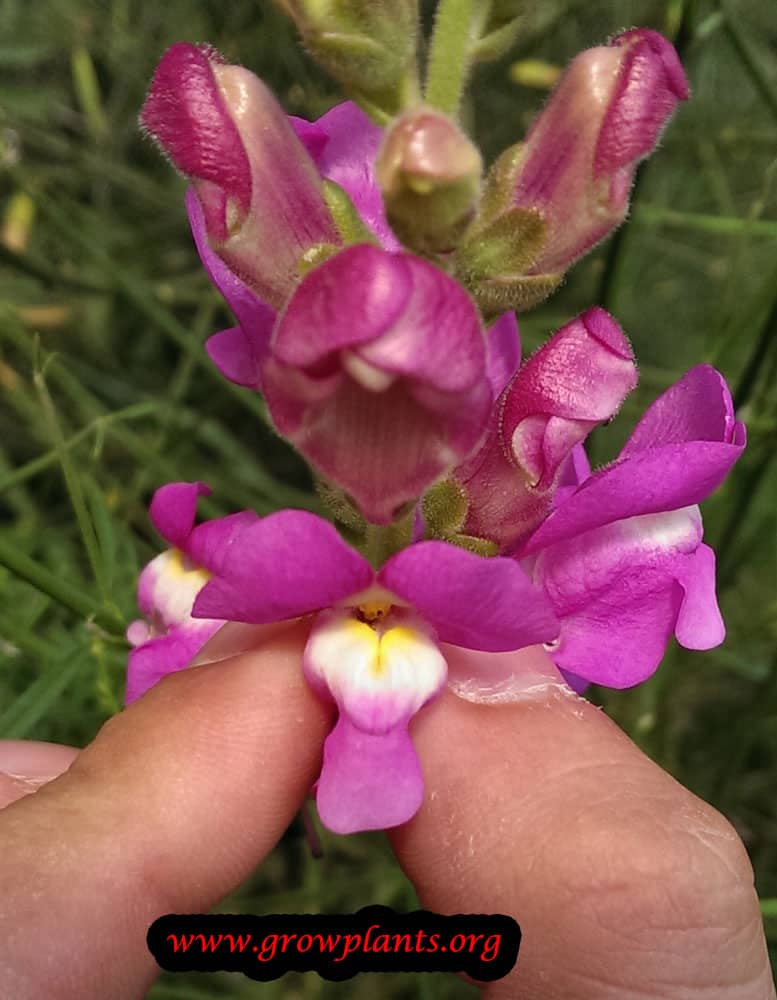
- Flower Appearance: Two-lipped “dragon-mouth” flowers that snap open when pinched, in red, yellow, white, orange or pink – often more than one colour in the same flower – on tall spikes
- Edibility: The flowers are edible – mild and slightly bitter, used mainly as a colourful garnish
Detailed Blooming Overview
Snapdragons flower on upright spikes packed with the hinged, two-lipped blooms that give the plant its name – press the sides and the “dragon’s mouth” opens and closes. They are cool-season performers: in hot regions they bloom through autumn, winter and into spring, while in milder summers they carry on from spring into autumn. Colours range across red, yellow, white, orange and pink, frequently blended within a single flower, which makes them a favourite for both borders and the vase.
Flower Characteristics
- Two-lipped, hinged flowers shaped like a dragon’s mouth.
- Colours: red, yellow, white, orange, pink – often bicoloured on one flower.
- Massed on tall spikes, excellent as cut flowers.
Bloom Care & Thinning
- More spikes: Pinch young plants to branch them, and deadhead or cut spikes regularly to keep new bloom coming.
- Pollination: Pollinated mainly by bumblebees heavy enough to force the closed lips open.
- Eating the flowers: The blooms are edible but mildly bitter, so they are used mostly as a bright garnish rather than for flavour.
Bloom Health & Protection
- Snapdragon rust (Puccinia antirrhini): Brown, powdery pustules form on the undersides of leaves and can spoil a planting. Spacing for airflow, watering at the base rather than overhead, and a preventive fungicide (such as a sulfur-based product) all help.
- Botrytis (grey mould): In cool, damp spells the flower spikes can develop grey mould; removing spent blooms and improving air movement keeps it in check.
Pests, Diseases & Troubleshooting
Overview: Snapdragon’s defining problem is snapdragon rust (Puccinia antirrhini), which pustules the leaf undersides brown and can wreck a planting in warm, humid weather; Botrytis, downy and powdery mildews, and root/stem/wilt rots are its other diseases. Its main pests are aphids, spider mites, thrips and cutworms. As a cool-season plant it also stalls and grows leggy in summer heat. Rust-resistant varieties, airflow, dry foliage and cool-season timing are the foundation of clean, floriferous plants.
Quick Troubleshooting Overview
| Issue / Pest | Main Symptom | Primary Solution |
|---|---|---|
| Snapdragon rust | Brown pustules under leaves, yellow spots above | Resistant cultivars, airflow, dry foliage, sulphur fungicide |
| Aphids | Sticky, curled shoots and spikes | Water jet, beneficials, soap if needed |
| Thrips | Silver streaks, flecked flowers | Blue traps, spinosad if severe |
| Botrytis | Grey mould on flowers/stems | Airflow, base watering, remove spent blooms |
| Downy mildew | Yellow blotches, grey down beneath | Airflow, resistant seed, no overhead water |
| Heat stall | Flowering stops in summer heat | Grow in cool season, afternoon shade, shear back |
Common Pests & Management
- Aphids (Aphidoidea / Myzus persicae):
- Symptoms: Colonies of soft green, grey or black insects on new shoots, flower spikes and leaf undersides, with honeydew, sooty mould and curled, distorted growth; they also transmit viruses.
- Prevention & Control: Rinse off with water, encourage ladybirds and lacewings, and avoid excess nitrogen; insecticidal soap or light horticultural oil clears heavy colonies.
- Spider mites (Tetranychus urticae):
- Symptoms: Fine pale stippling and bronzing of leaves with faint webbing on undersides in hot, dry weather; foliage dulls and dries.
- Prevention & Control: Raise humidity, hose down foliage, and introduce predatory mites; horticultural oil or insecticidal soap on the undersides controls outbreaks.
- Thrips (Frankliniella occidentalis):
- Symptoms: Silvery streaking and black frass specks on leaves and petals, distorted buds and flecked blooms; thrips also spread tomato spotted wilt virus.
- Prevention & Control: Remove spent flowers, use blue sticky traps, and foster predatory mites and pirate bugs; spinosad or insecticidal soap helps when blooms are being spoiled.
- Cutworms & caterpillars (Agrotis / Spodoptera spp.):
- Symptoms: Seedlings cut off at soil level overnight, or chewed leaves and flowers from various caterpillars.
- Prevention & Control: Fit seedling collars, clear sheltering weeds, hand-pick at dusk, and use Bacillus thuringiensis (Bt) for persistent caterpillars.
Diseases & Fungal Issues
- Snapdragon rust (Puccinia antirrhini):
- Symptoms: The signature snapdragon disease: rings of chocolate-brown powdery pustules on leaf undersides (and stems), with yellow spots above; heavy infection yellows, distorts and kills foliage from the base up, weakening and disfiguring plants.
- Treatment & Management: Grow rust-resistant cultivars wherever possible, space plants for free airflow, water at the base to keep foliage dry, and avoid overhead irrigation and evening wetness. Remove and destroy infected leaves and debris, rotate planting sites, and apply a protective sulphur or rust-specific fungicide early where the disease is known.
- Botrytis / grey mould (Botrytis cinerea):
- Symptoms: Fuzzy grey-brown mould on flowers, buds and soft stems in cool, damp, crowded conditions; blooms rot and stems may collapse.
- Treatment & Management: Improve airflow and spacing, water at the base in the morning, and promptly remove faded flowers and dead tissue; fungicide is rarely needed with good sanitation.
- Downy mildew (Peronospora antirrhini):
- Symptoms: Pale yellow blotches on the upper leaf with a greyish downy growth beneath in cool, damp weather; young plants become stunted and distorted.
- Treatment & Management: Space for airflow, avoid overhead watering, and remove infected plants; use resistant seed and, under pressure, a suitable downy-mildew fungicide.
- Powdery mildew (Golovinomyces / Oidium spp.):
- Symptoms: White powdery patches on leaves and stems in crowded, humid but dry-leaved conditions; foliage yellows and drops.
- Treatment & Management: Give sun and airflow, avoid crowding, and remove affected growth; potassium-bicarbonate or sulphur spray checks it.
- Root, stem & wilt rots (Pythium / Phytophthora / Fusarium / Verticillium spp.):
- Symptoms: Damping-off of seedlings, blackened stem bases, wilting and yellowing, and browned roots in wet or infested soil; wilts cause one-sided yellowing and vascular browning.
- Treatment & Management: Sow in fresh, free-draining mix, avoid overwatering and waterlogging, rotate sites, and remove infected plants; resistant varieties and clean soil are the main defences against the wilts.
Growing Difficulties & Abiotic Problems
- Heat stall / poor summer bloom:
- Cause & Symptoms: Snapdragons are cool-season plants; summer heat halts flowering, causes leggy growth and worsens rust.
- Correction Strategy: Grow in the cool parts of the year, provide light afternoon shade in hot climates, and shear back heat-stalled plants for a cooler-season flush.
- Legginess & flopping:
- Cause & Symptoms: Low light, crowding or lack of pinching gives tall, weak, floppy stems that lodge.
- Correction Strategy: Grow in full sun, pinch young plants to branch, space adequately, and support tall cut-flower types.
- Poor reflowering:
- Cause & Symptoms: Leaving spent spikes to set seed cuts short further blooming.
- Correction Strategy: Deadhead faded spikes promptly to encourage repeat flowering, and feed lightly during the bloom season.
What Helps — Products & Tools
Resistant cultivars, good spacing, base watering and cool-season timing prevent most trouble. Useful product types are sulphur or a rust-specific fungicide for snapdragon rust, insecticidal soap or horticultural oil for aphids and mites, blue sticky traps and spinosad for thrips, Bacillus thuringiensis (Bt) for caterpillars, and potassium-bicarbonate for powdery mildew; improve drainage rather than spray for root rots.