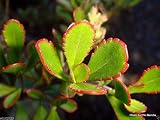



Plant Profile & Key Characteristics
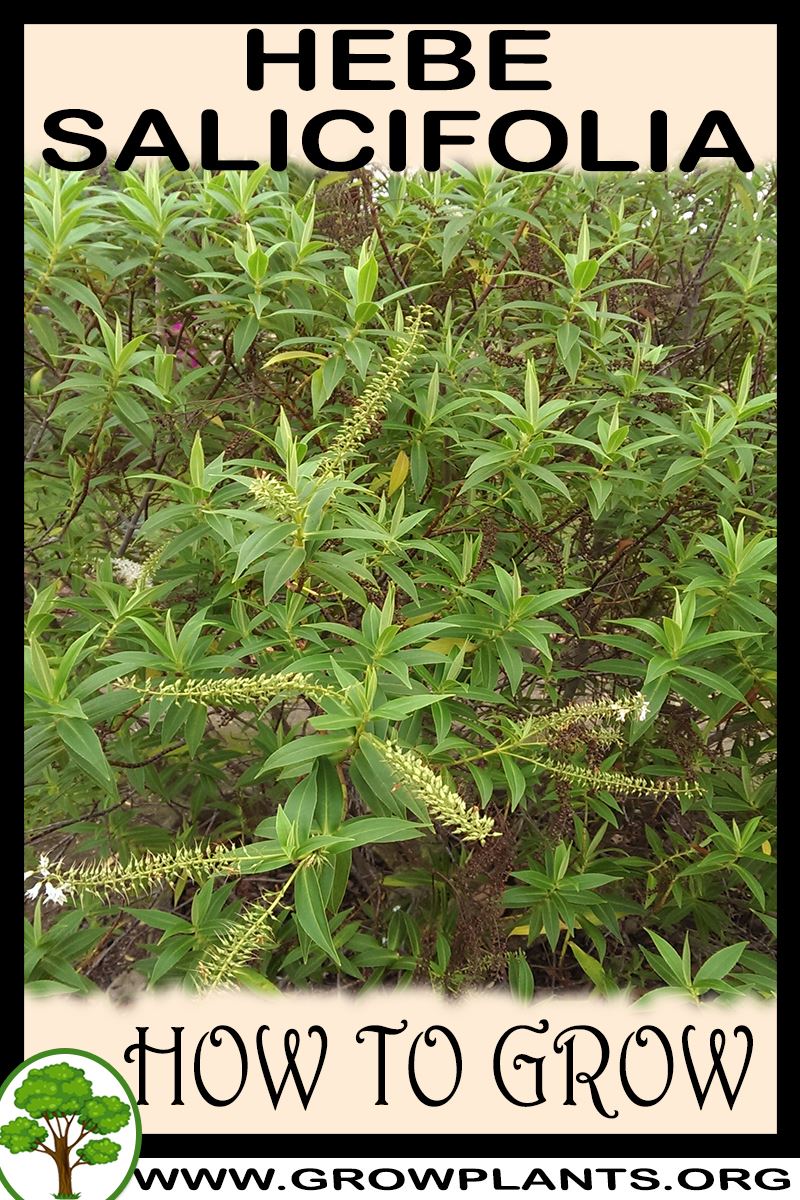
Overview: An evergreen shrub reaching 1-2 m (3-6 ft) with slender willow-like foliage, grown as a fragrant flowering ornamental. This perennial is prized for its bottlebrush spikes of scented flowers over a long season.
Quick Specifications
| Specification | Attribute |
|---|---|
| Plant Type / Life Cycle | Perennial |
| Foliage Type | Evergreen |
| Mature Size | 1-2 m tall (3-6 ft) |
| Growth Rate | Moderate to fast |
| Toxicity | Non-toxic |
| Hardiness | USDA zones 8-10 |
Growth Form & Structure
- Height & Spread: Bushy shrub 1-2 m (3-6 ft) tall; also suited to large containers.
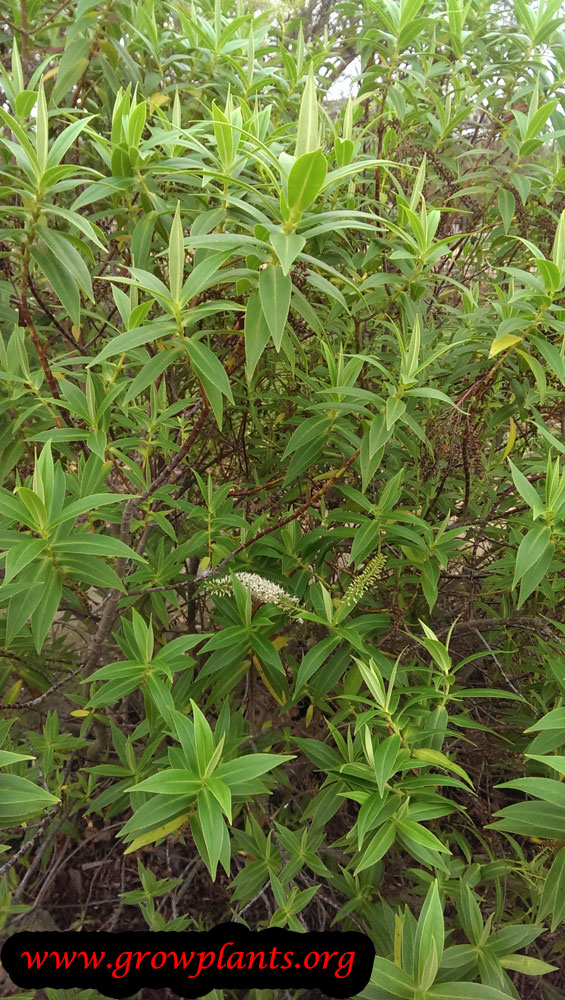
- Growth Habit & Form: Rounded, densely branched evergreen shrub clothed in narrow willow-like leaves.
- Lifespan & Maturity: Perennial shrub of moderate to fast growth; sensitive to prolonged heat.
Anatomy & Physical Features
- Leaves & Foliage: Narrow, linear willow-like leaves, green.
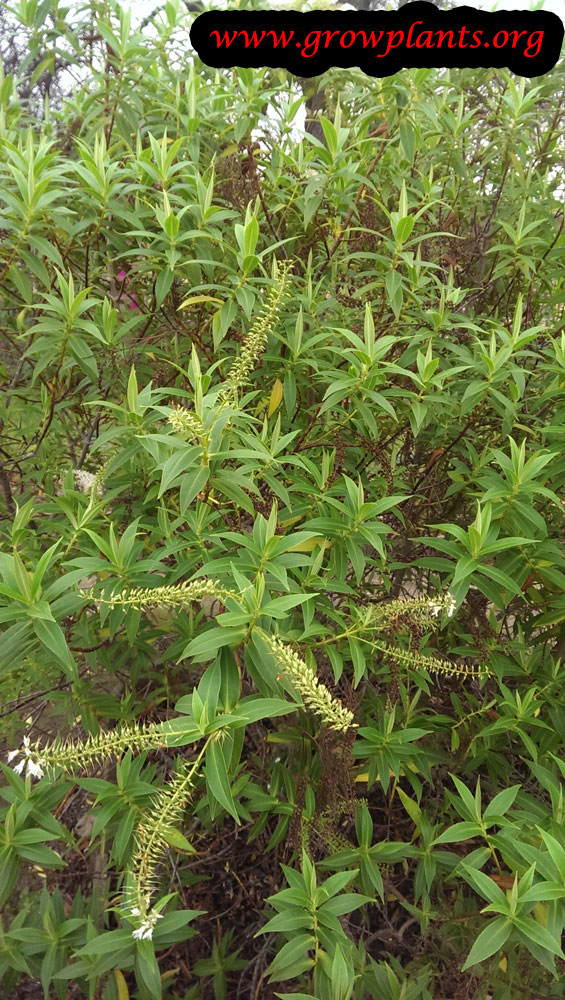
- Flower Characteristics: Fragrant bottlebrush spikes of small pink, purple or white flowers with needle-like petals.
Primary Uses & Landscape Value
- Functional & Ornamental Roles: Fragrant flowering shrub for borders and containers; attractive to pollinators.
Care Guide: Planting, Soil & Watering
Overview: Hebe salicifolia is an evergreen shrub that grows best in full sun to light shade in cooler climates and dislikes prolonged heat. It prefers a fertile, well-draining soil kept evenly moist, without waterlogging.
Quick Care Requirements
| Requirement | Ideal Condition |
|---|---|
| Planting Season | In spring or autumn, during the cooler, milder part of the year |
| Growth Rate | Moderate to Fast |
| Soil Type | Fertile, well-draining |
| Water Need | Moderate – keep evenly moist |
Planting & Establishment
- Best Planting Season: Plant in spring or autumn when temperatures are mild; avoid establishing it in the heat of summer, as this shrub is sensitive to heat.
- How to Plant:
- Hole Preparation: Dig a hole about twice the width of the root ball and the same depth, loosening the surrounding soil so young roots spread easily.
- Soil Amendments: Mix compost or organic matter into the backfill to enrich the soil and improve both moisture retention and drainage.
- Planting Depth: Set the plant so the top of the root ball is level with the surrounding soil; do not bury the stem base.
- Growth Speed & Expectations: A moderate-to-fast grower reaching around 1-2 m (3-6 ft), filling out fairly quickly in suitable cool conditions.
Soil, Watering & Drainage Care
- Soil Mix & Drainage Needs: Provide fertile, free-draining ground or a good potting mix; steady drainage prevents root rot, while some moisture retention keeps it from drying out.
- Watering Schedule & Technique:
- Young / Newly Planted: Water regularly after planting to keep the root zone evenly moist while the shrub establishes.
- Established: Give a moderate amount of water, watering deeply and letting the surface dry slightly between waterings.
- Seasonal Adjustments: Water more during hot, dry spells and reduce watering over the cool winter months.
Climate, Light & Hardiness
Willow-leaf hebe is an evergreen shrub for mild temperate, Mediterranean and cooler subtropical climates, preferring cool winters and moderate summers. It grows in full sun, or half shade in hotter areas, and its sensitivity to heat - more than cold - is the main factor limiting where it thrives.
Quick Climate Specifications
| Climate Zones | Mild temperate, Mediterranean, cool subtropical; maritime |
| USDA Hardiness Zones | Approximately 8–10 (per site data) |
| Optimal Temp Range | Approximately 13–24 °C (55–75 °F) |
| Cold Damage Begins | Foliage can be harmed by hard frost, roughly below −5 °C (23 °F) |
| Frost Tolerance | Low to Moderate |
| Light Conditions | Full sun; half shade in hotter climates |
| Salt / Coastal Tolerance | High |
Sunlight & Light Exposure
Optimal Light Setup
Full sun in cool and mild climates. Where summers are hot, give it half shade to reduce heat stress.
Shade & Heat Management
Because it is noted as sensitive to heat, afternoon shade and good air movement in hot regions help prevent scorch and decline.
Best Exposure / Orientation
A cool, open, airy position - including exposed maritime sites - suits it better than a hot, still, sun-trapped corner.
Temperature Extremes & Hardiness
USDA Hardiness & Regional Limits
The site places it around zones 8–10 with a preference for cool winters. Hardiness varies by conditions, so treat exact minimums cautiously.
Cold Damage & Winter Protection
Light frost is generally tolerated by established plants, but hard or prolonged freezes can damage the evergreen foliage and stems.
Frost Sensitivity
Moderately frost-sensitive at the colder end of its range; young plants are more vulnerable than established ones.
Extreme Heat Tolerance
Low - explicitly noted as sensitive to heat. Hot, dry summers cause stress and dieback, and are the primary regional limit.
Wind, Humidity & Microclimate
Humidity Preferences
Enjoys mild, moist maritime air; dislikes hot, dry conditions.
Wind Tolerance
Moderate to high - a tough shrub that stands up to exposed, breezy sites.
Coastal / Salt Tolerance
High; hebes are classic seaside shrubs that tolerate salt-laden coastal wind well.
Microclimate Recommendations
A cool, breezy, coastal or mild-climate position is ideal; avoid hot, sheltered sun-traps, and note that containers heat up faster at the root zone.
Growing in Pots, Balconies & Indoors
Willow-leaf hebe is an evergreen shrub with fragrant bottlebrush flowers that grows well in a patio or balcony container, though the grower does not class it as a room houseplant. It is sensitive to heat and wants cool conditions, and being tender (zone 8-10) a pot lets you move it to shelter in cold-winter areas.
Quick Details
- Container Size: Medium to large – a 15-30 L (4-8 gal) pot suits this 1-2 m shrub
- Indoor Suitability: Not a warm-room houseplant; better outdoors or in a cool, bright, airy spot
- Best Spot: Full sun, but half shade in hotter climates – it dislikes heat (grower’s note)
- Soil & Drainage: Free-draining mix; it needs cool roots, not waterlogging
- Watering in Pots: Average – keep evenly moist in growth, easing off in cool weather; drain freely
Indoors & On the Windowsill
- Not a warm-room houseplant: The grower marks it unsuitable indoors – warm, still rooms stress this heat-sensitive, cool-loving shrub.
- Cool, bright cover: A cool porch, sunroom or unheated bright room suits it far better than a heated living room.
- Overwintering: In cold-winter areas move the pot to a cool, bright, frost-free place through the coldest spells, then back outside.
On a Balcony or Patio
- Light & heat: Give sun in mild climates, but light afternoon shade where summers are hot; keep the roots cool.
- Wind & water: Shelter from cold drying wind; pots against warm walls dry fast, so check moisture regularly.
Choosing the Pot, Soil & Long-Term Care
- Pot & drainage: A pot with strong drainage holes; skip a standing water saucer to prevent root rot. Terracotta breathes and keeps roots cooler, glazed or plastic holds moisture longer.
- Potting mix: A well-aerated, free-draining mix – potting compost with perlite or grit.
- Feeding: Feed lightly through the growing season; potted nutrients leach with watering, so feed little and often.
- Repotting: Refresh the mix and pot up every couple of years; a light trim after flowering keeps it compact.
Fertilizing & Feeding
A moderate feeder: give balanced nutrition as growth begins and through the flowering season, then reduce feeding as growth slows and stop during dormancy.
Quick Fertilizing Specs
| Feeding Level | Moderate |
|---|---|
| Main Nutrient Priority | Balanced nutrition; adequate nitrogen supports both foliage and bloom |
| Best Feeding Period | Active growth through the flowering season |
| Soil pH | Adaptable; slightly acidic to near-neutral |
| Reduce/Stop Feeding | Taper off as growth slows and stop feeding during dormancy. |
| Organic Options | Compost or a slow-release organic fertilizer worked into the soil |
| Micronutrients | Rarely limiting in reasonable garden soil |
Feeding by Growth Stage
Spring growth flush
Support new shoots and leaves as growth resumes in spring.
| Nutrient direction | A balanced complete fertilizer with enough nitrogen to drive healthy new growth. |
|---|---|
| Timing | As new growth begins in spring. |
| Frequency | Light feedings through the active growing season as growth develops. |
| Fertilizer types | Balanced complete fertilizer, Slow-release granular fertilizer, Compost or well-rotted organic matter |
| Precautions | Avoid heavy nitrogen, which pushes soft leafy growth at the expense of flowers. |
Flowering period
Sustain flowering and overall vigor during bloom.
| Nutrient direction | Continue balanced nutrition; steady, adequate nitrogen and potassium support flowering better than high-phosphorus bloom products. |
|---|---|
| Timing | Through the flowering season. |
| Frequency | Light, steady feeding while the plant is actively flowering. |
| Fertilizer types | Balanced complete fertilizer, Slow-release granular fertilizer, Compost or well-rotted organic matter |
| Precautions | Do not rely on high-phosphorus bloom boosters; balanced feeding with enough nitrogen drives better flowering. |
Dormancy / winter rest
Let the plant rest through its dormant period; no nutrients are needed while growth has stopped.
| Nutrient direction | None – withhold fertilizer while the plant is dormant. |
|---|---|
| Timing | During the dormant or resting period, generally from late autumn through winter. |
| Frequency | No feeding at this stage. |
| Fertilizer types | No feeding at this stage – withhold fertilizer until active growth resumes in spring. |
| Precautions | Do not fertilize until active growth resumes in spring; feeding a dormant plant risks salt buildup and root injury. |
Nutrient Deficiency Signs & Corrections
Older, lower leaves turn uniformly pale green to yellow and growth is weak and slow.
| Possible causes | Low nitrogen availability in the soil, Cold or waterlogged soil limiting root uptake, Leaching of nitrogen from light, sandy soils |
|---|---|
| Appears first on | Older, lower leaves first. |
| What to check | Recent feeding history, Soil drainage and moisture, Whether older leaves are affected before the new growth |
| Possible correction | Apply a balanced complete fertilizer and correct any drainage or watering problems before adding more. |
The youngest leaves yellow between the veins while the veins themselves stay green.
| Possible causes | Alkaline soil pH reducing iron availability, Waterlogged or cold roots impairing uptake, A genuine shortage of available iron |
|---|---|
| Appears first on | New, young leaves at the shoot tips. |
| What to check | Soil pH, Drainage and root health, Whether only the new growth is affected |
| Possible correction | Correct soil pH toward the plant’s preferred range and, if the problem persists, apply a chelated iron product per its label. |
Brown, scorched leaf edges and tips, sometimes with wilting even when the soil is moist.
| Possible causes | Excess fertilizer or salt buildup in the soil, Under-watering that concentrates salts around the roots, Salt accumulation in containers |
|---|---|
| Appears first on | Leaf margins and tips across many leaves. |
| What to check | Recent fertilizer amounts, Salt buildup or the need to leach the soil, Watering consistency |
| Possible correction | Ease off feeding, leach the soil with plain water, and give only light feeding once the plant recovers. |
Pruning, Training & Seasonal Maintenance
Willow-leaf hebe (Hebe salicifolia) is an evergreen shrub grown for its fragrant bottlebrush racemes, which are carried on the current season’s growth from spring into autumn. Because it flowers on new wood, a light tidy in spring encourages flowering shoots, and spent racemes can be deadheaded through the season. The single most important rule with hebes is restraint at the base: they are reluctant to reshoot from bare old wood, so hard cutting into leafless stems often fails — keep them lightly trimmed from youth rather than renovating them hard.
Quick Pruning & Maintenance Specs
| Pruning Tolerance | Low to moderate – light trims only; poor recovery from old bare wood |
| Primary Pruning Window | Spring, after frost risk passes, as growth resumes |
| Secondary Maintenance Window | Deadheading spent racemes through the flowering season |
| Typical Frequency | Light annual trim; regular deadheading |
| Main Objective | Keep compact and bushy; sustain flowering on new growth |
| Young Plant Priority | Tip lightly to build density before the base goes woody |
| Mature Plant Priority | Light shaping and deadheading; avoid cutting into bare wood |
| Best Tool Type | Precision snips and bypass secateurs |
| Avoid Heavy Pruning During | Cold weather and heat stress; never hard into leafless old wood |
Pruning by Plant Age & Size
Newly Established
Remove only damaged shoots and pinch the tips lightly to start a bushy, well-clothed base — the key window to prevent later legginess.
Young / Formative
Keep tipping lightly for compactness while the whole plant is still leafy; there is no leader or hedge training, just building density before the lower stems bare off. Do not let it run up leggy.
Mature / Established
Trim lightly into leafy growth to keep the shape and deadhead spent racemes; accept that an old woody-based plant is better replaced than cut back hard.
Seasonal Pruning Schedule
Spring (growth resuming, after frost)
Objective: encourage flowering shoots and tidy. Lightly trim the shoot tips and remove any frost-damaged or straggly growth — but only into leafy wood, never into bare stems.
Through Flowering (spring–autumn)
Objective: prolong and tidy bloom. Deadhead faded bottlebrush racemes to keep the plant neat and encourage further flowering shoots on the current growth.
Ongoing Sanitary
Remove aphid-infested tips and any dead or damaged shoots.
Flowering & Fruiting Wood
Racemes form on the current season’s growth, so light spring pruning that stimulates new shoots actually increases flowering, and deadheading spent racemes can prompt more. Because bloom does not depend on old persistent wood, there is no old-wood flower crop to protect — the caution is purely that cutting back into bare wood may not resprout.
Structural Pruning & Training
Keep density by light tip pruning into leafy growth; control height and spread only within the leafy zone. Hebes do not respond to shearing or hard structural cuts — their form is maintained, not rebuilt.
Special Growth to Remove
Deadhead spent racemes and remove damaged or frost-burnt shoot tips. There is no grafting, sucker or runner issue — simply keep the leafy canopy tidy.
Container & Small-Space Pruning
Well suited to pots, where compactness matters most: pinch young and trim lightly into leaf to keep a tight dome, and replace rather than renovate once the base goes woody and bare. Do not hard-cut a pot hebe hoping it will bush out from old stems.
Tools
Precision snips for deadheading and pinching; bypass secateurs for the light shaping of leafy shoots. Loppers, saws and hedge shears are neither needed nor wise on a plant that resents heavy cutting.
Tool Hygiene & Disease Risk
Routine — clean, sharp tools. Aphids are the main pest; there is no notable pruning-borne disease to justify disinfecting between cuts.
Cut Placement & Technique
Always cut to a leafy node or side shoot within green growth; snip spent racemes just above the topmost leaves. Never leave cuts on bare leafless stem, which is unlikely to break.
Heavy Pruning & Rejuvenation
Not reliably tolerated — unlike many shrubs, hebes often fail to reshoot from bare old wood, so hard rejuvenation is a gamble that frequently kills the plant. The practical approach is prevention (tip young for density) and replacement of old leggy specimens rather than renovation.
Post-Pruning Care
Provide even moisture and, in hot regions, some afternoon shade, as this hebe is heat-sensitive; keep it out of both cold and drought stress after trimming. Feeding is not needed for light pruning.
Common Pruning Mistakes
- Cutting back hard into bare old wood, which usually will not resprout.
- Letting a young plant grow leggy before ever tipping it.
- Trimming in cold weather and inviting dieback on a frost-sensitive shrub.
- Shearing it like a hedge instead of light tipping into leaf.
When NOT to Prune
Do not prune in cold weather or during heat and drought stress, and never cut into leafless old wood. Leave newly planted hebes to settle before shaping.
Recommended Tools (by task)
- precision_snips — for deadheading racemes and pinching soft tips.
- bypass_secateurs — for light shaping cuts within leafy growth.
Pruning Troubleshooting
| Problem | Possible Cause | What to Check | Corrective Action |
| No regrowth after a hard cut | Cut into bare leafless old wood | Whether cuts sat on leafy or bare wood | Only cut into leaf; replace plants too woody to trim |
| Leggy, bare-based plant | Never tipped when young | Density of the lower stems | Tip young plants regularly; replace old leggy ones |
| Dieback after trimming | Pruned in cold or heat stress | Weather at time of pruning | Prune only in mild spring conditions |
Propagation Guide
Willow-leaf hebe roots very easily from cuttings, which is the usual way to increase it. Seed germinates readily too, but because hebes hybridise freely, cuttings are preferred to keep a plant true. It is an easy shrub to propagate.
Quick Propagation Specs
| Best Propagation Method | Softwood to semi-hardwood cuttings |
| Alternative Methods | Seed |
| Propagation Difficulty | Easy |
| Seed True-to-Type | Variable — the genus hybridises freely |
| Vegetative True-to-Type | Yes |
| Best Propagation Season | Cuttings in late summer, also spring |
| Germination Temperature | 18–21°C (64–70°F) |
| Cutting Rooting Time | Often a few weeks |
| Seed Sowing Depth | Surface to lightly covered (fine seed) |
Growing from Seed
Sowing Depth & Orientation
Surface-sow or barely cover the fine seed and keep it moist.
Germination Conditions
Moderate warmth, about 18–21°C (64–70°F). Seedlings are variable, so seed is best kept for raising quantities rather than reproducing a chosen plant.
Stem Cuttings
Cutting Type
Short nodal cuttings, about 5–8 cm, from non-flowering shoots.
Best Timing
Late summer is ideal, though cuttings also root in spring.
Rooting Setup
A free-draining mix in a humid, sheltered spot.
Rooting Hormone
Optional — hebe cuttings usually root without it.
Rooting Time
Typically a few weeks.
Bloom & Flower Guide
Quick Details
- Bloom Season: Spring, summer and into autumn
- Flower Appearance: Fragrant bottlebrush spikes of small flowers in white, pink or purple, with slender needle-like petals
- Edibility: Ornamental – grown for its flowers, not for eating
Detailed Blooming Overview
Willow-leaf hebe is an evergreen shrub that carries long, fragrant bottlebrush spikes from spring right through to autumn. Each spike is packed with tiny flowers – white through pink to purple – whose slender petals give the whole head a soft, brushy look, and the scent draws bees and butterflies.
Flower Characteristics
- Small flowers packed into bottlebrush-like spikes
- Slender, needle-like petals in white, pink or purple
- Fragrant and attractive to bees and butterflies
Bloom Care & Thinning
- Deadheading: trim off spent spikes to keep the shrub neat and encourage more flowers
- Light pruning: a gentle trim after the main flush keeps it bushy and free-flowering
- Pollination: nectar-rich flowers bring in bees and butterflies
Pests, Diseases & Troubleshooting
Overview: Hebes are generally healthy evergreen shrubs, but in humid, crowded or poorly-drained conditions they are prone to a suite of foliar fungal problems – downy and powdery mildew and leaf spot – plus root rot on wet feet. Good spacing, airflow and sharp drainage prevent the great majority of trouble.
Quick Troubleshooting Overview
| Issue / Pest | Main Symptom | Primary Solution |
|---|---|---|
| Downy mildew | Yellow blotches above, grey-purple mould beneath leaves | Improve airflow, avoid overhead watering, remove infected leaves |
| Leaf spot (Septoria) | Brown/purple spots, premature leaf drop | Sanitation, prune for airflow, copper if severe |
| Powdery mildew | White powdery coating on leaves/shoots | Space plants, avoid drought stress, sulfur/potassium bicarbonate |
| Aphids | Curled young shoots, sticky honeydew, sooty mould | Blast with water, insecticidal soap, encourage predators |
| Root rot | Wilting, blackened roots, dieback in wet soil | Improve drainage; remove affected plants |
Common Pests & Management
- Aphids (Aphididae):
- Symptoms: Clusters of green, grey or black soft-bodied insects on soft new shoots and flower stems, causing curled distorted growth, honeydew and sooty mould.
- Prevention & Control: Dislodge with a strong water jet; encourage ladybirds, lacewings and hoverflies. Treat persistent colonies with insecticidal soap or a light horticultural oil, targeting shoot tips.
- Whitefly (Aleyrodidae):
- Symptoms: Tiny white moth-like insects rising in clouds when foliage is disturbed; scale-like nymphs and honeydew on leaf undersides.
- Prevention & Control: Yellow sticky traps monitor and reduce adults; insecticidal soap or neem to undersides. More common on soft, sheltered or greenhouse-grown plants.
- Scale insects (Coccidae):
- Symptoms: Brown or waxy immobile bumps along stems and leaf undersides, with honeydew and sooty mould.
- Prevention & Control: Wipe off light infestations; apply horticultural oil to smother crawlers. Prune out badly encrusted wood.
- Caterpillars & leaf-eating larvae (Lepidoptera):
- Symptoms: Irregular chewed holes and notches in leaves; occasional visible caterpillars.
- Prevention & Control: Hand-pick where practical; encourage birds and predatory insects. Bacillus thuringiensis (Bt) targets caterpillars if numbers warrant.
Diseases & Fungal Issues
- Downy mildew (Peronospora spp.):
- Symptoms: Pale yellow blotches on upper leaf surfaces with a corresponding fuzzy grey-to-purple mould on the undersides; leaves yellow and drop, thinning the shrub. Worst in cool, damp, still air.
- Treatment & Management: Improve air movement by thinning and correct spacing; water at the base, never over the foliage, and clear fallen infected leaves. In persistent cases a suitable fungicide can be used, but cultural correction is usually enough.
- Septoria / fungal leaf spot (Septoria spp. & other leaf-spot fungi):
- Symptoms: Rounded brown, grey or purplish spots on the leaves, sometimes coalescing, causing yellowing and early leaf fall – a common and often disfiguring Hebe problem.
- Treatment & Management: Remove and destroy affected leaves and prune to open the canopy for drying airflow. Avoid overhead irrigation. Copper-based fungicide checks severe outbreaks; choose airy planting positions.
- Powdery mildew (Erysiphales):
- Symptoms: White powdery patches on leaves and young shoots, most common on drought-stressed plants in warm, dry days with humid nights.
- Treatment & Management: Space and prune for airflow, keep plants evenly watered to avoid stress, and remove affected growth. Sulfur, potassium bicarbonate or a milk spray manage light cases.
- Root & crown rot (Phytophthora / Pythium spp.):
- Symptoms: Wilting despite moist soil, browning foliage, dieback, and dark, decayed roots – the classic result of heavy, waterlogged soil.
- Treatment & Management: Prevention is key: plant in free-draining soil, avoid overwatering, and never mulch against the stem. Affected plants rarely recover; remove them and improve drainage before replanting.
Growing Difficulties & Abiotic Problems
- Waterlogging & wet feet:
- Cause & Symptoms: Hebes resent cold, heavy, saturated soil; roots suffocate, leading to yellowing, wilting and dieback that mimics disease.
- Correction Strategy: Plant in sharply-drained soil or raised beds, lighten heavy soil with grit, and site out of frost pockets. Never let containers stand in water.
- Frost & cold damage:
- Cause & Symptoms: Large-leaved hebes especially are tender; frost blackens shoot tips and scorches foliage, sometimes killing whole branches.
- Correction Strategy: Choose hardy small-leaved types in cold areas, site in a sheltered spot, and delay pruning frost-damaged growth until the danger passes so the dead wood protects live buds.
- Legginess & bare bases:
- Cause & Symptoms: Old plants become woody and open at the base with foliage only at the tips.
- Correction Strategy: Trim lightly after flowering to keep bushy; hebes resent hard cutting into old bare wood, so renew very leggy specimens rather than butchering them.
What Helps – Products & Tools
Reach first for cultural fixes – spacing, airflow, base watering and sharp drainage. Where treatment is needed: insecticidal soap or horticultural/neem oil for aphids, whitefly and scale; copper fungicide for leaf spot and downy mildew; sulfur or potassium bicarbonate for powdery mildew; yellow sticky traps for whitefly monitoring.