Plant Profile & Key Characteristics
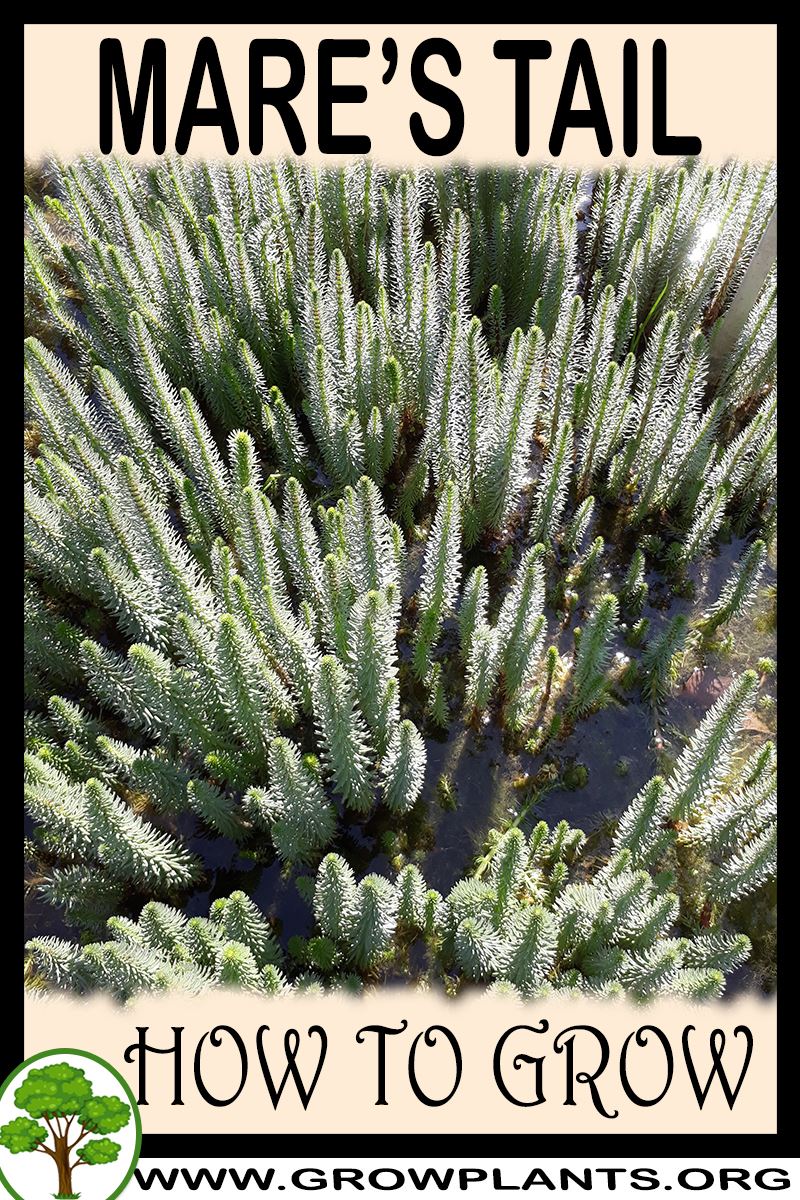
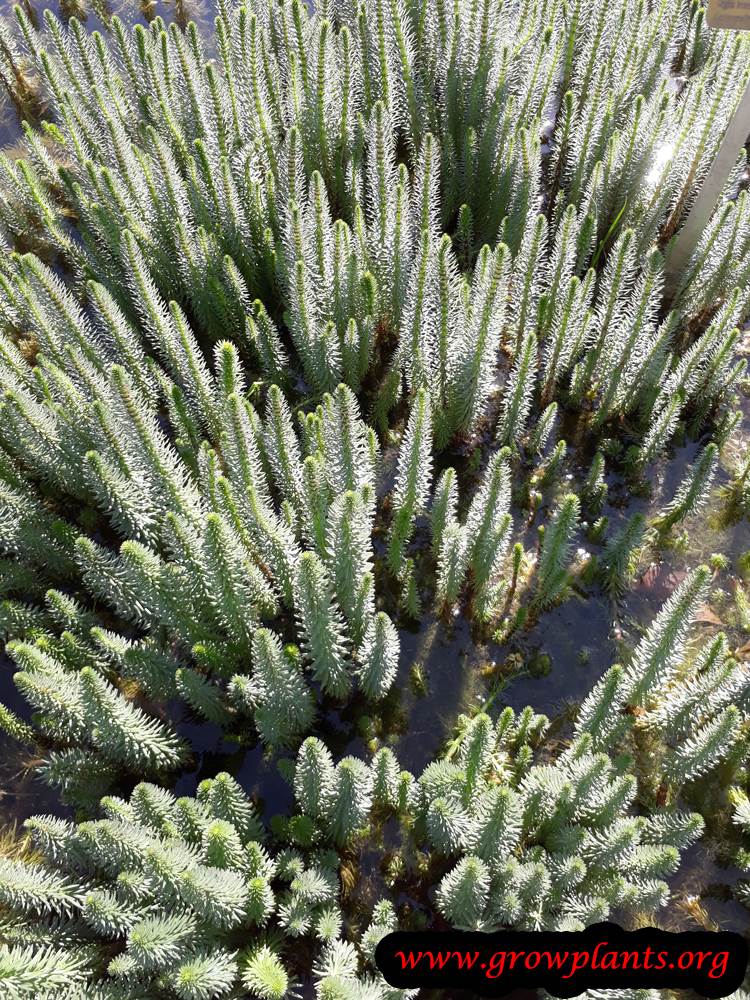
Overview: Mare’s tail (Hippuris vulgaris) is an aquatic evergreen perennial of about 0.5-1 m grown as an ornamental marginal water plant, with edible leaves and young stems. It thrives in ponds and wet margins across zones 3-10 and can be vigorous.
Quick Specifications
| Specification | Attribute |
|---|---|
| Plant Type / Life Cycle | Perennial (aquatic herbaceous) |
| Foliage Type | Evergreen |
| Mature Size | 0.5-1 m tall (20-40 inches) above the base |
| Growth Rate | Fast |
| Root System | Rhizomatous, rooting in wet mud |
| Toxicity | Non-toxic – leaves and young stems are edible |
| Hardiness | USDA zones 3-10 |
Growth Form & Structure
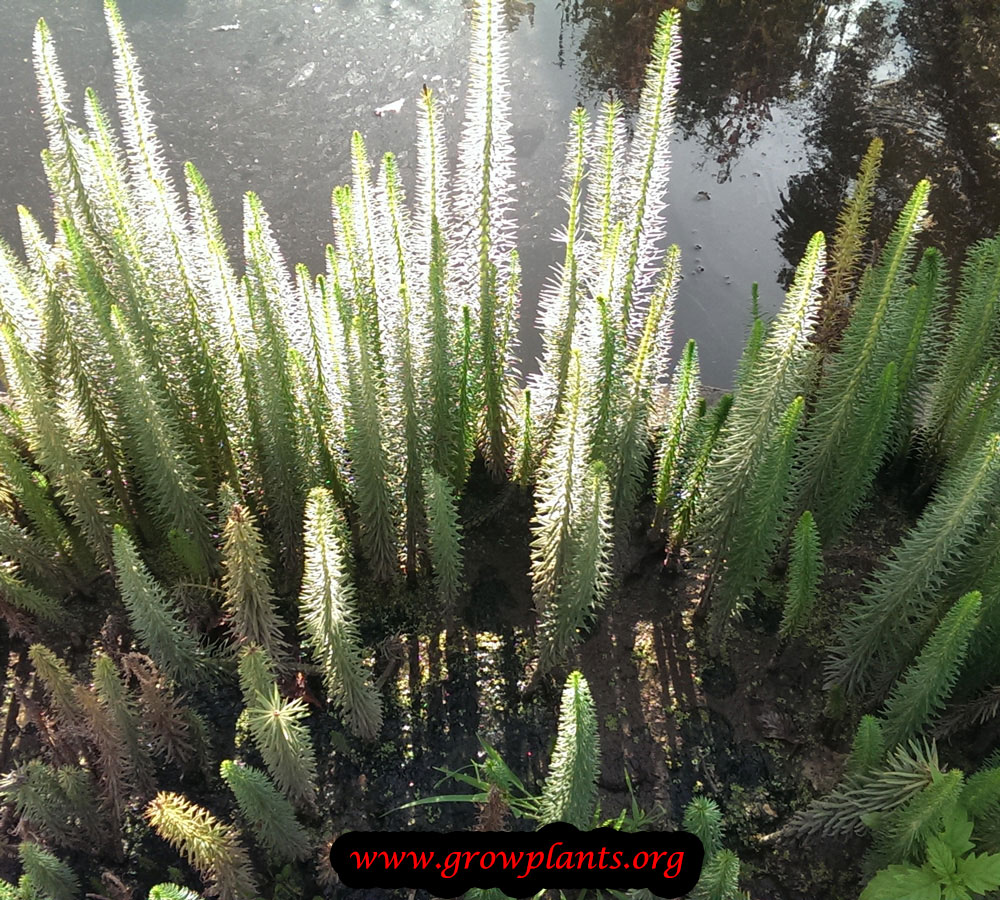
- Height and Spread: Reaches 0.5-1 m (20-40 inches) above the waterline; grows in containers or buckets; not suited as an indoor houseplant.
- Growth Habit and Form: Upright aquatic perennial with whorled stems spreading by rhizomes; can be invasive.
- Lifespan and Maturity: Fast-spreading perennial forming colonies in shallow water.
Anatomy & Physical Features
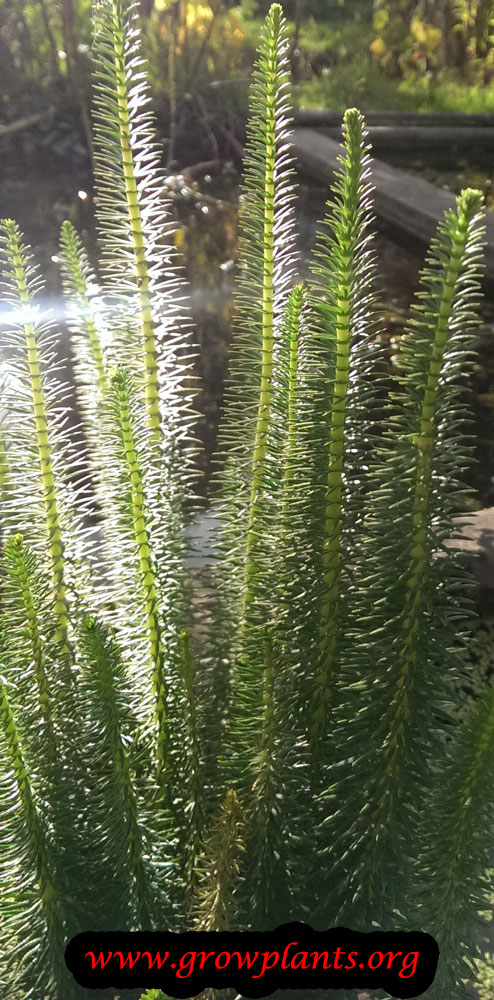
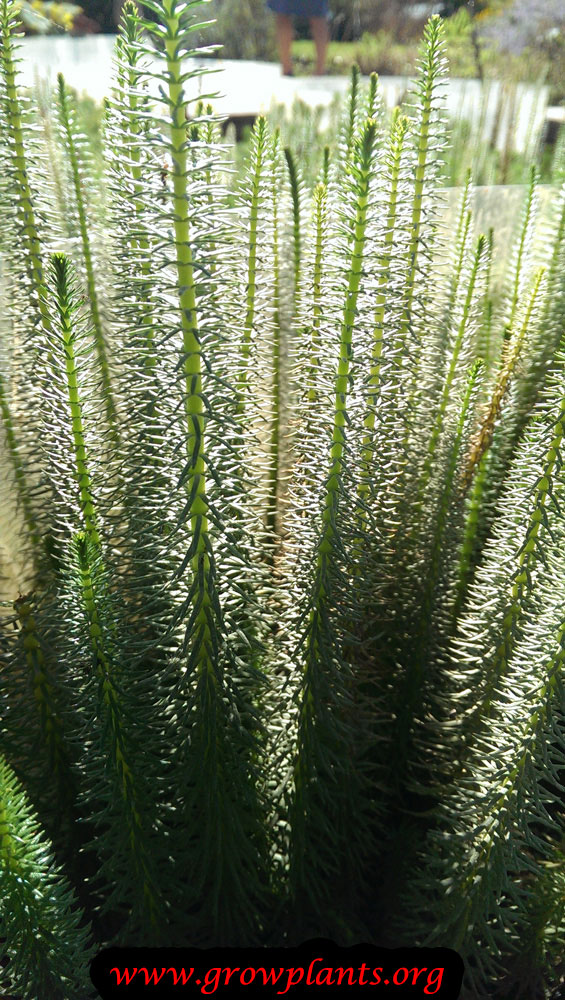
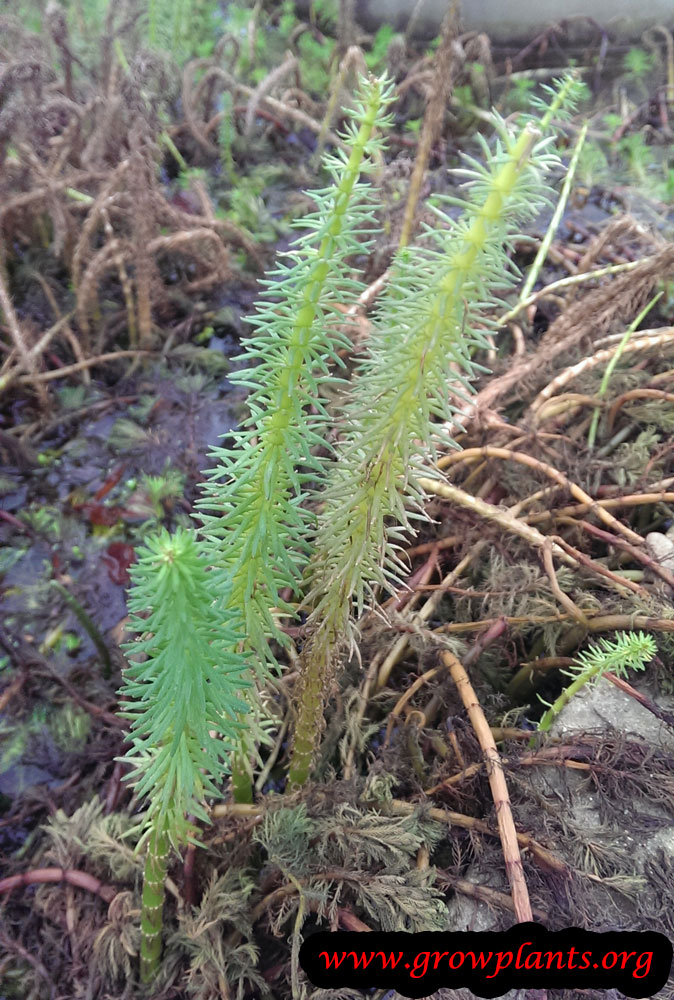
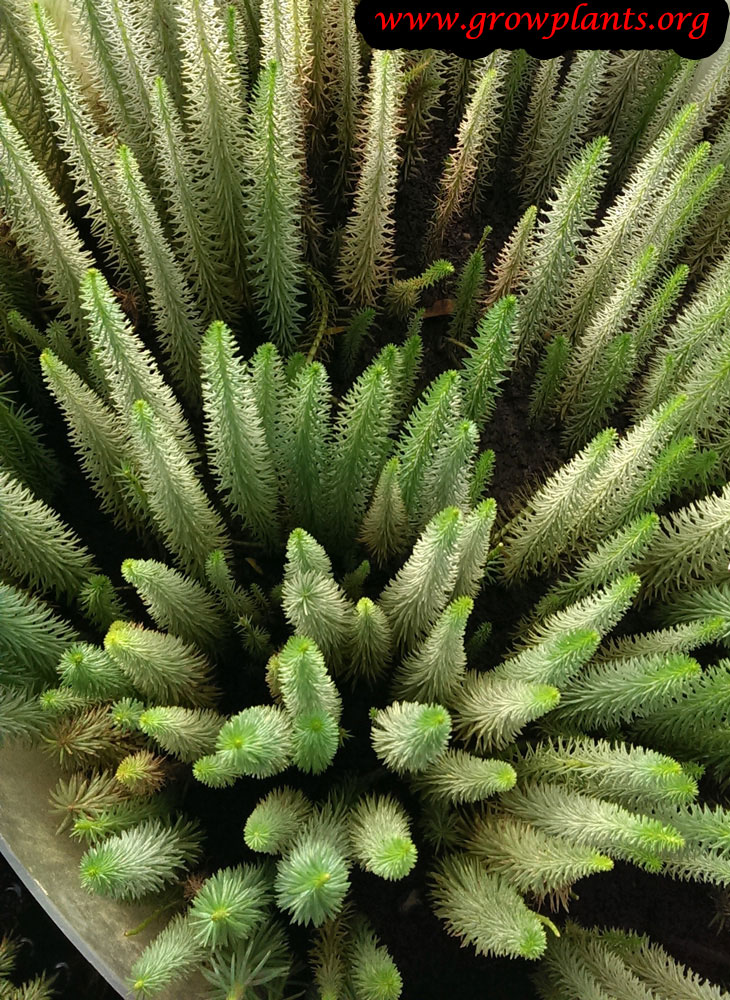
- Leaves and Foliage: Edible green, needle-like leaves (about 1-2 cm) arranged in whorls; young stems also edible.
- Flower Characteristics: Tiny green flowers that are barely visible (full detail in the Bloom accordion).
Primary Uses & Landscape Value
- Edible Uses: Leaves and young stems eaten cooked or raw.
- Functional and Ornamental Roles: Ornamental marginal and pond plant; also used medicinally.
Care Guide: Planting, Soil & Watering
Overview: Mare’s tail is an aquatic perennial grown in ponds, pond margins or permanently saturated soil in full conditions. It needs abundant water at all times and will not tolerate drying out.
Quick Care Requirements
| Requirement | Ideal Condition |
|---|---|
| Planting Season | Growing season (spring in cold climates) |
| Growth Rate | Fast |
| Soil Type | Aquatic – saturated heavy soil, pond margins or submerged |
| Water Need | High – grow in or beside water, never let it dry |
Planting & Establishment
- Best Planting Season: Plant during the growing season; in cold climates wait until spring, and establish it in shallow water or permanently wet soil.
- How to Plant:
- Hole Preparation: Plant into wet soil or a submerged planting basket at the pond margin.
- Soil Amendments: Use heavy loam rather than a light potting mix so it stays put; little extra feeding is needed.
- Planting Depth: Keep the crown at or just below the waterline.
- Growth Speed & Expectations: Fast – spreads vigorously in water, and can be invasive, so a container or basket helps confine it.
Soil, Watering & Drainage Care
- Soil Mix & Drainage Needs: An aquatic plant: grow it in saturated heavy soil, at pond margins or submerged in a container of water; it will not tolerate drying out.
- Watering Schedule & Technique:
- Young / Newly Planted: Keep permanently wet or submerged from the outset.
- Established: Keep it standing in water or constantly saturated soil at all times.
- Seasonal Adjustments: Stays wet year-round; it may die back in cold winters and regrow in spring.
Climate, Light & Hardiness
Mare's tail is a cold-hardy evergreen aquatic perennial suited to subtropical, Mediterranean, desert, and temperate climates. It grows best in full sun in rich, consistently wet water or soil.
Quick Climate Specifications
| Climate Zones | Subtropical, Mediterranean, desert, temperate |
|---|---|
| USDA Hardiness Zones | 3–10 |
| Frost Tolerance | High |
| Light Conditions | Full Sun |
Sunlight & Light Exposure
Optimal Light Setup
Full sun is preferred for the strongest growth of the upright, needle-leaved stems.
Shade & Heat Management
Its zone 3–10 range, including desert climates, shows good tolerance of hot, sunny conditions when growing in consistently wet ground or shallow water.
Temperature Extremes & Hardiness
USDA Hardiness & Regional Limits
Mare's tail is hardy across USDA zones 3–10, a wide range reflecting good adaptability from cold temperate to warm desert and subtropical conditions.
Cold Damage & Winter Protection
Planting can be done all year in warm climates but should be limited to spring where temperatures are cold, giving the plant a full warm season to establish before winter.
Frost Sensitivity
Overall frost tolerance is high given the plant's persistence through cold winters across zones 3–10.
Wind, Humidity & Microclimate
Humidity Preferences
Mare's tail needs an aquatic or consistently rich, wet environment and does not tolerate drying out.
Microclimate Recommendations
Because it spreads invasively when happy, plant it where its growth can be delineated and controlled, such as in a container submerged in the pond margin.
Growing in Pots, Balconies & Indoors
Mare’s tail is an aquatic plant grown in a container of water rather than in soil. The grower does not grow it as a houseplant, but it is well suited to a water tub, half-barrel or mini-pond on a balcony or patio.
Quick Details
- Container Size: A watertight tub, bowl, half-barrel or mini-pond – grown in standing water, not soil
- Indoor Suitability: Not a houseplant; for an outdoor water container
- Best Spot: Full sun
- Soil & Drainage: No drainage – the container holds water; root it in aquatic soil topped with grit under the water
- Watering in Pots: Keep the container topped up; it needs a constant, generous body of water
Indoors & On the Windowsill
- Indoors: The grower does not grow it indoors; it is a marginal aquatic best given a deep bucket or tub of water.
- Cold tolerance: It is hardy enough to overwinter outdoors in the tub in most temperate areas, dying back and returning in the warm season.
On a Balcony or Patio
- Light & water: Stand the water container where it gets the light levels above; top it up often, as an open tub of water evaporates fast in sun and wind.
- Weight & siting: A full water container is very heavy – make sure the balcony or shelf can take the load before filling it, and site it on a level, stable base.
- Planting depth: As a marginal, sit its pot on bricks so the crown is at the right depth – just at or below the water surface rather than deep under it.
Choosing the Pot, Soil & Long-Term Care
- The container: Any watertight vessel works – a glazed pot with no holes, a half-barrel with a liner, a bowl or a purpose-made mini-pond. No drainage holes here; the point is to hold water.
- Growing it: Plant it in a mesh aquatic basket of heavy loam or aquatic soil topped with grit to stop it clouding the water, then lower it to the right depth.
- Water & feeding: Keep the water topped up with rain or aged tap water; these plants feed from the water, so go easy on fertiliser and remove decaying leaves to keep it clear.
- Upkeep: Divide or thin crowded growth each year to keep it healthy and stop it swamping the container.
Fertilizing & Feeding
Mare’s tail is a rooted marginal or shallow-water perennial growing in naturally nutrient-rich water and soil, so it typically needs only light supplemental feeding – and since its young leaves and stems are harvested for eating, keeping feeding light and well-timed away from harvest also keeps the crop clean.
Quick Fertilizing Specs
| Feeding Level | Light – rooted in naturally rich water and soil |
|---|---|
| young_feeding | A light, balanced feeding at planting helps new plantings root into their new spot |
| mature_feeding | Established stands usually need only an occasional light feeding as new growth resumes |
| Main Nutrient Priority | Balanced feeding that supports steady stem and needle-like foliage growth |
| Best Feeding Period | As new growth emerges, tapering off ahead of periods when leaves and young stems will be harvested for eating |
| Reduce/Stop Feeding | Ease off feeding in the days ahead of harvesting leaves or young stems for the table |
| Organic Options | Well-rotted compost or an aquatic-safe organic feed worked into the wet soil suits this plant well |
Feeding by Growth Stage
Establishment of new plantings
Help newly planted stems or divisions root into rich, wet soil or shallow water
| Nutrient direction | A light, balanced feeding worked into the soil at planting |
|---|---|
| Timing | At planting, in spring as growth resumes |
| Frequency | A light feeding at planting is usually enough to establish new plantings |
| Fertilizer types | A balanced, aquatic-safe granular or tablet fertilizer worked into the wet planting soil |
| Precautions | Work fertilizer into the soil at the root zone rather than open water, and keep early feeding light since young growth may later be harvested for eating |
Active growth ahead of the harvest window
Support steady growth of the needle-like whorled foliage used for the edible leaf and young-stem harvest
| Nutrient direction | Balanced feeding that favors steady, clean growth rather than a rapid, heavy push |
|---|---|
| Timing | During active growth in the warmer months, ahead of the harvesting window |
| Frequency | Light, occasional feeding is usually sufficient given the naturally rich water and soil this plant favors |
| Fertilizer types | A balanced aquatic or bog-plant fertilizer applied lightly to the wet soil around the roots |
| Precautions | Time any feeding well away from harvest, and keep applications light and balanced since this plant is naturally vigorous and can become invasive in a pond setting |
Dormant or cold-season rest
Let the plant rest through its slow or dormant period without added nutrients
| Nutrient direction | None – withhold fertilizer while growth is slow or dormant |
|---|---|
| Timing | Through the coldest part of the year or whenever growth has clearly slowed |
| Frequency | No feeding at this stage; the plant is resting rather than actively growing |
| Fertilizer types | No feeding at this stage – allow the natural rest period to proceed |
| Precautions | Do not fertilize during the dormant or slow-growth period |
Nutrient Deficiency Signs & Corrections
The needle-like whorled leaves turn pale green instead of a rich deep green
| Possible causes | Nutrient-poor water or soil, Insufficient sun exposure, Overcrowding within a dense stand limiting light to individual stems, Natural aging of older growth |
|---|---|
| Appears first on | Older whorls lower on the stem |
| What to check | Water and soil nutrient or organic content, Sun exposure, Stand density, Overall stem vigor |
| Possible correction | Improve light and thin overcrowded stands; only consider a light feeding if water and soil are genuinely nutrient-poor |
Stems stay short and growth slows instead of extending as expected
| Possible causes | Nutrient-poor water or soil, Cold water temperature slowing metabolism, Overcrowding limiting resources among dense stands, Frequent harvesting outpacing regrowth |
|---|---|
| Appears first on | New shoot tips |
| What to check | Water temperature, Nutrient or organic content of water and soil, Stand density, Recent harvest frequency and intensity |
| Possible correction | Allow recovery time between harvests, thin crowded stands, and only add a light feeding if conditions are genuinely nutrient-poor |
The stand spreads well beyond its intended area, crowding out neighboring plants
| Possible causes | Naturally rich, nutrient-heavy water or soil favoring vigorous spread, Added fertilizer accelerating an already aggressive grower, Lack of physical containment such as a planting basket or barrier, Ideal warm, sunny conditions maximizing growth rate |
|---|---|
| Appears first on | Stand margins pushing into open water or neighboring plantings |
| What to check | Recent feeding history, Presence or absence of a containment barrier or basket, General site fertility, Growth rate over the recent season |
| Possible correction | Contain plantings in a basket or barrier, avoid unnecessary feeding, and divide or thin regularly to keep spread in check |
Pruning, Training & Seasonal Maintenance
Mare’s tail (Hippuris vulgaris) is an evergreen, rhizomatous marginal/emergent perennial with needle-like whorled leaves and no woody structure. Unlike most herbaceous pond-margin perennials, it is not cut back once in a dormant season – the source lists its pruning season as “all year” and describes the technique simply as “delineate the growth,” reflecting its documented invasive, spreading habit. The core task is ongoing boundary control of the clump rather than a single seasonal tidy.
Quick Pruning & Maintenance Specs
| Pruning Tolerance | High – tolerates frequent cutting back, no woody structure to damage |
| Primary Pruning Window | Year-round, whenever the clump exceeds its boundary |
| Typical Frequency | Ongoing / repeated through the growing season, more so than a single annual cut |
| Main Objective | Contain the spreading, invasive clump within its intended area |
| Young Plant Priority | Allow the plant to establish before any containment cutting |
| Mature Plant Priority | Regular boundary/perimeter cutting to stop unwanted spread |
| Best Tool Type | Hand snips or shears for the soft, needle-leaved stems |
| Avoid Heavy Pruning During | Immediately after transplanting, before the clump has rooted in |
Pruning by Plant Age & Size
Newly Established
Let a newly planted clump root in and establish before doing any containment cutting.
Young / Formative
No structural training applies – this is a spreading rhizomatous herb, not a plant grown to a framework.
Mature / Established
Once established, the ongoing job is “delineating” – repeatedly cutting back growth at the desired boundary of the clump, since the source documents it as invasive and capable of spreading well beyond where it was planted.
Seasonal Pruning Schedule
Ongoing Sanitary / Containment
Objective: keep the clump within its intended boundary year-round. Remove: stems that have grown past the desired edge, plus any dead or tatty growth. Do not remove: the whole clump at once – cut at the margin, not into the crown. Expected response: the plant readily resprouts from the cut, consistent with its fast growth and invasive habit.
Special Growth to Remove
Cut back stems that have spread past their intended boundary as they appear, rather than waiting for a seasonal window – this is the plant’s main maintenance need per source. Because the leaves and young stems are edible, routine containment trims can double as harvesting the new growth removed (detailed edible-use guidance belongs to the separate edible-harvest module, not repeated here).
Container & Small-Space Pruning
Source notes it does best in a larger container (“more bucket”) given its size (0.5–1 m) and vigor. In a container, boundary trimming is simpler than in open ground since the pot itself limits spread, but stems reaching over the rim should still be cut back regularly to keep the clump compact.
Tools
Hand pruning snips or shears are sufficient for the soft, needle-like stems – no loppers or saw are needed for this herbaceous plant.
Tool Hygiene & Disease Risk
Routine – clean tools between plants. No disease risk is documented that would require heightened disinfection.
Common Pruning Mistakes
- Treating this as a once-a-year, dormant-season cutback like other marginal perennials, rather than the ongoing boundary control the source specifies
- Cutting into the crown/rhizome instead of trimming at the spread boundary, which does more damage than necessary for containment
When NOT to Prune
Avoid heavy cutting immediately after transplanting, before the clump has rooted in; otherwise this plant has no strict closed season given its year-round growth and pruning tolerance.
Recommended Tools (by task)
- precision_snips – ongoing boundary trims of the soft, needle-leaved stems, including harvest-doubling cuts
Propagation Guide
Mare’s tail is propagated vegetatively rather than from seed, matching the site’s own guidance that vegetative reproduction is necessary for this plant. Division of the creeping rhizome or rooting of cut stem sections in mud or shallow water is quick and reliable, making this an Easy plant to propagate.
Quick Propagation Specs
| Best Propagation Method | Rhizome division / rooted stem sections |
| Alternative Methods | Stem cuttings rooted directly in wet mud or shallow water |
| Propagation Difficulty | Easy |
| Vegetative True-to-Type | Yes |
| Best Propagation Season | Site notes planting all year, spring in colder climates |
| Cutting Rooting Time | Typically a few weeks under constantly wet conditions |
Stem Cuttings
Cutting Type
Non-flowering stem sections with several whorls of needle-like leaves.
Best Timing
Site notes planting all year round, or spring where winters are cold.
Cutting Preparation
Take short stem sections and remove lower leaf whorls that would sit below the substrate.
Rooting Setup
Push the base of the cutting into rich, saturated mud or set it in shallow water so the lower nodes stay constantly wet; roots form readily from the submerged nodes.
Rooting Hormone
Unnecessary for this easily rooting aquatic species.
Rooting Time
Typically a few weeks under constantly wet, warm conditions.
Division, Offsets, Pups & Suckers
Lift and pull apart sections of the spreading rhizome mat, keeping roots attached to each piece, then replant directly into rich, saturated soil. Because the site notes this plant is invasive, contain divisions (e.g., in a planted basket) rather than releasing loose sections into open water.
Rhizomes, Tubers, Bulbs & Corms
New plants establish readily from short rhizome segments with at least one growing point, planted just below the soil surface in constantly wet, nutrient-rich substrate.
Bloom & Flower Guide
Quick Details
- Bloom Season: Summer
- Flower Appearance: Tiny green flowers tucked into the leaf whorls, easily overlooked
- Edibility: The minute flowers are not used; it is the young shoots that are sometimes eaten, and the plant is mostly grown as a marginal ornamental
Detailed Blooming Overview
Mare’s tail is grown for its neat whorls of fine foliage rising from shallow water or wet ground, not for its flowers. The blooms are tiny and green, sitting where the leaves meet the stem, and they are so inconspicuous that most gardeners never notice them. They are pollinated quietly by wind and self-pollination rather than by insects.
Flower Characteristics
- Very small green flowers, barely visible.
- Set in the leaf whorls along the upright stems.
- Pollinated by wind and self-pollination.
Bloom Care & Thinning
- Little needed: The plant is grown for foliage, so no special bloom care is required.
- Placement: Keep it in wet ground or shallow water where it can spread.
Fruit & Uses
Mare’s tail is grown mostly as a pond or bog-margin ornamental, but its young leaves and soft emergent shoot tips are a traditional wild green. They are eaten raw in small amounts or, more often, lightly cooked and added to soups.
Quick Edible Specs
| Edible Parts | Leaves; young emergent shoot tips |
|---|---|
| Main Use(s) | Wild green / potherb, added to soups |
| Eaten Raw or Cooked | Both – small amounts raw, more commonly cooked |
| Preparation Required | Rinse well; cook to soften texture |
| Harvest Season | Spring through autumn for soft new growth; even brown overwintered stems can be used in early spring |
| Time to First Harvest | Once the plant is established and spreading (see Propagation for how it establishes) |
| Storage | Best used fresh; harvest small amounts as needed |
| Safety/Toxicity Caveat | Only harvest from clean, unpolluted water, and confirm identification – the unrelated weed Conyza canadensis is also called “marestail” in North America and is not the same plant |
Leaves & Greens
The green, needle-like leaves (about 1–2 cm) grow in whorls along the stem. The youngest, softest leaves near the growing tips are the most pleasant to eat; older leaves toughen. They can be eaten raw in small quantity or cooked into soups.
Shoots & Stems
The soft, fresh green upper portion of an emergent stem is the most desirable harvest – it is easy to clean and prepare compared to submerged growth. Once the plant has established itself in a pond or bog it spreads readily and can be cut freely for repeat harvests.
Harvesting
Pinch or cut the soft new shoot tips and young leaves through the growing season; the plant regrows quickly (it is naturally an aggressive spreader, so light harvesting does not harm it). There is no single ripeness cue to wait for – simply take the freshest, most tender growth.
Preparation, Uses & Safety
Rinse harvested material thoroughly before use, since it grows directly in water. A small raw portion can be added to salads, but cooking (e.g. simmering in soup) is the more traditional and gentler preparation. Because this is an aquatic plant, only forage it from clean water known to be free of pollution or agricultural runoff, as aquatic plants can take up contaminants from the water they grow in. Also double-check identification before eating – in North America the common name “marestail” is also used for Conyza canadensis, an unrelated and toxic weed, so make sure the plant matches Hippuris vulgaris (opposite whorled needle-like leaves, hollow jointed-looking stem, growing rooted in water).
Pests, Diseases & Troubleshooting
Overview: Mare’s-tail (Hippuris vulgaris) is a vigorous marginal and shallow-water aquatic that is essentially free of significant pests and diseases. Its emergent stems can attract water-lily aphids and aquatic caterpillars, and algae competes with it in nutrient-rich water, but its real “problem” is its own vigour — it spreads strongly and can become invasive. Note this is the true aquatic mare’s-tail, not the unrelated terrestrial weed Equisetum (horsetail).
Quick Troubleshooting Overview
| Issue / Pest | Main Symptom | Primary Solution |
|---|---|---|
| Water-lily aphid | Colonies on emergent stems; honeydew | Hose into water for fish to eat; no chemicals in ponds |
| China-mark moth | Caterpillars cutting and mining foliage | Remove affected growth; encourage fish/predators |
| Aquatic snails | Grazing damage on soft stems | Usually tolerable; manage numbers if excessive |
| Algae / blanketweed | Green smother competing with the plant | Reduce nutrients; barley straw; shade water |
| Invasive spread | Rapid colonisation of the margins | Grow in baskets; thin and contain regularly |
Common Pests & Management
- Water-lily aphid (Rhopalosiphum nymphaeae):
- Symptoms: Colonies of dark aphids on the emergent stems and any floating growth in summer, with honeydew.
- Prevention & Control: Simply hose them off into the water for fish to eat, and encourage ladybirds and other predators; avoid insecticides in ponds, which harm fish and other wildlife.
- China-mark moth caterpillars (Elophila nymphaeata and kin):
- Symptoms: Aquatic caterpillars cut pieces of leaf and stem to make shelters and graze the foliage.
- Prevention & Control: Remove damaged growth and floating debris, and rely on fish and natural predators; rarely severe enough to warrant more.
- Aquatic snails:
- Symptoms: Light grazing on soft stems; generally part of a balanced pond and only a problem at very high numbers.
- Prevention & Control: Tolerate as pond fauna; reduce excess numbers by hand if they overgraze.
Diseases & Fungal Issues
- Largely disease-free:
- Symptoms: This robust aquatic rarely suffers named diseases; occasional fungal or bacterial rot appears only on stems damaged or left stagnant in poor, low-oxygen water.
- Treatment & Management: Keep water reasonably clean and oxygenated, remove dead and decaying material, and avoid stagnation; no fungicides are appropriate in a pond.
- Algae & blanketweed competition:
- Symptoms: Not a disease of the plant itself, but green algae and blanketweed smother it in nutrient-rich water.
- Treatment & Management: Reduce nutrient input, remove algae by hand or with a twirl, use barley straw, and shade part of the water surface.
Growing Difficulties & Abiotic Problems
- Invasive spreading:
- Cause & Symptoms: Spreads aggressively by creeping rhizomes and can dominate a pond margin or waterway. Correction Strategy: Grow in a contained planting basket, thin regularly, and never release into natural waterways.
- Drying out:
- Cause & Symptoms: Browning and collapse if the water level drops and the roots dry. Correction Strategy: Keep it in consistently wet mud or shallow water.
- Nutrient / algae imbalance:
- Cause & Symptoms: Poor growth when overwhelmed by algae in over-fertile water. Correction Strategy: Keep the pond’s nutrient load low and balanced with other plants.
What Helps — Products & Tools
In a pond the best tools are cultural and mechanical: a planting basket to contain spread, a net or twirl for blanketweed, barley straw to curb algae, and fish and natural predators to keep aphids and caterpillars in check. Avoid pesticides and fungicides entirely in water gardens.