Plant Profile & Key Characteristics
Overview: A large genus of mostly semi-evergreen perennials ranging widely in size, from about 0.4 m to 3 m (1.3-10 ft) tall, grown for their spikes of tubular flowers. Drought-tolerant and pollinator-friendly, they are used as garden ornamentals.
Quick Specifications
| Specification | Attribute |
|---|---|
| Plant Type / Life Cycle | Herbaceous perennial (some short-lived) |
| Foliage Type | Evergreen to semi-evergreen (deciduous in cold winters) |
| Mature Size | 0.4-3 m (1.3-10 ft) tall, varying widely by species |
| Growth Rate | Moderate |
| Hardiness | USDA zones 2-10, depending on species |
Growth Form & Structure
- Height & Spread: Highly variable by species, from low clumps to tall stands up to 3 m (10 ft); most garden types grow well in the ground or in containers.
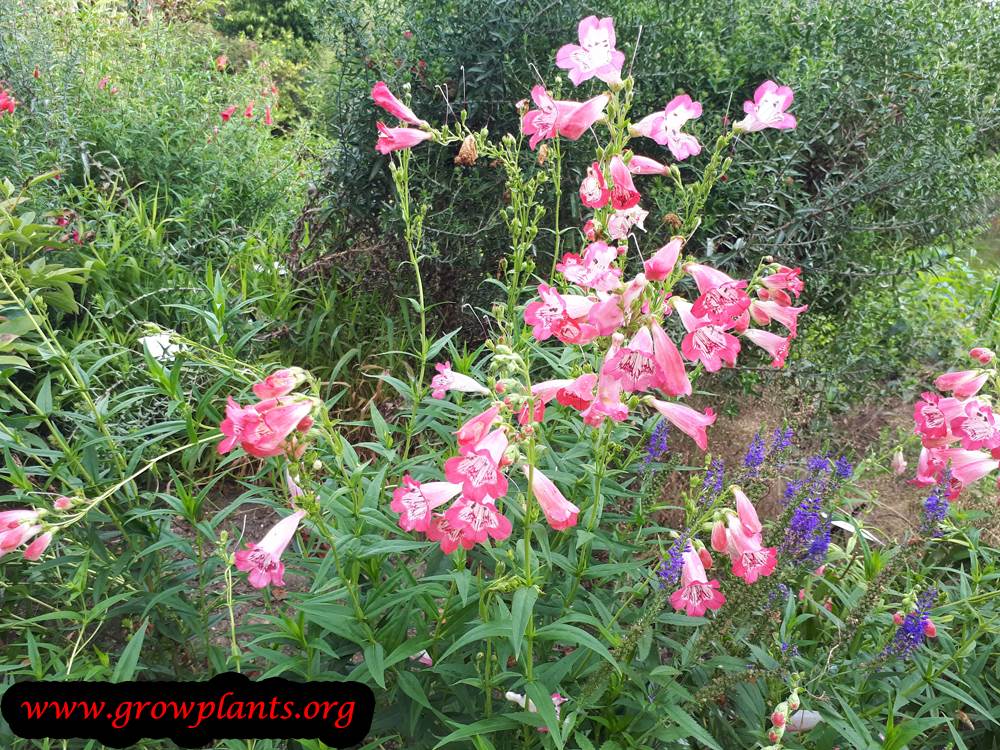
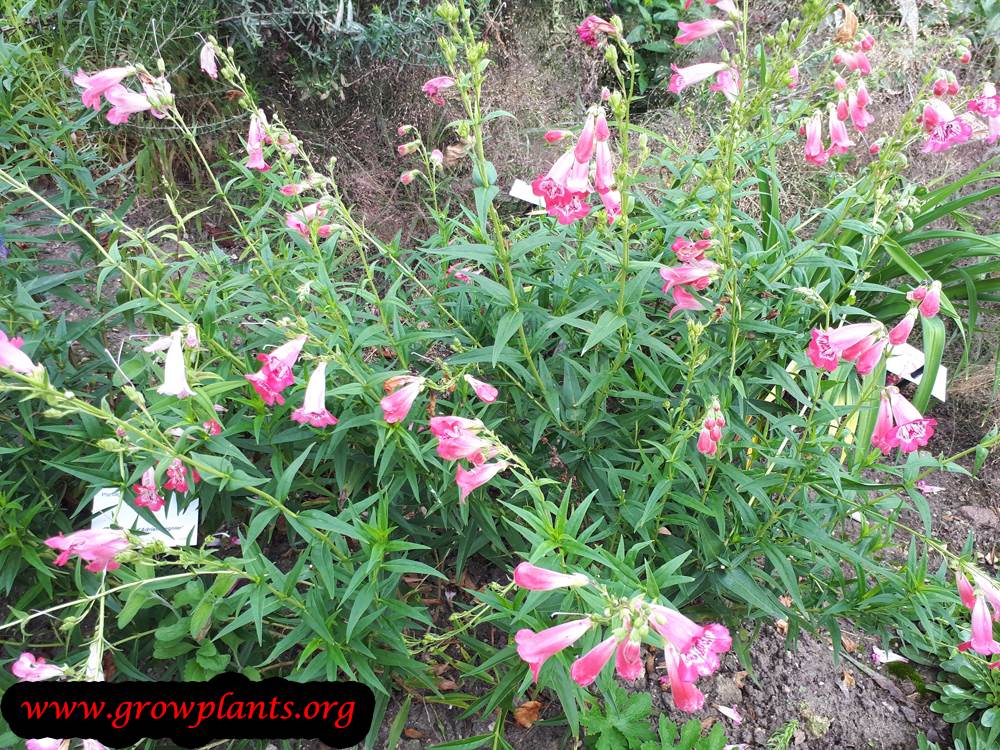
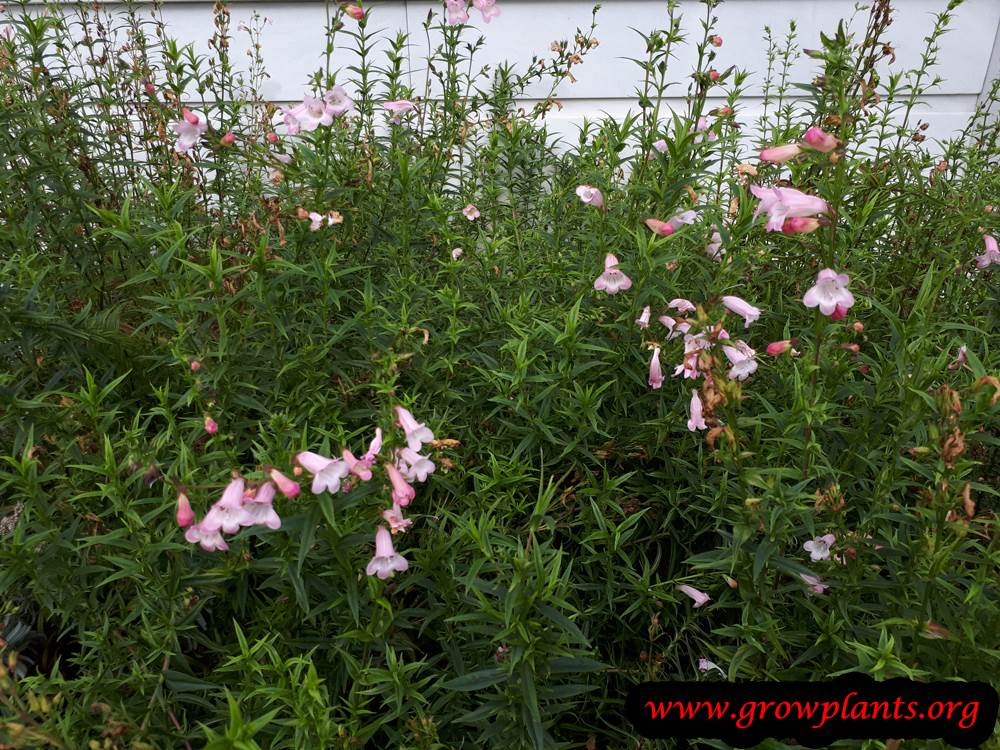
- Growth Habit & Form: Clump-forming perennials sending up numerous upright flowering spikes from a basal rosette or mound.
- Lifespan & Maturity: Most reach flowering size in the first or second season; many are relatively short-lived and are refreshed from cuttings or division.
Anatomy & Physical Features
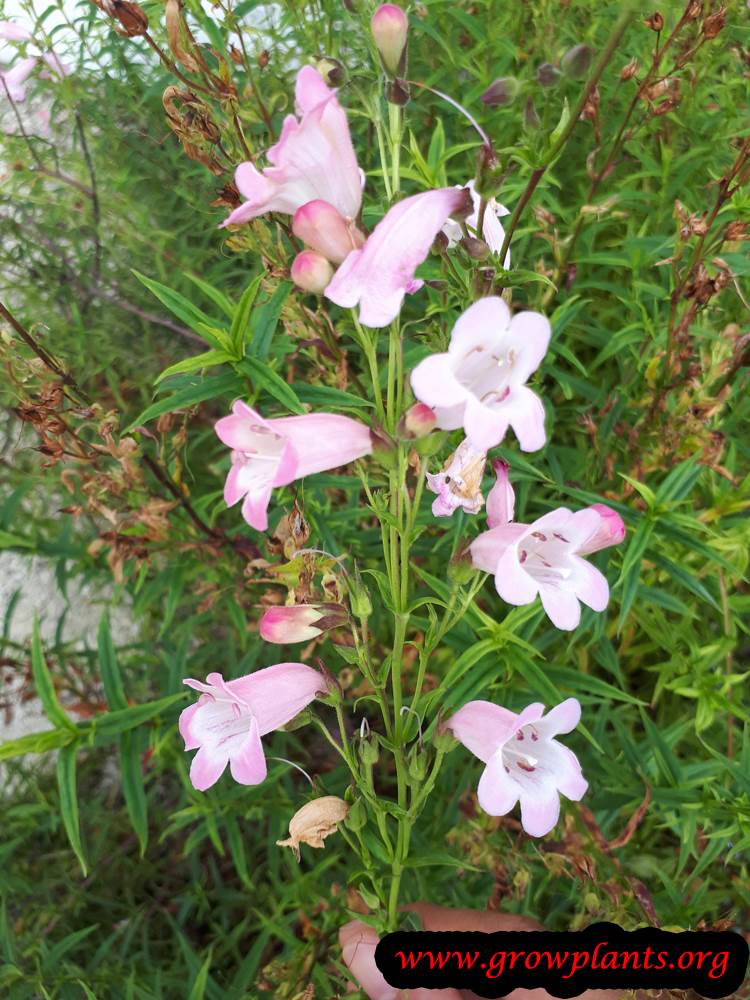
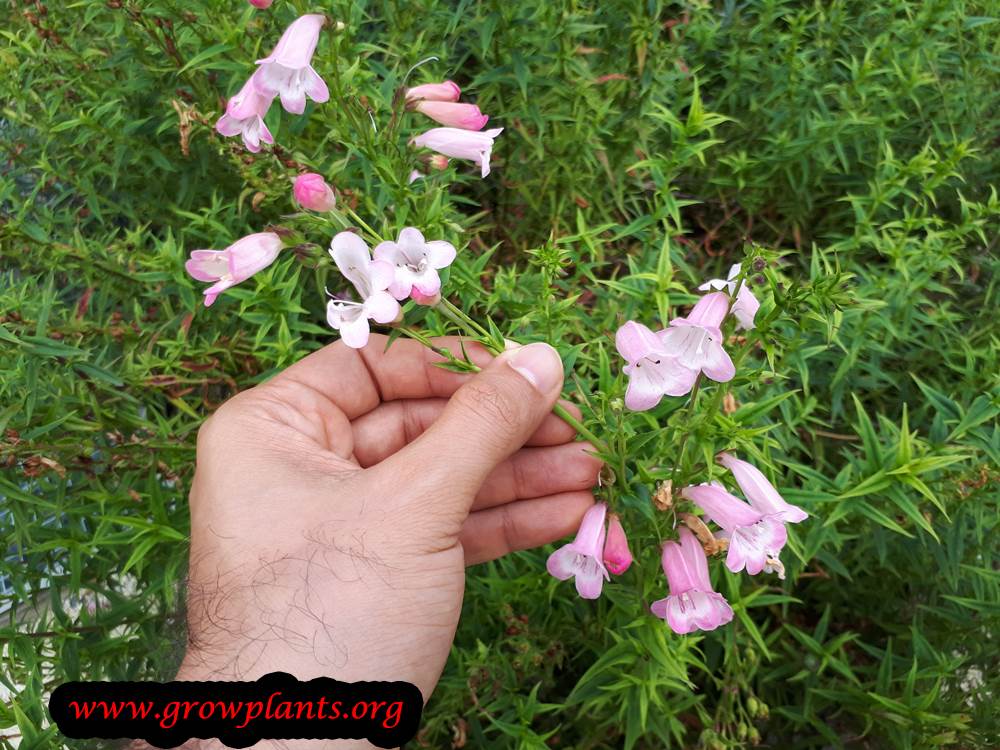
- Leaves & Foliage: Green leaves varying by species in lance, linear, triangular or wedge shapes, arranged along the upright stems.
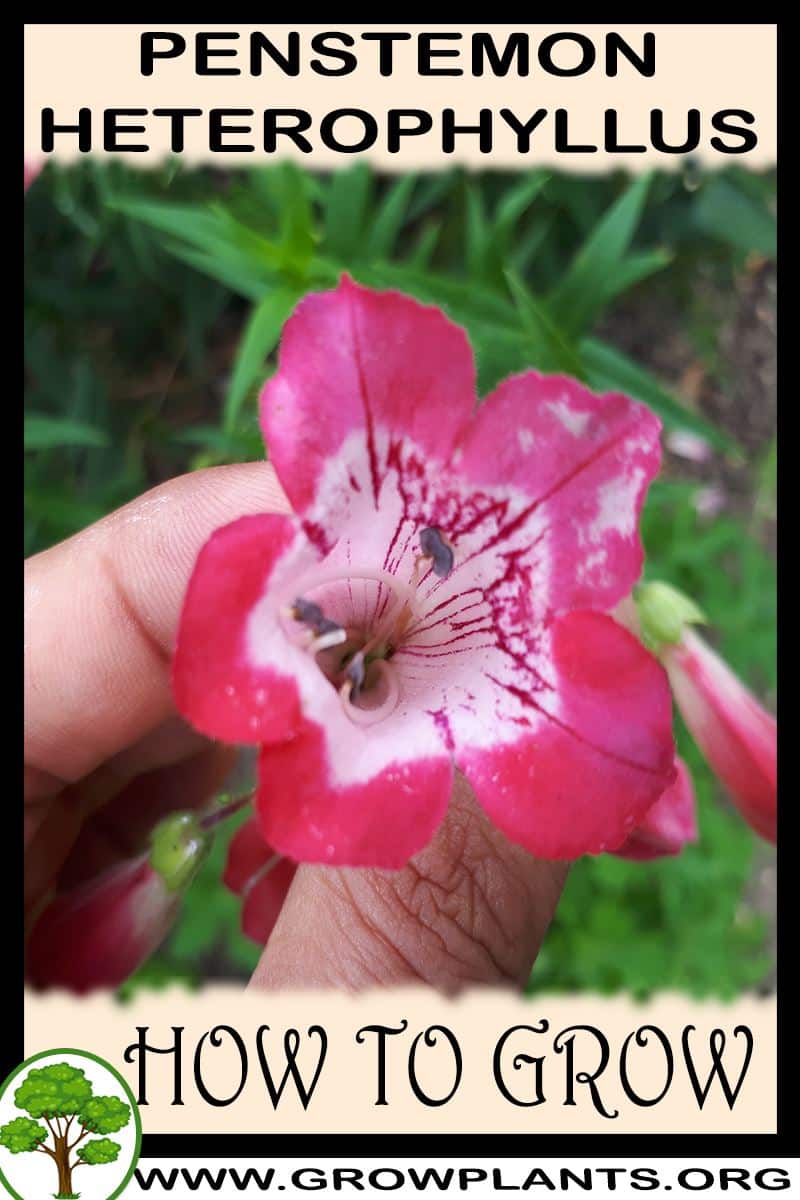
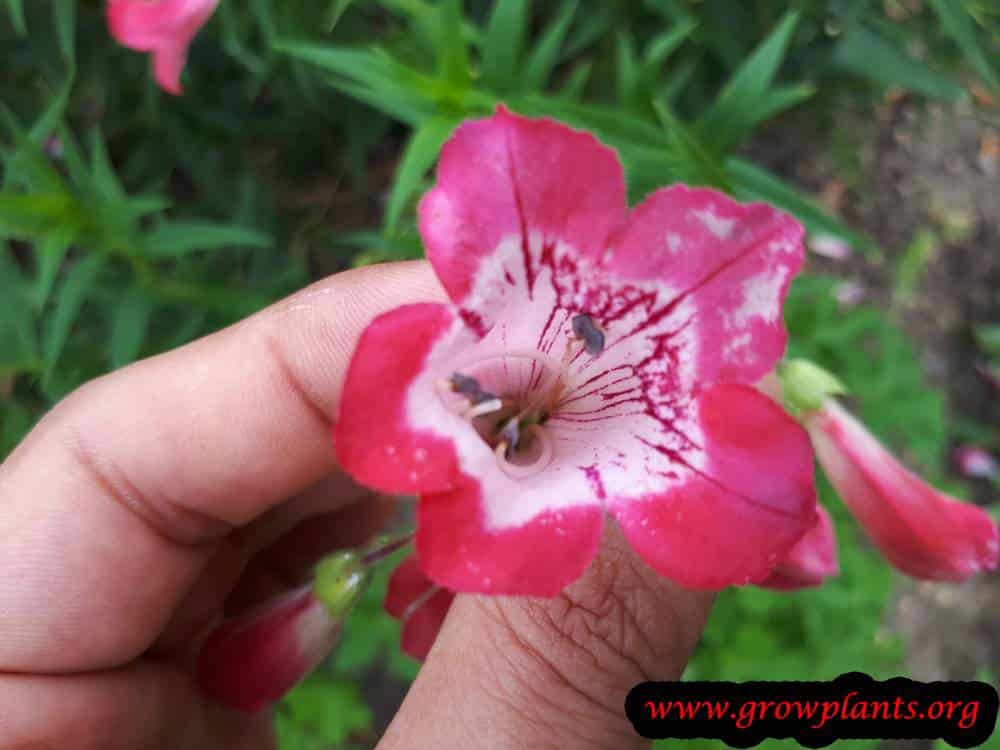
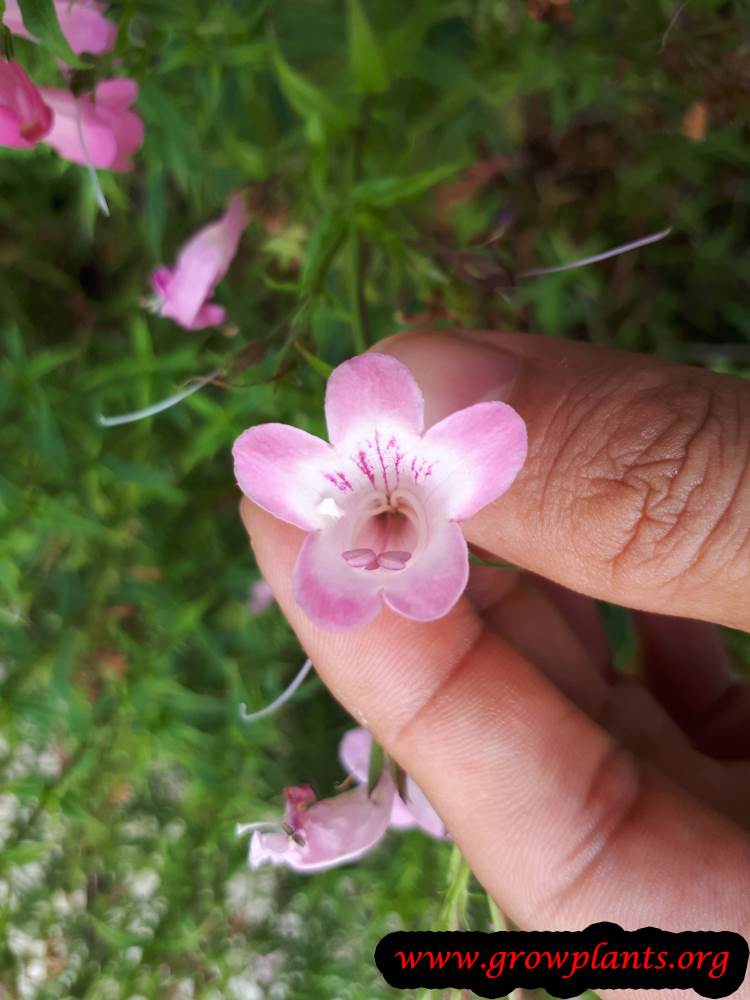
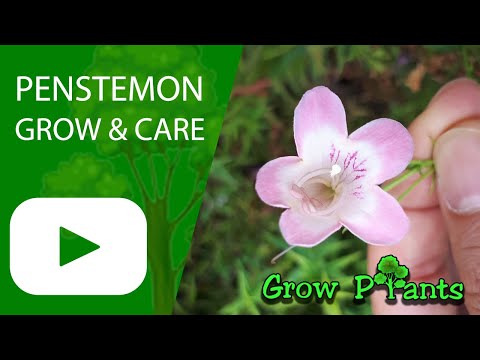
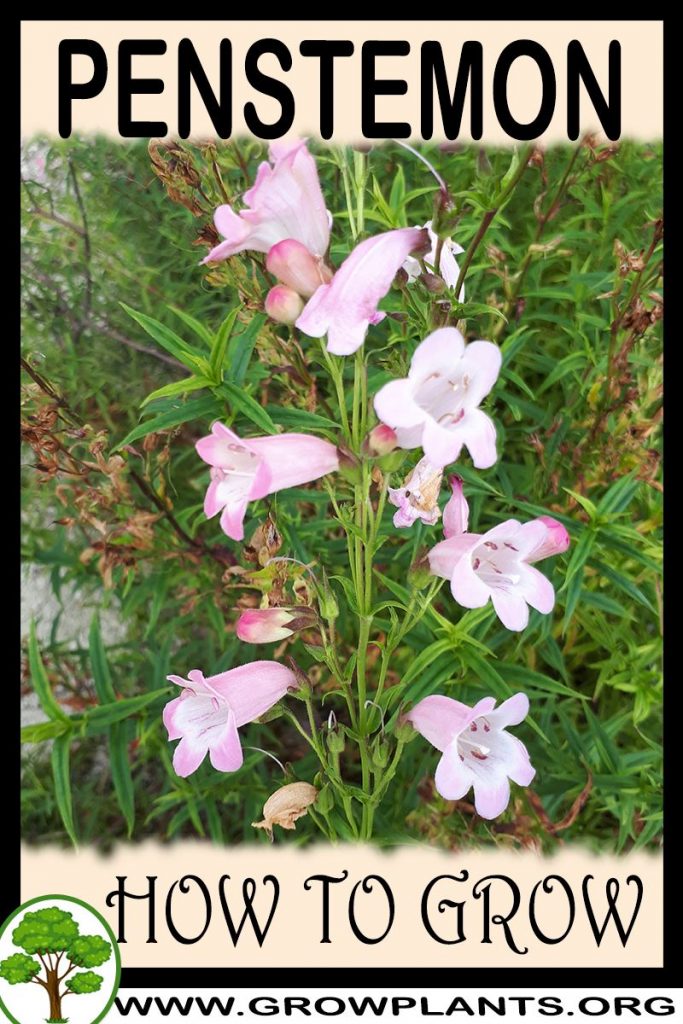
- Flower Characteristics: Tubular, two-lipped (mouth-shaped) flowers in purple, orange, white, red, pink or blue, carried on slender upright spikes.
Primary Uses & Landscape Value
- Functional & Ornamental Roles: Drought-tolerant border and dry-garden ornamentals that attract bees and hummingbirds; used in mixed beds, gravel gardens, cottage schemes and containers.
Care Guide: Planting, Soil & Watering
Overview: Penstemon grows best in full sun to light shade across a wide climate range (hardiness zone 2-10), in lean, sharply draining soil. It is drought tolerant, needing only a low to moderate amount of water, and resents wet, heavy ground.
Quick Care Requirements
| Requirement | Ideal Condition |
|---|---|
| Planting Season | The warm season, from spring through autumn |
| Growth Rate | Moderate |
| Soil Type | Lean, sharply draining soil |
| Water Need | Low to Moderate – let the soil dry between waterings; avoid winter wet |
Planting & Establishment
- Best Planting Season: Plant in the warm season, from spring through autumn, in an open, sunny site with excellent drainage.
- How to Plant:
- Hole Preparation: Dig a hole about twice the width of the root ball and the same depth, loosening the surrounding soil so roots establish easily.
- Soil Amendments: Keep amendments light – a little compost is enough; add grit or coarse sand on heavy soil, as penstemons prefer lean, fast-draining ground.
- Planting Depth: Set the root collar level with the soil surface and keep soil and mulch clear of the crown.
- Growth Speed & Expectations: Moderate; plants settle in over the first season and reward good drainage with strong flowering spikes.
Soil, Watering & Drainage Care
- Soil Mix & Drainage Needs: Sharp drainage is essential – gritty, free-draining soil; in containers use a free-draining mix and never let the pot stay waterlogged, which causes root rot.
- Watering Schedule & Technique:
- Young / Newly Planted: Water regularly to keep the soil lightly moist while roots establish in the first season.
- Established: Once established it is drought tolerant – water deeply but infrequently, letting the soil dry between waterings.
- Seasonal Adjustments: Water more during prolonged heat and keep it drier in cool, wet weather and winter.
Climate, Light & Hardiness
Penstemon (beardtongue) is a broadly adaptable, drought-tolerant perennial spanning temperate, subtropical, desert, and Mediterranean climates. It grows best in full sun to half shade, with cold hardiness that varies widely by species within the genus.
Quick Climate Specifications
| Climate Zones | Temperate, subtropical, desert, mediterranean |
|---|---|
| USDA Hardiness Zones | 2–10 |
| Light Conditions | Full sun to half shade |
| Frost Tolerance | Varies by species, from moderate to very high |
Sunlight & Light Exposure
Optimal Light Setup
Full sun gives the sturdiest growth and best flowering across most Penstemon species; half shade is tolerated.
Extreme Heat Tolerance
Many species are drought- and heat-tolerant once established, particularly those native to desert and dry temperate regions.
Temperature Extremes & Hardiness
USDA Hardiness & Regional Limits
The genus spans an unusually wide hardiness range, from zone 2 in the hardiest species to zone 10 in the most tender, so cold tolerance should be checked at the species/cultivar level.
Cold Damage & Winter Protection
Sharp winter drainage matters across the genus – cold combined with wet, poorly drained soil is more likely to kill plants than cold alone.
Wind, Humidity & Microclimate
Dry-Air Tolerance
Many species, especially those from arid and desert climates, tolerate dry air well.
Microclimate Recommendations
A sunny site with excellent winter drainage best replicates the native conditions of most garden Penstemon species.
Growing in Pots, Balconies & Indoors
Penstemons are sun-loving flowering perennials, not houseplants, but the more compact kinds grow well in free-draining containers on a sunny patio or balcony.
Quick Details
- Container Size: A free-draining pot; pick a compact cultivar for containers
- Indoor Suitability: Not a true houseplant; grows best outdoors
- Best Spot: Full sun to half shade
- Soil & Drainage: Aerated, organic-rich mix (peat or coir with perlite or vermiculite); must drain freely
- Watering in Pots: Water sparingly to moderately with sharp drainage; penstemons hate wet feet
Indoors & On the Windowsill
- Houseplant limits: They need full outdoor sun and gritty drainage to flower and overwinter; indoor light is too weak.
On a Balcony or Patio
- Light & wind: Choose a compact cultivar for pots, give full sun and sharp drainage, and shelter the crown from winter wet. Walls and paving reflect heat, so pots dry quickly – check moisture often in hot weather.
- Practicalities: Set the pot where drainage runoff won’t stain, and remember a full, wet container is heavy to move.
Choosing the Pot, Soil & Long-Term Care
- Pot & drainage: A container with strong drainage holes and no standing-water saucer, to avoid root rot; terracotta breathes and dries faster, glazed or plastic holds moisture longer.
- Potting mix: A well-aerated, organic-rich mix – peat or coir with perlite or vermiculite.
- Feeding: Potted plants exhaust their soil quickly – feed a little more often, since watering leaches nutrients away.
- Repotting: Refresh the top of the mix each year and pot on every couple of years, trimming the root ball lightly.
Fertilizing & Feeding
Penstemon is a drought-tolerant flowering perennial that performs best in lean-to-average soil, so it needs only light feeding to support its spring and summer flower spikes without encouraging floppy, over-lush growth.
Quick Fertilizing Specs
| Feeding Level | light |
|---|---|
| Main Nutrient Priority | a balanced, lightly applied fertilizer that avoids pushing soft, floppy growth |
| Best Feeding Period | as spring growth resumes ahead of its main flowering spikes |
| Reduce/Stop Feeding | taper off feeding well before the cooler part of the year so growth can harden off |
Feeding by Growth Stage
Spring Growth
Support the modest new growth Penstemon puts on as it comes out of its winter rest.
| Nutrient direction | A light, balanced fertilizer is enough for this lean-soil, drought-tolerant perennial. |
|---|---|
| Timing | Early to mid spring, as new growth resumes. |
| Frequency | A light feeding at the start of the season usually covers this stage’s needs. |
| Fertilizer types | A balanced, general-purpose fertilizer applied lightly at the start of the growing season |
| Precautions | Keep feeding light, since rich soil and heavy fertilizing tend to produce weak, floppy stems on this naturally lean-soil-adapted perennial. |
Flower Spike Bloom
Maintain the plant through its tubular flower-spike display without pushing excess soft growth.
| Nutrient direction | Minimal feeding is usually enough while in bloom; more feeding risks weak stems that flop over. |
|---|---|
| Timing | Through the spring-to-summer bloom period. |
| Frequency | This stage rarely needs additional feeding beyond the light spring application. |
| Fertilizer types | A balanced fertilizer used sparingly, only if growth looks notably weak |
| Precautions | Avoid heavy feeding during bloom, as it favors leafy growth and floppy stems over strong flower spikes. |
Autumn-Winter Rest
Let the plant harden off and rest through the cooler dormant period.
| Nutrient direction | None – withhold fertilizer through the dormant season. |
|---|---|
| Timing | Autumn through winter. |
| Frequency | No feeding at this stage. |
| Fertilizer types | No feeding at this stage; resume with the spring growth flush |
| Precautions | Do not fertilize during the dormant period; late feeding can push tender growth vulnerable to cold. |
Nutrient Deficiency Signs & Corrections
Unusually lush, floppy growth with fewer or weaker flower spikes.
| Possible causes | Too much nitrogen for a lean-soil-adapted plant, Overly rich garden soil or heavy composting near the plant, Too much shade encouraging soft, stretched growth |
|---|---|
| Appears first on | Overall plant habit, especially stem strength |
| What to check | Review recent feeding and soil amendment history, Assess sun exposure, Check stem strength and spacing |
| Possible correction | Cut back or stop supplemental feeding and confirm the plant has adequate sun exposure. |
New leaves show yellowing between green veins.
| Possible causes | Soil pH too high for good iron availability, Poor drainage or waterlogged roots, Alkaline irrigation water raising soil pH over time |
|---|---|
| Appears first on | Newest leaves |
| What to check | Test soil pH, Check drainage, Rule out root or pest issues |
| Possible correction | Improve drainage, address high soil pH, and apply a chelated iron product per its label if chlorosis persists. |
Weak overall growth and reduced flowering despite adequate light.
| Possible causes | Poorly drained or heavy soil stressing roots of this drought-tolerant species, Overwatering beyond what this plant is adapted to, Nutrient lockout from consistently soggy soil |
|---|---|
| Appears first on | Whole-plant vigor |
| What to check | Check soil drainage and texture, Review watering frequency, Inspect roots for rot |
| Possible correction | Improve drainage and moderate watering before considering any additional feeding. |
Pruning, Training & Seasonal Maintenance
Penstemon needs light, mostly cosmetic pruning rather than structural cutting: its objective is to keep the clump tidy, prolong bloom by deadheading, and renew growth each year without cutting into the semi-woody crown that many species rely on to resprout. The safest window is late winter to very early spring, just before new basal growth appears – cutting immediately after flowering removes spent stalks and can trigger a second flush, while hard cutbacks in autumn or deep winter remove the insulating top-growth that protects the crown from cold and reduce next year’s flowering.
Quick Pruning & Maintenance Specs
| Pruning Tolerance | Low–Moderate (tolerates deadheading and light cutback well; does not tolerate hard cuts into old woody stems) |
| Primary Pruning Window | Late winter / very early spring, before new basal growth emerges |
| Secondary Maintenance Window | After each flowering flush (deadhead to encourage rebloom) |
| Typical Frequency | 1–2 times per year |
| Main Objective | Prolong bloom, remove spent flower stalks, renew basal growth |
| Young Plant Priority | Pinching to encourage bushiness; no hard cutback in first year |
| Mature Plant Priority | Annual cutback of old stems to just above basal foliage |
| Best Tool Type | Precision snips / hand shears for stems, not loppers |
| Avoid Heavy Pruning During | Autumn and deep winter (removes cold-protecting top-growth) |
Pruning by Plant Age & Size
Newly Established
Do not cut back in the first season; remove only damaged or dead growth so the plant can build a strong root and basal-shoot system.
Young / Formative
Pinch the growing tips of young stems once or twice in spring to encourage a bushier, more floriferous habit; no structural framework or leader system is used for this herbaceous mounding perennial.
Mature / Established
Deadhead spent flower spikes throughout the bloom season; in late winter cut the whole clump back to a few centimetres above the visible basal leaf rosette or woody crown, never flush with the ground.
Seasonal Pruning Schedule
| Stage | Objective | Remove | Do Not Remove | Expected Response | Flowering Impact |
| Pre-Growth / Early Spring | Renew the clump before the new flush | Old flowering stems, winter-killed tips, dead foliage | Live basal shoots and the semi-woody crown | Fresh compact regrowth within weeks | Sets up the coming season’s bloom; delaying too long can knock back flowering |
| Ongoing Sanitary (through bloom season) | Extend flowering | Spent flower spikes just above the topmost side buds | Unopened buds and healthy foliage | Frequently triggers a second or third flush | Directly extends the bloom period |
Special Growth to Remove
- Spent flower stems – deadhead regularly to redirect energy into further blooming.
- Dead or frost-damaged foliage – remove in spring once new growth confirms which stems survived winter.
Container & Small-Space Pruning
In pots, deadhead more frequently to keep the compact habit that containers favor, and pinch young growth harder than in-ground plants to prevent the naturally upright flower spikes from becoming top-heavy and flopping.
Tools
- Precision snips for deadheading individual flower stalks
- Hand shears for the general late-winter cutback of the whole clump
Tool Hygiene & Disease Risk
Routine – use clean, sharp tools. Penstemon can be affected by powdery mildew and rust; if either is present, remove and dispose of affected foliage separately and wipe blades before moving to healthy plants to reduce spread.
Cut Placement & Technique
Cut spent flower stalks just above a leaf node or side bud; for the late-winter renewal cut, leave a short stub of a few centimetres above the basal rosette or woody crown rather than cutting flush, since many Penstemon resprout poorly if the crown itself is damaged.
When NOT to Prune
Avoid hard cutback in autumn or during cold snaps – the standing stems and foliage insulate the crown over winter. Avoid cutting into the thickest woody base at any time of year, as some Penstemon species do not reliably resprout from old wood.
Common Pruning Mistakes
- Cutting the whole plant to ground level in autumn, removing the winter insulation the crown needs.
- Shearing into old woody stems instead of leaving a basal stub, which can kill the crown outright.
- Skipping deadheading, which shortens the bloom season unnecessarily.
Recommended Tools (by task)
- precision_snips – for deadheading individual flower spikes throughout the season.
- bypass_secateurs – for the late-winter renewal cutback of the clump’s tougher basal stems.
Propagation Guide
Penstemon species are most reliably propagated from softwood or semi-ripe stem cuttings, which is the standard way to keep a named flower-color selection true, while wild-type species can also be raised from seed. Seedlings of species usually come true, but many garden Penstemon are cultivars or hybrids whose seed offspring will not match the parent. Overall difficulty is easy by either method for most garden types.
Quick Propagation Specs
| Best Propagation Method | Softwood/semi-ripe stem cuttings (for named cultivars); seed for species types |
| Alternative Methods | Division of established clumps (for clump-forming perennial types) |
| Propagation Difficulty | Easy |
| Seed True-to-Type | Cultivar-dependent (species generally true, named hybrids/cultivars vary) |
| Vegetative True-to-Type | Yes |
| Best Propagation Season | Cuttings in early–mid summer from non-flowering shoots; seed sown in spring, matching the site’s spring/summer/autumn planting season |
| Seed Germination Time | Variable by species; often 2–4 weeks, sometimes slower |
| Cutting Rooting Time | Typically a few weeks |
| Germination Temperature | Roughly 18–21°C (64–70°F) |
| Seed Sowing Depth | Fine seed; surface-sow or barely cover, pressing in for good soil contact |
Growing from Seed
Dormancy & Pre-Sowing Treatment
As a genus spanning many climates (the site lists hardiness zone 2–10), a number of Penstemon species germinate more evenly after a period of cold, moist stratification (roughly 3–4 weeks refrigerated, or by sowing outdoors in autumn/winter); this is not universal to every species, so treat it as a useful step when germination without it is slow or patchy.
Sowing Depth & Orientation
Sow on the surface of free-draining mix and press in lightly rather than covering deeply.
Germination Conditions
Bright light and a free-draining mix; avoid keeping the surface waterlogged, consistent with the site’s note that this plant prefers only a small to average amount of water.
Germination Time
Germination can be somewhat slow or uneven; allow several weeks and expect staggered emergence.
Seedling Care
Grow on in free-draining mix and avoid overwatering, as most Penstemon are prone to rot in wet, poorly drained conditions.
Stem Cuttings
Cutting Type
Non-flowering softwood or semi-ripe tip cuttings.
Best Timing
Early to mid summer, during active growth.
Cutting Preparation
Take short tip cuttings just below a node, remove lower leaves, and insert into a gritty, free-draining cutting mix.
Rooting Setup
A free-draining, low-humidity setup works well since Penstemon cuttings are prone to rot if kept too wet; light misting rather than an enclosed humid case is often preferred.
Rooting Hormone
Optional; can improve rooting speed and consistency but is not strictly necessary.
Rooting Time
Typically a few weeks.
Division, Offsets, Pups & Suckers
Some clump-forming, more herbaceous Penstemon can be divided in spring, but many garden Penstemon have a woody base and taproot-like structure and resent root disturbance, so division is a secondary option rather than the primary method — cuttings are generally more reliable.
Bloom & Flower Guide
Quick Details
- Bloom Season: Spring into summer
- Time to First Bloom: Nursery plants flower their first season; seed-raised plants often bloom from their second year
- Flower Appearance: Two-lipped, open-mouthed tubular flowers in purple, orange, white, red, pink or blue, carried on upright spikes
- Edibility: Grown as an ornamental
Detailed Blooming Overview
Beardtongues are among the great pollinator perennials, sending up spires of tubular flowers in an enormous range of colours through late spring and summer. The blooms line each stalk and are worked constantly by bees and hummingbirds.
Flower Characteristics
- Mouth-shaped, two-lipped flowers on upright stalks, in purple, orange, white, red, pink or blue, as the grower notes.
- Tubular form suits long-tongued pollinators.
Bloom Care & Thinning
- Keep it flowering: Deadhead spent spikes to prolong and renew the display.
- After bloom: Cut back flowered stems to tidy the plant and encourage fresh growth.
- Drainage: Sharp drainage keeps penstemons flowering freely and living longer.
Pests, Diseases & Troubleshooting
Penstemons are generally healthy, pollinator-friendly perennials whose worst enemy is wet, heavy soil rather than insects. Their genuine problems are foliar fungal diseases in humid, crowded conditions—powdery mildew, rust and leaf spots—and, above all, crown and root rot on poorly drained ground. Grow them lean, sunny and sharply drained and most trouble disappears.
Quick Troubleshooting Overview
| Issue / Pest | Main Symptom | Primary Solution |
|---|---|---|
| Powdery mildew | White powdery coating on upper leaves and stems | Improve airflow, avoid overhead water, remove affected growth |
| Rust | Orange-brown pustules on leaf undersides | Thin plantings, remove infected leaves, water at the base |
| Crown / root rot | Base blackens, plant wilts and collapses | Plant in fast-draining soil; avoid winter wet and mulch off the crown |
| Aphids | Sticky new shoots, distorted tips, honeydew | Hose off, encourage beneficials, insecticidal soap if needed |
| Leaf spot | Dark or purplish spots that merge and brown leaves | Remove affected foliage, improve spacing |
Common Pests & Management
- Aphids (Aphidoidea):
- Symptoms: Clusters of small soft-bodied insects on tender shoot tips and flower stems, causing sticky honeydew, distorted growth and sooty mould.
- Prevention & Control: Blast off with water, support ladybirds and lacewings, and use insecticidal soap or a light horticultural oil only for stubborn colonies, spraying in the evening to protect pollinators.
- Spider mites (Tetranychidae):
- Symptoms: Fine pale stippling and dull, bronzed leaves with faint webbing in hot, dry conditions.
- Prevention & Control: Keep plants watered to reduce drought stress, hose foliage to raise humidity and knock mites off, and treat persistent outbreaks with insecticidal soap or horticultural oil.
- Thrips (Thysanoptera):
- Symptoms: Silvery streaks and flecking on leaves and petals, with distorted new growth; they can also spread viruses.
- Prevention & Control: Remove weeds that harbour them, use blue sticky traps to monitor, encourage predatory mites and lacewings, and spot-treat with insecticidal soap or spinosad if needed.
Diseases & Fungal Issues
- Powdery mildew (Erysiphaceae):
- Symptoms: A white-to-grey powdery film on upper leaf surfaces and stems, later causing yellowing, distortion and early leaf drop, worst in crowded, humid, shaded sites.
- Treatment & Management: Space plants for airflow, site in sun, water at the base and remove affected growth; if it persists, apply a sulfur-based fungicide, potassium bicarbonate or a horticultural-oil spray.
- Rust (Puccinia spp.):
- Symptoms: Powdery orange-to-brown pustules mainly on leaf undersides, with yellow flecking above; heavy rust yellows and drops foliage.
- Treatment & Management: Thin and space plants, avoid overhead watering, and remove and destroy infected leaves; a sulfur or copper-based fungicide can be used preventively in wet spells.
- Leaf spot (Cercospora / Septoria spp.):
- Symptoms: Small dark, sometimes purple-ringed spots that enlarge and coalesce, browning and killing leaves in wet weather.
- Treatment & Management: Improve air movement, keep foliage dry, and clear fallen debris; copper fungicide helps in persistent wet seasons.
Growing Difficulties & Abiotic Problems
- Crown and root rot:
- Cause & Symptoms: The number-one cause of penstemon death: wet, heavy or poorly drained soil (especially over winter) rots the crown and roots, so plants wilt, blacken at the base and collapse.
- Correction Strategy: Plant in gritty, fast-draining soil or a raised bed, keep mulch away from the crown, avoid winter wet, and divide or replace short-lived clumps every few years.
- Short-lived / winter loss:
- Cause & Symptoms: Many penstemons are naturally short-lived and can be lost in cold, wet winters even without disease.
- Correction Strategy: Grow lean and sunny, take cuttings or let plants self-seed for replacements, and provide sharp drainage to improve overwintering.
- Chlorosis / poor bloom:
- Cause & Symptoms: Overly rich, wet or alkaline soil causes yellowing, weak floppy growth and reduced flowering.
- Correction Strategy: Feed sparingly, grow in full sun on lean soil, and correct drainage; deadhead spent spikes to encourage rebloom.
What Helps – Products & Tools
Most penstemon care is cultural—sun, lean soil and drainage. Keep insecticidal soap or light horticultural oil for aphids, mites and thrips, and reach for a sulfur-based or potassium-bicarbonate fungicide for powdery mildew and a copper or sulfur fungicide for rust and leaf spot only when needed. Sharp drainage is the single best defence against rot.