Plant Profile & Key Characteristics
Also known as: Clerodendron inerme, Glory bower, inerme plant
Overview: Volkameria inermis (syn. Clerodendrum inerme, glory bower) is a perennial evergreen shrub 2–5 m tall, grown as a fragrant-flowered ornamental. It is used mainly as a hedge but can also serve as a groundcover.
Quick Specifications
| Specification | Attribute |
|---|---|
| Plant Type / Life Cycle | Perennial |
| Foliage Type | Evergreen |
| Mature Size | 2–5 m (6–15 ft) tall |
| Growth Rate | Moderate to Fast |
| Hardiness | USDA zone 10b+ |
Growth Form & Structure
- Height & Spread: Reaches 2–5 m in the ground; also grows in containers at least twice the size of the root ball, with soil renewed every few years.
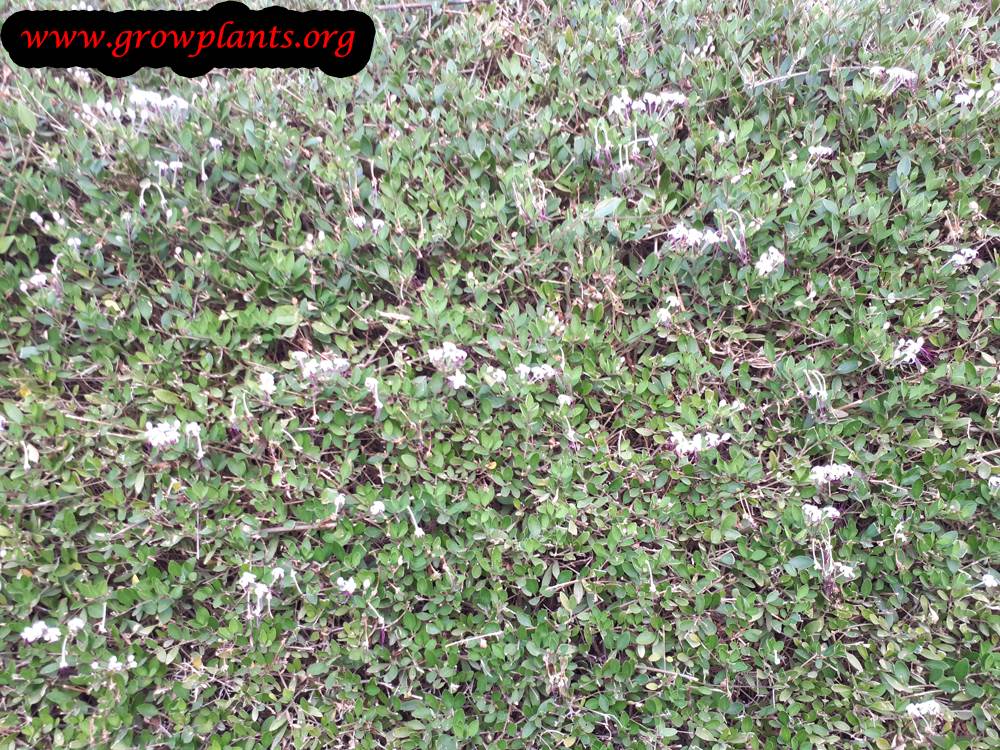
- Growth Habit & Form: Vigorous scrambling shrub, easily trained and clipped into a dense hedge or allowed to sprawl as a groundcover.
- Lifespan & Maturity: Fast-growing woody perennial that needs regular pruning to stay dense.
Anatomy & Physical Features
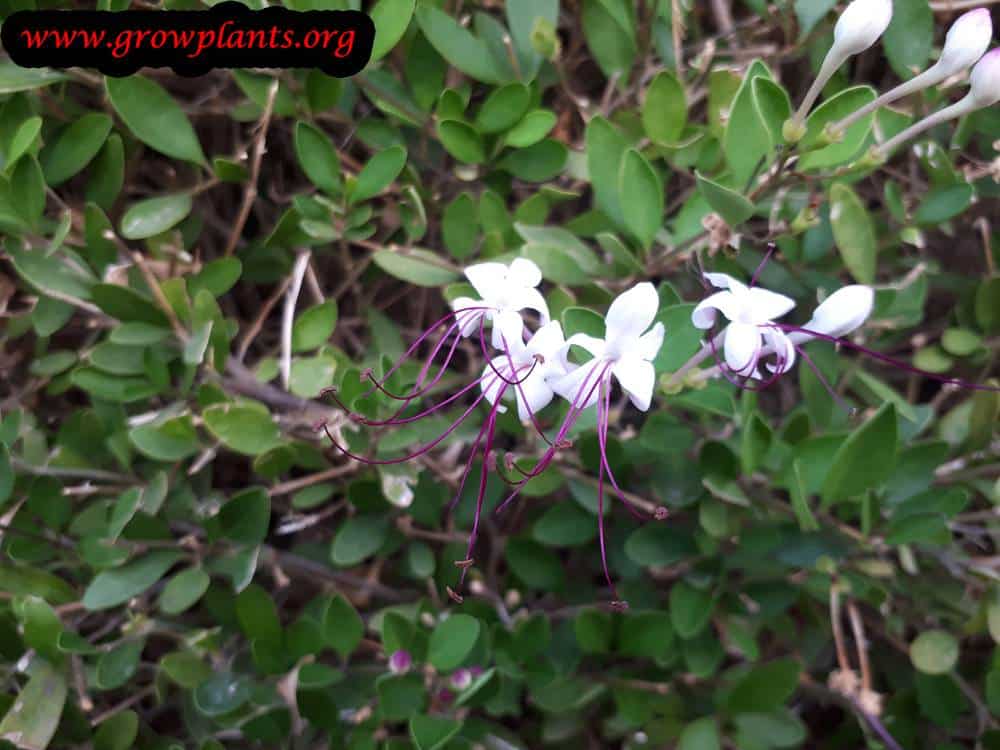
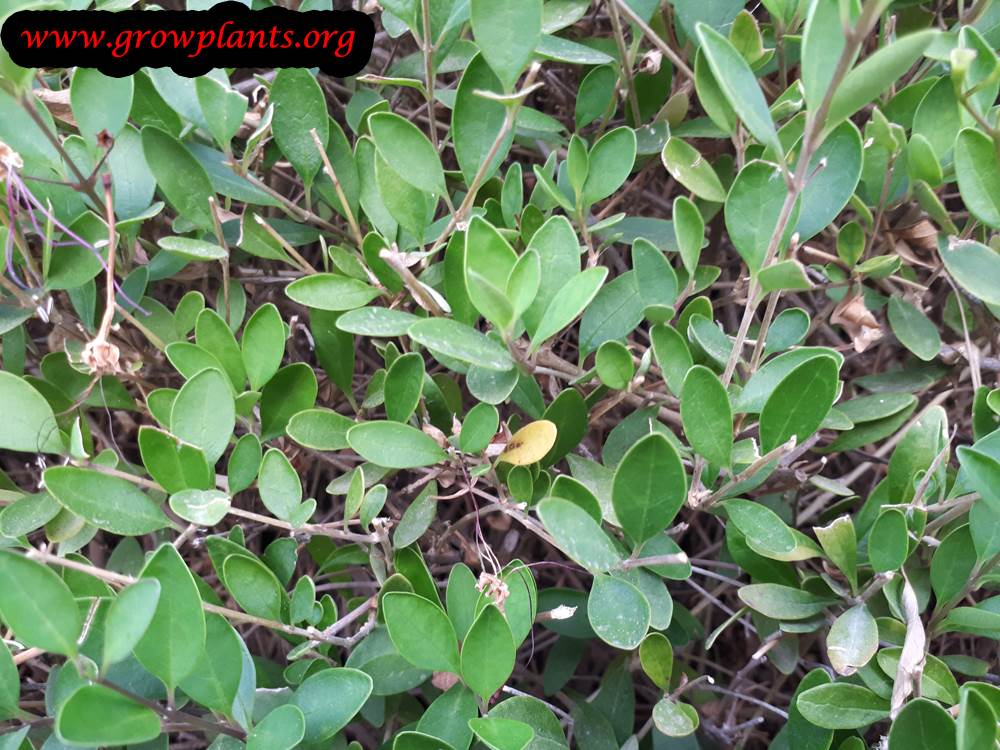
- Leaves & Foliage: Glossy green elliptic leaves.
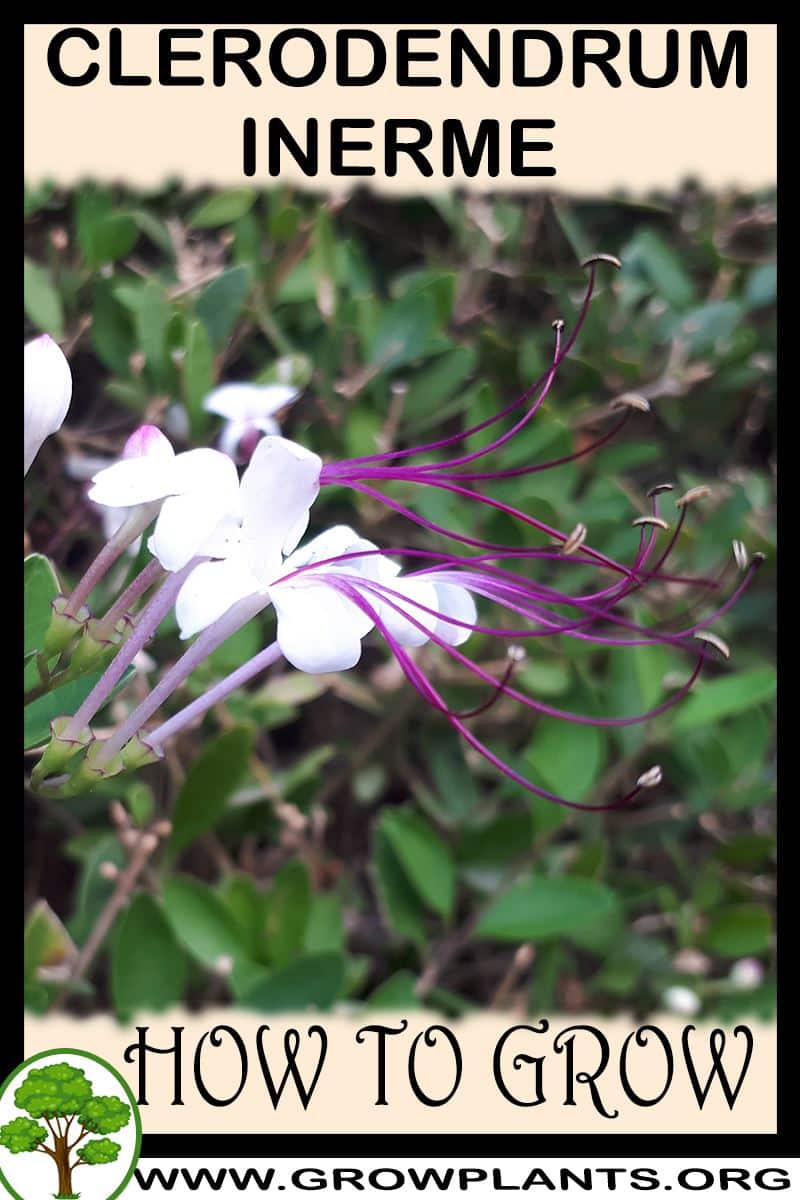
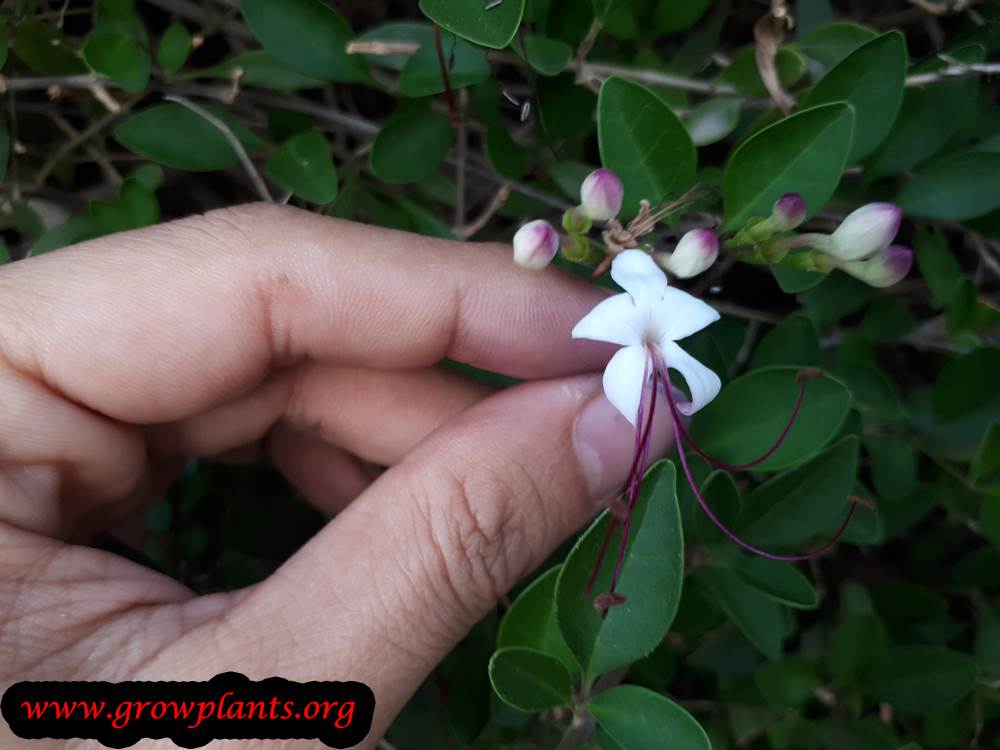
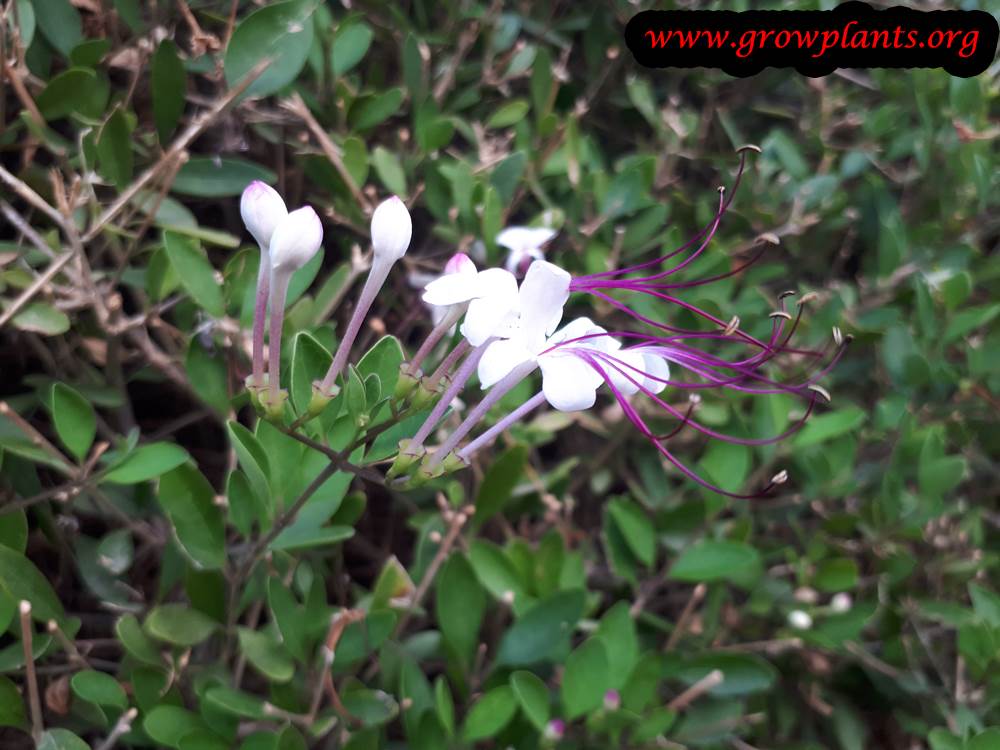
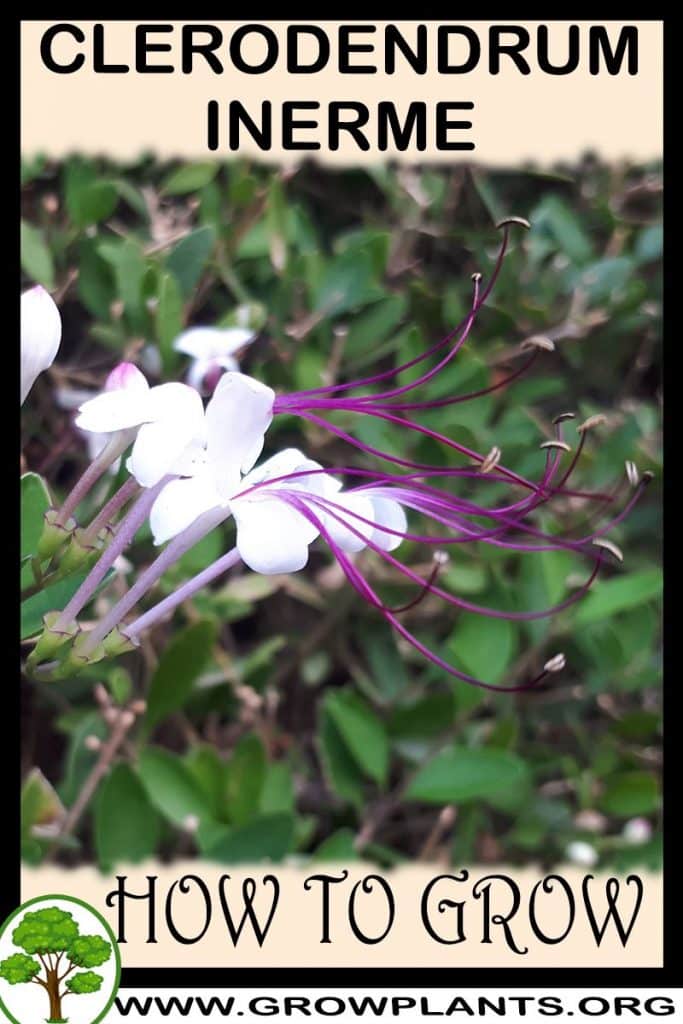
- Flower Characteristics: Fragrant white five-petalled flowers with long red protruding stamens.
Primary Uses & Landscape Value
- Functional & Ornamental Roles: Fragrant flowering hedge, screen or groundcover, well suited to coastal and warm-climate gardens.
Care Guide: Planting, Soil & Watering
Overview: Clerodendrum inerme (glory bower, Volkameria inermis) is a fast-growing evergreen hedge shrub (zone 10b+) for sun or shade that grows in rich, well-drained soil, ideally with support to be trained or climb. It is fairly drought tolerant, needing only low-to-moderate water once established.
Quick Care Requirements
| Requirement | Ideal Condition |
|---|---|
| Planting Season | In the warm season – spring-summer in zone 10b, spring-autumn in 11, year-round in 12+ |
| Growth Rate | Moderate to Fast |
| Soil Type | Rich, well-draining, with support or trellis |
| Water Need | Low to Moderate |
Planting & Establishment
- Best Planting Season: Plant in the warm season – spring to summer in zone 10b, spring to autumn in 11, or year-round in zone 12+.
- How to Plant:
- Hole Preparation: Dig a hole larger than the root ball and mix in organic matter, chopped dead leaves and humus.
- Soil Amendments: Enrich the backfill with organic matter and add a mulch to hold moisture; feed once a year.
- Planting Depth: Set the plant and cover it lightly, keeping the crown at soil level, then keep it moist for the first few weeks until established.
- Growth Speed & Expectations: A moderate-to-fast grower reaching 2-5 m (6-15 ft), easily trained as a hedge.
Soil, Watering & Drainage Care
- Soil Mix & Drainage Needs: Give rich but well-drained soil; a mulch keeps the roots moist while excess water drains away to prevent rot.
- Watering Schedule & Technique:
- Young / Newly Planted: Keep the soil moist for the first few weeks after planting while it establishes.
- Established: Water low-to-moderately; it becomes fairly drought tolerant, so let the surface dry between waterings.
- Seasonal Adjustments: More in summer heat, less in cool weather.
Note: Best grown in a container, since named cultivars are propagated by grafting or cuttings rather than seed; if planting in the ground, allow about 1-2m (3-6ft) between plants.
Climate, Light & Hardiness
Clerodendrum inerme (Volkameria inermis) is a versatile hedge and groundcover shrub for warm climates, growing in full sun through full shade, though flowering drops off notably in deep shade. It is hardy outdoors from about USDA zone 10b upward across subtropical, mediterranean, desert, temperate, and tropical conditions.
Quick Climate Specifications
| Climate Zones | Subtropical, Mediterranean, desert, temperate, or tropic |
|---|---|
| USDA Hardiness Zones | Approximately 10b and warmer |
| Frost Tolerance | Low |
| Light Conditions | Full sun, half shade, or full shade (reduced flowering in full shade) |
Sunlight & Light Exposure
Optimal Light Setup
Full sun to half shade brings the best flowering; full shade is tolerated but with far fewer blooms.
Direct Sun Requirement
Handles full direct sun well.
Shade & Heat Management
Also tolerates full shade as a foliage-only hedge or groundcover where flowering is not the priority.
Temperature Extremes & Hardiness
USDA Hardiness & Regional Limits
Suited to USDA zone 10b and warmer; in cooler climates it can be grown as a houseplant, though it may not flower well indoors.
Cold Damage & Winter Protection
Cold slows growth and can damage foliage; propagation and establishment are best done in the warmth of 21–25°C (70–77°F).
Frost Sensitivity
Frost-sensitive.
Growing in Pots, Balconies & Indoors
Clerodendrum inerme is a versatile shrub (naturally 2-5 m, but easily kept smaller in a pot). The grower says it can be grown indoors – though it may not flower there – and it tolerates shade, so it works as a foliage houseplant as well as a patio container shrub.
Quick Details
- Container Size: A pot 100-200% larger than the root ball (or a smaller pot with the roots trimmed at planting), kept pruned to size
- Indoor Suitability: Can be grown indoors as a foliage plant, but expect few or no flowers
- Best Spot: Full sun for flowers; tolerates half to full shade (with less bloom)
- Soil & Drainage: Potting mix or peat/coir with perlite; refresh as drainage declines
- Watering in Pots: Small to average; keep just moist and well drained
Indoors & On the Windowsill
- Grower’s verdict – yes, with a caveat: It will grow indoors but may not bloom. Treat it as a handsome foliage houseplant, keep it pruned, and give it the brightest spot to coax any flowers.
- Shade tolerance: It copes with shade better than most Clerodendrums, which is what makes it usable indoors – just accept fewer flowers in lower light.
On a Balcony or Patio
- Sun for flowers: On a balcony or patio a sunny spot brings the best flowering; it also handles part shade. Keep it pruned to a convenient size and shelter from strong wind.
Choosing the Pot, Soil & Long-Term Care
- Pot & drainage: A container 100-200% larger than the root ball with strong drainage holes and no standing saucer; or plant in a smaller pot and trim the roots when you do.
- Potting mix: Potting mix or peat/coir with perlite; replace the soil after a few years as drainage declines.
- Feeding: The grower advises organic matter and fertiliser at least once a year.
- Repotting & pruning: Pot on or root-prune every couple of years and prune the top to keep it compact indoors or on the patio.
Fertilizing & Feeding
A fast-growing, fragrant-flowered shrub widely used for hedging – its extended bloom period through much of the warm season rewards steady, moderate feeding, tapering off as growth slows in cooler weather.
Quick Fertilizing Specs
| Feeding Level | Moderate |
|---|---|
| young_feeding | Light, steady feeding while a newly planted hedge or specimen shrub is still establishing. |
| mature_feeding | Regular balanced feeding through the extended growing and flowering season for established hedges and shrubs. |
| Main Nutrient Priority | A balanced feed with adequate nitrogen to support dense hedge growth and the long run of fragrant white flowers. |
| Best Feeding Period | The warm growing season, which for this species spans an extended flowering window. |
| Organic Options | Working organic matter and mulch into the bed supports steady growth, especially for hedge plantings. |
| Reduce/Stop Feeding | Ease off feeding as growth and flowering slow going into cooler weather. |
Feeding by Growth Stage
Establishment
Help a newly planted hedge or specimen shrub build a strong root system before pushing heavy top growth.
| Nutrient direction | Light, balanced feeding that supports root establishment without forcing excessive early top growth. |
|---|---|
| Timing | The first growing season after planting, including new hedge rows. |
| Frequency | Feed lightly while the shrub is settling in, increasing only once strong new growth confirms it has established. |
| Fertilizer types | A diluted balanced fertilizer worked into the planting hole and surrounding soil, Organic matter and mulch mixed into the bed at planting to support the developing root system |
| Precautions | Avoid heavy feeding right at planting time, since a stressed, unestablished root system can be damaged by concentrated fertilizer. |
Growth and Extended Bloom
Support dense, well-shaped hedge or shrub growth together with the long run of fragrant white flowers this plant is grown for.
| Nutrient direction | A balanced feed with adequate nitrogen to sustain both steady foliage growth and continued flowering across the season. |
|---|---|
| Timing | The main warm-season growth period, during which flowering continues across multiple months. |
| Frequency | Feed on a steady, moderate schedule through the extended growth and flowering period, easing back if growth becomes overly vigorous. |
| Fertilizer types | A balanced shrub or flowering-plant fertilizer applied around the root zone, A fresh layer of organic mulch renewed periodically to feed the soil as it breaks down |
| Routine trace nutrients | iron, manganese |
| Precautions | Balance feeding with regular pruning for hedge plantings, since overly vigorous feeding without shaping can lead to dense, shaded interior growth that flowers poorly. |
Dormancy or Seasonal Rest
Let the shrub rest through its slow season without encouraging tender new growth that cooler conditions can’t support.
| Nutrient direction | None – withhold fertilizer while growth and flowering have clearly slowed for the season. |
|---|---|
| Timing | The cooler part of the year after the main flowering window ends. |
| Frequency | No feeding at this stage – resume once active growth and flowering clearly restart. |
| Fertilizer types | No feeding at this stage – maintenance watering only, no fertilizer product needed. |
| Precautions | Do not fertilize during the rest period; unused nutrients in slow-growing soil can build up and stress the roots. |
Nutrient Deficiency Signs & Corrections
The shrub grows well but flowers less than expected or for a shorter stretch than its usual extended bloom period.
| Possible causes | A nitrogen-heavy feeding routine favoring leafy growth over flowering, Insufficient light, especially in shaded hedge interiors, limiting flowering, A shrub overdue for pruning, leaving dense growth that flowers less freely |
|---|---|
| Appears first on | The flowering shoots compared with the surrounding foliage |
| What to check | Check light exposure, particularly for interior or shaded parts of a hedge, Check when the shrub was last pruned and whether it needs shaping |
| Possible correction | Balance the feeding routine rather than leaning heavily nitrogen-forward, and prune to open up the canopy for better light and flowering. |
Leaves turn pale or yellow between the veins while the veins themselves stay green.
| Possible causes | Iron unavailability linked to an overly alkaline soil pH, Waterlogged soil limiting healthy root function, General nutrient deficiency from an extended period without feeding |
|---|---|
| Appears first on | The newest leaves |
| What to check | Check drainage at the planting site, Check how long it has been since the last balanced feeding |
| Possible correction | Improve drainage and soil condition first; if pale new leaves persist, a chelated iron product applied per its label can help. |
Pruning, Training & Seasonal Maintenance
Clerodendrum inerme is a vigorous, evergreen shrub most often grown as a hedge or ground cover, and it flowers in flushes from spring through autumn rather than in a single bloom period, which means it tolerates far more frequent trimming than a once-a-year flowering shrub without losing its overall display — new flushes of growth keep producing more flowers through the season. Pruning can be done at any time of year, though shaping right after a bloom flush finishes lets fresh growth carry the next round of flowers sooner. Because it is fast to medium growing and reaches 2–5m, size and shape control is an ongoing task rather than a single annual event.
Quick Pruning & Maintenance Specs
| Pruning Tolerance | High |
| Primary Pruning Window | Any time of year, ideally just after a bloom flush |
| Typical Frequency | Several times a year if kept as a formal hedge; once or twice a year if grown informally |
| Main Objective | Maintain hedge/ground-cover shape and density while keeping lower foliage lit |
| Young Plant Priority | Establish the intended form (formal hedge line, informal shrub, or ground cover spread) early |
| Mature Plant Priority | Regular shaping cuts; periodic renewal of old, congested wood |
| Best Tool Type | Hedge shears for a formal clipped hedge; bypass secateurs and loppers for informal or ground-cover form |
| Avoid Heavy Pruning During | No strict restriction given its repeat-flowering habit, though avoid it during extreme heat stress |
Pruning by Plant Age & Size
Newly Established
Pinch or lightly tip young plants to encourage branching from the base rather than a single leggy stem, especially if the intended use is a dense hedge or ground cover.
Young / Formative
Decide the training form early: for a formal hedge, begin light shearing once plants reach the desired width to build density from the base up; for an informal shrub or ground cover, use selective heading cuts instead to encourage multi-stem branching without a clipped face.
Mature / Established
Maintain the chosen form with regular trims, and periodically remove some of the oldest interior wood to prevent the base from becoming bare and woody underneath a leafy top.
Flowering & Fruiting Wood
Flowers form on current-season growth in repeated flushes across spring, summer and autumn rather than on a single old-wood bloom cycle, so routine shearing or trimming removes only the most recent flush of flowers, not an entire season’s display — the plant simply produces another flush of new growth and blooms again.
Structural Pruning & Training
When shaped as a hedge, keep the profile slightly wider at the base than at the top (a tapered rather than vertical face); this is not cosmetic, it is what actually keeps light reaching the lower foliage that would otherwise be shaded out by growth above it, and it is a genuine practical reading of this species’ own care guidance to keep the plant green from top to bottom. Thinning some interior stems also helps a dense hedge or ground-cover mass stay leafy at the base rather than developing bare, woody legs.
Special Growth to Remove
- Dead wood: remove at any time; the source guidance specifically flags this as important for keeping the plant looking green and healthy.
- Overly dense interior growth: thin periodically so light reaches lower foliage and the hedge base does not go bare.
Container & Small-Space Pruning
Grown in a container it may flower less freely than in the ground, but pruning approach is the same; keep it more compact with a bit more frequent trimming than an in-ground hedge, and refresh potting mix with organic matter or fertilizer at least annually since container soil depletes faster.
Tools
- Hedge shears: appropriate only if the plant is being kept as a formal, clipped hedge line.
- Bypass secateurs: for selective shaping cuts on an informal shrub or ground cover.
- Loppers: for thicker old wood when renewal-thinning a mature hedge’s interior.
Tool Hygiene & Disease Risk
Routine hygiene is adequate for general cuts. This species attracts aphids, spider mites and mealybugs, which can build up on the dense new growth a hedge produces after shearing, so inspect regrowth for pests rather than assuming any decline is pruning-related.
Cut Placement & Technique
For a formal hedge, shear to a level or gently tapered face, angling slightly wider at the base; for informal shaping, use thinning cuts back to a branch junction rather than heading cuts, which keep a more natural form and avoid the dense twiggy growth that repeated shearing produces at the same cut line.
Heavy Pruning & Rejuvenation
Tolerates hard rejuvenation well given its fast to medium growth rate: an overgrown, leggy hedge or ground cover can be cut back hard to renew density, and it will recover with vigorous new growth and resume flowering within the same growing season.
Post-Pruning Care
Water normally after trimming and watch the resulting flush of soft new growth for aphids, spider mites and mealybugs, which readily colonize tender regrowth; no special feeding is needed beyond the plant’s normal annual fertilizing.
Common Pruning Mistakes
- Shearing to a vertical or top-heavy face, which shades out and eventually kills lower foliage.
- Over-shearing so heavily and frequently that flowering is suppressed even though the species tolerates frequent cuts.
- Neglecting to thin old interior wood, leaving a hedge leafy on the outside but bare and woody within.
When NOT to Prune
Avoid a hard cutback during periods of heat or drought stress, when the plant is less able to push the vigorous regrowth this species normally produces after pruning.
Pruning Troubleshooting
| Problem | Possible Cause | What to Check | Corrective Action |
| Bare, leafless lower hedge with green top only | Vertical or top-heavy shearing shading out lower growth | Hedge profile shape | Reshape to a tapered profile, wider at the base than the top |
| Reduced flowering despite healthy growth | Over-frequent or overly hard shearing removing flush after flush before buds open | Recent trimming frequency | Space out shearing intervals to let flushes bloom before the next cut |
| Dense but bare-based hedge | No interior renewal thinning over several seasons | Age and density of interior wood | Selectively remove some of the oldest interior stems to encourage low regrowth |
| Poor regrowth after a hard cutback | Pruned during heat or drought stress | Recent weather and watering before/after the cut | Ensure adequate water and avoid further hard pruning until recovery |
Recommended Tools (by task)
- hedge_shears: for maintaining a formal, clipped hedge line.
- bypass_secateurs: for selective shaping when grown informally or as ground cover.
- loppers: for removing thicker old wood during interior renewal thinning.
Propagation Guide
Clerodendrum inerme can be propagated vegetatively from stem cuttings. Seed is also possible where viable seed is produced and is appropriate for the species or genus-level plant.
Quick Propagation Specs
| Best Vegetative Method | Stem cuttings |
| Seed | Possible where viable seed is produced |
| Grafting | Not required |
Cuttings root best in early spring at around 21-25°C (70-77°F), in moist, humid conditions using a peat-based mix and a rooting hormone; a greenhouse or a small perforated plastic box helps hold humidity, and the first roots typically take a few weeks to form. For seed, a peat mix with vermiculite (or another well-ventilated medium) in a sunny, humid spot at the same 21-25°C range works well.
Stem Cuttings
Take healthy non-flowering stem material with viable nodes. Remove lower leaves, place the cutting in a clean, free-draining propagation medium, and maintain humidity without keeping the medium waterlogged until roots develop.
Growing from Seed
Use mature, viable seed when seed propagation is desired. Seed-grown plants may vary, especially on cultivated or genus-level pages.
Aftercare
Keep rooted cuttings protected from severe stress while they establish, then increase light and normal watering gradually.
Bloom & Flower Guide
Quick Details
- Bloom Season: Spring, summer and autumn
- Flower Appearance: Fragrant white flowers with five petals and long red stamens
- Edibility: Not eaten – an ornamental, fragrant hedge shrub
Detailed Blooming Overview
Clerodendrum inerme (also known as Volkameria inermis or glory bower) is an evergreen shrub grown for its long season of dainty, fragrant flowers. It blooms from spring through autumn in subtropical, Mediterranean, desert, temperate and tropical climates, in roughly zone 10b and warmer. Tough and salt-tolerant, it is a favorite coastal hedge.
Flower Characteristics
- White, five-petalled flowers that release their scent, especially in the evening.
- Long red stamens arch well beyond the petals, giving each bloom a delicate, whiskered look.
- Carried in small clusters over glossy foliage.
Bloom Care & Thinning
- Hedging: Light, regular clipping keeps it dense; it flowers on new growth, so it blooms again after trimming.
- Position: Full sun and warmth, including exposed coastal sites, suit it well.
- Pollination: The fragrant flowers attract butterflies and moths.
Pests, Diseases & Troubleshooting
Overview: Volkameria inermis (seaside clerodendrum) is a tough, salt-tolerant hedge shrub with few serious enemies; its main nuisances are soft-bodied sap-suckers in warm, sheltered conditions and the sooty mold that follows their honeydew. Kept in sun with good airflow, it largely looks after itself.
Quick Troubleshooting Overview
| Issue / Pest | Main Symptom | Primary Solution |
|---|---|---|
| Aphids | Curled, sticky new growth | Water blast; insecticidal soap |
| Spider mites | Stippling and webbing in dry heat | Hose foliage; horticultural oil |
| Mealybugs | White cottony tufts in leaf axils | Wipe off; oil/soap; ant control |
| Whitefly | Clouds of white flies; sooty mold | Sticky traps; insecticidal soap |
| Sooty mold | Black film on leaves | Control the sap-suckers feeding it |
Common Pests & Management
- Aphids (Aphis / Myzus spp.):
- Symptoms: Clusters of small soft insects on tender shoot tips and leaf undersides; growth curls and turns sticky with honeydew that blackens.
- Prevention & Control: Blast off with water, squash colonies, and protect ladybirds and lacewings. Insecticidal soap treats stubborn groups; avoid overfeeding with nitrogen, which fuels soft, aphid-prone growth.
- Spider mites (Tetranychus urticae):
- Symptoms: Fine stippling and a bronzed, dull look with light webbing on leaf undersides during hot, dry weather.
- Prevention & Control: Raise humidity and hose the foliage; encourage predatory mites. Treat persistent colonies with horticultural oil or insecticidal soap in the cool of the day.
- Mealybugs (Planococcus / Pseudococcus spp.):
- Symptoms: White, cottony clusters in leaf axils and along stems, with honeydew and sooty mold; ants tend and spread them.
- Prevention & Control: Wipe off small colonies with an alcohol swab, control ants, and spray horticultural oil or insecticidal soap for wider infestations.
- Whitefly (Bemisia / Trialeurodes spp.):
- Symptoms: Tiny white flies that lift off in a cloud when foliage is disturbed, yellowing leaves and leaving sticky, sooty deposits.
- Prevention & Control: Use yellow sticky traps, hose foliage, and protect Encarsia parasitoids. Insecticidal soap or light oil on leaf undersides controls numbers.
- Scale insects (Coccidae / Diaspididae):
- Symptoms: Brown or waxy bumps on stems and leaf veins; sap loss yellows foliage and soft scale adds honeydew.
- Prevention & Control: Prune out heavily encrusted stems, scrape light infestations, and smother the rest with horticultural oil while controlling ants.
Diseases & Fungal Issues
- Leaf spot (Cercospora / Alternaria spp.):
- Symptoms: Small brown or dark spots on foliage in warm, humid, crowded conditions; generally cosmetic on a vigorous hedge.
- Treatment & Management: Thin for airflow, water at the base, and remove badly spotted leaves. Fungicide is rarely needed; copper is available if spotting is severe.
- Root rot (Phytophthora / Pythium spp.):
- Symptoms: Wilting, yellowing, and dieback where the shrub sits in heavy, waterlogged soil despite adequate moisture.
- Treatment & Management: Ensure sharp drainage, water only as needed, and avoid waterlogging. Remove collapsed plants; prevention through drainage is the reliable approach.
- Sooty mold (Capnodium spp.):
- Symptoms: A black, sooty film on leaves and stems growing on insect honeydew rather than infecting the plant.
- Treatment & Management: Control the aphids, whitefly, mealybugs, or scale producing the honeydew, and rinse off heavy deposits; the mold then clears.
Growing Difficulties & Abiotic Problems
- Overwatering / poor drainage:
- Cause & Symptoms: Yellowing and root decline in soggy soil; a coastal shrub that tolerates salt but not constant wet feet.
- Correction Strategy: Grow in full sun with free-draining soil and let it dry between waterings; amend heavy soils with grit.
- Cold / frost damage:
- Cause & Symptoms: Leaf drop and blackened tips after cold; it is a frost-tender, warm-climate shrub.
- Correction Strategy: Site in a sheltered, sunny spot and protect from frost; it usually re-shoots from the base after light cold damage.
- Chlorosis:
- Cause & Symptoms: Pale leaves with green veins from iron shortage in wet or very alkaline soils.
- Correction Strategy: Improve drainage and apply chelated iron with a light feed during active growth; build soil health with organic matter.
What Helps – Products & Tools
Gentle tools cover it well: insecticidal soap and light horticultural or neem oil for aphids, mites, whitefly, mealybugs, and scale; yellow sticky traps for whitefly; and – rarely – a copper fungicide for leaf spot. Sharp drainage prevents root rot. Apply oils in the evening to protect pollinators and follow the label.