


Plant Profile & Key Characteristics
Also known as: Purple cestrum, Red cestrum, Pink cestrum, Bastard jasmine, Jasmine plant
Overview: An evergreen shrub, 2-3 m (about 6.5-10 ft) tall, grown as an ornamental flowering hedge for its clusters of pink to red tubular flowers. It is a fast-growing perennial that attracts pollinators in subtropical and Mediterranean gardens.
Quick Specifications
| Specification | Attribute |
|---|---|
| Plant Type / Life Cycle | Perennial (evergreen shrub) |
| Foliage Type | Evergreen |
| Mature Size | 2-3 m (6.5-10 ft) tall |
| Growth Rate | Fast to moderate |
| Toxicity | Toxic – foliage and berries contain toxic compounds (Solanaceae) |
| Hardiness | USDA zone 9+ (zone 8 with winter care) |
Growth Form & Structure
- Height & Spread: 2-3 m (6.5-10 ft) tall; can be grown in containers, potted up gradually to the desired size.
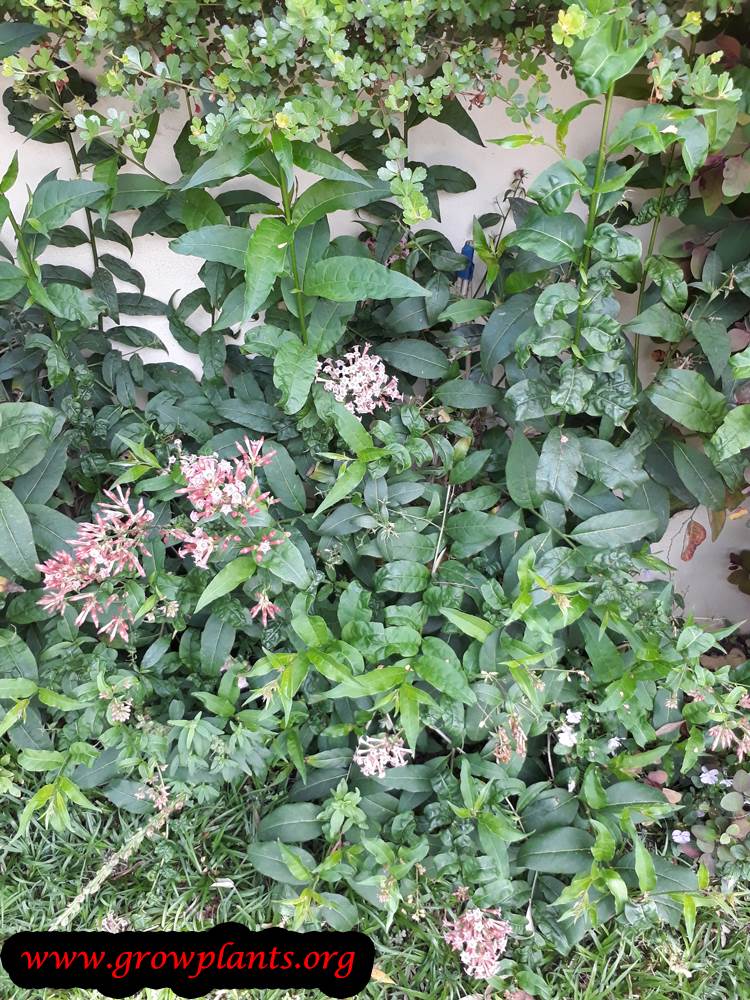
- Growth Habit & Form: Bushy evergreen shrub trained as a flowering hedge – needs regular pruning or the interior goes bare.
- Lifespan & Maturity: Fast-to-moderate perennial that quickly reaches hedge size.
Anatomy & Physical Features
- Leaves & Foliage: Green, elliptic to oval leaves.
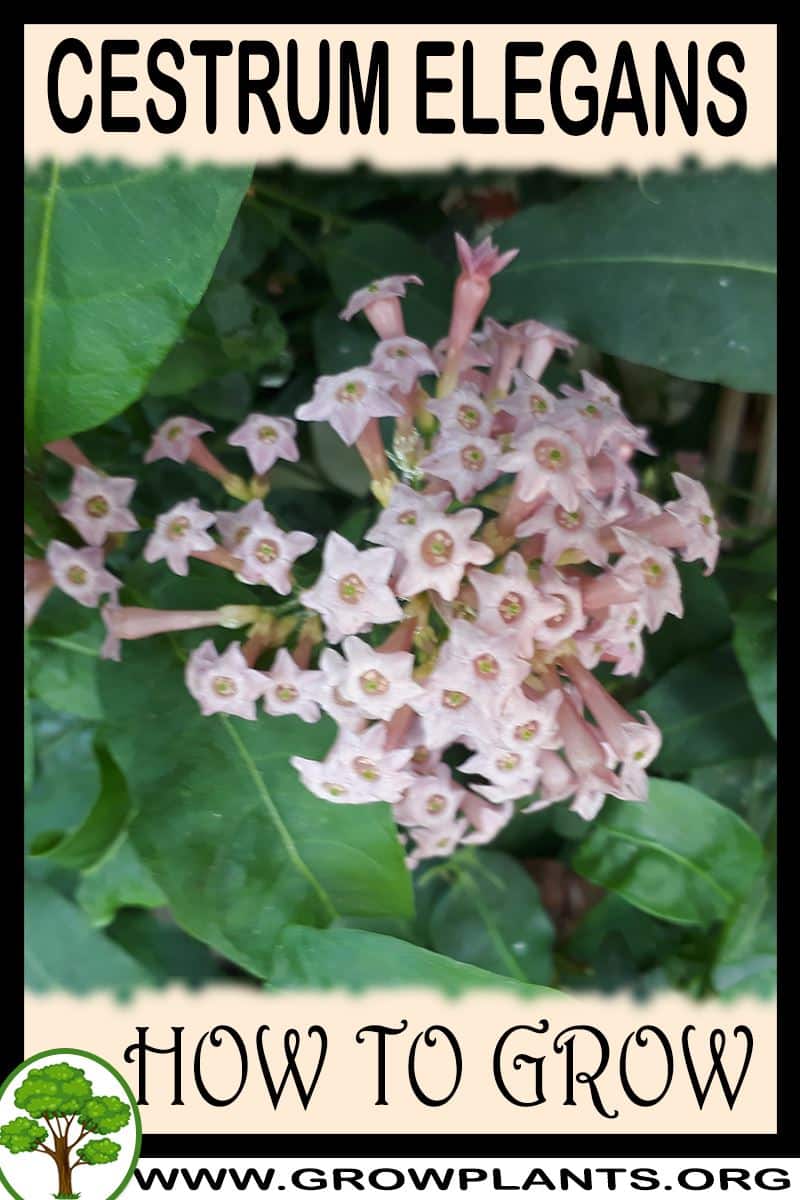
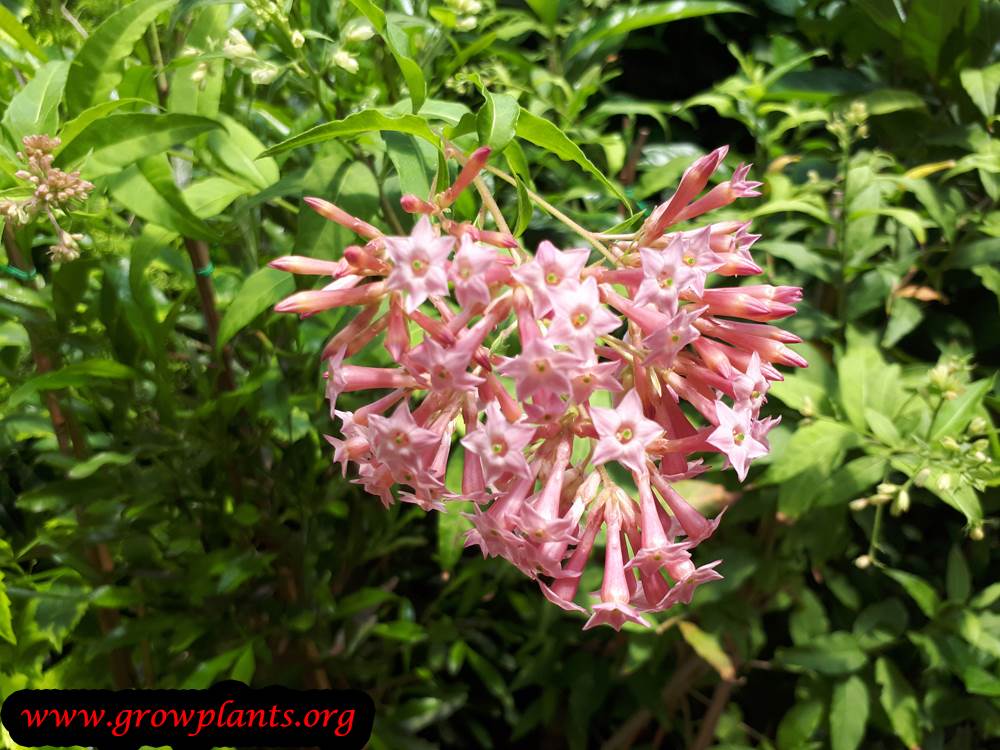
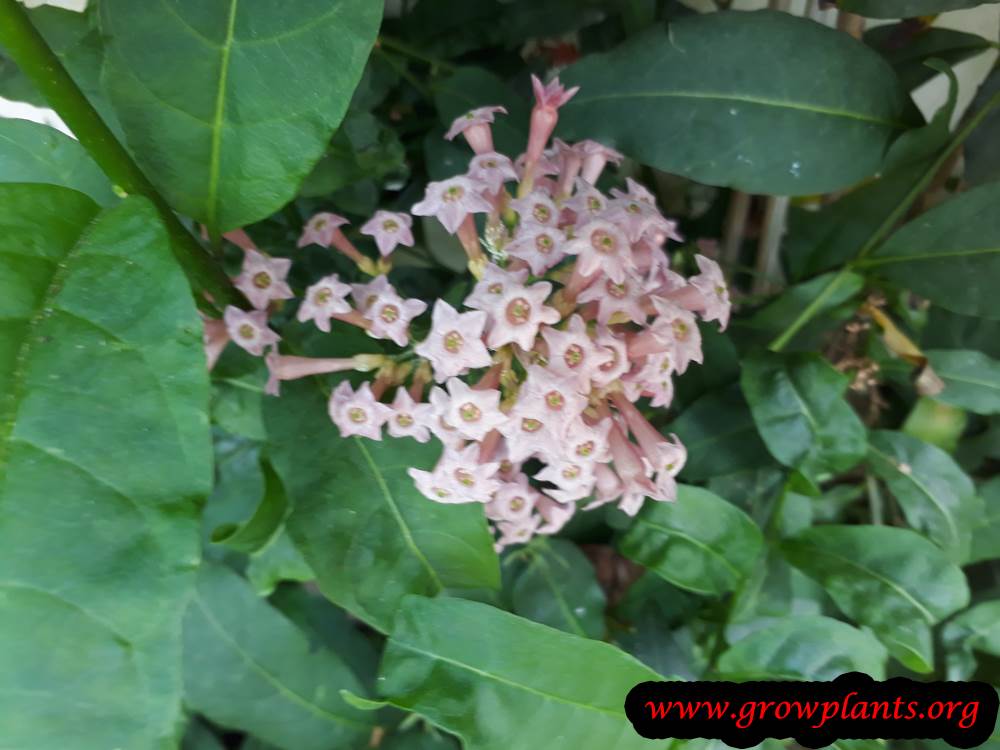
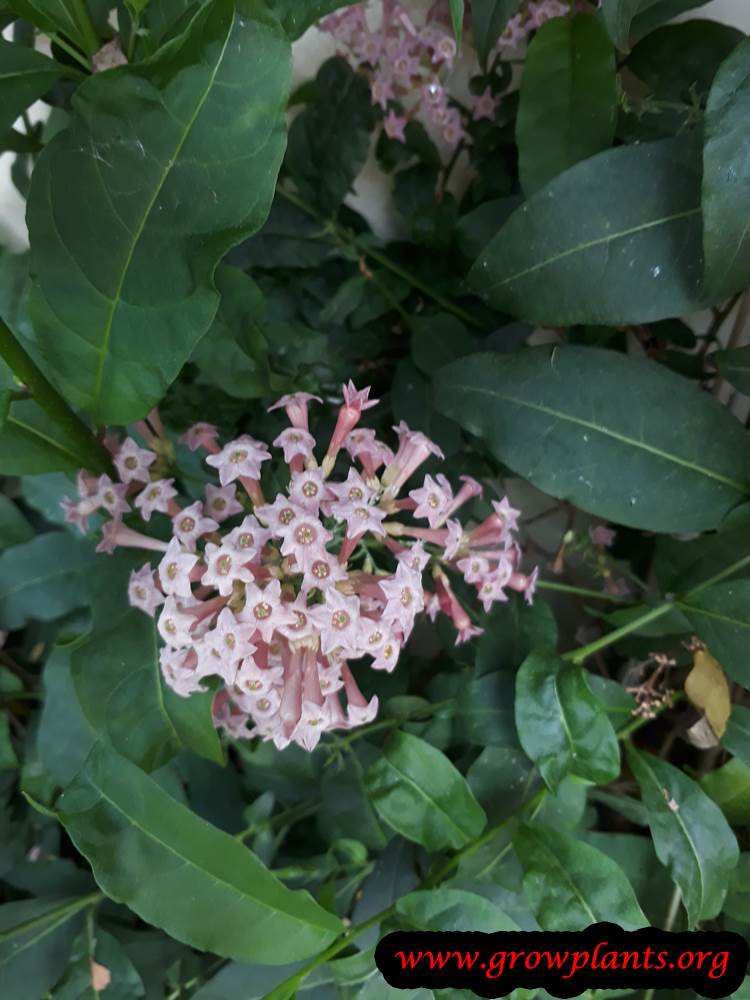
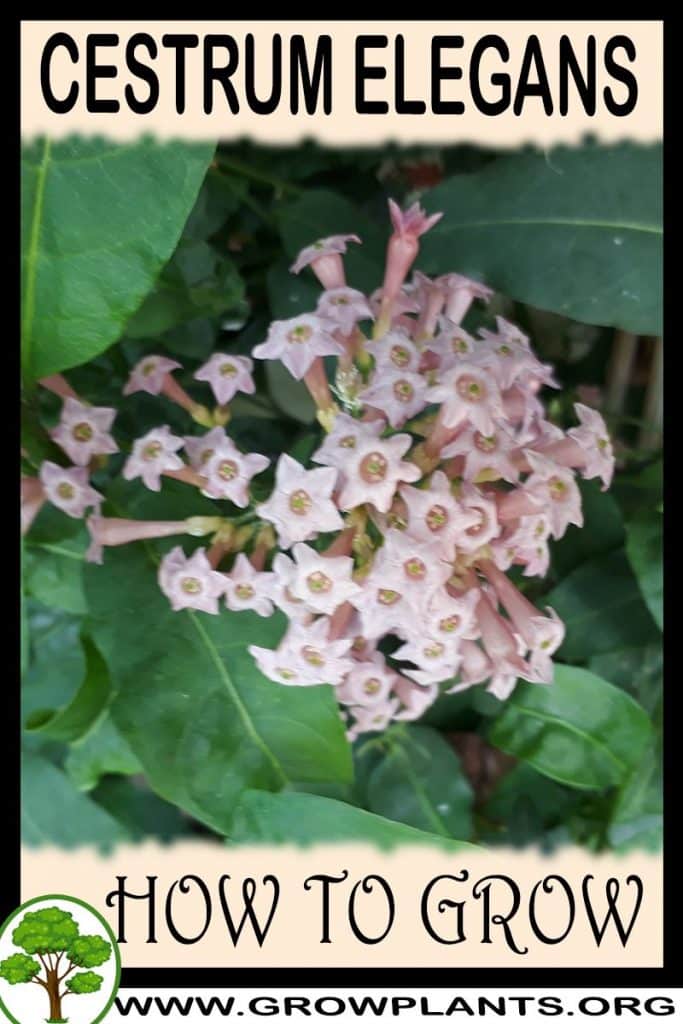
- Flower Characteristics: Pink, red or purple tubular (trumpet) flowers in clusters (full detail in the Bloom section).
Primary Uses & Landscape Value
- Functional & Ornamental Roles: Ornamental flowering hedge and screen that attracts pollinators and hummingbirds.
Care Guide: Planting, Soil & Watering
Overview: This vigorous flowering shrub enjoys full sun to light shade in mild subtropical gardens and grows fast once established. It likes well-drained, mulched soil and a moderate, regular supply of water.
Quick Care Requirements
| Requirement | Ideal Condition |
|---|---|
| Planting Season | Spring in zone 8; spring to summer in zones 9-10a; spring to autumn in zones 10b-11; year-round in zones 12+ |
| Growth Rate | Moderate to fast |
| Soil Type | Well-draining, enriched and mulched |
| Water Need | Moderate – keep evenly moist, letting the surface dry between waterings |
Planting & Establishment
- Best Planting Season: In spring in zone 8, extending through summer in zones 9-10a, through autumn in zones 10b-11, and year-round in zones 12 and above.
- How to Plant:
- Hole Preparation: Dig a hole wider than the root ball and loosen the surrounding soil so roots establish quickly.
- Soil Amendments: Blend in peat and vermiculite, or compost, to hold moisture while keeping the mix open and free-draining.
- Planting Depth: Set the plant so the root collar sits level with the surrounding soil; never bury the stem or trunk base.
- Growth Speed & Expectations: A moderate to fast grower reaching 2-3 m, quickly making a dense flowering shrub.
Soil, Watering & Drainage Care
- Soil Mix & Drainage Needs: Plant in well-draining soil enriched with organic matter and topped with mulch. In a container, start in a pot around 50-70% larger than the root ball, potting up as it fills out, and refresh the soil every few years as it loses its structure.
- Watering Schedule & Technique:
- Young / Newly Planted: Keep the soil evenly moist for the first several weeks, watering whenever the surface begins to dry.
- Established: Water deeply and let the top few centimetres dry before watering again, rather than giving frequent shallow sips.
- Seasonal Adjustments: Water more often through summer heat and reduce it in winter as growth slows.
Climate, Light & Hardiness
Cestrum elegans is a fast, tender evergreen shrub for subtropical, Mediterranean, tropical and warm-temperate climates, carrying clusters of trumpet flowers over a long warm season and attracting pollinators. It grows in full sun to partial shade and needs a largely frost-free position, with the site rating it at hardiness zone 9 and warmer – and zone 8 with the right winter care.
Quick Climate Specifications
| Climate Zones | Subtropical, Mediterranean, tropical, warm-temperate |
|---|---|
| USDA Hardiness Zones | Approximately 9 and warmer; zone 8 with winter protection (site data) |
| Optimal Temp Range | Warm, roughly 18–28°C (64–82°F) |
| Cold Damage Begins | Foliage and soft growth damaged by frost near 0°C (32°F) |
| Approx. Survival Minimum | Top growth killed by hard frost; established plants resprout from the base in zone 8 |
| Frost Tolerance | Low |
| Light Conditions | Full sun to partial shade |
Sunlight & Light Exposure
Optimal Light Setup
Full sun gives the heaviest flowering and the densest habit for a hedge; it also grows well in partial shade, which can be useful in very hot climates.
Temperature Extremes & Hardiness
USDA Hardiness & Regional Limits
Site data lists zone 9 and warmer, with zone 8 possible if protected; the lower edge of zone 9 corresponds to winter lows around −7 to −1°C (20 to 30°F). Cold tolerance improves with plant age and shelter.
Cold Damage & Winter Protection
Frost burns the leaves and soft tips near 0°C (32°F); in marginal areas (zone 8) plants are cut back by hard frost but established specimens resprout from the base in spring. Mulch protects the crown, and container plants can be sheltered over winter in the coldest zones.
Extreme Heat Tolerance
Good – it flowers freely through hot subtropical and Mediterranean summers with adequate moisture.
Wind, Humidity & Microclimate
Humidity Preferences
Enjoys warm, humid air; propagation in particular is favoured by high humidity.
Wind Tolerance
Moderate; the fast, soft growth can be knocked about by strong wind, so a sheltered position keeps a hedge dense and free-flowering.
Microclimate Recommendations
A warm, sheltered, sunny and frost-free spot gives the longest flowering; regular clipping keeps the interior of a hedge leafy.
Growing in Pots, Balconies & Indoors
Cestrum elegans is a vigorous tender flowering shrub (2-3 m / 80-120 in) – not a houseplant, but it grows well in a large container on a sunny patio or balcony, and potting it lets you move it under cover to overwinter where winters are cold. It takes full sun to half shade.
Quick Details
- Container Size: Start with a pot 50-70% larger than the root ball (use the smaller end for a bigger plant) and pot up as it fills (grower)
- Indoor Suitability: Not a houseplant – too light-hungry for a room; pot it mainly to overwinter frost-free
- Best Spot: Full sun to half shade
- Soil & Drainage: Potting mix or peat soil with perlite; must drain freely
- Watering in Pots: Average; let the base fill when watering but it should drain and dry the same day (grower)
Indoors & On the Windowsill
- Houseplant limits: Grown for its flowers, it needs strong sun and will not thrive deep indoors.
- Overwintering: The main reason to pot it – move the container somewhere bright and frost-free over winter and water sparingly until growth restarts.
- Safety: Cestrum is toxic – its berries and foliage are poisonous if eaten, so keep it away from children and pets.
On a Balcony or Patio
- Light & wind: Give it a sunny spot; it can grow tall, so shelter it from strong wind and stake if needed. Walls and paving reflect heat, so pots dry quickly – check moisture daily in warm weather.
- Practicalities: A large filled pot is heavy – make sure the balcony can take the weight and that drainage runoff will not be a nuisance below.
Choosing the Pot, Soil & Long-Term Care
- Pot & potting up: Start 50-70% larger than the root ball (less extra for a bigger plant) and move to a bigger pot each time it reaches full capacity, until it is at the size you want.
- Refreshing the soil: Renew the soil every few years, since it loses its structure over time; if you cannot lift the plant out, replace part of the soil from the side and prune both the plant and its roots.
- Potting mix: Potting mix or peat soil with perlite.
- Watering & drainage: Let the base of the pot fill when you water, then let it dry the same day, and check the water actually drains out – if it does not, the soil is too dense or the pot needs more holes.
Growing this plant in a greenhouse
A greenhouse can give cestrum elegans frost protection, cold protection, humidity control and extra warmth. In the right climate it may also be kept growing through winter, depending on how much warmth and light are provided.
Greenhouse at a glance
| Greenhouse suitability | Conditional - depends on your climate |
|---|---|
| Main benefits | frost protection, cold protection, humidity control, extra warmth |
| Season extension | earlier spring & later autumn |
| Outdoor protection advisable below | about 5°C |
| Maintain greenhouse minimum | around 5°C for active growth |
| Suitable types | unheated greenhouse, polycarbonate greenhouse, lean-to |
| Heating | Heating is optional - useful mainly for winter growing in cold areas. |
Related greenhouse guides
- Greenhouses: How to Choose the Right Greenhouse
- Best Lean-To Greenhouses
- Polycarbonate Greenhouses: What to Look for Before Buying
Fertilizing & Feeding
A steady, light feeder: a balanced complete fertilizer through the growing and blooming season keeps flowering ornamentals healthy without forcing soft growth.
Quick Fertilizing Specs
| Feeding Level | moderate |
|---|---|
| Main Nutrient Priority | A balanced complete fertilizer with steady nitrogen; extra phosphorus is not needed for bloom. |
| Best Feeding Period | Through the active growing and flowering season. |
| Organic Options | Compost and other organic matter improve the soil and supply gentle, steady nutrition. |
| Soil pH | Slightly acidic to near neutral suits most flowering ornamentals. |
| Reduce/Stop Feeding | Ease off feeding as growth slows heading into the cool, dormant rest period. |
Feeding by Growth Stage
Spring growth flush
Support healthy new shoots and leaf growth as the plant wakes up.
| Nutrient direction | A complete, balanced fertilizer with steady nitrogen to build strong foliage and stems. |
|---|---|
| Timing | As new growth begins in spring and the weather warms. |
| Frequency | Light, regular feedings through the active growing season. |
| Fertilizer types | A balanced complete garden fertilizer, A slow-release complete fertilizer worked into the soil, Compost or other organic matter to enrich the soil |
| Precautions | Feed lightly and avoid overfeeding with nitrogen, which pushes soft leafy growth at the expense of flowers. |
Flowering period
Fuel abundant, well-colored flowers while keeping the plant vigorous.
| Nutrient direction | A balanced complete fertilizer with adequate nitrogen; balanced feeding, not extra phosphorus, drives good bloom. |
|---|---|
| Timing | Through the blooming season. |
| Frequency | Steady, light feeding maintained across the flowering period. |
| Fertilizer types | A balanced complete flowering-plant fertilizer, A water-soluble complete fertilizer for container plants |
| Precautions | Skip high-phosphorus ‘bloom booster’ products; they are rarely needed and excess phosphorus can harm the soil. Container plants need even feeding to avoid salt buildup. |
Dormancy or cool-season rest
Let the plant rest through cold or low-light conditions without forcing new growth.
| Nutrient direction | None – withhold fertilizer while the plant is resting. |
|---|---|
| Timing | During cold winter weather or the plant’s low-light dormant rest. |
| Frequency | No feeding at this stage. |
| Fertilizer types | No feeding at this stage – resume only when active growth returns. |
| Precautions | Do not fertilize until active growth resumes; feeding a resting plant risks salt buildup and root injury. |
Nutrient Deficiency Signs & Corrections
Older, lower leaves fade to pale green or yellow and overall growth is weak.
| Possible causes | Low nitrogen in the soil, Nutrients leached out by heavy rain or frequent watering, Cold, wet roots slowing nutrient uptake |
|---|---|
| Appears first on | Older, lower leaves |
| What to check | Recent feeding history, Soil drainage and how often it is watered, Whether roots are healthy and warm enough |
| Possible correction | Apply a balanced complete fertilizer and improve drainage; correct soil pH if it is far off so nutrients stay available. |
Newest leaves turn yellow between green veins (interveinal yellowing) while older leaves stay greener.
| Possible causes | High soil pH locking up iron, Waterlogged or poorly aerated roots, Genuinely low available iron |
|---|---|
| Appears first on | Youngest, newest leaves |
| What to check | Soil pH, Drainage and root health, Whether only new growth is affected |
| Possible correction | Correct soil pH and improve drainage; where iron is truly short, apply a chelated iron product per its label. |
Lush leaves but few flowers, or pale weak blooms.
| Possible causes | Excess nitrogen driving leafy growth over flowers, Too little light for good flowering, A pest or cultural problem rather than a nutrient shortage |
|---|---|
| Appears first on | Flower buds and flowering shoots |
| What to check | How much nitrogen was applied, Hours of direct light, General plant health and pest pressure |
| Possible correction | Ease off nitrogen, move the plant to brighter light, and keep feeding balanced rather than reaching for high-phosphorus products. |
Pruning, Training & Seasonal Maintenance
Cestrum elegans (red or purple cestrum) is a vigorous, arching evergreen shrub grown for its dense clusters of tubular pink-to-red flowers, which are carried at the tips of the current season’s growth – so cutting back drives fresh flowering shoots rather than removing next year’s bloom. Fast and inclined to go bare and woody at the base, it is a renewal-pruning shrub: shorten and thin after a bloom flush to force new flowering wood, and cut the oldest canes to the ground to keep it clothed low down. It can be pruned across much of the year in frost-free conditions; it is vigorous to the point of being invasive in some regions, and its berries and foliage are toxic, so prune to limit seeding and wear gloves.
Quick Pruning & Maintenance Specs
| Pruning Tolerance | High – vigorous, tolerates hard renewal |
| Primary Pruning Window | Late winter / early spring for the main cut-back; and after each bloom flush |
| Secondary Maintenance Window | Almost year-round tidying in frost-free areas |
| Typical Frequency | Frequent – it goes bare inside if not pruned regularly |
| Main Objective | Force new flowering wood; keep it dense and clothed to the base |
| Young Plant Priority | Pinch tips for bushiness; prevent an early bare, leggy base |
| Mature Plant Priority | Renew oldest canes to the base; tip after flushes; remove berries |
| Best Tool Type | Bypass secateurs and loppers; hedge shears only if grown as a formal hedge |
| Avoid Heavy Pruning During | Before frost – soft regrowth is cold-tender at the zone 9 margin |
Pruning by Plant Age & Size
Newly Established
Remove only damaged shoots in the first season; tip-pinch a few times to start a branching, bushy plant.
Young / Formative
Build a full, well-furnished shrub early by pinching the arching shoots – this plant readily bares its interior, so density set now pays off. If you intend a formal hedge, begin clipping to shape, accepting that regular shearing removes many of the tip-borne flowers.
Mature / Established
Treat it as a cane-renewal shrub: each year remove a portion of the oldest, woodiest stems at the base to force vigorous new flowering canes, and shorten or shear the rest after a bloom flush to keep it compact.
Seasonal Pruning Schedule
Late winter / early spring (main cut-back): reduce size, thin congestion and take out the oldest canes; because flowers come on new growth, this powers the coming flushes.
After each bloom flush (summer–autumn): shorten flowered shoots to force the next round of flowering wood, and remove spent clusters and berries to curb seeding.
Frost-free periods: light tidying can continue almost year-round, but hold hard cuts back from the approach of frost.
Flowering & Fruiting Wood
Cestrum flowers in clusters at the tips of the current season’s shoots, so pruning is the tool that keeps it blooming: cut back after a flush and the plant responds with fresh shoots that flower again. Because there is no old-wood or spur system to protect, you can prune fairly freely for shape – the only cost is the brief pause while the cut shoots regrow and re-bud. Removing the toxic berries that follow the flowers also limits its invasive self-seeding.
Structural Pruning & Training
The arching, cane-like habit responds far better to selective thinning and renewal than to blanket shearing: take the oldest stems out at the base to rejuvenate, thin crowded growth to light the interior, and shorten wayward canes to outward buds. It can be trained loosely against a wall or fence. If it is kept as a clipped hedge, accept fewer flowers as the price of the formal shape.
Special Growth to Remove
Remove spent flower clusters and the toxic berries that follow, both to tidy and to check its invasive seeding. Retain strong young basal canes – these are the future flowering wood in a renewal system – while cutting out the exhausted old ones. Clear dead, twiggy interior growth that shades the base.
Container & Small-Space Pruning
Its vigour makes a container plant demanding: cut back harder and more often than an in-ground specimen, renew old canes to keep it clothed low, and root-prune with a top cut-back at the every-few-years soil change. Regular tipping is the way to hold a potted cestrum compact and flowering rather than lank.
Tools
Bypass secateurs handle the flowering shoots and tip work; loppers are for cutting the thick old canes out at the base during renewal. Reserve hedge shears for a genuinely formal hedge only – on a specimen shrub they spoil both the natural habit and the tip-borne flowers.
Tool Hygiene & Disease Risk
Routine. No notable tool-borne disease – keep blades clean and sharp. Wear gloves and wash up, as the plant is toxic; and watch for aphids on the soft new growth that follows pruning.
Cut Placement & Technique
Use thinning cuts to the base for renewal and to open the interior, and heading cuts to outward-facing buds to shape the arching shoots. Avoid long stubs, which die back on this soft-wooded plant.
Heavy Pruning & Rejuvenation
Hard renovation is well tolerated: a bare, overgrown plant can be cut back close to the base in late winter and will regrow fast and flower the same season on the new wood – the standard cure for a leggy cestrum. Time it for the end of frost so the vigorous regrowth is not cold-damaged.
Post-Pruning Care
Water in and give a light feed after a hard spring cut-back to fuel the flowering regrowth. Keep gloves on when clearing prunings and berries, and check the flush of soft new shoots for aphids, to which this plant is prone.
Common Pruning Mistakes
- Shearing it as a formal hedge and then wondering where the flowers went – the blooms are on the shoot tips.
- Never renewing the old canes, so the plant becomes bare and woody at the base.
- Leaving the toxic berries on, letting it self-seed and spread invasively.
- Hard-pruning just before frost, so the soft regrowth is cold-damaged.
When NOT to Prune
Do not make hard cuts as frost approaches – wait for late winter. Avoid heavy pruning of a newly planted or drought-stressed shrub, and skip hard cutting during peak bloom if you want to enjoy the flush.
Recommended Tools (by task)
- bypass_secateurs – shortening flowered shoots after each flush and general shaping.
- loppers – removing the thick old canes at the base in renewal pruning.
- hedge_shears – only if the plant is deliberately grown as a formal clipped hedge, accepting reduced flowering.
Pruning Troubleshooting
| Problem | Possible Cause | What to Check | Corrective Action |
| Few flowers on a sheared plant | Hedge-clipping removes the tip-borne blooms | How it is being cut | Switch to selective shortening after flushes rather than shearing |
| Bare, woody base | No cane renewal | Age of basal stems | Cut the oldest canes to the base each year to force fresh growth |
| Frost dieback of new shoots | Hard pruning too close to frost | Timing versus cold | Delay hard cuts to late winter’s end; protect regrowth |
| Spreading beyond its spot | Berries left to seed a vigorous plant | Berries and root suckering | Remove berries; cut back and contain; monitor for self-sown plants |
Propagation Guide
Cestrum elegans is easiest from stem cuttings, which root readily in water or in a peat mix; it also layers well and grows from seed, which germinates over a few weeks in warmth. Cuttings are preferred to keep a particular cultivar, since seedlings of the species come only reasonably true. Before propagating, check it is not invasive in your area, as it can spread aggressively.
Quick Propagation Specs
| Best Propagation Method | Stem cuttings |
| Alternative Methods | Ground layering; seed |
| Propagation Difficulty | Easy |
| Seed True-to-Type | Usually true-to-type for the species; cultivars need vegetative propagation |
| Vegetative True-to-Type | Yes |
| Best Propagation Season | Warm season / spring to summer (avoid the hottest days) |
| Seed Germination Time | 2–7 weeks |
| Germination Temperature | Above 25°C (77°F) |
| Seed Sowing Depth | 2–4 cm (about ¾–1½ in) |
Stem Cuttings
Best Timing
Take cuttings in the warm season, at high humidity.
Rooting Setup & Hormone
Two methods work: stand the cutting in a glass of water and change the water every few days; or insert the stem in soil, preferably a peat mix, ideally treated with a rooting hormone.
Air & Ground Layering
Layer by bending a low branch over and covering a section with soil; once it has rooted, separate it from the parent.
Growing from Seed
Seed Handling & Viability
Store seed in a dark, dry place until sowing.
Sowing Season
Sow in spring or summer, but not during the hottest days.
Sowing Depth & Method
Sow about 2–4 cm (roughly ¾–1½ in) deep in a peat mix with vermiculite; if sowing in place, dig a larger hole and surround the seed with vermiculite. Space sowings about 30×40 cm (12×16 in).
Germination Conditions
Provide high humidity, moist soil and a bright position, keeping the mix above about 25°C (77°F) with an even to generous water supply.
Germination Time
Seed germinates in about 2–7 weeks.
Seedling Care
Water seedlings regularly and do not let them dry out.
Bloom & Flower Guide
Quick Details
- Bloom Season: Summer and autumn
- Time to First Bloom: Established shrubs flower freely through the warm months
- Flower Appearance: Tubular, trumpet-shaped flowers in pink, red or purple, carried in clusters
- Edibility: None – Cestrum is toxic; the berries and foliage are poisonous and must not be eaten
Detailed Blooming Overview
Cestrum elegans hangs its clusters of slim, tubular pink-red flowers through summer and autumn. The narrow tube and bright colour are typical of blooms built for nectar-feeding pollinators, and the plant is a good draw for pollinators in the garden.
Flower Characteristics
- Slim, tubular, trumpet-shaped flowers in pink, red or purple.
- Carried in showy clusters and produced over a long summer-to-autumn season.
Bloom Care & Thinning
- Keeping it flowering: Prune after a flush to shape the shrub and encourage more flowering wood.
- Pollination: The tubular, nectar-rich flowers attract pollinators.
- Safety: Berries and foliage are toxic – keep away from children and pets.
Pests, Diseases & Troubleshooting
Overview: Cestrum is a vigorous, soft-wooded flowering shrub that mostly attracts sap-sucking insects – aphids, whitefly, mealybug and scale – with fungal leaf spot in humid conditions; it is not usually badly troubled but honeydew and sooty mould can make it look poor. Note that all parts of Cestrum are toxic if eaten, so site it away from children and grazing animals and wash hands after pruning.
Quick Troubleshooting Overview
| Issue / Pest | Main Symptom | Primary Solution |
|---|---|---|
| Aphids | Sticky new growth, curled tips | Water jet; soap |
| Whitefly | White flies rise from undersides | Sticky traps; soap/oil |
| Mealybugs | Cottony tufts in leaf joints | Alcohol swab; oil |
| Scale | Bumps on stems, sooty mould | Scrape; horticultural oil |
| Spider mites | Stippled, dusty leaves in dry heat | Rinse; humidity; oil |
| Leaf spot | Brown blotches in humid weather | Airflow; remove leaves |
Common Pests & Management
- Aphids (Aphidoidea):
- Symptoms: Clusters of small green, black or grey soft-bodied insects on new shoots, buds and leaf undersides; curled distorted growth, honeydew and sooty mould.
- Prevention & Control: Blast off with a strong jet of water and squash colonies early. Encourage ladybirds, lacewings and hoverflies; avoid excess nitrogen that fuels soft growth. Use insecticidal soap or neem for stubborn outbreaks, sprayed in the evening to spare pollinators.
- Whitefly (Trialeurodes / Bemisia spp.):
- Symptoms: Tiny white moth-like insects that flutter up in clouds when foliage is disturbed; honeydew, sooty mould and yellowing weaken the plant.
- Prevention & Control: Hang yellow sticky traps to monitor and trim heavy populations; encourage Encarsia parasitic wasps under cover. Spray insecticidal soap or horticultural oil to leaf undersides, repeating to catch new hatches.
- Mealybugs (Pseudococcus / Planococcus spp.):
- Symptoms: White cottony tufts in growth tips, leaf joints and along stems; sticky honeydew and sooty mould follow. On succulents/cacti check the root zone too, where root mealybugs coat roots in white powder.
- Prevention & Control: Wipe or dab colonies with a cotton swab dipped in dilute alcohol; rinse plants and encourage predators (ladybirds, lacewings). For root mealybug, bare-root, wash the roots and repot in fresh mix. Follow up with horticultural oil or insecticidal soap.
- Scale insects (Coccidae / Diaspididae):
- Symptoms: Immobile brown, tan or white bumps on stems and leaf undersides; sticky honeydew and blackish sooty mould on soft scale. Growth slows and leaves yellow.
- Prevention & Control: Scrape off light infestations by hand and prune heavily-encrusted stems. Smother the rest with horticultural or neem oil, covering undersides; repeat to catch mobile crawlers. Conserve parasitic wasps and ladybirds.
- Spider mites (Tetranychus urticae):
- Symptoms: Fine pale stippling on leaves, a dull bronzed look, and fine webbing on undersides in hot, dry conditions. Leaves dry and drop as numbers build.
- Prevention & Control: Raise humidity and hose down foliage to break the cycle; mites thrive on dry, dusty plants. Release predatory mites where practical, and treat with insecticidal soap or horticultural oil, coating leaf undersides over repeat applications.
Diseases & Fungal Issues
- Fungal leaf spot (Fungal (various)):
- Symptoms: Brown or purplish spots and blotches on leaves in warm, humid, crowded conditions, sometimes with leaf yellowing and drop.
- Treatment & Management: Thin and prune for airflow, clear fallen leaves and avoid overhead watering. A copper spray helps only in persistent wet-weather outbreaks.
- Sooty mould (Capnodium spp.):
- Symptoms: Black sooty coating on leaves growing on honeydew from aphids, whitefly, scale or mealybug.
- Treatment & Management: Control the underlying sap-suckers and the mould weathers away; rinse foliage to speed things up.
- Root & crown rot (Phytophthora / Pythium / Rhizoctonia spp.):
- Symptoms: Wilting despite moist soil, blackened mushy roots or stem base, yellowing lower leaves and collapse. Cestrum dislikes cold, waterlogged soil over winter.
- Treatment & Management: This is a water-management disease first: plant in free-draining soil, avoid waterlogging and never let pots stand in saucers of water. Remove and destroy collapsed plants, improve drainage, and drench with a labelled biofungicide only as a support measure.
Growing Difficulties & Abiotic Problems
- Frost damage / dieback:
- Cause & Symptoms: Blackened, wilted shoots after cold snaps – Cestrum is tender and cut by frost.
- Correction Strategy: Shelter or mulch in cold areas, delay hard pruning until spring, and cut back to live wood once growth resumes.
- Chlorosis:
- Cause & Symptoms: Yellowing leaves with green veins on alkaline or waterlogged soils.
- Correction Strategy: Improve drainage, mulch with organic matter and apply chelated iron if needed.
- Legginess / poor flowering:
- Cause & Symptoms: Sparse bloom and open, straggly growth in too much shade or without pruning.
- Correction Strategy: Grow in full sun to light shade and prune after flowering to keep the plant bushy and floriferous.
What Helps – Products & Tools
Keep it simple and organic-first: strong water jets, insecticidal soap and neem/horticultural oil handle the sap-suckers, yellow sticky traps monitor whitefly, and copper fungicide is an occasional aid for leaf spot. Remember the toxicity when handling and disposing of prunings.