
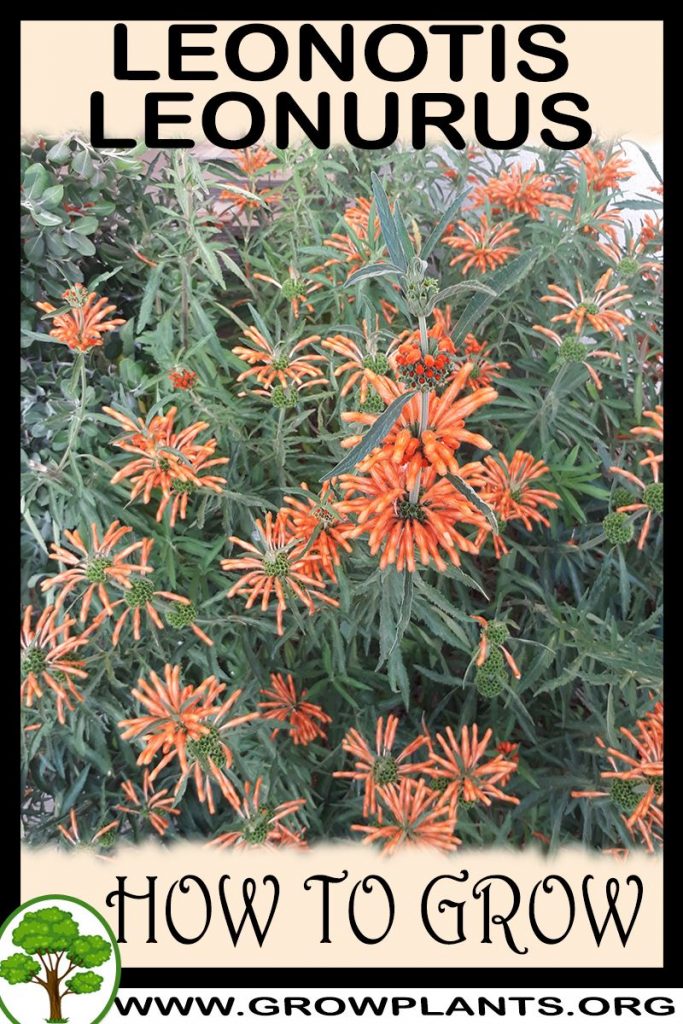
Plant Profile & Key Characteristics
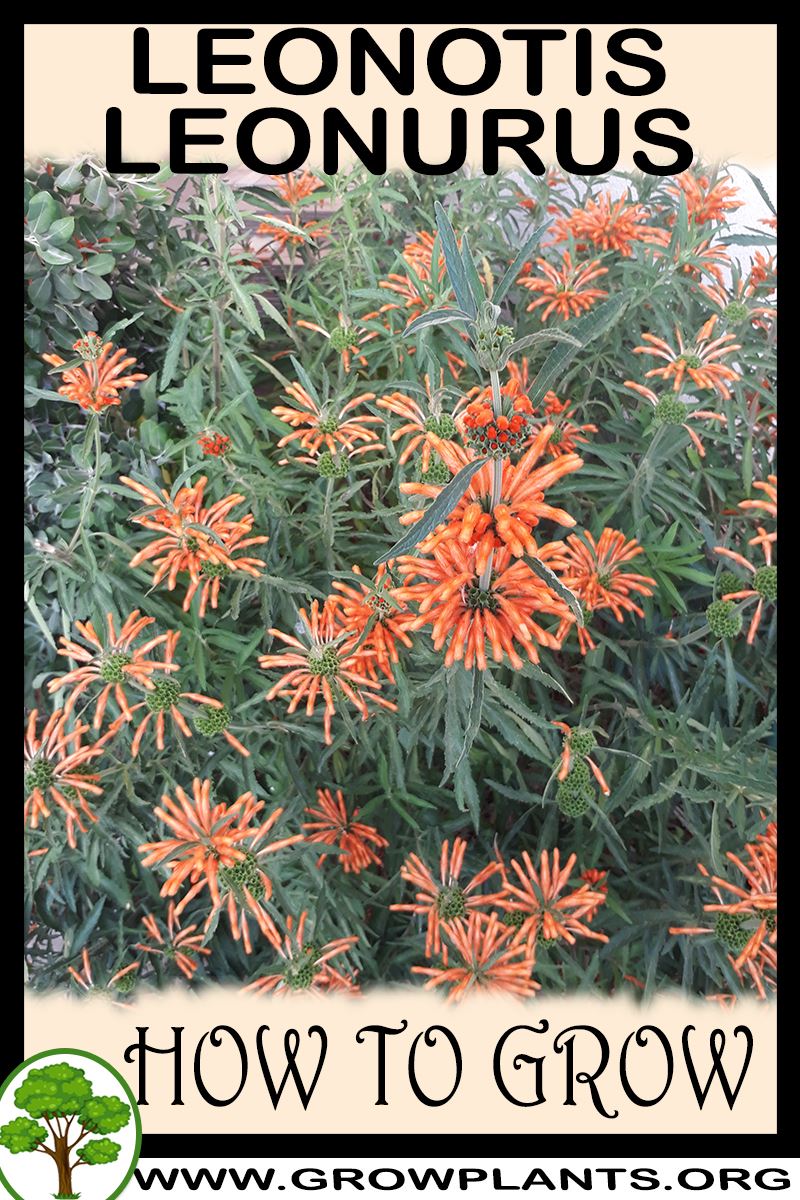
Overview: Leonotis leonurus (lion’s tail) is a fast-growing evergreen shrub of about 0.5-2 m, grown for its striking tubular flowers and for medicinal use. It is a drought-tolerant perennial (grown as an annual in cold zones) hardy to USDA zone 9 and above.
Quick Specifications
| Specification | Attribute |
|---|---|
| Plant Type / Life Cycle | Perennial (or annual in cold zones) |
| Foliage Type | Evergreen (dies back or grown as annual in cold climates) |
| Mature Size | 0.5-2 m tall (2-6.5 ft) |
| Growth Rate | Fast to moderate |
| Hardiness | USDA zones 9+ (perennial), 5-9 (as annual) |
Growth Form & Structure
- Height & Spread: Reaches about 0.5-2 m (2-6.5 ft) tall; can be grown in large containers.
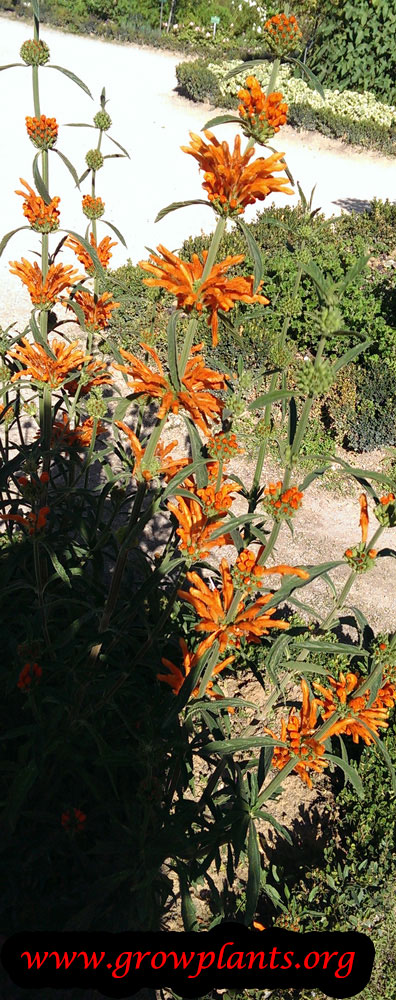
- Growth Habit & Form: Upright, somewhat coarse shrub carrying flowers in tiered whorls up the stems.
- Lifespan & Maturity: Grows quickly to flowering size within a season or two; may be cut back hard in spring.
Anatomy & Physical Features
- Leaves & Foliage: Green, linear leaves arranged around the stem.
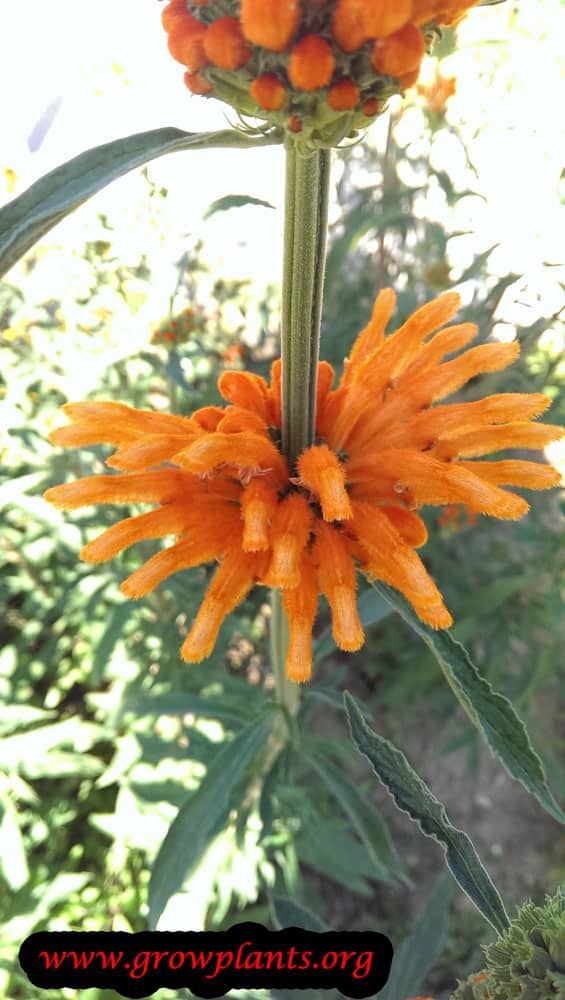
- Flower Characteristics: Fragrant orange tubular flowers arranged in crown-like whorls.
Primary Uses & Landscape Value
- Functional & Ornamental Roles: Ornamental and traditional medicinal plant; drought-tolerant and highly attractive to pollinators and nectar-feeding birds.
Care Guide: Planting, Soil & Watering
Overview: Lion’s tail is a fast-growing, drought-tolerant shrub that flourishes in full sun to part shade in frost-free climates. It needs a well-drained soil and only low to moderate water once established.
Quick Care Requirements
| Requirement | Ideal Condition |
|---|---|
| Planting Season | Warm season, spring through autumn (year-round in frost-free areas) |
| Growth Rate | Moderate to fast |
| Soil Type | Well-draining |
| Water Need | Low to moderate; drought tolerant once established |
Planting & Establishment
- Best Planting Season: Plant across the warm season – spring through autumn, and even winter in frost-free areas.
- How to Plant:
- Hole Preparation: Dig a hole roughly the width of the root ball and the same depth.
- Soil Amendments: Work a little compost into the backfill and make sure the site drains freely.
- Planting Depth: Set the root collar level with the surrounding soil.
- Growth Speed & Expectations: A fast to moderate grower reaching about 0.5-2 m (2-6 ft).
Soil, Watering & Drainage Care
- Soil Mix & Drainage Needs: Provide a well-drained soil and avoid soggy ground that can rot the roots.
- Watering Schedule & Technique:
- Young / Newly Planted: Water regularly to help it establish.
- Established: Water occasionally and deeply; it is drought tolerant once settled.
- Seasonal Adjustments: Cut back on water in winter and cooler weather.
Climate, Light & Hardiness
Leonotis leonurus (Lion's Tail) is a drought-tolerant, pollinator-attracting shrub suited to subtropical, Mediterranean, desert, temperate, and tropical climates, growing as a true frost-free perennial in warm zones and as an annual further north. It wants full sun to half shade and needs frost-free conditions to persist as a long-term perennial.
Quick Climate Specifications
| Factor | Detail |
|---|---|
| Climate Zones | Subtropical, Mediterranean, desert, temperate, or tropical |
| USDA Hardiness Zones | 9+ as a perennial; 5–9 as an annual |
| Frost Tolerance | Very low |
| Light Conditions | Full sun to half shade |
Sunlight & Light Exposure
Optimal Light Setup
Full sun gives the strongest flowering, though the plant also tolerates half shade.
Direct Sun Requirement
Full sun exposure is preferred for the best display of the fragrant, orange, crown-like flower spikes.
Best Exposure/Orientation
An open, sunny border or bed suits it well; its drought tolerance also makes it a good fit for low-water landscaping in hot climates.
Temperature Extremes & Hardiness
USDA Hardiness & Regional Limits
Site data gives this species a dual hardiness rating: it behaves as a genuine frost-free perennial in zone 9 and warmer, while in zone 5–9 it is commonly grown as an annual. These are separate concepts – cold still limits how long the plant survives outdoors in cooler zones, but where winters stay frost-free it can continue growing year after year rather than being replanted annually.
Cold Damage & Winter Protection
No specific numeric cold-damage or survival-minimum temperature is given in the source data, but the frost-free requirement for perennial survival means any hard frost should be expected to kill the top growth, and likely the whole plant outside its zone 9+ perennial range.
Frost Sensitivity
Frost sensitive; the site's own care guidance calls for frost-free conditions for the plant to persist as a perennial.
Wind, Humidity & Microclimate
Dry-Air Tolerance
Good; the plant is noted as drought tolerant and suits dry, sunny climates well.
Rainfall & Seasonal Moisture
Adapted to a range of moisture levels from low to moderate rather than needing consistently wet soil, in keeping with its drought tolerance.
Microclimate Recommendations
A warm, sunny, well-drained spot suits Leonotis leonurus best; in zone 5–9 climates where frost is expected, treat it as a reseeding or replanted annual, or grow it in a container that can be sheltered over winter to preserve it as a perennial.
Growing in Pots, Balconies & Indoors
Leonotis leonurus (lion’s ear) is a sun-loving shrub grown for its whorls of orange, tubular flowers. The grower says it is not a houseplant – it needs full sun – but it makes a striking, drought-tolerant container plant for a sunny balcony or patio.
Quick Details
- Container Size: 0.5-2 m (2-6 ft) shrub – a large, sturdy container
- Indoor Suitability: Not an indoor plant – it needs full sun to flower
- Best Spot: Full sun to half shade, outdoors
- Soil & Drainage: Free-draining potting mix; it prefers things on the drier side
- Watering in Pots: Small to average water – drought-tolerant once established; let it dry between waterings
Indoors & On the Windowsill
- Not a houseplant: The grower is clear it will not thrive indoors – it needs full sun to grow bushy and flower well, which windows rarely supply.
- Windowsill: Too dim indoors for good flowering; grow it outside in a sunny spot. A bright sunroom or greenhouse is the nearest indoor option.
- Overwintering: Frost-tender – in cold climates move the pot into a bright, frost-free place over winter, or cut it back and shelter it.
On a Balcony or Patio
- Light & wind: Give it the sunniest, warmest spot; reflected heat from walls suits this heat-lover, but pots dry fast so check moisture. The tall stems may need staking or shelter in wind.
- Flowering: In full sun it rewards you with tiers of vivid orange flowers loved by bees and birds; a light prune keeps it bushy.
Choosing the Pot, Soil & Long-Term Care
- Pot & drainage: A large, stable pot with strong drainage holes with strong drainage holes; skip a standing-water saucer to avoid root rot. Terracotta breathes and dries faster, glazed or plastic holds moisture longer.
- Potting mix: A well-aerated, organic-rich mix – peat or coir with perlite or vermiculite for free drainage.
- Feeding: Potted plants need feeding more often than those in the ground because nutrients wash out – a balanced feed through the growing season.
- Repotting: Pot on or refresh the mix every couple of years, and prune in the dormant season to keep it compact and encourage flowering shoots.
Fertilizing & Feeding
Leonotis leonurus is a drought-tolerant, fast-growing shrub that thrives on fairly lean conditions in the wild, so it is a light feeder in cultivation – modest feeding supports its whorled orange flower spikes without pushing the soft, floppy growth that heavy fertilizing can cause in this naturally vigorous grower.
Quick Fertilizing Specs
| Feeding Level | Light |
|---|---|
| Main Nutrient Priority | Balanced feeding rather than a high-phosphorus bloom formula |
| Best Feeding Period | Through the main warm-season growth period leading into its long bloom display |
| Organic Options | Compost worked into the planting area at establishment, with light supplemental feeding afterward |
| Soil pH | Tolerant of a wide range of well-drained soils |
Feeding by Growth Stage
Establishment after planting
Help a newly planted Leonotis leonurus build a root system in its new site
| Nutrient direction | Light, balanced feeding to support root and early shoot development |
|---|---|
| Timing | From planting through the first stretch of active growth |
| Frequency | Feed lightly and infrequently while the plant establishes |
| Fertilizer types | A balanced complete fertilizer at a light rate, Compost worked into the planting hole or bed at planting time |
| Precautions | Avoid heavy feeding at planting, since this fast-growing shrub can quickly become leggy and floppy if pushed too hard early on |
Warm-season growth and long bloom display
Support the vigorous warm-season growth and extended flowering of its whorled orange flower spikes, which attract pollinators
| Nutrient direction | Light, balanced feeding rather than a high-phosphorus bloom formula |
|---|---|
| Timing | Through the main warm-season growth period and into its extended bloom display |
| Frequency | Feed sparingly through this period |
| Fertilizer types | A balanced complete fertilizer at a light rate, applied during active growth |
| Precautions | Keep feeding light; excess nitrogen encourages soft, floppy stems that can flop over under the weight of the flower spikes |
Cold-season dieback or rest
Let the plant rest or die back where cold weather ends the growing season, without pushing tender new growth into worsening conditions
| Nutrient direction | None – withhold fertilizer as the plant heads into cold-season dieback or dormancy |
|---|---|
| Timing | As temperatures drop and growth slows heading into the cold season |
| Frequency | No feeding at this stage |
| Fertilizer types | No feeding at this stage – allow the plant to go dormant or complete its cycle undisturbed |
| Precautions | Do not fertilize a plant heading into dormancy or cold-season dieback; resume feeding only once new growth resumes in spring |
Nutrient Deficiency Signs & Corrections
General pale or yellowish older leaves and reduced vigor
| Possible causes | Nitrogen deficiency from very lean soil, Poor drainage limiting root uptake, Root competition from nearby plants |
|---|---|
| Appears first on | Older, lower leaves |
| What to check | Soil fertility and recent feeding history, Drainage in the root zone, Crowding from neighboring plants |
| Possible correction | Apply a light, balanced feeding during active growth and improve soil organic matter |
Unusually soft, floppy stems and lush growth that flops over or breaks, especially once flower spikes form
| Possible causes | Excess nitrogen from over-fertilizing, Insufficient light causing stems to stretch, Overly rich or frequently irrigated soil |
|---|---|
| Appears first on | New stem growth |
| What to check | Recent feeding rate, Light exposure at the site, Soil richness and watering frequency |
| Possible correction | Reduce or stop supplemental feeding and confirm the site gets adequate sun |
Yellowing between the veins of new leaves while veins remain green
| Possible causes | Iron deficiency, Alkaline soil reducing iron availability, Waterlogged roots limiting uptake |
|---|---|
| Appears first on | Newest leaves |
| What to check | Soil pH, Drainage and watering routine, Whether only new growth is affected |
| Possible correction | Improve drainage, correct pH where confirmed by testing, and apply a chelated iron product per its label if needed |
Pruning, Training & Seasonal Maintenance
Leonotis leonurus (Wild Dagga, Lion’s Ear) flowers in tight orange whorls up spikes of the current season’s growth, so pruning is used to shape the plant and refresh that flowering wood rather than to build or maintain a permanent framework. It takes a hard cutback well and reliably resprouts and reflowers the same season. Spring is the pruning window: cutting back before the main growth flush produces the vigorous new stems that will carry that year’s flower spikes, and avoids removing wood that is already carrying buds or bloom.
Quick Pruning & Maintenance Specs
| Pruning Tolerance | High |
| Primary Pruning Window | Spring, before the main flush of new growth |
| Typical Frequency | Once a year; more in frost-free zones where the base can turn semi-woody and leggy over successive seasons |
| Main Objective | Renew flowering wood and control legginess/size |
| Young Plant Priority | Pinch tips early to build a bushy base |
| Mature Plant Priority | Hard spring cutback to keep growth compact and self-supporting |
| Best Tool Type | Bypass secateurs |
| Avoid Heavy Pruning During | Once flower spikes are forming or blooming |
Pruning by Plant Age & Size
Newly Established
Pinch the growing tips once the young plant has a few sets of leaves, encouraging branching rather than a single tall stem.
Young / Formative
No formal training system is needed for this multi-stemmed subshrub; early pinching is the only shaping tool used.
Mature / Established
Where winter cold kills the top growth (colder parts of its 5-9 annual/root-hardy range), spring cutback of dead stems is the main task. Where it persists as an evergreen perennial (zone 9+), the base can become woody and the plant leggy after a couple of seasons, so a harder spring renewal cut back to strong low growth keeps it compact and flowering well.
Structural Pruning & Training
Height and spread control is the central structural concern – this species grows quickly and can flop under its own weight or the weight of its flower spikes; cutting back by around a third to a half in spring keeps it compact.
Special Growth to Remove
- Winter-killed top growth (colder end of its range) – cut back to live tissue once new spring growth shows where it is emerging.
- Spent flower spikes – deadhead to extend bloom and push energy into new flowering shoots; this species is noted as spiny/invasive-prone, so removing spent spikes before they set seed also curbs self-seeding.
Tools
- Bypass secateurs – sized for the soft-to-semi-woody stems typical of this subshrub.
Tool Hygiene & Disease Risk
Routine – clean, sharp secateurs are sufficient; no elevated transmissible-pathogen risk is documented for this species.
Cut Placement & Technique
Cut just above a node so new growth breaks from a live bud rather than a bare stub. Deadhead by cutting the spent spike back to the next leaf pair or side shoot; the facts note this species has spines, so use gloves when reaching into the plant.
Heavy Pruning & Rejuvenation
Tolerated well – a leggy or winter-killed plant can be cut back hard in spring, even close to the base, and will regrow strongly and flower the same season since bloom forms on new growth.
Post-Pruning Care
Water as normal after a spring cutback; no extra feeding is needed since the plant regrows vigorously on its own. Watch fresh soft growth for aphids.
Common Pruning Mistakes
- Cutting back hard once flower spikes have already formed or opened, sacrificing the current season’s display.
- Leaving spent spikes to set seed where its self-seeding tendency is unwanted.
When NOT to Prune
Avoid hard cutback while flower spikes are actively developing or in bloom; reserve structural cuts for spring, ahead of that growth.
Recommended Tools (by task)
- bypass_secateurs – for the annual spring cutback and season-long deadheading.
Propagation Guide
Leonotis leonurus is easiest to raise from seed, sown direct or transplanted as seedlings; the site confirms vegetative propagation is not required. Because it is normally grown as the true species rather than named cultivars, seed reliably reproduces its characteristic orange, fragrant flowers, though softwood cuttings are a quick option when more identical plants are wanted fast. Difficulty is Easy.
Quick Propagation Specs
| Best Propagation Method | Seed |
| Alternative Methods | Softwood stem cuttings |
| Propagation Difficulty | Easy |
| Seed True-to-Type | Usually true-to-type |
| Vegetative True-to-Type | Yes |
| Best Propagation Season | Spring through Autumn (the site notes planting is possible year-round in this species’ frost-free range) |
Growing from Seed
Sowing Season
Spring through autumn; in the frost-free areas this species favours, sowing/planting can extend further per the site’s own seasonal notes.
Germination Conditions
Warm, frost-free conditions in full sun to half shade suit germination.
Seedling Care
Grow seedlings on in full sun to half shade with average watering; this fast-to-medium growing shrub fills out quickly once planted out.
Stem Cuttings
Cutting Type
Softwood tip cuttings from actively growing, non-flowering stems.
Best Timing
Spring to summer.
Cutting Preparation
Take short tip cuttings, strip the lower leaves, and insert into a free-draining rooting mix.
Rooting Setup
Warm conditions with steady light moisture root this soft-stemmed shrub readily.
Rooting Hormone
Not necessary.
Rooting Time
Typically a few weeks under warm conditions.
Bloom & Flower Guide
Quick Details
- Bloom Season: Summer, autumn and into winter
- Flower Appearance: Fragrant, cone-shaped tubular orange flowers arranged in whorls that circle the stem like a crown
- Edibility: Grown as an ornamental and traditional medicinal/herbal plant (its flowers and leaves are brewed in folk remedies and are mildly psychoactive) – it is not a culinary edible flower, so treat the blooms as ornamental
Detailed Blooming Overview
The true wild dagga carries the classic Lion’s tail look: tall square stems stacked with tiers of velvety, tubular orange flowers over a long warm-season run. It is drought-tolerant and a magnet for nectar feeders, and the whorled crowns give a strong architectural display in the border.
Flower Characteristics
- Fragrant, cone-shaped tubular flowers in a vivid orange.
- Set in stacked whorls around the stem, forming crown-like tiers.
Bloom Care & Thinning
- Encouraging bloom: Full sun and lean, free-draining soil bring the best flowering; it tolerates dry conditions once established.
- Prolonging the display: Deadhead spent whorls to encourage successive tiers, and cut back after the main flush to keep growth tidy.
- Pollination: A strong nectar plant that draws bees, butterflies and sunbirds in its native range.
Pests, Diseases & Troubleshooting
Overview: Leonotis (lion’s ear / wild dagga) is an aromatic South African member of the mint family, and like most Lamiaceae it is strongly pest-resistant – its felted, scented leaves deter chewers and it draws pollinators. Problems are limited to a few sap-suckers on soft growth and to root rot in wet, cold soil; sun, drainage and airflow keep it clean.
Quick Troubleshooting Overview
| Issue / Pest | Main Symptom | Primary Solution |
|---|---|---|
| Aphids | Sticky curled shoot tips | Water jet; beneficials; soap |
| Whitefly | White flies and honeydew under cover | Sticky traps; ventilation; neem |
| Spider mites | Fine stippling in hot dry air | Raise humidity; hose; miticidal oil |
| Mealybugs | White fluff in leaf axils | Wipe with alcohol; horticultural oil |
| Powdery mildew | White film on leaves in humid crowding | Airflow; sulphur fungicide |
| Root rot | Wilting, collapse in wet/cold soil | Improve drainage; ease watering |
Common Pests & Management
- Aphids (Aphis spp.):
- Symptoms: Green or black soft-bodied insects on the tender shoot tips and around the whorled flower clusters, curling leaves and leaving honeydew.
- Prevention & Control: Blast off with water and support ladybirds, lacewings and hoverflies; avoid heavy nitrogen. Insecticidal soap or neem oil for stubborn colonies, sprayed in the evening to protect the many pollinators this plant attracts.
- Whitefly (Trialeurodes vaporariorum):
- Symptoms: Tiny white flies rising in clouds from disturbed foliage on sheltered or greenhouse plants, with honeydew and sooty mould.
- Prevention & Control: Ventilate well, monitor with yellow sticky traps, and use Encarsia formosa under glass; insecticidal soap for heavy attacks.
- Two-spotted spider mite (Tetranychus urticae):
- Symptoms: Fine pale stippling and delicate webbing on the leaves in hot, dry conditions, bronzing foliage when severe.
- Prevention & Control: Raise humidity, hose the undersides of leaves, and use predatory mites or a horticultural oil.
- Mealybugs (Pseudococcus spp.):
- Symptoms: White cottony tufts in the leaf axils and stem joints, sucking sap and excreting honeydew, mainly on pot-grown or over-wintered plants.
- Prevention & Control: Wipe off with an alcohol-dipped swab and treat with horticultural oil; isolate new plants and inspect regularly.
Diseases & Fungal Issues
- Powdery mildew (Erysiphaceae):
- Symptoms: A white powdery film on leaves and shoots in humid, crowded or shaded conditions, dulling and sometimes distorting the foliage.
- Treatment & Management: Improve airflow with spacing and pruning, grow in full sun, avoid overhead watering, and apply a sulphur or potassium-bicarbonate fungicide if it spreads.
- Root & stem rot (Phytophthora / Rhizoctonia spp.):
- Symptoms: Wilting, basal browning and collapse in cold, wet or poorly drained soil, especially over winter.
- Treatment & Management: Grow in free-draining soil in full sun, ease off watering in cool weather, and remove and destroy collapsed plants; take cuttings to renew stock.
- Leaf spot (Various leaf-spot fungi):
- Symptoms: Brown or grey spots on the foliage in prolonged wet, humid weather; usually minor.
- Treatment & Management: Remove affected leaves, improve airflow, keep foliage dry, and use a copper fungicide only in persistent wet spells.
Growing Difficulties & Abiotic Problems
- Cold / frost damage:
- Cause & Symptoms: Blackened, wilted growth below freezing – Leonotis is frost-tender and cut back by hard cold.
- Correction Strategy: Grow in the warmest sheltered spot or a container to move under cover, mulch the crown, and prune out frost-killed wood once growth restarts.
- Legginess & flop:
- Cause & Symptoms: Tall, sparse, floppy stems in shade or rich soil, with weak flowering.
- Correction Strategy: Grow in full sun on lean soil, pinch young plants to bush them out, and stake tall stems; avoid over-feeding.
- Root rot from over-watering:
- Cause & Symptoms: Yellowing and collapse where soil stays wet.
- Correction Strategy: Water only as the soil dries, ensure sharp drainage, and reduce watering markedly in cool weather.
What Helps – Products & Tools
Being aromatic and pest-resistant, Leonotis needs little: sun, drainage and airflow do the heavy lifting. Keep insecticidal soap and neem/horticultural oil for aphids, whitefly, mites and mealybugs, yellow sticky traps for whitefly, and a sulphur or potassium-bicarbonate fungicide for powdery mildew. Spray oils in the evening to protect pollinators.