Plant Profile & Key Characteristics
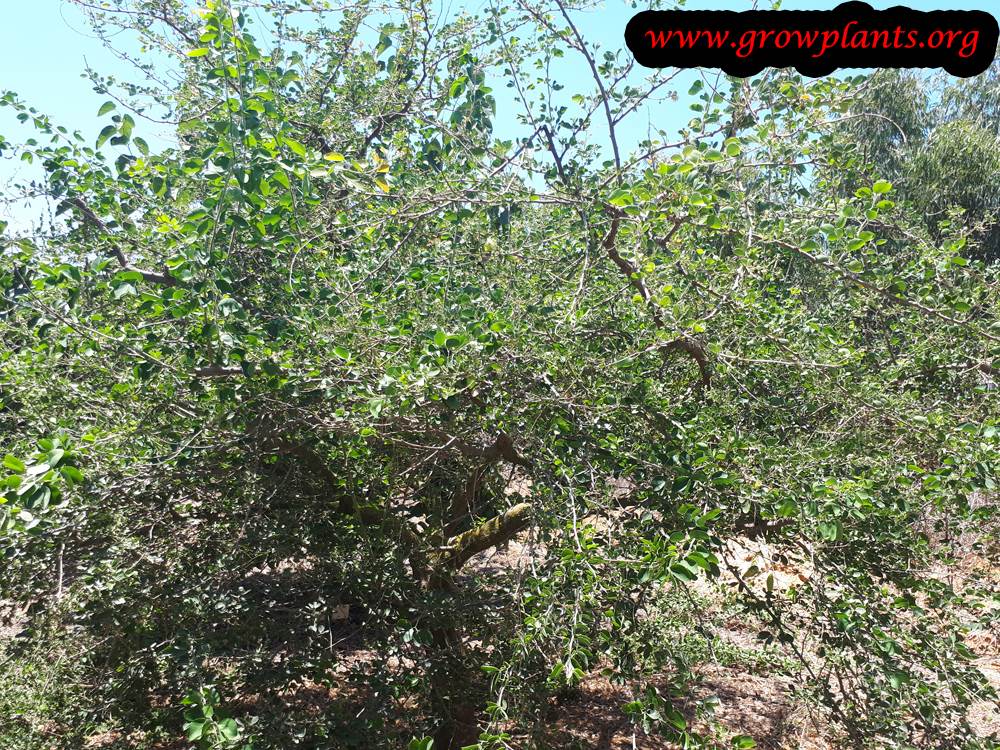
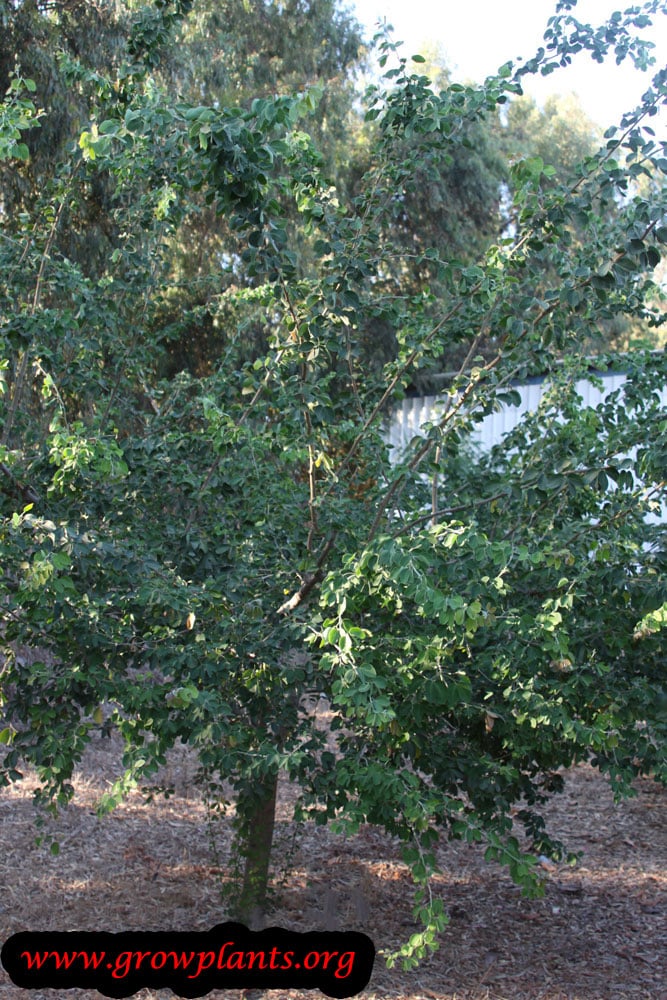
Overview: Manila tamarind (Pithecellobium dulce, also called monkeypod or sweet inga) is an evergreen to semi-deciduous tree of 7–15 m (21–45 ft) grown for edible pulp-filled pods and as a hardy shade and nitrogen-fixing tree. It is fast-growing but thorny and invasive.
Quick Specifications
| Specification | Attribute |
|---|---|
| Plant Type / Life Cycle | Perennial evergreen to semi-deciduous tree |
| Foliage Type | Evergreen to semi-deciduous |
| Mature Size | 7–15 m (21–45 ft) tall |
| Growth Rate | Fast |
| Root System | Deep, spreading roots with nitrogen-fixing nodules |
| Toxicity | Non-toxic / edible — the fruit pulp and seeds are eaten |
| Hardiness | USDA zone 10 and warmer |
Growth Form & Structure
- Height & Spread: A substantial tree of 7–15 m (21–45 ft) that is often kept pruned smaller for easier harvest; not a container or indoor plant.
- Growth Habit & Form: Spreading, thorny evergreen tree with a broad canopy; suckers and self-seeds readily, which drives its invasive behaviour.
- Lifespan & Maturity: A long-lived, fast-establishing tree that begins bearing fruit after about 4–6 years.
Anatomy & Physical Features
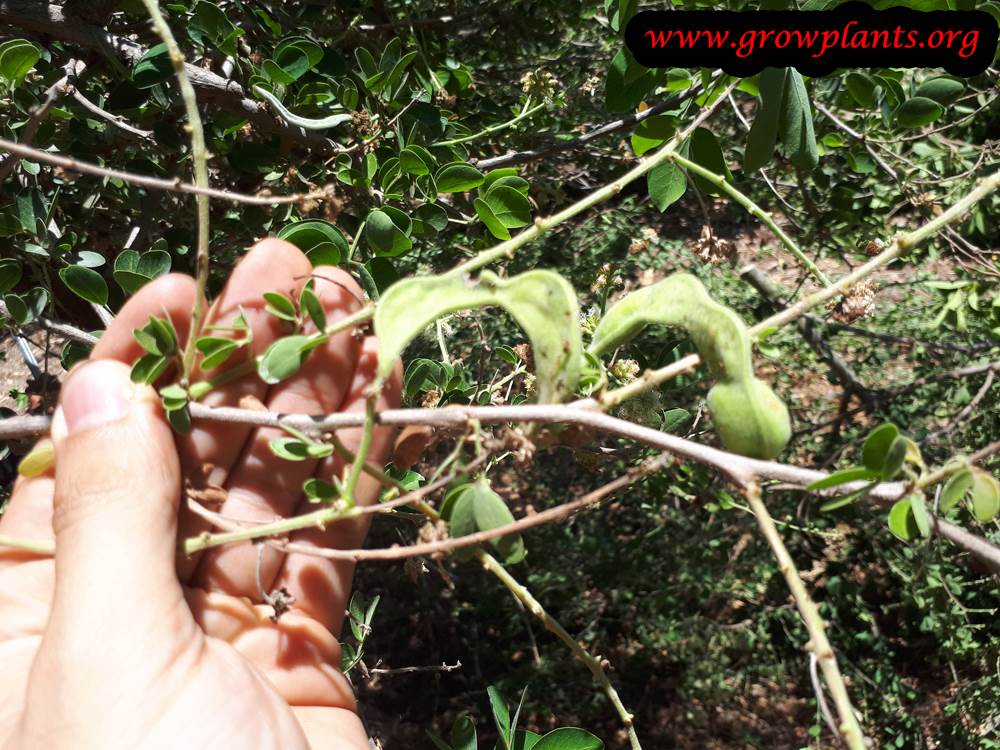
- Leaves & Foliage: Green, oval leaflets on a spiny, spreading canopy.
- Flower Characteristics: Fragrant white flowers with many prominent stamens, bee-pollinated.
- Fruit Profile: Coiled pink pods, likened to a scorpion’s tail, holding up to 4–6 seeds in sweetish white pulp; pulp and seeds are edible.
Primary Uses & Landscape Value
- Edible Uses: Sweet white pod pulp eaten raw or juiced; the seeds are also edible.
- Functional & Ornamental Roles: Shade tree, living fence/hedge and nitrogen-fixing soil-improver for warm climates; grow with care given its thorns and invasive tendency.
Care Guide: Planting, Soil & Watering
Overview: Sweet Inga or Monkeypod (Pithecellobium dulce) is a fast-growing evergreen to semi-deciduous tree (hardiness zone 10 and warmer) that thrives in warm climates and is very adaptable. As a nitrogen-fixer it tolerates poor soils and is drought-tolerant once established; note that it can be invasive and has thorns.
Quick Care Requirements
| Requirement | Ideal Condition |
|---|---|
| Planting Season | In the warm season, spring to summer |
| Growth Rate | Fast |
| Soil Type | Adaptable; tolerates poor, sandy, dry and even saline soils where drainage is good |
| Water Need | Low to moderate – drought-tolerant once established |
Planting & Establishment
- Best Planting Season: Plant in the warm season, from spring to summer, once the risk of frost has passed.
- How to Plant:
- Hole Preparation: Dig a hole twice as wide as the root ball in loosened soil; the tree is not fussy about its site.
- Soil Amendments: Little enrichment is needed thanks to its nitrogen-fixing roots; ensure drainage rather than adding rich compost.
- Planting Depth: Set the root collar level with the soil surface and avoid burying the trunk.
- Growth Speed & Expectations: Growth is fast, reaching 7-15 m (21-45 ft); site it with care as it can become invasive and has thorns.
Soil, Watering & Drainage Care
- Soil Mix & Drainage Needs: Almost any free-draining soil suits it, including poor and dry ground; avoid permanently waterlogged sites.
- Watering Schedule & Technique:
- Young / Newly Planted: Water young trees occasionally to help them establish, then taper off.
- Established: Established trees are drought-tolerant and need little to no supplemental water.
- Seasonal Adjustments: Water lightly only in extended drought; none is needed in the wet season.
Climate, Light & Hardiness
Manila tamarind is a fast, tough tropical evergreen (to semi-deciduous) legume tree that thrives in full sun to half shade, high heat and a warm climate, and it tolerates drought and poor, even salty soils once established. It is frost-tender - the site data places it at roughly USDA zone 10 and warmer.
Quick Climate Specifications
| Climate Zones | Tropical, subtropical, warm mediterranean |
|---|---|
| USDA Hardiness Zones | Approximately 10 and warmer (site data) |
| Optimal Temp Range | Approximately 24–35°C (75–95°F) |
| Cold Damage Begins | Foliage and young growth suffer near 2–5°C (36–41°F) |
| Approx. Survival Minimum | An established tree may briefly survive near 0°C (32°F); varies by age, exposure duration, and conditions |
| Frost Tolerance | Very low to low |
| Light Conditions | Full sun to half shade |
| Wind Tolerance | Moderate to high |
| Salt / Coastal Tolerance | Moderate to high |
Sunlight & Light Exposure
Optimal Light Setup
Full sun gives the strongest growth and best cropping; it also grows in half shade.
Shade & Heat Management
Its dense crown makes a useful shade tree and withstands fierce tropical sun.
Best Exposure / Orientation
A warm, open, sunny site suits this vigorous, thorny tree - give it room.
Temperature Extremes & Hardiness
USDA Hardiness & Regional Limits
The site places it around zone 10 and up, so it needs a warm, essentially frost-free climate; in cooler parts of its range it is planted in spring rather than year-round.
Cold Damage & Winter Protection
Light frost damages foliage and young shoots; young trees are much more tender than established ones and need protection at the edge of its range.
Frost Sensitivity
Frost-sensitive overall, though mature trees recover from light frost better than young ones.
Extreme Heat Tolerance
Excellent - it is built for intense heat and, being drought-tolerant, copes with hot, dry conditions.
Wind, Humidity & Microclimate
Dry-Air Tolerance
Very good - it handles dry air and drought well.
Wind Tolerance
A tough, wind-firm tree once established, often used in exposed and reclaimed sites.
Coastal / Salt Tolerance
Notably tolerant of coastal exposure and salty conditions, which suits seaside and saline sites; this is separate from its tolerance of saline irrigation water.
Microclimate Recommendations
Warm, sunny, well-drained sites suit it; at the cool edge choose a frost-protected spot, and note it can be invasive and thorny.
Growing in Pots, Balconies & Indoors
Manila tamarind is a large, thorny, fast tropical tree – the grower rates it neither as a houseplant nor as a container plant. It needs open ground; a pot suits only a young seedling briefly.
Quick Details
- Container Size: Only short-term – a deep nursery pot for a seedling
- Indoor Suitability: No
- Best Spot: Full sun to half shade
- Soil & Drainage: Free-draining mix
- Watering in Pots: Average to plenty while young in a pot
Indoors & On the Windowsill
- Not for indoors or pots: Too big, too fast and too thorny for a container; keep it for open ground.
On a Balcony or Patio
- Young trees only: A seedling can spend a season in a big pot before being planted out; mind the sharp thorns near seating.
Choosing the Pot, Soil & Long-Term Care
- Short-term potting: If raised in a pot, use a deep container with a free-draining mix and plant out before it becomes root-bound; feed while potted.
Growing this plant in a greenhouse
A greenhouse can give pithecellobium dulce frost protection, cold protection, humidity control and extra warmth.
Greenhouse at a glance
| Greenhouse suitability | Conditional - depends on your climate |
|---|---|
| Main benefits | frost protection, cold protection, humidity control, extra warmth |
| Season extension | earlier spring & later autumn |
| Outdoor protection advisable below | about 10°C |
| Maintain greenhouse minimum | around 15°C for active growth |
| Suitable types | heated greenhouse, polycarbonate greenhouse |
| Heating | Heating is recommended in cold climates for continuous growth. |
Related greenhouse guides
- Greenhouses: How to Choose the Right Greenhouse
- Best Greenhouse Heaters
- Greenhouse Climate Control: Temperature, Ventilation and Humidity
- Polycarbonate Greenhouses: What to Look for Before Buying
Fertilizing & Feeding
A moderate feeder that responds to steady, balanced feeding while young and only light feeding once mature; as a nitrogen-fixing legume it needs little added nitrogen, and a complete fruit-tree fertilizer covers the minor nutrients.
Quick Fertilizing Specs
| Feeding Level | Moderate |
|---|---|
| young_feeding | Steady, balanced feeding through the growing season |
| mature_feeding | Light feeding, leaning to potassium around fruiting |
| Main Nutrient Priority | Balanced nutrition; potassium as fruit develops |
| Best Feeding Period | Spring through fruit development |
| Organic Options | Compost, aged manure, mulch |
| Soil pH | Adapts to a wide range; needs well-drained soil |
| Micronutrients | A complete fruit-tree fertilizer usually supplies iron, manganese and zinc |
| Reduce/Stop Feeding | Ease off as the tree matures and after harvest |
Feeding by Growth Stage
Newly planted
Help the young tree establish its roots after planting.
| Nutrient direction | Go easy at planting; rely on organic matter and a light balanced feed after the tree settles in rather than heavy fertilizer. |
|---|---|
| Timing | At and just after planting. |
| Frequency | Minimal feeding at first; let the roots establish. |
| Fertilizer types | Organic matter or compost mixed into the planting area, A light balanced complete fertilizer after growth begins |
| Precautions | Avoid strong fertilizer against fresh roots, which can scorch them. |
Young, pre-bearing tree
Build a strong framework of trunk and branches in the years before fruiting.
| Nutrient direction | A balanced complete fertilizer supports steady growth; as a nitrogen-fixing legume this tree makes much of its own nitrogen, so added nitrogen can stay modest. |
|---|---|
| Timing | Through the active growing season in the young years. |
| Frequency | Light, regular feeding across the growing season. |
| Fertilizer types | A balanced complete fertilizer, Compost or other organic matter |
| Precautions | Do not overfeed nitrogen; lush soft growth is weak and delays fruiting. |
Established tree approaching bearing
Keep the maturing tree in steady health as it nears fruit production.
| Nutrient direction | A balanced complete fertilizer with the minor nutrients a fruit-tree blend usually supplies. |
|---|---|
| Timing | During the active growing season. |
| Frequency | Steady, moderate feeding through the season. |
| Fertilizer types | A balanced complete fruit-tree fertilizer, Compost or other organic matter |
| Routine trace nutrients | iron, manganese, zinc |
| Precautions | Watch for pale new leaves that can signal a micronutrient shortage such as iron. |
Mature, fruit-bearing tree
Support flowering and fruit while keeping the tree in balance.
| Nutrient direction | A balanced complete fertilizer, leaning toward potassium as fruit develops; a settled mature tree needs only light feeding. |
|---|---|
| Timing | From before flowering through fruit development. |
| Frequency | Light, well-timed feeding around the fruiting period. |
| Fertilizer types | A balanced complete fertilizer with adequate potassium, Compost or other organic matter |
| Routine trace nutrients | iron, manganese, zinc |
| Precautions | Excess nitrogen at this stage favours leaves over fruit; keep feeding moderate. |
Nutrient Deficiency Signs & Corrections
New leaves are pale or yellow between green veins while the veins stay green.
| Possible causes | High (alkaline) soil pH locking up iron, Waterlogged or cold soil reducing root uptake, A genuine iron shortage in the soil |
|---|---|
| Appears first on | Youngest leaves at the shoot tips |
| What to check | Soil pH and whether the soil is chalky or alkaline, How well the soil drains and whether symptoms follow wet spells, Whether only the new growth is affected |
| Possible correction | Correct soil pH where possible and apply a chelated iron product according to its label; improve drainage. |
Older, lower leaves turn uniformly pale or yellow and overall growth is weak.
| Possible causes | Low soil nitrogen or poor root-nodule activity on this legume, Waterlogged or compacted roots limiting uptake, Very sandy, low-fertility soil |
|---|---|
| Appears first on | Older, lower leaves |
| What to check | How wet the root zone stays and whether the soil drains freely, Whether the plant has been fed at all this season, General soil fertility and organic matter |
| Possible correction | Improve drainage, work in organic matter, and apply a balanced complete fertilizer at a modest rate. |
Older leaves develop browning, scorched margins.
| Possible causes | Potassium shortage in the soil, Fertilizer or soil salt build-up in the root zone, Drought stress between waterings |
|---|---|
| Appears first on | Margins of older leaves |
| What to check | Recent fertilizer use and any salt crust on the soil surface, Soil moisture and the watering pattern, Whether only leaf edges, not whole leaves, are affected |
| Possible correction | Water thoroughly to rinse excess salts through, even out watering, and use a balanced fertilizer with adequate potassium at a modest rate. |
Pruning, Training & Seasonal Maintenance
Manila tamarind is a fast-growing, thorny, evergreen-to-semi-deciduous fruit tree, and the practical aim of pruning is to keep it low and open enough to harvest the pods (it is recommended to keep the tree small for this) while managing its aggressive, suckering, thorny habit. Prune in the cool, dry season, or in spring in colder zones. Fruit forms on new growth after the spring bloom, so post-harvest or cool-season pruning suits it. The thorns make protective clothing and careful technique non-negotiable.
Pruning & the Edible Harvest
Manila tamarind is grown for the sweet pod pulp, and the seeds inside are also eaten. Both edible parts come from the same pod, so there is no leaf-versus-fruit pruning conflict — pruning simply keeps this tall, thorny, suckering tree low and open enough to reach the pods safely. Fruit sets on new growth after the spring bloom, so cool-season or post-harvest cuts do not cost the crop, and height and access control can be prioritised freely.
Quick Pruning & Maintenance Specs
| Pruning Tolerance | High — vigorous, resprouts strongly, tolerates hard reduction/pollarding |
| Primary Pruning Window | Cool/dry season year-round; spring in colder zones |
| Typical Frequency | Regularly, to hold height/spread for harvest |
| Main Objective | Keep a low, open, reachable framework; manage suckers and thorns |
| Young Plant Priority | Build a low, open scaffold with wide angles for easy harvest |
| Mature Plant Priority | Height reduction, thinning for access, deadwood, sucker removal |
| Best Tool Type | Secateurs and loppers; saw and pole pruner for height (and thorn safety) |
| Avoid Heavy Pruning During | The main growth flush if you want fruit; heat/drought stress |
Pruning by Plant Age & Size
Newly Established
Remove damaged growth and wear thornproof gloves and eye protection. Start shaping toward a low, open head.
Young / Formative
Build a low, open scaffold with wide branch angles so the crop stays within reach and you are not forced to reach through thorns. Remove low, tangled thorny growth you would otherwise have to push past.
Mature / Established
Reduce height and thin for harvest access, remove deadwood and crossing thorny growth, and keep on top of suckers. Keeping the tree small is the whole point — it fruits fine but becomes an awkward, thorny giant if left to reach its full 7–15 m.
Seasonal Pruning Schedule
Cool/Dry Season or Post-Harvest (main window)
Objective: height/spread control and access. Reduce height, thin the thorny interior for light and reach, and remove deadwood. Do NOT strip the productive new growth on a bearing tree. Expected response is vigorous regrowth; light thinning keeps the crop, while heavy heading pushes leaf and delays fruiting.
Ongoing Sanitary
Remove root suckers and basal thorny shoots as they appear, and cut out deadwood.
Flowering & Fruiting Wood
The fragrant flowers open in spring on new shoots, and the pods follow in summer. Light thinning preserves the crop, but hard heading forces vegetative regrowth and delays fruiting, so on a bearing tree prune after harvest and keep cuts modest. Height control is compatible with cropping as long as reductions are staged rather than severe.
Structural Pruning & Training
Manage an aggressive, spreading crown by controlling height and thinning the dense thorny interior for light and access. Wide branch angles and a deliberately low head make the tree safer and more productive to work.
Special Growth to Remove
Remove root suckers — the tree spreads by suckers and is invasive, so suckers left in place build a thicket. Thin watersprouts after heavy cuts, and clear basal thorny shoots. It is propagated deliberately from suckers, but in the garden they are best removed.
Container & Small-Space Pruning
Not a container tree at maturity. In a confined space it must be kept as a height-reduced, sucker-controlled, low-headed tree rather than allowed to spread.
Tools
Match tool to cut: bypass secateurs and loppers for young wood and suckers, a pruning saw for scaffold limbs, and a pole pruner for height reduction that also keeps your hands away from the thorns. Hedge shears are inappropriate.
Tool Hygiene & Disease Risk
Routine as far as disease goes (aphids, and birds on the fruit). The real hazard here is physical — wear thornproof gloves and eye protection, and keep tools sharp so cuts are clean and controlled among the spines.
Cut Placement & Technique
Use the three-cut method on limbs to avoid bark tear, cut to the branch collar, and always keep a low, harvestable framework in mind. Reduce a limb before reaching into thorny growth, rather than working blind among the spines.
Heavy Pruning & Rejuvenation
Tolerates hard reduction and even pollarding — it is used for fodder and living fences and resprouts vigorously. A fruiting tree cut back hard loses that cycle’s crop while it rebuilds, so stage severe reduction over seasons and thin the resprouts.
Post-Pruning Care
Thin the mass of resprouts after any hard cut, keep removing suckers, and watch newly exposed limbs for sunburn in strong sun. No heavy feeding is needed on this vigorous nitrogen-fixer.
Common Pruning Mistakes
- Letting the tree grow tall, putting the fruit out of reach and the thorns overhead.
- Ignoring suckers, so it forms an invasive thorny thicket.
- Reaching through thorny growth instead of reducing it first.
- Hard-heading a bearing tree and delaying the next crop.
When NOT to Prune
Avoid heavy pruning during the main growth flush if you want fruit, and during heat or drought stress.
Recommended Tools (by task)
- bypass_secateurs — suckers, small thorny shoots and light formative cuts.
- loppers — branches a few centimetres thick and basal thorny growth.
- pruning_saw — scaffold-limb removal and staged height reduction.
- pole_pruner — reducing height and thinning while keeping hands clear of the thorns.
Pruning Troubleshooting
| Problem | Possible Cause | What to Check | Corrective Action |
| Fruit out of reach, hard to harvest | Tree allowed to grow tall; no height control | Overall height vs a low harvestable framework | Reduce height in stages; maintain a low, open head |
| Thorny thicket forming around the trunk | Root suckers left in place | Base and root zone for suckers | Remove suckers promptly at origin; keep after them |
| Lots of leafy regrowth, delayed fruiting | Heavy heading forced vegetative growth | Severity of recent cuts vs new-growth fruiting | Switch to light thinning after harvest; stage any reduction |
| Dense, dark, hard-to-work interior | Thorny interior never thinned | Light and access inside the crown | Thin crossing thorny wood for light and safe access |
Propagation Guide
Manila tamarind is normally grown from seed, its practical method; the hard coat germinates readily after a soak or scarification, and the fast-growing seedlings are fairly uniform. It also strikes from cuttings and throws suckers that can be separated, as the site notes. Easy.
Quick Propagation Specs
| Best Propagation Method | Seed |
| Alternative Methods | Stem cuttings; suckers |
| Propagation Difficulty | Easy |
| Seed True-to-Type | Mostly uniform |
| Vegetative True-to-Type | Yes |
| Best Propagation Season | Spring to summer (site) |
Growing from Seed
Seed Handling & Viability
Clean the white pulp from the seed before sowing (site removes the pulp from the seed).
Dormancy & Pre-Sowing Treatment
The hard coat responds to a soak or light scarification, which speeds and evens germination.
Sowing Season
Spring to summer, into warm, well-drained soil (site).
Germination Conditions
Warm, moist conditions; seed germinates within a few weeks and grows fast.
Stem Cuttings
The site lists cuttings as a vegetative option; they root under warm, humid conditions.
Division, Offsets, Pups & Suckers
The tree suckers freely (the site calls it aggressive and thorny); rooted suckers can be lifted with roots attached in the warm season and grown on — a quick way to reproduce a known tree.
Bloom & Flower Guide
Quick Details
- Bloom Season: Spring
- Time to First Bloom: A tree that usually needs several years from planting before it flowers freely
- Flower Appearance: Fragrant, greenish-white powder-puff flowers whose look comes from a dozen or more long stamens
- Edibility: Ornamental, grown for shade and pollinators; the flowers are not eaten
Detailed Blooming Overview
Pithecellobium dulce, the Manila tamarind or monkeypod, carries small but sweetly fragrant flowers in spring. Rather than showy petals, each bloom is a soft brush of long stamens, giving the clusters a fluffy, powder-puff appearance typical of the mimosa relatives. The scent and open flowers make it a good source of nectar for bees.
Flower Characteristics
- White, fragrant flowers dominated by a dozen or more slender stamens.
- Gathered into rounded, powder-puff-like heads.
- Nectar-rich and attractive to bees.
Bloom Care & Thinning
- Pollination: Worked mainly by bees, drawn in by the scent.
- Site for flowering: Full sun and warmth give the best flowering; this is a tender, zone 10-plus tree.
- Pruning: Shape after flowering so you do not remove the coming season’s flower-bearing wood.
Fruit & Uses
Pithecellobium dulce (Manila tamarind / sweet inga) is eaten for the white, sweet-and-sour pulp inside its curled pink pods; the site also records the seeds as edible. The pulp is eaten fresh or juiced.
Quick Edible Specs
| Edible Parts | Fruit pulp (aril) and the seeds. |
|---|---|
| Main Use(s) | Culinary — eaten raw and juiced. |
| Eaten Raw or Cooked | The pulp is eaten raw. |
| Preparation Required | Open the pod and separate the pulp from the seeds. |
| Harvest Season | Summer. |
| Time to First Harvest | Several years from planting (see the growing notes for bearing age). |
| Storage | Best fresh; the pulp is perishable. |
| Safety/Toxicity Caveat | Pulp and seeds are eaten; take care harvesting, as the tree is thorny. |
Fruit
The pods are pink and coiled — the site likens them to a scorpion’s tail — each holding about 4–6 seeds wrapped in white, faintly hairy pulp; in some cultivars the pod peels open easily. Harvest in summer when the pods have coloured and split readily. Open the pod and lift the pulp off the seeds.
Seeds, Pods & Nuts
Besides the pulp, the site records the seeds as edible. Separate them from the pulp when processing the fruit.
Preparation, Uses & Safety
The pulp is eaten raw or made into a drink; work consists mainly of freeing the pulp from the seeds. The tree bears thorns and can be invasive, so pick fruit with care. Eat the pulp fresh, as it does not keep.
Pests, Diseases & Troubleshooting
Overview: Manila tamarind is a tough, drought-hardy leguminous tree that is generally robust and relatively free of serious pests; the problems it does get are the usual sap-suckers (scale, mealybugs, aphids), occasional defoliating caterpillars, and bruchid beetles boring the seeds in its pods, with sooty mold following heavy sap-sucker activity. It thrives in heat and poor soil and is actually invasive in some tropical regions. Management is mostly tolerance and hygiene rather than routine spraying.
Quick Troubleshooting Overview
| Issue / Pest | Main Symptom | Primary Solution |
|---|---|---|
| Scale insects | Bumps on twigs/leaves; honeydew and sooty mold | Prune heavy patches; horticultural oil on crawlers |
| Mealybugs | White cottony masses; sticky growth | Neem/horticultural oil; control ants; encourage predators |
| Aphids | Curled sticky new growth | Hose off; insecticidal soap; support natural enemies |
| Caterpillars / loopers | Chewed, skeletonized leaflets | Hand-pick; Bt for heavy defoliation |
| Pod / seed borers | Holed seeds and pods; bruchid grubs inside | Collect and destroy infested pods; harvest and dry promptly |
| Leaf spot / powdery mildew | Spots or white coating on foliage | Airflow, sanitation; rarely needs fungicide on this hardy tree |
Common Pests & Management
- Scale insects (Coccidae / Diaspididae):
- Symptoms: Immobile brown or waxy bumps on twigs, leaf midribs and undersides; soft scales exude honeydew that blackens into sooty mold.
- Prevention & Control: Prune out heavily encrusted wood and treat crawlers with horticultural oil, repeating for successive generations; preserve parasitic wasps and lady beetles and control ants that protect scale.
- Mealybugs (Planococcus, Pseudococcus spp.):
- Symptoms: White cottony masses in leaf axils and shoot tips with honeydew, sooty mold and some shoot distortion.
- Prevention & Control: Dislodge with a water jet, spray neem or horticultural oil into crevices, and control ants; this hardy tree usually tolerates modest infestations without treatment.
- Aphids (Aphididae):
- Symptoms: Soft insects clustering on tender new flushes, causing curling and sticky honeydew.
- Prevention & Control: Hose off and rely on ladybirds and lacewings; use insecticidal soap only for heavy, growth-distorting colonies, and avoid excess nitrogen that drives soft growth.
- Defoliating caterpillars and loopers (Lepidoptera larvae):
- Symptoms: Groups of larvae chew and skeletonize the compound leaflets, occasionally defoliating branches.
- Prevention & Control: Hand-pick where practical and use Bacillus thuringiensis (Bt) for significant defoliation; the vigorous tree readily re-flushes after minor feeding.
- Pod and seed borers (Bruchidae (seed beetles)):
- Symptoms: Small round exit holes in seeds and pods, with grubs developing inside the ripe seeds — the real basis for the source’s ‘birds’ note along with birds taking the sweet pulp.
- Prevention & Control: Collect and destroy fallen, infested pods to break the cycle, harvest promptly, and dry or freeze seed for storage; net valued fruit against birds if the edible pulp is wanted.
- Psyllids (Psyllidae):
- Symptoms: Small jumping plant-lice on new growth causing minor distortion, honeydew and occasional leaf-tip damage.
- Prevention & Control: Usually minor; tolerate light populations, wash off honeydew, and support natural enemies rather than spraying.
Diseases & Fungal Issues
- Leaf spot (Cercospora and other fungi):
- Symptoms: Brown or dark spots on leaflets in warm, humid or crowded conditions, sometimes with premature leaf drop.
- Treatment & Management: Improve airflow, remove and destroy fallen infected leaves, and avoid overhead watering; this robust tree rarely needs fungicide.
- Powdery mildew (Erysiphales):
- Symptoms: White powdery patches on foliage in humid, shaded, still-air conditions.
- Treatment & Management: Open up the canopy for light and airflow; a sulfur or potassium-bicarbonate spray is enough in the rare cases it becomes significant.
- Root and collar rot (Phytophthora, Pythium spp.):
- Symptoms: Wilting and dieback where the tree sits in heavy, waterlogged soil; dark, decayed roots.
- Treatment & Management: Plant in well-drained soil (the tree strongly prefers it), avoid overwatering, and keep mulch off the trunk; drainage prevents the problem, and there is no cure once roots rot.
- Sooty mold (Capnodium spp.):
- Symptoms: Black, soot-like coating on leaves and stems growing on sap-sucker honeydew, reducing photosynthesis rather than infecting the plant.
- Treatment & Management: Control the underlying scale, mealybug or aphid and the mold weathers away; wash valued foliage and manage ants that farm the sap-suckers.
Growing Difficulties & Abiotic Problems
- Frost sensitivity when young:
- Cause & Symptoms: Young trees are tender to frost, which browns foliage and kills soft shoots, though established trees are hardier.
- Correction Strategy: Grow in a warm, frost-free position and protect young trees during cold snaps; mature trees withstand light frost and considerable heat and drought.
- Invasiveness and thorns:
- Cause & Symptoms: The tree self-seeds freely and is invasive in some tropical regions, and its spines make handling awkward.
- Correction Strategy: Remove unwanted seedlings, deadhead or collect pods where spread is a concern, and site away from paths; check local status before planting, as it is a listed weed in some areas.
- Chlorosis in poor/alkaline soil:
- Cause & Symptoms: Very poor or highly alkaline soils can yellow foliage, though the tree tolerates tough conditions well.
- Correction Strategy: Mulch with organic matter and correct severe iron chlorosis with chelate; the tree generally needs little feeding once established.
What Helps — Products & Tools
This hardy tree needs few products: horticultural or neem oil and insecticidal soap for scale, mealybugs and aphids, Bacillus thuringiensis (Bt) for caterpillars, and simple sanitation — collecting infested pods and pruning for airflow — for the rest. Spray oils in the cool evening to protect pollinators.