




Plant Profile & Key Characteristics
Overview: Yellow bauhinia (Bauhinia tomentosa) is a legume shrub or small tree 1.4-4 m with pendulous bell-shaped yellow flowers, grown as an ornamental (and bonsai) that also fixes nitrogen.
Quick Specifications
| Specification | Attribute |
|---|---|
| Plant Type / Life Cycle | Perennial |
| Foliage Type | Deciduous or evergreen (semi-evergreen) |
| Mature Size | 1.4-4 m (5-12 ft) |
| Growth Rate | Fast to moderate |
| Hardiness | USDA zones 9-11 |
Growth Form & Structure
- Height & Spread: 1.4-4 m; suited to containers and bonsai.
- Growth Habit & Form: Upright to spreading shrub; can be invasive.
- Lifespan & Maturity: Perennial; fast to medium growing.
Anatomy & Physical Features
- Leaves & Foliage: Green, two-lobed (heart-shaped) leaves borne in pairs.
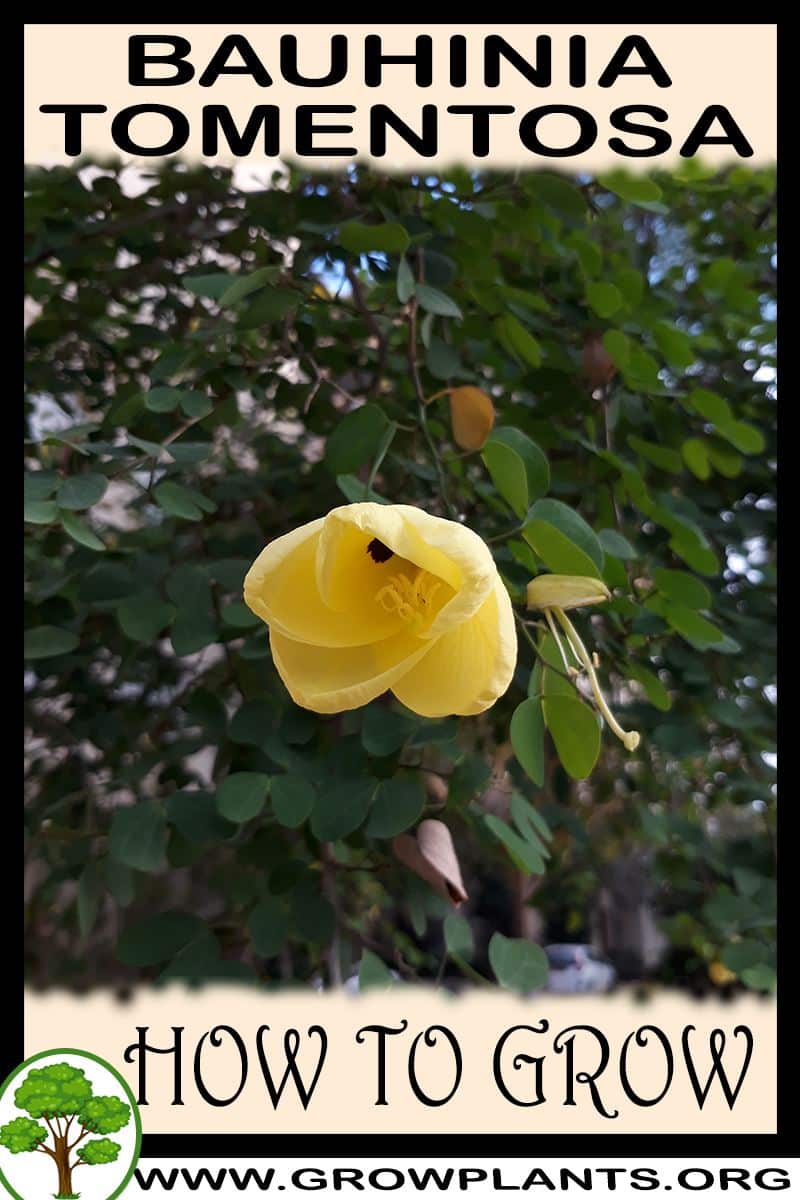
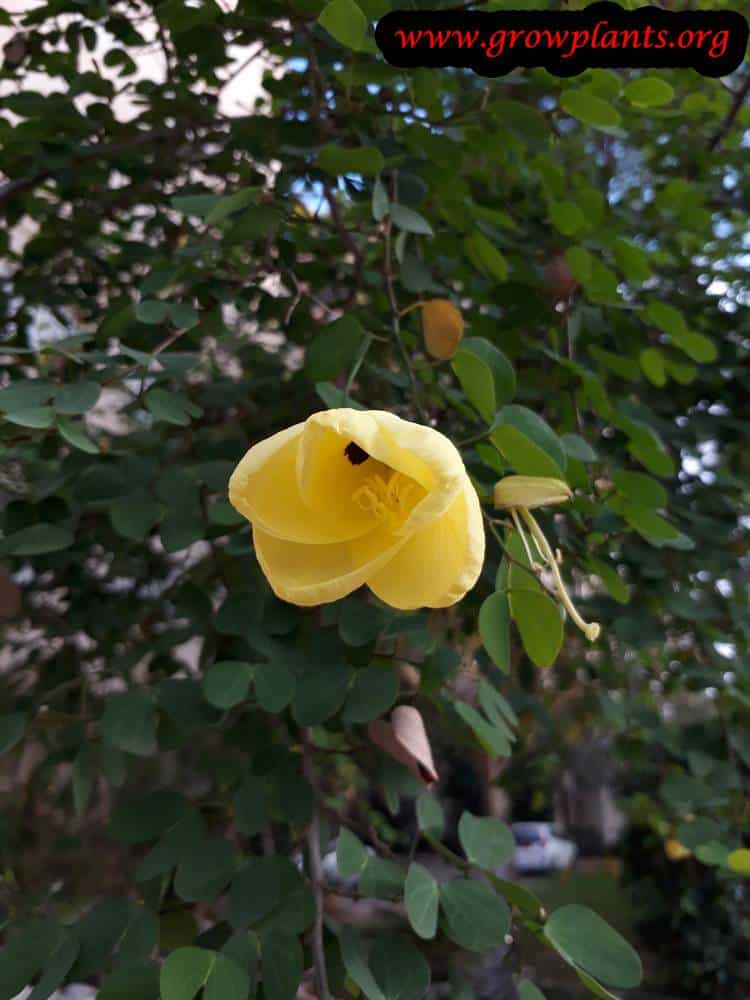
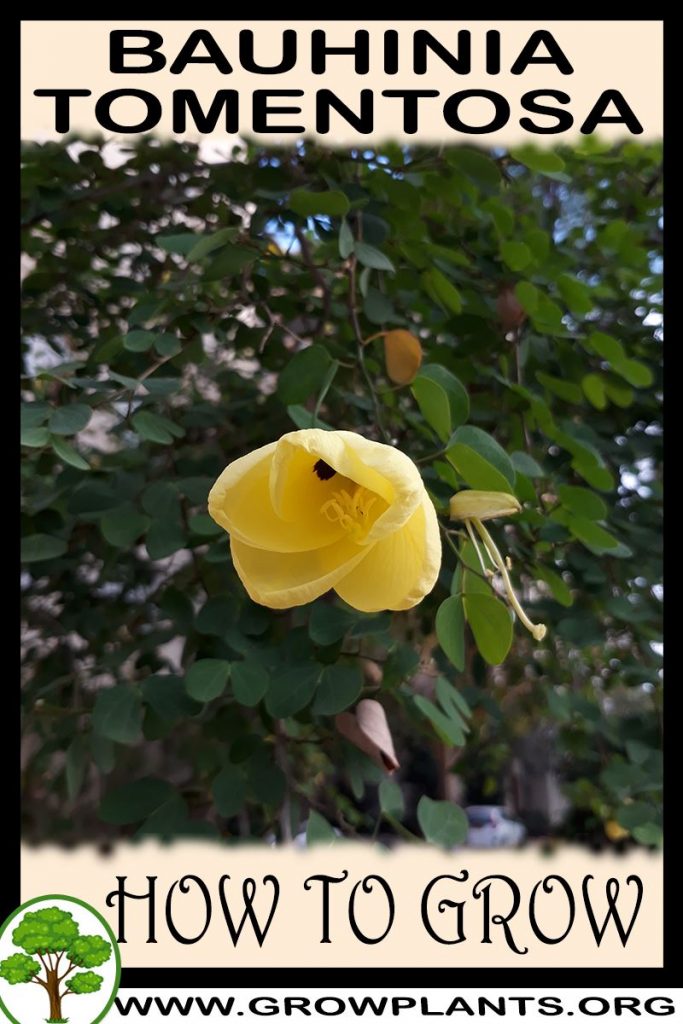
- Flower Characteristics: Pendulous, bell- or drop-shaped yellow flowers with a dark maroon centre.
Primary Uses & Landscape Value
- Functional & Ornamental Roles: Ornamental flowering shrub and bonsai subject; nitrogen-fixing legume.
Care Guide: Planting, Soil & Watering
Overview: Bauhinia tomentosa is a fast shrub or small tree for warm climates with nodding yellow flowers, thriving in full sun to half shade. A nitrogen-fixing legume, it survives light frost, is fairly drought-tolerant and needs only well-drained soil.
Quick Care Requirements
| Requirement | Ideal Condition |
|---|---|
| Planting Season | Winter, spring or summer |
| Growth Rate | Moderate to fast |
| Soil Type | Well-draining |
| Water Need | Low to high; adaptable, but let the soil dry between waterings once established |
Planting & Establishment
- Best Planting Season: Plant in winter, spring or summer; it survives light frost and settles best in the warm season.
- How to Plant:
- Hole Preparation: Dig a hole a little wider than the root ball in free-draining soil.
- Soil Amendments: Being a nitrogen-fixer it needs little feeding; add compost to poor soil but keep drainage sharp.
- Planting Depth: Set the root ball level with the surrounding soil and firm gently.
- Growth Speed & Expectations: A fast grower reaching about 1.4-4 m; it takes well to pruning and also makes a good bonsai.
Soil, Watering & Drainage Care
- Soil Mix & Drainage Needs: Wants well-drained soil and tolerates lean ground; suits a large container.
- Watering Schedule & Technique:
- Young / Newly Planted: Water regularly to establish in the first season.
- Established: Adaptable to watering but happiest with occasional deep soakings and drying out between; drought-tolerant once established.
- Seasonal Adjustments: More water in summer; keep drier in winter.
Climate, Light & Hardiness
Yellow bauhinia (Bauhinia tomentosa) is a warm-climate shrub or small tree of subtropical, Mediterranean and desert regions, flowering best in full sun. Grown in roughly USDA zones 9–11, it is frost-tender but established plants take light frost, with harder freezes damaging or cutting back the top growth.
Quick Climate Specifications
| Climate Zones | Subtropical, Mediterranean, desert |
|---|---|
| USDA Hardiness Zones | Approximately 9–11 |
| Optimal Temp Range | Warm, roughly 20–32 °C (68–90 °F) |
| Cold Damage Begins | Light frost is tolerated; harder frost damages foliage and soft stems |
| Approx. Survival Minimum | Established plants may take brief frost toward the zone 9 limit, roughly −4 to −1 °C (25 to 30 °F); colder kills top growth, which can resprout |
| Frost Tolerance | Low (tolerates light frost) |
| Light Conditions | Full sun to half shade |
| Wind Tolerance | Moderate |
Sunlight & Light Exposure
Optimal Light Setup
Full sun gives the best growth and the fullest show of yellow, dark-centred bells; it grows in half shade but flowers less.
Direct Sun Requirement
Warmth and direct sun drive flowering, so an open, sunny spot is ideal.
Best Exposure / Orientation
A warm, sheltered, sunny aspect buffers cold nights at the lower edge of its range.
Temperature Extremes & Hardiness
USDA Hardiness & Regional Limits
Suited to roughly zones 9–11. It is a touch hardier than the most tender bauhinias, but young plants remain more cold-sensitive than established ones, and tolerance varies with age, exposure duration and conditions.
Cold Damage & Winter Protection
Light frost is generally tolerated; a harder freeze burns foliage and can kill soft stems back, after which established plants often resprout from lower wood or the base. Shelter and protection of young plants improve winter survival.
Frost Sensitivity
Frost-tender overall - soft new growth is the most vulnerable part.
Extreme Heat Tolerance
Excellent; it thrives in hot subtropical and desert conditions.
Wind, Humidity & Microclimate
Dry-Air Tolerance
Copes well with hot, dry air, consistent with its Mediterranean and desert range.
Wind Tolerance
Moderate; some shelter keeps the slender stems and foliage in good condition.
Microclimate Recommendations
A warm, sunny, sheltered position gives the best flowering and the best resilience to an occasional cold night.
Growing in Pots, Balconies & Indoors
The yellow bell orchid tree is a tender flowering shrub (1.4-4 m) with soft yellow, bell-like blooms. It is not a houseplant, as the grower confirms, but it grows well in a large container on a sunny patio, and potting makes it easy to shelter from frost.
Quick Details
- Container Size: A large tub, the bigger the better, pruned to keep it shrubby
- Indoor Suitability: Not a houseplant (per the grower) – too large and needs strong light
- Best Spot: Full sun to half shade
- Soil & Drainage: Aerated, free-draining mix
- Watering in Pots: Small to generous depending on heat – it’s fairly adaptable, but don’t waterlog
Indoors & On the Windowsill
- Houseplant limits: The grower marks it no for indoors; it needs full outdoor light and space to flower.
- Overwintering indoors: Frost-tender – in cold climates keep it potted and move it under bright, frost-free cover over winter.
On a Balcony or Patio
- Light & wind: Give it a warm, sunny, sheltered spot; shelter from strong wind and mind the weight of a large tub. Pots dry fast, so water regularly in heat.
Choosing the Pot, Soil & Long-Term Care
- Pot & drainage: Use a pot with strong drainage holes and skip a standing-water saucer, which invites root rot; terracotta breathes and dries faster, while glazed or plastic holds moisture longer.
- Potting mix: A light, aerated organic mix – peat or coir with perlite or vermiculite – gives the roots both moisture and air.
- Feeding: Potted plants use up their feed faster because each watering leaches nutrients away, so feed a little more often than plants in open ground.
- Repotting: Refresh the top of the mix and pot up every couple of years; a light root and top prune at repotting keeps established plants vigorous.
Fertilizing & Feeding
A light feeder: as a nitrogen-fixing legume, Bauhinia tomentosa supplies much of its own nitrogen and needs only modest, balanced feeding and good organic matter.
Quick Fertilizing Specs
| Feeding Level | Light |
|---|---|
| young_feeding | Balanced feeding to establish |
| mature_feeding | Balanced feeding through growth and bloom |
| Main Nutrient Priority | Modest, balanced nutrition; little added nitrogen is needed on this nitrogen-fixing legume |
| Best Feeding Period | Spring through the flowering period |
| Organic Options | Compost, well-rotted manure and mulch |
| Micronutrients | Rarely needed where soil is healthy and near neutral |
| Soil pH | Tolerates a wide range; needs well-drained soil |
| Reduce/Stop Feeding | Ease off after flowering and stop during dormancy |
Feeding by Growth Stage
Spring growth
Fuel fresh spring growth of stems and foliage on Bauhinia tomentosa.
| Nutrient direction | As a nitrogen-fixing legume, Bauhinia tomentosa needs little added nitrogen; a light, balanced feeding or compost is plenty as growth resumes. |
|---|---|
| Timing | Early in the growing season as new growth begins. |
| Frequency | A light feeding as growth starts, repeated modestly through spring. |
| Fertilizer types | Balanced complete flower or garden fertilizer, Compost or well-rotted organic matter |
| Precautions | Go easy on nitrogen, since the plant supplies much of its own and excess only pushes leaves over flowers. |
Bloom
Support abundant, good-quality flowers on Bauhinia tomentosa through the blooming period.
| Nutrient direction | Keep feeding balanced with adequate nitrogen; balanced nutrition, not high phosphorus, drives good bloom. |
|---|---|
| Timing | From bud formation through the flowering period. |
| Frequency | Light, steady feeding while in active bloom. |
| Fertilizer types | Balanced complete fertilizer, Compost as a slow background source |
| Precautions | Do not rely on high-phosphorus ‘bloom booster’ products; balanced feeding is enough. |
Dormancy or rest
Let Bauhinia tomentosa rest without pushing new growth.
| Nutrient direction | None – withhold fertilizer during dormancy. |
|---|---|
| Timing | After flowering, through autumn and winter dormancy. |
| Frequency | No feeding at this stage. |
| Fertilizer types | No feeding at this stage; do not fertilize until active growth resumes. |
| Precautions | Do not fertilize dormant plants; resume only when growth restarts. |
Nutrient Deficiency Signs & Corrections
Overall pale, yellowing leaves with weak, slow growth.
| Possible causes | Low soil nitrogen, Poor, leached or sandy soil, Cold or waterlogged soil limiting uptake |
|---|---|
| Appears first on | Older, lower leaves |
| What to check | Feeding history, Soil organic matter, Drainage and weather |
| Possible correction | Apply a balanced complete fertilizer and build the soil with compost. |
Lush leafy growth but few flowers.
| Possible causes | Excess nitrogen relative to other nutrients, Too much shade, Over-feeding with a high-nitrogen fertilizer |
|---|---|
| Appears first on | The whole plant, as a balance of leaves over flowers |
| What to check | Fertilizer type and rate, Light levels, Overall vigour |
| Possible correction | Switch to balanced feeding, ease off nitrogen and ensure adequate light. |
Young leaves yellow between still-green veins.
| Possible causes | High soil pH limiting iron availability, Waterlogged or cold soil, A genuine micronutrient shortage |
|---|---|
| Appears first on | Youngest leaves |
| What to check | Soil pH, Drainage, Whether only new growth is affected |
| Possible correction | Correct pH where possible and, if needed, apply a chelated micronutrient product per its label. |
Pruning, Training & Seasonal Maintenance
Bauhinia tomentosa has moderate-to-high pruning tolerance and can be grown either as a large upright shrub or, with training, as a small single- or few-trunk tree. The main objective of pruning is deciding on and maintaining that chosen form while controlling overall size, since flowers appear on the current season’s new growth. The safest window is late winter/early spring, before the new flush.
Quick Pruning & Maintenance Specs
| Pruning Tolerance | Moderate–High |
| Primary Pruning Window | Late winter/early spring |
| Secondary Maintenance Window | Light summer tidy |
| Typical Frequency | Annual shaping |
| Main Objective | Shrub-vs-small-tree form control, plus size containment |
| Young Plant Priority | Commit to a form — single leader for tree form, or headed-back stems for a bushy shrub |
| Mature Plant Priority | Maintain the chosen form; renew crowded growth |
| Best Tool Type | Bypass secateurs/loppers; pruning saw only if a thickened tree-form trunk needs it |
| Avoid Heavy Pruning During | Spring–summer bloom |
Pruning by Plant Age & Size
Newly Established
Minimal — remove only damaged growth.
Young / Formative
This is the key decision point: for tree form, select one strong leader, remove or shorten competing stems, and gradually raise the canopy by removing low limbs as the trunk thickens; for shrub form, pinch or head young stems to build a dense multi-stemmed base.
Mature / Established
For tree form, maintain a clear single or few trunk(s) and manage canopy size; for shrub form, periodically renew old, crowded stems.
Seasonal Pruning Schedule
Pre-Growth/Late Winter
Objective: main shaping cut. Remove: for tree-form specimens, any low resprouting shoots along the trunk; for shrub form, crowded interior growth. Response: compact new growth carrying the coming bloom.
Ongoing Sanitary
Remove dead wood any time.
Flowering & Fruiting Wood
The yellow, black-centered flowers form on the current season’s new growth, so late-winter/early-spring pruning before the flush does not cost the coming bloom and instead helps generate the compact new shoots that flower. Avoid cutting into the plant once it is in active spring-summer bloom.
Structural Pruning & Training
If grown as a small tree, remove low or competing growth to keep one clear trunk and a well-spaced canopy; if grown as a shrub, remove crossing or crowded interior stems to keep an open, floriferous form; control height and spread as needed for the setting.
Special Growth to Remove
Low, sucker-like shoots along the trunk of tree-form specimens — remove to preserve a clear-trunk look, or leave if a multi-stem look is preferred. Spent seed pods, since the species can self-seed and spread (noted as potentially invasive) — remove before they split to limit volunteer seedlings.
Container & Small-Space Pruning
Works well as a restrained container or bonsai subject; more frequent light pinching keeps it compact in a pot regardless of which form (shrub or tree) is chosen.
Tools
Bypass secateurs for most work; loppers for thicker basal or trunk-forming wood; pruning saw only if maintaining a true small-tree form with a thickened trunk needing occasional larger cuts.
Tool Hygiene & Disease Risk
Routine — clean, sharp tools; aphids are the noted pest, not a tool-borne disease concern.
Cut Placement & Technique
Use thinning cuts to keep a natural form rather than shearing; when raising a tree-form canopy, remove low limbs flush to the trunk without leaving stubs; head young shrub-form stems just above an outward bud to encourage spreading branching.
Heavy Pruning & Rejuvenation
Tolerates a hard cutback well to renew an overgrown shrub-form specimen; on a mature single-trunk tree-form specimen, renewal should be more moderate to protect the trunk investment already made. Vigorous regrowth follows, with bloom resuming on the new flush the same season.
Post-Pruning Care
Water normally; no extra feeding needed after pruning; watch new soft growth for aphids.
Common Pruning Mistakes
Letting a young plant develop multiple competing leaders when a clean tree form was the goal, requiring larger corrective cuts later; shearing into a tight ball, which removes flowering shoot tips and hides the individual flowers; leaving spent pods to self-seed where volunteers aren’t wanted.
When NOT to Prune
Avoid pruning during spring-summer bloom. Avoid heavy structural correction on an already-established single-trunk tree form — that’s better managed while the plant is young.
Recommended Tools (by task)
- bypass_secateurs — shaping and deadpodding on moderate wood; clean cuts throughout.
- loppers — thicker stems when renewing an overgrown shrub; reaches beyond secateur capacity.
Pruning Troubleshooting
| Problem | Possible Cause | What to Check | Corrective Action |
| Multiple competing trunks, messy tree form | Competing leaders not removed while young | How many main stems were allowed to develop early on | If the plant is still young/flexible, select one leader and remove the rest; older trees may need to be accepted as multi-trunked |
| Sparse bloom after pruning | Cut during or just before the spring-summer bloom period | Timing of the last prune | Shift structural pruning to late winter, before the new flush |
| Volunteer seedlings nearby | Spent pods left to mature and self-sow | Presence of pods after flowering | Remove spent pods before they split |
Propagation Guide
Yellow bauhinia is grown from seed — whose hard coat benefits from scarification or a warm-water soak — and can also be increased vegetatively from semi-hardwood cuttings, as the site notes. Seed is the easiest route. Overall easy to moderate.
Quick Propagation Specs
| Best Propagation Method | Seed (scarified / soaked) |
| Alternative Methods | Semi-hardwood cuttings; layering |
| Propagation Difficulty | Easy to Moderate |
| Seed True-to-Type | Fairly uniform for the species |
| Vegetative True-to-Type | Yes |
| Best Propagation Season | Warm season (spring–summer) |
| Grafting Required | No |
Growing from Seed
Seed Handling & Viability
The hard-coated legume seed stores well kept dry.
Dormancy & Pre-Sowing Treatment
The hard seed coat causes slow, uneven germination. Nick or lightly scarify the coat, or soak the seed in warm water until it swells, before sowing.
Sowing Season
Sow in the warm season (spring to summer, matching the site’s winter–summer planting window).
Germination Conditions
Warm, moist medium; once the coat is breached the seed usually germinates within a few weeks.
Stem Cuttings
The site lists vegetative reproduction: take semi-hardwood cuttings in the warm season and root them under humidity with a rooting hormone; thicker stems can also be layered. The species can self-seed and become invasive, so manage spent pods where that is a concern.
Bloom & Flower Guide
Quick Details
- Bloom Season: Spring and summer
- Flower Appearance: Bell-shaped yellow flowers, each hanging like a drop and usually marked with a deep maroon-to-black throat
- Edibility: Grown as an ornamental; not a recognised culinary flower
Detailed Blooming Overview
Yellow bauhinia earns its name from nodding, bell-like yellow flowers that hang like drops, each usually blotched with dark maroon or near-black at the centre. It flowers through the warm months, and as a legume it also fixes nitrogen in the soil.
Flower Characteristics
- Yellow, drop- or bell-shaped flowers with a dark centre.
- Carried along the branches through spring and summer.
Bloom Care & Thinning
- Encouraging bloom: A sunny position and light pruning after flowering keep the shrub tidy and free-flowering.
- After the bloom: Flat legume pods follow the flowers; leave them if you want seed, or remove them for a neater look.
Pests, Diseases & Troubleshooting
The yellow bell bauhinia shares the genus profile of its relatives: aphids are the main pest (as noted in the source), with spider mites, scale, whitefly and leaf-eating caterpillars secondary, and only minor leaf spot and root-rot diseases. Its abiotic weaknesses are chlorosis on alkaline soil and frost tenderness. It is an easy, drought-tolerant shrub that mostly looks after itself in a warm, well-drained spot.
Quick Troubleshooting Overview
| Issue / Pest | Main Symptom | Primary Solution |
|---|---|---|
| Aphids | Colonies and honeydew on new shoots | Water-jet, beneficials, insecticidal soap |
| Spider mite | Stippled, bronzed leaves in dry heat | Hose foliage, insecticidal soap |
| Scale / whitefly | Bumps or white clouds, sooty mould | Prune/oil, sticky traps |
| Caterpillars | Chewed, notched leaves | Hand-pick, Bt spray |
| Chlorosis | Yellow leaves, green veins on alkaline soil | Improve drainage, iron chelate |
Common Pests & Management
- Aphids (Aphis / Myzus / Macrosiphum spp.):
- Symptoms: Small soft-bodied insects (green, black or grey) clustering on soft new shoots and flower buds; they suck sap, causing curled, distorted and yellowing growth plus a sticky honeydew that blackens with sooty mould and draws ants. Winged forms spread them plant to plant and can carry viruses.
- Prevention & Control: Blast colonies off with a firm jet of water and pinch out badly infested tips; encourage and protect ladybirds, lacewings and hoverflies, and grow flowering companions to feed them. For persistent outbreaks use insecticidal soap or a light horticultural/neem oil, wetting leaf undersides in the cool of the evening to spare pollinators.
- Two-spotted spider mite (Tetranychus urticae):
- Symptoms: Fine pale stippling that bronzes whole leaves, with delicate webbing on the undersides and growing tips in hot, dry, dusty spells; heavily fed leaves dry and drop. Look for the moving specks with a hand lens.
- Prevention & Control: Raise humidity and hose foliage down regularly, and never let plants suffer dust or drought stress. Introduce predatory mites (Phytoseiulus persimilis) under cover. Treat hot-spots with insecticidal soap or horticultural oil, repeating at 5-7 day intervals to catch newly hatched mites.
- Scale insects (Coccus / Saissetia spp.):
- Symptoms: Brown or waxy bumps on stems and leaf undersides with honeydew and sooty mould.
- Prevention & Control: Prune out infested wood, encourage natural enemies, and smother scale with horticultural oil.
- Glasshouse whitefly (Trialeurodes vaporariorum):
- Symptoms: Tiny white moth-like insects that rise in a cloud when foliage is disturbed; scale-like nymphs on leaf undersides suck sap and excrete honeydew, leading to sooty mould and weak, yellowing growth.
- Prevention & Control: Hang yellow sticky traps to monitor and thin the adults; encourage the parasitic wasp Encarsia formosa under cover and keep plants unstressed. Spray insecticidal soap or horticultural oil onto leaf undersides, repeating every few days to break the life cycle.
- Caterpillars (various Lepidoptera):
- Symptoms: Notched or skeletonised leaves where caterpillars, including Bauhinia-feeding skippers, chew the foliage.
- Prevention & Control: Hand-pick and encourage birds and parasitic wasps; Bt handles heavier outbreaks selectively.
Diseases & Fungal Issues
- Leaf spot (Cercospora / Phyllosticta spp.):
- Symptoms: Brown or grey spots on the twin-lobed leaves in warm, humid weather; usually cosmetic.
- Treatment & Management: Improve airflow, avoid overhead watering, and remove affected leaves; copper fungicide protects under persistent wet.
- Root rot (Phytophthora / Pythium spp.):
- Symptoms: Yellowing, wilting and dieback in heavy, wet soil as roots rot.
- Treatment & Management: Plant in free-draining soil, avoid overwatering, and improve drainage.
Growing Difficulties & Abiotic Problems
- Lime-induced chlorosis:
- Cause & Symptoms: Yellow leaves with green veins on alkaline or wet soil where iron is unavailable.
- Correction Strategy: Improve drainage, mulch, and apply chelated iron for a quick correction.
- Frost tenderness / self-seeding:
- Cause & Symptoms: Subtropical and frost-tender, it can also self-seed and spread in warm climates (the ‘can be invasive’ trait noted).
- Correction Strategy: Shelter or protect from frost, and remove seed pods or volunteers where spread is unwanted.
What Helps – Products & Tools
Insecticidal soap and neem or horticultural oil cover the aphids, mites, scale, mealybug and whitefly these shrubs get; Bacillus thuringiensis (Bt) deals with leaf-eating caterpillars without harming bees or butterflies. For the occasional leaf spot or rust, improve airflow and use a copper fungicide, and correct chlorosis on alkaline soil with an iron chelate.