Plant Profile & Key Characteristics
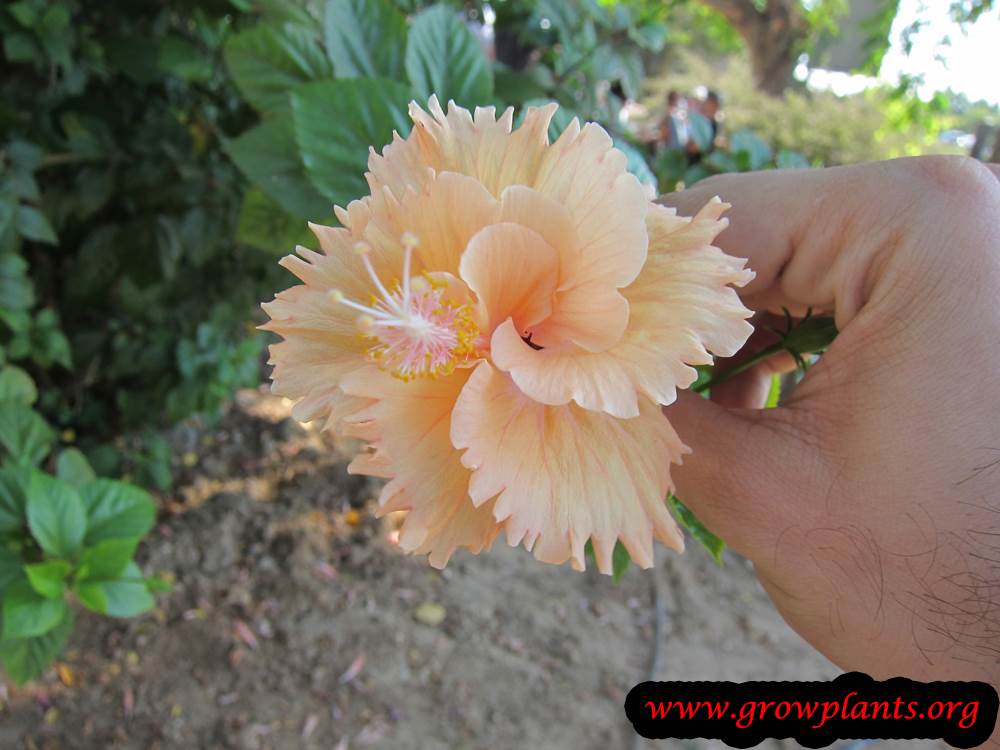
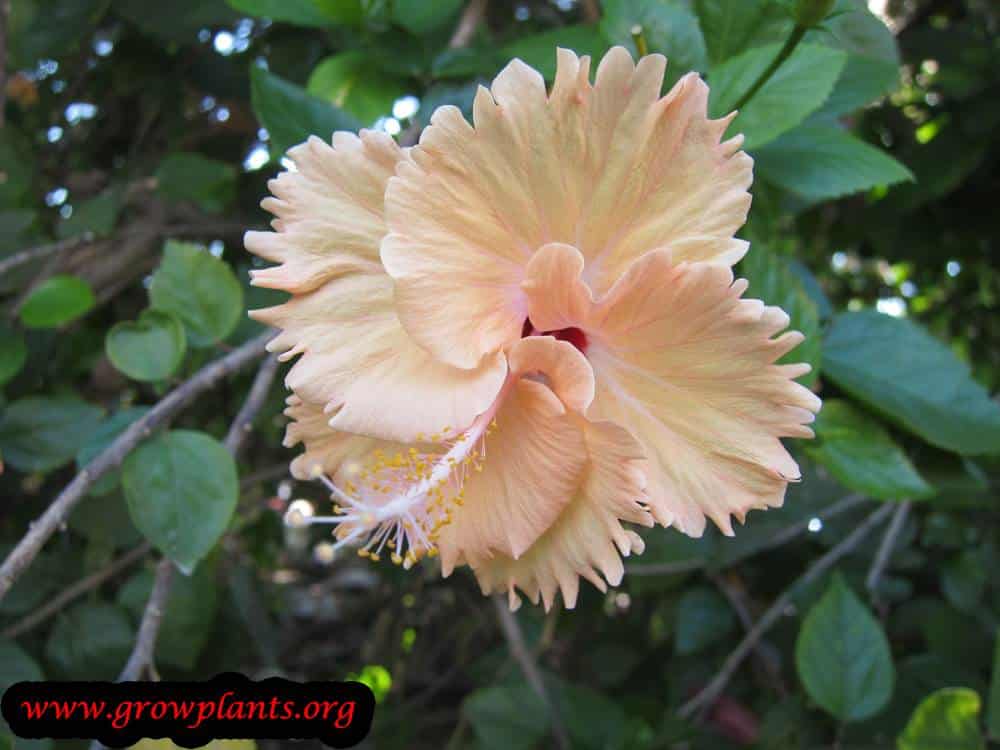
Overview: Hibiscus ‘Hawaiian Salmon’ is an evergreen Hibiscus rosa-sinensis (China rose) cultivar, a shrub of 1-3 m grown mainly as an ornamental and hedge with edible flowers and leaves. It carries large salmon-pink blooms in zones 9-12.
Quick Specifications
| Specification | Attribute |
|---|---|
| Plant Type / Life Cycle | Perennial (shrub) |
| Foliage Type | Evergreen |
| Mature Size | 1-3 m tall (3-9 feet) |
| Growth Rate | Fast |
| Toxicity | Non-toxic – flowers and leaves are edible |
| Hardiness | USDA zone 9-12 |
Growth Form & Structure
- Height and Spread: Reaches 1-3 m (3-9 feet); grows in containers of about 10-20 L (2-4 gallons) or larger; not suited as an indoor houseplant.
- Growth Habit and Form: Bushy, upright shrub, readily pruned into a hedge.
- Lifespan and Maturity: Fast-growing perennial shrub.
Anatomy & Physical Features
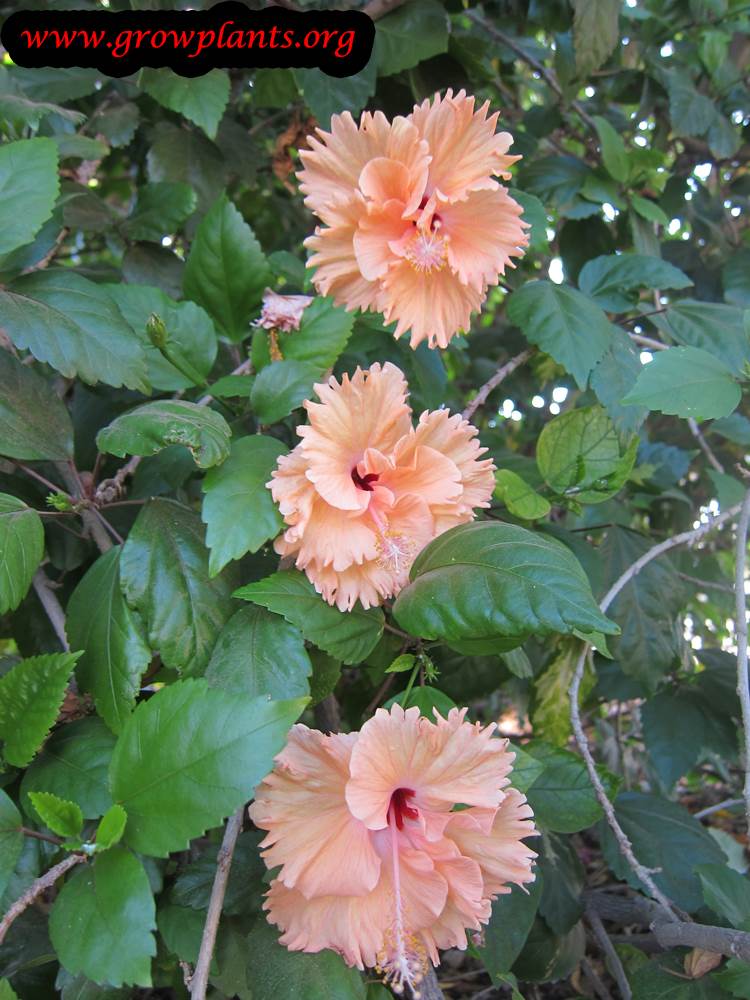
- Leaves and Foliage: Edible green leaves, oval with a serrated margin.
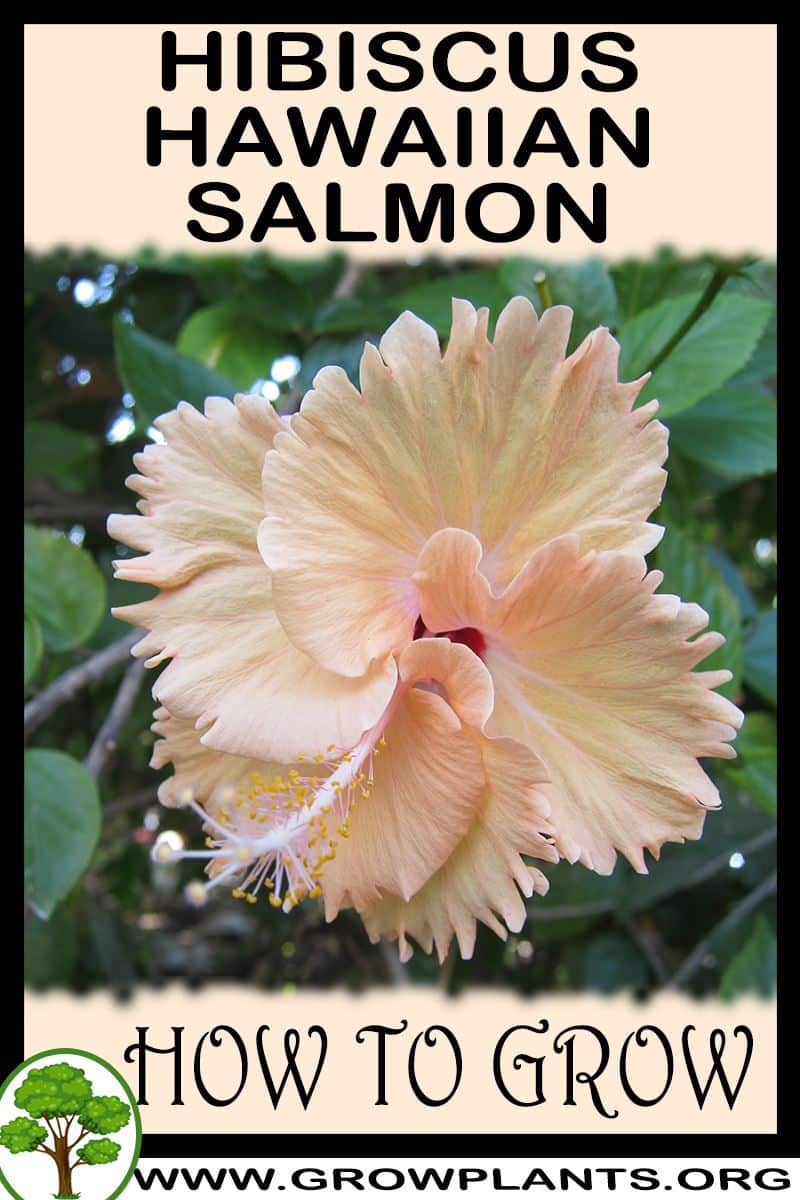
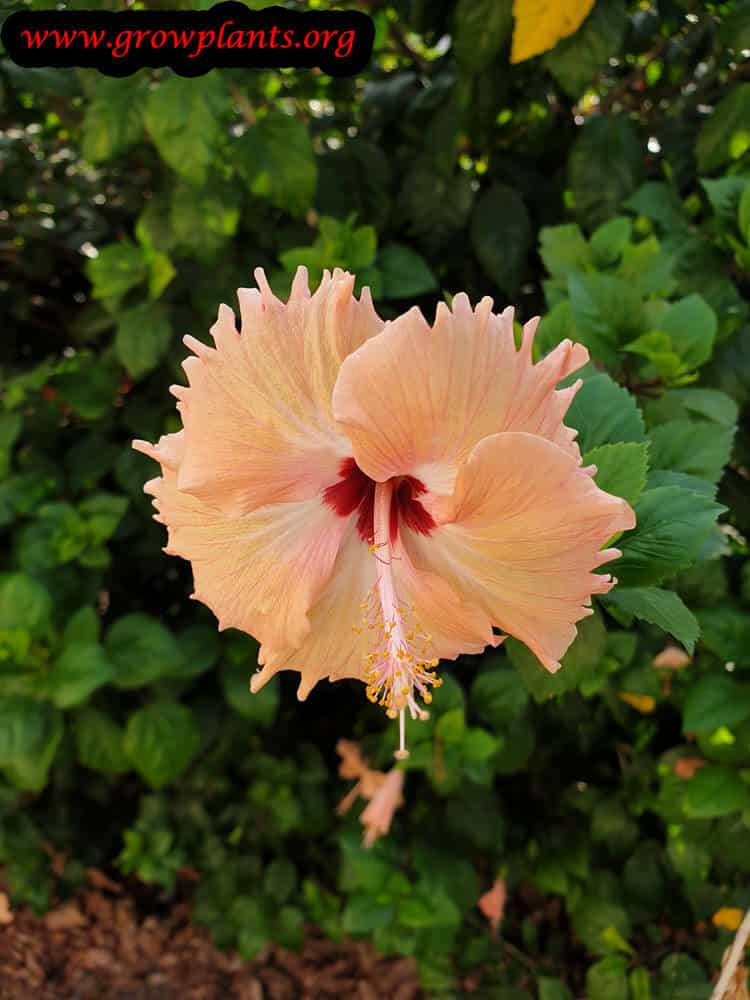
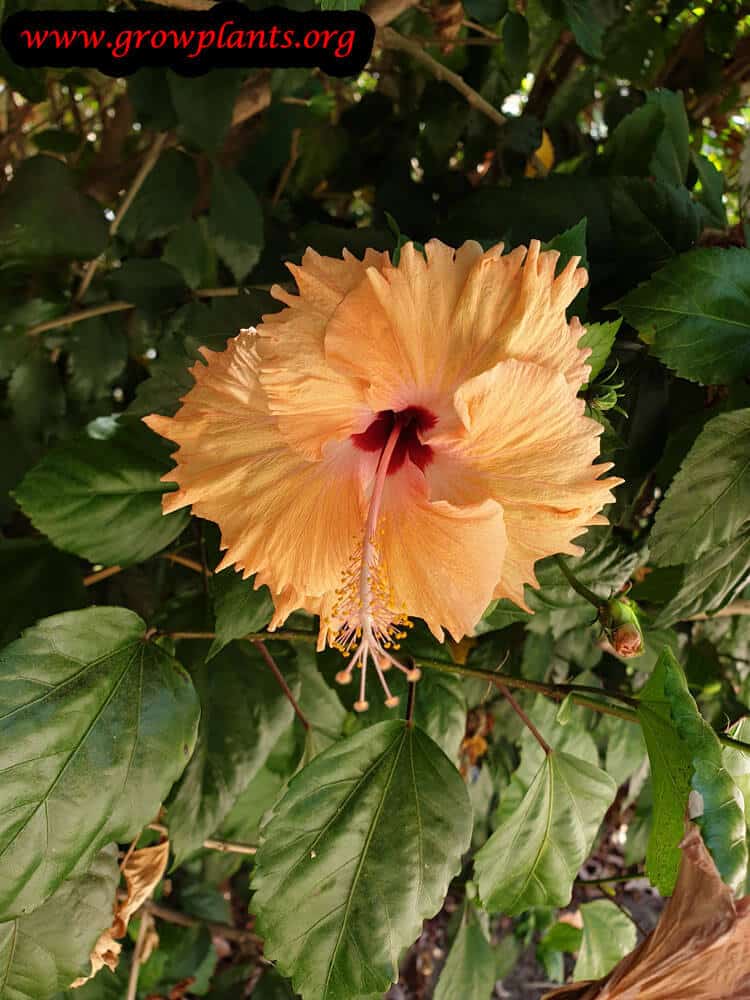
- Flower Characteristics: Edible five-petalled salmon-pink flowers 8-15 cm across (full detail in the Bloom accordion).
Primary Uses & Landscape Value
- Edible Uses: Flowers and leaves used for beverages and cooking.
- Functional and Ornamental Roles: Ornamental flowering shrub, hedge and container specimen for warm climates.
Care Guide: Planting, Soil & Watering
Overview: This Hawaiian Salmon Chinese hibiscus is a fast-growing evergreen shrub for full sun, growing in rich soil with organic matter, mulch and steady moisture. It flowers best with warmth and even watering.
Quick Care Requirements
| Requirement | Ideal Condition |
|---|---|
| Planting Season | Spring; year-round in frost-free zones |
| Growth Rate | Fast |
| Soil Type | Rich, moisture-retentive soil with organic matter and mulch |
| Water Need | Moderate to high – keep evenly moist, more in heat |
Planting & Establishment
- Best Planting Season: Plant in spring in zone 9, spring to summer in 10a, spring to autumn in zones 10b–11a, and year-round in zone 11b+.
- How to Plant:
- Hole Preparation: Dig the hole about 50% wider than the root ball so roots can spread into loosened soil.
- Soil Amendments: Work plenty of organic matter into the backfill (compost, well-rotted leaves and humus), then mulch the surface to hold moisture; hold back on fertiliser until the plant has established.
- Planting Depth: Set the plant so the top of the root ball sits level with the surrounding soil, firm it in gently and stake if unstable, without burying the stem.
- Growth Speed & Expectations: Fast-growing – quickly forms a full flowering shrub in warm conditions.
Soil, Watering & Drainage Care
- Soil Mix & Drainage Needs: Rich soil that holds moisture yet drains freely, mulched to stay moist; in pots use a light, free-draining mix and avoid standing water.
- Watering Schedule & Technique:
- Young / Newly Planted: Water twice on planting day, then daily for the first two weeks, giving extra water until new growth appears.
- Established: Water regularly, letting only the top few cm dry between waterings; increase in hot weather.
- Seasonal Adjustments: More water in hot, dry weather; ease off through cooler months.
Climate, Light & Hardiness
This tropical hibiscus grows outdoors year-round only in essentially frost-free climates, needing full sun for the best flowering. In marginal areas it can be attempted with dedicated winter protection, but hard freezes will kill it.
Quick Climate Specifications
| Climate Zones | Mediterranean, Subtropical, Tropical |
|---|---|
| USDA Hardiness Zones | 10 and above; zone 9 possible with winter protection |
| Frost Tolerance | Very Low |
| Light Conditions | Full Sun |
Sunlight & Light Exposure
Optimal Light Setup
Full sun gives the strongest growth and heaviest flowering.
Direct Sun Requirement
Half shade is tolerated but noticeably reduces flowering, so reserve part shade for the hottest climates only.
Temperature Extremes & Hardiness
USDA Hardiness & Regional Limits
Reliably grown outdoors year-round in USDA zone 10 and warmer; in zone 9, it can survive with attentive overwintering care (such as siting against a warm wall, heavy mulch, or moving container plants under cover), but this is marginal and not guaranteed.
Frost Sensitivity
Frost-sensitive; even a light freeze can cause significant dieback, and a hard freeze typically kills the plant outright.
Wind, Humidity & Microclimate
Humidity Preferences
Comfortable with the higher humidity typical of tropical and subtropical climates.
Growing in Pots, Balconies & Indoors
This tropical hibiscus is a fast, free-flowering shrub the grower says is not a true houseplant – it needs strong direct light. It shines in a pot on a sunny patio or balcony, and in cold climates it can be overwintered by the brightest window as it is only hardy to zone 9-10.
Quick Details
- Container Size: 10-20 L (2-4 gal), or larger; start about 50% wider than the root ball
- Indoor Suitability: Not a deep-room houseplant; needs a very sunny window or conservatory
- Best Spot: Full sun for best bloom (tolerates part shade with fewer flowers)
- Soil & Drainage: Rich, organic potting mix – peat and perlite or another light blend; must drain freely
- Watering in Pots: Water regularly to keep the mix moist; mulch the surface to hold moisture, never leave it standing wet
Indoors & On the Windowsill
- Houseplant limits: Won’t thrive deep in a room – the light is too weak for a sun-loving flowering shrub.
- Windowsill growing: Give it the sunniest window you have, or a bright conservatory; there it can keep some leaf and flower.
- Overwintering: A key reason to pot it in cold areas: bring it into a bright, frost-free room for winter and return it outdoors once frost has passed.
On a Balcony or Patio
- Light & heat: Give it the hottest, sunniest corner; walls and railings reflect heat so pots dry fast – check moisture daily in warm spells. A drip irrigation kit with a timer can take over that watering check automatically.
- Shelter: Stake or shelter it on an exposed balcony, and mulch the surface to slow evaporation.
Choosing the Pot, Soil & Long-Term Care
- Pot & drainage: A 10-20 L pot with strong drainage holes and no standing-water saucer to avoid root rot; terracotta breathes and dries faster, glazed or plastic holds moisture longer.
- Potting mix: Rich and light – potting soil or peat with perlite, plus humus and organic matter.
- Feeding: Potted plants are fed more often than those in the ground, as watering steadily leaches nutrients from the mix – feed through the growing and flowering season.
- Repotting: Every few years swap part of the mix and trim some roots from the side without fully lifting the plant.
Grower’s Container Tip
- Grower’s potting method: When potting on, use a container about 50% bigger than the root ball; each time you move up, replace some of the old soil with fresh until you reach the final pot size. Thereafter, every few years swap out part of the soil and cut a little of the root ball – working from the side of the pot, no need to lift the whole plant. If the pot sits in a tray, never let water stand there for days.
Fertilizing & Feeding
A moderate, steady feeder through its long warm-season bloom period – consistency matters more than heavy applications.
Quick Fertilizing Specs
| Feeding Level | Moderate feeder |
|---|---|
| Main Nutrient Priority | Balanced nutrition with adequate nitrogen to fuel its long repeat-flowering season |
| Best Feeding Period | Spring through the warm growing season while actively flowering |
| Soil pH | Prefers slightly acidic to near-neutral soil |
| Organic Options | Organic matter, compost and mulch support the rich, moisture-retentive soil this hibiscus prefers |
| Reduce/Stop Feeding | Taper off as growth slows in cool weather, especially near the cold edge of its hardiness range |
| Micronutrients | Watch for iron chlorosis in alkaline or poorly drained soil |
Feeding by Growth Stage
Spring Growth Flush
Fuel the new leafy growth and branching that sets the stage for the season’s flowers
| Nutrient direction | A balanced, nitrogen-forward direction supports strong new growth |
|---|---|
| Timing | As new growth resumes in spring after the coldest part of the year has passed |
| Frequency | Regular light feedings through the spring growth flush support steady new growth |
| Fertilizer types | A balanced, general-purpose fertilizer formulated for flowering shrubs or hibiscus |
| Precautions | Ease into feeding gradually on plants that were recently pruned hard or overwintered indoors |
Main Bloom Period
Sustain continuous flowering through the warm growing season
| Nutrient direction | Keep nutrition balanced with adequate nitrogen – avoid switching to a high-phosphorus ‘bloom booster’, which does not reliably increase flowering |
|---|---|
| Timing | Through the warm months while the plant is actively flowering |
| Frequency | Regular light feedings help sustain the long bloom season typical of this repeat-flowering hibiscus |
| Fertilizer types | A balanced, general-purpose or hibiscus-formulated fertilizer; organic matter and mulch also support steady flowering |
| Precautions | Very high nitrogen alone can favor leafy growth over flowers – keep the feeding balanced |
Repeat-Bloom Maintenance
Maintain vigor for the plant’s characteristic long, repeat-flowering habit across the season in warm climates
| Nutrient direction | Steady, balanced feeding sustains the repeated flushes of bloom typical of this hibiscus |
|---|---|
| Timing | Continuing through summer into autumn wherever the climate stays warm enough for active growth |
| Frequency | Maintain the same light, regular feeding rhythm as the main bloom period for as long as active growth and flowering continue |
| Fertilizer types | Continue with a balanced, general-purpose or hibiscus-formulated fertilizer |
| Precautions | Taper feeding as growth naturally slows heading into cooler weather |
Cool-Season Rest
Let the plant rest through cooler weather, especially at the cold edge of its hardiness range
| Nutrient direction | None – withhold fertilizer as growth slows in cool weather |
|---|---|
| Timing | Late autumn through winter, or whenever growth pauses due to cool temperatures |
| Frequency | No feeding at this stage |
| Fertilizer types | No feeding at this stage – withhold fertilizer until active spring growth resumes |
| Precautions | Do not fertilize a resting or overwintering plant; feeding during cool, slow growth can encourage tender growth vulnerable to cold damage |
Nutrient Deficiency Signs & Corrections
New leaves turn yellow while the veins stay green
| Possible causes | Soil pH too high for good iron availability, Overly wet or compacted soil limiting root function, Root stress from container-bound or disturbed roots |
|---|---|
| Appears first on | Newest leaves at the shoot tips first |
| What to check | Soil pH and drainage, Container root-bound condition if grown in a pot, Whether yellowing is interveinal |
| Possible correction | Correct pH toward a more favorable range, improve drainage or repot if root-bound, or apply a chelated iron product per its label |
Flower buds form but drop before opening
| Possible causes | Inconsistent watering or moisture stress, Sudden temperature swings or cold drafts, Nutrient imbalance from irregular feeding, Pest pressure such as thrips or aphids on developing buds |
|---|---|
| Appears first on | Developing flower buds throughout the plant |
| What to check | Watering consistency, Recent temperature changes or drafts, Signs of pests on buds, Feeding regularity |
| Possible correction | Even out watering, protect from temperature swings and drafts, and maintain a steady, balanced feeding rhythm |
Older, lower leaves turn pale green to yellow and growth slows
| Possible causes | Insufficient nitrogen in the soil, Leaching from frequent watering or heavy rain, Depleted soil in a long-planted bed or container |
|---|---|
| Appears first on | Older, lower leaves first |
| What to check | Feeding history and soil fertility, Watering and drainage patterns, Overall growth rate compared to prior seasons |
| Possible correction | Resume regular balanced feeding through the active growing season and refresh depleted container soil |
Leaf margins turn yellow to brown starting on older leaves, sometimes with scorched edges
| Possible causes | Low potassium availability in the soil, Salt buildup from over-fertilizing, Drought stress |
|---|---|
| Appears first on | Older leaf margins first |
| What to check | Feeding and watering history, Soil salinity, Whether new growth is affected too |
| Possible correction | Switch to a balanced fertilizer providing adequate potassium and flush accumulated salts with a thorough watering |
Pruning, Training & Seasonal Maintenance
Hawaiian Salmon hibiscus tolerates frequent pruning well and responds best to a structural cutback in late autumn/winter, before the spring growth flush, because flowers form only on the current season’s new wood. Regular light shaping through the growing season keeps this fast-growing shrub compact, while removing weak, inward-facing, non-blooming stems improves both flower display and air circulation through the canopy.
Quick Pruning & Maintenance Specs
| Pruning Tolerance | High |
| Primary Pruning Window | Autumn to winter, before the spring growth flush |
| Secondary Maintenance Window | Light deadheading and shaping through spring–autumn bloom period |
| Typical Frequency | One structural prune per year, plus ongoing light tidying |
| Main Objective | Stimulate fresh flowering wood and control size on a fast grower |
| Young Plant Priority | Pinch tips to build a full, multi-stemmed framework |
| Mature Plant Priority | Renew leggy, non-blooming interior growth; manage height/spread |
| Best Tool Type | Bypass secateurs; loppers for older basal stems |
| Avoid Heavy Pruning During | Active bud set/bloom flush, and near any frost risk in this shrub’s marginal zone 9 range |
Pruning by Plant Age & Size
Newly Established
Remove only damaged or dead growth in the first season; avoid hard cuts while the plant is still building its root system.
Young / Formative
Pinch shoot tips to encourage branching and build a full, rounded multi-stem shrub – there is no central-leader or trained form to maintain.
Mature / Established
Annual renewal: cut out old, twiggy interior wood that has stopped flowering and control overall size/spread on this fast-growing shrub.
Seasonal Pruning Schedule
Dormant/Winter
Objective: reset shape and stimulate new blooming wood. Remove: weak branches, dead flowers and leaves, and interior twigs that are no longer flowering. Do not remove: healthy outer framework branches carrying next season’s buds. Expected response: vigorous new growth flush. Flowering impact: this cut creates the wood the coming season blooms on.
Ongoing Sanitary
Deadhead spent flowers and remove dead leaves through the growing season to keep the plant tidy; this has no impact on the next bloom flush.
Flowering & Fruiting Wood
Hawaiian Salmon hibiscus flowers on current-season growth, not on older wood. A late-winter/pre-spring cutback removes old, spent wood and forces the new shoots that will carry that season’s flowers; pruning after the spring flush has started sacrifices some of the coming bloom and delays flowering.
Structural Pruning & Training
Maintain an open, rounded multi-stem habit; remove crossing or rubbing branches and thin out shaded interior twigs that have stopped blooming; because growth is fast, height and spread need active control to keep the shrub or hedge in bounds.
Special Growth to Remove
- Dead or spent flowers
- Dead or damaged leaves
- Weak, thin interior branches that are no longer blooming
Container & Small-Space Pruning
This cultivar grows well in containers. Pot-grown plants benefit from more frequent light tip-pruning to keep a compact frame proportional to the root ball, plus root trimming at repotting; a hard cutback is tolerated but recovery is slower than for an in-ground plant.
Tools
Bypass secateurs for routine shaping and deadheading; loppers for thicker renewal cuts on older basal or interior stems.
Tool Hygiene & Disease Risk
Routine: clean, sharp tools are sufficient on healthy wood. Increase care only where dieback or canker is visible – cut back into clean tissue and disinfect the blade between cuts on affected stems.
Cut Placement & Technique
Use thinning cuts to remove whole interior twigs back to their point of origin; pinch or head young shoot tips to force branching; cut just above an outward-facing bud to keep the canopy open.
Heavy Pruning & Rejuvenation
Tolerates a hard cutback (roughly one-third to one-half of the canopy) in late autumn/winter to rejuvenate a leggy, overgrown plant. Expect a vigorous regrowth flush within weeks, with flowering resuming on the new wood later in the season.
Post-Pruning Care
Water normally; avoid heavy feeding right after a hard cut since the plant is already primed to push vegetative regrowth. Watch tender new growth for the aphids and mealybugs this plant is already prone to.
Common Pruning Mistakes
- Shearing the whole shrub into a tight ball, which removes flower-bearing shoot tips for a leafy but bloom-sparse plant
- Pruning after the spring flush has begun, sacrificing the coming bloom
- Leaving shaded, twiggy interior growth unthinned, which flowers poorly
When NOT to Prune
Avoid major cuts once spring growth and bud set are underway, and avoid pruning close to any frost event, since fresh cuts and soft new growth are more cold-sensitive at the edge of this shrub’s hardiness range.
Recommended Tools (by task)
- bypass_secateurs – routine shaping, deadheading and removing thin interior twigs on young and mature plants; clean cuts on soft-to-semi-woody stems without crushing tissue.
- loppers – renewal cuts on thicker older basal or interior stems on mature, overgrown plants; reaches through dense growth where secateurs can’t cut cleanly.
Pruning Troubleshooting
| Problem | Possible Cause | What to Check | Corrective Action |
| Few flowers after pruning | Pruned too late, after the spring flush had started | Timing of the last prune vs. current growth stage | Prune only in late autumn/winter; let a full flush develop before the next bloom cycle |
| Leggy shrub with sparse flowers | Repeated tip-shearing without interior thinning | Density of twiggy, shaded interior growth | Thin non-blooming interior stems back to their point of origin instead of shearing the surface |
| Dieback at cut ends | Dull or dirty tools, or fungal entry after pruning in wet weather | Cut edges for browning or canker | Recut into clean tissue, disinfect the blade, and avoid pruning in damp conditions |
Propagation Guide
Hibiscus Hawaiian Salmon is best increased from stem cuttings, which is the only way to guarantee the exact salmon-pink flower color and plant size of this named selection; seed germinates readily too and is not hard, but seedlings will not reliably match the parent. Overall difficulty is easy, especially by cutting.
Quick Propagation Specs
| Best Propagation Method | Stem Cuttings |
| Alternative Methods | Seed |
| Propagation Difficulty | Easy |
| Seed True-to-Type | No – seedlings will not reliably keep this cultivar’s flower color or size |
| Vegetative True-to-Type | Yes |
| Best Propagation Season | Cuttings: early spring, before new growth resumes after dormancy. Seed: spring through autumn, avoiding autumn sowing where winters are cold |
| Seed Germination Time | 14–25 days |
| Cutting Rooting Time | A few weeks |
| Germination Temperature | Seed: 20–30°C (68–85°F). Cuttings root best around 15–26°C (59–79°F) |
| Seed Sowing Depth | 0.5–1cm (0.25–0.5 inch), covered lightly without pressing down |
Growing from Seed
Seed Handling & Viability
Store saved seed in a dry, dark location until sowing.
Sowing Season
Spring, summer, or autumn – temperature matters more than the calendar season, but where winters are cold it is better not to sow in autumn.
Sowing Depth & Orientation
0.5–1cm (0.25–0.5 inch) deep, covered lightly without pushing the soil down.
Germination Conditions
Full sun (half sun is possible), moist soil, high humidity, and a temperature of 20–30°C (68–85°F).
Germination Time
14–25 days.
Seedling Care
Water moderately to generously. Transplant seedlings into small plugs spaced about 3x5cm once they have at least 5 leaves; for direct sowing, final spacing is roughly 1x1m (about 40×40 inches). After the seedling has 5 leaves it can be fed lightly and mulched.
Stem Cuttings
Cutting Type
Softwood/semi-hardwood stem cuttings taken from stems that are not going to bloom.
Best Timing
Early spring, ideally before the plant breaks dormancy and starts new growth.
Cutting Preparation
Choose non-flowering stems, since these root more reliably than flowering wood.
Rooting Setup
Moist, peat-based soil with high humidity; a greenhouse or a small ventilated plastic box (with holes) is strongly recommended to hold humidity around the cutting.
Rooting Hormone
Recommended – using a rooting hormone is part of the site’s standard approach for this plant.
Rooting Time
A few weeks.
Bloom & Edible Flower Guide
Quick Details
- Bloom Season: Spring through autumn (year-round in the tropics)
- Time to First Bloom: Established plants flower continuously through the warm season; each individual bloom lasts about a day
- Flower Appearance: Large (8 to 15 cm) salmon-pink flowers with five petals and a prominent central column of stamens
- Edibility: Edible – the petals can be used in teas and salads, with a mild, slightly tart flavour
Detailed Blooming Overview
Chinese hibiscus is grown above all for its flamboyant flowers, and this salmon-pink form is no exception. Each big bloom opens for only a day or so, but a healthy plant produces a steady succession right through the warm season, so it is rarely out of flower. The petals are edible and are used fresh in salads or steeped for a tangy tea.
Flower Characteristics
- Broad, five-petalled flowers 8 to 15 cm across in a soft salmon-pink.
- A long staminal column projects from the centre, typical of hibiscus.
- Individual flowers are short-lived (about a day) but constantly replaced.
Bloom Care & Thinning
- Encouraging bloom: Full sun, warmth and steady feeding through the growing season keep the flowers coming; even, consistent watering prevents bud drop.
- Pollination: Visited by bees and flies drawn to the large, open flowers.
- Harvesting flowers: Pick blooms fresh in the morning for eating; use only flowers grown without chemical sprays.
Bloom Health & Protection
- Aphids and thrips on buds: These sap-feeders cluster on developing buds and can distort or spoil the flowers; a strong water spray, insecticidal soap or neem oil usually keeps them in check.
- Bud drop: Sudden dryness, cold draughts or overfeeding can make buds yellow and fall before opening; steady watering and stable conditions are the best prevention.
Fruit & Uses
Hibiscus Hawaiian Salmon is grown mainly as an ornamental flowering shrub, but its pink-salmon flowers and leaves are also edible. Both are used fresh – the flowers as a raw garnish or infused into a beverage, and the leaves mainly steeped the same way rather than cooked as a vegetable.
Quick Edible Specs
| Edible Parts | Flowers; leaves |
|---|---|
| Main Use(s) | Culinary – raw garnish/salad, infused beverage (tea) |
| Eaten Raw or Cooked | Raw (flowers as garnish) or infused/steeped (flowers and leaves as a drink) |
| Preparation Required | None for fresh flowers used as garnish; rinse and steep for beverage use |
| Harvest Season | Through the bloom season, spring–autumn (year-round in the tropics) |
| Time to First Harvest | Once the shrub is established and flowering – see Blooming/Propagation for bearing-age detail |
| Storage | Use fresh the same day; cut flowers wilt within hours |
| Safety/Toxicity Caveat | Only flowers and young leaves are documented as edible on this plant; use in moderation and only from plants not treated with pesticides or fungicides |
Flowers & Flower Buds
The flowers have five petals, 8–15 cm (3–6 in) across, in pink-salmon shades. Pick them just after they open – each bloom typically lasts about a day. Separate the petals from the central staminal column and use them raw as a colourful garnish or salad addition, or steep fresh flowers in hot or cold water for a mild beverage.
Leaves & Greens
The oval, serrated green leaves are edible and are used mainly for making a beverage rather than as a cooked leafy green. Pick young, tender leaves, rinse well, and steep them fresh or dried the same way as the flowers.
Harvesting
Harvest flowers in the morning after they open, picking daily during flushes through the spring–autumn bloom season (year-round where grown in the tropics). Take leaves lightly and only as needed – this cultivar is grown primarily for its ornamental display and hedging use, so heavy leaf picking will reduce flowering and appearance (see Pruning for how cutting affects the plant).
Preparation, Uses & Safety
Flowers are most often used raw as an edible garnish or steeped fresh for a mild tea-like beverage; leaves are prepared the same way rather than cooked as a vegetable. Rinse both before use to remove dust and insects. No toxicity is documented for the flowers or leaves of this hibiscus, but as with any ornamental grown primarily for its bloom display, eat only parts confirmed edible, in moderate amounts, and avoid material from plants sprayed with garden chemicals.
Pests, Diseases & Troubleshooting
Overview: Hibiscus rosa sinensis is a tender, warmth-loving tropical hibiscus grown for its large showy blooms. Across the genus, hibiscus are magnets for sap-sucking insects — aphids, whitefly, mealybugs (including the serious pink hibiscus mealybug), spider mites and thrips — and they suffer bud drop, leaf spot and root rot when stressed. Manage them with vigilant scouting, strong plant health, and organic controls first (water jets, soaps, oils, beneficials), keeping stronger products for outbreaks.
Quick Troubleshooting Overview
| Issue / Pest | Main Symptom | Primary Solution |
|---|---|---|
| Aphids | Colonies on buds & shoot tips; honeydew, sooty mould | Hose off; insecticidal soap; beneficials |
| Whitefly | Clouds of tiny white flies under leaves; sticky honeydew | Yellow sticky traps; oil/soap; Encarsia |
| Mealybugs | White cottony masses; distorted growth | Alcohol/oil; control ants; ladybird predators |
| Hibiscus gall midge | Yellow buds drop before opening (maggots inside) | Pick & destroy dropped/yellow buds |
| Spider mites | Stippling, bronzing and webbing in heat | Hose; raise humidity; horticultural oil |
| Root rot / bud drop | Wilting in wet soil; buds yellow and drop | Improve drainage; reduce stress; steady watering |
Common Pests & Management
- Aphids (Aphis gossypii and others):
- Symptoms: Dense colonies of soft green, yellow or black aphids on shoot tips, buds and leaf undersides, coating growth in honeydew and sooty mould and distorting new leaves and flowers.
- Prevention & Control: Blast off with water, encourage ladybirds, lacewings and hoverflies, and use insecticidal soap or neem oil in the evening. Control ants, which farm and protect aphids.
- Whitefly (Bemisia tabaci / giant whitefly Aleurodicus dugesii):
- Symptoms: Clouds of tiny white moth-like flies rising when the plant is disturbed, with sticky honeydew and sooty mould on leaves; a chronic hibiscus pest under warm conditions.
- Prevention & Control: Hang yellow sticky traps, spray horticultural oil or insecticidal soap to the leaf undersides, and introduce the parasitic wasp Encarsia formosa under glass; keep plants unstressed.
- Mealybugs, incl. pink hibiscus mealybug (Maconellicoccus hirsutus):
- Symptoms: White cottony masses on shoot tips, buds and leaf axils; the pink hibiscus mealybug injects a toxic saliva that causes severely bunched, distorted “bonsai-like” growth and is a serious quarantine pest.
- Prevention & Control: Dab colonies with alcohol, wash off, use horticultural oil, and control tending ants. For pink hibiscus mealybug, biological control (the ladybird Cryptolaemus and parasitoid wasps) is the mainstay; report suspected outbreaks in regulated areas.
- Hibiscus gall midge (Contarinia maculipennis):
- Symptoms: Flower buds turn yellow and drop before opening; splitting a fallen bud reveals tiny white or yellow maggots inside. A common cause of frustrating bud drop on tropical hibiscus.
- Prevention & Control: Collect and destroy all yellowing and dropped buds to break the cycle (do not leave them on the ground), cultivate the soil surface beneath the plant, and time any treatment to the bud stage.
- Spider mites (Tetranychus urticae):
- Symptoms: Fine pale stippling, bronzing and fine webbing on leaf undersides, worst in hot, dry, dusty conditions; leaves yellow and drop.
- Prevention & Control: Raise humidity and hose down foliage, introduce predatory mites, and apply horticultural oil or insecticidal soap; avoid drought stress.
- Thrips (Frankliniella spp.):
- Symptoms: Silvery flecking on leaves and, importantly, streaked, distorted flowers and buds that may drop before opening.
- Prevention & Control: Use blue sticky traps, remove weeds and spent blooms, and apply insecticidal soap or spinosad; encourage predatory mites.
Diseases & Fungal Issues
- Leaf spot & bacterial leaf spot (Cercospora, Pseudomonas spp.):
- Symptoms: Brown, tan or angular water-soaked spots on leaves, sometimes with yellow haloes, leading to yellowing and leaf drop in warm, wet weather.
- Treatment & Management: Remove affected leaves, improve airflow, avoid overhead watering, and use a copper fungicide for persistent bacterial or fungal spotting.
- Root & collar rot (Phytophthora / Pythium):
- Symptoms: Wilting despite moist soil, yellowing lower leaves, and dark, decayed roots and stem base in wet, poorly drained ground.
- Treatment & Management: Improve drainage, avoid overwatering, plant at the correct depth, and remove badly rotted plants; prevention through good drainage is far more effective than cure.
- Botrytis / grey mould (Botrytis cinerea):
- Symptoms: Fuzzy grey mould on flowers and soft growth in cool, damp, crowded conditions.
- Treatment & Management: Remove spent blooms and dead tissue, improve airflow, and avoid wetting the flowers.
Growing Difficulties & Abiotic Problems
- Bud drop:
- Cause & Symptoms: Flower buds yellow and drop before opening due to stress — sudden temperature swings, dryness, overwatering, low light or a check to growth (as well as gall midge or thrips). Correction Strategy: Keep watering, light and temperature steady, avoid moving plants in bud, and rule out midge/thrips.
- Chlorosis (iron / manganese deficiency):
- Cause & Symptoms: Yellowing leaves with green veins, common on hibiscus in alkaline or waterlogged soil where iron uptake is blocked. Correction Strategy: Improve drainage, acidify slightly, and apply chelated iron/manganese; feed with a balanced fertiliser.
- Overwatering & poor drainage:
- Cause & Symptoms: Yellow leaves, wilting and root rot from soggy soil. Correction Strategy: Let the top of the soil dry between waterings and ensure containers drain freely.
- Cold sensitivity:
- Cause & Symptoms: Leaf yellowing, drop and dieback below about 10–12°C, as tropical hibiscus are frost-tender. Correction Strategy: Protect from cold, bring indoors or under cover in cool climates, and avoid cold draughts.
What Helps — Products & Tools
For hibiscus keep insecticidal soap and neem/horticultural oil for aphids, whitefly, mealybugs and mites; yellow sticky traps for whitefly; spinosad for thrips; copper fungicide for leaf spot; and chelated iron for chlorosis. Beneficials — ladybirds, lacewings, Encarsia and predatory mites — do much of the work if you avoid harsh sprays. Steady watering and good drainage prevent most of the abiotic troubles.
Varieties & Cultivars
- Hibiscus rosa-sinensis — Learn more about Hibiscus rosa-sinensis · Shop Hibiscus rosa-sinensis on Amazon