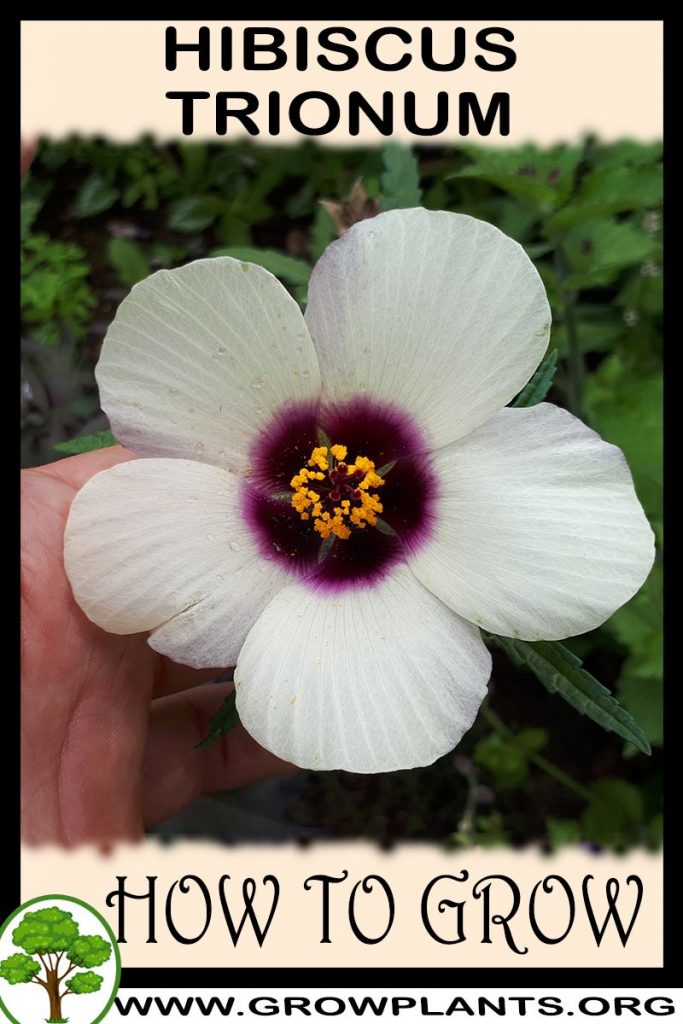
Plant Profile & Key Characteristics
Also known as: Flower of an hour, Bladder hibiscus, Venice mallow
Overview: Hibiscus trionum (flower of an hour) is an annual of 30-50 cm grown as an ornamental for its leaves and short-lived cream flowers with a dark maroon centre. It is adaptable across many climates in zone 5 and warmer.
Quick Specifications
| Specification | Attribute |
|---|---|
| Plant Type / Life Cycle | Annual |
| Mature Size | 30-50 cm tall (12-20 inches) |
| Growth Rate | Fast to moderate |
| Hardiness | USDA zone 5 and warmer |
Growth Form & Structure
- Height and Spread: Reaches 30-50 cm (12-20 inches); grows in containers of at least 10-15 L (2-3 gallons); not suited as an indoor houseplant.
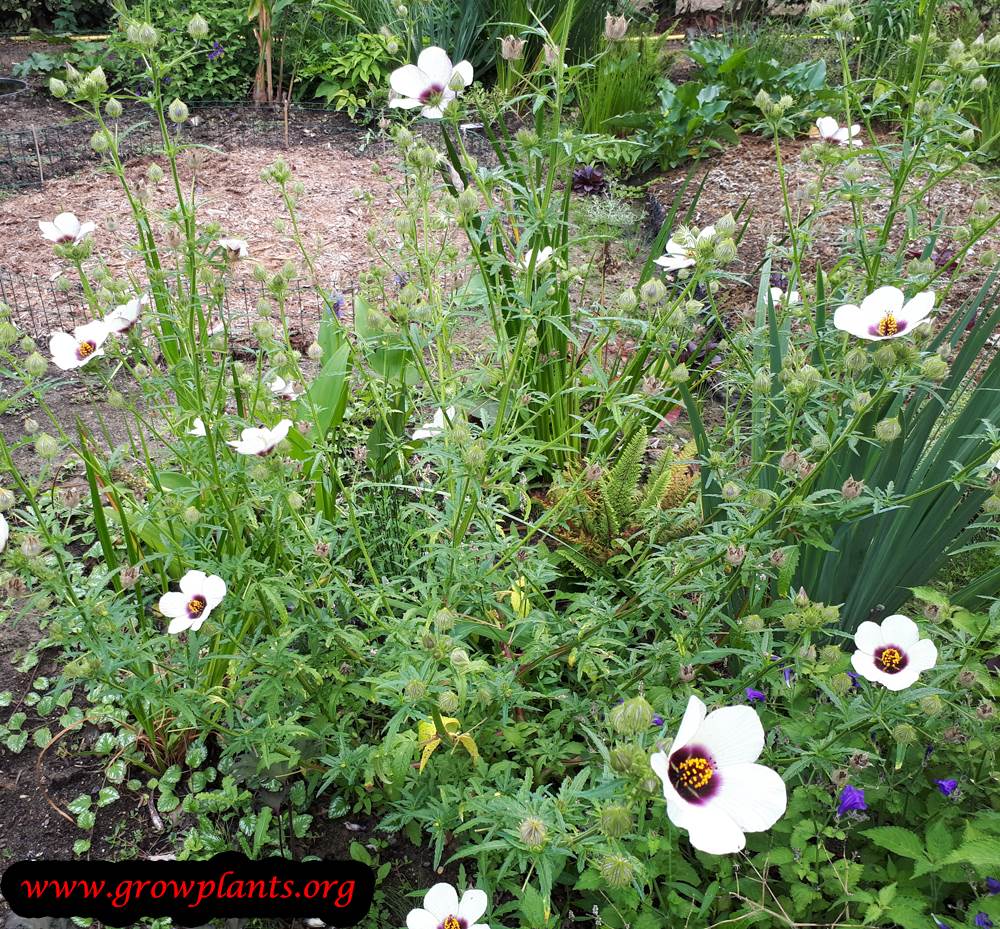
- Growth Habit and Form: Low, bushy annual with spreading stems.
- Lifespan and Maturity: Fast-growing annual completing its cycle in one season; self-seeds readily.
Anatomy & Physical Features
- Leaves and Foliage: Green, rhomboid, deeply lobed leaves.
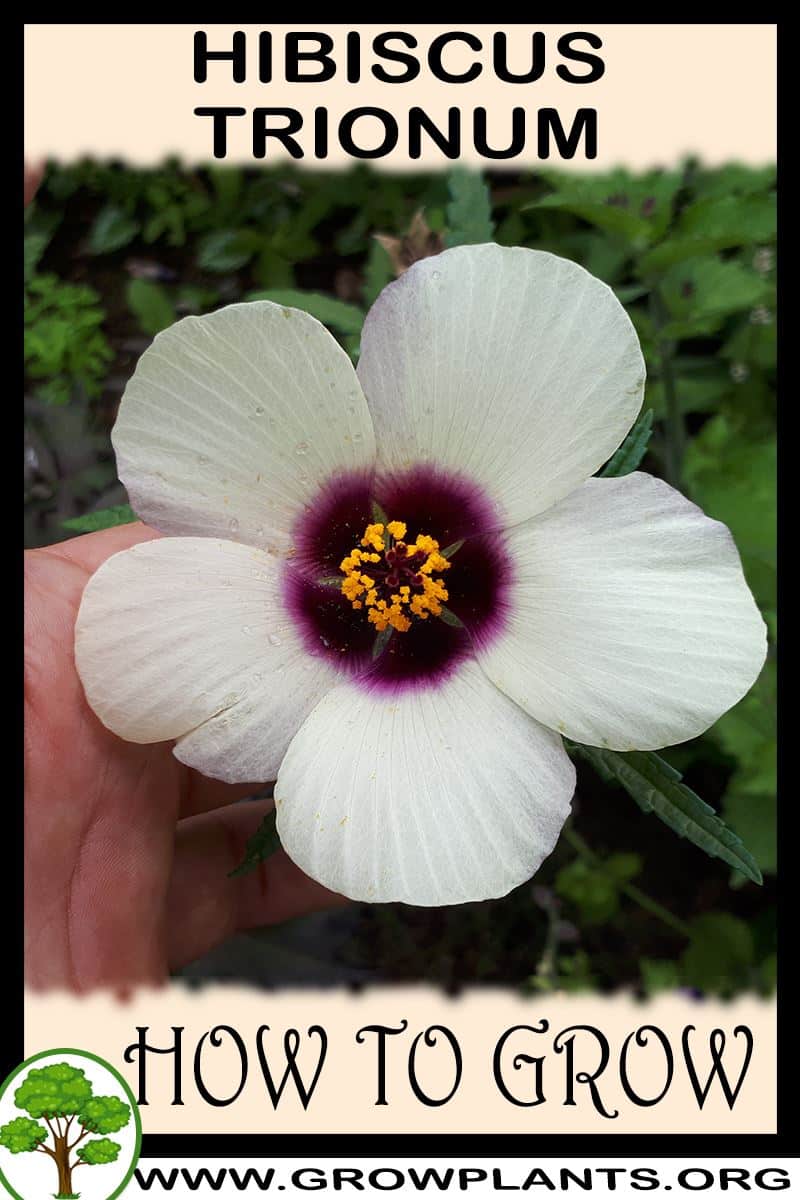
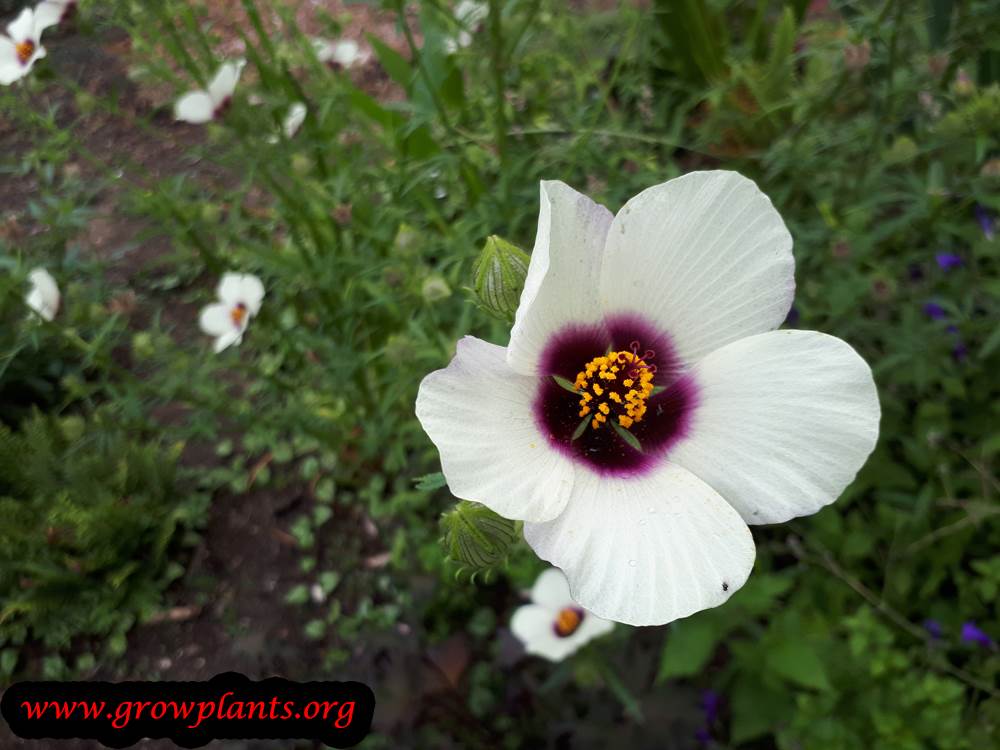
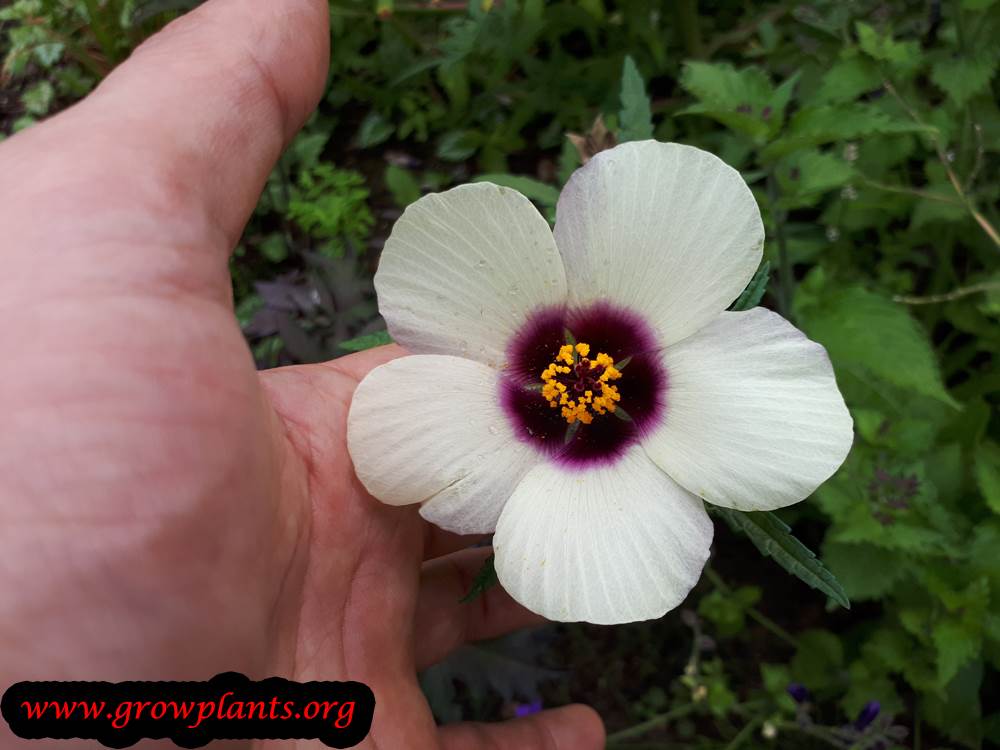
- Flower Characteristics: Short-lived white-to-yellow trumpet flowers with a red-maroon centre; self-pollinating (full detail in the Bloom accordion).
Primary Uses & Landscape Value
- Functional and Ornamental Roles: Ornamental annual for beds and containers; can become weedy.
Care Guide: Planting, Soil & Watering
Overview: Flower-of-an-hour is a fast-growing annual hibiscus for full sun and well-drained soil enriched with organic matter. It grows quickly with moderate to generous moisture, especially in hot, dry climates.
Quick Care Requirements
| Requirement | Ideal Condition |
|---|---|
| Planting Season | Spring (warm season) |
| Growth Rate | Moderate to fast |
| Soil Type | Well-drained soil with organic matter and mulch |
| Water Need | Moderate to high – more in desert heat and hot summers |
Planting & Establishment
- Best Planting Season: Plant in spring in zones 5–8; spring to summer (best in spring) in zones 9–10a; and from late winter through summer in zone 10b.
- How to Plant:
- Hole Preparation: Dig the hole about 50% wider than the root ball so roots can spread into loosened soil.
- Soil Amendments: Work plenty of organic matter into the backfill (compost, well-rotted leaves and humus), then mulch the surface to hold moisture; hold back on fertiliser until the plant has established.
- Planting Depth: Set the plant so the top of the root ball sits level with the surrounding soil, firm it in gently and stake if unstable, without burying the stem.
- Growth Speed & Expectations: Moderate to fast – a quick annual that flowers within the season.
Soil, Watering & Drainage Care
- Soil Mix & Drainage Needs: Free-draining soil improved with organic matter and mulch to hold moisture; keep containers well-drained and never let water stand beneath the pot.
- Watering Schedule & Technique:
- Young / Newly Planted: Water twice on planting day, then daily for the first two weeks until established.
- Established: Water regularly to keep the soil moist, giving more in desert conditions and hot summer weather.
- Seasonal Adjustments: More water through summer heat; being an annual, it finishes at the end of the season.
Climate, Light & Hardiness
Hibiscus trionum (flower-of-an-hour) is an easy, adaptable annual for subtropical, mediterranean, temperate, desert, and tropical climates, blooming best in full sun though it tolerates half shade. Its wide USDA zone 5+ rating reflects how readily it grows and flowers as an annual across cool to warm climates within a single season.
Quick Climate Specifications
| Climate Zones | Subtropical, mediterranean, temperate, desert, tropical |
|---|---|
| USDA Hardiness Zones | 5+ (grown as a warm-season annual) |
| Optimal Temp Range | Approximately 15–26°C (59–80°F), per its seed germination requirement |
| Cold Damage Begins | Approximately 5°C (41°F) |
| Approx. Survival Minimum | Killed by hard frost, near 0°C (32°F) |
| Frost Tolerance | Low |
| Light Conditions | Full Sun / Half Shade (blooms better in full sun) |
Sunlight & Light Exposure
Optimal Light Setup
Full sun produces the best flowering; half shade is tolerated but with fewer blooms.
Direct Sun Requirement
Several hours of direct sun daily is recommended, and full sun is specifically called out as improving bloom.
Best Exposure / Orientation
Open beds or borders with good light suit its trumpet-shaped flowers best.
Temperature Extremes & Hardiness
USDA Hardiness & Regional Limits
Sown from late winter through summer depending on climate (as early as late winter indoors in USDA zone 10b, spring in zone 5–10a), it is grown as a warm-season annual that completes its cycle before winter regardless of zone.
Cold Damage & Winter Protection
Sowing timing is built around avoiding frost – in cold climates seed can be started indoors in winter, with cuttings taken and moved outdoors only after the last frost.
Frost Sensitivity
Frost-sensitive; a hard freeze ends the plant.
Extreme Heat Tolerance
Good, especially with the average-to-large water the source recommends in desert and hot summer climates.
Wind, Humidity & Microclimate
Rainfall & Seasonal Moisture
Prefers consistently moist soil through the growing season (mulch and organic matter are recommended to help retain moisture), with heavier watering in desert and hot-summer climates.
Microclimate Recommendations
A warm, sunny, sheltered bed with moisture-retentive but well-drained soil suits it across its wide climate range.
Growing in Pots, Balconies & Indoors
Flower-of-an-hour (Hibiscus trionum) is a compact, sun-loving annual of 30-50 cm (12-20 in). The grower notes it is not an indoor houseplant, but it grows well in a container on a sunny balcony or patio.
Quick Details
- Container Size: At least 10-15 L (2-3 gal); bigger is fine
- Indoor Suitability: Not a houseplant; at most a very sunny sill
- Best Spot: Full sun to half shade – it blooms best in full sun
- Soil & Drainage: Light, free-draining mix – potting soil or peat with perlite
- Watering in Pots: Average to generous, more in desert or hot-summer heat; never leave it standing wet for days
Indoors & On the Windowsill
- Houseplant limits: The grower marks it as not for indoors – it needs strong sun to flower and grows weak in a room.
- Windowsill note: Only the sunniest sill could hold a pot, and it is better outdoors.
On a Balcony or Patio
- Light & wind: Give it the sunniest spot for the most flowers. Against warm walls pots dry fast – in desert or hot-summer heat check moisture daily; a mulch helps hold it. A drip irrigation kit with a timer can take over that watering check automatically.
Choosing the Pot, Soil & Long-Term Care
- Pot & drainage: A 10-15 L pot with strong drainage holes; if you use a saucer, never let water stand there for days.
- Potting mix: Light and free-draining – potting soil, or peat with perlite; add humus, organic matter and a mulch to keep it moist.
- Feeding: Potted plants need feeding more often than those in the ground, since watering steadily leaches nutrients out of the container.
Growing this plant in a greenhouse
A greenhouse can give hibiscus trionum frost protection, cold protection, humidity control and extra warmth. In the right climate it may also be kept growing through winter, depending on how much warmth and light are provided.
Greenhouse at a glance
| Greenhouse suitability | Conditional - depends on your climate |
|---|---|
| Main benefits | frost protection, cold protection, humidity control, extra warmth |
| Season extension | earlier spring & later autumn |
| Outdoor protection advisable below | about 5°C |
| Maintain greenhouse minimum | around 5°C for active growth |
| Suitable types | unheated greenhouse, polycarbonate greenhouse, lean-to |
| Heating | Heating is optional - useful mainly for winter growing in cold areas. |
Related greenhouse guides
- Greenhouses: How to Choose the Right Greenhouse
- Best Lean-To Greenhouses
- Polycarbonate Greenhouses: What to Look for Before Buying
Fertilizing & Feeding
A light-to-moderate feeder: an occasional balanced feeding through the sunny bloom season plus organic matter worked into the soil covers its needs, with feeding eased off as cooler weather or frost ends active growth.
Quick Fertilizing Specs
| Feeding Level | Light to moderate feeder |
|---|---|
| Main Nutrient Priority | Balanced feeding with adequate nitrogen for foliage and flowers |
| Best Feeding Period | Spring through the warm, sunny bloom season |
| Organic Options | Compost, humus, and other organic matter worked into the soil |
| Reduce/Stop Feeding | Ease off as the season cools or the plant dies back with frost |
| Micronutrients | Usually met by organic matter and a complete fertilizer; correct only a diagnosed issue |
| Soil pH | Tolerates a wide range; performs best in well-drained soil |
Feeding by Growth Stage
Spring flush of new growth
Support fresh leaf and stem growth as the plant breaks dormancy or young transplants establish at the start of the warm season.
| Nutrient direction | A balanced, nitrogen-forward complete fertilizer worked in alongside compost or humus to fuel leafy growth. |
|---|---|
| Timing | As new growth begins in spring or shortly after transplanting. |
| Frequency | A light feeding as growth resumes, renewed occasionally through the early season. |
| Fertilizer types | A balanced complete fertilizer with adequate nitrogen, Compost, humus, or other organic matter worked into the soil, A topdressing of mulch to conserve moisture |
| Precautions | Keep feeding modest – this plant is not a heavy feeder, and rich, well-drained soil with mulch does much of the work. |
Bloom period
Support steady flowering through the warm season, when full sun brings on the best bloom.
| Nutrient direction | Continue balanced feeding; adequate but not excessive nitrogen keeps flowering steady without pushing soft, leafy growth at the expense of blooms. |
|---|---|
| Timing | Through the spring-to-autumn bloom window, especially in full-sun locations. |
| Frequency | An occasional light feeding is usually enough to sustain bloom; scale back if growth turns soft or floppy. |
| Fertilizer types | A balanced complete fertilizer, Organic matter or compost as a light topdressing |
| Precautions | Avoid heavy or high-nitrogen feeding, which can favor foliage over flowers and encourage this naturally vigorous, self-seeding plant to spread further. |
Cool-season rest or frost die-back
Let the plant rest through cool weather or frost die-back without pushing new growth that cold weather would only damage.
| Nutrient direction | None – withhold fertilizer while the plant is dormant, dying back with frost, or between seasons as an annual. |
|---|---|
| Timing | During cool weather where the plant persists as a short-lived perennial, or after frost ends the season where it is grown as an annual. |
| Frequency | No feeding during this rest period. |
| Fertilizer types | No feeding at this stage; do not fertilize until active growth resumes in spring. |
| Precautions | Feeding a plant that is not actively growing wastes nutrients and can encourage weak, frost-tender growth. |
Nutrient Deficiency Signs & Corrections
Older leaves turn pale green to yellow overall and new growth is sparse.
| Possible causes | low soil nitrogen, nitrogen leaching after heavy watering, competition from surrounding fast-growing plants |
|---|---|
| Appears first on | older, lower leaves |
| What to check | recent feeding history, soil organic matter level, overall vigor and leaf size |
| Possible correction | Apply a balanced, nitrogen-containing fertilizer and refresh organic matter in the soil. |
New leaves turn yellow while the veins stay green.
| Possible causes | high soil pH tying up available iron, poorly drained or waterlogged soil, root stress limiting nutrient uptake |
|---|---|
| Appears first on | newest growth at the shoot tips |
| What to check | soil pH and drainage, recent watering pattern, root health |
| Possible correction | Improve drainage where possible and apply a chelated iron product per its label. |
Leaf margins turn yellow to brown and flowering becomes sparse or weak-stemmed.
| Possible causes | low soil potassium, heavy nitrogen feeding without balance, drought stress limiting nutrient uptake |
|---|---|
| Appears first on | older leaf margins |
| What to check | recent fertilizer balance, watering consistency, flower count and stem strength |
| Possible correction | Switch to a balanced, potassium-inclusive fertilizer and maintain even watering. |
Leaf edges brown or scorch, especially on container-grown plants, despite regular watering.
| Possible causes | fertilizer salt buildup in a container or bed with poor drainage, under-watering that concentrates salts, excessive or too-frequent feeding |
|---|---|
| Appears first on | leaf tips and margins |
| What to check | container or bed drainage, recent feeding amounts, visible salt crust on soil surface |
| Possible correction | Ease back on feeding, flush the soil or container thoroughly with water, then resume with lighter applications. |
Pruning, Training & Seasonal Maintenance
Flower-of-an-hour is a soft, fast-growing annual that tolerates pinching and deadheading throughout its whole growing season, but strictly speaking needs neither – source guidance describes cutting as “just for design.” What does matter practically is that each individual flower opens and closes within about an hour, is self-pollinating, and the species is flagged as invasive: left alone, spent flowers quickly and reliably set seed capsules, so prompt deadheading is the one cut that genuinely changes the plant’s behaviour, by curbing unwanted self-seeding rather than by affecting bloom quantity.
Quick Pruning & Maintenance Specs
| Pruning Tolerance | Moderate – tolerates pinching/deadheading, cutting is optional/cosmetic |
| Primary Pruning Window | Continuously through the growing season (spring–autumn) |
| Typical Frequency | Deadhead every few days while in flower; occasional early pinch |
| Main Objective | Tidy habit and, more importantly, controlling self-seeding given its invasive tendency |
| Young Plant Priority | Optional tip pinch for a bushier habit |
| Mature Plant Priority | Deadhead spent flowers before seed capsules mature |
| Best Tool Type | Precision snips (soft annual stems) |
| Avoid Heavy Pruning During | No strong restriction – this species tolerates cutting throughout its growing season |
Pruning by Plant Age & Size
Newly Established
Leave seedlings/transplants unpruned until established; remove only damaged growth.
Young / Formative
No formal training applies to this small annual; an optional pinch of the growing tip once several true leaves are present can encourage a bushier, more floriferous habit, purely for appearance.
Mature / Established
The main task once flowering starts is deadheading – because each flower is short-lived and the plant self-pollinates readily, spent blooms move quickly toward seed capsule formation if left on the plant.
Seasonal Pruning Schedule
| Spring–autumn (continuous bloom) | Objective: prolong tidiness and control self-seeding. Remove: individual spent flowers, ideally before the small seed capsule behind each bloom swells. Do not remove: newly opened flowers or unopened buds. Response: a tidier plant and meaningfully fewer volunteer seedlings the following year. Bloom impact: minimal on the current display, since each flower has already finished for the day regardless of deadheading. |
| End of season | Objective: cleanup as the annual finishes its cycle. Remove: exhausted, frost- or heat-killed top growth. Do not remove: any capsules deliberately left to collect seed. Response: n/a – plant is finishing its life cycle. Bloom impact: none, flowering has ended. |
Special Growth to Remove
- Spent flowers – the single most useful cut for this species; remove before the seed capsule behind each bloom matures, given how readily it self-pollinates and self-seeds.
- Any pest-damaged foliage – this species is reported to attract nematodes, galls, aphids, and mealybugs; remove visibly affected leaves as part of routine tidying.
Container & Small-Space Pruning
Grows well in containers of at least 10–15 L; the same light pinching/deadheading routine applies, and deadheading is arguably even more worthwhile in a container setting since unwanted seedlings from a self-seeding pot plant can spread into surrounding beds.
Tools
- Precision snips for pinching tips and deadheading spent flowers.
Tool Hygiene & Disease Risk
Routine for general deadheading; increase care (wipe blades between plants) only when handling foliage visibly affected by aphids or mealybugs, since those two pests can be moved on tools or hands – the nematode and gall issues reported for this species are soil- or insect-vectored and not spread by pruning cuts.
Cut Placement & Technique
Deadhead by pinching or snipping the spent flower and its swelling capsule off just above the nearest healthy leaf node, rather than leaving a bare stub.
Heavy Pruning & Rejuvenation
Not applicable – as a fast, single-season annual, Hibiscus trionum is not rejuvenated by hard cutback; once its cycle ends the plant is removed rather than cut back for regrowth.
Post-Pruning Care
Water after pinching in hot weather; watch regrowth for aphids and mealybugs, which are reported pests for this species; no extra feeding is needed for routine deadheading.
Common Pruning Mistakes
- Not deadheading promptly, which – combined with this species’ self-pollination and invasive tendency – leads to more volunteer seedlings than intended.
- Assuming the short one-hour flower life means the plant blooms poorly, and cutting back healthy buds unnecessarily; the plant actually flowers continuously through the season.
When Not to Prune
Hold off on deadheading if you deliberately want to collect seed or allow naturalizing; otherwise there is little reason to withhold cutting from this tolerant annual.
Recommended Tools (by task)
- Pinching young growth / deadheading spent flowers – precision_snips: the only tool this soft-stemmed annual needs.
Propagation Guide
Hibiscus trionum is most easily and reliably grown from seed, which comes true-to-type since it is a species rather than a hybrid; stem cuttings are a quick alternative for multiplying an already-growing plant but are not required. Propagation is easy overall, with seedlings appearing within a couple of weeks under warm conditions.
Quick Propagation Specs
| Best Propagation Method | Seed |
| Alternative Methods | Stem cuttings |
| Propagation Difficulty | Easy |
| Seed True-to-Type | Yes (species, not a hybrid) |
| Vegetative True-to-Type | Yes |
| Best Propagation Season | End of winter through summer in hardiness zone 10b; spring in zones 5–8; spring to summer (best in spring) in zones 9–10a |
| Seed Germination Time | 10–20 days |
| Cutting Rooting Time | Typically a few weeks under warm, humid conditions |
| Germination Temperature | 15–26°C (59–80°F) |
| Seed Sowing Depth | 0.5–1cm (0.25–0.5 inch), covered lightly |
Growing from Seed
Seed Handling & Viability
Store saved seed in a dry, dark location until sowing.
Dormancy & Pre-Sowing Treatment
No pre-treatment is noted for this plant, and it can simply be sown directly. As with other mallow-family (Malvaceae) seed, a hard seed coat can sometimes slow germination, so soaking seed in warm water for several hours to a day before sowing may help it sprout faster and more evenly.
Sowing Season
End of winter through summer in hardiness zone 10b; spring in zones 5–8; spring to summer (best in spring) in zones 9–10a — sow when temperatures sit in the 15–26°C (59–80°F) range. In cold climates, seed can be started indoors in winter and the young plants moved outside after the last frost.
Sowing Depth & Orientation
Sow 0.5–1cm (0.25–0.5 inch) deep, covering lightly.
Germination Conditions
Keep soil moist with an average to generous amount of water, in full sun or half shade, with humidity and temperatures of 15–26°C (59–80°F).
Germination Time
10–20 days.
Seedling Care
Space seedlings around 3x5cm, and hold off transplanting until each seedling has at least five true leaves; once it reaches that stage, light fertilizing and mulching can begin.
Stem Cuttings
Cutting Type
Soft, non-flowering tip cuttings from young growth.
Best Timing
Late winter into spring, after the last frost, is the timing indicated for this plant — a quick way to start a new plant, though not necessary since seed is the easier route.
Cutting Preparation
Take a short tip cutting with a few nodes and remove the lower leaves before inserting it into the rooting medium.
Rooting Setup
Use a moist, well-drained mix and keep humidity high, similar to the warm conditions (roughly 15–26°C / 59–80°F) that suit seed germination.
Rooting Hormone
Not required — seed is the easier route for this plant — but a rooting hormone can be used to help speed and even out rooting.
Rooting Time
Typically a few weeks under warm, humid conditions.
Bloom & Flower Guide
Quick Details
- Bloom Season: Spring through autumn
- Time to First Bloom: In its first summer, from a spring sowing (grown as an annual)
- Flower Appearance: Cream to pale-yellow trumpet with a deep red-maroon center
- Edibility: Grown as an ornamental — not eaten
Detailed Blooming Overview
Hibiscus trionum earns its common name ‘flower of an hour’ honestly — each bloom opens for only a few hours before closing, yet the plant keeps producing fresh flowers over a long season from spring into autumn. The trumpet-shaped blooms are pale, with a striking dark eye at the throat.
Flower Characteristics
- Trumpet- or cup-shaped flowers, white to soft yellow with a red-bordeaux center.
- Typical mallow form, with a prominent central column of stamens.
- Short-lived individual blooms, freely replaced over many weeks.
Bloom Care & Thinning
- Managing the bloom: Grow in full sun for the most flowers; deadheading keeps it tidy and prolongs the display.
- Self-seeding: It sets seed readily and can naturalize — remove spent flowers if you want to limit self-sowing.
- Pollination: Visited by bees and also capable of self-pollination.
Bloom Health & Protection
- Aphids on buds: Soft new buds can attract aphid clusters — a rinse of water or an insecticidal soap / neem oil spray usually keeps them in check.
- Bud drop: Erratic watering can cause buds to drop before opening; steady moisture helps them hold.
Pests, Diseases & Troubleshooting
Overview: Hibiscus trionum (flower-of-an-hour) is a small, tough annual with short-lived pale flowers. Across the genus, hibiscus are magnets for sap-sucking insects — aphids, whitefly, mealybugs (including the serious pink hibiscus mealybug), spider mites and thrips — and they suffer bud drop, leaf spot and root rot when stressed. Manage them with vigilant scouting, strong plant health, and organic controls first (water jets, soaps, oils, beneficials), keeping stronger products for outbreaks.
Quick Troubleshooting Overview
| Issue / Pest | Main Symptom | Primary Solution |
|---|---|---|
| Aphids | Colonies on buds & shoot tips; honeydew, sooty mould | Hose off; insecticidal soap; beneficials |
| Whitefly | Clouds of tiny white flies under leaves; sticky honeydew | Yellow sticky traps; oil/soap; Encarsia |
| Mealybugs | White cottony masses; distorted growth | Alcohol/oil; control ants; ladybird predators |
| Hibiscus gall midge | Yellow buds drop before opening (maggots inside) | Pick & destroy dropped/yellow buds |
| Spider mites | Stippling, bronzing and webbing in heat | Hose; raise humidity; horticultural oil |
| Japanese beetle | Skeletonised leaves and chewed flowers | Hand-pick into soapy water; protect blooms |
| Root rot / bud drop | Wilting in wet soil; buds yellow and drop | Improve drainage; reduce stress; steady watering |
Common Pests & Management
- Aphids (Aphis gossypii and others):
- Symptoms: Dense colonies of soft green, yellow or black aphids on shoot tips, buds and leaf undersides, coating growth in honeydew and sooty mould and distorting new leaves and flowers.
- Prevention & Control: Blast off with water, encourage ladybirds, lacewings and hoverflies, and use insecticidal soap or neem oil in the evening. Control ants, which farm and protect aphids.
- Whitefly (Bemisia tabaci / giant whitefly Aleurodicus dugesii):
- Symptoms: Clouds of tiny white moth-like flies rising when the plant is disturbed, with sticky honeydew and sooty mould on leaves; a chronic hibiscus pest under warm conditions.
- Prevention & Control: Hang yellow sticky traps, spray horticultural oil or insecticidal soap to the leaf undersides, and introduce the parasitic wasp Encarsia formosa under glass; keep plants unstressed.
- Mealybugs, incl. pink hibiscus mealybug (Maconellicoccus hirsutus):
- Symptoms: White cottony masses on shoot tips, buds and leaf axils; the pink hibiscus mealybug injects a toxic saliva that causes severely bunched, distorted “bonsai-like” growth and is a serious quarantine pest.
- Prevention & Control: Dab colonies with alcohol, wash off, use horticultural oil, and control tending ants. For pink hibiscus mealybug, biological control (the ladybird Cryptolaemus and parasitoid wasps) is the mainstay; report suspected outbreaks in regulated areas.
- Flea beetles & leaf-chewers (Chrysomelidae):
- Symptoms: Tiny beetles pit the leaves with small shot-holes; larger chewers make ragged holes.
- Prevention & Control: Tolerate light damage on this vigorous annual; use row cover on seedlings and remove weeds that harbour beetles.
- Spider mites (Tetranychus urticae):
- Symptoms: Fine pale stippling, bronzing and fine webbing on leaf undersides, worst in hot, dry, dusty conditions; leaves yellow and drop.
- Prevention & Control: Raise humidity and hose down foliage, introduce predatory mites, and apply horticultural oil or insecticidal soap; avoid drought stress.
- Thrips (Frankliniella spp.):
- Symptoms: Silvery flecking on leaves and, importantly, streaked, distorted flowers and buds that may drop before opening.
- Prevention & Control: Use blue sticky traps, remove weeds and spent blooms, and apply insecticidal soap or spinosad; encourage predatory mites.
Diseases & Fungal Issues
- Leaf spot & bacterial leaf spot (Cercospora, Pseudomonas spp.):
- Symptoms: Brown, tan or angular water-soaked spots on leaves, sometimes with yellow haloes, leading to yellowing and leaf drop in warm, wet weather.
- Treatment & Management: Remove affected leaves, improve airflow, avoid overhead watering, and use a copper fungicide for persistent bacterial or fungal spotting.
- Root & collar rot (Phytophthora / Pythium):
- Symptoms: Wilting despite moist soil, yellowing lower leaves, and dark, decayed roots and stem base in wet, poorly drained ground.
- Treatment & Management: Improve drainage, avoid overwatering, plant at the correct depth, and remove badly rotted plants; prevention through good drainage is far more effective than cure.
- Botrytis / grey mould (Botrytis cinerea):
- Symptoms: Fuzzy grey mould on flowers and soft growth in cool, damp, crowded conditions.
- Treatment & Management: Remove spent blooms and dead tissue, improve airflow, and avoid wetting the flowers.
Growing Difficulties & Abiotic Problems
- Bud drop:
- Cause & Symptoms: Flower buds yellow and drop before opening due to stress — sudden temperature swings, dryness, overwatering, low light or a check to growth (as well as gall midge or thrips). Correction Strategy: Keep watering, light and temperature steady, avoid moving plants in bud, and rule out midge/thrips.
- Chlorosis (iron / manganese deficiency):
- Cause & Symptoms: Yellowing leaves with green veins, common on hibiscus in alkaline or waterlogged soil where iron uptake is blocked. Correction Strategy: Improve drainage, acidify slightly, and apply chelated iron/manganese; feed with a balanced fertiliser.
- Overwatering & poor drainage:
- Cause & Symptoms: Yellow leaves, wilting and root rot from soggy soil. Correction Strategy: Let the top of the soil dry between waterings and ensure containers drain freely.
- Weediness / self-seeding:
- Cause & Symptoms: Sets abundant seed and can self-sow freely, becoming weedy. Correction Strategy: Deadhead before seed set if you want to limit spread.
What Helps — Products & Tools
For hibiscus keep insecticidal soap and neem/horticultural oil for aphids, whitefly, mealybugs and mites; yellow sticky traps for whitefly; spinosad for thrips; copper fungicide for leaf spot; and chelated iron for chlorosis. Beneficials — ladybirds, lacewings, Encarsia and predatory mites — do much of the work if you avoid harsh sprays. Steady watering and good drainage prevent most of the abiotic troubles.