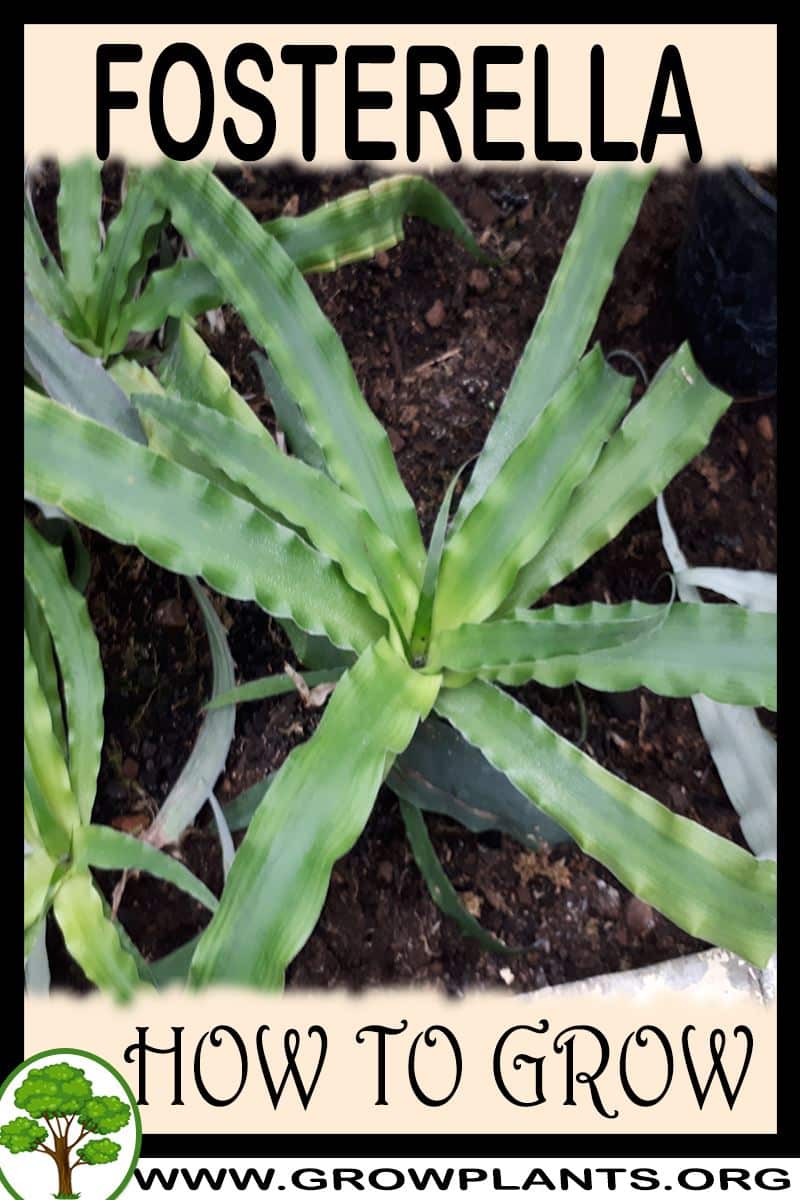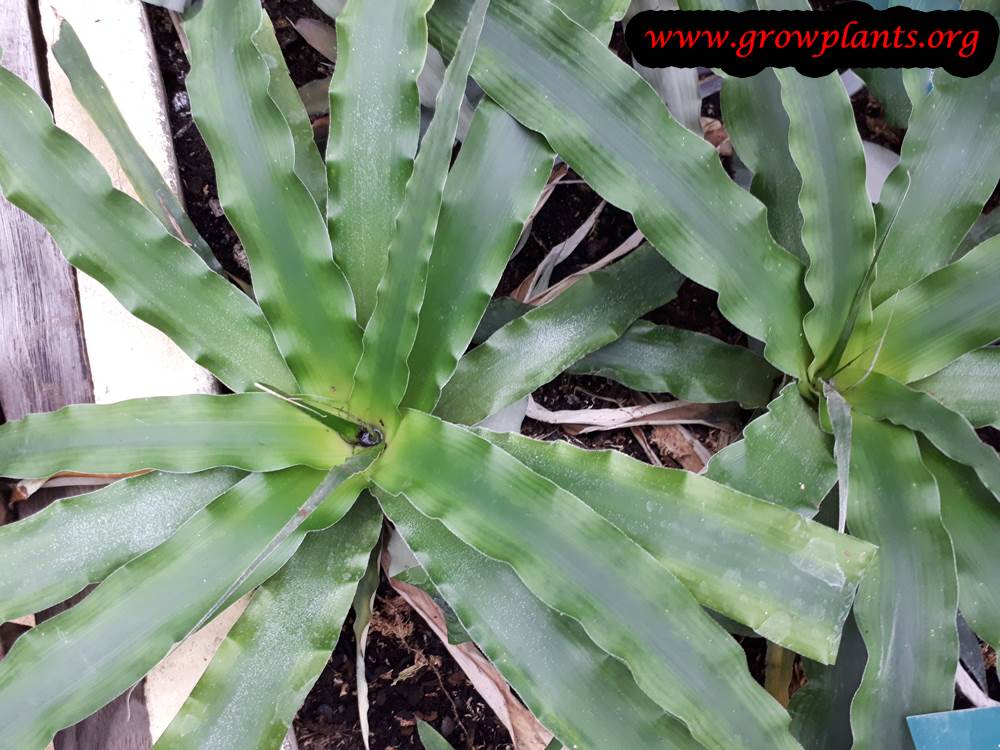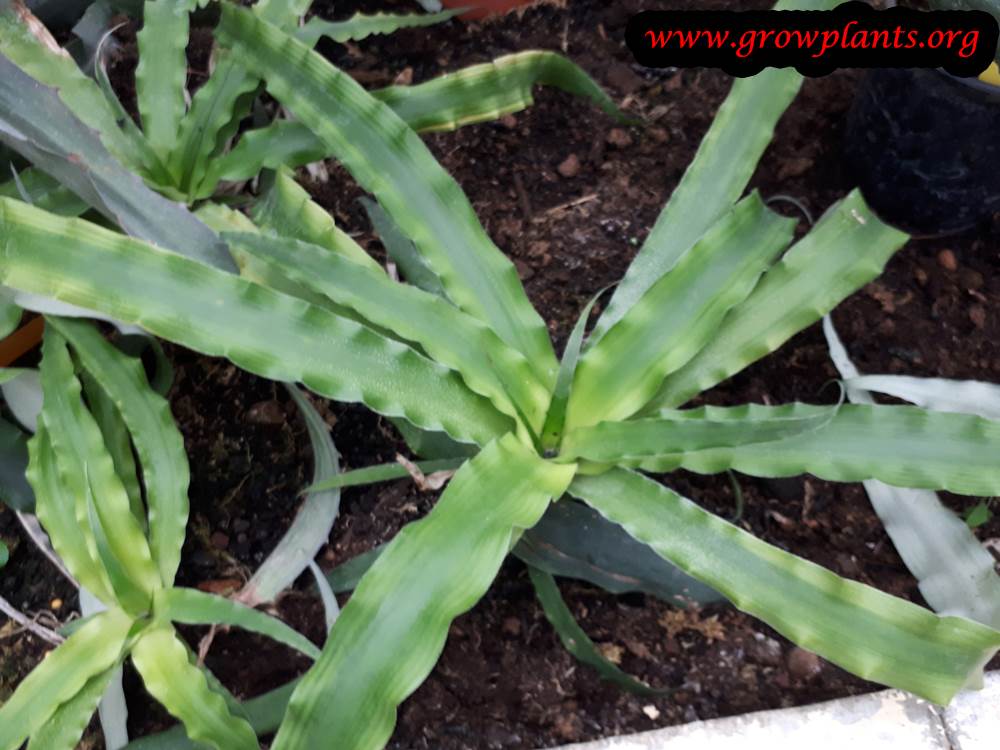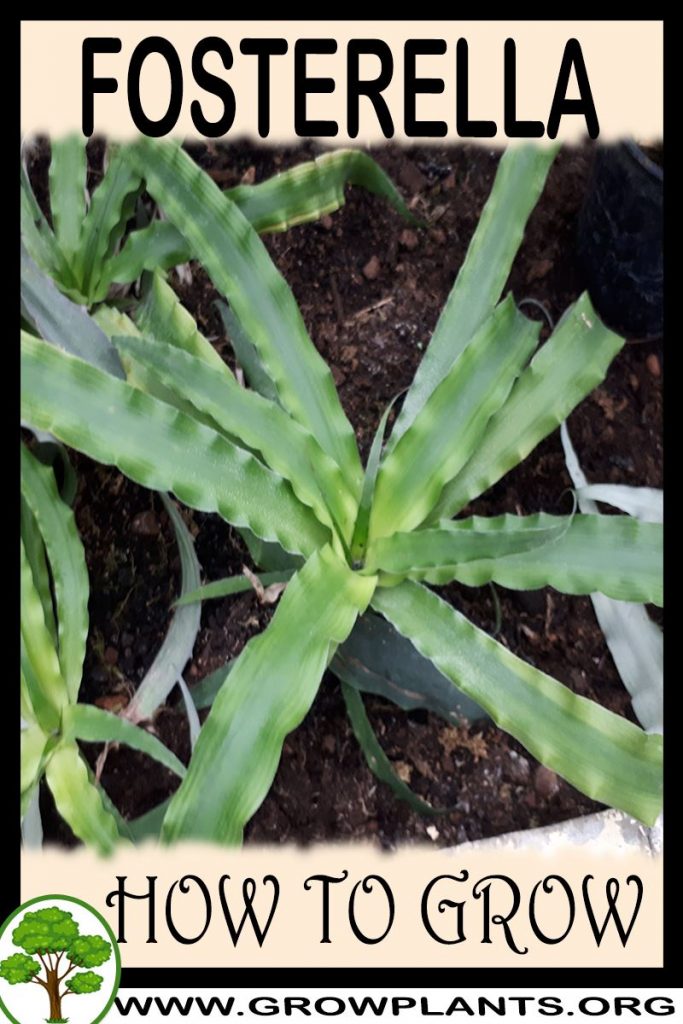
Plant Profile & Key Characteristics
Overview: Fosterella is a small evergreen bromeliad forming a low rosette 20–30 cm (8–12 in) across. Naturally an epiphyte of rocks and tree bark, it is grown as an ornamental houseplant or mounted specimen.
Quick Specifications
| Specification | Attribute |
|---|---|
| Plant Type / Life Cycle | Perennial |
| Foliage Type | Evergreen |
| Mature Size | 20–30 cm (8–12 in) |
| Growth Rate | Slow to moderate |
| Root System | Epiphytic – roots serve mainly to anchor the plant |
| Toxicity | Non-toxic (bromeliad) |
| Hardiness | USDA 10b–12 |
Growth Form & Structure
- Height & Spread: Compact rosette 20–30 cm (8–12 in) across; best grown in a small pot or mounted on cork or bark like other epiphytes.
- Growth Habit & Form: Stemless evergreen rosette of arching leaves that produces offset ‘pup’ plants.
- Lifespan & Maturity: Slow to moderate to reach flowering size.
Anatomy & Physical Features
- Leaves & Foliage: Green leaves, sometimes flushed red or grey, arranged in a spreading rosette with small spines along the margins.
- Flower Characteristics: Small green-and-white bell-shaped flowers borne on slender stems.
Primary Uses & Landscape Value
- Functional & Ornamental Roles: Ornamental houseplant or mounted epiphyte for warm, humid, bright-shade positions.
Care Guide: Planting, Soil & Watering
Overview: Fosterella is a bromeliad that in nature grows as an epiphyte on rocks and trees, so it wants a light, airy, fast-draining medium, warmth above about 15C (59F) and steady humidity. Keep it moist with soft rain or purified water – including a little in the leaf rosette – but never let the roots sit wet.
Quick Care Requirements
| Requirement | Ideal Condition |
|---|---|
| Planting Season | Spring to summer in zone 10b; spring to autumn in zone 11; year-round in zone 12 |
| Growth Rate | Slow to moderate |
| Soil Type | Light, airy and fast-draining; slightly acidic, moist but never soggy |
| Soil pH | Slightly acidic |
| Water Need | Moderate – keep moist and humid with soft or rain water; well-drained |
Planting & Establishment
- Best Planting Season: Plant in spring to summer in zone 10b, spring to autumn in zone 11, or year-round in zone 12; keep it warm and above about 15C (59F).
- How to Plant:
- Hole Preparation: As an epiphyte it is often best mounted on cork or bark, or set in an open pot, rather than buried in garden soil; if using a container, keep the base of the rosette at the surface.
- Soil Amendments: Use a light, fast-draining medium such as sphagnum or a bark-based epiphyte mix rather than heavy soil.
- Planting Depth: Keep the crown of the rosette at or just above the surface so water does not collect and rot it; do not bury the base.
- Growth Speed & Expectations: Slow to moderate growth to about 20-30 cm (8-12 in).
Soil, Watering & Drainage Care
- Soil Mix & Drainage Needs: Because it is naturally an air plant, a very light, well-ventilated, fast-draining medium is essential; many growers keep it in an open pot or mounted on cork or bark kept moist. Use soft rain or purified water and maintain humidity.
- Watering Schedule & Technique:
- Young / Newly Planted: Keep the medium and roots moist and humid as it establishes, watering soft water into the rosette centre.
- Established: Maintain even moisture and humidity with good airflow; never let it stand in water.
- Seasonal Adjustments: Keep warmer and more humid in the growing season; water less in cool weather but do not let it dry out fully.
Climate, Light & Hardiness
Fosterella is a bromeliad suited to subtropical, mediterranean, or tropical climates, or grown as a houseplant elsewhere, doing best in half shade to full (lightly lit) shade without direct sun. It is frost-sensitive and listed hardy outdoors from about USDA zone 10b through 12; the site data notes it is better kept above roughly 15°C (59°F), though it can survive brief dips to about 3°C (37°F) even though that isn't recommended.
Quick Climate Specifications
| Climate Zones | Subtropics, mediterranean, tropical (or houseplant) |
|---|---|
| USDA Hardiness Zones | 10b–12 |
| Optimal Temp Range | Above approximately 15°C (59°F) |
| Approx. Survival Minimum | Approximately 3°C (37°F), briefly, though not recommended |
| Frost Tolerance | Very Low |
| Light Conditions | Half Shade (no direct light) to Full Shade (with light) |
Sunlight & Light Exposure
Optimal Light Setup
Bright but indirect light suits it best; avoid direct sun exposure.
Shade & Heat Management
Direct sun burns both the leaves and flowers, leaving visible scorch marks, so filtered or indirect light is essential year-round.
Temperature Extremes & Hardiness
USDA Hardiness & Regional Limits
Reliable outdoors year-round from about zone 10b through 12; elsewhere it needs container culture that can be moved under cover for winter.
Cold Damage & Winter Protection
Best kept above roughly 15°C (59°F); it can tolerate brief dips to around 3°C (37°F), but the site data is clear this is a survival threshold, not a recommended condition.
Frost Sensitivity
Very frost-sensitive as a warmth-loving epiphytic/terrestrial bromeliad; avoid any exposure to freezing.
Wind, Humidity & Microclimate
Humidity Preferences
Needs consistently high humidity and moist (ideally purified or rain) water, reflecting its native habit of growing on rocks or trees in humid tropical forest with heavy rainfall.
Microclimate Recommendations
A warm, humid, filtered-light microclimate - whether on bark, in a well-ventilated pot, or under greenhouse-style cover - matches its epiphytic origins best.
Growing in Pots, Balconies & Indoors
Fosterella (Fosterella) is a small bromeliad of 20-30 cm (8-12 in). The grower confirms it makes an easy houseplant – as a natural epiphyte it is actually happier grown in a pot or on cork than in the open ground.
Quick Details
- Container Size: A small pot, or mount it on cork/bark – its roots are mainly for anchorage
- Indoor Suitability: A good, easy houseplant
- Best Spot: Bright light but no direct sun, which scorches the leaves and flowers
- Soil & Drainage: Very open, fast-draining bromeliad/epiphyte mix – or bark, no soil at all
- Watering in Pots: Average water poured into the central rosette; keep humid but well ventilated
Indoors & On the Windowsill
- An easy houseplant: The grower marks it as suitable indoors – away from wind, with steady humidity, it is simple to give it what it needs.
- Light & water: Bright, filtered light without direct sun; fill the central cup/rosette with water and keep the roots humid but never sodden.
On a Balcony or Patio
- Light & wind: Give it a shaded, sheltered spot out of direct sun and drying wind; the leaves burn easily and the mount or pot dries fast in a breeze.
Choosing the Pot, Soil & Long-Term Care
- Pot & drainage: Use a small, very free-draining pot and never leave it standing in water.
- Potting mix: An open, airy epiphyte/bromeliad mix, or grow it soil-free on bark.
- Feeding: A weak feed occasionally in the growing season is enough.
Grower’s Container Tip
- Grow it as an epiphyte: Because it is an epiphyte it does especially well mounted on cork or bark, disconnected from soil. If you mount it, keep the roots more humid and moist – cover them with a piece of bark or similar to hold moisture around the roots.
Fertilizing & Feeding
A naturally light feeder adapted to nutrient-poor conditions in the wild – a diluted, low-nitrogen feed during active growth is plenty, with no feeding right after potting or during its cool-season slowdown.
Quick Fertilizing Specs
| Feeding Level | Light – a naturally low-nutrient-demand bromeliad relative. |
|---|---|
| Main Nutrient Priority | Low nitrogen at reduced, diluted strength. |
| Best Feeding Period | The warm active-growth season only, once well established. |
| Organic Options | Not typically fed with heavy organic amendments; a light, diluted mineral feed is preferred. |
| Micronutrients | Iron supports general leaf color where a complete diluted feed is used. |
| Reduce/Stop Feeding | No feeding right after potting, mounting, or dividing, and none again during the cool-season slowdown. |
Feeding by Growth Stage
Settling in after potting, mounting, or division
Give a newly potted, cork-mounted, or divided Fosterella time to root in before any fertilizer is introduced.
| Nutrient direction | None – hold off on fertilizer while the plant establishes. |
|---|---|
| Timing | The period right after potting, mounting on bark or cork, or separating offsets from a parent plant. |
| Frequency | No feeding at this stage; wait for a flush of new growth before starting to feed. |
| Fertilizer types | No feeding at this stage – allow roots to establish in the mix or on the mount first. |
| Precautions | Do not fertilize a freshly potted, mounted, or divided plant; wait for clear new growth as a sign it has rooted in. |
Warm-season active growth
Support gradual rosette growth and eventual bell-shaped flowering during the plant’s active period.
| Nutrient direction | A light, low-nitrogen feed at reduced strength, in keeping with a bromeliad relative naturally adapted to nutrient-poor, rocky or epiphytic sites. |
|---|---|
| Timing | The warm growing season once the plant is established and producing new leaves. |
| Frequency | Feeding needs are minimal; a few light, well-spaced feedings through the growing season are plenty for this slow-to-medium grower. |
| Fertilizer types | A diluted, balanced houseplant or bromeliad fertilizer applied at reduced strength., Applied to the growing mix rather than pooled in the leaf rosette, to avoid rot. |
| Routine trace nutrients | iron |
| Precautions | Favor purified or rain water and dilute any fertilizer well – this genus is not adapted to rich feeding or mineral-heavy water. |
Cool or low-light rest
Let the plant pause through the cooler, lower-light part of the year when growth naturally slows.
| Nutrient direction | None – withhold fertilizer while growth is minimal. |
|---|---|
| Timing | The cooler months, or any period without visible new leaf growth. |
| Frequency | No feeding at this stage; resume light feeding once active growth clearly restarts. |
| Fertilizer types | No feeding at this stage – growth is too slow during this period to make use of it. |
| Precautions | Do not fertilize during this slowdown, since unused nutrients can build up as salts around the roots. |
Nutrient Deficiency Signs & Corrections
Leaf tips turn brown, dry, or crisp while the rest of the leaf remains healthy.
| Possible causes | Mineral or salt buildup from hard tap water or concentrated fertilizer., Low ambient humidity drying out leaf margins., Root stress from a mount or mix that repeatedly dries out completely. |
|---|---|
| Appears first on | Tips of the older, outer leaves. |
| What to check | Water source and hardness., Fertilizer strength relative to label directions., Ambient humidity and watering consistency. |
| Possible correction | Switch to purified or rain water, dilute any fertilizer well below label strength, and keep the root zone from drying out completely between waterings. |
New leaves emerge pale, thin, and stretched rather than compact.
| Possible causes | Insufficient light causing the plant to stretch toward a light source., Excess nitrogen from an overly rich feed pushing soft growth., A nutrient shortfall if feeding has lapsed for a long time. |
|---|---|
| Appears first on | The newest, innermost leaves. |
| What to check | Light levels at the plant’s location., Recent fertilizer strength and nitrogen content., How long since the last light feeding. |
| Possible correction | Increase light gradually, switch to a diluted low-nitrogen feed if a richer product was used, and resume light feeding if it has lapsed. |
The plant produces few or no new offset rosettes during what should be its active season.
| Possible causes | Nutrient shortfall from an extended period without any feeding., Root stress from a mount or pot that dries out too often., Cooler-than-ideal temperatures suppressing growth. |
|---|---|
| Appears first on | Overall clump growth rather than a single leaf. |
| What to check | Feeding history over the current growing season., Watering and humidity consistency at the roots., Ambient temperature the plant is kept at. |
| Possible correction | Resume light, diluted feeding during the warm season, keep the root zone evenly moist without staying wet, and confirm the plant is warm enough. |
Pruning, Training & Seasonal Maintenance
Fosterella needs essentially no pruning beyond removing dead leaves as they appear – a small rosette plant, often grown mounted or potted like an epiphyte, with no woody framework to shape. This is sanitary maintenance rather than seasonal work, so it can be done any time of year rather than on a fixed calendar, and does not affect the plant’s modest bell-shaped flowers.
Quick Pruning & Maintenance Specs
| Pruning Tolerance | Low |
| Primary Pruning Window | Any time – sanitary removal only, not seasonal |
| Typical Frequency | As dead leaves appear |
| Main Objective | Remove dead/damaged leaves and keep the rosette tidy |
| Mature Plant Priority | Sanitary leaf removal; thin offsets if the pot or mount becomes crowded |
| Best Tool Type | Precision snips |
| Avoid Heavy Pruning During | Always – no structural or rejuvenation pruning applies to this plant |
Pruning by Plant Age & Size
Newly Established
No pruning while the young rosette settles in, whether potted or mounted.
Young / Formative
No structural training applies to a small rosette-forming plant.
Mature / Established
Remove dead or browned lower leaves as they appear. If grown as a clump on cork or bark, offsets can be left to fill out the display or divided off once crowding limits airflow or moisture management.
Special Growth to Remove
Dead or browned leaves, cut at the base without disturbing the rosette’s growing center. Offsets can be thinned if the plant becomes overcrowded on its mount or in its pot, or left in place to form a fuller clump – this is a matter of preference, not necessity.
Container & Small-Space Pruning
This is a small plant (20-30cm) often grown as an epiphyte-style specimen on cork or bark, or in a small pot; the main space-related task is thinning offsets if the mount becomes crowded, not pruning the plant’s own growth.
Tools
Precision snips for dead-leaf and offset removal – nothing heavier is needed at this plant’s scale.
Tool Hygiene & Disease Risk
Routine: clean tools are sufficient. The pest noted for this plant (mealybugs) is not tool-transmitted.
Cut Placement & Technique
Cut dead leaves at their base without cutting into living tissue or the rosette’s growing center.
Heavy Pruning & Rejuvenation
Not applicable. This plant has no capacity for, or need of, hard cutback – a tired clump is refreshed through offsets, not by cutting the plant back.
Post-Pruning Care
Minimal aftercare; keep the humidity this species needs (it is grown in a nature mimicking a moist, well-ventilated setting) without letting water sit directly on a fresh cut.
Common Pruning Mistakes
Cutting into healthy green leaf tissue unnecessarily; letting offsets overcrowd the mount or pot until humidity and airflow suffer, without ever thinning them.
When NOT to Prune
Avoid cutting living tissue for cosmetic reasons – there is no benefit to routine shaping on this plant.
Recommended Tools (by task)
- precision_snips – the only cutting tool needed, for dead-leaf and offset removal.
Propagation Guide
Fosterella can be grown from either fresh seed, for which the site gives a full germination protocol, or from rooted offsets separated from the mother rosette, which the site notes are needed to keep a particular cultivar true. Overall difficulty is moderate, since seed needs to be fresh and given fairly specific warmth, humidity and light to germinate well.
Quick Propagation Specs
| Best Propagation Method | Offsets / daughter plants (for a true cultivar); fresh seed otherwise |
| Alternative Methods | In some species, rooted plantlets borne on stolons |
| Propagation Difficulty | Moderate |
| Seed True-to-Type | Generally true for the species; named or selected forms need division to stay true |
| Vegetative True-to-Type | Yes |
| Best Propagation Season | End of spring to early autumn |
| Seed Germination Time | 1–2 months |
| Germination Temperature | 25–30°C (77–86°F) by day, cooler at night |
| Seed Sowing Depth | On the soil surface, uncovered |
Growing from Seed
Seed Handling & Viability
Use fresh seed, ideally no more than a few months old, as viability declines with storage age. Store seed in a dry, dark location until sowing.
Sowing Season
End of spring to early autumn.
Sowing Depth & Orientation
Sow on the surface of moist sphagnum or peat mix rather than burying the seed, spaced roughly 3x2cm (1.5x1in) apart.
Germination Conditions
Light, moist sphagnum soil with high humidity and plenty of light, warm days around 25–30°C (77–86°F) with cooler nights.
Germination Time
About 1–2 months.
Seedling Care
Water sparingly and avoid overwatering. Once established, treat seedlings as for the mature plant and move them to a growing spot kept free of algae buildup.
Runners & Stolons
In some Fosterella species, offsets form on slender stolons at a distance from the main rosette rather than tight against it; once such a plantlet has developed its own roots it can be cut free from the stolon and potted separately.
Division, Offsets, Pups & Suckers
Separating rosette offsets is the standard way to keep a specific cultivar true. Wait until an offset has its own root system and has reached roughly a third to half the size of the parent before separating and potting it individually.
Bloom & Flower Guide
Quick Details
- Bloom Season: Summer to autumn
- Flower Appearance: Small, bell-shaped flowers in green and white, carried on slender upright stems
- Edibility: Ornamental only – grown for its rosette and foliage, not eaten
Detailed Blooming Overview
Fosterella is a terrestrial bromeliad that sends up a thin, branching flower stalk in the warmer months. The blooms themselves are modest – small green-and-white bells spaced along the stems – and their charm is in the airy spray they form above the rosette.
Flower Characteristics
- Green-and-white, bell-shaped flowers held on upright stems.
- Carried in a loose, branched spray rather than a single dense head.
Bloom Care & Thinning
- Light for good bloom: Bright, indirect light encourages flowering; protect from harsh midday sun.
- After flowering: As with many bromeliads, a rosette blooms once and then slowly gives way to offsets (pups) at its base – keep these to carry the planting on.
- Tidying: Trim the spent flower stalk once it browns.
Pests, Diseases & Troubleshooting
Overview: Fosterella is a small genus of terrestrial bromeliads from Andean and Central American woodlands, grown as an unusual foliage plant; like other bromeliads it is largely pest-resistant, its chief risks being scale and mealybug on the foliage and – above all – crown and root rot if the roots or centre stay waterlogged. Treat it as a well-drained, humid, warm bromeliad and it stays healthy. Because the genus is obscure in cultivation, the pest set below is generalised from bromeliad care and should be verified against direct experience.
Quick Troubleshooting Overview
| Issue / Pest | Main Symptom | Primary Solution |
|---|---|---|
| Scale insects | Brown or white flecks/bumps on leaves, sooty mould | Wipe/scrape off, horticultural oil |
| Mealybugs | White cottony fluff in leaf axils and bases | Alcohol swab, insecticidal soap/oil |
| Spider mites | Fine stippling and dull leaves in dry air | Raise humidity, rinse, miticidal soap |
| Crown / root rot | Soft, browning centre or base; collapse in wet | Improve drainage/airflow, drier centre |
| Leaf-tip browning | Dry brown tips from low humidity or salts | Raise humidity, flush salts, soft water |
Common Pests & Management
- Bromeliad scale (Diaspis boisduvalii / Coccus spp.):
- Symptoms: Small brown, grey or white waxy bumps and flecks along the leaves and in the axils, sucking sap and often accompanied by sticky honeydew and sooty mould; heavy infestations yellow and weaken the foliage.
- Prevention & Control: Wipe or gently scrape off with a soft cloth or cotton bud, isolate the plant, and follow with a light horticultural or neem oil to smother crawlers, repeating every couple of weeks. Inspect the leaf bases where scale hides.
- Mealybugs (Pseudococcus / Planococcus spp.):
- Symptoms: White cottony tufts tucked into leaf axils and the plant’s centre, with honeydew, sooty mould and stunted growth.
- Prevention & Control: Dab colonies with an alcohol-moistened cotton bud, then treat with insecticidal soap or neem/horticultural oil, reaching into the tight leaf bases. Check roots for root mealybug at repotting and quarantine new plants.
- Spider mites (Tetranychus urticae):
- Symptoms: Fine pale stippling and a dull, dusty look on the leaves when the plant is kept too warm, dry and airless, with faint webbing in bad cases.
- Prevention & Control: Raise humidity and improve airflow, rinse the foliage, and use insecticidal soap or a light miticidal oil if mites persist.
- Aphids (Aphis spp.):
- Symptoms: Small soft insects clustered on the tender flower spike and new growth, with honeydew and distortion.
- Prevention & Control: Rinse off, wipe with insecticidal soap, and protect the emerging inflorescence. Rarely a major issue on the foliage.
Diseases & Fungal Issues
- Crown and root rot (Phytophthora / Fusarium / Pythium spp.):
- Symptoms: Soft, browning or blackening tissue at the centre and base with wilting and collapse, and dark mushy roots – almost always from a waterlogged mix, water standing in the crown, or cold-wet conditions.
- Treatment & Management: Prevention is the cure: use an open, free-draining bromeliad or orchid-type mix, keep the plant warm, water so the centre and roots are moist but never sodden, and ensure good airflow. Remove rotting plants and their mix; rescue any firm offsets.
- Fungal leaf spot (Helminthosporium / Colletotrichum spp.):
- Symptoms: Brown or water-soaked spots that enlarge on leaves kept wet in stagnant, humid air, sometimes with yellow halos.
- Treatment & Management: Remove affected leaves, avoid wetting the foliage in still air, and improve ventilation. A copper fungicide can check spread on a valued plant, but airflow and careful watering matter more.
Growing Difficulties & Abiotic Problems
- Waterlogging / overwatering:
- Cause & Symptoms: As a terrestrial bromeliad it needs moisture but rots readily if the mix stays soggy or water sits cold in the centre.
- Correction Strategy: Grow in an open, fast-draining mix, water thoroughly then let the surface dry slightly, keep it warm, and never leave it standing in water.
- Leaf-tip browning:
- Cause & Symptoms: Low humidity, salt build-up from hard water or fertiliser, or dry drafts brown and crisp the leaf tips.
- Correction Strategy: Raise humidity, use rain or soft water, flush the mix occasionally to remove salts, and keep the plant out of hot dry drafts.
- Loss of colour / weak growth:
- Cause & Symptoms: Too little light dulls and stretches the foliage, while harsh direct sun scorches it.
- Correction Strategy: Provide bright, filtered light appropriate to a woodland bromeliad, adjusting gradually to avoid scorch.
What Helps – Products & Tools
Care is chiefly cultural – an open, free-draining mix, warmth, humidity, airflow and careful watering that never leaves the centre sodden. For pests, alcohol spot-treatment, insecticidal soap and light neem/horticultural oil handle scale, mealybug and mites; a copper fungicide is a reserve for leaf spot, and rot is prevented by drainage rather than any spray.