

Plant Profile & Key Characteristics
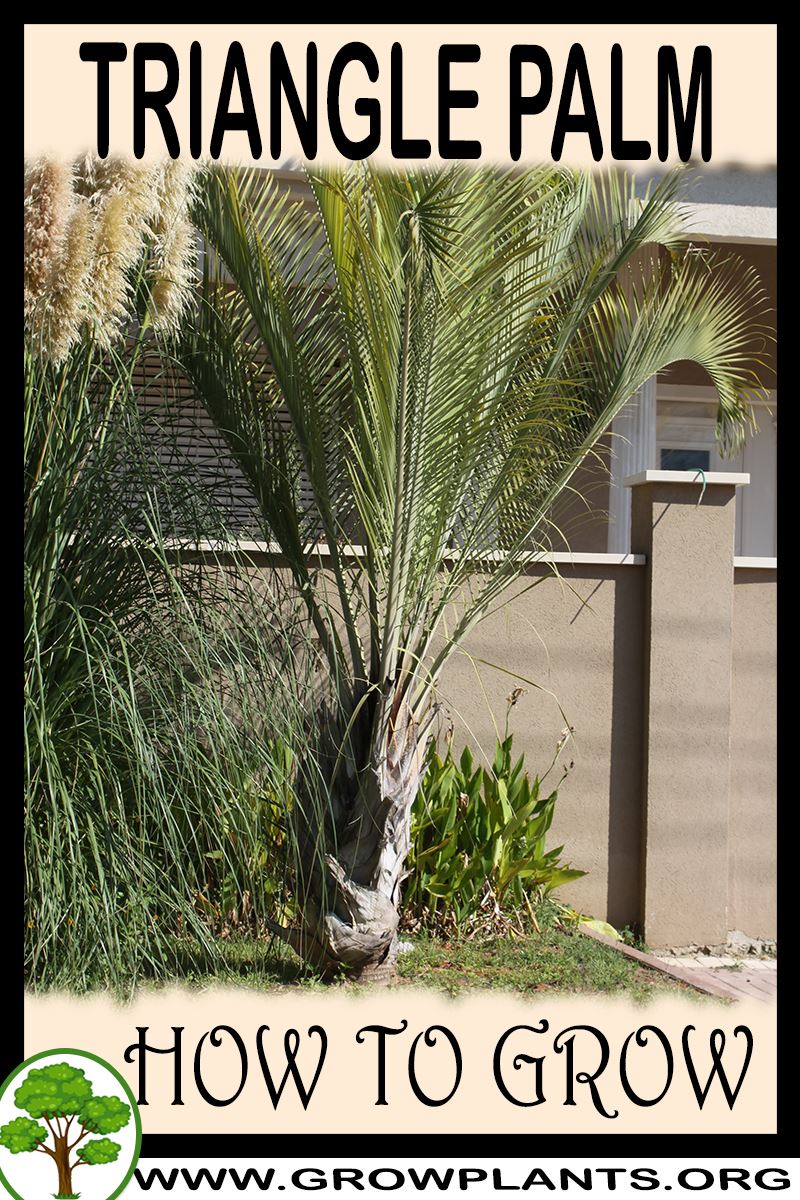
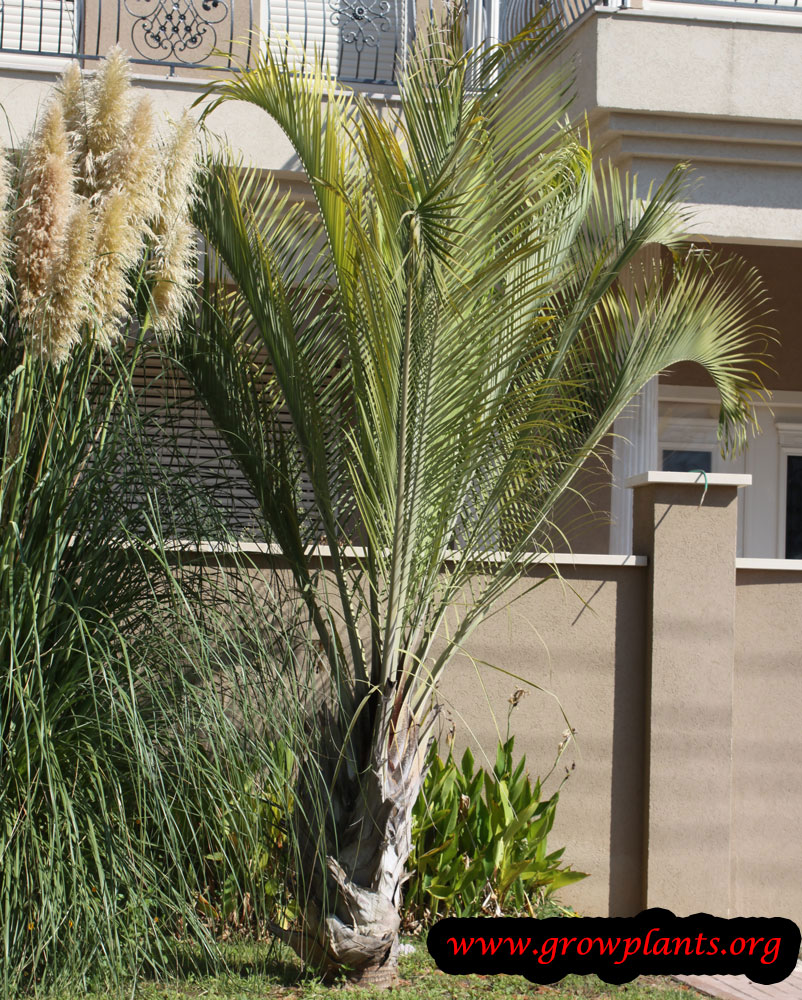
Overview: An evergreen ornamental palm reaching 7-15 m (23-49 ft), instantly recognised by its three-ranked fronds that form a triangular crown. Grown as a specimen palm in frost-free gardens and large containers.
Quick Specifications
| Specification | Attribute |
|---|---|
| Plant Type / Life Cycle | Perennial (palm tree) |
| Foliage Type | Evergreen |
| Mature Size | 7-15 m tall (23-49 ft) |
| Growth Rate | Moderate |
| Root System | Fibrous (palm-type) |
| Toxicity | Non-toxic |
| Hardiness | USDA zone 10+ |
Growth Form & Structure
- Height & Spread: 7-15 m (23-49 ft) in the ground; can be grown for years in a large container while young.
- Growth Habit & Form: Solitary-trunked palm whose leaf bases arise in three vertical rows, giving the crown a striking triangular outline.
- Lifespan & Maturity: Long-lived palm; slow to develop a visible trunk, then steady growth.
Anatomy & Physical Features
- Trunk & Bark: Single, upright trunk topped with a triangular crownshaft.
- Leaves & Foliage: Green, pinnate fronds with fine, needle-like leaflets.
- Flower Characteristics: Small yellow to green flowers borne among the fronds, with separate male and female flowers.
- Fruit Profile: Small black fruit, not edible.
Primary Uses & Landscape Value
- Functional & Ornamental Roles: Grown as an architectural specimen and container palm for gardens, patios and avenues.
Care Guide: Planting, Soil & Watering
Overview: Triangle Palm (Dypsis decaryi) is a drought-tolerant palm (hardiness zone 10+) for full sun to part shade in well-drained soil. Once established it needs only modest water and tolerates dry conditions, but it will not take more than light frost.
Quick Care Requirements
| Requirement | Ideal Condition |
|---|---|
| Planting Season | Warm season — spring, summer or autumn (zone 10+) |
| Growth Rate | Moderate |
| Soil Type | Well-draining, sandy soil |
| Water Need | Low — let the soil dry between waterings once established |
Planting & Establishment
- Best Planting Season: Plant in the warm season, spring through autumn, so it settles in while temperatures are mild to warm and frost is past.
- How to Plant:
- Hole Preparation: Dig a hole about twice the width of the root ball and the same depth, loosening the surrounding soil.
- Soil Amendments: Add sand or grit to heavy soil to sharpen drainage, which this palm needs.
- Planting Depth: Set the root collar level with the soil; don’t bury the base of the trunk.
- Growth Speed & Expectations: Moderate; expect steady growth into a distinctive triangular-based palm.
Soil, Watering & Drainage Care
- Soil Mix & Drainage Needs: Give it sandy, free-draining soil; in a container use a gritty, fast-draining potting mix so water never pools at the roots.
- Watering Schedule & Technique:
- Young / Newly Planted: Water regularly to help the young palm establish a good root system.
- Established: Water deeply but occasionally, letting the soil dry between waterings; the palm is drought-tolerant once settled.
- Seasonal Adjustments: Cut back watering in cool or winter weather.
Climate, Light & Hardiness
Triangle palm is a warmth–loving palm suited to tropical, Mediterranean, desert, and subtropical climates, hardy outdoors from about zone 10 upward. It grows in full sun to half shade and tolerates a bit more than a light frost once established.
Quick Climate Specifications
| Climate Zones | Tropics, Mediterranean, desert, subtropics |
|---|---|
| USDA Hardiness Zones | 10+ |
| Frost Tolerance | Low |
| Light Conditions | Full Sun to Half Shade |
Sunlight & Light Exposure
Grows well in full sun to half shade, with full sun bringing out its best form and coloring.
Temperature Extremes & Hardiness
USDA Hardiness & Regional Limits
Hardy outdoors from about zone 10 upward; it is a warm–climate palm not suited to regions with regular hard freezes.
Cold Damage & Winter Protection
The site notes it tolerates a bit more than light frost once established; young plants are more vulnerable and benefit from protection during their first years.
Frost Sensitivity
Tolerates only light to moderate, brief frost; harder or sustained freezes cause serious damage.
Wind, Humidity & Microclimate
Dry-Air Tolerance
Its small water requirement suggests reasonably good tolerance of dry air once established.
Growing in Pots, Balconies & Indoors
Triangle palm (Dypsis decaryi) is a striking, drought-tolerant palm that the grower marks as not a houseplant but confirms can be grown in containers. In a large pot it makes a bold feature on a sunny, sheltered patio or balcony.
Quick Details
- Container Size: A large, deep, stable pot
- Indoor Suitability: Not a houseplant – needs full sun a room cannot give
- Best Spot: Full sun to part shade, warm and open
- Soil & Drainage: Very free-draining, gritty mix
- Watering in Pots: Low – it is drought-tolerant; water sparingly
Indoors & On the Windowsill
- Not a houseplant: Marked No – a large full-sun palm unsuited to indoor light levels.
- Windowsill: Too large and too light-hungry for a sill.
On a Balcony or Patio
- Light & shelter: Full sun; it tolerates heat and some drought, but keep the heavy pot stable in wind.
- Watering & heat: Water sparingly and let the mix dry; pots must drain freely.
- Overwintering: Frost-tender – move the container under cover in cold climates.
Choosing the Pot, Soil & Long-Term Care
- Pot & drainage: A large, deep pot with strong drainage holes; skip a standing-water saucer to avoid root rot. Terracotta breathes and dries quickly, which suits this plant.
- Potting mix: A well-aerated, organic-rich mix – peat or coir blended with perlite or vermiculite for free drainage.
- Feeding: Potted plants run their soil down fast as nutrients leach out, so feed more often than plants in open ground during active growth.
- Repotting: Refresh the mix or pot up about every two years; on established plants, lightly prune the root ball and top growth to keep them balanced.
Fertilizing & Feeding
A drought-tolerant, sun-loving palm that grows well on a moderate, well-spaced feeding program; because it prefers to stay on the dry side, fertilizer salts can build up faster than in frequently irrigated plantings, so restraint matters.
Quick Fertilizing Specs
| Feeding Level | Moderate |
|---|---|
| young_feeding | Keep feeding minimal while roots establish after planting or potting |
| mature_feeding | A moderate, well-spaced program through the warm growing season once established |
| Main Nutrient Priority | A complete palm fertilizer with potassium and magnesium alongside balanced nitrogen |
| Best Feeding Period | Spring through summer while new fronds are actively expanding |
| Organic Options | Light applications of well-rotted compost suit this palm’s preference for well-drained conditions |
| Micronutrients | Manganese and iron deficiencies can appear if soil drainage or pH drifts unfavorably |
| Soil pH | Prefers well-drained soil and tolerates a range of pH, but poorly drained or heavily alkaline ground raises deficiency risk |
| Reduce/Stop Feeding | Taper off as growth slows with cooler weather and reduced watering |
Feeding by Growth Stage
Establishment after planting
Let the root system settle into well-drained soil before introducing fertilizer
| Nutrient direction | Hold feeding back and rely on existing soil fertility while roots establish |
|---|---|
| Timing | The first season after planting in the ground or a large container |
| Frequency | No feeding is needed at this stage while roots are establishing |
| Fertilizer types | No feeding is needed at this stage; prioritize good drainage and steady establishment watering instead |
| Precautions | Do not fertilize a newly planted palm until clear new frond growth confirms the roots are active |
Established growth
Support steady frond production once the palm is rooted in, without overloading a soil profile that stays on the dry side
| Nutrient direction | A balanced, complete palm fertilizer with potassium and magnesium to support the trunk and older fronds |
|---|---|
| Timing | Warm months while the palm is actively pushing new growth |
| Frequency | A moderate, evenly spaced feeding program through the growing season is generally appropriate |
| Fertilizer types | A complete palm-formulated fertilizer supplying potassium and magnesium alongside nitrogen, Light compost applications as a supplemental option |
| Routine trace nutrients | manganese, magnesium |
| Precautions | Scale feeding back as growth slows in cooler weather; avoid over-fertilizing since infrequent watering can concentrate salts around the roots |
Nutrient Deficiency Signs & Corrections
New fronds emerge weak, streaked, and undersized with necrotic, frizzled leaflet tips
| Possible causes | Manganese deficiency, Poorly drained or overly alkaline soil locking out manganese, Root stress from waterlogging after heavy rain |
|---|---|
| Appears first on | Newest emerging fronds and the growing point |
| What to check | Soil drainage and pH, Whether a complete palm fertilizer with manganese has been used, Recent watering or rainfall extremes |
| Possible correction | Improve drainage, switch to a complete palm fertilizer including manganese, and apply a chelated manganese product per its label if severe |
Older, lower fronds develop yellow-orange spotting and necrotic leaflet tips while the newest fronds stay green
| Possible causes | Potassium deficiency, Long-term feeding with a nitrogen-heavy, potassium-poor fertilizer, Well-drained, sandy soil that leaches potassium quickly |
|---|---|
| Appears first on | Oldest fronds first |
| What to check | Feeding history and fertilizer type used, Soil texture and drainage, Whether symptomatic fronds are pruned off too early |
| Possible correction | Switch to a complete palm fertilizer that reliably supplies potassium and avoid removing symptomatic fronds prematurely |
Newest fronds emerge pale yellow to nearly white while older fronds stay a normal green
| Possible causes | Iron deficiency, Alkaline soil limiting iron availability, Root stress from poor drainage after unusually wet conditions |
|---|---|
| Appears first on | Newest emerging fronds |
| What to check | Soil pH and drainage, Recent irrigation or rainfall patterns, Whether the planting site is naturally alkaline |
| Possible correction | Improve drainage, correct pH where practical, and apply a chelated iron product per its label if the pattern persists |
Pruning, Training & Seasonal Maintenance
Triangle Palm (Dypsis decaryi) is a solitary, single-trunked palm – it does not sucker, so there is no clump to manage, only one growing point to protect for the life of the plant. Its most distinctive feature is a trunk that looks genuinely triangular in cross-section, formed by the persistent bases of its three-ranked fronds. That shapes the core rule here: routine cleanup removes dead frond blades and spent bloom stalks, but the leaf-base "boots" left on the trunk should generally stay put rather than be trimmed flush for a "cleaner" look, since stripping them erases the triangular pattern that takes years to reform. Pruning can happen mainly in autumn, though the facts note it is possible year-round.
Quick Pruning & Maintenance Specs
| Pruning Tolerance | Low – single trunk, single growing point, no suckering |
| Primary Pruning Window | Autumn (possible all year) |
| Typical Frequency | As fronds and bloom stalks decline |
| Main Objective | Sanitation of dead fronds and spent bloom stalks while preserving the trunk’s triangular leaf-base pattern |
| Young Plant Priority | Leave lower fronds and leaf bases fully in place, even as they yellow – both for energy and to build the triangular trunk profile |
| Mature Plant Priority | Remove dead frond blades and spent bloom stalks; leave the leaf-base boot attached and let it detach naturally |
| Best Tool Type | Precision snips/loppers on young plants; a pruning saw and pole pruner on mature, tall specimens |
| Avoid Heavy Pruning During | Never strip leaf-base boots for cosmetic reasons, and never remove a green frond |
Pruning by Plant Age & Size
Newly Established
Remove only clearly dead material. Keep every frond in place to help the young trunk build reserves.
Young / Formative
No structural training – there are no suckers to select or remove. This stage is really about restraint: let the characteristic three-ranked leaf-base pattern develop naturally by leaving bases attached rather than trimming for a tidy look.
Mature / Established
Remove dead frond blades and spent bloom stalks. Continue leaving leaf-base boots on the trunk rather than trimming them flush – stripping them for a "clean trunk" look (common practice on other palms) permanently erases the triangular trunk texture on that section.
Seasonal Pruning Schedule
Autumn
Objective: seasonal clean-up. Remove: dead frond blades and spent bloom/fruit stalks. Do not remove: green fronds, or leaf-base boots that are still attached, even once the blade above them has been cut. Expected response: a tidier crown without losing the trunk’s triangular texture. Flowering impact: none.
Ongoing Sanitary
Since pruning is possible year-round per this species’ facts, damaged or fully dead fronds can be removed outside autumn as needed, following the same rules.
Special Growth to Remove
- Dead frond blades – cut the blade back but leave the base/boot attached to the trunk.
- Spent bloom/flower stalks, removed once fully finished flowering.
- While removing fronds, check the leaf-base axils for mealybug colonies – a known pest of this species that often hides in exactly the crevices being cleaned, making routine pruning a useful pest-check opportunity.
Container & Small-Space Pruning
This species can be grown in a planter while young, though its eventual 7-15 m size limits long-term pot culture. The same rule applies in containers: keep as many fronds as possible for a young plant’s limited root-to-canopy balance, and do not strip leaf-base boots for tidiness.
Tools
Precision snips or loppers for a young, container-grown specimen; a pruning saw for frond and stalk removal on a mature trunk; a pole pruner once the crown is out of reach on a specimen approaching its full height.
Tool Hygiene & Disease Risk
Routine under normal conditions, but treat as Increased when mealybug is present – clean tools between cuts and between plants to avoid spreading this known pest from an infested specimen to a healthy one.
Cut Placement & Technique
Cut the frond blade near where it meets the base, leaving the base/boot attached to the trunk. Remove bloom stalks at their point of origin without gouging the trunk.
Heavy Pruning & Rejuvenation
Not tolerated. There is a single growing point and no rejuvenation pruning for this species.
Post-Pruning Care
Normal watering and care are sufficient; there is no need to fertilize because of a routine trim. Use each pruning visit to inspect the crown and leaf axils for mealybug.
Common Pruning Mistakes
- Stripping leaf-base boots for a "clean trunk" look, destroying the species’ signature triangular trunk pattern, which takes years to reform.
- Removing fronds that are still green.
- Overlooking mealybug colonies hiding in leaf-base crevices while pruning.
When NOT to Prune
Avoid removing fronds or leaf-base boots purely for cosmetic trunk-cleaning – the opposite of the usual advice for many other landscape palms. Avoid pruning during an active mealybug infestation without first addressing the pest, to prevent spreading it via tools or handling. Avoid removing any frond that is still green.
Recommended Tools (by task)
- loppers / precision_snips – young or container-grown specimens, thinner frond bases.
- pruning_saw – frond and bloom-stalk removal at trunk height on mature specimens.
- pole_pruner – reaching the crown of a tall specimen approaching its 15 m mature height.
- blade_disinfectant – when mealybug is present, to avoid spreading it between cuts or plants.
Pruning Troubleshooting
| Problem | Possible Cause | What to Check | Corrective Action |
| Trunk loses its distinctive triangular profile and looks smooth/round | Leaf-base boots were stripped off during routine cleanup | Pruning history; look for a smooth trunk section below the crown | Stop trimming leaf bases; new growth higher up will re-establish the triangular pattern over time (the stripped section will not recover it) |
| Sticky residue or white cottony masses at leaf bases | Mealybug infestation, a known pest of this species | Leaf axils and frond bases during any pruning visit | Treat for mealybugs and avoid moving tools from infested to healthy palms without cleaning |
| Reduced flowering after a clean-up | A still-developing bloom stalk was mistakenly removed as dead material | Whether removed stalks were fully spent and dry versus still green/developing | Only remove bloom stalks once fully spent and dry |
Propagation Guide
Triangle Palm is propagated primarily from seed. Routine propagation by suckers, pups, division, stem cuttings or leaf cuttings is not appropriate for this solitary palm.
Quick Propagation Specs
| Primary Method | Seed |
| Offshoots / Suckers | Not a routine method for this solitary palm |
| Stem or Leaf Cuttings | Not recommended |
Growing from Seed
Use mature, viable seed. Remove fleshy fruit material where present, clean the seed, and sow it in a clean, well-drained propagation medium. Keep the medium evenly moist but not waterlogged and provide warm conditions while germination and early root growth occur.
Seedling Care
Move seedlings carefully once they are established, protect young roots from damage, and increase light gradually as the young palm develops.
Bloom & Flower Guide
Quick Details
- Bloom Season: Spring into summer
- Flower Appearance: Small yellow to green flowers borne in numbers on branched stalks among the fronds; usually separate male and female plants
- Edibility: Ornamental palm — not eaten
Detailed Blooming Overview
Named for the three-ranked, triangular arrangement of its fronds, this palm flowers in spring and summer, sending out branched stalks of many small yellow-green flowers. Plants are generally single-sex, so male and female flowers are carried on separate palms.
Flower Characteristics
- Small yellow to green flowers borne on branched inflorescences; the species is dioecious.
Bloom Care & Thinning
- Encouraging bloom: Flowering comes with maturity in warm, frost-free conditions.
Pests, Diseases & Troubleshooting
Overview: Triangle palm is a feather palm whose pests are led by spider mites and scale, with mealybug and palm aphid also common; the more serious threats are usually cultural and disease-related – over-watering root rot, various leaf spots, and the classic palm nutrient deficiencies (potassium, manganese, magnesium). Management centres on correct watering, good light and airflow, proper palm nutrition, and gentle physical/oil control of sap-suckers rather than heavy pesticides.
Quick Troubleshooting Overview
| Issue / Pest | Main Symptom | Primary Solution |
|---|---|---|
| Spider mites | Stippled, dull, webbed fronds in dry air | Raise humidity, hose/wipe fronds, oil or predators |
| Scale insects | Brown/white bumps on stalks & leaflets; sooty mould | Wipe/prune off, horticultural oil |
| Mealybugs | White cottony masses in crown, leaf bases & roots | Wipe off, oil/soap, check roots |
| Leaf spot | Brown/black spots & blotches on fronds | Keep foliage dry, airflow, remove leaves |
| Potassium deficiency | Orange/yellow spotting & necrotic tips on oldest fronds | Controlled-release K + Mg palm feed |
| Root rot | Wilting, browning, foul wet soil | Reduce watering, improve drainage |
Common Pests & Management
- Spider mites (Tetranychus urticae):
- Symptoms: Spider mites stipple and bronze the fronds in hot, dry, dusty conditions. Fronds lose colour, dry from the tips and, if untreated, whole leaflets brown; undersides show fine webbing and moving specks. Thrive on indoor palms in warm, dry, still air.
- Prevention & Control: Raise humidity, and regularly hose or wipe both sides of the fronds to remove mites and dust – the most effective routine control. Shower potted plants periodically. Introduce predatory mites indoors; treat persistent outbreaks with horticultural oil or insecticidal soap, testing first as palms can be sensitive, and covering leaflet undersides.
- Scale insects (Diaspididae & Coccidae (incl. Aspidiotus destructor)):
- Symptoms: Brown, tan or white bumps and flat discs along the leaf stalks, midribs and leaflet undersides; soft scales excrete honeydew and sooty mould, armoured scales cause yellow flecking and frond decline. A very common palm pest.
- Prevention & Control: Wipe or scrape off light infestations and prune out heavily encrusted leaves, then apply thorough horticultural-oil sprays to smother crawlers and adults, repeating on the crawler cycle. Support parasitic wasps and ladybirds outdoors.
- Mealybugs (Pseudococcidae):
- Symptoms: White, cottony, waxy masses in the crown, leaf bases and along stalks – and, in pots, around the roots as root mealybug; sap-sucking yellows and stunts growth and produces honeydew.
- Prevention & Control: Wipe off colonies with a cloth, hose the plant, and inspect the root ball of container palms for root mealybug, drenching or repotting into fresh mix if found. Horticultural oil or insecticidal soap gives contact control; encourage Cryptolaemus and lacewings outdoors.
- Palm aphid / aphids (Cerataphis brasiliensis & other aphids):
- Symptoms: Small sap-suckers clustered on new spears and leaflet undersides, causing sticky honeydew, sooty mould and some distortion of emerging fronds; the palm aphid looks like a dark, fringed disc.
- Prevention & Control: Hose off colonies, wipe honeydew, and control tending ants; insecticidal soap or oil on affected new growth clears them. Conserve natural predators.
Diseases & Fungal Issues
- Leaf-spot diseases (Helminthosporium / Exserohilum & Graphiola (false smut)):
- Symptoms: Small brown, black or reddish spots and blotches on the fronds that may merge into blighted areas; false smut adds raised black wart-like bodies on leaflets. Worst in warm, wet, crowded, poorly ventilated conditions.
- Treatment & Management: Keep water off the foliage, space and thin for airflow, remove and destroy badly spotted fronds, and avoid overhead irrigation. Copper or an appropriate fungicide is reserved for persistent outbreaks; correcting nutrition and airflow usually suffices.
- Fusarium wilt / decline (Fusarium oxysporum):
- Symptoms: One-sided or progressive frond death with a brown streak in the leaf stalk, wilting and gradual decline; spread on contaminated pruning tools and infected material.
- Treatment & Management: There is no cure – remove and destroy affected palms, disinfect pruning tools between plants, and avoid wounding. Plant clean stock and do not replant a susceptible palm in the same spot.
- Pink rot / bud & root rot (Nalanthamala vermoesenii; Pythium / Phytophthora spp.):
- Symptoms: Rotting of the bud, spear and roots with wilting and collapse, sometimes pinkish spore masses (pink rot), typically on over-watered, cold-stressed or damaged palms.
- Treatment & Management: Correct the underlying stress – reduce watering, improve drainage, and keep the crown from staying wet and cold. Remove rotted tissue, avoid wounding the bud, and treat with an appropriate fungicide only alongside fixing the culture.
Growing Difficulties & Abiotic Problems
- Potassium deficiency:
- Cause & Symptoms: Translucent yellow-orange flecking and necrotic, frizzled leaflet tips on the OLDEST fronds, which stay small and discoloured – the classic and very common deficiency in this palm on poor or sandy soils.
- Correction Strategy: Feed a controlled-release palm fertiliser with adequate potassium AND magnesium (correcting K alone can worsen Mg deficiency); improvement shows on new fronds over months, so do not remove discoloured older leaves prematurely.
- Manganese deficiency (‘frizzletop’):
- Cause & Symptoms: New emerging fronds are weak, yellowed and scorched with withered, curled leaflets (‘frizzletop’), worst on alkaline or waterlogged soils where manganese is unavailable.
- Correction Strategy: Apply manganese sulphate to soil and/or as a foliar feed, and correct high pH and drainage so uptake improves; act promptly, as severe cases kill the growing point.
- Leaf-tip burn (fluoride / salts / dryness):
- Cause & Symptoms: Brown, scorched leaf tips and margins from fluoridated or salty water, fertiliser salt build-up, low humidity or under-watering – very common on indoor specimens.
- Correction Strategy: Water thoroughly with low-fluoride/low-salt water, leach pots periodically to flush salts, raise humidity, and keep moisture even. Trim only the dead tips for appearance.
- Over-watering root rot & cold damage:
- Cause & Symptoms: Yellowing, wilting and a sour, constantly wet root ball signal root rot; cold drafts or chilling below the palm’s tolerance cause blackened, spotted fronds.
- Correction Strategy: Let the top of the mix dry before re-watering, ensure free drainage, and never leave the pot standing in water; keep the palm above its cold threshold and away from cold drafts and heating vents.
What Helps – Products & Tools
For this palm keep to gentle, targeted tools: humidity and frequent frond rinsing plus horticultural oil / insecticidal soap for spider mites, scale, mealybug and aphids; a controlled-release palm fertiliser carrying potassium, magnesium and manganese to prevent the classic deficiencies; and copper fungicide only for stubborn leaf spot. Fix watering and nutrition before spraying – most ‘palm problems’ are cultural.