Plant Profile & Key Characteristics
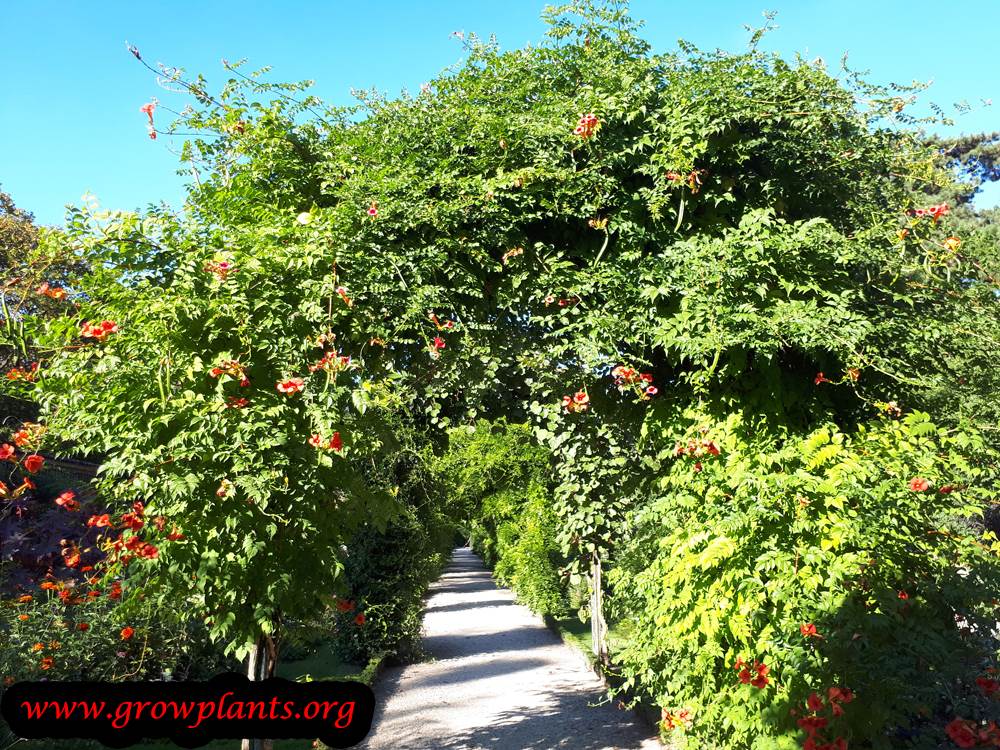
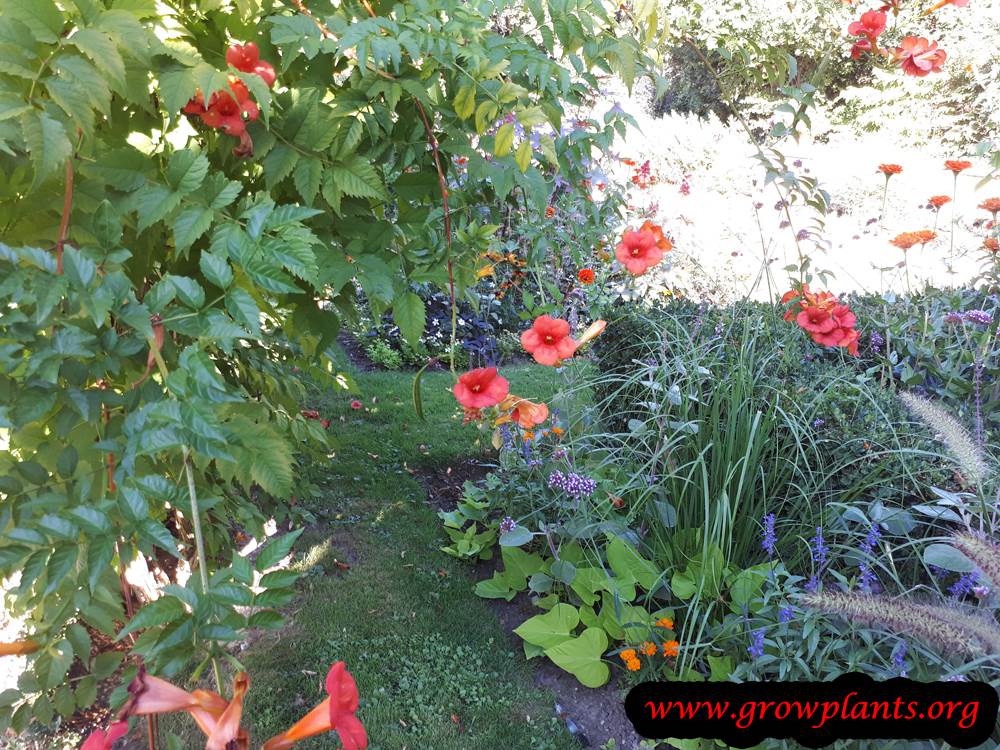
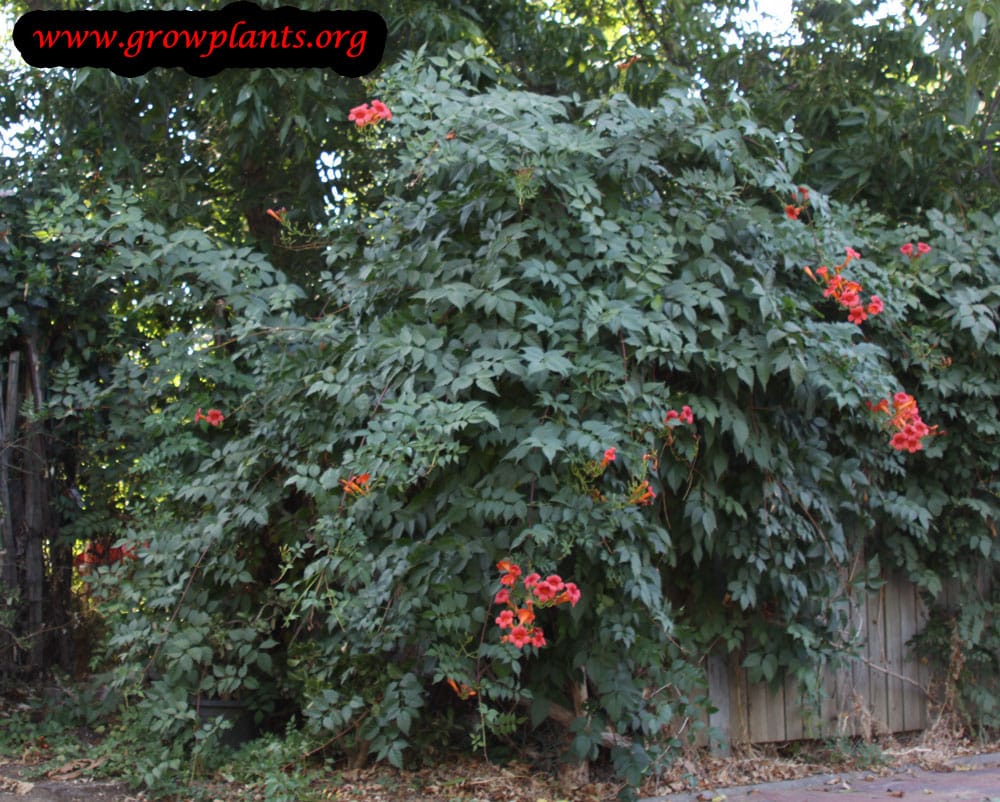
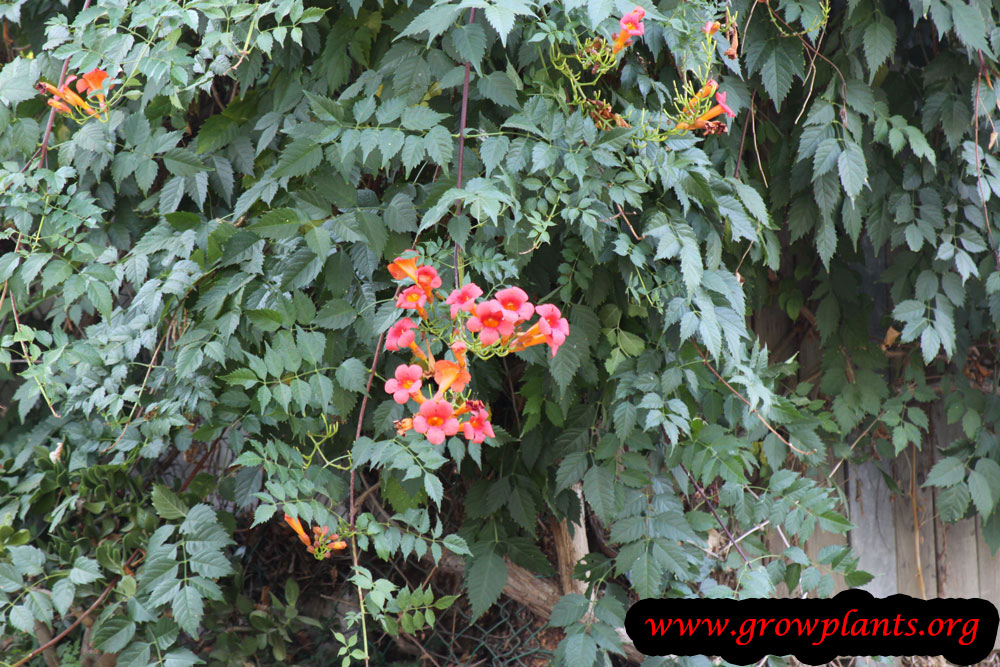
Overview: A vigorous woody deciduous climber reaching 5-10 m, grown as an ornamental for its showy, trumpet-shaped flowers that attract hummingbirds and pollinators. It clings by aerial rootlets and can be trained as a flowering hedge or screen from USDA zone 4 upward.
Quick Specifications
| Specification | Attribute |
|---|---|
| Plant Type / Life Cycle | Perennial (woody) |
| Foliage Type | Deciduous |
| Mature Size | 5-10 m (15-30 ft) climbing |
| Growth Rate | Fast |
| Root System | Vigorous and suckering (spreads aggressively by root suckers) |
| Toxicity | Mildly toxic; the sap and foliage can cause skin irritation (contact dermatitis) |
| Hardiness | USDA zone 4+ |
Growth Form & Structure
- Height & Spread: Climbs 5-10 m (15-30 ft) by aerial rootlets; also spreads widely by root suckers, so give it room or contain it in a large pot.
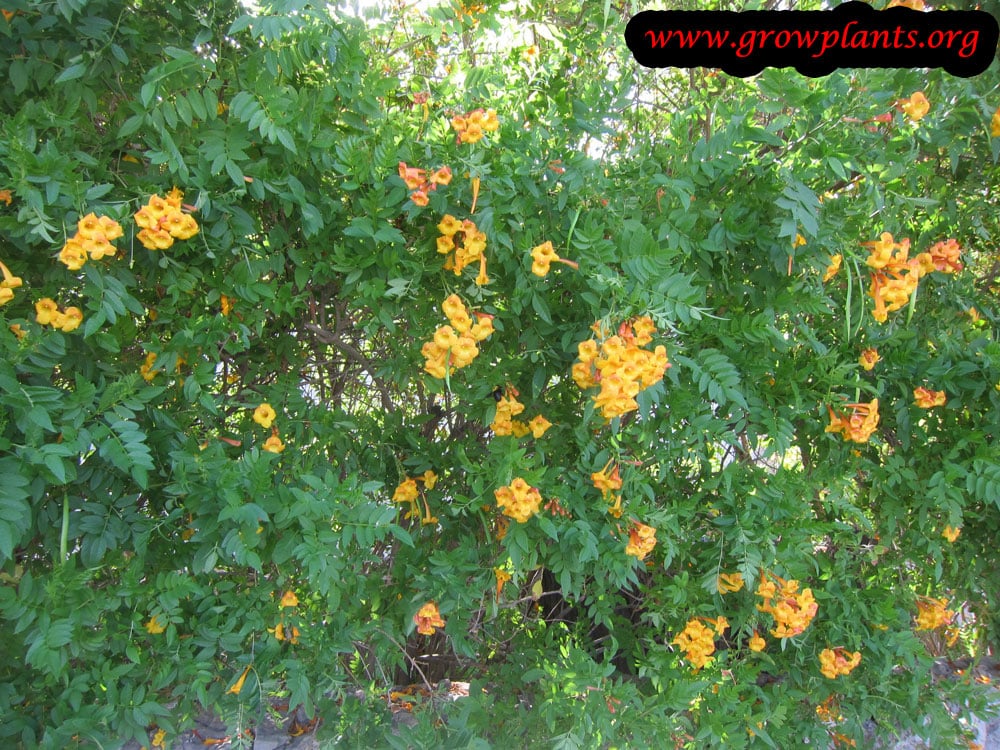
- Growth Habit & Form: Deciduous woody vine that clings to walls, fences and trees; can be pruned into a shrubby standard or trained on strong support.
- Lifespan & Maturity: Long-lived and fast to establish, flowering vigorously once settled.
Anatomy & Physical Features
- Trunk & Bark: Woody stems bearing clinging aerial rootlets along their length.
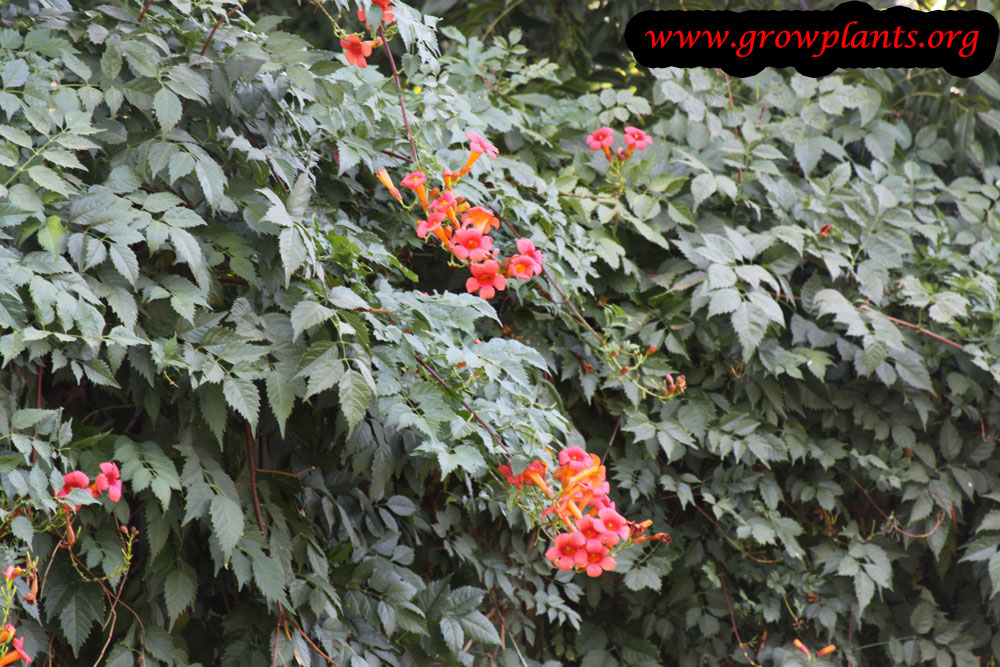
- Leaves & Foliage: Green, pinnately compound leaves with serrated, deltoid (drop-shaped) leaflets.
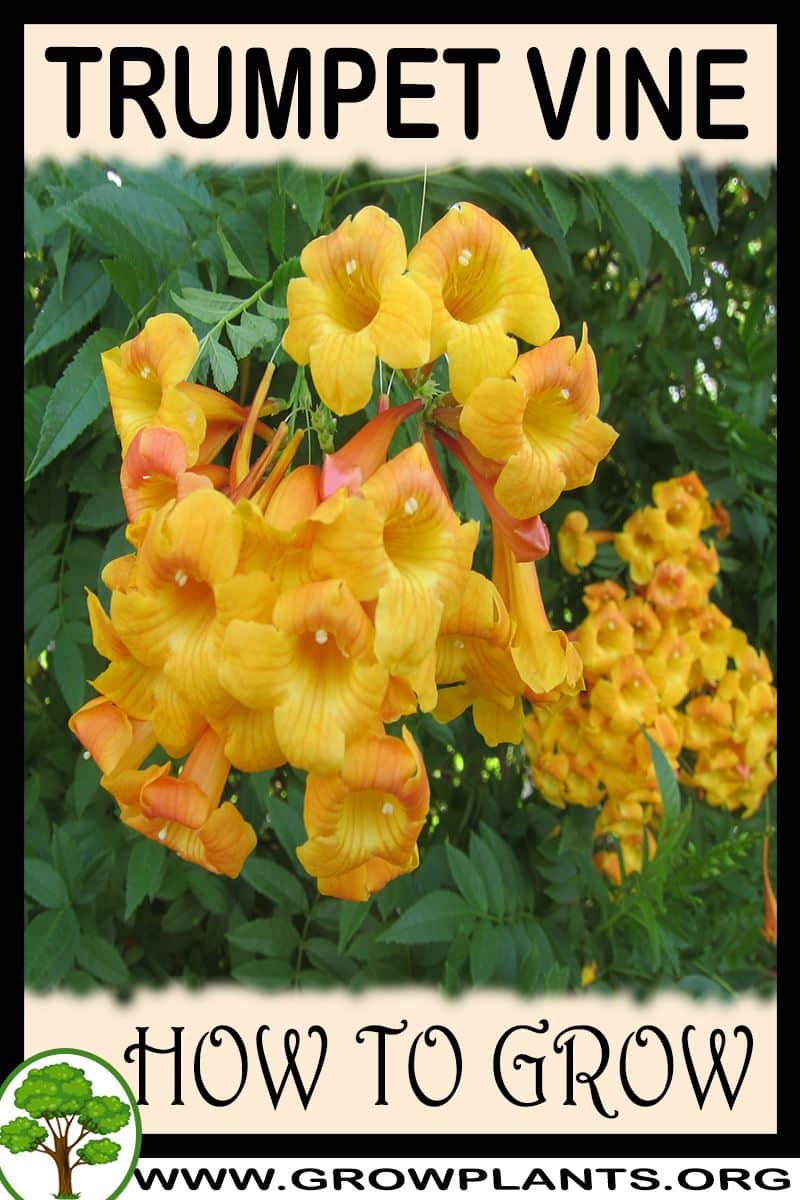
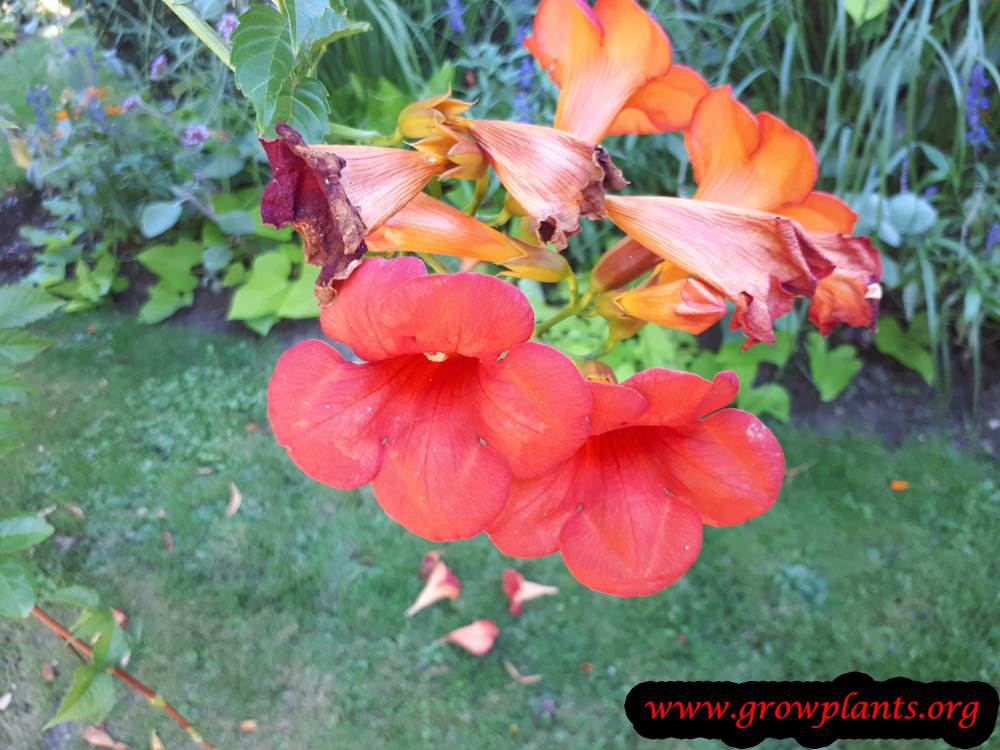
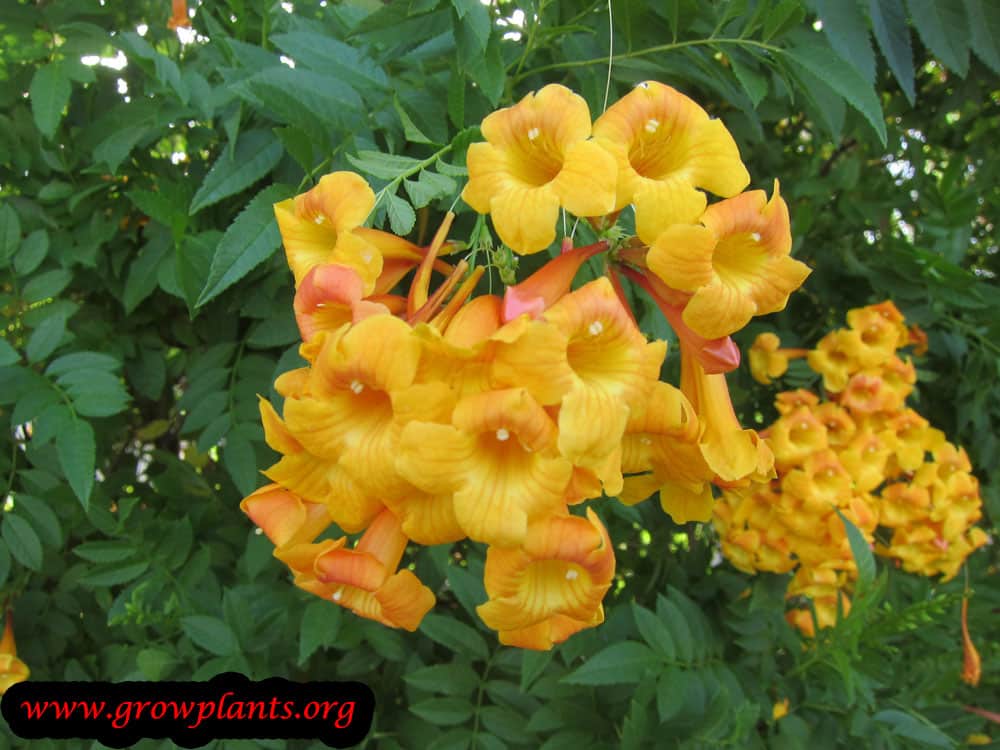
- Flower Characteristics: Tubular, trumpet-shaped flowers in orange, red or yellow, borne in summer and autumn (see the Bloom guide for detail).
Primary Uses & Landscape Value
- Functional & Ornamental Roles: Ornamental flowering vine, hedge or screen; a strong wildlife plant that draws hummingbirds, bees and other pollinators.
Care Guide: Planting, Soil & Watering
Overview: Trumpet vine is a tough, vigorous climber that grows in almost any soil and tolerates heat and drought once established. It flowers best in full sun and needs only low to moderate watering, but it must have a sturdy support to climb.
Quick Care Requirements
| Requirement | Ideal Condition |
|---|---|
| Planting Season | Spring, summer or autumn |
| Growth Rate | Fast – vigorous, can become aggressive |
| Soil Type | Adaptable; tolerates poor soils, prefers well-draining ground |
| Water Need | Low to moderate; drought-tolerant once established |
Planting & Establishment
- Best Planting Season: Plant during the warm season – spring through autumn – giving the roots time to establish before their first winter.
- How to Plant:
- Hole Preparation: Dig a hole as wide as and slightly deeper than the root ball, and set a strong trellis, fence or post in place first – this vine becomes heavy and clings aggressively.
- Soil Amendments: Not demanding; a little compost helps a young plant, but overly rich soil only fuels already-vigorous growth, so keep amendments modest.
- Planting Depth: Set the root collar level with the soil surface and firm gently.
- Growth Speed & Expectations: Expect fast, even rampant growth once established; site it where you can contain its spreading roots and suckers.
Soil, Watering & Drainage Care
- Soil Mix & Drainage Needs: Thrives in ordinary, well-drained soil and copes with poor or dry sites; avoid constantly wet ground.
- Watering Schedule & Technique:
- Young / Newly Planted: Water regularly through the first season to build a strong root system.
- Established: Needs little supplemental water – a deep, occasional soak during prolonged drought is plenty.
- Seasonal Adjustments: Water in extended dry heat; withhold in winter and during wet spells.
Climate, Light & Hardiness
Trumpet vine is a vigorous, very cold-hardy deciduous vine adapted to subtropical, temperate, Mediterranean, desert, and tropical climates, thriving in full sun to half shade. It is hardy from zone 4 upward, tolerating cold winters without difficulty.
Quick Climate Specifications
| Climate Zones | Subtropics, Temperate, Mediterranean, Desert, Tropics |
|---|---|
| USDA Hardiness Zones | 4+ |
| Frost Tolerance | High |
| Light Conditions | Full Sun / Half Shade |
Sunlight & Light Exposure
Optimal Light Setup
Full sun to half shade both suit this vine, with full sun generally giving the heaviest flowering.
Temperature Extremes & Hardiness
USDA Hardiness & Regional Limits
Hardy from zone 4 upward, and its ability to thrive across desert, tropical, and cold-temperate climates alike shows an exceptionally broad climate tolerance for a woody vine.
Cold Damage & Winter Protection
As a deciduous species, normal winter dieback of top growth within its hardy range is expected and not damage; the root system survives reliably.
Frost Sensitivity
Very frost tolerant once established.
Wind, Humidity & Microclimate
Wind Tolerance
Tolerant of open, exposed sites; its vigorous, aggressive growth habit suits trellises and structures in a range of climates.
Growing in Pots, Balconies & Indoors
Trumpet vine (Campsis radicans) is a vigorous woody climber (5-10 m) with showy orange-red trumpet flowers. The grower says it is not a houseplant but can be grown in a container – a pot with a strong support can help tame this aggressive, invasive climber outdoors.
Quick Details
- Container Size: A large, heavy, sturdy pot with a strong support
- Indoor Suitability: Not a houseplant – a vigorous outdoor climber
- Best Spot: Full sun to half shade, outdoors
- Soil & Drainage: Free-draining mix
- Watering in Pots: Small to average amount – drought-tolerant once established
Indoors & On the Windowsill
- Not a houseplant: The grower confirms it will not grow indoors; it is a large outdoor climber.
- Windowsill: Far too vigorous for a sill – grow it outside on a sturdy support.
On a Balcony or Patio
- Light, wind & heat: Give it the brightest spot it will tolerate; walls and railings reflect heat and dry pots quickly, so check moisture often and shelter or stake exposed growth.
- Contain the vigour: A large pot actually helps limit its spread; give it a robust trellis, prune hard, and keep its clinging roots off walls you want to protect.
Choosing the Pot, Soil & Long-Term Care
- Pot & drainage: A large, heavy pot with a strong trellis or support. Use strong drainage holes and skip a standing-water saucer to avoid root rot. Terracotta breathes and dries faster; glazed or plastic holds moisture longer.
- Potting mix: A well-aerated, organic-rich mix – potting soil or peat/coir with perlite or vermiculite for free drainage.
- Feeding: Feed sparingly – rich feeding drives leaf at the expense of flower and adds to its vigour.
- Repotting & pruning: Refresh the mix every couple of years and prune hard each dormant season to control it.
Fertilizing & Feeding
An aggressive, vigorous vine that flowers best when kept lean; skip routine feeding on most sites and only feed lightly if growth looks weak, since rich soil and heavy feeding push leafy growth at the expense of the trumpet-shaped flowers.
Quick Fertilizing Specs
| Feeding Level | Light feeder |
|---|---|
| Main Nutrient Priority | Balanced, restrained feeding – this vine flowers best without rich feeding |
| Best Feeding Period | Spring at planting for young vines only |
| Organic Options | Compost worked into the planting area at establishment |
| Reduce/Stop Feeding | Feeding is usually skipped on established plants to keep growth in check and favor bloom |
| Micronutrients | Rarely an issue; correct only a diagnosed deficiency |
| Soil pH | Tolerates a wide range of soil pH |
Feeding by Growth Stage
Establishment after planting
Help young vines root in before they take off climbing.
| Nutrient direction | A balanced fertilizer with modest nitrogen helps new plantings establish. |
|---|---|
| Timing | At planting and through the first season. |
| Frequency | A light feeding at planting is usually sufficient. |
| Fertilizer types | A balanced complete fertilizer used lightly, Compost worked into the planting area |
| Precautions | Keep feeding light from the start; this vine is naturally aggressive and rich soil only adds to that. |
Established growth and flowering
Keep the vine healthy while favoring flowering over runaway vegetative growth.
| Nutrient direction | Little to no supplemental feeding usually gives the best balance of growth and bloom; skip nitrogen-heavy products. |
|---|---|
| Timing | Through the growing season once established. |
| Frequency | Feeding is rarely needed beyond the first year or two. |
| Fertilizer types | Established vines often need no additional fertilizer, A light balanced feeding only if growth looks weak or pale |
| Precautions | Avoid nitrogen-rich feeding; it tends to produce vigorous foliage and fewer flowers. |
Leafless winter dormancy
Let the vine rest through its leafless winter dormancy.
| Nutrient direction | None – withhold fertilizer while the vine is dormant. |
|---|---|
| Timing | During autumn leaf drop and winter dormancy. |
| Frequency | No feeding at this stage. |
| Fertilizer types | No feeding at this stage; hold off fertilizing until spring growth resumes. |
| Precautions | Do not fertilize dormant vines; wait for new spring growth before considering any feeding. |
Nutrient Deficiency Signs & Corrections
Older leaves fade to pale green or yellow and overall growth slows noticeably.
| Possible causes | very poor or infertile soil, nutrient leaching from heavy rain, heavy root competition from nearby trees |
|---|---|
| Appears first on | older, lower leaves |
| What to check | soil fertility and organic matter, drainage and recent rainfall, nearby root competition |
| Possible correction | Apply a balanced fertilizer with available nitrogen; usually only needed on very poor soils. |
New leaves turn yellow between the veins while the veins stay green.
| Possible causes | high soil pH limiting iron availability, poorly drained or compacted soil, root stress from drought or transplanting |
|---|---|
| Appears first on | newest growth |
| What to check | soil pH, drainage and root health, recent stress or transplanting |
| Possible correction | Correct soil pH where practical or apply a chelated iron product per its label. |
Leaf margins brown or scorch and growth stalls despite adequate watering.
| Possible causes | fertilizer salt buildup in the root zone, under-watering that concentrates salts, feeding that is heavier than this vine needs |
|---|---|
| Appears first on | leaf margins and tips |
| What to check | recent fertilizer amounts, watering consistency, soil drainage |
| Possible correction | Ease off feeding, water thoroughly to flush accumulated salts, then avoid routine fertilizing going forward. |
Pruning, Training & Seasonal Maintenance
Trumpet vine is a vigorous, woody, aerial-rootlet-clinging vine that flowers on the current season’s new growth, so it tolerates hard pruning very well and heavy cutting back actually encourages more flowering shoots rather than removing them. The main objectives are controlling its well-documented aggressive size and suckering habit, and building/maintaining a sturdy woody framework strong enough to support the vine’s considerable mature weight. Light shaping and sucker removal can be done through the growing season, but the main structural cutback is safest and most effective in late winter, while the plant is dormant and before new growth begins.
Quick Pruning & Maintenance Specs
| Pruning Tolerance | High |
| Primary Pruning Window | Late winter / dormant season (structural cutback) |
| Secondary Maintenance Window | Spring–autumn light shaping and sucker removal (year-round as needed) |
| Typical Frequency | One hard annual cutback plus ongoing sucker/shoot control |
| Main Objective | Size/spread control, framework support, sucker management |
| Young Plant Priority | Establish a strong permanent woody framework tied to sturdy support |
| Mature Plant Priority | Hard annual renewal cutback of the past year’s flowering shoots; relentless sucker control |
| Best Tool Type | Loppers and pruning saw for old wood; bypass secateurs for shoots |
| Avoid Heavy Pruning During | Not strictly restricted, but hold off major cuts once flower buds are actively forming on new growth in late spring if bloom timing matters |
Pruning by Plant Age & Size
Newly Established
Remove only damaged growth in the first year or two; concentrate on tying young stems firmly to a sturdy, permanent support (this vine becomes heavy woody growth over time, so flimsy supports fail).
Young / Formative
Select and train 2–4 main woody leaders onto the support structure; pinch or cut back competing shoots to concentrate growth into the framework you want to keep.
Mature / Established
Cut the previous season’s flowering side-shoots back hard (to a few buds from the permanent woody framework) each dormant season – this is standard practice for this species and drives the strong new growth that carries the summer/autumn flowers.
Seasonal Pruning Schedule
- Dormant/Winter (main structural cutback): objective is to renew flowering wood and control size; cut side-shoots from the permanent framework back hard to a few buds; do not remove the main woody framework stems themselves; response is a strong flush of new flowering growth; flowering impact is positive since this species blooms on new wood produced after this cut.
- Summer Canopy Management: objective is ongoing containment of the season’s vigorous new growth reaching beyond its support; light trims as needed; flowering impact minimal if only excess reach is trimmed rather than developing flower shoots.
- Ongoing Sanitary: remove root suckers as they appear through the growing season; this does not affect flowering on the trained vine.
Flowering & Fruiting Wood
Trumpet vine flowers on the current season’s new growth, not on old wood, so hard dormant pruning does not sacrifice the coming season’s blooms – if anything, harder cutback typically produces more vigorous new shoots and more flowers. This is the opposite situation from old-wood bloomers, where the same dormant-season hard cut would remove the flower buds.
Structural Pruning & Training
Build and maintain a strong permanent woody framework against a sturdy support (this vine’s aerial rootlets can also damage wood siding or mortar, so match support material accordingly); control height and spread firmly given its aggressive, fast-growing, invasive habit; thin overly dense old wood periodically so the framework doesn’t become an unmanageable tangle.
Special Growth to Remove
- Root suckers – Campsis radicans is well known for spreading vigorously by root suckers well away from the main plant; remove these promptly and repeatedly through the growing season, as this species is noted as aggressive/invasive.
- Wayward new shoots growing off the intended support – cut back to keep growth directed onto the framework.
Container & Small-Space Pruning
In a container, root restriction helps moderate (but does not eliminate) this vine’s vigor and suckering; still requires a hard annual cutback and frequent sucker removal, plus a very sturdy support since top growth can still become heavy.
Tools
- Loppers – the main annual cutback of side-shoots and thicker stems.
- Pruning saw – removing old, thick woody framework stems if renovating an overgrown vine.
- Bypass secateurs – sucker removal and precise shoot trimming.
Tool Hygiene & Disease Risk
Routine care is sufficient – clean sharp tools between cuts. No major transmissible disease is documented for this species; the greater risk is mechanical (this vine’s sap/foliage can cause skin irritation in some people, so gloves are worth noting alongside tool care).
Cut Placement & Technique
Use heading cuts on side-shoots back to 2–3 buds from the permanent framework during the dormant renewal cut; remove suckers at their point of origin from the root, not just at soil level, to slow regrowth.
Heavy Pruning & Rejuvenation
Tolerates severe rejuvenation, including cutting the entire vine back close to its main woody framework or even near ground level if it has become overgrown or unsupported; regrowth is fast and vigorous, with flowering typically resuming within the same or following season.
Post-Pruning Care
No special feeding is needed after pruning – the hard cutback itself already drives vigorous regrowth. Water normally, retie new growth to its support as it extends, and keep checking for fresh suckers.
Common Pruning Mistakes
- Never pruning it, allowing the vine to overwhelm its support, gutters or nearby structures.
- Ignoring root suckers, letting the plant spread well beyond where it is wanted.
- Using a flimsy support that fails under the weight of mature woody growth.
When NOT to Prune
No strong flowering-related restriction given its new-wood bloom habit; general good practice is to avoid major cuts during active hot, dry stress periods and, if a display is imminent, to avoid removing shoots that are already showing flower buds in late spring/early summer.
Recommended Tools (by task)
- loppers – the main dormant-season cutback of flowering side-shoots.
- pruning_saw – removing old woody framework stems on a mature or overgrown vine.
- bypass_secateurs – sucker removal and precise shoot control through the growing season.
Propagation Guide
Trumpet vine is exceptionally easy to propagate vegetatively – by stem cuttings or simply by digging and replanting rooted suckers – which fits the site’s own note that this species is aggressive and invasive, since it spreads readily by suckering. Seed also works for the species type, though named colour forms are best kept true through cuttings or suckers rather than seed; overall propagation is Easy.
Quick Propagation Specs
| Best Propagation Method | Stem cuttings or division of rooted suckers |
| Alternative Methods | Seed; ground layering |
| Propagation Difficulty | Easy |
| Seed True-to-Type | Usually true-to-type for the species; cultivar-dependent for named colour selections |
| Vegetative True-to-Type | Yes |
| Best Propagation Season | Spring through summer for cuttings and sucker division, in line with the plant’s spring/summer/autumn planting season |
| Seed Germination Time | Generally a few weeks, though it can be slower and less predictable than vegetative methods |
| Cutting Rooting Time | Often roots within a few weeks under warm, humid conditions – this vine roots very readily |
Growing from Seed
Sowing Season
Sow in spring, matching the plant’s spring/summer/autumn planting window.
Germination Conditions
Keep the sowing medium moist and warm; germination is usually straightforward but can be slower than cuttings or suckers.
Stem Cuttings
Cutting Type
Softwood cuttings in the growing season or hardwood cuttings during dormancy both work well for this vine.
Rooting Setup
A moist, well-drained cutting mix with good humidity; no special treatment is generally needed given how readily this species roots.
Rooting Hormone
Optional – not required, though it can speed rooting.
Rooting Time
Typically a few weeks under warm, humid conditions.
Division, Offsets, Pups & Suckers
Trumpet vine spreads by root suckers, and these are one of the most practical ways to obtain a new plant – dig a sucker with its own roots attached, sever it from the parent’s root system, and transplant it. Reducing top growth on the newly separated sucker helps it establish while its own root system develops. Because the species suckers so freely, this is also the main reason it is considered aggressive and can spread beyond where it is wanted.
Air & Ground Layering
Long trailing stems in contact with soil can root on their own at the nodes; a stem pinned down and kept moist will typically root within a season and can then be severed and transplanted as an independent plant.
Bloom & Flower Guide
Quick Details
- Bloom Season: Summer into autumn
- Flower Appearance: Large trumpet-shaped flowers in orange, red or yellow, carried in clusters
- Edibility: Grown as an ornamental; the flowers and foliage can irritate skin, so it is not eaten
Detailed Blooming Overview
Trumpet vine is a vigorous climber grown for its big, tubular flowers that flare into a trumpet at the mouth. Borne in clusters through summer and autumn in shades of orange, red and yellow, they are a magnet for hummingbirds. The plant is robust to the point of being rampant, so give it strong support and room.
Flower Characteristics
- Large trumpet-shaped flowers.
- Colours include orange, red and yellow.
- Carried in clusters at the ends of the shoots.
Bloom Care & Thinning
- Managing vigour: Hard prune in late winter to keep it in bounds and to promote flowering on the new growth.
- Pollination: The nectar-rich trumpets are pollinated by hummingbirds and large bees.
- Handling: The flowers and foliage can cause skin irritation for some people; wear gloves when pruning.
Pests, Diseases & Troubleshooting
Overview: Trumpet vine (Campsis radicans) is an exceptionally tough, vigorous woody climber that is troubled by very few pests or diseases — its real “troubleshooting” issues are its own aggressive, suckering habit and, occasionally, a reluctance to flower. Insect problems are limited to minor sap-suckers and cosmetic late-season foliar fungi. Management is mostly about restraint: contain the roots, prune for shape and airflow, and intervene chemically only in the rare event a pest builds up.
Quick Troubleshooting Overview
| Issue / Pest | Main Symptom | Primary Solution |
|---|---|---|
| Scale insects | Brown or cottony bumps on stems, sticky honeydew, sooty mould | Prune out, scrape, horticultural oil |
| Aphids | Colonies on soft tips, distortion, honeydew | Water jet, beneficials, insecticidal soap |
| Mealybugs | White cottony masses in leaf axils | Alcohol swab, horticultural oil |
| Powdery mildew / leaf spot | White coating or brown spots late in the season | Improve airflow, prune, sanitation |
| Invasive suckering | Runners and root suckers spreading far from the plant | Root barrier, cut suckers, site away from structures |
| No flowers | Lush leaves but few or no blooms | Full sun, lean soil, avoid heavy nitrogen and over-pruning |
Common Pests & Management
- Scale Insects (soft & armoured, e.g. Coccus, Saissetia spp.):
- Symptoms: Immobile brown, tan or cottony bumps clinging to stems and leaf undersides, sticky honeydew below them, and blackened sooty mould; heavy colonies cause yellowing and dieback.
- Prevention & Control: Prune out badly infested wood, scrape or wipe off light infestations, encourage parasitic wasps and ladybirds, and smother the rest with horticultural oil, timing sprays for the vulnerable crawler stage.
- Aphids (Aphis spp.):
- Symptoms: Clusters on the softest new shoots and flower buds, curled growth, sticky honeydew and attendant ants.
- Prevention & Control: Blast off with water, rely on ladybirds, lacewings and hoverflies, and use insecticidal soap or neem on stubborn outbreaks in the cool evening to protect pollinators.
- Mealybugs (Planococcus citri):
- Symptoms: White, cottony, waxy masses tucked into leaf axils and stem joints, with honeydew and sooty mould.
- Prevention & Control: Dab colonies with an alcohol-moistened swab, hose the plant, and treat with horticultural oil or insecticidal soap; check that ants, which farm them, are not shuttling them around.
- Spider Mites (Tetranychus urticae):
- Symptoms: Fine stippling, bronzing and light webbing on foliage during hot, dry spells, usually on stressed or sheltered plants.
- Prevention & Control: Hose the foliage, keep the plant unstressed, and use insecticidal soap or light oil if needed; rarely a serious problem on such a vigorous vine.
Diseases & Fungal Issues
- Powdery Mildew (Erysiphe spp.):
- Symptoms: A white, powdery film on leaves, usually late in the season and largely cosmetic on an established vine.
- Treatment & Management: Improve airflow by thinning tangled growth, clear fallen leaves, and only if unsightly apply neem, sulphur or potassium bicarbonate.
- Leaf Spot (Cercospora spp. / bacterial):
- Symptoms: Scattered brown or dark spots on leaves in wet weather, occasionally causing early leaf drop but rarely serious.
- Treatment & Management: Rake up and destroy infected leaves, water at the base, and improve air circulation; fungicide is seldom justified.
- Root / Collar Rot (Phytophthora spp.):
- Symptoms: Wilting and dieback where the plant sits in badly drained, waterlogged ground — uncommon given how tough this vine is.
- Treatment & Management: Ensure free-draining soil and avoid persistent waterlogging around the base.
Growing Difficulties & Abiotic Problems
- Aggressive Suckering & Invasiveness:
- Cause & Symptoms: The vine spreads by far-travelling root suckers and self-seeds freely, sending up new shoots metres from the parent and clinging to (and lifting) walls, gutters and fences with its aerial rootlets.
- Correction Strategy: Site it well away from foundations and structures, install a deep root barrier, mow or dig out wandering suckers as they appear, and deadhead to limit seeding — this containment is the single most important part of growing it well.
- Failure to Flower:
- Cause & Symptoms: Lush foliage with few or no trumpets, caused by too much shade, excess nitrogen, hard annual pruning of flowering wood, or simply a young plant not yet mature.
- Correction Strategy: Give it full sun, hold back on nitrogen feeding, prune in late dormancy to a framework rather than shearing, and be patient — seedlings can take several years to bloom.
- Winter / Frost Dieback:
- Cause & Symptoms: Soft young growth is cut back by hard frost, though established roots regrow readily.
- Correction Strategy: Tolerate and prune out frost-killed tips in spring; mulch the root zone where winters are severe.
What Helps — Products & Tools
Very little is needed for the vine itself: horticultural oil and insecticidal soap cover scale, mealybugs and aphids, and neem or a sulphur/potassium-bicarbonate product handles the occasional mildew. The most valuable “tool” here is a physical root barrier plus sharp secateurs and a spade for containing its spread.