

Plant Profile & Key Characteristics
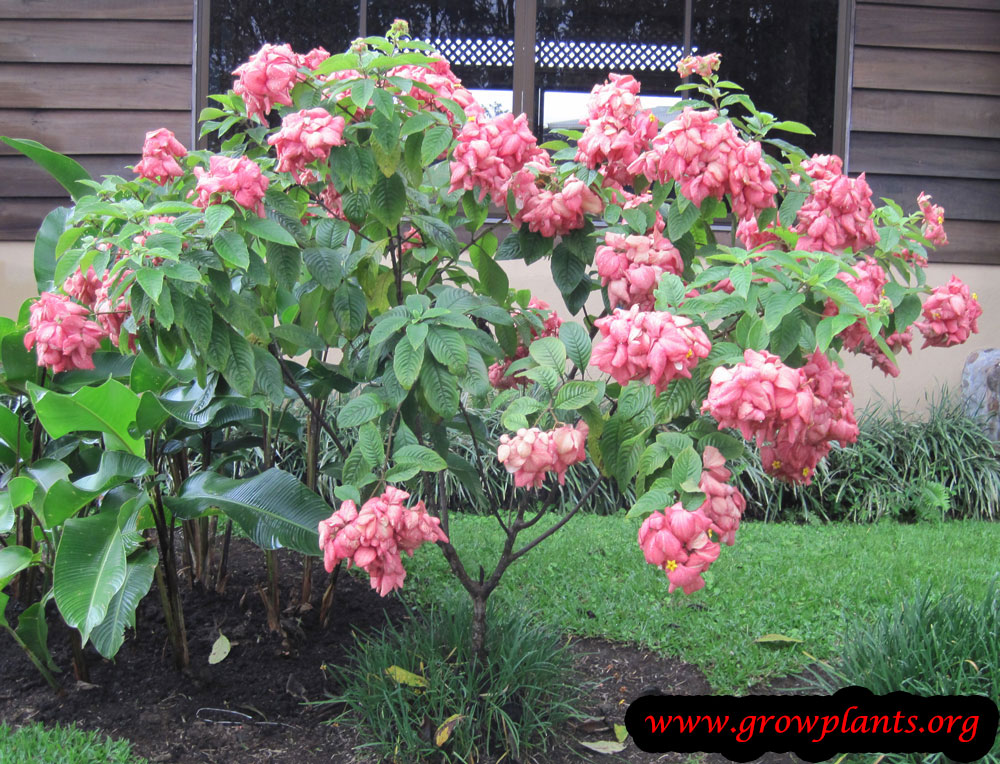
Overview: Mussaenda is a vigorous tropical shrub of 2-8 m (6-24 ft), evergreen in warm climates and grown as an ornamental for its large, showy petal-like bracts and clusters of small flowers. It is prized for hedging and, with careful training, as a bonsai subject.
Quick Specifications
| Specification | Attribute |
|---|---|
| Plant Type / Life Cycle | Perennial |
| Foliage Type | Evergreen (semi-evergreen to deciduous in cooler or drier spells) |
| Mature Size | 2-8 m (6-24 ft) |
| Growth Rate | Fast in the tropics, moderate in cooler zones |
| Hardiness | USDA zone 10+ |
Growth Form & Structure
- Height & Spread: Reaches 2-8 m (6-24 ft) in open ground; in containers it stays smaller and needs a pot about 20-30% larger than the root ball, with periodic root pruning once mature.
- Growth Habit & Form: Sprawling, multi-stemmed evergreen shrub that can be clipped into a hedge or trained as a standard or bonsai; can be invasive in tropical climates.
- Lifespan & Maturity: Long-lived perennial shrub that flowers over much of the year in frost-free climates.
Anatomy & Physical Features
- Leaves & Foliage: Green leaves in elliptic, heart-shaped or ovate form.
- Flower Characteristics: The true flowers are small (yellow, peach or white), but each is surrounded by large, showy bracts in red, pink, white, yellow, orange or purple that are the plant’s main ornamental feature.
Primary Uses & Landscape Value
- Functional & Ornamental Roles: Grown as a flowering ornamental for its coloured bracts and foliage, as a hedge or screen, in large containers, and as a trained bonsai.
Care Guide: Planting, Soil & Watering
Overview: Mussaenda is a tropical shrub that flourishes in warmth and humidity, in full sun to light shade. It wants rich, moisture-retentive but well-draining soil on the acidic side, kept consistently damp yet never waterlogged.
Quick Care Requirements
| Requirement | Ideal Condition |
|---|---|
| Planting Season | At the start of the warm season after frost; year-round in frost-free tropical zones |
| Growth Rate | Moderate to fast – fastest in warm, humid tropical conditions |
| Soil Type | Rich, organic, moisture-retentive but free-draining |
| Soil pH | Acidic – prefers acid, humus-rich soil |
| Water Need | Moderate to high – keep the soil consistently moist |
Planting & Establishment
- Best Planting Season: Plant at the start of the warm growing season once frost risk has passed; in frost-free tropical areas it can go in almost any time of year.
- How to Plant:
- Hole Preparation: Dig a hole about twice the width of the root ball and the same depth, loosening the sides so young roots spread easily.
- Soil Amendments: Blend plenty of compost, leaf mould or other organic matter into the backfill to build the rich, acidic, moisture-holding soil it prefers.
- Planting Depth: Set the plant so the root collar sits level with the surrounding soil; do not bury the stem.
- Growth Speed & Expectations: In warm, humid conditions growth is fast; expect slower, steadier growth toward the cooler edge of its range.
Soil, Watering & Drainage Care
- Soil Mix & Drainage Needs: Aim for a rich, organic mix that holds moisture yet drains freely; in containers use a peat- or coir-based acidic potting mix and make sure water never stands around the roots.
- Watering Schedule & Technique:
- Young / Newly Planted: Keep newly planted shrubs consistently moist and never let them dry out while establishing.
- Established: Water regularly and deeply, letting only the surface dry slightly; high humidity keeps it at its best.
- Seasonal Adjustments: Water more in heat and dry spells, and reduce during cooler, shorter days when growth slows.
Climate, Light & Hardiness
Mussaenda is a subtropical, tropical, and mediterranean-climate shrub grown for its showy bracts. It needs full sun to half shade, but in very hot, low-humidity climates some afternoon shade is essential to prevent leaf burn.
Quick Climate Specifications
| Climate Zones | Subtropics, tropics, Mediterranean |
|---|---|
| USDA Hardiness Zones | Approximately 10 and warmer |
| Light Conditions | Full Sun to Half Shade (afternoon shade recommended in hot, dry climates) |
Sunlight & Light Exposure
Optimal Light Setup
Full sun to half shade in humid climates; in hot summer areas with low humidity, some shade is necessary.
Shade & Heat Management
Site data notes leaf scorch above about 44°C (111°F) in full sun, and that low humidity worsens heat stress - the same high temperatures are tolerated better where humidity is high.
Temperature Extremes & Hardiness
USDA Hardiness & Regional Limits
Grows reliably in USDA zone 10 and warmer, consistent with its subtropical-to-tropical origin; it is not suited to areas with freezing winters.
Extreme Heat Tolerance
Tolerates strong heat when humidity is adequate, but combined extreme heat (above roughly 44°C/111°F) and dry air causes leaf burn in full sun.
Wind, Humidity & Microclimate
Humidity Preferences
Prefers humid conditions; low humidity increases heat stress and the risk of scorch, especially in full sun.
Microclimate Recommendations
In hot, dry-summer regions, afternoon shade and a humidity-buffered microclimate (e.g. near other plantings) reduce heat and dry-air stress.
Growing in Pots, Balconies & Indoors
Mussaenda dazzles in warm climates with clusters of showy, petal-like coloured bracts. The grower rates it for containers but not indoors – it is a large tropical shrub that needs strong light and warmth, ideal for a big pot on a sunny, frost-free patio.
Quick Details
- Container Size: A large container 20-30% larger than the root ball (grower), potting up as it grows
- Indoor Suitability: Not a houseplant (grower); a tender tropical shrub for a warm, sunny patio
- Best Spot: Full sun to partial shade; a bright spot with some direct sun is ideal.
- Soil & Drainage: Aerated, organic-rich mix (quality potting mix, or peat/coir with perlite or vermiculite); it must drain freely.
- Watering in Pots: Keep the mix consistently moist – this one likes water – but make sure it drains freely; never let a potted plant go bone-dry.
Indoors & On the Windowsill
- Not a houseplant: The grower marks it unsuitable indoors; it grows large and demands bright light and warmth that a room can’t supply.
- Overwintering: It is frost-tender, so in cold climates a potted plant can be sheltered in a warm, bright, frost-free space over winter and moved back out once it warms.
On a Balcony or Patio
- Light & heat: Give it the warmest, sunniest spot; in fierce heat (the grower notes scorching above about 44C in dry air) some afternoon shade helps, and higher humidity lets it take more sun.
- Watering: Keep the mix moist and never let it dry out, but ensure water drains freely; it likes generous water in heat.
Choosing the Pot, Soil & Long-Term Care
- Pot & drainage: Per the grower, use a container 20-30% larger than the root ball, with strong drainage holes; skip a standing-water saucer.
- Potting mix: A well-aerated, organic-rich mix; the grower recommends adding fertiliser and humus for this hungry tropical.
- Feeding: Feed regularly through the growing season – a vigorous tropical in a pot leaches nutrients fast.
- Repotting & pruning: The grower advises pruning once a year and, when the roots reach the pot edge, root-pruning to keep it in bounds; refresh part of the soil every few years.
Grower’s Container Tip
- Grower’s sizing & root control: Pot into a container only 20-30% larger than the root ball rather than a huge one; once it reaches the size you want, root-prune each time the roots fill the pot to hold it at that size while keeping it flowering.
Fertilizing & Feeding
Mussaenda is grown chiefly for its showy, long-lasting colored bracts, and it flowers over an extended season in warm climates, so it benefits from consistent, moderate feeding on rich, moisture-retentive, acid soil.
Quick Fertilizing Specs
| Feeding Level | Moderate; a showy bract and flower producer that benefits from steady nutrition. |
|---|---|
| Main Nutrient Priority | Balanced nutrition with attention to iron and manganese availability, since this plant prefers acid, rich soil. |
| Best Feeding Period | Through the extended warm-season growth and bract/flower display. |
| Organic Options | Rich, moisture-retentive soil built up with compost or other organic matter is especially well suited to this plant. |
| Soil pH | Prefers acid, rich, moist soil. |
| Reduce/Stop Feeding | Ease off feeding where growth genuinely slows in cooler or drier conditions. |
Feeding by Growth Stage
Establishment
Help a newly planted or newly rooted cutting settle into rich, moist, acid soil and put out its first healthy leaves.
| Nutrient direction | Light, balanced nutrition to support root and early leaf growth without overwhelming a young plant. |
|---|---|
| Timing | In the weeks after planting or transplanting a rooted cutting. |
| Frequency | A light feeding once new growth is visible is usually enough to start. |
| Fertilizer types | A balanced complete fertilizer used lightly, Compost or other organic matter worked into rich, moisture-retentive soil |
| Precautions | Keep soil consistently moist but not waterlogged while roots are establishing; poor drainage can stress a young plant regardless of feeding. |
Growth and bract/flower display
Support vigorous foliage growth and the long season of colorful bracts that surround the small true flowers.
| Nutrient direction | Balanced, moderate nutrition that keeps both foliage and the bract display strong through an extended flowering period. |
|---|---|
| Timing | Through the main warm-season growth and flowering period, which can extend for much of the year in the warmest climates. |
| Frequency | Regular light feedings through the growing season support this plant’s extended bloom better than infrequent heavy doses. |
| Fertilizer types | A balanced complete fertilizer suited to acid-loving plants, A container-friendly controlled-release product for potted specimens |
| Precautions | In hot, low-humidity conditions this plant can scorch in full sun regardless of feeding, so pair nutrition with appropriate light and humidity. |
Cool or dry season rest
Let the plant slow down where cooler temperatures or a dry season interrupt active growth.
| Nutrient direction | None – withhold fertilizer while growth is not active. |
|---|---|
| Timing | During any cooler or drier period when growth clearly slows. |
| Frequency | No feeding at this stage. |
| Fertilizer types | No feeding – resume feeding once active growth clearly resumes |
| Precautions | Do not fertilize while growth is stalled; wait for new growth before feeding again. |
Nutrient Deficiency Signs & Corrections
New leaves turn pale yellow between green veins, especially where soil is not sufficiently acidic.
| Possible causes | Alkaline or neutral soil limiting iron or manganese uptake for this acid-preferring plant, Poorly drained or compacted soil restricting root function, A genuine iron or manganese shortage in the soil |
|---|---|
| Appears first on | New, upper leaves. |
| What to check | Soil pH and whether it matches this plant’s preference for acid soil, Drainage and root health, Whether older leaves remain a normal green |
| Possible correction | Work toward acid, well-drained, organically rich soil first; if chlorosis persists, apply a chelated iron or manganese product per its label. |
Leaf edges brown and crisp, especially on plants in full, hot sun.
| Possible causes | High heat combined with low humidity rather than a nutrient issue, Underwatering or inconsistent soil moisture, Excess fertilizer salts building up around the roots |
|---|---|
| Appears first on | Leaf margins on the most sun-exposed foliage. |
| What to check | Sun exposure and local humidity during hot weather, Soil moisture consistency, Recent feeding amounts |
| Possible correction | Provide afternoon shade in hot, dry conditions, keep soil evenly moist, and avoid concentrated fertilizer applications. |
The plant grows leafy and vigorous but produces few of its characteristic colorful bracts.
| Possible causes | Excess nitrogen favoring leaf growth over flowering and bract formation, Insufficient light for good bud and bract development, A young or recently pruned plant that has not yet had time to flower |
|---|---|
| Appears first on | Overall bract and flower display across the plant. |
| What to check | Recent nitrogen-heavy feeding, Light levels at the growing site, Plant age and recent pruning |
| Possible correction | Ease back on nitrogen, confirm adequate light, and allow time after pruning for the plant to rebuild before expecting a full bract display. |
Pruning, Training & Seasonal Maintenance
Mussaenda is a vigorous tropical/subtropical shrub grown for its flowers and showy colored bracts, usable as an informal shrub, clipped hedge, or even trained as bonsai. It flowers on new growth rather than old wood, so pruning is not tied to a fixed calendar season — in frost-free climates it blooms nearly year-round, and the effective rule is to prune after each bloom flush fades rather than waiting for a particular month. It tolerates fairly heavy, frequent shaping, which is why it takes so well to hedge and bonsai use.
Quick Pruning & Maintenance Specs
| Pruning Tolerance | High |
| Primary Pruning Window | After each bloom flush fades (near year-round in true tropics; once the seasonal bloom ends in cooler edge zones) |
| Secondary Maintenance Window | Ongoing removal of dead interior wood on hedge specimens |
| Typical Frequency | Several times a year in tropical climates; 1-2x/year toward the cooler edge of its range (zones 10-11) |
| Main Objective | Stimulate the next flush of flowering wood, maintain hedge density, or refine bonsai form |
| Young Plant Priority | Select several main leaders for an open shrub, or begin light shearing early for hedge training |
| Mature Plant Priority | Post-flush renewal cuts; remove interior dead wood on hedges as they self-shade |
| Best Tool Type | Bypass secateurs; hedge shears if formally clipped |
| Avoid Heavy Pruning During | An active bloom flush, and late in the season in marginal zone 10-11 climates where tender regrowth could meet cool weather |
Pruning by Plant Age & Size
Newly Established
Minimal pruning; let the plant build its initial framework.
Young / Formative
Select several main leaders for an open shrub form, or start regular light shearing early if the plant is being trained as a formal hedge from the outset; bonsai specimens follow standard bonsai wiring/pruning practice from an early stage.
Mature / Established
Post-bloom renewal pruning to trigger the next flush; on hedges, routinely remove the interior branches that die back from self-shading, as the plant’s own growth habit requires.
Seasonal Pruning Schedule
Post-Flowering (flush-based, not calendar-tied)
Objective: trigger the next round of flowering by renewing spent wood. Remove: spent flowering/bract stems, cut back to a strong bud or side shoot. Do not remove: stems still carrying open flowers or developing bracts. Expected response: a fresh flush of new growth and, on that new growth, the next round of bracted flowers. Flowering impact: positive — this is the technique that keeps bloom coming, since flowers form on new rather than old wood. In hardiness zones 10-11, where bloom is seasonal (spring-summer or spring-autumn), do this main renewal cut once bloom finishes for the year, ahead of any cool season.
Ongoing Sanitary
On hedge specimens, remove the interior branches that die back from shading as the canopy fills in — this is a routine, expected maintenance task for this species rather than a sign of a problem.
Flowering & Fruiting Wood
Flowers, with their showy bracts, form on new growth rather than on persistent old wood. This is why cutting back spent flowering stems actively encourages the next round of bloom instead of sacrificing it — prune after each flush, not on a fixed dormant-season rule, is the operative principle for this plant.
Structural Pruning & Training
On hedges, thin or remove the inner branches that die from self-shading to keep the hedge from hollowing out at its core. On open shrub specimens, remove crossing growth and control overall size. Bonsai training follows dedicated bonsai wiring/pruning technique beyond general maintenance.
Special Growth to Remove
- Spent flower/bract stems — cut back after each flush to trigger the next round of bloom.
- Interior dead wood on hedge specimens, a routine result of this plant’s dense, self-shading growth.
- Any frost-damaged tips in marginal zones after a cold snap.
Container & Small-Space Pruning
Grown in containers routinely (needing a pot roughly 20-30% larger than the root ball); root-prune whenever roots reach the pot’s edge, refresh the soil every few years, and prune the top growth about once a year in addition to after-flush trims. The restricted root zone naturally helps limit size, but top pruning after bloom still keeps the plant compact.
Tools
- Bypass secateurs — routine flush-renewal cuts.
- Hedge shears — if the plant is maintained as a clipped hedge.
- Loppers — thicker interior deadwood removal on mature hedge specimens.
Tool Hygiene & Disease Risk
Routine — aphids and scale are the noted pest concerns (sap-feeders), not diseases requiring blade disinfection between cuts.
Cut Placement & Technique
Cut spent flowering stems back to a healthy, outward-facing bud or side shoot. Remove interior dead wood at its point of origin rather than leaving stubs.
Heavy Pruning & Rejuvenation
Tolerated well — an overgrown or leggy specimen can be cut back hard after a bloom flush to rejuvenate it, with vigorous regrowth and a return to flowering on the fresh new growth.
Post-Pruning Care
Keep soil consistently moist while regrowth pushes, matching this species’ preference for humidity and moisture. Watch the tender new flush for aphids and scale.
Common Pruning Mistakes
- Pruning mid-flush and losing the current bract/flower display for no benefit.
- Letting hedge interiors go unpruned until they hollow out from self-shading instead of routinely clearing dead interior wood.
- Skipping root pruning at repotting time, leading to rootbound container specimens.
When NOT to Prune
Avoid heavy pruning while the plant is actively flowering. In marginal zone 10-11 climates, avoid pushing a hard prune late in the bloom season, since the resulting soft regrowth could be caught by cooler conditions.
Recommended Tools (by task)
- bypass_secateurs — routine post-flush renewal cuts.
- hedge_shears — for a formally clipped hedge specimen.
- loppers — interior deadwood removal on mature hedges.
Pruning Troubleshooting
| Problem | Possible Cause | What to Check | Corrective Action |
| Hollow, bare hedge interior | Inner branches left to die from self-shading without removal | Density of the interior canopy | Selectively remove dead interior wood as routine maintenance |
| Reduced flowering after pruning | Cut during an active bloom flush instead of after | Timing of the last cut versus the bloom cycle | Shift cuts to right after flowers/bracts fade |
| Rootbound container specimen | No root pruning performed at repotting | Roots circling the pot’s edge | Root-prune and refresh soil on the plant’s regular container schedule |
Propagation Guide
Mussaenda is best propagated by stem cuttings, following the site's own care method, and while vegetative propagation is not strictly necessary, it is the reliable way to keep a specific flower and bract color true. Overall propagation difficulty is easy to moderate.
Quick Propagation Specs
| Best Propagation Method | Stem cuttings |
| Alternative Methods | Seed |
| Propagation Difficulty | Easy to moderate |
| Seed True-to-Type | Mostly uniform for the species; bract and flower color is best preserved vegetatively rather than relied on from seed |
| Vegetative True-to-Type | Yes – can ensure the color of the flowers and bracts |
| Best Propagation Season | Spring to summer, within the plant's recommended planting season |
| Cutting Rooting Time | Typically several weeks under warm, humid conditions |
Growing from Seed
Seed propagation is possible, but the site does not document specific timing or handling, and bract/flower color may not come true from seed. Cuttings remain the preferred, more predictable route, especially for a particular bract color.
Stem Cuttings
Cutting Type
Stem cuttings, best taken from stem material before it begins active new growth, per site guidance.
Best Timing
Within the plant's spring-to-summer active growing period.
Rooting Setup
Root in a light soil mix, kept moist with high humidity, and never let it dry out; equally important, make sure water does not sit or pool on the roots – the medium should stay moist but well drained.
Rooting Hormone
Not mentioned by the site; optional to help rooting consistency.
Rooting Time
Typically several weeks under these warm, humid conditions.
Air & Ground Layering
Semi-mature branches can also often be air-layered to produce a larger, color-true plant more quickly than from a small cutting: wound or lightly girdle the bark, wrap the area in moist sphagnum moss, and keep it humid. Rooting typically takes some weeks to a couple of months before the layer can be severed and potted on; this is a commonly used technique for flowering shrubs of this type, though it is not documented specifically by the site.
Bloom & Flower Guide
Quick Details
- Bloom Season: Much of the year in the tropics; spring to autumn in warm climates and spring to summer where winters are cool (starting after the last frost)
- Flower Appearance: Small tubular flowers framed by large, showy petal-like bracts
- Edibility: Ornamental – not eaten
Detailed Blooming Overview
Mussaenda’s real show comes not from its flowers but from the bracts that surround them. The small true flowers are almost incidental; it is the broad, coloured bracts that create the long-lasting display, often colouring up before the flowers even open. In warm climates it can bloom for much of the year.
Flower Characteristics
- The true flowers are small, in yellow, peach, or white.
- Each flower sits within large bracts – red, pink, white, yellow, orange, or purple – which are the showy part, sometimes edged in a contrasting tone.
Bloom Care & Thinning
- Pruning for bloom: Prune after the main flush to keep the plant full; regular feeding before and during bloom supports the long display.
- Light and warmth: Full sun to half shade with warmth and humidity brings out the strongest bract colour.
Bloom Health & Protection
- Aphids and scale: These can settle on flowering shoots; insecticidal soap, horticultural oil, or neem oil helps manage them.
Pests, Diseases & Troubleshooting
Overview: Mussaenda are lush tropical shrubs grown for their showy enlarged sepals, and like most soft-leaved Rubiaceae they are magnets for sap-sucking insects that thrive in warm, sheltered, humid conditions. The plant itself is rarely killed by pests; the real damage is honeydew, sooty mould and disfigured new growth. Manage it culturally first – good airflow, balanced feeding and prompt washing-off of colonies – before reaching for any product.
Quick Troubleshooting Overview
| Issue / Pest | Main Symptom | Primary Solution |
|---|---|---|
| Aphids | Sticky, curled new shoots and flower clusters; sooty mould | Water jet, insecticidal soap, encourage predators |
| Mealybugs | White cottony masses in leaf axils and under bracts | Dab with alcohol, insecticidal soap or horticultural oil |
| Soft scale | Brown/tan bumps on stems and leaf veins; honeydew | Scrape off, horticultural oil, prune heavily infested wood |
| Whitefly | Clouds of tiny white flies rising when disturbed; yellowing | Yellow sticky traps, insecticidal soap, oil |
| Spider mites | Fine stippling, bronzing and webbing in hot dry air | Raise humidity, hose down, horticultural oil |
| Root-knot nematodes | Stunting, wilting despite water; galled roots | Improve soil, mulch, resistant/clean stock |
Common Pests & Management
- Aphids (Aphis / Myzus spp.):
- Symptoms: Soft green, black or yellow insects massing on tender new shoots, flower stalks and the undersides of young leaves, causing curling, stunting and copious sticky honeydew that blackens with sooty mould and attracts ants.
- Prevention & Control: Knock colonies off with a firm spray of water and protect ladybirds, lacewings and parasitic wasps. Avoid over-feeding with nitrogen, which drives the soft growth aphids love. Persistent colonies respond to insecticidal soap or light horticultural oil sprayed in the cool of evening.
- Mealybugs (Planococcus / Pseudococcus spp.):
- Symptoms: White, cottony, waxy insects tucked into leaf axils, along veins and beneath the showy bracts, producing honeydew and slowing growth; heavy infestations cause yellowing and leaf drop.
- Prevention & Control: Spot-treat by dabbing colonies with a cotton bud dipped in rubbing alcohol, then follow with insecticidal soap or horticultural oil to smother survivors. Isolate new or infested plants, and encourage mealybug destroyer beetles and lacewings outdoors.
- Soft Scale (Coccus / Saissetia spp.):
- Symptoms: Immobile brown, tan or black bumps clamped onto stems, leaf veins and the undersides of leaves, sucking sap and excreting honeydew; leaves yellow and the plant loses vigour.
- Prevention & Control: Scrape off light infestations or prune out badly encrusted wood, then coat remaining scale with horticultural oil to smother it, repeating to catch newly hatched crawlers. Keep plants well-watered and unstressed to help them shrug off attacks.
- Whitefly (Bemisia / Trialeurodes spp.):
- Symptoms: Tiny white moth-like insects that rise in clouds when foliage is disturbed and cluster on leaf undersides, weakening the plant and coating it in honeydew and sooty mould; they also transmit viruses.
- Prevention & Control: Hang yellow sticky traps to monitor and catch adults, and encourage Encarsia parasitic wasps. Spray leaf undersides with insecticidal soap or horticultural oil, repeating every few days to break the life cycle, working in the evening.
- Two-spotted Spider Mite (Tetranychus urticae):
- Symptoms: Fine pale stippling that turns to bronzing, with delicate webbing on shoot tips and leaf undersides; explosive in hot, dry, sheltered conditions and easy to miss until leaves look dusty and dull.
- Prevention & Control: Raise humidity and hose down foliage regularly, since mites hate moisture. Introduce predatory mites under cover, and treat hot-spots with horticultural oil or insecticidal soap; avoid broad-spectrum insecticides that kill the mites’ natural enemies.
Diseases & Fungal Issues
- Leaf Spot (Cercospora / Colletotrichum spp.):
- Symptoms: Brown, tan or purplish spots and blotches on leaves, sometimes with yellow halos, spreading in warm wet weather and causing premature leaf drop.
- Treatment & Management: Remove and destroy affected leaves, avoid overhead watering, and space or prune for airflow. A copper-based fungicide can be applied preventively during prolonged wet spells; keep the plant vigorous with balanced feeding.
- Sooty Mould (secondary):
- Symptoms: A black, soot-like coating on leaves and stems that grows on the honeydew left by aphids, scale, mealybugs and whitefly; it blocks light and disfigures the plant but does not infect tissue directly.
- Treatment & Management: Control the sap-sucking insects producing the honeydew and the mould will weather away; wipe or wash heavy deposits off ornamental foliage with soapy water.
- Root & Stem Rot (Phytophthora / Pythium spp.):
- Symptoms: Wilting despite moist soil, blackened stem bases and mushy, discoloured roots, brought on by waterlogged, poorly drained soil or overwatering.
- Treatment & Management: Prevention is key – plant in free-draining soil, never let the root zone stay saturated, and water only when the surface begins to dry. Remove badly affected plants; drench with a suitable fungicide only as a supporting measure.
Growing Difficulties & Abiotic Problems
- Cold / Chilling Damage:
- Symptoms: Cause & Symptoms: As a true tropical, Mussaenda is damaged by cool nights and light frost – leaves blacken, drop, and shoot tips die back below about 10°C.
- Correction Strategy: Grow in a warm, sheltered spot or as a container plant that can be moved under cover in cool weather; keep it frost-free and reduce watering in the cool season.
- Iron Chlorosis (alkaline soil):
- Symptoms: Cause & Symptoms: Yellowing leaves with green veins, worst on new growth, when grown in alkaline or high-pH soil that locks up iron.
- Correction Strategy: Acidify the soil with organic matter and elemental sulphur, mulch well, and apply chelated iron for a quick correction; use rainwater where irrigation water is very hard.
- Leaf Drop from Drought or Sudden Change:
- Symptoms: Cause & Symptoms: Sudden leaf yellowing and drop after drying out, transplanting, or a move between very different light or temperature conditions.
- Correction Strategy: Keep soil evenly moist but never waterlogged, mulch to buffer the root zone, and acclimatise plants gradually when moving them; steady conditions prevent most shedding.
- Leaf Scorch / Sunburn:
- Symptoms: Cause & Symptoms: Bleached or brown, papery patches on leaves suddenly exposed to intense direct sun, especially on plants moved from shade.
- Correction Strategy: Site in bright light with some protection from harsh midday sun, and harden plants off gradually when relocating them into stronger light.
What Helps – Products & Tools
The mainstays here are gentle, contact controls for sap-suckers: insecticidal soap and light horticultural (neem or paraffinic) oil for aphids, scale, mealybugs, whitefly and mites, backed by yellow sticky traps for monitoring. Keep a copper-based fungicide for leaf-spot in wet spells, and chelated iron on hand to correct chlorosis on alkaline soils. Rubbing alcohol on a cotton bud is handy for spot-treating mealybugs.