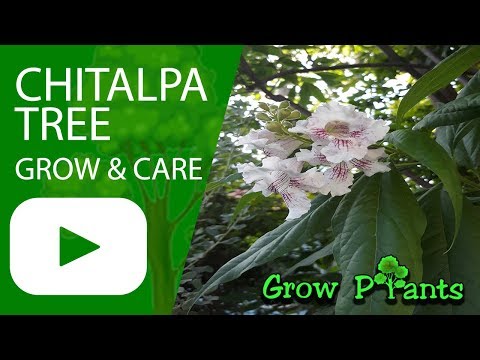

Plant Profile & Key Characteristics
Overview: A deciduous to semi-evergreen tree, 1.8-5 m (6-15 ft) tall, grown as a drought-tolerant ornamental for its showy trumpet-shaped flowers. This hybrid suits desert, subtropical, Mediterranean and temperate gardens.
Quick Specifications
| Specification | Attribute |
|---|---|
| Plant Type / Life Cycle | Perennial (small tree) |
| Foliage Type | Deciduous to semi-evergreen |
| Mature Size | 1.8-5 m (6-15 ft) tall |
| Growth Rate | Fast to moderate |
| Hardiness | USDA zone 5-12 |
Growth Form & Structure
- Height & Spread: 1.8-5 m (6-15 ft) tall; can be grown in containers.
- Growth Habit & Form: Small, rounded ornamental tree.
- Lifespan & Maturity: Fast-to-moderate perennial reaching mature size quickly.
Anatomy & Physical Features
- Leaves & Foliage: Green, narrow linear to lance-shaped leaves.
- Flower Characteristics: Pink, white or purple trumpet flowers in clusters (full detail in the Bloom section).
Primary Uses & Landscape Value
- Functional & Ornamental Roles: Drought-tolerant ornamental flowering and shade tree; attracts pollinators.
Care Guide: Planting, Soil & Watering
Overview: This ornamental hybrid tree loves full sun and warmth and inherits good drought tolerance from its desert-willow parent. It grows in free-draining soil with a low to moderate supply of water.
Quick Care Requirements
| Requirement | Ideal Condition |
|---|---|
| Planting Season | Through the warm season, from spring to autumn |
| Growth Rate | Moderate to fast |
| Soil Type | Well-draining |
| Water Need | Low to moderate – water to establish, then water deeply but infrequently |
Planting & Establishment
- Best Planting Season: Through the warm season, from spring to autumn.
- How to Plant:
- Hole Preparation: Dig a hole about twice the width of the root ball and just as deep, loosening the sides so young roots spread easily.
- Soil Amendments: Mix a little compost into the backfill on poor sites, but keep drainage sharp; it dislikes wet feet.
- Planting Depth: Set the plant so the root collar sits level with the surrounding soil; never bury the stem or trunk base.
- Growth Speed & Expectations: A moderate to fast grower forming a small flowering tree of 1.8-5 m.
Soil, Watering & Drainage Care
- Soil Mix & Drainage Needs: Plant in free-draining soil; good drainage is the key to avoiding root problems. It can be grown in a large, free-draining container but is not suited to life indoors.
- Watering Schedule & Technique:
- Young / Newly Planted: Water regularly for the first few weeks so the root ball never dries out completely while the plant establishes.
- Established: Once settled, water deeply but let the top few centimetres dry before watering again; it copes well with short dry spells.
- Seasonal Adjustments: Increase watering during hot, dry weather and cut right back in winter as growth slows.
Climate, Light & Hardiness
Chitalpa (Chitalpa tashkentensis) is a fast-growing, drought-tolerant hybrid shade tree for desert, subtropical, Mediterranean, and temperate climates; it is unusually cold-hardy for a drought-tolerant flowering tree, spanning USDA zone 5–12.
Quick Climate Specifications
| Climate Zones | Desert, subtropical, Mediterranean, temperate |
|---|---|
| USDA Hardiness Zones | 5–12 |
| Frost Tolerance | High (deciduous or semi-evergreen depending on climate) |
| Light Conditions | Full Sun to Half Shade |
Sunlight & Light Exposure
Optimal Light Setup
Full sun gives the best flowering and habit.
Temperature Extremes & Hardiness
USDA Hardiness & Regional Limits
The zone 5–12 span is unusually broad, reflecting a hybrid bred for both cold hardiness and heat/drought tolerance.
Cold Damage & Winter Protection
Behaves as fully deciduous in colder parts of its range and semi-evergreen in milder, frost-light climates.
Extreme Heat Tolerance
Excellent; bred in part from desert-adapted stock, it handles intense summer heat well.
Wind, Humidity & Microclimate
Dry-Air Tolerance
High, being a drought-tolerant, desert-suited tree.
Growing in Pots, Balconies & Indoors
Chitalpa is not a houseplant – the grower confirms – and it grows into a small flowering tree of 1.8-5 m, so a container suits it only while young or as a large patio specimen. Tough and drought-tolerant, in a big tub it gives a fine show of frilly summer flowers before it needs more room.
Quick Details
- Container Size: A large, deep tub while young; it will eventually want the open ground
- Indoor Suitability: Not a houseplant; a sun-loving tree unsuited to indoor life
- Best Spot: Full sun to part shade
- Soil & Drainage: Well-drained soil; it tolerates dry conditions once established
- Watering in Pots: Low to average – let it dry a little between waterings
Indoors & On the Windowsill
- Why not indoors: The grower does not treat it as a houseplant – it is a deciduous flowering tree that needs full sun, open air and a winter rest, well beyond any room.
- While young: In a big tub it stays manageable for a few seasons on a sunny patio, but plan to plant it out as it grows.
On a Balcony or Patio
- Light & wind: Give it full sun and shelter a young tree from strong wind; it is drought-tolerant but pots still dry fast in summer heat.
- Practicalities: Use a heavy tub for stability; being deciduous, it needs little water over its leafless winter rest.
Choosing the Pot, Soil & Long-Term Care
- Pot & drainage: Use a large, deep pot with generous drainage holes and no standing-water saucer – this plant hates wet feet. Terracotta is ideal because it breathes and dries out fast.
- Potting mix: A gritty, free-draining mix – loam or potting soil cut with coarse sand, perlite or grit; avoid heavy, water-holding composts.
- Feeding: Feed only lightly through the growing season; container plants lose nutrients to leaching, but this one prefers lean conditions to soft, overfed growth.
- Repotting: Pot up or refresh the mix every couple of years once roots fill the pot; take the chance to check drainage and trim any dead roots.
Fertilizing & Feeding
A light feeder overall: this drought-tolerant hedge and specimen tree is bred for tough conditions, so restrained feeding keeps growth sturdy rather than lush and avoids fueling its naturally vigorous habit.
Quick Fertilizing Specs
| Feeding Level | Light feeder |
|---|---|
| Main Nutrient Priority | A balanced fertilizer used sparingly while the tree establishes |
| Best Feeding Period | Spring as new growth begins, especially while young |
| Organic Options | Compost worked into the root zone at planting |
| Reduce/Stop Feeding | Taper feeding once established; this xeric tree performs well on lean soil |
| Micronutrients | Iron can be a concern in alkaline or desert soils; correct only a diagnosed issue |
| Soil pH | Tolerates a wide range including alkaline desert soils |
Feeding by Growth Stage
Establishment after planting
Help a young tree build roots and canopy before it settles into its drought-tolerant mature habit.
| Nutrient direction | A balanced fertilizer with adequate nitrogen supports root and canopy establishment while young. |
|---|---|
| Timing | During the first growing seasons after planting. |
| Frequency | A single light feeding as spring growth begins is usually enough. |
| Fertilizer types | A balanced complete fertilizer applied sparingly, Compost worked into the root zone |
| Precautions | Avoid overfeeding; this tree is bred for lean, dry conditions and heavy fertilizing can produce weak, floppy growth. |
Extended spring-through-autumn bloom
Support the long run of pink, white, or purple trumpet flower clusters that also draw pollinators.
| Nutrient direction | Once established, minimal feeding is enough to sustain this long, reliable bloom. |
|---|---|
| Timing | Across spring, summer, and into autumn as flowers continue opening. |
| Frequency | Established trees rarely need more than occasional light feeding through this bloom window. |
| Fertilizer types | A light balanced feeding only if growth or bloom looks weak |
| Precautions | Resist extra feeding once established; this drought-tolerant tree blooms best without rich fertilizer. |
Winter dormancy or rest
Let the tree rest through cooler weather without pushing new growth.
| Nutrient direction | No supplemental feeding is needed while the tree is dormant or resting. |
|---|---|
| Timing | Through the cool, dormant part of the year. |
| Frequency | No feeding until active growth resumes. |
| Fertilizer types | No feeding at this stage; a dormant or resting tree has no active growth to support. |
| Precautions | Do not fertilize during dormancy or rest; late feeding can also interfere with hardening off before cold weather. |
Nutrient Deficiency Signs & Corrections
Leaves are undersized and pale, and shoot growth slows noticeably.
| Possible causes | low soil nitrogen, especially in lean desert or sandy soils, competition from turf or nearby plants over the root zone, very young or stressed root system |
|---|---|
| Appears first on | leaves throughout the canopy |
| What to check | soil fertility and texture, feeding and watering history, overall vigor compared to prior seasons |
| Possible correction | Apply a light balanced fertilizer in spring, focusing on the root zone. |
New leaves are yellow with green veins, especially on outer growth.
| Possible causes | high soil pH common in alkaline or desert soils limiting iron availability, overwatering a drought-adapted tree, compacted or poorly aerated soil |
|---|---|
| Appears first on | newest leaves on outer branches |
| What to check | soil pH and irrigation habits, drainage and compaction, recent watering frequency |
| Possible correction | Adjust watering to suit this drought-tolerant tree and apply a chelated iron product per its label if chlorosis persists. |
Leaf margins scorch or brown, especially after fertilizing or in hot, dry conditions.
| Possible causes | fertilizer salt buildup, worsened by low rainfall in dry climates, infrequent deep watering concentrating salts, over-fertilizing a plant adapted to lean soils |
|---|---|
| Appears first on | leaf margins and tips |
| What to check | recent fertilizer amounts, irrigation depth and frequency, local rainfall and climate |
| Possible correction | Ease off feeding, water deeply to flush salts, and return to the lighter feeding this drought-tolerant tree prefers. |
Pruning, Training & Seasonal Maintenance
Chitalpa is a fast-growing, pruning-tolerant flowering tree (or large shrub/informal hedge) that blooms in flushes on new growth continuously from spring through autumn, so winter dormant pruning is both the safest time to cut and, because it flowers on new wood, actually encourages a fuller flush of blooming shoots the following season rather than sacrificing bloom.
Quick Pruning & Maintenance Specs
| Pruning Tolerance | High |
| Primary Pruning Window | Winter dormancy (after leaf drop, before spring growth) |
| Secondary Maintenance Window | Light removal of root suckers/basal growth as seen during the growing season |
| Typical Frequency | Annual structural check while young; light maintenance once established |
| Main Objective | Build/maintain tree or hedge form, control the documented vigorous/aggressive growth, encourage flowering wood |
| Young Plant Priority | Choose single-trunk tree form or multi-stem/hedge form early and train to it |
| Mature Plant Priority | Maintain chosen form, manage size, remove root suckers regularly |
| Best Tool Type | Bypass secateurs (suckers/small growth), loppers (medium branches), pruning saw (larger structural cuts) |
| Avoid Heavy Pruning During | Full leaf, active summer bloom, and right after transplanting |
Pruning by Plant Age & Size
Newly Established
Minimal – remove only damaged growth; decide tree-form vs. multi-stem/hedge form but don’t force major structural cuts the first dormant season.
Young / Formative
If grown as a tree, train to a single or a few well-spaced leaders and remove low/competing stems. If grown as an informal flowering hedge, allow multiple stems and shape lightly.
Mature / Established
Maintain the chosen form, thin crossing/crowded interior growth to keep the canopy open, and stay ahead of root suckers, since the species is documented as aggressive.
Seasonal Pruning Schedule
Dormant / Winter (primary)
Objective: structural pruning and size control while leafless. Expected response: fresh, fuller flowering growth the following season. Flowering impact: none – blooms on the new growth that follows.
Ongoing Sanitary
Remove root suckers and any dead/damaged wood as seen through the growing season.
Flowering & Fruiting Wood
Flowers in trumpet-shaped clusters on new growth produced through the warm season (spring–summer–autumn), not on old wood – dormant winter pruning removes none of the coming season’s flower potential and typically improves it by stimulating fresh flowering shoots.
Structural Pruning & Training
Tree form via single/few-leader training with well-spaced scaffolds, or a looser multi-stem/hedge form if used as a screen, per its documented hedge use. Thin crowded interior growth on a mature specimen to maintain airflow and form, since it’s a fast, vigorous grower.
Special Growth to Remove
Root suckers/basal shoots are relevant here specifically because the species is documented as aggressive – remove promptly for a clean tree form, or manage more loosely if a thicket/hedge effect is wanted. This hybrid is typically propagated vegetatively rather than grafted, so basal growth should be treated as root suckers, not rootstock suckers.
Container & Small-Space Pruning
Can be grown in a large container while young, but its 1.8–5m mature size makes it a poor long-term container subject. If kept container-bound, expect more frequent size-control pruning and root management.
Tools
Bypass secateurs for suckers and small growth; loppers for medium branches; pruning saw for larger structural cuts on a maturing specimen.
Tool Hygiene & Disease Risk
Routine – clean, sharp tools; no notable species-specific disease-spread risk documented beyond general good practice.
Cut Placement & Technique
Use thinning cuts back to a branch union rather than heading cuts, to keep a natural form. Cut outside the branch collar on larger limbs. Remove root suckers as close to their point of origin (at the root/base) as possible.
Heavy Pruning & Rejuvenation
Tolerates hard pruning well given its fast growth rate – an overgrown specimen can be cut back significantly in winter dormancy to renew shape and size, with vigorous regrowth expected the following season.
Post-Pruning Care
Water normally; no extra feeding needed, as it’s already a vigorous grower. Watch for a flush of root suckers after hard pruning and remove them as they appear; monitor newly exposed bark for sunscald if a dense canopy was opened up significantly.
Common Pruning Mistakes
- Letting root suckers go unchecked – the species is documented as aggressive and can thicken/spread from the base.
- Heading back branches instead of thinning, which creates dense regrowth instead of a natural flowering form.
- Skipping the winter dormant window and pruning during active bloom, losing part of the current flower display.
When NOT to Prune
Avoid major pruning during active summer bloom if an uninterrupted flower display is wanted, and avoid it right after transplanting until roots establish.
Recommended Tools (by task)
- bypass_secateurs – sucker removal and small formative cuts.
- loppers – medium branch removal for shaping.
- pruning_saw – larger structural cuts on an established specimen.
Pruning Troubleshooting
| Problem | Possible Cause | What to Check | Corrective Action |
| Excessive root suckering | Species is naturally aggressive/vigorous at the base | Shoots emerging from the root zone away from the main stem(s) | Remove suckers promptly at their point of origin; consider a root barrier for a strict single-trunk form |
| Sparse flowering | Over-shading from an unthinned, congested canopy | Interior canopy density | Thin crowded interior growth in winter to open the canopy to light |
| Lopsided/leggy form | Uncorrected competing leaders when young | Multiple similar-sized leaders in the branch structure | Select and favor one or a few leaders early; correct while wood is small |
| Dieback after pruning | Cuts made in full leaf/active growth rather than dormancy | Pruning timing | Move major cuts to the winter dormant window |
Propagation Guide
Chitalpa tree is best propagated using stem cuttings when the goal is to preserve the current plant form.
Quick Propagation Specs
| Preferred Method | Stem cuttings |
| Seed | Seed should not be used to reproduce the hybrid true-to-type |
Vegetative Propagation
Take healthy vegetative material with viable nodes, avoid flowering or damaged growth, and root it in a clean, free-draining propagation medium. Maintain steady humidity without keeping the medium waterlogged.
Seed Propagation
Seed should not be used to reproduce the hybrid true-to-type When seed is used, sow mature viable seed in a clean, free-draining medium and avoid unsupported fixed germination times, temperatures or depths unless they are known for the exact plant.
Aftercare
Protect newly propagated plants from severe drought, heat and waterlogging until new roots and shoots are established.
Bloom & Flower Guide
Quick Details
- Bloom Season: Spring through autumn, in warm spells
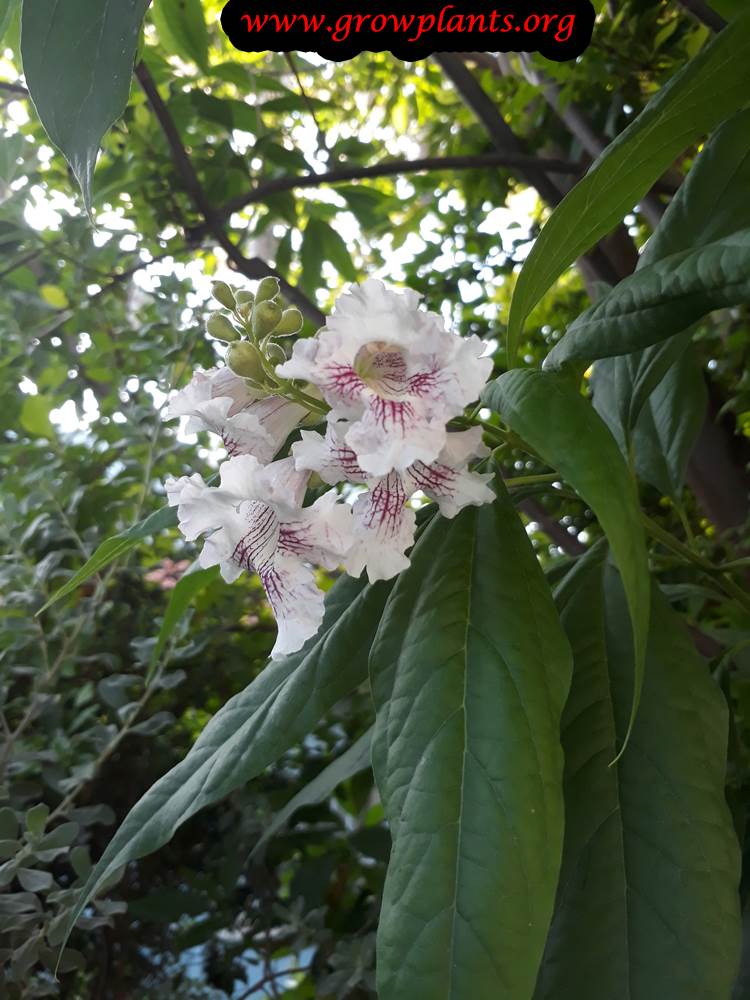
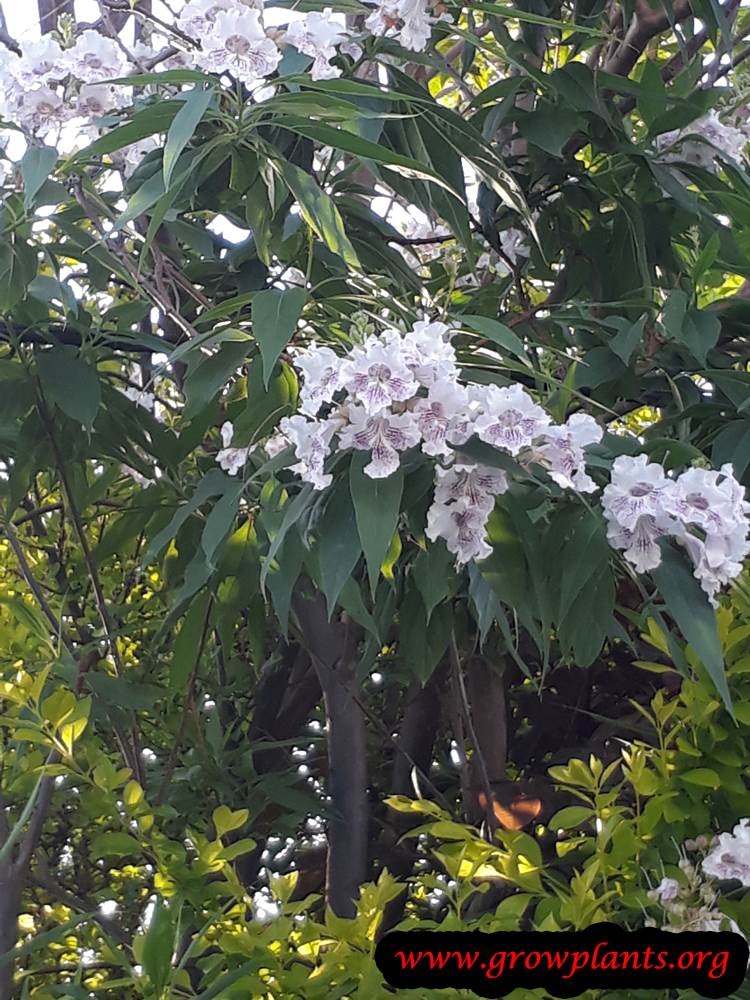
- Flower Appearance: Frilled, trumpet-shaped flowers in pink, white or pale purple, in clusters
- Edibility: Ornamental only – grown as a flowering shade tree, not eaten
Detailed Blooming Overview
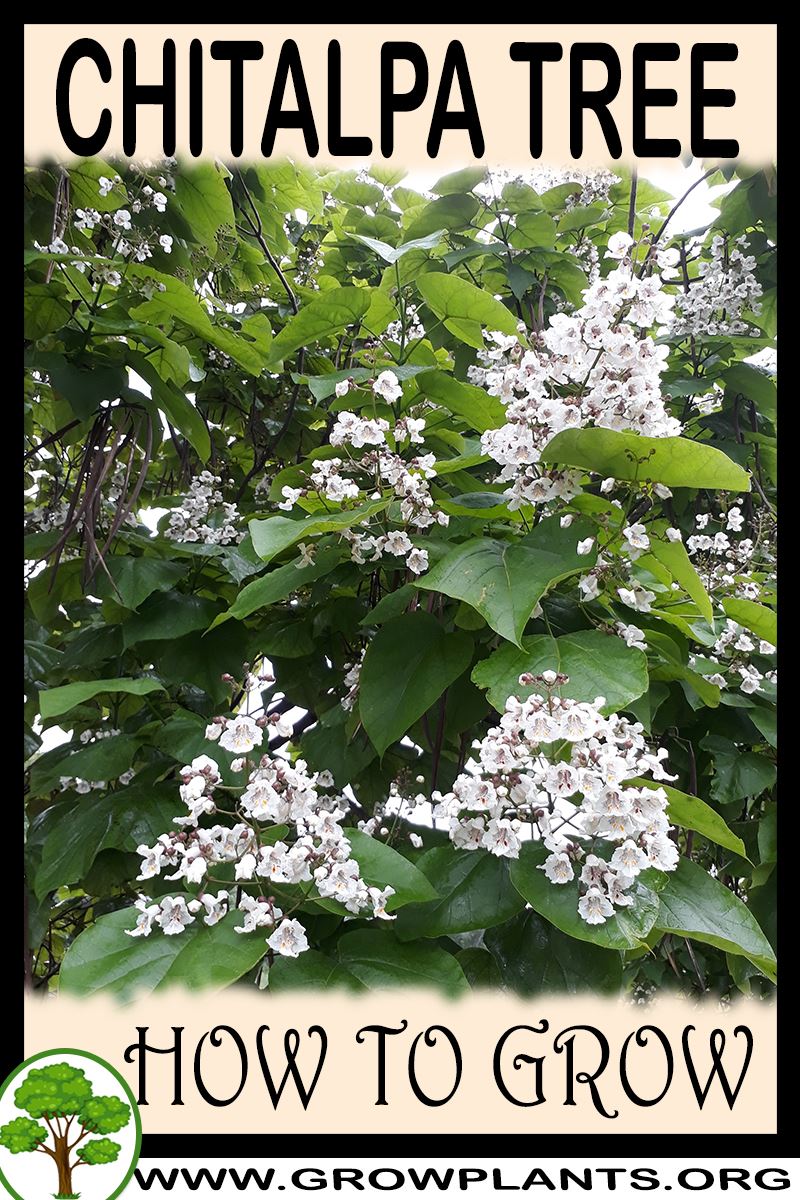
Chitalpa is a garden hybrid between desert willow (Chilopsis) and catalpa, and it shows in the flowers – clusters of frilled, trumpet-shaped blooms in pink, white or pale purple that draw bees and other pollinators. Because it is a sterile hybrid, it puts its energy into a long succession of flowers rather than seed pods, blooming from spring through autumn.
Flower Characteristics
- Trumpet-shaped, frilled flowers in pink, white or purple.
- Carried in clusters; nectar-rich and attractive to pollinators.
- As a sterile hybrid it forms few or no seed pods, which extends the bloom.
Bloom Care & Thinning
- Managing the bloom: Light pruning keeps it shapely, and a trim after the first flush can encourage repeat flowering.
Pests, Diseases & Troubleshooting
Overview: Chitalpa is an intergeneric hybrid of desert willow and catalpa, and its defining problem is not insects but bacterial leaf scorch, with powdery mildew a close second; sap-sucking pests are minor. Because leaf scorch is systemic and incurable, management is about buying clean stock, reducing stress and controlling the insects that spread it.
Quick Troubleshooting Overview
| Issue / Pest | Main Symptom | Primary Solution |
|---|---|---|
| Bacterial leaf scorch | Marginal leaf browning with yellow halo, branch dieback | No cure; remove badly affected trees; control vectors |
| Powdery mildew | White coating on leaves, distortion | Airflow; resistant clones; sun |
| Aphids | Honeydew, curled tips | Water jet; soap |
| Spider mites | Stippled leaves in heat | Hose; oil/soap |
| Whitefly / leafhoppers | Honeydew; hopper feeding, disease spread | Sticky traps; soap |
| Verticillium wilt | One-sided wilt/dieback | Prune out; no chemical cure |
Common Pests & Management
- Aphids (Aphidoidea):
- Symptoms: Clusters of small green, black or grey soft-bodied insects on new shoots, buds and leaf undersides; curled distorted growth, honeydew and sooty mould.
- Prevention & Control: Blast off with a strong jet of water and squash colonies early. Encourage ladybirds, lacewings and hoverflies; avoid excess nitrogen that fuels soft growth. Use insecticidal soap or neem for stubborn outbreaks, sprayed in the evening to spare pollinators.
- Spider mites (Tetranychus urticae):
- Symptoms: Fine pale stippling on leaves, a dull bronzed look, and fine webbing on undersides in hot, dry conditions. Leaves dry and drop as numbers build.
- Prevention & Control: Raise humidity and hose down foliage to break the cycle; mites thrive on dry, dusty plants. Release predatory mites where practical, and treat with insecticidal soap or horticultural oil, coating leaf undersides over repeat applications.
- Whitefly (Trialeurodes / Bemisia spp.):
- Symptoms: Tiny white moth-like insects that flutter up in clouds when foliage is disturbed; honeydew, sooty mould and yellowing weaken the plant.
- Prevention & Control: Hang yellow sticky traps to monitor and trim heavy populations; encourage Encarsia parasitic wasps under cover. Spray insecticidal soap or horticultural oil to leaf undersides, repeating to catch new hatches.
- Scale insects (Coccidae / Diaspididae):
- Symptoms: Immobile brown, tan or white bumps on stems and leaf undersides; sticky honeydew and blackish sooty mould on soft scale. Growth slows and leaves yellow.
- Prevention & Control: Scrape off light infestations by hand and prune heavily-encrusted stems. Smother the rest with horticultural or neem oil, covering undersides; repeat to catch mobile crawlers. Conserve parasitic wasps and ladybirds.
Diseases & Fungal Issues
- Bacterial leaf scorch (Xylella fastidiosa):
- Symptoms: Leaf margins brown and die with a yellow band between the dead and green tissue, worsening through the season, with progressive branch dieback over years; spread by xylem-feeding leafhoppers/spittlebugs. Chitalpa is well known to be susceptible.
- Treatment & Management: There is no cure: start with certified clean, healthy stock, keep trees unstressed with proper (but not excess) water, prune out the worst-affected limbs and sterilise tools, and remove severely declining trees. Manage leafhopper vectors and avoid propagating from symptomatic plants.
- Powdery mildew (Erysiphe / Golovinomyces spp.):
- Symptoms: White powdery coating on leaves and new shoots, with distortion, especially in humid or crowded conditions – a common chitalpa complaint.
- Treatment & Management: Site in full sun with good airflow, avoid overhead watering and excess nitrogen, and remove affected growth; a sulfur or potassium-bicarbonate spray helps in stubborn cases. Prefer less mildew-prone clones.
- Verticillium wilt (Verticillium dahliae):
- Symptoms: Sudden wilt and dieback of individual branches with vascular streaking.
- Treatment & Management: Prune out affected wood, sterilise tools, keep the tree vigorous, and avoid replanting susceptible species in infected soil; there is no chemical cure.
Growing Difficulties & Abiotic Problems
- Water & drainage stress:
- Cause & Symptoms: Scorch-like browning and dieback worsened by drought, waterlogging or root stress – stress makes leaf scorch symptoms far worse.
- Correction Strategy: Water deeply but moderately in well-drained soil, mulch the root zone, and avoid both drought and waterlogging to keep the tree resilient.
- Weak wood / branch breakage:
- Cause & Symptoms: Fast, brittle growth prone to splitting in wind or under heavy bloom.
- Correction Strategy: Prune for good structure when young, avoid over-feeding that forces weak growth, and thin the canopy to reduce wind load.
- Chlorosis on alkaline soil:
- Cause & Symptoms: Yellowing leaves with green veins on chalky soils.
- Correction Strategy: Mulch with organic matter and apply chelated iron if needed; improve soil drainage and structure.
What Helps – Products & Tools
The priorities are clean planting stock and stress reduction – there is no spray for bacterial leaf scorch. For mildew keep a sulfur or potassium-bicarbonate spray and grow in sun with airflow; use insecticidal soap and horticultural/neem oil for aphids, mites and whitefly (which also limits disease-spreading insects).