

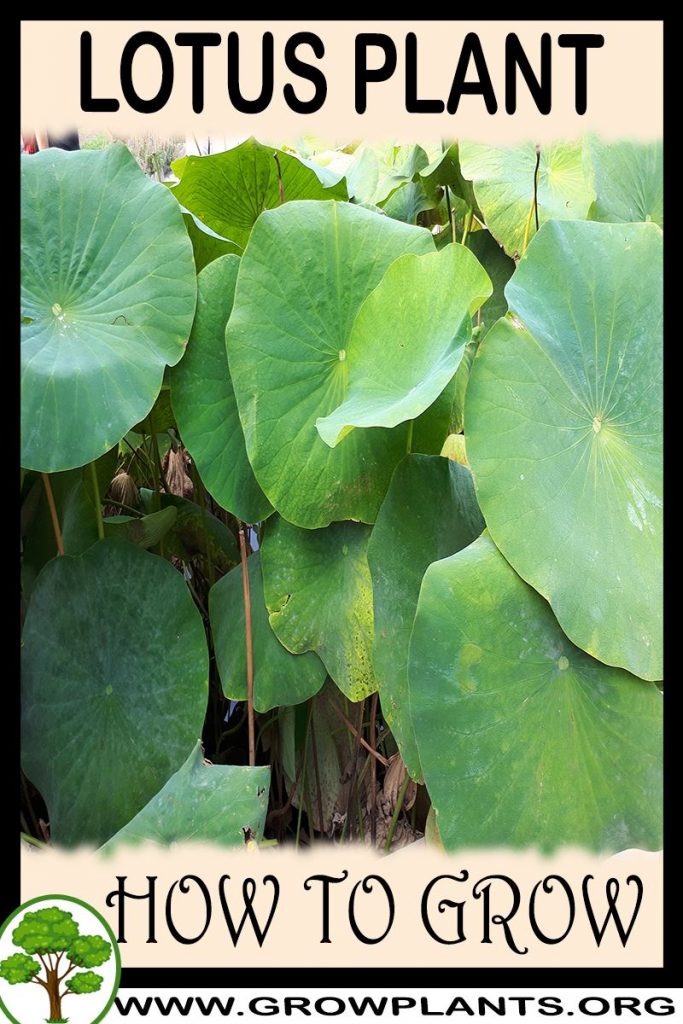
Plant Profile & Key Characteristics
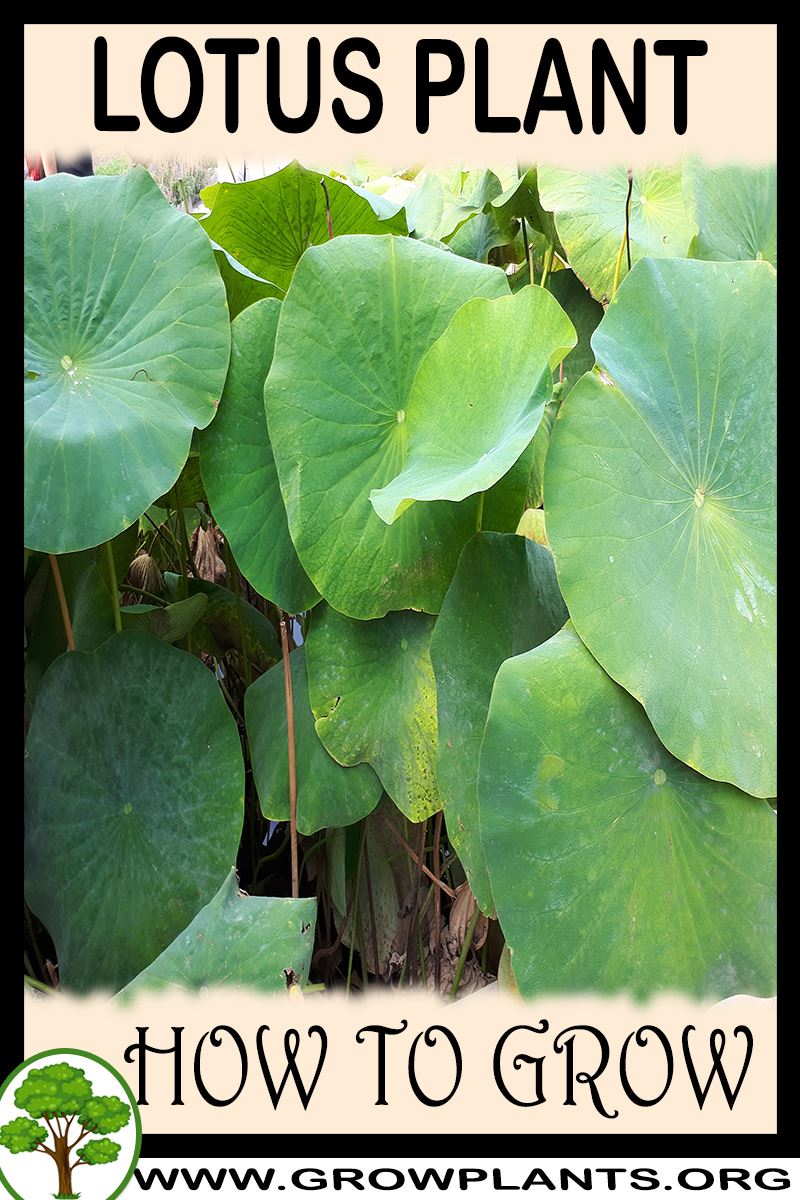
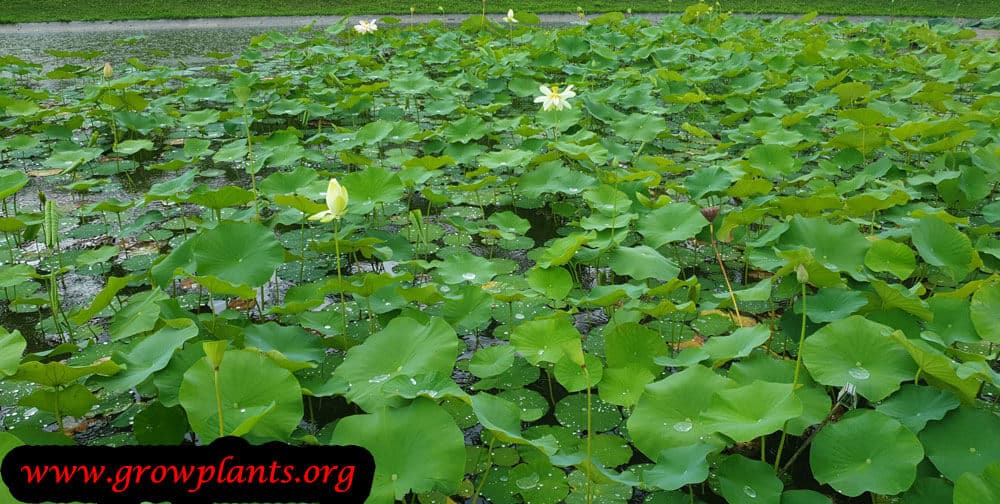
Overview: The Lotus (Nelumbo nucifera / Sacred lotus) is an aquatic perennial 0.6-2 m (24-80 in) tall (dwarf forms 20-40 cm / 8-16 in), grown mainly as an ornamental for its round leaves and bowl-shaped flowers. Its leaves, flowers, seeds and rhizomes are also edible, and it suits temperate, tropical, desert, Mediterranean and subtropical climates.
Quick Specifications
| Specification | Attribute |
|---|---|
| Plant Type / Life Cycle | Perennial aquatic |
| Foliage Type | Evergreen or deciduous depending on climate |
| Mature Size | 0.6-2 m (24-80 in) tall; dwarf forms 20-40 cm (8-16 in) |
| Growth Rate | Moderate to Fast |
| Root System | Rhizomatous – creeping rhizomes anchored in submerged mud |
| Toxicity | Non-toxic / edible |
| Hardiness | USDA zones 4+ (protect the roots from freezing) |
Growth Form & Structure
- Height & Spread: Leaves and flowers stand 0.6-2 m (24-80 in) above the water (dwarf forms much lower); grown in submerged containers or tubs of at least 10-20 L (2-4 gal) for dwarfs and 50-100 L (10-20 gal) for large forms.
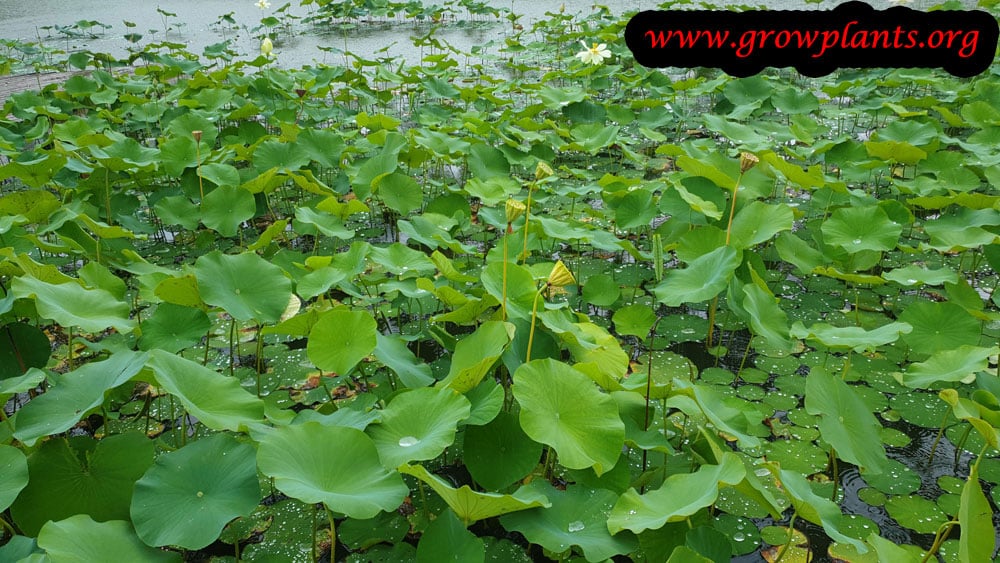
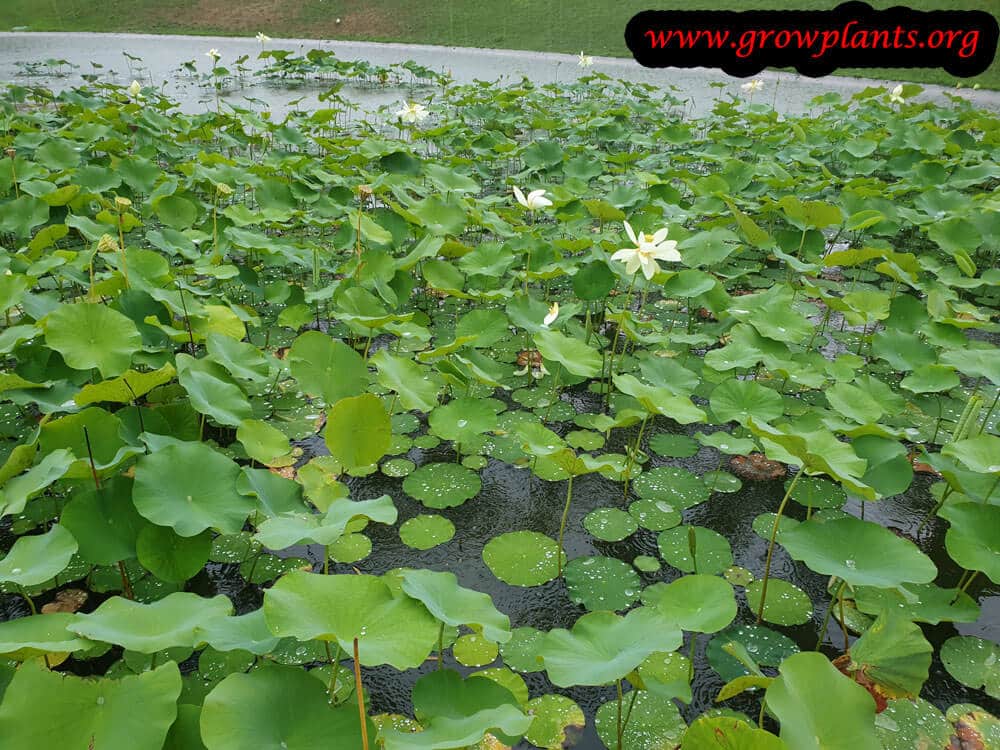
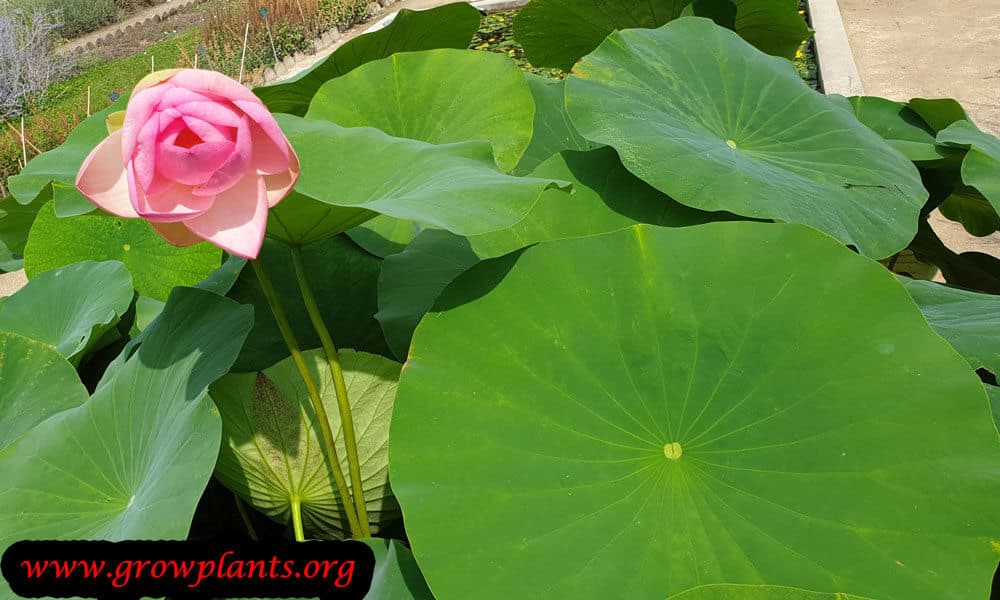
- Growth Habit & Form: Emergent aquatic that spreads by rhizomes in mud; young leaves float and mature leaves are held above the water.
- Lifespan & Maturity: Vigorous long-lived perennial; seed-grown plants take longer to reach flowering size than divisions.
Anatomy & Physical Features
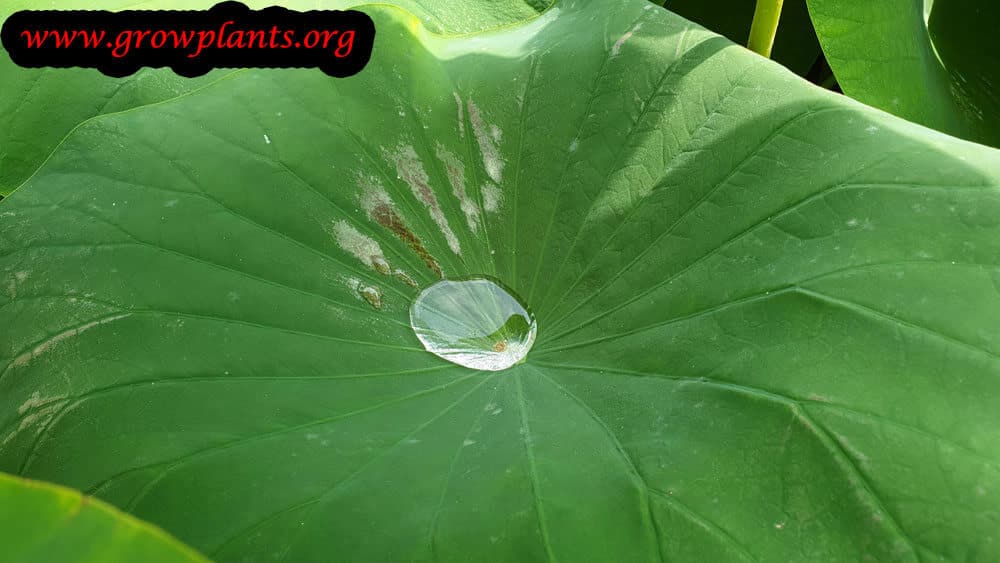
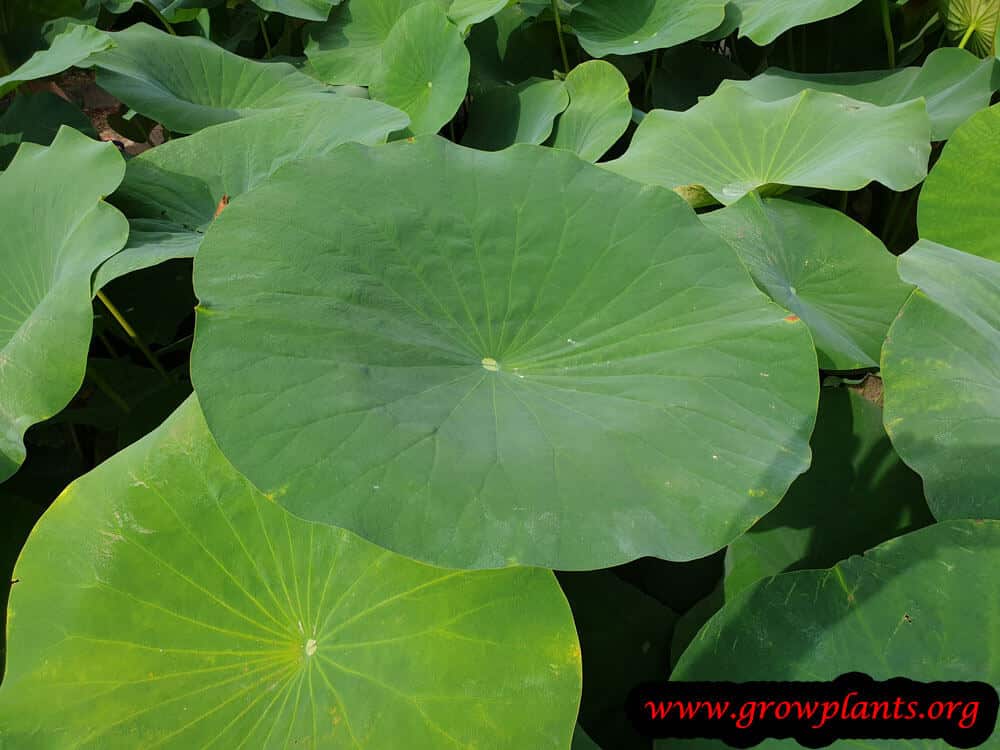
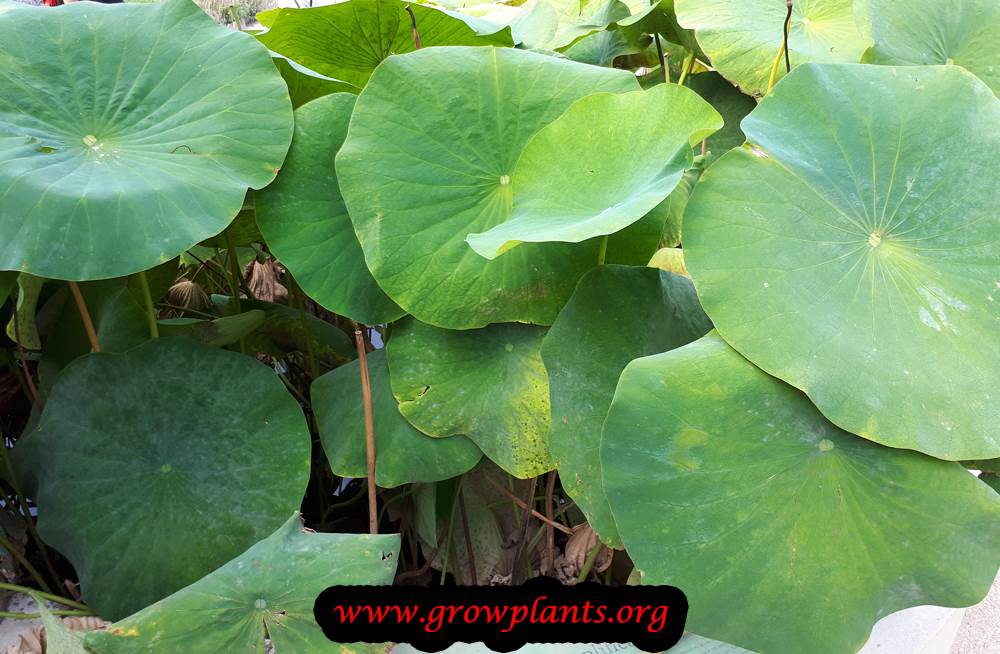
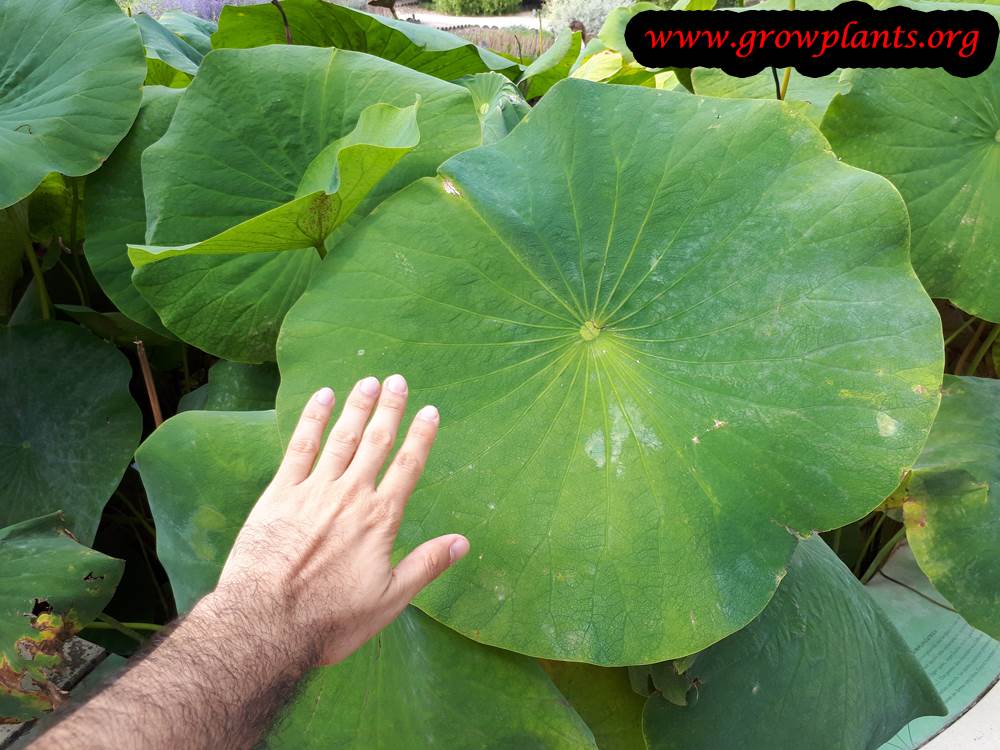
- Leaves & Foliage: Large, round, water-repellent green leaves; young leaves float, mature leaves rise above the surface.
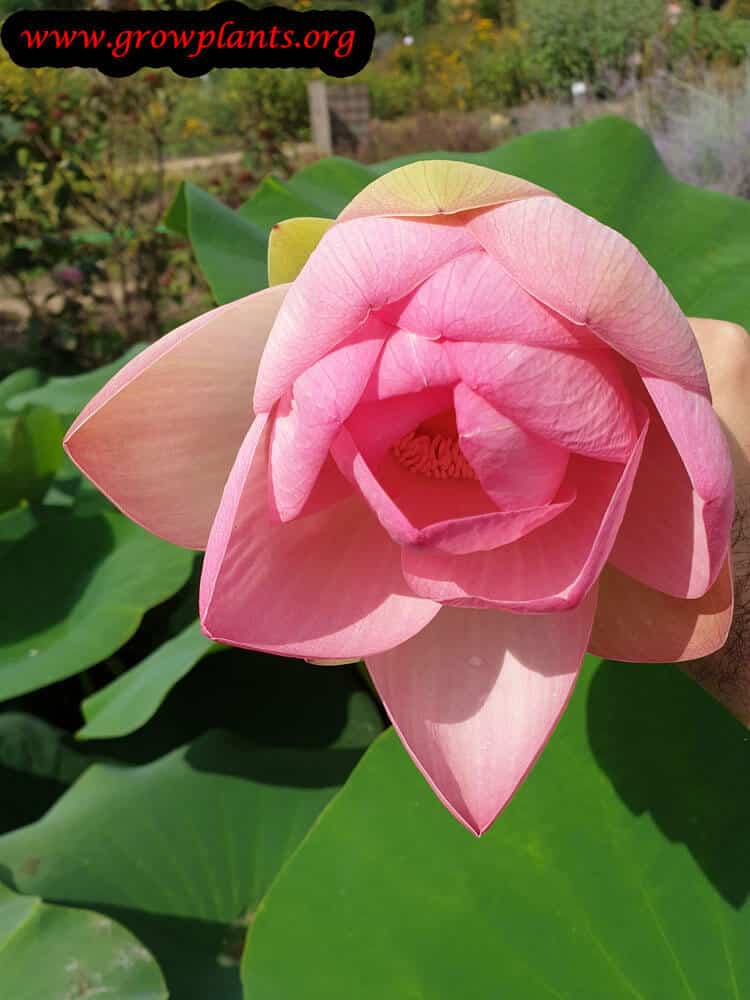
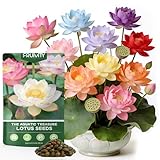
- Flower Characteristics: Large bowl-shaped flowers in pink, purple, white, blue, yellow, red or mixed shades.
Primary Uses & Landscape Value
- Edible Uses: Leaves eaten raw or cooked, rhizomes cooked as a vegetable, and the seeds are edible.
- Functional & Ornamental Roles: Ornamental aquatic for ponds, tubs and water gardens; also grown as an edible crop.
Care Guide: Planting, Soil & Watering
Overview: The sacred lotus is an aquatic geophyte grown in heavy, rich soil kept permanently submerged, with at least about 30 cm (12 in) of water over the soil so the leaves are not damaged. It needs full sun and abundant water, and is a strong grower once the water warms.
Quick Care Requirements
| Requirement | Ideal Condition |
|---|---|
| Planting Season | Spring in cooler zones (4–9); spring to autumn and year-round in warm zones (10a–11+) |
| Growth Rate | Fast to moderate |
| Soil Type | Heavy, rich soil in a submerged container |
| Water Need | High – must stay submerged, ~30 cm (12 in) of water above the soil |
Planting & Establishment
- Best Planting Season: Plant in spring for best results (spring to autumn or year-round in warm zones 10a–11+), once the water is warming.
- How to Plant:
- Hole Preparation: Plant the rhizome in a wide, hole-rich container of heavy, rich soil and then lower it into the pond.
- Soil Amendments: Use heavy, rich soil and fertilise through the growing season (liquid feed), easing off in winter.
- Planting Depth: Lay the rhizome just under the soil surface with the growing tip exposed, then submerge so at least ~30 cm (12 in) of water covers the soil.
- Growth Speed & Expectations: Fast to moderate once warm; dwarf varieties stay compact while full-size types spread strongly.
Soil, Watering & Drainage Care
- Soil Mix & Drainage Needs: Uses heavy, rich soil in a submerged pot – it is meant to stay saturated, not free-draining; keep it in still or slow water.
- Watering Schedule & Technique:
- Young / Newly Planted: Protect young plants from fish, and keep them in warm water to get growth going.
- Established: Maintain the water level at least ~30 cm (12 in) above the soil so leaves float and are not torn.
- Seasonal Adjustments: Growth stops in cold; keep the rhizome from freezing over winter and it will resume in warmth.
Climate, Light & Hardiness
Sacred lotus is a sun-loving aquatic geophyte grown in still, warm water in full sun, needing long, warm days to flower. The site data lists it as hardy from about zone 4 upward provided the rhizome never freezes solid: the foliage dies back for winter while the rhizome overwinters in the mud below the ice line.
Quick Climate Specifications
| Climate Zones | Temperate to tropical (aquatic) |
|---|---|
| USDA Hardiness Zones | Approximately zone 4 and warmer, if the rhizome stays unfrozen |
| Optimal Temp Range | Warm water and air; flowers freely when water is above about 25°C (77°F) |
| Cold Damage Begins | Foliage dies with frost/cold; the rhizome is dormant by then |
| Approx. Survival Minimum | Dormant rhizome survives cold water but is killed if frozen solid |
| Frost Tolerance | Foliage none; dormant rhizome moderate (only if unfrozen) |
| Light Conditions | Full sun (8+ hours) |
Sunlight & Light Exposure
Optimal Light Setup
Full sun with more than about eight hours of direct light a day is needed for good flowering; with only around six hours, or in partial shade, it may grow leaves but flower little.
Best Exposure / Orientation
An open, unshaded pond or container in the sunniest available position gives the best bloom.
Temperature Extremes & Hardiness
USDA Hardiness & Regional Limits
Winter survival is really about the water body rather than the air: the rhizome persists from about zone 4 upward as long as the water and mud around it do not freeze solid. In shallow containers in cold regions, the rhizome must be moved to deeper, non-freezing water or a frost-free store.
Overwintering & Dormancy
In autumn the leaves yellow and die back and the plant rests as a submerged rhizome; it re-shoots when the water warms in spring. Deeper water insulates the rhizome from freezing.
Warm-Season Requirement for Flowering
Lotus needs a run of warm weather to bloom - flowering picks up once the water warms past roughly 25°C (77°F) - so a warm, sunny summer matters more than winter cold.
Wind, Humidity & Microclimate
Microclimate Recommendations
A sheltered, sunny, still-water position that warms quickly gives the strongest flowering; ensure the rhizome sits below the depth that would freeze in winter.
Growing in Pots, Balconies & Indoors
Lotus is an aquatic plant, not a houseplant, but it grows well in a container water garden on a sunny balcony or beside a bright window. It demands full sun – ideally more than eight hours a day – and its roots must sit in water, so it belongs in a planted bucket or tub outdoors rather than a room indoors. Dwarf varieties stay 20-40 cm (8-16 in) while full ones reach 0.6-2 m (24-80 in).
Quick Details
- Container Size: Bucket of at least 10 L (2 gal) for dwarf types, 20 L (4 gal) or more (50-100 L / 10-20 gal) for large ones
- Indoor Suitability: Not a houseplant; grow it on a balcony or by a very sunny window with strong light
- Best Spot: Full sun, 8+ hours a day – in only 6 hours or half shade it may not bloom
- Soil & Drainage: Rich, heavy soil kept submerged; the plant must stay in water so the leaves don’t break
- Watering in Pots: Always in water – keep the reservoir topped up
Indoors & On the Windowsill
- Houseplant limits: Not recommended as a room plant – it needs far more direct sun than indoors provides and its container must hold standing water.
- By a window / balcony: A very sunny window or bright balcony can work if the plant gets enough hours of direct light to flower.
- Overwintering: In cold climates keep the tuber below the freezing line – move the tub somewhere the water won’t freeze solid.
On a Balcony or Patio
- Light & heat: Give it the sunniest, warmest spot you have; reflected heat from walls only helps. Top up the water often in hot weather.
- Practicalities: A water-filled bucket is heavy – set it on a strong, level base, and note that growing in a container inside the bucket makes it far easier to lift and harvest the root.
Choosing the Pot, Soil & Long-Term Care
- Container & water: Plant into an inner container set inside the bucket; the inner pot needs plenty of holes, and the outer bucket holds the standing water.
- Potting mix: Rich, heavy soil – it matters that the mix is heavy so it stays put under water.
- Feeding: A hungry plant – feed at least three times a year for good growth and flowering.
Grower’s Container Tip
- Bucket & soil depth: Grow the plant in a well-holed inner container inside the bucket – this makes harvesting the root easy. Use rich, heavy soil, fertilize at least three times a year, and size the bucket to the variety: at least 10 L (2 gal) for dwarf types and 20 L (4 gal) or more for large ones (50-100 L / 10-20 gal for the biggest). Give a regular variety at least 20 cm (8 in) of soil depth and a dwarf 10-15 cm (4-6 in).
Fertilizing & Feeding
Lotus is a moderate feeder – it benefits from regular liquid or root-zone feeding through its active growing and blooming season, tapering off and stopping once it goes dormant for winter.
Quick Fertilizing Specs
| Feeding Level | Moderate |
|---|---|
| young_feeding | Nitrogen-leaning feeding to help a young plant build its first leaves. |
| mature_feeding | Balanced liquid or root-zone feeding through the growing season. |
| Main Nutrient Priority | Nitrogen while young, then balanced feeding through leaf and flower production. |
| Best Feeding Period | Warm growing season, from active leaf growth through bloom. |
| Organic Options | Rich, heavy aquatic soil refreshed periodically. |
| Soil pH | Tolerant of a range of soil types as long as it is rich and consistently wet. |
| Reduce/Stop Feeding | Feeding is reduced and then stopped as the plant goes dormant for winter. |
Feeding by Growth Stage
Newly Planted or Young Lotus
Get a new division or seedling rooted into rich aquatic soil and support its first flush of leaves.
| Nutrient direction | Nitrogen-leaning feeding to help a young lotus, especially one grown from seed, build its first leaves. |
|---|---|
| Timing | Once the young plant has produced several leaves and is clearly rooting into its soil. |
| Frequency | Light, regular feedings through the establishment period, worked into the root zone rather than the water. |
| Fertilizer types | A liquid or root-zone aquatic fertilizer with a nitrogen lean for young plants, Rich, heavy aquatic soil as the planting base |
| Precautions | Protect young roots from fish disturbance, and keep fertilizer at the root zone rather than dissolved into open water. |
Actively Growing, Blooming Lotus
Support strong leaf production and reliable flowering through the warm growing season.
| Nutrient direction | Balanced feeding through the growing season, delivered as liquid or root-zone fertilizer. |
|---|---|
| Timing | Through the warm growing season while the plant is actively producing leaves and flowers. |
| Frequency | Several feedings spread through the growing season, easing off as growth slows toward autumn. |
| Fertilizer types | A liquid aquatic fertilizer applied at the root zone, Root-zone fertilizer tabs pressed into the container or pond soil |
| Precautions | Avoid harvesting all the leaves from a growing plant, since it needs enough foliage left to keep feeding its rhizome. |
Dormant Season Rhizome Rest
Let the rhizome store energy and go dormant through the cold season without pushing new growth.
| Nutrient direction | None – withhold fertilizer while the plant is dormant. |
|---|---|
| Timing | Once leaves die back heading into winter, through to the start of the next growing season. |
| Frequency | No feeding at this stage; feeding resumes only once clear new growth restarts in spring. |
| Fertilizer types | No feeding at this stage – the dormant rhizome does not need fertilizer |
| Precautions | Do not fertilize while the plant is dormant; wait for clear new growth in spring before feeding again. |
Nutrient Deficiency Signs & Corrections
Pale, small leaves and weak overall growth, most pronounced in young plants.
| Possible causes | Insufficient nitrogen feeding while the plant is establishing, Poor, nutrient-depleted planting soil, Root disturbance or fish activity damaging young roots |
|---|---|
| Appears first on | New leaves as they emerge |
| What to check | How rich the planting soil is and how long it has been since it was fertilized, Whether fish have access to disturb the root zone, Overall root establishment |
| Possible correction | Work a nitrogen-leaning liquid or root-zone fertilizer into the soil and protect young roots from fish disturbance. |
Lush leaf growth but few or no flowers through the blooming season.
| Possible causes | A feeding balance too heavily skewed toward nitrogen, Insufficient direct sunlight reaching the planting, Overcrowded rhizomes competing for a limited root zone |
|---|---|
| Appears first on | Whole-plant pattern rather than a single leaf |
| What to check | Hours of direct sun the planting receives, Recent feeding history and nutrient balance, How crowded the container or planting area has become |
| Possible correction | Balance feeding rather than leaning only on nitrogen, ensure the planting gets ample direct sun, and divide overcrowded rhizomes into fresh soil. |
New leaves show yellowing between the veins while the veins stay green.
| Possible causes | High pH water or soil tying up available iron, Poor, depleted planting soil, Waterlogged conditions limiting root function |
|---|---|
| Appears first on | Newest leaves |
| What to check | Water and soil pH, How long since the soil was last refreshed, Root health and any signs of rot |
| Possible correction | Refresh the planting soil, and apply a chelated iron or complete aquatic-plant fertilizer product per its label if the pattern persists. |
Pruning, Training & Seasonal Maintenance
Lotus needs no structural pruning – there is no woody framework, only a spreading rhizome that sends up fresh leaves and flower stalks each season. “Pruning” here is really seasonal grooming: removing individual leaves and flower stalks once they yellow with age, done any time growth is active, while deliberately leaving most of the plant’s leaf mass intact since young leaves are what feed and build up the storage rhizome (and, on this species, the leaves, flowers, and rhizome are all edible, so over-cutting foliage directly costs future harvest as well as vigor). In temperate zones the top growth also needs a full cutback going into dormancy once cold arrives.
Quick Pruning & Maintenance Specs
| Pruning Tolerance | Low for foliage removal (never strip the whole plant); High for a single end-of-season cutback in temperate climates |
| Primary Pruning Window | Ongoing through spring–autumn for individual yellowed leaves/spent flower stalks |
| Secondary Maintenance Window | Autumn/first-frost cutback of all top growth in temperate (non-tropical) zones |
| Typical Frequency | Light, continual grooming through the growing season |
| Main Objective | Remove spent/yellowed leaves and flower stalks; harvest leaves/flowers without depleting the rhizome |
| Young Plant Priority | Minimal cutting – let the young rhizome build leaf mass |
| Mature Plant Priority | Routine deadheading/leaf grooming; periodic rhizome division |
| Best Tool Type | Precision snips at the base of the leaf/flower stalk |
| Avoid Heavy Pruning During | Anytime it would remove most of the plant’s current leaf mass at once |
Pruning by Plant Age & Size
Newly Established
Leave the plant almost entirely alone while the rhizome is establishing; removing more than an occasional damaged leaf slows early vigor.
Young / Formative
No structural training applies. The only formative task is thinning if multiple shoots are overcrowded in a small container, so remaining leaves get full light.
Mature / Established
Routine removal of individual leaves and flower stalks once they yellow or collapse; in temperate climates, a full cutback of top growth once the foliage dies back naturally at the end of the season.
Seasonal Pruning Schedule
Ongoing Sanitary (Spring–Autumn)
Objective: keep the planting tidy and encourage continued leaf and flower production. What to remove: individual leaves and flower stalks once they yellow with age (check that yellowing is age-related, not a sign of the fish or fungal issues this plant can face, before assuming a leaf is simply spent). What NOT to remove: young, still-green leaves – never strip most or all of the foliage at once, since the plant relies on it to feed the rhizome. Expected response: continued flush of new leaves through the season.
Dormant / Winter (temperate zones only)
Objective: seasonal cleanup once cold ends top growth. Cut back the collapsed foliage and stalks to keep the water/planting area tidy; the rhizome overwinters below the waterline (kept from freezing) and resprouts the following spring. Not relevant in continuously warm, tropical-to-subtropical settings where the plant may stay evergreen.
Special Growth to Remove
Spent flower stems, once petals drop, cut near the base. Yellowed or collapsing leaves removed at the base of the leaf stalk. Harvesting itself (of leaves, flowers, or the rhizome) doubles as this plant’s main “pruning” activity, but should always leave enough active leaf area on the plant to keep feeding the rhizome for the next flush.
Container & Small-Space Pruning
Very commonly grown in a tub, bucket, or basket rather than an open pond, and pruning/thinning here is more about managing crowding: in a small container the rhizome fills the available soil volume quickly, so leaf and flower-stalk thinning helps remaining growth get light, and the rhizome itself needs periodic division and repotting into fresh, heavy/rich soil (roughly every couple of years) once the container is full and flowering declines.
Tools
Precision snips or a sharp knife for cutting individual leaf and flower stalks at the base. A garden spade or knife is the relevant tool for dividing an overcrowded rhizome at repotting time – not a pruning tool in the usual sense, but the closest category for that task.
Tool Hygiene & Disease Risk
Routine: clean tools are sufficient for normal leaf/flower removal. Increase caution when removing foliage affected by powdery mildew, disposing of affected leaves away from the water rather than letting them sit and spread spores.
Cut Placement & Technique
Cut leaf and flower stalks near the base, below the water line if that’s where the stalk originates, rather than partway up, which avoids leaving a stub that can rot and foul the water.
Heavy Pruning & Rejuvenation
The plant doesn’t need or benefit from a hard rejuvenation cut while actively growing (removing most leaves at once weakens the rhizome rather than renewing it). The closest equivalent to rejuvenation is dividing an old, congested rhizome and discarding weak or rotten sections at repotting, plus the routine full autumn cutback in temperate climates once foliage has died back naturally.
Post-Pruning Care
After any leaf/flower removal, no special aftercare beyond normal watering; after the autumn cutback in temperate zones, ensure the rhizome stays below the frost line for winter. Avoid adding fertilizer right after a division, letting new roots establish first.
Common Pruning Mistakes
Stripping most of the leaves at once (for a big harvest or a tidy-up), which starves the rhizome of the photosynthesis it needs and reduces next season’s flowering and leaf/root harvest; cutting stalks partway up instead of at the base, leaving stubs that rot in the water; forgetting the full autumn cutback in temperate climates and letting collapsed foliage foul the water over winter.
When NOT to Prune
Don’t remove most of the plant’s leaves in one pass at any time of year – the source guidance is explicit that this is a real risk with this plant. In temperate zones, avoid disturbing/dividing the rhizome once it has gone dormant for winter; wait for the following spring.
Recommended Tools (by task)
| Ongoing leaf/flower-stalk grooming, any age | precision_snips | Clean single-stalk cuts at the base without disturbing neighboring leaves |
| Mature congested container, rhizome division | garden_spade | Needed to lift, cut, and divide an overgrown or pot-bound rhizome |
Pruning Troubleshooting
| Problem | Possible Cause | What to Check | Corrective Action |
| Reduced flowering and weaker new leaves after a big harvest | Too much leaf mass removed at once, starving the rhizome | How much foliage was cut/harvested in the recent past | Stop cutting and let the plant rebuild a full canopy of leaves before harvesting again lightly |
| Leaf stalks rotting at water level | Stalks cut partway up instead of at the base | Where past cuts were made | Recut any remaining stubs down at the base |
| Declining vigor in an established container | Rhizome has filled the container and become congested | Time since last division/repotting | Lift, divide, and replant into fresh soil in spring |
Propagation Guide
Lotus can be started either from seed or by dividing the rhizome; the site says division is straightforward (separate a rhizome section and replant it), while seed is not hard either but takes longer to reach flowering and needs extra nitrogen while the seedling is young. Difficulty is Easy for either route once the aquatic growing conditions are met, though only rhizome division reliably reproduces a specific flower color or form.
Quick Propagation Specs
| Best Propagation Method | Rhizome division (guarantees the same flower type) |
| Alternative Methods | Seed (slower to flower, useful for raising new plants or variation) |
| Propagation Difficulty | Easy |
| Seed True-to-Type | Variable – seedlings may not match the parent’s flower color or form |
| Vegetative True-to-Type | Yes |
| Best Propagation Season | Spring (spring to summer or spring to autumn in warmer zones; nearly year-round in hardiness zone 11+) |
| Seed Germination Time | 4–10 days once the seed coat is opened |
| Germination Temperature | 21–29°C (70–84°F) |
| Seed Sowing Depth | Minimum 10 cm (4 in) of water over the seed, better at least 0.5 m (20 in) depending on the cultivar’s mature size |
Growing from Seed
Seed Handling & Viability
Seeds that float are not viable – use only seeds that sink. Store seed dry until sowing, but note that if the hard shell is left fully intact it will not germinate.
Dormancy & Pre-Sowing Treatment
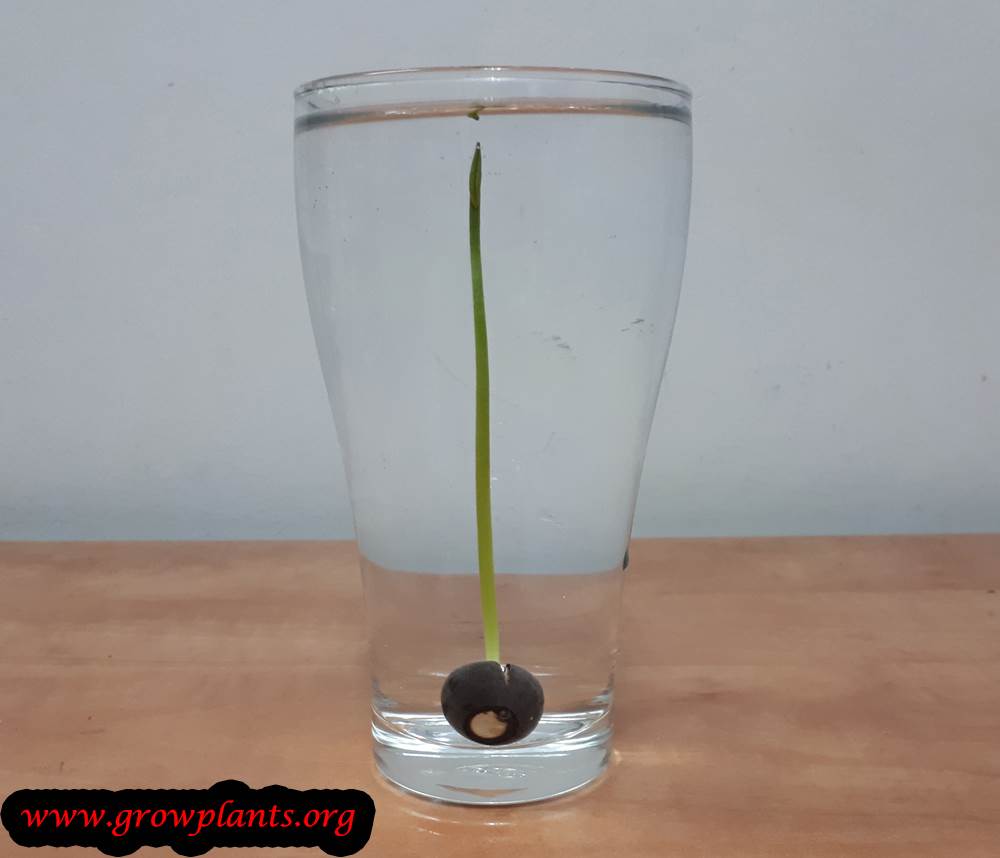
The seed coat is hard and must be nicked, polished or cracked open (from the top, or possibly the bottom) until the white interior is visible; this breaks dormancy and ensures germination.
Sowing Season
Spring to summer, ideally once conditions are reliably warm.
Sowing Depth & Orientation
Cover with a minimum of 10 cm (4 in) of water, better at least 0.5 m (20 in) for larger cultivars; sow each seed in its own separate container.
Germination Conditions
Keep in water at about 21–29°C (70–84°F); if germinating in a glass of water, keep the water circulating or change it periodically, and make sure the seed has fully swollen with water.
Germination Time
About 4–10 days once the seed coat has opened.
Seedling Care
When the first leaf begins to grow, decide the plant’s eventual depth, since the first leaf to reach the surface effectively sets the plant’s height; adjust by burying deeper, or by trimming a leaf only if more than one is present. Start seedlings in water alone until roots form, then plant into soil once roots (or the leaf reaching the surface) develop, and begin fertilizing after the 6th to 8th leaf.
Rhizomes, Tubers, Bulbs & Corms
Rhizome Division
Divide during the plant’s normal planting window for the region (spring in cooler zones, spring through summer or autumn in warmer zones). Separate the rhizome into sections and replant each piece in its new spot or container. Handle rhizomes carefully, as they are brittle; keep at least one healthy growing tip intact on each division, since this is not explicitly detailed by the source but is essential for the piece to sprout.
Establishment Care
Keep new divisions in shallow water while roots and leaves re-establish, gradually returning to full depth, and begin fertilizing once new leaves are growing well.
Bloom & Edible Flower Guide
Quick Details
- Bloom Season: Through the warm months, from late spring into autumn (flowering builds once it is warm, around 25C / 77F and above)
- Flower Appearance: Large, bowl-shaped flowers held above the water in shades of pink, white, red and creamy-yellow, some shading between two colours
- Edibility: The flowers are edible – the petals are used in teas and as a garnish, and the dried stamens make a fragrant tea
Detailed Blooming Overview
The sacred lotus is one of the most beautiful of all aquatic flowers. Big, bowl-shaped blooms rise on tall stalks well above the water, opening in the morning and closing again over several days, and carrying a soft, sweet scent. Flowering builds through the warm months. Remarkably, the flowers warm themselves – a rare trait called thermogenesis – which helps spread their fragrance and draw in the beetles and bees that pollinate them.
Flower Characteristics
- Large, bowl-shaped flowers held above the water surface.
- Petals in shades of pink, white, red or creamy-yellow, sometimes bicoloured.
- Sweetly scented and warm to the touch when open.
Bloom Care & Thinning
- Pollination: Pollinated by beetles and bees, drawn in by the scent and the flower’s own warmth.
- Managing the bloom: Remove spent flowers to keep the water clean, unless you want to keep the ornamental seed heads.
Bloom Health & Protection
- Water-lily / lotus aphids: These can cluster on flower buds and stalks; a firm jet of water to dislodge them, or an insecticidal soap used sparingly and carefully around fish and pond life, keeps them in check.
Fruit & Uses
Lotus plant is grown for three distinct edible parts — its round leaves, its bowl-shaped flowers, and its underground rhizome (commonly called the "root") — each with its own harvest timing and use. Young leaves and flower petals can be eaten raw, while the rhizome is eaten cooked.
Quick Edible Specs
| Edible Parts | Leaves, flowers, rhizome (root) |
| Main Use(s) | Culinary – leaves and flower petals as a vegetable/garnish, rhizome as a cooked vegetable; flower parts also used for tea; traditionally used medicinally in some cultures (no health claims made here) |
| Eaten Raw or Cooked | Leaves: raw or cooked. Flowers: petals mainly raw, some traditional preparations cooked. Rhizome: cooked |
| Preparation Required | Wash all parts thoroughly (aquatic plant); cook the rhizome; rinse/clean leaves and flowers well before eating raw |
| Harvest Season | Leaves and flowers: Spring/Summer/Autumn. Rhizome: Autumn to Winter |
| Time to First Harvest | Leaves can be cut once the plant is established; rhizome is best lifted once the plant has matured over a growing season or more (see Propagation for establishment timelines) |
| Storage | Leaves and flowers are best used fresh; rhizome stores longer than leaves if kept cool and slightly moist |
| Safety/Toxicity Caveat | No toxic parts reported; as with other edible aquatic plants, wash thoroughly (and prefer cooking) if grown in water of uncertain quality, to avoid ingesting anything picked up from the water |
Leaves & Greens
The green, round leaves are edible — young leaves lie flat on the water surface while mature leaves stand above it. They can be harvested by cutting freely once the plant is established, but not all leaves should be taken at once, since the plant needs enough foliage left to keep growing. Leaves are used both raw and cooked.
Flowers & Flower Buds
The bowl-shaped flowers, which can be pink, purple, white, blue, yellow, red or a mix of colours, are edible. Petals are typically used fresh (raw), for example as a garnish or light addition to dishes, and the fragrant stamens are traditionally dried for tea; some traditional preparations cook the petals as well. The site does not give a separate harvest note for flowers beyond the general Spring/Summer/Autumn bloom season, so picking is best timed to when flowers are open.
Bulbs, Corms & Rhizomes
The rhizome (widely referred to as the "lotus root") is brown-yellow, cone-shaped and characteristically full of holes when sliced. It is lifted from Autumn to Winter and is eaten cooked, not raw. Because harvesting disturbs the growing area, digging the rhizome can be harder when the plant is not grown in a contained bracket/planter (see Care for growing-container notes).
Preparation, Uses & Safety
Young leaves and flower petals are used raw in salads or as a garnish, or lightly cooked; the rhizome is always cooked before eating, sliced to reveal its distinctive holed cross-section, and used as a vegetable in stir-fries, soups and similar dishes. Note: lotus seeds are also a well-known edible product of this plant in many cuisines, though they are not detailed in this plant’s growing records. As with any edible part of an aquatic plant, wash thoroughly and favour cooking over eating raw if the water source is not clean. Lotus is also traditionally used medicinally in some cultures; no medical claims are made here.
Pests, Diseases & Troubleshooting
Overview: Sacred lotus (Nelumbo nucifera) is a vigorous aquatic that is generally healthy, but its floating and aerial pads attract aphids and leaf-mining moths, and can develop fungal leaf spots in still, humid conditions. Manage pests without harming pond fish and beneficial life – physical and biological methods first.
Quick Troubleshooting Overview
| Issue / Pest | Main Symptom | Primary Solution |
|---|---|---|
| Waterlily aphid | Dense clusters on pads/buds; honeydew | Hose into water for fish; predators |
| China mark moth | Pads cut and ‘sewn’ into shelters | Remove floating leaf pieces; handpick larvae |
| Thrips | Silvery scarring on leaves/flowers | Remove affected foliage; blue sticky cards |
| Cercospora leaf spot | Brown ringed spots on pads | Remove spotted pads; improve airflow |
| Powdery mildew | White coating on emergent leaves | Space plants; remove affected foliage |
| Rhizome/crown rot | Soft, foul rhizome; poor emergence | Firm healthy rhizomes; avoid damage |
Common Pests & Management
- Waterlily aphid (Rhopalosiphum nymphaeae):
- Symptoms: Dense green-black clusters on flower buds and pad undersides, distorting them and coating the water with honeydew.
- Prevention & Control: Hose or submerge affected pads so pond fish eat the aphids, encourage natural predators, and avoid insecticides that harm fish and pollinators; a strong water jet is the main tool.
- China mark moth (Elophila nymphaeata):
- Symptoms: Neat pieces cut from the pads and ‘sewn’ together into floating larval cases; leaves become ragged.
- Prevention & Control: Skim off and destroy affected floating leaf fragments with their larvae, and handpick cases; healthy vigorous plants outgrow light damage.
- Thrips (Thysanoptera):
- Symptoms: Silvery scarring and speckling on leaves and flowers, with distorted new growth.
- Prevention & Control: Remove badly marked foliage, use blue sticky cards to monitor, and rely on predators; sprays are a last resort near water.
- Leaf-mining midges & caterpillars (various):
- Symptoms: Winding mines or chewed patches on the floating pads.
- Prevention & Control: Pick off and destroy mined and chewed leaves; the plant readily replaces them.
Diseases & Fungal Issues
- Cercospora leaf spot (Cercospora / Alternaria spp.):
- Symptoms: Brown, sometimes ringed spots that enlarge and cause pads to yellow and rot, worst in warm, still, humid conditions.
- Treatment & Management: Remove and destroy spotted pads promptly, thin crowded plantings for airflow, and avoid wetting emergent foliage late in the day.
- Powdery mildew (Erysiphaceae):
- Symptoms: White powdery coating on aerial (emergent) leaves in humid, crowded, poorly ventilated spots.
- Treatment & Management: Space plants, improve air movement, and remove affected leaves; a bicarbonate or sulfur spray can be used sparingly on emergent foliage only.
- Rhizome / crown rot (bacterial & fungal complex):
- Symptoms: Soft, foul-smelling rhizomes and poor spring emergence, usually after damage or in stagnant, oxygen-poor mud.
- Treatment & Management: Plant firm, undamaged rhizomes in fresh loam, avoid bruising them, and keep water reasonably fresh; discard rotten rhizomes.
Growing Difficulties & Abiotic Problems
- Poor flowering:
- Cause & Symptoms: Too little sun, cold water, cramped containers, or under-feeding suppress blooms.
- Correction Strategy: Give full sun and warm water, grow in a wide container with rich loam, and feed with aquatic fertilizer tabs during active growth.
- Yellowing leaves:
- Cause & Symptoms: New growth yellows from cold water, transplant shock, or iron/nutrient shortage.
- Correction Strategy: Wait for warm settled conditions, feed with aquatic fertilizer, and add an iron source if chlorosis persists.
- Pad scorch:
- Cause & Symptoms: Fluctuating water levels or fertilizer burn scorch pad edges.
- Correction Strategy: Keep water levels stable and use slow-release aquatic tabs pushed into the soil rather than loose feed.
What Helps – Products & Tools
Because it grows over fish and pond life, favor physical control: strong water jets and fish for aphids, hand-removal of moth cases and spotted pads, sticky cards for thrips, and only sparing bicarbonate/sulfur on emergent leaves for mildew – never broad insecticides in the pond.