Plant Profile & Key Characteristics
Overview: A fast-growing evergreen floating aquatic (Water hyacinth) about 10-30 cm tall, with glossy rounded leaves on inflated, buoyant stalks and showy purple flowers. It is grown as an ornamental pond plant, but is one of the world’s most invasive aquatic weeds.
Quick Specifications
| Specification | Attribute |
|---|---|
| Plant Type / Life Cycle | Perennial (free-floating aquatic) |
| Foliage Type | Evergreen (in frost-free conditions) |
| Mature Size | 10-30 cm tall (4-12 in) above the water |
| Growth Rate | Fast (aggressively so) |
| Root System | Feathery, free-floating fibrous roots hanging in the water |
| Hardiness | USDA 10+ |
Growth Form & Structure
- Height & Spread: Floating rosettes stand 10-30 cm (4-12 in) above the water and spread rapidly across the surface by runners.
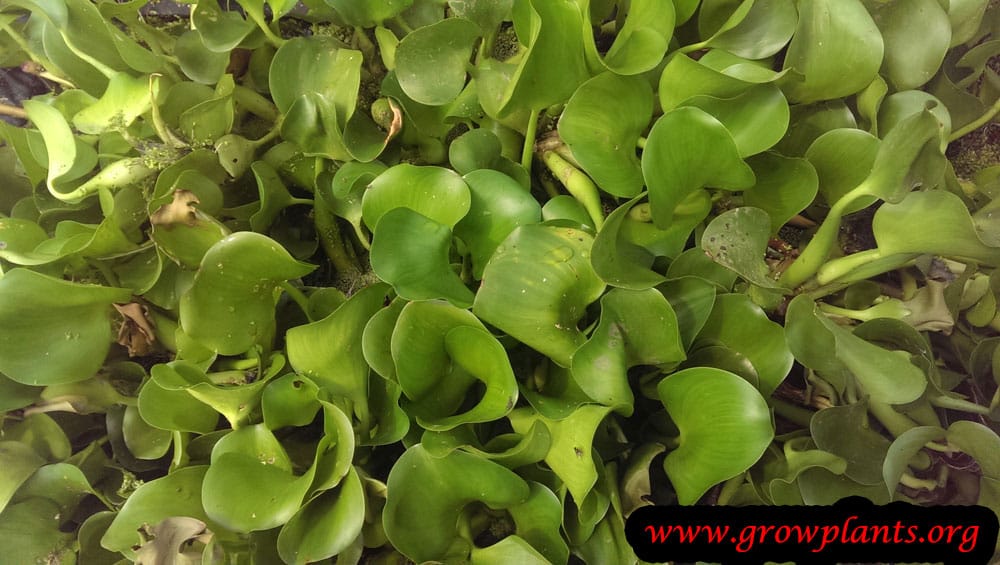
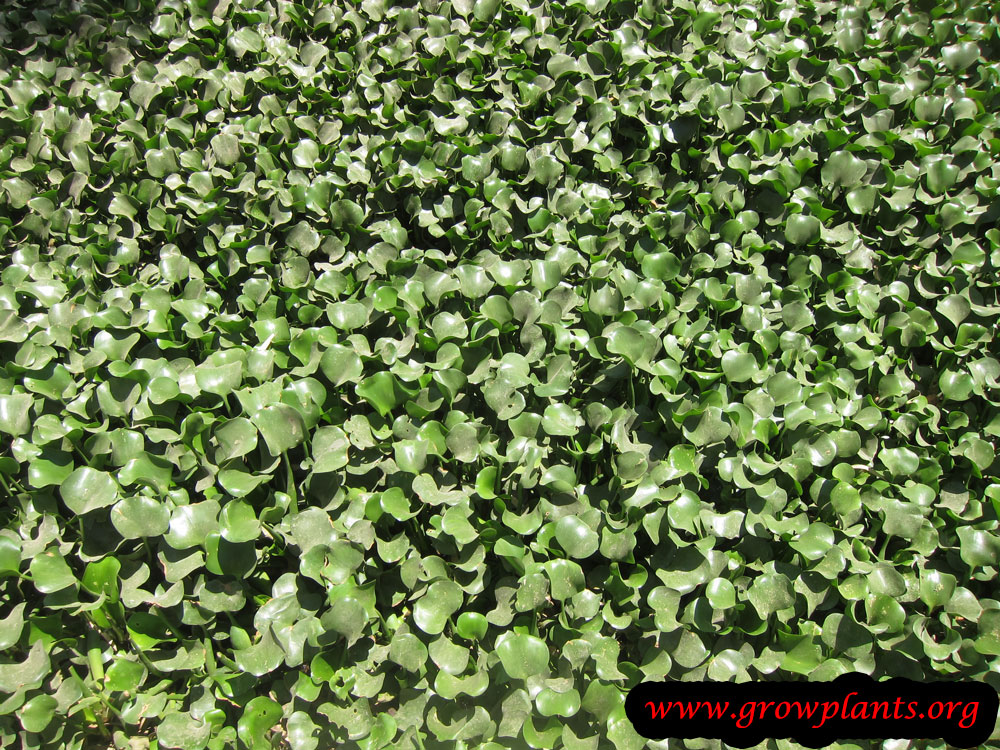
- Growth Habit & Form: Free-floating aquatic forming rosettes of leaves held up by swollen, spongy, ball-like leaf stalks that act as floats.
- Lifespan & Maturity: Short-lived individually but self-perpetuating, doubling in area very quickly under warm conditions.
Anatomy & Physical Features
- Leaves & Foliage: Rounded to oval glossy leaves, each on a stalk with a bulbous, air-filled float at its base.
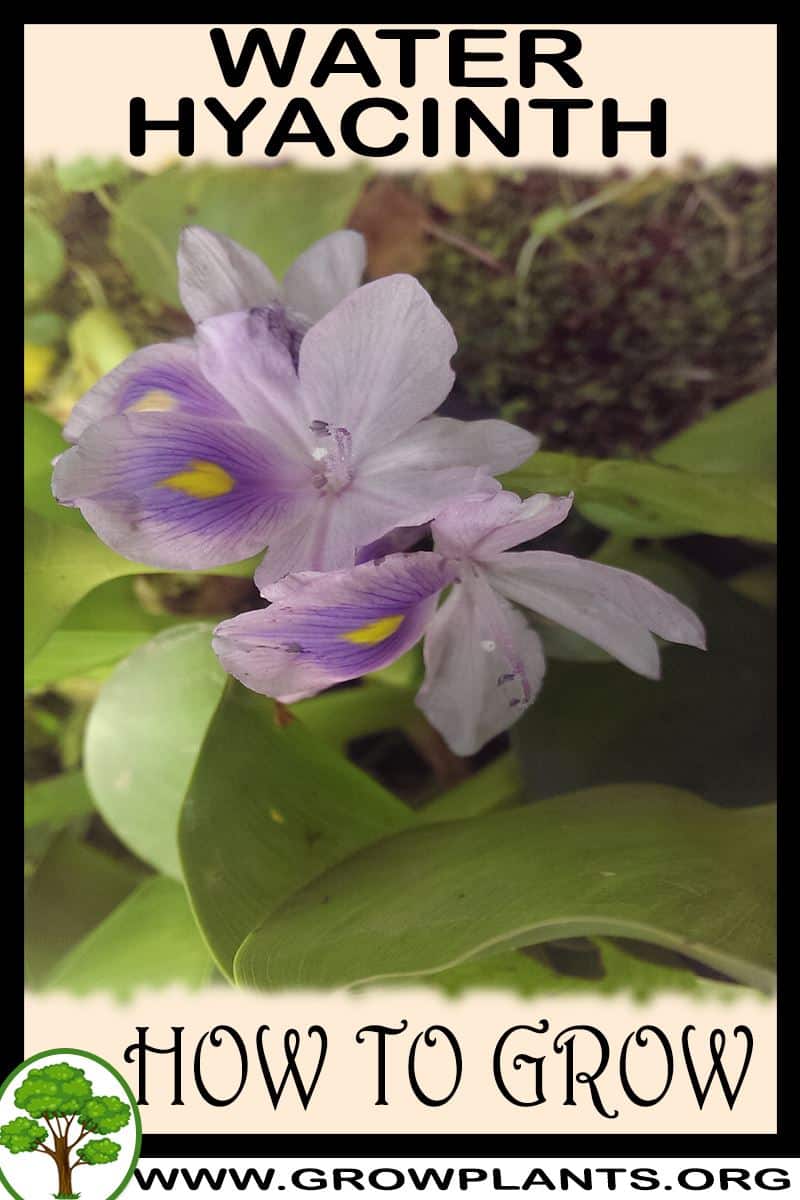
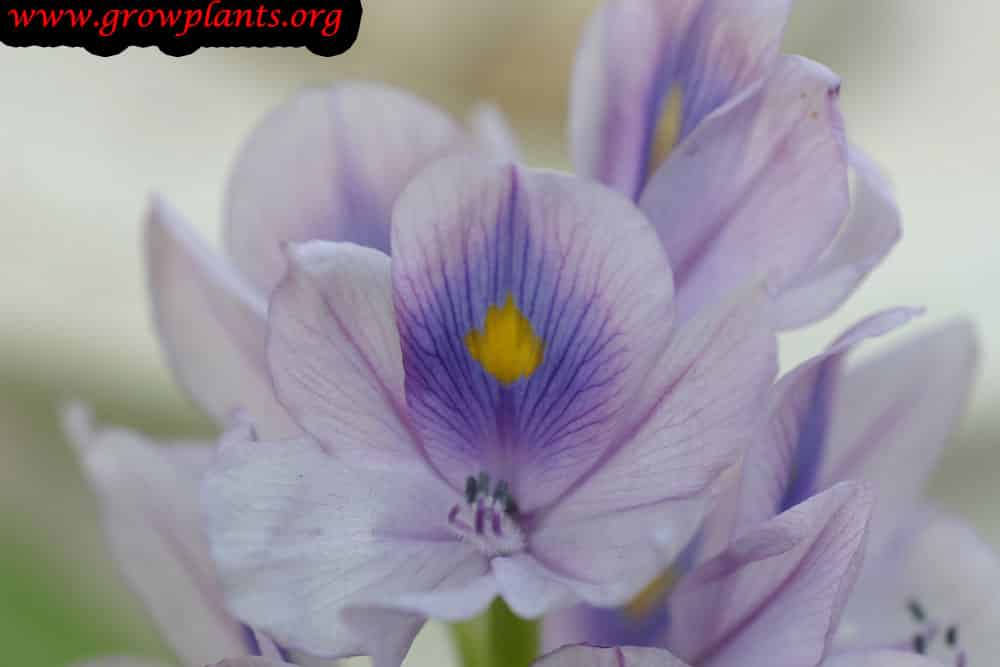
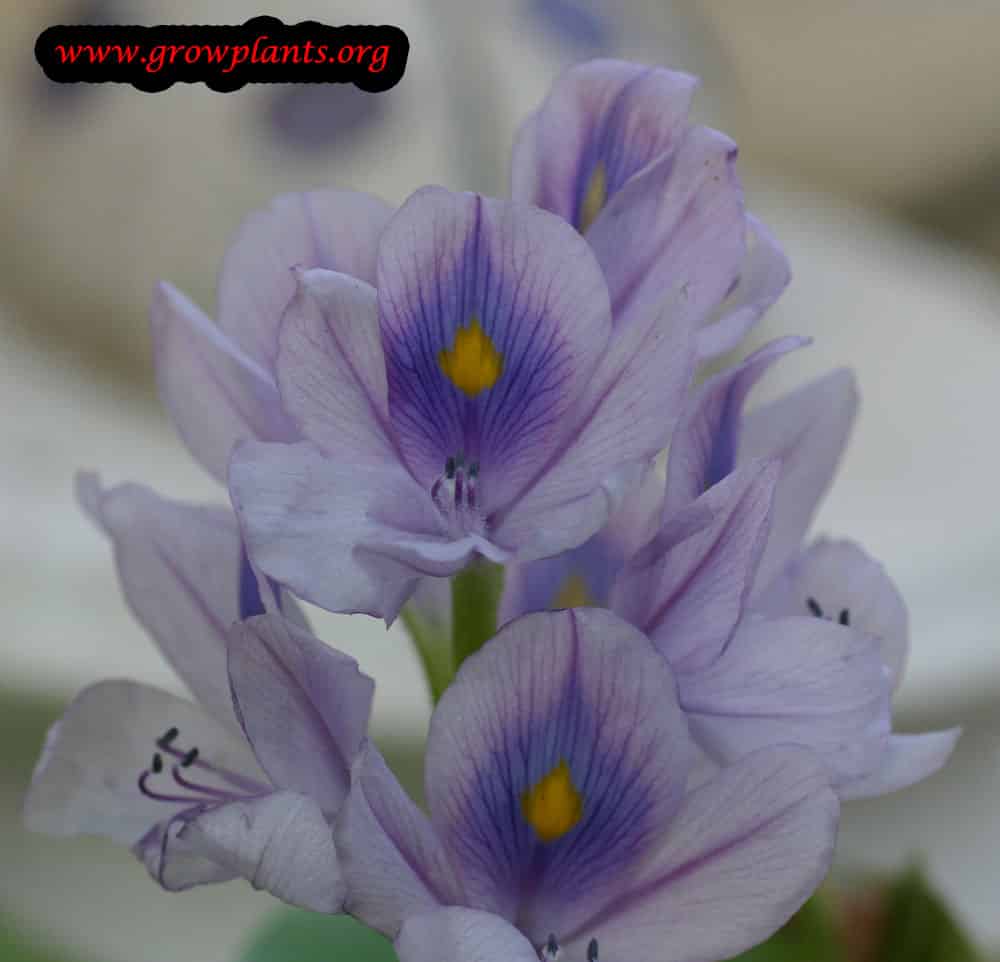
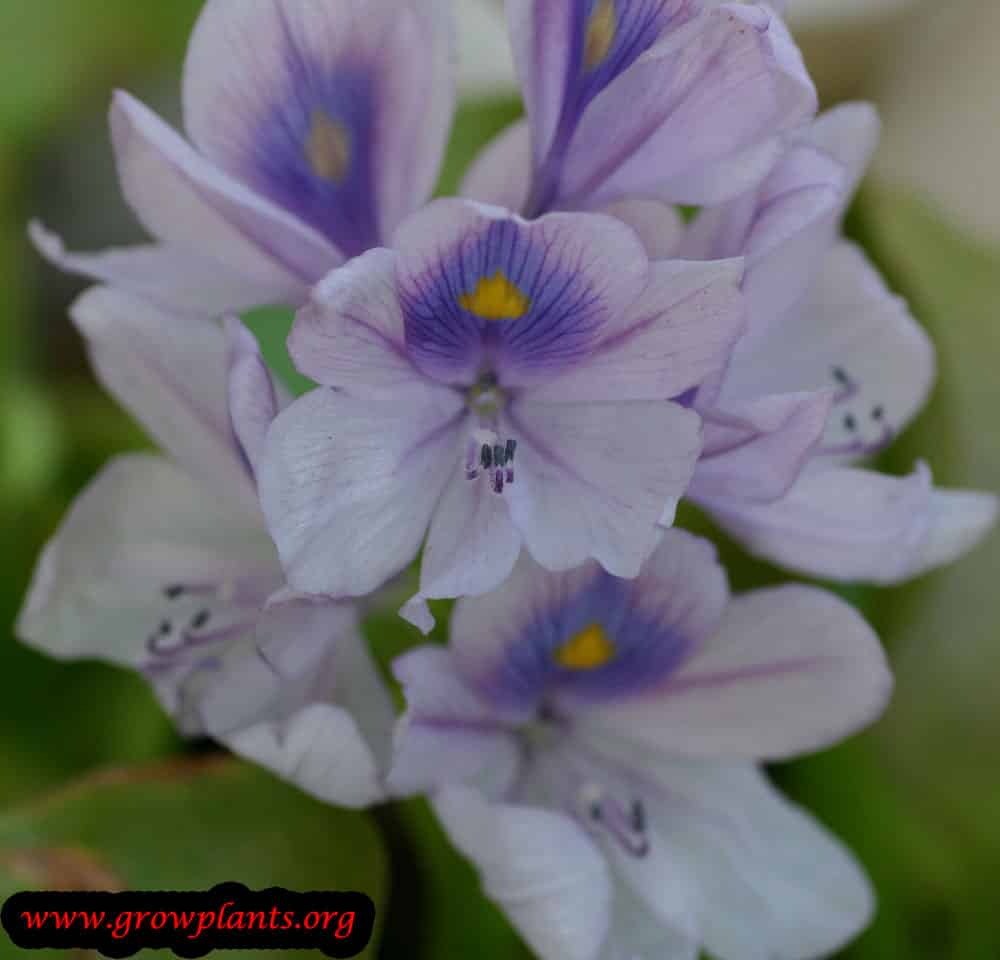
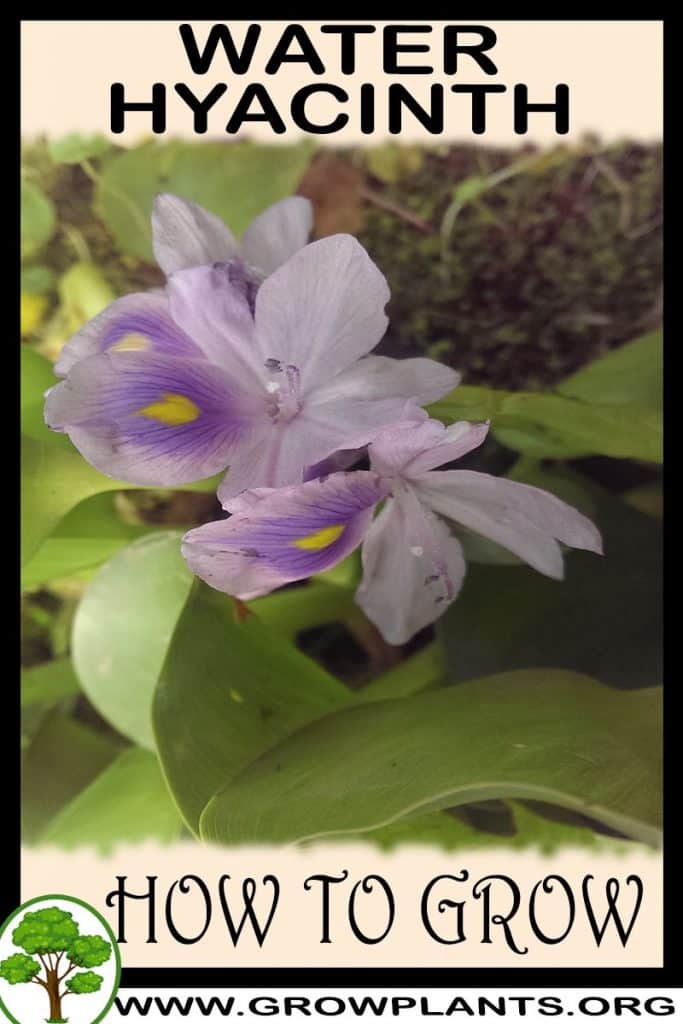
- Flower Characteristics: Purple six-petalled flowers, the upper petal marked with a dark purple and yellow, striped blotch.
Primary Uses & Landscape Value
- Functional & Ornamental Roles: Ornamental pond and water-garden plant that also shades and filters water; must be contained, as it is a highly invasive noxious weed in many countries.
Care Guide: Planting, Soil & Watering
Overview: Water hyacinth is a fast-growing, free-floating aquatic plant that lives on the surface of ponds and still water, with its roots trailing in the water rather than in soil. It needs full sun to part shade and warm, frost-free water, and spreads aggressively.
Quick Care Requirements
| Requirement | Ideal Condition |
|---|---|
| Planting Season | In spring once the water is warm (year-round in tropical climates) |
| Growth Rate | Fast |
| Soil Type | None — free-floating on the water surface, with roots hanging in the water |
| Water Need | High — a floating aquatic plant that lives on the water surface |
Planting & Establishment
- Best Planting Season: Introduce it in spring once the water is warm; in tropical climates it grows year-round.
- How to Plant: There is no planting hole or soil — simply float the plant on the surface of a pond, water bowl or container of still water and let its roots hang free.
- Growth Speed & Expectations: Very fast — it multiplies rapidly and can become invasive, so contain it in a pond or barrel and thin it regularly.
Soil, Watering & Drainage Care
- Soil Mix & Drainage Needs: No soil is used — it floats on the water surface with its roots hanging free. Grow it in a pond, water bowl or container kept full of water.
- Watering Schedule & Technique:
- Young / Newly Planted: Keep it floating in warm, still water in a bright spot.
- Established: Maintain a full body of water at all times, topping up as it evaporates.
- Seasonal Adjustments: Protect it from cold — move it to warm water or indoors where winters are cold, as it is not frost hardy.
Climate, Light & Hardiness
Water hyacinth is a fast-growing floating aquatic plant for warm, still water in full sun to light shade. It is frost-tender - the site data lists hardiness zone 10 and warmer - and it is highly invasive, so it must be kept strictly contained and never released into natural waterways.
Quick Climate Specifications
| Climate Zones | Tropical, subtropical, mild Mediterranean (aquatic) |
|---|---|
| USDA Hardiness Zones | Approximately zone 10 and warmer |
| Optimal Temp Range | Warm, roughly 25–30°C (77–86°F) |
| Cold Damage Begins | Growth slows below about 10°C (50°F) |
| Approx. Survival Minimum | Near freezing is fatal; frost kills the plant |
| Frost Tolerance | None |
| Light Conditions | Full sun to partial shade |
Sunlight & Light Exposure
Optimal Light Setup
Full sun gives the strongest growth and the best chance of flowering; it tolerates light shade with slower growth.
Temperature Extremes & Hardiness
USDA Hardiness & Regional Limits
Perennial only in frost-free water (about zone 10+). In colder climates it behaves as a warm-season plant, dying at the first frost unless overwintered in frost-free, bright, warm water.
Cold Damage & Winter Protection
Growth stalls in cool water and the plant is killed outright by frost; to carry it over, keep a few plants in warm, bright, frost-free water indoors.
Extreme Heat Tolerance
High - it grows explosively in warm water, which is exactly why it must be contained.
Wind, Humidity & Microclimate
Microclimate Recommendations
A warm, sunny, sheltered container or contained pond suits it. Because it is aggressively invasive, never allow it to escape to open water, and dispose of surplus plants responsibly.
Growing in Pots, Balconies & Indoors
Water hyacinth is an aquatic plant grown in a container of water rather than in soil. The grower does not grow it as a houseplant, but it is well suited to a water tub, half-barrel or mini-pond on a balcony or patio.
Quick Details
- Container Size: A watertight tub, bowl, half-barrel or mini-pond – grown in standing water, not soil
- Indoor Suitability: Not a houseplant; for an outdoor water container
- Best Spot: Full sun to half shade
- Soil & Drainage: No drainage – the container holds water; floats freely on the surface
- Watering in Pots: Keep the container topped up; it needs a constant, generous body of water
Indoors & On the Windowsill
- Indoors: The grower does not list it as an indoor plant; it is a floating plant for a full-of-water outdoor tub or pond.
- Overwintering: This is a tender aquatic; where winters are cold it will not survive a frozen tub, so lift a portion into a bright, frost-free container of water indoors to carry it over.
- Important – invasive: This plant spreads aggressively and is a serious weed of natural waterways in many regions. Keep it contained and never release it or its water into ponds, streams or drains.
On a Balcony or Patio
- Light & water: Stand the water container where it gets the light levels above; top it up often, as an open tub of water evaporates fast in sun and wind.
- Weight & siting: A full water container is very heavy – make sure the balcony or shelf can take the load before filling it, and site it on a level, stable base.
Choosing the Pot, Soil & Long-Term Care
- The container: Any watertight vessel works – a glazed pot with no holes, a half-barrel with a liner, a bowl or a purpose-made mini-pond. No drainage holes here; the point is to hold water.
- Growing it: It simply floats on the surface – no soil needed; thin out and remove excess growth regularly so it does not cover the whole surface.
- Water & feeding: Keep the water topped up with rain or aged tap water; these plants feed from the water, so go easy on fertiliser and remove decaying leaves to keep it clear.
- Upkeep: Divide or thin crowded growth each year to keep it healthy and stop it swamping the container.
Growing this plant in a greenhouse
A greenhouse can give water hyacinth frost protection, cold protection, humidity control and extra warmth. In the right climate it may also be kept growing through winter, depending on how much warmth and light are provided.
Greenhouse at a glance
| Greenhouse suitability | Conditional - depends on your climate |
|---|---|
| Main benefits | frost protection, cold protection, humidity control, extra warmth |
| Season extension | earlier spring & later autumn |
| Protect when air drops below | about 10°C - note this is an air guide; pond/water temperature is what really governs an aquatic plant |
| Maintain greenhouse minimum | around 10°C for active growth |
| Suitable types | heated greenhouse, glass greenhouse |
| Heating | Heating is recommended in cold climates for continuous growth. |
Related greenhouse guides
- Greenhouses: How to Choose the Right Greenhouse
- Best Greenhouse Heaters
- Greenhouse Climate Control: Temperature, Ventilation and Humidity
Fertilizing & Feeding
Water hyacinth is a notoriously vigorous floating plant, buoyed by its bulbous petioles, that draws nutrients directly from the water; it already thrives in nutrient-rich water and is considered a serious invasive weed in many regions, so deliberate fertilizing is rarely appropriate and can make an aggressive plant even harder to manage.
Quick Fertilizing Specs
| Feeding Level | Light – an efficient natural nutrient scavenger that seldom needs feeding |
|---|---|
| Main Nutrient Priority | None as a rule; nutrients are absorbed directly through the roots hanging in the water |
| Best Feeding Period | Only worth a light boost while a few starter plants establish in unusually clean water |
| Reduce/Stop Feeding | Stop any feeding as soon as the plants begin producing new rosettes on their own |
| Organic Options | Fish waste and general pond nutrient load are normally more than adequate |
Feeding by Growth Stage
Establishing starter plants in lean water
Help a small number of starter plants root in and begin producing offsets in unusually lean water
| Nutrient direction | A light, balanced feeding only if the water is clearly nutrient-poor; otherwise let the plants draw what they need from the water |
|---|---|
| Timing | Shortly after introducing plants, during warm active-growth weather |
| Frequency | A single light application is usually enough to get lean-water plants going |
| Fertilizer types | A diluted balanced aquatic plant fertilizer |
| Precautions | Apply sparingly and only where locally permitted – this species spreads aggressively and is restricted or banned as an invasive weed in many areas |
Established, self-sufficient plants
Let established plants rely entirely on nutrients already present in the water
| Nutrient direction | None – withhold additional fertilizer once offsets are forming freely |
|---|---|
| Timing | Once plants are visibly producing new rosettes and spreading, through the rest of the season |
| Frequency | No feeding at this stage; established plants sustain themselves from the water |
| Fertilizer types | No feeding at this stage – roots draw nutrients directly from the surrounding water |
| Precautions | Do not fertilize established plantings; this species is a recognized invasive weed in many regions, and added nutrients only accelerate unwanted spread |
Nutrient Deficiency Signs & Corrections
Broad oval leaf blades yellow while the bulbous petiole stays firm
| Possible causes | Nutrient-poor water, Insufficient light reaching the floating rosette, Cool water temperature slowing growth, Natural aging of older leaves on a fast-growing plant |
|---|---|
| Appears first on | Older, outer leaves of the rosette |
| What to check | Water nutrient or organic load, Light exposure, Water temperature, General rosette vigor and offset production |
| Possible correction | Confirm light and temperature first; only consider a light feeding if the water is genuinely nutrient-poor |
The spongy, bulbous petioles that keep the plant afloat become soft and lose buoyancy
| Possible causes | Physical damage or crowding from a dense mat, Cold-water stress, Disease or rot entering damaged tissue, Poor water quality |
|---|---|
| Appears first on | Petioles at the crowded center of a mat |
| What to check | Mat density and crowding, Water temperature trend, Signs of rot or damage on the petioles, Water quality |
| Possible correction | Thin crowded mats and address water quality or temperature stress; this is not typically a nutrient issue |
The plant stops producing new rosettes at its usual vigorous pace
| Possible causes | Nutrient-poor or frequently changed water, Cool weather slowing metabolism, Overcrowding limiting light and space, Fish or insect damage to roots and petioles |
|---|---|
| Appears first on | Across the colony rather than one plant |
| What to check | Water nutrient or organic load, Recent temperature trend, Crowding and available open water, Root and petiole condition |
| Possible correction | Address crowding and temperature first; only consider a light feeding if water is unusually lean |
Pruning, Training & Seasonal Maintenance
Water hyacinth (Eichhornia crassipes) is a floating rosette plant with buoyant, bulbous leaf petioles and no woody structure. “Pruning” is limited to removing old leaves (per source) and separating the stolon-connected daughter rosettes it produces as it spreads. This can be done year-round (source: pruning season “all year”). Its purple flower spikes are ornamental but short-lived and are not borne on any structure that pruning timing affects.
Quick Pruning & Maintenance Specs
| Pruning Tolerance | Moderate – leaf and offset removal only, no structural cuts |
| Primary Maintenance Window | Year-round, as needed |
| Typical Frequency | Whenever old leaves decline or the colony spreads beyond its space |
| Main Objective | Remove old leaf tissue; contain spread of a fast-growing, documented invasive |
| Best Tool Type | Fingers or precision snips for individual leaves; hand separation of stolon offsets |
Special Growth to Remove
Remove old, yellowing leaves as they decline (per source guidance). Because the plant multiplies rapidly by stolons into daughter rosettes and is documented as invasive/aggressive – and is in fact one of the world’s most problem aquatic weeds – separate and remove excess offsets on an ongoing basis rather than letting a colony fill the water surface. Spent flower stalks can be trimmed after bloom for tidiness, but this is cosmetic only.
Container & Small-Space Pruning
Grows in a container full of water per source. In a confined container, thin offsets more often than in an open pond, since restricted space fills with daughter rosettes quickly and can choke light and gas exchange at the surface.
Tools
No cutting tool is strictly required for the soft leaf and petiole tissue – remove by hand, or use precision snips for individual leaf/stalk cuts.
Tool Hygiene & Disease Risk
Routine for the tissue itself; the real risk with this species is ecological, not pathogenic. Given its status as a highly invasive, often regulated weed, never dispose of removed material in open water, storm drains, or natural waterways – a single viable fragment can re-root and establish a new colony downstream. Compost or dispose of it on land, away from any water body.
Common Pruning Mistakes
- Discarding removed plants or offsets into a drain, ditch, or natural waterway instead of composting on land
- Letting stolon offsets accumulate unchecked until the colony covers the entire water surface
When NOT to Prune
No closed season is documented (all year); the only real caution is around disposal, not timing – keep removed material out of any waterway.
Propagation Guide
Water hyacinth clones itself rapidly along short stolons connecting the mother rosette to new daughter plantlets, which is why the site marks vegetative reproduction as the method (no grafting needed); simply separating a rooted daughter plantlet and floating it independently is the standard way to start a new plant. Overall difficulty is Easy – almost too easy, given the aggressive, invasive habit the site itself notes.
Quick Propagation Specs
| Best Propagation Method | Separating daughter plantlets formed on stolons |
| Propagation Difficulty | Easy |
| Vegetative True-to-Type | Yes |
| Best Propagation Season | Spring; year-round in the tropics |
Runners & Stolons
Water hyacinth clones itself along short stolons that link the mother rosette to new daughter plantlets. Once a daughter plantlet has developed its own roots, separate it from the stolon and float it on its own. This vegetative habit is the main reason the species spreads so aggressively and is considered invasive (per site data); only propagate or share it where it is not a regulated or prohibited species.
Bloom & Flower Guide
Quick Details
- Bloom Season: Summer to autumn
- Flower Appearance: Showy purple flowers with six petals, the top petal blazed with dark purple and yellow
- Edibility: Grown as an ornamental floating plant; the flowers are not used as food
Detailed Blooming Overview
Water hyacinth throws up a showy spike of lavender-purple flowers over its glossy, bladder-stemmed rosettes in the warm season. Each bloom carries six petals, with a striking dark-purple-and-yellow blaze on the uppermost one. It is beautiful but famously vigorous, so it needs keeping in check.
Flower Characteristics
- Purple flowers with six petals
- The top petal marked with dark purple and yellow stripes
- Held on a short upright spike above the floating rosette
Bloom Care & Thinning
- Managing the plant: water hyacinth spreads aggressively and can smother a waterbody – remove excess plants regularly to keep it contained, and never release it into natural waterways.
Fruit & Uses
Safety note first: water hyacinth is best known as an ornamental and highly invasive floating plant, and it is also one of the most effective plants at absorbing pollutants and heavy metals from water. In some Southeast Asian cuisines the young leaves and leaf stalks are eaten as a cooked vegetable, but this is only safe when the plant has grown in clean water; never eat water hyacinth taken from polluted ponds, ditches or wastewater.
Quick Edible Specs
| Edible Parts | Young leaves and leaf stalks (petioles) |
|---|---|
| Main Use(s) | Cooked leafy vegetable in some regional cuisines; otherwise grown ornamentally |
| Eaten Raw or Cooked | Cooked (boiled/stir-fried); not typically eaten raw |
| Preparation Required | Cook; use only young growth from known-clean water |
| Harvest Season | Young leaves/stalks can be cut through the growing season |
| Time to First Harvest | Not applicable; not grown as a food crop |
| Storage | Best used fresh, soon after cutting |
| Safety/Toxicity Caveat | Plant readily accumulates heavy metals and pollutants from its water source; only eat material grown in known-clean water; older leaves and stalks toughen and are not palatable |
Leaves & Greens
The young, tender leaves are the main part used, picked while still soft before they mature and toughen. They are cooked, typically boiled or stir-fried, rather than eaten raw.
Shoots & Stems
The inflated leaf stalks (petioles), the spongy ‘floats’ at the base of the leaves, are also used in the same way as the leaves in some regional dishes, picked young and cooked.
Preparation, Uses & Safety
Any culinary use is limited to young leaves and stalks, cooked, and only from plants grown in clean water; the single biggest safety issue with this plant is that it is widely used to clean up polluted water precisely because it absorbs heavy metals and other contaminants, which then concentrate in its tissue. Given this risk and how invasive and aggressively it grows, most growers should treat water hyacinth purely as an ornamental/pond plant rather than a food source.
Pests, Diseases & Troubleshooting
Water hyacinth is a fast-growing floating aquatic that is vigorous and largely trouble-free in cultivation; the source “pest” list is unreliable (fish are not a pest of it). Its notable insects are in fact the specialist weevils, planthoppers, and moths released worldwide as biological control of this highly invasive plant, plus ordinary aphids on aerial leaves. The main real issues for a grower are nutrient and cold stress, self-crowding, and the plant’s invasiveness. Never release it into natural waterways; in many regions it is a regulated or prohibited plant.
Quick Troubleshooting Overview
| Issue / Pest | Main Symptom | Primary Solution |
|---|---|---|
| Water-hyacinth weevils | Feeding scars on leaves; petioles bored and rotting | Skim damaged growth; usually only in warm outdoor water |
| Aphids | Colonies on aerial leaves and flower spikes | Rinse/submerge; wipe off; no pesticides in fish water |
| Fungal leaf spot / blight | Brown spots and blight on the leaf pads | Remove diseased pads; thin the mat for airflow |
| Nutrient deficiency | Pale, yellowing leaves; weak growth | Aquatic fertilizer; chelated iron for chlorosis |
| Cold damage | Blackened, collapsing leaves after a chill | Overwinter frost-free and warm |
| Overcrowding | Dense mat, self-shading, water going stagnant | Thin and remove excess plants regularly; bag and bin |
Common Pests & Management
- Water-hyacinth weevils (Neochetina eichhorniae, N. bruchi):
- Symptoms: The classic biological-control agents for this weed and the insects most likely to be seen on it outdoors in warm regions. Adults chew small feeding scars and notches in the leaf surface, while the larvae bore inside the petioles and crown, weakening plants and opening them to rot.
- Prevention & Control: In a garden pond this feeding is usually cosmetic and self-limiting; skim off badly damaged plants and keep the population thinned. No control is normally wanted, since these insects are deliberately used to suppress the plant; avoid pesticides in water shared with fish.
- Water-hyacinth planthopper (Megamelus scutellaris):
- Symptoms: A small sap-sucking planthopper, also used as a biocontrol agent, that feeds in colonies on the leaves and petioles, causing yellowing and reduced vigour in heavy numbers.
- Prevention & Control: As with the weevils, this is generally a beneficial suppressor of an invasive plant rather than something to eliminate; simply remove weakened growth. Do not introduce or move infested plants between water bodies.
- Water-hyacinth moth (Niphograpta / Sameodes albiguttalis):
- Symptoms: The larvae of this moth mine and bore into the petioles and growing points, tunnelling through the spongy tissue and causing bud damage, collapse of leaves, and rot entry, again as a released control agent.
- Prevention & Control: Remove and destroy visibly mined, collapsing growth. In ornamental use it is rarely a management concern; keep the plant contained and healthy rather than treating it.
- Aphids (Rhopalosiphum spp.):
- Symptoms: Ordinary aphids colonize the aerial leaves and flower spikes above the water, sucking sap and secreting honeydew.
- Prevention & Control: Hose them off or submerge the affected leaf briefly to dislodge and drown them, or wipe by hand. Do not apply insecticides to water containing fish or other aquatic life; physical removal is the safe method.
- Spider mites & leaf-chewing insects:
- Symptoms: In hot, dry air (especially on emersed or stressed plants) spider mites can stipple the leaves, and grasshoppers or caterpillars occasionally chew the pads.
- Prevention & Control: Rinse foliage and improve conditions for mites; hand-pick chewing insects. Keep interventions physical and pesticide-free around pond life.
Diseases & Fungal Issues
- Fungal leaf spot & blight (Cercospora piaropi, Alternaria, Acremonium spp.):
- Symptoms: Brown-to-black spots, blotches, and spreading blight develop on the leaf pads, especially on crowded, aging, or stressed mats; several of these fungi are studied as mycoherbicides against the weed.
- Treatment & Management: Remove and destroy diseased leaves and thin dense mats to improve air movement and light. Reduce crowding and nutrient overload; no chemical treatment is appropriate in open water, and vigorous young growth generally outpaces the disease.
- Crown & base rot (bacterial/fungal soft rot):
- Symptoms: In stagnant, overheated, or overcrowded water, or after insect boring, the crown and leaf bases turn soft and rot, and dying plants foul the water.
- Treatment & Management: Keep water moving and not too warm or stagnant, remove decaying plants promptly, and thin the mat so it does not self-smother. Good water quality and spacing prevent most rot.
Growing Difficulties & Abiotic Problems
- Nutrient deficiency & chlorosis:
- Cause & Symptoms: In nutrient-poor water the leaves pale and yellow, growth slows, and new foliage can show interveinal chlorosis from lack of iron or nitrogen.
- Correction Strategy: Feed with an aquatic plant fertilizer and add chelated iron to green up chlorotic leaves; a modest nutrient level keeps the plant lush without fuelling an unmanageable population.
- Cold sensitivity:
- Cause & Symptoms: Water hyacinth is frost-tender; a chill blackens the leaves and freezing kills the plant, so it dies off outdoors in cold-winter climates.
- Correction Strategy: Overwinter a few plants frost-free in a warm, bright indoor container or heated water, or simply replace them each season where they are grown as annuals.
- Overcrowding & invasiveness:
- Cause & Symptoms: Given warmth and nutrients the plant doubles rapidly into a dense mat that shades and deoxygenates the water beneath it, harming pond life, and escaped plants choke natural waterways – it is one of the world’s worst aquatic weeds.
- Correction Strategy: Thin and remove excess plants regularly to keep a healthy pond, and dispose of surplus by bagging and binning or composting on land, never by tipping into any waterway. Check local regulations, as sale or possession is restricted or banned in many areas.
What Helps — Products & Tools
Manage water hyacinth culturally and physically, never with pesticides in water that holds fish or other life. The real tools are a net or skimmer for thinning the fast-growing mat, an aquatic plant fertilizer and chelated iron to correct pale, chlorotic growth, and frost-free overwintering (or seasonal replacement) for cold climates. Hose or hand-remove aphids and diseased pads, and above all contain the plant responsibly – bag and bin surplus and never release it into the wild.