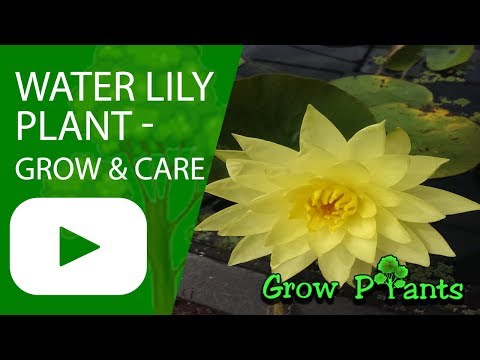

Plant Profile & Key Characteristics
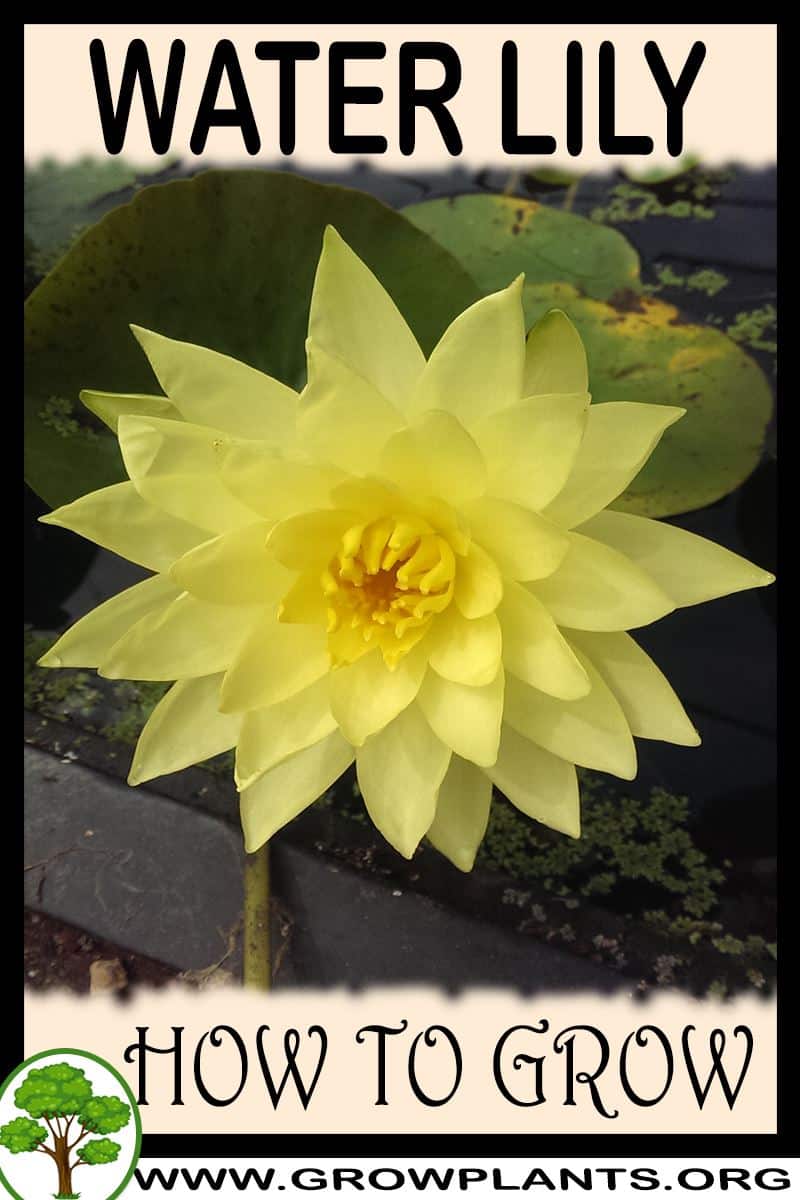
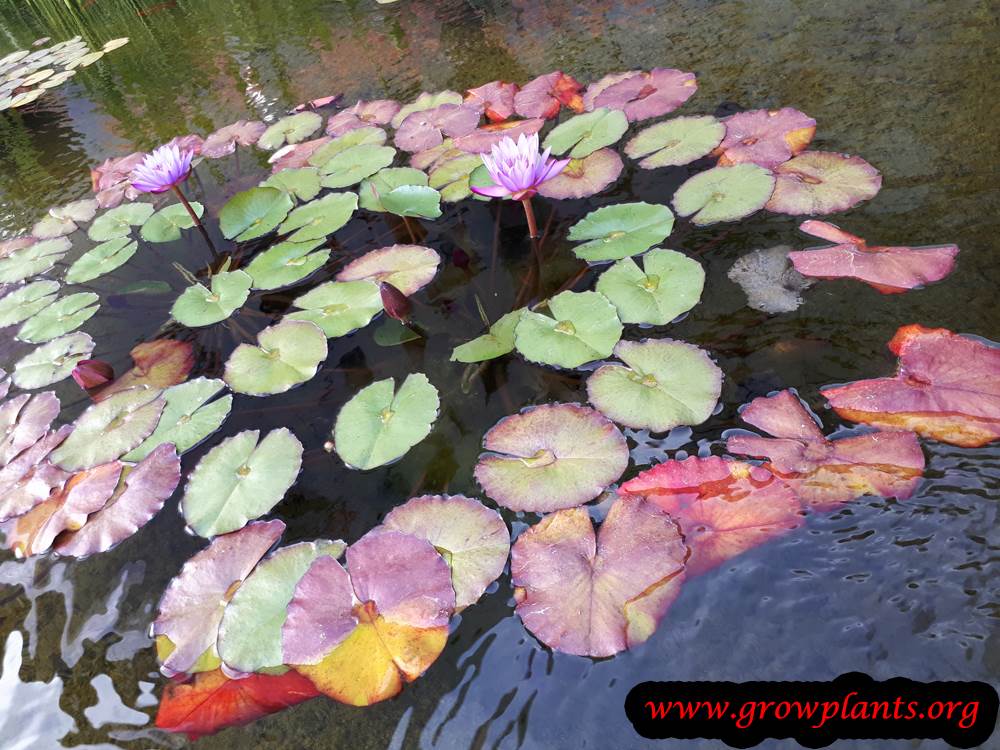
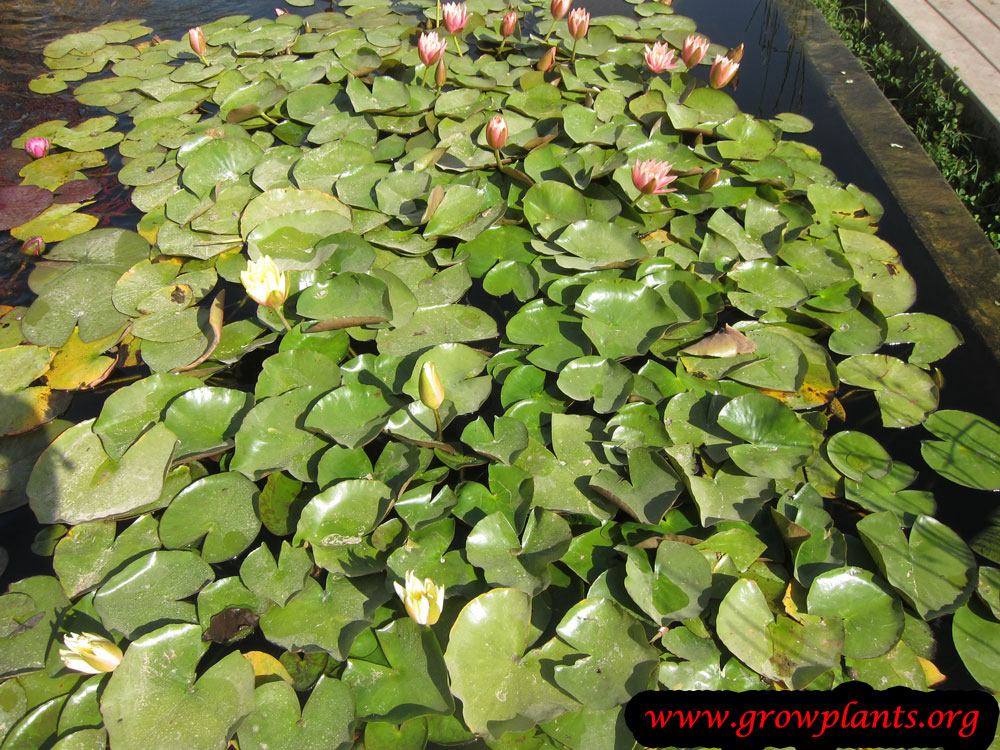
Overview: The water lily (Nymphaea) is a moderate-growing aquatic perennial grown as an ornamental pond plant, evergreen or deciduous depending on climate. Its round leaves and showy multi-petalled flowers float on the water surface, some varieties fragrant.
Quick Specifications
| Specification | Attribute |
|---|---|
| Plant Type / Life Cycle | Perennial (aquatic) |
| Foliage Type | Evergreen or deciduous (climate-dependent) |
| Mature Size | Leaves spread on the surface, rooted 0.3-2 m (12-80 in) below water; flowers held 5-10 cm (2-4 in) above it |
| Growth Rate | Moderate |
| Root System | Rhizomatous |
| Hardiness | USDA zones 9+ |
Growth Form & Structure
- Height & Spread: Rhizome rooted 0.3-2 m (12-80 in) below the surface, with leaves and flowers floating above; commonly grown in submerged aquatic baskets or pots.
- Growth Habit & Form: Rhizomatous aquatic perennial with long-stalked, floating rounded leaves.
- Lifespan & Maturity: Long-lived perennial that spreads steadily by its rhizome.
Anatomy & Physical Features
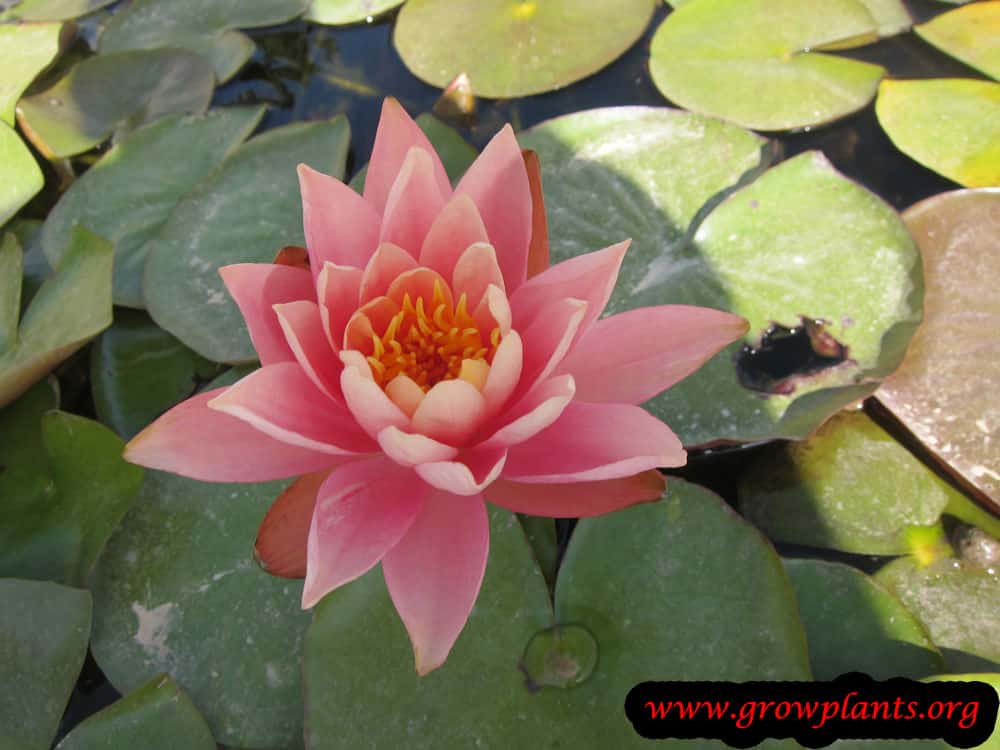
- Leaves & Foliage: Round green floating leaves, often with a notched (packman-like) cleft.
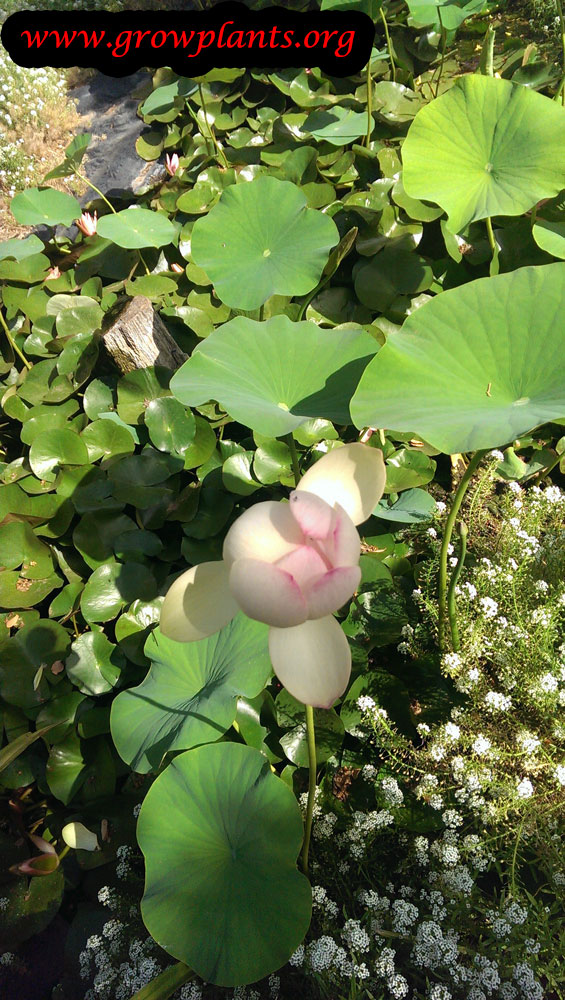
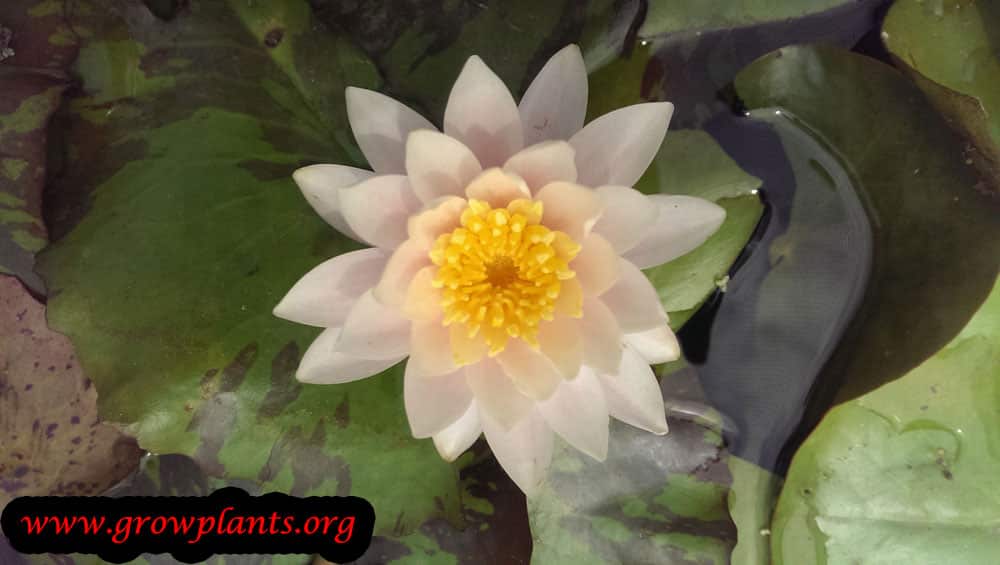
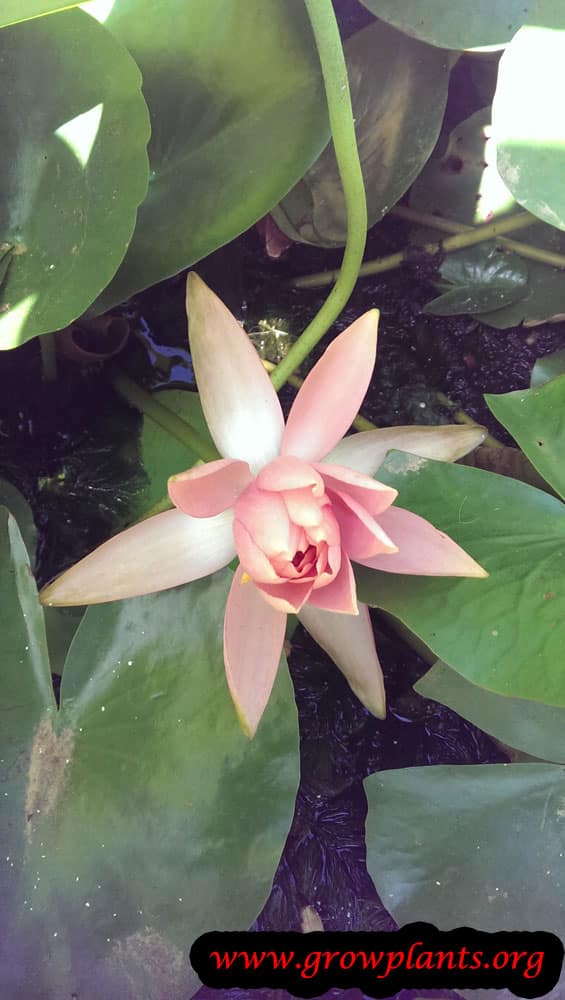
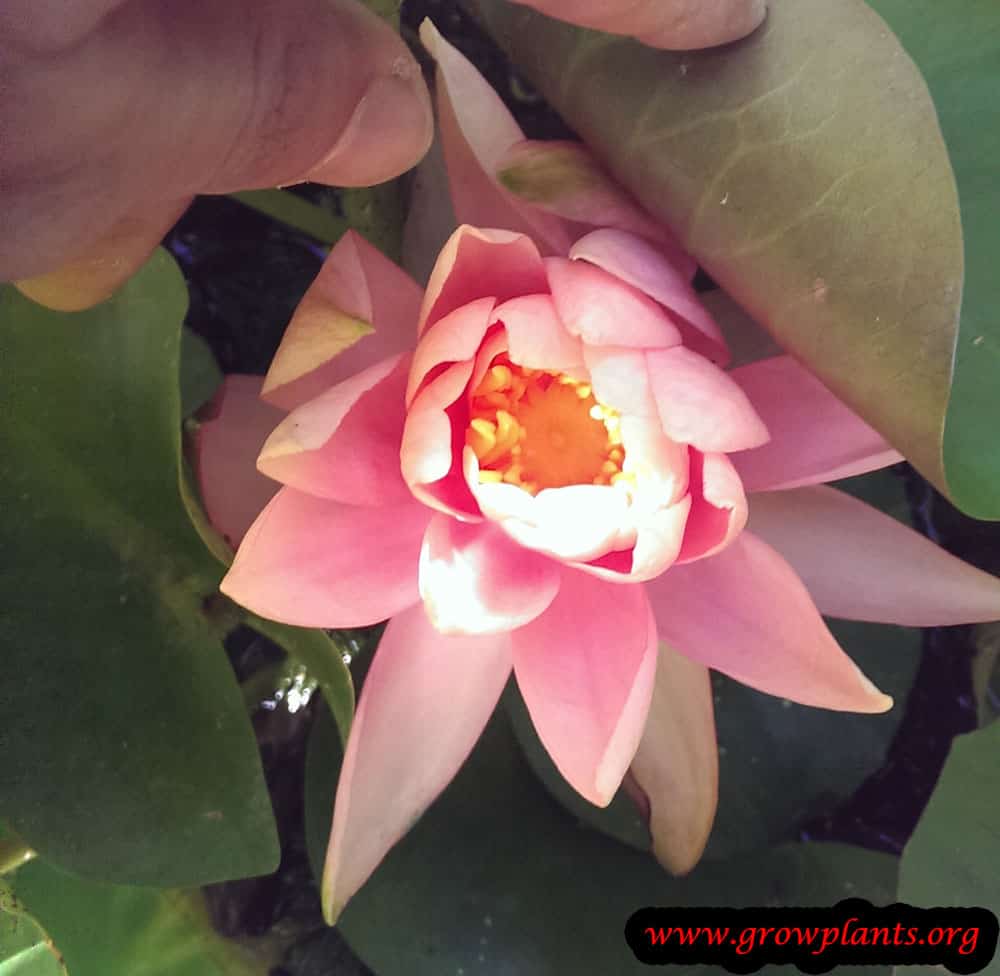
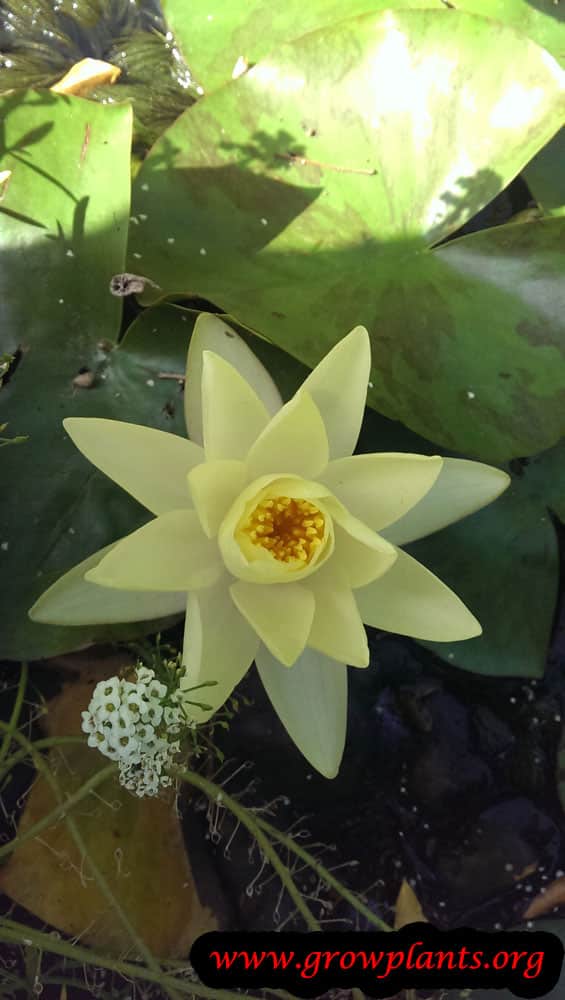
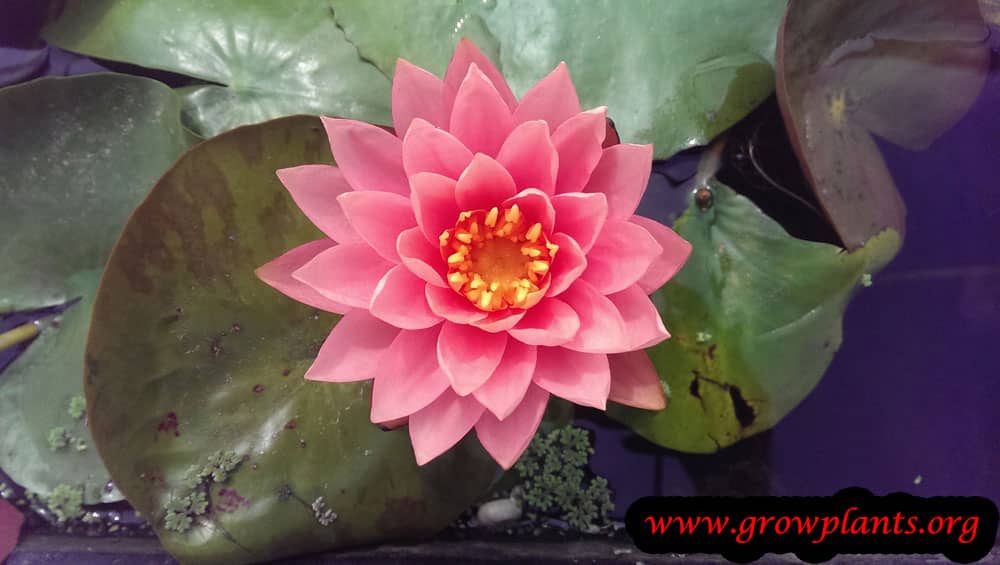
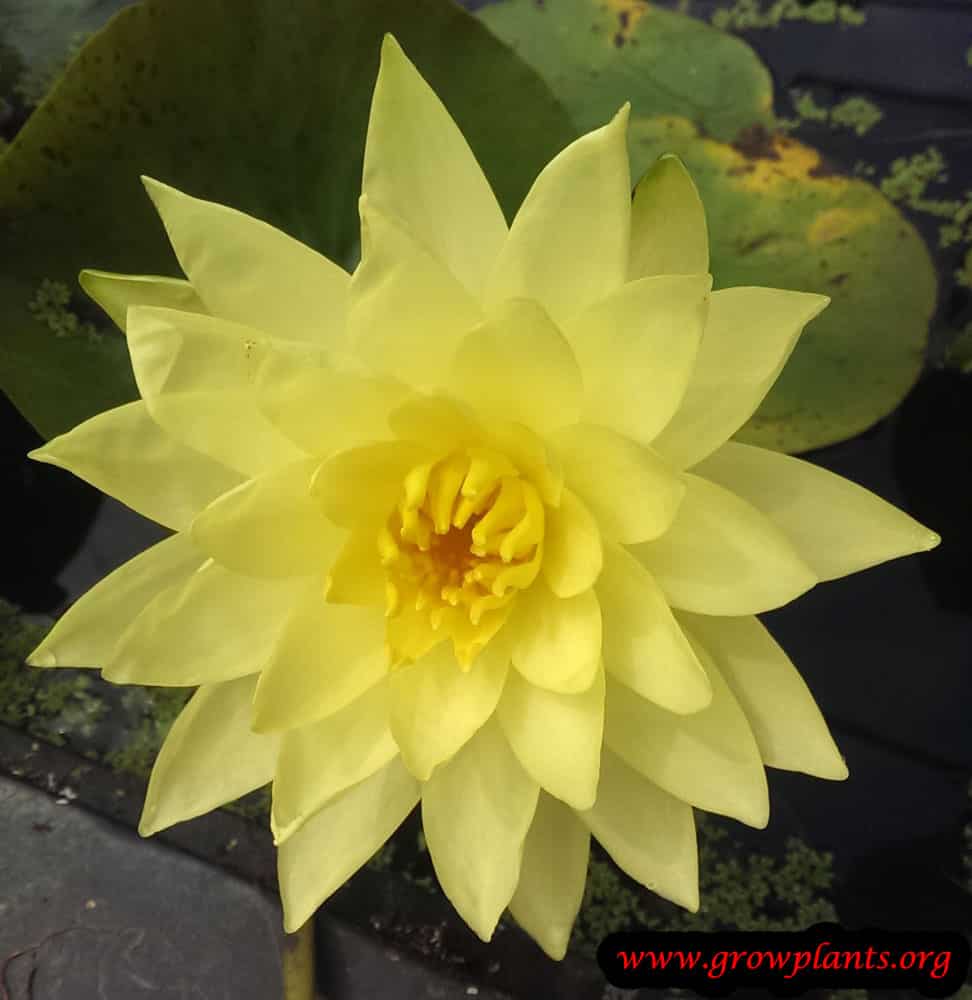
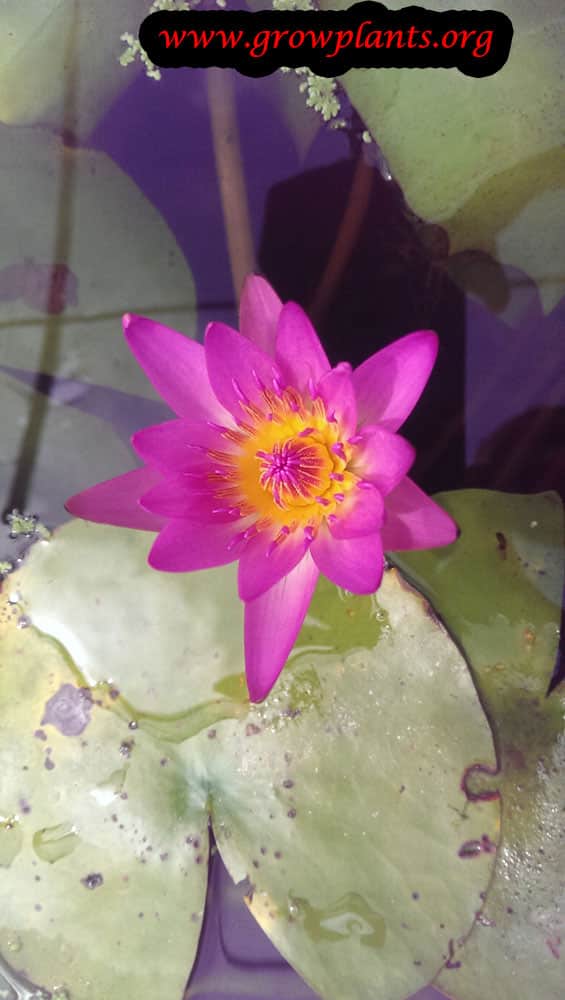
- Flower Characteristics: Showy multi-petalled flowers in red, yellow, white, purple, pink, orange or blue with a yellow centre; some varieties fragrant.
Primary Uses & Landscape Value
- Functional & Ornamental Roles: Ornamental water and pond plant; the floating leaves also provide surface shade that helps keep pond water clear.
Care Guide: Planting, Soil & Watering
Overview: Water lilies are aquatic rhizomes grown in heavy, rich soil in a submerged pot, with the crown kept permanently under water. They need full sun to part shade and abundant water – they live entirely in the pond.
Quick Care Requirements
| Requirement | Ideal Condition |
|---|---|
| Planting Season | Warm season – spring through autumn |
| Growth Rate | Moderate |
| Soil Type | Heavy, rich soil in a submerged container |
| Water Need | High – permanently submerged aquatic |
Planting & Establishment
- Best Planting Season: Plant in the warm season, spring through autumn.
- How to Plant:
- Hole Preparation: Plant the rhizome in a wide, shallow container of heavy, rich soil, then lower it into the pond.
- Soil Amendments: Use a heavy, rich loam (not a light, floating mix) and top it with gravel to hold the soil in place.
- Planting Depth: Set the rhizome just under the soil with the growing tip exposed, then submerge the pot so roughly 15–45 cm of water covers the crown (depending on the variety).
- Growth Speed & Expectations: Moderate.
Soil, Watering & Drainage Care
- Soil Mix & Drainage Needs: Heavy, rich soil in a submerged pot – meant to stay saturated, with a gravel cap to keep the water clear.
- Watering Schedule & Technique:
- Young / Newly Planted: Start young plants in shallower water and lower the pot as the leaves reach the surface.
- Established: Keep the water level over the crown; full sun drives the strongest growth and flowering.
- Seasonal Adjustments: Hardy types rest over winter with the crown below the freeze line, resuming growth as the water warms.
Climate, Light & Hardiness
The water lily is a sun-loving aquatic perennial that roots in the mud of ponds and grows across temperate to tropical climates, broadly from USDA zone 9 upward. Its winter behavior depends on type: hardy water lilies overwinter as a dormant rhizome as long as the water below the ice never freezes solid, while tropical types are cold-tender and survive only in warm, frost-free water.
Quick Climate Specifications
| Climate Zones | Temperate, Mediterranean, desert, subtropical, and tropical (grown in still water) |
|---|---|
| USDA Hardiness Zones | Approximately 9 and warmer (hardy types survive colder where the crown stays below the ice line; tropical types need frost-free warmth) |
| Optimal Temp Range | Warm water and warm, sunny weather during the growing season |
| Cold Damage Begins | Tropical types decline in cool water below roughly 15 °C (59 °F); hardy types simply go dormant as water cools |
| Frost Tolerance | Hardy types tolerate a frozen surface if the rhizome stays below the ice; tropical types none |
| Light Conditions | Full sun to half shade |
Sunlight & Light Exposure
Optimal Light Setup
Water lilies flower best in full sun, which drives strong leaf and bloom production. Most will grow in half shade but flower noticeably less, so a bright, open pond position is preferred.
Direct Sun Requirement
Several hours of direct sun on the water each day is important for reliable flowering; deeply shaded ponds give lush pads but few flowers.
Best Exposure / Orientation
Site the pond, or place the planting basket, where it receives open overhead sun for much of the day and is sheltered from constant strong wind that ruffles the pads.
Temperature Extremes & Hardiness
USDA Hardiness & Regional Limits
The genus spans hardy and tropical water lilies, and hardiness is really about the water body: the site data lists zone 9 and warmer, and hardy types persist in colder regions provided the rhizome sits deep enough that it never freezes. Tropical types are confined to warm, frost-free conditions.
Cold Damage & Winter Protection
Hardy water lilies die back for winter and overwinter as a dormant rhizome in the pond bottom, surviving under ice as long as the water there does not freeze solid; in shallow ponds the crown may need to be moved deeper or protected. Tropical water lilies are damaged by cold water and are typically kept in warm water or lifted and stored warm over winter.
Frost Sensitivity
Foliage of any type is killed by frost, but a hardy type's submerged rhizome survives a frozen surface; tropical types have no frost tolerance and cannot survive cold, freezing water.
Extreme Heat Tolerance
Warm water and hot, sunny summers suit water lilies well and encourage abundant bloom, tropical types especially thriving in heat.
Wind, Humidity & Microclimate
Wind Tolerance
Moderate. Persistent strong wind churns the surface and can tear or submerge the floating pads and flowers, so a reasonably sheltered pond gives the best display.
Rainfall & Seasonal Moisture
As a rooted aquatic its needs are met by the pond itself rather than rainfall; the key climatic factor is keeping the water body at a suitable depth and temperature through the seasons rather than any atmospheric moisture.
Microclimate Recommendations
A sunny, sheltered pond with enough depth to keep the crown below the winter freeze line gives hardy types the best chance to overwinter in place, while tropical types need consistently warm water or seasonal protection.
Growing in Pots, Balconies & Indoors
Water lilies are aquatic plants, not houseplants, but they grow well in a container water garden – a planting basket submerged in a tub or small pond on a sunny balcony or patio. They need full sun to half shade and their roots must stay underwater, so they are for an outdoor water feature rather than a room indoors.
Quick Details
- Container Size: A planting basket set inside a watertight tub or pond; match the tub to the variety’s spread
- Indoor Suitability: Not a houseplant; grow it outdoors in a sunny water container
- Best Spot: Full sun to half shade over still water
- Soil & Drainage: Heavy aquatic soil in a basket, submerged – no free drainage; the roots stay wet
- Watering in Pots: Always submerged – keep the tub or pond topped up
Indoors & On the Windowsill
- Houseplant limits: Not a room plant – it needs open sun and standing water a windowsill can’t give.
- Overwintering: In cold climates keep the crown below the ice line – move the tub deep enough or somewhere the water won’t freeze solid; hardy types rest through winter and return in the warm season.
On a Balcony or Patio
- Light & heat: Give it the sunniest spot; still water and warmth bring the best flowering. Top up the water often in hot weather as it evaporates.
- Practicalities: A water-filled tub is very heavy – set it on a strong, level base before filling, and choose a variety sized to the tub’s depth and width.
Choosing the Pot, Soil & Long-Term Care
- Basket & water: Plant into an aquatic basket of heavy soil, top it with gravel to hold the soil down, and lower it into the tub or pond at the right depth for the variety.
- Potting mix: Heavy loam or aquatic soil, not a light free-draining mix that would float away.
- Feeding: Feed with slow-release aquatic tablets pushed into the basket so nutrients don’t foul the water; divide crowded crowns every couple of years in the warm season.
Growing this plant in a greenhouse
A greenhouse can give water lily frost protection, cold protection, humidity control and extra warmth. In the right climate it may also be kept growing through winter, depending on how much warmth and light are provided.
Greenhouse at a glance
| Greenhouse suitability | Conditional - depends on your climate |
|---|---|
| Main benefits | frost protection, cold protection, humidity control, extra warmth |
| Season extension | earlier spring & later autumn |
| Protect when air drops below | about 15°C - note this is an air guide; pond/water temperature is what really governs an aquatic plant |
| Maintain greenhouse minimum | around 15°C for active growth |
| Suitable types | heated greenhouse, glass greenhouse |
| Heating | Heating is recommended in cold climates for continuous growth. |
Related greenhouse guides
- Greenhouses: How to Choose the Right Greenhouse
- Best Greenhouse Heaters
- Greenhouse Climate Control: Temperature, Ventilation and Humidity
Fertilizing & Feeding
Water lilies are moderate feeders – regular root-zone feeding through the growing season keeps leaves and flowers coming, with feeding easing off or stopping as hardy varieties go dormant for the cold season.
Quick Fertilizing Specs
| Feeding Level | Moderate |
|---|---|
| young_feeding | Balanced feeding to support root establishment and the first floating leaves. |
| mature_feeding | Balanced root-zone feeding renewed periodically through the growing season. |
| Main Nutrient Priority | Balanced feeding to support both leaf growth and repeat flowering. |
| Best Feeding Period | Warm growing season, from active leaf growth through bloom. |
| Organic Options | Rich, heavy aquatic soil refreshed periodically at the root zone. |
| Soil pH | Tolerant of a range of soil types as long as it is rich and consistently wet. |
| Reduce/Stop Feeding | Feeding is reduced and then stopped as hardy or deciduous varieties go dormant for winter. |
Feeding by Growth Stage
Newly Planted Water Lily
Root a new division or plant into rich pond or container soil and establish floating leaf growth.
| Nutrient direction | Balanced feeding to support root establishment and the first round of floating leaves. |
|---|---|
| Timing | After planting into its pond or container, once new leaves begin reaching the surface. |
| Frequency | Light, regular feedings as the plant settles in and starts producing leaves. |
| Fertilizer types | A root-zone aquatic fertilizer tab pressed into rich, heavy planting soil, Rich garden or aquatic soil as the planting base |
| Precautions | Keep fertilizer at the root zone rather than dissolved in the water, which can fuel algae instead of the plant. |
Actively Growing, Blooming Water Lily
Support steady leaf production and repeated flowering through the warm growing season.
| Nutrient direction | Balanced feeding delivered through root-zone tabs renewed periodically through the season. |
|---|---|
| Timing | Through the warm growing season while the plant is actively producing leaves and flowers. |
| Frequency | Periodic feedings spread through the growing season, easing off as growth slows in autumn. |
| Fertilizer types | Root-zone aquatic fertilizer tabs renewed periodically through the growing season, Rich soil refreshed occasionally in its container |
| Precautions | Deadhead spent flowers and remove yellowing leaves regularly to keep the plant putting energy into new growth and bloom. |
Dormant or Slow-Season Rest
Let hardy varieties rest through their dormant period, or ease off feeding as deciduous types die back.
| Nutrient direction | None – withhold fertilizer while the plant is dormant or dying back for the season. |
|---|---|
| Timing | Once leaves die back or growth clearly slows heading into the cold season, through to new growth the following spring. |
| Frequency | No feeding at this stage; feeding resumes only once new leaf growth restarts. |
| Fertilizer types | No feeding at this stage – a dormant or resting crown does not need fertilizer |
| Precautions | Do not fertilize a dormant plant; wait for clear new leaf growth before feeding again. |
Nutrient Deficiency Signs & Corrections
Pale or yellowish leaves and fewer new leaves reaching the surface than expected.
| Possible causes | Insufficient feeding for the plant’s growth stage, Old, nutrient-depleted planting soil overdue for refreshing, Root crowding in an undersized container |
|---|---|
| Appears first on | New leaves as they emerge |
| What to check | How long since the soil or fertilizer tabs were last refreshed, Container size relative to the plant’s current growth, Overall root health |
| Possible correction | Refresh root-zone fertilizer tabs and repot into richer soil or a larger container if roots are crowded. |
Plenty of healthy leaves but few or no flowers through the growing season.
| Possible causes | Insufficient direct sunlight reaching the planting, A feeding balance skewed too heavily toward leaf growth, Overcrowded roots limiting the plant’s overall vigor |
|---|---|
| Appears first on | Whole-plant pattern rather than a single leaf |
| What to check | Hours of direct sun the pond or container receives, Recent feeding history, How crowded the roots have become |
| Possible correction | Move to a sunnier spot if shaded, balance feeding rather than over-emphasizing leaf growth, and divide overcrowded plants into fresh soil. |
New leaves show yellowing between the veins while the veins remain green.
| Possible causes | High pH water or soil limiting iron availability, Depleted, unrefreshed planting soil, Waterlogged or oxygen-poor soil limiting root function |
|---|---|
| Appears first on | Newest leaves |
| What to check | Water and soil pH, How long since the soil was last refreshed, Root health and any signs of rot |
| Possible correction | Refresh the planting soil and apply a chelated iron or complete aquatic-plant fertilizer product per its label if the pattern persists. |
Pruning, Training & Seasonal Maintenance
Water lily needs no structural pruning – there is no woody framework, only a submerged rhizome or tuber sending up floating leaf pads and flowers on individual stalks. Maintenance is ongoing deadheading of spent flowers and removal of yellowing or damaged pads, which can be done throughout the growing season since this plant tolerates cutting at essentially any time; the only real seasonal event is the periodic lifting and division of the rootstock once a planting becomes congested.
Quick Pruning & Maintenance Specs
| Pruning Tolerance | High for deadheading/pad removal; not a woody framework |
| Primary Pruning Window | Ongoing through spring–autumn active growth |
| Secondary Maintenance Window | Rhizome/tuber division and repotting, typically every few years |
| Typical Frequency | Continual light grooming as flowers fade and pads yellow |
| Main Objective | Remove spent blooms and declining pads; keep the crown from becoming overcrowded |
| Best Tool Type | Precision snips at the base of the flower or leaf stalk |
| Avoid Heavy Pruning During | Not applicable in the structural sense; avoid disturbing/dividing the rootstock outside its active growing season |
Pruning by Plant Age & Size
Newly Established
Little to no pruning while the young plant is putting out its first pads; remove only anything damaged in planting.
Mature / Established
Routine deadheading of spent flowers and removal of yellowing or torn pads; periodic lifting and division of the rootstock once flowering declines or the crown fills its container/planting basket.
Seasonal Pruning Schedule
Ongoing Sanitary
Objective: keep the surface clear of spent blooms and declining foliage, which otherwise decays in the water. What to remove: faded flowers cut at the base of their stalk, and pads that have yellowed, torn, or gone fully under water. What NOT to remove: healthy green pads still floating and functional. Expected response: continued production of new pads and blooms through the season. In temperate settings the plant dies back with cold and resprouts from the overwintering rootstock the following season; in warm climates it can remain evergreen and this grooming continues year-round.
Special Growth to Remove
Spent flower stalks cut at the base once bloom fades, before they collapse and foul the water. Yellowed, damaged, or fish-nibbled pads removed the same way. Vigorous new pads that shade out the crown of a densely potted plant can also be thinned.
Container & Small-Space Pruning
Very commonly grown in a planting basket or container within a pond rather than open ground, which is also the main tool for controlling its spread. As the rootstock fills its container over a few seasons, flowering typically declines; lifting, dividing, and replanting into fresh rich soil restores vigor, and thinning excess pads at that time helps the divided sections re-establish.
Tools
Precision snips for cutting individual flower and leaf stalks at the base. A garden knife or spade is the relevant tool when dividing an overcrowded rhizome/tuber at repotting time, not a pruning tool in the usual sense.
Tool Hygiene & Disease Risk
Routine: clean tools are sufficient for normal deadheading and pad removal. Increase caution when removing foliage affected by powdery mildew, disposing of affected pads away from the water rather than letting them linger and spread spores.
Cut Placement & Technique
Cut flower and leaf stalks at their base, near where they emerge from the crown, rather than partway up, to avoid leaving a decaying stub in the water.
Post-Pruning Care
No special aftercare is needed beyond normal water-quality upkeep after routine deadheading; after dividing an overcrowded rootstock, let the newly potted division settle before resuming a full fertilizing schedule.
Common Pruning Mistakes
Leaving spent flowers and declining pads in the water too long, where they decay and cloud the water; letting the rootstock go undivided for too many years, leading to a crowded crown and declining bloom; cutting stalks partway up instead of at the base.
When NOT to Prune
Avoid lifting and dividing the rootstock outside its active growing season (mid-winter dormancy in temperate climates), since disturbing it then offers little benefit and more transplant stress.
Recommended Tools (by task)
| Any age, routine deadheading/pad removal | precision_snips | Clean single-stalk cuts at the base without disturbing neighboring pads |
| Mature congested planting, rootstock division | garden_spade | Needed to lift and split an overcrowded rhizome/tuber at repotting |
Propagation Guide
Water lilies are most reliably propagated by dividing the underwater rhizome, since named varieties need vegetative propagation to guarantee the same flower color and form; seed works mainly for reproducing the species itself and is a slower, more specialist route. Overall propagation difficulty is easy by division and more involved by seed.
Quick Propagation Specs
| Best Propagation Method | Rhizome division |
| Alternative Methods | Seed (species propagation); some tropical viviparous varieties form small plantlets on the leaf |
| Propagation Difficulty | Easy (division); Moderate–Specialist (seed) |
| Seed True-to-Type | Variable – named varieties will not come true; species may come fairly true |
| Vegetative True-to-Type | Yes |
| Best Propagation Season | Spring, when the plant is repotted and growth resumes (also possible through summer/autumn per the plant’s planting season) |
| Seed Germination Time | Typically a few weeks in warm water, timing varies |
| Germination Temperature | Warm water, roughly 20–25°C (68–77°F) |
| Seed Sowing Depth | Not buried – seed is sown at the surface of wet mud/shallow water |
Growing from Seed
Seed Handling & Viability
Water lily seed is enclosed in a gelatinous coating and loses viability quickly if allowed to dry out, so it should be kept submerged or moist and sown fresh rather than stored dry.
Sowing Depth & Orientation
Sow on the surface of wet mud or fine substrate in a shallow water tray; the seed should not be buried deeply.
Germination Conditions
Warm water and full sun encourage germination; seedlings are started shallow and warm before being moved to deeper, permanent water as leaves reach the surface.
Seedling Care
Keep young plants in shallow, warm water while establishing, gradually increasing water depth as the plant grows toward its mature size (leaves float on the surface with the plant rooted 0.3–2 m/12–80 inches below).
Rhizomes, Tubers, Bulbs & Corms
Rhizome Division
Divide the rhizome in spring as active growth begins, cutting it into sections that each carry at least one strong growing point and some roots. Trim old roots and leaves from each division, then replant directly into rich aquatic soil at the correct planting depth for the water level. As an aquatic plant, the rhizome should not be dried out or cured – keep it moist and submerged at all times. Some tropical water lily varieties are also viviparous, forming small plantlets at the center of a mature leaf that can be detached once they have their own roots and potted on.
Bloom & Flower Guide
Quick Details
- Bloom Season: Late spring through autumn, while the water is warm
- Time to First Bloom: Usually the first season after planting, once the water warms
- Flower Appearance: Many-petalled cup-shaped flowers in red, yellow, white, purple, pink, orange or blue, with a mostly yellow centre; some are fragrant
- Edibility: Ornamental water plant, grown for its blooms rather than for eating
Detailed Blooming Overview
The water lily is prized for its floating, many-petalled blossoms that rest on or just above the surface. Flowers appear through the warm months and, in most types, open by day and close again toward evening, each bloom lasting several days before it fades back to the water.
Flower Characteristics
- Colours span red, yellow, white, purple, pink, orange and blue, set off by a mostly yellow centre of showy stamens.
- Blooms are many-petalled and cup- to star-shaped; some varieties are pleasantly fragrant.
Bloom Care & Thinning
- Positioning: give the plant full sun and calm, still water; the more direct sun the crown receives, the more freely it flowers.
- Spent blooms: lift away faded flowers and yellowing pads at the base to keep the water clear and encourage new buds.
- Pollination: open flowers are visited by bees, beetles and other insects.
Bloom Health & Protection
- Waterlily aphid: in warm spells these can gather on buds and flower stalks; a firm jet of water to dislodge them, or encouraging natural predators, usually keeps them in check.
Pests, Diseases & Troubleshooting
Overview: Water lilies (Nymphaea) are vigorous aquatics whose foliage floats at the surface where a handful of specialist pests graze the pads; the leaves themselves are semi-disposable, so control is almost entirely non-chemical. Because they share the water with fish and invertebrates, avoid insecticides and lean on hosing, hand-removal, and a healthy pond food web. Most “damage” is cosmetic and outgrown quickly in the growing season. This profile covers hardy and tropical water lilies alike.
Quick Troubleshooting Overview
| Issue / Pest | Main Symptom | Primary Solution |
|---|---|---|
| Water lily aphid | Colonies on pads & flowers; sticky, distorted growth | Hose pads underwater; encourage fish; remove worst leaves |
| Water lily beetle | Adults/larvae skeletonising the pads | Hand-pick; hose off larvae for fish to eat |
| China-mark moth | Oval pieces cut from pads; leaf “cases” | Remove floating cut sections and caterpillars by hand |
| Leaf-mining midge | Winding pale trails/holes in pads | Trim affected pads; healthy plants outgrow it |
| Crown / rhizome rot | Soft, foul rhizome; leaves detach | Remove rotten tissue; correct depth & planting; divide |
| Yellowing pads | Pale leaves, weak growth | Feed with aquatic fertiliser tabs; check depth & light |
Common Pests & Management
- Water lily aphid (Rhopalosiphum nymphaeae):
- Symptoms: Dense brown-green aphid colonies on the upper pads, stems and flowers; sticky honeydew, sooty mould and puckered, yellowing growth. Worst in warm, still weather.
- Prevention & Control: Never spray insecticide over water. Blast the pads with a hose so aphids fall in for fish to eat, or briefly submerge the pads. Remove the most infested leaves. Support fish, ladybirds and other predators; a strong pond food web usually keeps them in check.
- Water lily / pond-lily beetle (Galerucella nymphaeae):
- Symptoms: Small brown beetles and dark, slug-like larvae grazing the upper leaf surface, leaving elongated brown scars and skeletonised, rotting pads.
- Prevention & Control: Hand-pick adults and larvae; hose larvae into the water for fish. Remove and bin badly grazed pads to break the cycle. Clear excess dead foliage in autumn where adults overwinter.
- Brown china-mark moth (Elophila nymphaeata):
- Symptoms: Neat oval or oblong pieces cut from the pad edges; caterpillars build protective “cases” from two leaf pieces and shelter beneath floating leaf fragments.
- Prevention & Control: Pick off the floating cases and caterpillars by hand and remove damaged pads. Fish help control young larvae. No chemical control is appropriate in a pond.
- False leaf-mining / gall midges & leaf-miners:
- Symptoms: Pale winding trails, blotches or small holes chewed through the floating pads by midge or fly larvae.
- Prevention & Control: Trim and remove mined pads; healthy, well-fed plants simply grow past the damage, which is largely cosmetic.
Diseases & Fungal Issues
- Crown / rhizome rot (bacterial & fungal):
- Symptoms: The crown or rhizome turns soft, dark and foul-smelling; leaves and stems detach easily and growth stalls or collapses. Linked to damaged rhizomes, stagnant water, or planting too deep.
- Treatment & Management: Lift the plant, cut away all soft rotten tissue back to firm healthy rhizome, and replant a clean division at the correct depth in fresh heavy aquatic soil. Handle rhizomes gently and keep water reasonably oxygenated.
- Leaf spot & leaf blight (Cercospora / Ramularia / Ovularia spp.):
- Symptoms: Dark or reddish-brown spots and blotches on the pads that enlarge, dry out and rot holes through the leaf, especially on crowded or long-standing foliage.
- Treatment & Management: Cut off and remove affected pads promptly — sanitation is the main tool. Thin overcrowded plants for better air and light at the surface; avoid systemic fungicides in water bodies with fish.
Growing Difficulties & Abiotic Problems
- Yellowing / pale pads (nutrient shortage):
- Cause & Symptoms: Overall pale, weak leaves and few flowers from starved soil in the planting basket.
- Correction Strategy: Push aquatic fertiliser tablets into the soil during the growing season; use a heavy loam aquatic soil, not compost, and re-pot congested plants.
- Wrong planting depth:
- Cause & Symptoms: Too deep gives few or no surface pads and no flowers; too shallow exposes and scorches the crown.
- Correction Strategy: Match depth to the variety — establish shallow and lower gradually as leaf stems lengthen.
- Too much shade / competition:
- Cause & Symptoms: Sparse, leggy growth and no bloom in low light or under surface-choking weed/algae.
- Correction Strategy: Give full sun at the surface and control competing algae/duckweed.
- Overcrowding / congestion:
- Cause & Symptoms: Pads pushed up out of the water in a dome, smaller leaves and fewer flowers as the rhizome fills its basket.
- Correction Strategy: Lift and divide every few years, replanting the vigorous growing tips.
What Helps — Products & Tools
In a pond the best “products” are non-chemical: a hose for knocking pests into the water, fish and beneficial insects as biological control, sharp secateurs for removing damaged pads and dividing, aquatic fertiliser tablets for feeding, and a heavy aquatic planting soil with baskets and hessian liners. Keep insecticides and systemic fungicides out of water that holds fish and wildlife.
Types and forms
Water lily flower color varies widely by variety, ranging through red, yellow, white, purple, pink, orange and blue, and some varieties are fragrant.
Choosing the Right Variety
Choose mainly by flower color and fragrance for a particular pond design; all forms share the same growing needs.