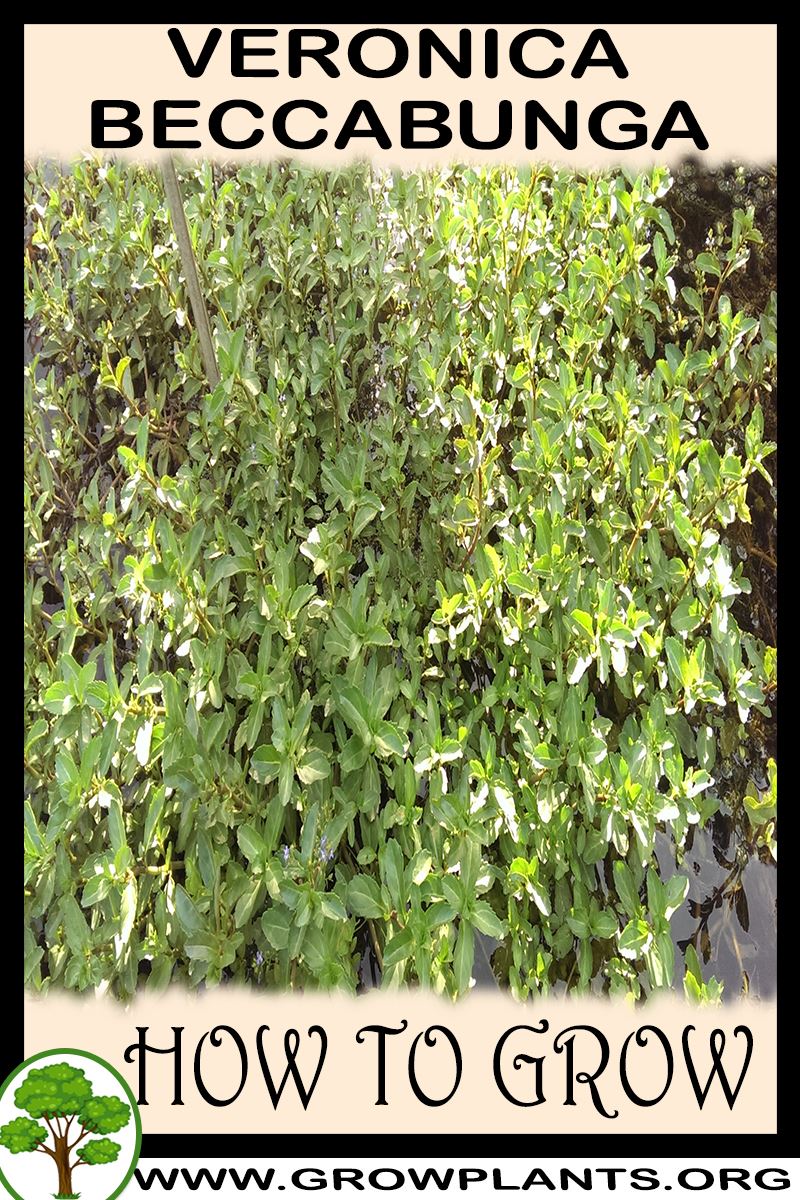
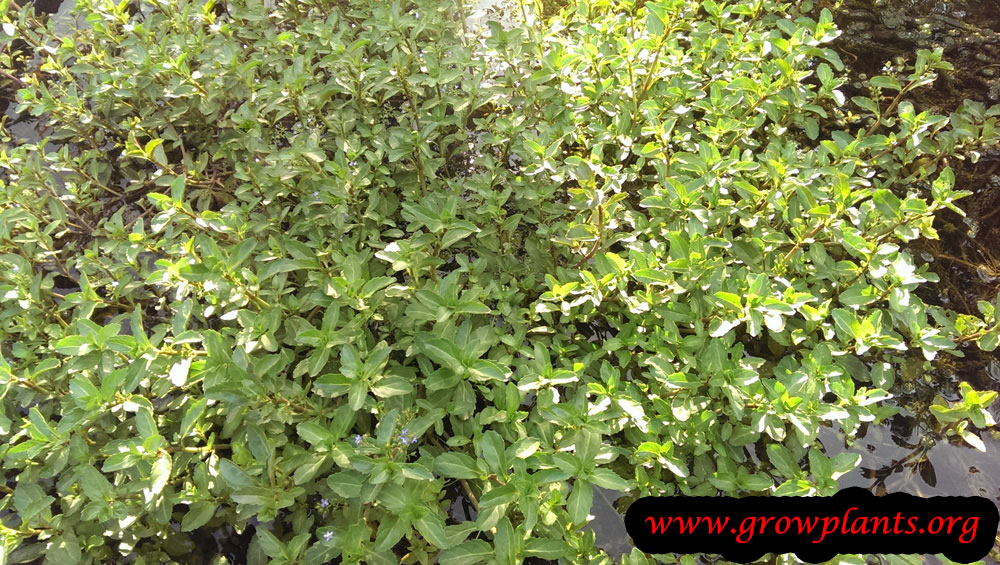
Plant Profile & Key Characteristics
Overview: European speedwell (brooklime) is a low, creeping semi-aquatic perennial reaching 30-60 cm (12-24 in), grown as a groundcover, pond-margin plant and even an aquarium plant. It is evergreen in mild climates (deciduous where cold) and hardy in USDA zones 5-10.
Quick Specifications
| Specification | Attribute |
|---|---|
| Plant Type / Life Cycle | Perennial (evergreen; deciduous where cold) |
| Foliage Type | Evergreen to semi-evergreen |
| Mature Size | 30-60 cm (12-24 in) |
| Growth Rate | Fast to moderate |
| Toxicity | Non-toxic / edible (historically eaten as a salad green) |
| Hardiness | USDA zones 5-10 |
Growth Form & Structure
- Height & Spread: 30-60 cm (12-24 in), creeping and spreading over wet ground; suits containers and water margins.
- Growth Habit & Form: Creeping, mat-forming semi-aquatic groundcover with fleshy stems that root as they spread.
- Lifespan & Maturity: Perennial that spreads readily along moist ground and water edges.
Anatomy & Physical Features
- Leaves & Foliage: Green, elliptic leaves on stems that can be purple-tinged.
- Flower Characteristics: Small blue, purple or pink four-petalled flowers borne on the stems.
Primary Uses & Landscape Value
- Edible Uses: Young leaves and stems historically eaten raw as a salad green (brooklime).
- Functional & Ornamental Roles: Groundcover for wet soils, pond and stream margins and brightly-lit aquariums; also used medicinally.
Care Guide: Planting, Soil & Watering
Overview: Veronica beccabunga (brooklime / European speedwell) is a moisture-loving perennial (zone 5-10) that grows in rich, constantly wet soil and even at the water’s edge or in shallow water. It takes sun to shade and needs abundant water – it will not tolerate drying out.
Quick Care Requirements
| Requirement | Ideal Condition |
|---|---|
| Planting Season | In spring and summer during active growth |
| Growth Rate | Moderate to Fast |
| Soil Type | Rich, constantly moist to boggy or aquatic |
| Water Need | High (never let it dry) |
Planting & Establishment
- Best Planting Season: Plant in spring or summer along a pond margin, bog or in reliably wet ground.
- How to Plant:
- Hole Preparation: Set into rich, wet soil at the water’s edge or in a shallow container that can stand in water.
- Soil Amendments: Use a heavy, rich soil that holds water; ordinary free-draining beds dry out too fast for it.
- Planting Depth: Set the crown at soil level or just at the waterline; it roots readily from spreading stems.
- Growth Speed & Expectations: A fast, spreading grower to about 30-60 cm (12-24 in) – vigorous, so contain it.
Soil, Watering & Drainage Care
- Soil Mix & Drainage Needs: Unusually, this plant wants soil that stays saturated; there is no wet-feet rot risk as with most plants, but it must never dry out.
- Watering Schedule & Technique:
- Young / Newly Planted: Keep the soil wet at all times while it establishes.
- Established: Water constantly or grow in standing water; the roots should never dry.
- Seasonal Adjustments: Keep permanently moist in the warm season; growth slows and dies back in cold winters.
Climate, Light & Hardiness
European speedwell (brooklime) is an evergreen-to-cold-deciduous water-margin perennial suited to temperate, Mediterranean, and subtropical climates, and it can also be grown indoors or in a well-lit aquarium. It tolerates everything from full sun to full shade, provided there is enough light where shade is deep.
Quick Climate Specifications
| Climate Zones | Temperate, Mediterranean, subtropics; also indoor/aquarium |
|---|---|
| USDA Hardiness Zones | 5–10 |
| Frost Tolerance | Moderate |
| Light Conditions | Full Sun / Half Shade / Full Shade (with light) |
Sunlight & Light Exposure
Optimal Light Setup
The plant is unusually flexible on light, growing in full sun through half shade to full shade as long as some light is available; indoors it needs a bright spot to thrive.
Shade & Heat Management
Its temperate-to-subtropical range shows reasonable tolerance of both cool and warm growing conditions in wet or aquatic settings.
Temperature Extremes & Hardiness
USDA Hardiness & Regional Limits
European speedwell is hardy in USDA zones 5–10, a moderately wide range for a water-margin perennial.
Cold Damage & Winter Protection
In colder parts of its range the plant behaves as cold deciduous, dying back above ground while the rootstock survives; in milder zones it can stay evergreen year-round.
Frost Sensitivity
Frost tolerance of top growth is moderate; the rootstock is considerably hardier than the foliage in the colder end of its zone 5–10 range.
Wind, Humidity & Microclimate
Humidity Preferences
The species needs consistently rich, wet soil or shallow water and does not tolerate drying out.
Microclimate Recommendations
Because it can be invasive when happy, plant it where its spread along a pond or stream margin can be controlled.
Growing in Pots, Balconies & Indoors
Brooklime (Veronica beccabunga) is a low, spreading water-margin perennial (30-60 cm) that wants constantly wet roots. The grower says it can be grown indoors given plenty of light, and it takes readily to pots – as long as the soil never dries out.
Quick Details
- Container Size: A wide, shallow pot or bowl; because it loves wet feet, a pot without drainage or one stood in a water tray suits it well.
- Indoor Suitability: Possible indoors with a lot of light – best at a bright window.
- Best Spot: Full sun to light shade; the brighter the better indoors.
- Soil & Drainage: Rich, moisture-retentive mix; unlike most potted plants it likes to stay wet, even waterlogged.
- Watering in Pots: Keep constantly wet – never let it dry out; standing water is fine.
Indoors & On the Windowsill
- Houseplant reality: The grower says yes, but only with plenty of light – give it your brightest windowsill.
- Windowsill growing: A bright sill with the pot sitting in a saucer of water keeps it happy; it can also be grown in a water bowl or mini indoor pond.
- Hardiness: It is fully hardy, so overwintering indoors isn’t needed in most climates – bring it in mainly if you want to enjoy it as a winter windowsill plant.
On a Balcony or Patio
- Water feature plant: Ideal for a container pond, bog planter, or a pot stood in a tray on a bright balcony; keep it wet and it takes sun to part shade.
- Practicalities: Refill the water tray in hot, windy weather – shallow containers evaporate fast.
Choosing the Pot, Soil & Long-Term Care
- Pot & mix: Use a heavy, moisture-retentive soil; since a pot standing in water suits it, drainage matters far less than keeping it wet.
- Feeding & upkeep: A little feed in the growing season (go easy in water features to avoid algae); divide and refresh every year or two as it spreads.
Fertilizing & Feeding
A light feeder in general – rich planting soil or a nutrient-rich aquatic substrate usually covers its needs, with only modest supplemental feeding through the growing season.
Quick Fertilizing Specs
| Feeding Level | Light to moderate |
|---|---|
| Main Nutrient Priority | Balanced feeding with a mild nitrogen lean to support lush foliage and groundcover spread |
| Best Feeding Period | Active growing season in spring and summer |
| Soil pH | Tolerates a wide range; does well in rich, near-neutral conditions |
| Reduce/Stop Feeding | Ease off as growth slows going into cooler weather |
| Organic Options | Well-rotted organic matter or aquatic-safe organic amendments worked into the substrate |
| Micronutrients | Watch iron availability where substrate is dense, waterlogged, or alkaline |
Feeding by Growth Stage
Establishment after planting
Help new plantings root into wet or aquatic soil and settle before pushing top growth.
| Nutrient direction | Balanced, gentle feeding that favors root establishment over rapid top growth. |
|---|---|
| Timing | Right after planting into pond-margin soil, a bog container, or an aquatic pot. |
| Frequency | A single light feeding at planting is usually enough; wait for clear new growth before feeding again. |
| Fertilizer types | Well-rotted organic matter or aquatic planting substrate worked in at planting, A root tab or slow-release aquatic fertilizer tucked near the root zone for submerged or aquarium culture |
| Precautions | Keep any fertilizer contained near the root zone rather than dissolved loosely in open water, since nutrient runoff can feed algae rather than the plant. |
Active growth
Support steady leafy growth and flowering through the warm growing season.
| Nutrient direction | A balanced feed with a slight nitrogen lean to keep foliage lush and green. |
|---|---|
| Timing | Through spring and summer while the plant is actively producing new growth. |
| Frequency | Feed lightly and regularly through the growing season rather than in one heavy dose; ease off as growth slows. |
| Fertilizer types | A balanced general-purpose fertilizer worked into rich, moisture-retentive soil for pond-margin or bog plantings, A dilute aquatic plant fertilizer or root tab renewed through the growing season for submerged or aquarium culture |
| Precautions | Avoid letting loose fertilizer dissolve into open water, since excess nutrients encourage algae rather than helping this plant. |
Winter rest
Let growth slow naturally through cold weather without pushing new growth.
| Nutrient direction | None – withhold fertilizer while the plant is dormant or barely growing. |
|---|---|
| Timing | Cooler months when top growth slows or dies back in cold-deciduous forms. |
| Frequency | No feeding at this stage. |
| Fertilizer types | No feeding at this stage; resume only once active growth restarts in spring. |
| Precautions | Do not fertilize a dormant or barely-growing plant; wait for clear new growth before feeding again. |
Nutrient Deficiency Signs & Corrections
Overall pale color and slow, thin growth
| Possible causes | Nutrient-poor substrate or water with too little nitrogen, Low light reducing overall vigor regardless of feeding, Roots crowded or restricted in a small pot or planting pocket |
|---|---|
| Appears first on | Whole plant, older and new leaves alike |
| What to check | Light levels reaching the planting site or aquarium, How long it has been since the substrate or soil was last refreshed, Whether roots have filled and crowded their container |
| Possible correction | Improve light first, then work a balanced fertilizer or aquatic root tab into the substrate if growth stays weak. |
Interveinal yellowing on the newest leaves while veins stay green
| Possible causes | Iron becoming unavailable in alkaline or waterlogged substrate, Compacted or anaerobic substrate limiting root uptake, Root stress from disturbance or recent transplanting |
|---|---|
| Appears first on | Newest leaves and shoot tips |
| What to check | Substrate or soil pH and how compacted or waterlogged it is, Whether roots look healthy, white, and undamaged, How recently the plant was transplanted or disturbed |
| Possible correction | Correct overly alkaline or waterlogged conditions first; if chlorosis persists, apply a chelated iron product suited to aquatic or bog plantings per its label. |
Pruning, Training & Seasonal Maintenance
Brooklime is a low, creeping mat-forming perennial that spreads by rooting at its stem nodes, so maintenance is about shaping and containing that spread rather than any structural woody pruning. It tolerates trimming year-round, and regular tip pinching actually improves it – encouraging a denser, bushier mat instead of long trailing stems – while occasional cutback controls its documented tendency to become invasive along pond margins.
Quick Pruning & Maintenance Specs
| Pruning Tolerance | High – a creeping groundcover, regrows freely from any node |
| Primary Maintenance Window | Year-round, most active spring–summer |
| Typical Frequency | Light, frequent pinching/trimming rather than one seasonal cut |
| Main Objective | Keep the mat dense and compact; stop trailing stems rooting beyond their bed |
| Best Tool Type | Precision snips/scissors, or pinching by hand |
| Avoid Heavy Cutback During | Peak spring/early-summer bloom, if flowers are the point of the planting |
Pruning by Plant Age & Size
Newly Established
Minimal intervention – let the mat fill in; pinch only the growing tips once it is rooted and spreading to encourage branching.
Young / Formative
No formal training system applies (it is a creeping groundcover, not a trained plant); regular pinching of stem tips is the only "formative" work, and it thickens the mat rather than shaping a framework.
Mature / Established
Ongoing edge control – trim back any stems rooting past the intended bed or pond margin, and cut the whole mat back periodically to keep it from becoming leggy or overrunning neighbouring marginals.
Special Growth to Remove
- Creeping stems rooting outside the intended planting area – this species is noted as invasive, so trim these back at the point they cross the bed edge.
- Spent flower stems and any tired, leggy growth – cut back to a healthy node to refresh the mat.
Container & Small-Space Pruning
Grows well in a pot or aquarium with strong light; keep it compact with frequent tip pinches rather than letting it trail and thin out, and trim back hard if it becomes sparse in the centre of the container.
Tools
Precision snips or scissors for trimming; fingers are often sufficient for pinching tips. No loppers, saws or hedge shears are needed on this soft, low groundcover.
Tool Hygiene & Disease Risk
Routine – clean tools between plants; no specific disease risk is noted for this species. As with other spreading aquatic-margin plants, avoid discarding trimmings where fragments could root in a natural waterway, given its invasive tendency.
Cut Placement & Technique
Pinch or snip just above a leaf node to encourage branching from that point; cut trailing stems back to just inside the bed edge rather than only trimming the very tips.
Post-Pruning Care
Keep the root zone consistently moist/wet after trimming; no extra feeding is required – this is a vigorous, fast-to-medium growing plant that recovers on its own.
Common Pruning Mistakes
- Letting trailing stems root well beyond the bed before cutting them back, which lets the invasive spread get ahead of maintenance.
- Skipping tip pinches, which leaves the mat thin and straggly instead of dense.
When NOT to Prune
Hold off on a hard cutback during the spring/early-summer bloom window if the flowers are wanted; otherwise this plant has no strong seasonal restriction on trimming.
Recommended Tools (by task)
- precision_snips – tip pinching and edge trimming on this soft creeping groundcover.
Propagation Guide
Brooklime is easiest to increase from stem cuttings or by simply rooting trailing stems where they touch wet soil or water, though the site notes seed also works and vegetative propagation is not strictly required. Its creeping, mat-forming habit makes this an Easy plant to propagate by either method.
Quick Propagation Specs
| Best Propagation Method | Stem cuttings / self-layering trailing stems |
| Alternative Methods | Seed; clump division |
| Propagation Difficulty | Easy |
| Seed True-to-Type | Usually true-to-type |
| Vegetative True-to-Type | Yes |
| Best Propagation Season | Spring and summer, per the site’s planting season |
| Cutting Rooting Time | Typically one to a few weeks in constantly moist conditions |
Growing from Seed
Sowing Depth & Orientation
Sow on the surface of consistently moist to wet, rich soil; do not bury deeply.
Germination Conditions
Keep the sowing medium constantly moist to wet and in full sun to half shade; germination is generally straightforward for this vigorous species.
Stem Cuttings
Cutting Type
Non-flowering trailing stem sections with a few pairs of leaves.
Best Timing
Spring or summer, matching the site’s planting season.
Cutting Preparation
Trim just below a leaf node and remove the lowest leaves that will sit in soil or water.
Rooting Setup
Place cuttings directly in water, in constantly wet rich soil, or as an aquarium/houseplant in bright light per the site’s guidance; roots form readily at the nodes.
Rooting Hormone
Unnecessary for this easily rooting species.
Rooting Time
Typically one to a few weeks under warm, consistently moist conditions.
Division, Offsets, Pups & Suckers
Established mats can be pulled apart into rooted sections and replanted directly, since the site notes this plant spreads invasively and readily forms new rooted patches along its stems.
Bloom & Flower Guide
Quick Details
- Bloom Season: Spring to early summer
- Flower Appearance: Small four-petalled flowers in blue, purple, or pink along the stems
- Edibility: The tender leaves and shoots have traditionally been eaten like cress (brooklime), but the small flowers themselves are not a culinary flower
Detailed Blooming Overview
Brooklime is a creeping waterside herb that opens small four-petalled flowers along its succulent stems from spring into early summer, in soft blue, purple, or pink. It scrambles happily at the pond edge or in wet ground, and the plant has a long history as a leafy salad herb and folk medicine – though it is the foliage, not the flowers, that is used.
Flower Characteristics
- Small flowers with four petals
- Blue, purple, or pink
- Carried along the stems from spring into early summer
Bloom Care & Thinning
- Placement: grow in wet soil or shallow water, where it spreads into a low, flowering mat.
- Pollination: worked by bees and other small insects.
- Tidying: shear it back after flowering to keep the growth compact and fresh.
Fruit & Uses
Safety note first: like watercress, this plant can carry liver-fluke cysts when eaten raw from the wild, so it is safest cooked, or eaten raw only if grown/harvested from a clean source away from livestock. Its leaves, tender stems and flowers are edible with a peppery, watercress-like flavour and were traditionally used as a fresh salad green.
Quick Edible Specs
| Edible Parts | Leaves; young stems/shoots; flowers |
|---|---|
| Main Use(s) | Salad green / potherb, traditionally eaten with watercress |
| Eaten Raw or Cooked | Both, but cooking is the safer option (see caveat) |
| Preparation Required | Wash thoroughly; cook to reduce liver-fluke risk if source is not guaranteed clean |
| Harvest Season | Spring, while growth is young and tender |
| Time to First Harvest | Once the plant is established and producing fresh growth (see Care for establishment) |
| Storage | Best used fresh, like any leafy salad green |
| Safety/Toxicity Caveat | Raw plants from the wild can carry liver-fluke (Fasciola hepatica) cysts, especially where livestock have access to the water; only eat raw if the source is known clean, otherwise cook |
Leaves & Greens
The rounded, glossy green leaves have a mild, peppery, watercress-like flavour. Young leaves are the most tender and are traditionally added to spring salads or cooked lightly as a green.
Shoots & Stems
Young, tender stems can be harvested along with the leaves and used the same way; older, tougher stems are better cooked.
Flowers & Flower Buds
The small blue, purple or pink flowers are also edible and can be used as a garnish on salads.
Harvesting
Pick young leafy shoots in spring before the plant becomes coarse; regrowth allows repeated light harvesting through the growing season.
Preparation, Uses & Safety
Wash all harvested material thoroughly. Because this is a wetland plant traditionally eaten raw, its main safety concern is liver fluke, a parasite that can be present on raw aquatic/wetland greens gathered where livestock or contaminated water are nearby – the same caution given for wild watercress. For safety, either harvest only from a clean, livestock-free water source, or cook the leaves and stems before eating. It has also traditionally been used as a folk remedy, but no medical claims are made here.
Pests, Diseases & Troubleshooting
Overview: Brooklime is an easy marginal/aquatic plant with very few problems. Expect at most aphids on the succulent shoots, slugs and snails, and downy or powdery mildew and leaf spot where it is overcrowded, stagnant or grown too dry. Its health depends chiefly on constant moisture, sun and airflow.
Quick Troubleshooting Overview
| Issue / Pest | Main Symptom | Primary Solution |
|---|---|---|
| Aphids | Colonies on succulent tips | Wash off (protect pond life); beneficials |
| Slugs and snails | Grazed shoots and leaves | Hand-pick; barriers |
| Downy mildew | Yellow blotches, grey underside mould | Airflow; thin growth; remove leaves |
| Powdery mildew | White coating in dry, crowded spots | Keep moist; airflow; bicarbonate |
| Leaf spot | Brown spots on leaves | Remove affected leaves; improve conditions |
Common Pests & Management
- Aphids (Aphidoidea):
- Symptoms: Clusters of small soft-bodied green, black or grey insects on new shoots, buds and leaf undersides; curled or distorted young growth, sticky honeydew and a black sooty mould film; ants farming the colonies. Look-alikes include whitefly nymphs (flat, static) and psyllids.
- Prevention & Control: Encourage and protect ladybirds, lacewings, hoverflies and parasitic wasps; knock colonies off with a strong jet of water and pinch out badly infested tips. Avoid excess nitrogen, which drives soft aphid-prone growth. If numbers stay high, treat with insecticidal soap or a horticultural/neem oil, spraying leaf undersides in the cool of the evening to protect pollinators.
- Slugs and snails (Gastropoda):
- Symptoms: Irregular ragged holes in leaves and young shoots, silvery slime trails, and seedlings grazed to the ground overnight; damage worst in damp, shady, sheltered spots.
- Prevention & Control: Hand-pick after dark or after rain, remove hiding places and dead leaves, and water in the morning so the surface dries by night. Use barriers such as grit, copper tape or beer traps, and encourage frogs, birds and ground beetles. Iron-phosphate baits are the wildlife-safer option if needed.
- Spider mites (two-spotted mite) (Tetranychus urticae):
- Symptoms: Fine pale stippling or bronzing on upper leaf surfaces, later a dull sandblasted look; delicate webbing on undersides and shoot tips in hot dry spells. Confirm by tapping foliage over white paper and watching for moving specks.
- Prevention & Control: Mites thrive in hot, dusty, drought-stressed conditions, so keep plants well watered and raise humidity where practical; hose down foliage and remove badly affected leaves. Introduce predatory mites (Phytoseiulus) under cover. If needed, apply insecticidal soap or horticultural oil, ensuring thorough coverage of leaf undersides and repeating to catch newly hatched mites.
Diseases & Fungal Issues
- Downy mildew (Peronosporaceae):
- Symptoms: Pale yellow angular blotches on upper leaf surfaces with a grey-purple downy growth on the undersides in damp weather; leaves brown and fall. Distinct from powdery mildew, which coats the upper surface.
- Treatment & Management: Space and prune for airflow, water early in the day at the base, and remove infected leaves promptly. Rotate plantings and clear debris. In persistent cases a copper-based fungicide, applied preventively before wet spells, limits spread; overhead watering should be avoided.
- Powdery mildew (Erysiphales):
- Symptoms: White to greyish powdery patches on upper leaf surfaces, stems and sometimes buds; leaves may yellow, distort and drop in severe cases. Worst in warm days, cool nights and crowded, shaded plantings.
- Treatment & Management: Improve airflow with correct spacing and thinning, site in good light, and avoid wetting foliage late in the day; water at the roots. Remove and destroy affected leaves and clean up debris. Resistant varieties help. Organic sprays of potassium bicarbonate, sulfur or a diluted horticultural oil check spread if applied early and repeated.
- Fungal leaf spot (Cercospora / Septoria etc.):
- Symptoms: Round to angular brown or purple-bordered spots on the leaves, sometimes merging into blotches; heavy spotting causes yellowing and early leaf drop in warm, wet conditions.
- Treatment & Management: Remove and destroy spotted leaves and fallen debris, water at the base to keep foliage dry, and space plants for airflow. Rotate annual plantings. A copper fungicide gives protection where the disease is persistent, but sanitation is the first line of defence.
Growing Difficulties & Abiotic Problems
- Drying out:
- Cause & Symptoms: Wilting, browning and mildew when the soil or pond margin dries out; brooklime needs permanently wet ground or shallow water.
- Correction Strategy: Grow it in shallow water, a bog garden or reliably moist soil and never let it dry; in ponds keep it in the margins where its roots stay wet.
- Stagnation and overcrowding:
- Cause & Symptoms: Weak, mildew-prone, congested growth in still, stagnant water or when the mat becomes overgrown.
- Correction Strategy: Site in sun with some water movement or fresh water, and thin and divide the clump periodically to keep it open, healthy and vigorous.
- Chemical sensitivity in ponds:
- Cause & Symptoms: As a plant of clean water, brooklime and its pond fauna are harmed by pesticide run-off and sprays reaching the water.
- Correction Strategy: Avoid using chemical sprays near or on plants in the water; rely on hosing off aphids and hand-picking, keeping the pond ecosystem intact.
What Helps — Products & Tools
In or beside water, favour physical and cultural controls: hose or wipe off aphids rather than spraying near the pond, hand-pick slugs, and thin congested growth for airflow. Reserve potassium bicarbonate or sulfur only for bad mildew on plants away from open water; keep any product well clear of fish and pond life.