
Plant Profile & Key Characteristics
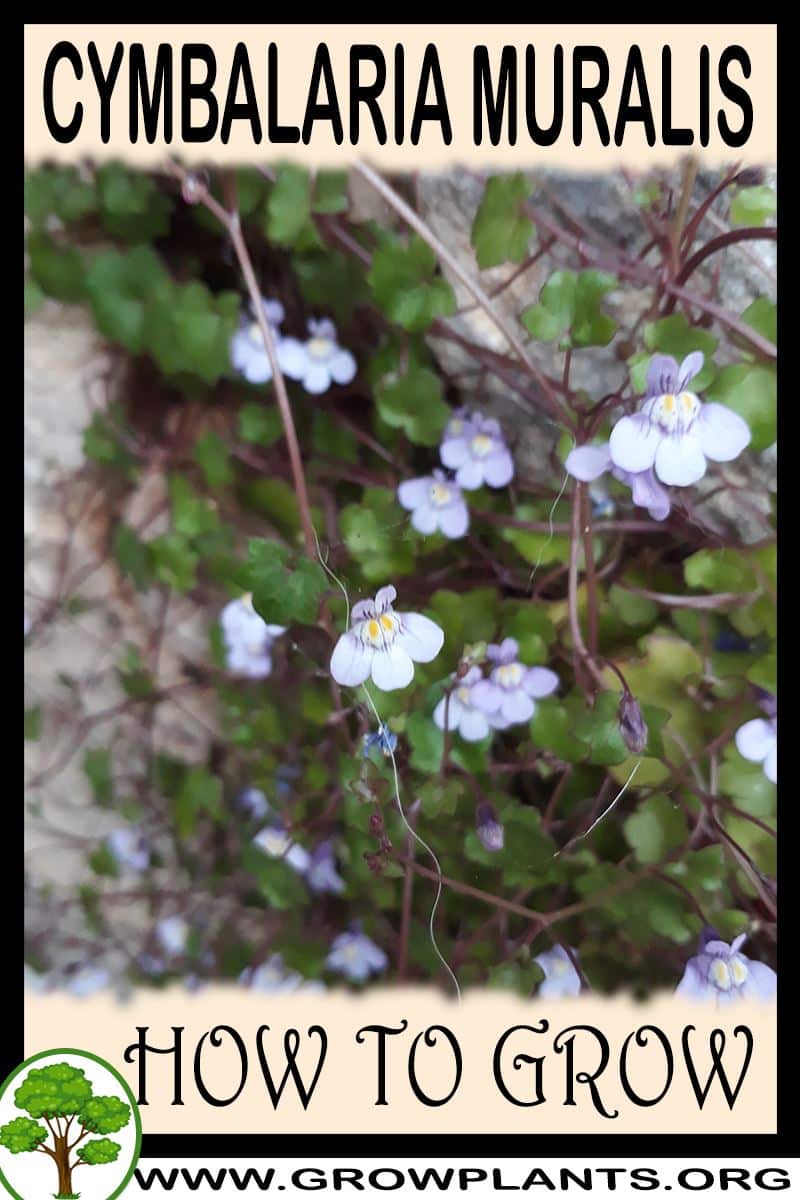
Overview: Kenilworth ivy is a low, trailing evergreen (to deciduous) perennial only 5-10 cm (2-4 in) tall but spreading indefinitely as a groundcover. It is grown mainly as an ornamental for walls, rockeries and containers, though its leaves are also edible.
Quick Specifications
| Specification | Attribute |
|---|---|
| Plant Type / Life Cycle | Perennial (sometimes grown as an annual) |
| Foliage Type | Evergreen to deciduous |
| Mature Size | 5-10 cm (2-4 in) tall, trailing/spreading indefinitely |
| Growth Rate | Fast to moderate |
| Root System | Fine and fibrous, rooting at the nodes as it creeps |
| Toxicity | Non-toxic / edible (leaves edible) |
| Hardiness | USDA zones 3-10 |
Growth Form & Structure
- Height & Spread: Only 5-10 cm high but trailing to any length; equally at home cascading from a wall, container or hanging basket.
- Growth Habit & Form: Mat-forming, trailing groundcover with slender creeping stems; can be invasive.
- Lifespan & Maturity: Fast to establish and spreads/self-seeds readily once settled.
Anatomy & Physical Features
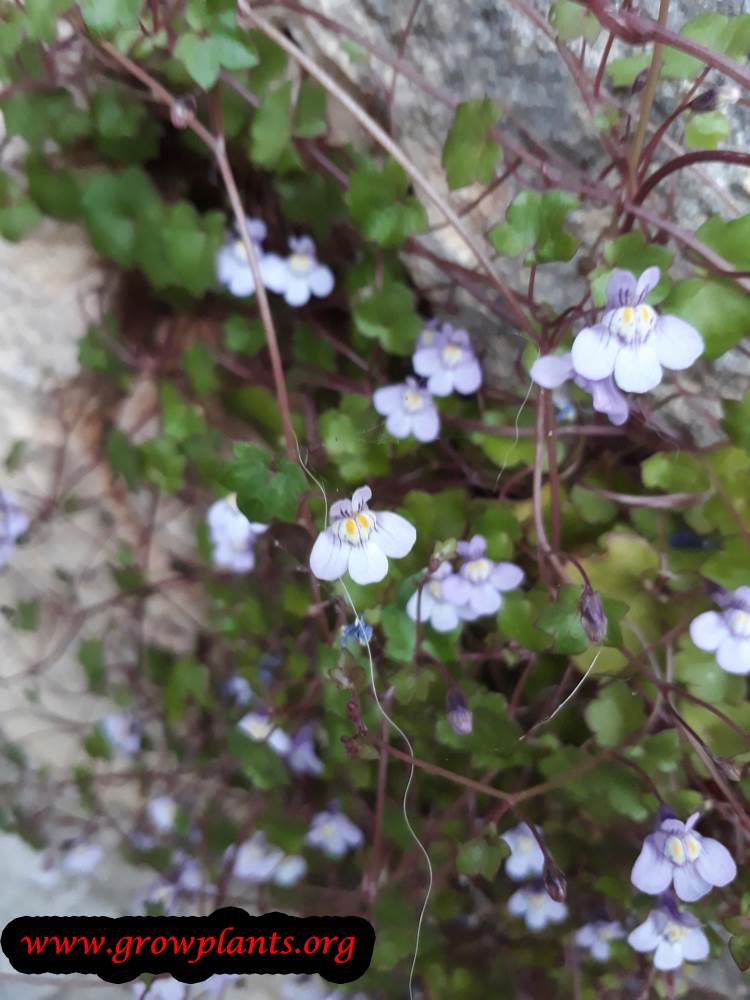
- Leaves & Foliage: Small, ivy-like green leaves, orbicular to heart-shaped with 3-7 shallow lobes; edible.
- Flower Characteristics: Tiny snapdragon-like flowers, blue to purple with a yellow throat, borne over a long season.
Primary Uses & Landscape Value
- Edible Uses: Leaves are edible, used like a mild cress.
- Functional & Ornamental Roles: Ornamental groundcover and trailing plant for walls, rock gardens, containers, hanging baskets and indoor use.
Care Guide: Planting, Soil & Watering
Overview: Kenilworth ivy is a trailing groundcover that grows in part shade to sun in ordinary, well-draining soil with steady, moderate moisture. It is easy and undemanding but dislikes heat waves.
Quick Care Requirements
| Requirement | Ideal Condition |
|---|---|
| Planting Season | Spring and summer |
| Growth Rate | Fast to Moderate |
| Soil Type | Average, well-draining soil; thrives even in walls and crevices |
| Water Need | Moderate – keep evenly moist, more in sun and heat |
Planting & Establishment
- Best Planting Season: plant in spring and summer.
- How to Plant:
- Hole Preparation: dig a small hole to fit the root ball; it will also self-seed into walls and gaps.
- Soil Amendments: a little compost is plenty – it tolerates poor, gritty soil.
- Planting Depth: set the crown level with the soil surface.
- Growth Speed & Expectations: fast, spreading into a low trailing mat only a few centimetres tall.
Soil, Watering & Drainage Care
- Soil Mix & Drainage Needs: undemanding and well-draining; it also does well in a container or hanging basket.
- Watering Schedule & Technique:
- Young / Newly Planted: keep the soil moist while it establishes.
- Established: water moderately, and more often during heat waves, which it finds stressful.
- Seasonal Adjustments: water less in cool winter weather.
Climate, Light & Hardiness
Kenilworth ivy is a versatile trailing ground cover for temperate, subtropical, and Mediterranean climates, adapting from evergreen to deciduous behavior – or growing as an annual – depending on winter severity. It tolerates a wide range of light from full sun to full shade and can also be grown indoors.
Quick Climate Specifications
| Climate Zones | Temperate, subtropical, mediterranean |
|---|---|
| USDA Hardiness Zones | 3–10 |
| Light Conditions | Full sun (with ample water) to full shade |
Sunlight & Light Exposure
Optimal Light Setup
Unusually shade-tolerant for a flowering ground cover, growing well from full sun through to full shade; full-sun plantings need consistently ample water to avoid stress.
Temperature Extremes & Hardiness
USDA Hardiness & Regional Limits
Grows from zone 3 through 10. In colder parts of this range it dies back and behaves as deciduous or annual, while in milder climates it stays evergreen year-round.
Growing in Pots, Balconies & Indoors
Ivy-leaved toadflax (Cymbalaria muralis) is a tiny, trailing, shade-tolerant creeper that is delightful in pots – the grower confirms it grows both indoors as a houseplant and in containers. At just 2-4 in (5-10 cm) high with long trailing stems, it is perfect for a small pot, a hanging basket or the edge of a mixed container, indoors or out.
Quick Details
- Container Size: A small pot or hanging basket – it is only 5-10 cm tall but trails, so give it room to spill
- Indoor Suitability: A good houseplant; happy in bright to shady spots, ideal for a trailing display
- Best Spot: Full sun (with enough water) to full shade – very adaptable
- Soil & Drainage: Any free-draining mix; it is not fussy but likes steady moisture
- Watering in Pots: Keep evenly moist – it wilts if it dries out, especially in sun
Indoors & On the Windowsill
- As a houseplant: The grower marks it ‘yes’. It thrives on a windowsill or trailing from a shelf and tolerates lower light better than most, though it stays neatest with good light.
- Trailing habit: Let the delicate stems cascade from a raised pot or basket; pinch back if it outgrows its spot.
On a Balcony or Patio
- Light & shelter: On a balcony it grows in sun or shade; in full sun keep it well watered. Being small and low it needs little staking, but small pots dry fast.
- Watering: Check often – a small pot of a moisture-loving creeper can dry out within a day in sun and wind.
Choosing the Pot, Soil & Long-Term Care
- Pot & drainage: A small pot or basket with drainage holes. Use a pot with strong drainage holes and skip a standing water saucer – constantly wet feet are the quickest route to root rot.
- Potting mix: A light, aerated, organic-rich potting mix – a peat- or coir-based blend with perlite or vermiculite for free drainage.
- Feeding & refresh: It needs little feeding; a weak liquid feed occasionally is plenty. Refresh the top few centimetres of mix each year and pot up (or root-prune and return with fresh mix) about every two years.
Fertilizing & Feeding
Kenilworth ivy is a vigorous, low-growing ground cover that thrives with minimal feeding – rich soil tends to make an already spreading plant more aggressive rather than more attractive.
Quick Fertilizing Specs
| Feeding Level | Light – a low, spreading ground cover that thrives with minimal care |
|---|---|
| young_feeding | Light, balanced feeding while young plants or divisions establish |
| mature_feeding | Minimal feeding once established; this vigorous ground cover typically spreads well without heavy fertilizing |
| Main Nutrient Priority | Balanced feeding is enough – this plant does not need heavy nitrogen and can become even more aggressive in rich soil |
| Best Feeding Period | Early in the growing season as new growth resumes |
| Organic Options | A light topdressing of compost is usually all that’s needed |
| Micronutrients | No routine micronutrient program is typically needed for this tough ground cover |
| Soil pH | Tolerates a wide range of soil pH |
| Reduce/Stop Feeding | Feeding is unnecessary once growth slows in winter or during summer heat stress |
Feeding by Growth Stage
Spring Growth Flush
Support fresh trailing growth as the plant resumes active spreading in spring.
| Nutrient direction | A light, balanced feeding at the start of new growth is enough for this vigorous, low-maintenance ground cover. |
|---|---|
| Timing | As new growth resumes in spring. |
| Frequency | A light feeding at the start of the season is usually all this plant needs. |
| Fertilizer types | A balanced, complete fertilizer applied lightly at the start of spring growth, A light topdressing of compost |
| Precautions | Rich feeding can make this already vigorous, spreading plant even more aggressive in the garden. |
Bloom Period
Sustain the small snapdragon-like flowers produced through much of the growing season.
| Nutrient direction | Established plants generally flower well without additional feeding; minimal feeding is usually enough through bloom. |
|---|---|
| Timing | From spring through autumn, as flowers continue to appear. |
| Frequency | Feeding is rarely necessary once the plant is established and spreading. |
| Fertilizer types | A light, balanced feeding only if growth looks sparse or pale – otherwise minimal feeding is standard at this stage |
| Precautions | Avoid heavy feeding during a heat wave or other stress, when the plant is already more vulnerable. |
Winter Rest
Let the plant rest through its slowest growth period of the year, when top growth may die back in cooler climates.
| Nutrient direction | None – withhold fertilizer while growth is dormant or minimal. |
|---|---|
| Timing | Through the coldest part of the year. |
| Frequency | No feeding at this stage. |
| Fertilizer types | No feeding at this stage – dormant or minimal growth has no use for additional fertilizer |
| Precautions | Do not fertilize while the plant is dormant; resume light feeding as active growth returns. |
Nutrient Deficiency Signs & Corrections
Trailing stems look thin and pale with sparse, small leaves.
| Possible causes | Nitrogen deficiency, Very poor, depleted soil, Root stress from container crowding or compacted soil |
|---|---|
| Appears first on | Overall foliage color and stem density. |
| What to check | Soil richness and organic matter, Container size and root crowding, if grown in a pot, Recent feeding history |
| Possible correction | A light, balanced feeding at the start of the growing season is usually enough to restore healthy growth. |
New leaves look pale to yellowish while the veins remain green.
| Possible causes | Iron deficiency (chlorosis), High soil pH limiting iron availability, Waterlogged or poorly aerated soil |
|---|---|
| Appears first on | Newest growth. |
| What to check | Soil pH, especially in alkaline soil, Drainage in the planting area or container, Whether yellowing is specific to new growth |
| Possible correction | Correct soil pH toward a more favorable range and apply a chelated iron product per its label if chlorosis is confirmed. |
Leaf margins show a dry, scorched appearance, mostly on older leaves.
| Possible causes | Potassium deficiency, Drought stress or inconsistent watering, Salt buildup in container-grown plants |
|---|---|
| Appears first on | Older leaves and leaf margins. |
| What to check | Watering consistency, Container drainage and any salt crust on the soil surface, Recent feeding rate and frequency |
| Possible correction | A balanced feeding with adequate potassium, along with consistent watering, typically resolves mild scorch. |
Pruning, Training & Seasonal Maintenance
Kenilworth ivy is a low, spreading herbaceous groundcover with essentially no structural pruning needs. The only real maintenance tasks are edging/trimming to keep it within bounds – it self-seeds readily into cracks and paving and is noted as invasive – and an occasional shear-back to refresh tired mats. Cutting does not meaningfully affect flowering, since it blooms continuously on new growth through the season.
Quick Pruning & Maintenance Specs
| Pruning Tolerance | High (very forgiving of shearing) |
| Primary Pruning Window | Any time during active growth, for edging and containment |
| Secondary Maintenance Window | A light cutback of tired growth before the spring flush |
| Typical Frequency | As needed for spread control; one to two shear-backs per season |
| Main Objective | Contain spread and self-seeding; renew tired mats |
| Mature Plant Priority | Edge-trim boundaries; shear back to renew growth |
| Best Tool Type | Hand shears or precision snips |
| Avoid Heavy Pruning During | Summer heat waves – the plant is specifically noted as heat-sensitive |
Pruning by Plant Age & Size
Newly Established
No pruning needed – simply let it establish and begin spreading.
Young / Formative
No structural training applies to this mat-forming plant.
Mature / Established
Periodic edge-trimming to keep it inside its intended area, plus an occasional whole-mat shear to remove tired, woody-based growth.
Seasonal Pruning Schedule
| Ongoing Sanitary | Objective: containment. Trim spreading runners and edges as needed to keep the plant in bounds and reduce seeding into unwanted cracks. No flowering impact, since bloom is continuous on new growth. |
| Dormant/Winter | Objective: renewal. A light cutback of winter-worn growth before the spring flush works well in most zones. Avoid deep shearing during summer heat waves given the plant’s noted heat sensitivity. |
Special Growth to Remove
- Spent flower stems – shearing these off periodically reduces self-seeding into unwanted paving cracks and beds, helping manage the plant’s invasive tendency.
- Dead or browned patches, particularly after heat stress or winter dieback in colder zones where it may behave as an annual.
Container & Small-Space Pruning
In pots or hanging baskets, trim trailing stems to control their length over the container edge and pinch tips to keep growth compact rather than letting it run unchecked.
Tools
- Precision snips or small hand shears for edging and whole-mat trims – no larger tools are ever needed.
Tool Hygiene & Disease Risk
Routine: clean tools are sufficient. Aphids are the listed pest of concern; check fresh regrowth after a shear-back for buildup.
Cut Placement & Technique
Shear back to a few centimetres above the crown for a mat-wide trim; individual selective cuts are not necessary given the plant’s uniform, spreading habit.
Heavy Pruning & Rejuvenation
Tolerates a hard shear-back to rejuvenate leggy or tired mats, especially just before the spring growth flush, and recovers quickly given its fast growth rate.
Post-Pruning Care
Water normally afterward and watch regrowth for aphids; avoid a hard shear during a heat wave, per the plant’s noted sensitivity to heat stress.
Common Pruning Mistakes
- Letting it seed freely into cracks and paving, where it can become a persistent weed given its invasive tendency.
- Shearing hard during a summer heat wave and stressing an already heat-sensitive plant.
When NOT to Prune
Avoid a hard cutback during heat waves or drought stress; otherwise this plant is highly forgiving of pruning at almost any time.
Recommended Tools (by task)
- precision_snips – edging, deadheading, and whole-mat shear-backs on this small-scale groundcover.
Propagation Guide
Kenilworth ivy self-seeds so freely that seed is effectively the default method, and its trailing stems also root wherever a node touches moist soil, so rooted sections can simply be severed and transplanted – consistent with the site’s own note that this plant can be invasive. Seed-grown plants come true to the species, and propagation by any method is Easy.
Quick Propagation Specs
| Best Propagation Method | Self-sown seed or rooted stem sections |
| Alternative Methods | Stem cuttings |
| Propagation Difficulty | Easy |
| Seed True-to-Type | Usually true-to-type |
| Vegetative True-to-Type | Yes |
| Best Propagation Season | Spring to summer |
| Seed Germination Time | Often just a few weeks under mild, moist conditions (this species self-sows readily in the garden) |
| Cutting Rooting Time | Typically a couple of weeks – nodes often root before a cutting is even taken |
Growing from Seed
Sowing Season
Spring to summer.
Germination Conditions
Cool, consistently moist conditions; light shade is tolerated. The tiny seed does best sown shallowly or barely covered.
Seedling Care
Keep moist; because this plant self-seeds readily and the site flags it as potentially invasive, thin or manage volunteer seedlings so they don’t spread further than wanted.
Stem Cuttings
Cutting Type
Short trailing stem-tip cuttings.
Rooting Setup
Roots readily in moist soil or even in a glass of water – the trailing stems naturally root at leaf nodes wherever they contact damp soil.
Rooting Hormone
Unnecessary – this species roots on its own without difficulty.
Rooting Time
Typically just a couple of weeks.
Runners & Stolons
As the plant creeps, stem nodes that touch moist soil or damp wall crevices root on their own. Once a section has rooted independently, it can be severed from the parent plant and moved, or simply left in place to keep spreading – bearing in mind the site’s warning that this plant can become invasive if left unchecked.
Bloom & Flower Guide
Quick Details
- Bloom Season: Spring through autumn
- Flower Appearance: Tiny snapdragon-like flowers, blue to purple with a yellow throat
- Edibility: The plant’s leaves are edible with a mild, cress-like taste; the flowers are best treated as ornamental
Detailed Blooming Overview
Kenilworth ivy is a dainty trailing plant for walls, cracks and shady ground, and it flowers over a remarkably long season from spring right through autumn. The little blue-purple flowers, each with a bright yellow throat, look like miniature snapdragons. It self-seeds happily into crevices, so it can spread itself around a wall or rockery once it is settled in.
Flower Characteristics
- Small two-lipped flowers, blue to purple, with a yellow center.
- Snapdragon-like in shape, carried singly on fine trailing stems.
- Produced continuously over a long season.
Bloom Care & Thinning
- Managing the bloom: Little care is needed – trim back if it strays too far, and it will keep flowering and gently self-seeding.
- Pollination: By small bees and other insects.
Fruit & Uses
Only the leaves of Cymbalaria muralis are noted as edible, with no site detail on taste, preparation, or a specific culinary use. This is a low ornamental groundcover (also noted as invasive), so the edible leaf should be treated as a minor, foraging-level bonus rather than a cultivated food.
Quick Edible Specs
| Edible Parts | Leaves |
|---|---|
| Main Use(s) | Minor/other — occasional raw use; no specific culinary use documented |
| Eaten Raw or Cooked | Raw |
| Preparation Required | None documented beyond rinsing; sample a small amount first |
| Harvest Season | Not specified; foliage is evergreen to semi-evergreen (deciduous in colder climates) so leaves are generally present through the growing season |
| Safety/Toxicity Caveat | No toxicity documented on this page, but detail is minimal and the plant is a weedy, spreading groundcover — confirm identification before eating and use sparingly |
Leaves & Greens
Small green leaves, rounded to heart-shaped (orbicular), with 3-7 lobes. The site confirms they are edible but gives no detail on flavor or preparation. Leaves can be picked fresh from the low, spreading mat of foliage.
Harvesting
No specific harvest season is documented. Because the plant is evergreen to semi-evergreen in mild climates, young leaves are generally available through the growing season — take only a modest amount given its low, spreading groundcover habit.
Preparation, Uses & Safety
Leaves are eaten raw, with no cooking or processing documented as required. No toxicity is noted here, but because edible-use detail on this page is very limited and the plant is grown/valued as an ornamental groundcover (and can spread aggressively), confirm correct identification and try only a small amount before treating it as a food source.
Pests, Diseases & Troubleshooting
Overview: Kenilworth ivy (Cymbalaria muralis) is a tough, low, trailing wall plant that is essentially trouble-free and more likely to spread too enthusiastically than to succumb to pests. The few issues it does get are sap-suckers on soft new growth and slug grazing in damp shade, with rots only in waterlogged soil. Management is almost entirely cultural: good drainage, restraint on watering, and the occasional rinse or hand-pick.
Quick Troubleshooting Overview
| Issue / Pest | Main Symptom | Primary Solution |
|---|---|---|
| Aphids | Clusters on soft new shoots with sticky honeydew | Rinse off with water; insecticidal soap; encourage predators |
| Slugs and snails | Ragged holes and slime trails in damp shade | Hand-pick; iron-phosphate bait; reduce damp cover |
| Spider mites | Fine stippling in hot, dry, sheltered spots | Raise humidity; hose down; horticultural oil |
| Powdery mildew | White film on leaves in humid, crowded growth | Thin growth for airflow; sulfur if needed |
| Root rot | Yellowing, collapse in soggy soil | Improve drainage; water less; avoid waterlogging |
Common Pests & Management
- Aphids (Aphis / Myzus species):
- Symptoms: Small green or dark aphids gather on the tender trailing tips, sucking sap, mildly curling growth and leaving sticky honeydew that can blacken with sooty mould.
- Prevention & Control: Simply rinse them off with water, wipe or spray with insecticidal soap if persistent, and let ladybirds, lacewings and hoverflies do most of the work – this plant rarely needs more.
- Slugs and snails (various species):
- Symptoms: In the damp, shaded wall crevices this plant loves, slugs and snails rasp irregular holes in the soft leaves and leave slime trails, mainly damaging new growth.
- Prevention & Control: Hand-pick after dark, reduce excess damp debris nearby, use copper barriers on containers, and scatter iron-phosphate bait sparingly if grazing is heavy.
- Spider mites (Tetranychus urticae):
- Symptoms: In hot, dry, sheltered positions leaves may show fine pale stippling and look dull and dusty; uncommon on this moisture-tolerant plant.
- Prevention & Control: Raise humidity and hose the foliage; apply horticultural oil or insecticidal soap only if an infestation is confirmed.
- Whitefly (Trialeurodes vaporariorum):
- Symptoms: Occasionally tiny white flies rise from the foliage indoors or under glass, leaving honeydew and mild yellowing.
- Prevention & Control: Hang yellow sticky traps and rinse or spray with insecticidal soap; rarely a problem outdoors.
Diseases & Fungal Issues
- Powdery mildew (Erysiphe / Golovinomyces species):
- Symptoms: A white powdery film on leaves and stems in humid, still, crowded conditions, mostly cosmetic on this vigorous plant.
- Treatment & Management: Thin congested growth for airflow, avoid overhead watering in still conditions, and apply sulfur or a potassium-bicarbonate spray only if it spreads.
- Root and stem rot (Pythium / Rhizoctonia species):
- Symptoms: In waterlogged or heavy soil the roots and stem bases rot, causing yellowing, wilting and patchy die-back.
- Treatment & Management: Improve drainage, ease off watering, avoid planting in soggy ground, and remove affected sections; the plant usually recovers once drainage improves.
Growing Difficulties & Abiotic Problems
- Invasive spread:
- Cause & Symptoms: This self-seeding wall plant can colonise crevices and beds far beyond where it was planted – its main ‘problem’ in cultivation.
- Correction Strategy: Confine to walls, pots or contained spots, deadhead or trim before heavy seeding, and pull unwanted seedlings while young.
- Sun scorch and leggy growth:
- Cause & Symptoms: Hot, dry full sun bleaches and crisps the delicate leaves, while deep shade makes growth thin and sparse.
- Correction Strategy: Give a cool position with light or dappled shade and reliable moisture; trim leggy trails to encourage denser growth.
What Helps – Products & Tools
This plant needs almost nothing. Keep insecticidal soap on hand for the rare aphid or whitefly outbreak, iron-phosphate bait and copper barriers for slugs, and sulfur only if powdery mildew appears. The most important ‘tool’ is restraint – good drainage and containment. Apply any oil or soap in the evening and follow the label.