Plant Profile & Key Characteristics
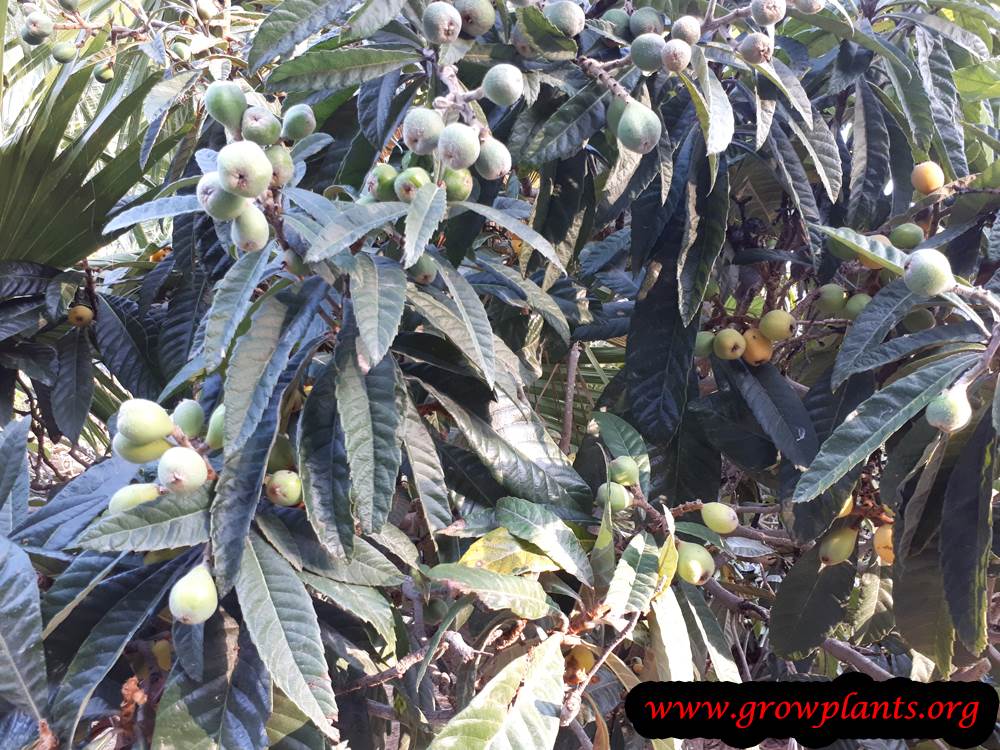
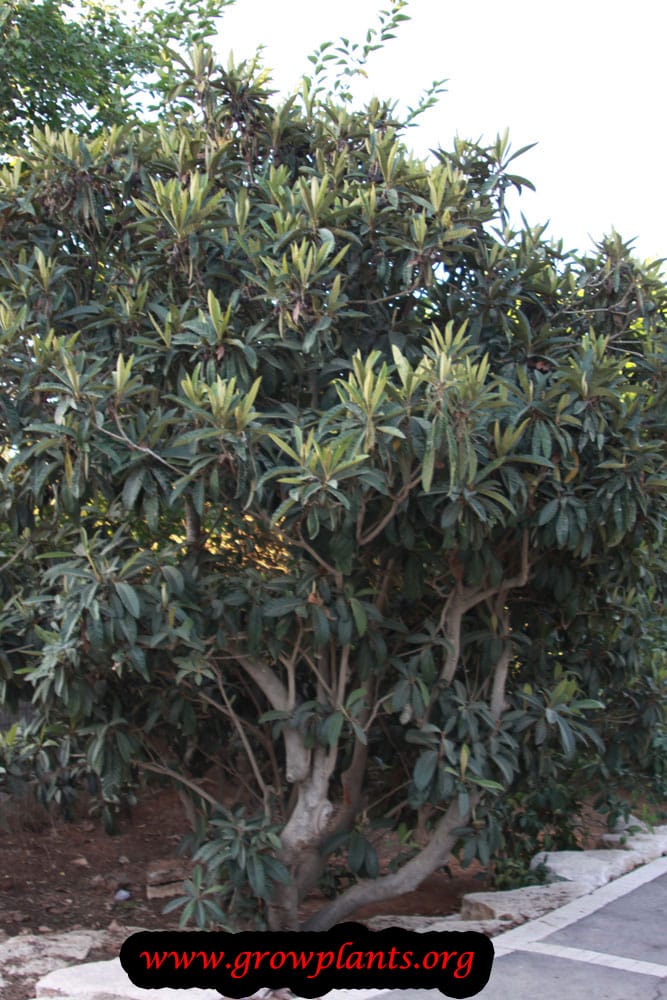
Overview: Loquat is an evergreen fruiting tree 3-7 m (10-21 ft) tall with large dark-green leaves, grown for its sweet orange-yellow fruit and as an ornamental shade tree. Fragrant white flowers appear in the cool season, followed by fruit in spring.
Quick Specifications
| Specification | Attribute |
|---|---|
| Plant Type / Life Cycle | Perennial (tree) |
| Foliage Type | Evergreen |
| Mature Size | 3-7 m (10-21 ft) tall |
| Growth Rate | Slow to moderate |
| Toxicity | Fruit flesh edible; seeds and leaves contain cyanogenic compounds (not for eating) |
| Hardiness | USDA zone 7+ |
Growth Form & Structure
- Height & Spread: 3-7 m (10-21 ft) tall; a full-size tree not suited to long-term indoor or container growing.
- Growth Habit & Form: Small evergreen tree with a rounded, densely leafy canopy.
- Lifespan & Maturity: Long-lived; begins bearing fruit in about 2-5 years.
Anatomy & Physical Features
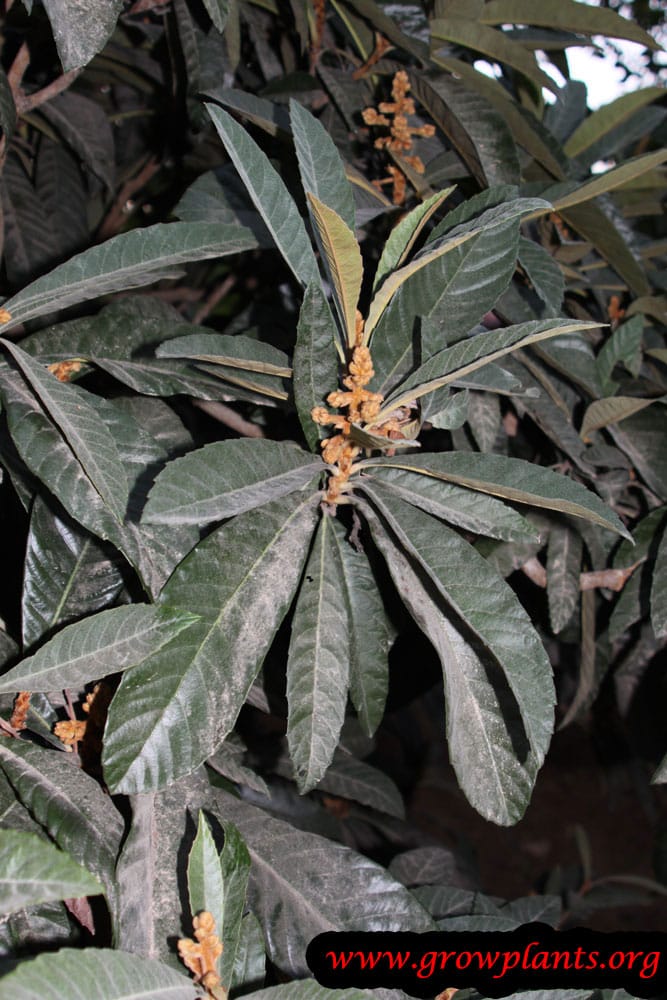
- Leaves & Foliage: Large (6-20 cm) dark-green ovate leaves with a coarse texture.
- Flower Characteristics: Small fragrant white flowers in clusters, an important off-season nectar source (full detail in the Bloom guide).
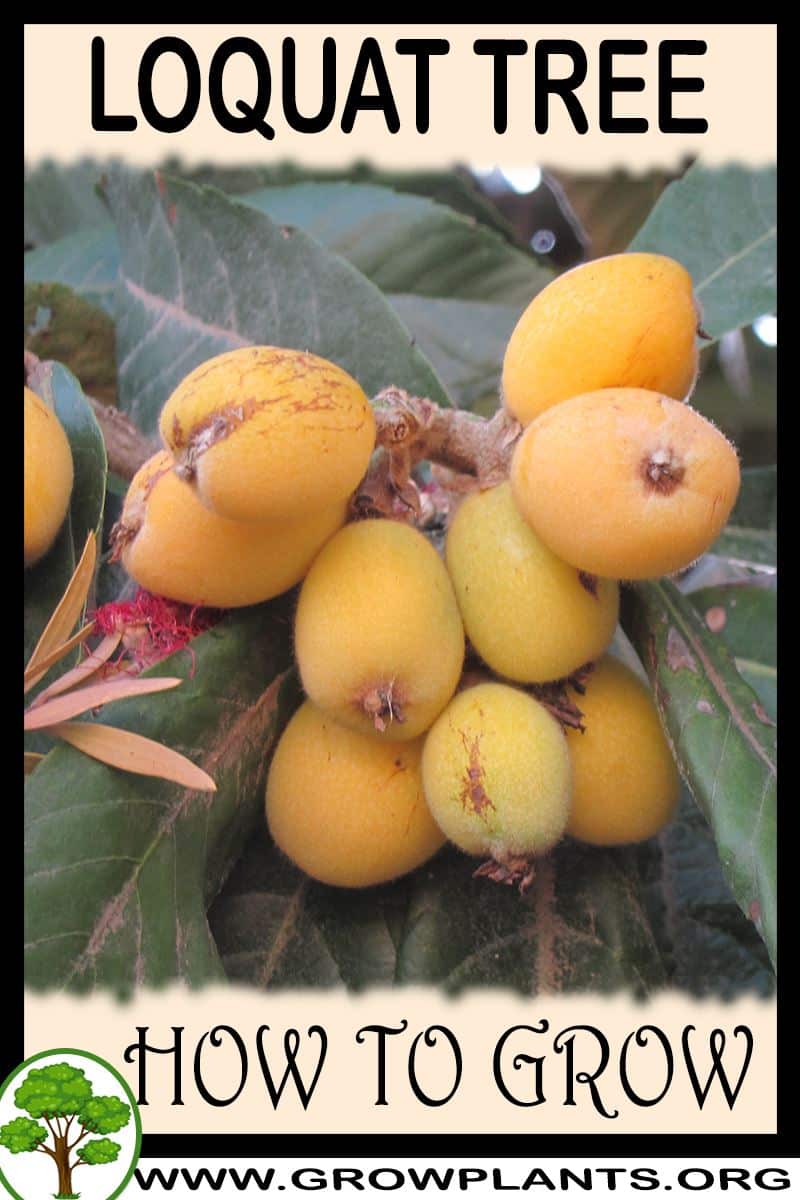
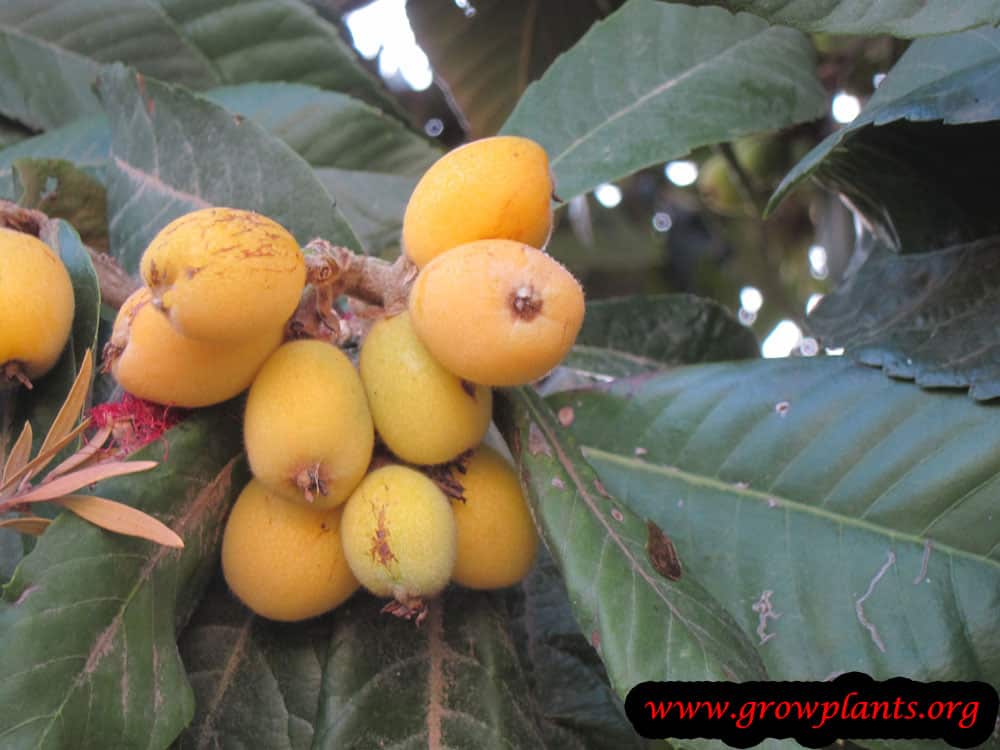
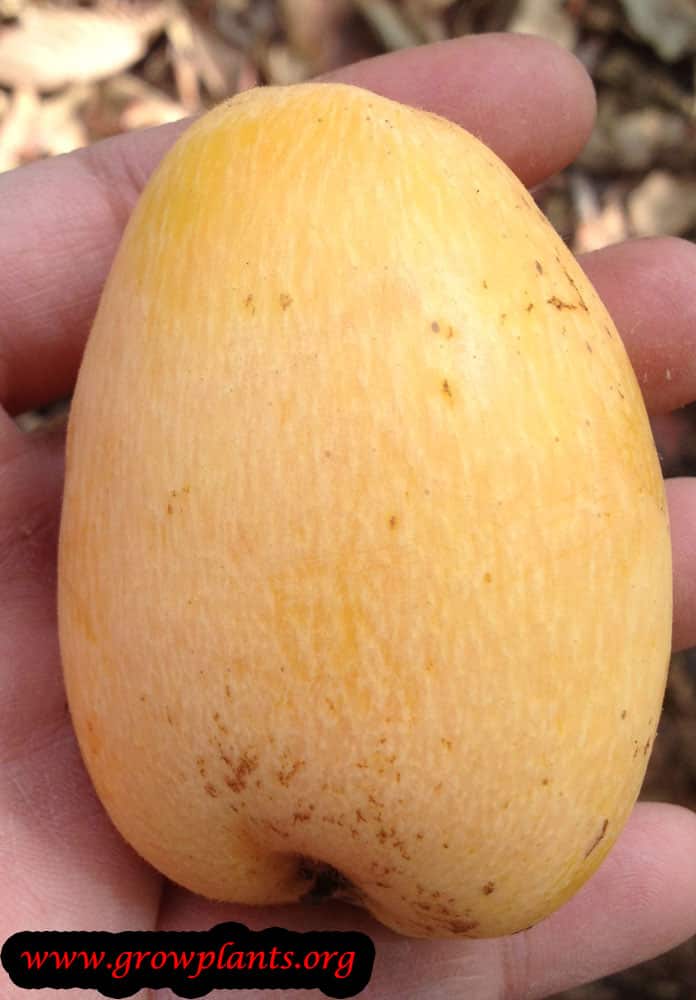
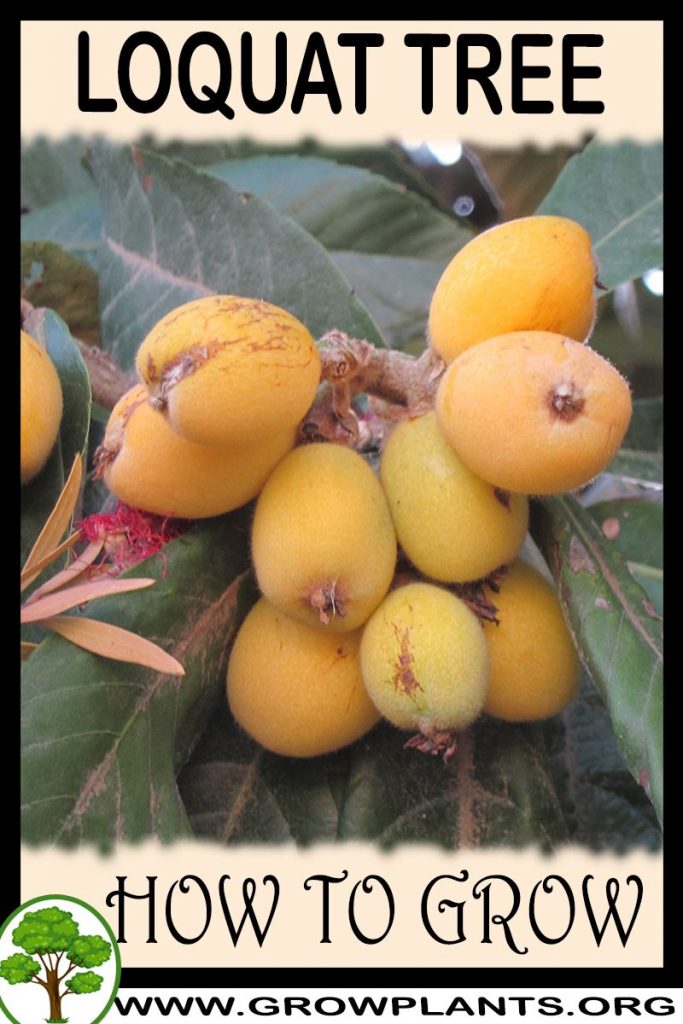
- Fruit Profile: Egg-shaped orange-to-yellow fruit 3-8 cm long holding 2-5 brown seeds (full detail in the Fruit guide).
Primary Uses & Landscape Value
- Edible Uses: Sweet fruit eaten raw and made into jams and juice.
- Functional & Ornamental Roles: Grown as an ornamental evergreen shade tree and a garden fruit tree.
Care Guide: Planting, Soil & Watering
Overview: The loquat is an evergreen fruiting tree that grows best in full sun to light shade and deep, well-drained soil. It is fairly drought-tolerant once established, needing only moderate water, and dislikes waterlogged ground.
Quick Care Requirements
| Requirement | Ideal Condition |
|---|---|
| Planting Season | Spring in cool climates; spring through autumn where mild |
| Growth Rate | Slow to moderate |
| Soil Type | Deep, well-drained (adaptable) |
| Water Need | Low to moderate – water deeply, letting the soil dry between |
Planting & Establishment
- Best Planting Season: Plant in spring in cooler regions, or from spring through autumn where winters are mild.
- How to Plant:
- Hole Preparation: Dig a hole about twice the width of the root ball and no deeper, loosening the sides for root spread.
- Soil Amendments: Improve heavy soil with compost and grit for drainage; loquats are not fussy but resent wet feet.
- Planting Depth: Set the tree so the root collar sits at or just above soil level – never bury the trunk base.
- Growth Speed & Expectations: Growth is slow to moderate; trees take a few years to establish and begin fruiting.
Soil, Watering & Drainage Care
- Soil Mix & Drainage Needs: Deep, free-draining soil suits it best; standing water risks root rot, so ensure drainage on clay ground.
- Watering Schedule & Technique:
- Young / Newly Planted: Water regularly through the first years to build a strong root system, letting the topsoil dry between waterings.
- Established: Water deeply but occasionally; steady moisture while fruiting improves yield, though the tree tolerates dry spells.
- Seasonal Adjustments: Water more in hot, dry summers and little over cool, wet winters.
Climate, Light & Hardiness
Loquat is an unusually adaptable evergreen fruit tree, equally at home in Mediterranean, subtropical, temperate, and tropical gardens. It grows best in full sun to half shade and is notably cold-hardy for an evergreen subtropical fruit tree.
Quick Climate Specifications
| Climate Zones | Mediterranean, subtropical, temperate, tropical |
|---|---|
| USDA Hardiness Zones | 7+ |
| Frost Tolerance | Moderate |
| Light Conditions | Full Sun / Half Shade |
Sunlight & Light Exposure
Optimal Light Setup
Loquat performs well in full sun to half shade, giving it flexibility across a range of garden aspects.
Shade & Heat Management
The tree's broad climate range, from temperate to tropical, reflects strong general tolerance of both heat and full-sun exposure.
Temperature Extremes & Hardiness
USDA Hardiness & Regional Limits
Loquat is rated for USDA zone 7 and warmer, an unusually cold-tolerant range for an evergreen subtropical fruit tree, letting it succeed from cool temperate gardens through to the tropics.
Cold Damage & Winter Protection
Its bloom season falls in autumn and winter (extending into spring in colder areas), which is the main cold-related vulnerability – a hard freeze during flowering can reduce or eliminate fruit set even though the tree itself is fairly cold-hardy.
Frost Sensitivity
Frost tolerance of the tree itself is moderate, but the winter flowers and developing fruit are considerably more frost-sensitive, so late or hard frosts are the main climate risk.
Wind, Humidity & Microclimate
Microclimate Recommendations
In colder parts of its range, a sheltered, sun-facing site helps protect the winter blossoms from frost damage.
Growing in Pots, Balconies & Indoors
Loquat is a fairly large subtropical fruit tree and not a houseplant. Unusually, the grower does not recommend growing it in a pot at all – it does best planted in open ground.
Quick Details
- Container Size: Not recommended by the grower; loquat prefers open ground
- Indoor Suitability: Not a houseplant
- Best Spot: Full sun to half shade, outdoors in the ground
- Soil & Drainage: Free-draining soil; it is fairly drought-tolerant once established
- Watering in Pots: Small water needs; if attempted in a pot it must never sit wet
Indoors & On the Windowsill
- Not a houseplant: The grower does not grow loquat indoors; it needs full outdoor light to grow and fruit.
- Container not advised: Unlike most of his fruit trees, the grower marks loquat as unsuitable for containers – it resents being confined and does far better in the ground.
On a Balcony or Patio
- If you must try a pot: Only a young or dwarf plant could be attempted in a very large container in full sun, but expect it to be a short-term arrangement and to underperform compared with a ground-planted tree.
- Light & wind: It is reasonably hardy for a subtropical and takes sun and wind well once established.
Choosing the Pot, Soil & Long-Term Care
- Pot & drainage: Should you pot a young plant, A pot with strong drainage holes is essential; skip a permanently full water saucer to avoid root rot, and empty any tray the same day it collects water.
- Potting mix: Use a free-draining, aerated mix – peat or coir with perlite or vermiculite and some organic matter.
- Feeding: Potted plants exhaust their soil faster than those in the ground, so feed a little more often as nutrients leach out with watering.
Fertilizing & Feeding
Loquat is a comparatively modest feeder for a fruit tree: it prefers well-drained soil and manages on lighter feeding than thirstier fruit trees, with an unusual autumn-to-winter bloom window that shifts when feeding matters most.
Quick Fertilizing Specs
| Feeding Level | moderate |
|---|---|
| young_feeding | Young trees benefit from a nitrogen-leaning feed to build canopy, kept modest since loquat is not a heavy feeder. |
| mature_feeding | Bearing trees do better on a balanced feed that leans toward potassium as fruit develops. |
| Main Nutrient Priority | Nitrogen while establishing, shifting to balanced-to-potassium once the tree bears fruit. |
| Best Feeding Period | The active growing season, with an extra light feeding ahead of the autumn-to-winter bloom that is unusual among fruit trees. |
| Organic Options | Compost and organic matter worked into mulch support gentle, steady feeding in well-drained soil. |
| Soil pH | Prefers well-drained soil; avoid heavy or waterlogged conditions. |
Feeding by Growth Stage
Newly Planted Loquat
Help a young loquat establish roots in well-drained soil after transplanting.
| Nutrient direction | Keep feeding light and balanced while the tree settles in; loquat does not need heavy fertilizer to get started. |
|---|---|
| Timing | Once clear new growth shows the tree has taken hold after planting. |
| Frequency | Light feeding through the first growing season, easing back if growth stalls. |
| Fertilizer types | A balanced, general-purpose fruit tree fertilizer applied sparingly, Compost or organic matter worked into the planting area |
| Precautions | Avoid overwatering or heavy fertilizer together, since loquat prefers well-drained soil over consistently wet, heavily fed conditions. |
Young, Establishing Loquat
Build a full canopy on a tree valued for both its fruit and its ornamental form.
| Nutrient direction | Favor a nitrogen-forward feed to support steady branching and leaf growth, kept moderate rather than heavy. |
|---|---|
| Timing | Through the active growing season. |
| Frequency | Regular light feedings through the growing season support steady, unforced growth. |
| Fertilizer types | A nitrogen-leaning complete fruit tree fertilizer used at a modest rate, Composted organic matter worked into the mulch |
| Routine trace nutrients | iron, manganese, zinc |
| Precautions | Because loquat is a relatively slow-to-medium grower that prefers well-drained soil, avoid overfeeding in an attempt to speed it up, which can stress the roots instead. |
Established, Pre-Bearing Loquat
Maintain balanced growth as the tree matures toward its unusually timed autumn-to-winter bloom.
| Nutrient direction | Shift toward a balanced feed rather than the nitrogen-heavy routine used while young. |
|---|---|
| Timing | During the active growing season and again ahead of the autumn-to-winter bloom. |
| Frequency | Moderate, evenly spaced feeding through the growing months, with a lighter feeding ahead of bloom. |
| Fertilizer types | A balanced complete fruit tree fertilizer, Organic matter renewed in the mulch each season |
| Routine trace nutrients | iron, manganese, zinc |
| Precautions | Since loquat blooms in autumn or winter rather than spring like most fruit trees, time any pre-bloom feeding to that unusual schedule rather than a typical spring routine. |
Mature, Fruit-Bearing Loquat
Support fruit development on a bearing tree that ripens fruit earlier in the year than most other fruit trees.
| Nutrient direction | Keep nitrogen moderate and let potassium play a larger role as fruit develops. |
|---|---|
| Timing | As new growth resumes and again while fruit develops toward its early-season harvest. |
| Frequency | Regular, moderate feeding through the growing and fruiting months, easing off as the tree slows. |
| Fertilizer types | A balanced to potassium-leaning fruit tree fertilizer timed to fruit development, Fresh organic mulch renewed around the root zone each season |
| Routine trace nutrients | iron, manganese, zinc |
| Precautions | Avoid heavy feeding right at harvest time; loquat generally needs less overall fertilizer than more vigorous, heavier-feeding fruit trees. |
Nutrient Deficiency Signs & Corrections
New leaves yellow between veins that remain green
| Possible causes | Iron deficiency linked to alkaline or compacted soil limiting iron uptake, Waterlogged roots from soil that does not drain as well as this tree prefers, Recent transplant or root disturbance temporarily limiting uptake |
|---|---|
| Appears first on | Newest leaves at the shoot tips |
| What to check | Soil drainage, since loquat is particularly sensitive to wet conditions, Soil pH relative to the tree’s preferred range, Whether the pattern is confined to new growth or has spread |
| Possible correction | Improve drainage first, since loquat is drainage-sensitive, then correct soil pH before assuming a straight iron deficiency; a chelated iron product applied per its label can help once those conditions are addressed. |
General decline, leaf drop, or poor vigor despite regular feeding
| Possible causes | Root stress from soil that stays wetter than this well-drained-soil-loving tree tolerates, Nutrient uptake problems caused by waterlogged roots rather than an actual nutrient shortage, Fungal root issues that can follow prolonged wet conditions |
|---|---|
| Appears first on | Whole-tree vigor and leaf retention rather than a single symptom pattern |
| What to check | Drainage and how quickly water moves away from the root zone, Watering frequency relative to actual soil dryness, Any signs of root rot or soggy soil near the trunk |
| Possible correction | Improve drainage and adjust watering before adding more fertilizer, since this tree’s problems are more often drainage-related than nutrient-related. |
Pale overall leaf color and reduced shoot growth during the active season
| Possible causes | Nitrogen deficiency from under-feeding relative to this tree’s modest but real nitrogen needs, Root stress from either drought or waterlogging limiting nutrient uptake, Competing ornamental plantings nearby drawing on the same limited soil nutrients |
|---|---|
| Appears first on | Older leaves lower in the canopy first |
| What to check | Recent feeding history against the tree’s current growth stage, Soil moisture extremes in either direction, Shoot growth compared with a typical season |
| Possible correction | Resume a stage-appropriate feeding routine and confirm drainage and watering are balanced before increasing fertilizer. |
Pruning, Training & Seasonal Maintenance
Loquat needs only light, mostly ornamental ("more for design") pruning – it is often grown as much for its handsome evergreen form as for fruit. Unlike the tropical Annona trees, loquat flowers in autumn/winter on the current season's terminal growth, and the fruit doesn't ripen until the following spring, so the safest and most effective pruning window is right after harvest (spring–summer, or into winter in warmer climates) – this gives the tree the rest of the growing season to produce the new terminal growth that will carry the coming autumn's bloom.
Quick Pruning & Maintenance Specs
| Pruning Tolerance | Low–Moderate (light, mostly for shape) |
| Primary Pruning Window | Spring–summer, right after fruit harvest |
| Secondary Maintenance Window | Winter, in warmer climates |
| Typical Frequency | Light annual shaping rather than heavy structural work |
| Main Objective | Maintain form/design and open the canopy for the next autumn's flowering flush |
| Young Plant Priority | Establish a single-leader or modified-leader framework |
| Mature Plant Priority | Light shaping; head terminals after harvest to encourage new flowering wood |
| Best Tool Type | Bypass secateurs and loppers; pruning saw for occasional framework work |
| Avoid Heavy Pruning During | Approaching autumn/winter bloom – late pruning removes the terminal growth that would have flowered |
Pruning by Plant Age & Size
Newly Established
Remove only damaged growth; establish the leader and main scaffold branches while the tree is small.
Young / Formative
Central-leader or modified-leader framework, shaped mainly for form since loquat is frequently grown as an ornamental as well as a fruit tree.
Mature / Established
Light annual shaping right after harvest; head back some terminal shoots to stimulate the new growth flush that will bear the autumn/winter flowers.
Seasonal Pruning Schedule
Post-Harvest
Objective: stimulate new terminal growth for the coming bloom, right after the spring–summer fruit harvest. What to remove: spent fruiting twigs, dead or crossing wood, and light heading of terminals for shape. What NOT to remove: growth right before the autumn/winter bloom period. Response: a new flush that carries the season's flower panicles.
Dormant/Winter
In warmer climates, light shaping can continue through winter; in cooler areas, hold off until the post-harvest window returns in spring.
Flowering & Fruiting Wood
Loquat flowers on the current season's new terminal growth, with bloom in autumn/winter and fruit ripening the following spring–summer – the opposite seasonal rhythm from the Annona trees in this batch. Pruning timing is genuinely critical here: cutting right after harvest gives the tree a full growing season to produce new terminal wood before autumn bloom, while pruning too close to autumn removes the shoots that were about to flower.
Structural Pruning & Training
- Central or modified-leader framework, kept mainly for form.
- Head some terminal shoots post-harvest to multiply flowering sites for the next bloom.
- Remove crossing or rubbing branches as the tree matures.
Special Growth to Remove
- Spent flower panicles/old fruiting twigs after harvest, as part of the general post-harvest tidy.
Tools
Bypass secateurs for light annual shaping, loppers for thicker one-year wood, and a pruning saw for the occasional larger framework limb on an older, less-designed specimen.
Tool Hygiene & Disease Risk
Increased: loquat is in the same Rosaceae subfamily as apple and pear and is a documented host for fire blight (Erwinia amylovora), especially in humid regions. Avoid pruning wet or recently rained-on wood, and clean tools between cuts if any blackened, wilted ("shepherd's crook") shoot tips are found, rather than treating every cut as routine.
Cut Placement & Technique
- Head terminal shoots just above a bud to encourage branching without long stubs.
- Cut outside the branch collar on any larger limb removal; avoid flush cuts.
- If cutting out suspected fire-blight-affected wood, cut well back into clean tissue and disinfect the blade before the next cut.
Heavy Pruning & Rejuvenation
Not the norm for this species: loquat's own guidance frames pruning as light, design-focused maintenance rather than a plant that benefits from routine hard rejuvenation. An overgrown specimen can be reduced gradually over more than one season rather than cut back hard all at once, to avoid forcing a flush of dense, disease-prone regrowth.
Post-Pruning Care
- Water moderately – loquat is noted as a low-water-need tree, so avoid overwatering after a light prune.
- Watch for fire blight symptoms (blackened shoot tips) in the growth that follows, particularly after wet weather.
- Net the tree ahead of fruit ripening if bats or birds are a known problem locally.
Common Pruning Mistakes
- Pruning too close to autumn, cutting off the terminal growth that was about to flower.
- Treating loquat like the fast-flushing Annona trees and hard-pruning it annually, which isn't what its own light, design-oriented guidance calls for.
- Pruning in wet weather when fire blight risk is elevated.
When NOT to Prune
- Just before the autumn/winter bloom period.
- During or right after wet weather, given the fire-blight risk.
- Right after transplanting, before the tree is established.
Recommended Tools (by task)
- Light annual shaping and post-harvest heading – bypass_secateurs: matches the light, design-focused pruning this species needs.
- Thicker one-year wood or framework limbs – loppers.
Pruning Troubleshooting
| Problem | Possible Cause | What to Check | Corrective Action |
| Little or no autumn bloom | Pruned too close to the bloom period, removing the terminal growth that would have flowered | Timing of the last prune relative to autumn | Shift pruning earlier, right after spring–summer harvest, next cycle |
| Blackened, wilted shoot tips ("shepherd's crook") | Fire blight infection, more likely after wet spring weather | Extent of blackening, recent rain/humidity | Cut well back into clean wood; disinfect tools between cuts; avoid pruning wet foliage |
| Fruit loss to bats/birds | Unprotected ripening fruit near the house or under open sky | Presence of bats/birds, timing relative to ripening | Net the canopy ahead of the spring–summer ripening window |
Propagation Guide
Loquat grows easily from seed, which is the site’s stated starting method, but grafting or budding onto seedling rootstock is recommended to lock in a named cultivar’s fruit size and flavor – the site notes this is worthwhile though not strictly required. Overall difficulty is Easy from seed and Moderate for grafting/budding.
Quick Propagation Specs
| Best Propagation Method | Seed (for a straightforward tree) or grafting/budding (to preserve a named cultivar) |
| Alternative Methods | Budding, whip or cleft grafting |
| Propagation Difficulty | Easy (seed) – Moderate (grafting/budding) |
| Seed True-to-Type | Variable – seedlings can differ in fruit size, sweetness and vigor from the parent |
| Vegetative True-to-Type | Yes |
| Best Propagation Season | Spring for grafting/budding; seed can be sown soon after cleaning from ripe fruit |
| Seed Germination Time | Typically a few weeks to about two months |
| Germination Temperature | Roughly 20–25°C (68–77°F) |
| Seed Sowing Depth | Shallow, about 1–2 cm (0.5–1 in) |
Growing from Seed
Seed Handling & Viability
Each fruit holds 2–5 large brown seeds; clean off the fruit pulp and sow promptly, since viability declines the longer the seed is stored dry.
Sowing Depth & Orientation
Sow shallowly, about 1–2 cm (0.5–1 in) deep, in well-drained potting mix.
Germination Conditions & Time
Kept warm (around 20–25°C / 68–77°F) and evenly moist, seed generally germinates within a few weeks, though it can take up to a couple of months.
Seedling Care
Seedlings grow into fruiting trees on their own – the site notes grafting is recommended but not strictly necessary – though fruit from an ungrafted seedling will vary from the parent tree.
Grafting & Budding
Why Grafting Is Used
Grafting or budding is used to guarantee a named cultivar’s fruit size, sweetness and seed count, qualities seedling loquats do not reliably reproduce.
Preferred Grafting Methods
Whip or cleft grafting and T-budding onto seedling rootstock are the standard approaches.
Rootstock
Seedling loquat is the typical rootstock choice.
Best Grafting Season
Spring, once the rootstock is actively growing.
Graft Aftercare
Protect the graft union from drying out and remove any rootstock suckers below the graft as they appear.
Bloom & Flower Guide
Quick Details
- Bloom Season: Autumn to winter (spring in colder areas)
- Flower Appearance: Small, fragrant white flowers in felted clusters
- Edibility: Grown for its fruit; the flowers are ornamental and a valuable off-season nectar source, but not eaten
Detailed Blooming Overview
Loquat has an unusual timetable, flowering through autumn and winter when little else is in bloom. It opens small, fragrant white flowers in woolly, felt-backed clusters that give bees food during the lean, cold season. In colder areas the bloom shifts to spring.
Flower Characteristics
- Small white flowers, sweetly fragrant
- Carried in felted, woolly clusters (panicles)
- Open in the cool season, feeding pollinators when flowers are scarce
Bloom Care & Thinning
- Pollination: visited by bees, and loquat is largely self-fertile, so a single tree usually sets well.
Bloom Health & Protection
- Fire blight (Erwinia amylovora): loquat is prone to it, and the bacteria can enter through the open blossoms in mild, wet spells, blackening flower clusters and shoots. Cutting out infected wood well below the damage, and a copper-based spray around bloom, help keep it in check.
Fruit & Uses
Loquat is grown for its fruit – a small, egg-shaped, orange-to-yellow fruit, roughly 3–8 cm, with juicy flesh around 2–5 brown seeds. The flesh is eaten fresh and raw once ripe, or used for jam and juice; the seeds are not eaten.
Quick Edible Specs
| Edible Parts | Fruit flesh |
|---|---|
| Main Use(s) | Culinary – fresh eating, jam, juice |
| Eaten Raw or Cooked | Raw (fresh flesh); cooked for jam/juice |
| Preparation Required | Peel/cut, remove seeds before eating |
| Harvest Season | Spring to Summer |
| Time to First Harvest | A few years from planting (see Propagation) |
| Storage | Ripe fruit is delicate – use soon after picking, or refrigerate briefly |
| Safety/Toxicity Caveat | Seeds are not edible – like the pits of many other fruit trees, loquat seeds contain cyanogenic compounds and should never be chewed or eaten; the skin is generally not eaten either, just the flesh |
Fruit
Fruit is small and egg-shaped, ripening from green to orange-yellow, roughly 3–8 cm, with 2–5 brown seeds embedded in juicy flesh. Ripeness is judged mainly by full colour change and slight softening; fruit is harvested from spring into summer. Peel or bite into the fruit, eat the flesh, and discard the skin and the seeds – the seeds are not eaten.
Harvesting
Harvest as fruit fully colours and softens slightly, from spring into summer; because loquats attract birds and, per the site, bats, netting the tree is recommended if fruit losses are a problem.
Preparation, Uses & Safety
Flesh is eaten fresh, or cooked into jam and juice. Seeds are not eaten – like the seeds/pits of many related fruit trees, loquat seeds contain cyanogenic compounds and should never be chewed or ingested; keep them away from children and pets.
Pests, Diseases & Troubleshooting
Overview: Loquat (Eriobotrya japonica) is a subtropical Rosaceae fruit tree whose signature threat is fire blight, a bacterial disease that can scorch and kill shoots; its sweet ripening fruit is a magnet for fruit flies, birds and bats, while aphids and scale trouble the foliage. Lead with sanitation, timely pruning of diseased wood, protecting the fruit, and modest feeding – heavy nitrogen fuels the succulent growth fire blight loves.
Quick Troubleshooting Overview
| Issue / Pest | Main Symptom | Primary Solution |
|---|---|---|
| Fire blight | Blackened, hooked (“shepherd’s crook”) shoots and oozing cankers | Prune 30 cm below infection, disinfect tools between cuts, avoid heavy nitrogen |
| Fruit flies | Stung, maggoty fruit that softens and drops early | Bag fruit, hang protein-bait traps, collect and destroy fallen fruit |
| Aphids | Curled new leaves, sticky honeydew and sooty mould | Blast off with water, encourage ladybirds, insecticidal soap or oil |
| Scale | Bumps on twigs and leaf undersides, sooty mould | Horticultural oil, prune out heavily encrusted wood |
| Codling / leaf-rolling moths | Tunnelled fruit with frass, or rolled and chewed leaves | Pheromone traps, fruit bagging, sanitation of drops |
| Anthracnose & leaf spot | Dark leaf and fruit lesions, twig dieback | Improve airflow, remove litter, copper if persistent |
Common Pests & Management
- Aphids (Aphis spiraecola / Aphis pomi):
- Symptoms: Green to yellow-green aphids cluster on tender new shoots and leaf undersides, curling and distorting growth and coating leaves in honeydew that blackens with sooty mould; ants farming them are a giveaway.
- Prevention & Control: Hose off colonies and encourage ladybirds, lacewings and hoverflies; control ants; treat stubborn outbreaks with insecticidal soap or horticultural oil, and avoid pushing soft growth with excess nitrogen.
- Scale insects (Diaspidiotus perniciosus / Icerya purchasi):
- Symptoms: Immobile limpet-like or cottony bumps on twigs, branches and leaf undersides; sap loss causes yellowing and twig dieback, and honeydew from soft scales fuels sooty mould.
- Prevention & Control: Prune out and destroy heavily infested wood, then apply horticultural or dormant oil to smother crawlers; protect the parasitic wasps and ladybird predators that usually keep scale in check.
- Fruit flies (Ceratitis capitata / Anastrepha suspensa):
- Symptoms: Adult flies sting the ripening skin, laying eggs; maggots tunnel the flesh, which browns, softens and drops prematurely, often with a small puncture and secondary rot.
- Prevention & Control: Bag developing fruit clusters, hang protein-bait and lure traps early, and rigorously collect and destroy every fallen or over-ripe fruit to break the breeding cycle; harvest promptly at ripeness.
- Codling & leaf-rolling moths (Cydia pomonella / Tortricidae):
- Symptoms: Caterpillars either bore to the fruit core leaving frass-packed tunnels, or roll and web young leaves and skeletonise them; entry holes with sawdust-like frass are typical of borers.
- Prevention & Control: Hang pheromone traps to monitor, bag fruit, and remove rolled leaves and mummified fruit; Bt or spinosad targets caterpillars, and good orchard sanitation reduces overwintering pupae.
- Birds & bats (fruit) ((vertebrate)):
- Symptoms: Whole or partial fruit pecked or gnawed as it colours up, with peck marks, missing flesh and droppings; losses concentrate in the last week of ripening.
- Prevention & Control: Net vulnerable trees or bag clusters as fruit colours, harvest promptly, and use visual/auditory deterrents; this is a harvest-timing and exclusion problem rather than one needing sprays.
Diseases & Fungal Issues
- Fire blight (Erwinia amylovora):
- Symptoms: The signature loquat disease: blossoms and shoot tips suddenly wilt, blacken and curl into a “shepherd’s crook,” leaves stay attached looking scorched, and sunken cankers on branches ooze amber bacterial slime in warm humid weather.
- Treatment & Management: Prune out infections at least 30 cm into healthy wood in dry weather, disinfecting tools between every cut; avoid succulent growth from heavy nitrogen and overhead irrigation, remove cankered wood in dormancy, and use copper or registered bactericides preventively where pressure is high.
- Anthracnose & fruit rot (Colletotrichum gloeosporioides):
- Symptoms: Dark sunken spots on leaves, twigs and especially fruit, enlarging to rotted patches with pink-orange spore masses in wet weather; can cause twig dieback and post-harvest rots.
- Treatment & Management: Rake up fallen leaves and fruit, prune for an open airy canopy, avoid wetting foliage, and apply copper preventively during prolonged wet spells; handle fruit gently and cool it promptly after harvest.
- Loquat scab / leaf spot (Fusicladium eriobotryae):
- Symptoms: Olive-brown to blackish scabby spots on leaves and fruit skin, sometimes cracking the fruit surface; largely cosmetic but reduces market quality in humid climates.
- Treatment & Management: Improve airflow with pruning, remove infected litter, avoid overhead watering, and use protectant copper or a suitable fungicide during the wet, cool infection period.
- Crown & root rot (Phytophthora spp.):
- Symptoms: General decline, yellowing, wilting and dark rotted bark at the crown and roots in poorly drained or over-irrigated soil; often fatal once the trunk base is girdled.
- Treatment & Management: Plant on a raised mound in free-draining soil, keep irrigation off the trunk, avoid waterlogging, and remove and replace severely affected trees; there is no cure once the crown is girdled.
Growing Difficulties & Abiotic Problems
- Fruit sunburn & purple spot:
- Cause & Symptoms: Exposed fruit develops bleached, tan or purple-blotched patches from intense sun and heat, and a physiological purple spotting linked to calcium/boron imbalance and moisture swings.
- Correction Strategy: Retain some canopy shade over fruit clusters, keep soil moisture even, and correct nutrition (balanced calcium/boron); thin fruit to reduce clustering stress.
- Iron chlorosis:
- Cause & Symptoms: New leaves yellow between green veins on alkaline or waterlogged soils where iron is locked up, weakening the tree over time.
- Correction Strategy: Improve drainage and add organic matter, lower pH where feasible, and apply chelated iron (and manganese/zinc if needed) as a corrective; avoid overwatering that worsens uptake.
- Fruit cracking & drop:
- Cause & Symptoms: Skins split and fruitlets drop after erratic watering – a dry spell followed by heavy irrigation or rain swells the fruit faster than the skin can grow.
- Correction Strategy: Keep soil moisture steady with mulch and regular deep watering, avoid drought-then-flood cycles, and thin heavy clusters to improve remaining fruit size and reduce splitting.
What Helps – Products & Tools
A loquat toolkit centres on copper fungicide (fire blight, anthracnose, scab), horticultural / dormant oil and insecticidal soap (scale, aphids), protein-bait and lure fruit-fly traps, fruit bags or netting (flies, birds, bats), Bt or spinosad for caterpillars, and chelated iron for chlorosis. Sanitation – removing fallen fruit, leaf litter and cankered wood – does most of the heavy lifting.