Plant Profile & Key Characteristics
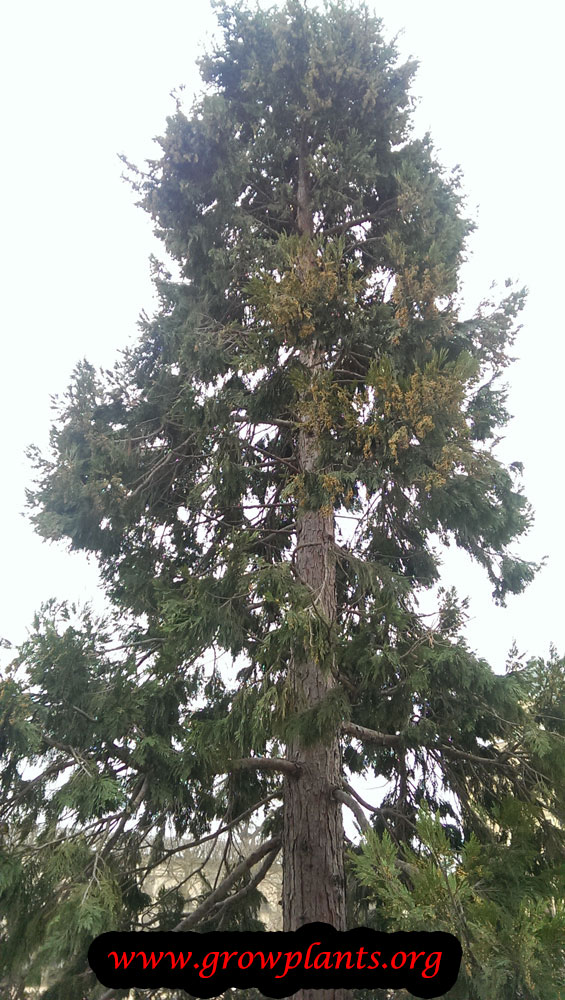
Overview: A large evergreen coniferous tree that can reach 20-60 m (60-200 ft), grown as an ornamental, drought-tolerant specimen and timber tree. It forms a dense, narrow columnar to conical crown of aromatic foliage.
Quick Specifications
| Specification | Attribute |
|---|---|
| Plant Type / Life Cycle | Perennial (coniferous tree) |
| Foliage Type | Evergreen |
| Mature Size | 20-60 m (60-200 ft) tall |
| Growth Rate | Fast to moderate |
| Toxicity | Non-toxic |
| Hardiness | USDA zone 5-9 |
Growth Form & Structure
- Height & Spread: A tall forest tree 20-60 m (60-200 ft) high with a narrow columnar to conical crown; not suited to container culture.
- Growth Habit & Form: Single-trunked conifer with a dense, symmetrical, cone-shaped canopy of flattened foliage sprays.
- Lifespan & Maturity: Long-lived tree, taking many decades to reach full size.
Anatomy & Physical Features
- Trunk & Bark: Straight trunk with fibrous, deeply furrowed, cinnamon-red to brown bark.
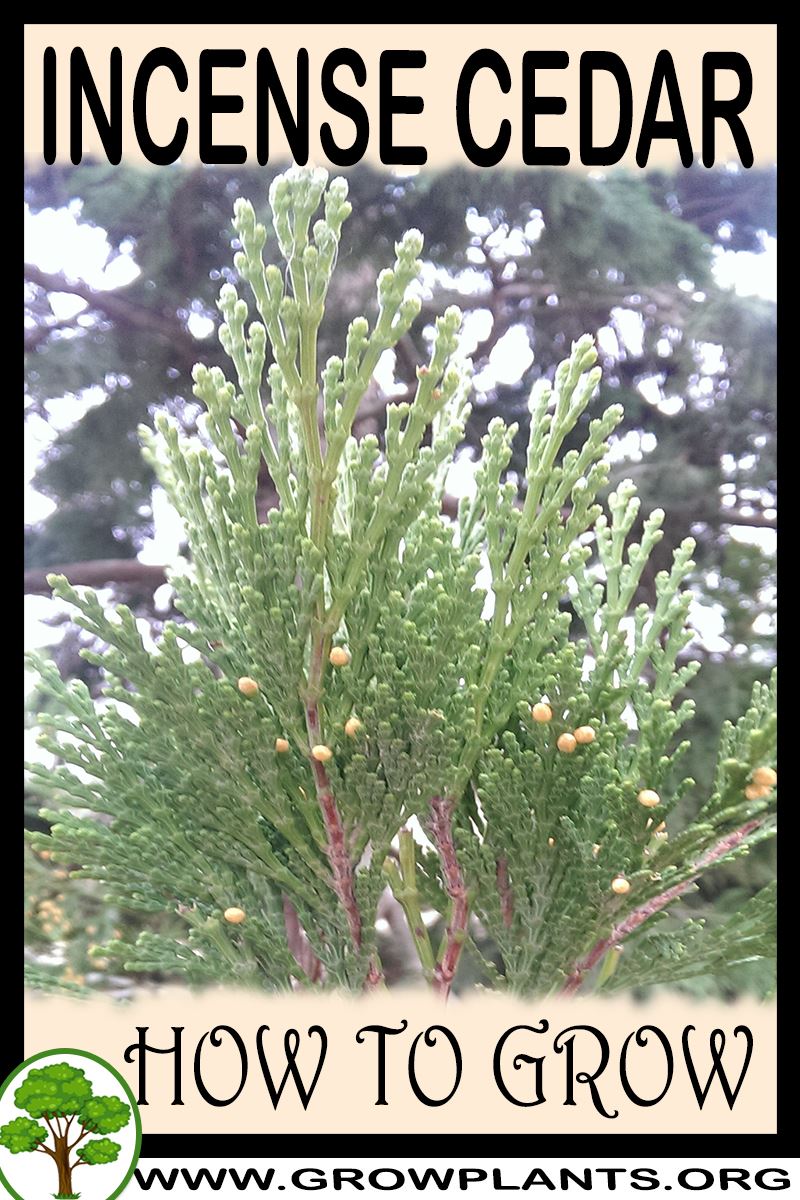
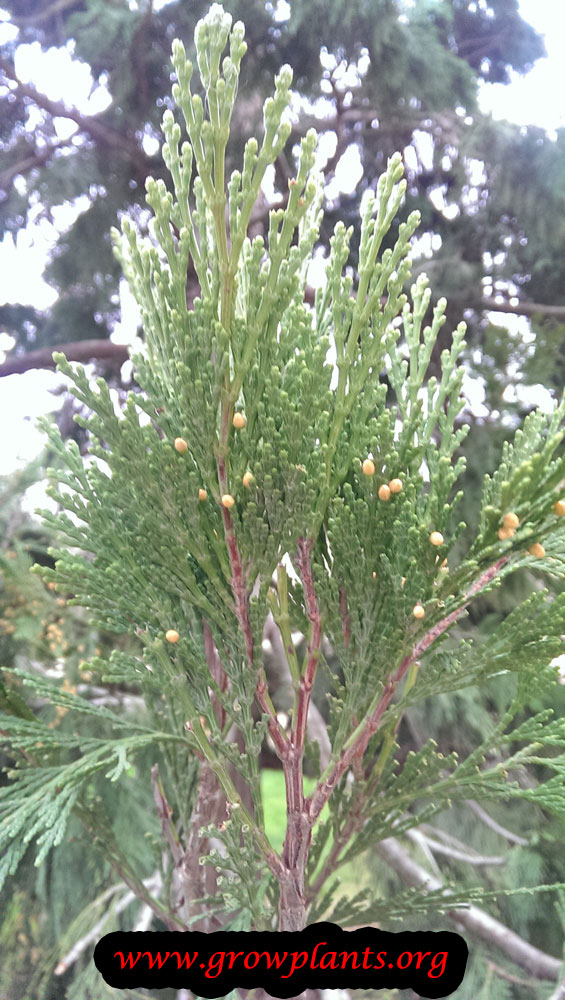
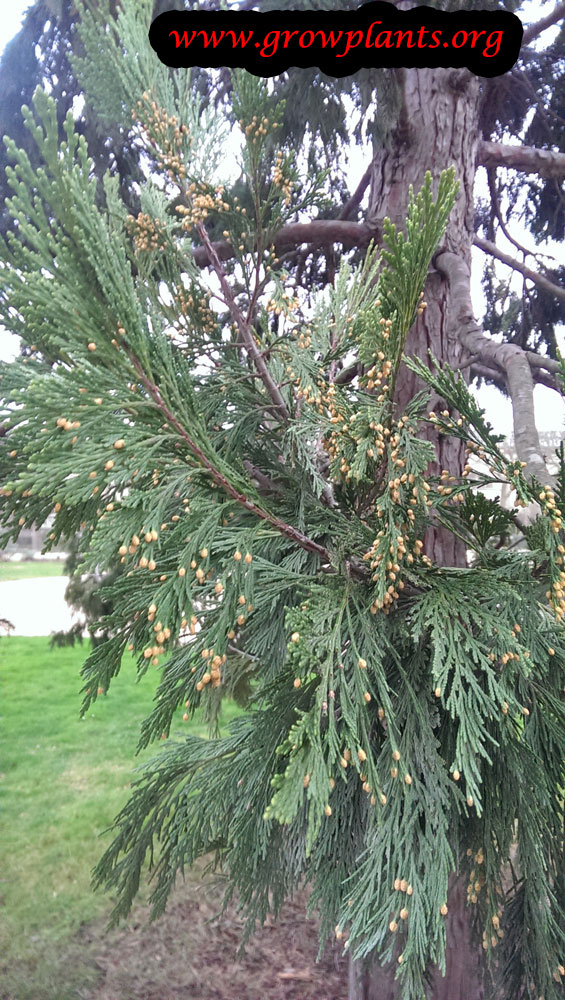
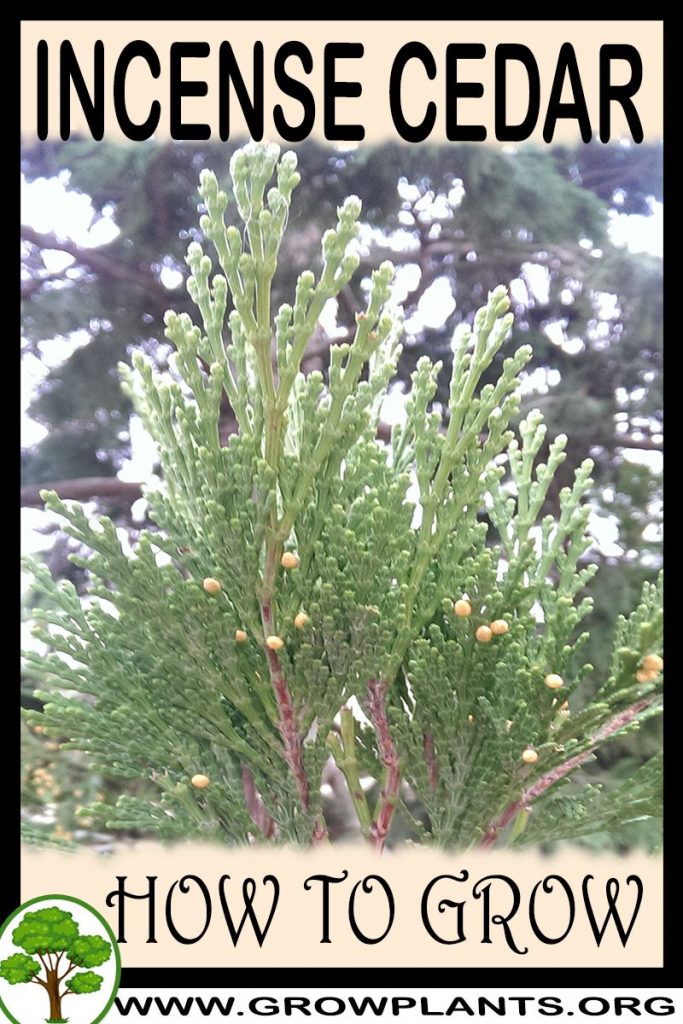
- Leaves & Foliage: Dark green, scale-like leaves in flattened aromatic sprays; the whole tree is pleasantly fragrant, giving the incense cedar its name.
Primary Uses & Landscape Value
- Functional & Ornamental Roles: Ornamental specimen, screen and windbreak tree; drought tolerant once established, and an important aromatic timber (traditional pencil wood).
Care Guide: Planting, Soil & Watering
Overview: A large, drought-tolerant conifer that prefers a deep, well-drained, neutral-to-acidic soil in full sun. Once established it needs little water, though young trees appreciate regular moisture.
Quick Care Requirements
| Requirement | Ideal Condition |
|---|---|
| Planting Season | Spring, summer or autumn |
| Growth Rate | Moderate to Fast |
| Soil Type | Well-draining, neutral to slightly acidic |
| Water Need | Low to Moderate – drought-tolerant once established |
Planting & Establishment
- Best Planting Season: Plant in spring, summer or autumn while the soil is workable and not frozen.
- How to Plant:
- Hole Preparation: Dig a hole about twice the width of the root ball but no deeper, so the tree sits at its original level.
- Soil Amendments: Loosen the backfill; this adaptable tree needs little enrichment, just good drainage.
- Planting Depth: Set the root collar at grade; never bury the trunk.
- Growth Speed & Expectations: Moderate to fast, developing into a tall, columnar tree over time.
Soil, Watering & Drainage Care
- Soil Mix & Drainage Needs: Needs good drainage and tolerates poorer soils, but not waterlogging.
- Watering Schedule & Technique:
- Young / Newly Planted: Water regularly through the first seasons to establish a deep root system.
- Established: Water deeply but infrequently; it is drought tolerant once mature.
- Seasonal Adjustments: More water in the first summers, much less once established and in winter.
Climate, Light & Hardiness
Incense cedar is a large, drought-tolerant conifer suited to temperate, subtropical, and Mediterranean climates, needing full sun. It is a fully cold-hardy tree that also copes well with the dry-summer conditions typical of Mediterranean climates.
Quick Climate Specifications
| Climate Zones | Temperate, subtropical, or Mediterranean climates |
|---|---|
| USDA Hardiness Zones | 5–9 |
| Frost Tolerance | High |
| Light Conditions | Full sun |
Sunlight & Light Exposure
Optimal Light Setup
Needs full sun for the best, densest, cone-shaped growth typical of this species.
Direct Sun Requirement
Requires strong direct sun; it is not suited to shaded sites.
Temperature Extremes & Hardiness
USDA Hardiness & Regional Limits
Reliably hardy across zone 5–9, a wide range spanning cold temperate winters through warm Mediterranean and subtropical summers.
Cold Damage & Winter Protection
Well-established trees in zone 5 and warmer generally need no winter protection.
Frost Sensitivity
Very frost tolerant.
Extreme Heat Tolerance
Noted as drought tolerant and well suited to the hot, dry summers of Mediterranean and subtropical climates.
Wind, Humidity & Microclimate
Rainfall & Seasonal Moisture
Tolerates a small to average amount of water once established, reflecting good drought tolerance for a large conifer; prefers neutral to acidic, well-drained soil conditions that avoid waterlogging.
Microclimate Recommendations
An open, sun-exposed site with well-drained soil best matches this tree's drought-tolerant nature.
Growing in Pots, Balconies & Indoors
The incense cedar (Calocedrus decurrens) is a large landscape conifer, reaching 20-60 m (60-200 ft). The grower marks it as neither a houseplant nor a container plant – it is a forest tree for open ground in full sun. It is one of the taller conifers here, unsuited to long-term container life. Pots can only ever suit a very young specimen for a few years before it needs to be planted out.
Quick Details
- Container Size: Not recommended long-term; only a large tub for a young specimen, then plant out
- Indoor Suitability: Not a houseplant – a hardy outdoor forest tree
- Best Spot: Outdoors in full sun, in the open ground
- Soil & Drainage: Deep, free-draining loam-based soil; strong drainage holes if potted young
- Watering in Pots: Keep the mix just moist while young; it drains faster than open ground
Indoors & On the Windowsill
- Not a houseplant: The grower marks it as unsuitable indoors – it needs cool seasons, strong light and room to grow into a large tree, and will not tolerate warm, dry indoor air.
- Cold-hardy: Being hardy, it needs no indoor overwintering – it prefers to stay outside year-round.
On a Balcony or Patio
- Only while young: A young plant can spend a few years in a large tub on a patio, but it will soon outgrow any container and need open ground.
- Practicalities: Keep any large tub heavy and stable against wind, water well as pots dry faster than open soil, and plan to plant it out before the roots become cramped.
Choosing the Pot, Soil & Long-Term Care
- A landscape tree, not a long-term pot plant: The grower’s guidance is that this conifer is grown in open ground; a container only holds a young specimen temporarily.
- If potting a young tree: Use a large tub with strong drainage holes and a loam-based mix with added grit; feed through the growing season, as pot nutrients leach faster, then move it to the ground.
Fertilizing & Feeding
Incense cedar is a drought-tolerant, naturally vigorous specimen tree that generally thrives without routine feeding once established in reasonable soil.
Quick Fertilizing Specs
| Feeding Level | Light |
|---|---|
| young_feeding | Light, balanced feeding to support root establishment while the young tree develops |
| mature_feeding | Established trees rarely need feeding and generally do well on natural soil fertility alone |
| Main Nutrient Priority | Balanced, complete nutrition rather than any single nutrient push |
| Best Feeding Period | Spring into early summer, during the active growth flush |
| Soil pH | Prefers neutral to slightly acidic, well-drained soil; avoid heavy liming or alkaline amendments |
| Reduce/Stop Feeding | Taper off by mid-summer so growth can harden before the drier, hotter part of the season |
Feeding by Growth Stage
Establishment After Planting
Support root recovery and settling-in after transplanting, favoring this species’ natural drought tolerance.
| Nutrient direction | Light, balanced nutrition favoring root development over top growth |
|---|---|
| Timing | The first couple of growing seasons after planting |
| Frequency | A few light feedings spread through the active growing season |
| Fertilizer types | A balanced, complete tree-and-shrub fertilizer, Compost or well-rotted organic matter worked lightly into well-drained planting soil |
| Precautions | Avoid overwatering or heavy feeding, since this species prefers well-drained soil and can suffer root stress in soggy conditions; also space plantings to limit allelopathic effects. |
Active Growth
Support this naturally fast-to-medium growing conifer’s structural development while it fills out its columnar form.
| Nutrient direction | Balanced feeding with a modest nitrogen lean to support foliage and branch development |
|---|---|
| Timing | Spring into early summer, during active growth |
| Frequency | Light feeding through the growing season |
| Fertilizer types | A balanced, complete tree-and-shrub fertilizer formulated for conifers or evergreens |
| Routine trace nutrients | iron, manganese |
| Precautions | Keep feeding light; overly rich, wet conditions run counter to this drought-tolerant species’ natural preferences. |
Established Tree Maintenance
Maintain a mature, drought-tolerant specimen without unnecessary inputs once it is settled into the landscape.
| Nutrient direction | Minimal, balanced feeding only where soil or growth signals call for it |
|---|---|
| Timing | Spring, if feeding is warranted at all |
| Frequency | Feed sparingly, and only in years the tree shows a real need |
| Fertilizer types | A balanced, complete tree-and-shrub fertilizer applied lightly around the drip line |
| Precautions | Resist routine feeding of an established, healthy tree; this species is naturally adapted to lean, well-drained sites. |
Cold-Season Dormancy
Allow the tree to harden off before winter rather than pushing tender new growth.
| Nutrient direction | None – withhold fertilizer |
|---|---|
| Timing | Late summer through winter, once seasonal growth has slowed |
| Frequency | No feeding at this stage |
| Fertilizer types | No feeding – allow the tree to rest through the cold season |
| Precautions | Do not fertilize late in the season; new growth pushed too close to cold weather is prone to injury. |
Nutrient Deficiency Signs & Corrections
Yellowing of new needle growth while older foliage stays green
| Possible causes | Iron unavailability from over-liming or alkaline amendments despite this species’ preference for neutral-to-acid soil, Waterlogged or compacted soil limiting root uptake, Root stress from recent transplanting |
|---|---|
| Appears first on | Newest needle growth at branch tips |
| What to check | Recent liming or alkaline soil amendments, Soil drainage and compaction, Whether chlorosis is isolated to new growth |
| Possible correction | Avoid further liming and improve drainage; a chelated iron product applied per its label can help in a confirmed case. |
Pale or yellow-green foliage overall and slower-than-expected growth
| Possible causes | Low soil nitrogen, Compacted or nutrient-poor soil, Root stress from drought limiting nutrient uptake |
|---|---|
| Appears first on | Older, interior needles first |
| What to check | Growth rate compared to prior seasons, Soil quality and compaction, Recent drought or watering stress |
| Possible correction | Improve soil conditions and apply a light, balanced feeding during active growth if the tree is otherwise healthy. |
General thinning, browning, or dieback not tied to a clear leaf-color pattern
| Possible causes | Root stress or rot from poorly drained, overly wet soil, which this species is particularly sensitive to, Soil compaction limiting root oxygen and nutrient uptake, Drought stress in newly planted specimens |
|---|---|
| Appears first on | Scattered branches or the whole canopy, without a clean pattern |
| What to check | Soil drainage and any standing water near the root zone, Planting depth and soil compaction, Watering consistency since planting |
| Possible correction | Improve drainage first; fertilizing a tree with root stress from wet soil will not resolve the underlying issue. |
Pruning, Training & Seasonal Maintenance
Incense cedar grows as a tall, narrow, cone-shaped tree that can eventually reach 20–60 m, and its own care notes point to a specific, real maintenance task: removing branches that droop or grow downward, which keeps the tree’s characteristic upright form and clears lower growth for pedestrian or vehicle clearance as it matures. Pruning tolerance is otherwise low – like most true conifers, it does not resprout from cut-back bare wood, so beyond removing downward-drooping or dead branches, the natural cone-shaped habit should be left alone.
Quick Pruning & Maintenance Specs
| Pruning Tolerance | Low |
| Primary Pruning Window | Cooler months, outside the active growth flush |
| Typical Frequency | Occasional, as drooping or dead branches appear |
| Main Objective | Remove downward-growing/drooping branches; maintain a single leader |
| Young Plant Priority | Correct competing leaders; begin removing low, drooping branches for future clearance |
| Mature Plant Priority | Continue removing drooping lower branches for clearance; remove deadwood |
| Best Tool Type | Pruning saw for larger drooping limbs; pole pruner once the tree is tall |
| Avoid Heavy Pruning During | Any cutting into bare wood behind the green zone – it will not resprout |
Pruning by Plant Age & Size
Newly Established
Remove only transplant damage; do not shape.
Young / Formative
Central leader training – correct any competing leader early. Begin selectively removing branches that grow downward rather than outward/upward, as noted for this species, to establish good form and future clearance while cuts are still small.
Mature / Established
Continue removing drooping or downward branches as they appear, plus any deadwood; do not attempt to reduce the tree’s overall size, since it will not resprout from bare wood.
Seasonal Pruning Schedule
Dormant/Winter
Objective: form and clearance. Remove downward-growing branches and deadwood. Do not remove healthy outward/upward-growing branches. Expected response: a cleaner, more upright cone-shaped silhouette.
Structural Pruning & Training
The defining structural task for this species is removing branches that grow down rather than out, which otherwise spoil its narrow, upright profile; leader correction while young supports the same single-trunk form.
Special Growth to Remove
Downward-growing or drooping branches (this species’ own noted issue); a competing leader on a young tree; deadwood at any age.
Tools
A pruning saw for removing drooping limbs once they are more than twig-sized; a pole pruner becomes useful once the tree has grown tall and lower clearance work is out of reach.
Tool Hygiene & Disease Risk
Routine: clean, sharp tools are sufficient; this species’ only noted pest (Syntexis libocedrii, a wood-boring wasp) is not spread by pruning tools, so no special disinfection protocol is needed.
Cut Placement & Technique
Cut drooping branches back to their point of origin at the trunk or a main limb, just outside the branch collar, rather than leaving a stub.
Heavy Pruning & Rejuvenation
Not tolerated – this species does not resprout from bare wood, so there is no way to reduce an oversized tree; size should be anticipated at planting given its eventual large scale.
Post-Pruning Care
No extra feeding needed after routine branch removal; check larger cut wounds occasionally for insect entry, given the wood-boring pest noted for this species.
Common Pruning Mistakes
Leaving drooping branches unaddressed until they are large, requiring bigger, more disfiguring cuts; removing healthy upward-growing branches instead of the downward ones that actually need attention; attempting to reduce the tree’s height expecting regrowth.
When NOT to Prune
Do not cut into bare wood expecting resprouting; avoid major branch removal during active spring growth when wounds are slower to seal.
Recommended Tools (by task)
- Pruning saw – for removing drooping/downward-growing branches, this species’ primary pruning task.
- Pole pruner – warranted once this large, fast-to-medium growing tree matures and clearance cuts are out of reach.
Pruning Troubleshooting
| Problem | Possible Cause | What to Check | Corrective Action |
| Tree losing its narrow, upright cone shape | Downward-growing branches left unaddressed | Lower and mid-canopy branch angles | Remove downward-growing branches back to their point of origin |
| Small holes or dieback in wood | Syntexis libocedrii (a wood-boring pest noted for this species) | Cut surfaces and trunk for boring holes | Remove and dispose of affected wood; avoid unnecessary wounding that invites entry |
| Bare gap after a branch was removed | Cut made into wood too far back from the green zone | Whether the cut was on old, leafless wood | None – accept the gap; make future cuts closer to actively growing tissue |
Propagation Guide
Incense cedar is propagated from seed, the standard and essentially only practical method for this species; vegetative propagation is not needed and is not commonly used for it. Difficulty is Moderate, largely because germination can be slow and uneven.
Quick Propagation Specs
| Best Propagation Method | Seed |
| Propagation Difficulty | Moderate |
| Seed True-to-Type | Usually true-to-type |
| Best Propagation Season | Spring sowing |
| Seed Germination Time | Typically several weeks to a few months, and can be uneven |
| Germination Temperature | Roughly 10–20°C (50–68°F) after stratification |
| Seed Sowing Depth | Shallow, about 0.5–1 cm (0.2–0.4 inch), lightly covered |
Growing from Seed
Seed Handling & Viability
Seed is best sown reasonably fresh, or given cool, dry storage if held over winter.
Dormancy & Pre-Sowing Treatment
Like many conifers in this family, germination is often improved and made more even with a period of cold, moist stratification before sowing.
Sowing Season
Spring, after stratification.
Sowing Depth & Orientation
Sow shallowly with a light covering of well-drained mix, matching this species’ preference for neutral-to-acid, well-drained soil noted in site data.
Germination Conditions
A cool nursery bed or cold frame with well-drained soil kept evenly moist; germination is naturally variable in percentage and timing for this species.
Germination Time
Typically several weeks to a few months, and can be uneven; low or staggered germination is not unusual.
Seedling Care
Young trees grow slowly at first and benefit from well-drained, neutral-to-acid soil and some protection from harsh sun while establishing.
Bloom & Flower Guide
Quick Details
- Bloom Season: Spring to summer
- Flower Appearance: Tiny yellow-brown pollen cones scattered at the tips of the sprays – the grower aptly likens them to “dandruff”
- Edibility: Ornamental / none – grown for foliage and fragrance
Detailed Blooming Overview
Incense cedar is a conifer and has no true flowers. In late winter to spring the branch tips carry a scatter of tiny yellow-brown pollen cones – so small and numerous the grower compares them to dandruff. Small woody female cones follow and ripen to a slender, flask-like shape.
Flower Characteristics
- Male pollen cones are tiny, yellow-brown, and borne at the tips of the flat foliage sprays.
- Female cones are small and woody, ripening to an elongated flask shape.
Bloom Care & Thinning
- Nothing to deadhead: The cones need no thinning – they develop and shed on their own.
- Pollination: Wind carries the pollen; no insects are involved.
- Placement: A drought-tolerant tree once established; give it full sun and space to mature.
Pests, Diseases & Troubleshooting
Overview: Incense cedar is a large, long-lived and notably tough conifer with very few serious pests or diseases when grown in a suitable site. Healthy, vigorous trees shrug off most trouble; problems arise mainly on drought-stressed, injured or poorly sited trees, where bark beetles, scale and root or heart rots can take hold. The best defence is keeping the tree unstressed and well drained.
Quick Troubleshooting Overview
| Issue / Pest | Main Symptom | Primary Solution |
|---|---|---|
| Cedar bark beetles | Fading flagging branches, dieback | Keep tree vigorous, prune out, remove wood |
| Scale insects | Bumps on foliage, sooty mould | Horticultural oil, encourage predators |
| Spider mites | Dull, bronzed, speckled foliage | Hose off, oil in dry spells |
| Incense-cedar rust | Orange gelatinous galls / brooms | Prune galls, separate from apple/pear hosts |
| Heart / root rot | Decay, dead limbs, unstable trunk | Avoid wounds, improve drainage, arborist check |
| Branch flagging | Scattered brown branchlets | Often natural leaf-shed; check if widespread |
Common Pests & Management
- Cedar / cypress bark beetles (Phloeosinus species):
- Symptoms: Small beetles that tunnel under the bark of stressed trees; the first sign is ‘flagging’ – scattered branch tips fading to red-brown – followed by dieback, with tiny entry holes and boring dust on affected limbs.
- Prevention & Control: Keep trees vigorous and well watered, as beetles target stressed wood. Prune out and remove or chip infested branches promptly (do not leave cut cedar wood nearby as breeding material); avoid injuring the trunk. Insecticides are rarely justified on healthy garden trees.
- Scale insects (Carulaspis and other conifer scales):
- Symptoms: Small round or oyster-shaped waxy bumps on foliage and twigs; heavy infestations yellow the foliage, and honeydew from soft scales brings sticky sooty mould.
- Prevention & Control: Encourage natural predators and parasitoids, which usually keep scale in check. On accessible branches apply horticultural oil to smother scale and crawlers, timing sprays to the vulnerable crawler stage; prune out badly encrusted growth.
- Spider mites (Oligonychus and Tetranychus species):
- Symptoms: Fine stippling, a dull bronzed cast to the foliage and delicate webbing in hot, dry, dusty conditions, especially on young or hedge-clipped trees.
- Prevention & Control: Hose down the foliage to dislodge mites and reduce dust, and keep trees watered in drought. Treat serious outbreaks with horticultural oil; avoid broad insecticides that kill the mites’ natural predators.
- Cedar wood wasp (Syntexis libocedri):
- Symptoms: An obscure, mostly harmless relative of sawflies that lays eggs in fire-scorched or freshly dead incense-cedar wood; larvae bore in already-dying or burnt wood rather than attacking healthy trees.
- Prevention & Control: No control is needed on living, healthy trees – this insect is associated with fire-damaged or dead timber. Simply remove badly burnt or dead wood if present; it poses no threat to a sound garden specimen.
Diseases & Fungal Issues
- Incense-cedar rust (pear/cedar broom rust) (Gymnosporangium libocedri):
- Symptoms: Orange, gelatinous horn-like galls on the branches in wet weather and dense, congested ‘witches’ brooms’ of distorted growth; the fungus alternates between incense cedar and pome fruits (apple, pear, hawthorn).
- Treatment & Management: Prune out galls and brooms where practical and remove nearby unmanaged apple, pear or hawthorn hosts to break the cycle. It is rarely fatal to a large cedar; on valued trees a preventive fungicide can be used during wet spring weather.
- Heart rot and wood decay (Oligoporus / Postia and other bracket fungi):
- Symptoms: Interior decay of old, wounded or storm-damaged trunks and limbs, shown by bracket fungi on the bark, dead limbs and hollowing that weakens the tree.
- Treatment & Management: Prevention is key: avoid wounding the trunk, prune correctly to promote good sealing, and remove dead and hazardous limbs. Have large or leaning old trees assessed by an arborist for structural safety.
- Root rot in wet soils (Phytophthora / Armillaria species):
- Symptoms: Poorly drained or over-irrigated sites can rot the roots, giving thin, off-colour foliage, dieback and instability, sometimes with fungal sheets or mushrooms at the base.
- Treatment & Management: Plant on well-drained ground and avoid heavy irrigation against the trunk. Remove severely affected trees; improve drainage before replanting and keep future trees unstressed.
Growing Difficulties & Abiotic Problems
- Natural branchlet shedding (flagging):
- Cause & Symptoms: Incense cedar naturally sheds some interior branchlets, which brown and drop; scattered brown flat sprays in the crown are usually normal, not disease.
- Correction Strategy: Distinguish this from pest flagging: normal shedding is diffuse and seasonal. Simply let the debris fall or clear it; no treatment is needed unless whole living branches are dying.
- Drought stress:
- Cause & Symptoms: Prolonged drought thins and browns foliage and, crucially, predisposes the tree to bark-beetle attack.
- Correction Strategy: Water young and newly planted trees deeply during dry spells and mulch the root zone; established trees in suitable sites are very drought tolerant once mature.
- Poor drainage / waterlogging:
- Cause & Symptoms: Constantly wet, compacted soil rots the roots and stresses the tree, leading to dieback.
- Correction Strategy: Site on free-draining ground, avoid low wet spots and do not over-irrigate; improve drainage before planting on heavy soils.
- Transplant and site stress:
- Cause & Symptoms: Recently moved trees or those in cramped, compacted or reflected-heat sites may brown and struggle to establish.
- Correction Strategy: Give ample room, water consistently through establishment, mulch, and avoid soil compaction and trunk damage around the root zone.
What Helps – Products & Tools
This is a robust tree that seldom needs chemical intervention. The main tools are cultural: deep watering in drought, mulch, sound pruning and prompt removal of infested or dead wood to deny bark beetles breeding material. Horticultural oil handles scale and mites on reachable branches, and a preventive fungicide is only occasionally justified for rust on valued specimens. Use an arborist for large trees.