
Plant Profile & Key Characteristics
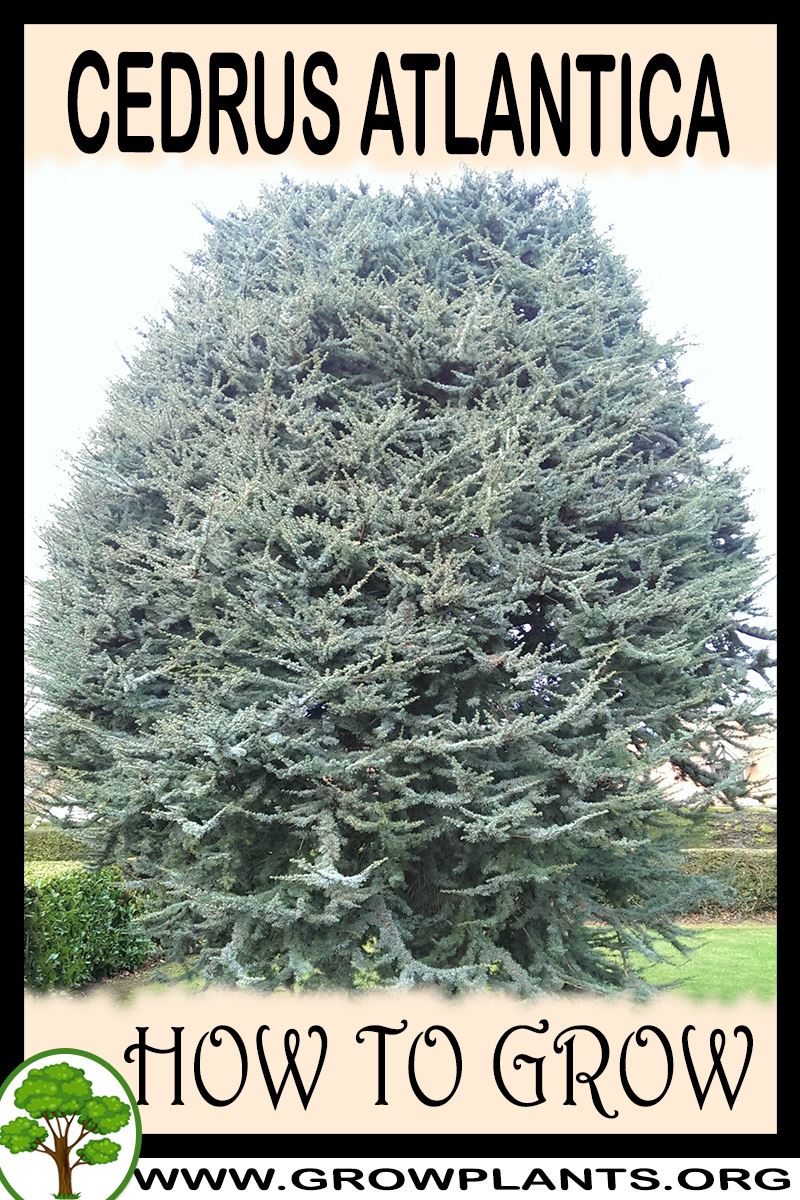
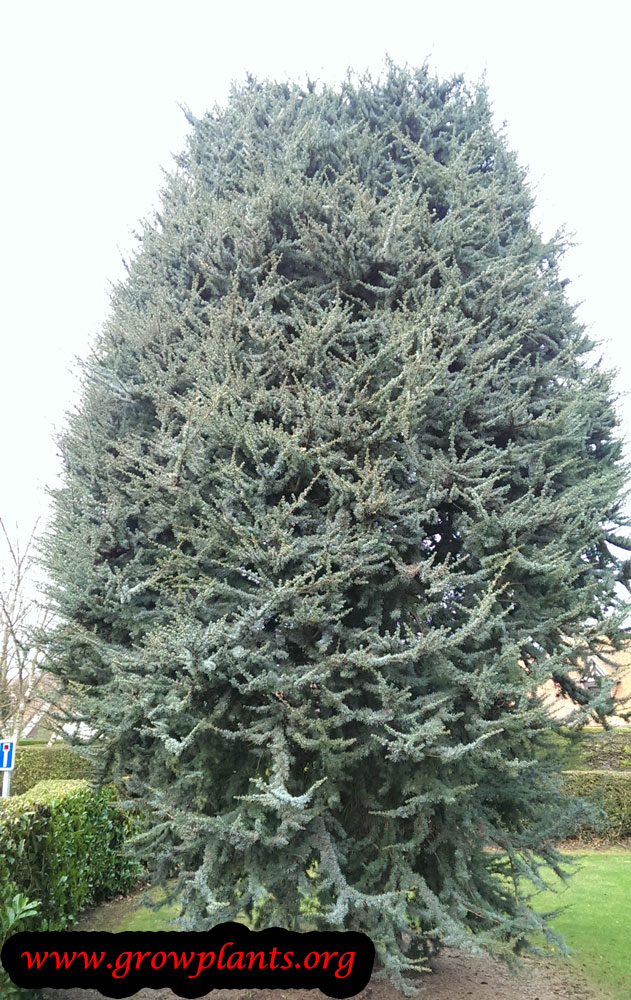
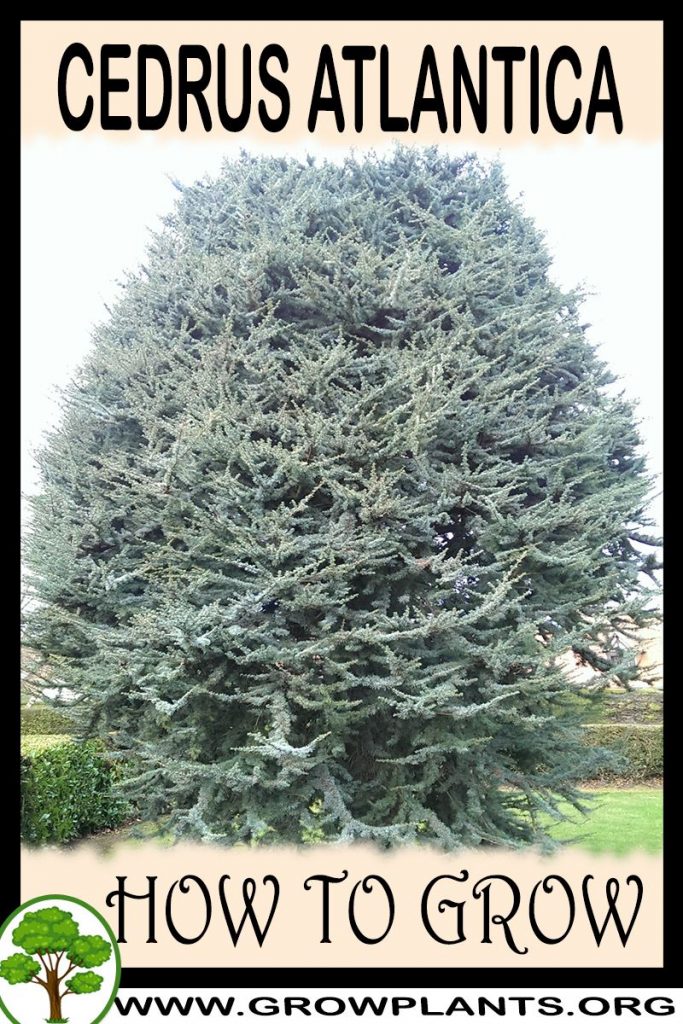
Overview: Cedrus atlantica (Atlas cedar) is a large evergreen coniferous tree reaching 20-30 m (65-100 ft), grown as a stately ornamental and specimen tree. This long-lived perennial conifer is valued for its blue-green needle foliage and pyramidal-to-spreading form, including a popular weeping variety.
Quick Specifications
| Specification | Attribute |
|---|---|
| Plant Type / Life Cycle | Perennial conifer (tree) |
| Foliage Type | Evergreen (coniferous) |
| Mature Size | 20-30 m tall (65-100 ft) |
| Growth Rate | Moderate |
| Toxicity | Non-toxic. |
| Hardiness | USDA zones 6-10 |
Growth Form & Structure
- Height & Spread: A large landscape tree of 20-30 m (65-100 ft); not suited to container growing.
- Growth Habit & Form: Coniferous tree, pyramidal when young and broad-spreading with age; weeping cultivars are available.
- Lifespan & Maturity: Very long-lived, moderate-growing conifer for cold-temperate to high-altitude sites.
Anatomy & Physical Features
- Trunk & Bark: Stout trunk carrying tiered, spreading branches typical of true cedars.
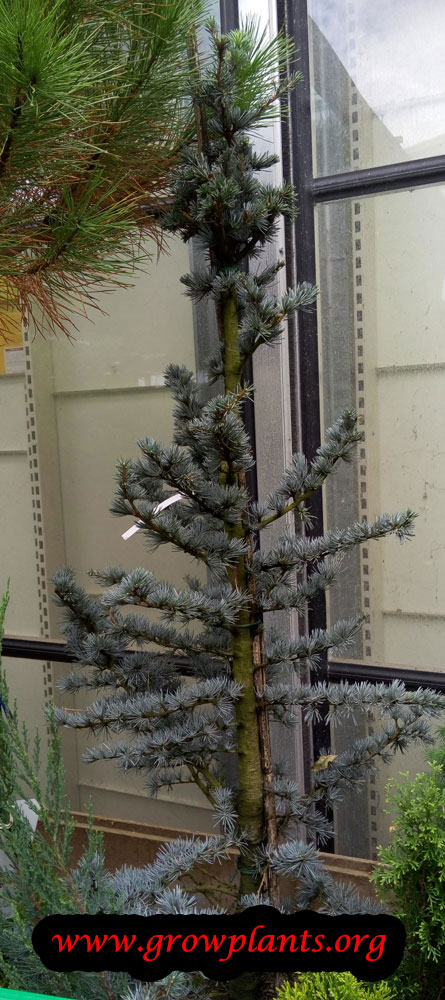
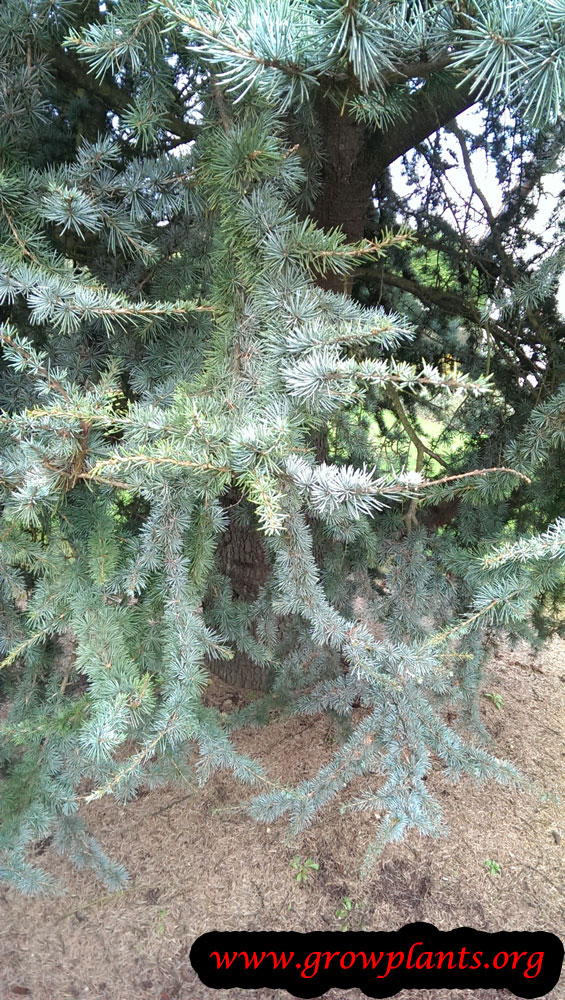
- Leaves & Foliage: Green to blue-green needle-like leaves borne in clusters at the base of short shoots; evergreen.
- Flower Characteristics: Non-flowering conifer; small separate male and female cones are wind-pollinated, with brown female cones and yellow-brown male cones.
Primary Uses & Landscape Value
- Functional & Ornamental Roles: Ornamental specimen and shade tree for parks and large gardens in temperate, Mediterranean and subtropical climates.
Care Guide: Planting, Soil & Watering
Overview: Blue Atlas cedar is a large, long-lived evergreen conifer for temperate to Mediterranean climates (hardiness zone 6-10), needing full sun and plenty of room. It prefers a deep, well-drained soil with moderate, regular moisture and dislikes waterlogging.
Quick Care Requirements
| Requirement | Ideal Condition |
|---|---|
| Planting Season | In spring or autumn while the weather is mild |
| Growth Rate | Moderate |
| Soil Type | Deep, well-drained soil |
| Water Need | Moderate – keep the root zone moist but never waterlogged |
Planting & Establishment
- Best Planting Season: Plant in spring or autumn when temperatures are mild, giving roots time to establish.
- How to Plant:
- Hole Preparation: Dig a hole two to three times the width of the root ball and no deeper than it.
- Soil Amendments: Loosen heavy clay and add organic matter to improve drainage; it resents wet feet.
- Planting Depth: Set the root collar level with the soil surface; never bury the trunk base.
- Growth Speed & Expectations: A moderate grower that becomes a very large tree of 20-30 m (60-100 ft) – not for small gardens or containers.
Soil, Watering & Drainage Care
- Soil Mix & Drainage Needs: Needs a deep, free-draining soil; standing water causes root rot, and it is not suited to long-term container growing.
- Watering Schedule & Technique:
- Young / Newly Planted: Water regularly through the first few years to establish a strong root system.
- Established: Water deeply but occasionally, letting the surface dry between waterings; established trees are fairly self-sufficient.
- Seasonal Adjustments: More in summer drought; little needed over a cool, wet winter.
Climate, Light & Hardiness
Atlas cedar (blue atlas cedar) is a large conifer adapted to temperate, Mediterranean, and subtropical climates, growing well in full sun to half shade. It is a cold-hardy tree that, true to its mountain origin, also does well at higher, cooler altitudes.
Quick Climate Specifications
| Climate Zones | Temperate, Mediterranean, or subtropical climates |
|---|---|
| USDA Hardiness Zones | 6–10 |
| Frost Tolerance | High |
| Light Conditions | Full sun or half shade |
Sunlight & Light Exposure
Optimal Light Setup
Grows well in full sun to half shade, supporting strong, well-formed growth for this large ornamental conifer.
Temperature Extremes & Hardiness
USDA Hardiness & Regional Limits
Reliably hardy across zone 6–10, giving it a wider climate range than many true firs, spanning cool temperate through warm Mediterranean and subtropical conditions.
Cold Damage & Winter Protection
Well-established trees in zone 6 and warmer generally need no winter protection; site guidance notes this species does well in cold temperatures or at high altitude, reflecting its native Atlas Mountains habitat.
Frost Sensitivity
Very frost tolerant.
Extreme Heat Tolerance
Tolerates the warmer, drier conditions of Mediterranean and subtropical climates at the upper end of its hardiness range better than many other cold-climate conifers.
Wind, Humidity & Microclimate
Rainfall & Seasonal Moisture
Prefers reasonably consistent moisture through the growing season; site guidance calls for average to generous watering.
Microclimate Recommendations
An open site with good air movement suits this large tree well; it is naturally adapted to cooler, higher-elevation conditions within its broader climate range.
Growing in Pots, Balconies & Indoors
The Atlas cedar (Cedrus atlantica) is a large landscape conifer, reaching 20-30 m (60-100 ft). The grower marks it as neither a houseplant nor a container plant – it is a forest tree for open ground in full sun to part shade. It becomes a majestic specimen far too big for any pot. Pots can only ever suit a very young specimen for a few years before it needs to be planted out.
Quick Details
- Container Size: Not recommended long-term; only a large tub for a young specimen, then plant out
- Indoor Suitability: Not a houseplant – a hardy outdoor forest tree
- Best Spot: Outdoors in full sun to part shade, in the open ground
- Soil & Drainage: Deep, free-draining loam-based soil; strong drainage holes if potted young
- Watering in Pots: Keep evenly moist while young; pots dry faster than open ground
Indoors & On the Windowsill
- Not a houseplant: The grower marks it as unsuitable indoors – it needs cool seasons, strong light and room to grow into a large tree, and will not tolerate warm, dry indoor air.
- Cold-hardy: Being hardy, it needs no indoor overwintering – it prefers to stay outside year-round.
On a Balcony or Patio
- Only while young: A young plant can spend a few years in a large tub on a patio, but it will soon outgrow any container and need open ground.
- Practicalities: Keep any large tub heavy and stable against wind, water well as pots dry faster than open soil, and plan to plant it out before the roots become cramped.
Choosing the Pot, Soil & Long-Term Care
- A landscape tree, not a long-term pot plant: The grower’s guidance is that this conifer is grown in open ground; a container only holds a young specimen temporarily.
- If potting a young tree: Use a large tub with strong drainage holes and a loam-based mix with added grit; feed through the growing season, as pot nutrients leach faster, then move it to the ground.
Fertilizing & Feeding
Atlas cedar is a large, long-lived specimen conifer that thrives on minimal intervention once established; light feeding while it is young is usually all it needs.
Quick Fertilizing Specs
| Feeding Level | Light |
|---|---|
| young_feeding | Light, balanced feeding to support root establishment and steady structural growth while young |
| mature_feeding | Mature specimens generally do not need routine feeding in reasonable garden soil |
| Main Nutrient Priority | Balanced, complete nutrition rather than any single nutrient push |
| Best Feeding Period | Spring through early summer, during the active growth flush |
| Soil pH | Adaptable to a wide range of soil pH; no routine correction needed for most sites |
| Reduce/Stop Feeding | Taper off well before the growing season ends so growth can harden before cold weather or high-altitude exposure |
Feeding by Growth Stage
Establishment After Planting
Help a young cedar recover from transplant stress and build a strong root system before pushing top growth.
| Nutrient direction | Light, balanced nutrition favoring root development over rapid top growth |
|---|---|
| Timing | The first couple of growing seasons after planting |
| Frequency | A few light feedings spread through the active growing season |
| Fertilizer types | A balanced, complete tree-and-shrub fertilizer, Compost or well-rotted organic matter worked lightly into the planting area |
| Precautions | Avoid feeding a stressed or drought-affected root zone, and keep fertilizer away from the trunk; this species can also show allelopathic effects, so give new plantings room. |
Active Structural Growth
Support the tree’s characteristic tiered branching and canopy fill-in while it is still developing its mature form.
| Nutrient direction | Balanced feeding with a modest nitrogen lean to support branch and needle development |
|---|---|
| Timing | Spring into early summer, during active growth |
| Frequency | Light feeding through the growing season |
| Fertilizer types | A balanced, complete tree-and-shrub fertilizer formulated for conifers or evergreens |
| Routine trace nutrients | iron, manganese |
| Precautions | Avoid heavy feeding, which can produce weak, wind-vulnerable growth on this large-statured tree. |
Established Tree Maintenance
Maintain a mature specimen without unnecessary inputs once it has settled into the landscape.
| Nutrient direction | Minimal, balanced feeding only where soil or growth signals call for it |
|---|---|
| Timing | Spring, if feeding is warranted at all |
| Frequency | Feed sparingly, and only in years the tree shows a real need |
| Fertilizer types | A balanced, complete tree-and-shrub fertilizer applied lightly around the drip line |
| Precautions | Resist routine feeding of an established, healthy tree; unnecessary fertilizer can push weak growth prone to storm damage. |
Cold-Season Dormancy
Allow the tree to harden off before winter or exposure to high-altitude cold rather than pushing tender new growth.
| Nutrient direction | None – withhold fertilizer |
|---|---|
| Timing | Late summer through winter, once seasonal growth has slowed |
| Frequency | No feeding at this stage |
| Fertilizer types | No feeding – allow the tree to rest through the cold season |
| Precautions | Do not fertilize late in the season; new growth pushed too close to cold weather is prone to injury, especially at higher, more exposed sites. |
Nutrient Deficiency Signs & Corrections
Yellowing of new needle growth while older foliage stays green
| Possible causes | Iron unavailability in alkaline or heavily limed soil, Poor drainage or compacted soil limiting root uptake, Root stress from recent transplanting |
|---|---|
| Appears first on | Newest needle growth at branch tips |
| What to check | Soil drainage and compaction around the root zone, Recent soil pH amendments such as lime, Whether chlorosis is isolated to new growth |
| Possible correction | Improve drainage and correct any recent pH imbalance; a chelated iron product applied per its label can help in a confirmed case. |
Pale or yellow-green foliage overall and reduced seasonal growth
| Possible causes | Low soil nitrogen, Compacted or nutrient-poor soil, Root stress from drought limiting nutrient uptake |
|---|---|
| Appears first on | Older, interior needles first |
| What to check | Growth rate compared to prior seasons, Soil quality and compaction, Recent drought or watering stress |
| Possible correction | Improve soil conditions and apply a light, balanced feeding during active growth if the tree is otherwise healthy. |
Interveinal yellowing on newer needle growth that is subtler than classic iron chlorosis
| Possible causes | Manganese unavailability in alkaline soil, Poorly drained or waterlogged soil, General micronutrient imbalance from over-liming |
|---|---|
| Appears first on | New needle growth |
| What to check | Soil pH and drainage, Whether symptoms resemble iron chlorosis but are milder, Recent liming or pH amendments |
| Possible correction | Correct drainage and pH issues broadly; a chelated manganese product applied per its label can help if manganese deficiency is confirmed. |
Pruning, Training & Seasonal Maintenance
Atlas cedar is an eventual large forest-scale tree (20–30 m), so pruning effort is front-loaded into its young years to establish a strong single leader, after which pruning tolerance drops to low and maintenance is largely limited to deadwooding. This species does not reliably resprout from cut-back bare wood, so the safest approach is corrective, structural pruning while the tree is small, done in late winter dormancy, rather than routine shaping later in life. A weeping form exists in cultivation and needs ongoing leader support rather than the framework pruning used on the upright species form.
Quick Pruning & Maintenance Specs
| Pruning Tolerance | Low (High importance while young, low thereafter) |
| Primary Pruning Window | Late winter dormancy |
| Typical Frequency | Frequent corrective checks while young; infrequent (deadwood only) once mature |
| Main Objective | Establish and protect a single dominant leader |
| Young Plant Priority | Remove competing leaders; stake/support the weeping form’s leader if grown |
| Mature Plant Priority | Deadwood removal only; leave the natural silhouette intact |
| Best Tool Type | Bypass secateurs and a pruning saw sized to the (eventually large) limbs; pole pruner for higher deadwood on a mature tree |
| Avoid Heavy Pruning During | Any cutting into bare wood behind the green zone – it will not resprout |
Pruning by Plant Age & Size
Newly Established
Remove only transplant damage; do not shape.
Young / Formative
Central leader training is the priority – remove any competing leader as soon as it appears so the tree develops one dominant trunk, which matters more here than on smaller conifers given this species’ eventual size. On the weeping cultivar, the leading shoot needs staking/guiding rather than being left to cascade untrained from a young age.
Mature / Established
Once the framework is set, pruning drops to occasional removal of dead, broken or crossing limbs; the tree’s natural form should otherwise be left alone.
Seasonal Pruning Schedule
Dormant/Winter
Objective: leader correction (young trees) or deadwood removal (mature trees). Remove competing leaders or dead limbs. Do not shorten the established leader. Expected response: on young trees, a stronger single trunk the following season.
Structural Pruning & Training
Leader selection while young is the single most important structural task for this species given its eventual scale; on the weeping cultivar, ongoing support/training of the leading shoot shapes the tree’s cascading form. Canopy thinning for airflow is not a routine need.
Special Growth to Remove
Competing leaders on young trees; dead or storm-damaged limbs on mature trees.
Tools
Bypass secateurs for small corrective cuts on young trees; a pruning saw sized appropriately as limbs thicken; a pole pruner for elevated deadwood once the tree is mature and tall.
Tool Hygiene & Disease Risk
Routine: clean, sharp tools are sufficient; no specific transmissible disease is noted for this species beyond the general pine sawfly pest risk, so no special disinfection protocol is warranted.
Cut Placement & Technique
Cut competing leaders flush at their point of origin; for larger deadwood removal on a maturing tree, cut just outside the branch collar and, on bigger limbs, stage the cut to avoid bark tearing.
Heavy Pruning & Rejuvenation
Not tolerated – this species does not resprout from bare wood, so there is no rejuvenation option for an overgrown or misshapen specimen; correct form is achieved while young, or not at all.
Post-Pruning Care
No extra feeding needed after routine corrective cuts; on young trees, monitor the new dominant leader for wind stability and stake if needed until it strengthens.
Common Pruning Mistakes
Leaving two competing leaders uncorrected, resulting in a permanently forked, structurally weak tree; attempting to size-reduce a mature tree expecting regrowth from bare wood; failing to support the weeping cultivar’s leader while it is trained.
When NOT to Prune
Do not cut into bare wood expecting resprouting at any life stage; avoid major structural work outside late winter dormancy.
Recommended Tools (by task)
- Bypass secateurs – for correcting competing leaders while the tree is young and cuts are still small.
- Pruning saw – for deadwood removal as limbs thicken with age.
- Pole pruner – warranted once this large-growing species matures and deadwood is out of reach from the ground.
Pruning Troubleshooting
| Problem | Possible Cause | What to Check | Corrective Action |
| Tree develops a permanent fork instead of one leader | Competing leaders not corrected while young | Trunk apex on a young tree | Remove the weaker leader as early as possible; if already mature, leave as-is rather than attempting a late correction |
| Weeping cultivar growing flat/sprawling rather than cascading | Leading shoot never staked/trained upward | Whether a dominant leader was ever established and supported | Stake and train a new leading shoot upward from an existing strong branch |
| Dieback after a cut | Cut made into bare wood behind the green zone, or pine sawfly damage | Cut location relative to foliage; check for sawfly larvae | Accept the gap on bare-wood cuts; remove sawfly-damaged tissue back to healthy wood |
Propagation Guide
Atlas cedar is grown from seed for the plain green species, a straightforward standard method; grafting is not required for a species-type tree, but it is the practical route used to preserve named forms such as the blue-foliaged and weeping selections mentioned in the plant’s own description. Seed propagation is Moderate in difficulty, mainly because germination benefits from cold conditioning and can be uneven.
Quick Propagation Specs
| Best Propagation Method | Seed (species-type) |
| Alternative Methods | Grafting (blue-foliage and weeping named cultivars) |
| Propagation Difficulty | Moderate |
| Seed True-to-Type | Usually true-to-type for the species; Cultivar-dependent for named blue or weeping selections |
| Vegetative True-to-Type | Yes (grafted) |
| Best Propagation Season | Spring sowing; late winter to early spring for grafting |
| Seed Germination Time | Typically several weeks to a few months, and can be uneven |
| Germination Temperature | Roughly 10–20°C (50–68°F) after stratification |
| Seed Sowing Depth | Shallow, about 1–2 cm (0.4–0.8 inch), lightly covered |
Growing from Seed
Seed Handling & Viability
Cedar seed is best sown reasonably fresh, or given cool, dry storage if held over; viability declines with longer or warm storage.
Dormancy & Pre-Sowing Treatment
Germination is commonly improved and made more even with a period of cold, moist stratification before sowing, though seed can also germinate without it.
Sowing Season
Spring, after any stratification period.
Sowing Depth & Orientation
Sow at a shallow depth with a light covering of well-drained mix.
Germination Conditions
A cool nursery bed or cold frame with well-drained soil kept evenly, not excessively, moist.
Germination Time
Typically several weeks to a few months, and can be uneven.
Seedling Care
Young trees benefit from some protection from harsh sun while small; avoid waterlogged soil, which this species tolerates poorly.
Grafting & Budding
Why Grafting Is Used
Named blue-foliage forms (such as ‘Glauca’) and weeping forms (such as ‘Glauca Pendula’, referenced by the site’s mention of a weeping variety) do not come reliably true from seed and are difficult to root from cuttings, so grafting onto seedling rootstock is the standard commercial method for reproducing them exactly.
Rootstock
Seedling-grown Cedrus atlantica is the typical rootstock.
Best Grafting Season
Late winter to early spring, before active growth resumes, is the conventional timing.
Bloom & Flower Guide
Quick Details
- Bloom Season: Spring to summer, with pollen shed typically in autumn on mature trees
- Flower Appearance: Small yellow male (pollen) cones and separate upright female cones on the same tree
- Edibility: Ornamental / none – grown for form and foliage
Detailed Blooming Overview
Atlas cedar does not produce true flowers. In place of a bloom it bears cones: erect, finger-like yellow male cones that release clouds of pollen, and separate barrel-shaped female cones that sit upright on the branches and take a couple of years to ripen. Only mature trees cone freely.
Flower Characteristics
- Male pollen cones are yellow, upright, and shed abundant pollen.
- Female cones are barrel-shaped, sit upright on the branches, and ripen over about two years.
- Male and female cones are borne separately on the same tree.
Bloom Care & Thinning
- Nothing to deadhead: Cones need no thinning – let them mature and break up on the tree.
- Pollination: Wind carries the pollen; no insects are involved.
- For the best cone display: Give the tree room and full sun and allow it to reach maturity.
Pests, Diseases & Troubleshooting
Atlas cedar is a large, generally robust conifer whose troubles arise mostly under stress: sap-sucking aphids and scale, wood-boring weevils and bark beetles, and-most seriously-root rot on heavy, poorly drained soils. Keeping the tree vigorous on well-drained ground, avoiding waterlogging and root damage, and tolerating minor cosmetic pests is the core of management.
Quick Troubleshooting Overview
| Issue / Pest | Main Symptom | Primary Solution |
|---|---|---|
| Cedar aphid | Sticky honeydew, sooty mould, needle yellowing and drop | Encourage predators; strong water jet; oil/soap if severe |
| Armored scale | Small crusty bumps on needles/twigs, thinning yellow foliage | Horticultural oil timed to crawlers; prune out |
| Deodar weevil / bark beetles | Flagging red-brown branch tips, tunnels/pitch tubes in bark | Keep tree vigorous; prune out infested wood; avoid stress |
| Root rot | Thinning, yellowing crown, dieback, decline on wet soil | Improve drainage; avoid waterlogging; no replant in infected soil |
| Tip / needle blight | Browning shoot tips and needle cast, esp. wet springs | Improve airflow; prune blighted tips; copper if severe |
Common Pests & Management
- Cedar aphid (Cinara cedri):
- Symptoms: Large brownish aphids cluster on twigs and needle bases, sucking sap and producing copious honeydew that blackens foliage with sooty mould; heavy feeding yellows needles and can cause premature needle drop and thin patches.
- Prevention & Control: Encourage ladybirds, lacewings and parasitic wasps, which usually keep them in check; blast colonies off small trees with a water jet; horticultural oil or insecticidal soap on accessible foliage if honeydew is severe; control ants that farm the aphids.
- Armored and soft scale (Diaspidiotus / Physokermes spp.):
- Symptoms: Tiny crusty or waxy bumps on needles and twigs suck sap, causing yellowing, thinning foliage and, with soft scale, honeydew and sooty mould; heavy infestations weaken branches.
- Prevention & Control: Prune out heavily encrusted twigs; apply horticultural oil timed to the vulnerable crawler stage and to smother overwintering scale; conserve natural enemies by avoiding broad-spectrum sprays.
- Deodar weevil (Pissodes nemorensis):
- Symptoms: Adults and larvae bore into stressed leaders and branches; affected shoots ‘flag’ red-brown and die back, and larval tunnels score the wood beneath the bark.
- Prevention & Control: The best defence is vigour-avoid drought, waterlogging and root damage that predispose trees; prune out and destroy flagged, infested branches promptly; do not leave fresh cut cedar wood nearby that can breed weevils.
- Cedar bark beetles (Phloeosinus spp.):
- Symptoms: Small beetles tunnel under the bark of weakened or dying trees, producing tiny entry holes, fine boring dust and branch dieback; usually secondary to stress or existing decline.
- Prevention & Control: Keep trees healthy and unstressed; promptly remove and destroy dead and dying wood that breeds beetles; avoid injuring bark and roots; water appropriately in drought.
- Conifer spider mites (Oligonychus spp.):
- Symptoms: Fine stippling and bronzing of needles with delicate webbing in hot, dry, dusty conditions on stressed trees.
- Prevention & Control: Hose down foliage to reduce dust and mites; keep trees watered in drought; horticultural oil on accessible foliage; conserve predatory mites by avoiding harsh insecticides.
Diseases & Fungal Issues
- Root and butt rot (Phytophthora / Armillaria spp.):
- Symptoms: On heavy, wet or poorly drained soils roots rot, the crown thins and yellows, growth stalls and branches die back, sometimes ending in the tree’s death; Armillaria shows white fungal sheets under the bark at the base.
- Treatment & Management: Prevention through drainage is critical: plant on freely draining ground and never waterlog; avoid piling soil or mulch against the trunk; remove severely affected trees with roots and do not replant conifers in the same infected soil; keep trees vigorous.
- Tip blight and needle cast (Sirococcus / Kabatina spp.):
- Symptoms: Browning and dieback of new shoot tips and scattered needle browning and shedding, worst after cool wet springs on shaded, crowded growth.
- Treatment & Management: Improve air circulation and sun exposure; prune out and destroy blighted tips; avoid overhead wetting; a copper fungicide at bud break helps only where the problem recurs severely.
- Canker and dieback (Botryosphaeria spp.):
- Symptoms: Sunken cankers and scattered branch dieback, typically following drought, cold injury or other stress.
- Treatment & Management: Prune out cankered and dead wood into healthy tissue with sterile tools; reduce stress through appropriate watering and mulching; avoid bark wounds.
Growing Difficulties & Abiotic Problems
- Waterlogging and root death:
- Cause & Symptoms: Cedars demand good drainage; wet, compacted or heavy clay soils suffocate roots, predispose to Phytophthora and cause thinning, yellowing and dieback.
- Correction Strategy: Plant on well-drained ground or a raised mound; never waterlog or overwater established trees; avoid soil compaction and grade changes over the roots.
- Winter and wind desiccation, salt injury:
- Cause & Symptoms: Cold drying winds and de-icing or coastal salt brown the needles on exposed sides, and sudden freezes damage soft growth.
- Correction Strategy: Site with some shelter from harsh winds; keep well-watered going into winter; avoid salt-spray and de-icing runoff; tolerate and prune out minor winter burn in spring.
- Chlorosis on alkaline or wet soil:
- Cause & Symptoms: Very high pH or waterlogged roots cause pale, yellowing needles from locked-up iron and manganese.
- Correction Strategy: Improve drainage; mulch and, on borderline soils, apply chelated iron as a corrective; avoid planting on strongly chalky, wet ground.
What Helps — Products & Tools
Care is mostly cultural: sharp drainage, sensible watering, prompt removal of infested or dead wood, and avoiding root and bark injury. Horticultural oil and insecticidal soap manage aphids, scale and mites on reachable foliage; copper fungicide addresses recurrent tip blight; chelated iron corrects chlorosis. There is no spray cure for root rot-drainage and vigour are the real controls.