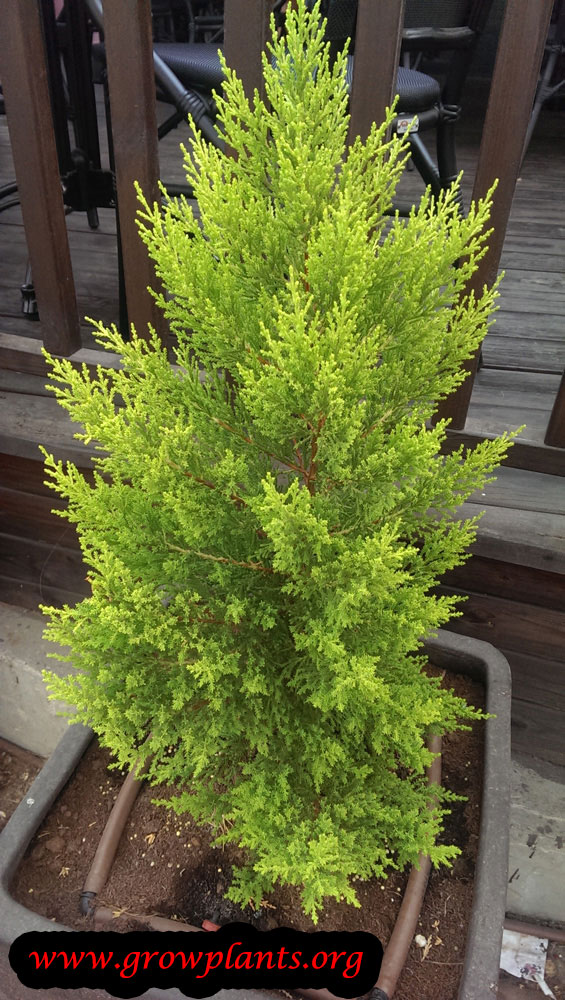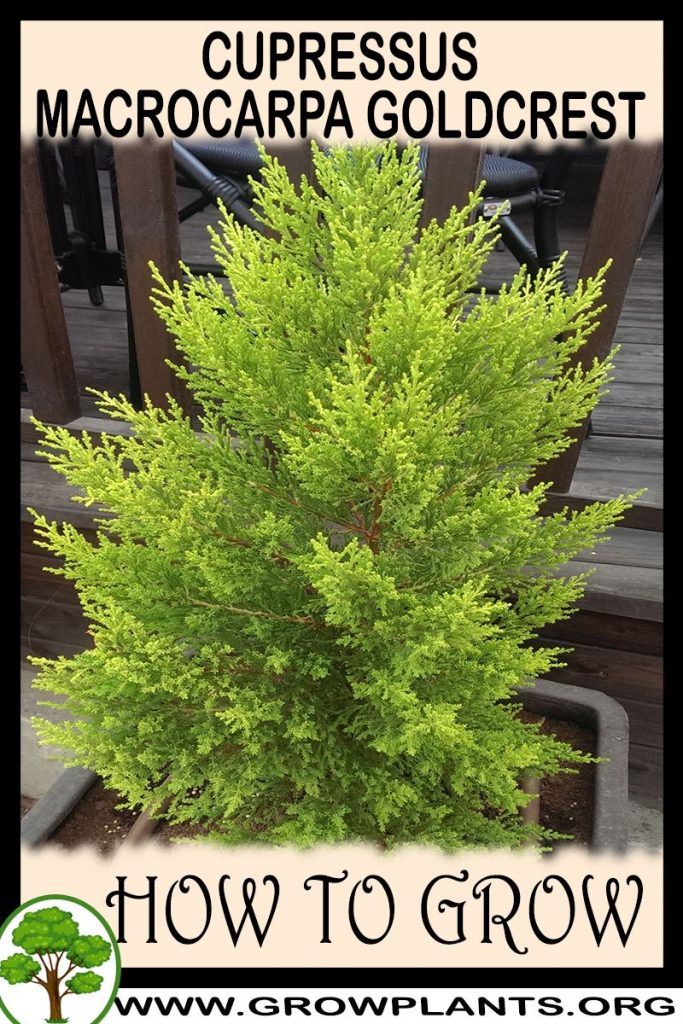
Plant Profile & Key Characteristics
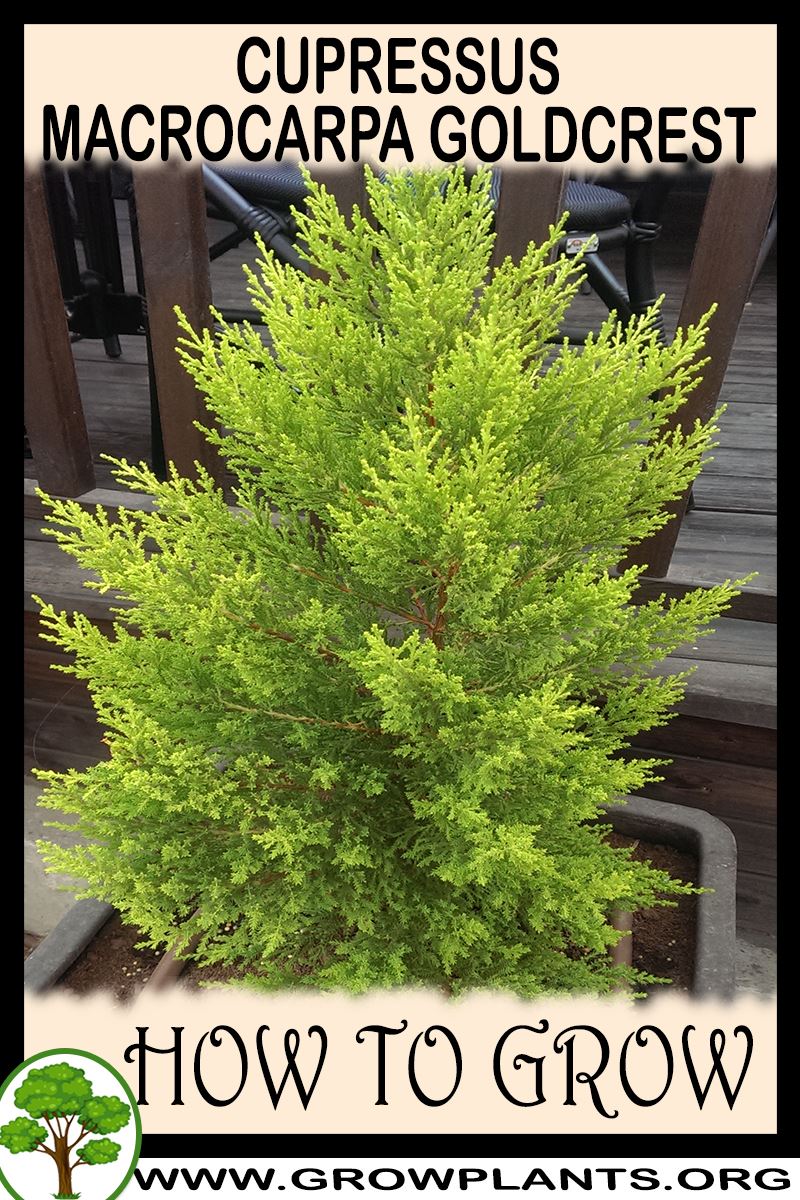
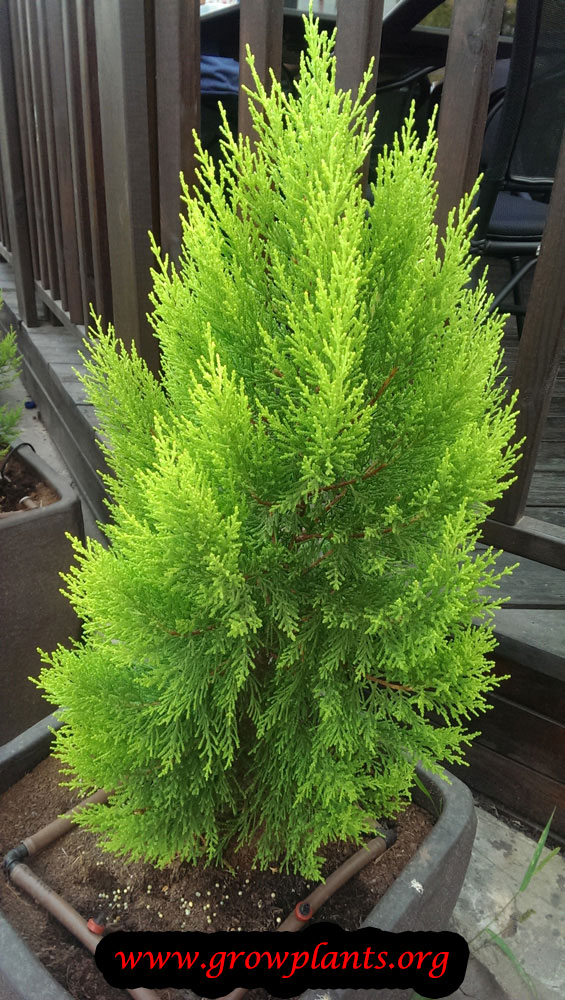
Overview: ‘Goldcrest’ Monterey cypress is a slow- to moderate-growing evergreen conifer with bright golden-green, lemon-scented foliage, forming a narrow conical tree that reaches about 5-15 m (16-50 ft) but is often kept small in gardens.
Quick Specifications
| Specification | Attribute |
|---|---|
| Plant Type / Life Cycle | Perennial (evergreen coniferous tree) |
| Foliage Type | Evergreen |
| Mature Size | Conical tree about 5-15 m (16-50 ft) tall |
| Growth Rate | Moderate to slow |
| Hardiness | USDA zones 8-10 |
Growth Form & Structure
- Height & Spread: A narrow conical tree reaching about 5-15 m (16-50 ft), though frequently grown small in pots and clipped; not suited to permanent container culture at full size.
- Growth Habit & Form: An upright, densely conical coniferous tree.
- Lifespan & Maturity: A long-lived tree of slow-to-moderate growth.
Anatomy & Physical Features
- Trunk & Bark: Single trunk with fibrous, greyish-brown bark.
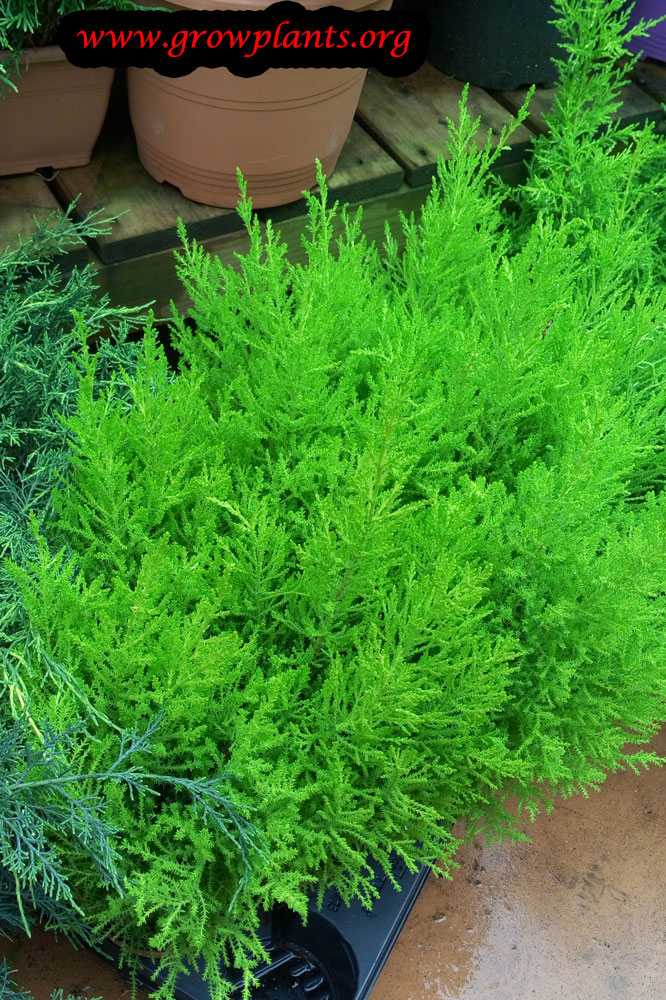
- Leaves & Foliage: Bright yellow to golden-green, scale-like foliage with a distinct lemon fragrance.
- Flower Characteristics: Small yellow pollen cones at the shoot tips.
Primary Uses & Landscape Value
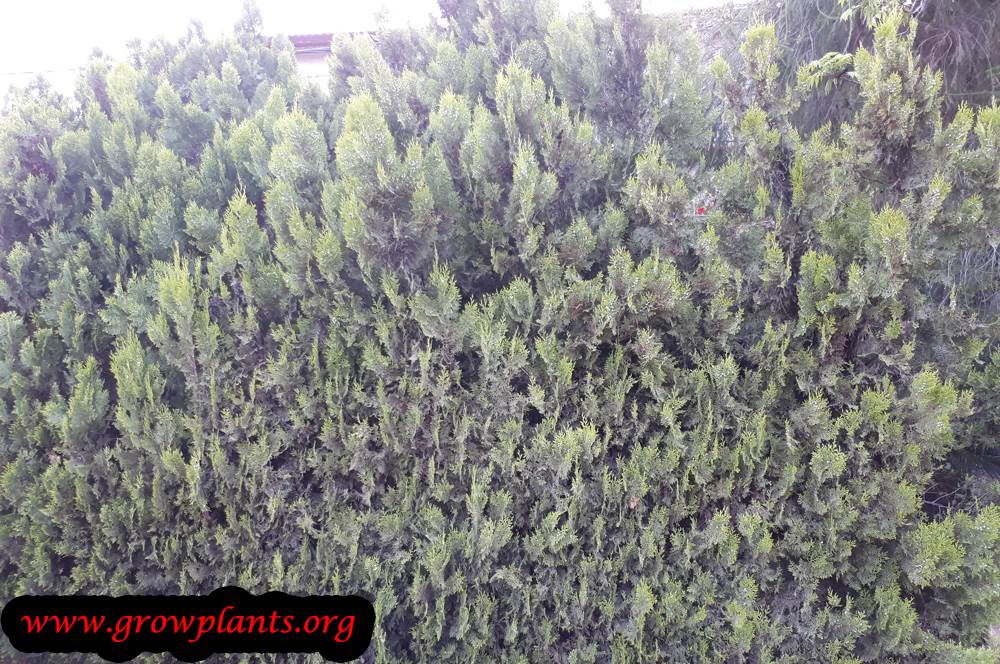
- Functional & Ornamental Roles: Golden-foliage ornamental accent, container and patio plant, low screen, and topiary or bonsai subject; grown for its fragrance.
Care Guide: Planting, Soil & Watering
Overview: Monterey cypress ‘Goldcrest’ is a hardy Mediterranean-climate conifer that thrives in full sun and a well-draining soil. Once established it is quite drought-tolerant, needing only occasional deep watering, and it resents wet, heavy ground.
Quick Care Requirements
| Requirement | Ideal Condition |
|---|---|
| Planting Season | In spring, summer or autumn |
| Growth Rate | Slow to moderate |
| Soil Type | Well-draining; tolerates lean, dry soils |
| Water Need | Low – drought-tolerant once established |
Planting & Establishment
- Best Planting Season: Plant in the cooler, milder parts of the year (spring or autumn) so roots settle before summer heat.
- How to Plant:
- Hole Preparation: Dig a hole about twice as wide as the root ball but no deeper, so the tree sits at its original level.
- Soil Amendments: It prefers lean, sharply drained ground; add only light compost if the soil is very poor, and avoid rich, water-holding amendments.
- Planting Depth: Set the root collar at or slightly above soil level; planting too deep invites rot.
- Growth Speed & Expectations: Slow to moderate; a long-lived conifer that gains height steadily over the years.
Soil, Watering & Drainage Care
- Soil Mix & Drainage Needs: Sharp drainage is essential – it will not tolerate wet feet, and it is not suited to long-term container growing.
- Watering Schedule & Technique:
- Young / Newly Planted: Water regularly through the first year or two to establish deep roots.
- Established: Water deeply but infrequently; mature trees are drought-tolerant and dislike constant moisture.
- Seasonal Adjustments: An occasional deep soak in prolonged summer drought; little to none in the cool, wet season.
Climate, Light & Hardiness
Goldcrest cypress is a Mediterranean-climate conifer needing full sun and well-drained soil, thriving on the region's hot, dry summers and cool winters. It has moderate cold hardiness typical of Mediterranean-adapted cypress species.
Quick Climate Specifications
| Climate Zones | Mediterranean, temperate, or subtropical climates |
|---|---|
| USDA Hardiness Zones | 8–10 |
| Frost Tolerance | Moderate |
| Light Conditions | Full sun |
Sunlight & Light Exposure
Optimal Light Setup
Needs full sun for its dense, golden-toned foliage and compact conical form to develop well.
Direct Sun Requirement
Requires strong direct sun; not suited to shaded sites.
Temperature Extremes & Hardiness
USDA Hardiness & Regional Limits
Reliably hardy across zone 8–10, matching typical Mediterranean and warm-temperate climates.
Cold Damage & Winter Protection
Established plants tolerate the moderate winter cold typical of Mediterranean climates without protection.
Frost Sensitivity
Moderate frost tolerance, suited to light winter frosts rather than hard freezes.
Wind, Humidity & Microclimate
Rainfall & Seasonal Moisture
Prefers a well-drained, dry site once established; site guidance calls for only a small amount of supplemental water and specifically stresses well-drained soil to avoid root problems.
Microclimate Recommendations
A hot, sun-exposed, well-drained site best matches this cultivar's Mediterranean-climate origin; avoid heavy, waterlogged soils.
Growing in Pots, Balconies & Indoors
The grower does not treat Cupressus macrocarpa ‘Goldcrest’ as a houseplant, and it is not suited to long-term pots – it is often sold as a small golden potted conifer, but a large tree with time. A young plant will sit happily in a large tub on a patio for a few years, but it eventually needs the open ground.
Quick Details
- Container Size: Large tub while young only – not a long-term pot plant
- Indoor Suitability: Not an indoor plant – it needs full outdoor light and grows too large
- Best Spot: Full sun, outdoors
- Soil & Drainage: Well-aerated, free-draining mix
- Watering in Pots: Low – a light drink; let it dry between waterings
Indoors & On the Windowsill
- Houseplant reality: Not a houseplant – it wants full outdoor light and open air, and simply grows too big.
- Windowsill: A young plant or dwarf form belongs outdoors in its pot; indoors it stretches and weakens for lack of light.
- Overwintering: Hardy where it is grown outdoors; a potted young specimen only needs winter shelter in climates colder than it tolerates.
On a Balcony or Patio
- Light & wind: Give it the sunniest, airiest spot. Pots on a balcony or patio dry fast – walls, railings and paving reflect heat – so check moisture often and water more in warm, windy spells. Remember a full pot is heavy and sheds run-off when watered.
- While young only: A large tub works for the first few years; move it into the ground before it becomes root-bound and top-heavy.
Choosing the Pot, Soil & Long-Term Care
- Pot & drainage: A large, stable, deep container. Use a pot with strong drainage holes and skip a standing-water saucer so the roots never sit wet – that is the fastest route to root rot. Terracotta breathes and dries faster, while glazed or plastic pots hold moisture longer.
- Potting mix: Fill with a well-aerated, organic mix – a quality potting mix, or peat/coir loosened with perlite or vermiculite.
- Watering in pots: Low – a light drink; let it dry between waterings; pots dry faster than open ground.
- Feeding: Potted plants need feeding a little more often than those in the ground, as regular watering steadily leaches nutrients away – feed lightly through the growing season.
- Repotting: Refresh the mix and pot up about every couple of years, lightly trimming roots and top growth to keep it in balance.
Fertilizing & Feeding
A light feeder: modest balanced feeding supports establishment and a tight growth habit, while its signature golden color depends far more on full sun than on fertilizer.
Quick Fertilizing Specs
| Feeding Level | Light feeder |
|---|---|
| Main Nutrient Priority | Balanced feeding, mainly to support establishment |
| Best Feeding Period | Spring as new growth resumes |
| Organic Options | Compost worked into the planting area |
| Reduce/Stop Feeding | Taper off once the plant is established and holding its form |
| Micronutrients | Usually unnecessary; correct only a diagnosed issue |
| Soil pH | Tolerates a wide range; well-drained soil matters more than pH |
Feeding by Growth Stage
Establishment after planting
Help a young Goldcrest cypress root into well-drained soil and develop its dense, columnar habit.
| Nutrient direction | A balanced, moderate fertilizer supports early establishment without pushing loose, floppy growth that spoils the tight form. |
|---|---|
| Timing | During the first growing seasons after planting. |
| Frequency | A light feeding as growth resumes in spring is generally enough for a young plant. |
| Fertilizer types | A balanced, general-purpose fertilizer for trees and shrubs, Compost worked into the planting area |
| Precautions | Avoid heavy nitrogen feeding: it tends to push soft, greener growth that dulls this cultivar’s golden foliage color and can loosen its naturally tight form. |
Established maintenance
Maintain dense, well-colored golden foliage on an established plant with minimal routine feeding.
| Nutrient direction | Light, infrequent balanced feeding is usually enough to maintain color and density. |
|---|---|
| Timing | In spring, mainly if foliage looks dull or growth has clearly slowed. |
| Frequency | An occasional light feeding at most; well-sited established plants often need very little. |
| Fertilizer types | A balanced, general-purpose fertilizer, used sparingly, A light compost topdressing instead of a synthetic feed |
| Precautions | This cultivar is grown for its bright golden color, which depends more on full sun exposure than on feeding rate; avoid overfeeding in an attempt to intensify color. |
Nutrient Deficiency Signs & Corrections
Overall foliage color turns dull and pale rather than the normal bright golden-green, with reduced new growth.
| Possible causes | low soil nitrogen, competition from nearby plants or turf, thin or depleted soil |
|---|---|
| Appears first on | older foliage first, then the overall canopy |
| What to check | feeding history, soil organic matter, competition from nearby plants |
| Possible correction | Apply a balanced fertilizer at a modest rate and add organic matter to the root zone. |
New growth at the tips yellows noticeably beyond the normal golden hue, while older foliage stays a typical green-gold.
| Possible causes | alkaline soil limiting iron availability, waterlogged or poorly drained soil, recent root disturbance |
|---|---|
| Appears first on | newest growth at branch tips |
| What to check | soil pH, drainage and recent watering, any recent root disturbance |
| Possible correction | Correct drainage and pH first; apply a chelated iron product per its label if yellowing continues. |
Foliage loses its golden color and turns plain green, without other signs of stress.
| Possible causes | insufficient direct sun, since gold coloring in this cultivar depends heavily on light exposure, overly rich or high-nitrogen feeding pushing green, vigorous growth, natural color shift on interior or shaded portions of the plant |
|---|---|
| Appears first on | shaded or interior portions of the plant |
| What to check | how much direct sun the plant receives, recent feeding history and growth rate, whether the fade is limited to shaded areas |
| Possible correction | This is usually a light issue rather than a nutrient one: prioritize full sun exposure and keep feeding light rather than adding more fertilizer. |
Pruning, Training & Seasonal Maintenance
‘Goldcrest’ is a golden-foliaged, lemon-scented cultivar of Monterey cypress, usually grown and clipped into a tight, compact conical form (a popular potted ‘mini Christmas tree’ habit). Pruning tolerance is moderate on green growth, mainly to maintain that tight conical shape and, per its own maintenance fact, to remove branches that droop or splay outward and break the outline. Like other Cupressus, it does not reliably rebud from cuts into bare interior wood, and Monterey cypress carries a well-documented canker disease risk that makes tool hygiene worth attention.
Quick Pruning & Maintenance Specs
| Pruning Tolerance | Moderate |
| Primary Pruning Window | Active growing season (spring–summer) for shaping/clipping |
| Secondary Maintenance Window | Light touch-ups other times of year, per its own year-round pruning tolerance |
| Typical Frequency | 2–3x/year if kept as a tight clipped cone; less if grown more naturally |
| Main Objective | Maintain a dense, tight conical form by clipping and removing splayed/drooping growth |
| Young Plant Priority | Establish a single leader and begin light shaping early — density is far easier to build young than to create later |
| Mature Plant Priority | Ongoing clipping/shaping; remove splayed branches; watch for canker |
| Best Tool Type | Hedge shears for the clipped conical form; bypass secateurs for touch-up |
| Avoid Heavy Pruning During | Hot, dry spells and active local canker outbreaks |
Pruning by Plant Age & Size
Newly Established
Minimal pruning; avoid unnecessary wounding.
Young / Formative
Establish a single leader and start light shearing early to build a dense conical form from the base up — much easier than trying to thicken a leggy mature plant later.
Mature / Established
Maintain the clipped cone shape with regular light shearing, remove any branch that droops or splays outward (per its own documented guidance), and remove canker-affected wood promptly.
Structural Pruning & Training
Single-leader form underpins the cone shape. Regular light shearing, rather than infrequent hard cuts, keeps the dense outline and avoids exposing bare wood that won’t refill.
Tools
- Hedge shears, since the primary maintained form is a clipped cone.
- Bypass secateurs for touch-up and removing individual splayed branches.
Tool Hygiene & Disease Risk
High-risk — Monterey cypress is notably susceptible to cypress (Seiridium) canker. Disinfect shears and secateurs between cuts on any canker-suspect wood and between plants, and avoid shearing in wet weather when spores spread most readily.
Cut Placement & Technique
Light, frequent shearing across the outer green foliage holds the cone shape; individual splayed or drooping branches are removed at their point of origin. Never cut into bare interior wood expecting regrowth.
Heavy Pruning & Rejuvenation
Not tolerated — an overgrown or bare-patched specimen generally cannot be rejuvenated by hard cutback and is usually better replaced.
Post-Pruning Care
Monitor for canker symptoms (resin bleeding, sunken discolored bark) after cuts into thicker wood. If container-grown when young, keep on top of root health and drainage, since Cupressus dislikes waterlogging. No feeding is needed after routine shearing.
Common Pruning Mistakes
- Letting the plant grow leggy and open before starting to shape it — much harder to tighten up later than to build density from a young plant.
- Shearing in wet weather, spreading canker.
- Using dirty tools on canker-affected wood.
When NOT to Prune
Avoid shearing during wet, humid weather (canker spread) and the hottest, driest part of summer.
Recommended Tools (by task)
- hedge_shears — maintaining the tight clipped cone, this cultivar’s primary grown form.
- bypass_secateurs — touch-up and individual splayed-branch removal.
- blade_disinfectant — cypress canker is a documented, serious disease of this species.
Pruning Troubleshooting
| Problem | Possible Cause | What to Check | Corrective Action |
| Cone shape looking sparse/holey | Infrequent shearing forcing cuts into old bare wood | Whether gaps correspond to less-frequently-clipped areas | Shift to more frequent, lighter shearing across green growth only; accept gaps as permanent |
| Branch dieback, resin bleeding | Cypress (Seiridium) canker | Sunken, discolored bark | Prune out well below the affected area, disinfect tools between cuts |
| Individual branches drooping/splaying out of the cone | Normal habit variation | Visual comparison to the rest of the form | Remove at point of origin, per the plant’s own standard maintenance guidance |
Propagation Guide
‘Goldcrest’ is a golden-foliage cultivar of Monterey cypress (Cupressus macrocarpa) – note that the site’s own text mislabels its common name as ‘Italian cypress,’ which actually belongs to the unrelated species Cupressus sempervirens. Semi-hardwood cuttings are the practical best method since they are needed to keep the golden foliage color and habit true-to-type; seed-grown plants would likely be variable and often greener. Cypress roots reasonably readily from cuttings, giving overall Moderate difficulty.
Quick Propagation Specs
| Best Propagation Method | Semi-hardwood stem cuttings |
| Alternative Methods | Seed (site-listed method; variable, not true to the golden cultivar form) |
| Propagation Difficulty | Moderate |
| Seed True-to-Type | No – seedlings vary and typically do not retain the golden foliage color |
| Vegetative True-to-Type | Yes |
| Best Propagation Season | Take cuttings in late summer to autumn |
| Cutting Rooting Time | A few weeks to a couple of months |
| Seed Germination Time | A few weeks |
Growing from Seed
Seed Handling & Viability
Seed is orthodox; store it cool and dry.
Dormancy & Pre-Sowing Treatment
Generally germinates without an extended dormancy-breaking treatment; a brief cold stratification can improve uniformity.
Sowing Season
Spring.
Germination Time
A few weeks.
Seedling Care
Seedlings show natural variation and will typically not reproduce the golden ‘Goldcrest’ foliage color or compact habit – use cuttings whenever the true golden cultivar form is wanted.
Stem Cuttings
Cutting Type
Semi-hardwood tip cuttings.
Best Timing
Late summer into autumn.
Cutting Preparation
Take cuttings from healthy current-season growth and strip the lower foliage.
Rooting Setup
Free-draining propagation mix in a humid environment.
Rooting Hormone
Beneficial for improving rooting consistency.
Rooting Time
A few weeks to a couple of months.
Bloom & Flower Guide
Quick Details
- Bloom Season: Spring to summer
- Flower Appearance: Tiny yellow pollen cones at the tips of the golden, lemon-scented sprays – the grower likens them to “dandruff”
- Edibility: Ornamental / none – grown for its bright golden, fragrant foliage
Detailed Blooming Overview
Goldcrest is a golden, lemon-scented form of Monterey cypress. Being a conifer, it bears cones rather than true flowers: the branch tips carry tiny yellow pollen cones, so fine and numerous the grower compares them to dandruff, with small rounded female cones that ripen to woody balls.
Flower Characteristics
- Male pollen cones are tiny and yellow, set at the tips of the golden sprays.
- Female cones are small and rounded, ripening to woody spheres.
Bloom Care & Thinning
- Nothing to deadhead: The cones need no thinning.
- Pollination: Wind carries the pollen; no insects are involved.
- Placement: Full sun keeps the foliage brightest and gold; good drainage keeps the plant healthy.
Pests, Diseases & Troubleshooting
Overview: Monterey cypress (Cupressus macrocarpa) is a conifer whose reputation for toughness hides a few genuinely dangerous problems: the cypress aphid, which triggers alarming brown dieback, and above all Seiridium and Botryosphaeria cankers, the fungal diseases that actually kill established trees. Sap-feeders (aphids, scale, spider mites) and bark beetles round out the pests, while Phytophthora root rot threatens trees in wet or heavy soil. Keep trees unstressed and well drained, prune and dispose of dead wood carefully, and disinfect tools — canker spreads on dirty blades.
Quick Troubleshooting Overview
| Issue / Pest | Main Symptom | Primary Solution |
|---|---|---|
| Cypress aphid | Yellow-brown dieback of inner/lower branches | Scout early, wash off, oil/soap; avoid drought |
| Seiridium / Botryosphaeria canker | Red-brown branches, resin-oozing sunken cankers | Prune out into healthy wood, disinfect tools; no cure |
| Bagworm | Silk-and-foliage bags hanging on branches | Hand-pick bags in winter; Bt on young larvae |
| Scale / spider mites | Yellowing, bronzing, webbing or bumps on needles | Horticultural oil, keep vigorous |
| Bark beetles | Sudden red flagging of branches, exit holes | Keep trees vigorous; remove/chip infested wood |
| Phytophthora root rot | Whole-tree thinning and decline in wet soil | Improve drainage; avoid overwatering |
Common Pests & Management
- Cypress Aphid (Cinara cupressi):
- Symptoms: Large brownish-grey aphids clustered on shoots inside the canopy, often unnoticed until foliage turns yellow then brown in patches and whole branches die back, usually from the lower and inner crown outward. Honeydew and sooty mould coat the foliage. This is one of the most destructive pests of cypress worldwide and can kill young or hedged trees.
- Prevention & Control: Scout the inner canopy in the warm season and act early — damage often shows only after the aphids have moved on. Encourage ladybirds, lacewings and parasitic wasps, and avoid drought stress, which worsens attacks. Wash colonies out with a strong jet; for serious infestations on young or hedge trees, treat with insecticidal soap, horticultural oil or a labelled systemic, targeting the inner shoots. Trim and reshape brown areas — cypress often will not regrow from bare old wood.
- Bagworm (Thyridopteryx ephemeraeformis):
- Symptoms: Spindle-shaped 2–5 cm ‘bags’ made of silk and bits of foliage hanging from the branches, each housing a caterpillar that strips needles; heavy infestations can defoliate and kill parts of the tree, and the bags are easily mistaken for cones.
- Prevention & Control: Hand-pick and destroy the bags in the dormant season to remove overwintering eggs — the single most effective control. On young larvae in early summer, spray Bacillus thuringiensis (Bt) or spinosad; older bagged larvae are hard to reach and are best removed by hand.
- Scale & Juniper Scale (Carulaspis juniperi / Lepidosaphes spp.):
- Symptoms: Tiny white, grey or brown limpet-like bumps on needles and twigs, sucking sap; foliage yellows, growth slows and sooty mould grows on honeydew from soft scales. Heavy scale thins and weakens the canopy.
- Prevention & Control: Prune out and destroy heavily encrusted twigs, encourage predatory beetles and parasitic wasps, and keep trees vigorous. Treat crawlers with horticultural oil (a dormant-season oil spray smothers overwintering scale well); repeat for later hatches.
- Spider Mites (Oligonychus / Tetranychus spp.):
- Symptoms: Fine yellow speckling and a bronzed, dull cast to the foliage, with fine webbing among the needles in hot, dry, dusty weather; heavy feeding browns and drops foliage and can mimic drought or aphid damage.
- Prevention & Control: Hose down the canopy and avoid drought and dust stress. Tap a branch over white paper to confirm moving mites before acting. Horticultural oil or a labelled miticide controls outbreaks; conserve predatory mites by avoiding broad-spectrum sprays.
- Cypress Bark Beetles (Phloeosinus spp.):
- Symptoms: Small beetles whose larvae tunnel beneath the bark, girdling and killing individual branches or — on stressed trees — whole trees; flagging (sudden red-brown branches), tiny round exit holes and frass in bark crevices are the signs. They preferentially attack drought-stressed and canker-weakened trees.
- Prevention & Control: The key is prevention: keep trees vigorous with adequate water and avoid injury, since healthy trees resist attack. Prune out and destroy or chip infested wood promptly (don’t stockpile cut cypress logs nearby, which breed beetles). Insecticides are rarely effective once beetles are under the bark; vigour and sanitation are the real controls.
- Cypress Tip Miner (Argyresthia spp.):
- Symptoms: Yellowing then browning of the tips of foliage in late winter and spring, with tiny caterpillars mining inside the scale leaves; small silvery moths flit around the tree in spring. Damage is mostly cosmetic browning of tips but disfigures hedges.
- Prevention & Control: Shear affected tips in late spring after larvae have left to tidy the plant and remove some pupae, and keep trees vigorous. Chemical control is seldom warranted; a spring spray timed to adult flight is only used on prized hedges.
Diseases & Fungal Issues
- Seiridium Canker (Cypress Canker) (Seiridium cardinale):
- Symptoms: Scattered branches turn yellow then red-brown and die while the rest stays green; sunken, cracked, resin-oozing cankers girdle twigs and branches, and the bark over them is discoloured and dead. This is the number-one killer of cypress, spreading through the tree and often fatal to Monterey and Italian cypress.
- Treatment & Management: There is no cure — management is sanitation and vigour. Prune out cankered branches well below the visible canker into healthy wood, disinfecting the saw between every cut (10% bleach or 70% alcohol) and destroying the prunings. Avoid wounding trunks, water deeply in drought to reduce stress, and plant resistant species/cultivars where canker is endemic. Never prune in wet weather, which spreads spores.
- Botryosphaeria / Seiridium Dieback (Botryosphaeria dothidea):
- Symptoms: Branch dieback and cankers similar to Seiridium, typically striking drought- or cold-stressed trees; the bark shows sunken lesions and the wood beneath is stained. A common secondary killer of weakened cypress.
- Treatment & Management: Manage exactly like Seiridium canker: keep trees well watered and unstressed, prune out dead and cankered wood into healthy tissue with disinfected tools, and destroy the debris. Vigour is the best defence; fungicides are of little practical value on established trees.
- Phytophthora Root Rot (Phytophthora spp.):
- Symptoms: General thinning, yellowing and slow decline of the whole tree, with dieback from the top; roots and the lower stem show dark, dead tissue, and death follows in wet or poorly drained sites. Often confused with drought, but the soil is wet.
- Treatment & Management: Prevention is everything: plant on well-drained ground or raised soil, never overwater or let water pool at the base, and avoid deep planting. There is no practical cure for an infected mature tree; improve drainage and remove dead trees. Choose Phytophthora-tolerant rootstocks/species on heavy soils.
- Cercospora / Passalora Needle Blight (Passalora sequoiae):
- Symptoms: Browning and shedding of the inner and lower foliage that progresses outward and upward, thinning the tree from the inside; a fungal blight favoured by warm, humid, crowded conditions.
- Treatment & Management: Improve air circulation by spacing and thinning, avoid overhead irrigation, and remove fallen debris. Copper fungicide applied to new growth in humid seasons protects susceptible hedges; airflow and sanitation are the mainstays.
Growing Difficulties & Abiotic Problems
- Drought Stress & Winter Browning:
- Cause & Symptoms: Browning and dieback of foliage after drought, heat, or cold dry winds; stressed trees are then far more prone to aphids, bark beetles and canker. Bare interior wood usually will not re-green.
- Correction Strategy: Water deeply during dry spells, especially for young and hedge trees, mulch the root zone, and shelter from harsh wind. Prune out dead tips but note cypress rarely regrows from old bare wood, so avoid cutting back into it.
- Waterlogging & Poor Drainage:
- Cause & Symptoms: Yellowing, thinning and decline in heavy, wet soil as roots suffocate, opening the door to Phytophthora root rot.
- Correction Strategy: Plant on free-draining ground or a raised mound, improve heavy soil before planting, and never overwater established trees. Correct drainage is the only durable fix.
- Poor Shearing / Bare Patches:
- Cause & Symptoms: Dead, bare gaps in hedges where the tree was cut back into old brown wood, or shaded-out interior foliage that browns and drops.
- Correction Strategy: Trim little and often into green growth only, never into bare old wood, and keep hedges narrower at the top so light reaches the lower canopy. Prevention beats repair, as gaps rarely refill.
What Helps – Products & Tools
For cypress, keep horticultural / dormant oil and insecticidal soap for cypress aphid, scale and mites, Bt (Bacillus thuringiensis) for young bagworms (plus hand-removal of bags), and a labelled systemic insecticide only for severe aphid attacks on valued hedges. The disease side is about tools and vigour, not sprays: a disinfectant for pruning tools (bleach or alcohol) to stop canker spread, sharp clean pruning saws/shears, deep watering and mulch to prevent stress, and copper fungicide only for needle blight on humid hedges.
Frequently Asked Questions
Why does Goldcrest cypress smell like lemon?
Goldcrest cypress has bright golden-green, scale-like foliage that carries a distinct lemon fragrance, most noticeable when the foliage is brushed against.
What is Cupressus macrocarpa ‘Goldcrest’?
‘Goldcrest’ is a golden-foliaged cultivar of Monterey cypress: a slow- to moderate-growing evergreen conifer with lemon-scented foliage that forms a narrow conical tree, popular for gardens, pots and patios. It can reach about 5-15 m (16-50 ft) but is usually kept small.
How do you care for Goldcrest cypress?
Grow it in full sun in well-draining soil – it’s a hardy Mediterranean-climate conifer. Water young plants regularly through the first year or two to establish deep roots, then taper off: once established it is drought-tolerant and should be watered deeply but infrequently, since it dislikes constant moisture and resents wet, heavy ground.
Can Goldcrest cypress be grown in a pot?
Yes, but only while young. It isn’t suited to long-term pots – it is often sold as a small golden potted conifer but becomes a large tree with time. A young plant will sit happily in a large tub on a patio for a few years, but it eventually needs the open ground, so move it out before it becomes root-bound and top-heavy.
Why is my Goldcrest cypress browning and dying back?
Widespread branch dieback is most often Seiridium (cypress) canker, the number-one killer of Monterey cypress, spreading through the tree and often fatal: scattered branches turn yellow then red-brown while sunken, cracked, resin-oozing cankers girdle the twigs and branches. There is no cure – prune out cankered wood well below the visible canker into healthy tissue, disinfecting tools between cuts, and destroy the prunings. Browning can also follow drought, heat or cold dry winds, which likewise leaves trees more prone to aphids, bark beetles and canker.
Why is my Goldcrest cypress losing its golden color and turning green?
This is usually a light issue rather than a nutrient one: insufficient direct sun is the main cause, since gold coloring in this cultivar depends heavily on light exposure, though overly rich or high-nitrogen feeding that pushes vigorous green growth can also fade the color, as can a natural shift on interior or shaded portions of the plant. Prioritize full sun exposure and keep feeding light rather than adding more fertilizer.