


Plant Profile & Key Characteristics
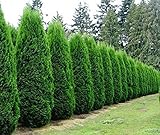
Overview: A hardy evergreen conifer, tree or shrub, whose scale-leaved sprays form a dense conical outline; size ranges widely from about 0.5 to 25 m (1.5-80 ft) depending on cultivar. It is one of the most widely planted evergreens for hedges and screens in cool climates.
Quick Specifications
| Specification | Attribute |
|---|---|
| Plant Type / Life Cycle | Evergreen coniferous perennial (tree or shrub) |
| Foliage Type | Evergreen |
| Mature Size | 0.5-25 m (1.5-80 ft), varying greatly by cultivar |
| Growth Rate | Moderate |
| Root System | Shallow, fibrous root system |
| Toxicity | Foliage contains thujone and is toxic if ingested; the oil is a known irritant |
| Hardiness | USDA zones 2-9 |
Growth Form & Structure
- Height and Spread: From dwarf forms under 1 m to full trees of up to 25 m (80 ft); most garden clones sit in the shrubby middle. Not usually grown in containers at full size.
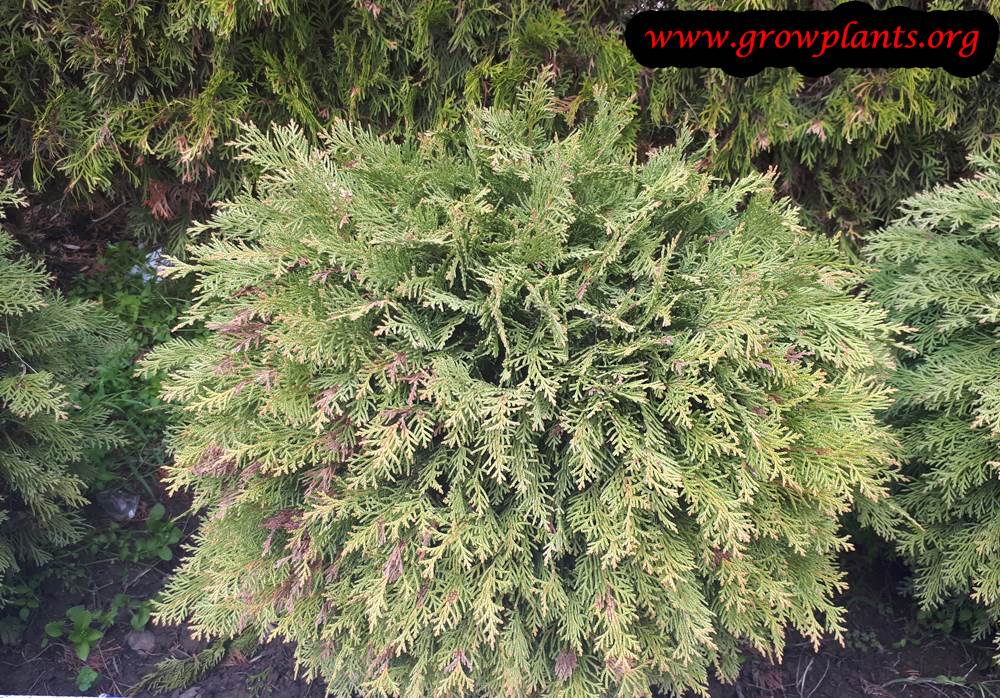
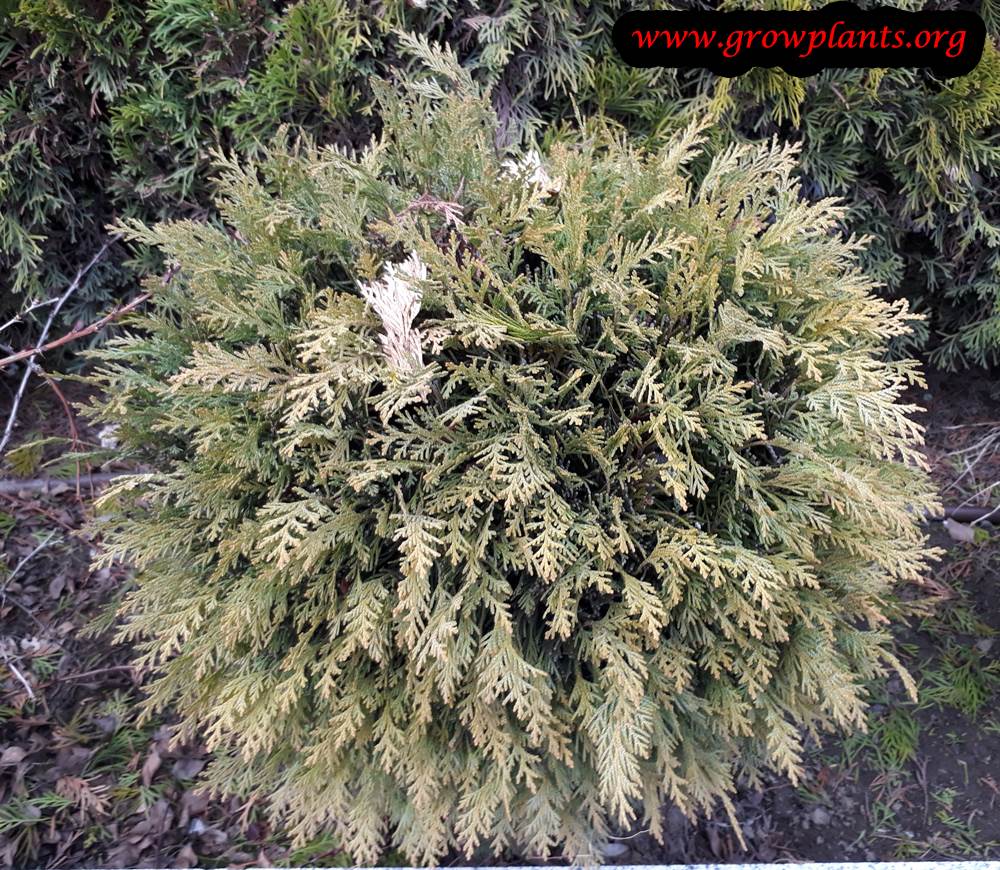
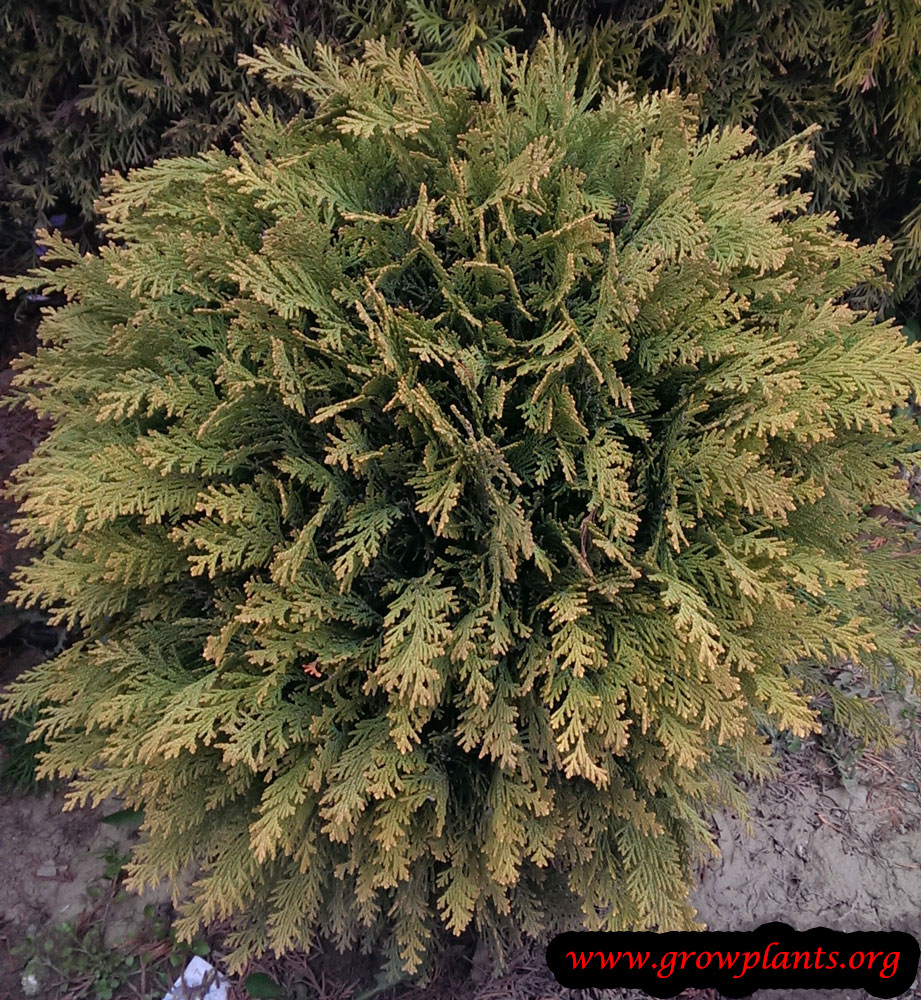
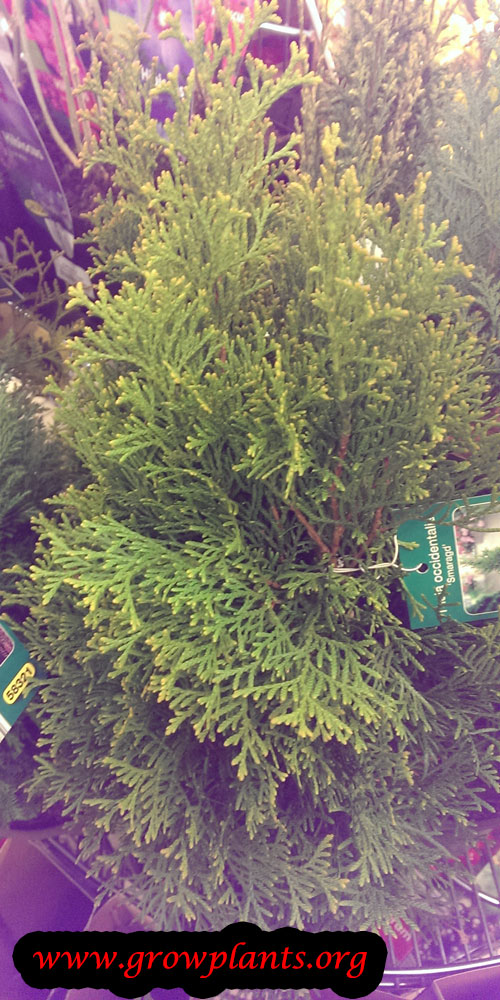
- Growth Habit and Form: Dense, symmetrical, conical to columnar habit of soft scale-leaved sprays; clips readily into formal hedges.
- Lifespan and Maturity: A long-lived, moderate-growing conifer, valued for how densely and evenly it fills in for screening.
Anatomy & Physical Features
- Trunk and Bark: Reddish-brown, fibrous, shredding bark on a fluted trunk.
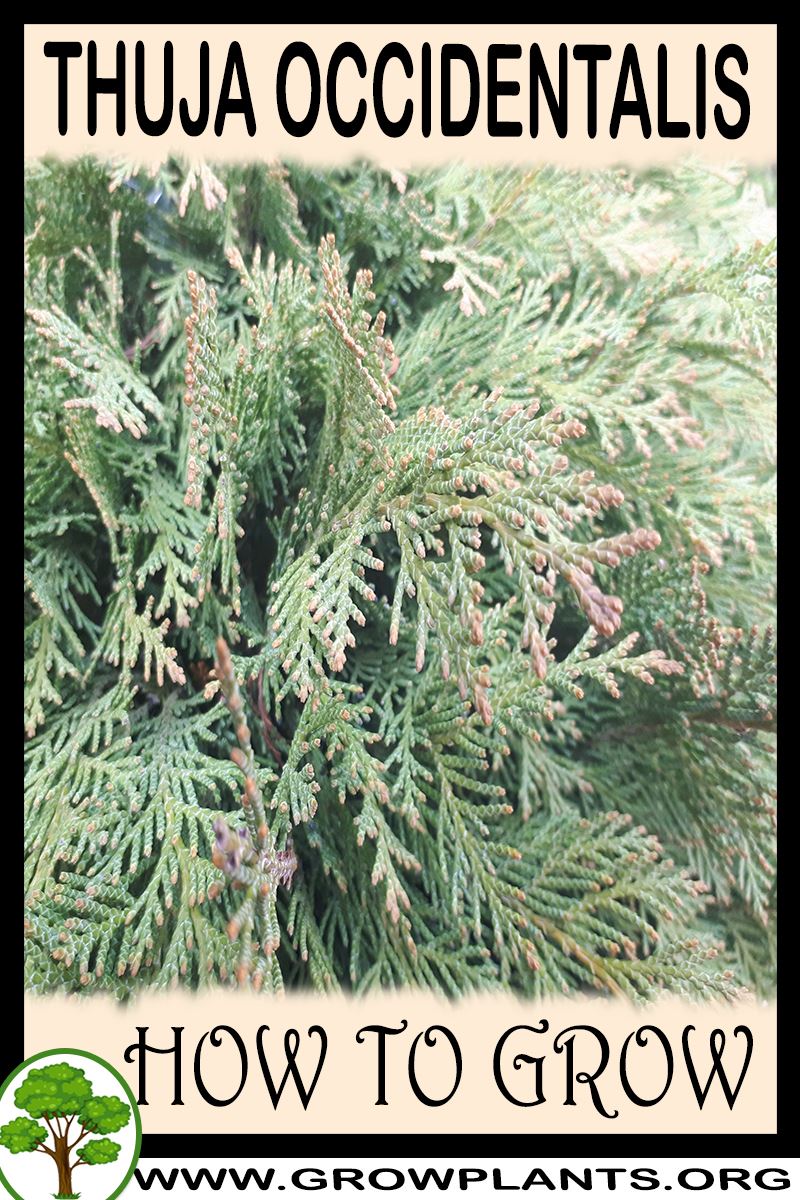
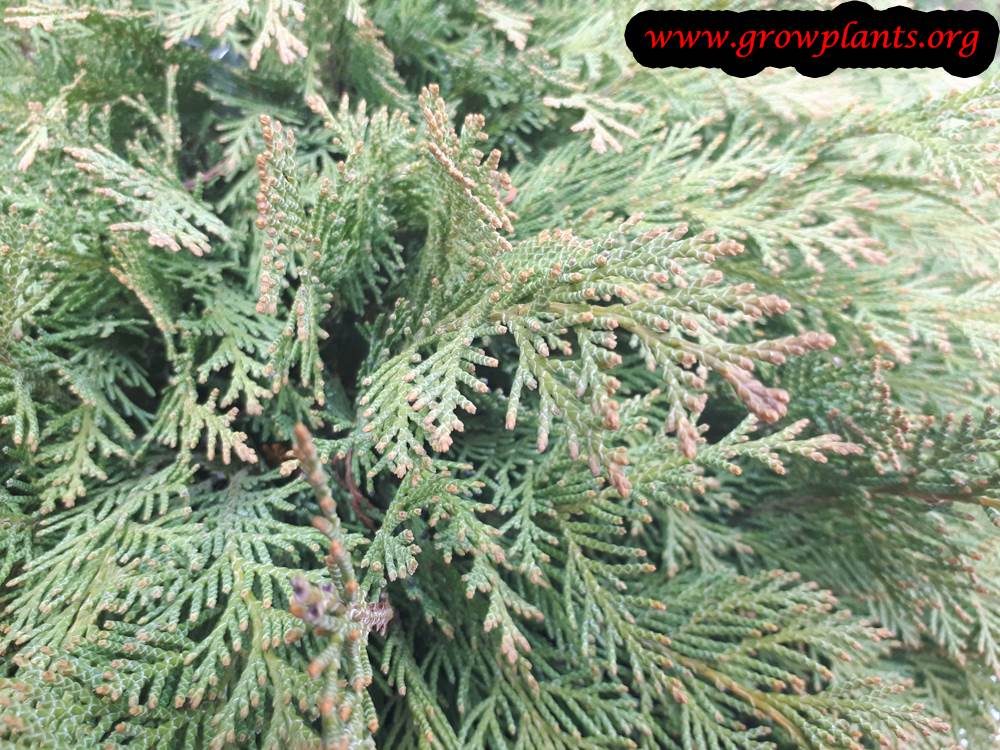
- Leaves and Foliage: Flat sprays of tiny green scale-like leaves, aromatic when crushed; the whole plant holds a neat conical form.
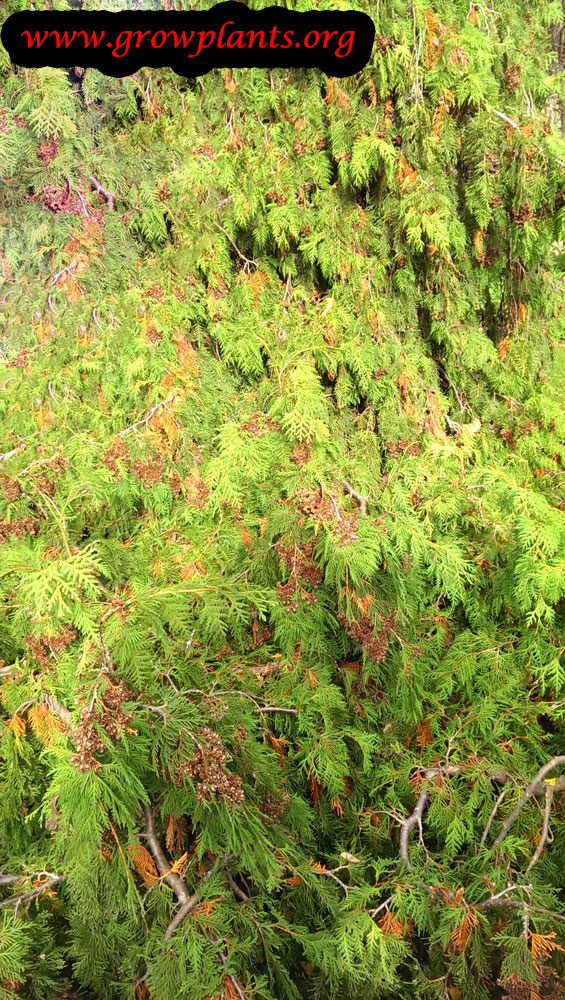
- Flower Characteristics: Inconspicuous yellow-brown cones clustered at the shoot tips.
Primary Uses & Landscape Value
- Functional and Ornamental Roles: A leading evergreen for hedges, screens, windbreaks and specimen planting in cool climates; note its foliage suppresses nearby plants (allelopathy) and is toxic if eaten.
Care Guide: Planting, Soil & Watering
Overview: Arborvitae (white cedar) is a hardy, cold-tolerant evergreen conifer for temperate climates (hardiness zone 2–9), growing best in full sun and moist but well-drained soil. It grows at a moderate pace and takes steady, moderate watering.
Quick Care Requirements
| Requirement | Ideal Condition |
|---|---|
| Planting Season | Spring or summer |
| Growth Rate | Moderate |
| Soil Type | Moist, well-drained soil |
| Water Need | Moderate |
Planting & Establishment
- Best Planting Season: Plant in spring or summer so roots establish before winter; extremely cold-hardy, thriving from zone 2 to 9.
- How to Plant:
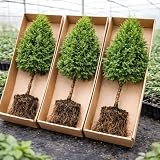
- Hole Preparation: Dig a hole two to three times the width of the root ball and just as deep, loosening the sides.
- Soil Amendments: Mix compost or organic matter into the backfill; arborvitae likes soil that stays evenly moist yet drains.
- Planting Depth: Set the root collar level with the surrounding soil, never deeper, and keep the stem base unburied.
- Growth Speed & Expectations: Grows at a moderate, steady pace into a dense cone and rarely needs pruning.
Soil, Watering & Drainage Care
- Soil Mix & Drainage Needs: Moist, well-drained soil is ideal, and the tree tolerates damp ground better than most conifers; it is a landscape tree not suited to long-term container growing.
- Watering Schedule & Technique:
- Young / Newly Planted: Water regularly and deeply through the first seasons to keep the root zone evenly moist.
- Established: Water moderately, keeping the soil from drying out completely; established trees appreciate consistent moisture.
- Seasonal Adjustments: Water well in summer heat and keep it from drying in autumn before the ground freezes; less is needed in cool, wet spells.
Climate, Light & Hardiness
Arborvitae (white cedar) is a very cold-hardy conifer suited to temperate climates, needing full sun for its best dense, cone-shaped growth. Site guidance specifically favors cold-temperature conditions for this species over heat.
Quick Climate Specifications
| Climate Zones | Temperate climates |
|---|---|
| USDA Hardiness Zones | 2–9 |
| Frost Tolerance | High |
| Light Conditions | Full sun |
Sunlight & Light Exposure
Optimal Light Setup
Needs full sun for dense, healthy, well-shaped foliage; used widely as hedging where good light is available.
Direct Sun Requirement
Requires strong direct sun; shaded plantings tend to thin out and lose density.
Temperature Extremes & Hardiness
USDA Hardiness & Regional Limits
Reliably hardy across an unusually wide range, zone 2–9, reflecting its origin in very cold North American climates; it is not well suited to hot, humid subtropical or tropical conditions.
Cold Damage & Winter Protection
Extremely cold-hardy; well-established plants need no winter protection even in the coldest end of its range.
Frost Sensitivity
Very frost tolerant, one of the hardiest ornamental conifers.
Wind, Humidity & Microclimate
Rainfall & Seasonal Moisture
Prefers reasonably consistent moisture through the growing season; site guidance calls for average watering rather than drought conditions.
Microclimate Recommendations
An open, sun-exposed site suits arborvitae best; it is well adapted to cold, exposed sites within its hardiness range.
Growing in Pots, Balconies & Indoors
Arborvitae (Thuja occidentalis) is a large landscape conifer, reaching 0.5-25 m (up to about 75 ft) depending on cultivar. The grower marks it as neither a houseplant nor a container plant – it is a forest tree for open ground in full sun. Pots can only ever suit a very young specimen for a few years before it needs to be planted out.
Quick Details
- Container Size: Not recommended long-term; only a large tub for a young specimen, then plant out
- Indoor Suitability: Not a houseplant – a hardy outdoor forest tree
- Best Spot: Outdoors in full sun, in the open ground
- Soil & Drainage: Deep, free-draining loam-based soil; strong drainage holes if potted young
- Watering in Pots: Keep evenly moist; potted arborvitae dries and browns quickly if it dries out
Indoors & On the Windowsill
- Not a houseplant: The grower marks it as unsuitable indoors – it needs cool seasons, strong light and room to grow into a large tree, and will not tolerate warm, dry indoor air.
- Cold-hardy: Being hardy, it needs no indoor overwintering – it prefers to stay outside year-round.
On a Balcony or Patio
- Only while young: A young plant can spend a few years in a large tub on a patio, but it will soon outgrow any container and need open ground.
- Practicalities: Keep any large tub heavy and stable against wind, water well as pots dry faster than open soil, and plan to plant it out before the roots become cramped.
Choosing the Pot, Soil & Long-Term Care
- A landscape tree, not a long-term pot plant: The grower’s guidance is that this conifer is grown in open ground; a container only holds a young specimen temporarily.
- If potting a young tree: Use a large tub with strong drainage holes and a loam-based mix with added grit; feed through the growing season, as pot nutrients leach faster, then move it to the ground.
Fertilizing & Feeding
Arborvitae is widely planted as a hedge or privacy screen, where steadier feeding while young helps it fill in densely; once established as a hedge it needs only occasional attention.
Quick Fertilizing Specs
| Feeding Level | Moderate |
|---|---|
| young_feeding | Balanced feeding to establish roots, shifting toward a nitrogen lean to encourage dense hedge fill-in |
| mature_feeding | Established hedges and screens generally need only occasional light feeding once they’ve filled in |
| Main Nutrient Priority | Balanced nutrition with a nitrogen lean while active hedge growth is wanted |
| Best Feeding Period | Spring through early summer, during the active growth flush |
| Soil pH | Adaptable to a wide range of soil pH; no routine correction needed for most sites |
| Reduce/Stop Feeding | Taper off by late summer so growth can harden before cold weather |
Feeding by Growth Stage
Establishment After Planting
Support root recovery and settling-in after planting, particularly important for young hedge or screen plantings.
| Nutrient direction | Light, balanced nutrition favoring root development over top growth |
|---|---|
| Timing | The first couple of growing seasons after planting |
| Frequency | A few light feedings spread through the active growing season |
| Fertilizer types | A balanced, complete tree-and-shrub fertilizer, Compost or well-rotted organic matter worked lightly into the planting row |
| Precautions | Avoid feeding a stressed or newly transplanted root system too heavily; this species also shows allelopathic tendencies, so keep new plantings clear of sensitive beds. |
Active Growth and Hedge Fill-In
Encourage the dense, uniform growth wanted for a hedge or privacy screen while plants are actively growing.
| Nutrient direction | Balanced feeding with a nitrogen lean to encourage dense foliage and faster fill-in |
|---|---|
| Timing | Spring through early summer, during active growth |
| Frequency | Regular light feedings through the growing season |
| Fertilizer types | A balanced, complete tree-and-shrub fertilizer, A nitrogen-forward hedge or evergreen fertilizer where faster fill-in is the goal |
| Routine trace nutrients | iron, manganese |
| Precautions | Avoid heavy or late-season feeding, which can produce soft growth that browns or winter-burns more readily. |
Established Hedge Maintenance
Keep a filled-in, mature hedge or screen dense and healthy without over-feeding.
| Nutrient direction | Light, balanced feeding to sustain density between prunings |
|---|---|
| Timing | Spring, or after a hard shearing to support recovery |
| Frequency | Feed sparingly, adjusted to how the hedge is performing |
| Fertilizer types | A balanced, complete tree-and-shrub fertilizer applied lightly along the hedge row |
| Precautions | Avoid heavy feeding right after a hard shearing; let the hedge recover before pushing new growth. |
Cold-Season Dormancy
Allow the hedge to harden off before winter rather than pushing tender new growth susceptible to winter burn.
| Nutrient direction | None – withhold fertilizer |
|---|---|
| Timing | Late summer through winter, once seasonal growth has slowed |
| Frequency | No feeding at this stage |
| Fertilizer types | No feeding – allow the hedge to rest through the cold season |
| Precautions | Do not fertilize late in the season; new growth pushed too close to cold weather is highly prone to winter burn in this species. |
Nutrient Deficiency Signs & Corrections
Yellowing of newest scale-like foliage while older foliage stays green
| Possible causes | Iron unavailability in alkaline or heavily limed soil, Poor drainage or compacted soil, common along fence lines and hedge rows, Root stress from recent transplanting |
|---|---|
| Appears first on | Newest foliage at branch tips |
| What to check | Soil drainage and compaction along the hedge row, Recent soil pH amendments such as lime, Whether chlorosis is isolated to new growth |
| Possible correction | Improve drainage and correct any pH imbalance; a chelated iron product applied per its label can help in a confirmed case. |
Overall pale, yellow-green foliage and a thin, gappy hedge
| Possible causes | Low soil nitrogen, Compacted soil common along hedge rows and near foundations, Root competition from nearby trees or shrubs |
|---|---|
| Appears first on | Older, interior foliage first, spreading outward |
| What to check | Density and color compared to prior seasons, Soil compaction along the row, Nearby root competition |
| Possible correction | Apply a light, balanced or nitrogen-forward feeding during active growth and address soil compaction if present. |
Bronzing or browning of foliage that shows up over winter or in early spring, distinct from a slow nutrient-driven yellowing
| Possible causes | Winter desiccation from cold, drying wind rather than a nutrient issue, Late-season fertilizing that pushed tender growth into cold weather, Root-zone drought stress heading into winter |
|---|---|
| Appears first on | Exposed, wind-facing foliage first |
| What to check | Whether bronzing follows wind exposure rather than a growth pattern, Fertilizing timing from the previous season, Soil moisture heading into winter |
| Possible correction | This is usually a winter-exposure issue rather than a nutrient deficiency; avoid late-season feeding and ensure adequate moisture before ground freeze rather than fertilizing to correct it. |
Pruning, Training & Seasonal Maintenance
Thuja occidentalis (arborvitae) is grown either as an informal specimen – which, as its own facts note, rarely needs pruning at all – or as a clipped hedge/screen, which needs regular light shearing to stay dense. Pruning tolerance is moderate but with one hard limit shared by nearly all conifers of this type: only the outer green, needled growth will resprout after cutting; the interior brown zone is permanently bare wood and cutting into it leaves a gap that never fills back in. The safest structural window is spring before new growth begins, with light hedge trims through the growing season if kept formal.
Quick Pruning & Maintenance Specs
| Pruning Tolerance | Moderate (green zone only) |
| Primary Pruning Window | Spring, before new growth begins |
| Secondary Maintenance Window | Light hedge trims through summer if kept formal |
| Typical Frequency | Rarely for a free-form specimen; 1–2x yearly for a hedge |
| Main Objective | Density and shape (hedge); minimal intervention (specimen) |
| Young Plant Priority | Establish intended form (single/multi-leader specimen, or hedge wall) while still small |
| Mature Plant Priority | Maintain hedge density with regular light shearing, staying within the green zone |
| Best Tool Type | Hedge shears for hedge/screen use; bypass secateurs for a free-form specimen |
| Avoid Heavy Pruning During | Never cut into the bare interior (brown) zone – at any time of year |
Pruning by Plant Age & Size
Newly Established
Remove only damaged growth; a young plant needs essentially no shaping.
Young / Formative
If grown as a hedge or screen, begin light shearing early to encourage dense branching from the base; if grown as a free-standing specimen (this species ranges hugely from 0.5 m dwarf forms to 25 m trees depending on cultivar), little to no formative training is needed.
Mature / Established
Hedge/screen plantings need regular light shearing to stay dense and tidy; free-form specimens genuinely need very little pruning, consistent with this species’ own care notes.
Seasonal Pruning Schedule
Pre-Growth/Early-Spring
Objective: shape and light density control on hedges. Trim the outer green growth only. Do not cut back into the bare brown interior. Expected response: fuller outer growth through the season.
Summer Canopy Management
Objective: keep hedge/screen lines crisp with a light trim on the current season’s soft growth, staying within the same green zone.
Structural Pruning & Training
For hedges, light regular shearing keeps the outer surface dense; for free-form specimens, structural intervention should be limited to removing genuinely dead or damaged wood rather than shaping, since this species’ natural form is already ornamental.
Tools
Hedge shears for maintaining a formal hedge or screen; bypass secateurs for light, selective work on a free-form specimen.
Tool Hygiene & Disease Risk
Routine: clean, sharp tools are sufficient for normal shearing and corrective cuts on this species.
Cut Placement & Technique
Shear only into the current season’s green growth, just outside the previous surface line; never cut back to the leafless brown interior, as it will not resprout.
Heavy Pruning & Rejuvenation
Not tolerated where it would require cutting into the bare interior. An overgrown hedge can be reduced somewhat if enough green growth remains to cut back into, but a hedge that has gone bare and woody inside cannot be rejuvenated from that wood and gaps will be permanent.
Post-Pruning Care
No extra feeding needed after routine shearing; on a hedge, monitor for any dieback that reveals accidental cuts into the brown zone.
Common Pruning Mistakes
Letting a hedge go unclipped for too long, so that by the time it is trimmed only bare brown wood remains to cut back into; shearing a free-form specimen that, per its own care notes, rarely needs pruning at all; shearing top-heavy, shading out the lower hedge growth.
When NOT to Prune
Never cut into the bare brown interior expecting regrowth, regardless of season.
Recommended Tools (by task)
- Hedge shears – for maintaining formal hedge or screen plantings of this widely-hedged species.
- Bypass secateurs – for light, selective maintenance on free-form specimens, which need very little pruning.
Pruning Troubleshooting
| Problem | Possible Cause | What to Check | Corrective Action |
| Permanent bare/brown patch on a hedge | Cut made into the leafless interior zone | Whether the gap is on old, needle-less wood | None – the gap will not fill in; keep future cuts within the green zone |
| Hedge thin at the bottom | Top sheared wider than the base, shading the lower growth | Hedge cross-section shape | Reshape with a slight taper (narrower at top) |
| Free-form specimen looking sparse after cutting | Unnecessary shaping on a species that naturally needs little pruning | Whether cuts were made purely for shape rather than removing damage | Stop routine shaping; limit future cuts to dead/damaged wood only |
Propagation Guide
Arborvitae is one of the more cutting-friendly conifers: semi-hardwood stem cuttings root readily and are the standard way to reproduce named cultivars true to type, while seed works well for the plain species and is not strictly necessary to bypass. Overall this is an Easy plant to propagate at home by either method, with cuttings the more reliable choice for a specific cultivar.
Quick Propagation Specs
| Best Propagation Method | Semi-hardwood stem cuttings |
| Alternative Methods | Seed |
| Propagation Difficulty | Easy |
| Seed True-to-Type | Usually true-to-type for the species; Cultivar-dependent for named selections such as ‘Emerald Green’ or ‘Golden Globe’ |
| Vegetative True-to-Type | Yes |
| Best Propagation Season | Late summer to autumn for cuttings; spring for sowing seed |
| Seed Germination Time | Typically several weeks to a couple of months |
| Cutting Rooting Time | Often several weeks to a couple of months |
| Germination Temperature | Roughly 15–21°C (59–70°F) |
| Seed Sowing Depth | Shallow, about 0.5 cm (0.2 inch), lightly covered |
Growing from Seed
Seed Handling & Viability
Seed is small (about 1–2 cm per the plant’s own cone description) and comes from the small brown cones; use reasonably fresh seed or give it cool, dry storage if held over.
Sowing Season
Spring.
Sowing Depth & Orientation
Sow shallowly with a light covering of well-drained mix.
Germination Conditions
Moderate warmth and evenly moist, well-drained soil; light stratification can help even out germination.
Germination Time
Typically several weeks to a couple of months.
Seedling Care
Young plants benefit from consistent moisture and some protection from harsh midday sun while small.
Stem Cuttings
Cutting Type
Semi-hardwood tip cuttings.
Best Timing
Late summer into autumn is the commonly used window for this genus, though cuttings can also be taken in other seasons with adjusted conditions.
Cutting Preparation
Take cuttings from healthy side shoots and strip foliage from the lower portion before inserting.
Rooting Setup
A well-drained, gritty rooting mix; a cold frame or unheated greenhouse works well, with protection from hard freezes while roots form.
Rooting Hormone
Beneficial – a rooting hormone commonly speeds and evens out rooting for this genus, though many cuttings will root without it.
Rooting Time
Often several weeks to a couple of months, sometimes carrying over winter before spring growth confirms success.
Bloom & Flower Guide
Quick Details
- Bloom Season: Summer (pollen cones appear from spring)
- Flower Appearance: Tiny yellow-brown pollen cones dotted at the tips of the scale-like foliage – the grower likens them to “dandruff”
- Edibility: Not edible – the foliage and cones contain thujone and are toxic if ingested
Detailed Blooming Overview
Arborvitae is a conifer, so it bears cones rather than true flowers. In the warmer months the branch tips carry a fine scatter of yellow-brown pollen cones, small enough that the grower compares them to dandruff. Small green female cones follow and ripen to brown, woody cones made up of overlapping scales.
Flower Characteristics
- Male pollen cones are tiny and yellow-brown, dotted along the scale-like sprays.
- Female cones are small, green at first, ripening to brown woody cones about 1-2 cm long.
Bloom Care & Thinning
- Nothing to deadhead: The cones need no thinning.
- Pollination: Wind carries the pollen; no insects are involved.
- Safety: All parts of Thuja are toxic if eaten and the essential oil is potent – keep foliage and cones away from children and pets, and wear gloves if the sap irritates your skin.
Fruit & Uses
Thuja occidentalis (northern white cedar/arborvitae – its name literally means ‘tree of life’) is grown purely as an ornamental conifer, but its foliage has a well-known historical use: young scale-like leaves were traditionally brewed into a vitamin-C-rich tea, reportedly used by Indigenous peoples and by early European sailors to treat scurvy. The foliage also contains thujone, which is toxic in larger amounts, so this is treated as a cautious historical/herbal note rather than a food.
Quick Edible Specs
| Edible Parts | Young scale-like foliage (leaves) – historical/herbal tea use only |
| Main Use(s) | Herbal tea (medicinal-note, historical antiscorbutic use); not a food crop |
| Eaten Raw or Cooked | Infused as tea only – never eaten raw as a vegetable |
| Preparation Required | Brief steeping of fresh young foliage only; avoid concentrated extracts or the essential oil |
| Harvest Season | Foliage available year-round; freshest new growth in spring |
| Storage | Use fresh or lightly dried, in small amounts |
| Safety/Toxicity Caveat | Contains thujone, toxic in excess – never ingest the essential oil or concentrated extracts, which can cause seizures and organ damage; not a food, avoid in pregnancy, keep away from children and pets |
Leaves & Greens
Only the fresh, young green scale-leaves have been used, lightly steeped for tea. This is a traditional/historical use, not one documented on this site, and is not a recommended everyday food or beverage.
Preparation, Uses & Safety
safety first: Thuja occidentalis foliage and essential oil contain thujone, which is toxic in excess and can cause serious harm if ingested in quantity or as concentrated oil. The plant’s historical antiscorbutic tea use is documented, but modern guidance advises against regular or concentrated internal use. No medical claims or dosing are given here beyond noting the traditional use – treat this as a cautionary note, not a recommendation to eat or drink preparations from this plant.
Pests, Diseases & Troubleshooting
Overview: Eastern white cedar (arborvitae) is a hardy, dense evergreen whose main pests are bagworms and the spruce spider mite, with cypress tip miner and scale as minor players; its diseases are tip and needle blights, and Phytophthora root rot in wet ground. Much of its ‘browning’ is really abiotic – winter burn, salt and waterlogging – so diagnosis matters.
Quick Troubleshooting Overview
| Issue / Pest | Main Symptom | Primary Solution |
|---|---|---|
| Bagworms | Spindle bags, defoliated twigs | Hand-pick bags in winter, Bt |
| Spruce spider mite | Bronzed, webbed foliage in heat | Hose, horticultural oil |
| Cypress tip miner | Browned, hollow mined tips | Shear off mined tips |
| Tip / needle blight | Dying shoot tips | Prune, airflow, copper if chronic |
| Root rot | Browning in wet soil | Improve drainage |
| Winter burn / salt | Brown windward foliage | Water before cold, avoid road salt |
Common Pests & Management
- Bagworms (Thyridopteryx ephemeraeformis):
- Symptoms: Distinctive 3-5 cm spindle-shaped bags covered in bits of the host’s own foliage, hanging from twigs; the larva inside strips needles and leaves, and heavy infestations can defoliate branches.
- Prevention & Control: Hand-pick and destroy the overwintering bags in the dormant season to remove the eggs inside. On larger plants, treat the young larvae early with Bacillus thuringiensis (Bt) while they are small and still feeding openly.
- Spider Mites (Spruce Spider Mite) (Oligonychus ununguis):
- Symptoms: Fine stippling and bronzing of the scale-foliage with delicate webbing, worst in hot dry spells; heavy feeding turns whole sections dull brown and can kill inner foliage.
- Prevention & Control: Hose foliage forcefully to dislodge mites and knock back dust, and check by tapping foliage over white paper. Conserve predatory mites; treat hotspots with horticultural oil, thoroughly wetting the inner foliage and repeating.
- Cypress Tip Miner / Leaf Miner (Argyresthia spp.):
- Symptoms: Scale-leaf tips turn brown and hollow as tiny larvae mine inside them, giving a scorched look most obvious in late winter; small moths flutter from the foliage when disturbed in spring.
- Prevention & Control: Shear off and destroy browned mined tips in late winter, which removes many larvae, and keep plants vigorous. Damage is largely cosmetic and re-flushes; sprays are rarely justified on established plants.
- Scale Insects (Coccoidea):
- Symptoms: Small immobile brown, tan or waxy white bumps clamped to stems, twigs and leaf undersides. They exude honeydew that blackens with sooty mould; heavy infestations cause yellowing, dieback and reduced vigour.
- Prevention & Control: Scrub off light infestations with a soft brush or a cotton bud dipped in dilute alcohol, and prune out badly encrusted twigs. Conserve predatory ladybirds and parasitic wasps. Smother the vulnerable crawler stage with horticultural oil, timing repeat sprays for when young scales are active.
- Aphids (Aphidoidea):
- Symptoms: Clusters of tiny soft-bodied green, black or grey insects on new shoots, flower buds and leaf undersides. Feeding causes puckered, curled or yellowing young growth, and a sticky honeydew that fosters sooty mould and attracts ants.
- Prevention & Control: Knock colonies off with a firm jet of water and pinch out badly infested tips. Encourage ladybirds, lacewings and hoverflies, and avoid excess nitrogen that pushes soft sappy growth. For persistent outbreaks apply insecticidal soap or a light horticultural/neem oil, coating leaf undersides and spraying in the cool of evening to protect pollinators.
Diseases & Fungal Issues
- Needle & Tip Blight (Kabatina / Pestalotiopsis / Phyllosticta spp.):
- Symptoms: Browning that begins at the tips of needles or scale-leaves and progresses back along the shoot; scattered dead tips and thinning appear, worst on shaded, crowded or wet foliage.
- Treatment & Management: Prune out and destroy affected tips, thin for airflow, and avoid overhead watering and salt exposure. Keep plants vigorous. Where blight is chronic, a copper fungicide applied to protect new growth can reduce spread.
- Root & Crown Rot (Phytophthora / Pythium spp.):
- Symptoms: Wilting despite moist soil, yellowing lower leaves, and dark, soft, decayed roots or a rotted stem base; a slow decline or sudden collapse in heavy, wet ground follows.
- Treatment & Management: Prevention is decisive: plant in free-draining soil (or raised beds), never let the crown sit wet, and water only when the topsoil dries. Remove and destroy badly affected plants and improve drainage before replanting; biological drenches (Trichoderma) can help protect healthy roots.
- Kabatina / Tip Blight (Kabatina thujae / Pestalotiopsis spp.):
- Symptoms: Individual shoot tips turn brown and die back from the tip, often with a tiny grey lesion at the junction with green wood; worst on shaded, crowded, damp or salt-stressed plants.
- Treatment & Management: Prune out and destroy affected tips, thin for airflow, and avoid overhead irrigation and de-icing salt. Keep plants unstressed; a copper fungicide protecting new growth helps only where blight is chronic.
Growing Difficulties & Abiotic Problems
- Winter Burn & Cold Injury:
- Cause & Symptoms: Foliage or needles turning brown or bronze on the windward, sun-exposed side during cold, dry, windy weather, when frozen roots cannot replace water lost from the leaves.
- Correction Strategy: Shelter plants from cold drying wind, keep them well watered going into the cold season, and mulch the root zone. Anti-desiccant sprays or temporary windbreaks protect vulnerable young or exposed plants; much scorched growth re-flushes once conditions ease.
- Overwatering & Root Rot:
- Cause & Symptoms: Yellowing lower leaves, wilting despite wet soil, and a soft, foul-smelling root ball or stem base result from waterlogged, airless soil that suffocates and rots the roots.
- Correction Strategy: Let the soil dry appropriately between waterings, plant in free-draining media, and ensure pots have working drainage holes. Ease off water in cool or dormant periods and never leave the plant standing in a saucer of water.
- Salt & Fertiliser Burn:
- Cause & Symptoms: Brown, scorched leaf edges and tips and a white crust on the soil surface, caused by salt build-up from over-feeding, hard water or de-icing/coastal salt.
- Correction Strategy: Flush containers and beds periodically with plenty of clean water to leach salts, feed at modest rates, and avoid fertilising stressed or dry plants. Where salt spray or run-off is the source, screen or resite the plant.
What Helps – Products & Tools
Arborvitae is mostly managed by vigilance and shearing: hand-remove bagworms in winter, hose or oil-spray spider mites in summer heat, and shear out mined or blighted tips. A copper fungicide is reserved for chronic tip blight, and the biggest wins come from good drainage, avoiding road salt, and watering well before hard cold to prevent winter burn.
Varieties & Cultivars
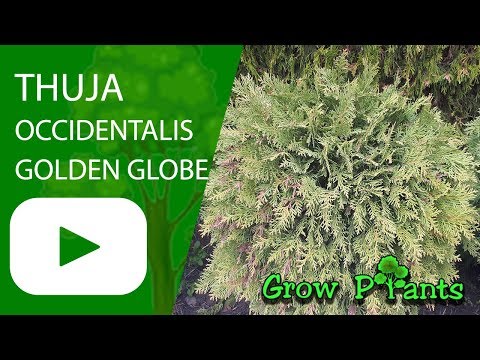
- Thuja occidentalis golden globe — Learn more about Thuja occidentalis golden globe · Shop Thuja occidentalis golden globe on Amazon