Plant Profile & Key Characteristics
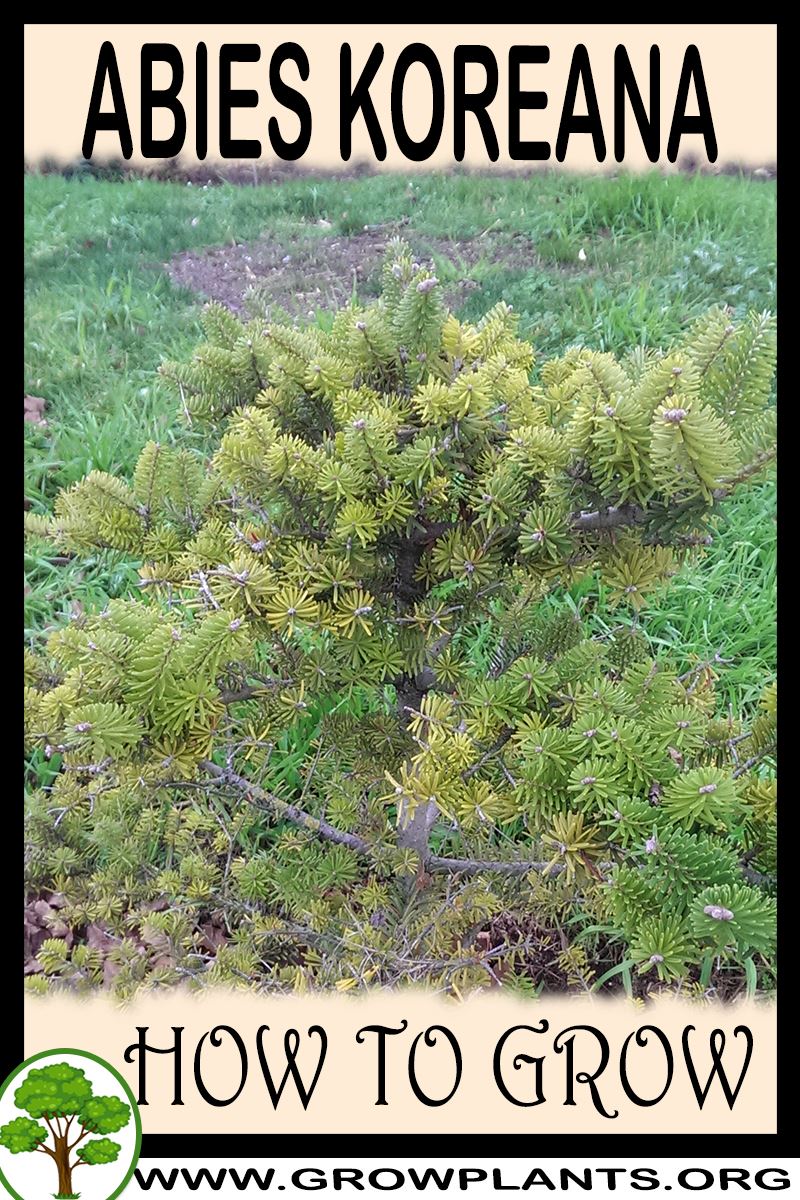
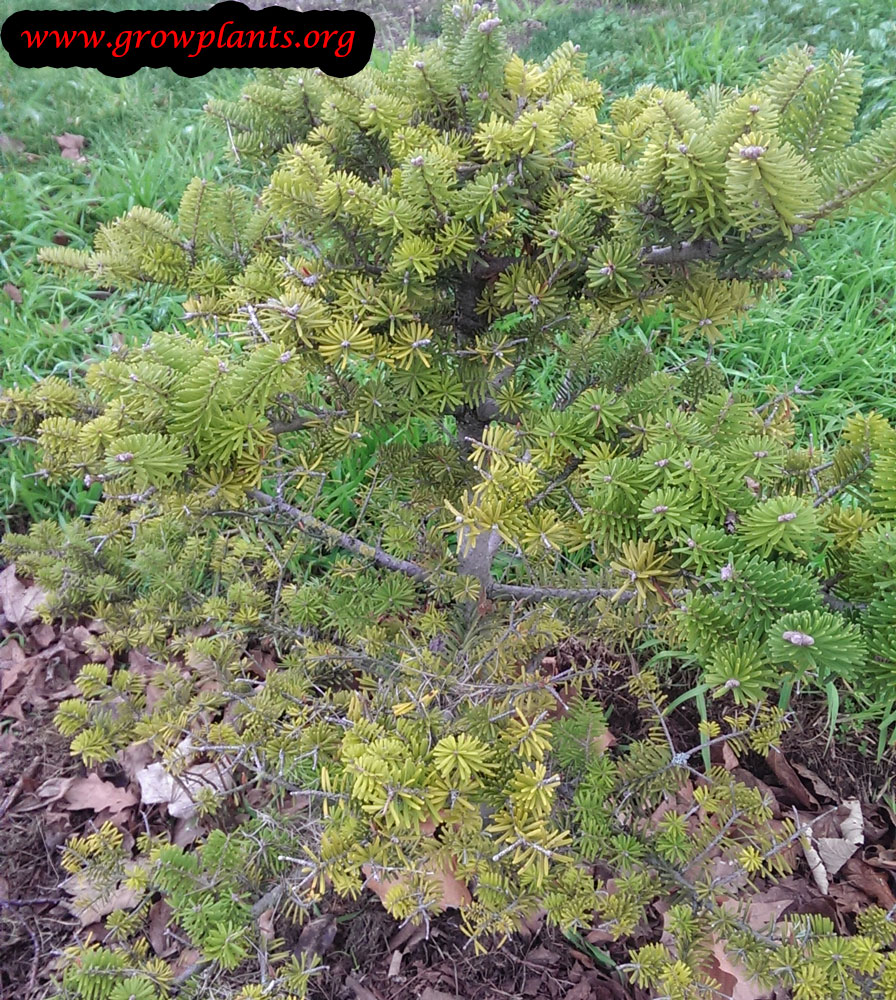
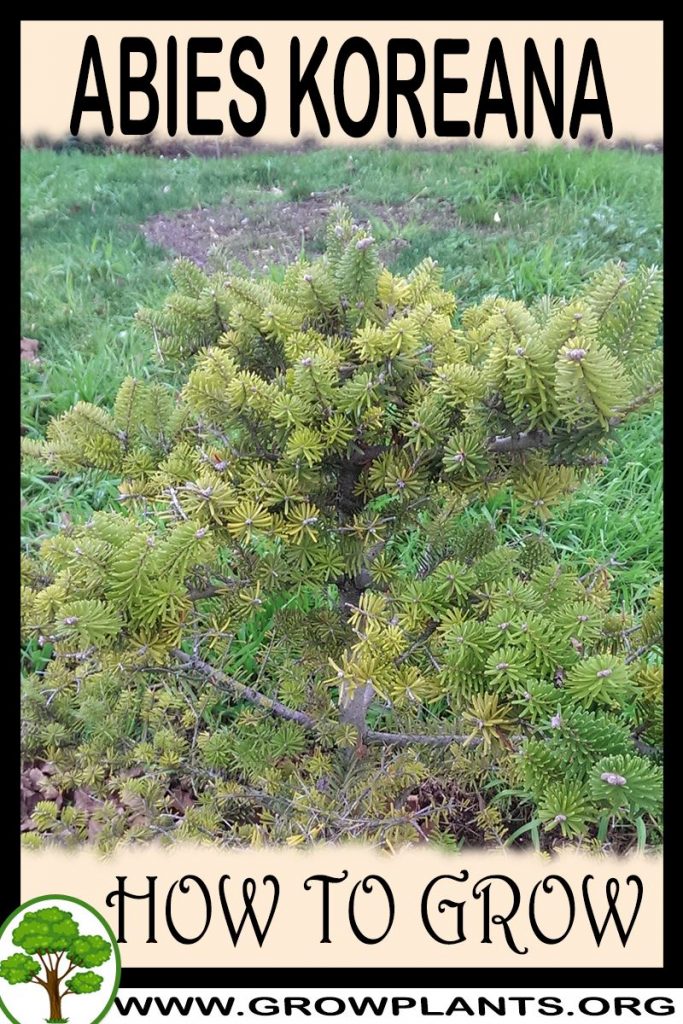
Overview: Abies koreana (Korean fir) is a moderate-growing evergreen coniferous tree or shrub, typically 3–20 m (10–60 ft) tall. It is grown as an ornamental and prized for its neat conical habit and decorative violet-blue cones.
Quick Specifications
| Specification | Attribute |
|---|---|
| Plant Type / Life Cycle | Perennial evergreen conifer (tree/shrub) |
| Foliage Type | Evergreen (needled conifer) |
| Mature Size | 3–20 m (10–60 ft) tall |
| Growth Rate | Moderate |
| Toxicity | Non-toxic |
| Hardiness | USDA zones 5–8 |
Growth Form & Structure
- Height & Spread: Reaches 3–20 m (10–60 ft) tall depending on form and age; dwarf cultivars stay much smaller. Not suited to permanent container culture.
- Growth Habit & Form: Densely branched conifer with a symmetrical conical to pyramidal crown.
- Lifespan & Maturity: Long-lived tree that grows steadily; it can bear its ornamental cones while still young and small.
Anatomy & Physical Features
- Trunk & Bark: Single straight trunk with resinous, greyish bark typical of firs.
- Leaves & Foliage: Short green needle-like leaves attached at a broad base, densely clothing the shoots.
- Flower Characteristics: Small yellow wind-pollinated cones, with male and female borne separately.
- Cones: Upright decorative cones ripening from green to blue-purple with yellowish stripes – the tree’s signature feature.
Primary Uses & Landscape Value
- Functional & Ornamental Roles: Specimen and ornamental conifer for gardens and larger landscapes, valued for its violet-blue cones; dwarf forms suit rockeries and Christmas-tree use.
Care Guide: Planting, Soil & Watering
Overview: Korean fir is a slow-to-moderate, cold-hardy conifer for full sun to half shade in cool temperate climates. It prefers moist, slightly acidic, well-draining soil and steady moisture, and dislikes hot, dry, or waterlogged conditions.
Quick Care Requirements
| Requirement | Ideal Condition |
|---|---|
| Planting Season | Spring or early summer, once the ground has thawed and warmed |
| Growth Rate | Moderate |
| Soil Type | Moist but well-draining soil |
| Soil pH | Slightly acidic |
| Water Need | Moderate to High — keep the soil consistently moist and cool, never bone-dry |
Planting & Establishment
- Best Planting Season: Plant in spring or early summer, once the ground has thawed and warmed. As a cold-climate conifer (zones 5–8) it establishes best while the soil is moist and temperatures are still cool.
- How to Plant:
- Hole Preparation: Dig a hole about twice the width of the root ball and no deeper, so the tree sits at the same level it grew in its container.
- Soil Amendments: Improve the backfill with organic matter to hold moisture while keeping drainage sharp; mulch the root zone to keep the roots cool and moist. Note that Korean fir can be allelopathic, so leave space from sensitive plantings.
- Planting Depth: Set the tree so the root collar sits at soil level — do not bury the trunk.
- Growth Speed & Expectations: Moderate but generally unhurried — over years it forms a neat conical tree, so give it room and a cool, moist root run.
Soil, Watering & Drainage Care
- Soil Mix & Drainage Needs: Needs moist yet well-draining, slightly acidic soil; it resents both drought and standing water. It is not suited to long-term container growing, so plant it in the open ground.
- Watering Schedule & Technique:
- Young / Newly Planted: Water regularly to keep the soil consistently moist while the roots establish.
- Established: Continue watering deeply in dry spells to keep the soil moist and the roots cool; mulch helps retain moisture. Established trees still dislike drying out.
- Seasonal Adjustments: Water more in summer heat and dry spells; reduce in winter when the tree is dormant and the soil stays moist.
Climate, Light & Hardiness
Korean fir is a cool-climate conifer suited to temperate regions with cold winters, growing well in full sun to half shade. It is a fully cold-hardy species that actually prefers cool temperatures over heat.
Quick Climate Specifications
| Climate Zones | Temperate climates |
|---|---|
| USDA Hardiness Zones | 5–8 |
| Frost Tolerance | High |
| Light Conditions | Full sun or half shade |
Sunlight & Light Exposure
Optimal Light Setup
Grows well in full sun to half shade; a site with good light supports the densest, most symmetrical growth typical of ornamental firs.
Shade & Heat Management
Tolerates half shade but is not adapted to hot climates - it performs best where summers stay relatively cool.
Temperature Extremes & Hardiness
USDA Hardiness & Regional Limits
Reliably hardy across zone 5–8, reflecting its origin in cool mountain climates; it is not well suited to hot, humid subtropical or tropical regions.
Cold Damage & Winter Protection
Well-established plants in zone 5 and warmer generally need no winter protection; site guidance explicitly favors cold-temperature conditions over heat for this species.
Frost Sensitivity
Very frost tolerant, consistent with its cold-temperate mountain origins.
Wind, Humidity & Microclimate
Rainfall & Seasonal Moisture
Prefers consistently moist conditions through the growing season; site guidance calls for average to generous watering rather than drought conditions.
Microclimate Recommendations
A cool, open site with reliable moisture and good air movement best matches this fir's natural preference for cold-temperate mountain climates.
Growing in Pots, Balconies & Indoors
The Korean fir (Abies koreana) is a large landscape conifer, reaching 3-20 m (10-60 ft). The grower marks it as neither a houseplant nor a container plant – it is a forest tree for open ground in full sun to part shade. Pots can only ever suit a very young specimen for a few years before it needs to be planted out.
Quick Details
- Container Size: Not recommended long-term; only a large tub for a young specimen, then plant out
- Indoor Suitability: Not a houseplant – a hardy outdoor forest tree
- Best Spot: Outdoors in full sun to part shade, in the open ground
- Soil & Drainage: Deep, free-draining loam-based soil; strong drainage holes if potted young
- Watering in Pots: Keep evenly moist; a young potted tree dries faster than open ground
Indoors & On the Windowsill
- Not a houseplant: The grower marks it as unsuitable indoors – it needs cool seasons, strong light and room to grow into a large tree, and will not tolerate warm, dry indoor air.
- Cold-hardy: Being hardy, it needs no indoor overwintering – it prefers to stay outside year-round.
On a Balcony or Patio
- Only while young: A young plant can spend a few years in a large tub on a patio, but it will soon outgrow any container and need open ground.
- Practicalities: Keep any large tub heavy and stable against wind, water well as pots dry faster than open soil, and plan to plant it out before the roots become cramped.
Choosing the Pot, Soil & Long-Term Care
- A landscape tree, not a long-term pot plant: The grower’s guidance is that this conifer is grown in open ground; a container only holds a young specimen temporarily.
- If potting a young tree: Use a large tub with strong drainage holes and a loam-based mix with added grit; feed through the growing season, as pot nutrients leach faster, then move it to the ground.
Fertilizing & Feeding
Korean fir is a slow-to-medium growing ornamental conifer that gets by on modest nutrition once established; heavy feeding is more likely to push soft, storm-prone growth than to improve the tree.
Quick Fertilizing Specs
| Feeding Level | Light |
|---|---|
| young_feeding | Light, balanced feeding while the root system is establishing after planting |
| mature_feeding | Established trees usually coast on soil nutrition alone; step in only if growth or needle color looks off |
| Main Nutrient Priority | Balanced, complete nutrition rather than any single nutrient push |
| Best Feeding Period | Spring as new growth begins, tapering off through summer |
| Soil pH | Adaptable to a range of garden soil pH; no routine correction needed for most sites |
| Reduce/Stop Feeding | Taper off by late summer so the tree can harden its needles before cold weather |
Feeding by Growth Stage
Establishment After Planting
Support root recovery and settling-in after transplanting without forcing top growth the young root system can’t yet support.
| Nutrient direction | Light, balanced nutrition that favors root development over rapid top growth |
|---|---|
| Timing | The first couple of growing seasons after planting |
| Frequency | A few light feedings spread through the active growing season |
| Fertilizer types | A balanced, complete tree-and-shrub fertilizer, Compost or well-rotted organic matter worked lightly into the planting area |
| Precautions | Keep fertilizer away from the trunk and avoid feeding into a stressed or drought-stricken root zone; this species is also known for allelopathic effects, so avoid crowding new feeding or plantings too close to the base. |
Active Canopy Development
Support steady needle and branch development while the tree is still filling out its mature form.
| Nutrient direction | Balanced feeding with an emphasis on nitrogen to support foliage development |
|---|---|
| Timing | Spring into early summer, during the flush of new growth |
| Frequency | Light feeding through the active growing season |
| Fertilizer types | A balanced, complete tree-and-shrub fertilizer formulated for conifers or evergreens |
| Routine trace nutrients | iron, manganese |
| Precautions | Avoid heavy or repeated feeding, which can produce lanky, weak growth on a naturally slow-growing conifer. |
Established Tree Maintenance
Keep a mature, well-sited specimen healthy without unnecessary inputs once it is settled into the landscape.
| Nutrient direction | Minimal, balanced feeding only where soil or growth signals call for it |
|---|---|
| Timing | Spring, if feeding is warranted at all |
| Frequency | Feed sparingly, and only in years when the tree shows a real need |
| Fertilizer types | A balanced, complete tree-and-shrub fertilizer applied lightly around the drip line |
| Precautions | Resist routine feeding of an established, healthy tree; over-fertilizing mature conifers can encourage weak growth and disease susceptibility. |
Cold-Season Dormancy
Let the tree harden off its new growth and rest through the cold season without tender growth exposed to frost.
| Nutrient direction | None – withhold fertilizer |
|---|---|
| Timing | Late summer through winter, once seasonal growth has slowed |
| Frequency | No feeding at this stage |
| Fertilizer types | No feeding – allow the tree to rest through the cold season |
| Precautions | Do not fertilize late in the season; new growth pushed too close to cold weather is prone to winter injury. |
Nutrient Deficiency Signs & Corrections
Yellowing of new needles while the veins or midrib stay greener, most visible on the newest growth
| Possible causes | Iron unavailability in alkaline or heavily limed soil, Poor drainage or compacted soil limiting root uptake, Root stress from recent transplanting or drought |
|---|---|
| Appears first on | Newest needle growth at branch tips |
| What to check | Soil drainage and compaction around the root zone, Recent soil pH amendments such as lime, Whether symptoms are isolated to new growth or affect the whole tree |
| Possible correction | Improve drainage and correct any recent pH imbalance; if iron chlorosis is confirmed, a chelated iron product applied per its label can help. |
Overall pale or yellow-green needle color and noticeably slow seasonal growth
| Possible causes | Low soil nitrogen, Compacted or nutrient-poor soil, Root stress from drought or root damage limiting nutrient uptake |
|---|---|
| Appears first on | Older, interior needles first, then spreading outward |
| What to check | Overall growth rate compared to prior seasons, Soil quality and compaction, Recent drought or watering stress |
| Possible correction | Improve soil conditions and apply a light, balanced feeding during active growth if the tree is otherwise healthy. |
Yellow or purplish discoloration concentrated on older, interior needles while newer growth stays green
| Possible causes | Magnesium deficiency in sandy or heavily leached soil, Excess potassium feeding interfering with magnesium uptake, Naturally low-fertility soil |
|---|---|
| Appears first on | Older interior needles |
| What to check | Soil type and drainage, Recent fertilizer history, especially potassium-heavy products, Whether discoloration follows a clear older-to-newer pattern |
| Possible correction | Address soil fertility broadly with a balanced, complete fertilizer rather than a single nutrient; a chelated magnesium product per its label can help in a confirmed case. |
Pruning, Training & Seasonal Maintenance
Korean fir naturally grows as a neat, self-forming pyramid and needs very little pruning – its pruning tolerance is low, because true firs do not reliably break new growth from bare, leafless wood the way some other conifers do. The main objective is corrective, not decorative: removing damage, dieback and competing leaders. The safest window is late winter dormancy for structural corrections, or early summer once the new candle growth has hardened, so cuts are made into tissue that still has live buds behind it rather than into bare interior wood.
Quick Pruning & Maintenance Specs
| Pruning Tolerance | Low |
| Primary Pruning Window | Late winter (dormant) for structural cuts |
| Secondary Maintenance Window | Early summer, after new growth has hardened, for light tipping |
| Typical Frequency | Rarely – mainly corrective, as issues appear |
| Main Objective | Maintain a single leader; remove damage/dieback |
| Young Plant Priority | Correct competing leaders early so one dominant leader establishes |
| Mature Plant Priority | Remove dead or storm-damaged branches; otherwise leave the natural form alone |
| Best Tool Type | Bypass secateurs for small growth; pruning saw for a leader correction or larger deadwood |
| Avoid Heavy Pruning During | Never cut back into bare wood behind the green, needled zone – it will not resprout |
Pruning by Plant Age & Size
Newly Established
Leave alone except to remove transplant damage; do not tip or shape a young tree.
Young / Formative
Central leader training – if two leaders compete for dominance (common on young firs), remove the weaker one early so a single strong leader forms; this is the one structural intervention worth making while the tree is small.
Mature / Established
Only remove dead, broken or diseased branches; the species’ natural pyramidal habit should otherwise be left intact.
Seasonal Pruning Schedule
Dormant/Winter
Objective: structural correction. Remove a competing leader or storm-damaged limb while the tree is dormant. Do not remove healthy lateral branches. Expected response: the remaining leader strengthens the following growing season.
Pre-Growth/Early-Spring
Objective: sanitary check ahead of the growth flush. Remove any winter dieback or pine-sawfly-damaged growth (a noted pest for this species) before new candles emerge.
Structural Pruning & Training
Limited to leader correction while young and removal of crossing or damaged branches later; thinning the canopy for airflow is not a routine need for this species and is not recommended as a default practice.
Special Growth to Remove
A second, competing leader on a young tree; any branch damaged by pine sawfly or winter breakage.
Container & Small-Space Pruning
Not typically grown in containers long-term for this species (facts indicate it is not usually grown indoors or as a houseplant); where a compact/dwarf cultivar is container-grown, limit intervention to the same corrective-only approach rather than attempting to shear it smaller.
Tools
Bypass secateurs for small twig and candle work; a pruning saw for any leader correction or removal of larger deadwood.
Tool Hygiene & Disease Risk
Routine: clean, sharp tools are sufficient for normal corrective cuts; increase care (wipe blades) after removing pine-sawfly-damaged material to avoid spreading larvae or frass into healthy tissue.
Cut Placement & Technique
Cut just outside the branch collar; when removing a competing leader, cut it back flush to the trunk rather than leaving a stub, and never shorten the remaining leader itself.
Heavy Pruning & Rejuvenation
Not tolerated. Because this species does not resprout from bare wood, hard cutback or attempts to reduce an oversized specimen will leave permanent bare gaps rather than regenerating – a tree that has outgrown its space should be removed and replaced rather than rejuvenated.
Post-Pruning Care
No extra feeding after a corrective cut; watch the wound area for pine sawfly activity or resin flow that could indicate stress, and keep the root zone consistently moist as this species prefers.
Common Pruning Mistakes
Removing the main leader instead of a competing one; shaping or shearing the outer foliage in the mistaken belief it is a hedging conifer; cutting into bare interior wood expecting regrowth.
When NOT to Prune
Do not cut into bare wood behind the foliage at any time – it will not regenerate. Avoid structural work during active spring candle extension, when new growth is soft and easily damaged.
Recommended Tools (by task)
- Bypass secateurs – for small corrective cuts and removing damaged candle growth.
- Pruning saw – for the occasional leader-correction or deadwood-removal cut on a young to semi-mature tree.
Pruning Troubleshooting
| Problem | Possible Cause | What to Check | Corrective Action |
| Two competing tops instead of one leader | Not corrected while young | Trunk apex for forked growth | Remove the weaker leader flush to the trunk as early as possible |
| Bare, needle-less gap that never fills in | A cut was made into wood behind the green zone | Whether the gap is on older, leafless wood | None – accept the gap; avoid repeating the cut elsewhere on the tree |
| Branch dieback | Pine sawfly damage (a noted pest) or storm breakage | Foliage for sawfly larvae/frass; wood for breakage | Remove affected branch back to healthy wood; treat for sawfly if active |
Propagation Guide
Korean fir is grown from seed for the plain species, which is a straightforward, standard method; grafting is not needed for a species-type tree, though it is the practical route nurseries use to preserve the many popular dwarf and blue-coned named selections of this species. Seed propagation is Moderate in difficulty, mainly because of the cold conditioning it needs and its naturally slow, sometimes uneven germination.
Quick Propagation Specs
| Best Propagation Method | Seed (species-type) |
| Alternative Methods | Grafting (named/dwarf cultivars) |
| Propagation Difficulty | Moderate |
| Seed True-to-Type | Usually true-to-type for the species; Cultivar-dependent for named selections |
| Vegetative True-to-Type | Yes (grafted) |
| Best Propagation Season | Spring sowing; late winter to early spring for grafting |
| Seed Germination Time | Typically several weeks to a few months, and can be uneven |
| Germination Temperature | Roughly 10–20°C (50–68°F) after stratification |
| Seed Sowing Depth | Shallow, about 0.5 cm (0.2 inch), lightly covered |
Growing from Seed
Seed Handling & Viability
Fir seed generally has a limited storage life and germinates best when relatively fresh or given cool, dry storage rather than being kept for long periods.
Dormancy & Pre-Sowing Treatment
Like many true firs, seed typically benefits from a period of cold, moist stratification before sowing to improve and even out germination.
Sowing Season
Spring, after stratification.
Sowing Depth & Orientation
Sow shallowly, with only a light covering of mix, since fir seed is small and winged.
Germination Conditions
A cool nursery bed or cold frame with well-drained, evenly moist soil; light shade over the germinating bed can help prevent the surface from drying or overheating.
Germination Time
Typically several weeks to a few months, and germination can be uneven.
Seedling Care
Young firs grow slowly and appreciate some protection from harsh sun and late frost while establishing; keep soil evenly moist but well-drained, since waterlogging is poorly tolerated.
Grafting & Budding
Why Grafting Is Used
Named dwarf and color-selected forms of Korean fir will not come true from seed and generally root poorly from cuttings, so grafting onto seedling rootstock is the standard commercial way to reproduce them exactly.
Rootstock
Seedling-grown Abies koreana (or a compatible Abies species) is typically used as rootstock.
Best Grafting Season
Late winter to early spring, before active growth resumes, is the conventional timing for conifer grafting of this kind.
Bloom & Flower Guide
Quick Details
- Bloom Season: Spring to summer
- Flower Appearance: Small yellowish male (pollen) cones and separate female cones on the same tree; the upright female cones are an unusual violet-blue when young
- Edibility: Ornamental / none – grown for form and cones
Detailed Blooming Overview
As a conifer, Korean fir does not carry true flowers. What stands in for the bloom is its cones: small yellow pollen cones and separate female cones on the same tree. Abies koreana is especially prized because it produces its striking blue-violet upright cones while still young and small, which is unusual among firs.
Flower Characteristics
- Male pollen cones are small and yellow.
- Female cones stand upright on the branches and are a distinctive violet-blue before ripening to brown.
- Male and female structures are borne separately on the same tree.
Bloom Care & Thinning
- Nothing to deadhead: Conifer cones need no thinning – simply let them develop and shed naturally.
- Pollination: Wind carries the pollen from the male cones to the female cones; no insects are involved.
- For the best cone display: Give the tree an open, sunny position and let it mature undisturbed.
Fruit & Uses
Abies koreana (Korean fir) is grown purely as an ornamental conifer and is not cultivated as a food crop. As with other true firs, the young, tender needle tips produced in spring have a minor foraging/herbal use – steeped for a vitamin-C-rich tea – but no other part of the tree is eaten.
Quick Edible Specs
| Edible Parts | Young spring needle tips (minor, non-culinary use only) |
| Main Use(s) | Herbal tea / flavoring (medicinal-note); not a food crop |
| Eaten Raw or Cooked | Steeped as tea, not eaten as a vegetable |
| Preparation Required | Use only soft, newly emerged spring growth; steep briefly |
| Harvest Season | Spring (new growth flush) |
| Storage | Best used fresh, or lightly dried for later tea use |
| Safety/Toxicity Caveat | True firs are generally considered safe in small tea amounts, but this is not a documented food product for this species – confirm identification and use only light, occasional amounts; avoid during pregnancy as a precaution |
Leaves & Greens (Needles)
Only the soft, light-green new needle growth that emerges in spring is used – steeped fresh or dried for a mildly citrusy tea. Older, darker needles are tougher and more resinous and are not used this way.
Harvesting
Pinch off a light amount of the new spring growth; taking a small quantity for tea does not meaningfully affect the tree’s ornamental form (see Pruning for how cutting affects shape and growth generally).
Preparation, Uses & Safety
steep the young needle tips briefly in hot water for tea, or infuse in syrup, then strain out the needles before drinking. This is a traditional foraging/herbal use rather than an established food product for this ornamental variety – confirm correct identification before use, and treat it as an occasional herbal tea rather than a food, since ornamental fir selections are not bred or vetted for food safety. No other part of the tree (cones, bark, mature needles) is eaten.
Pests, Diseases & Troubleshooting
Overview: Korean fir is a slow, cool-climate conifer that is fairly resilient but vulnerable to sap-sucking adelgids and mites and, above all, to root rot and heat-and-drought stress on the wrong site. Get the growing conditions right – cool, moist, acidic, sharply drained soil in an open but sheltered spot – and most pest and disease problems simply never take hold.
Quick Troubleshooting Overview
| Issue / Pest | Main Symptom | Primary Solution |
|---|---|---|
| Balsam woolly adelgid | White woolly tufts on bark/twigs; swollen ‘gouted’ nodes, dieback | Prune light infestations; horticultural oil to the crawler stage |
| Adelgids / woolly aphids | White cottony wool on shoots and needle bases | Dormant/horticultural oil; encourage predators |
| Spruce spider mite | Fine stippling, bronzing and webbing on older needles | Hose foliage, raise humidity; horticultural oil, spare predator mites |
| Needle cast/rust | Yellow bands then browning and shedding of needles | Airflow, rake needles; copper only if persistent |
| Phytophthora root rot | Thinning, off-colour crown; wilting and decline in wet soil | Plant high on free-draining, acidic soil; never waterlog |
| Winter burn/chlorosis | Browned foliage after cold wind; yellowing on alkaline soil | Shelter and water before freezes; acidify soil, chelated iron |
Common Pests & Management
- Balsam woolly adelgid (Adelges piceae):
- Symptoms: Small, immobile insects hidden under white, woolly, wax tufts on the bark, twig crotches, and node buds; their feeding causes swollen, distorted ‘gouting’ of twigs and buds, reddened growth, thinning, and top or branch dieback in true firs.
- Prevention & Control: Inspect new plants and prune out lightly infested twigs. Because the pest hides under wax, thorough coverage with horticultural or dormant oil timed to the mobile crawler stage is the mainstay; keep trees vigorous and unstressed and conserve natural enemies.
- Balsam twig aphid (Mindarus abietinus):
- Symptoms: Curled, twisted new needles in spring with bluish-grey, waxy, sap-sucking aphids and sticky honeydew; distortion is cosmetic but disfigures the flush.
- Prevention & Control: Tolerate light infestations, which natural predators usually control, and hose off colonies. A dormant or horticultural oil before bud break, or insecticidal soap on the young flush, curbs heavier populations.
- Conifer / Cinara aphids (Cinara spp.):
- Symptoms: Large brown-black aphids clustered on twigs and branch bark, dripping honeydew that blackens with sooty mold and attracts ants; heavy feeding can weaken shoots.
- Prevention & Control: Encourage ladybirds, lacewings, and hoverflies and wash off colonies with water. Reserve insecticidal soap or horticultural oil for heavy build-ups, spraying to protect beneficial insects.
- Spruce spider mite (Oligonychus ununguis):
- Symptoms: Older, inner needles show fine pale stippling that turns bronze, with fine webbing at needle bases; a cool-season mite that also flares in hot, dry, dusty conditions.
- Prevention & Control: Hose foliage to dislodge mites and reduce dust, and keep the tree well watered. Conserve predatory mites – avoid broad-spectrum sprays that trigger flare-ups – and use horticultural oil for damaging outbreaks.
- Bark beetles & borers (Scolytinae / Cerambycidae):
- Symptoms: Pitch tubes, boring dust, and small round exit holes on the trunk with fading, dying branches; these secondary pests target trees already weakened by drought, heat, or root rot.
- Prevention & Control: The best defence is a healthy, well-watered tree on the right site. Prune and destroy infested wood, avoid wounding the bark, and relieve drought stress; insecticides are rarely warranted for ornamentals.
Diseases & Fungal Issues
- Needle cast (Rhizosphaera / Lirula spp.):
- Symptoms: Older needles yellow, brown, and drop, thinning the interior of the crown; on close inspection tiny black fruiting bodies line the needles, worst in humid, crowded, shaded plantings.
- Treatment & Management: Improve air movement and light by proper spacing, rake and destroy fallen needles, and water at the base. A copper or labelled conifer fungicide during the wet flush period protects new needles where the problem recurs.
- Needle rust (Pucciniastrum / Milesina spp.):
- Symptoms: Yellow spots or bands on needles that bear powdery yellow-orange pustules; usually cosmetic and cyclic, sometimes alternating on nearby herbaceous or fern hosts.
- Treatment & Management: Rake and remove affected needles, improve airflow, and remove nearby alternate hosts if practical. Fungicide is seldom needed; rust rarely threatens tree health.
- Phytophthora root rot (Phytophthora spp.):
- Symptoms: A thin, off-colour, fading crown with branch dieback despite watering; roots and the lower stem are dark and decayed – the leading killer of firs on heavy, wet, or poorly drained ground.
- Treatment & Management: This is a prevention-only disease: plant high on sharply drained, acidic soil, never overwater or waterlog, and keep mulch off the trunk. There is no cure once advanced; remove the tree and improve drainage before replanting.
- Armillaria & canker (Armillaria / Nectria spp.):
- Symptoms: General decline with white fungal mats under the bark at the base (Armillaria) or sunken, oozing cankers on branches that girdle and kill shoots.
- Treatment & Management: Keep trees vigorous and avoid bark wounds and stress. Prune out cankered wood well below the lesion in dry weather and dispose of it; remove severely rotted trees and their roots to limit spread.
Growing Difficulties & Abiotic Problems
- Heat & drought stress:
- Cause & Symptoms: Korean fir demands cool, moist conditions; hot, dry summers and reflected heat cause needle browning, thin growth, and predispose it to mites, borers, and root rot.
- Correction Strategy: Site in a cool spot with afternoon shade in warm regions, mulch to keep roots cool and moist, and water deeply in dry spells – steady moisture with sharp drainage is the ideal.
- Winter burn & windburn:
- Cause & Symptoms: Cold, drying winter winds and frozen soil desiccate the evergreen needles, browning exposed foliage, particularly on young or newly planted trees.
- Correction Strategy: Shelter from harsh wind, water well before the ground freezes, and mulch the root zone; anti-desiccant sprays or temporary screening help exposed young specimens.
- Lime-induced chlorosis:
- Cause & Symptoms: On alkaline soils iron and manganese lock up and the needles yellow while veins stay greener; Korean fir needs acidic ground to thrive.
- Correction Strategy: Acidify the soil with organic matter and elemental sulfur over time, mulch with pine needles or bark, and apply chelated iron for a faster correction; avoid liming the root zone.
- Waterlogging & poor drainage:
- Cause & Symptoms: Compacted, wet soils suffocate the roots, yellow the crown, and open the door to Phytophthora – the most common cause of decline in cultivation.
- Correction Strategy: Plant on a mound or raised, free-draining bed, break up compaction, and never let the root zone stay saturated; improve drainage before it becomes root rot.
What Helps – Products & Tools
For Korean fir the useful kit is mostly preventive and soft: horticultural and dormant oil for adelgids, woolly aphids, and mites; insecticidal soap for aphid flushes; a copper or conifer fungicide only where needle cast recurs; chelated iron and soil acidifiers (elemental sulfur, pine-needle/bark mulch) for chlorosis; and, above all, correct siting and drainage as the real defence against root rot and heat stress. The source’s ‘pine sawfly’ is a mistranslation – watch instead for the fir-specific adelgids and mites above.
Frequently Asked Questions
What is a Korean fir (Abies koreana)?
Korean fir (Abies koreana) is a moderate-growing evergreen conifer, typically 3–20 m (10–60 ft) tall, grown as an ornamental tree or shrub for its neat conical habit and striking violet-blue cones that appear even on young plants.
How much water does Korean fir need?
Korean fir needs moderate to high, consistent moisture and should never be allowed to dry out. Water regularly while it is young and getting established, then continue watering deeply in dry spells to keep the soil moist and the roots cool; mulch helps retain that moisture.
Can Korean fir be grown in a pot?
Not long-term. Korean fir is a forest tree meant for open ground in full sun to part shade, not a houseplant or permanent container plant. A young tree can spend a few years in a large tub on a patio, but it will soon outgrow any container and needs to be planted out.
How much sun does Korean fir need?
Korean fir grows well in full sun to half shade. It tolerates part shade but isn’t adapted to hot climates, performing best where summers stay relatively cool.
What is the biggest disease risk for Korean fir, and how do you prevent it?
The main threat is Phytophthora root rot: in heavy, wet, or poorly drained soil, the roots and lower stem turn dark and decayed and the crown thins and fades even though the tree is being watered. It’s a prevention-only problem — plant high on sharply drained, acidic soil, never overwater or waterlog it, and keep mulch off the trunk, since there is no cure once it is advanced.
When and how should Korean fir be pruned?
Korean fir needs very little pruning beyond corrective work. Make structural cuts in late winter dormancy, or do light tipping in early summer once the new candle growth has hardened, cutting into tissue that still has live buds behind it. Never cut back into bare wood behind the green, needled zone, since it will not resprout.