

Plant Profile & Key Characteristics
Overview: A tall columnar cactus reaching 3-10 m (10-30 ft), grown both as a striking ornamental and for its edible apple-like fruit. It is a slow-growing perennial for desert, Mediterranean and subtropical gardens.
Quick Specifications
| Specification | Attribute |
|---|---|
| Plant Type / Life Cycle | Perennial (columnar cactus) |
| Mature Size | 3-10 m (10-30 ft) tall |
| Growth Rate | Slow |
| Root System | Shallow, spreading (typical of columnar cacti) |
| Toxicity | Non-toxic; fruit and seeds edible |
| Hardiness | USDA zone 9-12 |
Growth Form & Structure
- Height & Spread: 3-10 m (10-30 ft) tall; can be container-grown, though it stays smaller in a pot.
- Growth Habit & Form: Erect, tree-like columnar cactus with ribbed, branching green stems.
- Lifespan & Maturity: Slow-growing, long-lived perennial; bears fruit in about 2-5 years.
Anatomy & Physical Features
- Trunk & Bark: Ribbed, spiny columnar green stems.
- Flower Characteristics: Large white flowers (over 10 cm) with pink-tinged edges, opening at night (full detail in the Bloom section).
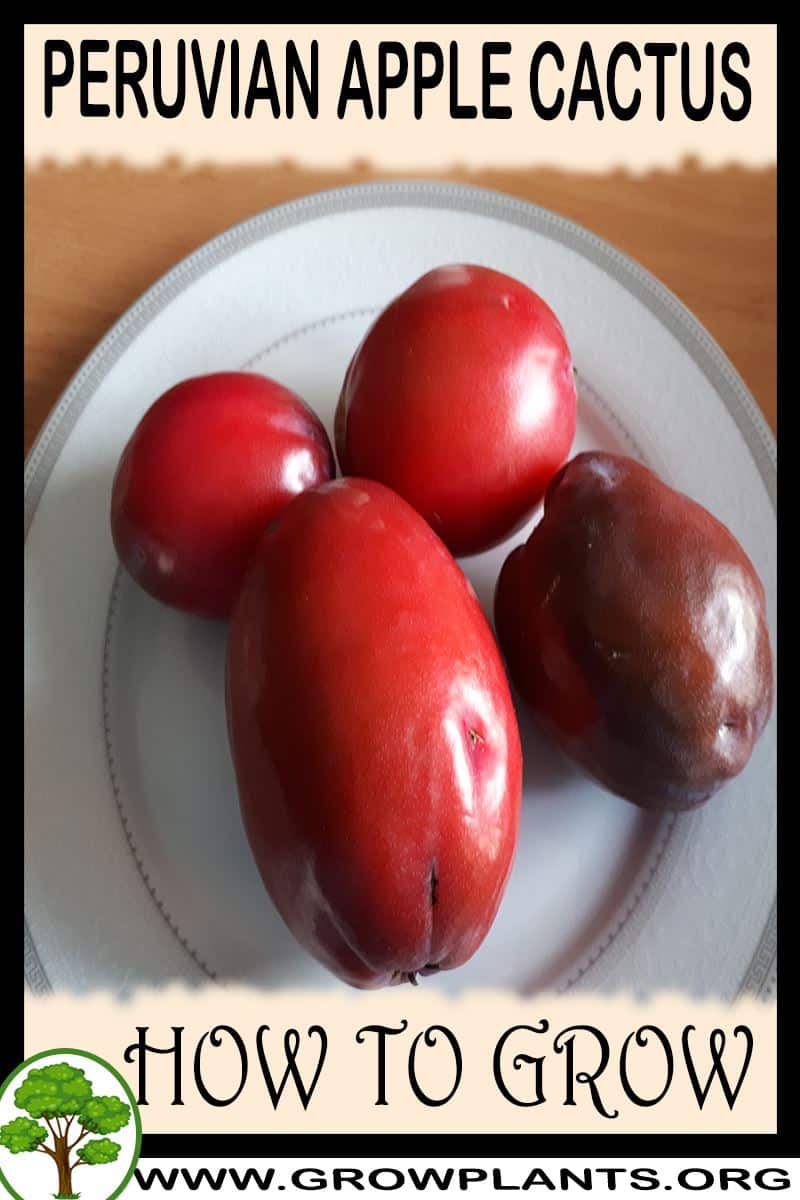
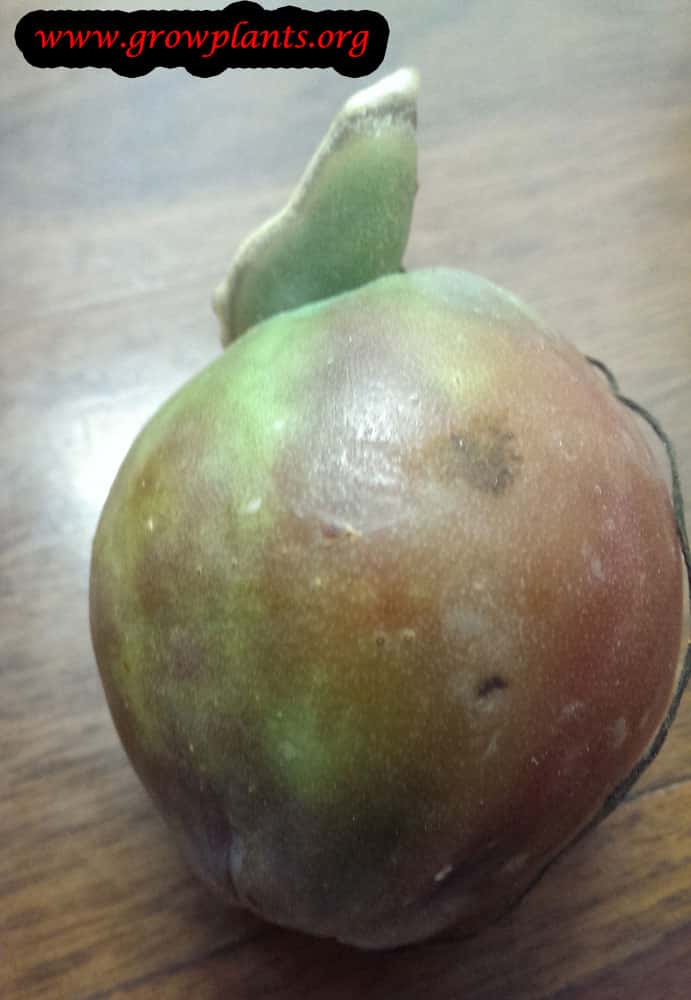
- Fruit Profile: Rounded fruit with red, pink, purple or orange skin and white to purple flesh with edible seeds (full detail in the Fruit section).
Primary Uses & Landscape Value
- Edible Uses: Fruit eaten raw, juiced, or made into jams.
- Functional & Ornamental Roles: Bold architectural ornamental and drought-tolerant xeriscape plant.
Care Guide: Planting, Soil & Watering
Overview: This columnar desert cactus thrives in full sun and heat in dry, subtropical or Mediterranean gardens. It needs sharply-draining soil kept largely dry and only a small amount of water.
Quick Care Requirements
| Requirement | Ideal Condition |
|---|---|
| Planting Season | Through the warm season, from spring to autumn |
| Growth Rate | Slow |
| Soil Type | Sharply-draining, gritty, sandy cactus mix kept on the dry side |
| Water Need | Low – water sparingly and let the soil dry out fully between waterings |
Planting & Establishment
- Best Planting Season: Through the warm season, from spring to autumn.
- How to Plant:
- Hole Preparation: Plant into a shallow hole in fast-draining, gritty ground, handling the spined stems with folded cardboard or thick gloves.
- Soil Amendments: Blend coarse sand, grit or pumice through the native soil so water drains away fast and never lingers around the base.
- Planting Depth: Set the stem at the depth it grew before, keeping the base slightly proud of the soil to guard against crown rot.
- Growth Speed & Expectations: A slow grower that in time becomes a tall columnar cactus of 3-10 m.
Soil, Watering & Drainage Care
- Soil Mix & Drainage Needs: Use a sharply-draining cactus or succulent mix – native soil cut heavily with coarse sand, grit or pumice. Excess moisture is the main killer, so ensure water runs straight through; in pots use a gritty mix with generous drainage holes.
- Watering Schedule & Technique:
- Young / Newly Planted: Water lightly to settle the roots after planting, then only once the soil has dried out, giving just enough to moisten without keeping the base wet.
- Established: Water deeply but infrequently, letting the soil dry almost completely between waterings; once established the plant is markedly drought tolerant.
- Seasonal Adjustments: Give a little extra during prolonged heat, and withhold water over the cool, dormant months to prevent rot.
Climate, Light & Hardiness
Peruvian apple cactus is a large, upright column cactus suited to hot, dry desert, Mediterranean, and subtropical climates. It needs full, unfiltered sun and has moderate cold hardiness for a columnar cactus, tolerating occasional light frost once established but not sustained freezing.
Quick Climate Specifications
| Climate Zones | Desert, Mediterranean, and subtropical climates |
|---|---|
| USDA Hardiness Zones | 9–12 |
| Frost Tolerance | Low – established plants can tolerate brief light frost, but sustained freezing causes damage |
| Light Conditions | Full sun |
Sunlight & Light Exposure
Optimal Light Setup
Grow in full, direct sun for the strongest, most compact columnar growth and best flowering/fruiting.
Direct Sun Requirement
Needs full sun exposure; it is not a shade-tolerant cactus and performs poorly in low light, which can cause weak, etiolated growth.
Temperature Extremes & Hardiness
USDA Hardiness & Regional Limits
Reliable outdoors in zone 9 and warmer; in the cooler end of its range winter protection or a sheltered microclimate helps established plants come through occasional cold snaps.
Cold Damage & Winter Protection
Young or newly planted specimens are more cold-sensitive than mature, well-established plants; in marginal zone 9 areas, plant against a warm, sheltered wall and protect from hard freezes.
Frost Sensitivity
Tolerates brief, light frost once established, but prolonged or hard freezes damage stem tissue.
Wind, Humidity & Microclimate
Microclimate Recommendations
A warm, dry, sun-exposed spot with good air movement and sharp soil drainage best matches this cactus's native desert-to-subtropical origin; avoid low, damp, cold-collecting pockets of the garden.
Growing in Pots, Balconies & Indoors
The Peruvian apple cactus (Cereus repandus) is a tall columnar cactus that eventually reaches 3-10 m (10-30 ft). The grower does not class it as a houseplant, but it grows well in a pot, which keeps it manageable. Being slow, a young plant can spend years on a very sunny windowsill before it needs a large tub outdoors in full sun.
Quick Details
- Container Size: Start in a pot 20-50% wider than the plant and pot up as it grows into a large tub
- Indoor Suitability: Not a houseplant; only a very sunny window suits a young plant
- Best Spot: Full sun – the sunniest sill while young, then a sunny patio or balcony
- Soil & Drainage: Free-draining cactus/succulent mix over a gravel or lava-rock base; strong drainage holes
- Watering in Pots: Water sparingly and let the mix dry out between waterings; cut back further in the cool dormant season – pots must never stay wet
Indoors & On the Windowsill
- Not a houseplant: The grower does not recommend it for indoor life – it needs full sun and grows into a tall column.
- Windowsill growing: A young plant grows slowly enough to sit on the sunniest windowsill for a few years before it wants more room and light.
- Overwintering: Frost-tender – keep it bright, frost-free and nearly dry over winter.
On a Balcony or Patio
- Light & wind: Give it full sun on a sheltered balcony or patio; as it gains height, use a heavy, stable pot and stake it against wind. The spines are sharp, so keep it clear of paths and seating.
- Bring it in for winter: Move the pot under cover before frost.
Choosing the Pot, Soil & Long-Term Care
- Pot & drainage: Use a pot only 20-50% larger than the plant – it need not be deep, since the roots run shallow. Add a layer of gravel, lava rock or pebbles in the base, give it strong drainage holes, and never leave it standing in water.
- Potting mix: A free-draining cactus and succulent mix – gritty and well aerated so it dries quickly.
- Feeding: Potted cacti need only light feeding, as nutrients leach out with each watering; a dilute low-nitrogen cactus feed through the warm growing season is enough.
- Repotting: Every few years, once the roots fill the pot or the mix has broken down, refresh the soil and move up one size.
Fertilizing & Feeding
A light feeder: this tall columnar desert cactus grows well on occasional, diluted feeding through the warm season, with none needed while it rests.
Quick Fertilizing Specs
| Feeding Level | Light feeder |
|---|---|
| Main Nutrient Priority | Low-nitrogen feeding, with an emphasis on potassium once the plant is mature enough to flower and fruit |
| Best Feeding Period | Warm active growing season |
| Organic Options | Not typically needed; a well-drained, sandy or cactus-style mix is preferred over rich, organic soil |
| Reduce/Stop Feeding | Withhold fertilizer through cooler weather when growth slows |
| Micronutrients | Usually unnecessary; correct only a diagnosed deficiency |
| Soil pH | Prefers dry, well-drained soil rather than moisture-retentive conditions |
Feeding by Growth Stage
Warm-season active growth
Support steady stem elongation and, on older plants, the flowering and fruiting that follow.
| Nutrient direction | A diluted, low-nitrogen cactus fertilizer applied sparingly through the growing season. |
|---|---|
| Timing | Through the warm growing season when the plant is putting on new stem growth. |
| Frequency | An occasional light feeding is enough for this slow-growing columnar cactus. |
| Fertilizer types | A diluted, low-nitrogen cactus or succulent fertilizer, A well-drained, sandy or cactus-style soil as the growing medium |
| Precautions | Feed sparingly; a plant grown for its dry, desert-adapted stems does not need or want rich, frequent feeding. |
Cool-season rest
Let the plant rest through cooler weather without pushing new growth.
| Nutrient direction | None – withhold fertilizer while growth has slowed for the season. |
|---|---|
| Timing | During cooler months when growth naturally slows. |
| Frequency | No feeding at this stage; resume light feeding only once active growth clearly returns. |
| Fertilizer types | No feeding at this stage; hold off fertilizing until active growth resumes. |
| Precautions | Do not fertilize during the cool-season rest – unused nutrients can build up as salts in the dry soil this cactus prefers. |
Nutrient Deficiency Signs & Corrections
Overall pale or yellow-green stem color with little new growth in the warm season.
| Possible causes | low nitrogen availability in a very lean, sandy soil, old, nutrient-depleted soil that has never been amended, root stress limiting nutrient uptake |
|---|---|
| Appears first on | the newest stem growth and overall coloring |
| What to check | recent feeding history, how sandy or nutrient-poor the soil is, watering consistency and drainage |
| Possible correction | Apply a diluted, low-nitrogen cactus fertilizer during active growth. |
New growth near the growing tip looks pale yellow while older stem tissue below stays green.
| Possible causes | high soil pH limiting iron availability, waterlogged or poorly drained soil, root stress from recent transplanting or repotting |
|---|---|
| Appears first on | the newest growth near the stem tip |
| What to check | soil drainage and how quickly it dries, soil or water pH, recent transplanting or root disturbance |
| Possible correction | Correct drainage and watering first, then apply a chelated iron product per its label if the pale color persists. |
Weak or absent flowering, or poorly developed fruit, on an otherwise healthy mature plant.
| Possible causes | limited potassium availability in a deliberately lean feeding program, the plant not yet being mature enough to flower and fruit, insufficient light reducing overall vigor |
|---|---|
| Appears first on | flowers and developing fruit |
| What to check | the plant’s age and whether it has reached flowering maturity, light exposure, recent feeding history |
| Possible correction | On a mature, otherwise healthy plant, a light application of a potassium-containing cactus fertilizer during bloom can be considered. |
Pruning, Training & Seasonal Maintenance
Peruvian apple cactus is a large, slow-growing, branching columnar cactus that can reach 3-10m and is grown as much for its edible fruit as for its architectural form. It tolerates moderate structural pruning, mainly to keep branches from crowding into each other and blocking access to the fruit. The safest window is autumn, after that season’s fruit has been harvested – pruning before or during fruiting sacrifices the crop and, because new fruiting tissue takes years to mature, removing too much at once delays cropping for seasons to come.
Quick Pruning & Maintenance Specs
| Pruning Tolerance | Moderate |
| Primary Pruning Window | Autumn, after fruit harvest |
| Typical Frequency | Occasional – when branching becomes crowded, roughly every few years on mature plants |
| Main Objective | Thin crowded branches for fruit access and light; control size |
| Young Plant Priority | Minimal intervention – let the framework establish |
| Mature Plant Priority | Selective thinning where branches touch or overlap |
| Best Tool Type | Pruning saw for thick stems; loppers for smaller branches |
| Avoid Heavy Pruning During | Spring/summer flowering and fruiting period |
Pruning by Plant Age & Size
Newly Established
Leave the young plant unpruned to develop its natural branching framework; remove only clearly dead or damaged tissue.
Young / Formative
No formal training system is used – this species is allowed to branch naturally rather than being trained to a leader or vase shape. Intervene only to remove weak or damaged growth.
Mature / Established
Once branches begin crowding into each other, selectively remove or shorten the most congested ones so fruit remains reachable and the canopy gets adequate light.
Seasonal Pruning Schedule
Post-Harvest (Autumn): the main pruning window – thin branches that have grown into each other or stopped producing new growth, once that season’s fruit is picked. Removing tissue here does not sacrifice a current crop and gives the plant a full growing season to recover before the next fruit set.
Flowering & Fruiting Wood
Fruit forms from areoles along mature, established stem tissue, and a newly planted specimen typically takes 2-5 years to bear its first fruit. Because cactus stem tissue does not regenerate flowering positions quickly, removing large sections of mature growth permanently sets back cropping in that area for years – prune conservatively, targeting only the branches that are genuinely crowded or blocking access, not broad size reduction.
Structural Pruning & Training
Thin branches where they cross, rub, or grow into each other, which is when the plant’s own facts flag pruning as needed – dense crowding makes the fruit hard to reach and reduces airflow and light into the canopy. Height and spread can be controlled by removing the tallest or most outward branches, but do this gradually rather than all at once given how slowly the tissue regenerates.
Container & Small-Space Pruning
Young specimens can be pot-grown, in which case size control matters more: tip-prune to slow upward growth and keep branching compact while the plant is small, before it eventually needs to move to open ground at this species’ mature scale.
Tools
- Pruning saw – for the thick lower stems and trunk-diameter cuts on a mature plant.
- Loppers – for medium branches.
- Pole pruner – for upper growth once the plant exceeds comfortable reach, which happens readily given its 3-10m mature height.
Tool Hygiene & Disease Risk
Increased: cactus stem tissue is prone to bacterial soft rot at cut sites, especially in humid conditions. Disinfect blades between cuts and avoid pruning during wet weather.
Cut Placement & Technique
Remove a branch at its point of origin rather than leaving a stub, using a clean saw cut. For very large limbs, cut in stages to avoid tearing the fleshy stem tissue under its own weight.
Heavy Pruning & Rejuvenation
Tolerated only in a limited, staged way – because fruiting tissue takes years to mature, avoid removing a large portion of the plant in one season. Spread significant size reduction across two or more autumns to limit the loss of future fruiting wood.
Post-Pruning Care
Newly exposed stem tissue from opening up a dense canopy can sunburn in strong sun; where a large branch is removed, monitor the previously shaded tissue nearby. Watch cut surfaces for softening or discoloration in the weeks after pruning, especially if rain follows soon after.
Common Pruning Mistakes
- Pruning before or during the flowering/fruiting season, sacrificing that year’s crop.
- Removing too much mature stem tissue at once, delaying fruiting for years given how slowly new flowering-capable tissue forms.
- Cutting in wet weather, raising the risk of soft rot at the wound.
When NOT to Prune
Avoid pruning during the spring/summer flowering and fruiting period. Avoid cutting during prolonged wet weather, when rot spreads fastest from fresh wounds.
Recommended Tools (by task)
- loppers – for medium branches during routine thinning.
- pruning_saw – for thick, trunk-diameter stems on a mature plant.
- pole_pruner – genuinely warranted given this species’ mature height of 3-10m, well beyond hand-tool reach.
- blade_disinfectant – cactus tissue is rot-prone at fresh cuts, especially in humid conditions.
Pruning Troubleshooting
| Problem | Possible Cause | What to Check | Corrective Action |
| Fruit hard to reach or poor fruit set | Overcrowded branching | Branches growing into or over each other | Selectively thin in autumn after harvest |
| Sunburn or scarring on stem tissue after pruning | Previously shaded tissue suddenly exposed to full sun | Newly opened areas of the canopy | Stage canopy opening across seasons; shade sensitive tissue temporarily |
| Soft, discolored tissue at a cut site | Non-sterile tool or pruning in wet conditions | Texture and color at the cut margin | Excise back into healthy tissue with a sterile blade; avoid pruning in wet weather |
Propagation Guide
Peruvian apple cactus is most easily and most productively grown from stem cuttings, which root readily and bring the plant into flower and fruit sooner than seedlings do; seed is a workable alternative but produces more variable plants and takes longer to reach fruiting size. This is an easy cactus to propagate at home given its vigorous, columnar growth.
Quick Propagation Specs
| Best Propagation Method | Stem cuttings |
| Alternative Methods | Seed |
| Propagation Difficulty | Easy |
| Seed True-to-Type | Usually true-to-type, though seedlings can vary somewhat in habit and spination |
| Vegetative True-to-Type | Yes |
| Best Propagation Season | Spring – Autumn |
| Cutting Rooting Time | Typically several weeks to a couple of months |
| Germination Temperature | Around 21–27°C (70–80°F), typical for desert cacti |
Growing from Seed
Seed Handling & Viability
Seed is collected from the ripe, edible fruit; the different fruit and flesh colors described for this species (red, pink, purple or orange skin; white, yellow, orange or purple flesh) come from different cultivars, and growing more than one cultivar together improves cross-pollination and fruiting, which in turn affects seed availability.
Sowing Season
Sow in spring through autumn, matching the plant’s own recommended planting season.
Germination Conditions
Use a gritty, well-drained mix kept lightly moist rather than wet, in full sun to bright light once seedlings are past their most tender stage.
Stem Cuttings
Cutting Type
Take a length of the columnar stem, ideally cut where a branch joins the main trunk.
Best Timing
Take cuttings in the warmer part of the growing season (spring through autumn).
Cutting Preparation
Let the cut surface dry and callus for at least several days to a couple of weeks before planting, since the thick stem holds a lot of moisture and is prone to rot if inserted while still fresh.
Rooting Setup
Insert the callused end a few centimeters into well-drained, sandy soil in full sun; keep it dry at first and only lightly watered until roots have formed, staking or supporting tall cuttings so they cannot shift or fall.
Rooting Hormone
Not necessary — this columnar cactus roots readily on its own.
Rooting Time
Usually several weeks to a couple of months to root securely.
Bloom & Flower Guide
Quick Details
- Bloom Season: Spring to summer.
- Flower Appearance: Large white flowers (over 10 cm across) flushed pink at the edges, opening at night.
- Edibility: Ornamental only in the bloom stage; the flower itself is not eaten.
Detailed Blooming Overview
The Peruvian apple cactus (Cereus repandus) is a tall columnar plant that produces spectacular, large white flowers – often more than 10 centimetres across, with delicate pink-tinged outer petals. True to many big columnar cacti, the flowers are nocturnal: they open in the evening, bloom through a single night, and close by the following morning. As the grower notes, pollination is carried out by bees working around dusk and by moths during the night.
Flower Characteristics
- Colour: white, with pink toward the edges.
- Form: large, funnel-shaped flower over 10 cm across.
- Position: along the upper ribs of the mature column.
- Habit: night-blooming, each flower opening for a single night.
Bloom Care & Thinning
- Pollination: bees visit as the flowers open before sunset, and night-flying moths continue the work after dark – so avoid disturbing evening visitors if you want fruit set.
- Sun and maturity: a hot, sunny position and a mature, tall plant give the most flowers.
- Cool, dry winter rest: a dry dormancy supports strong budding when growth resumes; the large flowers are self-tidying once spent.
Fruit & Uses
Peruvian apple cactus is grown as much for its large, colourful fruit as for its dramatic columnar form. The ripe fruit is eaten fresh out of hand, flesh and small seeds together, with no cooking or special preparation needed.
Quick Edible Specs
| Edible Parts | Fruit (flesh and seeds) |
|---|---|
| Main Use(s) | Fresh eating (culinary); juice; jam |
| Eaten Raw or Cooked | Raw; surplus fruit can be juiced or cooked into jam |
| Preparation Required | Peel, or halve and scoop; no other processing needed |
| Harvest Season | Summer to autumn |
| Time to First Harvest | Not in the first year or two – see Propagation for typical timing to bearing |
| Storage | Best eaten fresh soon after picking; not noted for long-term storage |
| Safety/Toxicity Caveat | None for the ripe fruit itself; the plant’s stems are spiny, so handle harvest with care |
Fruit
The fruit’s peel can be red, pink, purple, or orange, and the flesh inside white, yellow, orange, or purple depending on the plant. It is ready to pick once the peel has fully coloured and yields slightly to gentle pressure, similar to other soft fruit. Because fruit forms directly on the spiny stems, it is easier and safer to cut it free with a knife or shears than to pull it by hand. Once removed, the fruit itself is spine-free and simply peeled or halved and scooped; both the flesh and its small seeds are eaten together. Growing more than one cultivar improves cross-pollination and fruit set.
Harvesting
Fruit ripens in flushes through summer into autumn rather than all at once, so plants are picked over repeatedly through the season as each fruit colours up. No special post-harvest handling is needed beyond normal care around the spiny stems.
Preparation, Uses & Safety
Ripe fruit needs no cooking or processing – simply peel or halve it and eat the flesh and seeds fresh. Larger harvests are commonly juiced or cooked down into jam. The main caution is mechanical rather than toxic: the fruit grows among sharp spines, so gloves or a cutting tool make harvest safer.
Pests, Diseases & Troubleshooting
Overview: This large columnar cactus is tough and long-lived, and by far its greatest enemy is overwatering, which triggers soft and bacterial rot; the insect pests are the usual succulent sap-suckers. Keep it lean, bright and sharply drained and it needs little else.
Quick Troubleshooting Overview
| Issue / Pest | Main Symptom | Primary Solution |
|---|---|---|
| Overwatering / soft rot | Mushy, blackening, collapsing stem | Cut out rot; dry out; sharp drainage |
| Mealybugs | White cottony tufts in ribs/areoles | Alcohol swab; oil/soap |
| Root mealybugs | Poor growth; white powder on roots | Bare-root, wash, repot |
| Scale | Fixed brown/grey bumps on stems | Scrape; horticultural oil |
| Spider mites | Rusty stippling near growing tip | Rinse; raise humidity; oil |
| Fungal spots | Corky or black spots on ribs | Improve airflow; avoid wetting |
Common Pests & Management
- Mealybugs (Pseudococcus / Planococcus spp.):
- Symptoms: White cottony tufts in growth tips, leaf joints and along stems; sticky honeydew and sooty mould follow. On succulents/cacti check the root zone too, where root mealybugs coat roots in white powder.
- Prevention & Control: Wipe or dab colonies with a cotton swab dipped in dilute alcohol; rinse plants and encourage predators (ladybirds, lacewings). For root mealybug, bare-root, wash the roots and repot in fresh mix. Follow up with horticultural oil or insecticidal soap.
- Root mealybugs (Rhizoecus spp.):
- Symptoms: Stalled growth and a plant that fails to thrive; tip it out and the roots and inner pot wall are dusted with white waxy powder and insects.
- Prevention & Control: Bare-root the plant, wash the roots clean, discard old soil and repot into fresh gritty mix in a clean pot. A soil drench of horticultural oil or a systemic can follow; quarantine new cacti to prevent spread.
- Scale insects (Coccidae / Diaspididae):
- Symptoms: Immobile brown, tan or white bumps on stems and leaf undersides; sticky honeydew and blackish sooty mould on soft scale. Growth slows and leaves yellow.
- Prevention & Control: Scrape off light infestations by hand and prune heavily-encrusted stems. Smother the rest with horticultural or neem oil, covering undersides; repeat to catch mobile crawlers. Conserve parasitic wasps and ladybirds.
- Spider mites (Tetranychus urticae):
- Symptoms: Fine pale stippling on leaves, a dull bronzed look, and fine webbing on undersides in hot, dry conditions. Leaves dry and drop as numbers build.
- Prevention & Control: Raise humidity and hose down foliage to break the cycle; mites thrive on dry, dusty plants. Release predatory mites where practical, and treat with insecticidal soap or horticultural oil, coating leaf undersides over repeat applications.
Diseases & Fungal Issues
- Soft rot / bacterial & fungal rot (Erwinia / Fusarium / Phytophthora spp.):
- Symptoms: Water-soaked mushy patches that turn brown-black and collapse, often starting at the base or a wound and spreading fast; foul smell with bacterial rot. Nearly always follows overwatering, cold-wet soil or an infected wound.
- Treatment & Management: Catch it early: cut out all soft tissue back to firm green flesh with a sterile blade, dust the wound and let it callus dry, and withhold water. Prevention is everything – gritty free-draining mix, careful watering, warmth and avoiding wounds.
- Fungal leaf/stem spot (Fungal (various)):
- Symptoms: Corky, sunken or black spots on the ribs, usually where moisture lingers or after cold damage.
- Treatment & Management: Improve airflow, keep the body dry when watering, and cut away badly affected tissue. Cosmetic scarring is permanent but harmless; systemic spread is the real concern to prevent.
Growing Difficulties & Abiotic Problems
- Overwatering (the number-one killer):
- Cause & Symptoms: Soft, discoloured, collapsing stems and root loss from soil kept too wet, especially in cool or low-light conditions.
- Correction Strategy: Water only when the mix is fully dry, use a gritty cactus medium and a pot with drainage, and cut watering right back in winter and cool weather.
- Etiolation & sunburn:
- Cause & Symptoms: Pale, thin, stretched new growth in low light; or bleached, scorched patches when moved abruptly into fierce sun.
- Correction Strategy: Give bright light for sturdy growth but acclimatise gradually to direct sun to avoid scorch.
- Corky scarring & edema:
- Cause & Symptoms: Rusty or corky patches and, in overwatered plants, blister-like edema on the skin.
- Correction Strategy: Accept old cosmetic scarring; prevent new edema by steadier, leaner watering and good light.
What Helps – Products & Tools
The main ‘tools’ here are a gritty cactus mix, a sharp sterile knife for rot surgery, and restraint with the watering can. For pests use isopropyl alcohol on a swab, insecticidal soap and horticultural/neem oil; sulfur can dust cut surfaces to discourage fungal entry.
Varieties & Cultivars
- Cereus peruvianus monstrose — Learn more about Cereus peruvianus monstrose · Shop Cereus peruvianus monstrose on Amazon