
Plant Profile & Key Characteristics
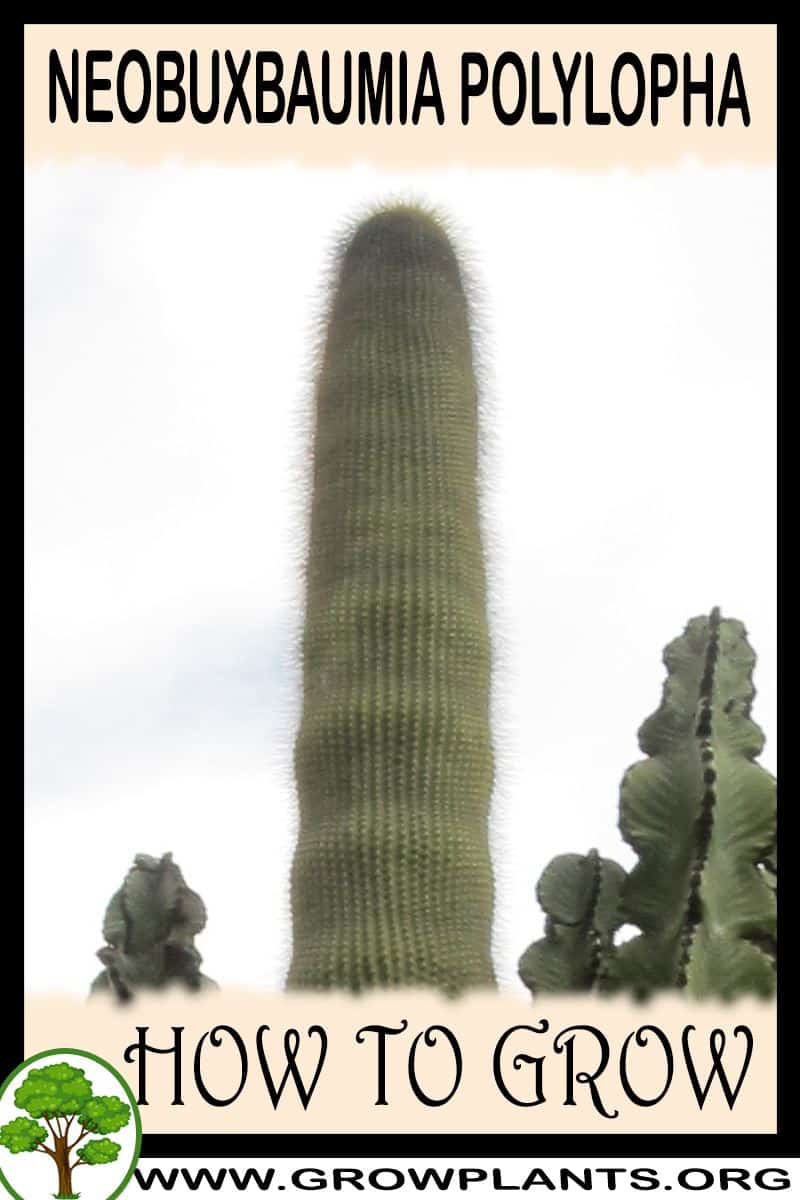
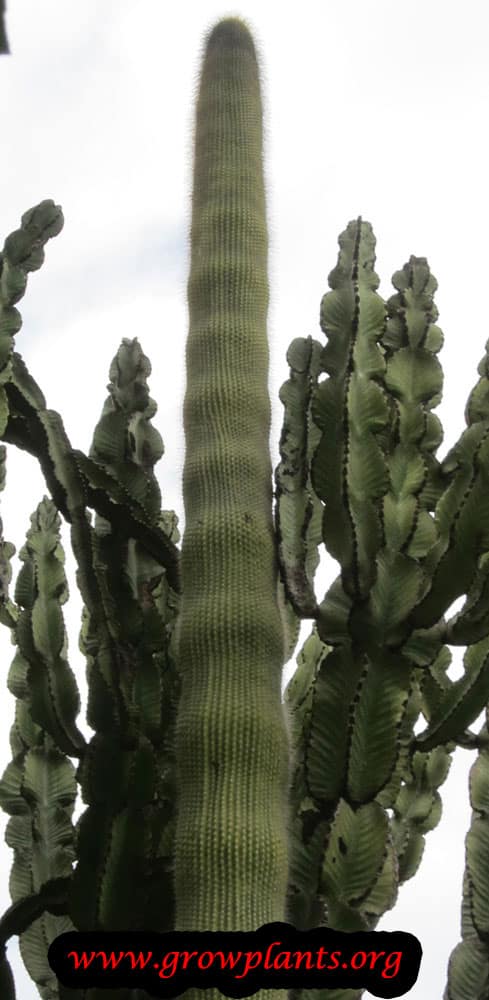
Overview: Neobuxbaumia polylopha is a tall, columnar tree-cactus reaching 7-12 m (21-40 ft), grown as a striking ornamental drought-tolerant specimen. It suits desert, Mediterranean and subtropical climates.
Quick Specifications
| Specification | Attribute |
|---|---|
| Plant Type / Life Cycle | Perennial (columnar cactus) |
| Mature Size | 7-12 m (21-40 ft) tall |
| Growth Rate | Slow |
| Root System | Shallow, spreading roots (typical of columnar cacti) |
| Hardiness | USDA zones 10-12 |
Growth Form & Structure
- Height & Spread: A single erect column that reaches 7-12 m (21-40 ft) tall; not suited to container culture long-term.
- Growth Habit & Form: Tall, unbranched, many-ribbed columnar cactus, spiny along the stem.
- Lifespan & Maturity: Very slow-growing but long-lived, becoming tree-sized over decades.
Anatomy & Physical Features
- Trunk & Bark: Green ribbed stem that turns brown and woody at the base with age.
- Flower Characteristics: Purple to pink many-petalled flowers borne near the stem tip in summer.
Primary Uses & Landscape Value
- Functional & Ornamental Roles: Architectural ornamental focal point for desert, gravel and drought-tolerant landscapes.
Care Guide: Planting, Soil & Watering
Overview: Neobuxbaumia polylopha is a slow-growing columnar cactus that needs gritty, fast-draining soil and full sun. It wants very little water and must dry out fully between waterings.
Quick Care Requirements
| Requirement | Ideal Condition |
|---|---|
| Planting Season | Warm season – spring through autumn |
| Growth Rate | Slow |
| Soil Type | Gritty, fast-draining mineral (cactus) mix |
| Water Need | Low – allow to dry completely between waterings |
Planting & Establishment
- Best Planting Season: Plant in the warm season, spring through autumn.
- How to Plant:
- Hole Preparation: Dig a hole slightly wider than the root ball in a raised, free-draining spot.
- Soil Amendments: Add grit, coarse sand or pumice for sharp drainage and keep organic matter minimal.
- Planting Depth: Plant at the same level it grew; do not bury the stem base, which invites rot.
- Growth Speed & Expectations: Slow – a long-lived cactus that becomes a tall column over many years.
Soil, Watering & Drainage Care
- Soil Mix & Drainage Needs: Needs a very free-draining mineral mix; wet feet cause rot.
- Watering Schedule & Technique:
- Young / Newly Planted: Light watering to establish, still letting the soil dry out.
- Established: Infrequent deep soaks, letting the soil dry completely between.
- Seasonal Adjustments: Water sparingly during warm growth and keep it nearly dry and cool in winter.
Climate, Light & Hardiness
Neobuxbaumia polylopha is a large, slow-growing columnar cactus for desert, mediterranean and subtropical climates, needing full sun and an open garden position rather than a container. It has only limited cold tolerance and is best suited to mild-winter USDA zones 10–12.
Quick Climate Specifications
| Climate Zones | Desert, mediterranean, subtropics |
|---|---|
| USDA Hardiness Zones | 10–12 |
| Optimal Temp Range | Approximately 18–30°C (64–86°F) during active growth |
| Frost Tolerance | Low |
| Light Conditions | Full sun |
Sunlight & Light Exposure
Optimal Light Setup
Full sun is required for healthy, upright columnar growth; it is not grown indoors or in containers.
Direct Sun Requirement
Direct sun is essential for this desert columnar species.
Shade & Heat Management
Handles intense desert and mediterranean sun and heat well once established; no shading is needed.
Best Exposure / Orientation
An open, unshaded garden position with plenty of room to grow, since it eventually forms a large 7–12 m (21–40 ft) trunk.
Temperature Extremes & Hardiness
USDA Hardiness & Regional Limits
Suited to USDA zones 10–12, which corresponds to mild-winter desert, mediterranean and subtropical climates without hard, prolonged freezes.
Cold Damage & Winter Protection
The site does not give a specific minimum temperature, but as a zone 10–12 columnar cactus it should be treated as tolerant of only brief, light frost at most; well-drained soil and dry winter conditions reduce cold-related rot risk.
Frost Sensitivity
Moderate to high - treat any hard freeze as a serious risk, particularly for younger plants before the trunk has thickened.
Extreme Heat Tolerance
Very good; well adapted to hot, dry desert and mediterranean summers.
Wind, Humidity & Microclimate
Humidity Preferences
Prefers the low-to-moderate humidity typical of desert and mediterranean climates.
Dry-Air Tolerance
High - well adapted to dry desert air.
Rainfall & Seasonal Moisture
Adapted to climates with a pronounced dry season; sharply drained soil matters more than rainfall amount, since prolonged wet conditions around the base invite rot.
Microclimate Recommendations
Give it an open, well-drained site with room to reach its mature size; avoid low spots where water or cold air can collect in winter.
Growing in Pots, Balconies & Indoors
This is a giant, tree-sized columnar cactus that reaches 7-12 m in the ground. The grower rates it as neither a houseplant nor a long-term container plant – a pot is only a temporary home for a young seedling before it needs open ground in a frost-free climate.
Quick Details
- Container Size: No long-term container size – the grower does not recommend permanent pot culture; a large, deep pot only holds a juvenile for a few years
- Indoor Suitability: Not a houseplant; at most a small seedling can sit briefly on the very sunniest sill
- Best Spot: Full sun – ultimately open ground in a warm, frost-free climate
- Soil & Drainage: Free-draining cactus/mineral mix while young; sharp drainage always
- Watering in Pots: Small amounts – let it dry out fully between waterings
Indoors & On the Windowsill
- Not a houseplant: The grower marks it as unsuitable for indoor growing – it is a landscape giant that wants full sun and, in time, tree-like room. A ready-made cactus and succulent soil mix provides that structure without mixing it yourself.
- Seedling stage only: A young plant can be kept on the brightest, sunniest windowsill for its first years, but that is only a way-station until it can go outdoors in a suitable climate.
On a Balcony or Patio
- Light & heat: A juvenile enjoys the hottest, sunniest, most sheltered spot on a patio in warm weather, but plan for its eventual size and weight.
- Practicalities: It is not frost-hardy and will quickly outgrow any balcony; treat pot culture as strictly temporary.
Choosing the Pot, Soil & Long-Term Care
- Pot & drainage: While young, a deep pot with strong drainage holes and no standing saucer; it is columnar, so depth and stability matter more than width.
- Potting mix: A proper cactus/succulent mix – free-draining and mineral – with extra grit, pumice or perlite.
- Long term: The grower does not recommend keeping it in a container long term – it belongs in the ground in a frost-free climate, where it becomes a tall column.
- Safety: Spiny – site it out of reach of children and pets, and handle with folded paper or thick gloves.
Fertilizing & Feeding
A large, slow-growing columnar cactus grown in open ground rather than containers, which draws on deep reserves and needs very little supplemental feeding once established.
Quick Fertilizing Specs
| Feeding Level | Light feeder |
|---|---|
| Main Nutrient Priority | Low-nitrogen, cactus-formulated feed during active growth |
| Best Feeding Period | Warm-season active growth |
| Reduce/Stop Feeding | Stop feeding as growth slows going into cooler weather |
| Soil pH | Prefers very well-drained soil; wide tolerance rather than a narrow pH target |
Feeding by Growth Stage
Active Growth
Support steady vertical stem growth in this columnar cactus without encouraging soft tissue that compromises its structural strength.
| Nutrient direction | A diluted, low-nitrogen cactus fertilizer worked lightly around the root zone, favoring gradual, firm growth over rapid soft growth. |
|---|---|
| Timing | During the warm season while the plant is actively growing and soil is allowed to dry between waterings. |
| Frequency | A few light feedings spread through the active growing season is generally enough, and mature plants often need little to no supplemental feeding. |
| Fertilizer types | Diluted, low-nitrogen cactus or landscape cactus fertilizer applied around the base, Balanced granular feed used sparingly for in-ground specimens |
| Precautions | Favor underfeeding, since this species is slow-growing and columnar cacti can develop weak, misshapen growth if pushed too fast with excess fertilizer. |
Dormant / Rest Period
Let the plant rest through its natural cool-season slowdown without pushing new growth it cannot support.
| Nutrient direction | None – withhold fertilizer entirely while the plant is resting. |
|---|---|
| Timing | Cooler months when growth naturally slows or stops and watering is reduced. |
| Frequency | No feeding at this stage. |
| Fertilizer types | No feeding at this stage – resume only once active growth restarts. |
| Precautions | Do not fertilize during dormancy; allow the plant to draw on its own reserves through the cool season. |
Nutrient Deficiency Signs & Corrections
Dull, pale-green stem color and unusually slow vertical growth during the active season.
| Possible causes | Extended period without any feeding in very lean, sandy soil, Root stress from compacted or poorly draining soil limiting nutrient uptake, Insufficient sun exposure reducing overall vigor |
|---|---|
| Appears first on | Newest growth at the stem tip |
| What to check | Confirm soil is fast-draining and not compacted, Check light exposure matches full-sun preference, Review how long it has been since the last feeding |
| Possible correction | If soil and light are ruled out, resume a light feeding during the next active growth window. |
Yellowing of newest stem growth while older, lower stem tissue stays green or brown.
| Possible causes | High soil pH limiting iron availability, Waterlogged or poorly aerated soil restricting root function, Root damage limiting nutrient uptake |
|---|---|
| Appears first on | Newest growth near the stem tip |
| What to check | Test soil drainage and confirm it is not staying wet, Check soil pH if chlorosis is persistent and widespread, Inspect the base of the plant for root or stem damage |
| Possible correction | Correct drainage first; if chlorosis persists, apply a chelated iron product per its label. |
Pruning, Training & Seasonal Maintenance
Neobuxbaumia polylopha is a tall, slow-growing columnar cactus that eventually reaches 7–12m on a single erect, ribbed, spine-covered stem with one growing point at the tip. It tolerates essentially no structural pruning – cutting or topping the main stem permanently ends that growing point’s upward growth, so maintenance is limited to removing dead or damaged tissue. This can be done at any time of year, and it has no bearing on the plant’s eventual height, flowering, or form, since the column simply continues extending from its tip until damaged.
Quick Pruning & Maintenance Specs
| Pruning Tolerance | Low – no structural pruning of the main stem |
| Primary Pruning Window | As needed, any time |
| Typical Frequency | Rare – only when dead or damaged tissue appears |
| Main Objective | Remove dead/damaged tissue; manage basal offsets if present |
| Young Plant Priority | Leave the apex undisturbed to establish upward growth |
| Mature Plant Priority | Remove only dead tissue; decide whether to keep or remove basal offsets |
| Best Tool Type | Sterile blade for tissue removal; pruning saw only if an old specimen is professionally removed/reduced |
| Avoid Heavy Pruning During | Always on the main stem – topping it is irreversible |
Pruning by Plant Age & Size
Newly Established
No pruning; the single growing tip must be left undisturbed while the column establishes its upward growth.
Young / Formative
No structural training applies – the species grows as a solitary erect column with no leader-selection or vase-form decisions to make.
Mature / Established
Remove only dead or damaged tissue near the base. If age-related basal offsets/branches appear, choose to retain them for a clumping, multi-stem form or remove them with a sterile blade to keep a single dramatic column.
Special Growth to Remove
- Dead or damaged tissue – the only routine removal target; cut back to firm healthy stem.
- Basal offsets (if present on an older specimen) – optional to remove or retain depending on whether a single column or a clumping form is wanted; never remove the apical growing tip itself.
Tools
- Grafting knife / sterile blade – for clean removal of dead tissue or unwanted basal offsets.
Tool Hygiene & Disease Risk
Increased risk: cuts into the thick stem tissue can invite rot in humid conditions. Use a clean, sterile blade and let cuts dry and callus before watering resumes.
Cut Placement & Technique
Cut into firm healthy tissue well beyond any dead or softened area, and let the wound callus in a dry, shaded spot for several days to weeks depending on cut size before normal watering resumes.
Heavy Pruning & Rejuvenation
Not tolerated on the main stem: this is a single-growing-point columnar cactus, and topping or hard-cutting the column ends its vertical growth permanently, much like a saguaro. There is no rejuvenation pruning for the main column.
Post-Pruning Care
Keep the cut area dry until fully callused; do not fertilize to force recovery. Watch for soft or discolored tissue spreading from any cut, which signals rot, and remove further affected tissue promptly.
Common Pruning Mistakes
- Topping the column to control height – the growing tip does not regrow, permanently halting that stem’s growth.
- Cutting into the stem during humid or wet weather, inviting rot before the wound can callus.
- Removing basal offsets without deciding first whether a clumping habit was wanted.
When NOT to Prune
Avoid cutting in humid or wet weather when wound-healing is slow; otherwise avoid cutting the main stem under any circumstances, since it cannot regenerate its growing point.
Recommended Tools (by task)
- grafting_knife – a sterile, sharp blade for the occasional clean removal of dead tissue or basal offsets on this thick-stemmed columnar cactus.
- blade_disinfectant – disinfecting between cuts limits rot spreading through the massive stem tissue.
Propagation Guide
As a large, usually solitary columnar cactus, Neobuxbaumia polylopha is most commonly raised from seed, which produces true seedlings; stem cuttings are possible from a mature plant but are rarely practiced because of the thick, woody stem and slow rooting. Seed propagation is straightforward but requires real patience given the species’ slow growth toward its eventual tree-like size.
Quick Propagation Specs
| Best Propagation Method | Seed |
| Alternative Methods | Stem cuttings (from a mature, branched, or damaged plant) |
| Propagation Difficulty | Moderate |
| Seed True-to-Type | Yes (species cactus) |
| Vegetative True-to-Type | Yes |
| Best Propagation Season | Spring through autumn, matching the plant’s planting season |
| Seed Germination Time | Typically a few weeks, possibly uneven (general guidance; not specified by the site) |
| Germination Temperature | Roughly 21–27°C (70–80°F) |
| Seed Sowing Depth | Surface-sow or barely cover |
Growing from Seed
Sowing Season
Sow during the warm growing months, spring through autumn.
Germination Conditions
Use a well-drained cactus mix in full sun; keep lightly moist and avoid waterlogging.
Seedling Care
Water sparingly and expect slow early growth; this species eventually becomes a large, erect, spine-covered column, but takes many years to do so.
Stem Cuttings
Cutting Type
A stem section from a mature plant, taken only if the plant has branched or a piece can otherwise be spared.
Cutting Preparation
Cut with a sterile blade and let the cut surface callus fully in a dry, shaded spot; thick, woody columnar stems like this one need longer to callus than thin-stemmed cacti, often several weeks.
Rooting Setup
Set the callused cutting upright on a gritty, well-drained mix with support if needed, and water sparingly until roots form.
Rooting Hormone
Not necessary, though it may help speed rooting in a thick, slow-rooting stem like this.
Rooting Time
Rooting is typically slow for a stem this thick and woody — allow more time than for thinner-stemmed cacti.
Bloom & Flower Guide
Quick Details
- Bloom Season: Summer.
- Time to First Bloom: Only on tall, mature columns – this is a large, slow-maturing cactus.
- Flower Appearance: Small multi-petalled flowers in purple to pink, near the top of the column.
- Edibility: Ornamental only; not grown as an edible flower.
Detailed Blooming Overview
Neobuxbaumia polylopha is grown chiefly for its striking, many-ribbed golden column. Flowering comes late in life: the small purple-pink flowers appear near the apex only once the plant has grown tall and mature, so blooms are more of a bonus than the main attraction, especially in cultivation where plants rarely reach full stature.
Flower Characteristics
- Colour: purple to pink.
- Form: small, multi-petalled flowers.
- Position: toward the top of the tall column.
Bloom Care & Thinning
- Sun and space: long-term, give it the sunniest position and room to gain height – flowering follows maturity.
- Warm, dry winter rest: a dry dormancy in warmth suits this frost-tender species and supports the growing cycle.
- Minimal intervention: there is nothing to thin or deadhead of note; the priority is steady, healthy growth.
Fruit & Uses
Neobuxbaumia polylopha produces a small, egg-shaped fruit that is reported edible and sweet-tasting, eaten raw. This is a minor, regional foraging use tied to its native habitat in Mexico rather than a widely cultivated food crop, so information on preparation and safety is limited.
Quick Edible Specs
| Edible Parts | Fruit |
|---|---|
| Main Use(s) | Occasional raw eating (regional/foraging use) |
| Eaten Raw or Cooked | Raw |
| Preparation Required | Remove surface wool, bristles and scales before eating |
| Harvest Season | After flowering, once the green fruit has filled out |
| Storage | Best eaten fresh; not documented for storage |
| Safety/Toxicity Caveat | No toxicity documented, but fruit-surface bristles and wool should be cleaned off before eating; not a widely tested food source, so try only cautiously and in small amounts |
Fruit
The fruit is small, egg-shaped, green, and covered in wool and bristly scales typical of columnar cacti. Reports describe the flesh as smoothly sweet, likened to a very ripe plum, and it is eaten raw once picked from the plant.
Harvesting
Fruit is picked by hand once it has filled out after flowering; because this species is slow-growing and rarely cultivated outside collections, home fruiting is uncommon.
Preparation, Uses & Safety
Wipe or brush away the wool and bristles on the fruit surface before eating it raw; no cooking or other processing is documented. Because this is a rare species with only limited foraging reports of its fruit being eaten, treat any harvest as an occasional novelty rather than a reliable food source.
Pests, Diseases & Troubleshooting
Overview: The golden saguaro (Neobuxbaumia polylopha) is a tall columnar Mexican cactus. Like other columnar cacti its pests are the standard succulent sap-feeders – mealybugs, scale and mites – while its real danger is soft rot from cold, wet soil. Fast drainage and cautious watering prevent nearly all serious problems.
Quick Troubleshooting Overview
| Issue / Pest | Main Symptom | Primary Solution |
|---|---|---|
| Mealybugs | White cottony tufts between ribs | Alcohol dab; neem/oil; systemic if heavy |
| Root mealybugs | White waxy specks in root ball; stalling | Bare-root, rinse, repot dry |
| Scale insects | Hard brown/gray bumps on skin | Scrape off; horticultural oil |
| Spider mites | Rusty stippling near the tip | Rinse; miticide/oil; raise humidity a little |
| Soft rot | Black/brown mushy patches | Cut out rot; keep dry; behead if needed |
| Sunburn | Bleached/scorched patches | Acclimatize to sun; light shade in heat |
Common Pests & Management
- Mealybugs (Pseudococcus / Planococcus spp.):
- Symptoms: White cottony masses tucked between the ribs and at the crown, with honeydew and sooty mold.
- Prevention & Control: Dab colonies with 70% isopropyl alcohol on a cotton bud, then treat with neem or horticultural oil; a soil-applied systemic helps with heavy, recurring infestations.
- Root mealybugs (Rhizoecus spp.):
- Symptoms: White waxy powder over the roots and inner pot; the cactus stops growing despite watering.
- Prevention & Control: Unpot, wash the roots clean, trim damaged ones, and repot in fresh dry mineral mix; a neem or systemic soil drench can follow.
- Scale insects (Diaspididae):
- Symptoms: Hard brown or gray limpet-like bumps stuck to the skin, sometimes in scarred patches.
- Prevention & Control: Scrape off gently, then coat with horticultural oil; repeat as crawlers emerge and keep plants unstressed.
- Spider mites (Tetranychus spp.):
- Symptoms: Rusty, corky stippling near the growing tip in hot, dry, stagnant air, sometimes with fine webbing.
- Prevention & Control: Rinse the plant, improve airflow, and apply a miticide or light oil; the scarring is permanent but new growth stays clean once controlled.
- Slugs & snails (Gastropoda):
- Symptoms: Night grazing on the softer tissue of young plants or wounds.
- Prevention & Control: Handpick at night and use iron-phosphate bait; keep the surface gritty and dry.
Diseases & Fungal Issues
- Bacterial / fungal soft rot (Erwinia / Fusarium / Phytophthora):
- Symptoms: Sunken, blackening, foul-smelling mushy patches, usually starting from the base or a wound in cold, wet conditions.
- Treatment & Management: Prevent with sharp drainage and dry, warm conditions. Cut out infected tissue back to firm green flesh, dust with sulfur, keep dry, and behead and re-root the healthy top if the base is lost.
- Corky scab / edema (physiological-fungal):
- Symptoms: Rough, corky, tan patches on the skin from excess moisture, poor air, or too little light.
- Treatment & Management: Improve light and airflow and reduce humidity around the plant; the scarring is permanent but stops spreading with better culture.
- Sooty mold (complex):
- Symptoms: Black film over the skin wherever mealybugs or scale have left honeydew.
- Treatment & Management: Cosmetic – control the sap-feeders and wipe the surface clean.
Growing Difficulties & Abiotic Problems
- Overwatering / cold-wet rot:
- Cause & Symptoms: Water sitting around the roots in cool weather rots this desert cactus from the base up.
- Correction Strategy: Use a gritty, fast-draining mix, water only when thoroughly dry, and keep it warm and much drier through the cool dormant season.
- Sunburn / scorch:
- Cause & Symptoms: A plant moved suddenly into full sun, or grown too soft, bleaches and scars.
- Correction Strategy: Acclimatize gradually to strong light, and provide light shade during extreme heat; scars are permanent.
- Etiolation:
- Cause & Symptoms: Too little light makes the column grow thin, pale and weak.
- Correction Strategy: Give maximum bright light; provide strong sun to keep growth stout and well-colored.
What Helps – Products & Tools
Mostly cultural: alcohol, neem and horticultural oil for mealybugs and scale, a miticide or oil for mites, sulfur for cut rot surfaces, and iron-phosphate slug bait – but the key ‘tools’ are gritty soil and disciplined watering.