Plant Profile & Key Characteristics
Overview: Mammillaria is a genus of small globular cacti 5-40 cm high that form clusters of spiny green stems; grown as drought-tolerant ornamentals for their crown of colourful flowers.
Quick Specifications
| Specification | Attribute |
|---|---|
| Plant Type / Life Cycle | Perennial (succulent cactus) |
| Foliage Type | Evergreen (leafless succulent stems) |
| Mature Size | 5-40 cm (2-16 in) |
| Growth Rate | Slow |
| Root System | Shallow, fibrous |
| Toxicity | Non-toxic (spines are the physical hazard) |
| Hardiness | USDA 10-11 (9b with winter protection) |
Growth Form & Structure
- Height & Spread: 5-40 cm (2-16 in); well suited to shallow containers 20-50% wider than the plant.
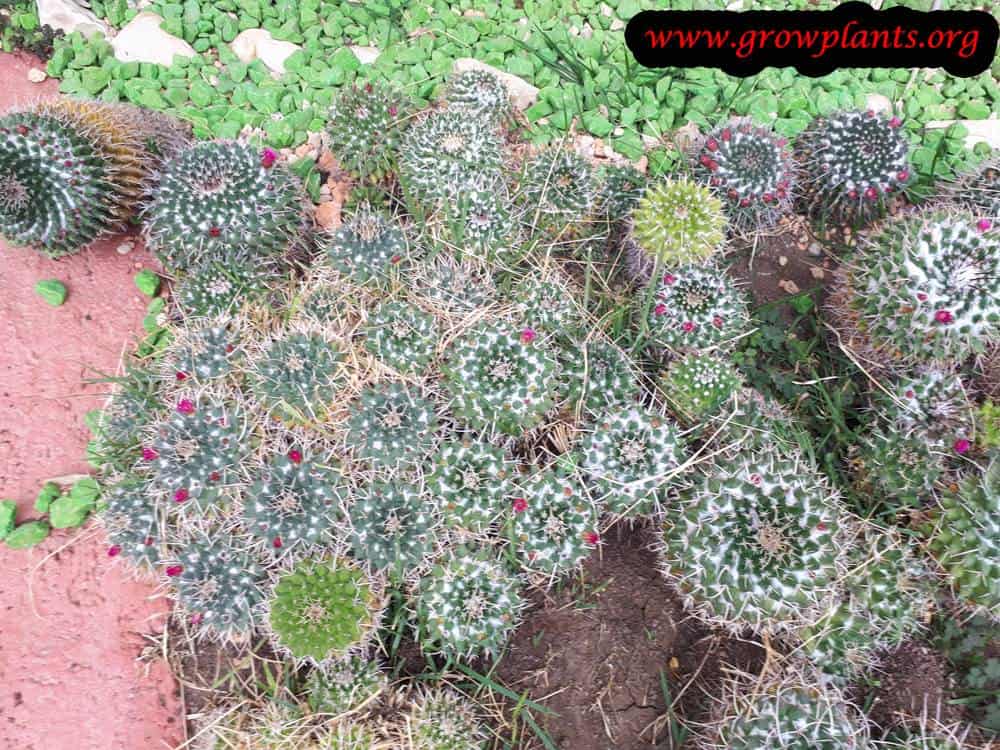
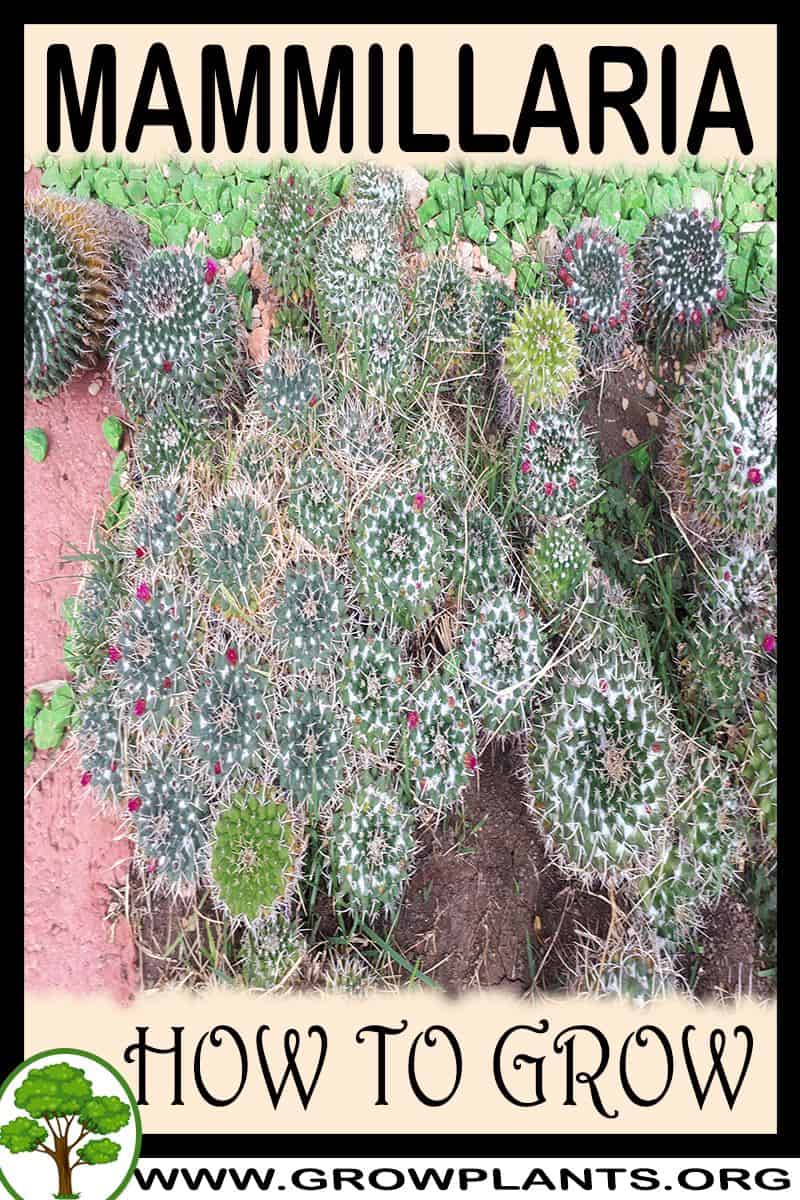
- Growth Habit & Form: Solitary or clustering globose to cone-shaped stems, many offsets forming a mound or half-ball.
- Lifespan & Maturity: Long-lived, slow-growing perennial succulent.
Anatomy & Physical Features
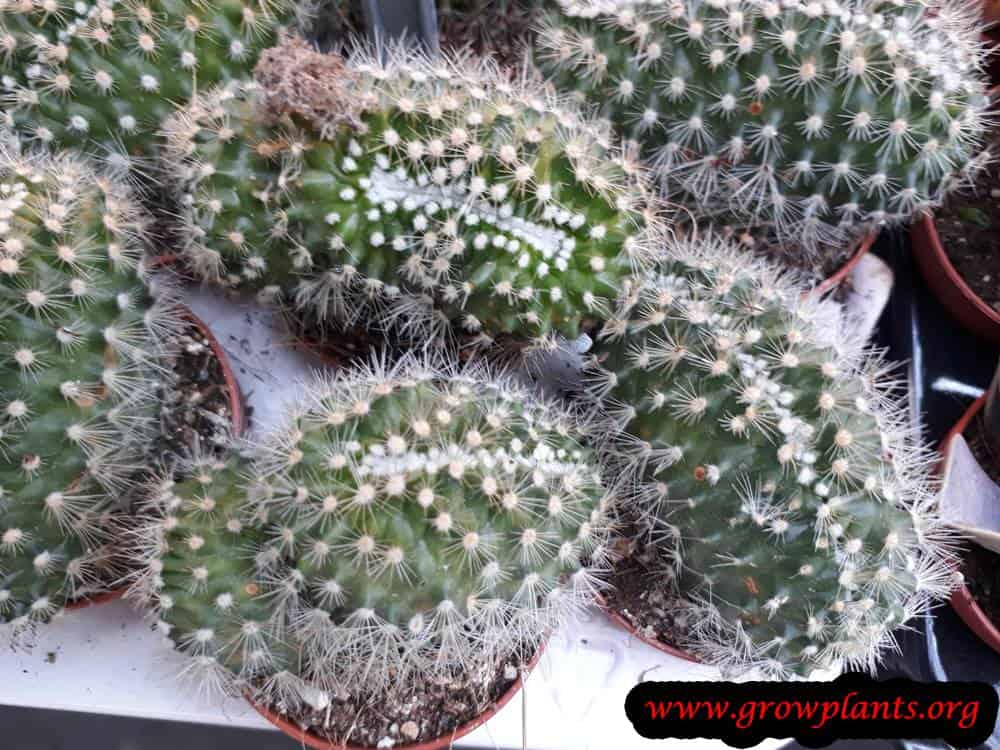
- Leaves & Foliage: Leafless; green tubercled stems clothed in white, red or yellow (sometimes hairy) spines, either covering the whole stem or concentrated at the top.
- Flower Characteristics: Small trumpet-shaped flowers in a crown at the stem top, in pink, purple, white or yellow (see Bloom guide).
Primary Uses & Landscape Value
- Functional & Ornamental Roles: Ornamental pot, rockery and windowsill succulent; popular collector’s cactus.
Care Guide: Planting, Soil & Watering
Overview: Mammillaria (globe cactus) (Mammillaria) is a slow-growing, drought-tolerant desert cactus for full sun (zones 10–11 (9b with care)). It needs a gritty, fast-draining cactus mix and only sparse watering, and it must stay above about -2°C.
Quick Care Requirements
| Requirement | Ideal Condition |
|---|---|
| Planting Season | Spring to summer/autumn (warm season) |
| Growth Rate | Slow |
| Soil Type | Gritty, fast-draining cactus/succulent mix |
| Water Need | Low – let soil dry out fully between waterings |
Planting & Establishment
- Best Planting Season: Spring to summer in zone 10, spring to autumn in zone 11, and year-round in zone 12.
- How to Plant:
- Hole Preparation: Set into a shallow hole matching the small, shallow root system, in a sharply drained, sunny spot; a shallow clay pot works well.
- Soil Amendments: Use a gritty cactus mix and add a layer of gravel, lava rock or pebbles at the base for drainage; avoid rich, moisture-holding compost.
- Planting Depth: Set the base of the stem at soil level and firm gently so the plant is stable; stake with a stick if it tends to topple.
- Growth Speed & Expectations: A slow grower that gradually clusters into a mound; patience is needed as it builds size over years.
Soil, Watering & Drainage Care
- Soil Mix & Drainage Needs: A sharply drained, gritty cactus/succulent mix is essential — poor drainage quickly causes rot. In a pot 20–50% larger than the plant, add gravel or lava rock at the base, ensure drainage holes, and refresh the mix every 2–4 years.
- Watering Schedule & Technique:
- Young / Newly Planted: Water sparingly after planting, letting the mix dry out fully before watering again.
- Established: Water only when the soil has dried right through, then give a modest soak — established plants store water and tolerate long dry spells.
- Seasonal Adjustments: Keep almost completely dry through the cool winter months and water a little more only in active summer growth; check drainage and protect from heavy snow.
Climate, Light & Hardiness
Mammillaria is a sun-loving, drought-tolerant globe cactus suited to desert, mediterranean and subtropical climates. It is hardy in roughly USDA zone 10–11, and with attentive overwinter care (dry soil, some cover) it can be pushed into zone 9b, briefly tolerating cold to about −2°C (28°F).
Quick Climate Specifications
| Climate Zones | Desert, mediterranean, subtropics |
|---|---|
| USDA Hardiness Zones | 10–11; possible in 9b with careful overwinter protection |
| Optimal Temp Range | Approximately 18–30°C (64–86°F) during active growth |
| Approx. Survival Minimum | Established plants may briefly tolerate temperatures down to about −2°C (28°F) in well-drained soil |
| Frost Tolerance | Low |
| Light Conditions | Full sun |
Sunlight & Light Exposure
Optimal Light Setup
Full sun keeps the globe- or cone-shaped stems compact and dense-spined, and is needed for the crown of trumpet-shaped flowers; it is not typically grown as an indoor houseplant.
Direct Sun Requirement
Direct sun is important for healthy, tight growth and flowering.
Shade & Heat Management
Handles intense desert and mediterranean summer sun well once established.
Best Exposure / Orientation
An open, unshaded rockery, raised bed, or clay container in full sun.
Temperature Extremes & Hardiness
USDA Hardiness & Regional Limits
Reliable outdoors in USDA zones 10–11; the site notes that with the right overwinter care it can also succeed in zone 9b. Its own planting-season guidance lengthens with warmth: spring-to-summer planting in zone 10, a longer spring-to-autumn window in zone 11.
Cold Damage & Winter Protection
Keep the soil on the dry side going into winter and protect from heavy snow; well-drained soil and reduced watering are what allow it to briefly tolerate cold near −2°C without rotting.
Frost Sensitivity
Low to moderate for an established, dry-rooted plant; hard or prolonged freezes are damaging.
Extreme Heat Tolerance
Very good; well adapted to hot, dry desert and mediterranean summers.
Wind, Humidity & Microclimate
Humidity Preferences
Prefers the low-to-moderate humidity typical of desert and mediterranean climates.
Dry-Air Tolerance
High - well adapted to dry air.
Rainfall & Seasonal Moisture
Adapted to climates with a pronounced dry season; sharply drained soil matters more than rainfall amount, since wet conditions around the shallow roots and stem base invite rot.
Microclimate Recommendations
A raised, gritty, well-drained spot in full sun suits it best; in marginal zone 9b sites, siting under an eave or similar rain shelter through winter reduces rot risk without blocking light.
Growing in Pots, Balconies & Indoors
Mammillaria is a small, clustering desert cactus – not a shade-tolerant houseplant, but an easy and rewarding choice for the sunniest windowsill or a hot balcony pot.
Quick Details
- Container Size: A clay or plastic pot only 20-50% wider than the plant – no need for depth, as the roots are shallow (grower)
- Indoor Suitability: Not a general houseplant; grows and flowers best on the brightest, sunniest sill
- Best Spot: Full sun
- Soil & Drainage: Cactus potting mix over a base layer of gravel, lava rock or pebbles; drainage holes essential (grower)
- Watering in Pots: Small amounts – let it dry out between waterings
Indoors & On the Windowsill
- Not a deep-room houseplant: The grower marks it as not suited to indoor life as a general houseplant – it needs far more light than a room interior offers.
- Windowsill growing: On the sunniest sill it does very well, offsetting into neat clusters and flowering in a ring with enough direct sun.
- Winter rest: Keep it cool and nearly dry through the dormant season to encourage flowering.
On a Balcony or Patio
- Light & heat: It loves a hot, sunny, sheltered spot, and the heat reflected off walls and railings suits it; the small pot dries fast, so still keep it on the dry side.
- Practicalities: Move it under cover before cold, wet weather arrives.
Choosing the Pot, Soil & Long-Term Care
- Pot & drainage (grower): A clay or plastic pot 20-50% larger than the plant, no need for depth given the shallow roots; put a layer of gravel, lava rock or pebbles in the base and make sure there are drainage holes.
- Potting mix (grower): A proper cactus potting mix – free-draining and mineral.
- Pot material: Unglazed clay breathes and dries fast, which desert cacti prefer over moisture-holding glazed or plastic.
- Safety: Spiny – site it out of reach of children and pets, and handle with folded paper or thick gloves.
Grower’s Container Tip
- Repotting & staking (grower): Change the soil every two to four years. When you do, resettle the plant firmly so it stays stable and will not topple; if it still feels unsteady, push in a small stake or stick to hold the cactus upright until the roots take hold.
Fertilizing & Feeding
A slow-growing, clustering desert cactus that thrives in lean, fast-draining soil and needs only minimal supplemental feeding to flower and offset well.
Quick Fertilizing Specs
| Feeding Level | Light feeder |
|---|---|
| Main Nutrient Priority | Low-nitrogen, cactus-formulated feed during active growth |
| Best Feeding Period | Warm-season active growth |
| Reduce/Stop Feeding | Stop feeding as growth slows going into cooler weather |
| Soil pH | Prefers a gritty, very well-drained cactus mix; wide tolerance rather than a narrow pH target |
Feeding by Growth Stage
Active Growth
Support steady body growth, offsetting (daughter plants), and crown flowering without encouraging soft, rot-prone tissue.
| Nutrient direction | A diluted, low-nitrogen cactus fertilizer that favors phosphorus and potassium over heavy nitrogen, to support flowering and firm growth. |
|---|---|
| Timing | During the warm season while the plant is actively growing and soil is allowed to dry between waterings. |
| Frequency | A few light feedings spread through the active growing season is generally enough. |
| Fertilizer types | Diluted, low-nitrogen cactus fertilizer, Balanced liquid feed used at reduced strength |
| Precautions | Only feed when the soil has dried out from prior watering, and keep concentrations light since Mammillaria is prone to rot if pushed into soft, over-fertilized growth. |
Dormant / Rest Period
Let the plant rest through its natural cool-season slowdown without pushing new growth it cannot support.
| Nutrient direction | None – withhold fertilizer entirely while the plant is resting. |
|---|---|
| Timing | Cooler months when growth naturally slows or stops and watering is reduced. |
| Frequency | No feeding at this stage. |
| Fertilizer types | No feeding at this stage – resume only once active growth restarts. |
| Precautions | Do not fertilize during dormancy; feeding a resting plant increases rot risk, especially given this species’ shallow root system. |
Nutrient Deficiency Signs & Corrections
Dull, pale-green body color and noticeably slower growth or offsetting than expected during the active season.
| Possible causes | Extended period without any feeding in a very lean potting mix, Root stress from compacted or old soil limiting nutrient uptake, Insufficient sun exposure reducing overall vigor |
|---|---|
| Appears first on | New body growth and offsets |
| What to check | Confirm soil is fast-draining and not compacted, Check light exposure matches full-sun preference, Review how long it has been since the last feeding |
| Possible correction | If soil and light are ruled out, resume a light, diluted feeding during the next active growth window. |
New growth appearing pale yellow while older body tissue stays green.
| Possible causes | High soil pH limiting iron availability, Overly wet or poorly aerated soil restricting root function, Root damage from repotting or pests reducing nutrient uptake |
|---|---|
| Appears first on | Newest areoles and growth near the crown |
| What to check | Test soil drainage and confirm the mix is not staying wet, Check for old, compacted potting mix due for a change, Inspect roots for damage or rot |
| Possible correction | Correct drainage and soil condition first; if chlorosis persists, apply a chelated iron product per its label. |
Pruning, Training & Seasonal Maintenance
Mammillaria is a small, slow-growing globular cactus (5–40 cm) that clusters by producing offsets/pups from its base, sometimes merging into a half-ball mass of stems. It has no woody framework and no persistent flowering wood — its crown of trumpet-shaped flowers forms fresh each summer — so genuine "pruning" is limited to cutting away rot and, optionally, separating offsets; its own care notes name cutting rotten parts as the real maintenance task, allowed year-round.
Quick Pruning & Maintenance Specs
| Pruning Tolerance | Low — sanitary cuts and offset separation only, no shaping |
| Primary Pruning Window | Any time rot or dead tissue appears (per its own care data) |
| Typical Frequency | As needed — not a scheduled task |
| Main Objective | Remove rot to protect the rest of the cluster; optionally divide offsets for propagation or to manage cluster size |
| Young Plant Priority | Leave undisturbed while a single head establishes |
| Mature Plant Priority | Remove rot promptly; separate offsets if a tighter or looser cluster is wanted |
| Best Tool Type | Sterile grafting knife |
| Avoid Heavy Pruning During | Not applicable — heavy/structural pruning is never performed on this plant |
Pruning by Plant Age & Size
Newly Established
No pruning; check soil drainage rather than cutting anything, since drainage failure (not the plant’s growth habit) is the main early risk noted in its own care data.
Young / Formative
No structural training — the globular form and later offsetting habit develop entirely on their own.
Mature / Established
As the plant clusters, remove any rotten parts as soon as spotted, and separate healthy offsets (with their own roots, or as rootless cuttings left to callus and reroot) if a tighter single specimen or new plants are wanted.
Special Growth to Remove
- Rotten tissue — cut back to clean, firm flesh immediately; this is the one maintenance task explicitly flagged in this plant’s own care guidance.
- Offsets/pups — optional removal for propagation or to keep a single-head look; otherwise they can be left to fill in a natural clustered mound.
Container & Small-Space Pruning
Grown in a wide, shallow pot (20–50% larger than the root ball, since roots are shallow) with gritty, fast-draining mix. No canopy or height pruning applies in a container; the main maintenance is watching drainage and, every 2–4 years at a repot, checking for and removing any rot before it spreads through a clustered specimen.
Tools
A sterile, sharp grafting knife or fine blade for cutting out rot or separating offsets — the spines make hand-pulling risky, and the cuts involved are small and precise.
Tool Hygiene & Disease Risk
Increased when cutting rot — disinfect the blade before and after cutting into rotten tissue so decay is not carried into a healthy offset or another plant. Routine hygiene otherwise.
Cut Placement & Technique
Cut well into clean, firm tissue beyond any visible rot rather than trimming only the discolored surface; when separating an offset, cut close to its point of attachment and let both the parent’s scar and the offset’s cut base dry/callus in a shaded spot for several days to weeks before placing in soil.
Heavy Pruning & Rejuvenation
Not tolerated and not applicable — there is no oversized woody growth to cut back. A badly rotted specimen is better saved by removing all affected tissue and rerooting a clean offset than by any rejuvenation-style hard prune.
Post-Pruning Care
Keep cut plants dry and shaded while wounds callus; resume the plant’s normal small watering only once the cut has fully dried, and protect from heavy rain/snow as this plant’s own care notes advise generally.
Common Pruning Mistakes
- Leaving rot in place or only trimming its visible surface instead of cutting back to clean tissue.
- Handling or separating offsets bare-handed, given the spines.
- Watering too soon after a cut, before the wound has calloused.
When NOT to Prune
- Avoid unnecessary cutting on a healthy plant — this species has no design/shaping need the way trailing or mat-forming succulents might.
- Avoid separating offsets during cold, wet, or heavy-snow conditions, when the plant’s own care notes flag extra vulnerability.
Recommended Tools (by task)
- grafting_knife — a sterile blade for precise rot removal and clean offset division on this spiny, cluster-forming cactus.
Propagation Guide
Mammillaria is most easily propagated from the daughter offsets that clustering species produce around their base, or by taking stem cuttings from pieces of the plant; solitary (non-clustering) species rely mainly on seed instead. Vegetative propagation isn’t required to keep the species true, and overall difficulty is easy, aside from the care needed around the spines.
Quick Propagation Specs
| Best Propagation Method | Offset (Daughter Plant) Division |
| Alternative Methods | Stem cuttings; seed (mainly for solitary, non-offsetting species) |
| Propagation Difficulty | Easy |
| Seed True-to-Type | Usually true-to-type |
| Vegetative True-to-Type | Yes |
| Best Propagation Season | Spring to summer in zone 10; spring to autumn in zone 11; possible year-round in zone 12 |
| Cutting Rooting Time | The cut must fully callus first, which can take a few weeks up to several months; light rooting follows once healed |
Growing from Seed
Sow on a gritty, free-draining cactus mix in warm, bright conditions; germination can be slow or uneven, and young seedlings are slow-growing and sensitive to overwatering.
Stem Cuttings
Cutting Type
Whole sections of the cactus cut into pieces, or the plant cut through the middle.
Best Timing
Warm active-growth months.
Cutting Preparation
Use a sterile knife, then let the cut piece cure in the shade to heal fully — this can take a few weeks and even several months.
Rooting Setup
Once healed, set the piece on the soil with support so it can’t fall, cover the base lightly at the sides, and water only a small amount.
Rooting Hormone
Not necessary; optional.
Rooting Time
Proceeds gradually once the cut has fully healed and light watering begins.
Division, Offsets, Pups & Suckers
For clustering species, daughter plants need careful handling when removed so that all their roots come with them: work a plastic spatula or a similarly sturdy tool (depending on soil type) around and under the offset, using an air blower or a stream of water to expose the roots without tearing them, then let the roots dry before replanting.
Bloom & Flower Guide
Quick Details
- Bloom Season: Summer.
- Time to First Bloom: Often within a few years of maturity – Mammillaria are among the more willing cacti to flower while still small.
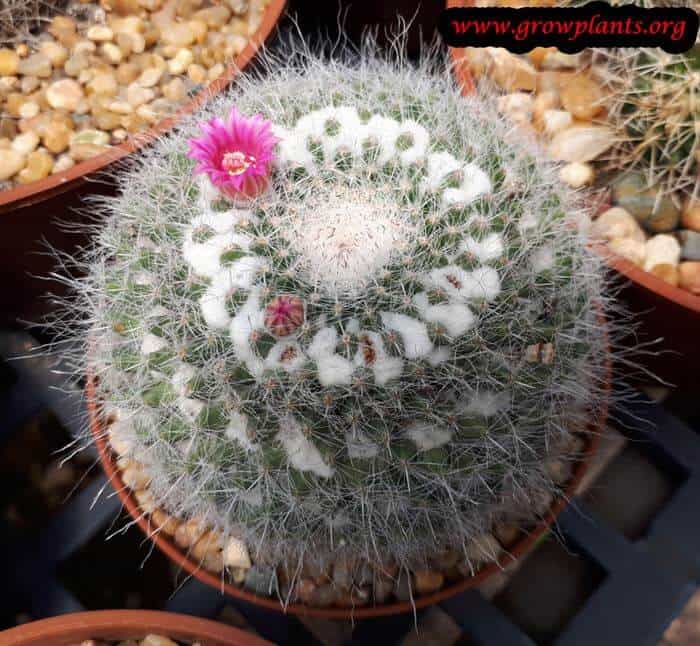
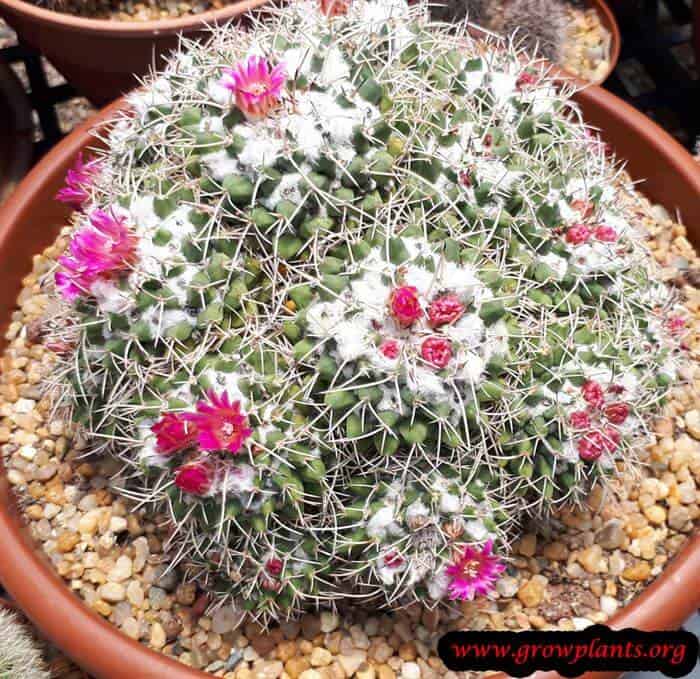
- Flower Appearance: Small trumpet-shaped flowers in pink, purple, white, yellow or a blend, arranged in a ring around the top like a crown.
- Edibility: Ornamental only; not grown as an edible flower.
Detailed Blooming Overview
Mammillaria is loved for the way it flowers: instead of a single large bloom, it opens a neat ring of small flowers that circles the crown of the plant, forming a little halo or coronet. The flowers emerge from between the tubercles rather than from the spine-tips, and a happy, mature plant can repeat this crown of colour reliably each summer.
Flower Characteristics
- Colour: pink, purple, white, yellow, or more than one colour together.
- Form: small, trumpet-shaped flowers.
- Position: ringed around the top of the plant in a crown-like arrangement.
Bloom Care & Thinning
- Cool, dry winter rest: keeping the plant cool and almost dry through winter is the single most important trigger for that ring of summer flowers.
- Maximum sun: the brightest spot you can give builds flowering strength.
- Ease into spring watering: resuming water as growth restarts swells the buds; no deadheading is needed beyond brushing off the spent flowers.
Bloom Health & Protection
- Mealybugs love to hide among the tubercles and wool right where the buds form – dabbing them with a cotton bud dipped in surgical spirit, or a light horticultural oil, clears them.
- Botrytis / grey mould can spoil buds in cold, damp, still air – improving ventilation and easing off water usually prevents it.
Fruit & Uses
Mammillaria cacti produce small, brightly coloured, finger-shaped berries known as “chilitos” that ripen among the spines after flowering, and these are a genuinely edible fruit eaten fresh, straight off the plant. In parts of Mexico chilitos are also sold in local markets as a fresh snack rather than used as a cooked ingredient.
Quick Edible Specs
| Edible Parts | Fruit |
|---|---|
| Main Use(s) | Fresh eating – a traditional snack fruit, sold in local markets in parts of Mexico |
| Eaten Raw or Cooked | Raw |
| Preparation Required | None beyond avoiding the spines while picking |
| Harvest Season | Weeks after flowering, once the fruit colours fully and pulls free easily (timing varies by species; see Blooming for bloom season) |
| Time to First Harvest | Only once the plant is mature enough to flower and fruit (see Blooming, not an exact bearing-age) |
| Storage | Best eaten fresh; not a storage crop |
| Safety/Toxicity Caveat | No known toxicity in the fruit itself; the surrounding spines are the main hazard when harvesting |
Fruit
Small, chili-pepper-shaped berries in bright red, orange or violet tones sit tucked among the spines and wool near the crown of the plant. They are ripe once fully coloured and slightly soft to the touch, with a flavour some describe as mildly tart and citrusy. Harvest by hand or with tweezers, working carefully around the surrounding spines and twisting or pulling the fruit gently free.
Harvesting
Fruiting follows the bloom flush (see Blooming for season by species); pick fruit as it colours and softens. A single plant can fruit repeatedly across its flowering period rather than all at once.
Preparation, Uses & Safety
Eaten fresh, out of hand, with no cooking or processing needed. Beyond fresh eating there is no other established culinary use (chilitos are occasionally noted in folk use, but no health claims are made here). The main safety concern is handling the fine spines around the fruit, not the fruit’s edibility.
Pests, Diseases & Troubleshooting
Overview: Globular Mammillaria cacti are tough, largely pest-resistant succulents whose biggest threats come from moisture rather than insects: overwatering and poor drainage cause fatal root and stem rot, while sap-sucking mealybugs (including hidden root mealybugs) are the main insect problem. Management is overwhelmingly cultural — a gritty, fast-draining mix, restrained watering, bright light and good airflow prevent nearly every issue.
Quick Troubleshooting Overview
| Issue / Pest | Main Symptom | Primary Solution |
|---|---|---|
| Mealybugs | White cottony fluff in the axils, tubercle bases and spine clusters; sticky honeydew | Wipe/dab with alcohol; rinse; horticultural oil or insecticidal soap; inspect roots |
| Root mealybugs | Stalled growth, waxy white specks in the rootball at repotting | Bare-root, wash roots, treat soil drench; repot into fresh dry mix |
| Spider mites | Fine bronzing/rusty scarring on the sunniest side of the stem, faint webbing | Raise humidity/airflow, rinse, insecticidal soap or miticide |
| Scale insects | Immobile brown or grey bumps on the stem; sticky residue | Scrape off; alcohol swab; horticultural oil |
| Root & crown rot | Soft, blackening, sunken base; plant topples or turns mushy | Cut to firm tissue, dry/callus, replant in dry gritty mix; water sparingly |
| Corking / etiolation | Brown corky base (natural) or pale stretched growth (too little light) | Corking is normal ageing; move stretched plants to brighter light |
Common Pests & Management
- Mealybugs (Pseudococcus spp. / Planococcus citri):
- Symptoms: Cottony white masses tuck into the wool between tubercles, in the crown and around the spine areoles, with sticky honeydew and sometimes sooty mould; heavy infestations weaken the plant and cause slow decline. Easy to overlook because the fluff mimics the plant’s own natural wool.
- Prevention & Control: Isolate the plant; dab colonies with a cotton bud dipped in 70% isopropyl alcohol, then rinse. For recurring problems spray with insecticidal soap or a light horticultural/neem oil, coating the crevices; repeat every 7–10 days for two or three cycles. Encourage predatory ladybirds (Cryptolaemus) under glass.
- Root mealybugs (Rhizoecus spp.):
- Symptoms: Waxy white powder and small insects on the roots and inner pot wall, seen only when you unpot; growth stalls, the plant looks thirsty despite watering, and roots may die back. A very common, silent killer of potted cacti collections.
- Prevention & Control: Bare-root the plant, wash all soil from the roots under a tap, and cut away dead roots. Soak or drench the cleaned roots with insecticidal soap or a systemic soil drench, then repot into fresh, dry, gritty mix in a clean pot. Keep dry for a week before resuming light watering; check neighbouring pots.
- Spider mites (Tetranychus / red spider mite):
- Symptoms: In hot, dry, still air the epidermis develops fine rusty-bronze scarring, usually on the most exposed sunward face, with almost invisible fine webbing over the apex. Damage is permanent scarring rather than recovery, so early detection matters.
- Prevention & Control: Improve airflow and avoid baking the plant against glass; a firm water rinse dislodges colonies. Treat with insecticidal soap or a labelled miticide, covering the growing point; repeat to break the life cycle. Mites hate humidity, so occasional misting in dry spells helps as prevention.
- Scale insects (Diaspididae / Coccidae):
- Symptoms: Small immobile brown, tan or grey limpet-like bumps stuck to the stem, often along tubercle grooves, with sticky honeydew and sooty mould from soft scale. They resist casual watering and stay put.
- Prevention & Control: Scrape or pick off individuals and swab with alcohol. For larger numbers apply horticultural oil to smother them, repeating in 10–14 days; a systemic option can be used for stubborn infestations. Keep new acquisitions quarantined before adding them to a collection.
Diseases & Fungal Issues
- Root & stem (basal) rot (Fusarium / Phytophthora / Pythium):
- Symptoms: The base or roots turn soft, brown-black, sunken and mushy, often after cool wet spells or overwatering; rot creeps up the stem and the plant collapses or topples. By far the commonest cause of death in this genus.
- Treatment & Management: Prevention is everything: use a very free-draining mineral mix, unglazed pots, water only when the soil is fully dry, and never leave the plant standing in water. If rot appears, cut back to clean firm green tissue with a sterile blade, dust with sulphur or cinnamon, let the wound callus in dry air, then re-root the healthy top.
- Fungal / bacterial spotting:
- Symptoms: Sunken orange, brown or black spots and blemishes on the epidermis, favoured by water sitting on the plant and by poor ventilation; usually cosmetic but can become an entry point for rot.
- Treatment & Management: Water at the base and avoid wetting the body in cool weather; give strong light and moving air. Remove badly marked segments and improve conditions; a copper or sulphur fungicide can be used if spread is active, but cultural correction usually suffices.
Growing Difficulties & Abiotic Problems
- Overwatering / edema:
- Cause & Symptoms: Soft translucent patches, splitting skin or a bloated look from too much water and too little drainage — the fast track to rot.
- Correction Strategy: Switch to a gritty mineral mix, water thoroughly then let it dry completely, and reduce watering sharply in the cool, low-light rest period.
- Etiolation (weak stretching):
- Cause & Symptoms: The normally squat body elongates and pales, tubercles spread out and spines thin — a sign of insufficient light.
- Correction Strategy: Move to the brightest position available or add grow-lighting; acclimatise gradually to avoid scorch. Stretched growth will not shrink back but new growth firms up.
- Sunburn / scorch:
- Cause & Symptoms: Bleached white or tan patches on the sun-facing side after a sudden move into fierce direct sun or against hot glass.
- Correction Strategy: Introduce strong sun gradually and provide light shade during the fiercest midday heat; damaged tissue scars permanently, so prevention is key.
- Corking:
- Cause & Symptoms: A brown, bark-like corky layer spreading up from the base — often mistaken for rot but firm and dry to the touch.
- Correction Strategy: This is natural ageing and needs no treatment; confirm it is firm (corking) rather than soft (rot) and carry on with normal care.
What Helps – Products & Tools
For this cactus reach first for cultural fixes — a gritty mineral potting mix, unglazed pots and disciplined watering. Useful products are 70% isopropyl alcohol and cotton buds for spot-treating mealybugs, insecticidal soap and light horticultural or neem oil for mealybugs, scale and mites, a labelled miticide for persistent spider mite, and a sulphur or copper fungicide plus cinnamon/sulphur powder for sealing rot cuts.
Types and forms
Mammillaria is a large genus, and GrowPlants documents several species individually. They differ mainly in stem shape, spine color and size.
Quick Comparison
| Species | Main Trait |
|---|---|
| Mammillaria elongata | Slender, finger-like clustering stems |
| Mammillaria longimamma | Stems connect at the base into a rosette/half-ball form |
| Mammillaria fraileana | Pincushion form |
| Mammillaria polythele | Numerous close-set spines |
| Mammillaria sphaerica | Rounded stem form |
| Mammillaria meissneri | See its own page for specific traits |
Learn how to grow elongata · Buy elongata
longimamma · fraileana · polythele · sphaerica · meissneri