Plant Profile & Key Characteristics
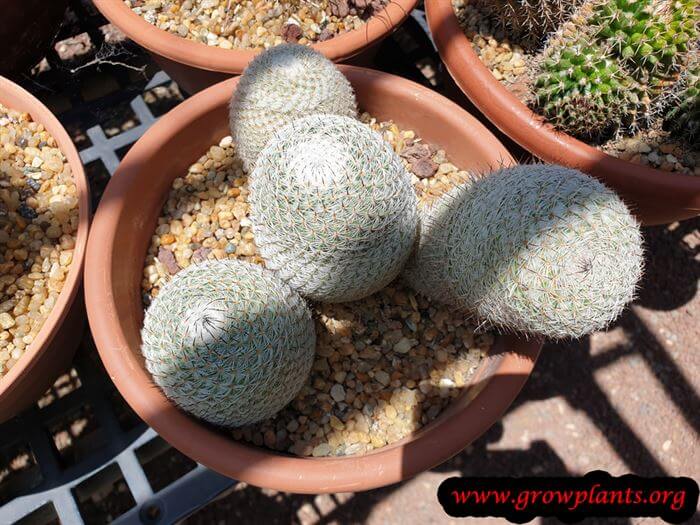
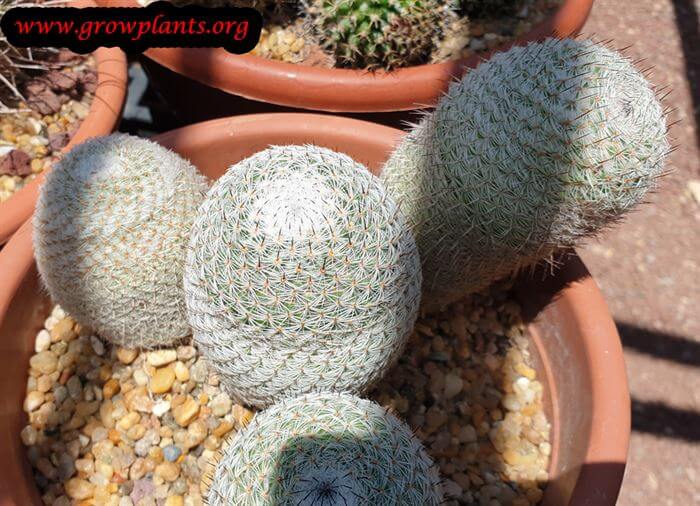
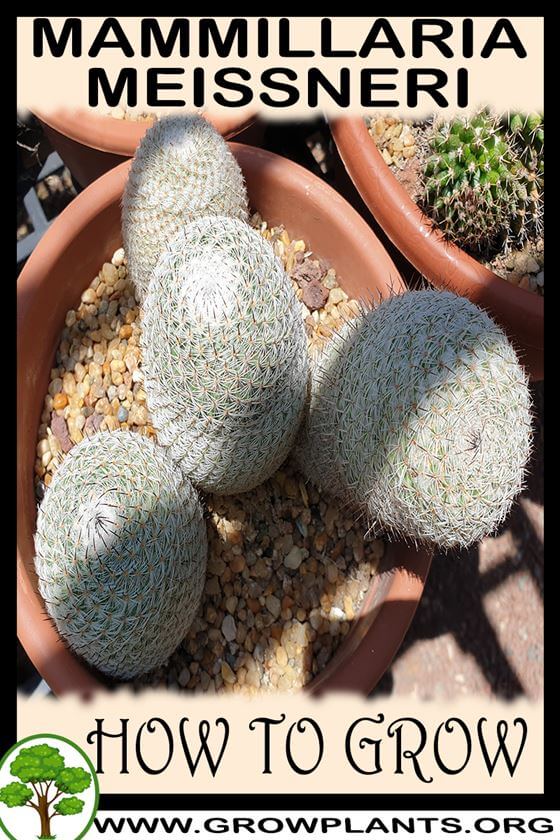
Overview: Mammillaria meissneri is a small, slow-growing perennial cactus 5-15 cm high forming clusters of green stems with fine white spines; grown as a drought-tolerant ornamental succulent.
Quick Specifications
| Specification | Attribute |
|---|---|
| Plant Type / Life Cycle | Perennial (succulent cactus) |
| Foliage Type | Evergreen (leafless succulent stems) |
| Mature Size | 5-15 cm (2-6 in) |
| Growth Rate | Slow |
| Root System | Shallow, fibrous |
| Toxicity | Non-toxic (spines are the physical hazard) |
| Hardiness | USDA 10-11 |
Growth Form & Structure
- Height & Spread: 5-15 cm (2-6 in); suits shallow containers 20-50% wider than the plant.
- Growth Habit & Form: Clustering cone-shaped stems forming low mounds.
- Lifespan & Maturity: Long-lived, slow-growing perennial succulent.
Anatomy & Physical Features
- Leaves & Foliage: Leafless; green stems with fine, hair-like white spines.
- Flower Characteristics: Small purple-to-pink trumpet-shaped flowers forming a crown at the top (see Bloom guide).
Primary Uses & Landscape Value
- Functional & Ornamental Roles: Ornamental pot, rockery and windowsill succulent; popular collector’s cactus.
Care Guide: Planting, Soil & Watering
Overview: Mammillaria meissneri is a slow-growing desert cactus (hardy to about zone 10–11, and zone 12 with the right care) that thrives in full sun and sharply draining, mineral soil. It stores water in its stems, so it needs only light, infrequent watering and must never sit in soggy soil.
Quick Care Requirements
| Requirement | Ideal Condition |
|---|---|
| Planting Season | Spring to summer in zone 10; spring to autumn in zone 11; year-round in zone 12 |
| Growth Rate | Slow |
| Soil Type | Sharply draining cactus / mineral mix |
| Water Need | Low — let the soil dry out fully between waterings |
Planting & Establishment
- Best Planting Season: Plant in spring to summer in zone 10, spring to autumn in zone 11, or year-round in zone 12.
- How to Plant:
- Hole Preparation: Dig a shallow, slightly wider hole to match the cactus’s shallow root system — it needs width more than depth.
- Soil Amendments: Work plenty of grit, gravel or perlite into a cactus mix so water drains away freely.
- Planting Depth: Set the plant at the same depth it grew, keeping the base of the stem right at the surface so it never sits buried in wet soil.
- Growth Speed & Expectations: Slow — expect only a little growth each year, eventually reaching 5–15 cm (2–6 in).
Soil, Watering & Drainage Care
- Soil Mix & Drainage Needs: Use a cactus potting mix; in pots add a bottom layer of gravel, lava rock or pebbles and plenty of drainage holes. The roots are shallow, so a wide, shallow container 20–50% larger than the plant works well.
- Watering Schedule & Technique:
- Young / Newly Planted: Water sparingly after planting and let the surface dry before watering again.
- Established: Water only when the mix has dried out completely, and then only a small amount.
- Seasonal Adjustments: Keep almost dry through winter and water a little more often during summer heat; shelter from heavy rain or snow.
Climate, Light & Hardiness
Mammillaria meissneri (syn. Dolichothele sphaerica) is a warm-climate, full-sun cactus for desert, Mediterranean, or subtropical gardens, needing sharp drainage and minimal winter moisture. It is best suited to USDA zones 10–11 (and readily also the warmer zone 12), with only very brief, light frost tolerated by dry, established plants.
Quick Climate Specifications
| Climate Zones | Desert, Mediterranean, subtropical |
|---|---|
| USDA Hardiness Zones | 10–11 |
| Optimal Temp Range | Roughly 18–32°C (65–90°F) during active growth; cool, dry winters |
| Cold Damage Begins | Around freezing, 0°C (32°F), especially with wet soil |
| Approx. Survival Minimum | Site guidance indicates a dry, established plant tolerates down to roughly −2°C (28°F) briefly |
| Frost Tolerance | Low |
| Light Conditions | Full sun |
| Wind Tolerance | High |
| Salt / Coastal Tolerance | Low |
Sunlight & Light Exposure
Optimal Light Setup
Full, direct sun is needed for compact growth, dense white spination, and reliable flowering.
Direct Sun Requirement
Direct sun for most of the day is required once established.
Shade & Heat Management
Acclimate young or newly transplanted plants gradually to prevent sun scorch.
Best Exposure / Orientation
A south- or west-facing site with reflected warmth suits cooler-summer climates; no additional heat is needed in hot desert regions.
Temperature Extremes & Hardiness
USDA Hardiness & Regional Limits
Suited to outdoor culture in zones 10–11, and readily also the warmer zone 12; planting and active-growth windows narrow toward the cooler edge of this range-spring to summer in zone 10, spring to autumn in zone 11, and essentially year-round in zone 12.
Cold Damage & Winter Protection
Cold combined with wet soil is far more damaging than cold alone-keep the plant dry heading into any cool spell and protect from rain.
Frost Sensitivity
Frost tolerance is low; only brief, light frost on a dry, established plant is likely to be survived, per site guidance of roughly −2°C (28°F) as a minimum threshold.
Extreme Heat Tolerance
Strong; well adapted to hot, sunny, arid conditions.
Wind, Humidity & Microclimate
Humidity Preferences
Prefers dry air; persistent humidity raises rot risk.
Dry-Air Tolerance
Very high.
Wind Tolerance
High, given its low, clustering growth habit.
Coastal / Salt Tolerance
Not well suited to salt spray or coastal exposure.
Rainfall & Seasonal Moisture
Adapted to sparse, seasonal desert rainfall rather than steady moisture; excess rain is more of a risk than a benefit.
Microclimate Recommendations
Grow in a raised, gritty bed or a container that can be moved under cover for winter-its lower frost tolerance than some cactus relatives makes this more important, especially at the cooler end of its range.
Growing in Pots, Balconies & Indoors
The Mammillaria meissneri (Pincushion cactus) is a small, slow-growing cactus that makes an easy pot and windowsill plant. The grower does not rate it as a deep-room houseplant, so it needs the brightest, sunniest window or a spot outdoors to keep its shape and to flower. In a shallow, free-draining pot it is simple to keep on the sunniest sill or out on a warm balcony or patio. Its cone-shaped stems, clothed in hair-like white spines, open a crown of purple-to-pink trumpet flowers.
Quick Details
- Container Size: A shallow pot about 20-50% wider than the plant
- Indoor Suitability: Not listed as a deep-room houseplant; happiest on the sunniest windowsill or outdoors
- Best Spot: Full sun – the brightest windowsill, or a sunny, sheltered balcony or patio, or a grow light where that isn’t available
- Soil & Drainage: Free-draining cactus mix over a gravel, lava-rock or pebble base; strong drainage holes
- Watering in Pots: Small amounts only; let the mix dry out completely between waterings – in a closed pot, wet soil rots the shallow roots fast. A ready-made cactus and succulent soil mix provides that structure without mixing it yourself.
Indoors & On the Windowsill
- Houseplant limits: The grower does not rate it as a true indoor houseplant – away from a window the light is too weak, so it stretches, loses colour and stops flowering.
- Windowsill growing: It does grow well on the sunniest sill (a south-facing or near-south window) with direct sun; being small and slow it stays in scale for years. Turn the pot now and then for even growth.
- Overwintering indoors: In climates colder than its range (hardiness zone 10-11), keeping it in a pot lets you move it somewhere bright and frost-free for winter; a cool, dry, bright winter rest actually helps it flower the next season.
On a Balcony or Patio
- Light, heat & wind: Give it the sunniest, most sheltered spot – walls and railings reflect heat, which this cactus enjoys, but pots dry quickly so check the mix often. The spines mean it is best kept where people and pets do not brush past.
- Practicalities: A small pot is easy to move; bring it under cover before the first frost and stand it up off cold, wet paving so water drains away freely.
Choosing the Pot, Soil & Long-Term Care
- Pot & drainage: Use a shallow pot only 20-50% wider than the plant – the roots are shallow, so depth is not needed. Add a layer of gravel, lava rock or pebbles at the base, make plenty of drainage holes, and skip a standing water saucer to avoid root rot. Unglazed terracotta suits cacti because it breathes and dries fast.
- Potting mix: A free-draining cactus/succulent potting mix; you can sharpen it further with extra grit or perlite.
- Feeding: Potted plants lose nutrients to leaching, but cacti need very little – a dilute, low-nitrogen cactus feed once or twice in the active season is plenty.
- Repotting: Every few years (about every 2-4) refresh the mix or pot up one size. Handle the plant with folded paper or a wrapped grip to avoid the spines, settle it on a fresh gravel base, firm the mix with a spoon or small trowel, and add a support stick if it is unstable until it re-roots.
Growing this plant in a greenhouse
A greenhouse can give mammillaria meissneri frost protection and cold protection.
Greenhouse at a glance
| Greenhouse suitability | Conditional - depends on your climate |
|---|---|
| Main benefits | frost protection, cold protection |
| Outdoor protection advisable below | about 2°C |
| Maintain greenhouse minimum | around 2°C for active growth |
| Suitable types | unheated greenhouse, polycarbonate greenhouse |
| Heating | Heating is optional - useful mainly for winter growing in cold areas. |
Related greenhouse guides
- Greenhouses: How to Choose the Right Greenhouse
- Polycarbonate Greenhouses: What to Look for Before Buying
- Greenhouse Climate Control: Temperature, Ventilation and Humidity
Fertilizing & Feeding
A light feeder: this small, slow-growing cactus wants only occasional, low-nitrogen feeding during warm active growth, and none while resting – it is also more cold-sensitive than many cacti, so its rest period should be respected closely.
Quick Fertilizing Specs
| Feeding Level | Light feeder |
|---|---|
| Main Nutrient Priority | Low-nitrogen and minimal, in keeping with a small, slow-growing cactus |
| Best Feeding Period | The warm active growing season |
| Organic Options | A diluted cactus fertilizer is the typical choice over organic feeds |
| Micronutrients | Rarely needed beyond what a complete cactus fertilizer supplies |
| Soil pH | Adaptable within a fast-draining, mineral potting mix |
| Reduce/Stop Feeding | Stop feeding well before cooler weather arrives, since this species is more cold-sensitive than many cacti and should not be pushed into soft growth heading into cooler conditions |
Feeding by Growth Stage
Active warm-season growth
Support growth of the cone-shaped, hair-spined stem and its purple-to-pink summer flowers.
| Nutrient direction | Keep feeding light and low in nitrogen; this small cactus does not need to be pushed. |
|---|---|
| Timing | During the warm active growing season. |
| Frequency | An occasional light feeding while the plant is clearly in active growth is enough. |
| Fertilizer types | A cactus or succulent fertilizer diluted well below normal strength, A light, low-nitrogen slow-release feed worked into the soil surface |
| Precautions | Feed only into dry soil; the fine, hair-like spines still warrant careful handling, and since this species is more cold-sensitive than many cacti, taper feeding early rather than late. |
Cool-season dormant rest
Let the plant rest fully through its cooler period; because it is more cold-sensitive than many cacti, this rest should be respected rather than interrupted with feeding.
| Nutrient direction | None – withhold fertilizer while dormant. |
|---|---|
| Timing | Through the cooler part of the year, when this frost-tender cactus most needs protection rather than encouragement to grow. |
| Frequency | No feeding at this stage. |
| Fertilizer types | No feeding at this stage – allow a full rest through dormancy |
| Precautions | Do not fertilize during dormancy; feeding late into cooler weather can push soft new growth this cold-sensitive species cannot harden off in time. |
Nutrient Deficiency Signs & Corrections
The stem softens, discolors, or smells musty, often after a cold, damp spell.
| Possible causes | overwatering combined with cool temperatures, poorly drained soil, feeding too late in the season, leaving soft tissue exposed to cold |
|---|---|
| Appears first on | the base of the stem |
| What to check | recent temperature and moisture conditions, soil and pot drainage, timing of the last feeding relative to cooling weather |
| Possible correction | Improve drainage, keep the plant drier and warmer while it recovers, and avoid feeding until it is clearly back in active growth. |
New growth is unusually pale, soft, or stretched instead of forming a firm, compact cone shape.
| Possible causes | too much nitrogen or over-feeding, insufficient light causing stretched growth, overwatering encouraging soft tissue |
|---|---|
| Appears first on | the newest growth at the stem tip |
| What to check | recent feeding strength and frequency, hours of direct light received, watering routine |
| Possible correction | Cut back to a lighter, low-nitrogen feeding and increase direct light. |
Tissue near the stem tip browns and looks scorched, especially in container-grown plants.
| Possible causes | mineral salt buildup from fertilizer or hard water, container soil not flushed in some time, feeding too strong a solution |
|---|---|
| Appears first on | the stem tip |
| What to check | time since the container soil was last flushed, fertilizer strength used, water hardness |
| Possible correction | Flush the container thoroughly with water and dilute future feedings further. |
Pruning, Training & Seasonal Maintenance
Mammillaria meissneri is a small, slow-growing cactus with cone-shaped stems that readily produce offsets, so unlike a strictly solitary cactus it can build into a clump over time. Pruning itself is minimal and purely cosmetic/sanitary — its own care notes describe cutting as being “for design and dead part” — but managing the offsets is a genuine, ongoing decision for this species. Necessary cuts heal fastest during the warm growing season; avoid cutting right before a cold snap, since this species is only cold-hardy to about -2°C and a fresh, unhealed wound is more vulnerable to cold and rot damage.
Quick Pruning & Maintenance Specs
| Pruning Tolerance | Low on the main stem; offset removal is routine if clumping is not wanted |
| Primary Pruning Window | Spring–Summer (active growth) |
| Secondary Maintenance Window | Any time dead tissue or an unwanted pup is spotted |
| Typical Frequency | As-needed, not scheduled |
| Main Objective | Remove dead tissue; control clump spread via offset removal if desired |
| Young Plant Priority | Leave untouched – let it establish before removing any offsets |
| Mature Plant Priority | Sanitary removal of dead tissue; periodic offset thinning if a tighter form is preferred |
| Best Tool Type | Sterile grafting knife or precision snips |
| Avoid Heavy Pruning During | Cool weather, and just before cold snaps near its -2°C hardiness limit |
Pruning by Plant Age & Size
Newly Established
Do not cut a newly potted plant; remove only tissue that arrived damaged.
Young / Formative
No formal training system applies; let the plant establish and begin its natural offsetting habit undisturbed.
Mature / Established
Sanitary removal of dead tissue; once a clump has formed, decide whether to let it continue mounding or thin some offsets for a more open, individually-visible stem display.
Seasonal Pruning Schedule
Ongoing Sanitary
Objective: keep the clump free of dead or shriveled tissue. What to remove: dead stems or offsets, spent flowers. What NOT to remove: healthy young offsets you intend to keep, or unopened buds. Expected response: a clean dry wound calluses in days to weeks in warm weather. Flowering impact: none if only dead material is trimmed.
Structural Pruning & Training
This species offsets readily, so the main structural decision is clump density: leave pups in place for a full, mounding display, or detach well-rooted offsets to control spread, keep individual stems more visible, or propagate. There is no branch or canopy framework to train beyond this.
Special Growth to Remove
- Dead or shriveled stem tissue — cut back to firm, healthy flesh.
- Spent flowers — optional tidy-up once fully wilted.
- Offsets/pups — remove selectively only if a tighter form or propagation material is wanted; otherwise they are normal, healthy growth and not something to prune away by default.
Container & Small-Space Pruning
Grown in a fast-draining cactus mix in a pot sized modestly larger than the root ball; as the clump fills the container over a few years, offset removal doubles as a practical way to keep growth within the pot before a full repot is needed.
Tools
Grafting knife (sterile, for detaching offsets or removing dead tissue) and precision snips (for light trims such as spent flowers).
Tool Hygiene & Disease Risk
Routine — no specific disease vulnerability is documented for this species; a clean, sharp blade is sufficient, wiped between plants as general good practice.
Cut Placement & Technique
Detach offsets at their narrow base close to the parent stem; cut dead tissue back into firm flesh. Let all cuts air-dry and callus in shade before contacting soil or moisture again.
Heavy Pruning & Rejuvenation
Not tolerated on individual stems — there is no hard cutting-back technique for reviving a stem. If the whole clump becomes overcrowded, thinning older or crowded offsets is the closest equivalent, done gradually rather than all at once.
Post-Pruning Care
Keep cut surfaces dry and shaded until fully callused; do not water directly onto a fresh cut, and avoid cutting close to a forecast cold snap given this species’ modest cold tolerance.
Common Pruning Mistakes
- Removing healthy offsets by default instead of leaving them for the plant’s natural clumping habit.
- Cutting in cool weather or right before cold exposure.
- Watering immediately after a cut.
- Handling without protection from the hair-like spines.
When NOT to Prune
While flowers are still fresh; during cool weather or ahead of a cold snap near its hardiness limit; immediately after transplanting or repotting.
Recommended Tools (by task)
- grafting_knife — sterile cuts for detaching offsets or removing dead tissue.
- precision_snips — light trims such as spent flowers.
Propagation Guide
Mammillaria meissneri (syn. Dolichothele sphaerica) is most reliably increased by removing rooted daughter plants (pups) or by taking a stem cutting, following the site’s own combined offset-and-cutting method; seed is a slower alternative for which the site does not give species-specific sowing figures. Vegetative propagation is easy, while seed-raising is a moderate, patience-requiring process.
Quick Propagation Specs
| Best Propagation Method | Offsets (daughter plants) |
| Alternative Methods | Stem cuttings; seed |
| Propagation Difficulty | Easy by offsets or cuttings; Moderate from seed |
| Seed True-to-Type | Yes (species, not a named hybrid) |
| Vegetative True-to-Type | Yes |
| Best Propagation Season | Spring–summer in hardiness zone 10, spring–autumn in zone 11, possible all year in zone 12 |
| Cutting Rooting Time | Not documented on site; typically several weeks once the cut surface has calloused |
| Germination Temperature | Cautious estimate 21–29°C (70–85°F), warm growing-season conditions |
Growing from Seed
Sowing Season
Sow during the recommended planting window for this species: spring to summer in hardiness zone 10, spring to autumn in zone 11, and possibly year-round in zone 12.
Germination Conditions
Use a well-draining, sandy cactus potting mix in full sun, matching the plant’s stated growing preference. Keep lightly moist without over-watering.
Germination Time
Not documented for this species on site; small Mammillaria typically germinate within a few weeks, with some unevenness between seeds.
Seedling Care
Grow seedlings in full sun and avoid over-watering, since the species is noted as intolerant of excess moisture.
Stem Cuttings
Cutting Type
A body/stem cutting from the clustering cactus – take a full offset segment, or cut straight through the middle if working from a single stem.
Best Timing
Take cuttings during the recommended planting season (see zone-specific window above).
Cutting Preparation
Cut with a sterile knife, then leave the cut surface in the shade to callus (heal) before planting – this can take from a few weeks up to a few months depending on the size of the cut.
Rooting Setup
Once calloused, set the piece on the soil with a stick or other support so it cannot topple, cover the base lightly at the sides, and water only in small amounts.
Rooting Hormone
Not indicated as necessary by the site; can be used optionally.
Rooting Time
Not given precisely on site; rooting generally follows on from the callusing period once the piece is potted and lightly watered.
Division, Offsets, Pups & Suckers
Daughter plants (pups) need careful handling when removed from the ground so that all of their own roots come away intact. Use a plastic spatula or, if the soil is firmer, a sturdier tool to uncover the roots by digging around the offset; an air blower or a gentle stream of water can help expose the roots cleanly, but let the roots dry afterward before replanting. Only detach offsets that have their own root system attached.
Bloom & Flower Guide
Quick Details
- Bloom Season: Summer
- Time to First Bloom: Flowers once mature, generally after a few years of growth
- Flower Appearance: Trumpet-shaped flowers in shades of purple to pink, forming a ring at the crown
- Edibility: Ornamental only; the flowers are not eaten. The plant is not toxic.
Detailed Blooming Overview
True to the Mammillaria habit, this cactus produces a neat wreath of flowers around the top of the plant in summer. The small, funnel-shaped blooms open in a crown, a classic display for the genus.
Flower Characteristics
- Trumpet or funnel shape.
- Colour ranges from purple to pink.
- Flowers encircle the growing tip to form a crown.
Bloom Care & Thinning
- Encouraging flowers: A cool, dry winter rest under bright light is the key trigger; without that dormancy the plant tends to stay green rather than flower.
- Watering through bloom: Water sparingly as growth resumes in spring and let the mix dry between waterings.
- Pollination: Handled by visiting insects; no thinning required.
Bloom Health & Protection
- Mealybugs: Watch for them tucked among the tubercles and buds; insecticidal soap or neem oil is a gentle, effective response.
Pests, Diseases & Troubleshooting
Overview: Globular Mammillaria cacti are tough, largely pest-resistant succulents whose biggest threats come from moisture rather than insects: overwatering and poor drainage cause fatal root and stem rot, while sap-sucking mealybugs (including hidden root mealybugs) are the main insect problem. Management is overwhelmingly cultural — a gritty, fast-draining mix, restrained watering, bright light and good airflow prevent nearly every issue.
Quick Troubleshooting Overview
| Issue / Pest | Main Symptom | Primary Solution |
|---|---|---|
| Mealybugs | White cottony fluff in the axils, tubercle bases and spine clusters; sticky honeydew | Wipe/dab with alcohol; rinse; horticultural oil or insecticidal soap; inspect roots |
| Root mealybugs | Stalled growth, waxy white specks in the rootball at repotting | Bare-root, wash roots, treat soil drench; repot into fresh dry mix |
| Spider mites | Fine bronzing/rusty scarring on the sunniest side of the stem, faint webbing | Raise humidity/airflow, rinse, insecticidal soap or miticide |
| Scale insects | Immobile brown or grey bumps on the stem; sticky residue | Scrape off; alcohol swab; horticultural oil |
| Root & crown rot | Soft, blackening, sunken base; plant topples or turns mushy | Cut to firm tissue, dry/callus, replant in dry gritty mix; water sparingly |
| Corking / etiolation | Brown corky base (natural) or pale stretched growth (too little light) | Corking is normal ageing; move stretched plants to brighter light |
Common Pests & Management
- Mealybugs (Pseudococcus spp. / Planococcus citri):
- Symptoms: Cottony white masses tuck into the wool between tubercles, in the crown and around the spine areoles, with sticky honeydew and sometimes sooty mould; heavy infestations weaken the plant and cause slow decline. Easy to overlook because the fluff mimics the plant’s own natural wool.
- Prevention & Control: Isolate the plant; dab colonies with a cotton bud dipped in 70% isopropyl alcohol, then rinse. For recurring problems spray with insecticidal soap or a light horticultural/neem oil, coating the crevices; repeat every 7–10 days for two or three cycles. Encourage predatory ladybirds (Cryptolaemus) under glass.
- Root mealybugs (Rhizoecus spp.):
- Symptoms: Waxy white powder and small insects on the roots and inner pot wall, seen only when you unpot; growth stalls, the plant looks thirsty despite watering, and roots may die back. A very common, silent killer of potted cacti collections.
- Prevention & Control: Bare-root the plant, wash all soil from the roots under a tap, and cut away dead roots. Soak or drench the cleaned roots with insecticidal soap or a systemic soil drench, then repot into fresh, dry, gritty mix in a clean pot. Keep dry for a week before resuming light watering; check neighbouring pots.
- Spider mites (Tetranychus / red spider mite):
- Symptoms: In hot, dry, still air the epidermis develops fine rusty-bronze scarring, usually on the most exposed sunward face, with almost invisible fine webbing over the apex. Damage is permanent scarring rather than recovery, so early detection matters.
- Prevention & Control: Improve airflow and avoid baking the plant against glass; a firm water rinse dislodges colonies. Treat with insecticidal soap or a labelled miticide, covering the growing point; repeat to break the life cycle. Mites hate humidity, so occasional misting in dry spells helps as prevention.
- Scale insects (Diaspididae / Coccidae):
- Symptoms: Small immobile brown, tan or grey limpet-like bumps stuck to the stem, often along tubercle grooves, with sticky honeydew and sooty mould from soft scale. They resist casual watering and stay put.
- Prevention & Control: Scrape or pick off individuals and swab with alcohol. For larger numbers apply horticultural oil to smother them, repeating in 10–14 days; a systemic option can be used for stubborn infestations. Keep new acquisitions quarantined before adding them to a collection.
Diseases & Fungal Issues
- Root & stem (basal) rot (Fusarium / Phytophthora / Pythium):
- Symptoms: The base or roots turn soft, brown-black, sunken and mushy, often after cool wet spells or overwatering; rot creeps up the stem and the plant collapses or topples. By far the commonest cause of death in this genus.
- Treatment & Management: Prevention is everything: use a very free-draining mineral mix, unglazed pots, water only when the soil is fully dry, and never leave the plant standing in water. If rot appears, cut back to clean firm green tissue with a sterile blade, dust with sulphur or cinnamon, let the wound callus in dry air, then re-root the healthy top.
- Fungal / bacterial spotting:
- Symptoms: Sunken orange, brown or black spots and blemishes on the epidermis, favoured by water sitting on the plant and by poor ventilation; usually cosmetic but can become an entry point for rot.
- Treatment & Management: Water at the base and avoid wetting the body in cool weather; give strong light and moving air. Remove badly marked segments and improve conditions; a copper or sulphur fungicide can be used if spread is active, but cultural correction usually suffices.
Growing Difficulties & Abiotic Problems
- Overwatering / edema:
- Cause & Symptoms: Soft translucent patches, splitting skin or a bloated look from too much water and too little drainage — the fast track to rot.
- Correction Strategy: Switch to a gritty mineral mix, water thoroughly then let it dry completely, and reduce watering sharply in the cool, low-light rest period.
- Etiolation (weak stretching):
- Cause & Symptoms: The normally squat body elongates and pales, tubercles spread out and spines thin — a sign of insufficient light.
- Correction Strategy: Move to the brightest position available or add grow-lighting; acclimatise gradually to avoid scorch. Stretched growth will not shrink back but new growth firms up.
- Sunburn / scorch:
- Cause & Symptoms: Bleached white or tan patches on the sun-facing side after a sudden move into fierce direct sun or against hot glass.
- Correction Strategy: Introduce strong sun gradually and provide light shade during the fiercest midday heat; damaged tissue scars permanently, so prevention is key.
- Corking:
- Cause & Symptoms: A brown, bark-like corky layer spreading up from the base — often mistaken for rot but firm and dry to the touch.
- Correction Strategy: This is natural ageing and needs no treatment; confirm it is firm (corking) rather than soft (rot) and carry on with normal care.
What Helps – Products & Tools
For this cactus reach first for cultural fixes — a gritty mineral potting mix, unglazed pots and disciplined watering. Useful products are 70% isopropyl alcohol and cotton buds for spot-treating mealybugs, insecticidal soap and light horticultural or neem oil for mealybugs, scale and mites, a labelled miticide for persistent spider mite, and a sulphur or copper fungicide plus cinnamon/sulphur powder for sealing rot cuts.