Plant Profile & Key Characteristics
Overview: Kalimeris (Japanese aster) is a herbaceous perennial 0.4–1.2 m (16–48 in) tall, grown for its long season of fragrant, daisy-like flowers. It is drought tolerant, useful as a cut flower and suited to sunny borders.
Quick Specifications
| Specification | Attribute |
|---|---|
| Plant Type / Life Cycle | Perennial (sometimes grown as an annual) |
| Foliage Type | Semi-evergreen (herbaceous; dies back in cold winters) |
| Mature Size | 0.4–1.2 m tall (16–48 in) |
| Growth Rate | Moderate to fast |
| Root System | Rhizomatous (spreads to form clumps) |
| Toxicity | Non-toxic |
| Hardiness | USDA zones 6–10a |
Growth Form & Structure
- Height & Spread: Upright clumps 0.4–1.2 m (16–48 in) tall; also grown in containers.
- Growth Habit & Form: Bushy, clump-forming herbaceous perennial that spreads slowly by rhizomes.
- Lifespan & Maturity: Fast-establishing perennial that blooms over a long season from spring through autumn.
Anatomy & Physical Features
- Leaves & Foliage: Green, lanceolate to elliptic leaves on wiry stems.
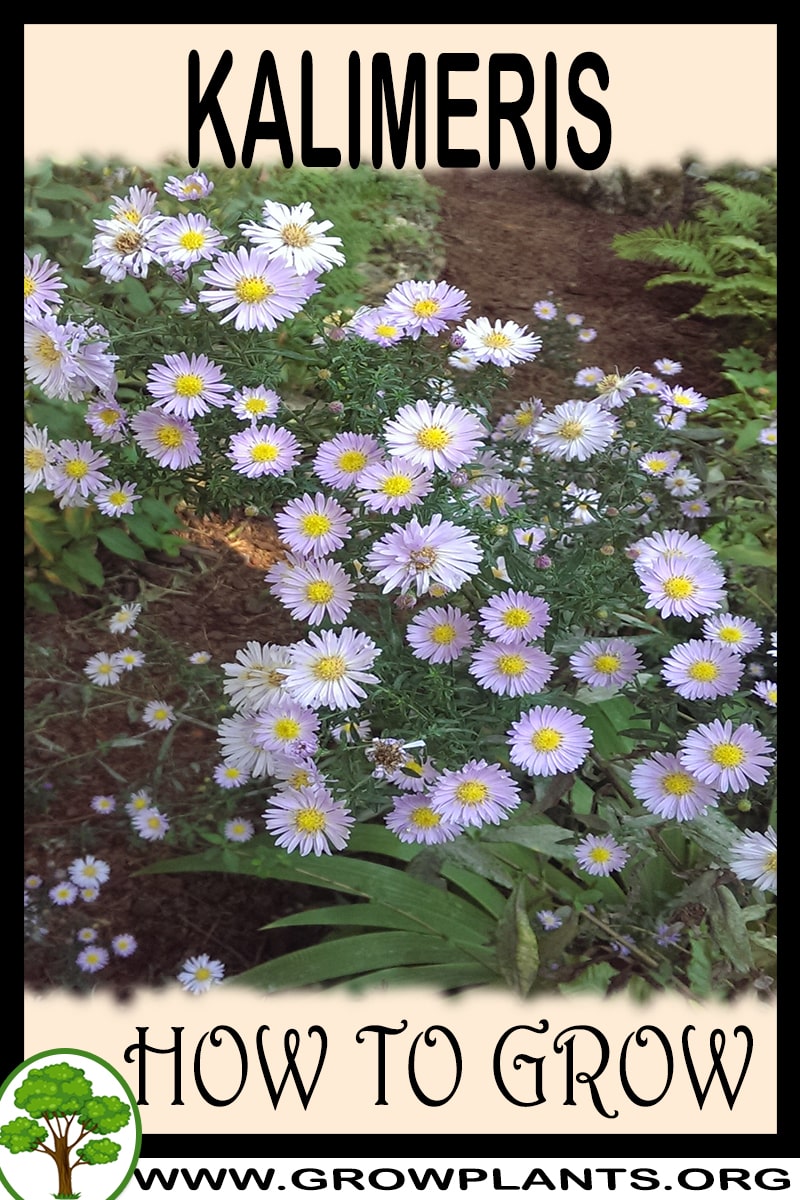
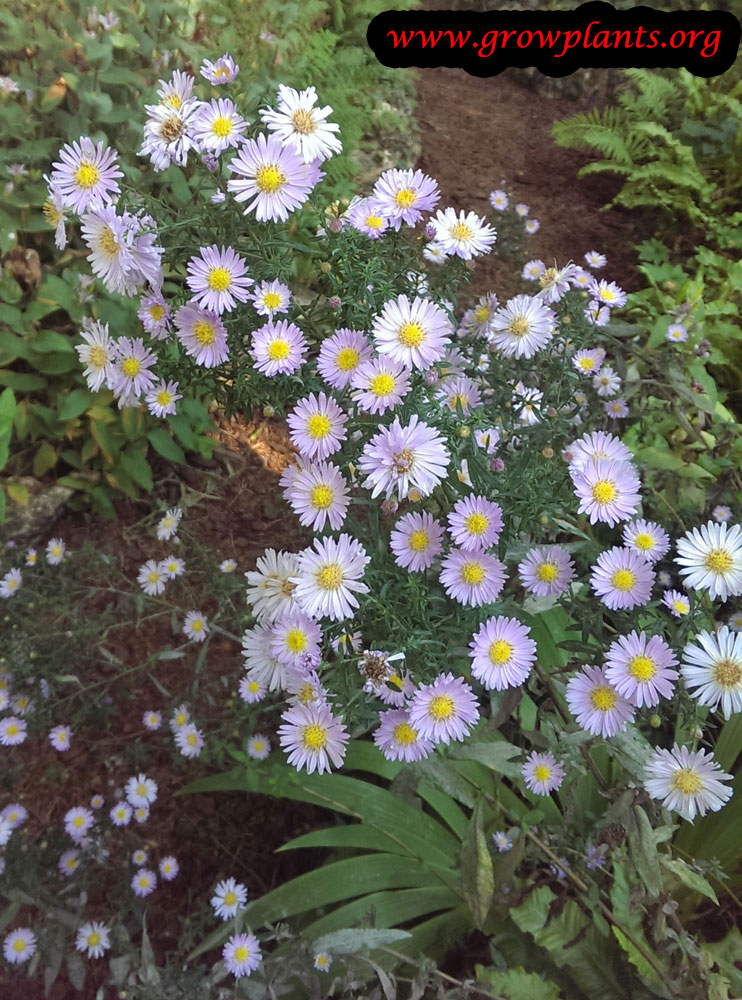
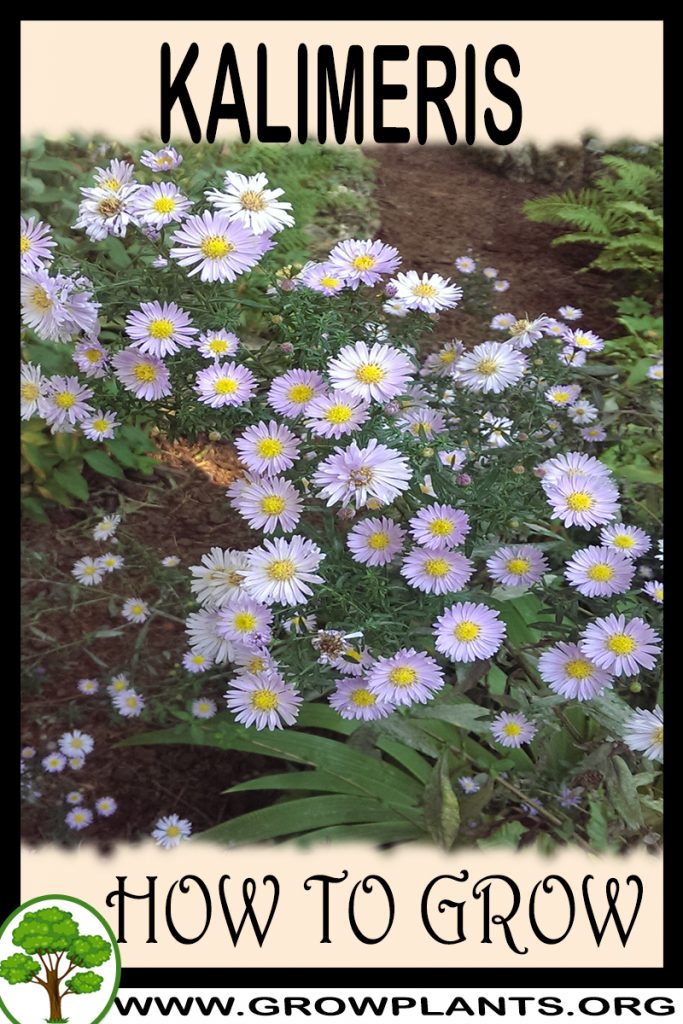
- Flower Characteristics: Fragrant, daisy-shaped flowers in purple, pink or white over a long period.
Primary Uses & Landscape Value
- Functional & Ornamental Roles: Cut flower, fragrant ornamental for borders and containers, pollinator plant; drought tolerant.
Care Guide: Planting, Soil & Watering
Overview: Kalimeris is a tough, drought-tolerant herbaceous perennial (aster relative) for a wide range of climates, hardy roughly to zone 6, that flowers over a long season in full sun to light shade. It asks only for a well-draining soil and moderate, undemanding watering.
Quick Care Requirements
| Requirement | Ideal Condition |
|---|---|
| Planting Season | In spring or summer during the growing season |
| Growth Rate | Moderate to fast |
| Soil Type | Well-draining soil; adaptable and not fussy |
| Water Need | Low to moderate – water when the surface dries; it tolerates some drought |
Planting & Establishment
- Best Planting Season: Plant in spring or summer so it establishes during the active growing season.
- How to Plant:
- Hole Preparation: Dig a hole about twice the width of the root ball and the same depth, loosening the surrounding soil.
- Soil Amendments: A little compost improves an average soil; the main requirement is that the ground drains freely.
- Planting Depth: Set the crown level with the soil surface, keeping it from being buried too deep.
- Growth Speed & Expectations: Moderate to fast, quickly forming a bushy clump smothered in small daisy-like flowers.
Soil, Watering & Drainage Care
- Soil Mix & Drainage Needs: It is easy-going but wants free drainage rather than waterlogged ground; in pots use a standard well-draining potting mix.
- Watering Schedule & Technique:
- Young / Newly Planted: Water regularly to settle newly planted clumps in through their first season.
- Established: Once established it is fairly drought tolerant; water during dry spells but let the soil dry between times.
- Seasonal Adjustments: Water more in summer heat, and little is needed as growth slows into the cooler months.
Climate, Light & Hardiness
Kalimeris is a drought-tolerant, fragrant-flowered perennial daisy for tropical, Mediterranean, desert, subtropical, or temperate gardens, grown in full sun to half shade. Its hardiness range covers cool-temperate winters through mild subtropical ones without needing special winter protection.
Quick Climate Specifications
| Climate Zones | Tropics, Mediterranean, desert, subtropics, temperate |
|---|---|
| USDA Hardiness Zones | Zones 6–10a |
| Frost Tolerance | Moderate |
| Light Conditions | Full sun / half shade |
Sunlight & Light Exposure
Optimal Light Setup
Full sun to half shade both work well; full sun generally gives denser, more floriferous growth.
Temperature Extremes & Hardiness
USDA Hardiness & Regional Limits
Reliable as a perennial through zones 6–10a; outside this range winter cold (below zone 6) or excessive year-round heat (above zone 10a) becomes limiting.
Cold Damage & Winter Protection
Top growth dies back with hard frost but the crown typically survives within its hardy range and resprouts in spring.
Growing in Pots, Balconies & Indoors
Kalimeris (Japanese aster) is a hardy, bushy garden perennial grown for long-lasting little daisies – it is a container and border plant rather than a houseplant, and at up to 1.2 m it is really an outdoor plant that needs full light and a natural winter rest.
Quick Details
- Container Size: A roomy pot, about 15-30 L (4-8 gal), for a clump reaching 0.4-1.2 m (16-48 in)
- Indoor Suitability: Not a houseplant (the grower marks it “No”) – it is a full-sun hardy perennial
- Best Spot: Full sun to half shade; the more sun, the more flowers
- Soil & Drainage: Any decent, free-draining potting mix; it is not fussy
- Watering in Pots: Moderate – keep evenly moist in growth; it tolerates some dryness once established
Indoors & On the Windowsill
- Houseplant limits: The grower marks it as not suitable indoors. As a hardy perennial it needs full outdoor light and a cold winter dormancy, which a warm room cannot give – a windowsill will not keep it healthy long-term.
- Overwintering: Fully hardy, so it stays outside; the top dies back and the clump reshoots each spring. In very hard frost, move the pot against a wall to protect the roots.
On a Balcony or Patio
- Light & wind: A reliable, airy filler for a sunny balcony; taller stems may need light support in wind. Pots dry faster than the border, so check moisture in summer.
- Practicalities: A larger pot gives the clump room to bulk up; make sure water drains freely.
Choosing the Pot, Soil & Long-Term Care
- Pot & drainage: A 15-30 L pot with strong drainage holes; skip a standing water saucer to avoid root rot.
- Potting mix: A general, well-aerated organic mix opened up with a little perlite.
- Feeding: Potted perennials leach nutrients with watering, so feed through the growing season for strong growth and bloom.
- Repotting: Refresh the mix and divide or pot up every couple of years; cut back spent top growth after flowering.
Fertilizing & Feeding
Kalimeris is a drought-tolerant perennial grown for its fragrant, long-lasting daisy flowers and use as a cut flower – it benefits from steady, moderate feeding through its long spring-to-autumn bloom season.
Quick Fertilizing Specs
| Feeding Level | Moderate |
|---|---|
| Main Nutrient Priority | Balanced feeding to sustain foliage and its extended bloom period |
| Best Feeding Period | Spring through autumn while the plant is actively growing and flowering |
| Organic Options | Compost worked into well-drained soil at planting and as a seasonal top-dress |
| Soil pH | Adaptable to a range of well-drained soils |
Feeding by Growth Stage
Spring growth
Support fresh shoot and foliage growth as the plant breaks into active growth
| Nutrient direction | Balanced feeding to fuel vigorous spring growth ahead of the bloom season |
|---|---|
| Timing | Spring, as new growth begins |
| Frequency | Regular light feeding through the spring flush |
| Fertilizer types | Balanced complete fertilizer, Compost top-dress worked lightly into the soil surface |
| Precautions | Avoid heavy nitrogen feeding that produces excess soft growth prone to flopping |
Summer-to-autumn bloom
Sustain the plant’s long, fragrant bloom period valued for cutting
| Nutrient direction | Balanced feeding to keep flower production steady across the extended bloom window |
|---|---|
| Timing | Summer into autumn, through the main flowering period |
| Frequency | Continue regular light feeding through active bloom |
| Fertilizer types | Balanced complete fertilizer suited to flowering perennials |
| Routine trace nutrients | iron, manganese |
| Precautions | Watch drainage in summer heat, since waterlogged roots reduce nutrient uptake regardless of feeding |
Winter dormancy
Allow the plant to rest through its cool-season dormancy
| Nutrient direction | None – withhold fertilizer while the plant is dormant or growing very slowly |
|---|---|
| Timing | Winter, once active growth has stopped |
| Frequency | No feeding at this stage |
| Fertilizer types | No feeding at this stage – resume once spring growth begins |
| Precautions | Do not fertilize dormant plants; feeding at this stage does not benefit the plant and can encourage tender growth vulnerable to cold |
Nutrient Deficiency Signs & Corrections
General pale foliage and fewer, smaller flowers than expected
| Possible causes | Nitrogen deficiency, Poor soil fertility, Competition from spreading roots of its own dense clump |
|---|---|
| Appears first on | Older, lower leaves |
| What to check | Soil fertility and organic matter, Clump density and whether the plant needs dividing, Recent feeding history |
| Possible correction | Amend soil with compost, divide overcrowded clumps if needed, and resume balanced feeding |
Interveinal yellowing on new leaves while the veins stay green
| Possible causes | Iron deficiency, Alkaline soil limiting iron availability, Overly wet, poorly aerated soil |
|---|---|
| Appears first on | Newest growth |
| What to check | Soil pH, Drainage around the roots, Whether yellowing is limited to new leaves |
| Possible correction | Improve drainage, correct pH where testing confirms an issue, and apply a chelated iron product per its label if a true deficiency is confirmed |
Stippled, dull, or discolored foliage that resembles a nutrient problem
| Possible causes | Spider mite or aphid feeding damage, Nutrient deficiency, Water stress |
|---|---|
| Appears first on | Leaves throughout the plant, often starting on the undersides |
| What to check | Undersides of leaves for pests before assuming a nutrient cause, Watering consistency, Overall plant vigor |
| Possible correction | Address any pest issue first, since aphids and spider mites are common on this plant and can mimic nutrient deficiency symptoms |
Pruning, Training & Seasonal Maintenance
Kalimeris is a herbaceous, aster-relative perennial reaching a substantially taller 0.4–1.2m, with no woody or persistent above-ground structure – growth dies back and is renewed from the base each year. Its own facts describe year-round pruning tolerance centered on deadheading and removing dead leaves. Given its height and asterlike habit, this genus also benefits from the same mid-season pinch/cutback technique used on other tall late-summer-blooming asters (a partial shear-back in late spring to early summer) to keep growth bushier and less floppy, alongside deadheading through bloom and a full cutback to the base once the plant dies back for the season.
Quick Pruning & Maintenance Specs
| Pruning Tolerance | High (herbaceous; regrows fully from the base each year) |
| Primary Pruning Window | Late spring–early summer, for a bushiness/height-control pinch |
| Secondary Maintenance Window | Deadheading spring through autumn; base cutback at season’s end |
| Typical Frequency | One shaping pinch in early summer + ongoing deadheading + one autumn/winter cutback |
| Main Objective | Control floppiness on tall stems; sustain repeat bloom; tidy seasonal dieback |
| Young Plant Priority | Light pinch to encourage branching low on the stem |
| Mature Plant Priority | Early-summer pinch/shear-back + continuous deadheading + full autumn/winter cutback |
| Best Tool Type | Precision snips / hand shears; loppers not needed |
| Avoid Heavy Pruning During | Once flower buds are well formed (a late pinch removes the coming bloom) |
Pruning by Plant Age & Size
Newly Established
Let a newly planted clump establish for its first season; limit pruning to removing damaged growth rather than pinching for shape.
Young / Formative
From the second season on, pinch or lightly shear the tips back by a few centimeters in late spring to early summer, before buds form, to encourage bushier, self-supporting growth on this fairly tall herbaceous perennial – no woody framework or leader system applies.
Mature / Established
Deadhead spent flowers through the bloom season to prolong flowering and reduce self-seeding; cut the entire clump back to near ground level once it dies back for the season.
Seasonal Pruning Schedule
Pre-Growth / Early-Spring
Objective: shaping/height control before the season’s growth gets tall. Remove: a light pinch or shear of the tips once new growth is well underway but before bud formation. Do not remove: so much growth that flowering is delayed past the plant’s natural season. Expected response: bushier, sturdier stems less prone to flopping. Flowering impact: a pinch this early does not remove flower buds (none have formed yet) and instead produces more flowering side-shoots.
Ongoing Sanitary
Objective: sustain bloom through the flowering season. Remove: spent flowers and dead leaves, per the plant’s own facts. Do not remove: unopened buds.
Dormant / Winter
Objective: tidy seasonal dieback and reduce overwintering pest/disease material. Remove: the entire top growth, cut back to near ground level once it has died back or gone tatty after frost/season’s end. Do not remove: the crown/roots – this is a herbaceous perennial that regrows from the base.
Structural Pruning & Training
- Height & floppiness control: at up to 1.2m tall with a herbaceous stem, an early pinch/shear-back reduces the need for staking later in the season.
Special Growth to Remove
- Spent flower stems (deadhead).
- Dead leaves through the season.
- All top growth once it dies back at season’s end.
Container & Small-Space Pruning
Kalimeris grows well in containers (per facts). Given its height, pinch a bit harder and earlier in a pot than in the ground to keep the plant proportionate and reduce top-heaviness/staking needs in a container’s more limited root run.
Tools
Precision snips or hand shears for the early-summer pinch and deadheading; nothing larger is needed since this is a fully herbaceous perennial with no woody stems.
Tool Hygiene & Disease Risk
Routine: clean tools are sufficient. Watch for aphids and spider mites (per this plant’s own pest facts) on fresh growth after the early-summer pinch.
Cut Placement & Technique
Pinch or shear stem tips just above a leaf node; deadhead individual flowers back to the next leaf pair or side bud; for the seasonal cutback, cut all stems down to near ground level.
Post-Pruning Care
Water normally after the early-summer pinch; no extra feeding is needed to sustain regrowth or bloom. After the season-end cutback, no special aftercare beyond normal seasonal bed maintenance is required, since the plant is dormant at the roots.
Common Pruning Mistakes
- Pinching too late, after flower buds have already formed, which removes the coming bloom instead of multiplying it.
- Skipping the season-end cutback and leaving tatty dead growth over winter.
- Letting an unpinched clump grow tall and unsupported, leading to flopping.
When NOT to Prune
Avoid the shaping pinch once flower buds are well formed – by that point cutting back removes the coming display rather than improving it. Deadheading and the end-of-season cutback remain fine at any point in their respective windows.
Recommended Tools (by task)
- precision_snips – for deadheading and the early-summer shaping pinch.
- hedge_shears – a quick option for the once-a-year all-over early-summer shear-back on an established clump, faster than snipping stem by stem.
Propagation Guide
Kalimeris is a clump-forming herbaceous perennial most practically increased by dividing the clump or by stem cuttings, both of which reproduce a specific plant true to type and establish quickly; seed is a workable alternative for the species but is slower and less commonly used once a good-sized clump exists to divide. Overall propagation is easy.
Quick Propagation Specs
| Best Propagation Method | Division of the clump |
| Alternative Methods | Stem cuttings, seed |
| Propagation Difficulty | Easy |
| Seed True-to-Type | Usually true-to-type for the species; named selections best kept true by division or cuttings |
| Vegetative True-to-Type | Yes |
| Best Propagation Season | Spring, as new growth begins, matching the plant’s spring/summer planting season |
| Seed Germination Time | Typically a few weeks |
| Cutting Rooting Time | Usually roots within a few weeks in warm conditions |
| Time Until Division Establishes | Generally settles in and resumes growth within the same growing season |
| Germination Temperature | Around room temperature, roughly 18–22°C (64–72°F) |
| Seed Sowing Depth | Shallow; surface sow or barely cover fine seed |
Growing from Seed
Sowing Season
Sow in spring, matching the plant’s own planting season.
Sowing Depth & Orientation
Sow on the surface or just barely covered, since the seed is fine.
Germination Conditions
Keep the medium lightly moist, warm and in full sun to half shade.
Germination Time
Typically a few weeks, with some variability in emergence.
Seedling Care
Grow on with an average amount of water, moderating toward less as the plant is somewhat drought tolerant once established.
Stem Cuttings
Cutting Type
Softwood tip cuttings taken from young, non-flowering shoots.
Best Timing
Spring to early summer, during active growth.
Cutting Preparation
Trim just below a node and remove the lower leaves before inserting.
Rooting Setup
Insert into a well-drained, lightly moist mix; keep humid and in bright, indirect light until rooted.
Rooting Hormone
Optional – beneficial for faster, more even rooting but not essential.
Rooting Time
Usually a few weeks under warm, humid conditions.
Division, Offsets, Pups & Suckers
Kalimeris spreads gradually from a clump with shallow, somewhat spreading roots, and mature clumps (the plant can reach roughly 0.4–1.2 m) can be lifted and divided once they are large enough to split into several rooted sections.
- Best done in spring as new shoots emerge, or in early autumn in mild climates.
- Each division should include several shoots with a good portion of roots attached.
- Reducing the top growth by around half at planting helps the division establish with less stress.
- Replant promptly and keep evenly moist until new growth confirms the division has taken.
Bloom & Flower Guide
Quick Details
- Bloom Season: Spring through autumn – one of the longest seasons of any perennial daisy
- Time to First Bloom: As a perennial it usually flowers from the second year; established clumps bloom for months each season
- Flower Appearance: Small, lightly fragrant daisy flowers in purple, pink or white with a yellow center
- Edibility: Grown as an ornamental and cut flower; not used as an edible flower
Detailed Blooming Overview
Kalimeris, or Japanese aster, is one of the most rewarding and trouble-free of the aster tribe. Its airy sprays of small daisies carry on for months with little fuss, offering a long run of nectar for bees and butterflies.
Flower Characteristics
- Neat, small daisies held in an open, airy spray over slender foliage.
Bloom Care & Thinning
- Managing the bloom: A single shear after the first flush keeps the plant tidy and extends the display; it also makes a good cut flower.
- Pollination: Pollinated by bees and butterflies.
Pests, Diseases & Troubleshooting
Overview: Kalimeris (Japanese aster) is a tough, largely trouble-free Asteraceae perennial. Its few issues are the usual daisy-family sap-suckers – aphids, spider mites, thrips and leafhoppers – with powdery mildew in humid, crowded plantings and, rarely, aster yellows. Given sun, decent airflow and division every few years it is one of the more disease-resistant asters.
Quick Troubleshooting Overview
| Issue / Pest | Main Symptom | Primary Solution |
|---|---|---|
| Aphids | Sticky, distorted new shoots and buds | Water jet; insecticidal soap; beneficials |
| Spider mites | Stippled, bronzed leaves and webbing in dry heat | Hose foliage; raise humidity; miticidal soap |
| Thrips & leafhoppers | Silvery flecking; hoppers spread aster yellows | Sticky traps; control weeds; remove infected plants |
| Powdery mildew | White powdery film on leaves | Airflow, divide clumps; sulfur / bicarbonate |
| Aster yellows | Distorted, greenish, stunted flowers | No cure – remove and destroy infected plants |
| Flopping | Stems sprawl in rich soil or shade | Grow leaner, in full sun; cut back or support |
Common Pests & Management
- Aphids (Aphis / Macrosiphum spp.):
- Symptoms: Clusters of soft insects on tender shoot tips and flower buds, with sticky honeydew, curled new leaves and sooty mold.
- Prevention & Control: Knock them off with a water jet, encourage ladybirds, lacewings and hoverflies, and use insecticidal soap only for stubborn colonies.
- Spider mites (Tetranychus urticae):
- Symptoms: Fine stippling, a dull bronzed cast and faint webbing under the leaves during hot, dry spells.
- Prevention & Control: Rinse foliage, keep plants from drought-stressing, and treat with insecticidal soap or a miticidal soap; healthy, well-watered clumps rarely suffer.
- Thrips (Frankliniella spp.):
- Symptoms: Silvery flecking and distorted, discolored petals and leaves, with tiny slender insects visible in the flowers.
- Prevention & Control: Use sticky traps to monitor, remove badly affected blooms, encourage predatory mites and lacewings, and spray insecticidal soap or spinosad if numbers climb.
- Leafhoppers (Macrosteles / Aster leafhopper):
- Symptoms: Small wedge-shaped insects that hop when disturbed, causing pale stippling – important mainly because they transmit aster yellows.
- Prevention & Control: Control nearby weed hosts, use floating row cover on young plants, and remove infected plants promptly; insecticidal soap reduces numbers.
Diseases & Fungal Issues
- Powdery mildew (Erysiphe / Golovinomyces spp.):
- Symptoms: White powdery patches on leaves and stems, worst in crowded, humid, poorly ventilated clumps late in the season.
- Treatment & Management: Space and divide clumps for airflow, water at the base, remove affected foliage, and treat with sulfur or potassium-bicarbonate fungicide if it spreads.
- Aster yellows (Phytoplasma (Candidatus Phytoplasma asteris)):
- Symptoms: Distorted, stunted growth with greenish, deformed flowers and yellowed foliage; a systemic disease spread by leafhoppers, not a fungus.
- Treatment & Management: There is no cure – dig up and destroy infected plants at once, control leafhoppers and weed reservoirs, and do not compost affected material.
- Rust & leaf spot (Puccinia / Septoria spp.):
- Symptoms: Orange pustules or brown leaf spots, mostly cosmetic and uncommon on this resilient perennial.
- Treatment & Management: Remove affected leaves, improve airflow and avoid overhead watering; fungicide is seldom warranted.
Growing Difficulties & Abiotic Problems
- Flopping / sprawl:
- Cause & Symptoms: Tall stems flop and open up in the center when grown in over-rich soil, too much shade, or left undivided too long.
- Correction Strategy: Grow in full sun and lean soil, divide every few years, and cut plants back by a third in early growth or provide discreet support for a bushier, self-supporting habit.
- Poor bloom / weak growth:
- Cause & Symptoms: Sparse flowering and thin growth in too much shade or overcrowded, tired clumps.
- Correction Strategy: Site in full sun, divide congested clumps to rejuvenate them, and feed modestly; over-feeding favors leaf over flower.
- Drought stress:
- Cause & Symptoms: Wilting, scorched leaf edges and mite susceptibility in prolonged dry heat.
- Correction Strategy: Water deeply in dry spells and mulch to conserve moisture, though established plants are fairly drought-tolerant.
What Helps – Products & Tools
Kalimeris rarely needs spraying. Cultural care carries it: full sun, lean soil, airflow and periodic division. For pests, a water jet and insecticidal soap handle aphids, mites and thrips, and sticky traps plus weed control limit leafhoppers. Sulfur or potassium-bicarbonate fungicide treats powdery mildew. There is no cure for leafhopper-spread aster yellows – remove and destroy affected plants. Spray any oils/soaps in the evening to protect pollinators.