

Plant Profile & Key Characteristics
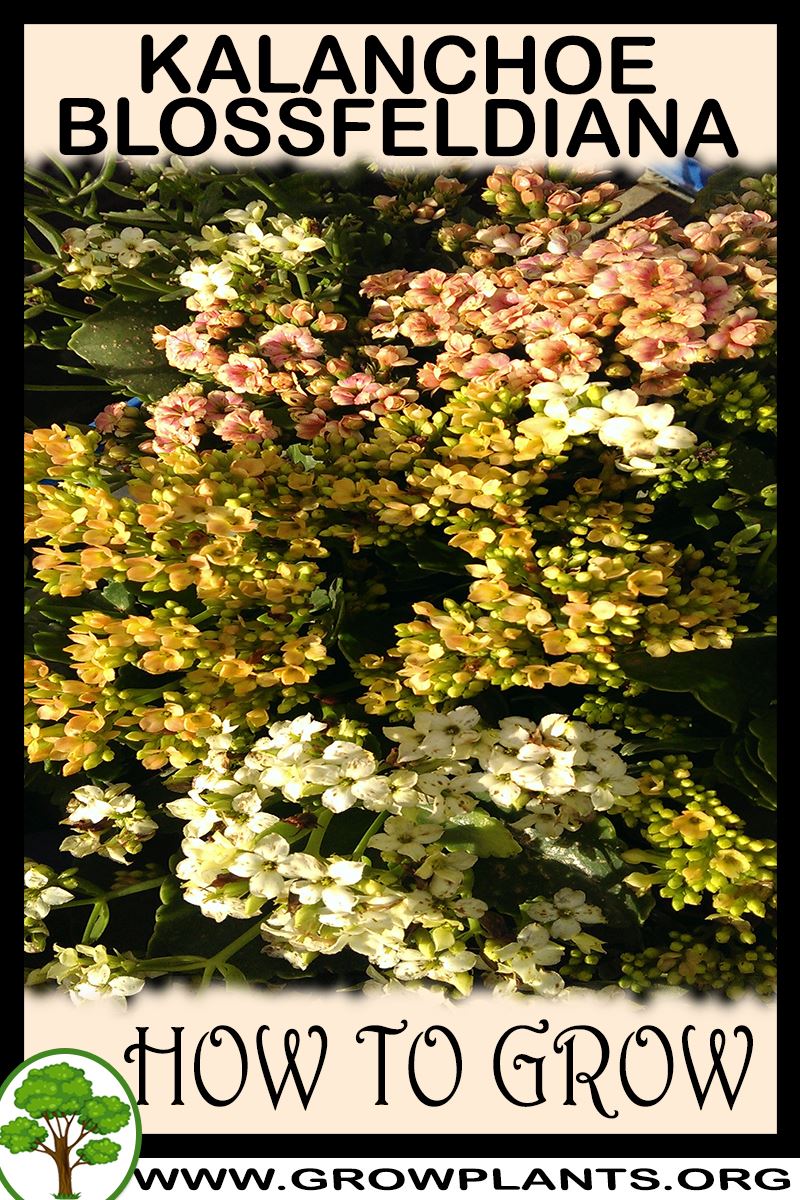
Overview: Kalanchoe blossfeldiana (Flaming Katy) is a compact evergreen succulent 10–40 cm (4–16 in) tall, popular as a flowering houseplant and container plant. It carries dense clusters of long-lasting flowers in a wide colour range.
Quick Specifications
| Specification | Attribute |
|---|---|
| Plant Type / Life Cycle | Perennial |
| Foliage Type | Evergreen (succulent) |
| Mature Size | 10–40 cm tall (4–16 in) |
| Growth Rate | Slow |
| Root System | Fibrous and shallow (typical of succulents) |
| Toxicity | Toxic – contains cardiac glycosides (bufadienolides); harmful to cats, dogs and livestock if ingested |
| Hardiness | USDA zones 10+ |
Growth Form & Structure
- Height & Spread: A compact succulent 10–40 cm (4–16 in) tall, excellent as a houseplant and in containers.
- Growth Habit & Form: Bushy, mounded subshrub of fleshy stems.
Anatomy & Physical Features
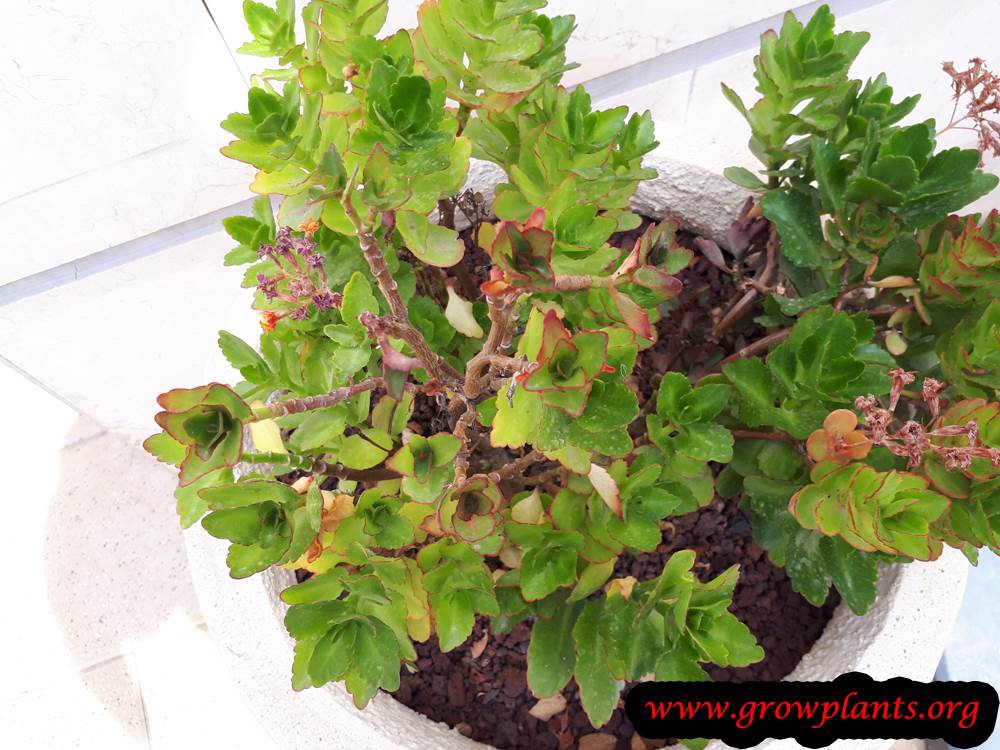
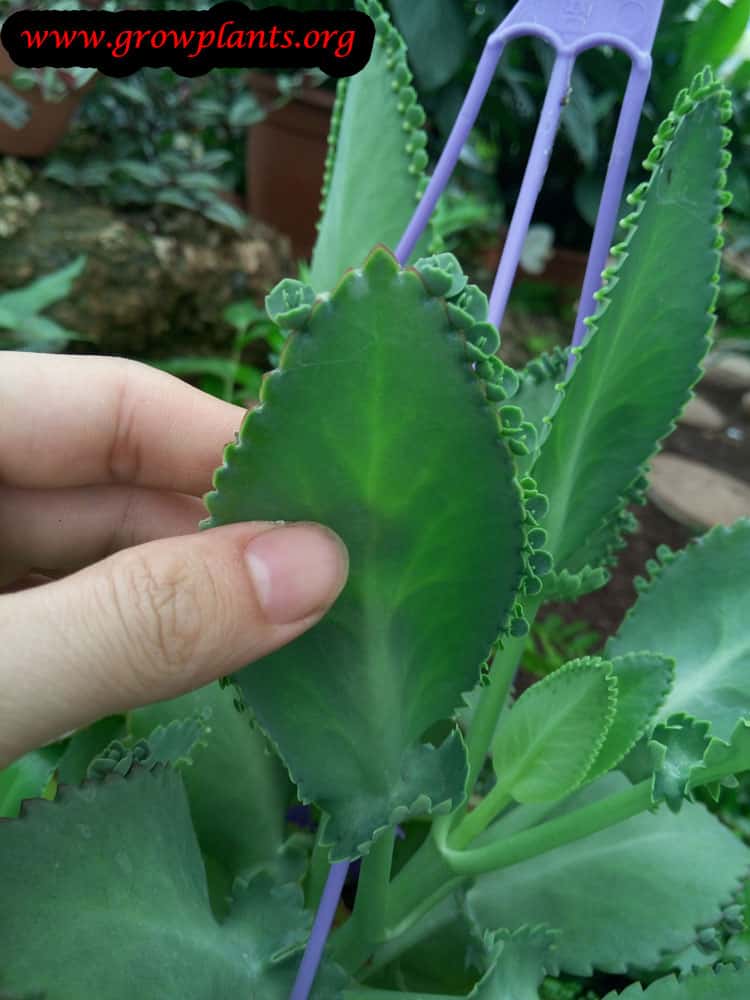
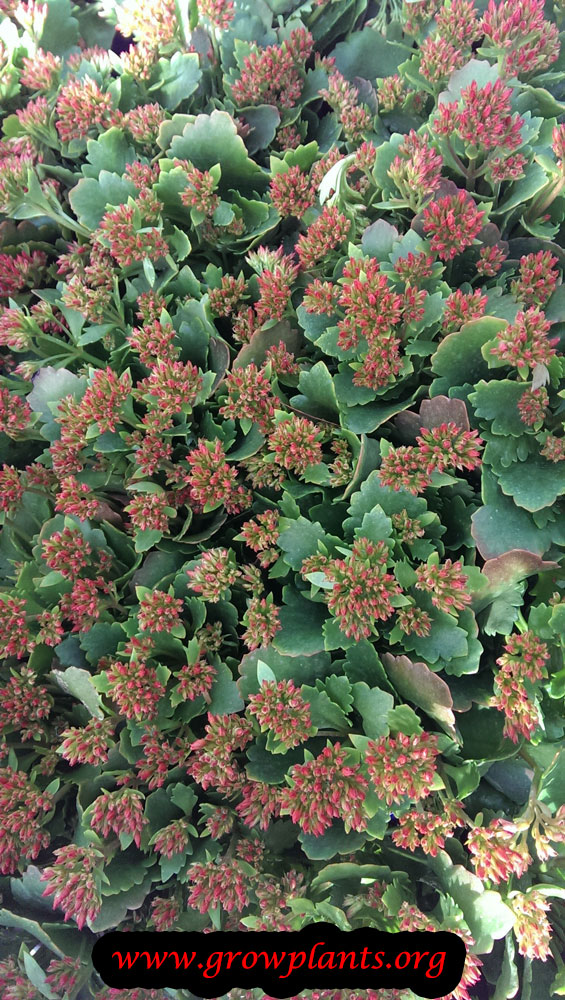
- Leaves & Foliage: Rounded to elliptic, fleshy green leaves with scalloped (serrated) edges.
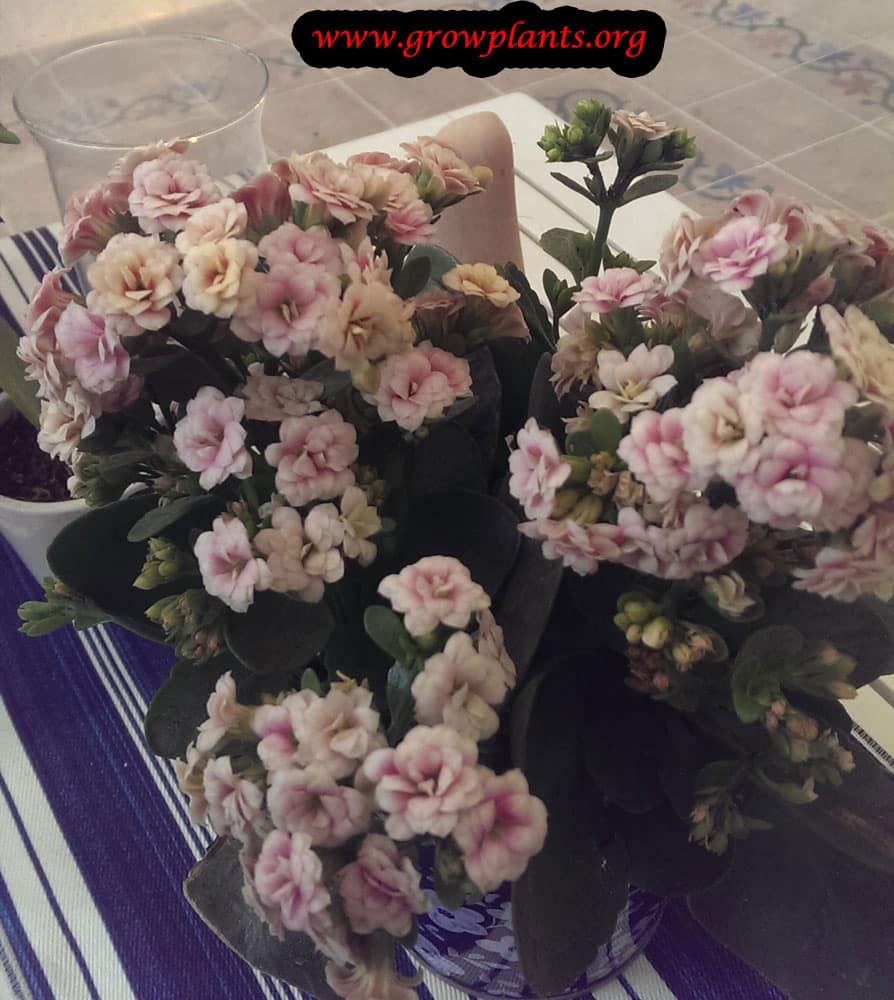
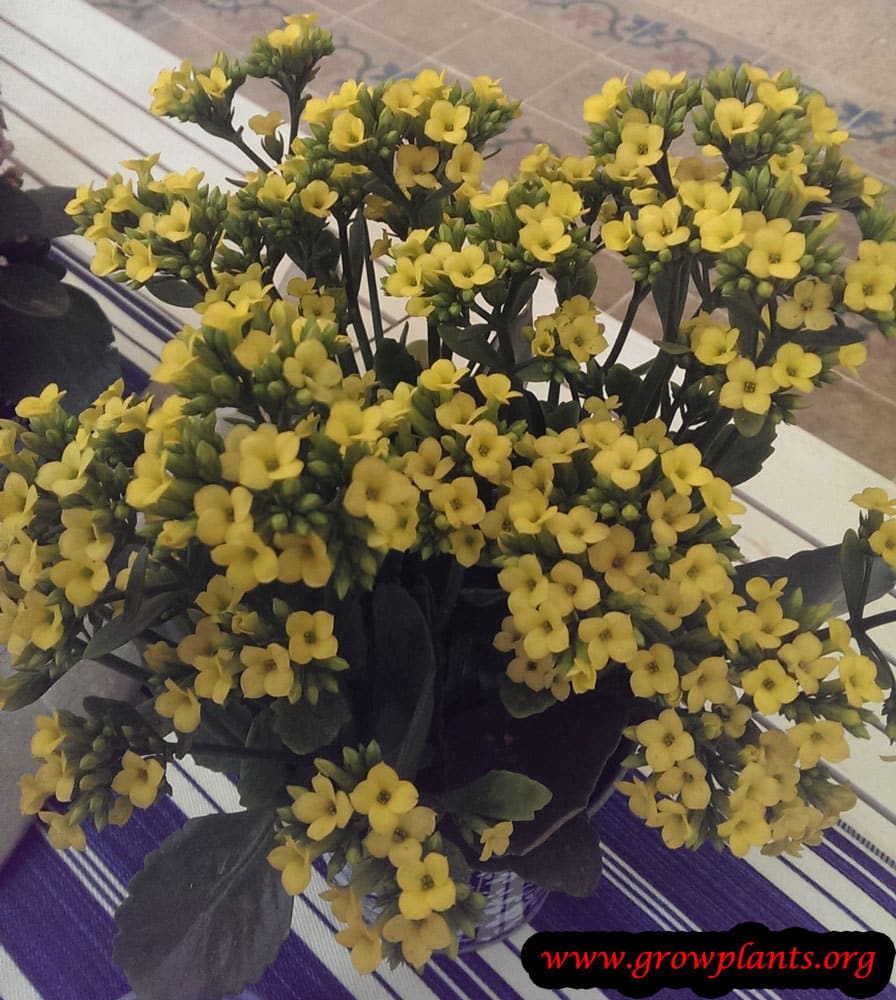
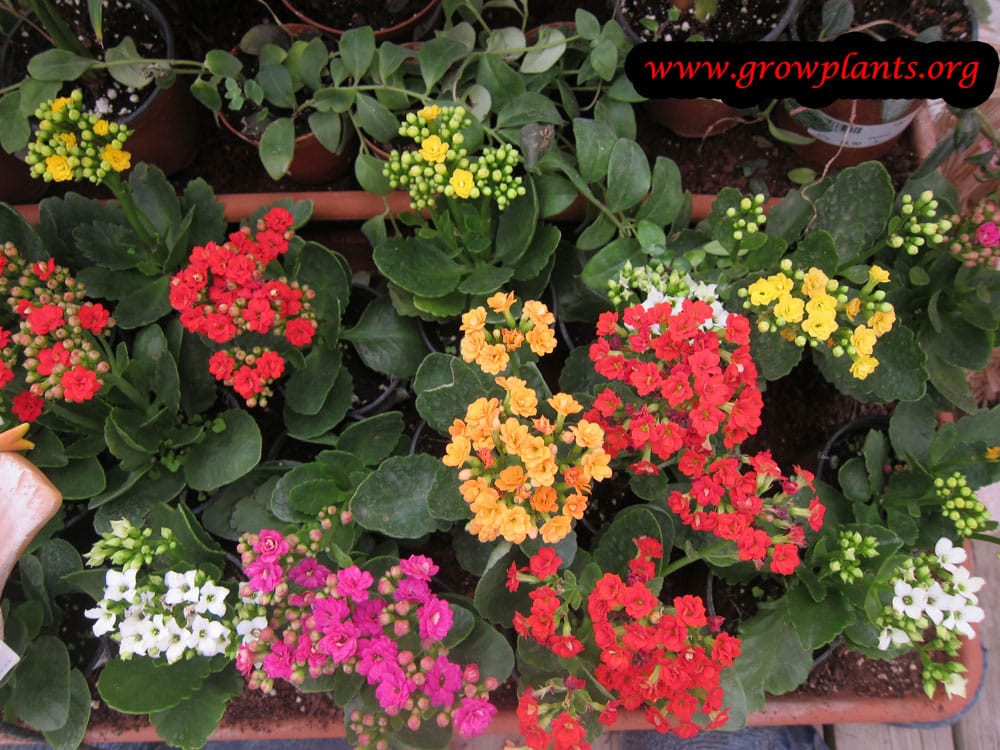
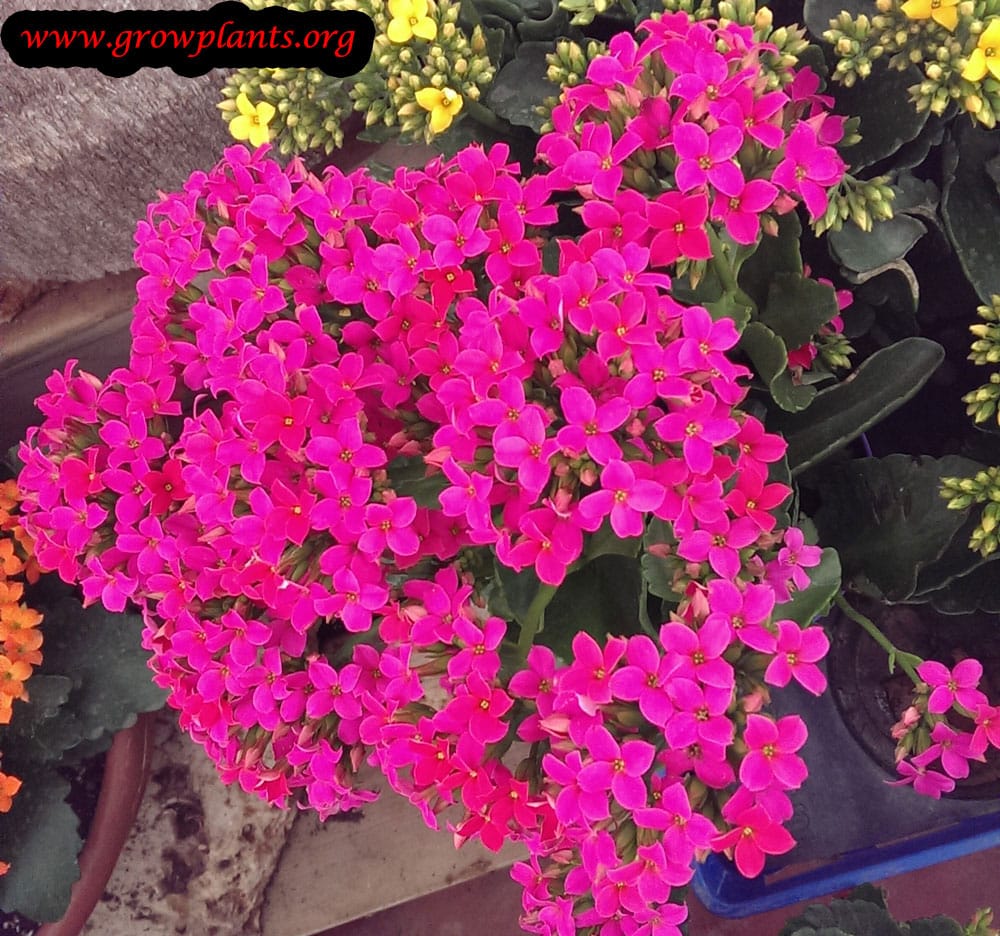
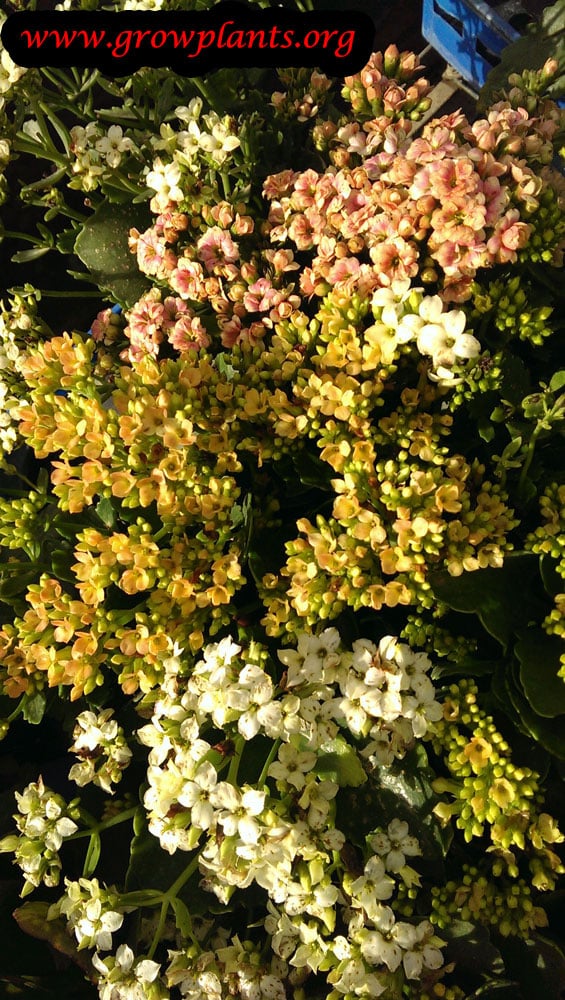
- Flower Characteristics: Small flowers in dense clusters in orange, yellow, red, purple, white or pink; long-flowering, often autumn to winter or year-round.
Primary Uses & Landscape Value
- Functional & Ornamental Roles: One of the most popular flowering houseplants; used in containers and mass ornamental display; can naturalise and spread in mild climates.
Care Guide: Planting, Soil & Watering
Overview: This Kalanchoe is a drought-tolerant succulent for warm, frost-free climates (desert, mediterranean and subtropical) that stores water in its fleshy leaves. It needs a gritty, free-draining soil and only occasional watering, thriving in full sun to light shade.
Quick Care Requirements
| Requirement | Ideal Condition |
|---|---|
| Planting Season | Year-round in frost-free, warm conditions |
| Growth Rate | Slow |
| Soil Type | Gritty, free-draining mix (cactus/succulent mix or sandy soil) |
| Water Need | Low – water sparingly and let the soil dry out between waterings; avoid overwatering |
Planting & Establishment
- Best Planting Season: In frost-free climates it can be planted almost any time; elsewhere plant in the warm season and grow it as a houseplant where winters are cold.
- How to Plant:
- Hole Preparation: Make a planting pocket about as deep as the root ball and a little wider, in fast-draining ground or a raised gritty bed.
- Soil Amendments: Open up the soil with coarse sand, grit or a cactus mix rather than heavy, moisture-holding material; keep the site sharply drained.
- Planting Depth: Set the plant so the base of the stem sits at soil level; do not bury the fleshy stem, which can rot if kept wet.
- Growth Speed & Expectations: Slow-growing; the compact Flaming Katy stays small (about 10 to 40 cm) and flowers heavily in cool conditions.
Soil, Watering & Drainage Care
- Soil Mix & Drainage Needs: Sharp drainage is essential to prevent root and stem rot. In containers use a cactus or succulent mix, add a layer of grit at the base, and make sure the pot drains freely. It enjoys a rich but free-draining mix and prefers cool, bright conditions.
- Watering Schedule & Technique:
- Young / Newly Planted: Water lightly after planting and then only when the soil has dried, letting new roots reach for moisture.
- Established: Water sparingly once established, giving a thorough drink and then letting the soil dry out completely before the next.
- Seasonal Adjustments: Water a little more in the heat of summer growth, and keep it nearly dry through the cool, low-light winter months. Indoors, take care not to overwater and give it a bright spot.
Climate, Light & Hardiness
Kalanchoe blossfeldiana (Flaming Katy) is a compact succulent for Mediterranean, desert, and subtropical climates, and it is very widely grown as a houseplant. It grows in half shade to full shade rather than harsh direct sun, and the site data calls for frost-free, cool conditions with some humidity rather than intense heat.
Quick Climate Specifications
| Climate Zones | Mediterranean, Desert, Subtropical |
| USDA Hardiness Zones | Approximately 10 and warmer |
| Optimal Temp Range | Approximately 15–24°C (59–75°F); the site notes it prefers cool weather over intense heat |
| Cold Damage Begins | As temperatures approach freezing (around 0°C / 32°F) |
| Approx. Survival Minimum | The site specifies frost-free conditions; it is not expected to tolerate freezing temperatures |
| Frost Tolerance | None |
| Light Conditions | Half Shade / Full Shade |
Sunlight & Light Exposure
Optimal Light Setup
Bright, indirect light to half shade suits it best; the site data does not list full sun as optimal, and this plant is commonly grown as a shaded or indoor bright-light specimen.
Direct Sun Requirement
Not required, and harsh direct sun (especially through glass indoors) can scorch the leaves and fade flower color.
Shade & Heat Management
Its shade tolerance is an asset in hot climates; the site's note about preferring cool weather suggests protecting it from prolonged intense heat, which can shorten flowering and stress the plant.
Best Exposure/Orientation
A bright, indirectly lit windowsill indoors, or a lightly shaded outdoor spot in mild climates.
Temperature Extremes & Hardiness
USDA Hardiness & Regional Limits
The site places it in hardiness zone 10 and warmer, and specifically notes it needs frost-free conditions; outside that range it is grown strictly as a houseplant or seasonal annual.
Cold Damage & Winter Protection
Keep it well away from cold drafts and frost at all times; as a houseplant, avoid cold windowsills in winter.
Frost Sensitivity
High - the plant has no meaningful frost tolerance and should be kept frost-free year-round.
Extreme Heat Tolerance
Limited - the site's mention of cool weather as a care requirement suggests it performs best avoiding prolonged, intense heat, unlike many other succulents.
Wind, Humidity & Microclimate
Humidity Preferences
The site specifically calls for humidity; it benefits from more moisture in the air than typical desert succulents.
Dry-Air Tolerance
Moderate - it can adapt to average indoor air but does better with some added humidity, especially indoors in winter with heating running.
Wind Tolerance
Low; as a small, shade-loving plant it is best kept in a sheltered spot rather than exposed to strong wind.
Rainfall & Seasonal Moisture
Prefers consistently available moisture in rich soil rather than the pronounced dry season many succulents tolerate; avoid letting it dry out completely.
Microclimate Recommendations
A sheltered, shaded to bright-indirect spot with some humidity and protection from both frost and harsh heat suits it best.
Growing in Pots, Balconies & Indoors
Kalanchoe blossfeldiana (flaming Katy) is a compact succulent that makes an easy, good-looking houseplant or patio-pot plant. It stays small, stores its own water and asks mainly for light and sharp drainage. Indoors it needs your brightest window – in a room’s weaker light it stretches and softens.
Quick Details
- Container Size: A pot a size or two larger than the root ball, with strong drainage holes
- Indoor Suitability: A good little houseplant in a bright spot
- Best Spot: Bright, indirect light – it flowers best in good light, out of harsh midday sun
- Soil & Drainage: Free-draining cactus/gritty mix – drainage is everything
- Watering in Pots: Water only when the mix has dried out; pots must never stay soggy
Indoors & On the Windowsill
- As a houseplant: Yes – it grows happily indoors given enough light. Stand it at your brightest window (south or west facing) so growth stays tight and well coloured rather than pale and drawn.
- Windowsill growing: Its compact size suits a sunny sill; turn the pot now and then for even growth, and water only when the mix is dry.
- Overwintering: In cold climates a pot lets you bring it indoors to a bright, cool, frost-free spot over winter.
- Keep it safe: Kalanchoe is toxic if eaten – keep it out of reach of children and pets.
On a Balcony or Patio
- Light, heat & wind: Give it the brightest spot you have; walls and railings throw back a lot of heat and pots dry fast, so check the mix often in warm weather. Move tender succulents under cover before frost.
- Practicalities: Raise the pot on feet so water drains away freely and does not pool on the balcony floor.
Choosing the Pot, Soil & Long-Term Care
- Pot & drainage: Use a pot with strong drainage holes and skip a standing saucer of water – wet feet are the fastest way to rot a succulent. Terracotta breathes and dries quickly, which suits it well; glazed or plastic holds moisture longer, so water more sparingly.
- Potting mix: A free-draining cactus/succulent mix, or a standard mix opened up with plenty of perlite, pumice or coarse sand; a layer of gravel, lava rock or pebbles in the base helps water clear.
- Feeding: Potted plants use up their soil, so feed lightly once or twice through the growing season with a dilute cactus or balanced feed – far less than a leafy houseplant needs.
- Refreshing the mix: After a couple of years the mix stops draining freely – tip the plant out, trim any tired roots and repot into fresh gritty mix.
For indoor light, watering, and the exact routine to get it to rebloom, see our complete Kalanchoe indoor care and reblooming guide.
Growing this plant in a greenhouse
A greenhouse can give kalanchoe blossfeldiana frost protection and cold protection.
Greenhouse at a glance
| Greenhouse suitability | Good - clearly useful |
|---|---|
| Main benefits | frost protection, cold protection |
| Outdoor protection advisable below | about 5°C |
| Maintain greenhouse minimum | around 5°C for active growth |
| Suitable types | unheated greenhouse, polycarbonate greenhouse |
| Heating | Heating is optional - useful mainly for winter growing in cold areas. |
Related greenhouse guides
- Greenhouses: How to Choose the Right Greenhouse
- Polycarbonate Greenhouses: What to Look for Before Buying
- Greenhouse Climate Control: Temperature, Ventilation and Humidity
Fertilizing & Feeding
A light feeder: this compact flowering succulent is usually grown as a gift or seasonal houseplant, and modest, balanced feeding supports its long-lasting flower clusters without pushing soft growth.
Quick Fertilizing Specs
| Feeding Level | Light feeder |
|---|---|
| Main Nutrient Priority | Balanced feeding kept light so bloom quality is not traded for soft leafy growth |
| Best Feeding Period | While the plant is actively growing between bloom cycles |
| Organic Options | A light organic top-dressing or compost-enriched potting mix |
| Reduce/Stop Feeding | Hold off feeding while flowers are in full display and while growth is resting between bloom flushes |
| Micronutrients | Rarely needed in a good potting mix; treat only a diagnosed issue |
| Soil pH | Prefers a well-drained potting mix; tolerates a range around slightly acidic to near neutral |
Feeding by Growth Stage
Vegetative regrowth after flowering
Rebuild leafy growth and set up the next round of flower buds after a bloom cycle finishes.
| Nutrient direction | A light, balanced feeding supports fresh leaf growth and prepares the plant for its next flush of buds. |
|---|---|
| Timing | As new leaf growth resumes once the previous flowers fade and are removed. |
| Frequency | Light, occasional feeding while active vegetative growth is visible. |
| Fertilizer types | A diluted balanced houseplant fertilizer, A compost-enriched potting mix refreshed at repotting |
| Precautions | Keep feeding light; rich or frequent feeding pushes soft leaves at the expense of the next bloom. |
Flowering
Sustain the long-lasting cluster of flowers through its display.
| Nutrient direction | Feeding needs are minimal once flowering is underway; the plant is drawing on growth built up beforehand. |
|---|---|
| Timing | Through the flowering display, which can run for an extended period. |
| Frequency | Feeding is rarely needed while flowers are in full display. |
| Fertilizer types | A very diluted balanced fertilizer only if growth clearly continues alongside flowering |
| Precautions | Avoid pushing extra feeding during peak bloom; it does little for the current flowers and can shorten the display. |
Rest between bloom cycles
Let the plant pause without feeding pressure between one bloom cycle and the next flush of growth.
| Nutrient direction | None – withhold fertilizer while the plant is neither actively growing nor flowering. |
|---|---|
| Timing | During any lull after flowers fade and before new leaf growth clearly resumes. |
| Frequency | No feeding at this stage. |
| Fertilizer types | No feeding at this stage; do not fertilize until new growth or the next bloom cycle begins. |
| Precautions | Do not fertilize during this rest; feeding a plant that is not actively growing risks salt buildup in the potting mix. |
Nutrient Deficiency Signs & Corrections
Leaves overall look pale and undersized and new growth between bloom cycles is weak.
| Possible causes | low available nitrogen in old, depleted potting mix, nutrients leaching out with routine watering, root stress limiting nutrient uptake |
|---|---|
| Appears first on | older, lower leaves |
| What to check | feeding history, age of the potting mix, root and base condition |
| Possible correction | Give a light, diluted balanced feeding during active vegetative growth, or refresh old potting mix. |
Leaf edges show yellowing or scorch and flower clusters come smaller or fewer than expected.
| Possible causes | low potassium relative to nitrogen in recent feeding, an imbalanced or overly diluted feeding program, old potting mix that no longer supplies balanced nutrition |
|---|---|
| Appears first on | older leaf margins |
| What to check | recent fertilizer balance, condition of the potting mix, overall plant vigor |
| Possible correction | Shift to a balanced feeding during vegetative growth rather than a nitrogen-heavy one. |
New leaves emerge pale yellow while the veins stay green.
| Possible causes | alkaline tap water or high potting-mix pH tying up available iron, compacted or waterlogged potting mix limiting root uptake, old potting mix that no longer supports good root function |
|---|---|
| Appears first on | newest growth |
| What to check | irrigation water and mix pH, drainage and root health, how long since repotting |
| Possible correction | Improve drainage and check water/mix pH first; apply a chelated iron product per its label only if the pattern persists. |
Pruning, Training & Seasonal Maintenance
Kalanchoe blossfeldiana is grown for its flowers, not its foliage, and it blooms in response to short day length (naturally autumn/winter, though growers can force it into bloom nearly any time). Pruning tolerance is high but the timing is what matters most: deadheading keeps the display tidy and encourages further buds, while any pinching or cutback needs to stop several weeks before the plant is due to set buds, or it will simply delay flowering. This species can also naturalize in warm frost-free climates, so removing spent flowers before they set seed is a secondary benefit beyond tidiness.
Quick Pruning & Maintenance Specs
| Pruning Tolerance | High for pinching/deadheading; avoid only near bud-set |
| Primary Pruning Window | Ongoing deadheading through the bloom period |
| Secondary Maintenance Window | After a bloom flush finishes, for a light cutback and reshaping |
| Typical Frequency | Deadhead as flowers fade; pinch young plants every couple of weeks during vegetative growth |
| Main Objective | Prolong/renew bloom and keep a compact habit |
| Young Plant Priority | Pinch tips repeatedly to build a bushy, many-branched plant before it’s allowed to bud |
| Mature Plant Priority | Deadhead spent flower clusters; cut back leggy growth after a bloom cycle |
| Best Tool Type | Precision snips (soft, small-diameter growth throughout) |
| Avoid Heavy Pruning During | The 6–8 weeks before an expected bloom period, once buds are initiating |
Pruning by Plant Age & Size
Newly Established
Once rooted and growing, pinch the growing tip to start branching early – unpinched plants stay single-stemmed and flower less abundantly.
Young / Formative
Repeated pinching (no formal training system needed at this scale) is what builds the dense, many-branched mound that this species is sold for. Stop pinching well before the desired bloom window so flower buds have time to initiate and develop.
Mature / Established
Deadhead individual spent flower clusters back to a leaf node as they fade; once a whole bloom flush is over, a light all-over cutback can reshape a leggy plant and reset it for the next pinch-and-bud cycle.
Seasonal Pruning Schedule
| Post-Flowering | Objective: renew the plant for the next bloom cycle. Remove: spent flower stems/clusters; lightly cut back any leggy stems. Avoid: cutting so late that it removes next season’s forming buds. Response: stimulates fresh vegetative growth that can later be pinched and allowed to bud again. |
| Ongoing Sanitary | Objective: reduce pest/disease pressure and prevent unwanted seeding. Remove: individual faded flowers before they set seed; leaves affected by powdery mildew or carrying aphids. Response: none structurally; limits self-seeding in warm climates where this species can naturalize. |
Structural Pruning & Training
No formal framework – this is a small, soft-stemmed subshrub. Pinching is the only “structural” tool, used purely to multiply branch tips (and therefore flower clusters) rather than to manage size on a woody frame.
Special Growth to Remove
- Spent flower clusters – deadhead back to a leaf node as each fades, both for appearance and to limit self-seeding where this species is known to naturalize.
- Leggy or stretched stems – cut back lightly after a bloom flush to keep the plant compact.
- Powdery-mildew or aphid-affected leaves – remove promptly.
Container & Small-Space Pruning
This species is almost always grown as a small potted plant, indoors or out. Frequent, light pinching matters more here than any structural technique – it is how compact, floriferous retail-style plants are produced. No root pruning is relevant at this scale; simply repot as the small root system fills the pot.
Tools
- Precision snips – the only tool really needed; all growth is soft and small in diameter.
Tool Hygiene & Disease Risk
Increased – powdery mildew and aphids are both noted issues on this species. Remove affected material promptly, avoid pinching wet foliage, and wipe the blade if moving between an affected plant and healthy ones.
Cut Placement & Technique
Pinch or deadhead just above a leaf node so the next shoot/bud emerges cleanly from that point; deadhead the individual flower stalk rather than shearing across the whole flower head.
Heavy Pruning & Rejuvenation
Tolerated on a small scale: a leggy, tired plant can be cut back by roughly a third after a bloom flush and will usually resprout readily in active growth. There is no true “hard rejuvenation” need beyond this given the plant’s small, fast-cycling habit.
Post-Pruning Care
No feeding is required specifically to trigger regrowth. After cutback, keep the plant in bright light so new growth stays compact rather than stretching; watch for aphids on the flush of tender new shoots.
Common Pruning Mistakes
- Continuing to pinch right up to the desired bloom time, which delays or prevents flowering since buds need weeks of undisturbed growth to form.
- Leaving spent flowers to set seed, encouraging unwanted self-seeding in warm climates.
- Shearing across the whole plant instead of deadheading individual stems, leaving unsightly stubs.
When NOT to Prune
Stop pinching roughly 6–8 weeks before the plant is wanted in bloom, once buds are initiating – cutting at this stage removes the flowers before they open.
Recommended Tools (by task)
- precision_snips – pinching young growth and deadheading spent flowers; the only cut size this small plant ever needs.
Propagation Guide
Kalanchoe blossfeldiana is propagated almost entirely from stem (tip) cuttings, which root quickly and reproduce a named flower colour exactly; seed germinates readily too but is used mainly to raise new colour forms rather than to keep an existing named cultivar true. Overall an Easy plant to propagate.
Quick Propagation Specs
| Best Propagation Method | Stem (tip) cuttings |
| Alternative Methods | Seed (for the species or to raise new colour forms) |
| Propagation Difficulty | Easy |
| Seed True-to-Type | No — named flower-colour cultivars do not come true from seed |
| Vegetative True-to-Type | Yes |
| Best Propagation Season | Spring to summer (active growth); possible year-round in warm, bright indoor conditions |
| Seed Germination Time | A few weeks, can be uneven |
| Cutting Rooting Time | About 2–3 weeks under warm conditions |
| Germination Temperature | About 21–24°C (70–75°F) |
| Seed Sowing Depth | Surface-sow; the seed is very fine |
Growing from Seed
Seed Handling & Viability
Seed is very fine and dust-like, as is typical for the genus.
Sowing Depth & Orientation
Surface-sow and press lightly into the mix; do not cover.
Germination Conditions
Keep warm and bright, with the surface lightly moist but never soggy.
Germination Time
A few weeks, can be uneven.
Seedling Care
Keep humidity moderate and avoid overwatering, which risks damping-off in these fine-seeded succulent seedlings.
Stem Cuttings
Cutting Type
Tip cuttings about 5–8 cm (2–3 in) with a few leaf pairs.
Best Timing
Spring to summer, or whenever warmth is available indoors.
Cutting Preparation
Let the cut end dry/callus briefly before inserting.
Rooting Setup
Insert into a well-drained mix, kept lightly moist.
Rooting Hormone
Unnecessary, though optional if desired.
Rooting Time
About 2–3 weeks.
Leaf & Root Cuttings
Individual leaves can sometimes be rooted as well, though this is slower and less reliable than stem cuttings and is not the usual commercial method for this species.
Bloom & Flower Guide
Quick Details
- Bloom Season: Autumn and winter – and, with forcing, potentially at any time of year
- Time to First Bloom: Blooms while young and small; nurseries time it to flower in the pot
- Flower Appearance: Dense clusters of small four-petalled flowers in orange, yellow, red, purple, white or pink
- Edibility: Not edible – Kalanchoe is toxic to pets and people, and the flowers are among the most toxic parts
Detailed Blooming Overview
Flaming Katy is the florist’s kalanchoe, grown for its long-lasting, jewel-bright flower heads that can hold colour for many weeks. It is a short-day plant: flowering is triggered by long nights, which is why it naturally blooms through autumn and winter. To bring a plant back into flower, give it about six weeks of long, uninterrupted dark nights (14 hours or more of darkness) with bright days in between, then let the buds develop.
Flower Characteristics
- Small, four-petalled flowers in orange, yellow, red, purple, white or pink (singles and doubles exist)
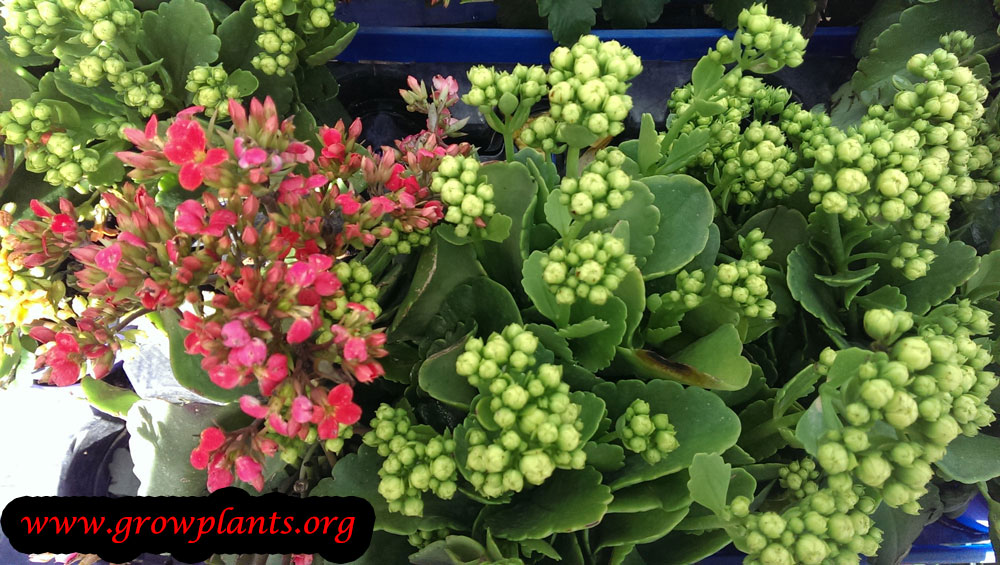
- Massed into dense, flat-topped clusters held above the foliage
- Exceptionally long-lasting once open
Bloom Care & Thinning
- Reblooming: Give roughly six weeks of long dark nights to set buds, then return it to a bright spot.
- Deadheading: Snip off spent flower clusters to tidy the plant and steer its energy back into growth.
- Safety: All parts are toxic if eaten and the flowers especially – keep it out of reach of cats, dogs and children.
Bloom Health & Protection
- Grey mould (Botrytis) on spent flowers: In cool, damp, still air the dense flower heads can rot and turn fuzzy-grey; removing faded blooms and improving airflow is the first line of defence, with a suitable fungicide only if it spreads.
- Powdery mildew: A white bloom on leaves and buds in humid, crowded conditions; more space and airflow help, and neem oil or a sulfur-based fungicide can be used if needed.
Pests, Diseases & Troubleshooting
Overview: Kalanchoes are easy-going succulents whose troubles are overwhelmingly about moisture and light, not insects: overwatering brings stem and root rot – the number-one killer – while the genus is also notably prone to powdery mildew. Sap-suckers like mealybugs, aphids and scale appear mainly on stressed or indoor plants. Grow in gritty free-draining soil, bright light and with a dry-between-waterings routine and it stays healthy.
Quick Troubleshooting Overview
| Issue / Pest | Main Symptom | Primary Solution |
|---|---|---|
| Mealybugs | White cottony fluff in leaf axils and roots, sticky leaves | Alcohol swab / hose; insecticidal soap or oil |
| Aphids | Sticky, distorted flower stems and new growth | Water jet; insecticidal soap |
| Scale & spider mites | Brown bumps or fine stippling/webbing | Horticultural/neem oil; raise humidity for mites |
| Powdery mildew | White powdery film on leaves | Airflow, keep leaves dry; sulfur / bicarbonate |
| Stem & root rot | Soft, black, mushy base; collapse | Gritty free-draining mix; water sparingly |
| Etiolation / sunburn | Stretched pale growth, or scorched patches | Bright light; acclimate to sun gradually |
Common Pests & Management
- Mealybugs (Planococcus citri / Rhizoecus spp.):
- Symptoms: Cottony white tufts tucked into leaf axils and along stems (and, as root mealybugs, white specks on the roots of an unthrifty plant); sticky honeydew, stunting and yellowing follow.
- Prevention & Control: Dab clusters with an alcohol-moistened swab, hose the plant, and treat with insecticidal soap or neem oil; for root mealybugs, bare-root, wash and repot into fresh gritty mix in a clean pot. Avoid over-feeding with nitrogen.
- Aphids (Aphis spp.):
- Symptoms: Soft green, grey or black insects clustered on tender new growth and especially on flower stems and buds, with sticky honeydew and distorted, curled growth.
- Prevention & Control: Rinse off with a water jet, pinch badly infested flower stalks, encourage ladybirds, and use insecticidal soap on persistent colonies.
- Scale insects (Coccus / Aspidiotus spp.):
- Symptoms: Immobile brown or tan bumps on stems and leaf undersides, sticky leaves and sooty mold in heavy cases.
- Prevention & Control: Scrape off light infestations by hand, prune badly affected growth, and smother the rest with horticultural or neem oil in the evening.
- Spider mites (Tetranychus urticae):
- Symptoms: Fine pale stippling, a dull look and fine webbing on leaf undersides in hot, dry indoor air.
- Prevention & Control: Raise humidity a little and rinse the foliage; treat with insecticidal soap or a light miticidal oil, taking care with fuzzy-leaved kinds that mark easily.
- Fungus gnats (Bradysia spp.):
- Symptoms: Small dark flies running over the soil surface; larvae in constantly damp mix nibble roots of seedlings and young plants – a sign the soil is being kept too wet.
- Prevention & Control: Let the top of the mix dry out (which suits the plant anyway), use yellow sticky traps and a gritty top-dressing, and drench with Bacillus thuringiensis israelensis or beneficial nematodes if larvae persist.
Diseases & Fungal Issues
- Powdery mildew (Oidium / Erysiphe spp.):
- Symptoms: White powdery patches or a dusty film on leaves and stems; Kalanchoe is notably susceptible, and infection distorts growth and mars the foliage, worst in crowded, humid, poorly ventilated conditions.
- Treatment & Management: Increase airflow and light, avoid crowding and overhead watering, remove affected leaves, and treat with a sulfur, potassium-bicarbonate or neem-based fungicide; grow on the dry side.
- Stem, crown & root rot (Pythium / Phytophthora / Fusarium spp.):
- Symptoms: A soft, blackening, mushy base or stem, wilting despite (or because of) wet soil, and sudden collapse – the commonest cause of death, driven by overwatering and cold, wet soil.
- Treatment & Management: Prevention is the cure: gritty free-draining mix, careful watering, warmth and never letting the plant sit in water. Cut back to firm, healthy tissue and re-root clean cuttings or offsets; discard badly rotted plants.
- Gray mold (botrytis) (Botrytis cinerea):
- Symptoms: Fuzzy grey-brown mold on leaves, stems or fading flowers in cool, damp, still air, causing soft decay.
- Treatment & Management: Remove affected parts and spent flowers promptly, improve ventilation, lower humidity, and avoid wetting the foliage; a fungicide is rarely needed if airflow is corrected.
- Bacterial soft rot & leaf spot (Erwinia / Xanthomonas spp.):
- Symptoms: Water-soaked, slimy, foul-smelling rot of leaves or stem, or dark angular leaf spots, spreading fast in warm, wet, crowded conditions.
- Treatment & Management: There is no chemical cure – cut out and destroy affected tissue with clean tools, keep foliage dry, improve airflow, and avoid injuring the plant; propagate from clean, healthy material.
Growing Difficulties & Abiotic Problems
- Etiolation (stretching):
- Cause & Symptoms: Pale, weak, elongated growth with widely spaced leaves as the plant reaches for light in too much shade.
- Correction Strategy: Move to bright light or full sun (acclimating gradually), and prune or behead leggy stems to restart compact growth from cuttings.
- Sunburn:
- Cause & Symptoms: Bleached, brown or scorched patches when a shade-grown or newly bought plant is moved abruptly into strong direct sun.
- Correction Strategy: Introduce sun gradually over a week or two; provide light afternoon shade in the hottest climates.
- Overwatering & edema:
- Cause & Symptoms: Soft, translucent, yellowing or blistered leaves and dropping foliage from too-frequent watering or poor drainage; the leading route to rot.
- Correction Strategy: Water only when the mix has dried, use a gritty succulent mix and a pot with drainage, and cut back sharply in cool, low-light periods.
- Cold damage:
- Cause & Symptoms: Translucent, blackened or mushy leaves after exposure below about 5–10°C; these are frost-tender succulents.
- Correction Strategy: Keep above 10°C, move containers indoors or under cover in cold weather, and keep the plant dry when cool to limit rot.
What Helps – Products & Tools
Kalanchoe care is mostly about restraint: gritty free-draining soil, bright light and dry-between-waterings routine prevent the rot that kills most plants. For pests, insecticidal soap, neem or horticultural oil covers mealybugs, aphids, scale and mites; yellow sticky traps and a dry surface handle fungus gnats. Sulfur, potassium-bicarbonate or neem fungicide treats the powdery mildew this genus is prone to. Keep foliage dry, especially on felted-leaf types, and spray oils in the evening to protect pollinators.