Plant Profile & Key Characteristics
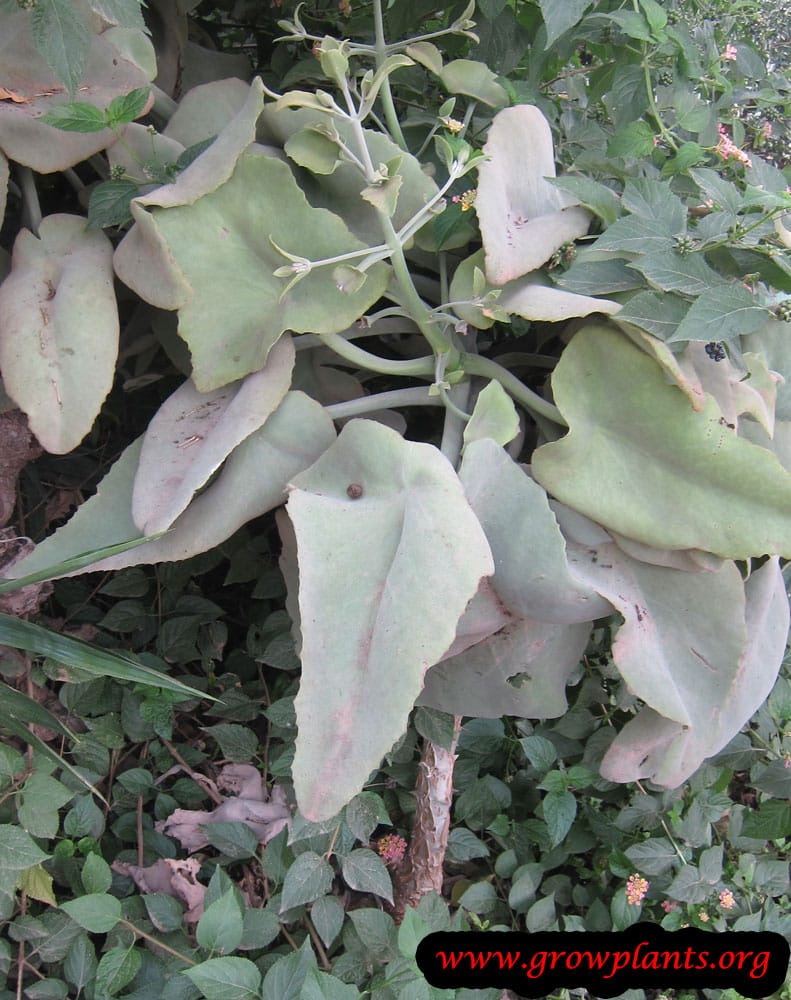
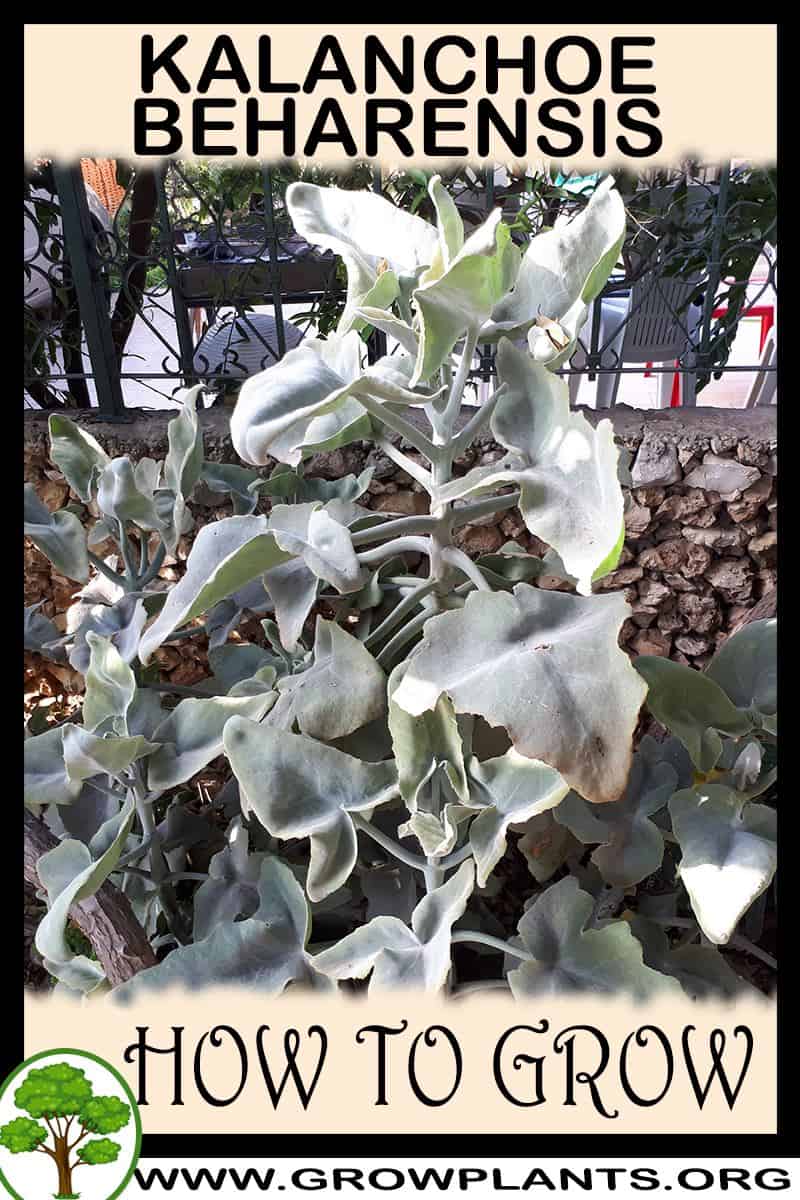
Overview: Kalanchoe beharensis (elephant’s ear kalanchoe) is a large, shrubby evergreen succulent reaching 1–3 m (3–10 ft), grown as an ornamental for its dramatic velvety foliage. It is slow-growing, drought tolerant and suited to warm, frost-free gardens and containers.
Quick Specifications
| Specification | Attribute |
|---|---|
| Plant Type / Life Cycle | Perennial |
| Foliage Type | Evergreen (succulent) |
| Mature Size | 1–3 m tall (3–10 ft) |
| Growth Rate | Slow |
| Root System | Fibrous and shallow (typical of succulents) |
| Toxicity | Toxic – contains cardiac glycosides (bufadienolides); harmful to cats, dogs and livestock if ingested |
| Hardiness | USDA zones 9–12 |
Growth Form & Structure
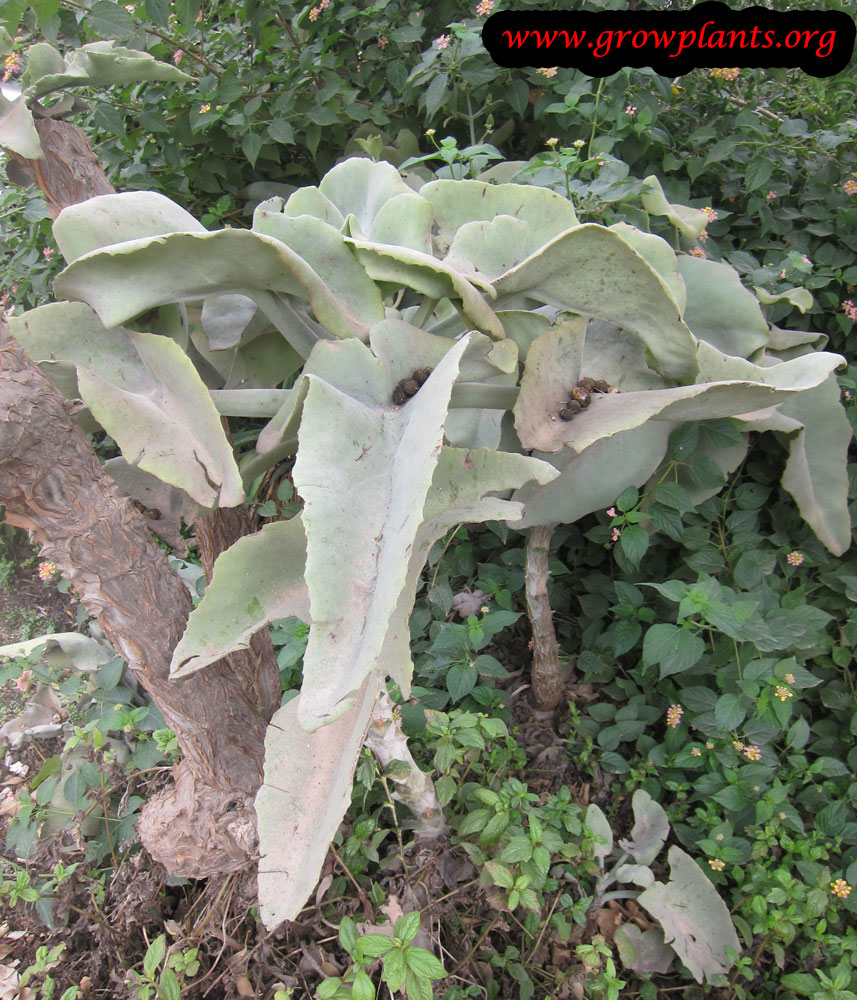
- Height & Spread: A tall succulent shrub reaching 1–3 m (3–10 ft); grown outdoors in mild climates or in large containers rather than as a houseplant.
- Growth Habit & Form: Upright, sparingly branched succulent forming a small tree-like shrub with a stout stem.
Anatomy & Physical Features
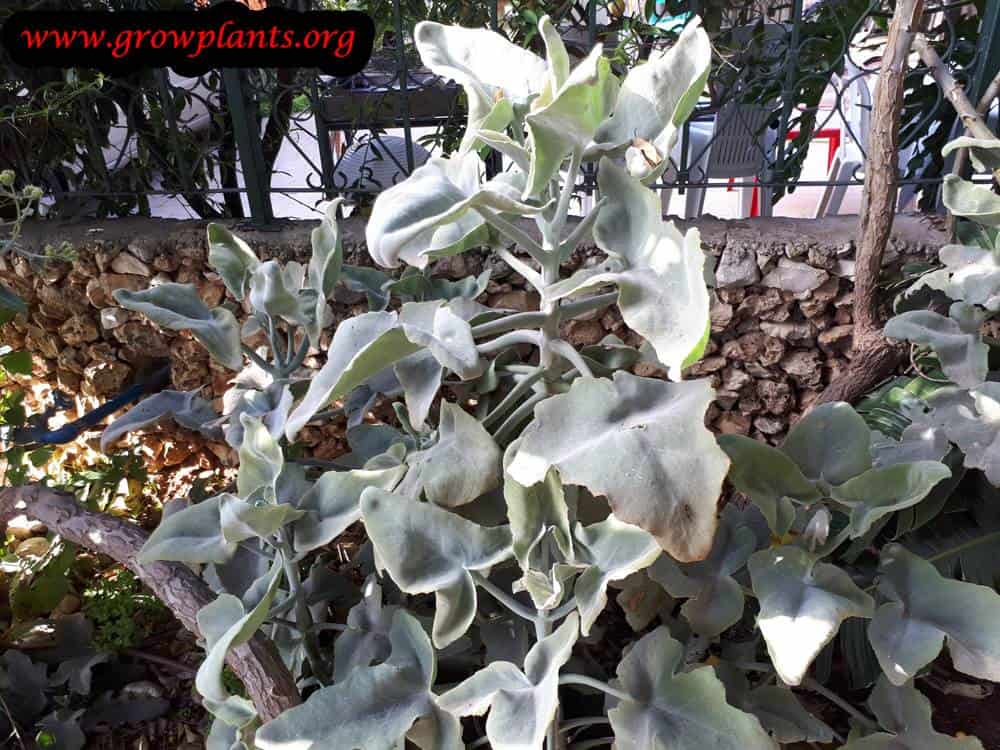
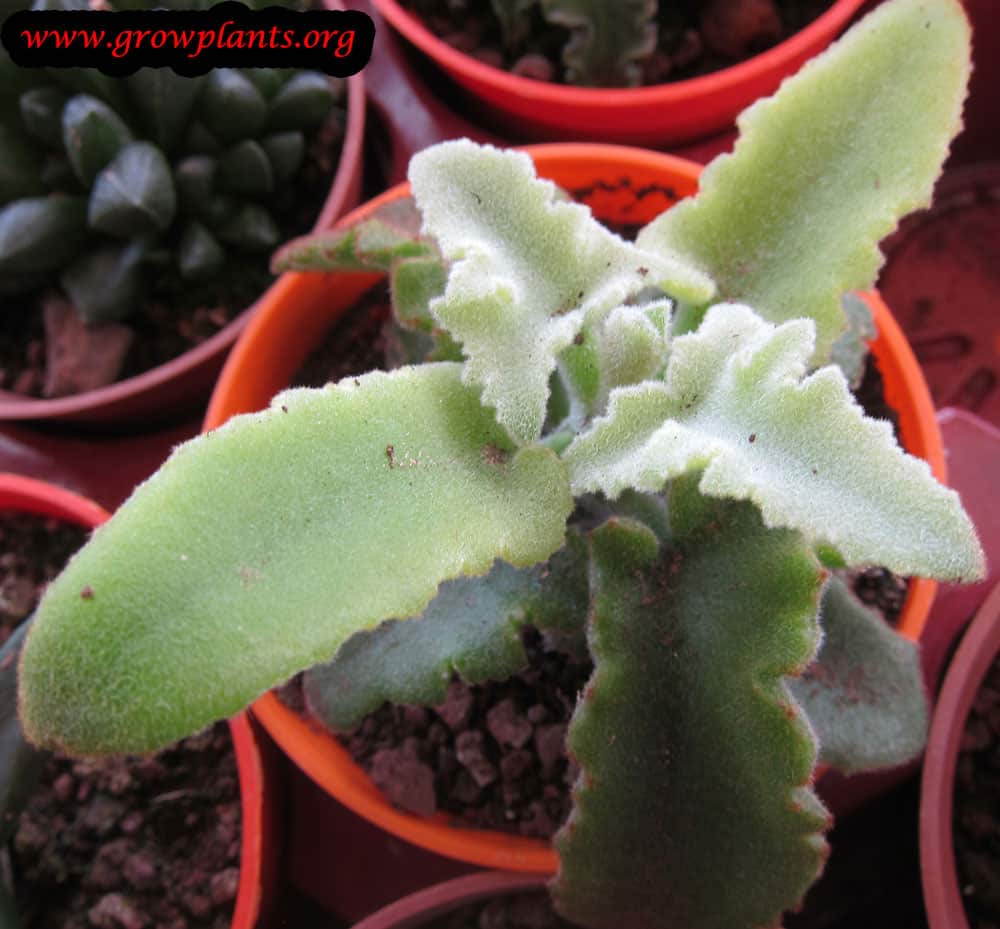
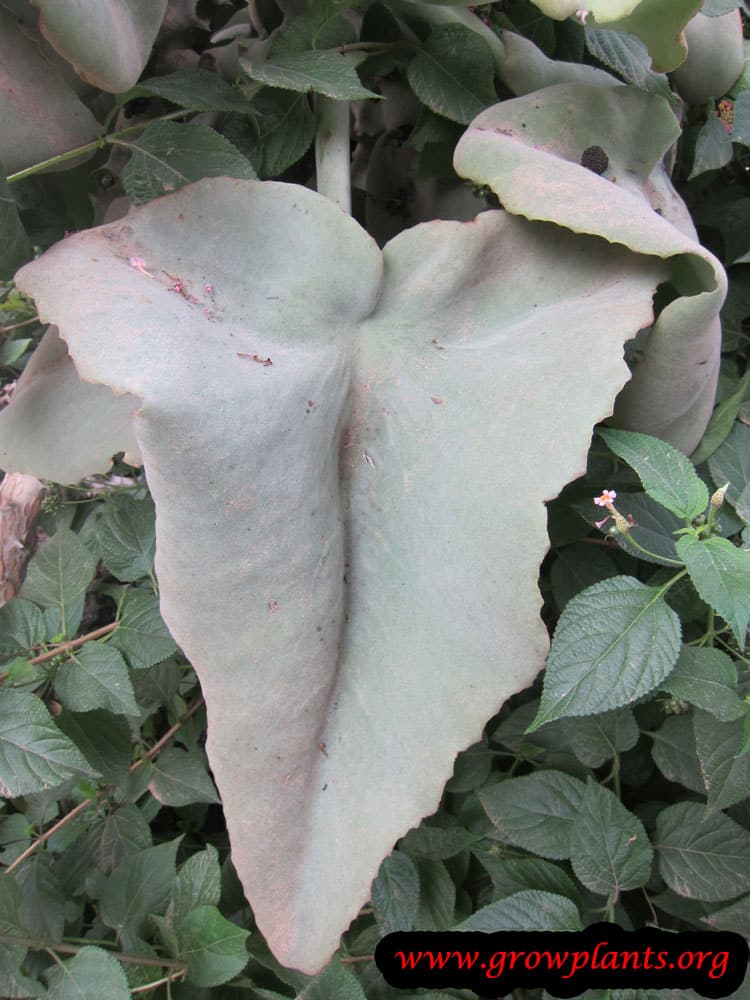
- Leaves & Foliage: Large, triangular, deeply lobed leaves that are fleshy and covered in velvety felt-like hairs.
- Flower Characteristics: Small white to pink flowers in clusters (winter); grown chiefly for foliage.
Primary Uses & Landscape Value
- Functional & Ornamental Roles: Ornamental foliage specimen, drought-tolerant and container plant; also cited as ground-fixing (carbon fixing).
Care Guide: Planting, Soil & Watering
Overview: This Kalanchoe is a drought-tolerant succulent for warm, frost-free climates (desert, mediterranean and subtropical) that stores water in its fleshy leaves. It needs a gritty, free-draining soil and only occasional watering, thriving in full sun to light shade.
Quick Care Requirements
| Requirement | Ideal Condition |
|---|---|
| Planting Season | In spring, summer or autumn during the warm season, avoiding frost |
| Growth Rate | Slow |
| Soil Type | Gritty, free-draining mix (cactus/succulent mix or sandy soil) |
| Water Need | Low – water sparingly and let the soil dry out between waterings; avoid overwatering |
Planting & Establishment
- Best Planting Season: Plant through the warm season, spring to autumn, in frost-free conditions.
- How to Plant:
- Hole Preparation: Make a planting pocket about as deep as the root ball and a little wider, in fast-draining ground or a raised gritty bed.
- Soil Amendments: Open up the soil with coarse sand, grit or a cactus mix rather than heavy, moisture-holding material; keep the site sharply drained.
- Planting Depth: Set the plant so the base of the stem sits at soil level; do not bury the fleshy stem, which can rot if kept wet.
- Growth Speed & Expectations: Slow-growing; the large, velvety Elephant’s-ear kalanchoe builds slowly into a shrub up to a couple of metres tall.
Soil, Watering & Drainage Care
- Soil Mix & Drainage Needs: Sharp drainage is essential to prevent root and stem rot. In containers use a cactus or succulent mix, add a layer of grit at the base, and make sure the pot drains freely. It likes a slightly richer but still free-draining mix and a touch of humidity.
- Watering Schedule & Technique:
- Young / Newly Planted: Water lightly after planting and then only when the soil has dried, letting new roots reach for moisture.
- Established: Water sparingly once established, giving a thorough drink and then letting the soil dry out completely before the next.
- Seasonal Adjustments: Water a little more in the heat of summer growth, and keep it nearly dry through the cool, low-light winter months.
Climate, Light & Hardiness
Kalanchoe beharensis (Elephant's Ear Kalanchoe) is a velvety-leaved succulent shrub for Mediterranean, desert, subtropical, and temperate climates, growing best in full sun to half shade with some ambient humidity. Per the site data it tolerates no more than light frost, making it best suited to essentially frost-free winters.
Quick Climate Specifications
| Climate Zones | Mediterranean, Desert, Subtropical, Temperate |
| USDA Hardiness Zones | Approximately 9–12 |
| Optimal Temp Range | Approximately 18–27°C (65–80°F) |
| Cold Damage Begins | As temperatures approach freezing (around 0°C / 32°F) |
| Approx. Survival Minimum | The site data indicates it tolerates no more than light frost; anything beyond that is likely to cause significant damage |
| Frost Tolerance | Low |
| Light Conditions | Full Sun / Half Shade |
Sunlight & Light Exposure
Optimal Light Setup
Full sun to half shade suits it best, bringing out the velvety texture and coloring of its large, lobed leaves.
Direct Sun Requirement
Direct sun is generally well tolerated and encourages fuller growth.
Shade & Heat Management
Half shade is a useful option in the hottest, most intense summer sun to prevent leaf scorch.
Best Exposure/Orientation
A sunny to lightly shaded bed or container with reasonable air circulation.
Temperature Extremes & Hardiness
USDA Hardiness & Regional Limits
The site places it in hardiness zone 9–12, and specifically notes it tolerates no more than light frost - so at the cold edge of that range, protection is needed during any hard freeze.
Cold Damage & Winter Protection
Keep it frost-free where possible; light, brief frost may be tolerated, but repeated or harder freezes are likely to damage or kill the plant. Young plants are more cold-sensitive than mature ones.
Frost Sensitivity
Low - this is a frost-tender succulent despite its shrubby, more cold-hardy-looking form.
Extreme Heat Tolerance
Good - it is drought-tolerant and handles warm-climate summer heat well.
Wind, Humidity & Microclimate
Humidity Preferences
The site notes a preference for humidity, unusual among succulents; it appreciates more moisture in the air than many other Kalanchoe species.
Dry-Air Tolerance
Moderate - while it can tolerate drier air, it performs better with some ambient humidity than in very arid conditions.
Wind Tolerance
Moderate; its broad, fleshy leaves can be damaged by strong, drying winds.
Rainfall & Seasonal Moisture
Adapts to climates with moderate rainfall provided the soil (described as rich but well-drained) doesn't stay waterlogged.
Microclimate Recommendations
A sheltered, frost-free site with some humidity and protection from harsh drying winds suits it best.
Growing in Pots, Balconies & Indoors
Kalanchoe beharensis (felt bush) is a large, tree-like succulent with big, velvety, silver-grey leaves. It grows too big to be a long-term houseplant, but it makes a dramatic container plant on a sunny patio and can be kept in a pot while young. Like all kalanchoes it is toxic if eaten.
Quick Details
- Container Size: A large, sturdy pot; size up as it grows
- Indoor Suitability: Too large long-term; a young plant tolerates a very bright room
- Best Spot: Full sun to part shade
- Soil & Drainage: Free-draining cactus/gritty mix – sharp drainage
- Watering in Pots: Moderate, but let it dry between waterings – avoid wet feet
Indoors & On the Windowsill
- As a houseplant: Not long-term – it becomes too big and wants strong light. A young plant can spend time indoors in your brightest spot before it outgrows the room.
- Windowsill & young plants: While small it does well at a very sunny window; move it into a large pot as it grows.
- Overwintering: Tender – keep it in a pot so it can winter indoors in a bright, frost-free room.
- Keep it safe: Kalanchoe is toxic if eaten – keep it out of reach of children and pets.
On a Balcony or Patio
- Sun, heat & weight: It loves full sun and warmth; a larger specimen is heavy, so use a wide, stable pot. Pots dry fast in sun, so check the mix in hot spells.
- Practicalities: Raise the pot on feet for free drainage and shelter it from frost.
Choosing the Pot, Soil & Long-Term Care
- Pot & drainage: A sturdy, wide-based pot with strong drainage holes and no standing saucer.
- Potting mix: Free-draining cactus/gritty mix, or a standard mix cut with perlite, pumice or coarse sand.
- Feeding: Feed lightly once or twice through the growing season – it is not a hungry plant.
- Repotting: Pot up every couple of years into fresh gritty mix as it grows.
Growing this plant in a greenhouse
A greenhouse can give kalanchoe beharensis frost protection and cold protection.
Greenhouse at a glance
| Greenhouse suitability | Conditional - depends on your climate |
|---|---|
| Main benefits | frost protection, cold protection |
| Outdoor protection advisable below | about 2°C |
| Maintain greenhouse minimum | around 2°C for active growth |
| Suitable types | unheated greenhouse, polycarbonate greenhouse |
| Heating | Heating is optional - useful mainly for winter growing in cold areas. |
Related greenhouse guides
- Greenhouses: How to Choose the Right Greenhouse
- Polycarbonate Greenhouses: What to Look for Before Buying
- Greenhouse Climate Control: Temperature, Ventilation and Humidity
Fertilizing & Feeding
A light feeder overall, though this large-leaved kalanchoe appreciates a somewhat richer, more humus-laden soil than a typical desert succulent – the soil itself, not frequent feeding, does most of the work.
Quick Fertilizing Specs
| Feeding Level | Light feeder |
|---|---|
| Main Nutrient Priority | Low-nitrogen feeding paired with organic matter to support its large, velvety foliage |
| Best Feeding Period | During the warm active growing season |
| Organic Options | Compost or humus worked into the planting soil, which this species appreciates more than most succulents |
| Reduce/Stop Feeding | Hold off feeding once growth slows in cooler weather |
| Micronutrients | Rarely needed in well-amended soil; treat only a diagnosed issue |
| Soil pH | Tolerates a wide range; consistently well-drained, humus-rich soil matters more than exact pH |
Feeding by Growth Stage
Active growing season
Support steady growth of the large, felted leaves without forcing soft, thin foliage.
| Nutrient direction | A light, low-nitrogen feeding alongside organic matter suits this shrubby kalanchoe better than frequent fertilizing. |
|---|---|
| Timing | During the warm active growing season, spring through summer. |
| Frequency | Light, infrequent feeding is enough for this slow-growing succulent shrub. |
| Fertilizer types | A diluted low-nitrogen or general-purpose fertilizer, used lightly, Compost or humus worked into the planting soil |
| Precautions | Avoid heavy or frequent feeding; overfeeding produces soft, thin leaf growth that loses the plant’s characteristic dense, felted texture. Protect the plant from frost, which it cannot tolerate. |
Dormant or cool-season rest
Let the plant rest through its slow season without pushing new growth.
| Nutrient direction | None – withhold fertilizer while growth has slowed for the year. |
|---|---|
| Timing | Through the cooler months or whenever growth clearly slows. |
| Frequency | No feeding at this stage. |
| Fertilizer types | No feeding at this stage; do not fertilize until active growth resumes. |
| Precautions | Do not fertilize while the plant is dormant or slow-growing; unused nutrients just build up as salts in the soil. |
Nutrient Deficiency Signs & Corrections
Older leaves fade to pale green or yellow and new leaves come in smaller than usual.
| Possible causes | low available nitrogen in the planting soil, nutrients leaching away from watering or rain, soil that has not been amended with organic matter |
|---|---|
| Appears first on | older, lower leaves |
| What to check | feeding history, soil organic matter, watering and drainage |
| Possible correction | Give a light, diluted low-nitrogen feeding during active growth and work in organic matter. |
Interveinal yellowing appears on older leaves while the veins themselves stay green.
| Possible causes | low soil magnesium, leaching in light, fast-draining soils, an imbalanced feeding program heavy in other nutrients |
|---|---|
| Appears first on | older, lower leaves |
| What to check | soil magnesium status, soil texture and leaching, recent feeding balance |
| Possible correction | Apply a labeled magnesium source such as Epsom salt or a dolomitic amendment and rebalance feeding. |
Leaf margins brown or scorch even though watering has been consistent.
| Possible causes | fertilizer salts building up from feeding this light feeder too often, insufficient drainage concentrating salts around the roots, underwatering that concentrates existing soil salts |
|---|---|
| Appears first on | leaf margins |
| What to check | recent feeding frequency and strength, drainage of the planting site, watering consistency |
| Possible correction | Stop feeding, water thoroughly to help move salts through the soil, and resume only light feeding once new growth shows. |
Pruning, Training & Seasonal Maintenance
Kalanchoe beharensis is grown chiefly for its large, velvety, triangular leaves, and it is one of the more shrub-like, semi-woody-based Kalanchoes in cultivation – it can get tall and leggy with bare lower stems if never pinched or cut back. Pruning tolerance is moderate to high: it responds well to pinching and even hard cutback, mainly to shape the plant and keep foliage dense rather than to manage flowering, since the small winter flower clusters are incidental to why this species is grown.
Quick Pruning & Maintenance Specs
| Pruning Tolerance | Moderate to High – tolerates pinching and hard cutback |
| Primary Pruning Window | Spring through summer active growth, for shaping/cutback |
| Secondary Maintenance Window | After winter bloom, to remove spent flower stems |
| Typical Frequency | Pinch young growth periodically; cut back an overgrown stem every year or two |
| Main Objective | Keep foliage dense and shapely; control legginess |
| Young Plant Priority | Pinch growing tips to build branching from the start |
| Mature Plant Priority | Cut back bare, etiolated stems; remove mildew-affected leaves |
| Best Tool Type | Bypass secateurs for stems; precision snips for leaves |
| Avoid Heavy Pruning During | Winter bloom period and cold snaps at the low end of its zone 9–12 range |
Pruning by Plant Age & Size
Newly Established
Pinch out the growing tip once the plant has a few sets of leaves to encourage branching early – left unpinched, this species tends to grow as a single leggy stem.
Young / Formative
Pinching/tip-pruning is the whole training system here (no staking or leader system needed) – repeat pinches on new side-shoots build a fuller, multi-stemmed plant.
Mature / Established
Cut back any stem that has become bare and leggy at the base to a lower node to force fresh side growth; thin overcrowded stems for airflow given its susceptibility to powdery mildew; remove spent flower stems.
Seasonal Pruning Schedule
| Post-Flowering | Objective: tidy after winter bloom. Remove: spent flower clusters/stems. Avoid: cutting into the current season’s vegetative growth. Response: redirects energy to leaf/branch growth; no effect on next winter’s bloom. |
| Summer Canopy Management | Objective: control legginess and density during active growth. Remove: bare/etiolated stems (cut back to force branching); thin crowded growth to reduce mildew risk. Response: vigorous resprouting from the cut. |
| Ongoing Sanitary | Objective: reduce disease spread. Remove: leaves showing powdery mildew. Avoid: composting affected material. |
Structural Pruning & Training
Pinching and selective cutback are the structural tools here – unlike the rosette-form Yuccas, this is a true branching dicot-type succulent, so removing a growing tip genuinely forks the stem into two or more new shoots. Thin crossing or overly dense growth to improve airflow, since crowded, humid foliage is where powdery mildew takes hold.
Special Growth to Remove
- Spent flower stems – cut back to the nearest leaf node once winter bloom fades.
- Bare, leggy, etiolated stems – cut back hard to force new branching rather than leaving them to lengthen further.
- Powdery-mildew-affected leaves – remove promptly to slow spread.
Container & Small-Space Pruning
Grows well in containers (not typically as an indoor houseplant). In a pot, pinch more assertively and cut back more often than an in-ground specimen to keep the plant proportionate to the container – without regular tip control it will outgrow a pot quickly given its potential 1–3m size.
Tools
- Bypass secateurs – for stem cutback and shaping cuts.
- Precision snips – for pinching tips and removing individual mildew-affected leaves.
Tool Hygiene & Disease Risk
Increased – powdery mildew is a known issue on this species, so remove affected leaves promptly and avoid working wet foliage; wiping the blade between plants is worthwhile if mildew is present to avoid spreading spores to nearby susceptible plants.
Cut Placement & Technique
Pinch or cut just above a leaf node/pair so the next flush emerges cleanly from that point; when cutting back a leggy stem, cut into firm tissue rather than the soft, pale etiolated growth at the tip.
Heavy Pruning & Rejuvenation
Tolerated – an overgrown, bare-stemmed plant can be cut back hard to a low framework and will typically resprout from the remaining stem given active-season warmth. Expect a bare-looking plant for several weeks while new shoots emerge; hold off on cutting back hard right before winter, when regrowth slows.
Post-Pruning Care
No feeding needed to force regrowth after cutback. Keep humidity/airflow reasonable around the cut plant to avoid inviting powdery mildew on tender new shoots; watch newly exposed stems for sunburn if a dense canopy was suddenly opened up in full sun.
Common Pruning Mistakes
- Never pinching a young plant, resulting in a single tall, leggy, bare-based stem.
- Leaving powdery-mildew-affected leaves on the plant instead of removing them.
- Cutting back hard right before cold weather, when the plant can’t regrow quickly.
When NOT to Prune
Avoid hard cutback during winter bloom or cold snaps at the lower end of its zone 9–12 range, when regrowth is slow and the plant is least able to recover.
Recommended Tools (by task)
- bypass_secateurs – cutback of leggy or overgrown stems.
- precision_snips – tip pinching and removal of individual mildew-affected leaves.
Pruning Troubleshooting
| Problem | Possible Cause | What to Check | Corrective Action |
| Single tall, bare-based stem | Never pinched when young | Presence of side branching low on the stem | Cut back to a lower node in active season to force branching |
| Powdery mildew after pruning | Cutting/pinching while foliage crowded and humid | White powdery coating on leaves near cut sites | Remove affected leaves, thin for airflow, avoid working wet foliage |
| No regrowth after hard cutback | Cut made in cool/dormant-ish winter period | Season the cut was made and current temperatures | Wait for warm active-season weather before judging or re-cutting |
Propagation Guide
Kalanchoe beharensis roots easily from stem or leaf cuttings, the fastest and most dependable way to start new plants and the way to keep a particular leaf-colour form true; seed is possible but slower and less commonly used at home. This is an Easy plant to propagate.
Quick Propagation Specs
| Best Propagation Method | Stem cuttings |
| Alternative Methods | Leaf cuttings; seed |
| Propagation Difficulty | Easy |
| Seed True-to-Type | Usually true-to-type for the species |
| Vegetative True-to-Type | Yes |
| Best Propagation Season | Spring to summer (active growth) |
| Seed Germination Time | A few weeks, can be uneven |
| Cutting Rooting Time | A few weeks under warm conditions |
| Germination Temperature | About 21–24°C (70–75°F) |
| Seed Sowing Depth | Surface-sow; the seed is very fine and should not be buried |
Growing from Seed
Seed Handling & Viability
Seed is very fine and dust-like, as is typical for the genus; sow it reasonably fresh where possible.
Sowing Depth & Orientation
Surface-sow and press lightly into the mix; do not cover.
Germination Conditions
Keep warm and bright, with the surface lightly moist but never soggy.
Germination Time
A few weeks, can be uneven.
Seedling Care
Prick out carefully once large enough to handle; overwatering is the main risk for these succulent seedlings.
Stem Cuttings
Cutting Type
Tip or stem cuttings, roughly 5–10 cm (2–4 in).
Best Timing
Spring to summer, during active growth.
Cutting Preparation
Let the cut end callus (dry) for a day or two before inserting, which reduces the risk of rot.
Rooting Setup
Insert into a well-drained, gritty succulent mix; water lightly and let the surface dry between waterings.
Rooting Hormone
Unnecessary — cuttings root readily on their own.
Rooting Time
Typically a few weeks.
Leaf & Root Cuttings
A leaf taken with a short piece of stem/petiole attached can also be used: let it callus for a day or so, then insert the base into a well-drained mix. Rooting is slower and less certain than with stem cuttings, and rot is the main risk if kept too wet. Unlike some related Kalanchoe/Bryophyllum species, K. beharensis does not produce plantlets along the leaf margins.
Bloom & Flower Guide
Quick Details
- Bloom Season: Winter
- Time to First Bloom: On mature plants; grown mainly for its huge felted leaves, so flowering is a bonus rather than the reason to grow it
- Flower Appearance: Small flowers in white to pink, borne in branched clusters above the foliage
- Edibility: Not edible – Kalanchoe is toxic to pets and people, and the flowers are among the most toxic parts
Detailed Blooming Overview
Elephant’s ear kalanchoe is grown above all for its large, silvery, felted leaves, but a mature plant can send up a tall, branched flower cluster of small white-to-pink blooms in winter. It is a slow, statuesque succulent, and flowering tends to come only on established specimens.
Flower Characteristics
- Small individual flowers in white to pink
- Held in branched clusters on stems above the foliage
- Modest in size – the leaves remain the main feature
Bloom Care & Thinning
- Encouraging bloom: Bright light and a mature plant give the best chance of flowers; low light keeps it in leaf.
- Aftercare: Cut the spent flower stalk back once it fades to keep the plant tidy.
- Safety: All parts are toxic if eaten and the flowers especially so – keep it well out of reach of cats, dogs and children.
Pests, Diseases & Troubleshooting
Overview: Kalanchoes are easy-going succulents whose troubles are overwhelmingly about moisture and light, not insects: overwatering brings stem and root rot – the number-one killer – while the genus is also notably prone to powdery mildew. Sap-suckers like mealybugs, aphids and scale appear mainly on stressed or indoor plants. Grow in gritty free-draining soil, bright light and with a dry-between-waterings routine and it stays healthy.
Quick Troubleshooting Overview
| Issue / Pest | Main Symptom | Primary Solution |
|---|---|---|
| Mealybugs | White cottony fluff in leaf axils and roots, sticky leaves | Alcohol swab / hose; insecticidal soap or oil |
| Aphids | Sticky, distorted flower stems and new growth | Water jet; insecticidal soap |
| Scale & spider mites | Brown bumps or fine stippling/webbing | Horticultural/neem oil; raise humidity for mites |
| Powdery mildew | White powdery film on leaves | Airflow, keep leaves dry; sulfur / bicarbonate |
| Stem & root rot | Soft, black, mushy base; collapse | Gritty free-draining mix; water sparingly |
| Etiolation / sunburn | Stretched pale growth, or scorched patches | Bright light; acclimate to sun gradually |
Common Pests & Management
- Mealybugs (Planococcus citri / Rhizoecus spp.):
- Symptoms: Cottony white tufts tucked into leaf axils and along stems (and, as root mealybugs, white specks on the roots of an unthrifty plant); sticky honeydew, stunting and yellowing follow.
- Prevention & Control: Dab clusters with an alcohol-moistened swab, hose the plant, and treat with insecticidal soap or neem oil; for root mealybugs, bare-root, wash and repot into fresh gritty mix in a clean pot. Avoid over-feeding with nitrogen.
- Aphids (Aphis spp.):
- Symptoms: Soft green, grey or black insects clustered on tender new growth and especially on flower stems and buds, with sticky honeydew and distorted, curled growth.
- Prevention & Control: Rinse off with a water jet, pinch badly infested flower stalks, encourage ladybirds, and use insecticidal soap on persistent colonies.
- Scale insects (Coccus / Aspidiotus spp.):
- Symptoms: Immobile brown or tan bumps on stems and leaf undersides, sticky leaves and sooty mold in heavy cases.
- Prevention & Control: Scrape off light infestations by hand, prune badly affected growth, and smother the rest with horticultural or neem oil in the evening.
- Spider mites (Tetranychus urticae):
- Symptoms: Fine pale stippling, a dull look and fine webbing on leaf undersides in hot, dry indoor air.
- Prevention & Control: Raise humidity a little and rinse the foliage; treat with insecticidal soap or a light miticidal oil, taking care with fuzzy-leaved kinds that mark easily.
- Fungus gnats (Bradysia spp.):
- Symptoms: Small dark flies running over the soil surface; larvae in constantly damp mix nibble roots of seedlings and young plants – a sign the soil is being kept too wet.
- Prevention & Control: Let the top of the mix dry out (which suits the plant anyway), use yellow sticky traps and a gritty top-dressing, and drench with Bacillus thuringiensis israelensis or beneficial nematodes if larvae persist.
Diseases & Fungal Issues
- Powdery mildew (Oidium / Erysiphe spp.):
- Symptoms: White powdery patches or a dusty film on leaves and stems; Kalanchoe is notably susceptible, and infection distorts growth and mars the foliage, worst in crowded, humid, poorly ventilated conditions.
- Treatment & Management: Increase airflow and light, avoid crowding and overhead watering, remove affected leaves, and treat with a sulfur, potassium-bicarbonate or neem-based fungicide; grow on the dry side.
- Stem, crown & root rot (Pythium / Phytophthora / Fusarium spp.):
- Symptoms: A soft, blackening, mushy base or stem, wilting despite (or because of) wet soil, and sudden collapse – the commonest cause of death, driven by overwatering and cold, wet soil.
- Treatment & Management: Prevention is the cure: gritty free-draining mix, careful watering, warmth and never letting the plant sit in water. Cut back to firm, healthy tissue and re-root clean cuttings or offsets; discard badly rotted plants.
- Gray mold (botrytis) (Botrytis cinerea):
- Symptoms: Fuzzy grey-brown mold on leaves, stems or fading flowers in cool, damp, still air, causing soft decay.
- Treatment & Management: Remove affected parts and spent flowers promptly, improve ventilation, lower humidity, and avoid wetting the foliage; a fungicide is rarely needed if airflow is corrected.
- Bacterial soft rot & leaf spot (Erwinia / Xanthomonas spp.):
- Symptoms: Water-soaked, slimy, foul-smelling rot of leaves or stem, or dark angular leaf spots, spreading fast in warm, wet, crowded conditions.
- Treatment & Management: There is no chemical cure – cut out and destroy affected tissue with clean tools, keep foliage dry, improve airflow, and avoid injuring the plant; propagate from clean, healthy material.
Growing Difficulties & Abiotic Problems
- Etiolation (stretching):
- Cause & Symptoms: Pale, weak, elongated growth with widely spaced leaves as the plant reaches for light in too much shade.
- Correction Strategy: Move to bright light or full sun (acclimating gradually), and prune or behead leggy stems to restart compact growth from cuttings.
- Sunburn:
- Cause & Symptoms: Bleached, brown or scorched patches when a shade-grown or newly bought plant is moved abruptly into strong direct sun.
- Correction Strategy: Introduce sun gradually over a week or two; provide light afternoon shade in the hottest climates.
- Overwatering & edema:
- Cause & Symptoms: Soft, translucent, yellowing or blistered leaves and dropping foliage from too-frequent watering or poor drainage; the leading route to rot.
- Correction Strategy: Water only when the mix has dried, use a gritty succulent mix and a pot with drainage, and cut back sharply in cool, low-light periods.
- Cold damage:
- Cause & Symptoms: Translucent, blackened or mushy leaves after exposure below about 5–10°C; these are frost-tender succulents.
- Correction Strategy: Keep above 10°C, move containers indoors or under cover in cold weather, and keep the plant dry when cool to limit rot.
- Water marking of felted leaves:
- Cause & Symptoms: Permanent spots, blotches and trapped moisture on the fine hairs of felt-leaved kinds when watered overhead or splashed.
- Correction Strategy: Water at the soil only, keep droplets off the foliage, and give bright light and airflow so any wetting dries quickly.
What Helps – Products & Tools
Kalanchoe care is mostly about restraint: gritty free-draining soil, bright light and dry-between-waterings routine prevent the rot that kills most plants. For pests, insecticidal soap, neem or horticultural oil covers mealybugs, aphids, scale and mites; yellow sticky traps and a dry surface handle fungus gnats. Sulfur, potassium-bicarbonate or neem fungicide treats the powdery mildew this genus is prone to. Keep foliage dry, especially on felted-leaf types, and spray oils in the evening to protect pollinators.
Frequently Asked Questions
How do you care for Kalanchoe beharensis?
Grow it in a gritty, free-draining soil such as a cactus/succulent mix or sandy soil, in full sun to light shade, and water only occasionally. Once established, water sparingly, giving a thorough drink and then letting the soil dry out completely before the next. Plant through the warm season, spring to autumn, in frost-free conditions.
How do you propagate Kalanchoe beharensis?
The easiest way is from stem or leaf cuttings, which is faster and more dependable than seed. Take tip or stem cuttings, roughly 5–10 cm (2–4 in), let the cut end callus (dry) for a day or two before inserting, which reduces the risk of rot, then insert into a well-drained, gritty succulent mix; unnecessary — cuttings root readily on their own without rooting hormone, typically within a few weeks under warm conditions.
Is Kalanchoe beharensis toxic to pets?
Yes. It contains cardiac glycosides (bufadienolides) and is harmful to cats, dogs and livestock if ingested, with the flowers among the most toxic parts. Keep it well out of reach of cats, dogs and children.
Can Kalanchoe beharensis be grown as a houseplant?
Not long-term. It grows too big to be a long-term houseplant, but it makes a dramatic container plant on a sunny patio and can be kept in a pot while young. While small it does well at a very sunny window; move it into a large pot as it grows.