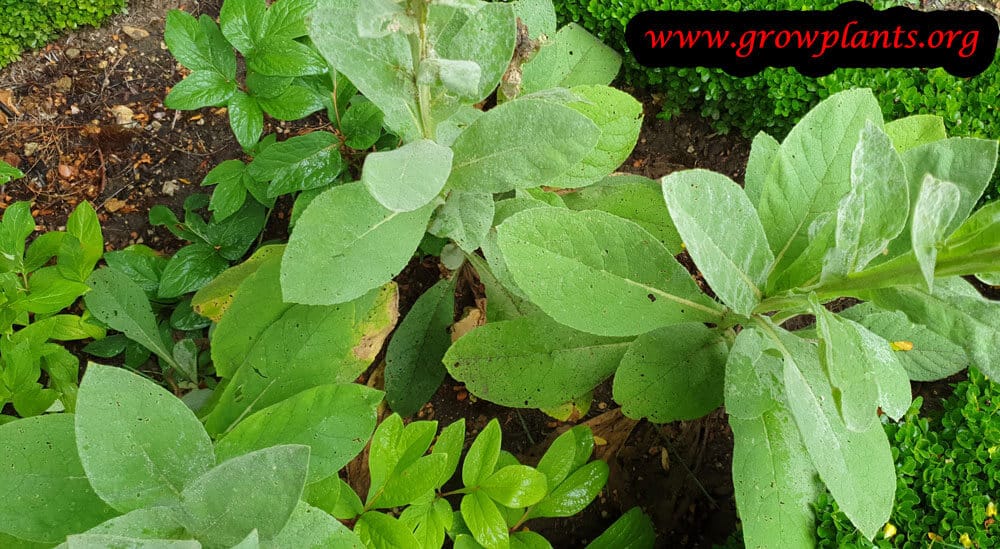
Plant Profile & Key Characteristics
Overview: Common mullein is a biennial herb that forms a felted grey-green rosette in its first year and sends up a tall flowering spike 1-2 m (3-6 ft) in its second. Used medicinally and as an architectural ornamental, it grows in temperate to subtropical climates (USDA zones 3-9).
Quick Specifications
| Specification | Attribute |
|---|---|
| Plant Type / Life Cycle | Biennial |
| Mature Size | 1-2 m (3-6 ft) tall in flower |
| Growth Rate | Fast to moderate |
| Hardiness | USDA zones 3-9 |
Growth Form & Structure
- Height & Spread: A ground-hugging rosette in year one; a flower spike to 1-2 m (3-6 ft) in year two; container-friendly.
- Growth Habit & Form: Biennial, rosette-forming herb with a single tall, unbranched flower stalk.
- Lifespan & Maturity: Biennial – vegetative rosette the first year, then flowers, sets seed and dies the second.
Anatomy & Physical Features
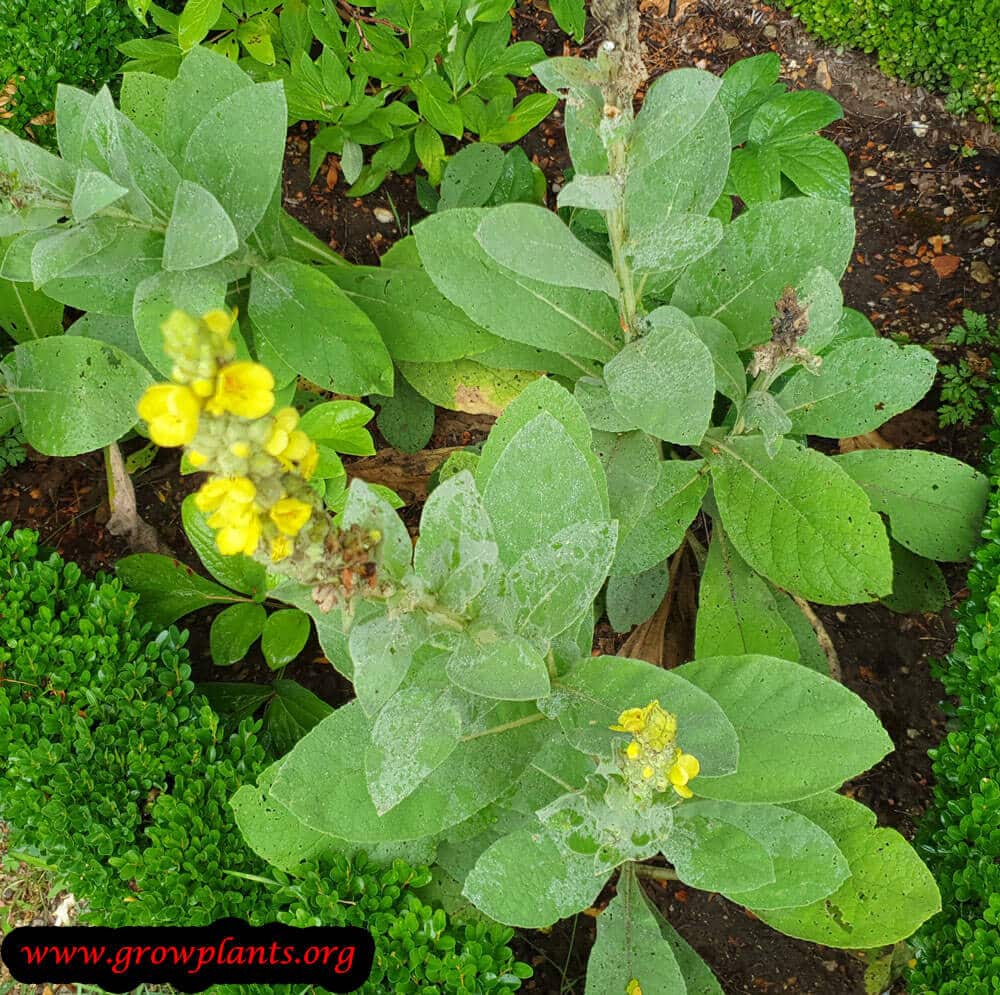
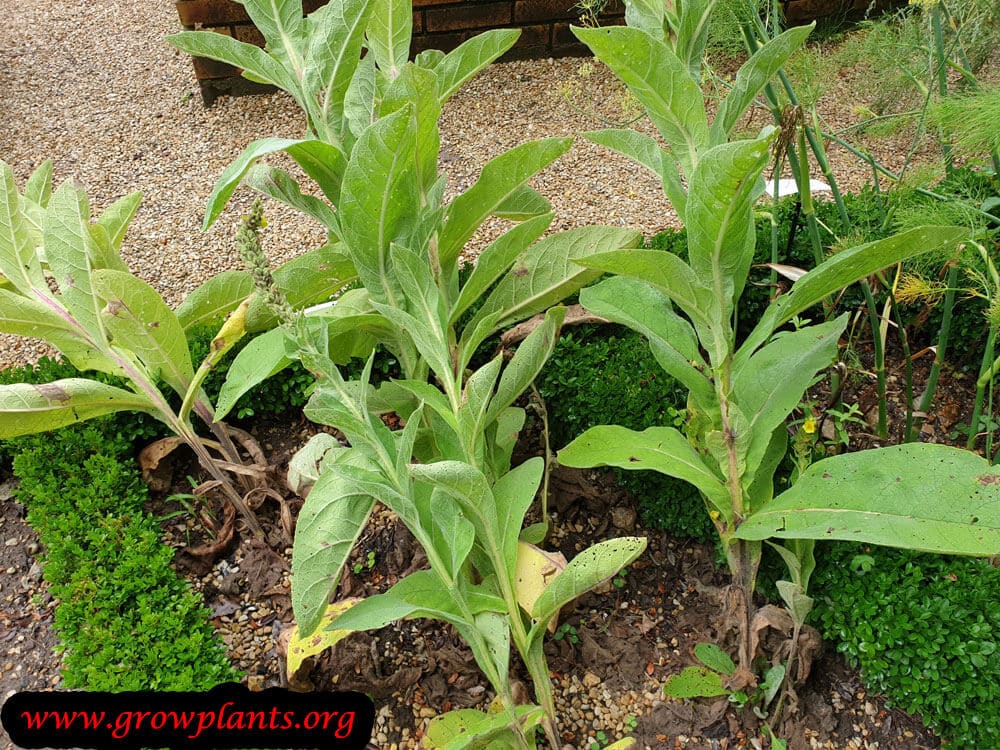
- Leaves & Foliage: Large, soft, woolly grey-green leaves in a basal rosette.
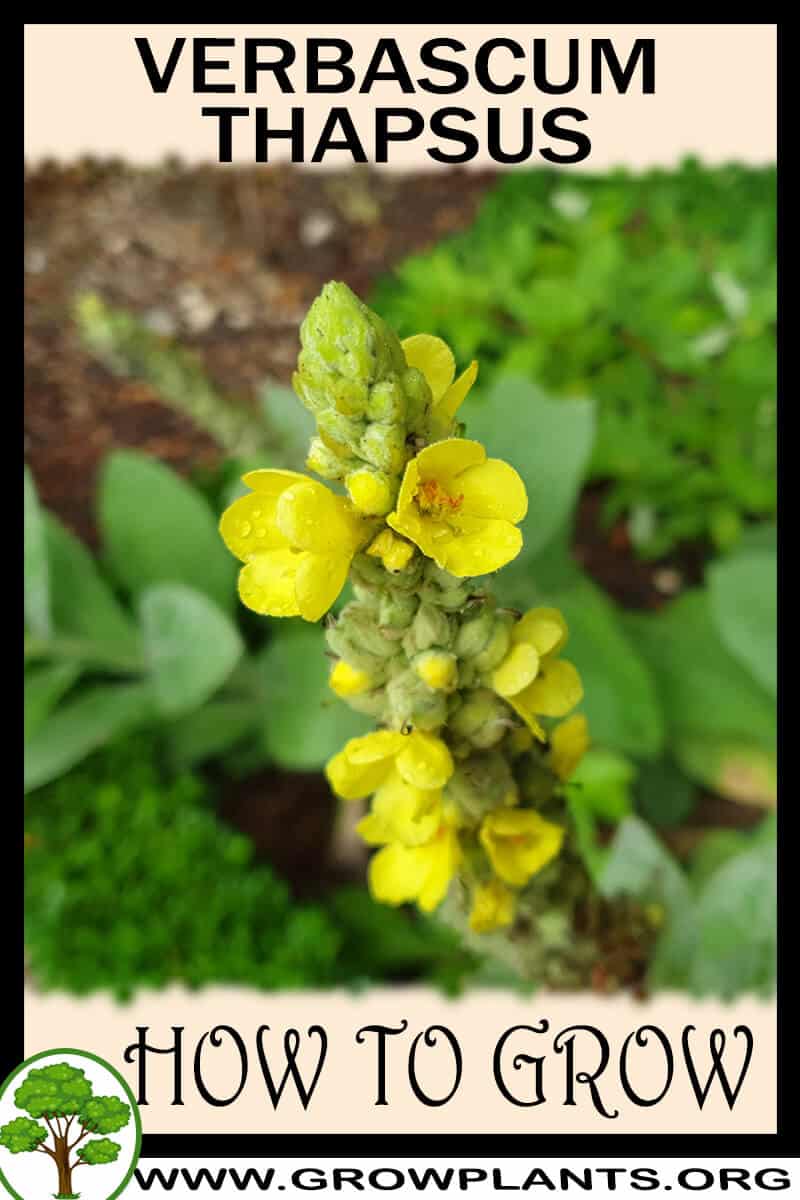
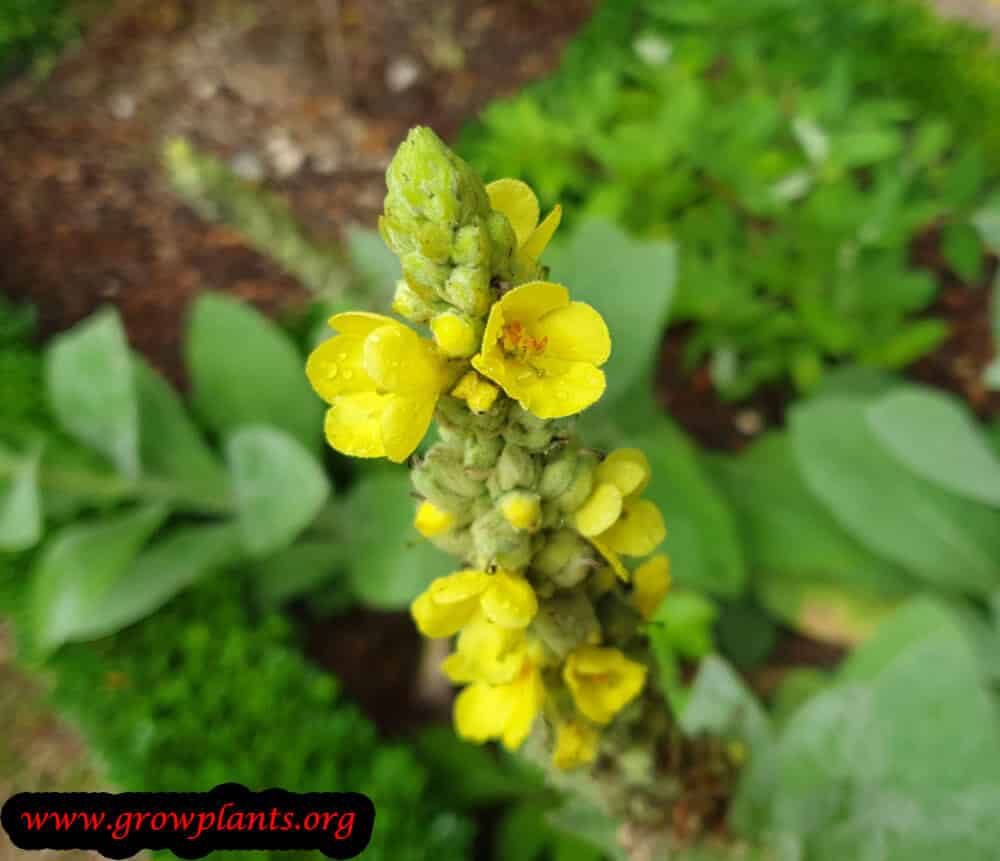
- Flower Characteristics: Yellow bowl-shaped flowers packed up a tall spike, opening from the bottom upward.
Primary Uses & Landscape Value
- Functional & Ornamental Roles: Architectural ornamental and traditional medicinal herb; self-seeds and can become weedy.
Care Guide: Planting, Soil & Watering
Overview: Verbascum thapsus (great mullein) is a sun-loving biennial (zone 3-9) that thrives in poor, well-drained, open ground and cannot cope with shade. It is very drought tolerant and needs little water once its deep rosette is established.
Quick Care Requirements
| Requirement | Ideal Condition |
|---|---|
| Planting Season | In spring through summer during warm weather |
| Growth Rate | Moderate to Fast |
| Soil Type | Well-draining, even poor |
| Water Need | Low to Moderate (dry between waterings) |
Planting & Establishment
- Best Planting Season: Plant or sow in spring to summer in an open, sunny position with no overhead shade.
- How to Plant:
- Hole Preparation: Set into loosened, free-draining soil in a hole slightly wider than the root ball; it does not need rich ground.
- Soil Amendments: Little enrichment is needed – focus on sharp drainage and full sun rather than feeding, adding grit to heavy soil.
- Planting Depth: Keep the leafy rosette crown at soil level so it does not sit wet and rot.
- Growth Speed & Expectations: A moderate-to-fast grower, forming a rosette the first year and a flower spike 1-2 m (3-6 ft) tall the second.
Soil, Watering & Drainage Care
- Soil Mix & Drainage Needs: Sharp drainage is essential; the crown rots in damp, shaded or heavy soil.
- Watering Schedule & Technique:
- Young / Newly Planted: Water lightly to establish the first-year rosette.
- Established: Very drought tolerant – water only in prolonged dry spells and let the soil dry out between waterings.
- Seasonal Adjustments: Occasional water in extreme summer heat; keep dry through cool, wet weather.
Climate, Light & Hardiness
Great mullein (common mullein) is a tough, wide-ranging temperate-to-subtropical biennial that must have full sun – it cannot grow in shade and tends to fade out on its own if shaded by taller neighbors. It is exceptionally cold-hardy, tolerating winters as harsh as USDA zone 3.
Quick Climate Specifications
| Climate Zones | Temperate, subtropical |
|---|---|
| USDA Hardiness Zones | 3–9 |
| Frost Tolerance | High |
| Light Conditions | Full sun |
Sunlight & Light Exposure
Optimal Light Setup
Requires full sun; this is a defining requirement rather than just a preference.
Direct Sun Requirement
Essential – the plant will not establish or persist in shaded ground.
Shade & Heat Management
Shade is actually used as a control method: gardeners who consider it too self-seeding can suppress it simply by letting surrounding plants shade the area, which causes it to disappear.
Best Exposure / Orientation
Open, unshaded ground with good air movement suits its rosette-forming, sun-loving habit.
Temperature Extremes & Hardiness
USDA Hardiness & Regional Limits
Hardy from zone 3 to zone 9, a very broad cold-tolerant range typical of a temperate-region wildflower and reflecting genuinely severe winter-cold survival at the zone 3 end.
Cold Damage & Winter Protection
As a biennial, the first-year rosette overwinters at ground level and generally needs no special winter protection within its hardy zones; the flowering stalk itself is a warm-season structure that dies after setting seed in its second year.
Frost Sensitivity
The low rosette tolerates hard frost well; expect normal seasonal dieback of the flowering stalk after bloom regardless of frost.
Extreme Heat Tolerance
Handles hot, dry summer conditions well, consistent with its use in open, sunny, well-drained sites.
Wind, Humidity & Microclimate
Microclimate Recommendations
Best in open, sunny sites with well-drained soil; avoid low spots that stay damp or shaded positions where it will decline.
Growing in Pots, Balconies & Indoors
Common mullein is a full-sun biennial that forms a low leafy rosette in its first year and then a tall flower spike up to 1-2 m. It is not a houseplant, but a young rosette grows happily in a large pot on a sunny patio.
Quick Details
- Container Size: A deep pot for the taproot – roughly 10-20 L or more
- Indoor Suitability: Not a houseplant – it needs strong direct sun and grows too tall in flower
- Best Spot: Full sun, out on a patio or balcony
- Soil & Drainage: Lean, gritty, very free-draining soil – it dislikes rich, wet ground
- Watering in Pots: Sparing to moderate; let the surface dry between waterings
Indoors & On the Windowsill
- Not a houseplant: The grower marks it as unsuitable indoors. It needs full, direct sun and the flower spike is far too tall for a windowsill, which cannot supply enough light.
- Overwintering: As a hardy biennial the first-year rosette simply overwinters outside and flowers the following year.
On a Balcony or Patio
- Light & wind: Give it the sunniest, warmest spot. The tall spike catches the wind, so stake it and shelter it on exposed balconies. It is drought-tolerant, so water moderately and never let the pot stay wet.
Choosing the Pot, Soil & Long-Term Care
- Pot & drainage: A deep pot suits the taproot; strong drainage holes and no standing saucer. Terracotta is ideal here because it dries fast.
- Potting mix: A lean, sharp, gritty mix – add extra grit or perlite for drainage and keep it low in richness.
- Feeding: Very little needed; mullein thrives in poor soil, so feed only lightly if at all.
Fertilizing & Feeding
A naturally lean-soil wildflower type plant; it stays healthiest and most self-supporting with light, restrained feeding rather than a rich feeding program.
Quick Fertilizing Specs
| Feeding Level | Light |
|---|---|
| Main Nutrient Priority | Balanced nutrition with restrained nitrogen; this plant thrives in poor, well-drained soil |
| Best Feeding Period | Spring growth through the flowering year |
| Organic Options | A light compost top-dressing if the soil is unusually poor |
| Soil pH | Tolerant of a wide range; performs well in average, well-drained garden soil |
| Micronutrients | No routine micronutrient program typically needed for this lean-soil plant |
| Reduce/Stop Feeding | Feeding is unnecessary once the plant finishes flowering and begins to die back at the end of its life cycle |
Feeding by Growth Stage
Spring Rosette Growth
Support the low rosette of leaves this biennial forms in its first year, or renewed growth from the base ahead of its flowering year.
| Nutrient direction | A light, balanced feeding is enough for this naturally lean-growing wildflower type plant. |
|---|---|
| Timing | As new growth begins in spring, in either the rosette year or ahead of the flowering year. |
| Frequency | Light, infrequent feeding is generally enough for this plant. |
| Fertilizer types | A light, balanced complete fertilizer, A light compost top-dressing only if the soil is very poor |
| Precautions | Avoid rich soil or heavy feeding, which can produce weak, floppy growth in this naturally lean-soil plant. |
Flowering Spike
Support the tall yellow flower spike this biennial produces in its second year.
| Nutrient direction | Continued light, balanced feeding supports the flowering spike without encouraging weak, overly lush growth. |
|---|---|
| Timing | Through the summer bloom period in the plant’s flowering year. |
| Frequency | Established plants rarely need feeding once flowering is underway. |
| Fertilizer types | A light, balanced complete fertilizer only if growth looks unusually weak |
| Precautions | This wildflower type plant can become floppy or overly aggressive if overfed, so keep any feeding light. |
Post-Bloom Dieback
Let the plant die back naturally after flowering and seed set, as is typical for this biennial.
| Nutrient direction | None – withhold fertilizer once flowering finishes and the plant begins to die back. |
|---|---|
| Timing | Late summer through autumn, after flowering and seed set. |
| Frequency | No feeding at this stage. |
| Fertilizer types | No feeding at this stage – the plant is dying back after completing its biennial life cycle. |
| Precautions | Do not fertilize a plant that is naturally dying back at the end of its life cycle. |
Nutrient Deficiency Signs & Corrections
Leaves look pale green to yellowish overall, with a smaller than expected rosette or spike.
| Possible causes | Very poor or depleted soil, Nutrients leached from fast-draining soil, Root competition from surrounding weeds or grass |
|---|---|
| Appears first on | Older, lower leaves first. |
| What to check | Soil richness at the site, Watering and drainage, Competing vegetation nearby |
| Possible correction | A light, balanced feeding is usually enough to restore healthy color in genuinely poor soil. |
Weaker than expected flower spike with scorching along the margins of older leaves.
| Possible causes | Low soil potassium, Leaching from heavy rain or watering, Imbalanced feeding weighted too heavily toward nitrogen |
|---|---|
| Appears first on | Margins of older, lower leaves. |
| What to check | Leaf margins versus centers, Recent feeding balance, Soil drainage |
| Possible correction | Use a balanced, complete fertilizer that supplies potassium if a true deficiency is confirmed. |
Leaf edges brown or scorch on plants grown in containers.
| Possible causes | Fertilizer salt buildup in a container with limited leaching, Under-watering that concentrates salts, Feeding more often than this lean-soil plant needs |
|---|---|
| Appears first on | Leaf margins and tips. |
| What to check | Recent feeding amounts, Container drainage, Watering consistency |
| Possible correction | Pause feeding, flush the container thoroughly with plain water, then resume much lighter feeding if any. |
Pruning, Training & Seasonal Maintenance
Great mullein is a monocarpic biennial: it spends its first year as a low leaf rosette, then sends up a single flowering spike in year two, sets seed, and dies. Because of this life cycle there is no shrub-style shaping or renewal pruning to plan for – maintenance is limited to tidying the rosette and managing the flower spike, and it can be done at almost any time of year. Removing spent growth does not affect a future bloom (there is no third year for this plant), but deadheading before seed drop matters, since the species self-seeds readily in open sunny ground and is flagged as invasive there (though it fades out on its own once shaded).
Quick Pruning & Maintenance Specs
| Pruning Tolerance | Low – little woody structure to work with |
| Primary Pruning Window | All year for dead-leaf cleanup |
| Secondary Maintenance Window | Late summer/autumn, after the flower spike finishes blooming |
| Typical Frequency | Occasional, as needed |
| Main Objective | Tidy the rosette and control self-seeding |
| Young Plant Priority | None – first-year rosette needs no cutting |
| Mature Plant Priority | Deadhead the flowering spike before seed capsules split |
| Best Tool Type | Precision snips / bypass secateurs |
Pruning by Plant Age & Size
Newly Established (first-year rosette)
No pruning needed beyond removing individual damaged or yellowed leaves; the rosette is the plant’s sole growth this year and should be left intact to build the reserves that fuel next year’s flower spike.
Mature (second-year, flowering)
Once the spike has finished blooming top to bottom, cut it out near the base if you want to stop self-seeding; leave it standing if volunteer seedlings or winter seedhead interest for birds is welcome, since mullein will not respond to cutting with renewed growth.
Special Growth to Remove
- Dead or browning rosette leaves, removed at the base at any time of year.
- The spent flower stalk after blooming finishes in summer/autumn – remove it before seed capsules ripen where the plant’s aggressive self-seeding is unwanted.
Container & Small-Space Pruning
Mullein can be grown in a large container; because it is a one-shot bloomer, container maintenance is the same light dead-leaf and post-bloom cleanup as in the ground, with no size control to manage since the plant does not persist to a third year.
Heavy Pruning & Rejuvenation
Not applicable: mullein does not resprout from a hard cutback and cannot be rejuvenated once its single flowering season is spent.
Tools
- Precision snips or bypass secateurs for individual dead leaves.
- Bypass secateurs for cutting out the thick, fibrous flower spike at the base.
Tool Hygiene & Disease Risk
Routine – clean sharp tools are sufficient; no transmissible disease is associated with this species that would require disinfecting between cuts.
Cut Placement & Technique
Remove individual dead leaves close to the rosette crown; cut the flower spike near ground level once blooming is finished.
Common Pruning Mistakes
Cutting back the first-year rosette thinking it needs shaping (it doesn’t, and this can weaken the plant before its flowering year); letting the spike fully ripen and scatter seed where the species’ aggressive self-seeding is not wanted.
When Not to Prune
There is little reason to withhold pruning at any point, since this species will not rebloom from cuts and has no woody framework to damage; the only real timing consideration is cutting the spike before seed capsules split if spread needs to be limited.
Recommended Tools (by task)
- precision_snips – removing individual dead rosette leaves.
- bypass_secateurs – cutting the fibrous flower spike at the base after bloom.
Propagation Guide
Common mullein is grown almost exclusively from seed; the site notes that grafting or vegetative propagation is not needed, and this biennial is easy and reliable to start this way. It typically forms a first-year rosette that overwinters before flowering in its second year, and it self-sows readily once established.
Quick Propagation Specs
| Best Propagation Method | Seed |
| Propagation Difficulty | Easy |
| Seed True-to-Type | Usually true-to-type |
| Best Propagation Season | Spring |
| Seed Sowing Depth | Surface-sow or barely cover |
Growing from Seed
Seed Handling & Viability
Mullein seed is very small and, in general horticultural experience, can remain viable in the soil for a remarkably long time, which is part of why the plant self-sows so persistently once established.
Dormancy & Pre-Sowing Treatment
Like many Verbascum species, seed often germinates best with some light exposure, so it is best sown on the surface or only very lightly covered rather than buried.
Sowing Season
Spring, matching the plant’s recommended planting season.
Sowing Depth & Orientation
Surface-sow or press seed lightly into the soil without burying it.
Germination Conditions
Full sun and well-drained soil; the plant does not tolerate shade even as a seedling.
Germination Time
Germination timing is not well documented for this species in cultivation and can be somewhat irregular; expect anywhere from a couple of weeks to longer depending on temperature and light.
Seedling Care
Keep young rosettes in full sun; plants typically spend their first year as a low rosette before sending up a flowering stem the following year.
Bloom & Flower Guide
Quick Details
- Bloom Season: Summer into autumn
- Time to First Bloom: In its second year – great mullein is a biennial that forms a leaf rosette the first year and sends up its flower spike the second
- Flower Appearance: Soft yellow, shallow bowl-shaped flowers packed up a tall spike, opening a few at a time from the bottom upward
- Edibility: The flowers are traditionally used in herbal teas (a medicinal use), not as a culinary edible flower; the fine hairs can irritate, so infusions are strained
Detailed Blooming Overview
Great mullein is a striking biennial. The first year is a rosette of soft, felted leaves; the second year it throws up a tall, dramatic flower spike that blooms over a long summer-to-autumn season.
Flower Characteristics
- Five-lobed, shallow yellow bowls.
- Open progressively up the spike over many weeks; well visited by bees.
Bloom Care & Thinning
- Best conditions: Full sun and lean, well-drained soil suit it best.
- Managing seed: Leave a spike to self-seed if you want more plants, or cut it once flowering fades to prevent it spreading.
Bloom Health & Protection
- Mullein moth caterpillar: This species-specific caterpillar can strip the leaves and flower buds – handpicking or a Bt (Bacillus thuringiensis) treatment keeps it in check.
Fruit & Uses
Great mullein is grown mainly as a medicinal and ornamental plant, and the site does not record a culinary use for it – this section covers only its well-known traditional role as a strained herbal tea. The soft, felted leaves and yellow flowers are not eaten as food; they are dried or steeped and the liquid is always strained before drinking.
Quick Edible Specs
| Edible Parts | Leaves, flowers (for tea only) |
|---|---|
| Main Use(s) | Herbal tea / beverage; traditional medicinal note |
| Eaten Raw or Cooked | Not eaten as food – infused as a hot beverage only |
| Preparation Required | Dry, then strain the infusion through a fine cloth or filter before drinking |
| Harvest Season | Leaves before flowering; flowers as they open, Summer – Autumn |
| Time to First Harvest | Qualitative – once the plant is established in its first growing season; see Care for growth details |
| Storage | Dried leaves/flowers kept in a dark, dry place |
| Safety/Toxicity Caveat | Leaf and flower hairs are a mechanical throat/mouth irritant if not strained out – always filter the infusion carefully |
Leaves & Greens
The grey-green, hairy rosette leaves are gathered before the plant flowers, dried, and steeped as a tea. They are not used as a cooked or raw vegetable.
Flowers & Flower Buds
The small yellow flowers open a few at a time along the flower spike through summer into autumn and can be picked as they open, dried or used fresh, and added to the same style of infusion as the leaves.
Preparation, Uses & Safety
Both leaves and flowers are traditionally dried and infused as a tea; the fine hairs covering the leaves in particular must be strained out through cloth or a fine filter, as they can irritate the throat and mouth if swallowed. Beyond this mechanical irritant, no other toxicity is documented for normal tea-strength use. This plant is traditionally associated with respiratory herbal use, but no health or dosing claims are made here – treat it as a mild, occasional herbal beverage rather than a food.
Pests, Diseases & Troubleshooting
Overview: Mullein is a robust, drought-loving biennial with few problems. Its signature pest is the boldly marked mullein moth caterpillar that strips the leaves; otherwise expect only occasional spider mites, aphids and powdery mildew, and root rot if it is grown in wet, heavy soil. Sharp drainage and full sun keep it healthy.
Quick Troubleshooting Overview
| Issue / Pest | Main Symptom | Primary Solution |
|---|---|---|
| Mullein moth caterpillar | Leaves and flower spikes stripped | Hand-pick; encourage birds; Bt if severe |
| Spider mites | Stippling in hot dry spells | Rarely serious; oil/soap if needed |
| Powdery mildew | White coating on crowded leaves | Airflow; spacing; sulfur/bicarbonate |
| Root/crown rot | Wilting, rot in wet soil | Sharp drainage; dry, sunny site |
| Aphids | Sticky tips, honeydew | Beneficials; water jet; soap |
Common Pests & Management
- Mullein moth caterpillar (Cucullia verbasci):
- Symptoms: Distinctive fat caterpillars, whitish-grey with bold yellow and black spots, that rapidly strip the large leaves and eat the flower spikes, leaving skeletonised, ragged foliage in warm weather.
- Prevention & Control: This is the signature mullein pest: hand-pick the conspicuous caterpillars (a few plants can usually spare some leaves), and encourage insect-eating birds and parasitic wasps. Only where damage is unacceptable, a targeted organic caterpillar spray (Bacillus thuringiensis) applied to young larvae is effective; tolerate light feeding on this robust plant.
- Spider mites (two-spotted mite) (Tetranychus urticae):
- Symptoms: Fine pale stippling or bronzing on upper leaf surfaces, later a dull sandblasted look; delicate webbing on undersides and shoot tips in hot dry spells. Confirm by tapping foliage over white paper and watching for moving specks.
- Prevention & Control: Mites thrive in hot, dusty, drought-stressed conditions, so keep plants well watered and raise humidity where practical; hose down foliage and remove badly affected leaves. Introduce predatory mites (Phytoseiulus) under cover. If needed, apply insecticidal soap or horticultural oil, ensuring thorough coverage of leaf undersides and repeating to catch newly hatched mites.
- Aphids (Aphidoidea):
- Symptoms: Clusters of small soft-bodied green, black or grey insects on new shoots, buds and leaf undersides; curled or distorted young growth, sticky honeydew and a black sooty mould film; ants farming the colonies. Look-alikes include whitefly nymphs (flat, static) and psyllids.
- Prevention & Control: Encourage and protect ladybirds, lacewings, hoverflies and parasitic wasps; knock colonies off with a strong jet of water and pinch out badly infested tips. Avoid excess nitrogen, which drives soft aphid-prone growth. If numbers stay high, treat with insecticidal soap or a horticultural/neem oil, spraying leaf undersides in the cool of the evening to protect pollinators.
Diseases & Fungal Issues
- Powdery mildew (Erysiphales):
- Symptoms: White to greyish powdery patches on upper leaf surfaces, stems and sometimes buds; leaves may yellow, distort and drop in severe cases. Worst in warm days, cool nights and crowded, shaded plantings.
- Treatment & Management: Improve airflow with correct spacing and thinning, site in good light, and avoid wetting foliage late in the day; water at the roots. Remove and destroy affected leaves and clean up debris. Resistant varieties help. Organic sprays of potassium bicarbonate, sulfur or a diluted horticultural oil check spread if applied early and repeated.
- Root and crown rot (Phytophthora / Pythium spp.):
- Symptoms: Wilting despite moist soil, yellowing lower leaves, dark soft roots and a blackened crown; general decline and collapse. Waterlogged or poorly drained soil is the trigger.
- Treatment & Management: Prevention is decisive: plant in free-draining soil or raised beds, avoid overwatering, and never let containers stand in water. Remove and destroy badly affected plants. Improve drainage and let the surface dry between waterings; biological drenches (Trichoderma) can help protect healthy roots.
- Fungal leaf spot (Cercospora / Septoria etc.):
- Symptoms: Round to angular brown or purple-bordered spots on the leaves, sometimes merging into blotches; heavy spotting causes yellowing and early leaf drop in warm, wet conditions.
- Treatment & Management: Remove and destroy spotted leaves and fallen debris, water at the base to keep foliage dry, and space plants for airflow. Rotate annual plantings. A copper fungicide gives protection where the disease is persistent, but sanitation is the first line of defence.
Growing Difficulties & Abiotic Problems
- Root rot from wet soil:
- Cause & Symptoms: Yellowing, wilting and collapse of the rosette in winter-wet or heavy, poorly drained ground; mullein is adapted to lean, dry soils.
- Correction Strategy: Grow in sharply drained, poor to average soil in full sun and avoid rich, wet conditions; on heavy ground plant on a raised bank or improve drainage with grit.
- Prolific self-seeding / weediness:
- Cause & Symptoms: A single plant sheds enormous numbers of seeds and can pop up widely, becoming a weed in some regions.
- Correction Strategy: Cut off the flower spikes before seed sets if self-seeding is unwanted, and remove stray seedlings; be aware it is considered invasive in some areas.
- Leggy or poor rosettes in shade:
- Cause & Symptoms: Weak, drawn growth and sparse flowering when grown in shade or crowded, damp conditions.
- Correction Strategy: Site in full sun with space around the rosette; mullein rewards open, sunny, airy positions with sturdy spikes.
What Helps — Products & Tools
Mullein needs almost no inputs: hand-pick the mullein moth caterpillars (or use Bacillus thuringiensis on young larvae if truly needed), keep a little insecticidal soap for rare aphids or mites, and a bicarbonate or sulfur spray for powdery mildew in a crowded, humid season. The best ‘product’ is sharp drainage and full sun.