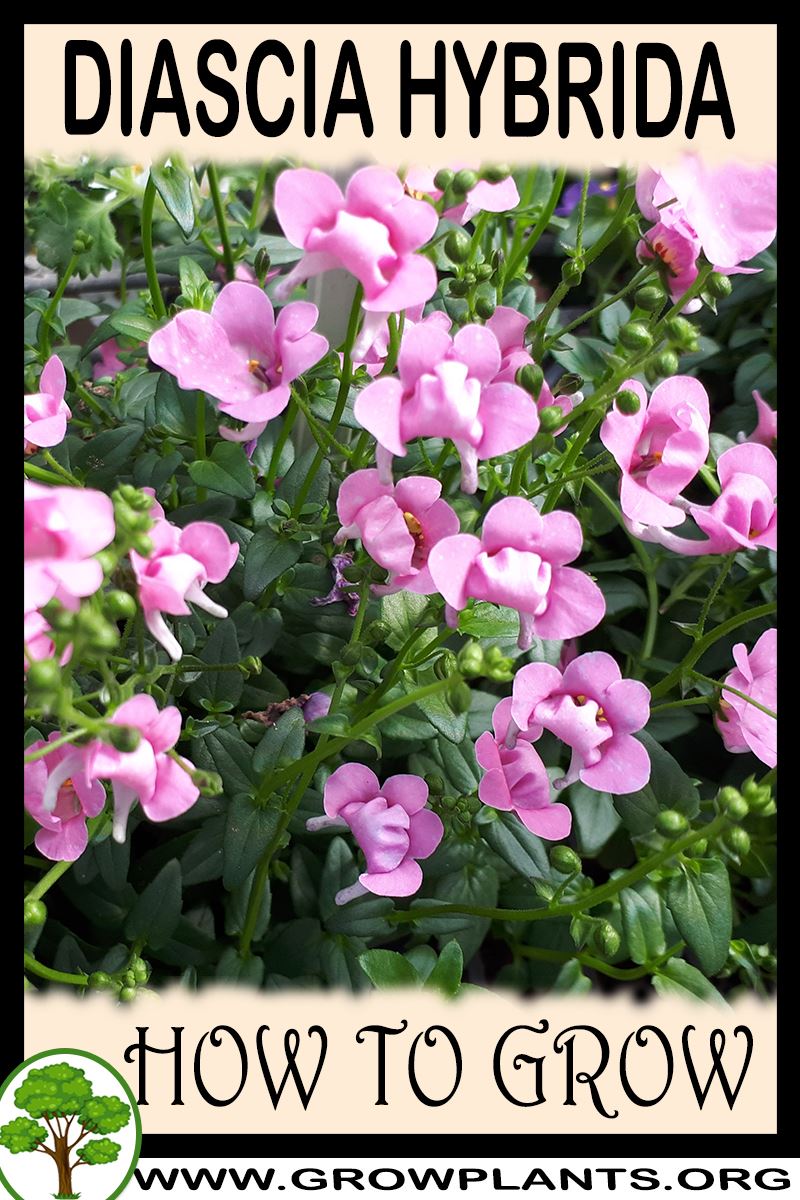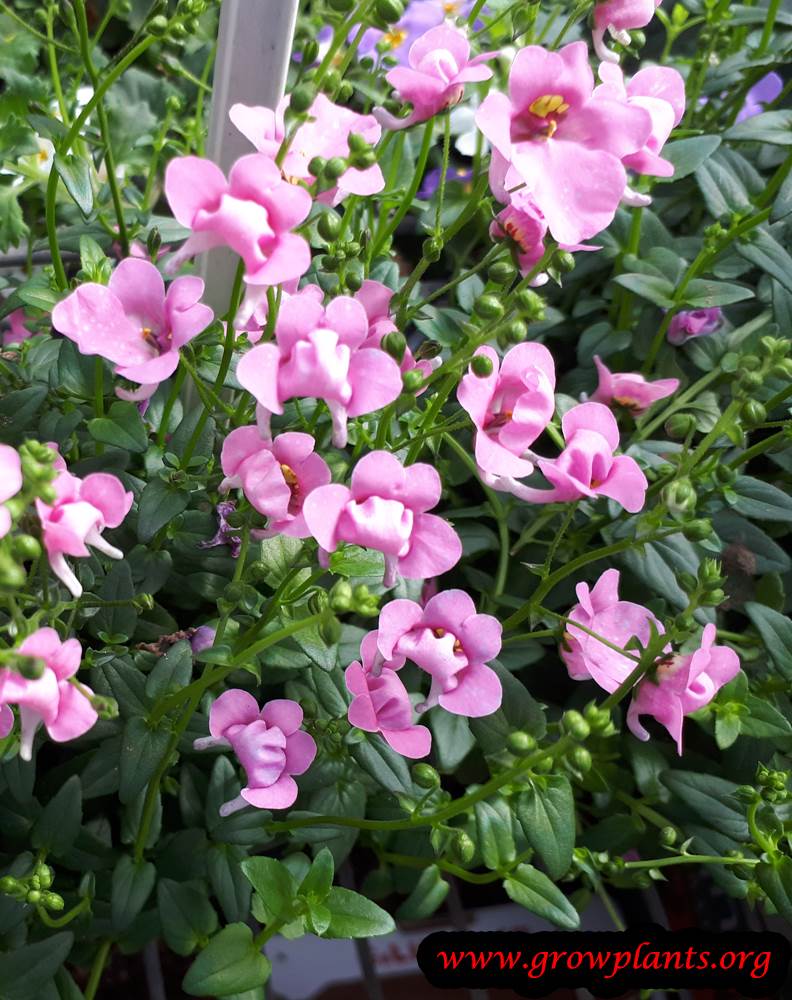



Plant Profile & Key Characteristics
Overview: Diascia hybrida (Twinspur) is a low, mounding-to-trailing herbaceous plant 30-50 cm tall, grown as a long-flowering ornamental. It is an evergreen perennial in mild zones and a popular annual bedding and container plant elsewhere.
Quick Specifications
| Specification | Attribute |
|---|---|
| Plant Type / Life Cycle | Perennial (grown as an annual in cool climates) |
| Foliage Type | Evergreen (or annual) |
| Mature Size | Height 30-50 cm (12-20 in) |
| Growth Rate | Moderate to fast |
| Toxicity | Non-toxic |
| Hardiness | USDA zones 10+ as perennial, 3-9 as annual |
Growth Form & Structure
- Height & Spread: A mounding, spreading plant 30-50 cm (12-20 in) tall; excellent trailing from containers, baskets and window boxes.
- Growth Habit & Form: Low, mounding to trailing herbaceous plant with slender stems.
- Lifespan & Maturity: Short-lived evergreen perennial (or annual); fast to reach flowering size and quick to fill baskets.
Anatomy & Physical Features
- Leaves & Foliage: Green, heart-shaped leaves.
- Flower Characteristics: Funnel-shaped flowers in pink, orange, purple, white or red over a long season (full detail in the Bloom guide).
Primary Uses & Landscape Value
- Functional & Ornamental Roles: Ornamental bedding, edging and container/basket plant valued for its long flowering.
Care Guide: Planting, Soil & Watering
Overview: Twinspur is an easy, free-flowering plant that likes full sun to part shade and moist, well-drained soil. It needs regular watering to keep the soil evenly moist and flowers best when not allowed to dry out.
Quick Care Requirements
| Requirement | Ideal Condition |
|---|---|
| Planting Season | In spring after frost (spring to autumn in mild areas; year-round in the tropics) |
| Growth Rate | Moderate to Fast |
| Soil Type | Moist, well-draining soil |
| Water Need | Moderate to High – keep evenly moist |
Planting & Establishment
- Best Planting Season: Plant in spring after frost; spring through autumn in mild areas, and year-round in the tropics.
- How to Plant:
- Hole Preparation: Dig a hole slightly wider than the root ball on well-drained ground.
- Soil Amendments: Mix in compost or organic matter to help hold moisture.
- Planting Depth: Set the root ball level with the soil surface.
- Growth Speed & Expectations: Moderate to fast; grown as an annual where winters are cold.
Soil, Watering & Drainage Care
- Soil Mix & Drainage Needs: Moisture-retentive but free-draining soil.
- Watering Schedule & Technique:
- Young / Newly Planted: Keep consistently moist while establishing.
- Established: Water regularly to keep the soil evenly moist; avoid letting it dry out.
- Seasonal Adjustments: More in summer heat; less in winter.
Climate, Light & Hardiness
Diascia hybrida (twinspur) grows across a wide range of climates - mediterranean, subtropical, temperate, and tropical - and flowers best in full sun to half shade. Its cold hardiness depends on how it's grown: it persists as a perennial only in zone 10 and warmer, while in zones 3–9 it is grown as a frost-killed annual.
Quick Climate Specifications
| Climate Zones | Mediterranean, subtropical, temperate, tropical |
|---|---|
| USDA Hardiness Zones | 10+ as a perennial; grown as an annual in zones 3–9 |
| Frost Tolerance | Low (top growth killed by frost) |
| Light Conditions | Full sun to half shade |
Sunlight & Light Exposure
Optimal Light Setup
Full sun brings the heaviest bloom; half shade is also tolerated, especially in hot climates.
Direct Sun Requirement
Does well in direct sun; in hot-summer areas, light afternoon shade can help prolong flowering.
Shade & Heat Management
Half shade eases stress during intense heat; deeper shade reduces flowering.
Best Exposure / Orientation
Open beds or containers with morning sun and, in hot regions, some afternoon shade.
Temperature Extremes & Hardiness
USDA Hardiness & Regional Limits
Only reliably overwinters outdoors as a perennial in zone 10 and warmer. In zones 3–9, frost kills the plant back each year, so it is grown as a warm-season annual, from new plants or self-sown seedlings each spring.
Cold Damage & Winter Protection
Frost blackens and kills top growth. Where grown as a perennial in mild climates, light frost may cause dieback that can resprout from the base if the damage isn't severe.
Frost Sensitivity
Low frost tolerance overall.
Extreme Heat Tolerance
Tolerates warmth well, including tropical conditions, particularly with some shade and adequate water; can even flower through winter in hot climates.
Wind, Humidity & Microclimate
Rainfall & Seasonal Moisture
Adapts to a range of rainfall patterns given its use across mediterranean, temperate, subtropical, and tropical climates, but performs best with fairly regular moisture rather than prolonged drought.
Microclimate Recommendations
In marginal zones, a warm, sheltered microclimate can help perennial specimens ride out light winter frost.
Growing in Pots, Balconies & Indoors
Diascia hybrida is a low, free-flowering trailing plant that is superb in pots, window boxes and hanging baskets – but not a houseplant. It wants real sun and fresh air, so keep it outdoors on a sunny balcony or patio.
Quick Details
- Container Size: Small to medium – ideal for pots, troughs, window boxes and hanging baskets.
- Indoor Suitability: No – not a houseplant; a bright, sunny sill at most.
- Best Spot: Full sun to part shade.
- Soil & Drainage: Free-draining but moisture-retentive mix.
- Watering in Pots: Even, moderate to generous moisture – it dislikes drying right out.
Indoors & On the Windowsill
- Not a houseplant: The grower’s answer is no – indoors the light is too weak and the still, dry air does not suit it. It belongs outdoors in a container.
- A bright sill at most: If you want to try it inside, only a very bright, sunny windowsill comes close, and even then it is happier out on a balcony or patio.
On a Balcony or Patio
- Light, wind and heat: A sunny to lightly shaded spot suits it; reflected heat off walls and drying wind mean pots need checking often in warm weather, and tall stems may want staking.
- Trailing display: Its spilling habit is made for the edge of a raised pot, box or basket; a light trim after the first flush keeps it blooming.
Choosing the Pot, Soil & Long-Term Care
- Pot & drainage: Choose a pot with strong drainage holes and skip a standing-water saucer, which invites root rot; terracotta breathes and dries quickly, while glazed or plastic hold moisture longer.
- Potting mix: Fill with a well-aerated, organic-rich medium – a good potting mix, or peat/coir blended with perlite or vermiculite for drainage.
- Feeding: Container plants run through nutrients fast because watering washes them out, so feed a little more often through the growing season than you would in open ground.
- Repotting: Refresh the mix or pot up about every couple of years; for perennials, lightly trim the roots and top growth at the same time.
Fertilizing & Feeding
Twinspur is grown for a long, near-continuous show of small funnel-shaped flowers, so it rewards steady, moderate feeding through its growing and blooming period more than a single heavy application at planting.
Quick Fertilizing Specs
| Feeding Level | Moderate feeder while actively growing and blooming |
|---|---|
| Main Nutrient Priority | Balanced feeding with adequate nitrogen to sustain both foliage and its extended bloom cycle |
| Best Feeding Period | From spring establishment through the summer and autumn flowering display, continuing longer in mild climates |
| Organic Options | Compost or well-rotted organic matter worked into the bed or container mix at planting |
| Reduce/Stop Feeding | Taper feeding back as flowering slows going into cooler weather |
| Micronutrients | Ordinarily met by a complete fertilizer in reasonably fertile, moist soil |
Feeding by Growth Stage
Spring establishment and vegetative growth
Get young plants rooted into moist, fertile soil and build the compact, spreading habit that carries the bloom.
| Nutrient direction | A balanced, complete fertilizer supports steady root and foliage development after planting. |
|---|---|
| Timing | At planting in spring, or as new growth resumes on established perennial plantings. |
| Frequency | A light starter feeding at planting, then regular feeding as active growth continues. |
| Fertilizer types | A balanced, complete fertilizer, Compost or organic matter mixed into the planting area |
| Precautions | Keep soil consistently moist when feeding; this species does not tolerate letting the root zone dry out for long between waterings. |
Main flowering flush
Sustain the first strong flush of funnel-shaped flowers once plants are established and actively budding.
| Nutrient direction | Continued balanced feeding with adequate nitrogen keeps foliage healthy while supporting flower production. |
|---|---|
| Timing | As flower buds form and open through the main summer bloom period. |
| Frequency | Regular feeding through the flush keeps this free-blooming plant flowering well. |
| Fertilizer types | A balanced, complete fertilizer |
| Precautions | Do not switch to a high-phosphorus “bloom booster”; balanced feeding with adequate nitrogen supports flowering better without pushing excess salts into the root zone. |
Repeat flowering after deadheading
Encourage further rounds of bloom on this repeat-flowering plant, especially where mild weather extends the season into autumn or, in warm climates, winter.
| Nutrient direction | Light, ongoing feeding supports renewed budding after plants are cut back or deadheaded. |
|---|---|
| Timing | After a flush of flowers fades and plants are trimmed back to encourage new buds. |
| Frequency | A lighter feeding after each cutting-back supports the next round of flowers without overfeeding a plant that is also resting between flushes. |
| Fertilizer types | A balanced, complete fertilizer at a lighter rate than the main bloom flush |
| Precautions | Match feeding to how vigorously the plant is rebudding; a plant slow to recover after cutting back rarely needs feeding until new growth shows. |
Cold-season rest
Let plants rest through cold weather, whether they die back as an annual or pause growth as a perennial in a mild climate.
| Nutrient direction | None – withhold fertilizer while the plant is not in active growth. |
|---|---|
| Timing | Through winter or whenever cold weather halts active growth and flowering. |
| Frequency | No feeding at this stage. |
| Fertilizer types | No feeding at this stage; the plant is dormant or has completed its cycle for the season. |
| Precautions | Do not fertilize dormant or non-growing plants; nutrients applied now cannot be used and may simply leach away or build up as salts. |
Nutrient Deficiency Signs & Corrections
Lower leaves turn pale green to yellow and the plant’s spreading habit thins out.
| Possible causes | low available soil nitrogen, nutrient leaching from frequent watering, thin or sandy soil low in organic matter |
|---|---|
| Appears first on | older, lower leaves |
| What to check | recent feeding history, soil organic matter, watering and drainage pattern |
| Possible correction | Apply a balanced, complete fertilizer and work in organic matter to improve nutrient retention. |
Plants stay leafy and spreading but produce few flowers.
| Possible causes | too much shade for a plant that flowers best with good light, overfeeding with a nitrogen-heavy fertilizer that favors foliage over flowers, lack of deadheading letting spent flowers go to seed instead of rebudding |
|---|---|
| Appears first on | whole-plant effect rather than a single stem |
| What to check | light exposure, recent fertilizer type and amount, deadheading routine |
| Possible correction | Improve light exposure, keep feeding balanced rather than nitrogen-heavy, and deadhead regularly to encourage repeat bloom. |
Leaf edges brown or scorch and growth stalls despite consistent watering.
| Possible causes | fertilizer salt buildup in the root zone, under-watering that concentrates salts around the roots, excessive or too-frequent feeding, especially in containers |
|---|---|
| Appears first on | leaf margins and tips |
| What to check | recent fertilizer amounts, watering consistency, container drainage if grown in pots |
| Possible correction | Ease off feeding, water thoroughly to help flush accumulated salts, then resume with lighter, balanced feeding. |
Pruning, Training & Seasonal Maintenance
Diascia hybrida is a soft, mounding to trailing herbaceous plant with a long, near-continuous bloom season (spring through autumn, and even winter in hot climates), so its “pruning” is really ongoing grooming rather than structural cutting. It tolerates frequent light shearing and pinching well; because flowers are produced on the current season’s soft new growth, cutting back a mound stimulates fresh shoots that quickly rebloom rather than sacrificing a future flower crop. There is no dormant-wood framework to protect, so shaping can be done essentially any time growth is active.
Quick Pruning & Maintenance Specs
| Pruning Tolerance | Moderate–High (soft growth, regenerates quickly) |
| Primary Pruning Window | Any time during active growth; heaviest cutback after a bloom flush fades |
| Typical Frequency | Light grooming every few weeks through the bloom season |
| Main Objective | Keep the mound tidy, prevent bare/leggy centers, refresh flowering |
| Young Plant Priority | Pinch tips to build a bushy base |
| Mature Plant Priority | Shear back spent flower flushes to force new bloom |
| Best Tool Type | Precision snips |
| Avoid Heavy Pruning During | Peak summer heat stress or immediately before an expected frost (as a perennial in warm zones) |
Pruning by Plant Age & Size
Newly Established
Let young plants root in; only remove any damaged or wilted growth from transplanting. Avoid cutting back hard until the plant is actively growing.
Young / Formative
No structural training is used – instead, pinch the growing tips once several nodes have formed to encourage branching from the base and produce a fuller mound before flowering begins.
Mature / Established
Once a bloom flush finishes and flowering thins out, shear the mound back by about a third to remove spent stems and reset it for the next flush. Where grown as a short-lived perennial in mild climates, an annual harder cutback in late winter/early spring tidies overwintered growth before the new season.
Special Growth to Remove
- Spent flower stems – removing them (deadheading/shearing) prevents seed drain and encourages continuous rebloom.
- Leggy, bare-centered trailing stems – cut back to a lower node with foliage to keep the mound dense rather than sparse in the middle.
Container & Small-Space Pruning
Diascia is widely grown in pots, hanging baskets and mixed containers, where it tends to trail and thin out faster than in-ground plantings. In containers, shear back more frequently (every 3–4 weeks in peak season) to keep growth compact and prevent the centre from going bare and woody-looking; this also keeps the root-to-top balance in check for the limited soil volume.
Tools
- Precision snips – for pinching tips and deadheading individual stems.
Tool Hygiene & Disease Risk
Routine – clean, sharp tools are sufficient. Diascia’s known issues (aphids, spider mites) are pest pressures rather than tool-transmissible diseases, so no special disinfection protocol is needed.
Cut Placement & Technique
Pinch or snip just above a leaf node or side-shoot to direct new branching; when shearing a whole mound back, cut just above where healthy foliage remains so the plant regreens quickly rather than leaving bare stubs.
Heavy Pruning & Rejuvenation
Tolerates a fairly hard cutback (to within a few centimetres of the base) once growth becomes leggy or after a bloom flush is exhausted; recovery and rebloom are typically quick in warm, actively growing conditions. Avoid this kind of hard cutback going into cold weather as a perennial in marginal zones.
Post-Pruning Care
Water normally after shearing to support the flush of new growth; no extra feeding is needed since regrowth is already vigorous. Keep an eye out for aphids and spider mites on the tender new shoots that follow a cutback.
Common Pruning Mistakes
- Letting the mound go too long without grooming, so the centre becomes bare and woody and flowering retreats to the tips.
- Shearing hard during peak heat stress, which slows recovery.
- Deadheading only the largest stems and ignoring the many small spent flowers, which reduces overall rebloom.
When NOT to Prune
Avoid a hard cutback during extreme summer heat or drought stress, and avoid heavy pruning right before an expected frost where the plant is being carried over as a perennial.
Recommended Tools (by task)
- precision_snips – the only tool this small, soft-stemmed plant needs, for both routine pinching/deadheading and the periodic shear-back of spent flushes.
Propagation Guide
Diascia hybrida grows readily from seed, and the site notes that vegetative propagation is not required for this plant. Because it is a hybrid group offered in several flower colors, seedlings can vary somewhat from the parent, so softwood cuttings are a useful backup when a particular color needs to be kept exact. Propagation is easy overall.
Quick Propagation Specs
| Best Propagation Method | Seed |
| Alternative Methods | Softwood stem cuttings (to hold a specific flower color) |
| Propagation Difficulty | Easy |
| Seed True-to-Type | Hybrid offspring vary, especially in flower color |
| Vegetative True-to-Type | Yes |
| Best Propagation Season | Spring |
Growing from Seed
Sow in spring. As with many bred Diascia hybrids, expect some variation in flower color among seedlings rather than an exact match to the parent plant.
Stem Cuttings
Cutting Type
Short, non-flowering tip cuttings.
Best Timing
Spring to early summer, during active growth.
Cutting Preparation
Take a non-flowering shoot tip and remove the lower leaves before inserting.
Rooting Setup
A free-draining, moist cutting mix kept warm and humid.
Rooting Hormone
Optional – this genus roots readily without it.
Rooting Time
Typically within a few weeks under warm conditions.
Bloom & Flower Guide
Quick Details
- Bloom Season: Spring through autumn, and into winter only in warm climates
- Flower Appearance: Small funnel-shaped flowers, each with two little backward-pointing spurs, in pink, orange, purple, white or red
- Edibility: Grown as an ornamental bedding plant; not a recognised edible flower
Detailed Blooming Overview
Twinspur flowers non-stop from spring into autumn, throwing out loose sprays of small funnel-shaped blooms – each with the pair of tiny spurs that give the plant its name – in pink, coral, purple, white and red.
Flower Characteristics
- Funnel-shaped flowers with twin spurs, in pink, orange, purple, white or red.
Bloom Care & Thinning
- Keep it flowering: A shear-back and a feed after the first flush revives tired plants for a fresh wave of bloom.
- Deadheading: Regular deadheading keeps the display tidy and long.
Pests, Diseases & Troubleshooting
Overview: Diascia (twinspur) is a soft-stemmed, cool-season bedding perennial usually grown as an annual, whose troubles are sap-suckers — aphids, whitefly, thrips and spider mites — slugs on soft growth, and the damp-weather fungal diseases downy and powdery mildew, grey mould and root rot. It flowers best in cool, bright, airy conditions with even moisture and sharp drainage; heat pauses bloom and wet, heavy soil rots the roots.
Quick Troubleshooting Overview
| Issue / Pest | Main Symptom | Primary Solution |
|---|---|---|
| Aphids | Colonies on soft tips and buds, honeydew, distortion | Hose off, insecticidal soap; conserve beneficials |
| Whitefly | Clouds of tiny white flies, honeydew, sooty mould | Yellow sticky traps; insecticidal soap to undersides |
| Spider mites | Stippling and fine webbing in hot, dry spells | Raise humidity, hose; horticultural oil |
| Slugs and snails | Ragged holes in soft new growth, slime trails | Hand-pick at night, iron-phosphate bait |
| Downy / powdery mildew | Yellow blotches with grey underside, or white powder | Improve airflow, avoid wet leaves; suitable fungicide |
| Root rot | Wilting and yellowing in wet, airless soil | Sharp drainage, ease off watering |
Common Pests & Management
- Aphids (Myzus persicae and others):
- Symptoms: Colonies of soft green or black insects on the tender growing tips, flower stalks and buds, causing distortion, sticky honeydew and sooty mould; twinspur’s soft, sappy growth is very attractive to them.
- Prevention & Control: Hose off and squash early colonies, and conserve ladybirds, lacewings and hoverflies. Use insecticidal soap or neem for build-ups, treating in the cool of evening to spare pollinators.
- Whitefly (Trialeurodes vaporariorum):
- Symptoms: Tiny white flies that rise in clouds when the plant is disturbed, with scale-like nymphs, honeydew and sooty mould on the leaf undersides; mainly a problem under glass and on tender bedding.
- Prevention & Control: Hang yellow sticky traps to monitor and thin adults, and release Encarsia formosa under cover. Spray insecticidal soap or horticultural oil to the undersides, repeating to catch newly emerged adults.
- Thrips (Frankliniella occidentalis):
- Symptoms: Silvery flecking and speckled streaks on leaves and petals, deformed flowers and black frass specks; a common pest of bedding plants that can also spread tospoviruses.
- Prevention & Control: Use blue sticky traps, remove weeds and spent blooms, and release predatory mites under cover. Spinosad or insecticidal soap controls heavy pressure; rotate actives and protect bees.
- Two-spotted spider mite (Tetranychus urticae):
- Symptoms: Fine pale stippling, dull bronzed foliage and fine webbing on the undersides, worst in hot, dry conditions when the plant is drought-stressed.
- Prevention & Control: Raise humidity and hose the leaves, and avoid drought stress. Horticultural oil or insecticidal soap and predatory mites bring populations down; avoid broad-spectrum sprays that cause flare-ups.
- Slugs and snails (Deroceras spp.):
- Symptoms: Ragged holes and grazed soft new shoots low on the plant, with slime trails, worst on young plants in damp, sheltered, mulched sites.
- Prevention & Control: Hand-pick after dark, set traps, and use grit or copper barriers. Iron-phosphate pellets are effective and safe around pets and wildlife.
Diseases & Fungal Issues
- Downy mildew (Peronospora spp.):
- Symptoms: Yellow or pale blotches on the upper leaf surface with a matching greyish, downy fungal growth underneath, leading to leaf drop; favoured by cool, damp, humid, crowded conditions.
- Treatment & Management: Improve air movement and spacing, avoid overhead watering and wet foliage, and remove infected leaves promptly. Clear debris and, under persistent pressure, apply a suitable fungicide to protect new growth.
- Powdery mildew (Erysiphe / Podosphaera spp.):
- Symptoms: White powdery patches on leaves and stems, with yellowing, distortion and premature leaf loss, worst where air is stagnant and plants are dry at the root but humid around the leaves.
- Treatment & Management: Space for airflow, water consistently at the base, and remove affected leaves. Milk sprays, potassium bicarbonate or sulfur fungicide help; choose open, sunny positions to reduce humidity around the foliage.
- Grey mould (Botrytis cinerea):
- Symptoms: Fuzzy grey-brown rot on flowers, buds and soft stems in cool, damp, still weather, often starting on faded blooms and spreading into healthy tissue.
- Treatment & Management: Deadhead and remove faded flowers and dead leaves, improve airflow and spacing, and avoid wetting the foliage late in the day. Remove infected material; a fungicide is rarely needed if hygiene is good.
- Root and stem rot (Pythium / Phytophthora / Rhizoctonia spp.):
- Symptoms: Wilting, yellowing and collapse despite moist soil, with soft, dark, decayed roots and stem bases; the result of heavy, wet, airless soil and overwatering, to which twinspur is sensitive.
- Treatment & Management: Plant in light, free-draining soil or a gritty container mix, water only when the surface dries, and never leave pots standing in water. Remove rotted plants and improve drainage before replanting.
Growing Difficulties & Abiotic Problems
- Heat-induced flowering pause and legginess:
- Cause & Symptoms: In hot summers Diascia slows or stops flowering and grows lax and sprawling, as it prefers cool, mild conditions; heat and drought stress cause bud drop and thin, weak stems.
- Correction Strategy: Grow in a cool, bright spot with afternoon shade in hot climates, keep the soil evenly moist, and shear the plant back by a third after the first flush to trigger fresh, compact flowering growth as temperatures ease.
- Root rot from overwatering:
- Cause & Symptoms: Yellowing, wilting and collapse where the soil stays wet and airless; twinspur likes steady moisture but resents waterlogging and heavy soils.
- Correction Strategy: Use free-draining soil or container mix, water when the surface dries rather than on a fixed schedule, and ensure pots drain freely. Ease off watering in cool or dull spells.
- Chlorosis and weak flowering:
- Cause & Symptoms: Pale, yellowing leaves and sparse bloom from waterlogged or exhausted soil, or from a shortage of nutrients during heavy flowering.
- Correction Strategy: Improve drainage, feed lightly with a balanced fertiliser through the flowering season, and correct trace deficiencies with a chelated feed. Even moisture and a sunny, airy position restore healthy growth.
What Helps — Products & Tools
For Diascia the useful kit is insecticidal soap and neem for aphids and whitefly, yellow and blue sticky traps for monitoring, horticultural oil and predatory mites for spider mites, and iron-phosphate slug bait. On the disease side, airflow, base watering and sanitation prevent the mildews and grey mould, potassium bicarbonate or sulfur helps against powdery mildew, and sharp drainage is the real defence against root rot. The source pest names are unreliable and were not used.